RSS Feed

Tag Archives: 1920s

November 29

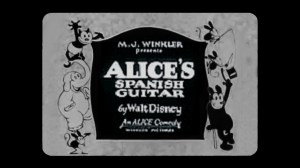
November 29, 1926 – The Alice Comedy Alice’s Spanish Guitar is Released to Theaters

ASG_AC

On November 29, 1926, the Alice Comedy Alice’s Spanish Guitar was released to theaters. It starred Margie Gay as Alice, and was the 38th Alice Comedy produced. Originally considered a lost Alice short, a rare nitrate stock copy of it was found in 1998, and was subsequently restored. It was then shown at the Pordenone Silent Film Festival in Italy. In the short, Alice is a guitar-playing senorita, who is captured by villain Pete and rescued by her faithful sidekick, Julius.

November 15

November 15, 1929 – The Mickey Mouse Short Film Jungle Rhythm is Released to Theaters

vlcsnap-2015-11-15-08h22m49s193

On November 15, 1929, the Mickey Mouse short film Jungle Rhythm was released to theaters. It was directed by Walt Disney.

Mickey is playing an accordion on the back of an elephant, and the elephant skips about to the tune. A vulture also starts dancing to the song. Mickey soon slides off the elephant to hunt the vulture, but ends up caught between an angry bear and lion. A monkey starts playing a tune with the accordion, with help from a parrot, which causes Mickey, the lion, and the bear to dance. More animals join in with the song, to much applause from the rest of the jungle, and Mickey manages to use whatever he can find to turn into an instrument, including a tree branch, a jaguar cub, and some ostriches.

November 3

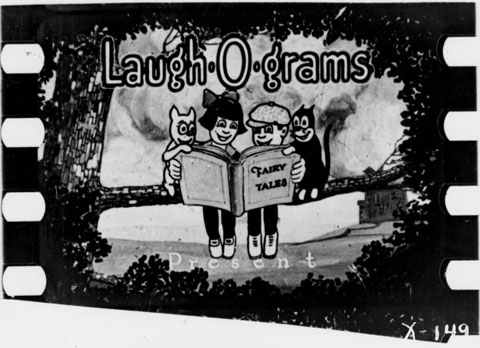
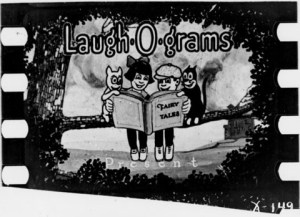
November 3, 1922 – The Laugh-o-Gram Puss in Boots is Released
LoG_PiB

“Don’t let me catch you around here again.”

On November 3, 1922, the Laugh-o-Gram Puss in Boots was released. It was based on the classic fairy-tale of the same name, but updated for a then-modern audience. It was directed by Walt Disney.

Once upon a time, a boy and his cat Puss were walking down the street, with the boy bringing his sweetheart, the princess, a bouquet of flowers. Puss, in turn, flirts with her cat. While both pairs are occupied, the king comes out and boots the boy away from his daughter. He chases the boy around the garden and warns him never to return before throwing him and Puss out. The boy walks away dejected, moaning to the Puss that the king doesn’t like him. Puss, wanting to impress her mate, asks the boy to buy her a pair of boots, but the boy refuses and heads to the cinema instead. They watch a “Rodolph Vaselino” film about a matador, which gives Puss an idea on how to win the king’s favor – but he has to buy her the flapper boots first. The king is excited about the upcoming bull fight, where the boy will be fighting to win the princess’ hand. The boy enters the arena, but runs around terrified of the bull. After catching the princess’ eye, he summons his courage and manages to fight the bull, but has to call Puss for assistance. With Puss’ help, they knock the bull out, and the king allows the boy to marry his daughter.

November 1

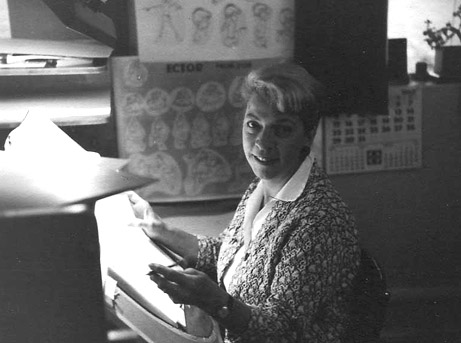
November 1, 1921 – Animator Retta Davidson is Born

Retta Davidson

“…Retta Davidson will always be a legend in my book. She was my boss, my colleague, and one of the nicest women I ever knew.” – Animator and Disney Legend Floyd Norman

On November 1, 1921, animator Retta Davidson was born in Arcadia, California. She joined the Disney Studios at the age of seventeen as a member of the Ink and Paint department, working on animated features such as Pinocchio, Bambi, and Fantasia. During World War II, when many of the animators were drafted, Davidson was one of ten women selected from the department to be considered for animation training. After working as an animator for a year, she left the studio to enlist in the Navy, serving for four years. After the war ended, she came back to the studio to continue working as an assistant animator. Davidson’s skills as a key assistant animator were always in high demand. Like many animators, Davidson left the studios in 1966 after Walt’s death, but continued to work as a freelancer before moving to Canada to be an animation teacher. She returned to the studios in the eighties to train young animators, and was promoted to Coordinating Animator. In 1985, Davidson retired from the Disney Studios, though she left an indelible mark on those that were able to work alongside her. She passed away in 1998.

October 18

October 18, 1926 – The Alice Comedy Alice the Fire Fighter is Released to Theaters

Alice the Fire Fighter

On October 18, 1926, the Alice Comedy Alice the Fire Fighter was released to theaters. It was the 35th Alice Comedy produced, and starred Margie Gay as Alice.

The fire bell sounds as a large fire ravages a hotel downtown. Inside the fire station, the fire fighters are sound asleep, until the bell quickly gets them moving in droves. Everyone sets off, while the hotel is evacuated quickly, and Alice heads to the scene as the fire chief. The crew arrives in comedic fashion to find one person stuck at the top of the hotel. They are able to rescue those that are stuck, but find another problem with putting out the fire, as the hose isn’t long enough. Julius gets exhausted trying to put out the fire by the bucketful, and there is another person stuck in the burning building. Two firefighters attempt to catch him with a trampoline, but they miss. Alice hears the cry of another woman stuck on the top floor, but she is rescued by a fire fighter that falls in love with her.

October 16

October 16, 1923 – The Walt Disney Company Officially Starts

Disney Start

“The first of this series, the title of which has been changed…is now in production and in all probability I will have this subject to you by December 15th.”

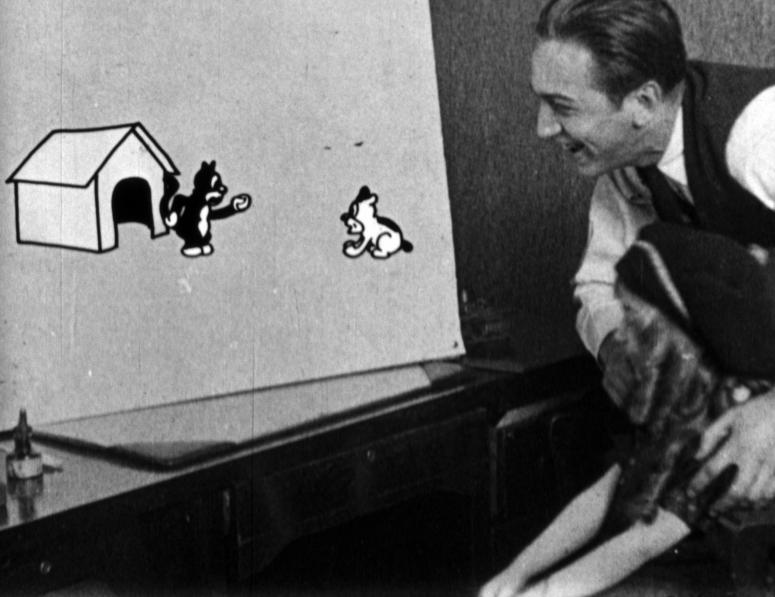
On October 16, 1923, the Walt Disney Company was officially started after Walt and Roy Disney signed a distribution contract with film distributor Margaret Winkler. The deal was for six Alice Comedies, priced at about $1,500 each (about $21,000 in 2015), plus six further comedies at $1,800 each (about $25,000 in 2015), as well as the option for two more series. Winkler, who had been interested in the Alice Comedies since seeing the then-unfinished short film Alice’s Wonderland, requested that the little girl in the short (Virginia Davis) be in the upcoming films; Walt was able to convince Davis’ parents to move the family to California from Kansas City. The signing of the contract has been named as the official start of the Disney we know and love today.

October 4

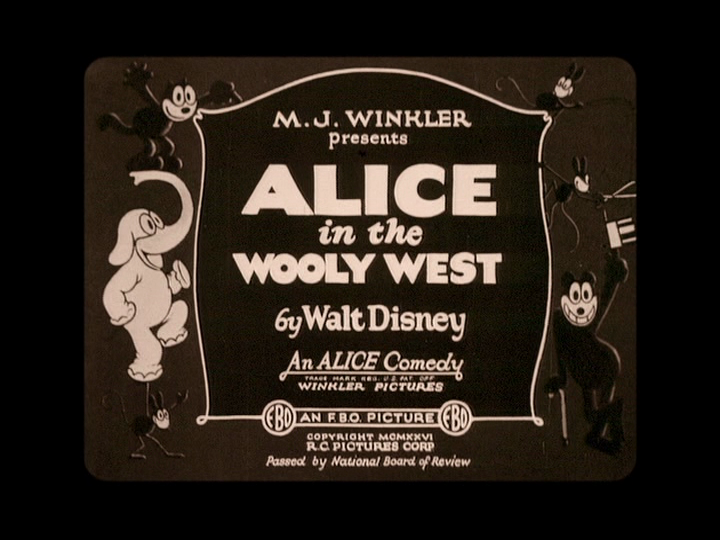
October 4, 1926 – The Alice Comedy Alice in the Wooly West is Released

vlcsnap-2015-10-04-20h58m22s28

On October 4, 1926, the Alice Comedy Alice in the Wooly West was released. It was the 34th Alice Comedy, and starred Margie Gay as Alice.

Julius is riding a horse in the old West, doing tricks with his lasso, when a stagecoach robbery passes by. Alice is thrown out of the stagecoach, and is cornered by one of the bandits. Julius watches from a nearby ledge when he and his horse decide to slide in and save the day. One of the bandits rides away with Alice, and Julius follows in hot pursuit. A fight ensues, even as the two fall off a tall rock formation, but Julius manages to confound the bandit by hiding amongst the rocks. Julius finally manages to subdue the robber and rescue a grateful Alice, who proclaims him her hero.

September 25

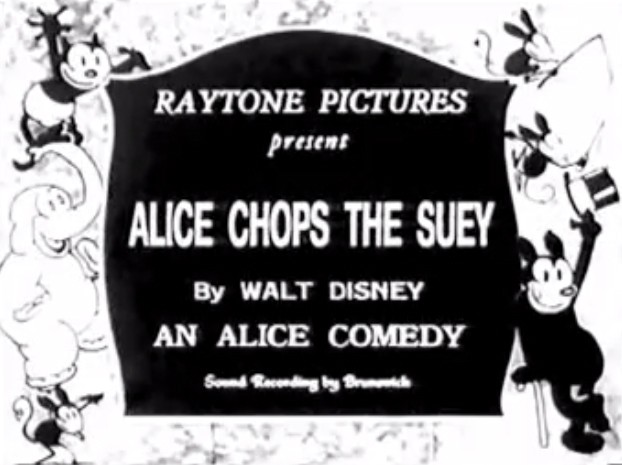
September 25, 1925 – The Alice Comedy Alice Chops the Suey is Released to Theaters

Alice Chops the Suey

“Whee! Chinatown!”

On September 25, 1925, the Alice Comedy Alice Chops the Suey was released to theaters. It was the 22nd Alice Comedy released, and starred Margie Gay as Alice.

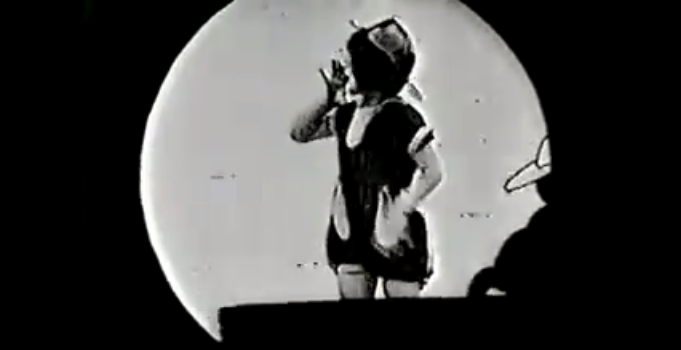
The cartoon begins with a live-action animator drawing Julius. Julius is startled when the ink bottle starts shaking, and out jumps Alice. Both watch as the animator continues to draw, and Alice is excited to find that he has drawn Chinatown. Unfortunately, a mysterious figure pops out of the ink bottle, scaring Julius. Alice is snatched while Julius escapes, and is brought to a Chinese restaurant. Julius is quick to pursue her, but is unable to get through the door, which turns into a brick wall. Julius manages to capture one of the captors and steals its clothes so he can sneak in, and is able to run away with Alice still in the bag. He is pursued by several of the captors, but after a few mishaps, including a throwing sword fight, the two manage to make their getaway back into the ink bottle, which is carried away by the animator.

September 15

September 15, 1925 – The Alice Comedy Alice the Jail Bird is Released to Theaters

Alice the Jail Bird

On September 15, 1925, the Alice Comedy Alice the Jail Bird was released to theaters. It was the 23rd Alice Comedy, and starred Margie Gay as Alice.

Alice and Julius are riding on the back of a rather fast turtle when Alice spots a pie in the window of a nearby apartment complex. The trio decide to steal it, and the owner calls out for the police to capture them. The chase begins, first on land, then across the lake, with Julius using the turtle as a boat. The chase continues up a waterfall, but the police officer is still in hot pursuit, even after Julius hits him over the head. The trio manages to hide inside a cavern, but when they emerge, they find a trap waiting for them: the police officer offering a free lunch. The trio leap inside the truck, only to find themselves in the police paddy wagon. The three are carted off to jail, where Alice and Julius are assigned to break rocks. Julius finds an opportunity to quickly complete his task, while the turtle attempts to play pool with his rocks. With their work completed, Julius attempts to escape, using a fellow inmate to carry him across the wall. He is spotted and immediately shot at by an officer, though he manages to dodge the shots and escape. He flies back over the wall to rescue Alice, turning his tail into a ladder that carries her to freedom.

September 7

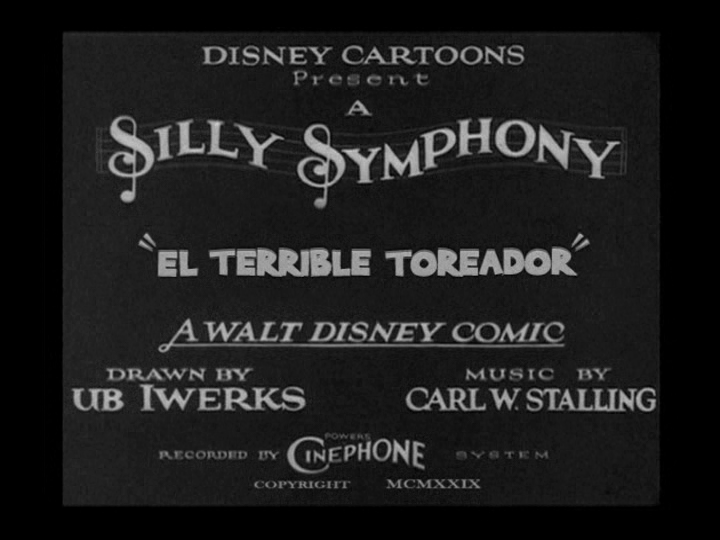
September 7, 1929 – The Silly Symphony El Terrible Toreador is Released to Theaters

vlcsnap-2015-09-01-09h20m08s162

On September 7, 1929, the Silly Symphony El Terrible Toreador was released to theaters. It was directed by Walt Disney, and features music from the opera Carmen by Georges Bizet.

The short opens with people eating in a cantina, with a waitress balancing a beer on her head as she wanders the floor. One soldier falls in love at first sight upon seeing her, and she dances about after he gives her a generous tip. El Terrible Toreador enters the cantina, and the soldier grabs for the waitress, though she works on fighting off his advances. The Toreador, angered at this lack of respect for the waitress, picks a fight with the soldier. The scene then moves to the bullfighting arena, where everyone cheers for the Toreador and the bull as they start to duke it out. The fight has many silly moments between the pair, including a game of patty-cake and a skipping dance. The waitress has a bouquet of flowers for the Toreador, but the soldier pours pepper over the flowers before she throws them. The bull smells the bouquet and sneezes his teeth out, which the Toreador uses to attack the bull. The bull is angered and, after his teeth return, charges at the Toreador. The Toreador wins the fight by pulling the bull inside out.