RSS Feed

September 7

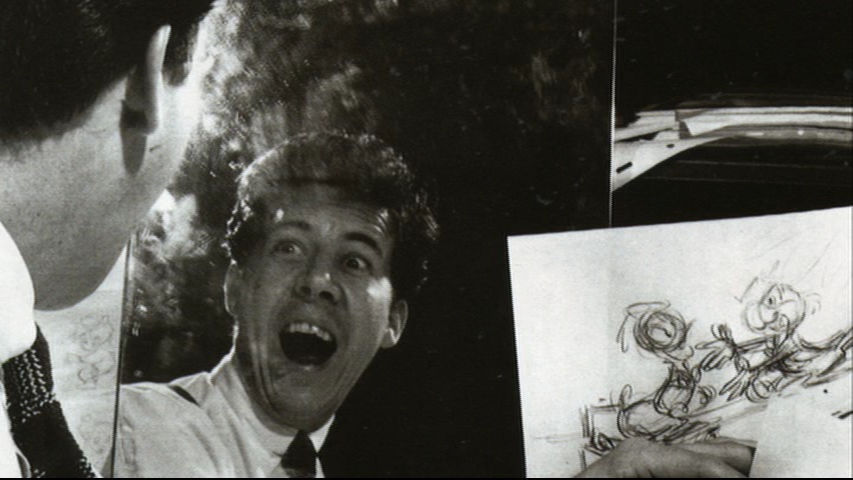
September 7, 1911 – Animator and Disney Legend Fred Moore is Born

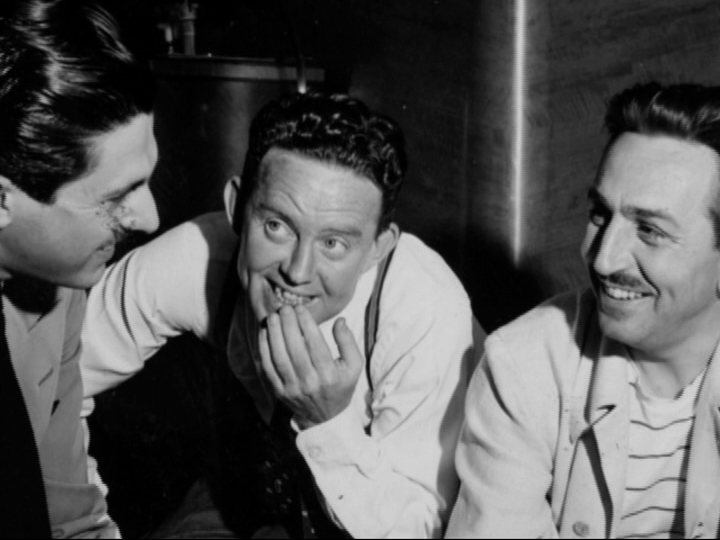
vlcsnap-2013-09-07-15h22m35s224

“Animation came too easily to him. He didn’t have to exert any real effort.” – Animator Les Clark

On September 7, 1911, Robert Fred Moore was born in Los Angeles, California. Despite limited training, he displayed a natural talent for animation, and worked at the Chouinard Art Institute as a janitor in exchange for art lessons. In 1930, at the age of 18, Moore was hired by the Disney studios. His first major assignment was on the Silly Symphony Santa’s Workshop in 1932, but his best known short assignment was that of a principal animator on Three Little Pigs. Moore was also known as the best animator of Mickey Mouse, creating the redesign of Mickey first seen in The Pointer in 1939, which was then used in “The Sorcerer’s Apprentice” segment of Fantasia. Caricatures of Moore have been seen in Disney animation: once in the Mickey Mouse short The Nifty Nineties as part of the song and dance act “Fred and Ward: Two Clever Boys from Illinois,” and the other is the character of Lampwick from Pinocchio, which is considered a self-caricature. In 1946, after a series of personal and professional problems, Moore was fired from the studio. He joined Walter Lantz, redesigning the character of Woody Woodpecker, before being hired once again by Disney in 1948. Sadly, in 1952, Moore was involved in a car accident, and was killed from a cerebral hemorrhage. He is still regarded as one of the finest Disney animators, and was awarded the Windsor McCay award in 1983, and inducted as a Disney Legend in 1995.

September 6

September 6, 2009 – Pixar Executives are Awarded the Honorary Golden Lion for Lifetime Achievement at the Venice Film Festival

Andrew+Stanton+Disney+Pixar+Receiving+Golden+kAycnxZ8GsJx

“Always on the lookout for that point at which the avant-garde…meets the blockbuster, Lasseter has not only contributed in a fundamental manner to bringing animation cinema to new heights as one of the great expressive forces of the new millennium, but has also become one of the symbols of the most precious, vital, and inventive tradition of great Hollywood cinema.” – Festival Director Marco Müller

On September 6, 2009, five executives from Pixar – John Lasseter, Brad Bird, Pete Docter, Andrew Stanton, and Lee Unkrich – were awarded the Golden Lion at the Venice Film Festival in Venice, Italy. This was the first time that a studio was celebrated for its accomplishments in film. The award was presented by longtime Pixar supporter and friend George Lucas, who congratulated the team as members of “my little backroom operation that started in 1979.” A few minutes of the then-unfinished Toy Story 3 was then screened at the festival.

September 5

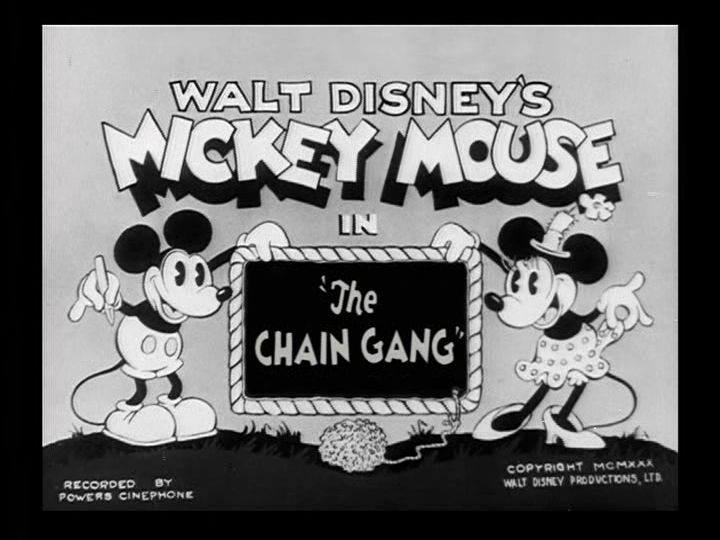
September 5, 1930 – The Mickey Mouse Short Film The Chain Gang is Released to Theaters

vlcsnap-2013-09-04-20h02m37s58

“Shut up, you!”

On September 5, 1930, the Mickey Mouse short film The Chain Gang was released to theaters. This short is notable for being the first appearance of the character that would become Pluto, although he wouldn’t have a name until the 1930 short The Picnic, where he would be called “Rover;” the character wouldn’t be called Pluto until the 1931 short The Moose Hunt. The short was directed by Burt Gillett.

A chain gang is being lead through the prison by Warden Pete, with Mickey bringing up the end of the line, singing along to the morose tune. The warden then tells Mickey to shut up, and Mickey does so, shaking in fear. The chain gang then has to break rocks with mallets, and do so in a musical fashion. When the warden falls asleep, Mickey pulls out a harmonica and begins to play. The other inmates join in as best they can with makeshift instruments and singing, and soon everyone is dancing about. One rather ill-tempered prisoner accidentally wakes the warden, who screams out in a panic that there’s a prison riot, and inevitably starts said riot.

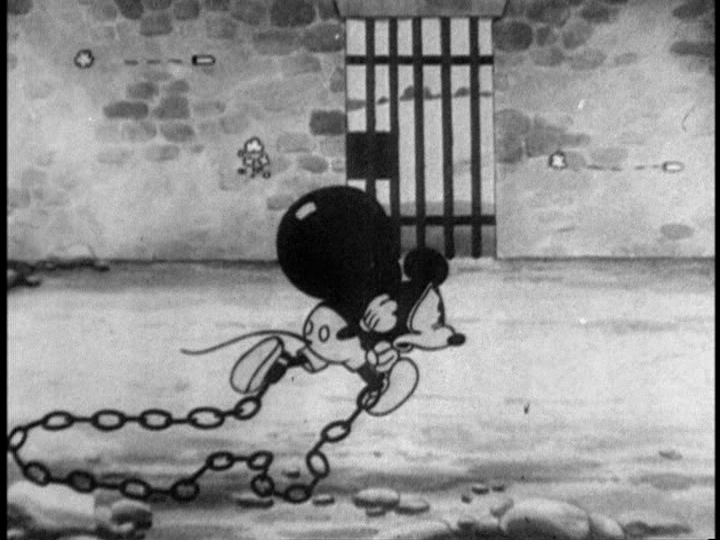
Mickey grabs his ball and chain and tries to escape amongst the confusion of the riot

Mickey grabs his ball and chain and tries to escape amongst the confusion of the riot

As gunshots are flying about the prison, Mickey tries to escape, and is able to leap over the prison wall. A guard spots him, and two bloodhounds are sent out to find him. Mickey ends up tripping and falling into a river, but the dogs are soon right on his tail. Mickey then tries to take a nearby cart, but is only able to take the horses once they are freed from the cart. As he is thrown from the horses off a cliff, he falls through a building, and finds he is once again behind bars.

September 4

September 4, 1942 – The Goofy Short Film How to Play Baseball is Released to Theaters

vlcsnap-2013-09-04-09h04m42s7

“Baseball: the great American game, the national pastime of millions, both young and old.”

On September 4, 1942, the Goofy short film How to Play Baseball was released to theaters. The short was produced in 12 weeks, coinciding with the release of MGM’s The Pride of the Yankees. It was directed by Jack Kinney.

The short begins with a short introduction of the game, including equipment and the field. Goofy then is seen as a baseball player, with the narrator explaining Goofy’s outfit. Goofy then acts as the pitcher, winding up his arm for the pitch enough to bring him off the ground; he then lands all knotted up and unable to pitch well. The opposing team comes up to bat, and the player rubs dirt all over himself as he prepares for the pitch. The pitcher then throws a curve ball, and the batter, no matter what he does, is unable to hit the ball. The pitcher then throws what’s known as a “spinner,” which saws through the bat and lands in the catcher’s mitt. The pitcher next tries a slow ball, slowing down his speed in a comedic fashion. Try as he might, the batter is unable to hit the ball, tiring himself out quickly.

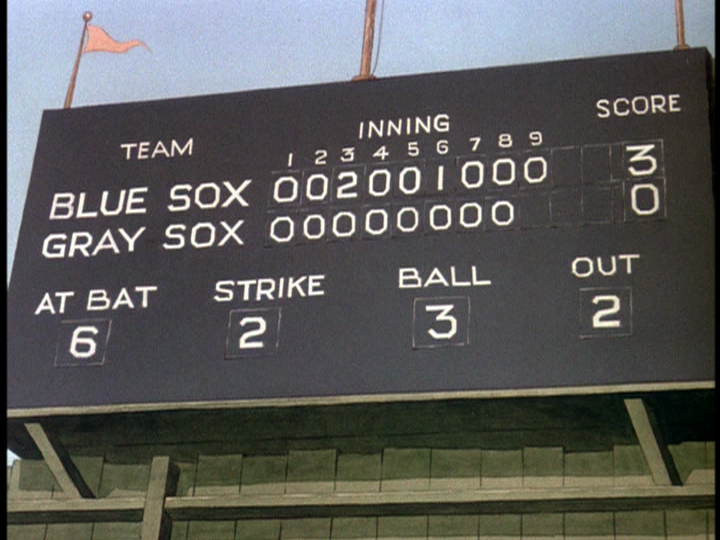
At the last inning of the World Series, the Blue Sox are leading, three to nothing

At the last inning of the World Series, the Blue Sox are leading, three to nothing

The World Series arrives, and the two teams playing are the Blue Sox and the Gray Sox, with the Blue Sox winning 3 to 0 in the ninth inning. The Gray Sox player hits the ball on the third base line and makes it safely to first base, although he trips over several bats and other pieces of equipment on his way there. He then starts to lead on first base, and finds himself caught between first and second while the ball is in motion, but is able to make it to second base. The pitcher then hits the batter, giving the batter a free trip to first base. The next batter bunts the ball, and several Blue Sox players chase after it, only to bump into each other and knock themselves out. The bases are loaded, and the pitcher is losing his nerve. The Gray Sox player hits the ball hard enough the tear the ball apart, and the score is tied as the batter runs for home. As both team members hit home base, it’s up to the umpire to make the call, and he calls the Gray Sox player out, which leads to an all-out brawl between the two teams.


September 3

September 3, 1996 – The Animated Series Quack Pack Premieres

QuackPack

“I feel like quacking so I think I will. I’m gonna quack quack quack until I get my fill.”

On September 3, 1996, the animated series Quack Pack made its debut in the Disney Afternoon lineup. The series centered around Donald Duck and his nephews, who are now teenagers, and given their own personalities, as opposed to how they were portrayed in the DuckTales series. The series itself was considered an extension of the Donald Duck short film series rather than the DuckTales series and comics, with Donald interacting with humans rather than with other anthropomorphic animals. It lasted one season, with only thirty-nine episodes; reruns eventually ran on Toon Disney, but were taken off the air in 2004. Quack Pack starred Tony Anselmo as Donald, Jeannie Elias as Huey, Pamela Adlon as Dewey, E. G. Daily as Louie, Kath Soucie as Daisy, and Roger Rose as Kent Powers.

The first episode, “The Really Mighty Ducks,” begins in the very messy room of the nephews, who sit around reading comic books. Donald stumbles into the room and is amazed at the filth, and demands they make it spotless. The nephews make excuses to not clean up, but Donald, who has been trapped in part of the mess, demands that they clean or else. They stop by Professor Ludwig von Drake’s lab, and ask him for something that will clean the room for them. The three find that he has a “superhero machine,” and decide to use it. The trio emerges as Brain Boy (Dewey), Captain Muscle (Louie), and The Really Incredibly Fast Guy (Huey). The Professor tells them to step back in and return to normal, but the boys refuse, stating that Donald can’t make them do anything anymore, since they have powers and he is “mere mortal.”

The Professor soon receives a call from the President of the International Organization of United Neighbors (IOUN), who asks if he knows of any superheroes. The boys soon volunteer, and the President dubs them the Tremendously Talented Trio of Truly Trusted Troubleshooters, or the T-Squad, for short. The three then go save the world with great fanfare, and are given an outer space station as their headquarters. However, their tasks to save the world are rather mundane, which include retrieving a kite from a tree and finding a man’s lost sock. Back in the boys’ room, Donald is still fuming about the mess they left behind. He then heads to Professor von Drake’s and finds the superhero machine. When he is inside, he is turned into a supervillain named The Duck of Doom, and vows to make the boys clean their room.

Donald flies out and finds the T-Squad’s headquarters, attacking them with a boulder, then a plane. The boys find a note attached to the plane: “Clean your room, or else. Love and kisses, your uncle, the Duck of Doom.” Huey declares that they must fight the Duck of Doom, and sends a note back: “No way, Jose!” The battle rages on, with Donald playing pranks, but the T-Squad doesn’t take him seriously. In a fit of rage, Donald gathers all the televisions in the world and threatens to destroy them all unless the boys clean their room. Daisy, who has a job as a television reporter, appears on the scene to narrate the story, but decides to play the bagpipes when she realizes that she’s not broadcasting to anyone. The head of the IOUN tells the T-Squad they must do something, and the T-Squad decides they have to declare war. Donald then smashes the televisions with a giant hammer when the boys refuse to clean, and when they try to fight their uncle, they are easily defeated.

When they reach their headquarters to find something to defeat him, they realize that they can’t find what they’re looking for, as they’ve left it in a huge mess. The boys soon decide that their uncle may be right, and head back to the Professor’s lab for help. The Professor fixes the machine to make it seem like the entire debacle never happened, and the boys rush home to clean their room, much to Donald’s surprise.

September 2

September 2, 1902 – Animator and Disney Legend Norm Ferguson is Born

vlcsnap-2013-09-02-13h26m38s255

“In the case of Pluto, the man most responsible for defining the character, giving him the personality we know and love, was animator Norm Ferguson, known to his friends and colleagues as ‘Fergy.’” – Film Critic Leonard Maltin

On September 2, 1902, William Norman Ferguson was born in Brooklyn, New York. He worked as a cameraman at the Paul Terry Studios making silent animated films, and one night, when several frames were missing from the film, he animated the missing pages. A director came around the next day asking who animated the frames, as they were the best things in the picture. In 1929, he joined the Disney Studios as a successful New York animator. He animated on more than 75 shorts, including the Academy Award winning Three Little Pigs. Although not considered a great draftsman, Ferguson made up for his lack of formal training with a great skill for storytelling and a way to portray human emotion. He then animated the Wicked Witch in the full-length feature Snow White and the Seven Dwarfs, and Honest John and Gideon in Pinocchio, basing these villain’s characteristics on vaudeville acts he saw in his youth. Ferguson was also credited for the technique of overlapping action, where parts of a character’s body moves at different times and different speeds, giving the illusion of realistic movement. He then moved to a supervising role for films, as a sequence director for Fantasia and Dumbo, a production supervisor for Saludos Amigos, production supervisor and director for The Three Caballeros, and directing animator for Cinderella, Alice in Wonderland, and Peter Pan. He left the studio in 1953, due to his failing health and career decline, and passed away of a heart attack in 1957 at the age of 55. He was posthumously awarded the Windsor McCay award in 1987, and was named a Disney Legend in 1999.

September 1

September 1, 1934 – The Silly Symphony Peculiar Penguins is Released to Theaters

vlcsnap-2013-09-01-23h38m11s59

“There’s a place called Penguin Island in the cold Antarctic Sea, where there’s 50 million penguins in a penguin colony.”

On September 1, 1934, the Silly Symphony Peculiar Penguins was released to theaters. It was directed by Wilfred Jackson.

Set on a penguin island in the middle of the Antarctic Sea, two penguins named Peter and Polly are seen getting ready for a date. Peter prepares a snow cone for Polly, which she accepts happily, giving him an Eskimo kiss for his trouble. This affection has causes Peter to turn cartwheels. After he does so, he spots fish in a nearby hole in the ice, and dives in to catch one. He eventually does and brings it back to Polly, who swallows it down happily, although they eventually find that she has eaten a puffer fish, which starts puffing up inside her. Finally, the fish escapes Polly and jumps back into the pond, but Polly reacts badly to this, slapping Peter and walking away before diving in the water and swimming away.

vlcsnap-2013-09-01-23h44m33s43

Peter tearfully watches as Polly angrily swims away after the puffer fish incident

Peter watches tearfully as Polly swims away, and is soon alarmed to see a shark following her. He calls out after her, but she will have none of it, and continues to swim away. The shark gains on her and attempts to devour her, but Polly swims away, although the shark continues to follow her. Peter dives into the water to rescue her, and beats him in the nose with a club just as the shark has Polly in his clutches. The shark then follows Peter through the water, hoping to have the penguin for a snack, but Peter uses the club to keep the shark’s mouth from chomping down. As Peter dives out of the water, he pulls on a root that releases a large boulder. The boulder is accidentally swallowed by the shark, and he sinks to the bottom of the ocean, unable to swallow anyone ever again. The short ends with Peter and Polly happily reunited, holding each other close as the sky shines with a rainbow.

August 31

August 31, 2009 – Disney Announces the Acquisition of Marvel Entertainment

1251727703400-0-2ED1-SB-DisneyMarvelEntertainmentAcquisition

“Marvel’s brand and its treasure trove of content will now benefit from our extraordinary reach.” – Bob Iger, CEO of the Walt Disney Company

On August 31, 2009, The Walt Disney Company announced a surprise deal to acquire Marvel Entertainment for $4 billion in cash and stock. The deal allows Disney to take Marvel’s cast of characters across the different media platforms Disney has at their disposal; Iger told investors that Pixar was especially excited about the opportunities this acquisition could produce. Disney also noted that they plan to bring to the forefront many characters from the Marvel library that weren’t well known. When the deal was announced, the Marvel stock shot up 26%.

August 30

August 30, 1940 – The Mickey Mouse Short Film Pluto’s Dream House is Released to Theaters

vlcsnap-2013-08-30-19h38m18s190

“Man, if you don’t want nothin’, don’t rub us magic lamps!”

On August 30, 1940, the Mickey Mouse short film Pluto’s Dream House was released to theaters. This short is an example of dialect humor, which was a popular staple of entertainment in this time period, especially with radio programs. If one looks closely, you can see that Mickey and Pluto have been together a long time, as Pluto’s first doghouse was built in 1926 – two years before Steamboat Willie. The short was directed by Clyde Geronimi.

In Mickey’s backyard, Mickey and Pluto are studying the blueprints for Pluto’s new streamlined doghouse. Pluto looks over at his old house, which is falling apart rapidly. Mickey and Pluto then excitedly begin building. As Pluto digs, several things are pulled from the ground, including a magic lamp, which starts talking after Mickey rubs in. The lamp, after scaring Pluto, lets Mickey know that he will grant any wish Mickey asks. Mickey then asks for a doghouse for Pluto. The lamp sputters and spins, and a burst of magic comes out of his spout, causing all the tools to start work on the doghouse by their own accord.

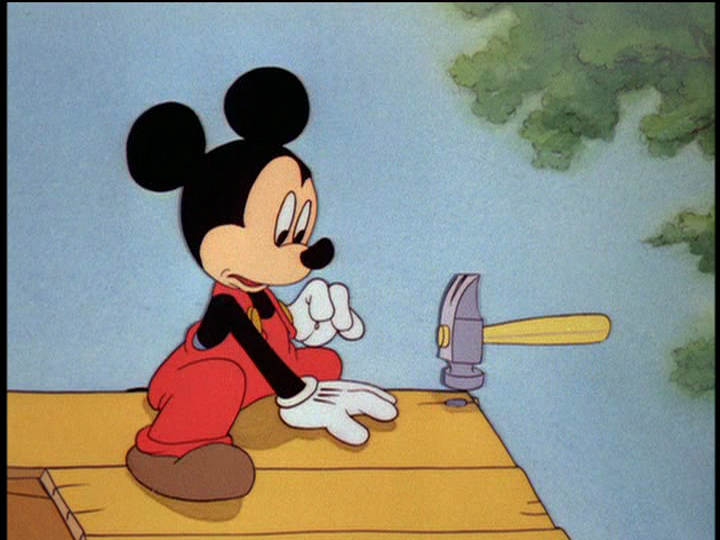
Mickey watches as the hammer starts working by itself to build the doghouse

Mickey watches as the hammer starts working by itself to build the doghouse

Mickey watches in astonishment as the house is made, and Pluto is attacked by the tools when he gets a little too close to their activities. Finally, the hosue is created, all tricked out with neon lishgts and a diamond encrusted fire hydrant. The lamp then gives Mickey the idea to wish that Pluto had a bath, and Pluto is sent flying into a tub of water. After a while, Pluto begins to enjoy the bath. Mickey then sits and relaxes in the living room, but has trouble finding something to listen to on the radio. As the lamp scrubs behind Pluto’s ears, Pluto ends up slammed against the wall, hitting it hard enough to knock the radio over and break it. The lamp interprets the sounds from the broken radio as commands from Mickey, and starts beating Pluto up. As Pluto is being tortured, the audience then realizes that this has all been Pluto’s dream. When Mickey tries to wake the whimpering Pluto, the dog howls with fright and leaps into Mickey’s bed. Mickey laughs at his pet’s behavior as Pluto clutches his master tightly.

August 29

August 29, 2000 – The Album Woody’s Roundup: A Rootin’ Tootin’ Collection of Woody’s Favorite Songs is Released Through Walt Disney Records

71yDf-nsYML“Woody’s Roundup, come on, gather round. Woody’s Roundup, where nobody wears a frown.”

On August 29, 2000, the album Woody’s Roundup: A Rootin’ Tootin’ Collection of Woody’s Favorite Songs (also known as simply Woody’s Roundup) was released through Walt Disney Records. Inspired by the fictional television program Woody’s Roundup from Pixar’s Toy Story 2, the album is a collection of Western style songs performed by the band Riders in the Sky. The album won the Grammy Award for Best Musical Album for Children.