RSS Feed

Monthly Archives: November 2012

November 10

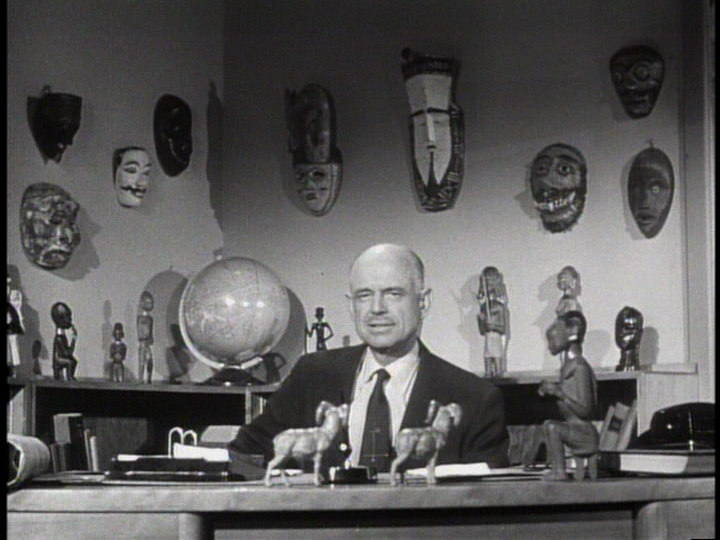
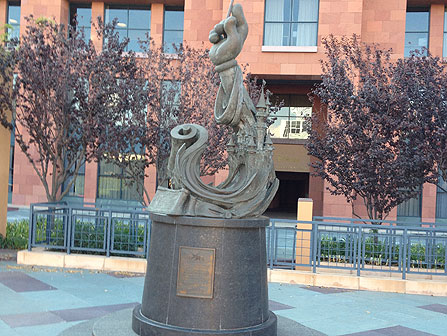
November 10, 1999 – The 1999 Disney Legends Ceremony Takes Place

Image Credit: Disney Insider

“The Walt Disney Company honors those special few who best embody the Company’s unique creative spirit, personified by its founder, as Disney Legends.”

On November 10, 1999, the Disney Legends ceremony took place, honoring nine people who have made a significant contribution to the Disney Company. Among those honored were Tim Allen (Toy Story, The Santa Clause series), Mary Costa (voice of Aurora in Sleeping Beauty), Al Konetzni (character merchandise), Dick Nunis (attractions), and Charlie Ridgway (attractions). Receiving the honor posthumously were Norm Ferguson (animator), Bill Garity (film technique), Yale Gracey (animation and imagineering), and Hamilton Luske (animation).

November 9

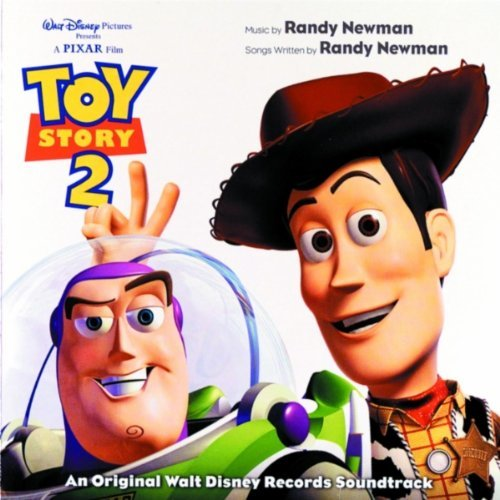
November 9, 1999 – The Soundtrack for the Pixar Film Toy Story 2 is Released on Walt Disney Records

“And when she was sad, I was there to dry her tears, and when she was happy, so was I, when she loved me.”

On November 9, 1999, the soundtrack for the third Pixar film Toy Story 2 was released on Walt Disney Records. The score and songs used in the film were written and composed by Randy Newman; he wrote two new songs for the film: “When She Loved Me” (performed by Sarah McLachlan), and “Woody’s Roundup” (performed by Riders In the Sky). “When She Loved Me” was nominated for an Academy Award for Best Song, but lost out to Phil Collins’ “You’ll Be in My Heart” from Disney’s animated film Tarzan. The soundtrack was also nominated for a Grammy Award, and won an Annie Award. The soundtrack is currently out of print in the United States.

November 8

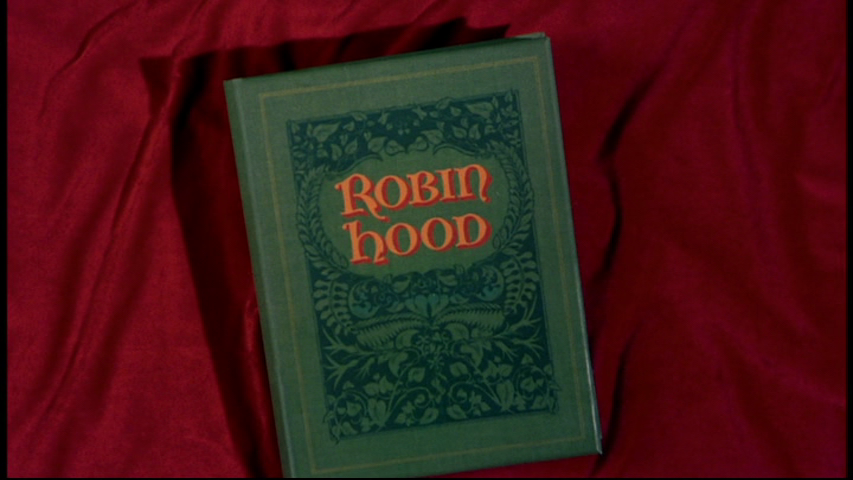
November 8, 1973 – The 21st Disney Animated Feature, Robin Hood, is Released to Theaters
“Rob? That’s a naughty word, we never rob. We just, sort of borrow a bit from those who can afford it.”

On November 8, 1973, the 21st Disney animated feature film, Robin Hood, premiered in theaters. The film began as an adaptation of the medieval European Reynard the Fox stories; however, Walt wasn’t convinced that Reynard would make a suitable hero. The film also proved to the public that the studio would be able to survive after Walt Disney’s passing. The romantic song in the film, “Love,” written by Floyd Huddleston and George Bruns and performed by Nancy Adams, was nominated for an Academy Award. The story was written by Ken Anderson, and was directed by Wolfgang Reitherman. The film stars Brian Bedford as Robin Hood, Phil Harris as Little John, Roger Miller as Allan-a-Dale, Peter Ustinov as Price John, Terry-Thomas as Sir Hiss, Andy Devine as Friar Tuck, Monica Evans as Maid Marian, Pat Buttram as the Sheriff of Nottingham, and Carole Shelley as Lady Cluck.

The film begins with Robin Hood and Little John “walking through the forest,” dodging the Sheriff of Nottingham and his men. As they escape into the trees, they hear trumpets and see Prince John’s carriage passing through the forest. Inside his carriage, Prince John laughs about being able to collect taxes from the people of England. His right hand, Sir Hiss, compliments the Prince’s plan to have Sir Hiss hypnotize King Richard into fighting the Crusades. As the caravan continues to Nottingham, Robin and John disguise themselves as fortunetellers and con the Prince out of his jewels, his clothes, and his sack of gold coins.
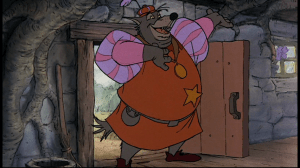
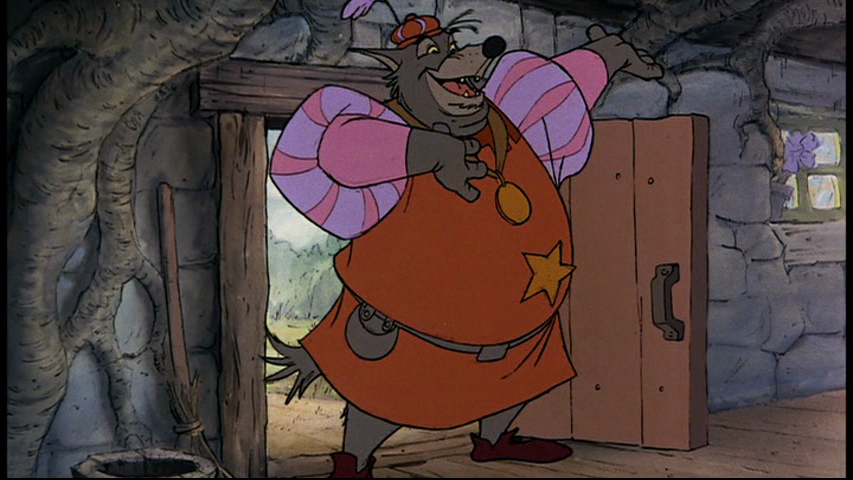
The “Honorable” Sheriff of Nottingham shows up at people’s doors and takes all their money as taxes for Prince John

In Nottingham, the Sheriff travels the town to collect the taxes, taking from Friar Tuck’s donations to the poor, as well as from a widow rabbit and her family. A blind man, who turns out to be none other than Robin Hood, appears at the widow’s door, surprising her with some money, and her son, Skippy, with a hat and archery kit for his seventh birthday. Skippy and his friends go out to test the bow and arrow, which he accidentally sends flying into the yard of Maid Marian. The kids sneak inside to retrieve the arrow, and end up playing a game of make-believe with Marian and her handmaiden, Lady Cluck, pretending that Skippy is Marian’s childhood sweetheart, Robin Hood. After the children leave, Marian daydreams about Robin, wondering if he’s forgotten all about her.

In Sherwood Forest, Robin is daydreaming of Maid Marian, telling Little John that he’s in love with her, but is worried that it wouldn’t work out between them because she’s a lady, and he’s an outlaw. Friar Tuck surprises him tells him that Prince John is having an archery tournament the next day, with Marian to give a kiss to the winner. Although Robin is anxious to run off to the contest, as he is sure he will not lose, he and Little John plan to show up in disguises, since the tournament could very well be a trap. At the tournament, Little John disguises himself as the Duke of Chutney to get close to Prince John, while Sir Hiss goes off to find out where Robin Hood is. Robin has disguised himself as a stork, and ends up winning the tournament; however, Prince John sees through his disguise and has Robin arrested. Marian pleas for his release, but Prince John refuses. A fight breaks out between Robin Hood and his friends against the Prince’s soldiers, and Robin and Marian escape into Sherwood Forest. The two reaffirm their love, and are surprised by the townsfolk with a party and a public mocking of Prince John, calling him the “Phony King of England.”
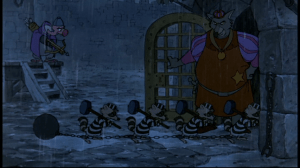
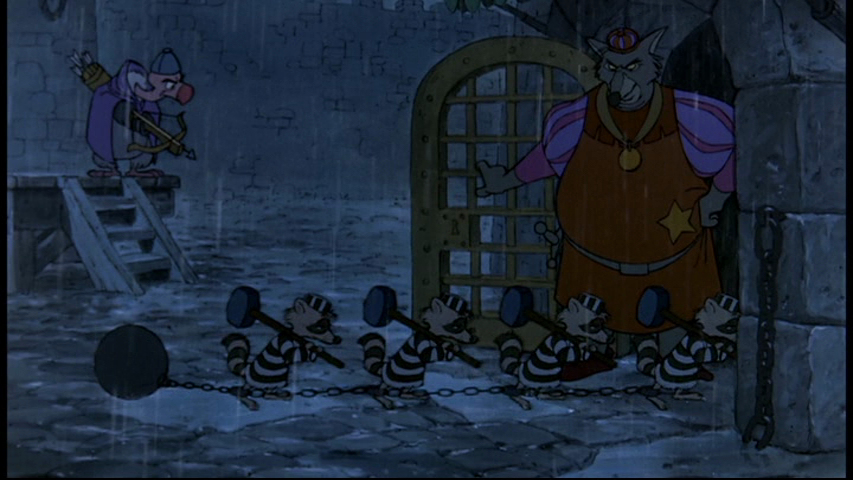
Almost everyone is Nottingham is jailed for being unable to pay the taxes increased by the Prince

Angered that the town is mocking him, Prince John decides to triple the taxes, sending most of the townsfolk into prison. Friar Tuck rings the church bell in the steeple to give people hope, but is upset that he can do only so little for his congregation. Angered when the Sheriff comes to collect all the money in the poor box, the Friar begins to fight back, only to be arrested. Prince John decides to use Friar Tuck as bait to trap Robin, with the Friar set to be hanged. Hearing this, Robin decides that he and Little John need to stage a jailbreak. While they manage to break everyone out, the guards are quick to attack on orders of Prince John. When Robin goes back to save one of the widow’s children, he is captured inside the castle. During the battle that follows, the castle is set on fire, and Robin dives into the moat surrounding the castle. Prince John thinks they have finally killed Robin, but Robin escapes once again.

In the end, King Richard arrives back from the crusades and pardons Robin and Little John. Prince John and his cohorts are sent to jail, working at the Royal Rock Pile. Robin and Marian are finally wed, riding away in a carriage marked “Just Married.”
November 7

November 7, 2010 – The Disney Channel Original Series Shake It Up Premieres

“Make a scene, make a scene nobody can ignore, don’t knock it ’til you rock it, we can’t take it no more!”

On November 7, 2010, the Disney Channel Original Series Shake It Up premiered on the Disney Channel. The show is a buddy comedy about two girls, CeCe Jones and Rocky Blue, who are background dancers on a local show called Shake It Up, Chicago, and land in a series of misadventures on and off the set. It is Disney’s third original series to use the “show-within-a-show” format, the other two being The Famous Jett Jackson and Sonny with a Chance. The series has earned mixed reviews. The show was created by Chris Thompson, and stars Bella Thorne as CeCe Jones, Zendaya as Rocky Blue, Davis Cleveland as Flynn Jones, Roshon Fegan as Ty Blue, and Adam Irigoyen as Deuce Martinez. The theme song “Shake It Up” is performed by Selena Gomez and the Scene.

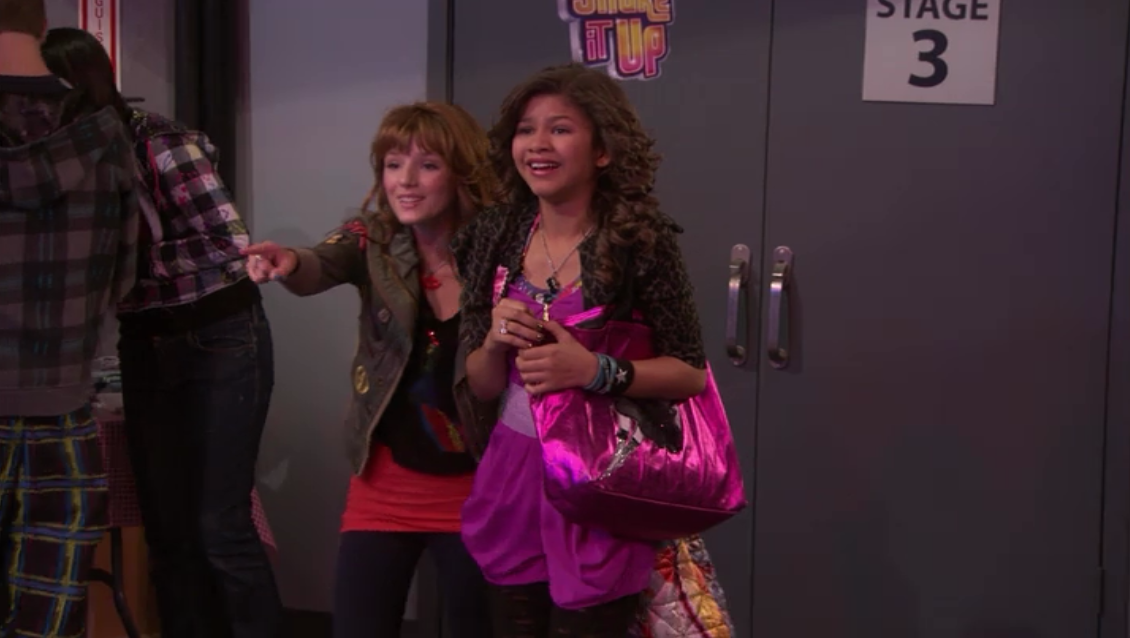
The first episode, entitled “Start It Up!” begins with CeCe and Rocky dancing on a subway platform and passing around a hat for tips. Unfortunately, they don’t receive any tips for their performance. At home, CeCe gets ready for school, while her police officer mother heads to work. Joined by Rocky, the two rush to school, where their friend Deuce lets them know that their favorite show “Shake It Up, Chicago” is having auditions that weekend. As CeCe plans for the audition, Rocky begins to have second thoughts, fearing the competition.

While CeCe arrives excited for the audition, Rocky lets her nerves get the best of her

The two arrive at the audition, and Rocky’s nerves get the best of her. But the two do audition, and make it to the spotlight dance round. Rocky gets up on the stage, and finally breaks through her nerves, and it’s announced that she’s on the show. CeCe gets up on the stage, but is suddenly overcome by nerves and is frozen on stage. Rocky attempts to help her friend, but is unsuccessful. CeCe is disappointed that she blew it, and runs off stage. Rocky finds her later at the subway and tries to cheer her up.

The next day, Rocky decides that she doesn’t want to be on the show if CeCe isn’t on the show, but CeCe refuses to let her back out. The two arrive at the show just in time, and Rocky handcuffs herself to CeCe, claiming that she won’t dance without her friend (unfortunately for CeCe’s mom, Rocky stole her handcuffs, and she is unable to arrest a criminal). The two perform a standout dance on the stage while handcuffed. They impress the network enough to get CeCe on the show, although Rocky misplaced the key to the handcuffs (which was in fact stolen by CeCe’s brother Flynn).

November 6

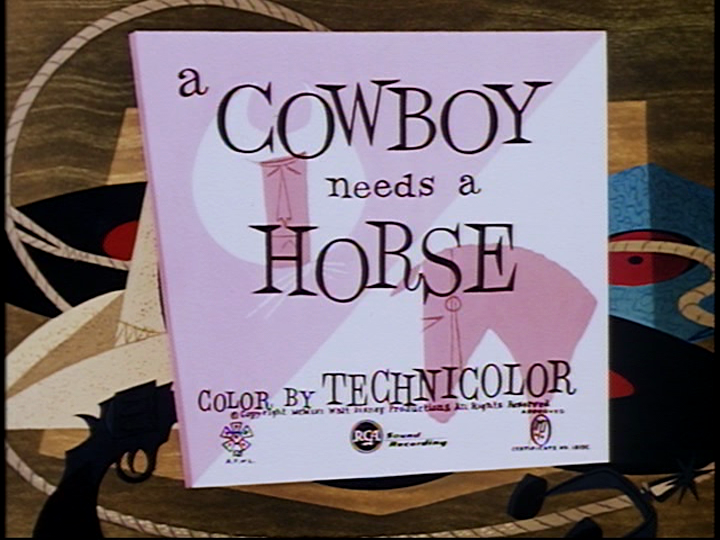
November 6, 1956 – The Special Short Film A Cowboy Needs a Horse Premieres in Theaters

“If he wants to keep riding, riding along…”

On November 6, 1956, the special short film A Cowboy Needs a Horse premiered in theaters before the True-Life Adventure film Secrets of Life. The short’s song of the same name was written by Paul Mason Howard and Billy Mills. The short was directed by Bill Justice, with story by Dick Kinney and Roy Williams.

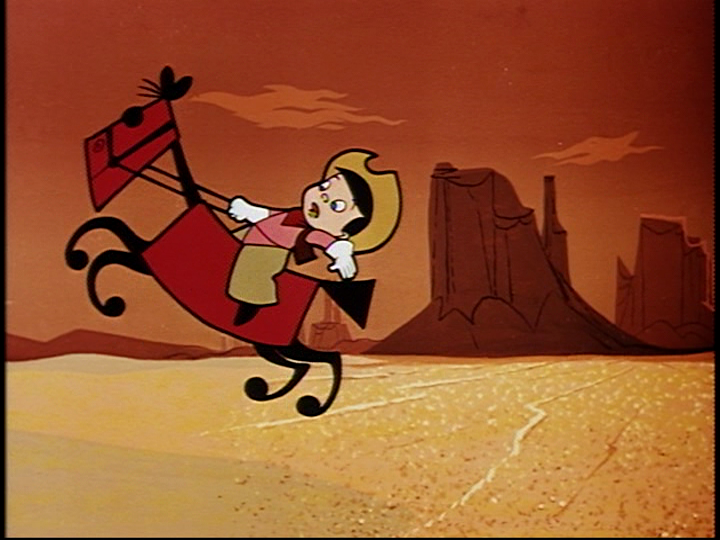
A little boy is sleeping in his bed, and dreams of being a cowboy. In his dreams, his bed turns into a horse, and the little boy magically gets a rope, a song, a hat, boots, and spurs, to become a cowboy. As he travels the desert with his horse, they are caught by an Indian tribe. He uses his pistols to fire back, until his pistols run out of bullets. Using his trusty rope, he captures the tribe, but makes peace with the chief, who offers him a peace pipe. The boy takes it and blows bubbles with it, to the chief’s delight. The chief gives the boy his headdress in gratitude.

Upon the sound of danger, the boy mounts his horse and chases after the villains in his dream

The boy suddenly hears gunshots, and looks to see some varmints trying to rob a stagecoach. He and his horse take off, just as the robber grabs the money. They give chase, and the boy and varmint roll down a hill, fighting, with the boy winning. He throws back the money, with the stagehand pointing to a reward sign for the criminal. The boy refuses the reward, happy just to help. Just as he and his horse are about to go on their way, they spy two other criminals attempting to blow up the railroad tracks. Although he is unable to remove the dynamite before it explodes, the boy throws himself on the tracks, and the train runs over him.

Work isn’t done for the boy: he hears a loud scream below, and spies a girl being tied to a cactus and being threatened by a villain. Jumping on his horse, he runs to her rescue, saving her just in time. The girl offers to kiss him, but he refuses, instead offering her a ride home instead. As the dream comes to an end, the boy relinquishes all of the things that make him a cowboy, and drifts out of his dream.

November 5

November 5, 1937 – The Silly Symphony The Old Mill is Released to Theaters

On November 5, 1937, the Silly Symphony The Old Mill was released to theaters. The short film is notable for being the first film to use the multi-plane camera, which helped create a new three-dimensional look to the Disney films. The film won an Academy Award for Best Cartoon; Disney also took home a special Scientific and Technical Class II plaque for the design and application of the camera.

An old mill stands abandoned at the side of a pond at sunset, while all the animals around head to their nests for the day. A pair of bluebirds have made a nest in the old cogs, waiting for their eggs to hatch. Many animals have made the mill their home, from mice, to owls and bats. Out in the pond, frogs peek out from their lily pads and begin to croak, until they are interrupted by the sound of crickets. Fireflies also appear in the night, with one of the frogs anxious to eat one. As he does, his stomach glows from the firefly.

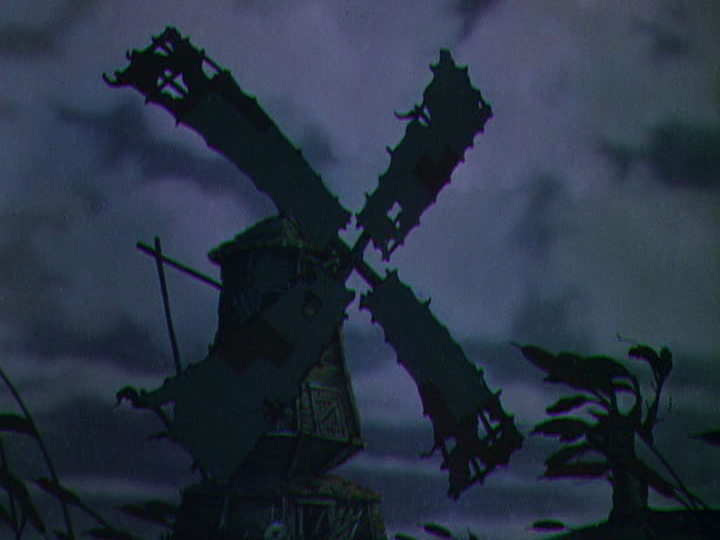
The windmill begins to spin again as storm clouds gather and the wind picks up ferociously

Suddenly, the wind begins to howl, and the windmill starts to turn. The bluebird who made her home in the cogs can’t bear to leave her eggs – luckily, the cog she is sitting under is missing, and she and the eggs ride through unharmed. The storm grows stronger, with the rain dripping through the leaky roof and open windows. A pair of doves sit together, weathering the storm on an open ledge. A group of mice shiver after the lightning strikes. Parts of the mill begin to fall apart. Without warning, the mill is struck by lightning, shifting it from its base.

The storm settles, and the bats return to the mill as dawn approaches. The bluebirds’ eggs have hatched, and mother and father return with food. As life returns to normal, the animals begin their day once again in the abandoned mill on the side of the peaceful pond.

November 4

November 4, 1895 – Director, Producer, and Disney Legend Ben Sharpsteen is Born

“Concerning Ben Sharpsteen and his contributions to the development of the Disney organization, I want to say he played a very important part.” – Walt Disney

On November 4, 1895, Ben Sharpsteen was born in Tacoma, Washington, and was raised in Alameda, California. Sharpsteen attended the University of California at Davis to study agriculture, and joined the Marines in 1917 to serve during WWI. After the war, Sharpsteen worked at various studios as an animator, including Paramount, Jefferson Films, and Max Fleischer Studios. After his work was recommended to Disney, Sharpsteen flew from New York to Los Angeles; he was hired and paid one of the highest salaries in the studio, higher even than Disney’s top animator, Ub Iwerks.

For his first six years at Disney, Sharpsteen contributed animation on 97 Mickey Mouse short films and several Silly Symphonies. In 1933, Sharpsteen also established an animation training program within the studio, and began to recruit talented artists. In 1934, he moved to directing on the short films, which led to his role as a sequence director on Snow White and the Seven Dwarfs. He then became a supervising co-director on Pinocchio, and a production supervisor on Fantasia, Cinderella, and Alice in Wonderland. In the 1950s, Sharpsteen worked on several of the True-Life Adventure series, even presenting the series on television on the first episode of the Disney anthology series Disneyland. After working with the Disney Studios for 33 years, he retired in 1962, and passed away on December 20, 1980. He was inducted as a Disney Legend in 1998.

November 3

November 3, 1934 – The Silly Symphony The Goddess of Spring is Released to Theaters

“There once was a time in the long, long ago, when there was joy and laughter everywhere.”

On November 3, 1934, the Silly Symphony The Goddess of Spring was released to theaters. It is known as one of the earliest attempts of human animation for the Disney animators, as they were preparing for the feature film Snow White and the Seven Dwarfs. The short was directed by Wilfred Jackson.

The short opens in a forest on a beautiful spring day, with all the animals frolicking in the sunshine along with several woodland elves. The Goddess of Spring herself, Persephone, also dances by before sitting on her throne of cornucopias. The flowers dance a ballet at her feet before turning themselves into a wreath and resting on her head.

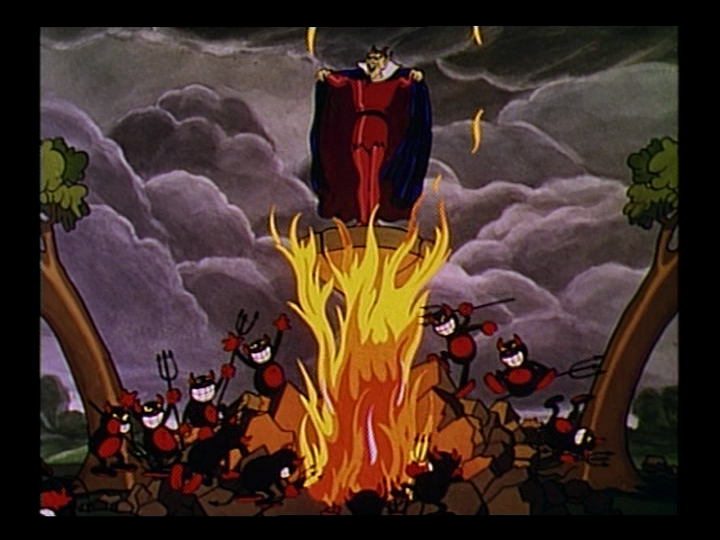
Out of the blue, the Devil bursts out of the ground, coming to claim the goddess as his bride

Suddenly, the skies grow dark, and the Devil bursts out of the ground on top of a column of flame, coming to claim Persephone as his queen. She refuses, but he grabs her and takes her to the underworld. All of Hell is celebrating the Devil’s “marriage,” but Persephone appears visibly miserable. On the surface, it is perpetually winter, with all of the woodland creatures mourning the loss of the goddess.

The Devil tries to tempt Persephone to stop crying with all the treasures of the world, and is angered that she will not stop being sad. He tells her that he will do anything she says, so long as she smiles. She asks to return to her world above, as everything above will die if she doesn’t. He acquiesces on one condition: she must spend half of every year with him below. She agrees to his terms, and is released. Everyone of the surface is overjoyed to see her, especially when she melts the snow and makes the world spring again.

November 2

November 2, 2004 – The Soundtrack for The Incredibles is Released Through Walt Disney Records

On November 2, 2004, the soundtrack to the sixth Pixar film The Incredibles was released through Walt Disney Records. The film was scored by Michael Giacchino, and was his first Pixar film, his other two being Ratatouille and Up. The soundtrack consists of nineteen tracks, and was awarded the IFMCA Award for Score of the Year; it was also nominated for the Grammy Award for Best Score Soundtrack Album, and for Best Instrumental Composition for “The Incredits.”

November 1

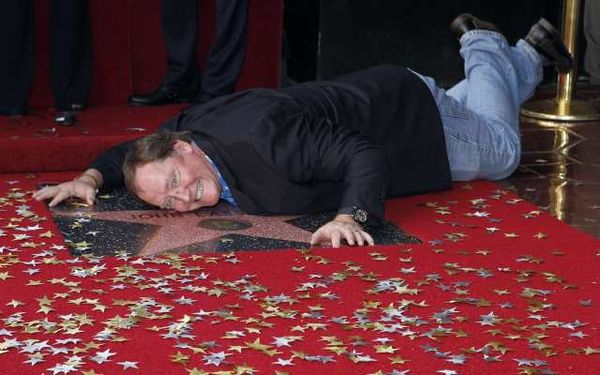
November 1, 2011 – John Lasseter Receives a Star on the Hollywood Walk of Fame

Image Credit: latimes.com

“To be here today, to be getting a star on the Hollywood Walk of Fame, I just can’t believe it.”

On November 1, 2011, animator, director, and Chief Creative Officer of Pixar and Walt Disney Studios John Lasseter was awarded a star on the Hollywood Walk of Fame for his work in the field of animation. His star is located in front of the El Capitan Theater, where every Pixar film has been shown since the company’s first full-length animated feature, Toy Story. Lasseter was joined by his family and his colleagues at Pixar, as well as Pixar voice actors Owen Wilson, Bonnie Hunt, Patton Oswalt, Cheech Marin, Emily Mortimer, Don Rickles, and Pixar favorite John Ratzenberg. Lasseter also gave thanks to the late Steve Jobs, by saying, “[W]ithout Steve, Pixar wouldn’t exist. These films wouldn’t exist. I honor him.”