RSS Feed

Tag Archives: Television

April 24

April 24, 1989 – The New Mickey Mouse Club Premieres on the Disney Channel

Image Credit: UltimateDisney.com

On April 24, 1989, the third incarnation of the Mickey Mouse Club, later known as MMC, aired on the Disney Channel. The main difference between the original show and this updated reincarnation was that the Mickey Mouse element was highly de-emphasized in favor of the popular show trends of the day, which made the show lean more toward a Saturday Night Live format. The show premiered with twelve teenagers and two adults in the cast. Three members stayed with the show through its run: Josh Ackerman, Lindsey Alley, and Jennifer McGill; Tiffini Hale from the first season would return for the final season in 1995.

The show ended up as a launching point for many of today’s stars, including Justin Timberlake, Britney Spears, and Ryan Gosling. The Mouseketeers would still continue to have theme days, including Music Day (Monday), Guest Day (Tuesday), Anything Can Happen Day (Wednesday), Party Day (Thursday), and Hall of Fame Day (Friday). Many new serials were released through the show, including Teen Angel, Teen Angel Returns, Just Perfect, Match Point, My Life as a Babysitter, Emerald Cove, and Treasure of Lost Creek.

April 4

April 4, 1956 – Where Do the Stories Come From? Premieres on Television

“Potential story ideas exist all around us.” – Walt Disney

On April 4, 1956, the Disneyland episode Where Do the Stories Come From? premiered on ABC. Directed by Jack Hannah, the episode attempts to explain the most often-asked question of the members of the Disney studios: where do they get their story ideas?

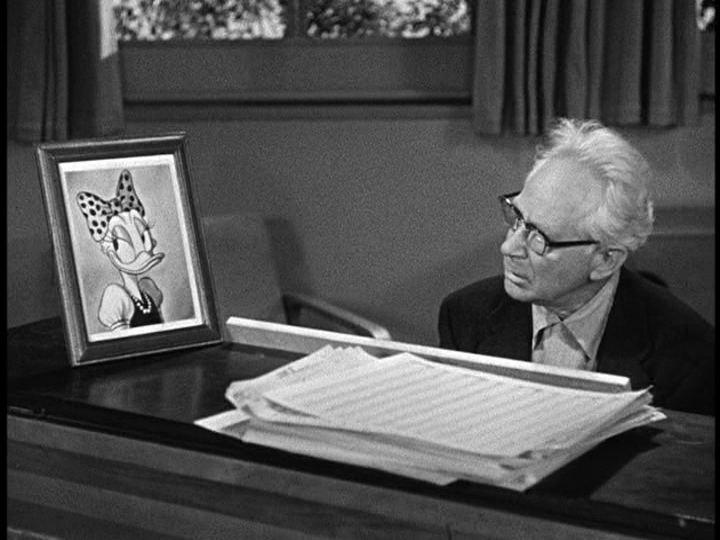
Composer Oliver Wallace studies a picture of Daisy, trying to find inspiration for a song about her

The episode opens with Walt Disney saying that the question of “Where do the stories come from?” is one that is asked a lot, and this episode will try to explain it the best he can. He tells the audience that story ideas can come from books, or are inspired by a song. The first example he gives of the latter is the song that had to be written for Daisy Duck; “she had to have a song,” since everyone else had one. The assignment for Daisy’s song was given to studio composer, Oliver Wallace. He thinks of words that rhyme with Daisy, and comes up with “crazy,” which gives him the title, “Crazy Over Daisy.” Soon, Wallace is composing an entire melody, and not long after, two men are seen listening to a record of the completed song. It then became the inspiration for a short film called Crazy Over Daisy, set in the early 1900s, which is shown next.

For the next example Disney brings up a short that was based on the True-Life Adventure series, where any interesting footage of animals could inspire the story artists to come up with a short film. “In viewing the thousands of feet of true-life adventure film that comes into the studio, we sometimes come across an animal that is a natural foil for one of our cartoon characters,” Disney explains, as he introduces the short R’Coon Dog.  Thinking a raccoon would be a match for Mickey Mouse and Pluto, the animators consult Pluto about his part in the film. Pluto is seen in the projection room, watching the footage of raccoons, and then is seen in the story room, where the animators are seen drawing the raccoon character.  Pluto takes the drawing a bit too seriously and tears it up with his teeth. The audience then sees R’Coon Dog.

The next example Disney presents draws on the experiences of the artists during World War II, when they had to get their physicals. The animators thought “it would be fun to put Donald Duck in the same ordeal,” and they show a compilation of some of the Donald Duck wartime shorts, including Donald Gets Drafted, and Fall Out Fall In.

Walt Disney presents the hobby of many at the Disney Studio: model railroads

Disney then presents his own hobby of model railroads, as well as two animators who “haven’t escaped the bug” of the hobby, as Disney puts it: Ollie Johnston and Ward Kimball of the Nine Old Men. The audience sees home movies of Ollie and Ward with their model railroads.  Every detail is built to scale on Ollie’s model, and Ward has a full-size model in his own backyard. Not to be outdone by his two animators, Disney shows off his own model railroad, named the Lilly Belle, and some of the home movies of creating the track in Disney’s backyard. “The hardest part of the job was convincing my wife that the flower beds had to go,” Disney jokes. The hobby shared by these three men led to the creation of a Donald Duck short, Out of Scale.

February 13

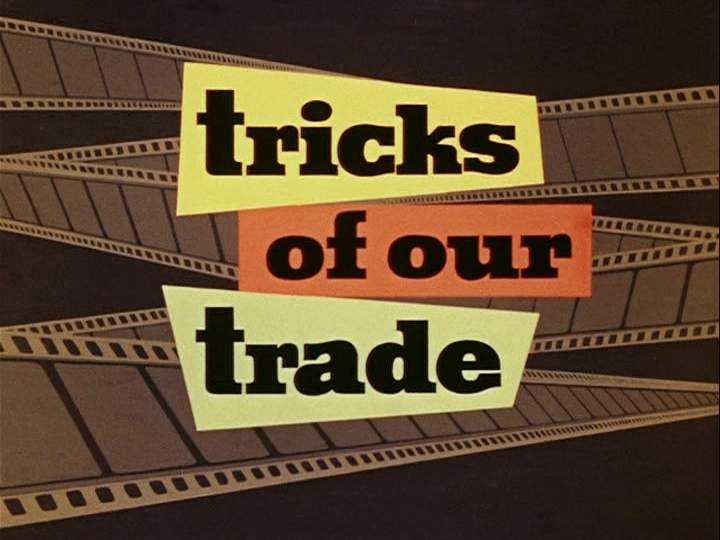
February 13, 1957 – The Disneyland Episode Tricks of Our Trade Premieres on ABC

“Before our eyes, we have seen an entire industry grow literally from the ground up. And this growth was no accident. It was painstakingly built, step by step, by men with pioneering spirit, who loved this puzzling new art form, and believed in its future.”- Walt Disney.

On February 13, 1957, audiences were treated to a different kind of episode of Disneyland: one that focused on how animated films were able to capture things as realistically as they did. With our host, Walt Disney, we are taken through the “tricks of the trade,” where he explains some of the then-commonplace animation principles, as well as some of technical advances made in the studio, and why they needed to be created. The examples given are obviously staged, but they give the audience a great example of the process used to come to a solution. Animation examples are from Snow White and the Seven Dwarfs, Bambi, and Fantasia. The episode was written by animation veteran Dick Huemer and directed by Wilfred Jackson. It also includes cameos of four of the famed Nine Old Men: Frank Thomas, Ollie Johnston, Marc Davis, and Milt Kahl. The episode refers to the book, The Art of Animation, which was the book that inspired John Lasseter to want to be an animator (please see the January 12th entry for more information).

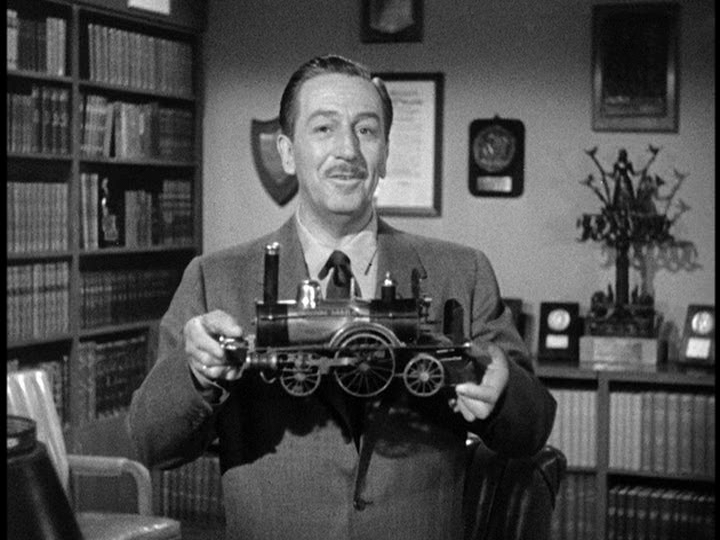
“Because the animated cartoon comes to life on the screen, it belongs in the field of the motion picture,” Walt explains, as he opens up the episode. “But because it is drawn and painted, it is also one of the graphic arts, like painting. As a matter of fact, it is often referred to as the last of the graphic arts.” Disney then goes to his desk and shows the audience the book The Art of Animation, which was written by Bob Thomas about the Disney Studios. Disney turns to chapter eight, entitled Tricks of Our Trade, and explains that the pupils were their own teachers when it came to the principles of animation. “They had to be, because no one in the world could give them the answer to what they wanted to know,” Disney says, adding that their overall question was: How could animation be improved?

The animators in a classroom after hours, learning more about their own medium by one of their own

The first segment shown is of a group of animators watching a film of overweight comedian Billy House performing a two-step. The animators note that an overweight man moves differently, and that the human body does not move all in one piece. When the film is slowed down, there are many details they recognize that cannot be seen at normal speed. We then see the animators use what they saw to create an animation of the dwarf Happy doing the two-step dance, with the animation principles of weight, contact, follow-through, squash and stretch, and overlapping actions being used effectively. Disney points out while it’s true that thoughts and emotions can be expressed through pantomime, who a character is and what they think can best be revealed by dialogue. The trick of using dialogue is shown through a clip from Show White and the Seven Dwarfs, where Snow White identifies which dwarf is which.

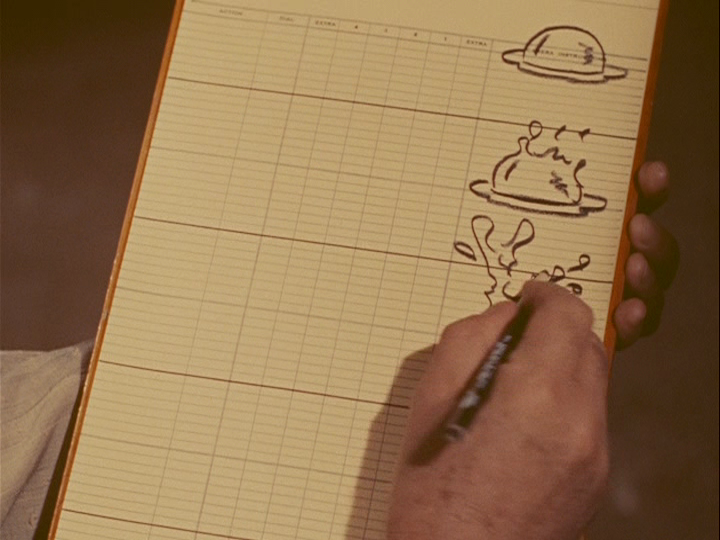
Dan MacManus sketching on an exposure sheet, trying to see how many frames it wll take to draw before the animator can draw the bubble bursting

The next animation technique we look at is effects animation: the trick of making the cartoon characters more believable by using extremely realistic animation of incidental action. There are many clips of animators watching various actions—including a baseball thrown through a window, or a bubble being blown from a pipe—and Disney explains that animating breakage required tremendous attention to detail. This leads into a clip of the earthquake from The Rite of Spring sequence in Fantasia. Continuing with that sequence, we see three effects animators looking at a tub of orange-colored mud, trying to solve three different problems for the creation of earth sequence in The Rite of Spring. Joshua Meador, head of the experiment, uses color chalks and pastels to render the sketch that would give an overall impression of the sequence. Jack Boyd’s assignment is to establish the individual action of a pair of bubbles, verifying his findings with the 2-drawing flipping action. Dan MacManus’s job is to see exactly how many drawings it would take to animate the bursting of a bubble, using an exposure sheet and a stopwatch. The audience then sees the clip from The Rite of Spring in its entirety.

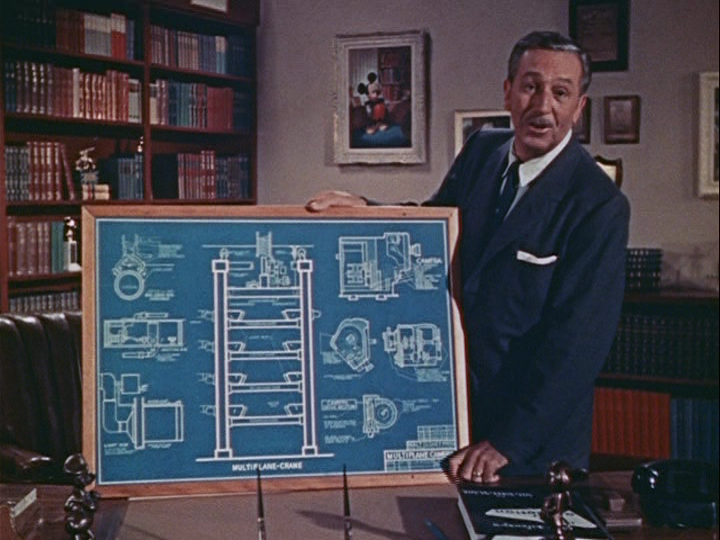
Walt with a blueprint of the Multi-Plane Camera, a Walt Disney Studios invention. Coincidentally, Ub Iwerks had created his own version at his own studio, only it was a horizontal camera

Walt pulls out a picture, calling it a different kind of drawing, which “also came out of our school of self-improvement here at the studio.” The blueprint is of the multi-plane camera, which was first used to great success in the Silly Symphony The Old Mill. Disney explains that the old process for animated films was fairly simple in construction and operation, but the biggest problem was that any dimension the character brought with him or her into the scene disappeared when the character left the frame. Another example used was a painting of a house on a moonlit night, and when the camera zoomed in on the scene, everything got larger, including the moon, which does not happen in reality. The use of the multi-plane camera shows the audience the big difference it makes in that scene. The audience next sees the opening scene of Bambi, and how the multi-plane camera works to give realism to the forest.

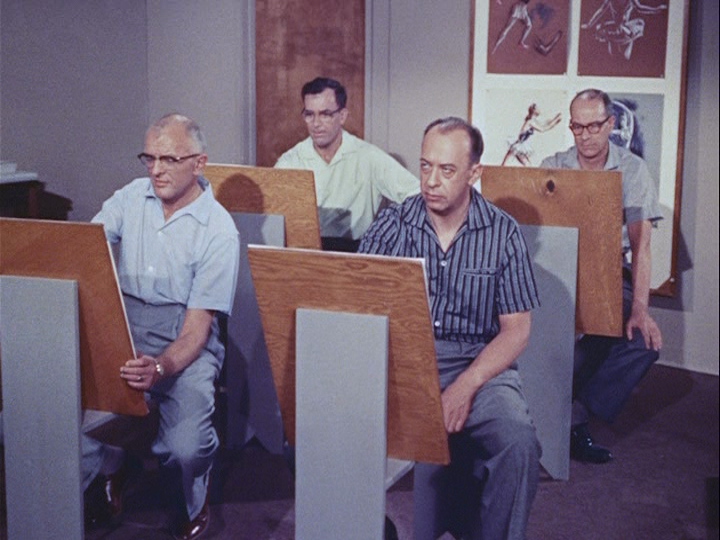
Four of the famous Nine Old Men, studying ballet moves. From Far Left: Milt Kahl, Frank Thomas, Marc Davis, and Ollie Johnston

“Perhaps the thing that distinguishes animated cartoons more than anything else is the trick of caricature,” Disney says. He tells the audience the story of the animation of Dance of the Hours from Fantasia, which involved the use of a live-action model to help the animators see the ballet movement of the dance. The ballet dancer they used was Helene Stanley, who was also the live-action model for Cinderella and Aurora in Sleeping Beauty. In this segment, we see the four of the famous Nine Old Men as they study Stanley’s movements. Kahl discovers that he may not be getting the kick right. Davis asks Stanley to perform it again, and as she does, Kahl makes a comment that the kick should be higher “in order to get all that weight off the ground. She’s no cream puff, you know.” Davis agrees, adding, “Yeah, that is a lot of beef.” These comments grab Stanley’s attention, but she keeps dancing. Thomas steps forward with his drawing and asks if he’s made the trunk too long: at this point, the audience sees that the drawings are those of the animals in the Fantasia sequence, although Stanley still thinks they are talking about her. Kahl responds to Thomas, “Oh, no, that’s what gives it that goofy look. Trunk’s way out of proportion to the rest of her body…it wouldn’t hurt to make [her legs] good and hairy.” These comments finally get the best of Stanley, who grabs her hat and cape and runs to the door, before turning around and seeing the animals they’ve been animating, and laughs before returning to the stage. The episode ends with the ballet segment from Fantasia, with all elephants, ostriches, and hippos.

The episode is wonderful for those who are fans of animation, and wish to see a dramatic look at how the animators were able to teach themselves and develop the new techniques to create better animation. Similar to “lessons learned” when creating computer animation in this generation, this highly recommended episode shows how the animators really had to, and did, step up to blaze a new trail.

February 2

February 2, 1986 – The Disney Sunday Movie Premieres on Television

“Hi, I’m Michael Eisner, and welcome to The Disney Sunday Movie.”

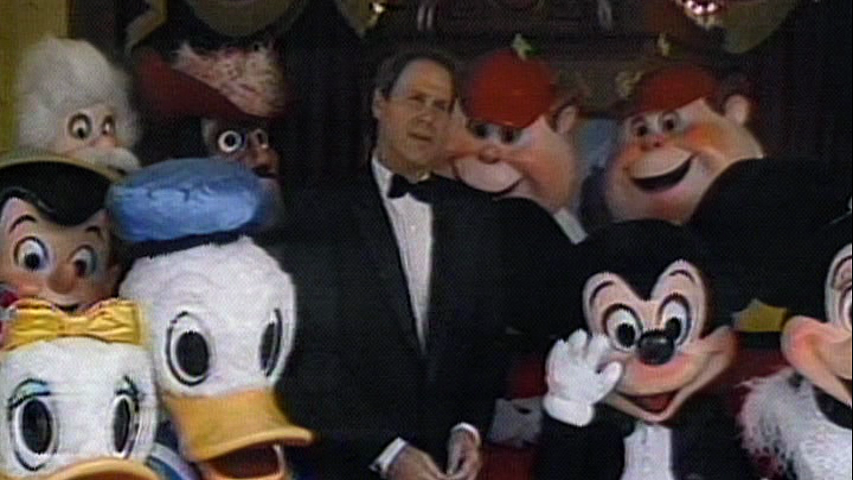
Beginning on February 2, 1986, Disney came back to television with a new anthology series, titled The Disney Sunday Movie. Hosted by then-CEO of the Disney Studios Michael Eisner, it was a way to once again bring the Disney films and original Disney programming to television. The series showcased more than thirty films while on ABC.

The first showing on the show was the movie Help Wanted: Kids. The two-hour television movie was about a couple moving to Arizona for work, only to discover that the new boss is a fan of the traditional family, and the couple does not have kids. The couple decides to hire two children to pretend to be their kids with the involvement of a bit of blackmail.

Michael Eisner as the host of The Disney Sunday Movie

The series faced trouble from the beginning, as it was in competition with 60 Minutes on CBS, as well as their top-rated show Murder, She Wrote. In 1987, ABC cut the show down to an hour, but it still wasn’t able to fare well, having been rated fifty-ninth of eighty-five. On September 11, 1988, the struggling show moved to NBC, renamed The Magical World of Disney, but the ratings were unable to improve. In 1990, the series was cancelled. It was revived again in 1997 on ABC, this time renamed The Wonderful World of Disney.

January 30

January 30, 1959 – The Peter Tchaikovsky Story Premieres on Disneyland
“…for just as Sleeping Beauty was held under an evil spell for a long, long time, just so did an evil spell put Tchaikovsky’s genius to sleep for many years, until something wonderful happened to awaken him to his full powers as a composer.” – Walt Disney

Straight from Fantasyland, audiences were treated on January 30, 1959, with The Peter Tchaikovsky Story, a look at the life of Peter Ilych Tchaikovsky, composer of the ballet Sleeping Beauty, whose score inspired the Disney animators to create the animated feature of the same story. The episode also gave audiences a chance to see early clips from the completed film in widescreen, a first on television. This was also the first television show to be simulcast in stereo. The stereo simulcast required the assistance of radio stations, but unfortunately, this could not be accomplished in all markets. Two versions of this episode were prepared, to accommodate those who would be able to use their stereos. Although the episode was originally shown in black and white, the main story was shot in color. The episode was directed by Charles Barton, and stars Grant Williams as the older Tchaikovsky, Rex Hill as the younger Tchaikovsky, Lilyan Chauvin as Fanny Durbach, Leon Askin as Anton Rubinstein, and Narda Onyx as Desiree Artot. The episode also features Galina Ulanova and the Corps de Ballet of the Bolshoi Theater in a production of Tchaikovsky’s Swan Lake.

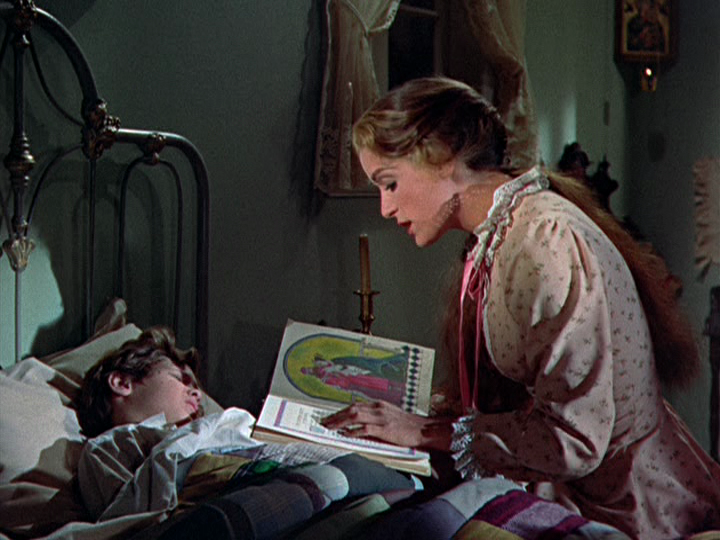
As the narrator relates, Peter Ilych Tchaikovsky was born in Votkinsk, a small provincial town in Russia, in 1840. When we first see Tchaikovsky, his siblings are running around the living room while he sits at the piano, playing. At a young age, he had found happiness in music, particularly the music of Mozart, whom he considered his idol. His mother, however, worried about how much time he spent at the piano, and hired a French governess to teach the children. The governess tries to understand the boy’s love of music, but in the end, she tries to tear him away from the piano to have him play in the sunshine. One evening, Tchaikovsky is troubled by the music that seems to play unending in his head. “Whenever the boy’s soul was stirred,” the narrator explains, “the music would throb in his head until it was almost painful.” The governess hears his painful cries, and decides to soothe him by reading him a story he had never heard before – the story of Sleeping Beauty. Unfortunately, the story did little to put him to sleep; it caused his creative juices to flow, and he snuck down to the piano to compose before being caught by the governess. The next day, Tchaikovsky is dismayed to see that the piano has been locked up, and as he tries to find another way to express the music in his head, he breaks the window after tapping emphatically on it, slicing his hand. His parents allow him to play once more, but this happiness would soon be interrupted.
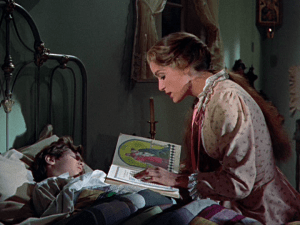
Young Tchaikovsky (Rex Hill) being read the story of Sleeping Beauty by his governess, played by Lilyan Chauvin

“…contentment was never to be Peter’s fate for very long,” the narrator warns the audience. “Soon, he was to suffer the heaviest blow of his young life. His parents decided to prepare him for a government career at school in St. Petersburg.” Tchaikovsky is seen crying as his mother wishes him farewell, telling him to be a good boy and study hard. As she leaves, the audience is told that Tchaikovsky never saw his mother again, for she died soon after. After this crushing blow, “his musical genius withdrew deep inside him. It went to sleep, like Sleeping Beauty in the fairytale. And, strange to say, like Sleeping Beauty, it would stay dormant for a long time before something wonderful happened to awaken it again.” Seventeen years later, we see Tchaikovsky grown up, working as a lowly copy clerk. He toils away, feeling his life lacks meaning, until he sees an advertisement in the newspaper: the opening of a new conservatory of music, led by the great composer, Anton Rubinstein. This stirs something inside him, and Tchaikovsky decides to enroll in the evening classes for piano and composition.

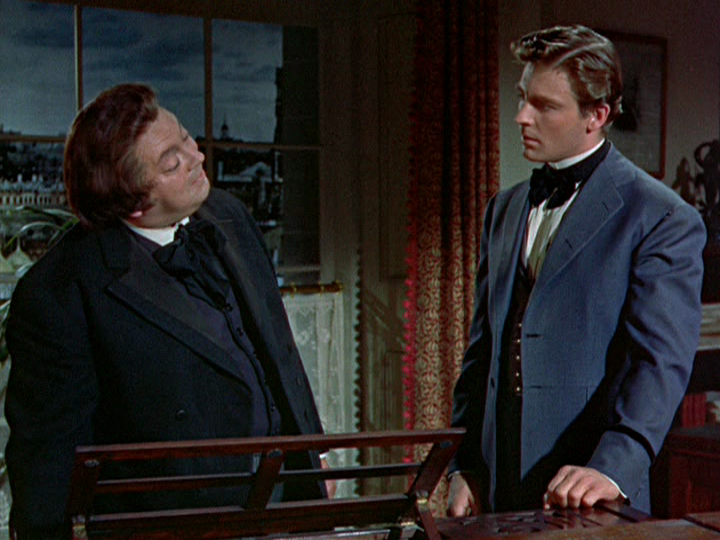
One evening, as he improvises tunes of his own, he is spotted by Rubinstein himself. The composer asks Tchaikovsky if he wishes to make a career of music, to which Tchaikovsky admits he has dreamed of it, but needs to earn his bread. “Bread! Did Bach, Mozart, Beethoven think of bread?” the composer cries. “For music, an artist must be willing to starve.” He gives the young man a test: he plays a theme, and asks him to write variations on it, telling him that not only quality, but quantity counts as well. Inspired, Tchaikovsky works all night on his variations, which unfortunately gets him in trouble at work when he accidentally writes on an official decree with the signature of the prime minister. Immediately dismissed, Tchaikovsky goes back to Rubinstein to submit his variations – all 215 of them. Rubinstein offers to take Tchaikovsky under his wing, an offer Tchaikovsky immediately accepts.
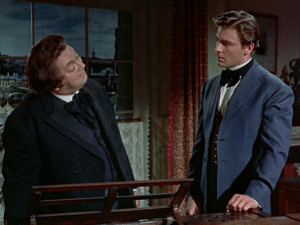
Anton Rubinstein, played by Leon Askin, asks Tchaikovsky, now played by Grant Williams, about his plans in music

Tchaikovsky’s true awakening, the narrator states, was at a performance of the traveling Italian Opera Company, starring a beautiful soprano named Desiree Artot. To try to win her affections, Tchaikovsky writes her a song, which begins a relationship leading to an engagement between the two. This engagement is broken, however, by a letter from Desiree, addressing Tchaikovsky as her dearest friend and informing him that she has married a man in her troupe. Deeply wounded, he vows to never write another note of music, but this was not to be: his genius was too strong to be shut away again. Instead, his love for Desiree was replaced by a new love for the ballet. His first ballet was entitled Swan Lake, and although Tchaikovsky had great hopes for its success, it was a dismal failure. Unable to handle the criticism, Tchaikovsky fled to Europe. He was unable to find any solace while traveling, and so from Naples, he took a steamer back to Russia, where he was troubled by a dream of a memory. He remembered the time in his childhood when his governess soothed him by reading him a fairytale, and how he immediately set to work composing it. Waking with a start, he rummages through his belongings to find the manuscript of Sleeping Beauty someone had sent him, thinking it would be a good idea for a ballet. Inspired once again, he sat down to compose the entire ballet before arriving back in Russia. “And this time,” the narrator says, “his creation was headed for the bright future that was in store for all his wonderful works.”
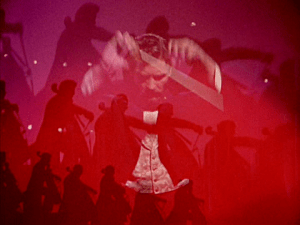
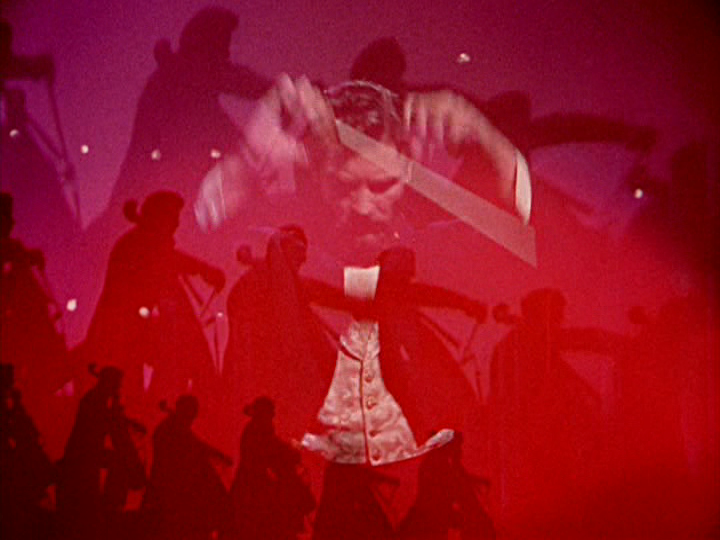
Tchaikovsky conducting the Sleeping Beauty Ballet. The orchestra scenes used are actually reused footage from Fantasia

The rest of the episode is basically an advertisement for the upcoming film version of the story of Sleeping Beauty. “Imagine your living room is a theater,” Disney urges the audience, “and your television set is the theater’s wide screen, as we bring you this romantic sequence from Sleeping Beauty.” In fact, two scenes are played for the audience: the Once Upon a Time sequence, and the rescue of Prince Phillip from the evil clutches of Maleficent, which ends as the evil fairy turns into the dragon. “Well, there’s much more to Sleeping Beauty than the few brief scenes we’ve shown you on this program,” Disney reassures us. “But I can tell you this: like all good fairytales, true love does win out.”

Although not a truly accurate depiction of Tchaikovsky’s life, the episode is a rather good watch, especially to capture the excitement of audiences seeing a new technological advancement when it came to movies. This story of Tchaikovsky’s life is a good story, and told well, even though it comes at the cost of the omission of some facts that may not have been suitable for audiences in that time period.
January 26

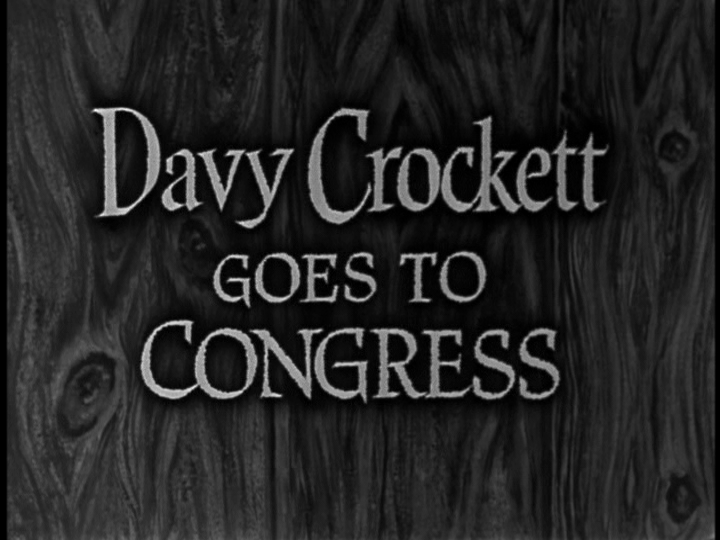
January 26, 1955 – Davy Crockett Goes to Congress Premieres on ABC.

“Now, again from Davy’s own journal, we’d like to present another story of Davy’s fabulous life. This one is called, ‘Davy Crockett Goes to Congress.’” – Walt Disney.

On the evening of January 26, 1955, the second installment of The Adventures of Davy Crockett premiered on the Disneyland television show on ABC. Shown a little over a month after the first installment, the series continued the Davy Crockett craze that had taken over the youth of America. This episode, entitled Davy Crockett Goes to Congress, was directed by Norman Foster, and written by Tom Blackburn. It stars Fess Parker as Davy Crockett, Buddy Ebsen as Georgie Russel, Basil Ruysdael as Andrew Jackson, William Bakewell as Tobias Norton, and former professional wrestler Mike Mazurki as Bigfoot Mason.

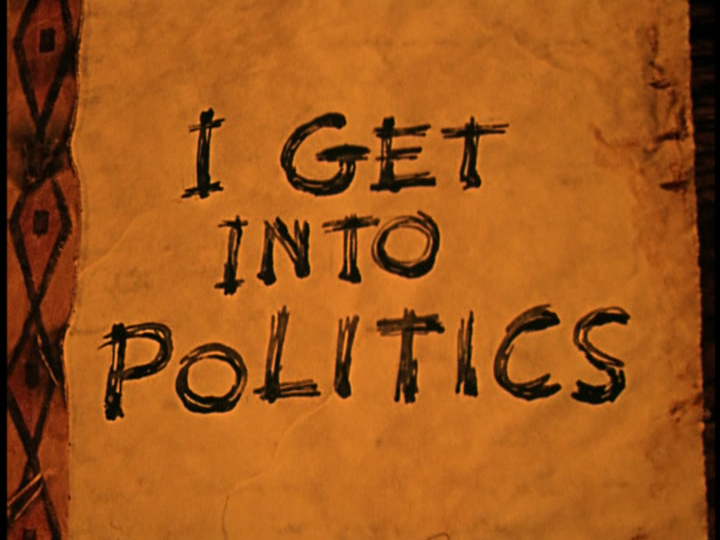
A page from Davy's own journal, as seen in the show, which introduces the story of Davy's political career

The show opens with Davy and his pal Georgie setting out to find a new piece of land to settle. Although they find the perfect spot, Georgie reminds Davy that they need to file a claim for the land. As they approach the settlement, looking for the judge to file their claim, they stumble upon a shooting match. Ever competitive, Davy challenges a man named Bigfoot Mason, wagering $15, the estimated price of the prize cow. They tie with the first round, but with their second shots, Bigfoot believes he won, as it appears that Davy completely missed the target. When it’s discovered that Davy hit the exact spot twice, he makes an unintentional enemy out of Bigfoot. The judge, discovering who Davy is, is thrilled that Davy is in town, as he may be the man that can stop Bigfoot’s schemes. The judge informs Davy and Georgie that Bigfoot and his gang have been running the Indians off of their land and selling it to newcomers who have no idea that the land has been stolen. Davy reminds the judge that there’s a treaty that guarantees the Indians their land, but the judge says that Bigfoot disregards any treaty of that nature. The few people who have tried to stop Bigfoot have disappeared, presumed dead. The judge, knowing Davy’s reputation, asks Davy to be the magistrate and serve a warrant on Bigfoot and his gang. Davy says he’d have to think about it. It doesn’t take long for Davy to decide, as he finds that the Cherokee Charlie Two Shirts has been beaten and run off his land. Davy confronts Bigfoot, and it turns into a no-holds-barred fistfight. Davy emerges victorious, and peace comes over the settlement again as the gang is brought to justice.

During one of the celebrations in town, the judge tells Davy that since the settlement is experiencing a lot of growth, they’ll be getting someone to represent them in Nashville, and the town has picked Davy as the man they want to run for the state legislature. Davy responds, “I’m plumb flutterated by the honor, but, well, I ain’t no politician.” When the judge informs him that his competition is Amos Thorpe – the lawyer who tried to get Bigfoot off, and made a lot of money from the illegal Indian land grabs – Davy considers running. The thing that sets him on his political path, however, is the sad news that his wife, Polly, came down with a fever and died. Consumed by grief and needing a distraction, he decides to run for the spot in the state legislature, proclaiming that he’ll represent the town as honestly as he can. Davy wins by a landslide.

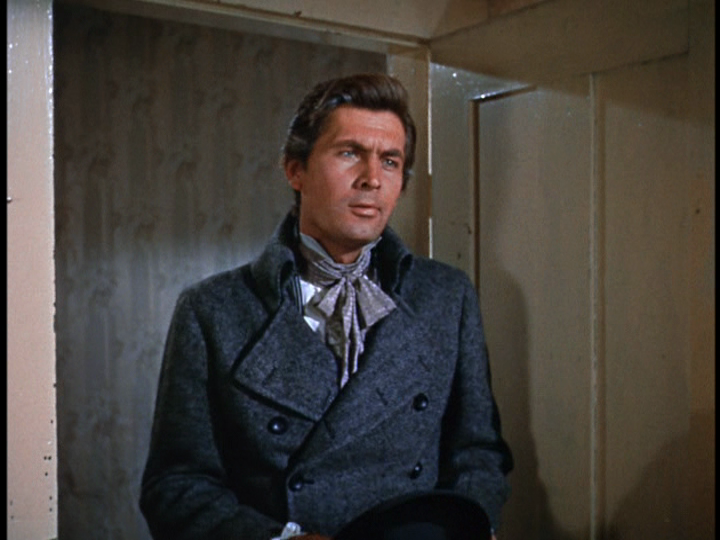
Davy in formal clothes after he's been elected to the state legislature

Davy’s political career has been watched closely by his old Major, Tobias Norton, and General Andrew Jackson. Jackson is preparing to run for the presidency, and both he and Norton want Davy to have a seat in Congress. As Jackson puts it to Davy, “I want men I can trust, men I know are with me, men that can get the rest of the country behind me.” Davy responds, “Well, if I was to do what you asked, and I did get in, I wouldn’t be taking orders from you, General. I’d be taking them from them that elected me.” Thanks to a set of books Georgie has been publishing about their adventures together, Davy is able to win the seat in Congress, and surprises the members by showing up in buckskins. Georgie is there to greet him, and Davy tells him off about having to show up as the “king of the wild frontier, thanks to you.” He introduces himself with a strange speech, but promises that he won’t be one of those politicians who doesn’t do anything more than listen, and the next time he stands before them, he’ll “have something to say worth saying.”

Davy’s career hits a snag when Norton tells Davy he’s to go on a speaking tour, calling it a “great service for the country.” Norton adds that people want to make Davy the next president of the United States. Georgie, ever suspicious of Norton, finds out the truth: Norton sent Davy out of the way so he wouldn’t be able to vote against a bill meant to take away all lands from the Indians. Georgie and Davy race back to Washington, where Davy punches Norton out as the former major tries to stall him, and storms in to Congress, giving the last great speech of his political career.

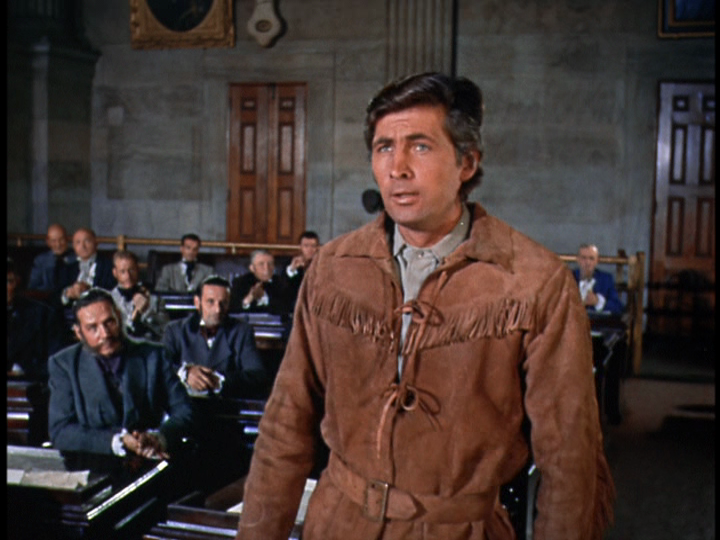
Davy giving a speech in Congress, dressed in his buckskins

Compared to most of the shows on television at the time that featured cowboys and Indians, the Davy Crockett serial was very well made, especially when it came to the matte paintings of Nashville and Washington, D.C., painted by Peter Ellenshaw. Walt Disney sent crews to picturesque areas in North Carolina to do research of the landscape, and it made the serial stand out against all the other shows. There’s also no denying the charm of Fess Parker as Davy Crockett. The last impassioned speech he gives as Congressman Davy Crockett is one that will be remembered.

.

January 3

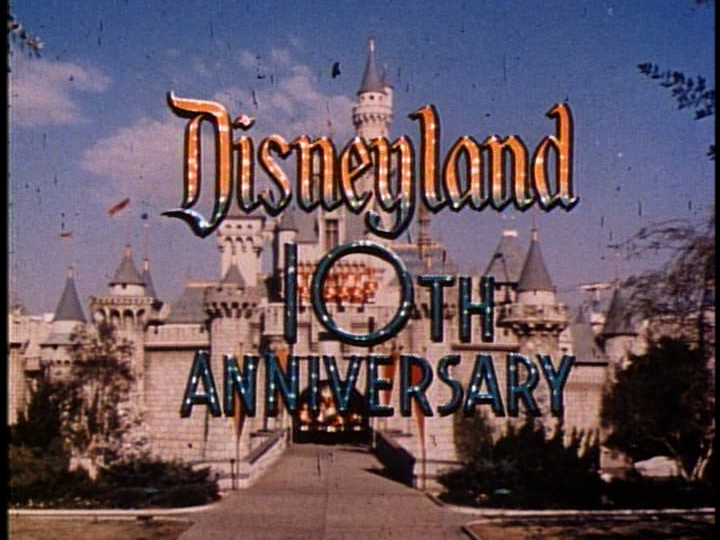
January 3, 1965 – Disneyland 10th Anniversary Episode Premieres on Walt Disney’s Wonderful World of Color.


“Ten years of happiness for fifty million friends.”

In 1965, six months shy of Disneyland’s actual 10th anniversary, Disney released this special, which gave viewers not only a look at new attractions coming to the park – including what had been submitted to the World’s Fair – but also a brief history of the park and a tour of some of the current attractions. The episode was directed by Hamilton S. Luske, with Special Material provided by Bill Berg. The Anniversary Song featured in the show was written by Richard and Robert Sherman. It has been released on DVD twice, first on the Walt Disney Treasures:  Disneyland, USA and later on Walt Disney Treasures: Your Host, Walt Disney.

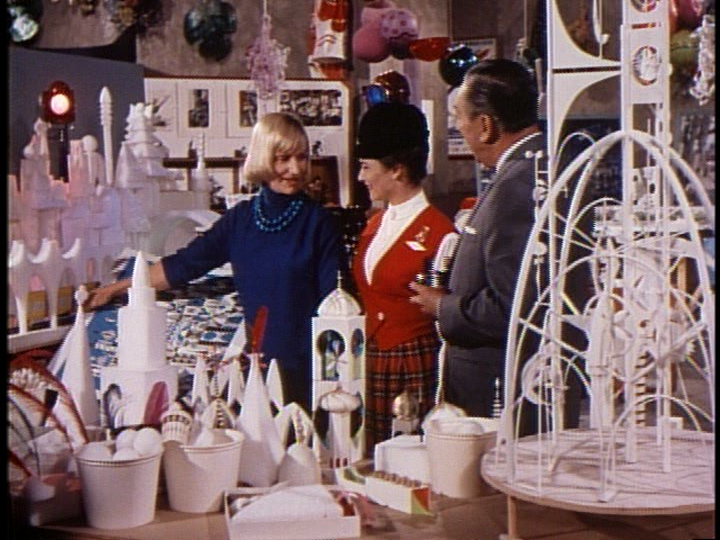
Walt and Julie discussing It's A Small World with Disney Legend Mary Blair.

The episode opens with Walt and Julie Reihm, who had been named Miss Disneyland Tencennial, in the Imagineering Department. As the two go around the room, they meet Disney Legends Mary Blair, John Hench, Marc Davis, Rolly Crump, Blaine Gibson, and Claude Coats, and learn about the upcoming attractions It’s A Small World, Plaza Inn, The Haunted Mansion and The Museum of the Weird, and Pirates of the Caribbean. The audience gets a glimpse into the processes that go into creating an attraction, beginning with preliminary sketches and moving on to scale models, with special variations for each attraction. For instance, for The Haunted Mansion, Walt explains to Julie, the Imagineers are collecting ghosts from all over the world, adding that “[they’re] making it very attractive to them, hoping they’ll want to come and stay at Disneyland, so [they’re] putting in wall-to-wall cobwebs, and we guarantee them creaky doors and creaky floors.” Suddenly Walt realizes that they have only ten seconds to get to Disneyland, and with the help of Tinkerbell, they arrive just in time for the parade in the Magic Kingdom.

The beginning of The Anniversary Song

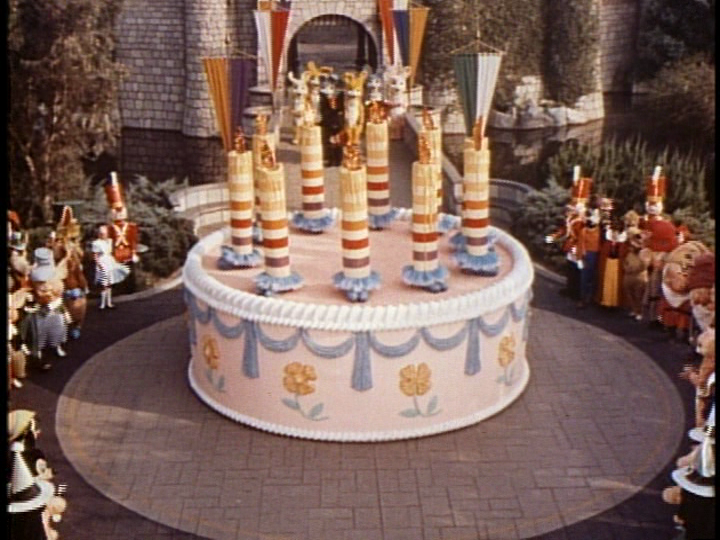
“All the characters of the Magic Kingdom are gathering for the tenth anniversary celebration,” Walt narrates, as toy soldiers begin marching down the castle walkway, followed by a host of Disney characters. Mary Poppins, the newest member of the Disney family, makes a surprise visit, and after a quick dance number, she flies away again. “From now on,” Walt declares, “no Disneyland celebration is going to be complete without Mary Poppins.” Singing a song celebrating the Tencennial, a magic dancing cake and candles open the parade down Main Street, which leads off with children from Anaheim schools in their marching bands and dance troupes.

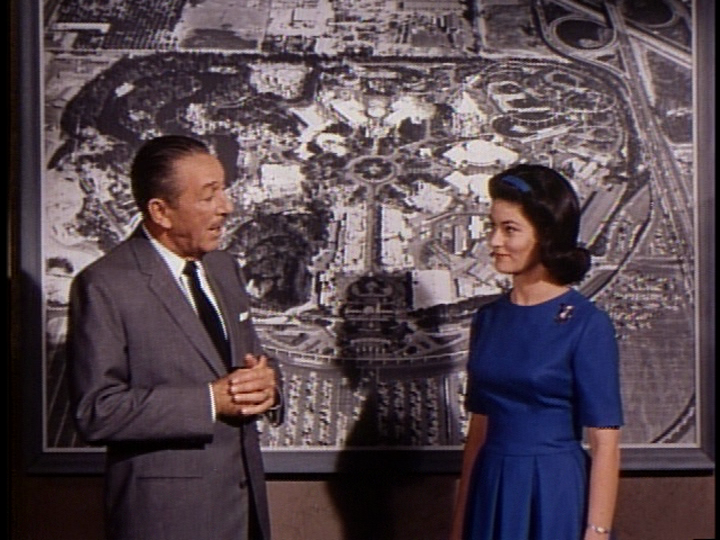
Walt and Julie in front of the aerial view of the park.

The second half of the program is an overview of the previous ten years of the park. “It seems like only yesterday that Disneyland was just an idea and some plans on paper,” Walt reminisces, as he shows the audience an aerial photograph of Disneyland, comparing it with the area when it was just an orange grove and some farm houses. The audience is then taken around Disneyland to the popular attractions that opened between 1955 and 1965, with some little-known facts thrown in to the commentary. Dignitaries and celebrities are seen enjoying attractions at the park, from Prince Bernhard of the Netherlands as a passenger on the Submarine Voyage, to Mary, John, and Hayley Mills exploring the Swiss Family Robinson tree house.

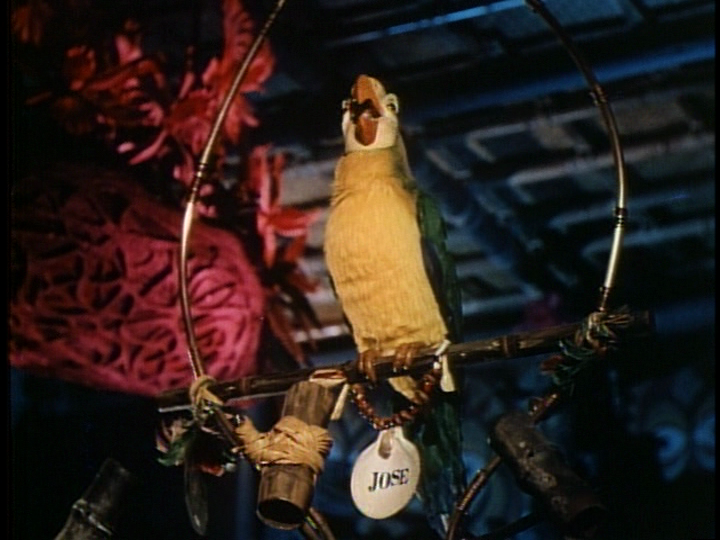
Jose, your host for the Enchanted Tiki Room.

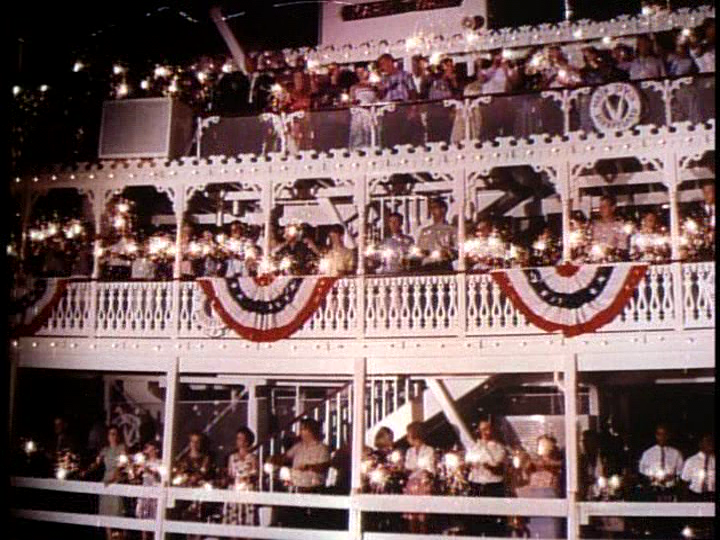
The last two segments offer an in-depth look at the Enchanted Tiki Room, and the traditional Dixieland and Disneyland Celebration on the Big River. The Enchanted Tiki Room segment begins with an explanation of audio-animatronics by the parrot Jose, who narrates as the audience is taken backstage to see all the complicated equipment that powers the entire show, from the electric engineer (or, as Jose puts it, the veterinarian for all the Tiki Room actors) to the relay panel. The audience is then treated to a performance of the birds in the Tiki Room. As we move to the Dixieland and Disneyland Celebration, we see great Dixieland musicians from all over the country perform on boats down the river, including a great performance by the legendary Firehouse Five Plus Two, and ending with a spectacular show on the Mark Twain Riverboat, with cast members and musicians holding sparklers, illuminating the night.

A grand finale for the Dixieland and Disneyland Celebration

This is a fantastic celebratory episode of the show. For those who did not live close to the park, it was a wonderful way to see the popular attractions, and learn secrets of how they were designed. The documentary also does a wonderful job of advertising the park for its 10th Anniversary. The show is, of course, a giant advertisement for the Disney projects, but it is done in a charming way that entices, entertains, and provides some insight into different aspects of the Walt Disney Company. The episode is well worth seeing.