RSS Feed

Tag Archives: Special

July 5

Posted on

July 5, 2012 – The Treasures of the Walt Disney Archives Exhibit Opens at the Ronald Reagan Presidential Library

treasures-of-the-walt-disney-archives

“We are deeply honored to share this exhibit with the Ronald Reagan Presidential Library and the countless visitors who can now explore and appreciate the legacies of both extraordinary men.” – Bob Iger, Chairman and CEO of the Walt Disney Company

On July 5, 2012, the Treasures of the Walt Disney Archives exhibit opened at the Ronald Reagan Presidential Library in Simi Valley, California. Presented by D23, it is the largest Disney Archives exhibit in the world, comprising of more than 500 artifacts, with some being presented to the public for the first time. The collection ranges from the earliest days of the Oswald the Lucky Rabbit shorts, to the latest films from Disney’s acquisition of Marvel Comics. A section was also dedicated to the friendship between Reagan and Walt Disney, including letters of correspondence, as well as a letter from Reagan to the Postmaster General requesting the creation of a special Walt Disney stamp. On hand for the opening day ceremony for this exhibit were Bob Iger; Nancy Reagan, widow of former president Ronald Reagan; David Ferriero, Archivist of the United States; Fredrick J. Ryan, Chairman of the Board of Trustees for the Ronald Reagan Presidential Foundation; and Mickey and Minnie Mouse. A special performance was done by the Voices of Liberty, an acapella group that performs at the American Adventure in Walt Disney World’s Epcot.

May 21

Posted on

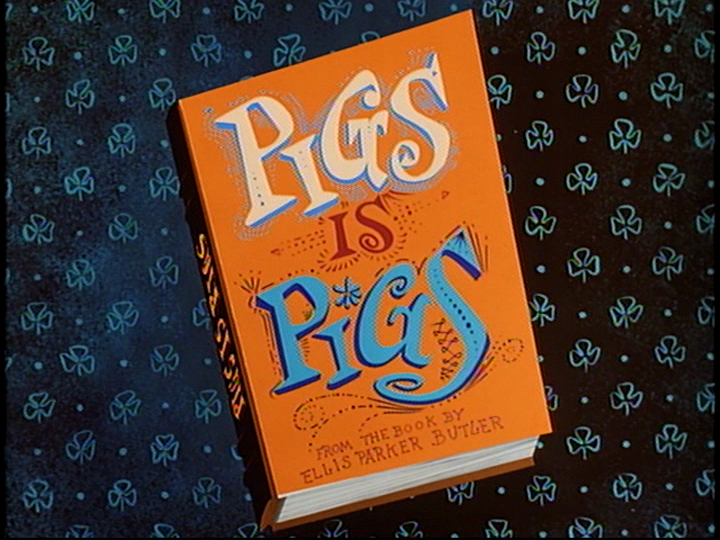
May 21, 1954 – The Special Short Film Pigs is Pigs is Released to Theaters

vlcsnap-2013-05-21-04h26m08s43

“Whenever an agent gets in a debate, and there is an argument over the rate, the agent must wire for a rule and apply, and hold onto the package until they reply.”

On May 21, 1954, the special short film Pigs is Pigs was released to theaters. The short was based on the short story by Ellis Parker Butler, which was first published in 1905. The style of animation used in the short was based on the UPA style of limited animation, which was very popular in this time period. It was directed by Jack Kinney, with story by Leo Salkin and animation by John Sibley. The short was nominated for an Academy Award.

At the Westcote Railway Station, Agent Flannery gets ready for the day. Flannery is known as the best agent there is, as he follows each rule to the letter. One day, he receives a package of two guinea pigs, and, having never seen guinea pigs before, notices that they don’t look like pigs, but he’ll follow the rules for pigs, as “it says [they] are” with “the writing plain to see.” A customer named McMorehouse arrives to pick up the guinea pigs, and is incensed to find that pigs cost four cents more than pets, and argues with Flannery that guinea pigs are pets, not pigs. McMorehouse refuses to pay the extra money, and Flannery states that in the case of a debate between the agent and customer, he’ll have to contact the main office for a ruling; until then, he will have to hold on to the package. McMorehouse storms out, saying that when Flannery finds he’s wrong, he is to send the package to his address.

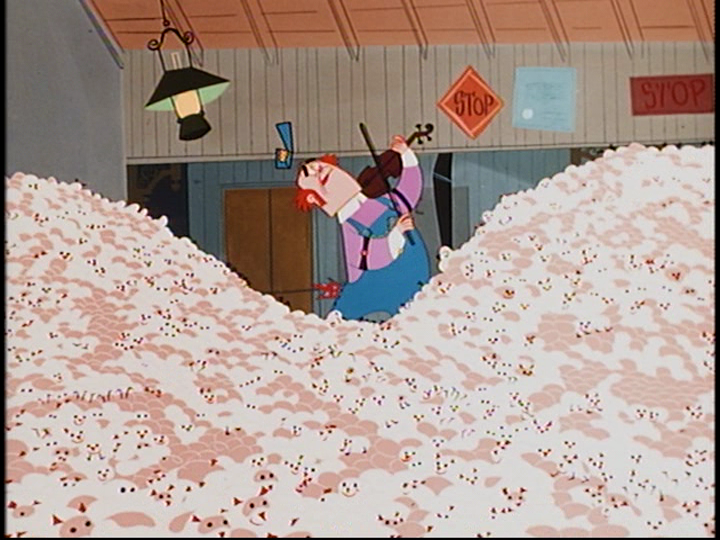
Flannery is swamped by the ever multiplying guinea pigs, and tries to calm them with Irish jigs

Flannery is swamped by the ever multiplying guinea pigs, and tries to calm them with Irish jigs

At the headquarters, the telegram arrives from Flannery and goes through a very regimented process of signing, dating, and copying. Meanwhile, Flannery tries to take care of the guinea pigs, only to find that they have started breeding. He creates a bigger crate for the guinea pigs, as there are now nine, but multiplying fast, with guinea pigs in every drawer and bursting from every place possible. At headquarters, the debate continues, with everyone up to the board of directors trying to determine whether guinea pigs are pigs or pets. They finally determine that guinea pigs are pets, and the lower rate applies. The guinea pigs multiply and multiply, bursting out of the Westcote Station. When Flannery gets the telegram, he rushes to McMorehouse’s home, only to find that that McMorehouse doesn’t live there anymore. He wires the office again, asking what he should do in this situation, as there is no rule for this. Not knowing that they pigs have multiplied into “two million and two,” the office makes a recommendation that the guinea pigs be sent there. Flannery fills six hundred boxcars with guinea pigs and sends them on their way. The guinea pigs are stored everywhere in the whole company, even the president’s office. From that day forward, Flannery refuses to follow the rules to the letter anymore, declaring that all animals will thereby be classified as pets.

March 21

March 21, 1952 – The Chip ‘n’ Dale Short Film Two Chips and a Miss is Released to Theaters

TCaaM_1

“Little boy, with your cute little ways I am yours, for the rest of my days.”

On March 21, 1952, the Chip ‘n’ Dale short film Two Chips and a Miss was released to theaters. It was the second of three shorts made for the Chip ‘n’ Dale series. The song that Clarice sings is “My Destiny” by Bill Eckstine, a famous balladeer in the era of swing music. The short was directed by Jack Hannah, with story by Nick George and Bill Berg

In the middle of Central Park, Chip and Dale are preparing for bed, scoffing at the noisy nightlife of the city, claiming it’s not for them. As the two settle down for the night, Chip secretly pulls out a note from under his pillow from a girl named Clarice. Chip waits for Dale to fall asleep and gets ready for his date once Dale sleepwalks out of their home. Unbeknownst to Chip, Dale is also preparing for a date with Clarice. The two make their way to the Acorn Club, and head straight to Clarice’s dressing room to give her a bouquet of flowers. There, the two discover that they are chasing the same girl, and begin to fight over her.

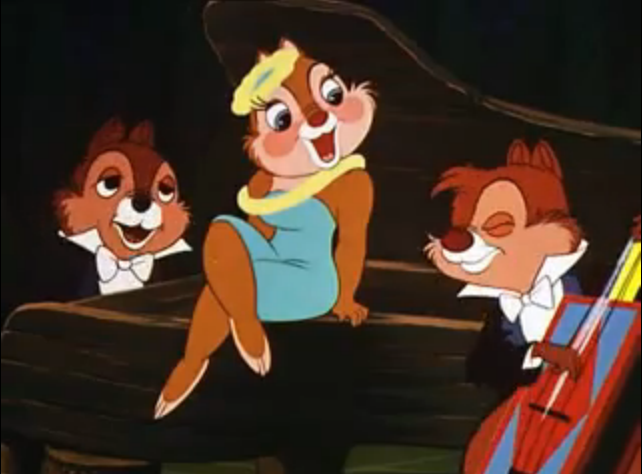
Chip and Dale compete musically for Clarice's attention before settling on serenading her with a duet

Chip and Dale compete musically for Clarice’s attention before settling on serenading her with a duet

Clarice seems to find the fighting over her amusing more than anything, and is soon called to the stage to perform her song. The pair go crazy over her performance, and continue to try and outdo the other for her attention. At one point, Chip falls over the piano while trying to catch a flower Clarice threw to the duo, but brightens when he realizes he can help her performance. She is delighted by his playing, and Dale is jealous until he plays a nearby cello. The two begin to duel musically, much to Clarice’s delight, and she gives them both a kiss. Smitten, the two begin to serenade her with a duet. The short ends with Clarice tricking the two into kissing each other when they try to reach for her.

February 13

February 13, 2012 – The Jake and the Never Land Pirates Special “Peter Pan Returns” Airs on Disney Junior
JNLP_3

“When I left to explore the lands beyond the Never Sea, I knew I would need my own crew of pirates to watch over Never Land for me.”

On February 13, 2012, the special primetime episode of the popular children’s show Jake and the Never Land Pirates entitled “Peter Pan Returns” aired for the first time on Disney Junior. The show is based on the Disney animated feature film Peter Pan, with the focus on three children – Jake, Izzy, and Cubby – who are tasked to protect Never Land while Peter Pan is away exploring. This special premiered with over 3 million viewers, becoming Disney Channel’s highest evening telecast ever for a preschool program. The episode was written by Mark Seidenberg, Mark Drop, and Kevin D. Campbell, and stars Colin Ford as Jake, Madison Pettis as Izzy, Jonathan Morgan Heit as Cubby, David Arquette as Scully, Adam Wylie as Peter Pan, Corey Burton as Captain Hook, and Jeff Bennett as Mr. Smee.

As Never Land is fast asleep, a familiar shadow plays among the clouds, and begins to play tricks with the crew of Captain Hook’s ship. The pirates believe it to be a ghost, and begin to panic while the shadow laughs. The shadow then plays pranks on Captain Hook, stealinghis blanket and tickling him. Captain Hook accuses the crew of trying to make a fool of him, but they are just as stumped.
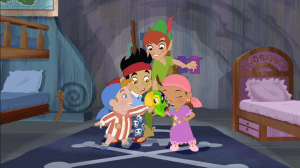
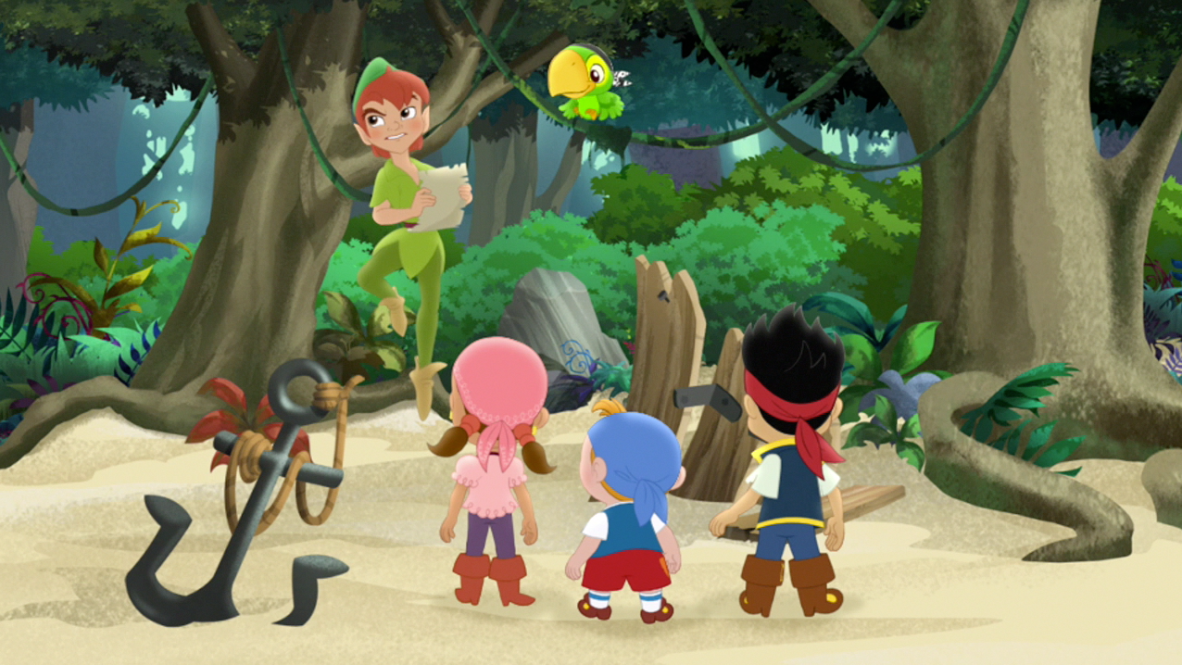
Peter returns to Never Land, asking for his crew's help to get his shadow back

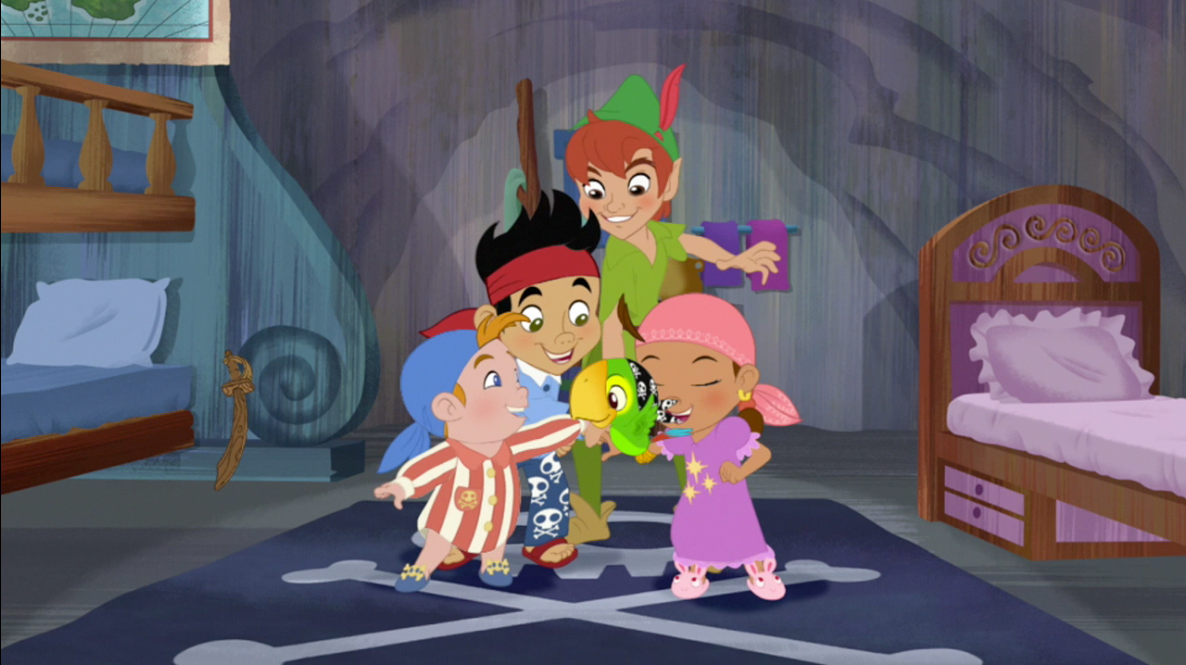
Peter returns to Never Land, asking for his crew’s help to get his shadow back

Jake and his crew are sleeping soundly when they are woken up by a familiar crowing sound, and are excited to see that Peter Pan has returned to Never Land. While Peter is also happy to see them, he admits that he needs their help finding his shadow, who has gotten away from him again during a game of “Catch Me if You Can.” They decide to start looking in Never Land for Peter’s shadow.

Meanwhile, Hook is questioning his crew, and does not believe them when they tell him it was a ghost. They spot the “ghost” behind Hook, who informs them it’s nothing but Peter Pan’s shadow. Hook then realizes that if the shadow is around, then Peter Pan is back in Never Land; he then comes up with a plan to make Peter leave Never Land forever, but they have a terrible time trying to catch Peter’s shadow. Peter’s shadow is able to quickly disable the crew, and they all end up overboard as they try to catch him, with Peter’s shadow making off with the ship, sailing to Never Land. They track him to shore, and Hook is finally able to capture him in a sack.

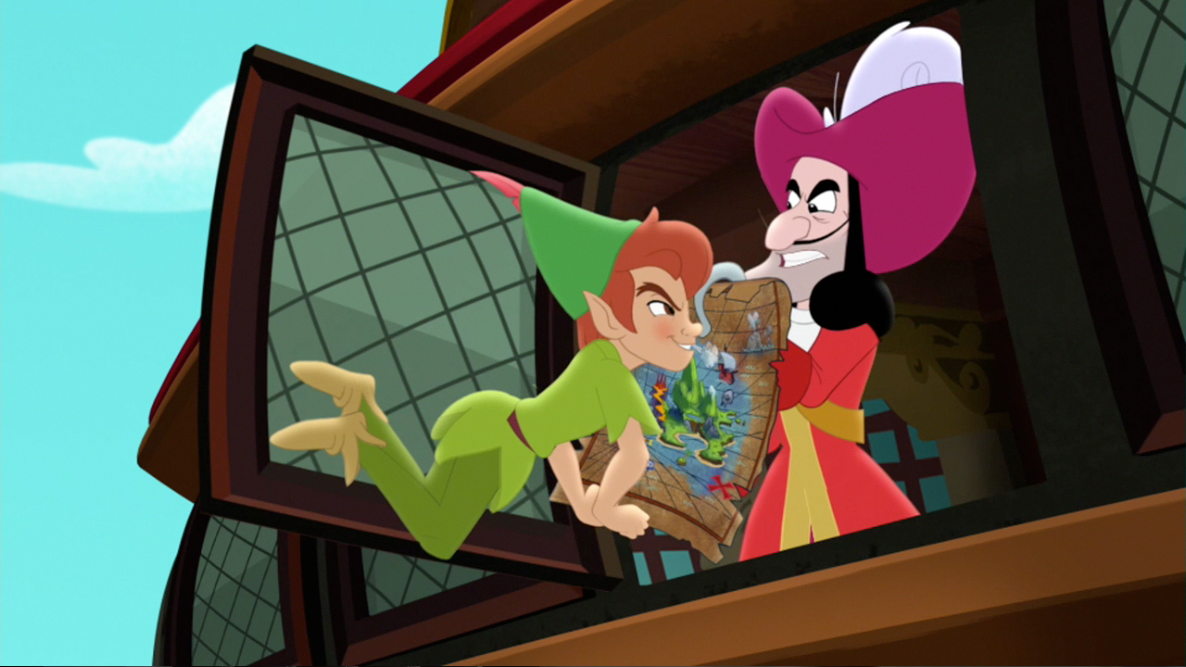
Peter and the crew arrive in time to find Hook's note detailing where to find Peter's shadow

Peter and the crew arrive in time to find Hook’s note detailing where to find Peter’s shadow

Peter and his gang make it to the shores of Never Land a bit too late, and are greeted by a note from Captain Hook, saying that if Peter wants to see his shadow again, they will need to go to Buccaneer’s Bluff. Peter is angry, but Jake promises that they will retrieve his shadow. They find Peter’s shadow tied in a sack, but as Jake runs to retrieve it, Peter stops him, as the sack is surrounded by booby traps. Jake dismisses Peter’s worries and tries to make it past the trip wires, only to set off one of the traps. Peter luckily catches Jake in time before he is trapped by a cage. They then come up with a plan to have their parrot Scully fly ahead to let the crew know where the trip vines are so they can safely avoid them.

As they pass all the traps, they open the sack to reveal not Peter’s shadow, but Mr. Smee. Peter and Hook then “greet” each other, with Hook informing Peter than he now owns Never Land, and Peter will have to leave. Peter demands the return of his shadow, and they find it on the other side of a cliff. Hook promises to return the shadow only if Peter and the Never Land pirates leave Never Land forever. Peter refuses, and Hook makes a quick getaway with Peter’s shadow in tow. When Peter tries to go after the Captain, he finds that he is no longer able to fly. Hook observes this with glee, knowing he can now defeat Peter, and decides to hide Peter’s shadow in the Valley of Shadows, where Peter will never find it again.
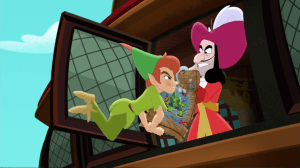
Peter demands his shadow back, but Hook will only agree is Peter leaves Never Land for good

Peter demands his shadow back, but Hook will only agree is Peter leaves Never Land for good

Peter and the gang try to cut Hook off, with Peter’s condition worsening. They realize that since Peter is so upset about the loss of his shadow, his sadness is causing him to be unable to fly. They quickly take a shortcut to catch up with Captain Hook, who has to pass by Crocodile Creek to get to the Valley of Shadows. Captain Hook tries to sneak past the crocodile, but Peter, who is nearby, plays a prank on Hook’s crew, mimicking Hook’s voice. He then trips the Captain, who wakes up the crocodile by accidentally stepping on his tail. The crocodile then decides to hunt Hook and his gang, with Peter and his gang in hot pursuit.

The gang makes it to the Valley of Shadows, and searches for Captain Hook by looking for his shadow. Although they find Hook, the Captain declares that he will sink Peter’s shadow to the bottom of the Never Sea. Peter is discouraged, but Izzy comes up with a plan to retrieve the shadow. Unfortunately, her plan backfires, and she causes Captain Hook to fly by the use of pixie dust. Jake and his friends then realize that they’ve been showing off to Peter all day, and decide to pull together and work as a team. Hook and his team then make it back to the Jolly Roger, and they commence with the plan to sink Peter’s shadow at Skull Rock.
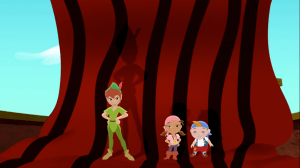
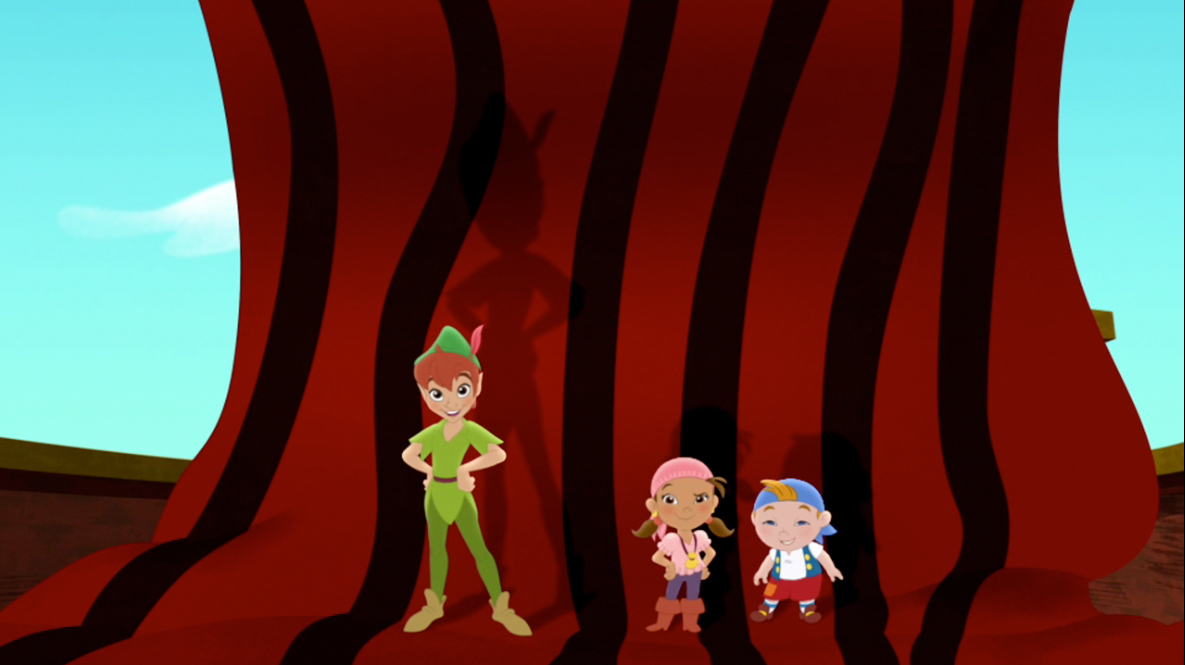
Reunited with his shadow, Peter is ready to give Hook some payback

Reunited with his shadow, Peter is ready to give Hook some payback

Jake and his crew quickly board their ship to cut Hook off around the other side of Skull Rock. Hook then places the shadow in a trunk, ready to throw it overboard. Jake and his crew then board Captain Hook’s ship, but while they are able to avoid the first obstacle, they are quickly caught by the pirates. While Peter is surrounded, Jake manages to break through and rescue the shadow. The shadow quickly reattaches itself to Peter, and Peter sends Hook and his crew flying into the ocean, and are once again chased by the crocodile. With Peter regaining his shadow and happiness, all is well in Never Land once again.
February 8

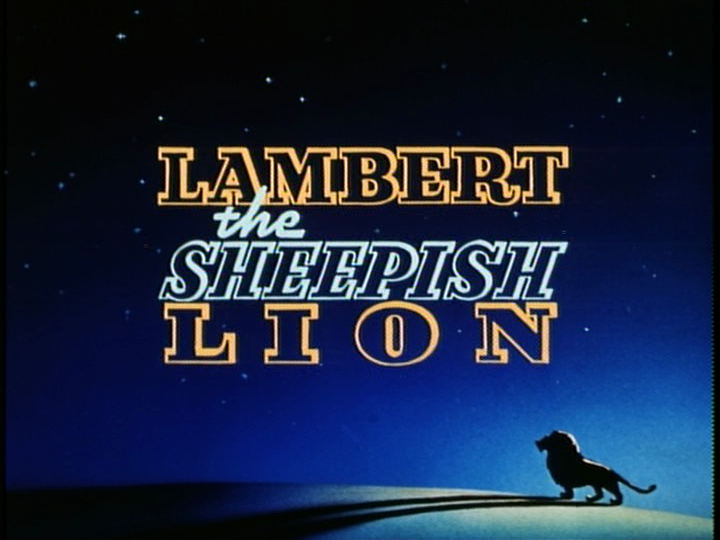
February 8, 1952 – The Special Short Film Lambert, the Sheepish Lion Premieres in Theaters

vlcsnap-2013-02-07-21h11m42s207

“Lambert, the sheepish lion, Lambert, is always trying to be a wild and wooly sheep, Lambert, the sheepish lion.”

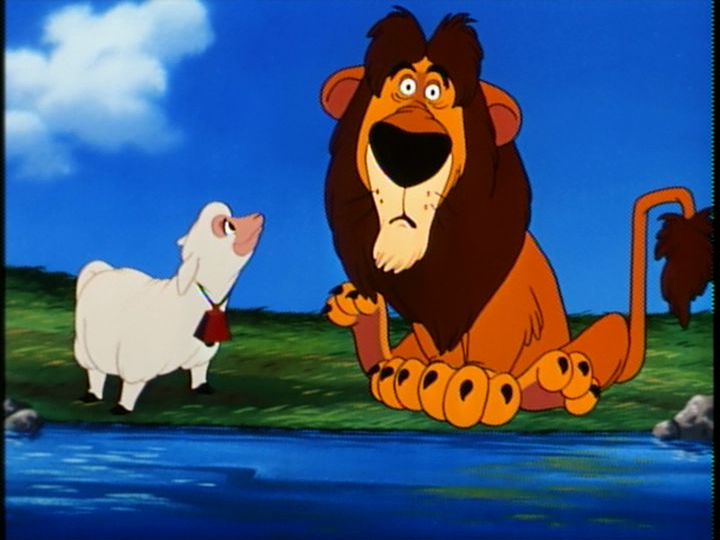
On February 8, 1952, the special short film Lambert, the Sheepish Lion premiered in theaters. The stork in this short should look familiar, as he is the same stork that was featured in Dumbo, which was also voiced by actor Sterling Holloway, who also narrated the short. An original print of the film was given to Emperor Hirohito as a gift, as it was his favorite Disney short film. The short was also nominated for an Academy Award, but lost to the Tom and Jerry short The Two Mouseketeers. The story was written by Bill Peet, Ralph Wright, and Milt Banta, and was directed by Jack Hannah.

One spring evening, a stork delivers a bundle to a sleeping flock of sheep. He opens the bundle to reveal several newborn lambs, which scurry about to claim their mothers. One ewe, however, is skipped by all the lambs, and she goes off to cry. Meanwhile, the stork has one little “lamb” that won’t wake up. When he finally does get it to open its eyes, he realizes that it’s a lion cub named Lambert, and it has already bonded with the lonely ewe. The stork tries to take Lambert to his home in South Africa, but the ewe attacks the stork and keeps Lambert with her. The next morning, the lambs begin to play, and Lambert wishes to join in, but realizes right away that he’s different. The lambs make fun of poor Lambert, who goes back to his mother. He continues to watch the lambs play, and when he tries to join in, he is continually bullied.

Lambert has grown from a cub to a full lion, with his mother still being so proud of him

Lambert has grown from a cub to a full lion, with his mother still being so proud of him

The seasons change, and soon the lambs are all grown up, and so is Lambert. However, although he is a full-grown lion, he still acts like a sheep, and is still the butt of the jokes of the rams. One night, as everyone is sleeping, the sound of a wolf wakes Lambert up, and he spies a hungry wolf surveying the flock. The wolf decides that Lambert’s mother is to be his meal, and the rams all hide behind trees. Although Lambert is terrified, he decides to screw up his courage and act like a raging lion, scaring the wolf silly. After saving his mother, the flock now considers Lambert one of them, and he lets out a triumphant “baa.”

November 25

November 25, 1938 – The Special Short Film Ferdinand the Bull is Released to Theaters

“All the other little bulls he lived with would run, and jump, and butt their heads together, but not Ferdinand.”

On November 25, 1938, the special short film Ferdinand the Bull was released to theaters. The short was based on the book The Story of Ferdinand by Munro Leaf, with illustrations by Robert Lawson. Ferdinand the Bull won the Academy Award for Best Cartoon of 1938. It was directed by Dick Rickard, and narrated by Don Wilson; Milt Kahl provided the voice of Ferdinand’s mother, while Walt Disney provided the voice for Ferdinand. Several members of Disney staff were caricatured as characters at the bullfight; Walt himself was caricatured as the matador.

The short opens in Spain, introducing the little bull Ferdinand, who much preferred to sit in the pasture and smell the flowers rather than butt heads with the other little bulls. His mother worried about him, but Ferdinand was quite content under his cork tree. As the years went by, Ferdinand grew to be big and strong, but never dreamed of fighting in the bullfights like the others.

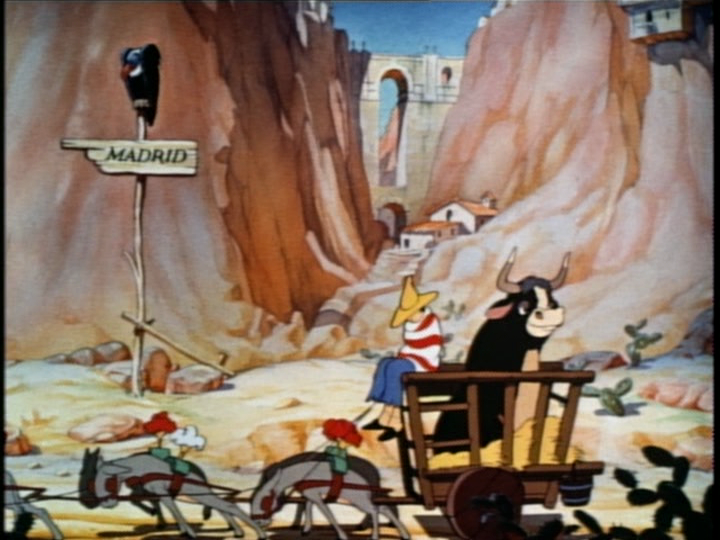
After displaying a fierce reaction to the bee sting, Ferdinand is carted to Madrid to fight the matador

One day, a group of men came to pick the biggest, strongest, and toughest bull to fight in Madrid. Ferdinand ignored them and went to sit under his tree, but accidentally sat on a bee. His surprised, fierce reaction to the bee’s sting convinces the men that Ferdinand is the strong, tough bull they are looking for, and they cart him off to Madrid.

Ferdinand’s bullfight opens with much fanfare. The matador appears in the ring to great applause, ready to do battle with the bull. Unfortunately for the matador, Ferdinand is not in a fighting mood. As the matador flees from Ferdinand’s approach, everyone is surprised to see the bull sniff a bouquet of flowers that has been tossed into the ring. The matador is furious that Ferdinand won’t be fierce, and tries any approach he can to get a reaction from the flower-loving bull. After revealing a daisy flower tattooed on his chest, Ferdinand gives the matador a kiss. Frustrated, the men in charge cart Ferdinand back to his little area under the cork tree, letting him remain and smell the flowers.

November 24

November 24, 1950 – The Special Short Film Morris the Midget Moose Premieres in Theaters

“Now, Morris was four years old and should have been full-grown. But no matter how hard he tried, he couldn’t grow an inch.”

On November 24, 1950, the special short film Morris the Midget Moose premiered in theaters. The short was based on an original story by Frank Owen. It also brings back the character of the “boodle beetle,” who was known more often than not for being an antagonist of Donald Duck. It was directed by Charles Nichols, with story by Eric Gurney and Bill de la Torre.

The short begins with two young bootle beetles fighting over a berry. Their grandfather decides to teach them a lesson through telling them a story: the story of Morris the Midget Moose. Morris was unable to grow any bigger than a puppy. He wished to play with the bigger moose, but he couldn’t keep up with them due to his size, and became the laughingstock of his tribe.

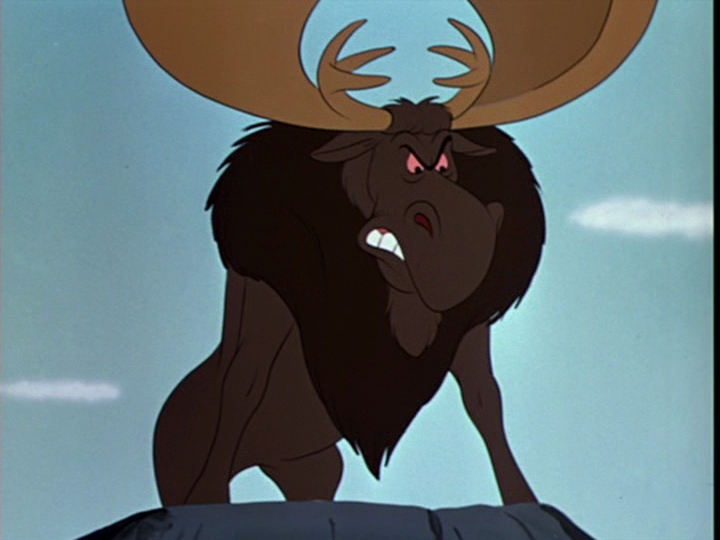
The Mighty Thunderclap, the leader of the tribe, stands ready for the day when the other moose challenge him for leadership

The day came where each moose would challenge the mighty Thunderclap, the largest moose of them all, for leadership of the tribe. All the moose lined up for the challenge, except Morris, until he realized that his antlers were as big as the others. But when it came time to battle Thunderclap, he only reduced the mighty moose to laughter. Poor Morris was devastated, and unaware that he was being watched nearby by a moose named Balsam. Balsam gets Morris’ attention and explains that he is just as sad, if not more so, than Morris, for although he was a full grown moose, his antlers never grew in. The two become the best of friends, with the two helping each other out.

One day, they realized by working together, the two appeared to be the biggest moose in the tribe. This gets Thunderclap’s attention, and there is soon a battle between Morris and Balsam versus Thunderclap. The pair is able to scare Thunderclap away, never to be heard from again, and the grandfather explains that the moral is “two heads are better than one.”

November 6

November 6, 1956 – The Special Short Film A Cowboy Needs a Horse Premieres in Theaters

“If he wants to keep riding, riding along…”

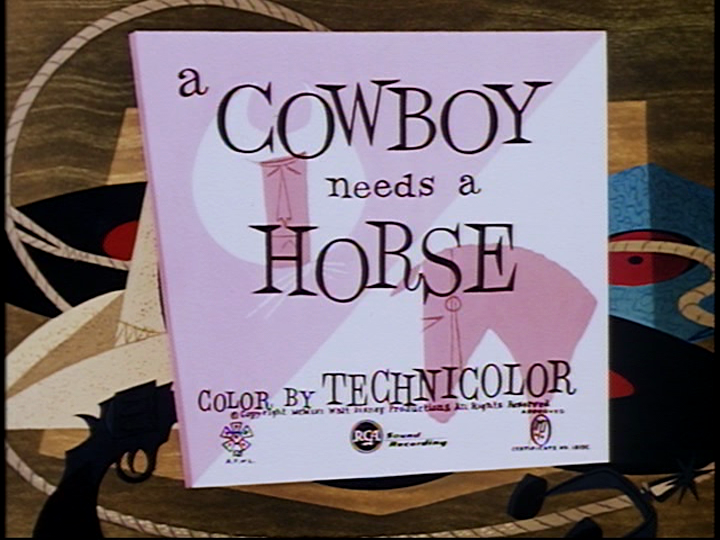
On November 6, 1956, the special short film A Cowboy Needs a Horse premiered in theaters before the True-Life Adventure film Secrets of Life. The short’s song of the same name was written by Paul Mason Howard and Billy Mills. The short was directed by Bill Justice, with story by Dick Kinney and Roy Williams.

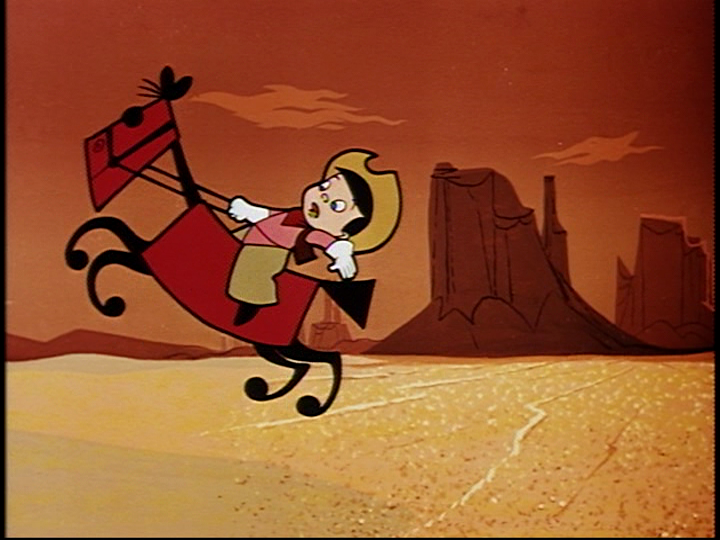
A little boy is sleeping in his bed, and dreams of being a cowboy. In his dreams, his bed turns into a horse, and the little boy magically gets a rope, a song, a hat, boots, and spurs, to become a cowboy. As he travels the desert with his horse, they are caught by an Indian tribe. He uses his pistols to fire back, until his pistols run out of bullets. Using his trusty rope, he captures the tribe, but makes peace with the chief, who offers him a peace pipe. The boy takes it and blows bubbles with it, to the chief’s delight. The chief gives the boy his headdress in gratitude.

Upon the sound of danger, the boy mounts his horse and chases after the villains in his dream

The boy suddenly hears gunshots, and looks to see some varmints trying to rob a stagecoach. He and his horse take off, just as the robber grabs the money. They give chase, and the boy and varmint roll down a hill, fighting, with the boy winning. He throws back the money, with the stagehand pointing to a reward sign for the criminal. The boy refuses the reward, happy just to help. Just as he and his horse are about to go on their way, they spy two other criminals attempting to blow up the railroad tracks. Although he is unable to remove the dynamite before it explodes, the boy throws himself on the tracks, and the train runs over him.

Work isn’t done for the boy: he hears a loud scream below, and spies a girl being tied to a cactus and being threatened by a villain. Jumping on his horse, he runs to her rescue, saving her just in time. The girl offers to kiss him, but he refuses, instead offering her a ride home instead. As the dream comes to an end, the boy relinquishes all of the things that make him a cowboy, and drifts out of his dream.

August 27

August 27, 1964 – The Live-Action and Animated Film Mary Poppins Premieres at Grauman’s Chinese Theater

“We’re looking forward to this [film], because it’s a fine combination when you can get Walt Disney and Julie Andrews and Dick Van Dyke together. I think it should be a lot of fun.” – Actor James Franciscus.

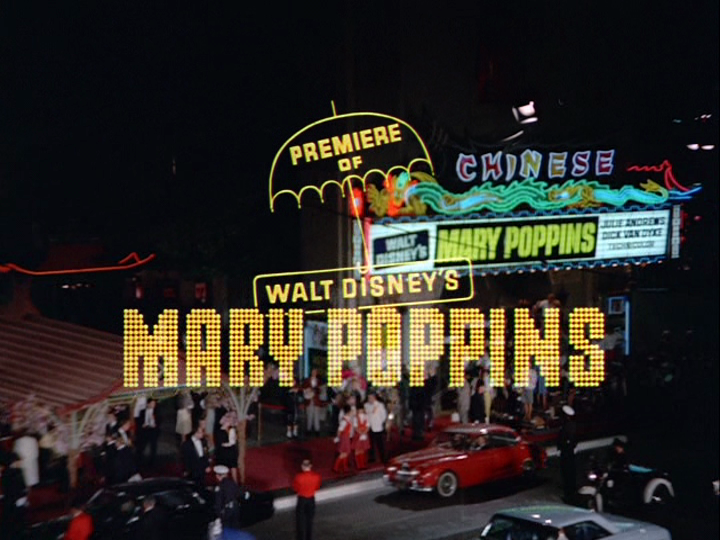
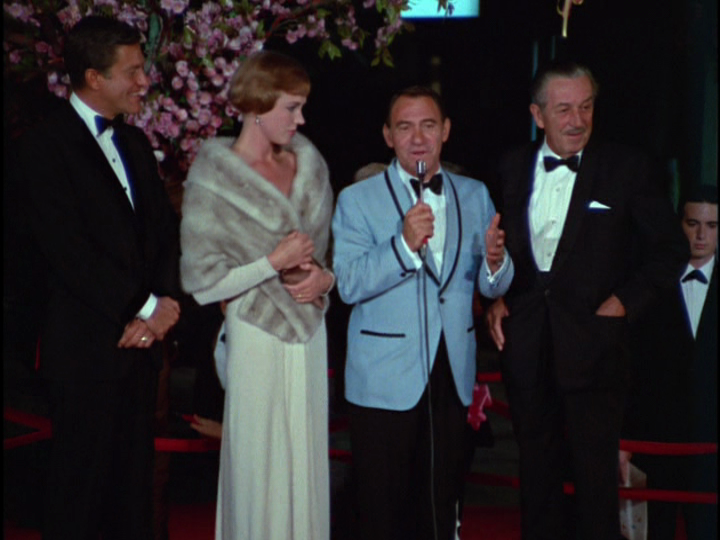
On August 27, 1964, the film Mary Poppins had its Hollywood premiere at Grauman’s Chinese Theater in Los Angeles, California. The premiere was broadcast live on Los Angeles television, with a separate radio broadcast of the festivities. The premiere guests were interviewed at the two separate stations. Guests included Maureen O’Hara, James Franciscus, Celeste Holm, Walter Slezack, the cast of the Dick Van Dyke Show, Agnes Moorehead, Annette Funicello and her fiancé Jack Gilardi, Roddy McDowall, Suzanne Pleshette, Carol Lynley, Buddy Ebsen, Kathryn Grayson, Ann Miller, and Brian Keith, among others. Members of the cast and crew of the film also attended, including director Robert Stevenson, who gave a tribute to CalArts (which had opened a mere three years prior), Reta Shaw (the cook, Mrs. Brill), and co-writer and co-producer Bill Walsh.

The festivities included characters dressed as familiar Disney characters, such as Goofy, the Big Bad Wolf, and the Seven Dwarves. Costumed characters of the penguins, as well as a band of pearlies, were also part of the entertainment, with the penguins dancing with Dick Van Dyke on his arrival. When asked about the film, Van Dyke said, “It’s my third motion picture, but the best one I’ve ever been in, the best one I ever will be in, if I live to be 150 years old. To me, this is the greatest family classic of all time…I’m so proud to be in this picture, I can’t stand it.” Van Dyke, along with Julie Andrews and Walt Disney, were interviewed together near the end of the broadcast, with all three proud of the film and looking forward to premiere.

Dick Van Dyke (L), Julie Andrews, and Walt Disney being interviewed right before the premiere of the film

After the premiere, Technicolor hosted a party for the guests at the parking lot next door to the theater. A radio broadcast was also provided, with every guest interviewed raving about the film, calling it a classic, and stating that the premiere was very reminiscent of the Hollywood premieres of old. Andrews and Van Dyke were proclaimed to be the greatest two new stars of the time.

August 8

August 8, 1952 – The Special Short Film The Little House is Released to Theaters

“Once upon a time there was a little house on a little hill, way out in the country.”

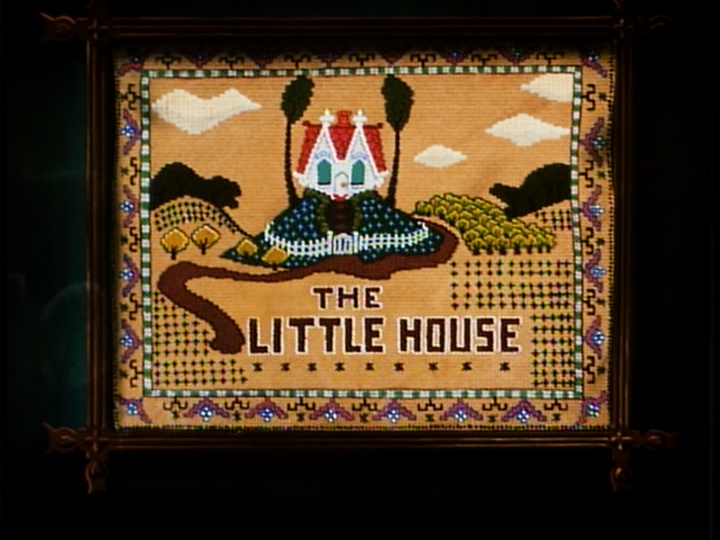
 On August 8, 1952, the special short film The Little House was released to theaters. The short was based on the 1942 children’s book by Virginia Lee Burton, and was adapted for the screen by Bill Peet and Bill Cottrell. It was directed by Wilfred Jackson and narrated by Sterling Holloway.

The short begins with the introduction of the happy little house, out in the country, who has just been bought by a young married couple. Shortly after, the house is filled with children and life, and the house loves each and every member of the family. At night, however, the house feels a bit lonely, with no other houses nearby. She gets her wish, as expansion quickly heads her way, with giant mansions built on every side. The house attempts to make friends with the houses, but they want nothing to do with her. Unfortunately for them, a large fire breaks out and destroys the mansions, with the little house left charred, but still intact.

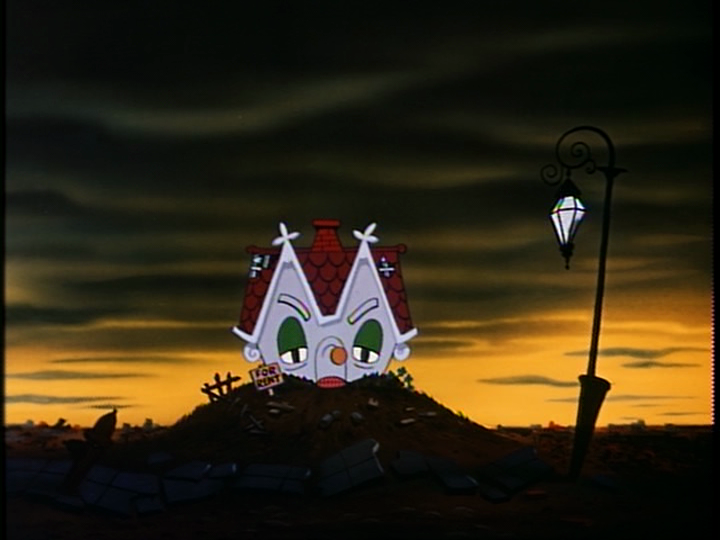
The little house finds herself amongst the debris of the “buildings of progress” as everything is built then destroyed

After those houses are gone, the little house soon finds herself surrounded by tall apartment buildings, musing to herself that she is “surrounded by progress.” The family soon moves out of the house, leaving her behind. She worries that she will never feel happy again, what with the empty feeling inside. Soon, the apartment buildings are torn down, and the house is left in the middle of a pile of debris. As she thinks she will soon have peace and quiet, a rumbling in the distance tells her otherwise.

Tall skyscrapers are built around her, with the house now boarded up, and a “For Sale” sign left in the front of her yard. The house sadly believes that she’s reached the end, and she will never see the sun again. One day, and crew comes by and pulls her from the ground, taking her away to the country. She opens her eyes to see that she’s on a little hill in the country again, all fixed up, with another newly married couple ready to begin their lives with her.