RSS Feed

Tag Archives: Short film

April 14

April 14, 1969 – Winnie the Pooh and the Blustery Day Wins The Academy Award for Best Short Film

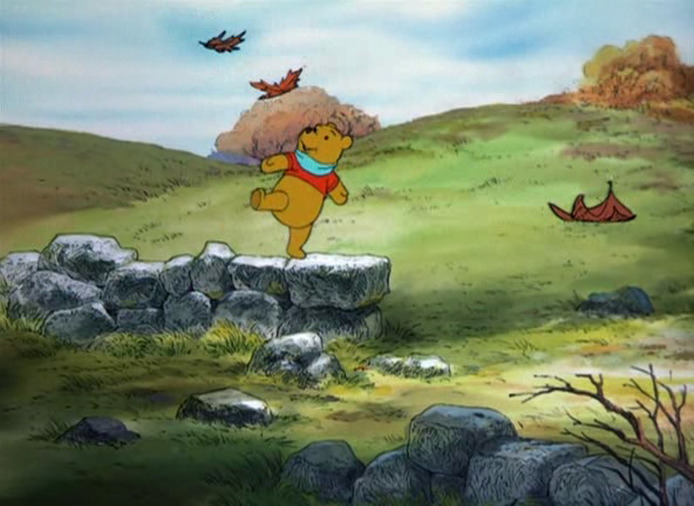
winnie-the-pooh-disneyscreencaps.com-2949

“Happy ‘Winds-Day,’ Piglet.”

On April 14, 1969, the 41st Academy Awards were held in the Dorothy Chandler Pavilion in Los Angeles, California. The Disney short film Winnie the Pooh and the Blustery Day won the Academy Award for Best Short Film, beating The House That Jack Built by the National Film Board of Canada, The Magic Pear Tree by Murakami-Wolf Films, and Windy Day by Hubley Studios. The award was given posthumously to Walt Disney, who had passed away two years before the short’s release in 1968. It is also the only Winnie the Pooh short to win an award, although Winnie the Pooh and Tigger Too would be nominated in 1974. In 1977, these two short films and Winnie the Pooh and the Honey Tree were combined into the full-length feature film The Many Adventures of Winnie the Pooh.

April 12

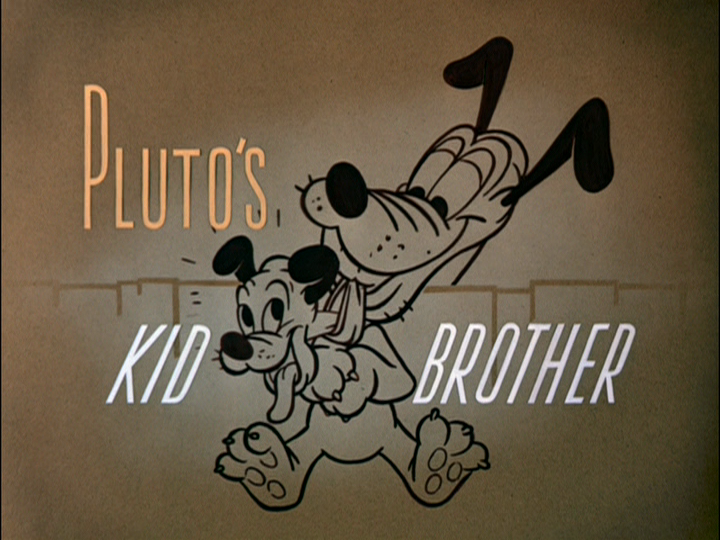
April 12, 1946 – The Pluto Short Film Pluto’s Kid Brother is Released to Theaters

vlcsnap-2013-04-11-20h20m46s19

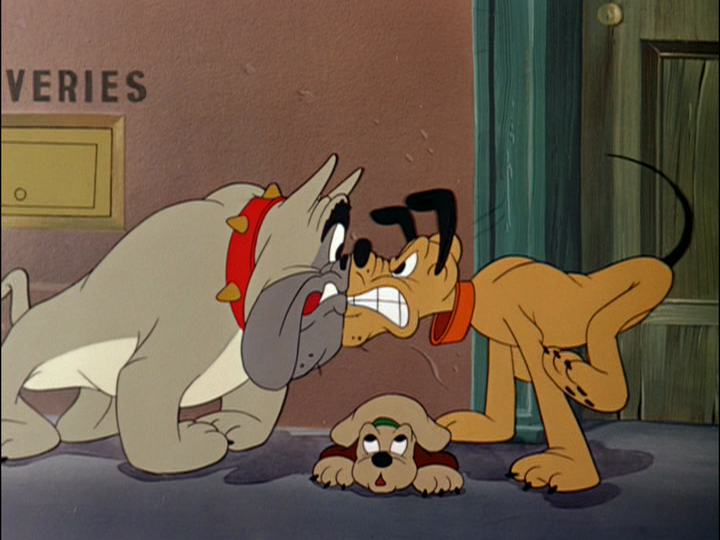
On April 12, 1946, the Pluto short film Pluto’s Kid Brother was released to theaters. This short is one of the few that contains Pluto’s nemesis, Butch the Bulldog. It was directed by Charles Nichols, with story by Harry Reeves and Jesse Marsh.

Pluto is snoozing in his doghouse, when he hears his kid brother, K.B., whimpering. K.B. has gotten into the hen house, and the rooster chases him away, and as K.B. runs past Pluto, the rooster crashes into the alarmed dog. Pluto then scares away the rooster, and K.B. finds himself in trouble with his brother, who ties him up again. K.B., unafraid and adventurous, frees himself from the rope and goes outside the fenced in yard to explore. As he sniffs a trashcan, he comes across an alley cat, who doesn’t take too kindly to the pup. The cat then crashes into Pluto, and the two duke it out, with the cat using his claws and static electricity to attack Pluto. The cat then walks away, but cries out in fear when he comes across Pluto’s nemesis, Butch the Bulldog.

Pluto runs to defend K.B. from the persuasion of Butch

Pluto runs to defend K.B. from the persuasion of Butch

Impressed by Butch’s demeanor, K.B. decides to follow and emulate the bulldog. Butch stops by a butchershop, ready to steal some meat, when he realizes he’s been followed by the pup. Seeing as K.B. is just the right size to steal the meat from the deliveries slot, Butch takes the pup under his wing. K.B. readily agrees to the task, and starts removing some sausages. However, once K.B. has delivered the sausages, Butch snarls at the pup, taking away every link. Pluto, meanwhile, has been looking for K.B., and when he spots the pup with Butch, he goes on the defensive. Pluto and Butch begin to fight, and Pluto is thrown against the burglar alarm, which goes off. The dogcatcher chases the three dogs, and K.B. is caught on the front bumper until Pluto saves him. The dogcatcher then scoops up Butch and takes him to the pound. Pluto then lectures K.B. again, and the two head back to their doghouses, although both are tempted to eat the sausages that Butch stole.

April 7

April 7, 1939 – The Final Silly Symphony, The Ugly Duckling, is Released to Theaters

vlcsnap-2013-04-07-10h08m47s102

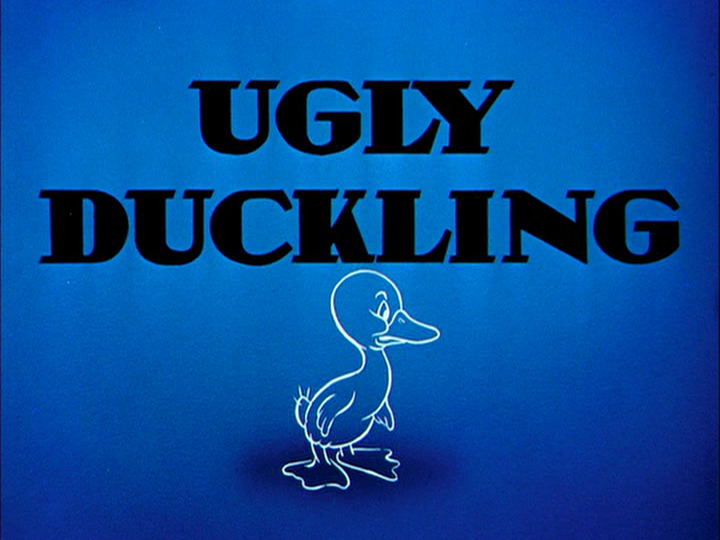
On April 7, 1939, the final Silly Symphony, The Ugly Duckling, was released to theaters. It is a color remake of the 1931 Silly Symphony, originally directed by Wilfred Jackson. Both shorts were based on the story by Hans Christian Andersen. The 1939 short film won an Academy Award for Best Cartoon at the 12th Academy Awards. It was directed by Jack Cutting.

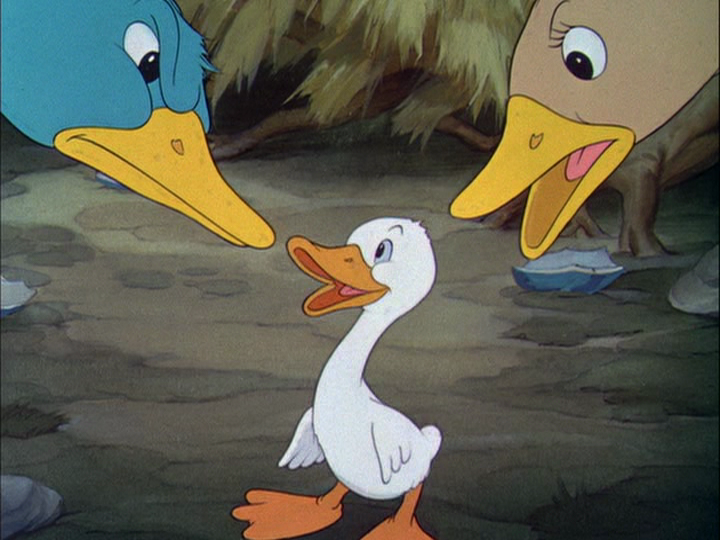
A father duck is nervously pacing the ground as he waits for his wife’s eggs to hatch. He tries to console her as she sits in the nest, bored with waiting, while the father duck paces so much he creates a hole in the ground. The sound of sudden quacking alerts him, and he is delighted to see his offspring. He gathers the ducklings into his arms and kisses them excitedly, then kisses his wife. Much to their surprise, there’s another egg in the nest that is about to hatch, and when it does, the ducks are surprised to see a strange looking and sounding “duckling” emerge from the shell.

Father and mother duck look at their strange duckling with suspicion

Father and mother duck look at their strange duckling with suspicion

The father looks at his wife accusingly, and the two argue before the mother slaps the father. He leaves angrily, and the mother has her ducklings follow her into the pond. The ugly duckling follows the ducks, but the mother wants nothing to do with him. She viciously quacks at him, and he looks at his own reflection in the pond, confused as to why he looks so different and is so unwanted. He begins to cry and wanders away, trying to find where he belongs. He stumbles upon a cuckoo bird’s nest, but is immediately chased away by the mother cuckoo as he tries to eat their food.

He soon runs into a duck decoy in another pond, and takes to it as if it were his mother. Unfortunately, the duck decoy hits him on the head, making him believe that it also does not like him. He wanders away and cries loudly. His cries are soon overheard by a mother swan and her cygnets. The cygnets try to cheer him up, and he is amazed to see birds that look like himself. The mother then calls her babies over, and he is sad once again, thinking he needs to leave, but the mother swan takes him under her wing, welcoming him to his new family. The swan family sails away, and he soon spies the duckling family, who calls him over, but he swims away, perfectly content being a swan.

April 1

April 1, 1938 – The Silly Symphony Moth and the Flame is Released to Theaters

vlcsnap-2013-03-31-21h36m47s0

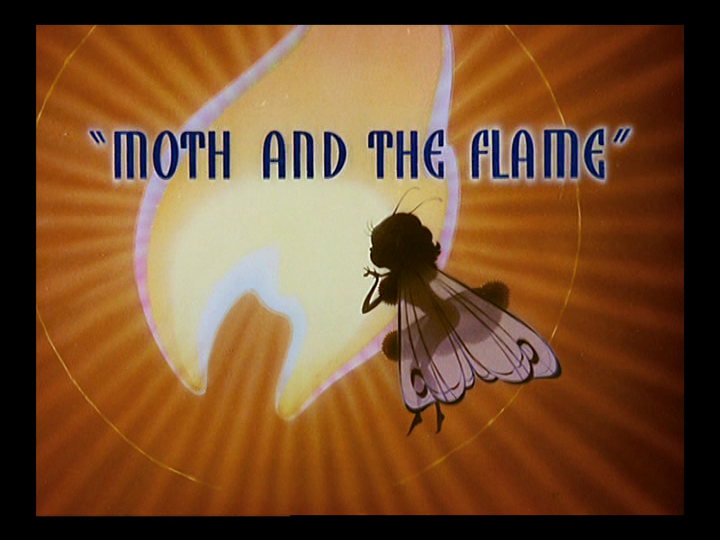
On April 1, 1938, the Silly Symphony Moth and the Flame was released to theaters. It was directed by Burt Gillett.

A lamp outside “Ye Olde Costume Shoppe” has attracted a swarm of moths who dance around the light. A pair lands on the windowsill and peer into the shop, thinking of the clothes inside as a massive feast. They find a way in and begin to eat, but unexpectedly attract the attention of the other moths, who quickly dive in and devour every piece of clothing in sight.

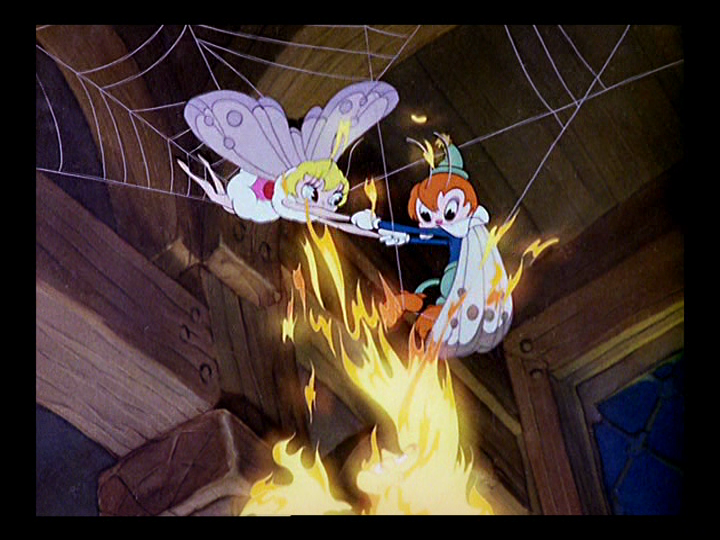
One young moth couple has a romantic date near a feathered hat, sharing a kiss. The girl tries to get the boy to chase her, and is rather put out when he decides to eat a bowler instead. Nearby, a flame on a candle spies the moth and laughs, then begins to dance, moving the girl moth’s shadow around and catching her attention. He draws her closer, and she dances dangerously close to the flame, burning the candle down to practically nothing. The flame jumps around, following her, and she puts him out with a fire insurance policy. However, he burns right through it and continues his pursuit, until she is stuck in a spider’s web.

The boy moth tries desperately to free his girlfriend, with the flame always close behind

The boy moth tries desperately to free his girlfriend, with the flame always close behind

The boy moth, seeing her in trouble, runs to her rescue, but is quickly chased away by the flame. He then uses a nearby glass of water to douse the flame, but is unsuccessful, then accidentally uses the highly flammable benzene, which gives the flame greater strength. Finally, he gathers the attention of all the other moths, who use a bagpipe filled with water to bring the flame down. Using other instruments in the shop, they work to quickly kill the flame, and the boy is able to free the girl. Together again, the two share a kiss.

March 30

March 30, 1945 – The Donald Duck Short Film The Eyes Have It is Released to Theaters

vlcsnap-2013-03-30-10h22m05s165

“Instructions: select a subject of low intelligence.”

On March 30, 1945, the Donald Duck short film The Eyes Have It premiered in theaters. It was directed by Jack Hannah, with story by Bill Berg and Ralph Wright.

Donald receives a hypnotism kit, opens the book of instructions. The first step is to find a subject of low intelligence. Donald looks around to see Pluto sleeping nearby and calls the dog over. Donald pretends to be friendly, but quickly slips on the hypnotism goggles and makes Pluto think he’s a mouse. Pluto begins to scamper around the house like a mouse, and Donald calls out like a cat, making Pluto scamper into a mouse hole for safety. Donald then finds Pluto eating some cheese left out on the counter.

Pluto turns into a turtle thanks to Donald's hypnotism

Pluto turns into a turtle thanks to Donald’s hypnotism

The next animal Donald hypnotizes Pluto into is a turtle, and he walks slowly across the front yard, with a worm passing him in speed. Donald then decides to make Pluto a chicken, and Pluto runs after the worm he’d just seen, and starting pecking at it. He tears up Donald’s flower garden and is chased into the hen house. The rooster, angered by the squawking by the hens, goes in an grabs Pluto painfully by the tail. Donald, excited by the fight, gets a wicked idea to turn Pluto into a lion. Pluto chases the rooster around the hen house, and as they burst out the hen house door, they bump into Donald, who falls and breaks his hypnotic goggles.

The rooster grabs Donald’s head for dear life, and “lion” Pluto turns his attentions to the duck. Donald tries to protect himself using the furniture, and wonders how he’s going to break the hypnosis. Donald and Pluto break through the ceiling of the house during the pursuit, and fall to the ground heavily. Due to the fall, Pluto’s hypnosis is broken, and he licks Donald’s face in an attempt to wake the duck up. Donald, seeing Pluto’s smile, thinks he’s baring his teeth, and flees, leaving a very confused Pluto.

March 28

March 28, 1953 – The Goofy Short Film Father’s Day Off is Released to Theaters

vlcsnap-2013-03-27-22h14m57s221

“Can I handle everything? Ha! What’s a little housework?”

On March 28, 1953, the Goofy short film Father’s Day Off was released to theaters. It was directed by Jack Kinney, with story by Brice Mack and Dick Kinney.

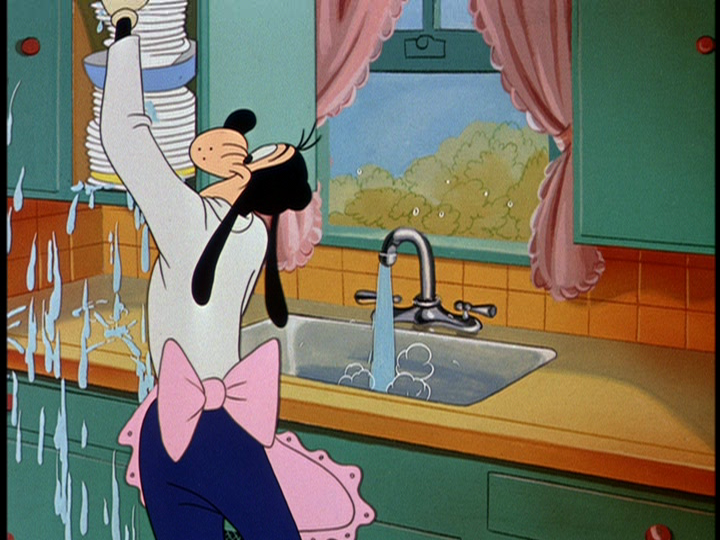
It’s another day in suburbia, and Goofy stands with his son, George, at the door of their house while his wife is preparing to head off in the car for the day. She asks if he’ll be able to handle everything while she’s away, and he scoffs at her question, thinking housework is easy. She leaves, although not without causing major damage on the way out. He starts with giving George breakfast, but spills George’s milk and gives him a rather strange haircut around the rim of his baseball cap. The doorbell buzzes, sounding the arrival of the milkman, who gives Goofy a kiss as he delivers the milk (not noticing that it is not Goofy’s wife), leaving Goofy stunned, although he brushes it off a being friendly. He then shoves the milk in the already overstuffed fridge, which causes the food to bulge out everywhere.

Goofy proclaims housework to be easy, but he only thinks so because he takes shortcuts and does a subpar job

Goofy proclaims housework to be easy, but he only thinks so because he takes shortcuts and does a subpar job

George is then sent off to school, but George informs his father that it’s Saturday. Goofy then laughs this off, and says that George will be a lot of help to him around the house. His first efforts at housecleaning are rather terrible at best, but he thinks it’s simple. He catches George drawing on the wall, but when he goes to clean it, he wipes off the paint from the wall, leaving the drawing unscathed, and decides to fix it by placing the radio in front of the scribble. The radio switches on, and Goofy gets caught up in listening to a melodrama. As he cries at the storyline, the doorbell buzzes again, this time with the grocery delivery man, who also gives Goofy a kiss (also not noticing that it is not Goofy’s wife). As groceries are thrust into a flustered Goofy’s arms, George runs through the house, and a baseball is tossed to him, breaking the window in the process. He then breaks the other half of the window throwing it back to his friends. The family dog then traipses through the living room, covered in mud.

The laundry is sent flying through the air thanks to another mishap, and Goofy decides to run it through the washing machine. He suddenly notices that his son was in the washer, and quickly retrieves him. The family dog, brought back inside, starts tearing up one of the pillows. When Goofy tries to find the vacuum cleaner in an overstuffed closet, he just creates a larger mess, and George ends up stuck in the vacuum bag. Goofy sends George to take a bath, and floods the house. As he goes to lecture his son, the cleaning man arrives at the door, preparing to give Goofy’s wife a kiss, when he is doused in the bath water, which shrinks the delivered dress. Goofy becomes more and more overwhelmed with everything he needs to do, and accidentally leaves the phone off the hook. The melodrama on the radio takes a violent turn, and the operator, thinking that she’s hearing a real murder, calls the police in a panic.
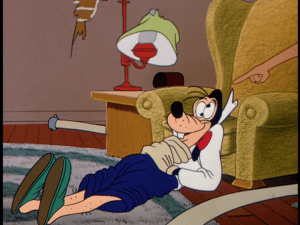
The iron Goofy left on falls through the ceiling, landing square on his head

The iron Goofy left on falls through the ceiling, landing square on his head

Goofy’s wife arrives home, and Goofy quickly tries to act like nothing happened. The fire department then arrives and starts tearing up the house, along with the police, who demand to know where the body is. The iron that Goofy had left on burns a hole through the ceiling and knocks Goofy out, while the press is there to take pictures.
March 23

March 23, 1951 – The Goofy Short Film Home Made Home is Released to Theaters

vlcsnap-2013-03-22-22h49m06s73

“Since the beginning of time, man has been possessed with the desire to have a roof over his head.”

On March 23, 1951, the Goofy short film Home Made Home was released to theaters. It was directed by Jack Kinney, with story by Milt Schaffer and Dick Kinney.

On the top of a hill, Goofy is seen building the frame of a house, sawing one side of a board. He realizes that if he keeps sitting on the side he’s cutting off, he’ll fall, so he quickly changes, only to fall anyway. He then pulls out his blueprints, only to be completely rolled up inside and tangled in them. He tries to nail the blueprints down, but the sheets just tear up the boards and trap him again. He then uses a level on a board, and has a hard time keeping it straight, although he does find a trio of goldfish residing inside.

Goofy carefully carries a sheet of plate glass, with humorous results

Goofy carefully carries a sheet of plate glass, with humorous results

Goofy pulls out a sheet of plate glass, and slips on a banana, on a pipe, and on a board, but the glass miraculously stays intact and places itself in the window frame. It moves around when he accidentally touches it, and it finally breaks when he walks right through it after he thinks he’s cleaned it. Goofy then tries to paint the house, with paint buckets open everywhere. He gets in a battle with the spray painter, which attacks him like a snake, spraying him with as much paint as possible, sending Goofy running all over the house. Once the house is completely covered in yellow paint, Goofy looks up to see that his house is complete, but as he lays down the welcome mat, with his neighbors arriving to welcome him, the house completely falls apart.

March 22

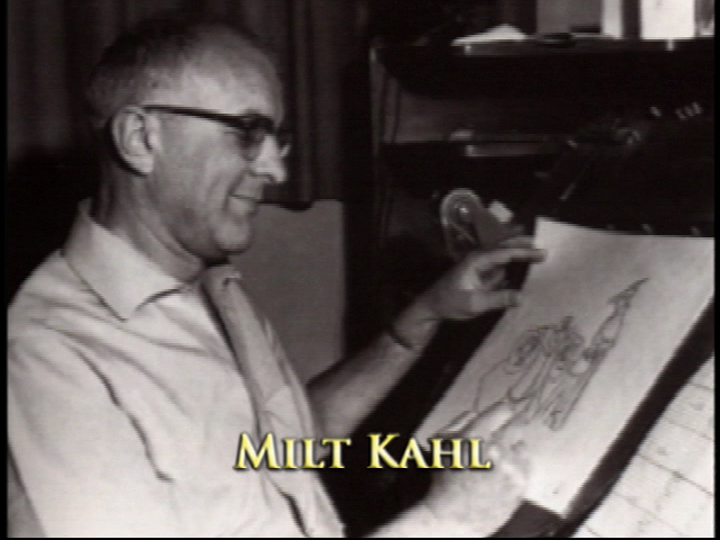
March 22, 1909 – Animator, Member of Disney’s Nine Old Men, and Disney Legend Milt Kahl is Born

vlcsnap-2013-03-22-09h07m37s234

“I don’t think it’s possible to be a top notch animator without being a very excellent draftsman. You have to be able to draw these characters in order to move them around and articulate them. There’s no way of doing it unless you draw very well.”

On March 22, 1909, animator Milton Erwin Kahl was born in San Francisco, California. At the age of 16, Kahl dropped out of high school to help provide for his family, and was hired by the Oakland Post Enquirer in the art department. After three years there, Kahl then got a job at the San Francisco bulletin, but was laid off when the Great Depression hit. He was able to find some work as a commercial artist and began to take art classes to improve his work. In late 1933, as he was struggling once again to find work in commercial art, a friend from the Oakland Post Enquirer, future Disney Legend Ham Luske, recommended that he apply to work at the Disney studios. Kahl was hired on June 25, 1934. with his first important animation assignment being the 1936 Mickey Mouse short film Mickey’s Circus. He was then assigned to animate the animals in the full-length animated feature Snow White and the Seven Dwarfs, along with Eric Larson among others.

Kahl’s talents shone in the next film, Pinocchio, when the staff of the studio were having problems trying to create the title character in terms of personality and overall design. “They were thinking in terms of a puppet all the time, naturally, because he was a puppet,” Kahl said. “And I was very critical of what they had. So I did a test scene where Pinocchio had donkey ears and a tail and was down on the sea bottom…and I handled it not thinking of so much as a puppet, as just a little boy. Walt liked it, so that became the model.” This way of thinking helped reshape the character and restart production, and Kahl was given the plumb role of directing animator on Pinocchio once he comes to life. This role also established Kahl as one of the top animators at the studio.

vlcsnap-2013-03-22-09h10m11s254

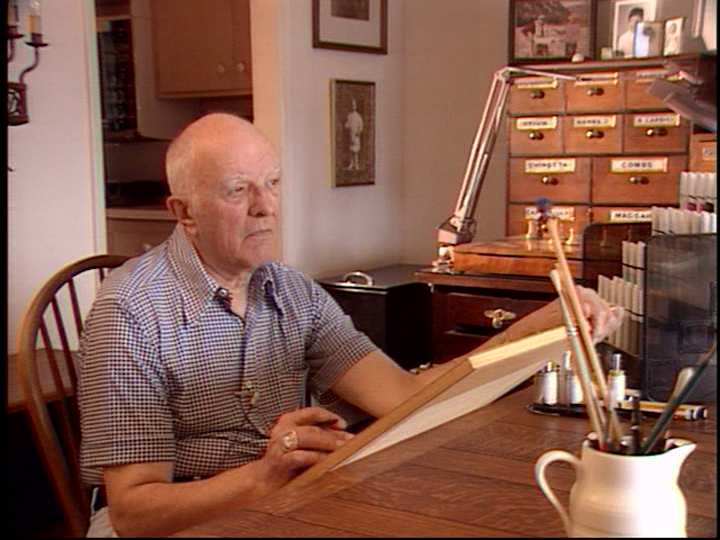
Kahl’s role grew, as he was considered one of the best draftsmen in the studio. Although his skills were being recognized before the outbreak of World War II, some of his best work was during the wartime period, including the film Saludos Amigos and the short films Education for Death and Tiger Trouble. After the war, Kahl was responsible for the final design of characters, and was given the task of animating non-comic characters, including Alice from Alice in Wonderland, Peter Pan and Wendy from Peter Pan, and the princes in Cinderella and Sleeping Beauty, with John Canemaker, author and film historian, noting that Kahl was “always stuck with the princes.” Although Kahl would complain of being “saddled” with these characters, he was secretly proud of his ability to bring these characters to life. Other highlights of Kahl’s career were the animation of character interactions in The Sword in the Stone (which Kahl considered “one hell of a picture”) and the character of Sher Kahn in The Jungle Book. His last work for the studio was animating Medusa and Snoops for the film The Rescuers, and left on April 30, 1970, although he did do a few character designs for The Black Cauldron. On April 19, 1987, Kahl passed away of pancreatic cancer. He was inducted into the Disney Legends in 1989. In 2009, the Academy of Motion Pictures held a panel to celebrate the centennial of Kahl’s life where animators Brad Bird, Andreas Deja, Ron Clements, John Musker, and Floyd Norman, as well as voice actress Kathryn Beaumont, celebrated his style and influence in the shaping of many Disney classics.

March 21

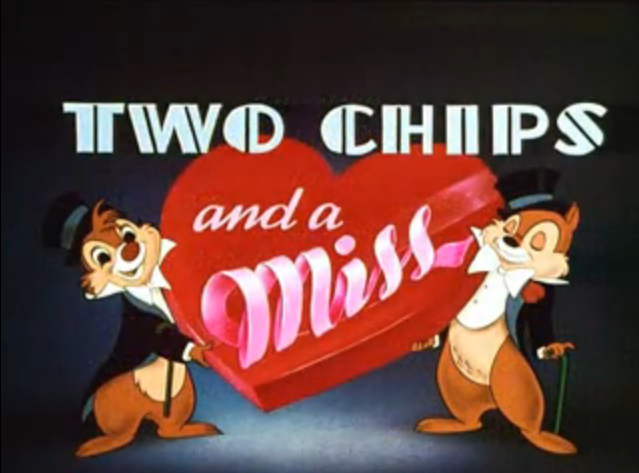
March 21, 1952 – The Chip ‘n’ Dale Short Film Two Chips and a Miss is Released to Theaters

TCaaM_1

“Little boy, with your cute little ways I am yours, for the rest of my days.”

On March 21, 1952, the Chip ‘n’ Dale short film Two Chips and a Miss was released to theaters. It was the second of three shorts made for the Chip ‘n’ Dale series. The song that Clarice sings is “My Destiny” by Bill Eckstine, a famous balladeer in the era of swing music. The short was directed by Jack Hannah, with story by Nick George and Bill Berg

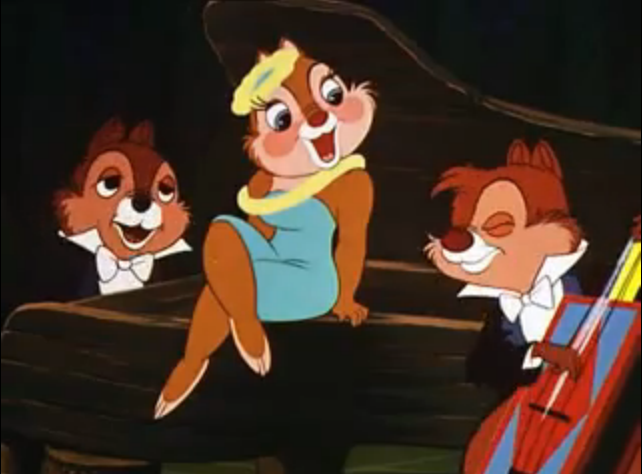
In the middle of Central Park, Chip and Dale are preparing for bed, scoffing at the noisy nightlife of the city, claiming it’s not for them. As the two settle down for the night, Chip secretly pulls out a note from under his pillow from a girl named Clarice. Chip waits for Dale to fall asleep and gets ready for his date once Dale sleepwalks out of their home. Unbeknownst to Chip, Dale is also preparing for a date with Clarice. The two make their way to the Acorn Club, and head straight to Clarice’s dressing room to give her a bouquet of flowers. There, the two discover that they are chasing the same girl, and begin to fight over her.

Chip and Dale compete musically for Clarice's attention before settling on serenading her with a duet

Chip and Dale compete musically for Clarice’s attention before settling on serenading her with a duet

Clarice seems to find the fighting over her amusing more than anything, and is soon called to the stage to perform her song. The pair go crazy over her performance, and continue to try and outdo the other for her attention. At one point, Chip falls over the piano while trying to catch a flower Clarice threw to the duo, but brightens when he realizes he can help her performance. She is delighted by his playing, and Dale is jealous until he plays a nearby cello. The two begin to duel musically, much to Clarice’s delight, and she gives them both a kiss. Smitten, the two begin to serenade her with a duet. The short ends with Clarice tricking the two into kissing each other when they try to reach for her.

March 19

March 19, 1948 – The Mickey Mouse Short Film Mickey Down Under Premieres in Theaters

vlcsnap-2013-03-18-21h29m50s30

“Well…cheerio!”

On March 19, 1948, the Mickey Mouse short film Mickey Down Under premiered in theaters. It was directed by Charles Nichols, with story by MacDonald MacPherson and Jack Huber.

Mickey is seen throwing a boomerang around in the bush of Australia, whistling a merry tune. When Pluto points to a bunch of bananas, Mickey then uses the boomerang to chop off a banana, but when Mickey reaches for it, Pluto immediately gulps it down. The boomerang flies back and startles Pluto, and Mickey has to calm him down. Mickey then shows his prowess with the tool, but it gets stuck in his shirt. When Mickey gets it free, it flies off as if it has a mind of its own, and Pluto hunts it as if it were dangerous prey. Pluto continues to chase it through the bush, and gets it stuck in his mouth, which twists his lips and cheeks into humorous poses.

Mickey comes face to face with the angry emu when he tries to take the emu's egg

Mickey comes face to face with the angry emu when he tries to take the emu’s egg

As Mickey searches for Pluto and the boomerang, he discovers an emu egg. He doesn’t realize, however, that he is standing underneath the emu, and decides to take the egg. When he looks up, he sees how angry the emu is, and nervously puts the egg back, hoping the emu won’t hurt him. He then tries to polish the egg, and accidentally hits the emu in the head with his handkerchief. The emu tries to claw him with his feet, but Mickey avoids the emu for the time being. He calls out for Pluto, who is still struggling with the boomerang, and the boomerang sends him flying into the emu, tying the bird up in knots. Although Mickey is grateful for Pluto’s help, he has to make a run for it when the boomerang decides to chase Mickey and Pluto through the bush.