RSS Feed

Tag Archives: Short film

October 30

October 30, 1930 – The Silly Symphony Winter is Released to Theaters
vlcsnap-2014-10-30-20h50m53s70

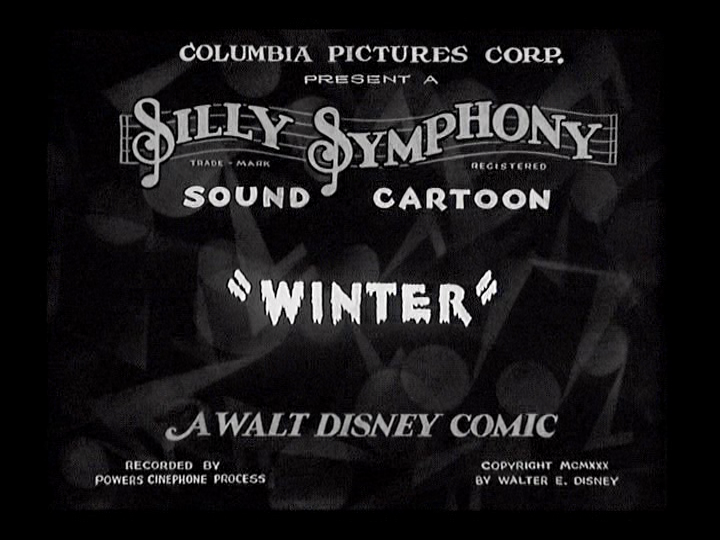
On October 30, 1930, the Silly Symphony Winter was released to theaters. It was the last of a series of shorts dedicated to the seasons. It was directed by Burt Gillett.

It’s a blustery winter’s night, and a wolf howls into the wind. Three bears are sleeping under a giant rock formation, and the trees dance while the snow falls around them. A quartet of birds sing as they are perched on a reindeer’s antlers, and fly away as the reindeer gets up to go ice skating. Several other woodland creatures appear to dance in the snow, and one cub starts playing pranks on a sleeping bear. Unfortunately, the bear wakes up, but then starts to dance himself. A moose joins in the fun, braying loudly before joining a group of animals that are waiting for the Weather Prophet, Mr. Groundhog, to emerge from his house. He finally steps outside, covering his eyes, and looks around, unable to see his shadow. The animals dance at this news, when the sun suddenly shines, and the groundhog is spooked by his shadow. The shadow disappears once the sun is hidden by the clouds again, and another large storm brews, sending all the animals back to their homes as fast as can be.
October 27

October 27, 2008 – The Pixar Short Series Cars Toons Premieres on Toon Disney

Cars_Toons

“If I’m lyin’, I’m cryin’.”

On October 27, 2008, the Pixar short series called Cars Toons premiered on Toon Disney. Featuring the characters from the Pixar series Cars, mostly with the breakout character Mater, the series is shown in small segments on Toon Disney, Disney Channel, and ABC Family; a few of these shorts have been released theatrically, or have been included in DVD/Blu-Ray releases of Pixar films. The series has had fifteen episodes to date, including “Rescue Squad Mater,” “Tokyo Mater,” and “The Radiator Springs 500 ½.”

October 26

October 26, 1945 – The Donald Duck Short Film Cured Duck is Released to Theaters

vlcsnap-2014-10-26-18h39m54s20

“Temper, temper, shame on you! You never see me lose my temper, do you?”

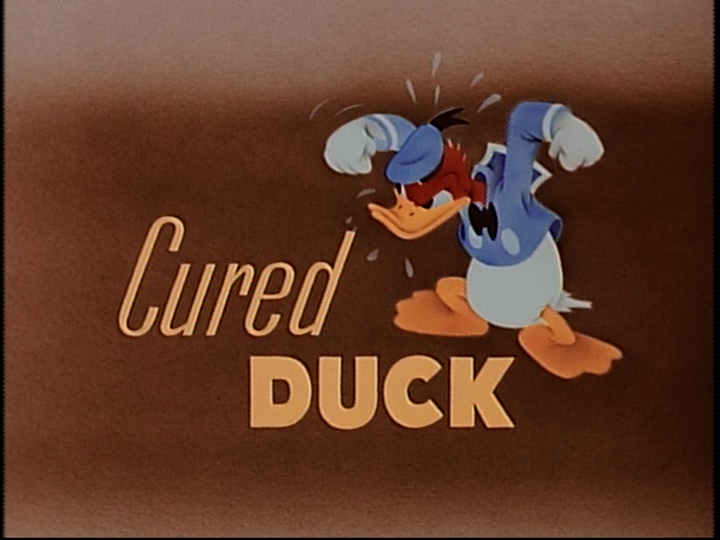
On October 26, 1945, the Donald Duck short film Cured Duck was released to theaters. It was directed by Jack King, with story by Roy Williams.

Donald is walking down the street with a cigar, blowing smoke hearts as he heads to Daisy’s house. She gets herself ready as she sees him approach, although she is less than happy about his cigar smoke. He tries to open the window for her, and is angered when it is sealed shut. He throws a tantrum, breaking all of her belongings. Having had enough, she admonishes him for his temper, and gives him an ultimatum: she won’t go out with him again until he controls his temper. Donald dejectedly walks away, and comes across a newspaper ad for a mail-order temper cure. His package soon arrives, and enclosed is an insult machine from the Tootsberry Institute of Temperism, which tells him that if Donald can withstand its insults for ten minutes and still control his temper, he will be cured. The machines is really rough with Donald, and loses it after 30 seconds. The tests get more and more rough, but finally, Donald is able to pass the test and receive his certificate. He jumps in his car and drives back to Daisy’s, and she tests him with opening the window again, and although he has problems, he manages to get the window open and doesn’t lose his temper after all the mishaps. When she shows up with a new hat, he laughs at the ridiculousness of it, and she loses her temper, beating him over the head with a broom.


October 24

October 24, 1929 – The Silly Symphony Springtime is Released to Theaters

vlcsnap-2014-10-24-19h18m03s121

On October 24, 1929, the Silly Symphony Springtime was released to theaters. It was the first in a series of Silly Symphonies about the seasons, followed by Summer (January 16, 1930), Autumn (February 15, 1930), and Winter (October 30, 1930). Springtime was directed by Walt Disney.

The flowers, trees, and bugs are all dancing around, enjoying the fair spring weather. A crow comes along and eats a dancing caterpillar, dancing away itself back to its nest, where his sweetheart is waiting. Her babies hatch and start dancing around the nest. Suddenly, a large storm develops, and one tree is seen taking a bath in the rain when he is struck by lightning. The storm quickly passes, and two grasshoppers are seen playing leapfrog when they are eaten by a frog. The frog jumps from lily pad to lily pad, with another frog playing a tune on the backs of turtles. A spider jumps down from his web and dances on a nearby log before using his web as a harp. Three frogs begin dancing on a log, croaking with the music, when a nearby crane spies them and stalks its way over. It attempts to eat the frogs, when they jump inside each other like nesting dolls and flee, but the crane eats them all and jumps away happily, although he falls into a large puddle, splashing water onto the screen.

October 23

October 23, 1930 – The Mickey Mouse Short Film The Picnic Premieres in Theaters

vlcsnap-2014-10-23-18h33m42s30

“Sure, you can bring your Little Rover.”

On October 23, 1930, the Mickey Mouse short film The Picnic premiered in theaters. It features a dog that looks like Pluto, playing the part of Little Rover; Pluto would not become Pluto until the 1931 short film The Moose Hunt. The Picnic was directed by Burt Gillett.

Mickey is driving to Minnie’s whistling “Minnie’s Yoo Hoo” as he goes. Minnie calls out to him when he arrives, and calls out for her dog “Little Rover,” who is a rather large dog and jumps on Mickey upon seeing him. Mickey ties him to the back of the car, and they all head off to their picnic. Little Rover decides he’d rather chase after some rabbits and pulls the car with him as he pursues them. As he runs off, Mickey and Minnie decide to set up their picnic near a creek, and Mickey starts up the Victrola before asking Minnie to dance to “In the Good Ol’ Summertime.” Many animals also decide to dance to the music while stealing the picnic food, with Mickey and Minnie unaware as they continue to dance. Little Rover continues to search for the rabbits, and before they all know it, a large storm arrives. Mickey packs up what little remains of the picnic and heads to the car, driving as best he can in the rain. He has Little Rover act as a windshield wiper while he continues to drive,

October 21

October 21, 1951 – The Goofy Short Film Fathers Are People is Released to Theaters

vlcsnap-2014-10-21-18h56m24s67

“The new father should start immediately sharing the responsibility for the child’s upbringing.”

On October 21, 1951, the Goofy short film Fathers Are People was released to theaters. This was one of several shorts where Goofy is portrayed as everyman George Geef. There is also a Hidden Mickey in this short, found on Junior’s bed. The short was directed by Jack Kinney, with story by Dick Kinney and Milt Schaffer.

The short begins with George entering the waiting room in the hospital with a box of cigars, proudly announcing that he is a father. Soon after, he is seen performing chores around his house, hanging up diapers, collecting milk bottles, preparing bottles for his son, and trying his best to help his wife. In the middle of the night, George goes to feed Junior, and ends up making himself a cocktail before turning off the light. The next morning, it’s time to take the family to Grandmother’s, forgetting one important thing: the baby. A picture diary shows the milestones in Junior’s life, including his first tooth, first step, and first word. One Sunday morning, Junior is seen getting in a fight with a neighborhood kid, with George and the other father fighting over which kid is in the wrong, although the kids just begin to play again. George tries to play with his father, but this “play” wears George out, as Junior is rather rough. George tries to sit and read the paper, although Junior pesters his father, wanting him to play. Junior also disobeys his father, and George tries to use reverse psychology, but to no avail. In the end, George falls on a roller skate, and decides that he’s had enough, and is going to give Junior a paddling. However, Junior is able to weasel out of it by acting cute. George decides that kids aren’t that bad, and wishes he had a million of them. When his wife asks how a tiny sweater she knitted looks, George panics, but relaxes when he realizes that he and his wife may only have the one child after all.

October 18

October 18, 1946 – The Educational Film The Story of Menstruation is Delivered

SoM_1

“So, as we see now, menstruation is just one routine step in a normal and natural cycle that is going on continuously within the body.”

On October 18, 1946, the educational film The Story of Menstruation was delivered to International Cellucotton Co. (now known as Kimberly-Clark). It was produced through a partnership with Kotex Products. It became a staple of health education classrooms for decades, using animation to depict the changes in a woman’s body through puberty. The film runs about ten minutes.

The film begins with a conversation about glands, namely the pituitary gland, which produces growth hormones. Between the ages of 11 to 17, the pituitary gland sends a new maturing hormone through a woman’s body, particularly to the ovaries. An explanation is given of a woman’s sexual reproduction hormones, and the cycle of an egg. It then goes to describe regularities when it comes to a period, and how timing can go off due to fatigue, catching a cold, or becoming emotionally upset. It reminds girls to keep a calendar for their cycle, and introduces a booklet called “Very Personally Yours,” which was handed out upon viewings of this film. It also dispels any theories that women should not shower or exercise during their period. The booklet also provides exercises to help with cramping, and advises healthy living every day to help keep the body running smoothly.

October 15

October 15, 1943 – The Figaro Short Film Figaro and Cleo is Released to Theaters

vlcsnap-2014-10-15-18h49m53s101

“Although she’d make a dainty little dish…”

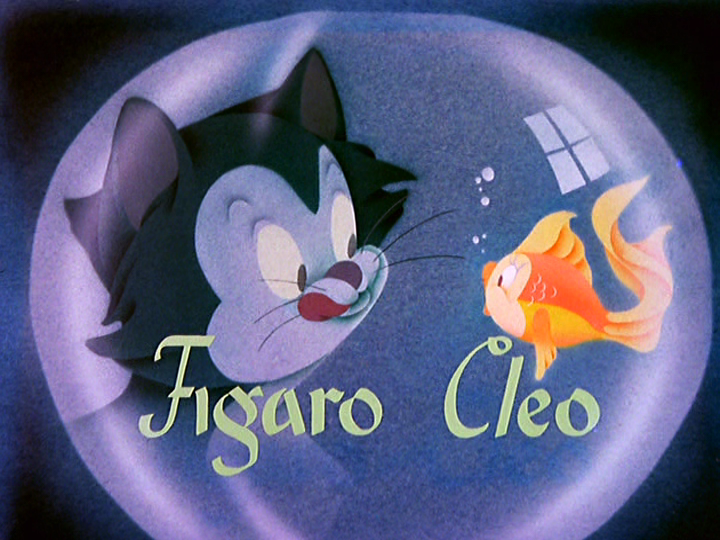
On October 15, 1943, the Figaro short film Figaro and Cleo was released to theaters. This is the first of a handful of shorts that features the popular character from the animated feature film Pinocchio, with Figaro continuing to star in an additional six short films. The short was directed by Jack Kinney.

Figaro is waiting to be fed his supper, and is angered that more attention is being paid to Cleo, the goldfish. Hungry, Figaro eyes Cleo, but tells himself that he’d rather die. However, his hunger gets the best of him, and he decides to hunt after her. He then decides to play with the broom instead, much to the annoyance of the maid. He tries to get her attention, but she brushes him away. He lands in the living room and decides to play with a ball of yarn instead, finding himself in more trouble; when the maid punishes him by giving him no milk, Figaro decides that now is the time to eat Cleo. He waits until the coast is clear, then approaches Cleo with a makeshift fishing rod that uses his tail. When the maid catches him, he accidentally hooks the side of the fishbowl, but she frees him and scolds him again. Tired, the maid decides to take a nap, leaving Figaro with nothing to do but to go after Cleo. She wakes up to find him face-first in the bowl, and she ties his tail to her chair to keep him out of trouble before nodding off again. Unfortunately, her snoring causes the bowl to travel closer to the trapped Figaro, and he ends up freeing himself and falling into the bowl. The maid wakes up to find him in drowning in the bowl, and she quickly pulls him out and revives him. She makes sure that the two of them finally get along, and Cleo and Figaro seal their friendship with a kiss. In the end, the maid gives Figaro his milk.

October 13

October 13, 1950 – The Donald Duck Short Film Bee at the Beach is Released to Theaters

vlcsnap-2014-10-13-18h35m09s225

“No no, not that!”

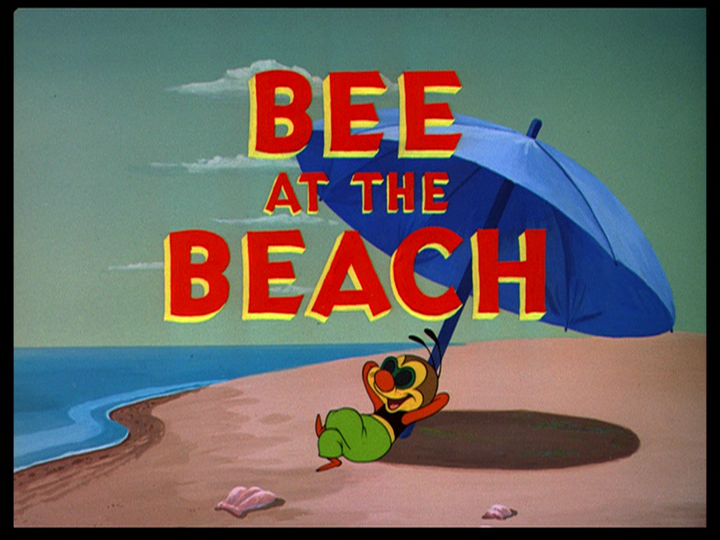
On October 13, 1950, the Donald Duck short film Bee at the Beach was released to theaters. It was directed by Jack Hannah, with story by Nick George and Bill Berg.

It’s a busy day at the beach, and Spike the Bee is looking for a place to lay out. Finally spying an empty spot, he dives in, only to be beaten to the spot by Donald. However, he tries to make the best of what he can claim, until Donald continues to interrupt him, including step on his on his way to the ocean. Frustrated, he heads over to get Donald’s attention, and kicks sand in the duck’s face. Donald retaliates by blowing him away and using his stinger to open his soda; Spike in turn decides to poke holes in Donald’s straw. Donald eventually traps Spike in his soda, and decides to go use his new super duper raft in the ocean. Spike realizes that if he sets off enough carbonation, he can escape, and decides to use his stinger to pop a giant hole in Donald’s raft. Donald is able to avoid the direct hit, but Spike is able to let the air out, sending Donald out into the ocean into an area full of sharks. Although Donald manages to inflate the raft, Spike once again appears, threatening to punch a hole in the raft. Donald begs for his life, and Spike taunts him by poking several holes, which Donald quickly plugs with his fingers and toes, then takes a feather from Donald’s tail and uses it to lure the sharks. Donald manages to avoid getting his tail bitten off, but can’t avoid the sharks for too long, and he soon finds himself using an umbrella to try and fly away, much to Spike’s amusement.

October 10

October 10, 1936 – The Mickey Mouse Short Film Mickey’s Elephant is Released to Theaters

vlcsnap-2014-10-10-18h43m28s42

“There goes his house! And there goes yours!”

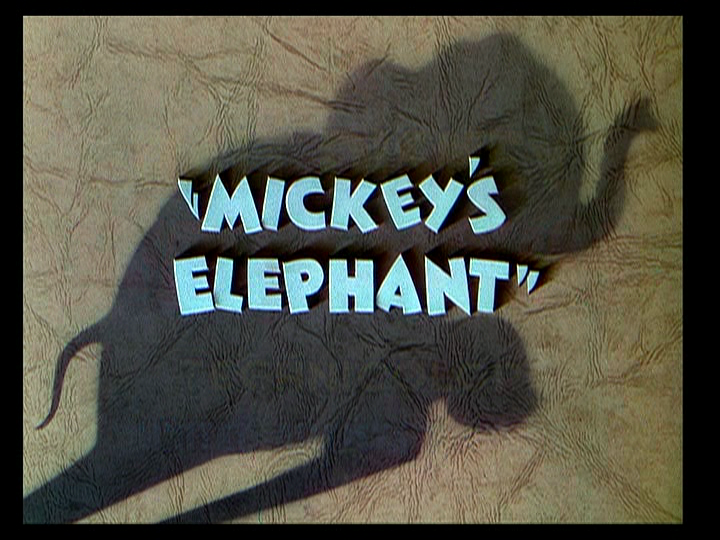
On October 10, 1936, the Mickey Mouse short film Mickey’s Elephant was released to theaters. Although labeled a Mickey Mouse short, it primarily features Pluto as he interacts with the elephant. It was directed by Dave Hand.

Mickey receives from the Rajah of Ghaboon the present of a playmate for Pluto: an elephant named Bobo. Mickey sets to work creating a lovely new house for Bobo, and gives Bobo a ball to play with while he waits for Mickey to paint. Bobo has a lot of fun with the ball, especially when he hits it out of the yard through a hole in the fence, and sucks it back in with his trunk. Meanwhile, Pluto passes by the fence, and stops when he sees the ball roll out. He is surprised when the ball seems to roll right back on its own accord. The ball continues to go in and out of the fence, starling the poor dog, until he spies Bobo’s trunk coming out of the hole. Bobo accidentally sucks up Pluto’s face, and then grabs him by the tail, pulling him into the yard. Pluto is surprised, and immediately growls at the elephant. Bobo is amused by Pluto, and decides to follow him around the yard. Pluto is spooked by Bobo, and runs howling into his doghouse. The little devil Pluto makes an appearance, telling the scared dog that Bobo’s going to be Pluto’s replacement, pointing out the new house Mickey is making for Bobo versus the dilapidated shack Pluto lives in. Spurred by jealousy, Pluto decides to attack Bobo – except that he’s terrified. The devil gives Pluto the idea to take some red pepper and blow it in Bobo’s face, causing the poor elephant to sneeze wildly. Bobo ends up sneezing Mickey’s tools towards him, nearly decapitating him with an axe. Mickey tries to stop Bobo from sneezing by tying a knot in his nose, but Bobo continues to sneeze. One extraordinary sneeze breaks apart Bobo’s new house, and another one destroys Pluto. Angered, Pluto gets rid of his devil, and glares into the camera.