RSS Feed

Tag Archives: Short film

January 7

January 7, 1944 – The Special Wartime Short Film The Pelican and the Snipe is Released to Theaters
vlcsnap-2015-01-04-16h11m08s32

“Whenever Monte dreams he’s a dive bomber, it’s little Vidi’s job to pull him out of dives.”

On January 7, 1944, the special short film The Pelican and the Snipe was released to theaters. The short was meant to be included as a segment in The Three Caballeros, but was released as a short film instead. It was directed by Hamilton Luske, and narrated by Sterling Holloway.

The short takes place in Montevideo, Uruguay, at a small lighthouse. Monte the Pelican and Vidi the Snipe have a job watching from the top of the lighthouse, but Monte has a major problem – he flies in his sleep. Vidi is tasked to watch over Monte while he sleeps. Poor tired Vidi falls asleep at one point, and that’s when Monte, dreaming that he’s a dive bomber, dives off the side of the lighthouse. Vidi quickly chases after him, preventing Monte from crashing into several large jagged rocks, flying into a shark’s mouth, and other spectacular scrapes. Night after night, Vidi watches over Monte, with Monte never knowing a thing. In the morning, Monte is annoyed when he finds Vidi so exhausted and sleeping. Poor Vidi can’t sleep during the day, however, thanks to the planes performing maneuvers around the lighthouse.

Vidi's plan to keep Monte in place backfires, and Vidi is taken on a ride

Vidi’s plan to keep Monte in place backfires, and Vidi is taken on an exhausting ride

The next night, Vidi thinks he’s found a solution by tying one of Monte’s legs to one of his. However, all this does is pull Vidi along for the ride when Monte takes off for his sleep-flight adventure. Vidi manages to use the rope to keep Monte out of trouble, but poor Vidi is still exhausted. He comes up with one idea after another, but none of them seem to work, save for connecting Monte to an anchor. Unfortunately, Monte pulls the anchor off when he take flight, and lands in the ocean. Thinking that Vidi has just been playing pranks on him, Monte plans on getting even. Vidi tries to explain, but Monte doesn’t give him a chance to talk, and banishes a heartbroken Vidi from the lighthouse. That night, Monte’s problem resurfaces, and he starts soaring around with the air force, and gets his tail hit by one of the propellers. This jolts him awake, and then it finally dawns on him that he’d been flying in his sleep, and Vidi was only trying to protect him from harm. He then notices Vidi fast asleep on the target for bombing practice, and rushes to save the poor snipe from getting blown to smithereens. In the end, the two find a good solution – they tie Monte’s leg to the lighthouse, letting him circle around the lighthouse in his sleep to his heart’s content.
January 6

January 6, 1963 – The Walt Disney’s Wonderful World of Color Episode “Three Tall Tales” Premieres

vlcsnap-2015-01-06-17h56m07s58

“And here is your host, Walt Disney.”

On January 6, 1963, the Disney anthology series Walt Disney’s Wonderful World of Color premiered the episode “Three Tall Tales.” The episode, hosted by Walt Disney and Ludwig von Drake, begins with an introductory monologue about Baron von Munchausen, a character from German folklore about a man who was famous for telling tall tales. The series then presents three tall tales told through Disney animation: Casey at the Bat (released August 15, 1946, as part of the animated feature Make Mine Music), The Saga of Windwagon Smith (released on March 16, 1961), and Paul Bunyan (released August 1, 1958).

January 4

January 4, 1952 – The Goofy Short Film Father’s Lion is Released to Theaters

vlcsnap-2015-01-04-15h18m07s218

“Here is the home of Mr. G. G. Geef, daring adventurer, famous explorer, great athlete, pioneer woodsman, Indian fighter, trapper, and soldier of fortune!…in the eyes of his son, that is.”

On January 4, 1952, the Goofy short film Father’s Lion was released to theaters. This is one of Goofy’s “everyday man” shorts, where he is playing character George Geef. It was directed by Jack Kinney, with story by Dick Kinney and Milt Schaffer.

The sun rises over the quiet suburban house of George Geef and his family, with George taking his kid on a camping trip. Junior is really excited to hear the tall tales George tells, believing them to be reality. When their back tire goes flat, George decides to park the car and climb the trail to the campsite. A mountain lion is trying to rest in the woods, but is disturbed by the gunshots from George’s shotgun as George is shooting at some empty cans. Junior notices a mountain lion in the nearby tree, and George grabs the lion by the tail and beats him up, unaware that he has actually attacked a real mountain lion. The lion is angered by George’s attack and tries to bite George, although Junior saves his father with his pop gun. The lion continues to try and attack George, but is unwittingly beaten by smoke and flapjacks. As they go to sleep, the lion sees this as his chance, but is interrupted by Junior’s requests. Having had enough, the lion attacks the group, and narrowly misses getting shot by George’s shotgun. The lion chases George around the campsite, but once again is thwarted by Junior’s popgun. George decides to get out of dodge, although he starts telling another tall tale as they head back to suburbia.

December 25

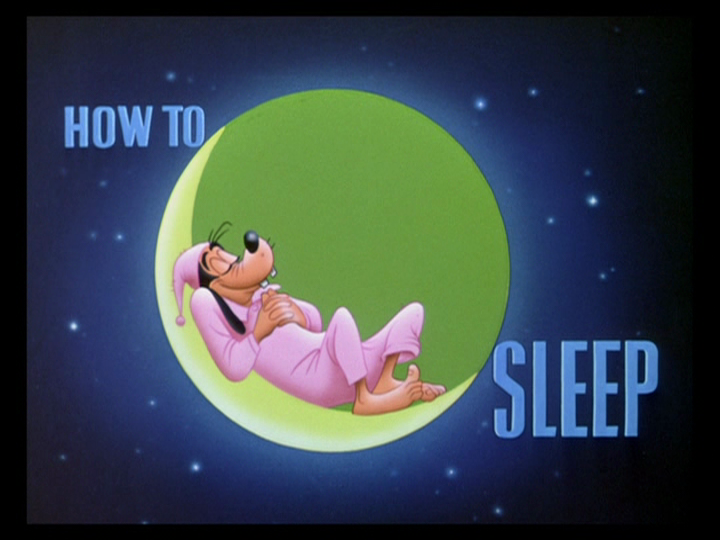
December 25, 1953 – The Goofy Short Film How to Sleep is Released to Theaters

vlcsnap-2014-12-25-21h36m29s21

“Since the beginning of time, man has always had the problem of sleeping.”

On December 25, 1953, the Goofy short film How to Sleep was released to theaters. It was directed by Jack Kinney, with story by Milt Schaffer and Nick George.

The short begins with the history of sleep – or, rather, the lack of it. For present day, they observe various ways people try to go to sleep, from being walked to being rocked. More and more people seem to have difficulty trying to sleep due to the demands of their day. The short then goes into various methods to help people sleep, including hot milk and opening a window. As Goofy tries to count sheep, this only makes his situation much worse. He then has to go see a scientist to help him find the best way to sleep using a variety of electronic devices all at the same time. Unfortunately, his dreams continue to keep him awake. In conclusion, the only way science has determined to put Goofy to sleep is to use a giant mallet over the head, effectively knocking him out.

December 24

December 24, 1948 – The Donald Duck Short Film Tea for Two Hundred is Released to Theaters

vlcsnap-2014-12-24-20h03m53s25

“Come out of there, you rats! I’ll get ya!”

On December 24, 1948, the Donald Duck short film Tea for Two Hundred was released to theaters. It was nominated for an Academy Award, but lost to the Tom & Jerry short film The Little Orphan. It was directed by Jack Hannah, with story by Nick George and Bill Berg.

On a beautiful day in the mountains, Donald sets up his picnic at his campsite, when the attention turns to the line of ants marching past his picnic blanket. He starts having a bit of fun with one of the ants, with the poor ant struggling to carry all the weight Donald places on its back. The poor ant finally falls, but realizes that Donald is in the possession of some wonderful food. He tells the other ants, and they all set forth to claim the food Donald has laid out. As Donald is taking a nap, the ants stage their attack, working as a team to carry Donald over a cliff while they claim his picnic basket as their own. Donald chases after the ants, trying to reclaim his food, although he struggles as they smartly make their way past him and into their anthill. When he reaches into the anthill, the ants steal his shirt, leaving him embarrassed. As a last resort, he sticks several sticks of dynamite in their anthill, not realizing until it’s too late that he has blown himself off the cliff. The short ends with the ants enjoying one of the cupcakes Donald packed.

December 23

December 23, 1954 – The Donald Duck Short Film Grand Canyonscope is Released to Theaters

vlcsnap-2014-12-23-18h04m19s202

“If we all threw rocks into the canyon, pretty soon we wouldn’t have a canyon, would we?”

On December 23, 1954, the Donald Duck short film Grand Canyonscope was released to theaters. Donald is the only classic character of the main Disney characters to appear in Cinemascope with this short film; this film also appeared months before Lady and the Tramp, the studio’s first widescreen release. It was directed by C. August Nichols, with story by Milt Schaffer and Nick George.

Donald is on vacation at the Grand Canyon, with Ranger J. Audubon Woodlore serving as the tour guide for the national monument. Donald gets in trouble almost immediately when he attempts to throw a rock from the viewing ledge. Donald then attempts to help a sand painter, but is once again thwarted by Woodlore. No matter what Donald attempts to do, Woodlore is always there to stop the trouble. Finally, the group goes on a burro ride down the canyon, with Donald taking several pictures. The camera’s flash blinds Donald’s burro, and takes Donald on a rather loopy ride around the canyon before Donald falls from his ride. Woodlore catches Donald, then lectures him about leaving his burro behind. The two go and search for the burro, when Woodlore, thinking that he’s found it, accidentally pulls out a mountain lion. The lion, angered at being woken up, chases after Donald and Woodlore while the other tourists just watch. Woodlore continues to lecture the pair while the chase continues and destroys the entire canyon. Angered by Donald and the lion’s actions, Woodlore lays down the law: “When a natural object is marred or defaced, it must be restored to its original state.” After this, he throws the pair some shovels, as they must now dig to create a new Grand Canyon.

December 22

December 22, 1995 – The Timon & Pumbaa Short Film Disney’s Timon & Pumbaa in Stand by Me is Released to Theaters

SbM_1

“I don’t think I like this song!”

On December 22, 1995, the short film Disney’s Timon & Pumbaa in Stand by Me was released to theaters alongside the live-action feature film Tom & Huck. The short film/music video features the classic song “Stand by Me” originally by Ben E. King. The short has Timon singing the song while Pumbaa is involved in many mishaps while “standing by” Timon. It was directed by Steve Moore, and stars Kevin Schoen as Timon, Ernie Sabella as Pumbaa, and Phillip Ingram as the frogs.

December 21

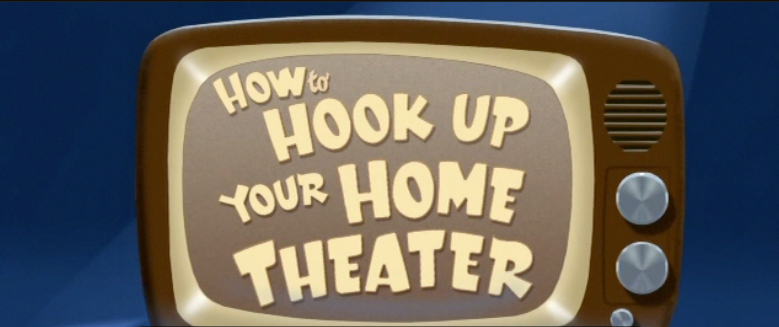
December 21, 2007 – The Goofy Short Film How to Hook Up Your Home Theater is Released to Theaters

HtHUYHT_1

“Modern sports fans, however, can fully immerse themselves in game day with a new home theater system. The advanced technology practically puts the viewer on the field.”

On December 21, 2007, the Goofy short film How to Hook Up Your Home Theater was released to theaters; this was the first Goofy theatrical short film since 1961’s Aquamania. It was directed by Kevin Deters and Stevie Wermers-Skelton, with story by Deters, Wermers-Skelton, Wilbert Plijnaar, and Dan Abraham. It stars Corey Burton as the narrator, and Bill Farmer as Goofy.

The short begins with a look at the big game, on Goofy’s tiny black and white television, when Goofy sees his neighbor getting a new big screen television and home theater system, and decides to get his own the next day at his nearest electronics store. He is laden down with several “important” elements of his system, and goes to pick his screen, which is the biggest in the store. Finally, it is delivery day, and Goofy waits anxiously, although the system arrives early the next day. The system is so massive that they have to lift Goofy’s house to fit the boxes inside. After unpacking it, and removing about a million packing peanuts, Goofy finds the instructions, although they are incredibly complex. He then has trouble plugging in the cables, and has to use a chainsaw to cut a wall of his house in order to reach the back of the screen. He then sets up all the speakers, surrounding him all around and ensuring eventual deafness. He mounts the speakers in crazy places, leaving wires and overloaded sockets in his wake. After setting it all up, he almost forgets about the big game, when he finds the universal remote and turns the television on. The television explodes, sending Goofy, chair, and screen to the actual playing field, where, after getting pummeled by the players, he remarks that “it’s almost like being there!”

December 20

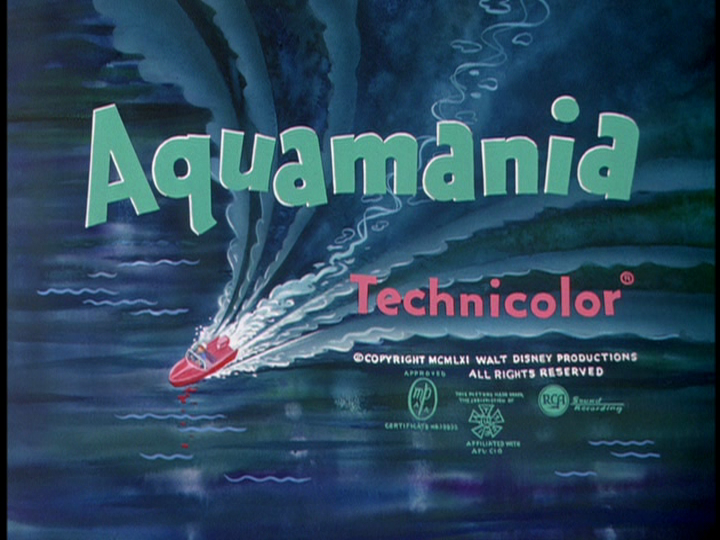
December 20, 1961 – The Goofy Short Film Aquamania Premieres in Theaters

vlcsnap-2014-12-20-18h32m00s125

“This could be any town, anywhere, anytime, because here, just as everywhere else, one-third of the population are…aquamaniacs.

On December 20, 1961, the Goofy short film Aquamania premiered in theaters. It was nominated for an Academy Award at the 34th Academy Awards, but lost the Yugoslavian short film Surrogat. It was directed by Wolfgang Reitherman with story by Vance Gerry and Ralph Wright.

The story begins with the explanation of the term Aquamaniac, complete with diagrams and case-study file. The study is of Goofy, although called by the narrator “Mr. X.” They show his dilapidated home and pristine motor boat. Before he became an aquamaniac, his home was well-kept, and he would walk to work; however, the earliest warning signs showed during his walk, as he loved to walk past a store that sold boats. Although he tries to convince himself that he doesn’t need a boat, he finally gives in and buys one. After purchasing his boat, he takes his son Junior out to the ocean, not noticing that there is a long line of boats and cars waiting to get in for the jet-skiing race. He struggles with getting the boat in the water, and ends up with his car at the bottom of the ocean, completely destroying it thanks to the salt water.

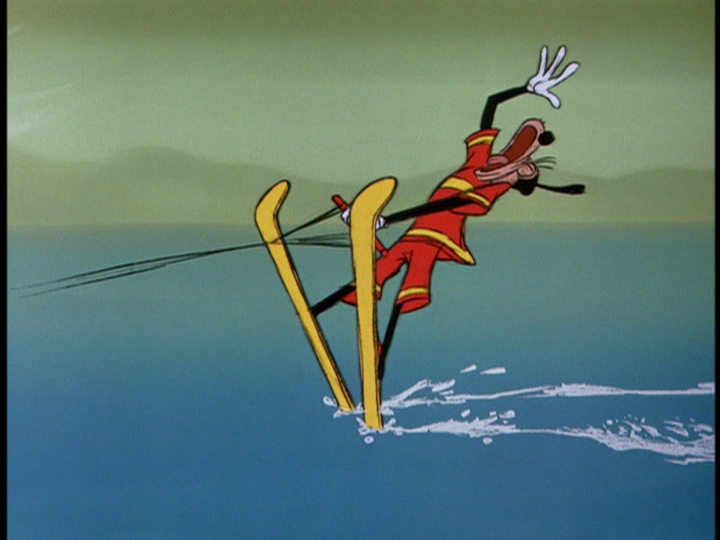
Mr X. desperately tells Junior to stop, but Junior thinks he wants to go faster and win the contest

Mr X. desperately tells Junior to stop, but Junior thinks he wants to go faster and win the contest

Mr. X then puts on his water skis, and Junior excitedly enters his dad in the water skiing race. Mr. X tries to tell his son to stop, but Junior takes this as a sign to go faster. Mr. X ends up flying over the competitors after going over the first jump, but when he lands in the water, he picks up an octopus on his head, who helps him water ski through the slalom. Heading around a turn, Mr. X heads out too far and ends up landing on a cart on a ramp, and flies through the beach. The octopus grabs on to some beach umbrellas, sending the pair high in the sky like a kite, where a bolt of lightning strikes them. They land on the tracks of a roller coaster and, after colliding with the roller coaster carts, end up flying back through the finish line, winning the race.

December 19

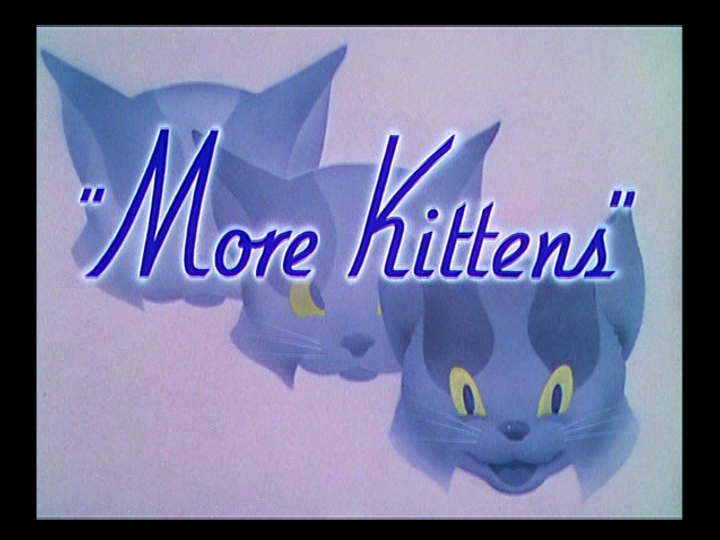
December 19, 1936 – The Silly Symphony More Kittens is Released to Theaters

vlcsnap-2014-12-19-16h37m01s239

On December 19, 1936, the Silly Symphony More Kittens was released to theaters. It was a sequel to the Academy Award winning Silly Symphony Three Orphan Kittens. Both shorts were directed by Dave Hand. The popular song “Who’s Afraid of the Big Bad Wolf” makes a cameo appearance in this short.

The three orphan kittens are thrown out of a house, and hide in a nearby bloodhound’s doghouse. The bloodhound notices that one of the kittens has fallen into its bowl of milk, and rescues it before drinking the contents. As the kittens brush up against the bloodhound’s face affectionately, their tails tickle its nose and it sneezes, sending two of the kittens flying into the yard. The kittens look around, confused, as they realize they’ve landed on something moving, and look down to find themselves riding on the back of a turtle. The turtle itself is surprised and falls down the stairs, with the turtle and kittens tumbling about. The third kitten has been resting on the bloodhound’s back, when it chases a fly on the bloodhound’s nose. The bloodhound is bugged by the fly and tries to swat it, finally getting it with its ears. The kitten stalks the fly after it lands, and ends up falling on the turtle. The kitten and the turtle fight before the turtle turns tail and walks away.

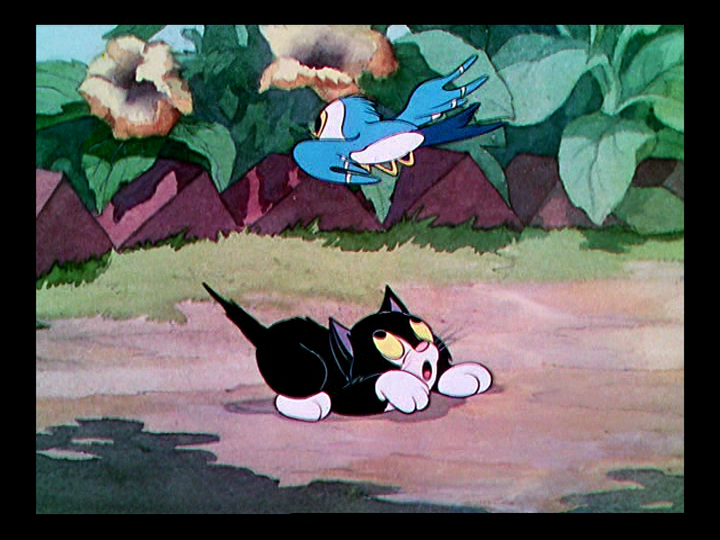
The bird mocks the kitten for not only missing the turtle, but being unable to attack him as well

The bird mocks the kitten for not only missing the turtle, but being unable to catch him as well

A bird mocks the kitten for losing to the turtle, and it turns its attention on the bird, pouncing and trying to attack it. The bird and the kitten end up within the bloodhound’s mouth, fighting, although the kitten gets pushed out, and the bird whistles triumphantly. The bird finally leaves the bloodhound’s mouth, and all three kittens chase after it, with two ending up in the laundry basket, and one on the clothesline. In the end, the kittens gets swept away when they knock over the washing bucket, and end up at the front door of the house, alerting the maid. Furious, she chases after the kittens, and they three ends up at the bloodhound’s once again, where it hides the kittens from the angry maid. The short ends with the bloodhound adopting the kittens, and they give it grateful kisses.