RSS Feed

Tag Archives: Feature Film

September 29

September 29, 2000 – The Theatrical Feature Remember the Titans is Released to Theaters

“I don’t scratch my head unless it itches, and I don’t dance unless I hear some music; I will not be intimidated.”

On September 29, 2000, the theatrical feature film Remember the Titans was released to theaters. Based on the true story of the 1971 T.C. William Titans football team, the film tells the story of Coach Herman Boone and the struggles he faces as head coach, as well his dealings with Coach Bill Yoast, as they both try to direct the team during the time of racial turmoil in Alexandria, Virginia. The film was a joint production between Walt Disney Pictures and Jerry Bruckheimer Films. The screenplay was written by Gregory Allen Howard, with the film being directed by Boaz Yakin, and starring Denzel Washington as Coach Boone, Will Patton as Coach Yoast, Wood Harris as Julius Campbell, Ryan Hurst as Gerry Bertier, and Hayden Panettiere as Sheryl Yoast.

The movie opens at a funeral in Alexandria, Virginia, 1981. The narrator talks about her father coaching in Virginia, where football is considered bigger than Christmas. The film then goes back to July, 1971, just after schools in Virginia were integrated, with crowds of angry people in front of a store where a white store owner killed a black teenager. Some teenagers are seen playing football, when another student arrives and alerts them about the shooting. Their coach, Bill Yoast, luckily is able to stop them before they get caught up in the fighting. As they arrive back at the school, they are surprised to see Herman Boone, the new assistant coach, in Yoast’s office. After some tense words, Boone reassures Yoast that he comes with one purpose: to win.
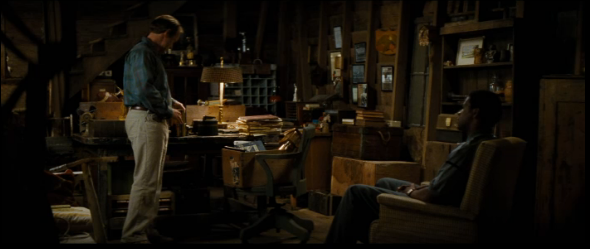
Boone (R) tries to convince Yoast (L) to join his team as the assistant coach, after apologizing for the circumstances but still maintaining that he has the skills to be head coach

The announcement comes soon after: Boone has been placed into the head coaching position by the school board. Boone is against the decision, as he left his position in North Carolina for being passed over due to race, and is against doing the same thing to someone else. Boone goes to Yoast’s house to offer him an assistant coaching position, but Yoast turns it down. He changes his mind when he realizes that the kids he coaches are putting their scholarships on the line.

The students go to football camp at Gettysburg College, with former team captain Gerry Bertier clashing not only with Coach Boone, but particularly with other player Julius Campbell. Boone is constantly making the two teams work together, forcing them to work together as one team. After a run to Gettysburg Battlefield, the two teams slowly begin to work together, with Julius and Gerry beginning to become friends. Unfortunately, when they get back home to Alexandria, the racial tensions they left behind are there to meet them, threatening to tear apart their newly formed team friendships. There’s more news for Boone as well: the moment he loses a game, he will be fired.
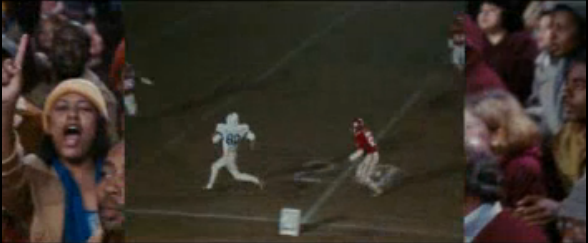
The community slowly begins to rally around the Titans as they go on to win every game they play

After a nearly disastrous first game, the Titans go on to a great winning streak, with the town slowly coming around to support the team. Although Gerry becomes good friends with Julius, his friends and family don’t share his viewpoint. Yoast is also having problems with the people in his life; his friend Coach Tyrell deserts him when Yoast continues to work with Boone, and when his daughter spends time at the Boone’s house, a brick is thrown through the window, which causes Yoast much concern and highlights the tensions between the two coaches. Yoast is put to the test when his nomination to the Hall of Fame is on the line: he will only stay a nominee if he helps throw the next game. In the end, he tells the referees that he knows they’re helping to throw the game, and refuses to contribute any more to the scheme. This loses him the Hall of Fame, but Yoast believes he’s gained something more.

After this game, Gerry is in a terrible car accident during the celebrations, and everyone rushes to the hospital. He becomes paralyzed from the waist down from his injuries, and will only speak to Julius. Julius promises that Gerry will pull through this, and they’ll grow old and fat in the same neighborhood, where race will no longer be an issue. Although Yoast believes that the team should take a break, Gerry refuses to let that happen, saying, “I’m hurt. I ain’t dead.” He then suggests to Yoast about entering the Wheelchair Games.
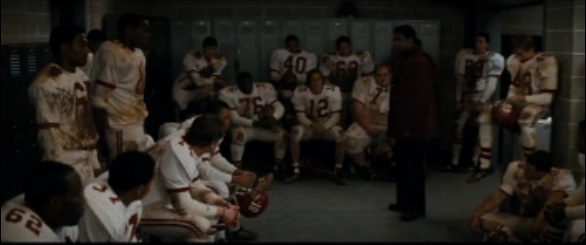
The team sits in the locker room during half-time of the state championship, telling Coach Boone that they came on to the field perfect, and that’s how they want to leave it

The final showdown is between the Titans and Coach Ed Henry for the state title. Not only is the team finally working together, but Yoast comes to the realization that he and Boone can work together, as does Boone. With one final play between the two, the Titans win the game and the state championship. Yoast’s daughter Sheryl continues her narration from the beginning of the film, saying that the Titans had a perfect season, going on to become the 2nd best high school team in the country. Gerry also won a gold medal in shotput in the Wheelchair Games, with coaching from Yoast. 10 years later, he passed away, which brings the audience back to the funeral from the beginning of the film. The film concludes with updates on many of the players, and includes Boone and Yoast, who “became good friends, and they continue that friendship today.”
 

September 28

September 28, 2004 – The Special Edition Soundtrack of Aladdin is Released Through Walt Disney Records

Image credit: Amazon

“Proud of your boy, I’ll make you proud of your boy.”

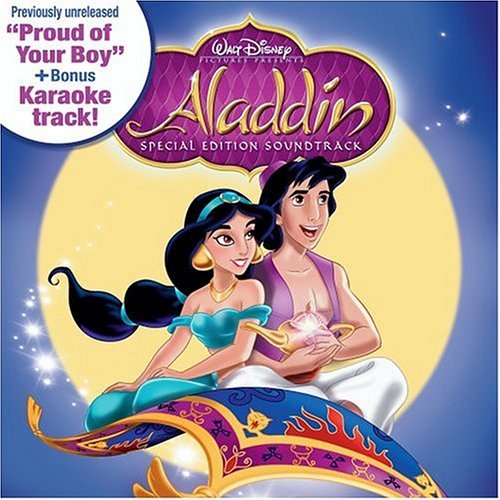
On September 28, 2004, the special edition soundtrack of Disney’s 31st animated feature, Aladdin, was released through Walt Disney Records. The original soundtrack was released on November 25, 1992, with this special edition coinciding with the Platinum Edition of the film released on October 5, 2004.

The album contains 23 tracks, with 21 from the original release and the remastered version from 2001. This edition contains two demo songs – “Proud of Your Boy” and “High Adventure” – which were cut from the film when the plot was changed. “Proud of Your Boy” was written by Howard Ashman; in the original treatment of the film, Aladdin sang this song to his mother to prove that one day, he would make her proud. When the character of Aladdin’s mother was cut from the film, the song was cut as well. “High Adventure” was another song written by Ashman that didn’t make the final cut. Both songs were also included on the box set “The Music Behind the Magic.”

September 27

September 27, 1947 – The Ninth Animated Feature Film, Fun and Fancy Free, is Released to Theaters

“So if you’d really like to be happy-go-lucky just like me, drown your frowns my friend and you will see, you’ll see, that you’ll be full of fun and fancy-free.”

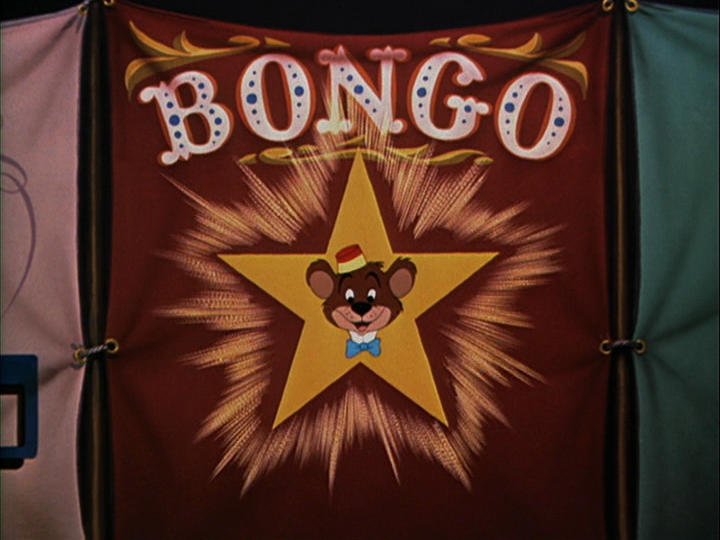
On September 27, 1947, the ninth animated feature film, Fun and Fancy Free, was released to theaters. It was the second package film released by Disney, comprised of two stories: Bongo (written originally by Sinclair Lewis), and Mickey and the Beanstalk, a retelling of the classic tale Jack and the Beanstalk. The two were originally meant to be full-length features of their own. Although Mickey was in the feature film Fantasia, this was the first time Goofy and Donald were also used to carry a feature film. As the story was tightened, many scenes were dropped, including the scene where Mickey receives the magic beans for his cow from none other than Minnie Mouse, playing the queen. The two stories were stopped in development when the country entered World War II. The live action segments were directed by William Morgan, with the animation sequences directed by Jack Kinney, Bill Roberts, and Hamilton Luske. The film included the talents of Anita Gordon, Cliff Edwards, Billy Gilbert, The Kings Men, the Dinning Sisters, and the Starlighters, as well as Edgar Bergen (ventriloquist for Charlie McCarthy and Mortimer Snerd) and Luana Patten. This film also marks the last time Walt Disney voiced the character of Mickey Mouse, as he would have sound effects man Jimmy MacDonald take over the role.

The movie begins with the voice of Jiminy Cricket ringing out, singing about being happy-go-lucky, and begins to sing and dance around a library, expressing his sadness about the whole world worrying about so many things. “But why get so excited,” he asks. “What’s going to be is going to be.” Unfortunately, he runs into a cat that chases him out of the library. He finds himself in a girl’s room, coming across what he calls a “deadpan doll and a droopy bear.” To cheer them up, he puts on a record about the story of Bongo, a musical story sung by Dinah Shore.

The story of Bongo begins with his days in the circus, where he was the star

Bongo is a circus bear: “he was born in the circus, grew up in the circus; in fact, Bongo was the star of the circus.” Bongo was seen as being able to do it all, with the circus tent packed with fans that wanted to see him perform the greatest of stunts. But although Bongo appeared thrilled with what he was doing, he was a prisoner of the circus, kept in a cage. He spent his nights dreaming of a place where he was free from the circus life. One fateful day, he decides to answer the call of the wild, and escapes from the circus train. Finally free, he explores the woods where he landed, smelling the flowers and leaping over tree roots. Unfortunately, Bongo doesn’t know how to survive in the woods, but he’s still elated to be out in nature. He soon makes friends with the animals of the forest, and they walk around, exploring their surroundings.

Unfortunately, life in the woods is not as pleasant as Bongo thought, as at first he is unable to get to sleep, then finds himself caught in a storm. He becomes discouraged that his dream life wasn’t the way he thought it would be, and even more discouraged that he can’t even catch food like a real bear would. As he tries to catch a fish, he hears the giggle of a young female bear named Lulubelle, and begins to follow her as she flirts with him. The two quickly fall in love, but there is one problem: Lumpjaw, the roughest, toughest, meanest bear in the woods, who wants Lulubelle all to himself. After some mixup, Lulubelle ends up in Lumpjaw’s arms, with Bongo being left heartbroken, as he didn’t understand the way of bears (bears express their love by slapping). Lulubelle sneaks away from the bears to find Bongo, and a fight ensues between Bongo and Lumpjaw, with Bongo using his circus skills to win. Lulubelle and Bongo live happily ever after in love.

Jiminy decides to attend a party hosted by Edgar Bergen (C), with his puppets Charlie McCarthy and Mortimer Snerd, with Luana Patten as the guest

After the story ends, Jiminy comes across a party invitation for Luana Patten at Edgar Bergen’s house across the way, and decides to attend himself. Bergen is entertaining Luana, Mortimer Snerd, and Charlie McCarthy, and decides to tell the group a story: Mickey and the Beanstalk. He has Luana create a picture in his mind of Happy Valley, where Mickey, Goofy, and Donald live. Happy Valley was a prosperous place, with a magic singing harp residing in its castle, casting a spell of joy over the entire valley. One day, a mysterious shadow appears in Happy Valley, and steals the harp from the castle. Once the harp is stolen, the valley loses its joy and prosperity. The audience is taken inside the cottage of Mickey, Goofy, and Donald, sharing a pitiful meal. Unable to take it anymore, Donald loses his cool, going mad with hunger and desperation. He takes the axe from the wall and decides to kill their beloved cow.

The next day, Mickey decides to take their cow to market, with Goofy and Donald hopeful that they will be able to afford food. When Mickey comes home, however, he informs them that he sold the cow for magic beans. Donald loses his cool again, throwing the beans away. Once the moon hits the spot where the beans fell, however, a giant beanstalk begins to grow, destroying their house in the process and sending the trio sky high. When morning comes, the three are amazed to see a castle in the sky, and decide to explore. After surviving an attack a giant dragonfly, the three reach the castle steps and climb inside. They discover that the banquet table is covered in food, and don’t hesitate to eat the best meal they’ve had in ages. They also discover the harp being held hostage in a treasure box nearby, and she warns them about the giant, as he has the ability to turn himself into anything he wishes.

The giant suddenly appears, and looks around the table for the trio

Suddenly, the giant appears, singing a simple song about himself and adding the words, “Fe Fi Fo Fum.” He smells the scent of the trio and searches for them, but gets distracted by the food on the table and begins to eat. He catches Mickey, but with Mickey’s quick thinking, he’s able to escape, tricking the giant into changing into a fly. However, the giant would rather change into a pink bunny rabbit, and when he spies the trio with a flyswatter, he catches them and throws them into the treasure box, keeping the harp out for her to sing him to sleep. With the harp’s help, Mickey is able to free his friends and escape with the harp. The giant wakes up as they begin their escape and chases after the three. When the trio makes it to the bottom of the beanstalk, they grab a saw and begin to chop the beanstalk down, sending the giant tumbling down to earth. Happy Valley is returned to its peaceful and prosperous state.

As Bergen finishes telling the story, he notices that Mortimer begins to cry over the death of the giant. Bergen tries to explain that the giant never existed, and is succeeding until the roof of his house lifts, and the giant appears, asking the group if they’ve seen a mouse. Bergen faints, and the giant leaves, exploring Hollywood for signs of Mickey (and taking the Brown Derby restaurant with him as a new hat).

August 27

August 27, 1964 – The Live-Action and Animated Film Mary Poppins Premieres at Grauman’s Chinese Theater

“We’re looking forward to this [film], because it’s a fine combination when you can get Walt Disney and Julie Andrews and Dick Van Dyke together. I think it should be a lot of fun.” – Actor James Franciscus.

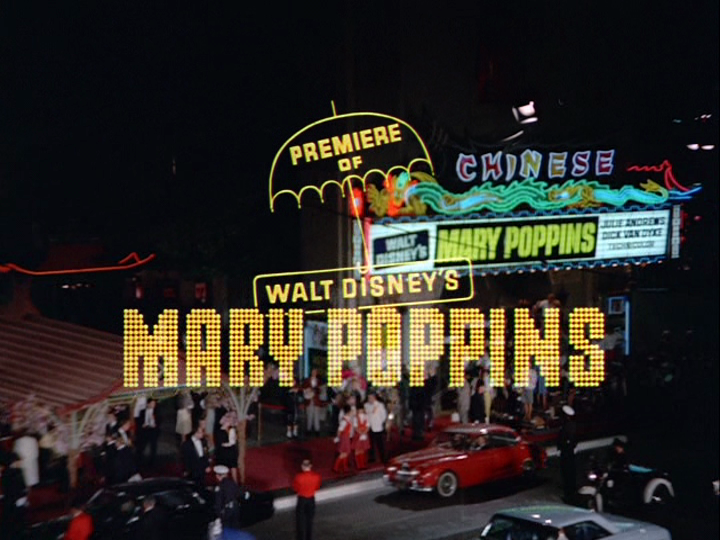
On August 27, 1964, the film Mary Poppins had its Hollywood premiere at Grauman’s Chinese Theater in Los Angeles, California. The premiere was broadcast live on Los Angeles television, with a separate radio broadcast of the festivities. The premiere guests were interviewed at the two separate stations. Guests included Maureen O’Hara, James Franciscus, Celeste Holm, Walter Slezack, the cast of the Dick Van Dyke Show, Agnes Moorehead, Annette Funicello and her fiancé Jack Gilardi, Roddy McDowall, Suzanne Pleshette, Carol Lynley, Buddy Ebsen, Kathryn Grayson, Ann Miller, and Brian Keith, among others. Members of the cast and crew of the film also attended, including director Robert Stevenson, who gave a tribute to CalArts (which had opened a mere three years prior), Reta Shaw (the cook, Mrs. Brill), and co-writer and co-producer Bill Walsh.

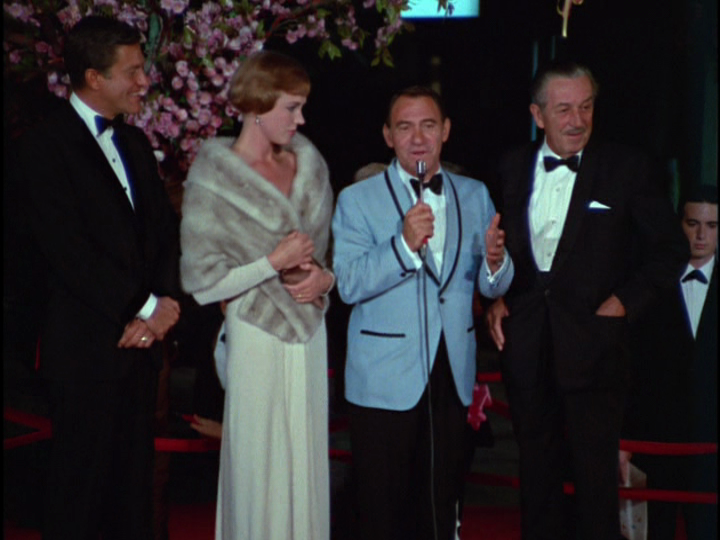
The festivities included characters dressed as familiar Disney characters, such as Goofy, the Big Bad Wolf, and the Seven Dwarves. Costumed characters of the penguins, as well as a band of pearlies, were also part of the entertainment, with the penguins dancing with Dick Van Dyke on his arrival. When asked about the film, Van Dyke said, “It’s my third motion picture, but the best one I’ve ever been in, the best one I ever will be in, if I live to be 150 years old. To me, this is the greatest family classic of all time…I’m so proud to be in this picture, I can’t stand it.” Van Dyke, along with Julie Andrews and Walt Disney, were interviewed together near the end of the broadcast, with all three proud of the film and looking forward to premiere.

Dick Van Dyke (L), Julie Andrews, and Walt Disney being interviewed right before the premiere of the film

After the premiere, Technicolor hosted a party for the guests at the parking lot next door to the theater. A radio broadcast was also provided, with every guest interviewed raving about the film, calling it a classic, and stating that the premiere was very reminiscent of the Hollywood premieres of old. Andrews and Van Dyke were proclaimed to be the greatest two new stars of the time.

August 17

August 17, 2004 – The Direct-to-Video Film Mickey, Donald, Goofy: The Three Musketeers is Released

“You see, before their dream can come true, our three heroes must learn the real meaning of the musketeer creed. All for one, and one for all!”

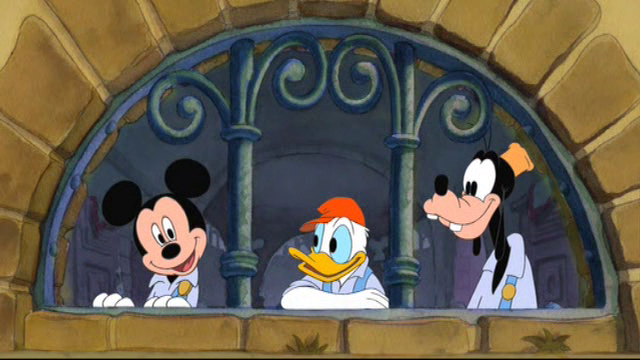
On August 17, 2004, the direct-to-video film Mickey, Donald, Goofy: The Three Musketeers was released on VHS and DVD. It was produced by DisneyToon Studios and directed by Donovan Cook. The story is based on The Three Musketeers by Alexandre Dumas, and was adapted by David M. Evans and Evan Spiliotopoulos. Vocal talents include Wayne Allwine as Mickey Mouse, Tony Anselmo as Donald Duck, Bill Farmer as Goofy, Russi Taylor as Minnie Mouse, Tress MacNeille as Daisy Duck, Jim Cummings as Pete, and Rob Paulsen as the Troubadour (narrator). The songs of the film are interpretations of well-known classical pieces; the opera in the film is Gilbert and Sullivan’s Pirates of Penzance.

The story begins with a crew preparing for Masterpiece Theater kind of program, and a turtle is seen sitting in a chair, reading a comic book of the story and singing loudly. He helps to bring the narrator of the show to the set, but when the narrator falls down a trap door, the turtle begins to tell the story from his comic book, of Mickey, Goofy, and Donald, and their goal to become musketeers. Their childhood is in the gutter, and one day as they are attacked, the musketeers save them. Inspired by their bravery, the trio swears they will become musketeers.

Mickey, Donald, and Goofy watch the musketeers as they go through their training drills, dreaming of the day they will join

Years later, the three still dream of the day they will be musketeers, but instead are janitors, constantly getting themselves into trouble, although they always have the best of intentions. Pete, the Captain of the Musketeers, is constantly annoyed with the trio and their accidents, and refuses to ever let them become musketeers. Meanwhile, at the palace, Princess Minnie is sitting and daydreaming about her one true love, while Daisy, her lady-in-waiting, sounds off as the voice of reason. Minnie strolls through the garden, daydreaming about the day she’ll meet him, when she narrowly misses getting hit by a safe. The Beagle Boys, the villains that attempted to crush the princess, report to their boss of their failure – with their boss just happening to be Pete. His plan is to kidnap the princess, then become king in her absence. Fortunately, they weren’t supposed to kill her anyway, but Pete replaces them with Clarabelle Cow.

The Princess calls Pete for a meeting, demanding that he provide musketeer bodyguards. Pete stalls for time, but tells Minnie that she will have bodyguards very soon. He surprises Mickey and his friends with the opportunity they’ve been dying for: to be musketeers. Pete believes that their incompetency will help his plan in becoming king. The trio arrives at the palace, and immediately gets into trouble when Goofy attacks a suit of armor, thinking it’s a bad guy. The door opens to reveal the three trying to put the armor back together again, and the moment Minnie and Mickey see each other, it’s love at first sight. The mood is broken when Daisy enters the room with a snack and, upon seeing the knife she carries, the trio attacks her, thinking she’s a bad guy. Although Minnie is furious at the infraction, she forgives them after hearing Mickey’s apology.

After Mickey rescues the princess, they take a romantic journey back to the palace, with romance blooming between the two

When the trio escorts Minnie and Daisy on a trip through the country, they are ambushed by the Beagle Boys. Mickey fights bravely, but the Princess and Daisy are captured. Goofy cries, thinking they’ve failed, but Mickey rallies their spirits and they track down the girls at a decrepit tower, and launch a brave, if purely accidental, rescue. Romance begins to bloom between Mickey and Minnie as they travel back to the palace, culminating in Minnie giving Mickey a kiss. When Pete sees that his kidnap plan has failed, he switches gears: he needs to get rid of Mickey, Donald, and Goofy, picking them off one by one. Goofy is tricked by Clarabelle and taken to drown in the Seine. Donald is scared off by the Beagle Boys, but hides in a suit of armor. When he sees Mickey, he tries to convince his friend that they need to run away. He tries to explain that Pete is the bad guy, but Mickey can’t understand Donald. Finally, he understands, but Mickey refuses to leave his post. Donald, unfortunately, decides to run, too afraid to stay.

While Mickey remains at the palace, Pete captures him and chains him in the basement of a decrepit castle that will fill with water when the tide comes in. Pete then heads to the opera, where he will trick the people of France into believing that Minnie has abdicated and declared him king. Clarabelle, on the other hand, is trying to drown Goofy, when Goofy falls for Clarabelle at first sight. She tries to resist his charms, but she can’t. Quickly, she tells him of how he needs to save Mickey. The bridge they’re standing on breaks, and as luck would have it, Donald is in a rowboat right underneath them.

The trio fights with Pete for the trunk, which contains Minnie and Daisy

The tide has begun to rise in the dungeon, and the Goofy and Donald race to save Mickey. Donald, still afraid, still tries to run away, but Goofy and the Troubadour are able to convince the duck to get over his fears and save their friend. They reach Mickey just in time, and they all race off to save the princess. When Minnie and Daisy arrive at the opera, they are quickly kidnapped by Pete and his henchmen, who lock the girls away in a trunk. One of the Beagle Boys, dressed as Minnie, declares Pete to be the new king. The show begins, and the trio arrives just in time, beginning an epic swordfight onstage during the opera. The swordfight ends with Pete battling Mickey one-on-one. While it looks like Mickey has been beaten, Goofy and Donald reappear and help Mickey defeat Pete and his evil scheme.

It’s a happy ending for all, and Mickey and Minnie have fallen in love, as well as Goofy and Clarabelle. Donald, meanwhile, gives an embarrassed smile to Daisy, who surprises him by taking him in her arms and kissing him. Mickey, Donald, and Goofy are made official musketeers, as thanks for saving France. The movie ends with a heroic song and dance with all the musketeers.

August 15

August 15, 1946 – The 8th Animated Feature, Make Mine Music, is Released to Theaters

“Make mine music and my heart will sing.”

 On August 15, 1946, Disney’s eighth animated feature, Make Mine Music, was released to theaters. This was the first postwar package film released by Disney, as financial problems prevented the studio from creating a full animated feature. The talents in the film include Nelson Eddy, Dinah Shore, Benny Goodman, the Andrews Sisters, Jerry Colonna, Andy Russell, Sterling Holloway, Riabouchinska and Lichine, Pied Pipers, the King’s Men, and the Ken Darby Chorus. The music director was Charles Wolcott, with songs written by Ray Gilbert, Eliot Daniel, Allie Wrubel, and Bobby Worth. The production supervisor was Joe Grant, with sequence directors Jack Kinney, Clyde Geronimi, Hamilton Luske, Robert Cormack, and Joshua Meador. Many segments have been shown as separate entities on television and as short films before theatrical releases; the film has never been released on home video in its entirety.

The first segment is The Martins and the Coys, featuring the popular radio vocal group The King’s Men. The segment, a play on the story of the Hatfields and the McCoys where two members of the rival families meet and fall in love, was cut from the video release due to the gunplay aspect of the segment. It has yet to be released on home video.

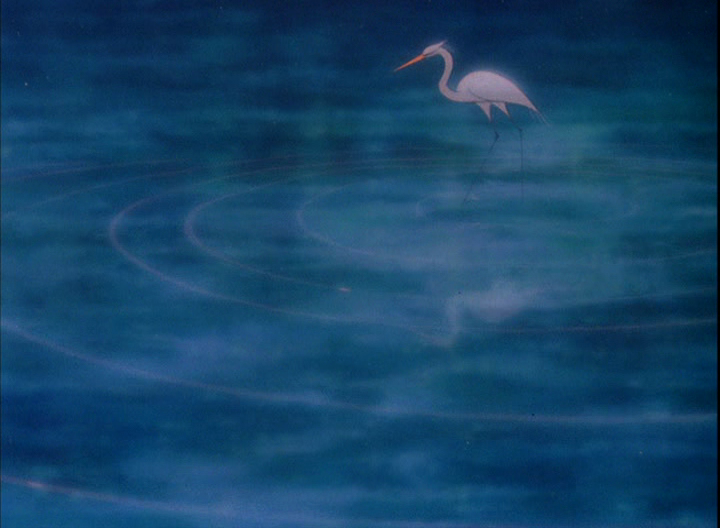
The crane in the bayou from the segment Blue Bayou

The next segment is entitled Blue Bayou, sung by the Ken Darby Chorus. It is a slow, artistic piece about a moonlit night in the bayou, and a majestic crane that explores before it flies off into the night with another crane. The artwork was originally meant for Fantasia, to be used with Claude Debussy’s “Clair de Lune.”

Blue Bayou is followed by a jazz interlude called All the Cats Join In, performed by Benny Goodman and his orchestra. A sketchbook opens on a drafting table, and a pencil springs to life and draws a jukebox and a cat, then erases the cat, and draws a teenaged boy. The boy calls his friends to meet him down at the jukebox at the malt shop. Everyone races down to dance at the malt shop, while the pencil continues to draw the story out for the audience.

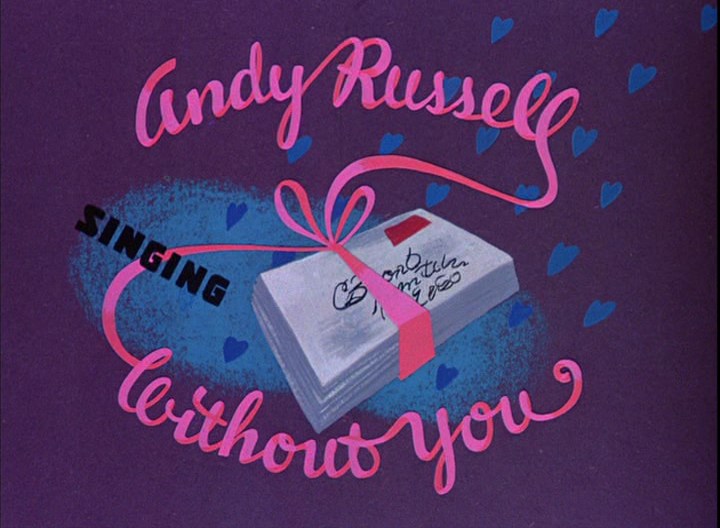
A ballad in blue follows, with Andy Russell singing Without You. The rain falls outside a window in a dark room, which lightens enough for the audience to see a love letter on a nearby desk. The focus then goes back to the window to show a rather gloomy willow tree at the side of a river. Different scenes appear on the screen to match the lyrics of the scene, including church windows and a starry night. The segment ends back at the window, showing the room once again in darkness, reflecting a lone star in the sky.

Jerry Colonna entertains the audience with the next segment, a reading of the poem Casey at the Bat. Every member of the town of Mudville is heading to the ballpark to see Casey, “the pride of them all.” The game doesn’t look so good for Mudville, as they’re losing 4 to 2. Two players manage to hit the ball when Casey comes up to bat. Casey’s a show-off, always flirting with the ladies, and cockily steps up to the plate. The tension is high in the stadium as Casey ignores two pitches and gets two strikes. Everyone watches carefully as Casey gets ready to hit the ball, but the short ends with the famous line, “…but there is no joy in Mudville – Mighty Casey has struck out,” and Casey comically crying in the rainy baseball stadium.

Dinah Shore sings for a “Ballade Ballet” entitled Two Silhouettes, performed by dancers Tania Riabouchinska and David Lichine. The dancers are seen only in silhouette in an animated world. The theme of the ballet is of a boy meeting and losing his love, only to find her again before the end.

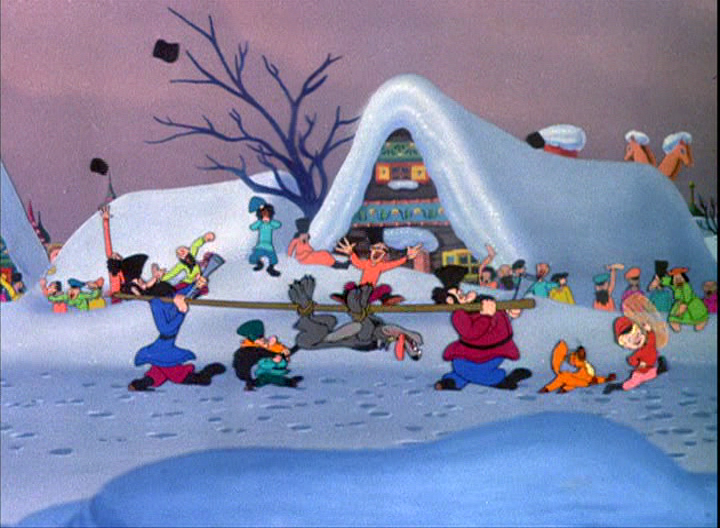
A majority of the cast of Peter and the Wolf, with the town in Russia celebrating the triumphant end

One of the more well-known segments in this film is the Sterling Holloway-narrated version of Sergei Prokofiev’s Peter and the Wolf. The story, with the characters “speaking” through corresponding musical instruments and themes, is about a young boy named Peter (string quartet), who meets with his friends Sascha the bird (flute), Sonia the duck (oboe), and Ivan the cat (clarinet) to hunt the wolf (French horns) that has been haunting the woods, against the wishes of Peter’s grandfather (bassoon). In this animated retelling of the 1936 composition, the ending has been changed to make it more child-friendly, although Peter and his friends still capture the wolf.

The next segment is entitled After You’re Gone, performed by the Benny Goodman Quartet. Animated musical instruments are seen goofing around in true animation style. This is more of an artistic musical fantasy, rather than an animated tale, as seen with the other segments. It serves as a musical interlude between one story segment and the next.

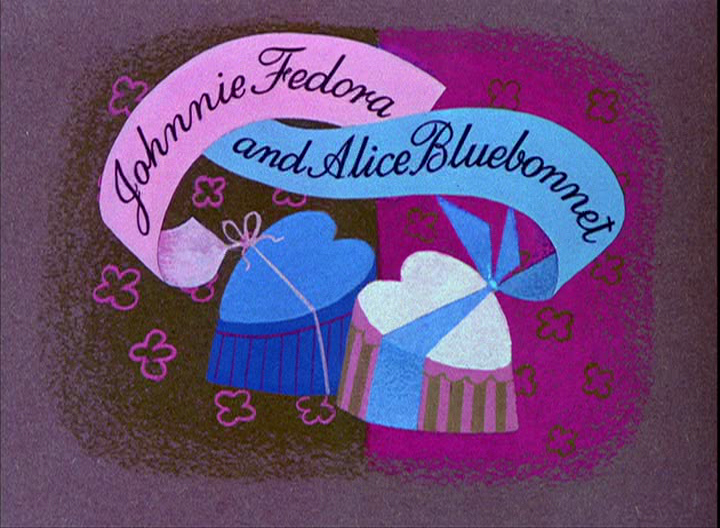
The Andrews Sisters perform the next segment, the love story of Johnny Fedora and Alice Bluebonnet. The two are hats that sit in the window of a department store, with it being love at first sight. One day, Alice is bought for $23.94, and the lovers are separated. Johnny is soon bought by another patron, and his mood improves, as he is able to look for Alice as he travels around the city of New York. The short ends with Johnny and Alice reuniting as hats for the ice-man’s horses.

The last segment of the film, known as “Opera Pathetique,” is The Whale Who Wanted to Sing At The Met, feaures Nelson Eddy, who performs as all the characters. The segment tells the tragic story of Willie the Whale, who dreams of signing at the Metropolitan Opera. The story of his singing makes front-page news. Impresario Tetti-Tatti declares that Willie must have swallowed an opera singer, and announces that he will go and save the singer. In the end, after an elaborate dream segment of Tetti-Tatti discovering Willie and making him a star, Tetti-Tatti harpoons Willie, killing him. However, Eddy reassures the audience that Willie is now performing in Heaven to a sold-out crowd.

August 12

August 12, 2003 – The Cheetah Girls Soundtrack is Released on Walt Disney Records

“Our spots are different, different colors, we make each other stronger, that ain’t ever gonna change. We’re Cheetah Girls, Cheetah Sisters.”

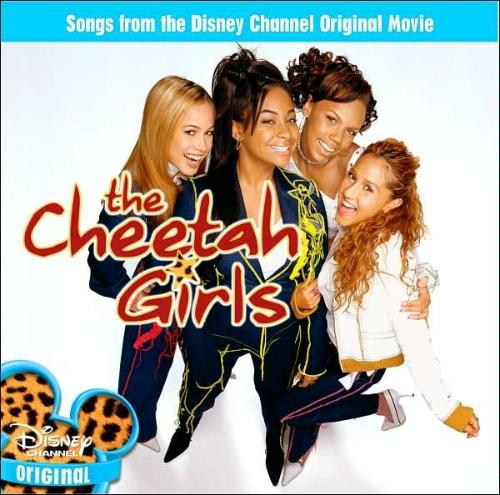
On August 12, 2003, the soundtrack to the hit Disney Channel Original Movie The Cheetah Girls was released on Walt Disney Records. The songs are sung by the original actors, Raven-Symone, Adrienne Bailon, Sabrina Bryan, and Kiely Williams. Bailon and Williams were former members of the girl group 3LW. The album was certified Double Platinum, selling more than 2 million copies; the album peaked at #33 on the Billboard 200 chart. A repackaged version was released with several bonus tracks, including remixes and karaoke songs.

Three singles were released from the album: “Cinderella” (originally performed by i5), “Girl Power,” and “Cheetah Sisters.” The original track listing includes eight tracks, with four performed by The Cheetah Girls: “C’mon” by Sonic Chaos, “Girlfriend” by Char, “Breakthrough” by Hope7, and “End of the Line” by Christi Mac. The album has become one of the most successful soundtracks for Disney Channel Original Movies, surpassed only by High School Musical in 2006.

August 3

August 3, 1955 – The 20,000 Leagues Under the Sea Exhibit Opens in Disneyland

Image Credit: Vulcaniasubmarine.com

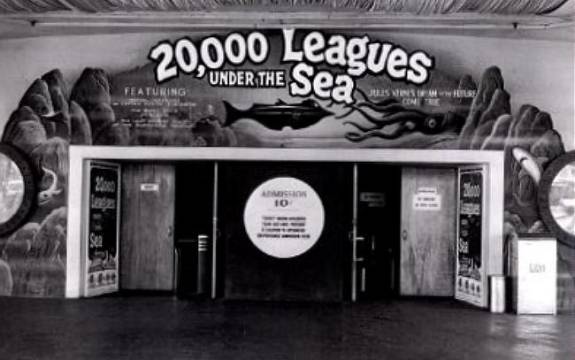
On August 3, 1955, the 20,000 Leagues Under the Sea Exhibit opened in Disneyland’s Tomorrowland, and lasted until August 28, 1966. The exhibit came about purely by accident; as the date for Disneyland drew near, Disney realized that he’d fallen behind on Tomorrowland. The film, released December 23, 1954, was immensely popular, so it was decided that the sets from the film would be used for a walkthrough attraction. This stopgap attraction proved to be more popular than expected, and lasted 11 years.

The sets were brought out of storage again in 1989 at the Disney-MGM Studios in Florida, and continued to be a popular attraction. Based on the resurgence in popularity, a similar attraction was built for Disneyland Paris in 1994, known as Les Mystères du Nautilus.

July 26

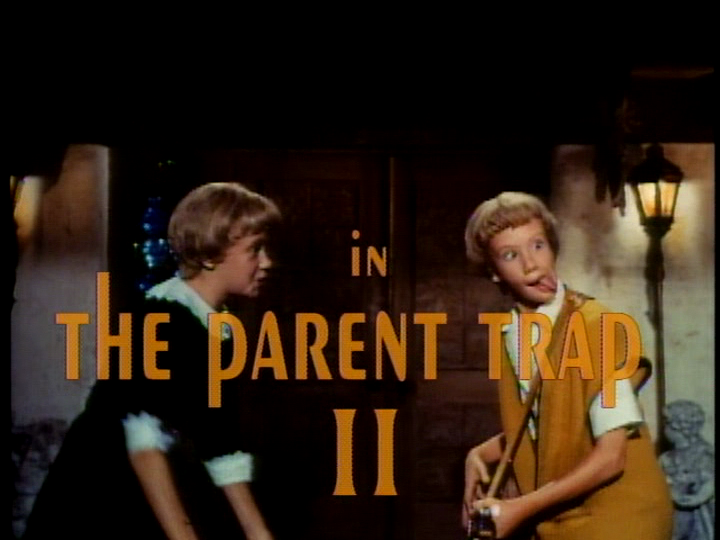
July 26, 1986 – The Disney Channel Premiere Film The Parent Trap II Airs

“No! Absolutely not!  I don’t care whose father he is – I’m not about to be fixed up by my eleven-year-old daughter!”

On July 26, 1986, the Disney Channel premiered The Parent Trap II, the sequel to the 1961 hit film starring Hayley Mills. Mills reprised her roles of the twins Sharon and Susan; the film also starred Carrie Kei Heim as Nikki, Bridgette Andersen as Mary, and Tom Skerritt as Bill, and was directed by Ronald F. Maxwell. There’s a piece of Disney trivia hidden in the film: the name of Sharon’s boss is Mr. Walter Elias, which is Walt Disney’s first and middle name; Mr. Elias’ wife is named Lillian, which was the name of Disney’s wife.

Sharon Ferris has been offered a job in New York City, only her daughter Nikki doesn’t want to go. Sharon tells her daughter that the move will be fine, and sends her off to summer school. At school, Nikki meets a girl named Mary Grand, and the two become fast friends. The two find that they have one thing in common: they’re the children of single parents. Mary’s mother died when she was a young girl, and Nikki’s parents have gone through a divorce. As the two become best friends, they try to come up with a plan to get Nikki to stay. Mary gets the bright idea that the two should set their parents up, and Nikki readily agrees.

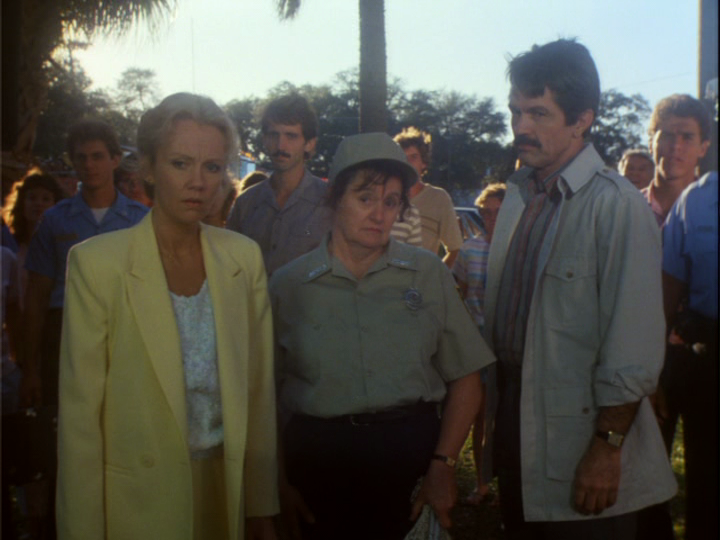
Sharon and Bill meet for the first time, although not under the best circumstances

Nikki hits a snag when she first tells her mother about Mary’s father, Bill; Sharon is not ready to try dating since her divorce two years before. The girls then set up a plan, telling the other’s parent that their child is stuck in a tree, hoping that their parents will meet. The plan is a disaster, to say the least, but the girls are determined to try again, this time sending a bouquet to Sharon’s mother, pretending they’re from Bill with a card inviting her to dinner. They hit another snag, when Bill is heading out to a date, but the two share a friendly, if awkward, moment.

The two girls are ready to throw in the towel, when Nikki wonders aloud how her mother and aunt were able to get their parents back together when they were young. Nikki then gets the bright idea to bring her Aunt Susan to Tampa to help the two with their plan. Susan agrees to help, and the three set their plan in motion for Susan to pretend to be Sharon. Susan shows up at Bill’s regular haunt, and the two hit it off. The plan seems to work, until Sharon gets suspicious, and Susan gets second thoughts. Finally, Susan gives in for one more date, and Sharon figures out that Susan is in town.

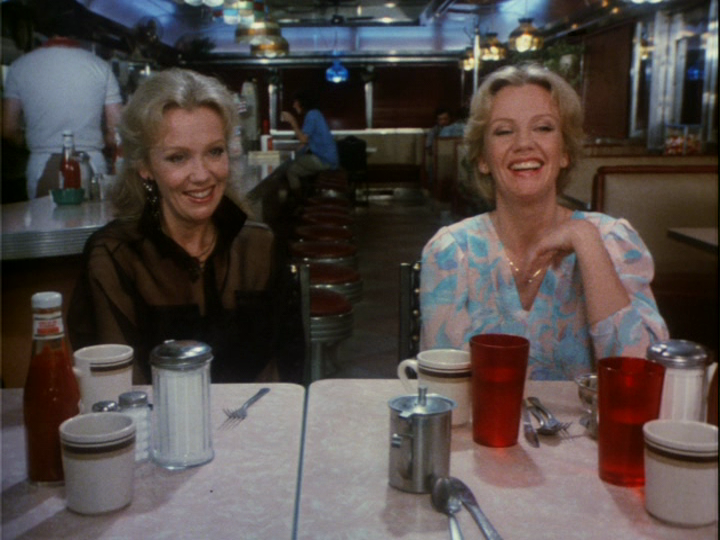
Sharon (L) and Susan, laughing and explaining to the two men the entire plan that the kids concocted

The following night at the dinner the kids and Susan plan, Sharon intends to play a little prank on the scheming trio, calling up Susan’s husband and pretending he’s on a date with another woman, which is just Sharon dressed up in a disguise. The ruse being up, Susan, Sharon, and the two men go out to another restaurant and explain the entire thing. Sharon and Bill are left alone, and Sharon tries to let Bill down easy. He insists that they start fresh, but she is firm that they just stay friends.

The girls have one last idea that takes place at the farewell party for Sharon and Nikki on Sharon’s boss’s yacht. After changing the invitations to read an hour earlier than the party’s actual start time, Nikki and Mary trick their parents into being alone on the yacht before letting it loose and sending it out to sea. When Sharon steps out for air and the two realize what has happened, they finally succumb to the feelings they have and kiss. Soon after, the two are married, and Nikki and Mary rejoice in the fact that their plan worked, and Nikki won’t be going to New York after all.

July 23

July 23, 1953 – The Live Action Film The Sword and the Rose is Released to Theaters

“Because I like him. And if I liked him not, you’d fall in love with him.”

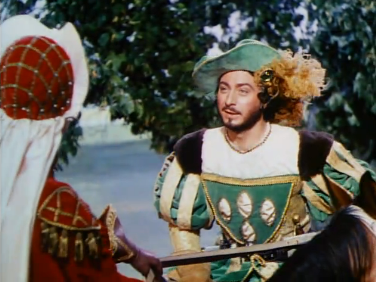
On July 23, 1953, the live-action adventure film The Sword and the Rose was released to theaters. Based on the 1898 novel When Knighthood Was in Flower by Charles Major, it was the third and most elaborate live-action film to be created with the blocked-up funds that Disney had amassed in England during World War II. A policy had been passed that money made in England during the war could not be brought back to the United States, and the Disney Studios used those funds to create Treasure Island, Robin Hood and His Merrie Men, and The Sword and the Rose. The film was directed by Ken Annakin, and starred Richard Todd as Charles Brandon, Glynis Johns as Mary Tudor, James Robertson Justice as Henry VIII, Michael Gough as the Duke of Buckingham, and Jean Mercure as King Louis.

The film is set at Windsor Castle in the early years of the reign of King Henry VIII, and begins with a wrestling match between the English and the French. Henry’s sister, Princess Mary Tudor, appears as he is watching the match, and goes to greet her brother. Henry is not happy that the English are losing to the French, and when he asks if anyone can beat the French, a newcomer to the court named Charles Brandon offers his services. The Duke of Buckingham, vying for the affections of the fair Mary, first tries to wrestle the French, and is successful. Mary, eyeing Brandon, asks her brother how he thinks the newcomer would fare against Buckingham. The two set up their scuffle, and Brandon emerges as the victor, much to the delight of Mary.

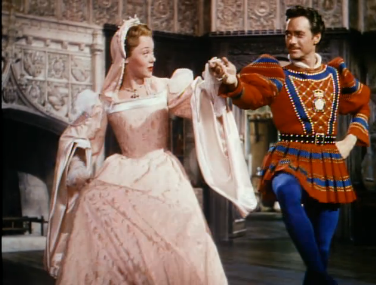
Mary invites Brandon for a private dance in her chambers, highlighting a growing attraction between the two

Brandon is made the Captain of the Guard, thanks to his efforts and the persuasion of Mary. Brandon, however, did not want to stay in England; rather, he wished to seek his fortune in the New World. One of Brandon’s friends warns him not to fall in love with Mary, but Brandon assures his friend that he will do no such thing. Mary is set up to marry King Louis of France, but clearly does not wish to be; she is also pursued by the Duke of Buckingham, who commands the Tower of London. However, Mary is rather intrigued by Brandon, and arranges to have a private dance with him in her chambers. Brandon is invited to the princess’s party, which angers Buckingham, who dislikes Brandon simply for being a commoner. When Mary picks Brandon for her dancing partner in the opening dance, this seals Brandon’s fate, as far as Buckingham is concerned.

The flirting between Brandon and Mary continues, nearly resulting in a kiss between the two during a hunting expedition. While this is going on behind King Henry’s back, he is continuing to arrange the marriage of his sister to the aging King Louis, hoping that this arrangement will provide peace between the two nations. Lady Margaret, Mary’s lady in waiting, worries about Mary’s pursuit of a commoner, but Mary angrily warns her that “Mary Tudor will marry a beggar if she chooses.” When she rushes to find Brandon, she finds that he has resigned from his post and set of for Bristol to board a ship for the New World. Heartbroken, yet determined, Mary dresses as a boy and follows him, telling him that she intends to sail away with him. The pair finally share their first kiss, and attempt to set sail, but her identity is soon exposed and the two are sent back ashore.

The heir to the French throne, who has not made his attempt to woo Mary subtle in the least, threatens her that she will remain to be his after King Louis dies

When King Henry gets wind of what happened, Brandon is arrested and sent to the Tower of London. Mary pleads with her brother to save Brandon, and promises to even marry King Louis. Buckingham also comes up with the promise that Mary can marry anyone she chooses after Louis dies. Brandon is to be freed after she marries Louis, and she asks Buckingham, whom she believes to be her truest friend, to inform Brandon of the deal, since she is not permitted to see him. Buckingham, however, plans to help Brandon arrange an “escape,” but then have him murdered as he does so. Mary continues to cause mischief, having King Louis drink lots of wine and be active, deteriorating his already frail health. His heir declares to Mary that she is never to leave, as he claims her for his own after the king dies. She sends Lady Margaret to England to find Buckingham and rescue Brandon, but is greeted with grim news, as Buckingham declares that Brandon’s body lies at the bottom of the Thames. Buckingham declares that he will go to France to rescue her himself. Brandon’s friends, however, find Brandon is alive and well, and retrieve him from his hiding spot.

Mary leaves with Buckingham, and he informs her that Brandon is dead. Still consumed with his love for her, Buckingham takes her to rest at a church and tries to force Mary to marry him. She tries to struggle, but he threatens to take her back to the French if she does not agree. Brandon arrives just in time to rescue Mary and the two escape. Brandon notices that they are being pursued by Buckingham’s men, and in ends with a climactic swordfight between Buckingham and Brandon, with Brandon emerging victorious. True to his word, although rather reluctant, King Henry allows Mary to marry whomever she wants, and the king makes Brandon the Duke of Suffolk.