RSS Feed

Tag Archives: Feature Film

March 12

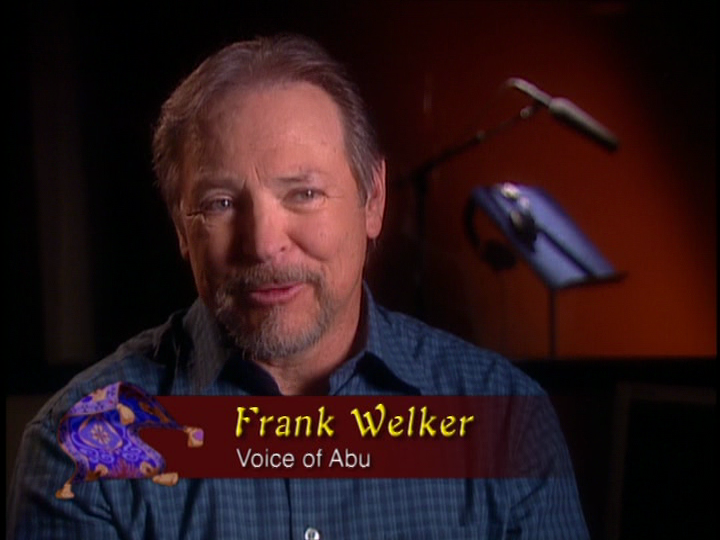
March 12, 1946 – Voice Actor Frank Welker is Born

vlcsnap-2013-03-11-20h12m23s237

“I started doing voices and imitations from about as early as I can remember. I was making noises and I could pick up sounds I could hear pretty easily. And then I found out that you could make people laugh by distorting what you hear.”

On March 12, 1946, Franklin Wendell Welker was born in Denver, Colorado. He attended Santa Monica City College in Santa Monica, California, majoring in theater. After college, his first voice acting job was for a commercial for Friskies dog food. Afterward, he auditioned for the title character in Scooby Doo, but won the role of Fred, which he still voices to this day. He has done many voices for Hanna Barbera cartoons, including Dynomutt, The New Fred and Barney Show, and The Flintstones Comedy Show. Welker’s has had a prolific career at Disney, providing several voices in the films Oliver and Company, The Rescuers Down Under, Aladdin (Abu and the Cave of Wonders), A Goofy Movie (Bigfoot), and The Hunchback of Notre Dame, among others. Welker has also provided voices in other Disney projects, including Disney’s Adventures of the Gummi Bears, Bonkers (Fall-Apart Rabbit), Chip ‘n’ Dale: Rescue Rangers, and Ducktales; he has also appeared onscreen in The Computer Wore Tennis Shoes as Henry and in Now You See Him and Now You Don’t as Myles. Thanks to his large body of voice work, he was considered the highest grossing actor in Hollywood, until he was surpassed by Samuel L. Jackson in 2011.

March 6

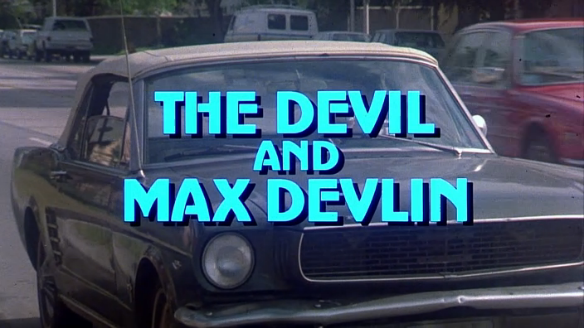
March 6, 1981 – The Live-Action Feature Film The Devil and Max Devlin is Released to Theaters
DaMD_1

“Fair? Are you forgetting where you are?”

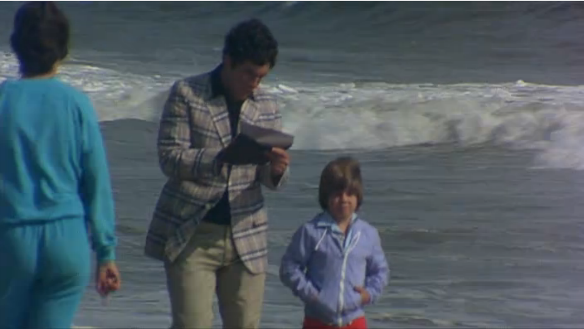
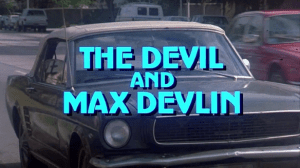
On March 6, 1981, the live-action feature film The Devil and Max Devlin was released to theaters by Buena Vista Distribution. The movie was filmed at Universal Studios and around Los Angeles. It was written by Mary Rogers and Jimmy Sangster, and directed by Steven Hillard Stern; the film stars Elliot Gould as Max Devlin, Bill Cosby as Barney Satin, Susan Anspach as Penny Hart, Adam Rich as Toby Hart, Julie Budd as Stella, and David Knell as Nerve. The film was considered rather controversial on its release, due to its subject matter and Bill Cosby playing an evil character. Cosby’s makeup for his final scene was done by Bob Schiffer, and comprised a wig with ears and horns sewn inside, a thick mauve color base, and red water-soluble make-up specially ordered from Germany. The set for Hell included 150 gallons of butane fuel and 36,000 pounds of dry ice.

Max Devlin, the landlord of a tenement in Los Angeles called The Whitsett Riviera, arrives at work to hear his tenants loudly complaining. He listens to their demands, but has a quick answer for each of them (including that cockroaches only live in New York, and that all decisions are up to the owner). Their anger explodes when they find out that he is the owner, and as he evades the mob, he begins to chase after a tenant who hasn’t paid his rent in two months. He trips over a blind lady’s cane and falls into the street, where he is promptly hit by a bus of Hare Krishnas. Devlin finds himself falling into Hell, which he believes is only a bad dream, and meets the Devil’s chief henchman, Barney Satin. When Devlin proclaims that he hasn’t done anything wrong, his sins are called out. He is then condemned to Level 4, but Satin tells him that there is another way: he will be sent back to Earth for two months, but he must find three innocent souls to take his place. Devlin has a few reservations about having to corrupt children, but quickly decides to take the deal.

Devlin returns to Earth and stops by a café, where he is greeted by Satin, whom only Devlin can see. Things become more strange for Devlin when he realizes that he has no reflection; Satin says that Devlin is now an inhabitant of Hell, and therefore unable to cast a reflection. Satin then takes Devlin to a phone booth to concentrate on his task of collecting the three souls, and when Devlin finds the location of the first soul, he is transported there, finding her in the women’s bathroom. Satin retrieves him, and they head back to the Whitsett Riviera. Satin explains that Devlin now has special powers known as “magic property” that he can use to collect the souls, but they last only when Devlin and the subjects are within sight of each other.
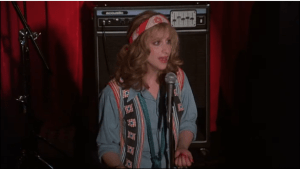
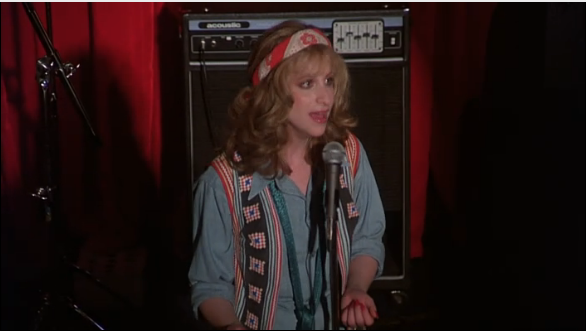
Stella Summers, one of Devlin's targets, is an aspiring singer who wins a contract thanks to Devlin's magical property

Stella Summers, one of Devlin’s targets, is an aspiring singer who wins a contract thanks to Devlin’s magical property

Devlin’s first target is Stella Summers, a high-school dropout who has dreams of stardom. He shows up at her first gig and guarantees that she will not fail, calling himself her good luck. Stella’s gig falls flat, but she suddenly sounds wonderful, thanks to Devlin’s help, and the audience applauds wildly. Stella is then offered a recording contract, and believes that Devlin really is good luck. After this success, Devlin moves to bait his next target, Nelson “Nerve” Nordlinger, who wants to find popularity through becoming a motocross racer. Devlin pretends to be an instructor, and takes Nerve to an empty field to practice. Just as Nerve rides away, Satin rides up and reminds Devlin that the “magic property” works only if the innocent is within Devlin’s sight, and quickly yells at Nerve to come back, but the poor kid falls from his bike as he races another guy. Luckily, the other guy offers to help Nerve out with training, and Nerve agrees. Devlin then moves on to his third victim, an eleven-year-old named Toby, and pretends to be the kid’s uncle to help him get on rides at a carnival. Devlin hangs out with Toby all day, trying to figure out what Toby wants more than anything in the world. Toby then admits he wants Devlin to be his father, since his own father had recently passed away. Toby’s mother, Penny, is wary of her son hanging around with an older man, and tells Toby sharply that she will not be getting married again for a long time, but Toby tries to tell her that Devlin is a wonderful man, and even shows her how well he gets along with the children in the day care center she runs.

Stella heads to the recording studio, but without Devlin there, she can’t perform well. He quickly leaves Toby and heads to the studio, where Stella is finally able to perform on take 43. Her record sells out quickly, hitting number 48 on the Billboard charts. Devlin then calls Toby’s household, trying to get Penny’s attention, but she’s not falling for it. He then attends a party for Stella’s album, and tries to get her to sign away her soul, but finds it nearly impossible to hold her attention. Meanwhile, Nerve is preparing for his first motocross race, with Devlin signing him up as an expert. Nerve is rather nervous, but with Devlin using his “magic property,” Nerve ends up winning. Immediately after, he heads to where Toby is, but Toby is worried that Penny will marry her tennis instructor. When Toby and his mother get home, they find that Devlin has paid for all new playground equipment and grass for the daycare, and wins a date with Penny. They begin to get closer, and when Devlin realizes that he really is falling for her, the two share a kiss.
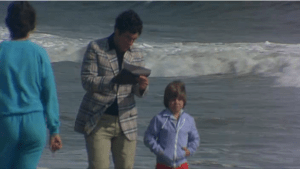
Devlin scrambles to get the contracts signed, but each soul has their own reason to avoid signing, with Toby refusing until Devlin has married his mother

Devlin scrambles to get the contracts signed, but each soul has their own reason to avoid signing, with Toby refusing until Devlin has married his mother

Time is running out for Devlin, and he has to keep quickly moving from one soul to another. Satin appears again, asking for the contracts, but Devlin assures him that he needs a little more time to get them hooked. He tries to get the three to sign, but it proves to be more difficult than he thought, as the three are all caught up in getting what they want, with Stella focusing on her career, Nerve preparing for a race, and Toby only signing once Devlin gets married to Penny. One night, Devlin finds the truth about Stella: her real name is Stephanie Pepper, and she’s a runaway from Brooklyn, New York. After finding the truth, he realizes that he can’t get them to sign the contracts because he’s starting to care for them, which is especially evident when he asks Penny to marry him. When he meets with Satin again, it’s revealed that his wedding, Nerve’s race, and Stella’s concert are all on the same day: Devlin’s final day on Earth. Using a few tricks, Devlin finally gets the three to sign their contracts, but their personalities drastically change from their usual pleasant, innocent selves into angry, spiteful versions. Soon after, Satin informs Devlin that the three are to die at midnight rather than the natural ends of their lives as promised. Devlin rushes in to burn the contracts, and Satin appears in full devil form, cursing Devlin with eternal damnation should he destroy the contracts. However, Devlin is willing to risk his life to save the three of them, and burns the contracts.

Realizing that he has only a few hours left, Devlin rushes to help Nerve and Stella, and finds that Nerve tripped over a little blind lady, but as she is from Heaven, she has actually saved him from dying. Devlin is reassured that the three are saved, but is worried that they won’t be able to do the things they wanted to do without his help anymore. When Penny tells him that he has no self-image, he thinks she’s finally noticed his lack of reflection. He then looks into the mirror and sees his reflection, and realizes that his good deed has allowed him to escape the clutches of Hell once and for all. As a farewell, Devlin, Toby, and Penny go to Stella’s farewell concert, and she is able to sing beautifully without any help from Devlin. Devlin looks up at the sky and mouths his thanks to Heaven.
March 3

March 3, 1937 – Child Actor Bobby Driscoll is Born

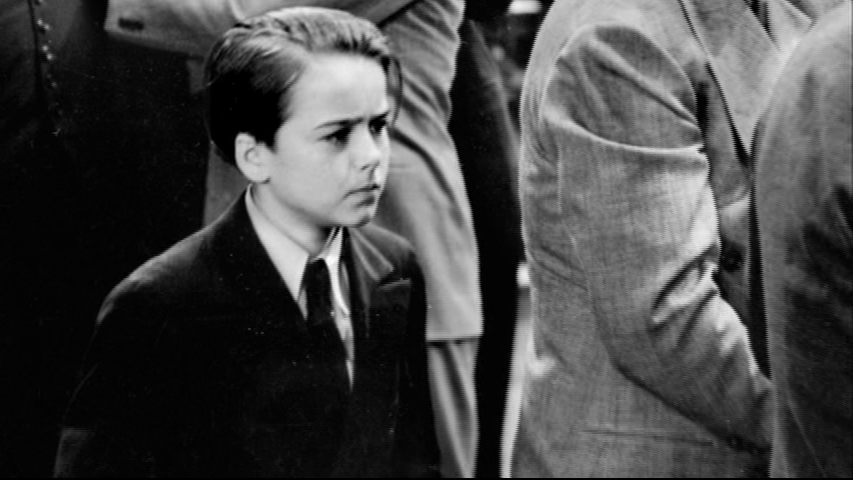
vlcsnap-2013-03-02-19h55m44s251

“He’s got a great talent. I’ve worked with a lot of child players in my time, but none of them bore the promise that seems inherent in young Driscoll.” – Don Ameche

On March 3, 1937, Robert Cletus “Bobby” Driscoll was born in Cedar Rapids, Iowa. Soon after he was born, his family moved to Des Moines, and then moved to California in 1943. After their arrival, Driscoll auditioned with MGM for a small role in the 1943 film Lost Angel. This film role led to better ones; his natural acting talent and ability to memorize his lines quickly led to Driscoll’s being known as the “Wonder Child.” He soon caught the attention of Walt Disney, who was looking to cast the lead in his upcoming film Song of the South. Driscoll was not only hired, but became the first actor Disney put under contract. He and co-star Luana Patten became child stars with the success of the film, and were nicknamed the “Sweetheart Team.” They would later star together in the 1948 film So Dear to My Heart, and in the “Pecos Bill” segment of the animated feature film Melody Time, released in the same year. In 1949, Driscoll found acclaim in the RKO film The Window; this, coupled with his role in So Dear to My Heart, earned Driscoll a Juvenile Academy Award.

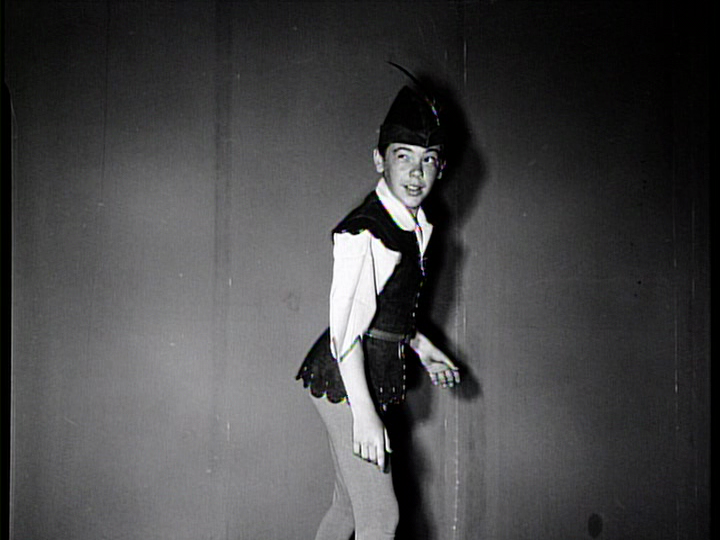
In 1950, Driscoll starred in the first full-length live-action film for the studio, Treasure Island, as Jim Hawkins. During filming, the British film industry claimed that due to child labor laws, and the fact that Driscoll did not have a work permit, he would have to leave the country. The judge presiding over the case gave Driscoll and his family six weeks for appeal, but instead the company used the six weeks to film his close-ups and any other important shots before he was deported. The film was another success, and Driscoll was awarded a star on the Hollywood Walk of Fame. Driscoll also appeared in smaller Disney projects on television and in short films through the early ’50s. His last major project for the studio was the voice and live-action reference model for the title character in the animated feature film Peter Pan. After the film’s release, he was terminated from his contract with the studio.

Driscoll as the live-action model for Peter Pan, his final film at the studio

Driscoll as the live-action model for Peter Pan, his final film at the studio

After leaving Disney, Driscoll found it increasingly difficult to get work as a serious character actor, as he was seen as “Disney’s kid actor.” He moved to television roles and was taken out of Hollywood Professional School by his parents, who moved him to public school. Ridiculed by the other students there for his early film career, Driscoll began to dabble with drugs. Although his parents let him return to Hollywood Professional School, where he graduated, his drug use increased. In 1965, he moved to New York City and became part Andy Warhol’s art community, known as The Factory. His last film performance was in the underground film Dirt. After leaving The Factory, Driscoll was penniless and was living in Manhattan’s underground. In 1968, two boys discovered his body, and without any identifiers, he was buried in an unmarked pauper’s grave. It was in 1969, some nineteen months later, when his mother, who was hoping to reunite with her son before his father’s death, discovered where his body was buried.

Driscoll was a rare talent and an important part of the live-action film aspect of the Disney Studios. It is important that he be remembered for his wonderful craft shown in the Disney films of the ’40s and ’50s. Although his life was sadly cut short due to some bad decisions, Driscoll should be lauded as one of the finest child actors in film history.

March 1

March 1, 1994 – Music from Disney’s Aladdin Wins Four Grammys

Aladdin (Original English Soundtrack) 1

“A whole new world, a dazzling place I never knew…”

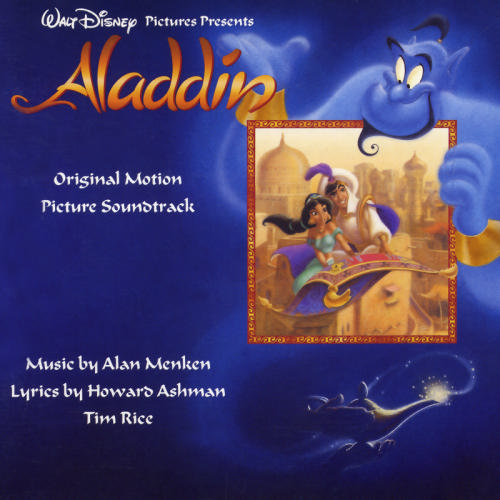
On March 1, 1994, the 36th Grammy Awards were held in Radio City Music Hall in New York City. The music from the hit feature film Aladdin, particularly the song “A Whole New World” received four out of its six nominations. Written by Alan Menken and Tim Rice, “A Whole New World” won Best Song Written for Visual Media, Best Instrumental Composition Written for a Motion Picture or for Television, Best Pop Performance by a Duo or Group with Vocals (the pop ending track sung by Peabo Bryson and Regina Belle), and Song of the Year, beating Neil Young’s “Harvest Moon,” Jim Steinman’s “I’d Do Anything For Love (But I Won’t Do That),” Sting’s “If I Ever Lose Faith In You,” and Billy Joel’s “The River of Dreams.” The soundtrack was also nominated for Best Song Written for Visual Media with Alan Menken and Howard Ashman’s “Friend Like Me.” Peabo Bryson and Regina Belle’s pop version of “A Whole New World” was nominated for Record of the Year, but lost to Whitney Houston’s “I Will Always Love You.”

February 27

February 27, 2005 – The Pixar Film The Incredibles Wins Two Academy Awards

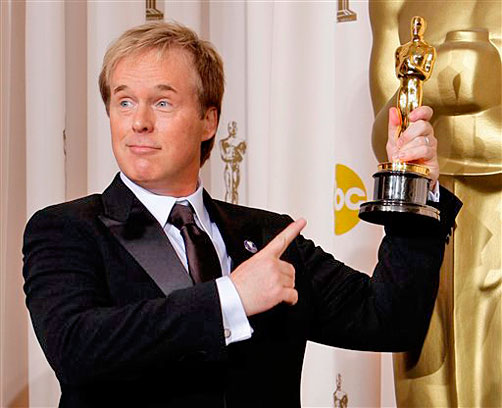
BradBird

“Animation is about creating the illusion of life, and you can’t create it if you don’t have one.” – Brad Bird at his acceptance speech

On February 27, 2005, the 77th Academy Awards were held at the Kodak Theater in Los Angeles, California. Nominated for four Academy Awards, the sixth Pixar film, The Incredibles, walked away with two, including Best Animated Feature, beating out DreamWorks’ Shark Tale and Shrek 2. The Academy was also awarded the Best Sound Editing Oscar to Michael Silvers and Randy Thom, who were nominated against Paul N.J. Ottosson for Spider-Man 2 and Randy Thom and Dennis Leonard for The Polar Express. This would be director Brad Bird’s first Academy Award; he would win again three years later for Ratatouille.

February 25

February 25, 1927 – Actor and Disney Legend Dickie Jones is Born

vlcsnap-2013-02-24-20h26m38s4

Pinocchio. Every time I think about it, I think about how blessed I was that I was there at the right time, the right moment, and I was the one Walt Disney decided to use. And the people I got to work with, it’s unbelievable. I worked with some of the best character actors in the business at that time. I’m so proud I was able to work with one of the greatest groups that was ever assembled for an animated feature.” – Dickie Jones.

On February 25, 1927, Richard “Dickie” Percy Jones was born in Snyder, Scurry County, Texas. At the age of four, Jones was billed as “World’s Youngest Trick Rider and Trick Roper,” and at age six, he was hired by actor Hoot Gibson to perform tricks in his rodeo. Gibson convinced Jones’ mother to take young Jones to Hollywood, where he landed small parts in B-Westerns. In 1939, Jones had his breakthrough with Mr. Smith Goes to Washington, playing Senate page Richard Jones. Soon after, Jones would have his most well-known role as the voice of the title character in Walt Disney’s second full-length animated feature film, Pinocchio. At the age of fifteen, Jones then joined the popular radio show The Aldrich Family as Henry Aldrich. During World War II, Jones served in the Army in Alaska, and was hired by Gene Autry after the war. Jones would then work in several western-themed television series, including The Range Rider, Annie Oakley, and Buffalo Bill, Jr. In 1959, Jones retired from acting and began a career in real estate. He was named a Disney Legend in 2000.

February 22

February 22, 1908 – Actor and Disney Legend Sir John Mills is Born

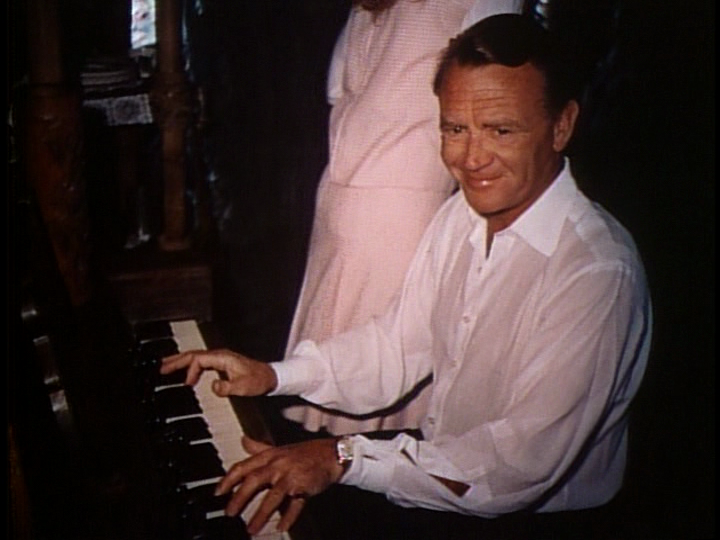
vlcsnap-2013-02-22-04h50m57s225

“One of the luckiest things that ever happened to me was to be born with the desperate desire to become an actor. I never remember at any age wanting to be anything else.”


On January 22, 1908, Lewis Ernest Watts Mills was born in North Elmham, Norfolk, England, and grew up in Belton. In 1929, Mills made his professional acting debut in The Five O’Clock Girl at the London Hippodrome, and made his film debut in the 1932 film The Midshipmen. He enlisted in the Royal Engineers at the beginning of World War II, but was medically discharged in 1942 due to a stomach ulcer. In the late ’40s and ’50s, Mills was known predominantly for starring in war dramas, including The Colditz Story and Above Us the Waves.

Beginning in 1959, Mills starred in several films alongside his daughter Hayley, beginning with Tiger Bay. In 1960, Mills starred in the highly successful film Swiss Family Robinson, which became the highest grossing film of the year, beating out Psycho, Spartacus, and Exodus. He was also featured in the Walt Disney’s Wonderful World of Color episode “Disneyland 10th Anniversary,” showing his family the new Swiss Family Robinson Treehouse attraction. Over his entire seven-decade career, Mills starred in more than 120 films, and was appointed a Commander of the Order of the British Empire in 1960 before being knighted in 1970. Mills was named a Disney Legend in 2002, and passed away in 2005 at the age of 97.

February 21

February 21, 1997 – The First Star Wars Weekends Are Held in Walt Disney World

SWW_97

“From Friday to Sunday each weekend, you can immerse yourself in the beloved saga that takes place in a galaxy far, far away.”

On February 21, 1997, the first Star Wars Weekends event took place at Walt Disney World’s Hollywood Studios. This festival, held from the 21st through the 23rd, coincided with the release of the “special edition” versions of the original Star Wars trilogy. The celebrations included a few Star Wars celebrities, including Warwick Davis, who played Wicket W. Warrick the Ewok. It was held a few more times in 1997, then disappeared for a few years until it was brought back in 2000. The event has grown in recent years, including a Jedi Training Academy and an interactive attraction called “Carbon Freeze Me” where guests can have their faces scanned and reproduced in a prism of carbonite.

February 20

February 20, 1991 – The Little Mermaid Soundtrack Wins Two Grammy Awards

4872591136392891

“Darling, it’s better down where it’s wetter, under the sea.”

On February 20, 1991, the 33rd Grammy Awards were held in New York City’s Radio City Music Hall. The soundtrack for the 1989 animated feature film The Little Mermaid won awards for composer Alan Menken and lyricist Howard Ashman for Best Recording for Children and Best Song Written Specifically for a Motion Picture or for Television for “Under the Sea.” The success of the soundtrack kicked off a season of accolades for Disney film soundtracks that include Beauty and the Beast, Aladdin, and The Lion King.

February 19

February 19, 1968 – The Jungle Book and The Happiest Millionaire are Announced as Academy Award Nominees

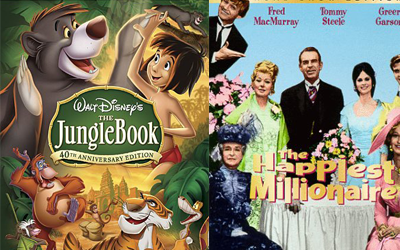
1_Feb19

“Look for the bare necessities, the simple bare necessities, forget about your worries and your strife.”

On February 19, 1968, the nominees for the 40th Academy Awards were announced, with Disney films receiving two: Best Original Song for “The Bare Necessities” from The Jungle Book, and Best Costume Design for Bill Thomas for The Happiest Millionaire. These were two of the last productions that Walt Disney would play an active role in before his passing in 1966. Both films would unfortunately lose in their categories.