RSS Feed

Tag Archives: Births

October 22

October 22, 1908 – Imagineer and Disney Legend Roger Broggie is Born
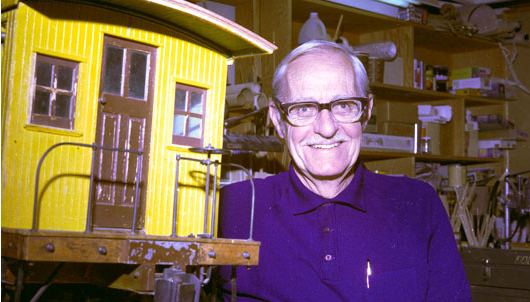
Roger Broggie

“He epitomized the essence of Disney Imagineering – the blending of creative imagination and technical know-how.”

On October 22, 1908, Roger E. Broggie was born in Pittsfield, Massachusetts. After graduating from high school in 1927, he moved to Los Angeles, California, working for several technical companies that included Technicolor and General Services Studios. In 1939, he was hired by the Disney Studios as a precision machinist after receiving an invitation to join the studio by a friend. One of Broggie’s first assignments was work with the multiplane camera on the Burbank lot. Broggie would work closely with Ub Iwerks on many technical innovations, including rear-screen special effects and camera cranes. In 1950, Broggie became the head of the Studio Machine Shop, and helped create a variety of technical effects for screen and for Disneyland; one new technique developed under his direction was the Circle-Vision 360, a motion picture viewing experience where the screens completely surround the guests. In 1951, Broggie was assigned to work with Imagineer Wathel Rogers, and together they created the first prototype of the Audio-Animatronic figure, which only stood about nine inches tall. This prototype led the way to the creation of the life-sized figure of Abraham Lincoln, which was first on display at the 1964-1965 World’s Fair in New York. In 1973, Broggie worked on plans for the EPCOT Center in Walt Disney World, Florida. In 1975, he retired from the company after working at Disney for over 35 years. A lover of miniature trains, having assisted Walt with creating his backyard miniature train set in 1949 and vocal in the creation of the Disneyland and Santa Fe Railroad in Anaheim, the Walt Disney World engine No. 3 was named after him in his honor for all his years of service. He was awarded as a Disney Legend in 1990. On November 4, 1991, Broggie passed away at the age of 83.
October 10

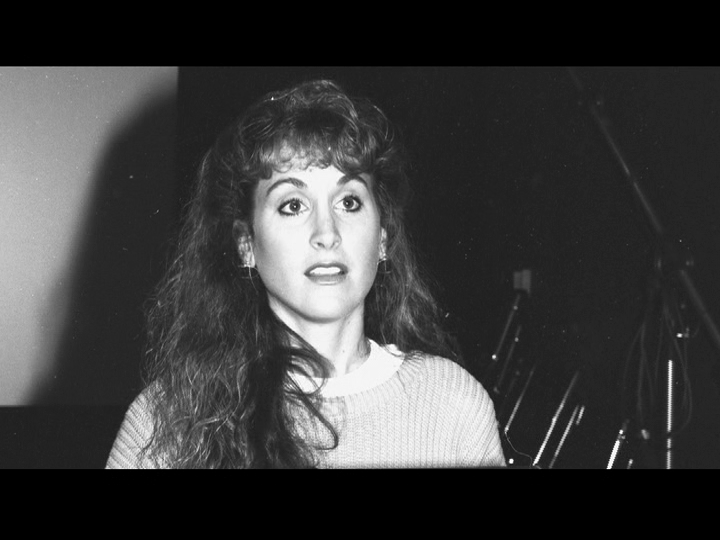
October 10, 1961 – Actress, Voice of Ariel and Barbie, and Disney Legend Jodi Benson is Born

vlcsnap-2013-10-10-12h38m00s41

“I pretty much came out of the womb singing. I think I was born with the gift to be able to sing, so I can’t take credit for it.”

On October 10, 1961, Jodi Marie Benson was born in Rockford, Illinois. She originally attended college to major in Pre-Law with a minor in theater, but soon switched to pursue a BFA in Musical Theater. She was cast in the musical Smile, which closed after six weeks; there, she met lyricist Howard Ashman, who would invite her to audition for The Little Mermaid, along with all the other girls in the cast. Benson made a reel-to-reel tape, and was selected to be the voice of the main character, Ariel. This role has become Benson’s most famous role to date, and has stated on record that her winning the role was God-ordained. She has continued to voice the character in the television series, the prequel and sequel films, and video games including the character, such as the Kingdom Hearts series. Benson has also re-recorded her signature song “Part of Your World” for the World of Color show at Disney’s California Adventure, and has voiced Ariel once again in the Ariel’s Undersea Adventure attraction. Benson has also voiced the character of Barbie in the Disney Pixar films Toy Story 2 and Toy Story 3, and played the character Sam in the live-action Disney feature Enchanted. In 2011, Benson was awarded the honor of being inducted into the Disney Legends. On getting the call for the honor, Benson remarked, “When they called and said we’d like to honor you, I was silent. I thought I would be retired, I thought you had to be dead to get that award…to say thank you to the people who for 25 years have loved and supported me was a blessing.”

October 8

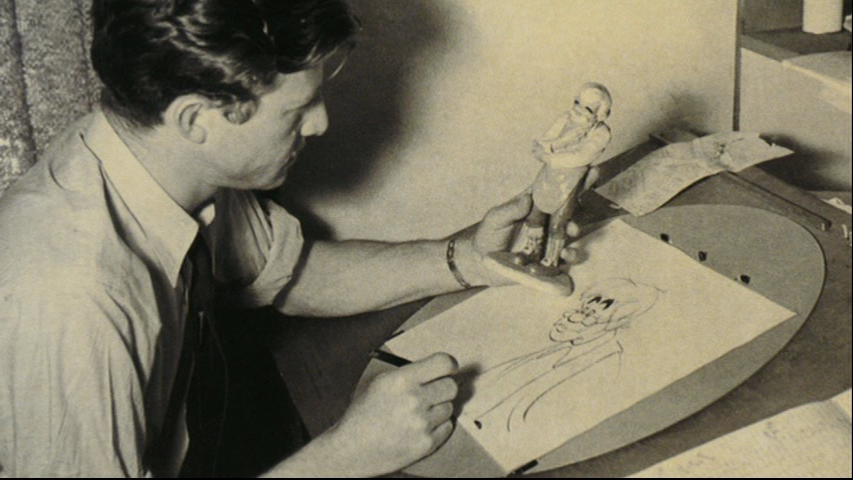
October 8, 1907 – Animator and Disney Legend Art Babbitt is Born

vlcsnap-2013-10-08-19h57m36s251

“Art said we only scratched the surface of what animation can do.” – Animator Greg Duffell.

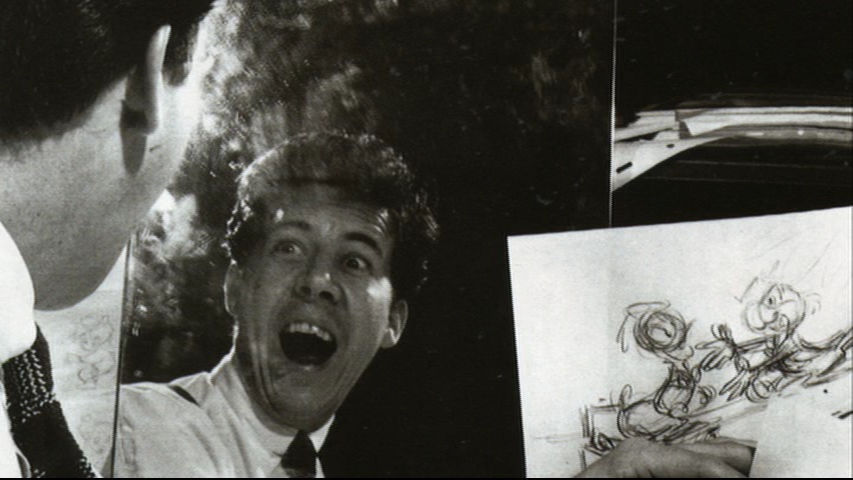
On October 8, 1907, Arthur Harold Babitsky, better known as Art Babbitt, was born in Omaha, Nebraska. He and his family moved to Sioux City, Iowa, while he was still young; after his father suffered a paralyzing accident at work, Babbitt moved to New York to provide for the family, beginning his career at the Terrytoons Studio for Paul Terry. It was there that he met fellow future Disney Legend Bill Tytla, and the two applied for, and won positions, at the Disney Studios in California. Babbitt began as an assistant animator, but was soon promoted. One of the crowning achievements from the early part of his career at Disney was his animation of the drunken Abner Mouse in the Silly Symphony The Country Cousin, which won an Academy Award. Babbitt was given the plum assignment of animating the Wicked Queen in the studio’s first full-length feature, Snow White and the Seven Dwarfs. He was then given the role of directing animator and task of animating the character of Gepetto in Pinocchio, a film he regarded as one of the finest features ever created during the Golden Age of Animation. Babbitt is also credited with the creation of the character Goofy and bringing him to stardom with the addition of Goofy’s unique clumsy manner. Babbitt’s place at the studio was jeopardized with his participation in the Animator’s Strike of 1941. Babbitt was sympathetic with the artists, in-betweeners, and other less-well paid employees that wished for form a union. After Disney fired Babbitt for being a “troublemaker” due to his part in the union, the strike began the very next day, with Babbitt being named as one of the leaders. Babbitt’s involvement caused a rift between Disney and himself, one that never really healed. After the strike ended, Disney was forced to re-hire Babbitt, although Babbitt would end up fired several times. For these instances, Babbitt took his case against Disney all the way to the Supreme Court of the United States. However, Babbitt soon left the studio to join UPA instead. In 1991, Roy E. Disney contacted Babbitt and ended the feud between the studio and the animator, and when Babbitt passed away in 1992, former rivals Frank Thomas and Ollie Johnston gave touching tributes at his funeral. Babbitt was named as a Disney Legend in 2007.

September 24

September 24, 1894 – Voice Actor and Comedian Billy Bletcher is Born

vlcsnap-2013-09-24-08h44m02s85

“So what the hell, I did it, and I recorded this thing for Walt [Disney], as the Big Bad Wolf. That put me in pretty solid with Walt.”

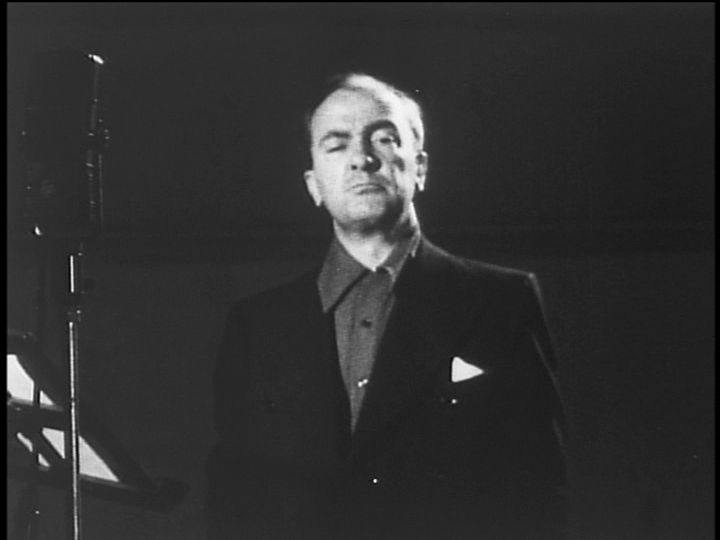
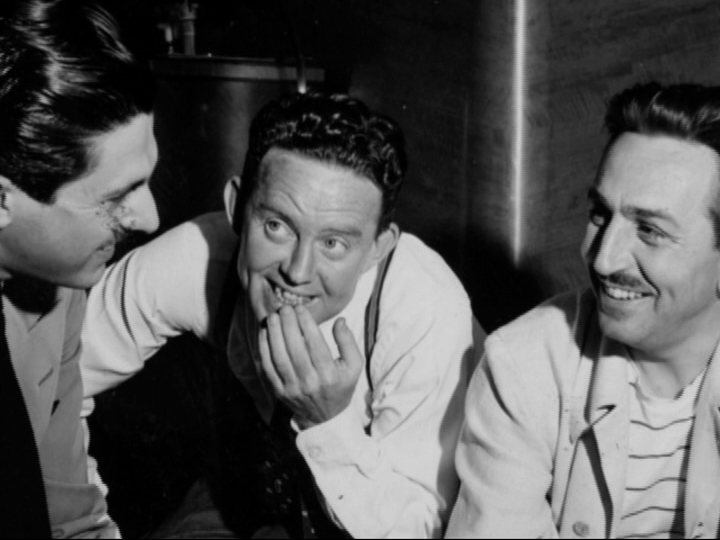
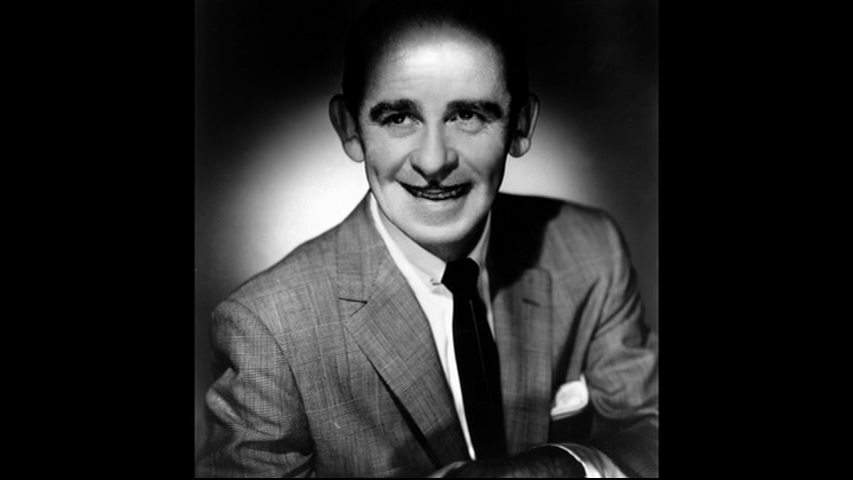
On September 24, 1894, William Bletcher was born in Lancaster, Pennsylvania. His career began with silent comedies, and he moved on to two-reel Hal Roach comedies in the 1930s. During the ’30s and ’40s, Bletcher was well known for voicing villains for cartoons, being blessed with a deep, rich voice despite his appearance, as he only stood a five feet two inches. His friend Pinto Colvig (best known as the voice of Goofy) recommended that Bletcher try out for a new cartoon Disney was making called Three Little Pigs, and Bletcher won the role of the Big Bad Wolf, which was his first work with cartoons. Bletcher would continue to voice the Wolf in the two sequels, and provided the voice of Pegleg Pete in several shorts, as well as any bit parts that they needed. Bletcher also provided voice work for Warner Brothers, and in the 1950s, he voiced the Lone Ranger in the Lone Ranger radio program. Bletcher passed away on January 5, 1979 in Los Angeles at the age of 84.

September 7

September 7, 1911 – Animator and Disney Legend Fred Moore is Born

vlcsnap-2013-09-07-15h22m35s224

“Animation came too easily to him. He didn’t have to exert any real effort.” – Animator Les Clark

On September 7, 1911, Robert Fred Moore was born in Los Angeles, California. Despite limited training, he displayed a natural talent for animation, and worked at the Chouinard Art Institute as a janitor in exchange for art lessons. In 1930, at the age of 18, Moore was hired by the Disney studios. His first major assignment was on the Silly Symphony Santa’s Workshop in 1932, but his best known short assignment was that of a principal animator on Three Little Pigs. Moore was also known as the best animator of Mickey Mouse, creating the redesign of Mickey first seen in The Pointer in 1939, which was then used in “The Sorcerer’s Apprentice” segment of Fantasia. Caricatures of Moore have been seen in Disney animation: once in the Mickey Mouse short The Nifty Nineties as part of the song and dance act “Fred and Ward: Two Clever Boys from Illinois,” and the other is the character of Lampwick from Pinocchio, which is considered a self-caricature. In 1946, after a series of personal and professional problems, Moore was fired from the studio. He joined Walter Lantz, redesigning the character of Woody Woodpecker, before being hired once again by Disney in 1948. Sadly, in 1952, Moore was involved in a car accident, and was killed from a cerebral hemorrhage. He is still regarded as one of the finest Disney animators, and was awarded the Windsor McCay award in 1983, and inducted as a Disney Legend in 1995.

September 2

September 2, 1902 – Animator and Disney Legend Norm Ferguson is Born

vlcsnap-2013-09-02-13h26m38s255

“In the case of Pluto, the man most responsible for defining the character, giving him the personality we know and love, was animator Norm Ferguson, known to his friends and colleagues as ‘Fergy.’” – Film Critic Leonard Maltin

On September 2, 1902, William Norman Ferguson was born in Brooklyn, New York. He worked as a cameraman at the Paul Terry Studios making silent animated films, and one night, when several frames were missing from the film, he animated the missing pages. A director came around the next day asking who animated the frames, as they were the best things in the picture. In 1929, he joined the Disney Studios as a successful New York animator. He animated on more than 75 shorts, including the Academy Award winning Three Little Pigs. Although not considered a great draftsman, Ferguson made up for his lack of formal training with a great skill for storytelling and a way to portray human emotion. He then animated the Wicked Witch in the full-length feature Snow White and the Seven Dwarfs, and Honest John and Gideon in Pinocchio, basing these villain’s characteristics on vaudeville acts he saw in his youth. Ferguson was also credited for the technique of overlapping action, where parts of a character’s body moves at different times and different speeds, giving the illusion of realistic movement. He then moved to a supervising role for films, as a sequence director for Fantasia and Dumbo, a production supervisor for Saludos Amigos, production supervisor and director for The Three Caballeros, and directing animator for Cinderella, Alice in Wonderland, and Peter Pan. He left the studio in 1953, due to his failing health and career decline, and passed away of a heart attack in 1957 at the age of 55. He was posthumously awarded the Windsor McCay award in 1987, and was named a Disney Legend in 1999.

August 15

August 15, 1901 – Lyricist and Disney Legend Ned Washington is Born

vlcsnap-2013-08-15-04h02m39s76

“[Washington] would win an Academy Award not just for ‘When You Wish Upon a Star,’ and for the score, but he won another Academy Award for another song he wrote in 1952…so he really is someone who, historically, is very much associated with very popular song.” – Daniel Goldmark, Music Professor at Case Western Reserve University

On August 15, 1901, Ned Washington was born in Scranton, Pennsylvania. He joined the Disney Studios in 1938, writing songs for the animated feature films Pinocchio, Saludos Amigos, and Dumbo. Washington was awarded two Academy Awards for Pinocchio, one for Best Original Song for “When You Wish Upon a Star,” and the other for Best Original Score. Washington was also nominated for the Academy Award for Best Original Song for “Baby Mine” from Dumbo. Washington left the Disney Studios in 1940. Over the course of his career, Washington was nominated for eleven Academy Awards, winning once more for his song “High Noon (Do Not Forsake Me, Oh My Darlin’)” from the 1952 film High Noon. Washington passed away in 1976. He was named a Disney Legend in 2001.

August 8

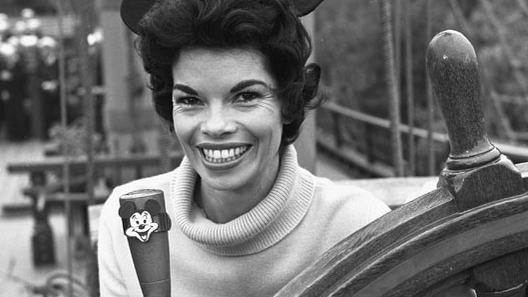
August 8, 1925 – Voice Actress and Disney Legend Ginny Tyler is Born

GT_Aug8

“And I was raving away to Walt how wonderful Disneyland was, he said, ‘And that goes for my Disneyland Storyteller, too.’ I have never felt prouder in my entire life.”

On August 8, 1925, Merrie Virginia Erlandson was born in Berkeley, California; her family then moved to Seattle when she was a young girl. Steeped in a tradition of storytelling and imitations, Tyler began her career as a voice actor in the 1930s on the radio show Make Believe Island. By the 1950s, the show had been moved to television and renamed Magic Island. In the 1960s, Tyler was hired by the Disney Studios to narrate vinyl records for classic films Bambi and Babes in Toyland, and was known as one of the “Disneyland Storytellers.” Tyler was also a voice actress in several feature films, playing the amorous squirrel in The Sword in the Stone, several barnyard animals in Mary Poppins, and the bees in Winnie the Pooh and the Honey Tree. When the Mickey Mouse Club was in syndication, Tyler was hired as the Head Mouseketeer for the repackaged show, recording segments live from Disneyland’s Mickey Mouse Club Headquarters, located inside the Main Street Opera House. In 2006, Tyler was inducted as a Disney Legend. She passed away in 2012 at the age of 86,

July 30

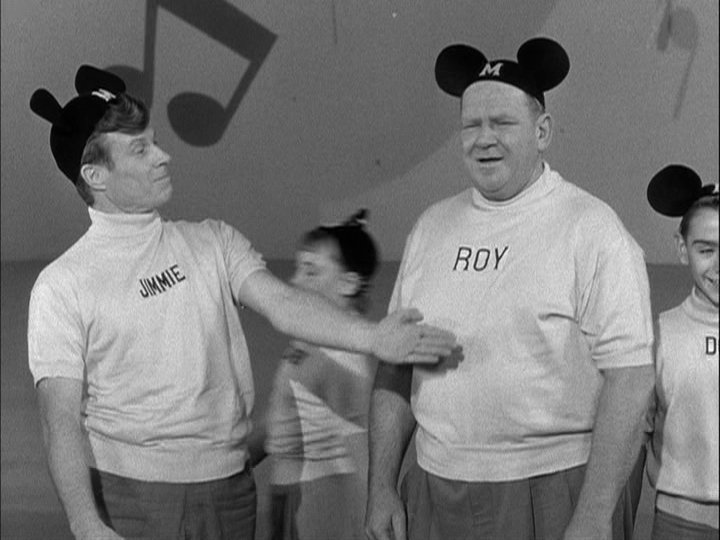
July 30, 1907 – “Big Moosketeer,” Animator, and Disney Legend Roy Williams is Born

vlcsnap-2013-07-30-20h21m32s71

“Walt knew I loved kids…that’s why he put me on a kids’ show. I’m a down-to-earth guy, but I never dreamed of the kind of pleasure that working with those kids brought me. “

On July 30, 1907, Roy Williams was born in Colville, Washington. His family moved to Los Angeles, where he attended Freemont High School, and was hired by the Walt Disney Studios. He first animated shorts during the day, attending Chouinard Art Institute at night, and would later develop story ideas. He was also known as a publicity representative, as well as a popular caricaturist at Disneyland. Through his career, he developed a reputation as a talented and funny artist, which caught the attention of Walt Disney, who hired him as one of the hosts of the Mickey Mouse Club. Williams also created the Mickey Mouse Ears that the kids wore, based on a Mickey Mouse short film where Mickey removed his ears to greet Minnie. Although Williams couldn’t sing or dance, he was popular thanks to humor and warmth. Williams stayed with the studio until the 1970s, and passed away on November 7, 1976. He was inducted into the Disney Legends in 1992.

July 22

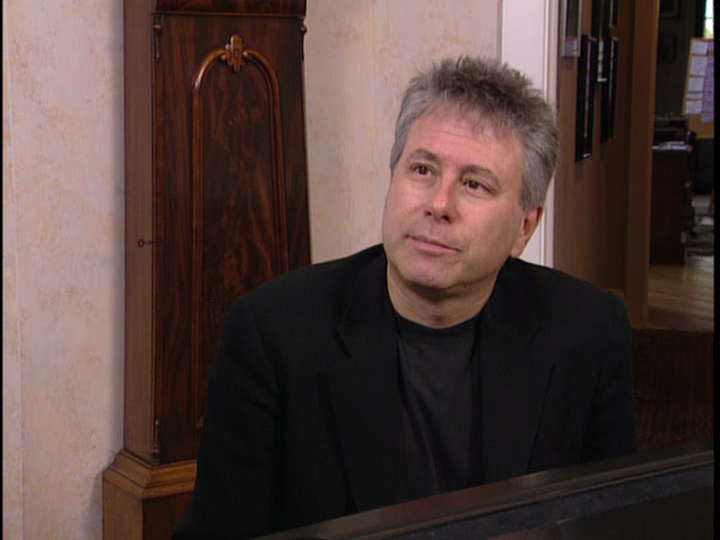
July 22, 1949 – Film Composer, Songwriter, and Disney Legend Alan Menken is Born

vlcsnap-2013-07-22-05h20m18s225

“He’s a very clever man, that Alan Menken. He’s like Mr. Melody. Whenever he would send in a song on Beauty and the Beast or Hunchback [of Notre Dame] or some of the Aladdin songs, you can’t get them out of your mind. There’s no antidote for them except another Alan Menken song, cause they’re so getable and singable.” – Don Hahn, Producer

On July 22, 1949, composer and songwriter Alan Irwin Menken was born in New Rochelle, New York. His parents would play records of Broadway musicals and musical theater standards in his youth, and Menken displayed musical talents at an early age, studying the piano and violin. Coming from a family of dentists, Menken went to NYU as a pre-med student. He then changed his focus to music, and began to work in clubs and write jingles, and wrote a rock ballet right after college for the Downtown Ballet Company, where he met his wife Janis. His first musical success was an adaptation of Kurt Vonnegut’s God Bless You, Mr. Rosewater with Howard Ashman, who would become his close songwriting partner. The two would hit it big with the 1982 Off-Broadway hit Little Shop of Horrors.

Menken (L) and songwriting partner Howard Ashman

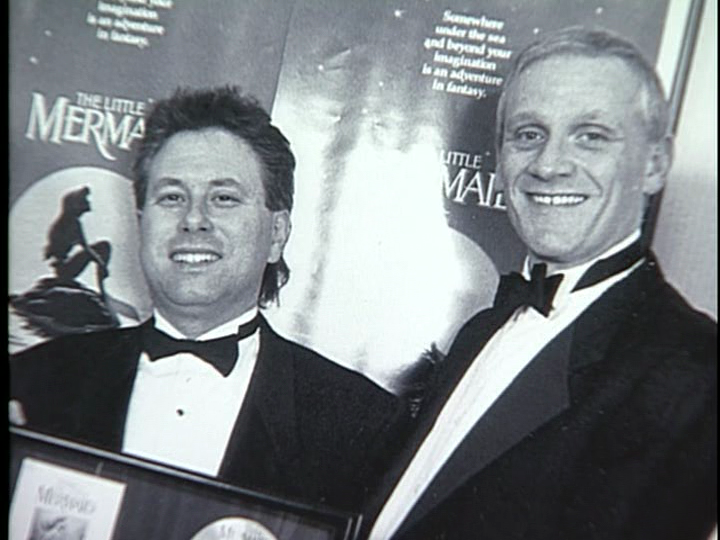
Menken (L) and songwriting partner Howard Ashman during the accolade season for The Little Mermaid

Ashman was approached by Disney to help create the music for a new animated feature, The Little Mermaid. As Menken has said in interviews, it was his and Ashman’s job to reinvent the Disney animated feature, bringing a real sense of current musical theater trends to these Disney musical films. The Little Mermaid became the biggest hit for the studio in decades, and ushered in a whole new era for Disney, known as the Disney Renaissance. The duo was honored with two Academy Awards between them for The Little Mermaid: Best Song (“Under the Sea”) and Best Original Score. Menken and Ashman were then asked to compose for Beauty and the Beast and Aladdin. Unfortunately, around this time, Ashman was diagnosed with HIV, and passed away before Beauty and the Beast was released in theaters. Menken continued to be hired by the studios, working with songwriter Tim Rice to complete work for Aladdin, which also won two Academy Awards for Best Song (“A Whole New World”) and Best Original Score.

For the film Pocahontas, Menken teamed up with lyricist Stephen Schwartz, once again winning two Academy Awards for its music. Menken continued to work with Disney on films Hercules, Home on the Range, Newsies, Enchanted, The Shaggy Dog, and Tangled. He has also moved back to Broadway, helping bring to the stage some of these Disney hits, including Beauty and the Beast and The Little Mermaid; he has also contributed to the stage shows featured at the Disney parks. Over the course of his career, Menken has won eight Academy Awards, holding the record for most wins for any living person. In 2001, Menken was named a Disney Legend.