RSS Feed

Tag Archives: Animator

September 29

September 29, 1958 – The LP Firehouse Five Plus Two – Dixieland Favorites is Released

Firehouse Five

“…the Firehouse Five Plus Two made up in spirit for what they generally lacked in originality.”

On September 29, 1958 the LP album Firehouse Five Plus Two – Dixieland Favorites was released on the Good Time Jazz label. The band was comprised of members of the Walt Disney Studios animation department, including Nine Old Men members Ward Kimball (trombone) and Frank Thomas (piano). The group also included Danny Alguire (cornet), Harper Goff (banjo), Clarke Mallery (clarinet), Monte Mountjoy (drums), and Ed Penner (bass saxophone); it would later include Jimmy MacDonald, George Probert, Dick Roberts, Ralph Ball, and George Bruns. The album contains several Dixieland standards recorded by the band at their peak.

September 7

September 7, 1911 – Animator and Disney Legend Fred Moore is Born

vlcsnap-2013-09-07-15h22m35s224

“Animation came too easily to him. He didn’t have to exert any real effort.” – Animator Les Clark

On September 7, 1911, Robert Fred Moore was born in Los Angeles, California. Despite limited training, he displayed a natural talent for animation, and worked at the Chouinard Art Institute as a janitor in exchange for art lessons. In 1930, at the age of 18, Moore was hired by the Disney studios. His first major assignment was on the Silly Symphony Santa’s Workshop in 1932, but his best known short assignment was that of a principal animator on Three Little Pigs. Moore was also known as the best animator of Mickey Mouse, creating the redesign of Mickey first seen in The Pointer in 1939, which was then used in “The Sorcerer’s Apprentice” segment of Fantasia. Caricatures of Moore have been seen in Disney animation: once in the Mickey Mouse short The Nifty Nineties as part of the song and dance act “Fred and Ward: Two Clever Boys from Illinois,” and the other is the character of Lampwick from Pinocchio, which is considered a self-caricature. In 1946, after a series of personal and professional problems, Moore was fired from the studio. He joined Walter Lantz, redesigning the character of Woody Woodpecker, before being hired once again by Disney in 1948. Sadly, in 1952, Moore was involved in a car accident, and was killed from a cerebral hemorrhage. He is still regarded as one of the finest Disney animators, and was awarded the Windsor McCay award in 1983, and inducted as a Disney Legend in 1995.

September 2

September 2, 1902 – Animator and Disney Legend Norm Ferguson is Born

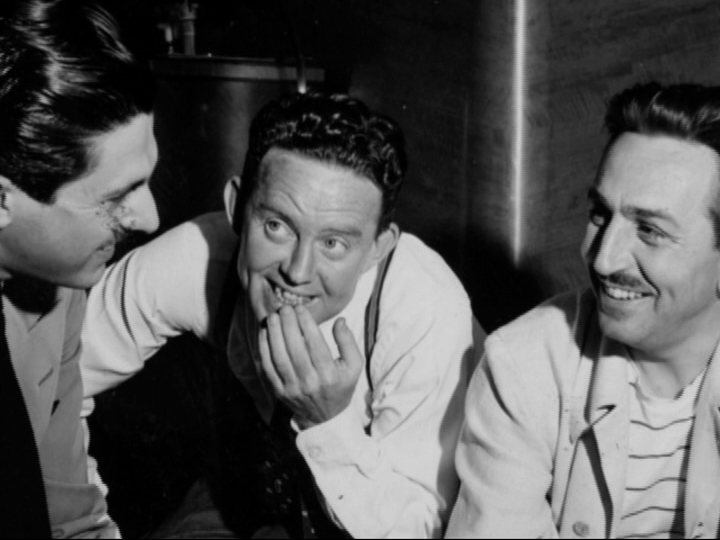
vlcsnap-2013-09-02-13h26m38s255

“In the case of Pluto, the man most responsible for defining the character, giving him the personality we know and love, was animator Norm Ferguson, known to his friends and colleagues as ‘Fergy.’” – Film Critic Leonard Maltin

On September 2, 1902, William Norman Ferguson was born in Brooklyn, New York. He worked as a cameraman at the Paul Terry Studios making silent animated films, and one night, when several frames were missing from the film, he animated the missing pages. A director came around the next day asking who animated the frames, as they were the best things in the picture. In 1929, he joined the Disney Studios as a successful New York animator. He animated on more than 75 shorts, including the Academy Award winning Three Little Pigs. Although not considered a great draftsman, Ferguson made up for his lack of formal training with a great skill for storytelling and a way to portray human emotion. He then animated the Wicked Witch in the full-length feature Snow White and the Seven Dwarfs, and Honest John and Gideon in Pinocchio, basing these villain’s characteristics on vaudeville acts he saw in his youth. Ferguson was also credited for the technique of overlapping action, where parts of a character’s body moves at different times and different speeds, giving the illusion of realistic movement. He then moved to a supervising role for films, as a sequence director for Fantasia and Dumbo, a production supervisor for Saludos Amigos, production supervisor and director for The Three Caballeros, and directing animator for Cinderella, Alice in Wonderland, and Peter Pan. He left the studio in 1953, due to his failing health and career decline, and passed away of a heart attack in 1957 at the age of 55. He was posthumously awarded the Windsor McCay award in 1987, and was named a Disney Legend in 1999.

July 30

July 30, 1907 – “Big Moosketeer,” Animator, and Disney Legend Roy Williams is Born

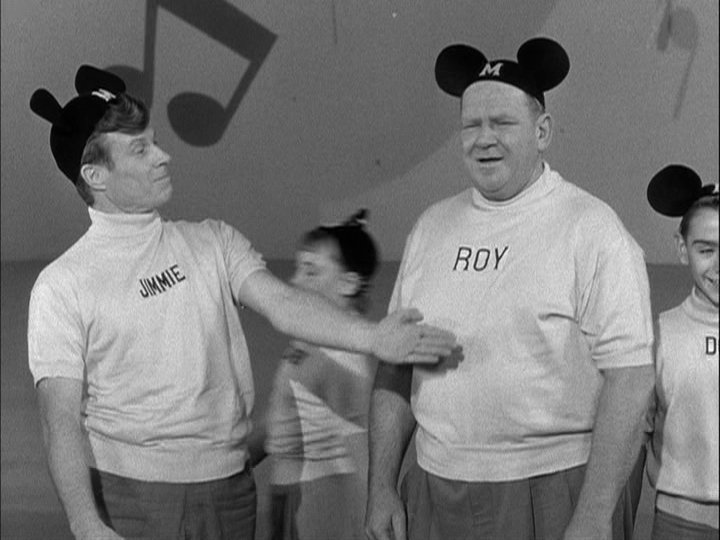
vlcsnap-2013-07-30-20h21m32s71

“Walt knew I loved kids…that’s why he put me on a kids’ show. I’m a down-to-earth guy, but I never dreamed of the kind of pleasure that working with those kids brought me. “

On July 30, 1907, Roy Williams was born in Colville, Washington. His family moved to Los Angeles, where he attended Freemont High School, and was hired by the Walt Disney Studios. He first animated shorts during the day, attending Chouinard Art Institute at night, and would later develop story ideas. He was also known as a publicity representative, as well as a popular caricaturist at Disneyland. Through his career, he developed a reputation as a talented and funny artist, which caught the attention of Walt Disney, who hired him as one of the hosts of the Mickey Mouse Club. Williams also created the Mickey Mouse Ears that the kids wore, based on a Mickey Mouse short film where Mickey removed his ears to greet Minnie. Although Williams couldn’t sing or dance, he was popular thanks to humor and warmth. Williams stayed with the studio until the 1970s, and passed away on November 7, 1976. He was inducted into the Disney Legends in 1992.

May 3

Posted on

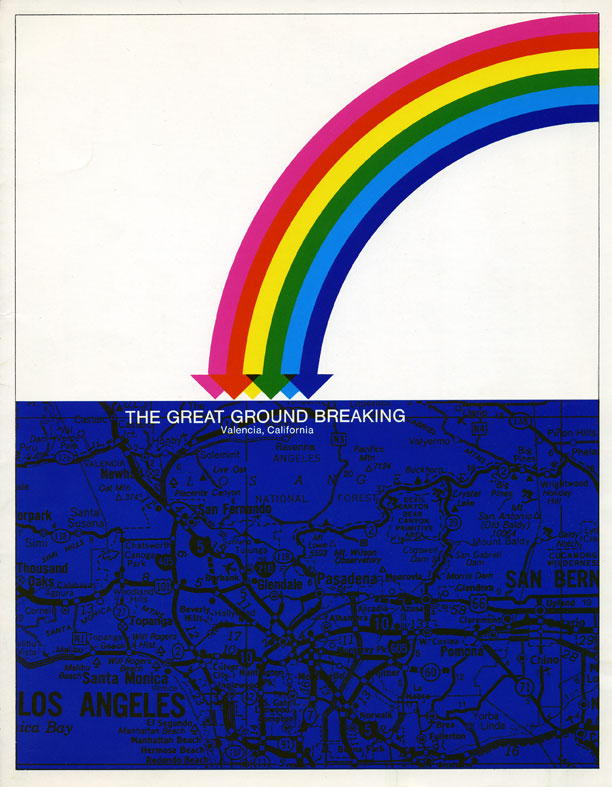
May 3, 1969 – The Groundbreaking for the California Institute of the Arts Takes Place ggba

“Friends of California Institute of the Arts, I’m sure that you can understand and share with me the joy…in welcoming this new institution to our new and growing city of Valencia.” – Thomas Lowe, President of Newall Land & Farming Company

On May 3, 1969, ground was broken for the current campus of the California Institute of the Arts in Valencia, California. The school itself has a long history with the Walt Disney Company: the relationship between Walt and the Chouinard Art Institute began in 1929, when founder Nelbert Chouinard agreed to train Disney artists on a pay-later basis. Disney discovered many promising talents at Chouinard who went on to become prominent Disney artists, including Mary Blair. After Disney’s death in 1966, a large amount of his estate went to finance the construction of the new campus. Unfortunately, after the 1969 groundbreaking, construction of the school was hindered by torrential rains, labor trouble, and the 1971 earthquake. The campus finally opened in November of 1971.

April 25

April 25, 1953 – Animator, Director, Producer, and Screenwriter Ron Clements is Born

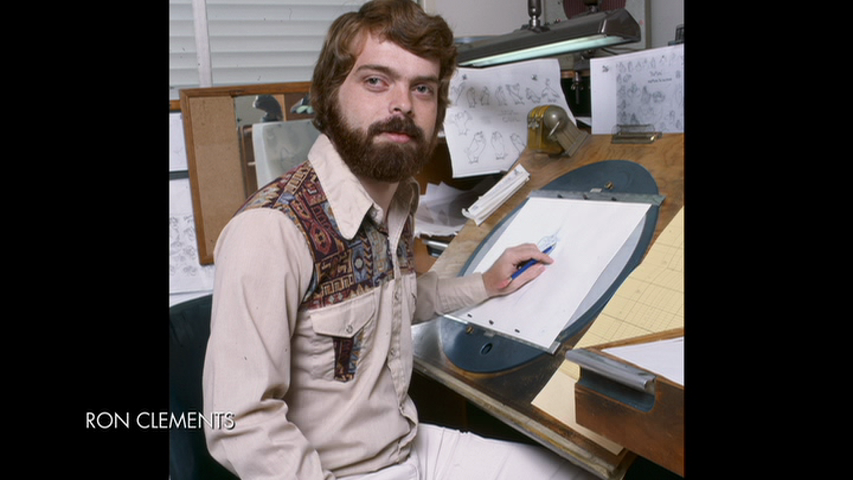
vlcsnap-2013-04-25-04h54m53s68

“I think John [Musker] and Ron [Clements] are really great storytellers. They understood the essence of a great Disney animated movie.” – Jeffrey Katzenberg

On April 25, 1953, Ronald Francis Clements was born in Sioux City, Iowa. He began his animation career at Hanna-Barbera; soon after starting there, he was accepted into the Disney Talent Development Program, working under legendary animator Frank Thomas. He began full employment at Disney in 1977, working as a character animator on the films The Rescuers and Pete’s Dragon. Clements would then become the animation supervisor on the 1981 film The Fox and Hound, with future collaborator John Musker working under him as a character animator. Clements and Musker would then pair up as story artists on the film The Black Cauldron in 1985. In 1986, the two would make their directorial debut on the film The Great Mouse Detective.

In 1985, there was what was called a “gong” show, which was a way to call for story ideas from the staff. Clements brought forth the idea The Little Mermaid, writing a two page treatment for the story. At first, Clements’ idea was “gonged” because a sequel to the hit film Splash was in development, but the next day, Jeffrey Katzenberg told Clements that he liked the treatment, and the studio was willing to go forward and create the film. Clements and Musker then wrote and directed The Little Mermaid, which became a huge success for the studio, revitalizing the animation department. Clements and Musker would repeat their success in 1992 with Aladdin, which they both wrote, directed, and produced. The two would then direct the modest success Hercules in 1997. In 2002, the pair directed Treasure Planet, which was nominated for an Academy Award for Best Animated Feature, but it was a commercial failure. The two were reunited as directors for the 2009 film The Princess and the Frog.

April 13

April 13, 1954 – Animator Glen Keane is Born

vlcsnap-2013-04-13-09h37m27s2

“I am convinced that animation really is the ultimate form of our time with endless new territories to explore. I can’t resist its siren call to step out and discover them.”

On April 13, 1954, Glen Keane was born in Philadelphia, Pennsylvania to cartoonist Bil Keane (known for Family Circus) and Thelma Carne Keane. The family would soon move to Paradise Valley, Arizona. Inspired by his father’s work, Keane developed an interest in drawing from an early age. Keane applied, and was accepted, to the Califormia Institute of the Arts, where he worked under animation teacher Jules Engel in the Program in Experimental Animation. Keane joined Disney in 1974; his first assignment, alongside Ollie Johnson, was animating the characters Bernard and Penny for the 1977 animated feature The Rescuers. After this film, Keane animated Elliot in Pete’s Dragon, and the climactic showdown in The Fox and the Hound. In 1982, Keane and friend John Lasseter were inspired by the new film Tron, and the two collaborated on a 30-second test sequence based on Maurice Sendak’s Where the Wild Things Are. Although the sequence was not well received at the time, it has since been considered revolutionary for the time, thanks to its experimentation of digital and hand-drawn animated characters.

In 1983, Keane left Disney to become a freelance artist, working on the character of Ratigan in The Great Mouse Detective, and on sections of the animated film The Chipmunk Adventure. He rejoined Disney to work on the characters of Fagin, Sykes, and Georgette in Oliver & Company, and was soon named Lead Character Animator. For the 1989 film The Little Mermaid, Keane designed and animated the lead character Ariel. From the moment he heard Jodi Benson (voice of Ariel) sing “Part of Your World,” Keane knew he had to animate Ariel. “I got the video of the recording and watched Jodi sing, and it was…just seeing it in her eyes, she believed it just like I believed it in listening to it,” he said. “There was this connection, it was just, ‘I’ve got to make that character as real as it is in my head.’” Keane would work as a supervising animator for Aladdin, Beauty and the Beast, and Pocahontas, and returned to his role as lead animator for Long John Silver in Treasure Planet. In 2003, Keane was named as the director of the 50th animated feature film Tangled. However, due to personal health issues, he stepped down from the role of director, but remained on the film as executive producer and animating director. After 37 years at Disney, Keane retired from the Disney Animation Studios.

March 31

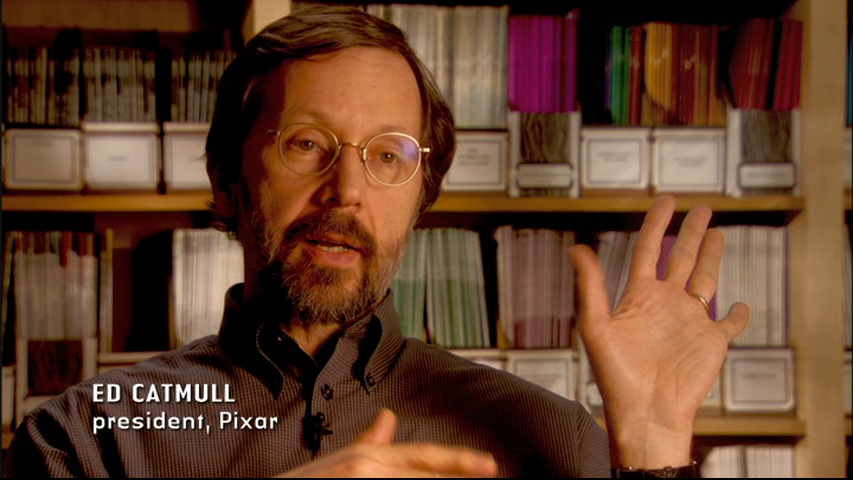
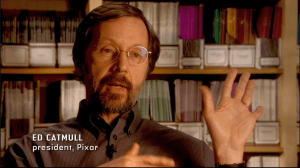
March 31, 1945 – Ed Catmull, President of Pixar Animation Studios and Walt Disney Animation Studios, is Born
vlcsnap-2013-03-31-08h17m29s92

“I drew a lot; I wanted to be an animator. I wanted to be an artist. But at the same time, I believed that I wasn’t good enough to be an animator, so I switched over to physics and computer science. As soon as I took the first class, I just fell in love with it, it just blew everything else away.”

On March 31, Edwin Earl Catmull was born on March 31, 1945, in Parkersburg, West Virginia. Although he loved to draw from an early age and dreamed of becoming an animator, he believed early on that he didn’t have the talent necessary, and decided to study physics and computer science at the University of Utah. Around the country at that time, funding was given to select universities to pursue computer science, and Catmull participated in one of the first labs in computer graphics. In this lab, Camtull created a short computer-animated film of his own left hand, which ultimately helped in the development in creating curved surfaces and eliminating jagged edges. This film was inducted into the National Archives in December, 2011 as a ground-breaking work. In 1974, Catmull graduated with his PhD. Soon after graduation, Alexander Schure, founder of the New York Institute of Technology, hired Catmull as the head of the computer graphics department in the hopes of creating new tools and products to create computer animation. There, Catmull met Alvy Ray Smith, who became a close collaborator and friend for many years. At NYIT, Catmull and his research group developed several tools that would allow animators to draw and paint directly into the computer, including Tween, Paint, and SoftCel.

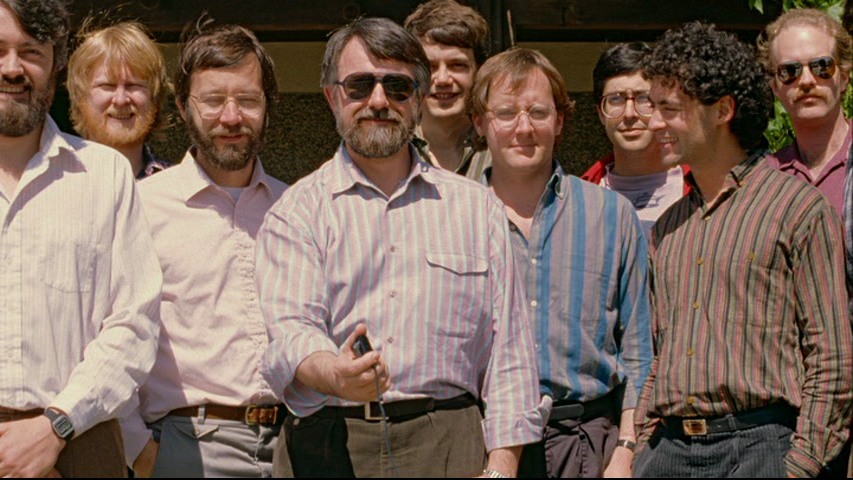
The work being done by Catmull and his team was noticed by George Lucas, who hired Catmull to form a new computer division at Lucasfilm. Catmull accepted the offer, and in 1979, he became the Vice President of the computer graphics division. Catmull and Smith, however, were still working toward the goal of a completely computer animated full-length film. Tom Porter, technical director at Pixar noted that, “…Ed and Alvy realized, in order to get in the game, we’ve got to put characters up on the screen, and that meant character animation, and that changed everything right there.” As luck would have it, Catmull ran into John Lasseter at a conference, and Catmull jumped at the chance to bring a real animator to Lucasfilm to help realize the dream of a computer animated film. With Lasseter, the group created the short film The Adventures of Andre and Wally B., along with new software to replicate the squash and stretch movements of traditional animation, which was well received at the 1984 SIGGRAPH conference. Catmull and the team also developed the most powerful graphics computer of the time: the Pixar Image Computer. However, sales of this computer were stagnant, as the software was only sold in limited markets. Catmull and Smith, with Lucas’ blessing, spun off the computer division as Pixar, and struggled to find an investor.
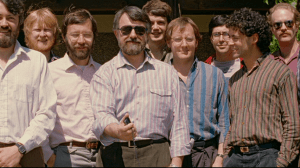
Catmull (L) with the rest of the Pixar team from Lucasfilm

Catmull (L) with the rest of the Pixar team from Lucasfilm

In 1986, their prayers were answered when Steve Jobs heard of Pixar. “That was the first time I met Ed [Catmull], and he shared with me his dream to make the world’s first computer-animated film. And I, in the end, ended up buying into that dream, both spiritually and financially,” Jobs shared in an interview. He launched Pixar, and Catmull was named as Chief Technical Officer. He also helped develop the RenderMan system used in Toy Story and Finding Nemo. In 2006, when Disney acquired Pixar, Catmull was then named the President of Pixar and Disney Animation, and with Lasseter, the two were put in the prime position of bringing the art of 2-D animation back to life. “Everybody at Pixar loves 3-D animation, you know, we helped develop it. But we also love 2-D animation, and to think that 2-D was shut down, and that [Pixar was] used as an excuse to shut it down was awful,” Catmull said about the decision of most animation studios shutting down their traditional animation studios. “We saw this art form being thrown away, so for us, it was just, it was a tragic time.” Bob Iger, CEO of the Walt Disney Studios, wanted to take the studio back to the glory days of animation, and knew that Pixar had the right people to do that. “While we will make 3-D movies, we’re also going to make 2-D movies, cause it’s part of this wonderful heritage that we’ve got here, and it’s a beautiful art form,” says Catmull. “It feels like this [partnership between Disney and Pixar] is the true culmination of the building of Pixar and this amazing company into something which will continue on and continue to make waves in the future.”

March 27

March 27, 1901 – Cartoonist and Disney Legend Carl Barks is Born

vlcsnap-2013-03-26-22h50m13s133

“I want to thank the Disney Studios for this [Disney Legends] award, not only for myself, but for all those comic book fans: the kids who used to buy those comic books for ten cents and now sell them for $2,000.”

On March 27, 1901, Carl Barks was born in Merrill, Oregon. His passion for drawing showed at an early age, and he would try to improve his style by copying the comics from the newspaper. After spending his teenage years and his twenties drifting from job to job, he decided to apply to the Disney Studios in 1935, and was hired as an inbetweener with a salary of $20 a week. He started submitting gag ideas, and was then moved over to the story department. As the Donald Duck short film series began to develop, Barks worked closely with Jack Hannah in creating several story ideas for the character, including such shorts as Donald’s Nephews and The Vanishing Private. However, the legend goes that Barks was having allergy problems from the air conditioning in the studio, and wanted to find work elsewhere within Disney that wouldn’t require him to be at the studio full time. In 1942, Barks and Hannah created a one-shot comic for Donald called “Donald Duck Finds Pirate Gold,” which became the first original Disney comic book. This was the start of Barks’ career with the Donald Duck comics.

Barks was able to flesh out not only Donald’s character through the comics, but also the characters of Donald’s nephews; he also created new characters Gladstone Gander, a rival for Daisy’s affections, and his most famous creation, Scrooge McDuck. Scrooge’s first appearance was in “Christmas on Bear Mountain.” Other characters came along, including the Beagle Boys and Morgana, which are seen in the animated series Ducktales, based on Barks’ work. Barks’ stories were epic adventures, and he was known for doing thorough research on the regions in which the stories were set. It was also said that the opening sequence in the film Raiders of the Lost Ark was based on Barks’ work. Barks retired from the comics in 1966, and in 1991, Barks was awarded as a Disney Legend. He passed away in 2000 at the age of 99.

March 22

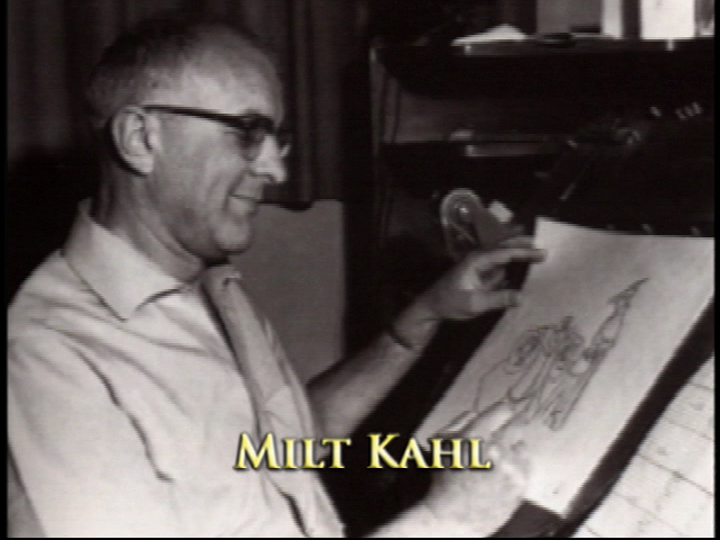
March 22, 1909 – Animator, Member of Disney’s Nine Old Men, and Disney Legend Milt Kahl is Born

vlcsnap-2013-03-22-09h07m37s234

“I don’t think it’s possible to be a top notch animator without being a very excellent draftsman. You have to be able to draw these characters in order to move them around and articulate them. There’s no way of doing it unless you draw very well.”

On March 22, 1909, animator Milton Erwin Kahl was born in San Francisco, California. At the age of 16, Kahl dropped out of high school to help provide for his family, and was hired by the Oakland Post Enquirer in the art department. After three years there, Kahl then got a job at the San Francisco bulletin, but was laid off when the Great Depression hit. He was able to find some work as a commercial artist and began to take art classes to improve his work. In late 1933, as he was struggling once again to find work in commercial art, a friend from the Oakland Post Enquirer, future Disney Legend Ham Luske, recommended that he apply to work at the Disney studios. Kahl was hired on June 25, 1934. with his first important animation assignment being the 1936 Mickey Mouse short film Mickey’s Circus. He was then assigned to animate the animals in the full-length animated feature Snow White and the Seven Dwarfs, along with Eric Larson among others.

Kahl’s talents shone in the next film, Pinocchio, when the staff of the studio were having problems trying to create the title character in terms of personality and overall design. “They were thinking in terms of a puppet all the time, naturally, because he was a puppet,” Kahl said. “And I was very critical of what they had. So I did a test scene where Pinocchio had donkey ears and a tail and was down on the sea bottom…and I handled it not thinking of so much as a puppet, as just a little boy. Walt liked it, so that became the model.” This way of thinking helped reshape the character and restart production, and Kahl was given the plumb role of directing animator on Pinocchio once he comes to life. This role also established Kahl as one of the top animators at the studio.

vlcsnap-2013-03-22-09h10m11s254

Kahl’s role grew, as he was considered one of the best draftsmen in the studio. Although his skills were being recognized before the outbreak of World War II, some of his best work was during the wartime period, including the film Saludos Amigos and the short films Education for Death and Tiger Trouble. After the war, Kahl was responsible for the final design of characters, and was given the task of animating non-comic characters, including Alice from Alice in Wonderland, Peter Pan and Wendy from Peter Pan, and the princes in Cinderella and Sleeping Beauty, with John Canemaker, author and film historian, noting that Kahl was “always stuck with the princes.” Although Kahl would complain of being “saddled” with these characters, he was secretly proud of his ability to bring these characters to life. Other highlights of Kahl’s career were the animation of character interactions in The Sword in the Stone (which Kahl considered “one hell of a picture”) and the character of Sher Kahn in The Jungle Book. His last work for the studio was animating Medusa and Snoops for the film The Rescuers, and left on April 30, 1970, although he did do a few character designs for The Black Cauldron. On April 19, 1987, Kahl passed away of pancreatic cancer. He was inducted into the Disney Legends in 1989. In 2009, the Academy of Motion Pictures held a panel to celebrate the centennial of Kahl’s life where animators Brad Bird, Andreas Deja, Ron Clements, John Musker, and Floyd Norman, as well as voice actress Kathryn Beaumont, celebrated his style and influence in the shaping of many Disney classics.