RSS Feed

Tag Archives: Academy Award Nominated

December 24

December 24, 1948 – The Donald Duck Short Film Tea for Two Hundred is Released to Theaters

vlcsnap-2014-12-24-20h03m53s25

“Come out of there, you rats! I’ll get ya!”

On December 24, 1948, the Donald Duck short film Tea for Two Hundred was released to theaters. It was nominated for an Academy Award, but lost to the Tom & Jerry short film The Little Orphan. It was directed by Jack Hannah, with story by Nick George and Bill Berg.

On a beautiful day in the mountains, Donald sets up his picnic at his campsite, when the attention turns to the line of ants marching past his picnic blanket. He starts having a bit of fun with one of the ants, with the poor ant struggling to carry all the weight Donald places on its back. The poor ant finally falls, but realizes that Donald is in the possession of some wonderful food. He tells the other ants, and they all set forth to claim the food Donald has laid out. As Donald is taking a nap, the ants stage their attack, working as a team to carry Donald over a cliff while they claim his picnic basket as their own. Donald chases after the ants, trying to reclaim his food, although he struggles as they smartly make their way past him and into their anthill. When he reaches into the anthill, the ants steal his shirt, leaving him embarrassed. As a last resort, he sticks several sticks of dynamite in their anthill, not realizing until it’s too late that he has blown himself off the cliff. The short ends with the ants enjoying one of the cupcakes Donald packed.

December 20

December 20, 1961 – The Goofy Short Film Aquamania Premieres in Theaters

vlcsnap-2014-12-20-18h32m00s125

“This could be any town, anywhere, anytime, because here, just as everywhere else, one-third of the population are…aquamaniacs.

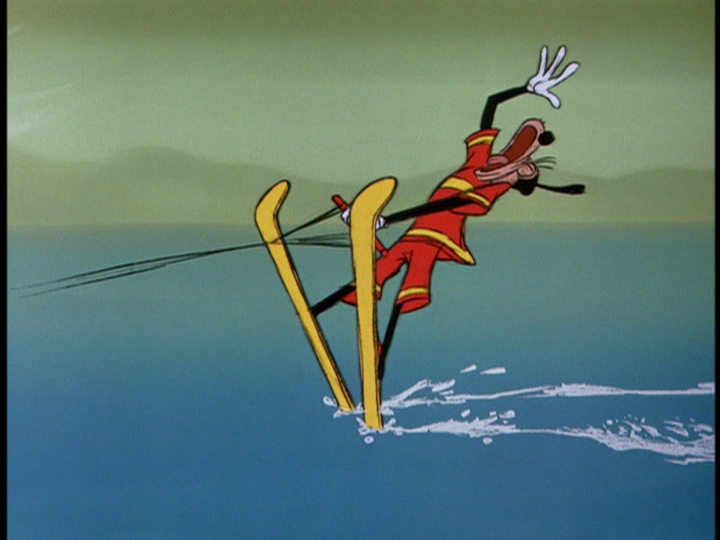
On December 20, 1961, the Goofy short film Aquamania premiered in theaters. It was nominated for an Academy Award at the 34th Academy Awards, but lost the Yugoslavian short film Surrogat. It was directed by Wolfgang Reitherman with story by Vance Gerry and Ralph Wright.

The story begins with the explanation of the term Aquamaniac, complete with diagrams and case-study file. The study is of Goofy, although called by the narrator “Mr. X.” They show his dilapidated home and pristine motor boat. Before he became an aquamaniac, his home was well-kept, and he would walk to work; however, the earliest warning signs showed during his walk, as he loved to walk past a store that sold boats. Although he tries to convince himself that he doesn’t need a boat, he finally gives in and buys one. After purchasing his boat, he takes his son Junior out to the ocean, not noticing that there is a long line of boats and cars waiting to get in for the jet-skiing race. He struggles with getting the boat in the water, and ends up with his car at the bottom of the ocean, completely destroying it thanks to the salt water.

Mr X. desperately tells Junior to stop, but Junior thinks he wants to go faster and win the contest

Mr X. desperately tells Junior to stop, but Junior thinks he wants to go faster and win the contest

Mr. X then puts on his water skis, and Junior excitedly enters his dad in the water skiing race. Mr. X tries to tell his son to stop, but Junior takes this as a sign to go faster. Mr. X ends up flying over the competitors after going over the first jump, but when he lands in the water, he picks up an octopus on his head, who helps him water ski through the slalom. Heading around a turn, Mr. X heads out too far and ends up landing on a cart on a ramp, and flies through the beach. The octopus grabs on to some beach umbrellas, sending the pair high in the sky like a kite, where a bolt of lightning strikes them. They land on the tracks of a roller coaster and, after colliding with the roller coaster carts, end up flying back through the finish line, winning the race.

November 25

November 25, 1997 – The Pixar Short Film Geri’s Game was Released

vlcsnap-2014-11-25-17h38m08s228

On November 25, 1997, the Pixar short film Geri’s Game was released. The short was released a year before its film pairing with a bug’s life, as it was sent forward for Academy Award consideration. It was also submitted independently from Pixar’s association with Disney. It won the Academy Award for Best Animated Short Film at the 70th Academy Awards. It was written and directed by Jan Pinkava, with Bob Peterson as the voice of Geri.

The short begins at a park on a fall day, where Geri is setting up his chess game. He puts on his glasses and moves a white pawn, then waits, while it is revealed to the audience that he is not playing against anyone, and the park is empty. He then takes off his glasses and slowly makes his way over to the other side of the table and makes a vicious move with a black pawn. He carefully gets up again and moves back to the other side, putting on his glasses and playing against himself. This continues, with Geri playing a game against himself with two personalities: the aggressive player on black, and the gentler, less-confident player on white. The aggressive Geri is taking out the gentler Geri’s pieces one by one, leaving gentler Geri rather protective of his Queen. Aggressive Geri teases gentler Geri, as he has nowhere to go. Suddenly, gentler Geri has a heart attack, and falls to the ground. As aggressive Geri checks himself, he realizes that he is fine, and checks on the other Geri. While aggressive Geri isn’t looking, gentler Geri switches the board, so it looks as though he’s been playing black the whole time. Aggressive Geri checks on gentler Geri as he gets back in his seat, then resumes his boastful laughter. Gentler Geri then makes his winning move, shocking aggressive Geri, as he hasn’t realized the ruse. Angered about the loss, aggressive Geri gives up the game, and reluctantly hands over the prize: a set of false teeth. Geri sits back and laughs, alone in the park.

November 10

November 10, 1953 – The Special Short Film Ben & Me Premieres in Theaters
vlcsnap-2014-11-10-16h30m30s89

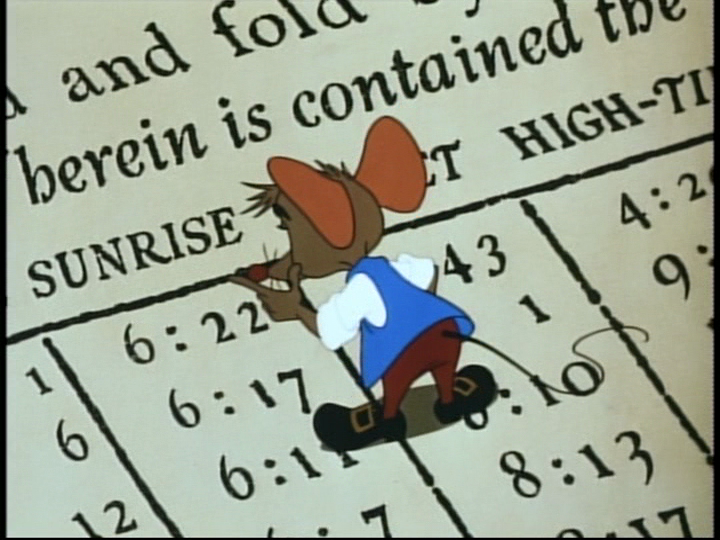
“Information! Ben, when the sun’s up, it’s up! Why read about it?”

On November 10, 1953, the special short film Ben & Me premiered in theaters. It was adapted from a 1939 children’s book of the same name by Robert Lawson, and was released alongside the True-Life Adventure The Living Desert. It was nominated for an Academy Award at the 26th Academy Awards as best two-reel short film, but lost to Disney’s other nomination, Bear Country. The story was adapted by Bill Peet, Winston Hibler, Del Connell, and Ted Sears, and was directed by Hamilton Luske. It features the vocal talents of Sterling Holloway as Amos, Carlie Ruggles as Ben Franklin, and Hans Conried as Thomas Jefferson.

The short begins with a group of schoolchildren being taken to the statue of Benjamin Franklin to hear of all the amazing things he did. At the same time, a group of schoolmice are taken to the statue of a mouse on top of Ben’s head, who actually is the one who had all the great ideas for which Ben is credited. The tour guide for the mice holds up a book of Amos’ memoirs, and the story begins with Amos’ meager upbringing as a church mouse. He decides to leave his parents and 26 brothers and sisters to seek his fortune, and sets out into the winter storm. He tries to look for work, but is unable to find anything due to his being a mouse. By nightfall, he takes refuge in a run-down store run by a Benjamin Franklin, printer and bookbinder. He comes across Ben, who sneezes hard enough to break his glasses. Ben is also being chased by debt collectors, and is given 24 hours to come up with the money, or else. Amos gives Ben the idea of creating a stove in the middle of the room, so he can provide the room with more heat. While Ben works on the stove, Amos creates a pair of bifocals for Ben to wear from his two broken pairs of glasses.
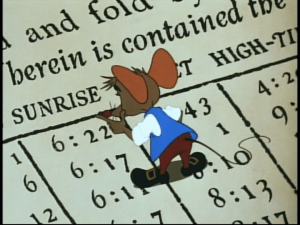
Amos pours over Ben's paper, and is disappointed in what he reads

Amos pours over Ben’s paper, and is disappointed in what he reads

Amos then takes a look at Poor Richard’s Almanack, Ben’s paper, and renames it the Pennsylvania Gazette. He then heads out to find out the news from the local taverns and streets, and the two set to work to create the new newspaper. The Gazette is a hit, and Ben is able to pay off his debts. Amos continues to assist Ben by staying in his hat, ready to offer advice at the ready. The years flow by, and Amos assists with Ben’s letters while Ben works on his experiments, including static electricity. Ben’s experiments take a toll on Amos (as he uses these experiments to pull pranks on Amos), and Amos decides to leave. He only agrees to stay when Ben promises not to play any more pranks, although Ben is lying during the promise. Later, Ben takes up kite-flying, and Amos is attached to the kite so he can have a “bird’s eye view” on the town for his reporting. Unfortunately, Amos doesn’t see that Ben is using the kite for an experiment on electricity, and gets shocked by lightning multiple times. Ben tries to pull Amos down, but it’s too late, and Amos is swept away with the wind. Angry by Ben’s broken promise, Amos decides to leave forever, returning to his family in the church.

The years continue to go, with revolution heating up within the colonies. Ben is chosen to go speak as an envoy to the king, but he returns with a heavy heart, as the king will not listen to the colonists. Ben tries to convince them that there can’t be a war, but he’s unsure of any other way. Amos wants to go back and help Ben, but his pride prevents him. In the summer of 1776, Ben goes Amos’ church residence and begs Amos for his help again. Amos agrees on his own terms, and draws up an agreement for Ben to sign. Amos arrives at Ben’s the next morning with the agreement, and as Ben begins to read it, Thomas Jefferson arrives. Jefferson is in trouble, as he had problems with the beginning of the Declaration of Independence. Amos demands that Ben read his contract now, and when Ben relents and reads is aloud, Jefferson is inspired and uses the words from the contract for the Declaration.
November 6

November 6, 2007 – The Pixar Short Films Collection is Released on DVD

Pixar_Shorts

“13 Sensational Pixar Shorts Together For The First Time!”

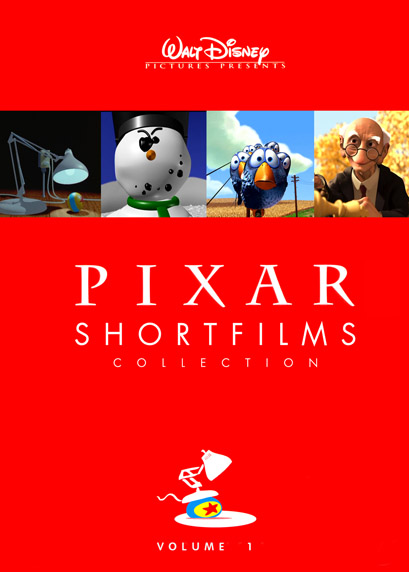
On November 6, 2007, the Pixar Short Films Collection was released on DVD. The collection contains short films created by Pixar Animation Studios, dating back to their premiere short film The Adventures of Andre & Wally B., released in 1984 at the SIGGRAPH Conference, and ending with 2006’s Lifted, originally released alongside Ratatouille. The collection also features a short documentary called The Pixar Shorts: A Short History, and several shorts featuring the Pixar lamp that were created for the show Sesame Street. A second collection of shorts was released on DVD and Blu-Ray on November 13, 2012.

October 31

October 31, 1936 – The Silly Symphony The Country Cousin is Released to Theaters

vlcsnap-2014-10-31-18h56m14s139

“Come to the city and live in splendor with me.”

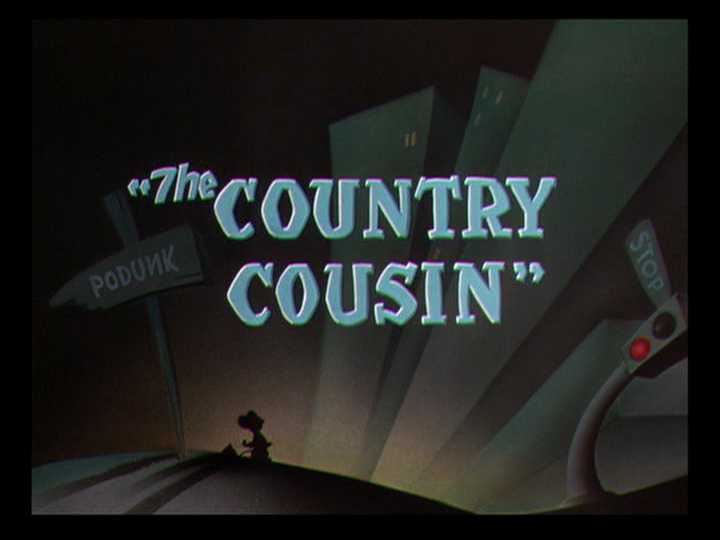
October 31, 1936, the Silly Symphony The Country Cousin was released to theaters. It would go on to win an Academy Award for Best Animated Short Film at the 9th Academy Awards. The short was directed by Wilfred Jackson.

The short begins with Abner Countrymouse receiving an invitation from his cousin Monty Citymouse, asking him to live in the city. Abner, taking Monty up on his offer, walks the railroad tracks and arrives at Monty’s place, with Monty quickly – but quietly – showing him around. Right away, Abner nearly gets caught in a mousetrap, but Monty saves him before showing him a spread of the finest foods laid out. Abner enthusiastically eats away, but Monty has to continue shushing the poor country bumpkin. After eating a spoonful of hot mustard, Abner rushes around and drinks some champagne to cool down his mouth, getting painfully drunk in the process and hiccupping. He tries to pull himself together, much to the annoyance of Monty, but ends up losing his umbrella in some toast points and knocking the entire stack down. Abner then ends up in a drunken fight with his reflection in a gelatin mold; although he decides to walk away from the fight, he slips on some butter on a plate and spins wildly around, breaking pieces of china as he spins out of control and taking his cousin with him. The two luckily do not garner the attention of the house cat, who is sleeping soundly, until Abner, with his drunken bravado, decides to kick the cat. Monty flees the scene, while Abner runs outside and ends up on the dangerous streets. After dodging feet and cars, Abner decides city life isn’t worth it for him, and he runs back to his country home.

October 16

October 16, 1925 – Actress and Disney Legend Angela Lansbury is Born

vlcsnap-2014-10-16-19h44m10s151

“Oddly enough, children recognize my voice. They’ll hear me and say, “Mom, that’s Mrs. Potts!” It’s the timbre of my voice that they pick up on.”

On October 16, 1925, Angela Brigid Lansbury was born in Regent’s Park, London, England to actress Moyna MacGill and politician Edgar Lansbury. Her talent manifested at the age of nine, when she took to playing characters as a way to cope with her father’s death of stomach cancer. She immersed herself in film, and in 1940, she began studying acting at the Webber Douglas School of Singing and Dramatic Art; her formal education was cut short by the Blitz, where she and her family immigrated to the United States, ending up in New York City. While there, Lansbury gained a scholarship to study at the Feagin School of Drama and Radio. In 1944, she got her big Hollywood break when she was cast as the maid in the film Gaslight, which not only scored her a contract with MGM, but an Academy Award nomination for Best Supporting Actress. The following year would see another Academy Award nomination for Lansbury after her work in The Picture of Dorian Gray, and a third nomination would occur in 1962 for her role in The Manchurian Candidate.

Lansbury is better known for her roles on the stage, beginning with her debut in 1957 in the short-lived Hotel Paradiso. Her first musical was Stephen Sondheim and Arthur Laurents’ Anyone Can Whistle, which closed after 9 performances. This was followed with Mame in 1966, where she was cast as lead Mame Dennis. Lansbury not only gained near universal praise for her performance, but received her first of five Tony Awards for the role. She would then win Tony Awards for her roles in Dear World (1969), Gypsy (1975), Sweeney Todd (1979), and Blithe Spirit (2009). Despite this success, Lansbury is probably best known for her role as writer and amateur sleuth Jessica Fletcher in the long-running television series Murder, She Wrote. For her role, she was nominated for twelve Emmy awards.

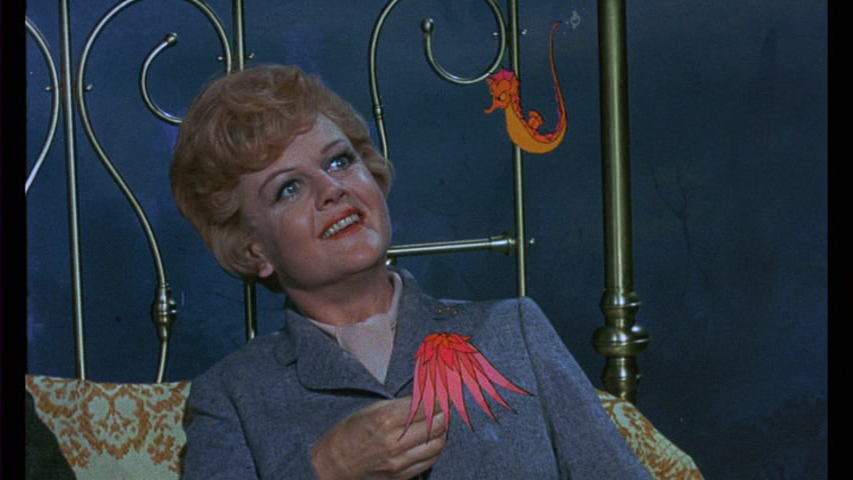
Lansbury’s association with Disney began in 1971, when she was cast as the lead character Eglantine Price in Bedknobs and Broomsticks. She would go on to be nominated for a Golden Globe for this role. Her second main role with the studio came in the 1990s, where she voiced the role of Mrs. Potts in Beauty and the Beast, and sang the title song, which would go on to win an Academy Award. In 2006, she would also be featured as a host in Fantasia 2000, introducing “The Firebird Suite.” Known as a Disney icon to children everywhere, she was inducted as a Disney Legend in 1995. Among her numerous other awards and honors, Lansbury was appointed a Dame Commander of the Order of the British Empire in 2014.

October 3

October 3, 1941 – The Pluto Short Film Lend a Paw is Released to Theaters

vlcsnap-2014-10-03-20h12m35s101

“Save him, Pluto! Save the poor little kitty!”

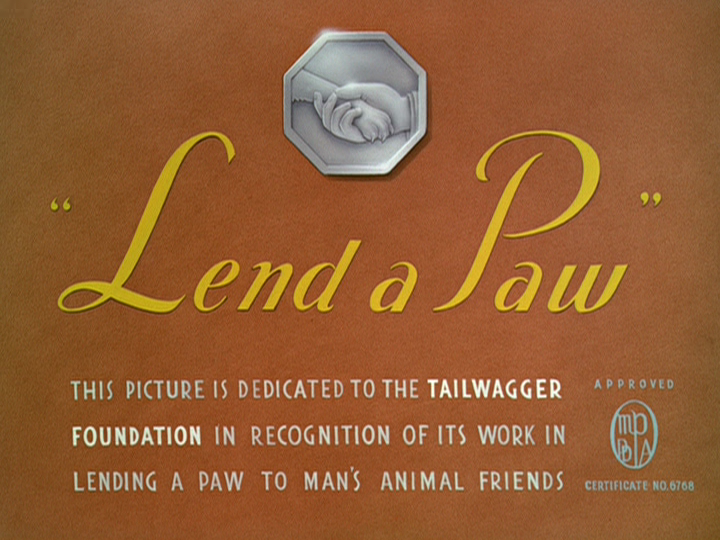
On October 3, 1941, the Pluto short film Lend a Paw was released to theaters, although under the Mickey Mouse banner. It is the remake of the 1933 Mickey Mouse short film, Mickey’s Pal Pluto, and was dedicated to the nonprofit Tailwagger Foundation “in recognition of its work in lending a paw to man’s animal friends.” The short was directed by Clyde Geronimi. It would go on to win the Academy Award for Best Animated Short Film at the 14th Academy Awards.

On a snowy day, Pluto is sniffing around when he hears mewing from inside a bag floating on a patch of ice down the creek. He jumps in to rescue the kitten, and takes it to shore, although he isn’t too happy about the bag’s contents. The kitten follows him, wanting nothing more than to be his friend, and ends up in Pluto’s house. Pluto greets Mickey, and Mickey automatically greets the kitten, incurring Pluto’s jealousy. Mickey takes care of the kitten, and the little Devil inside jumps out of Pluto’s head and tells him that he needs to get rid of the kitten. Pluto’s Angel, however, steps in and tries to guide Pluto back to the proper path. The Devil gets rid of the Angel and convinces Pluto to get rid of the kitten by making it appear that he ate Mickey’s goldfish. Unfortunately, the plan goes wrong, and the bowl crashes onto the floor. Mickey, suspicious, asks the fish who did it, and she immediately points her fin at Pluto. Mickey kicks Pluto out of the house, leaving him in the show. Pluto sits in the snow, crying.

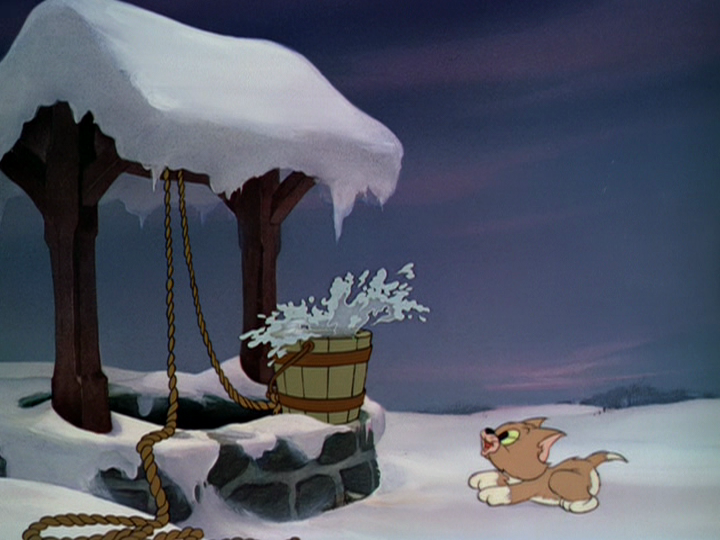
The kitten's ball bounces into the well bucket, leading the kitten to certain danger

The kitten’s ball bounces into the well bucket, leading the kitten to certain danger

A bit later, the kitten is chasing after a ball when it goes out the doggy door, and bounces into the bucket at the well. The kitten jumps into the bucket, and both he and the bucket land in the well. Pluto watches as the kitten struggles to stay above water, and Pluto’s Angel tells him to rescue the kitten. The Devil steps in again and tells Pluto to let the kitten drown. In the end, Pluto’s Angel beats up the Devil, and demands that Pluto save the kitten, which he does. Mickey is alerted to the danger by Pluto’s cry, and Mickey saves the kitten and Pluto. Mickey warms Pluto back up in the house, and the kitten gives him a grateful lick. Pluto’s Angel then reminds him that “kindness to animals…will be rewarded in the end.”

August 10

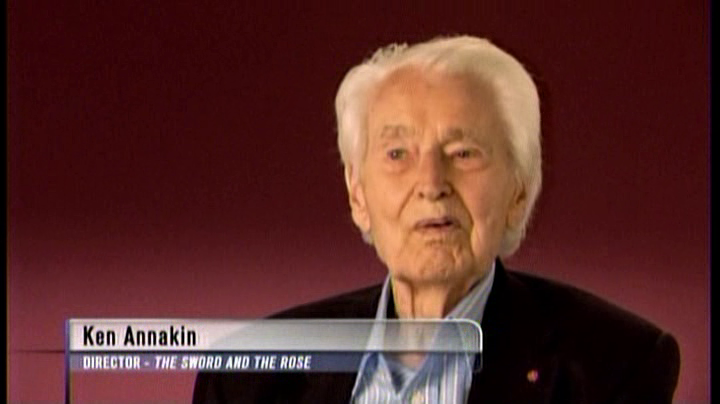
August 10, 1914 – Director and Disney Legend Ken Annakin is Born

vlcsnap-2014-08-10-19h22m45s40

“Ken was an important part of the Disney legacy and made several memorable films for my Uncle Walt.” – Roy Disney

On August 10, 1914, Kenneth Cooper Annakin was born in Beverly, England. He began his career in films with the RAF Film Unit, working as a camera assistant to create propaganda films for the war effort after being injured in the blitz. In 1947, Annakin had his directorial debut with the feature film Holiday Camp, a comedy set at a summer holiday camp. This was then followed with the film Miranda, a comedy about a mermaid, which became a blockbuster in 1948; this film also starred fellow Disney Legend Glynis Johns, who would go to star in Annakin’s second film for Disney, The Sword and the Rose.

While working for England’s Pinewood Studios, he was approached by Disney to direct a series of films. After World War II, a policy was passed that money made in England during the war was not allowed to leave the country. To use these funds, Disney decided to create a series of live-action films, with Annakin directing a few of these later classics. The first film was The Story of Robin Hood and His Merrie Men, based on the classic legend. Annakin’s work for the studio was followed by the successful films The Sword and the Rose, Swiss Family Robinson, and Third Man on the Mountain. While working for Disney, Annakin picked up the technique of storyboarding, which had mainly been used only for animated features, but Annakin continued to use this long after his work with Disney. In 2002, Annakin was honored as a Disney Legend, the second director to receive this honor. The same year, Annakin was awarded with an Order of the British Empire, and an honorary degree from Hull University. He passed away on April 22, 2009, at the age of 94.

August 6

August 6, 2005 – The Pixar Short Film One Man Band is Presented at the Melbourne International Film Festival

vlcsnap-2014-08-06-19h49m46s228

“The comic timing is spot on, the animation flawless and the imagination out of this world.”

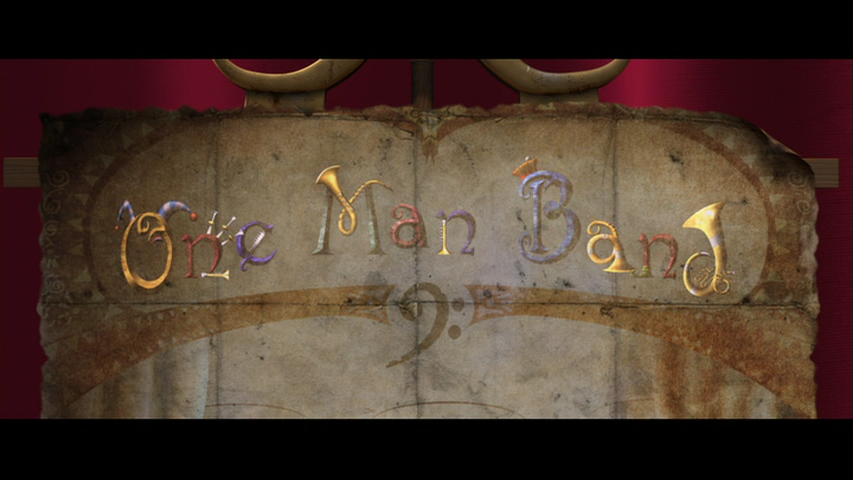
On August 6, 2005, the Pixar short film One Man Band was presented at the Melbourne International Film Festival, after its premiere at Annecy in France a few months prior. The short was later released alongside the animated feature film Cars in 2006. It would go on to be nominated for an Academy Award for Best Animated Short at the 78th Academy Awards, but lost to The Moon and the Son: An Imagined Conversation by John Canemaker and Peggy Stern. It was directed and written by Andrew Jimenez and Mark Andrews, and features music by Michael Giacchino.

On a street corner, a street performer named Bass with his one man band begins to play, and notices a little girl named Tippy getting ready to throw a coin in a nearby fountain. He entices her over to get her coin, and she is ready to place it in his tin cup, when she sees another performer named Treble begin to play. She is ready to give it to him, when Bass tries another trick to get her back. Competing for her coin, the two begin to perform more elaborate acts, scaring poor little Tippy. She drops the coin, and it falls into a sewer grate. Angered, she demands a coin from the performers, then demands a violin from Treble when they cannot pay her back. She tunes the violin quickly, and begins to masterfully play a tune, where she is rewarded with a large sack of coins from a passerby. Before she leaves, she taunts the musicians with two coins before throwing them at the top of the fountain. The short ends with the two working together to fish the coins out.