RSS Feed

Tag Archives: 1960s

July 4

Posted on

July 4, 1962 – The Indian Trading Post Opens in Frontierland

Image credit: yesterland.com. The Briar Patch, which originally was The Indian Trading Post

On July 4,, 1962, the Indian Trading Post store opened in Disneyland’s Frontierland. It was originally part of the Indian Village attraction, with the store selling Native American arts and crafts. When the Indian Village was renamed Bear Country in 1972, the Indian Trading Post remained. In 1988, when the entire area was turned into Critter Country, the Indian Trading Post was renamed to the Briar Patch, to match the characters from Splash Mountain’s Song of the South theme and the characters from Winnie the Pooh. The Native American souvenirs were then replaced with souvenirs pertaining to those characters.

June 23

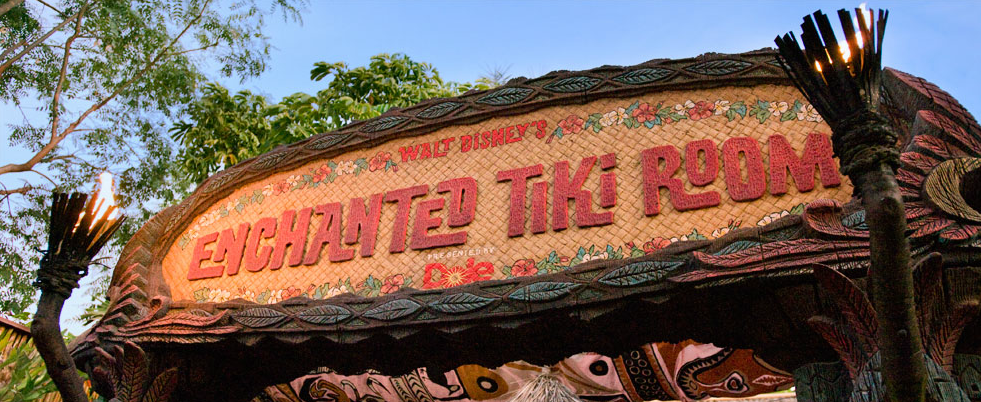
June 23, 1963 – The Enchanted Tiki Room Opens in Adventureland at Disneyland

Image credit: Official Disneyland Website

 “…All the birds sing words, and the flowers croon, in the Tiki Tiki Tiki Tiki Tiki Room.”

 On June 23, 1963, the Enchanted Tiki Room attraction opened in Disneyland’s Adventureland. The attraction, the first to feature Audio-Animatronics, was designed by WED Enterprises (now known as Walt Disney Imagineering). It was first sponsored by United Airlines, and passed to the Dole Food Company in 1976. Dole continues to host the attraction to this day.

The hosts of the show are four birds of different nationalities: the Mexican bird, Jose (voiced by Wally Boag); the Irish bird, Michael (Fulton Burley); the French bird, Pierre (Ernie Newton); and the German bird, Fritz (Thurl Ravenscroft). There are more than 150 Audio-Animatronic characters—including birds, flowers, and Tiki statues–that serenade the audience during the 15-minute show.

The attraction was first conceived as a dinner show, but the idea was shelved so that more guests could experience the room. The Tiki Room was originally controlled by an underground room with floor-to-ceiling computers, as seen in the Disneyland Tenth Anniversary Special. The attraction was closed for renovations in 2004, opening again in March 2005 for the park’s 50th anniversary, with new Audio-Animatronic figures replacing the old ones, and a new infrastructure designed by the 21st century Imagineers. The attraction is still as popular as ever, and has been replicated at Walt Disney World and Tokyo Disneyland.

June 21

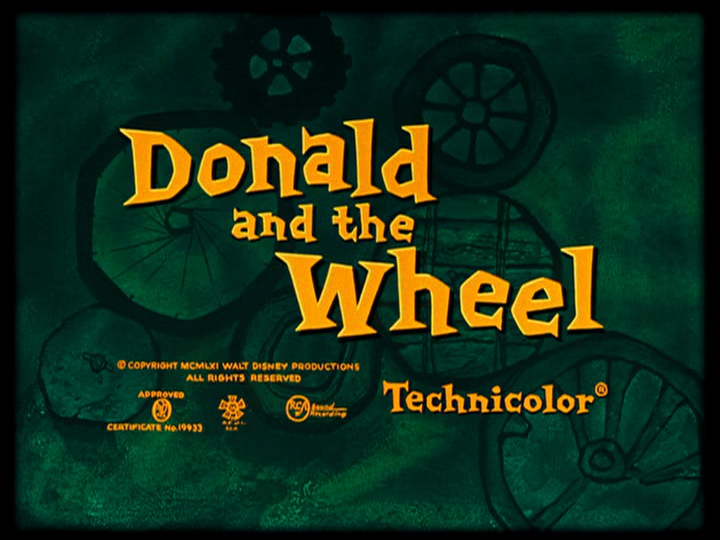
June 21, 1961 – The Donald Duck Short Film Donald and the Wheel is Released to Theaters

“Well, frost me, Poppa, can it be your intention, to bat your choppers over nothing more than a wheel? Your brain is all tied up in a sling to think a wheel is such a great thing.”

On June 21, 1961, the Donald Duck short Donald and the Wheel was released to theaters. The story was written by Bill Berg, with songs and rhymes by Mel Leven, music by Buddy Baker, and direction by Hamilton S. Luske. It stars the vocal talents of The Mellomen (Bill Cole, Bill Lee, Thurl Ravenscroft, and Max Smith), with Ravenscroft and Smith as the father and Junior, and Clarence Nash as the voice of Donald Duck.

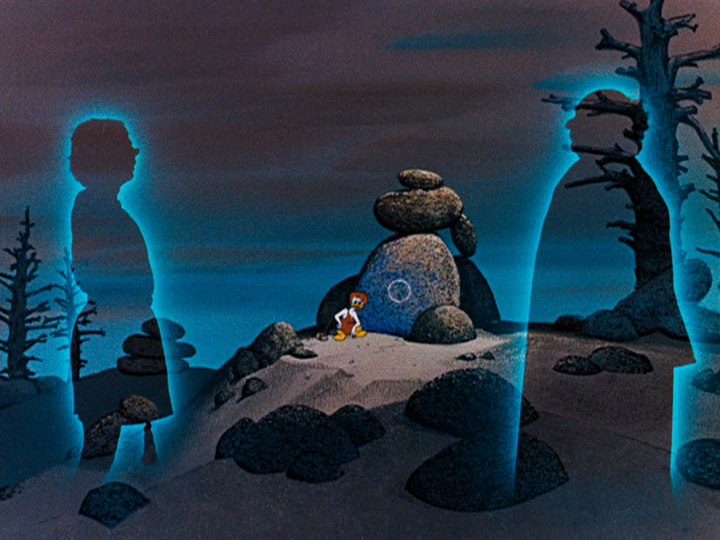
This educational short begins with two “spirits of progress” watching a piece of wood rolling around like a wheel. Junior, the younger of the spirits, asks his dad why he’s so impressed with the wheel. His father claims it to be the greatest invention of all time, to which Junior scoffs. When his father challenges him to name something better than the wheel, Junior accepts the challenge, but every invention he names is only possible thanks to the wheel. The father takes his son back in history to meet the inventor of the wheel.

The Spirits of Progress start to tell Caveman Donald about the great invention of the wheel

Back in the caveman age, we see a prehistoric Donald Duck, who, after a run-in with a tiger, is inspired to create the wheel. The spirits try to explain to Donald what a wheel is used for, but Donald seems to not be able to understand. Donald finally asks them who they are, and they explain to him that they are the “spirits of progress,” there to help him with his great invention. The first example they give him is attaching two wheels to his sled, making it easier for him to cart around.

The song at that point goes through the evolution of the wheel, with Donald also donning the attire of each time period being sung about. Steam is soon added to the idea of the wheel, with trains and automobiles lauded in song, and Donald involved in comic situations with each passing period. Finally, after a massive pile-up on the highway, Donald angrily declares he’d rather walk.

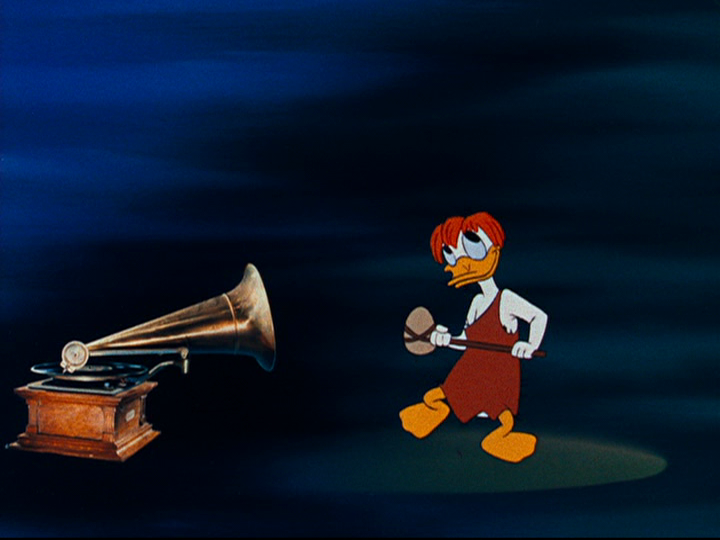
Caveman Donald dances to the music from the gramophone, a more “practical” example of the use of wheels

They go back to Donald’s time, trying to take another approach with how important the wheel is. When they try to explain that the world is round, Donald insists that the world is flat. Junior takes over this time, trying to explain the rotation of the Earth, the moon, and all the planets in the solar system. The demonstration continues with gears to show how wheels keep things working. For a more “practical” example, they begin with a music box, moving to the gramophone, then the jukebox, which features Donald dancing with a live-action dancer.

The spirits, however, push a little too hard with how important the wheel will be, showing wheels in everything he will use in his day. When they claim that he’s about to create a great invention, Donald tells them “Oh, no! I’m not going to be responsible for that!” The spirits are consoled with the fact that although Donald didn’t invent the wheel, someone eventually did.

May 26

Posted on

May 26, 1963 – Walt Disney’s Wonderful World of Color Wins Two Emmys

On May 26, 1963, the 15th Primetime Emmy Awards were presented, hosted by Annette Funicello and Don Knotts. That night, the Disney anthology series Walt Disney’s Wonderful World of Color walked away with two awards: Outstanding Achievement in Art Direction and Scenic Design for Carrol Clark and Marvin Aubrey Davis, and Outstanding Program Achievement in the Field of Children’s Programming. These would be the 5th and 6th Emmy Awards that the Disney anthology series would receive.

April 22

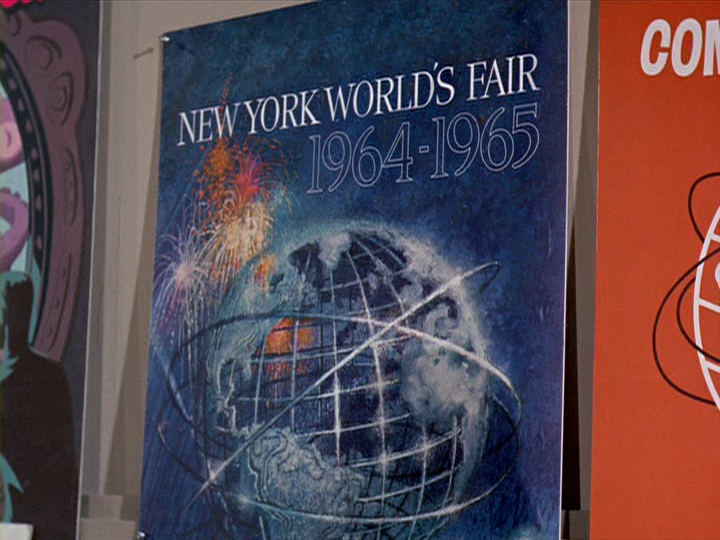
April 22, 1964 – The New York World’s Fair Opens

“…the New York exposition of 1964 is the greatest World’s Fair of all time.” – Walt Disney

On April 22, 1964, the New York World’s Fair opened to the public. This two-year fair included four Disney exhibits: Ford’s Magic Skyway; It’s a Small World (presented by Pepsi-Cola/UNICEF); Progressland, featuring the Carousel of Progress (sponsored by General Electric); and Illinois’ Great Moments with Mr. Lincoln. After the fair ended, these four attractions made their way back to Disneyland, and have been there since.

The idea for doing attractions at the fair came from the success of Disneyland, and the requests Walt received about building similar Disneylands across the country. Walt wondered if Disney attractions would be as popular on the East coast as they were on the West, and used the fair to test this theory. The attractions Disney built ended up being the most popular attractions at the fair.

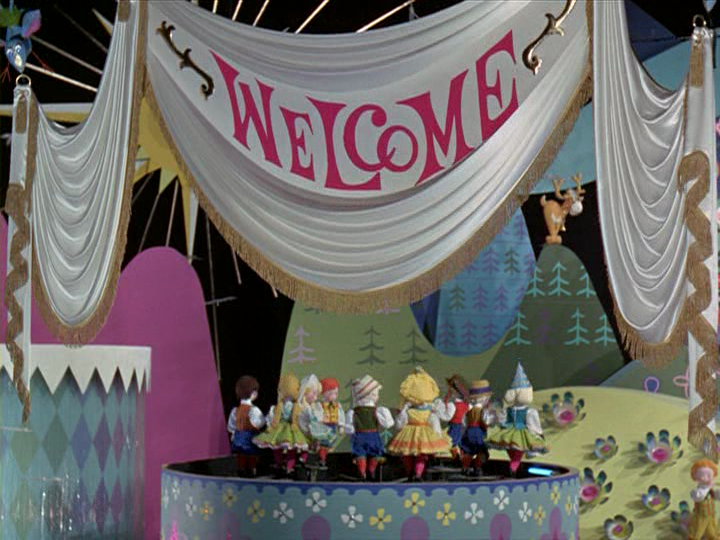
The Welcome sign of the It's A Small World ride

The sponsorship of the attractions paid for Disney Imagineers to research and develop new methods of “animation” as Walt called it, which would become the Audio-Animatronic figures extensively used throughout the attractions. The “It’s a Small World” attraction used 297 audio-animatronic children alone.


April 17

April 17, 1961 – Hayley Mills Wins A Special Oscar for Pollyanna.

“To Hayley Mills for Pollyanna, the most outstanding juvenile performance during 1960.”

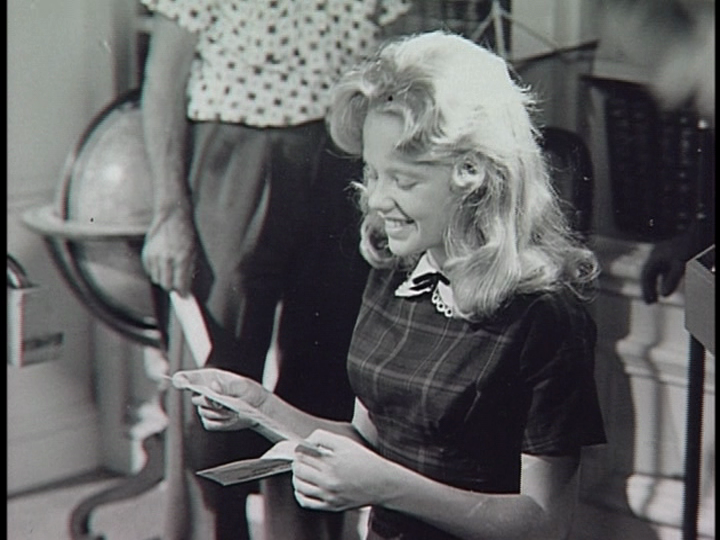
On April 17, 1961, the Academy Awards were held in Santa Monica, California. That year actress Hayley Mills would be the last actor to receive the Academy Juvenile Award, for her role in the Disney film Pollyanna. The film had propelled the young girl to stardom, and Mills went on to star in more Disney family films, including The Parent Trap.

Mills had auditioned for the lead in the film Tiger Bay, and was discovered by Lillian Disney, who suggested that Mills be cast in the lead in Pollyanna. The film was based on the book Pollyanna by Eleanor H. Porter, published in 1913. The book tells the story of a young girl who is suddenly orphaned and sent to live with her aunt in New England. The character tries to see the best in every situation, and ends up changing the entire town for the better. Not only did Mills win the Academy Juvenile Award, but she was also nominated for a BAFTA award for her role.

April 5

April 5, 1965 – Mary Poppins Wins Five Academy Awards

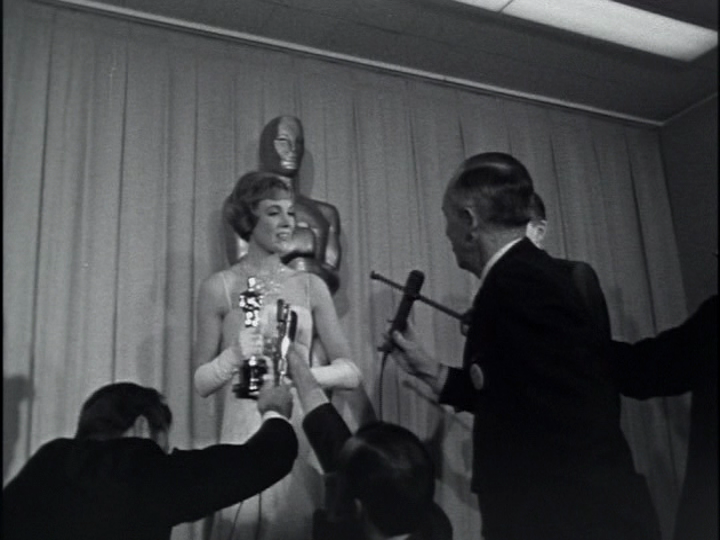
Julie Andrews after winning the Academy Award for Best Actress

“The press had made such a big deal out of it, and although I knew why I didn’t do My Fair Lady…and sure, I was sad about it, but I completely understood why I wasn’t chosen to do it…” – Julie Andrews

The 37th Academy Awards were held in Santa Monica, California on April 5, 1965. Of the 13 nominations it received – the most of that awards year – Disney’s Mary Poppins won five: Best Film Editing, Original Music Score, Best Song for “Chim Chim Cheree,” Best Visual Effects, and Best Actress for Julie Andrews.

Julie Andrews had been passed over for the lead in My Fair Lady at Warner Brothers. Time Magazine, outraged, wrote: “Someone, somewhere, made the decision to include Andrews out of the [film]. There is an evil and rampantly lunatic force at loose in the world and it must be destroyed.” Producer Jack Warner responded with, “No one in the sticks has ever heard from her,” and cast Audrey Hepburn as the lead role. Andrews remarked later that had she done My Fair Lady, she never would have been able to do Mary Poppins.

March 18

March 18, 1967 – The Disneyland Attraction, The Pirates of the Caribbean, Opens

“We’re devils and black sheep, we’re really bad eggs, drink up me hearties, yo ho.”

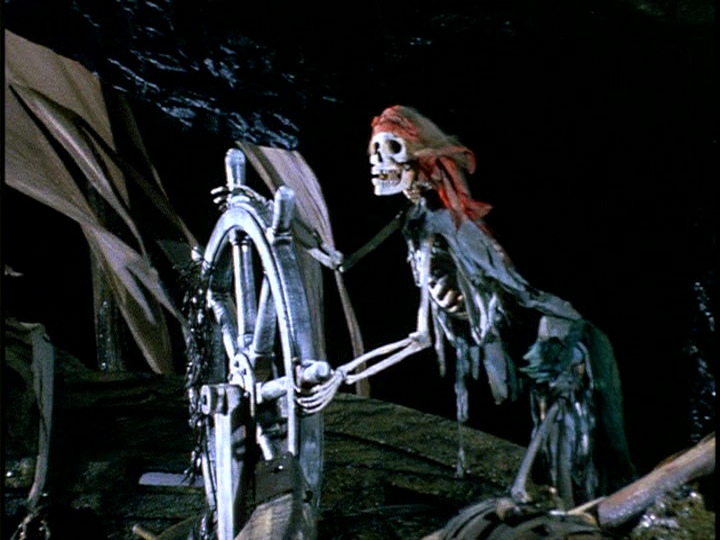
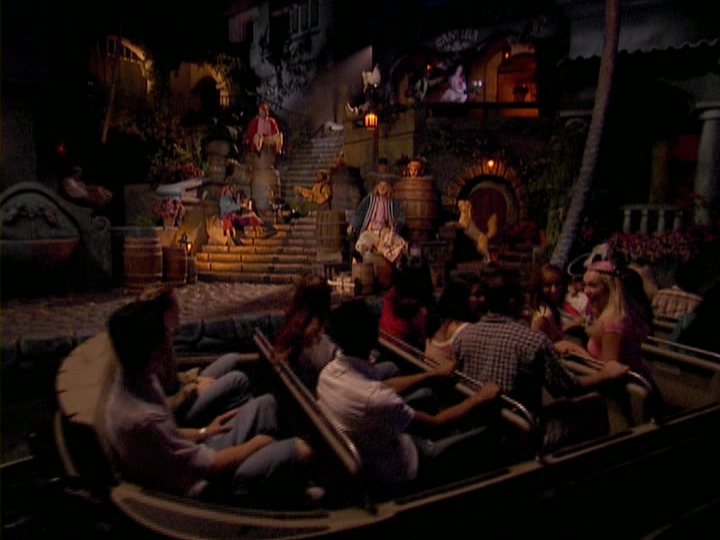
On March 18, 1967, Disneyland opened its newest attraction in New Orleans Square, The Pirates of the Caribbean. It contains the use of many Audio Animatronic figures, with scenes ranging from jailed pirates trying to get the keys from the guard dog, to a Caribbean town being looted by a pirate gang, all while passengers travel past these scenes by boats. The attractions beginnings were seen in the Disneyland 10th Anniversary episode of the Disneyland show. Although Walt worked at length on this attraction, he sadly passed away before its opening. The song for the attraction is “Yo Ho, Yo Ho; a Pirate’s Life for Me,” and was written by George Bruns and Xavier Atencio.

The updated attraction, with Jack Sparrow from the films hiding in the barrel

In 2003, a film based on the attraction was released, starring Johnny Depp as Captain Jack Sparrow and Geoffrey Rush as Captain Hector Barbossa. After the success of the film series, changes were made to the original attraction to include the characters of Jack Sparrow and Captain Barbossa. Other revisions have been made to the ride, including a huge refurbishment of the ride, which reopened in November 2011. The attraction has been considered one of the most popular of all of Disney’s parks, with versions opening in Walt Disney World on December 15, 1973, Tokyo Disneyland on April 15, 1983, and Disneyland Paris on April 12, 1992.

January 25

January 25, 1961 – One Hundred and One Dalmatians Released to Theaters
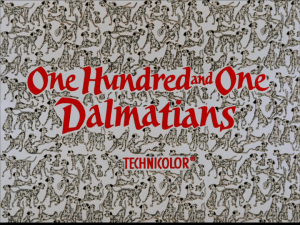
“One Hundred and One Dalmatians is the most modern Disney animated movie ever made. [It’s]the one that has the most guts, that says, ‘This is art,’ but it’s entertainment at the same time…it’s Picasso coming in to Disney.” – Andreas Deja, Supervising Animator, Walt Disney Studios.

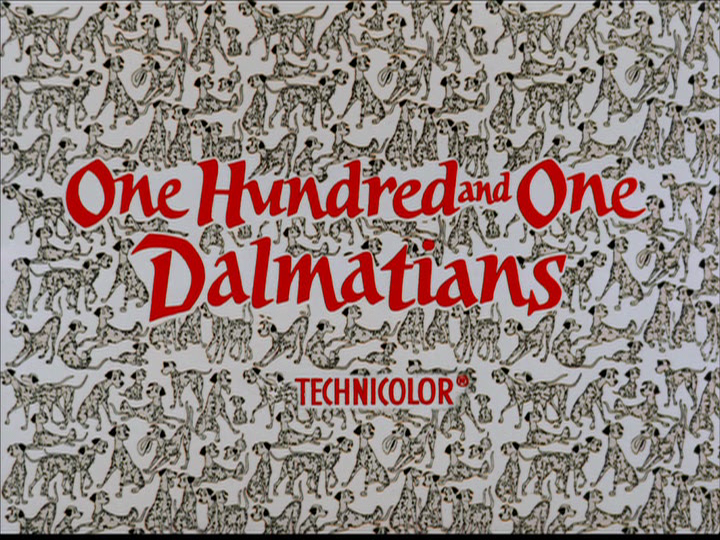
On January 25, 1961, the Disney animated feature One Hundred and One Dalmatians was released to theaters. Based on the 1956 bestselling children’s book by Dodie Smith, the story caught Walt Disney’s attention in 1957, and he soon bought the rights to the story of two Dalmatians who travel great lengths to save their stolen puppies from being turned into fur coats by the evil Cruella De Vil. Costing $4 million to make, the film was an enormous success upon release, and is known as a technical and stylistic innovation for the studio. The feature was directed by Wolfgang Reitherman, Hamilton S. Luke, and Clyde Geronimi, with story by Bill Peet, musical score by George Bruns, and songs by Mel Leven. Voice actors include Rod Taylor as Pongo, Cate Bauer as Perdita, Ben Wright as Roger, Lisa David as Anita, and Betty Lou Gerson as Cruella.

The story opens with narration by Pongo, who introduces his “pet,” Roger, a songwriter, and laments that a bachelor’s life is not as glamorous as one would think. Pongo comes up with an idea to set Roger up with a mate, and after spying many not-so-ideal candidates, he spots a female Dalmatian with her owner, Anita, and tricks Roger into following them into the park. After tying Roger and Anita together quite literally, the two happy couples move into a quiet flat in London, and Perdita lets Pongo know she is pregnant. Everyone in the household is excited about the prospect of puppies, including Anita’s old school mate, Cruella De Vil, whose curiosity about the puppies makes Pongo suspicious. Roger, who has been working on a new melody at this point, teases Anita with lyrics about Cruella, calling her a “vampire bat” and an “inhuman beast,” among other things.
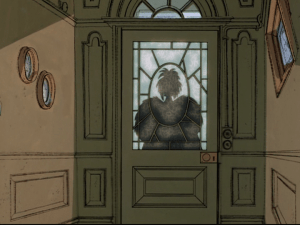
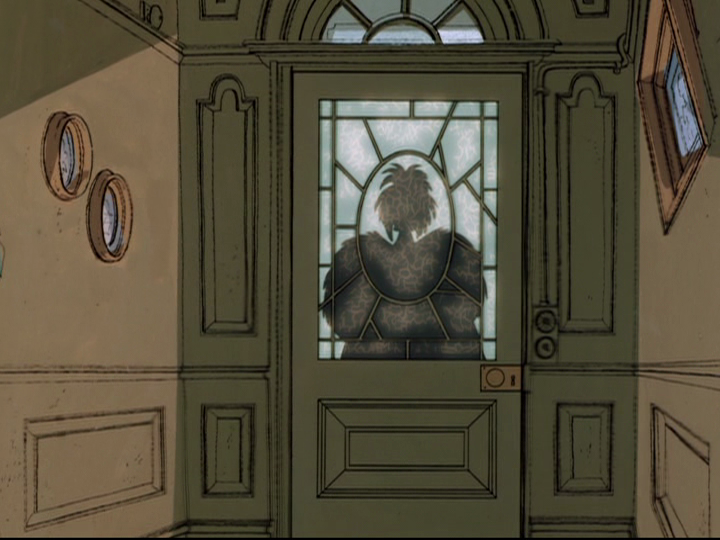
Our first viewing of Cruella De Vil, whose shadow even produces fear

Three weeks later, the puppies are born, and Cruella appears in the doorway, wishing to purchase the puppies. When Roger stands up to her and says she will not be getting a single puppy, Cruella flies into a rage and departs. Unbeknown to the two couples, Cruella hires two thugs, Horace and Jasper, who go into the house when Anita and Roger are taking Perdita and Pongo for a walk, and steal the puppies. Although Anita and Roger call Scotland Yard, Pongo concludes that the humans have failed, and the only solution left is the Twilight Bark.  While Perdita dismisses it as a gossip chain, Pongo convinces her that they have to try, and begins the barking chain while in Regents Park. The chain travels fast, causing all of the dogs in London to bark madly, much to the annoyance of all the humans.

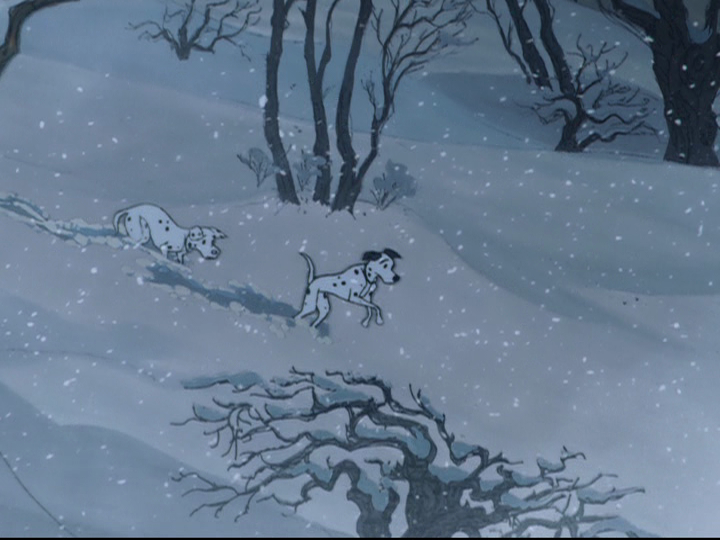
The chain makes its way to the countryside, to an old sheepdog named the Colonel, a horse known as the Captain, and a cat called Sergeant Tibs. The Colonel interprets the message, with Tibs letting the two know that he heard barking two nights before at the abandoned Hell Hall. As he makes his way into the dilapidated mansion, Tibs makes the startling discovery that there are ninety-nine Dalmatian puppies occupying Hell Hall. Although Tibs is chased out of the mansion, he reports his findings to the Colonel, who passes the message back to Pongo. Pongo and Perdita decide that the only option is to go retrieve the puppies themselves, with help along the way by dogs in the chain. “If you lose your way,” the Great Dane reminds them, “contact the barking chain. They’ll be standing by!” The two Dalmatians brave treacherous weather, Cruella’s two bungling henchmen, and Cruella herself to bring all of the puppies back to their home in London.
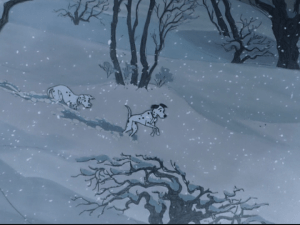
Pongo and Perdita traveling through the snow in order to save their puppies

When Walt Disney contacted Dodie Smith about turning her book into a film, she responded enthusiastically, “To be quite honest, I always hoped you might – so much so that, when I was writing it, I often found myself visualizing the scenes as they would be in cartoon.” Dodie’s story was a contemporary tale, and the Disney animators took a big leap from the stylizing of the old classics like Cinderella and even Sleeping Beauty that they’d only finished two years earlier. Indeed, the movie still has a contemporary feel, with 20th century style rather than the classic romantic look favored by Disney. Even the characters were different; for example, Cruella De Vil was seen smoking cigarettes, and the puppies were seen watching television. “At this point, we feel it is going to be one of the most interesting things we have done in the cartoon feature field,” Disney wrote in one of his correspondences with Smith. “Dalmatians…has met enthusiastic audience approval. I feel we have a very successful picture.”

The biggest change in the film was the implementation of the Xerox process when it came to cel animation (see January 21st entry for more information). Created by Ub Iwerks, the process had been tested on the short film Goliath II, and created excitement among the animators, as they were seeing their own drawings up on the screen, as they had originally envisioned them. One problem, however, was the presence of what is known as construction lines – the original sketch lines when beginning to draw a character. In many instances in the film, one can tell when Milt Kahl animated a scene, as the construction lines would still be present, as he was very militant about having people come in and clean up his sketches, as sometimes they would disturb the final drawing. However, one main reason that the Xerox process worked so well for this picture is because the Dalmatians were basically black and white, and all that was needed was just a clear outline of the dogs. This also helped when it came to creating the spots of all 101 Dalmatians.
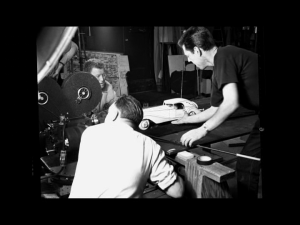
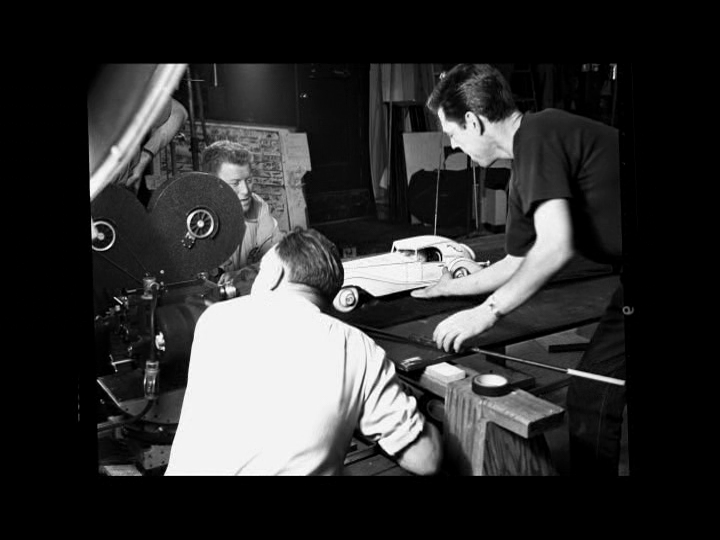
The Xerox prccess was also tested on models of the vehicles, including Cruella's car, Horace and Jasper's car, and the truck back to London

Another interesting aspect of the Xerox process were the vehicles. Iwerks had the idea that if a drawing could be copied straight to a cel, he would be able to use the same process to take a picture of a line that was drawn on the edge of a model. The animators built the cars as models out of cardboard, tracing the edges with a black line. To make the wheels move believably, they suspended the model from a kite string, and pulled it across a piece of fabric placed over wooden dowling rods. The clips of the models were then transferred directly to a Xerox plate, and were painted. In the final print, what you are seeing is the model on the screen, rather than a straight animation of a car. It was one of the many fascinating technological advances of the film.

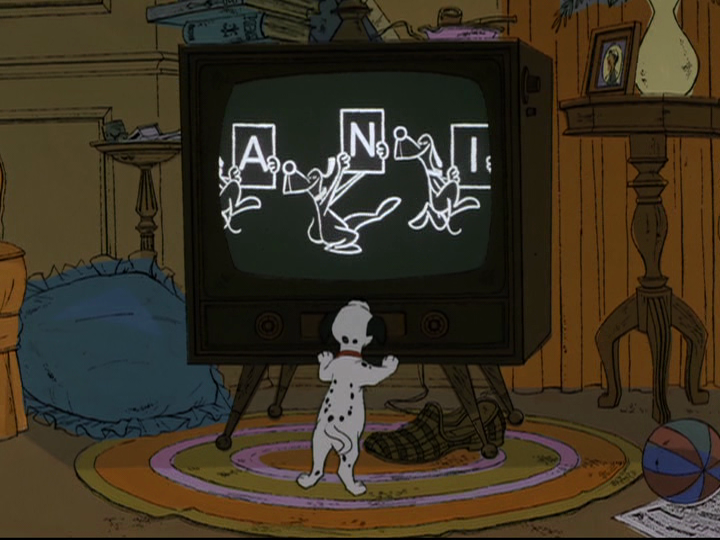
One Hundred and One Dalmatians also has the distinction of being one of the first Disney animated features that wasn’t really a musical. This is surprising, as Roger is a songwriter by trade, which could have easily led to many musical numbers. There are only three songs in the film: Cruella De Vil, Dalmatian Plantation, and Kanine Krunchies. Mel Leven had written a different piece before before the final version of Cruella De Vil. As told by Disney Historian Russell Schroeder, “Driving to work one day, Mel thought, ‘You know, a blues tempo would really fit that character.’ So he came up with the melody line…he replaced his prior song himself.” Dalmatian Plantation had also been replaced, as story man Bill Peet came to Leven and asked him to have the song have more emphasis on rhyming. Kanine Krunchies is a delight, as it is an exaggerated spoof of the commercials played on television in those days.
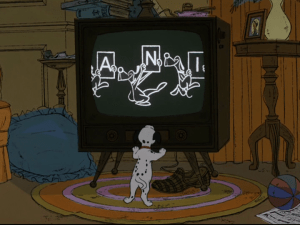
Kanine Krunchies was a spoof of commercials in the early '60s, taken to its absolute silliest

Overall, the film is a delightful piece of pop culture, and while considered a contemporary piece in the early ’60s, the film hasn’t grown stale or shown its age. It was a wonderful turning point in the studio stylistically and technically, and would continue to be a success in each of its reissues into theaters.

January 21

January 21, 1960 – Goliath II is Released to Theaters; First Disney Film Fully Animated with the Xerox Process.

“His name was Goliath the Second, and he was hardly any bigger than one of his father’s toenails.”

Directed by Wolfgang Reitherman, with story by Bill Peet, this 1960 short film is not only an amusing lesson that size isn’t everything, but was a grand experiment by the Disney animators using the new Xerox process, effectively ending an era of old-style romantic animation. The short is narrated by Sterling Holloway, and stars Kevin “Moochie” Corcoran as Goliath II.

Goliath I is the leader of all the elephants, by virtue of being the biggest and the strongest of them all. His only source of disappointment is his son, Goliath II, who is only five inches tall. Try as Goliath II might to make his father proud, he ends up only squeaking when he tries to trumpet, and getting knocked over by the flower he tries to push over. Goliath’s size is also a problem for his mother, who has a hard time keeping an eye on him, especially when the tiger Raja wishes to try the “bite-sized” elephant. Not wanting to be treated like a baby anymore, Goliath runs away from the herd. Although he is saved by his mother when Raja almost eats him, his troubles get worse, as he is marked as a rogue elephant and branded a traitor, disgracing his great father.

Goliath meets a butterfly. This gives the audience a way to see how small he really is.

Goliath gets his chance to prove his worth when he is “left alone to face the terror of all terrors” for elephants – a mouse. Through an epic battle with the pugnacious mouse, with a crocodile hungrily licking its chops to devour the loser, Goliath wins, spares the mouse and wins the respect of the rest of the elephants. He is awarded the highest position in the herd, and a place of honor on his father’s head as the elephants lumber through the jungle.

Goliath and the foe of all foes - a mouse.

Although the Xerox process was used in the dragon scene in Sleeping Beauty, the animators used Goliath II as an experiment to see if it would work on screen. Quite simply, the Xerox process is a way of transferring the animators’ pencil drawings directly to cels, bypassing the inking and painting process. The process, after it had been successfully used in the feature film One Hundred and One Dalmatians, was used in practically every Disney film through The Little Mermaid, when the use of the computer to create the ink lines replicated the old style of inking and painting at a lower cost. The newer process also left more of the feeling that the animator tried to convey before the cleanup began by the inkers and painters.

Sleeping Beauty became the end of a style era, particularly because it had been a very expensive film to create and had not made enough money back, leaving the studio in a dire situation. Ub Iwerks, who had come back to the studio in 1940, had been thinking of ways to lessen the cost of animation. He had been fascinated with the idea of Xerox copying, wondering if he could transfer the animator’s sketch straight to the cel, instead of just a piece of paper. He did a few experiments, and concluded that it was a valid solution for the financially strapped studio.

Ub Iwerks (L) while working on the Xerox Process.

In the early days of the Xerox process, one machine took up three rooms. With a lens and an electrostatically charged plate, the lens took a picture of the drawing, and transferred it to the plate, which would then be dipped in toner. The toner would then be transferred to a clear cel. It dramatically cut costs when it came to animation, but at a price: the beautiful artwork created by the inking and painting department was no more, and the department itself was closed. The style not only replaced the more fairy-tale look of the Disney animated films, but brought in a new modern American art look to the studio.

The Xerox process had mixed reactions from those within the studio. Animator Floyd Norman remarked, “I think we did lose something because the Xerox line lacked the subtlety of the ink line which was incredible…so I guess one could debate those points back and forth. Was Xerox a step forward, or a step backwards?” But animator Andreas Deja argued that “Xerox didn’t cut the quality of the animation. They didn’t do limited animation. It’s still a fully animated film. The acting is still there, it’s still subtle.”

Although there are many opinions of the process, there is no denying the impact it had on the look of Disney films from the 1960s to the 1990s, and it was a good way to save the legacy of animated films. Without Iwerks’ invention, there may not have been The Lion King, Beauty and the Beast, or even The Little Mermaid. Goliath II, although most people may not realize it, helped bring about a turning point in animation history, and did it in a delightful way.