RSS Feed

January 26

January 26, 1955 – Davy Crockett Goes to Congress Premieres on ABC.
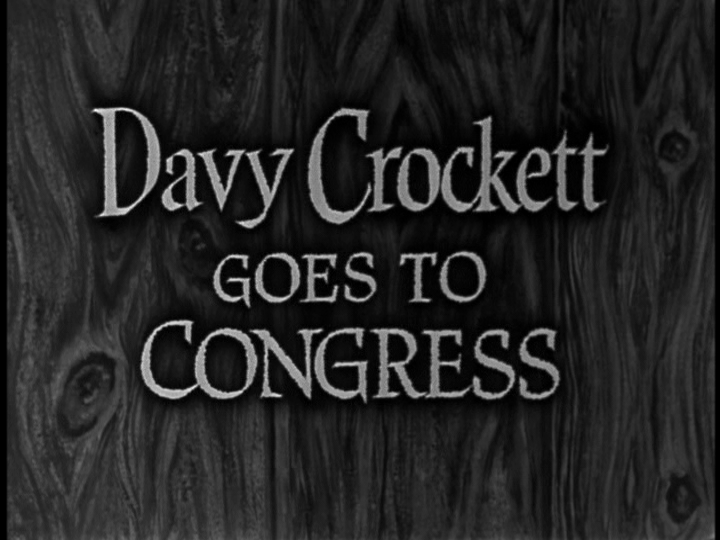
“Now, again from Davy’s own journal, we’d like to present another story of Davy’s fabulous life. This one is called, ‘Davy Crockett Goes to Congress.’” – Walt Disney.

On the evening of January 26, 1955, the second installment of The Adventures of Davy Crockett premiered on the Disneyland television show on ABC. Shown a little over a month after the first installment, the series continued the Davy Crockett craze that had taken over the youth of America. This episode, entitled Davy Crockett Goes to Congress, was directed by Norman Foster, and written by Tom Blackburn. It stars Fess Parker as Davy Crockett, Buddy Ebsen as Georgie Russel, Basil Ruysdael as Andrew Jackson, William Bakewell as Tobias Norton, and former professional wrestler Mike Mazurki as Bigfoot Mason.
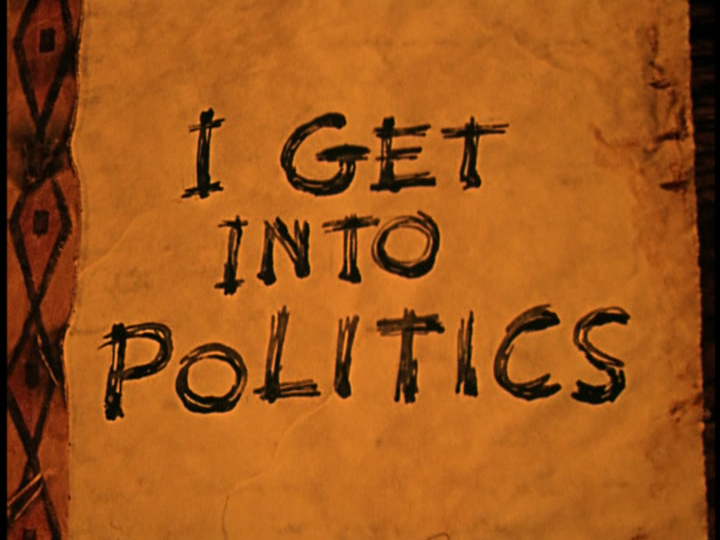
A page from Davy's own journal, as seen in the show, which introduces the story of Davy's political career

The show opens with Davy and his pal Georgie setting out to find a new piece of land to settle. Although they find the perfect spot, Georgie reminds Davy that they need to file a claim for the land. As they approach the settlement, looking for the judge to file their claim, they stumble upon a shooting match. Ever competitive, Davy challenges a man named Bigfoot Mason, wagering $15, the estimated price of the prize cow. They tie with the first round, but with their second shots, Bigfoot believes he won, as it appears that Davy completely missed the target. When it’s discovered that Davy hit the exact spot twice, he makes an unintentional enemy out of Bigfoot. The judge, discovering who Davy is, is thrilled that Davy is in town, as he may be the man that can stop Bigfoot’s schemes. The judge informs Davy and Georgie that Bigfoot and his gang have been running the Indians off of their land and selling it to newcomers who have no idea that the land has been stolen. Davy reminds the judge that there’s a treaty that guarantees the Indians their land, but the judge says that Bigfoot disregards any treaty of that nature. The few people who have tried to stop Bigfoot have disappeared, presumed dead. The judge, knowing Davy’s reputation, asks Davy to be the magistrate and serve a warrant on Bigfoot and his gang. Davy says he’d have to think about it. It doesn’t take long for Davy to decide, as he finds that the Cherokee Charlie Two Shirts has been beaten and run off his land. Davy confronts Bigfoot, and it turns into a no-holds-barred fistfight. Davy emerges victorious, and peace comes over the settlement again as the gang is brought to justice.

During one of the celebrations in town, the judge tells Davy that since the settlement is experiencing a lot of growth, they’ll be getting someone to represent them in Nashville, and the town has picked Davy as the man they want to run for the state legislature. Davy responds, “I’m plumb flutterated by the honor, but, well, I ain’t no politician.” When the judge informs him that his competition is Amos Thorpe – the lawyer who tried to get Bigfoot off, and made a lot of money from the illegal Indian land grabs – Davy considers running. The thing that sets him on his political path, however, is the sad news that his wife, Polly, came down with a fever and died. Consumed by grief and needing a distraction, he decides to run for the spot in the state legislature, proclaiming that he’ll represent the town as honestly as he can. Davy wins by a landslide.
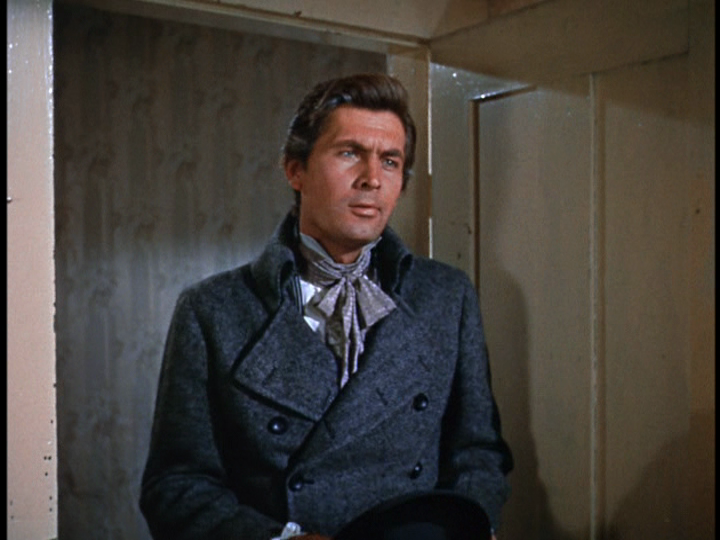
Davy in formal clothes after he's been elected to the state legislature

Davy’s political career has been watched closely by his old Major, Tobias Norton, and General Andrew Jackson. Jackson is preparing to run for the presidency, and both he and Norton want Davy to have a seat in Congress. As Jackson puts it to Davy, “I want men I can trust, men I know are with me, men that can get the rest of the country behind me.” Davy responds, “Well, if I was to do what you asked, and I did get in, I wouldn’t be taking orders from you, General. I’d be taking them from them that elected me.” Thanks to a set of books Georgie has been publishing about their adventures together, Davy is able to win the seat in Congress, and surprises the members by showing up in buckskins. Georgie is there to greet him, and Davy tells him off about having to show up as the “king of the wild frontier, thanks to you.” He introduces himself with a strange speech, but promises that he won’t be one of those politicians who doesn’t do anything more than listen, and the next time he stands before them, he’ll “have something to say worth saying.”

Davy’s career hits a snag when Norton tells Davy he’s to go on a speaking tour, calling it a “great service for the country.” Norton adds that people want to make Davy the next president of the United States. Georgie, ever suspicious of Norton, finds out the truth: Norton sent Davy out of the way so he wouldn’t be able to vote against a bill meant to take away all lands from the Indians. Georgie and Davy race back to Washington, where Davy punches Norton out as the former major tries to stall him, and storms in to Congress, giving the last great speech of his political career.
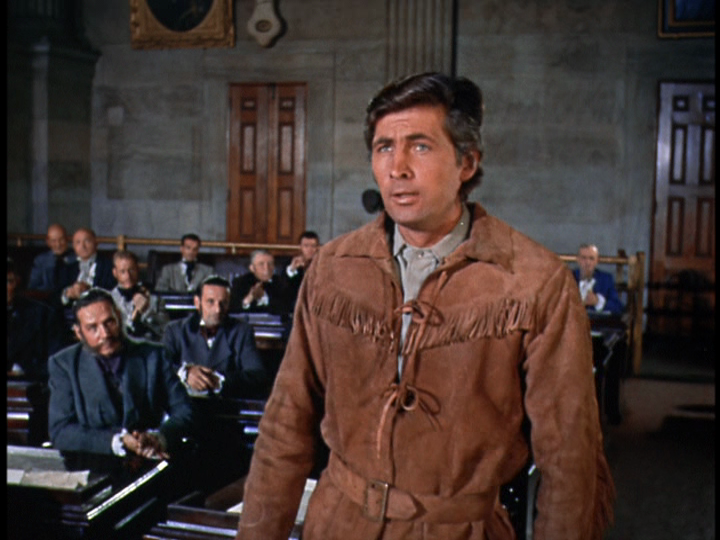
Davy giving a speech in Congress, dressed in his buckskins

Compared to most of the shows on television at the time that featured cowboys and Indians, the Davy Crockett serial was very well made, especially when it came to the matte paintings of Nashville and Washington, D.C., painted by Peter Ellenshaw. Walt Disney sent crews to picturesque areas in North Carolina to do research of the landscape, and it made the serial stand out against all the other shows. There’s also no denying the charm of Fess Parker as Davy Crockett. The last impassioned speech he gives as Congressman Davy Crockett is one that will be remembered.

.
January 25

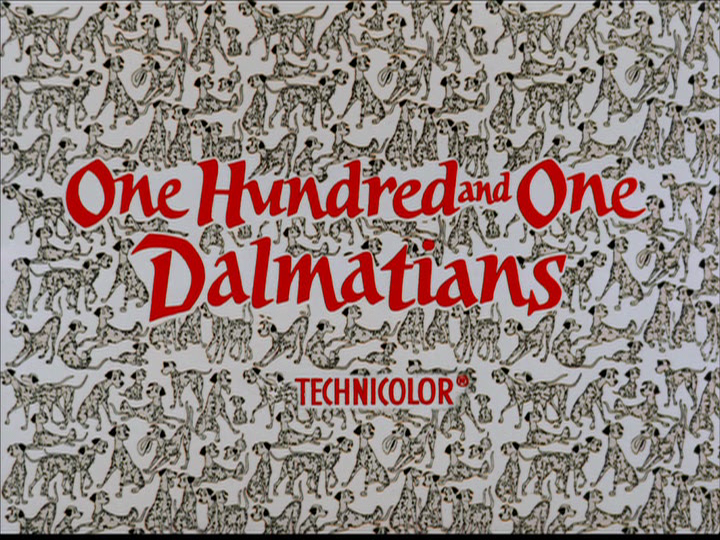
January 25, 1961 – One Hundred and One Dalmatians Released to Theaters

“One Hundred and One Dalmatians is the most modern Disney animated movie ever made. [It’s]the one that has the most guts, that says, ‘This is art,’ but it’s entertainment at the same time…it’s Picasso coming in to Disney.” – Andreas Deja, Supervising Animator, Walt Disney Studios.

On January 25, 1961, the Disney animated feature One Hundred and One Dalmatians was released to theaters. Based on the 1956 bestselling children’s book by Dodie Smith, the story caught Walt Disney’s attention in 1957, and he soon bought the rights to the story of two Dalmatians who travel great lengths to save their stolen puppies from being turned into fur coats by the evil Cruella De Vil. Costing $4 million to make, the film was an enormous success upon release, and is known as a technical and stylistic innovation for the studio. The feature was directed by Wolfgang Reitherman, Hamilton S. Luke, and Clyde Geronimi, with story by Bill Peet, musical score by George Bruns, and songs by Mel Leven. Voice actors include Rod Taylor as Pongo, Cate Bauer as Perdita, Ben Wright as Roger, Lisa David as Anita, and Betty Lou Gerson as Cruella.

The story opens with narration by Pongo, who introduces his “pet,” Roger, a songwriter, and laments that a bachelor’s life is not as glamorous as one would think. Pongo comes up with an idea to set Roger up with a mate, and after spying many not-so-ideal candidates, he spots a female Dalmatian with her owner, Anita, and tricks Roger into following them into the park. After tying Roger and Anita together quite literally, the two happy couples move into a quiet flat in London, and Perdita lets Pongo know she is pregnant. Everyone in the household is excited about the prospect of puppies, including Anita’s old school mate, Cruella De Vil, whose curiosity about the puppies makes Pongo suspicious. Roger, who has been working on a new melody at this point, teases Anita with lyrics about Cruella, calling her a “vampire bat” and an “inhuman beast,” among other things.

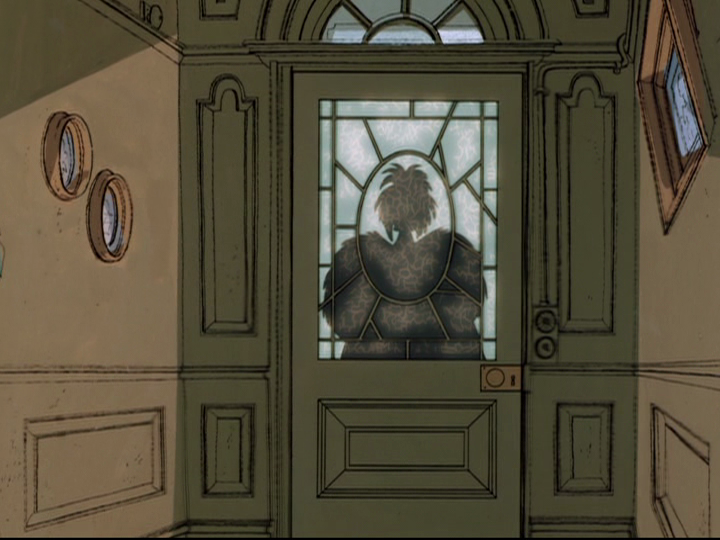
Our first viewing of Cruella De Vil, whose shadow even produces fear

Three weeks later, the puppies are born, and Cruella appears in the doorway, wishing to purchase the puppies. When Roger stands up to her and says she will not be getting a single puppy, Cruella flies into a rage and departs. Unbeknown to the two couples, Cruella hires two thugs, Horace and Jasper, who go into the house when Anita and Roger are taking Perdita and Pongo for a walk, and steal the puppies. Although Anita and Roger call Scotland Yard, Pongo concludes that the humans have failed, and the only solution left is the Twilight Bark.  While Perdita dismisses it as a gossip chain, Pongo convinces her that they have to try, and begins the barking chain while in Regents Park. The chain travels fast, causing all of the dogs in London to bark madly, much to the annoyance of all the humans.

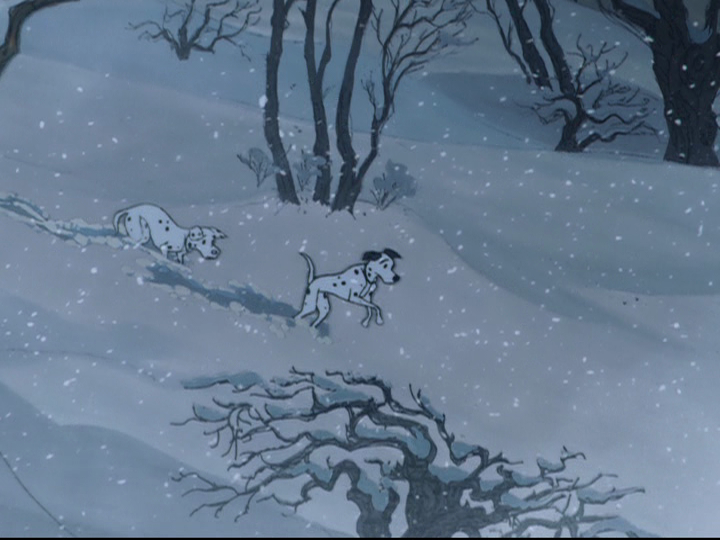
The chain makes its way to the countryside, to an old sheepdog named the Colonel, a horse known as the Captain, and a cat called Sergeant Tibs. The Colonel interprets the message, with Tibs letting the two know that he heard barking two nights before at the abandoned Hell Hall. As he makes his way into the dilapidated mansion, Tibs makes the startling discovery that there are ninety-nine Dalmatian puppies occupying Hell Hall. Although Tibs is chased out of the mansion, he reports his findings to the Colonel, who passes the message back to Pongo. Pongo and Perdita decide that the only option is to go retrieve the puppies themselves, with help along the way by dogs in the chain. “If you lose your way,” the Great Dane reminds them, “contact the barking chain. They’ll be standing by!” The two Dalmatians brave treacherous weather, Cruella’s two bungling henchmen, and Cruella herself to bring all of the puppies back to their home in London.

Pongo and Perdita traveling through the snow in order to save their puppies

When Walt Disney contacted Dodie Smith about turning her book into a film, she responded enthusiastically, “To be quite honest, I always hoped you might – so much so that, when I was writing it, I often found myself visualizing the scenes as they would be in cartoon.” Dodie’s story was a contemporary tale, and the Disney animators took a big leap from the stylizing of the old classics like Cinderella and even Sleeping Beauty that they’d only finished two years earlier. Indeed, the movie still has a contemporary feel, with 20th century style rather than the classic romantic look favored by Disney. Even the characters were different; for example, Cruella De Vil was seen smoking cigarettes, and the puppies were seen watching television. “At this point, we feel it is going to be one of the most interesting things we have done in the cartoon feature field,” Disney wrote in one of his correspondences with Smith. “Dalmatians…has met enthusiastic audience approval. I feel we have a very successful picture.”

The biggest change in the film was the implementation of the Xerox process when it came to cel animation (see January 21st entry for more information). Created by Ub Iwerks, the process had been tested on the short film Goliath II, and created excitement among the animators, as they were seeing their own drawings up on the screen, as they had originally envisioned them. One problem, however, was the presence of what is known as construction lines – the original sketch lines when beginning to draw a character. In many instances in the film, one can tell when Milt Kahl animated a scene, as the construction lines would still be present, as he was very militant about having people come in and clean up his sketches, as sometimes they would disturb the final drawing. However, one main reason that the Xerox process worked so well for this picture is because the Dalmatians were basically black and white, and all that was needed was just a clear outline of the dogs. This also helped when it came to creating the spots of all 101 Dalmatians.

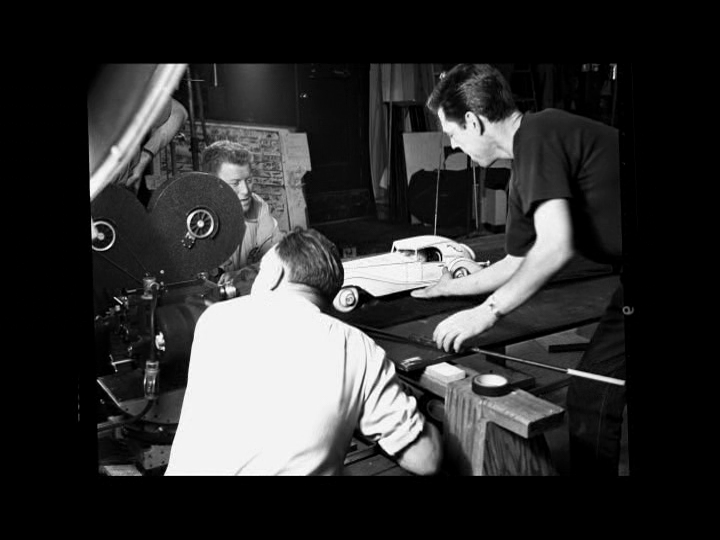
The Xerox prccess was also tested on models of the vehicles, including Cruella's car, Horace and Jasper's car, and the truck back to London

Another interesting aspect of the Xerox process were the vehicles. Iwerks had the idea that if a drawing could be copied straight to a cel, he would be able to use the same process to take a picture of a line that was drawn on the edge of a model. The animators built the cars as models out of cardboard, tracing the edges with a black line. To make the wheels move believably, they suspended the model from a kite string, and pulled it across a piece of fabric placed over wooden dowling rods. The clips of the models were then transferred directly to a Xerox plate, and were painted. In the final print, what you are seeing is the model on the screen, rather than a straight animation of a car. It was one of the many fascinating technological advances of the film.

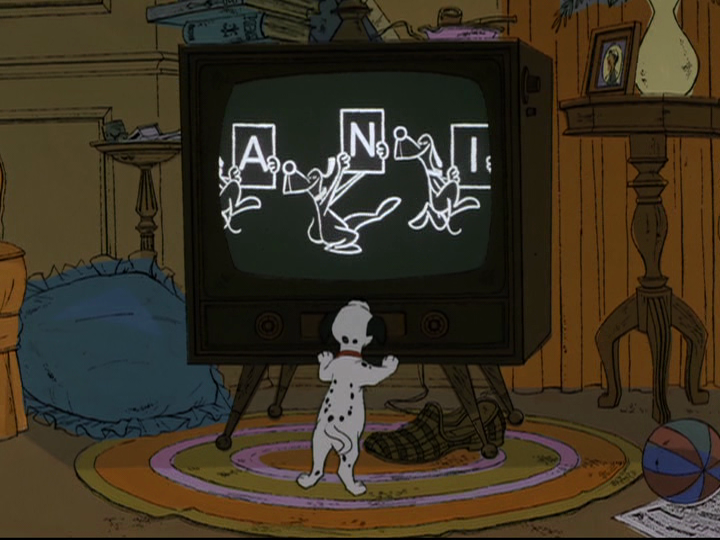
One Hundred and One Dalmatians also has the distinction of being one of the first Disney animated features that wasn’t really a musical. This is surprising, as Roger is a songwriter by trade, which could have easily led to many musical numbers. There are only three songs in the film: Cruella De Vil, Dalmatian Plantation, and Kanine Krunchies. Mel Leven had written a different piece before before the final version of Cruella De Vil. As told by Disney Historian Russell Schroeder, “Driving to work one day, Mel thought, ‘You know, a blues tempo would really fit that character.’ So he came up with the melody line…he replaced his prior song himself.” Dalmatian Plantation had also been replaced, as story man Bill Peet came to Leven and asked him to have the song have more emphasis on rhyming. Kanine Krunchies is a delight, as it is an exaggerated spoof of the commercials played on television in those days.

Kanine Krunchies was a spoof of commercials in the early '60s, taken to its absolute silliest

Overall, the film is a delightful piece of pop culture, and while considered a contemporary piece in the early ’60s, the film hasn’t grown stale or shown its age. It was a wonderful turning point in the studio stylistically and technically, and would continue to be a success in each of its reissues into theaters.

January 24

January 24, 2006 – Disney Announces an Agreement to Purchase Pixar for $7.4 Billion

The major players: John Lasseter (L), Steve Jobs, Bob Iger, and Ed Catmull

“…We had to return to the glory days of animation. So I began focusing on how to do that, and it really begins with finding the right people. The more I thought about it, the more I realized that Pixar had more of the right people than probably any other place in the world, from an animation perspective.” – Bob Iger, CEO, the Walt Disney Company.

On January 24, 2006, new CEO Bob Iger announced that Disney had agreed to acquire Pixar for 287.5 million shares of Disney stock, which equaled about $7.4 billion. Because Steve Jobs owned 49.8 percent of Disney shares, his vote was the only one that mattered, and it became a done deal. “We’re convinced that Bob really understands Pixar,” Jobs said in an interview on On The Money, “and we think that we have some appreciation of Disney and love the unique Disney assets, like being able to get the characters in the theme parks and really express them through all of Disney’s incredible assets. And we think we understand how to keep Pixar being Pixar, and how to spread some of that culture around…a few other parts of Disney as well, ’cause we think we’ve got something pretty good going here.”

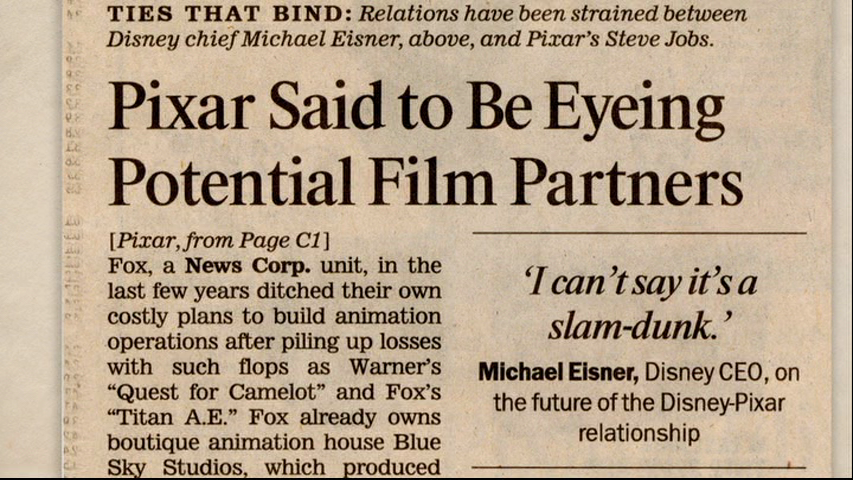
The road to this acquisition was not a smooth one by any means. Although Pixar had been the studio with hit after hit, Jobs was involved in a feud with the Walt Disney Company over the negotiations of their contract. It was public knowledge that Michael Eisner and Steve Jobs were not getting along. Jobs had reached out to Roy Disney for a conversation to share his grievances. Unfortunately for Disney, Jobs had come up with his own solution: After Pixar had completed the terms of the 1997 contract, Pixar would provide no more films for Disney, as long as Eisner was in charge.

Newspaper article declaring Pixar's search for a new distribution partner

As Pixar and Disney approached the end of their deal with no clear solution in sight, the anxious Pixar employees tried to figure out what to do. If they merged with a larger company, they could lose the independent spirit that had made them what they were. The employees “wanted to be an independent company,” Ed Catmull explained, “whereas if we were to become independent, we’d have to take on marketing and distribution, and get another partner, and it would change the culture in ways that we didn’t necessarily want…it was actually unfortunate at that time, because we’d had this phenomenal relationship with Disney all these years, where we were an independent company and they did the distribution and the marketing.” Another source of contention was the fact that Disney could make sequels without Pixar’s involvement. Pixar was heartbroken by this, as they regarded the characters they created like their children – this plan through Disney would make them more like dollar signs than anything else.

Things changed in 2005, when a corporate shakeup within Disney resulted in Eisner’s resignation, and the appointment of Bob Iger as the new CEO of the company. Iger was well known for his accomplishments in the development of Hong Kong Disneyland. Although he could deal well with overseas affairs, it was the domestic affair with Steve Jobs that was more difficult. But Iger was convinced that he would be able to repair the fractured relationship, since Jobs had said that the problem had been between him and Eisner, not the Walt Disney Company as a whole.

Iger’s focus on the rift took a serious turn when he attended the opening of Hong Kong Disneyland in September 2005, a month before he officially became CEO. Iger said that as he watched the opening parade, “[i]t hit me that the characters that were in the parade all came from films that had been made prior to the mid-90s, except for some of the Pixar characters. I felt that I needed to think even more out of the box than I had been thinking, and I had a much greater sense of urgency. I became CEO October 1st. I called Steve around that time and I said I thought we ought to talk, I had some bigger ideas, and that began a long period of discussion, because it was very serious for both sides. He really needed to feel comfortable that Pixar was in the right hands, and, more importantly, respect the talent and the culture.”

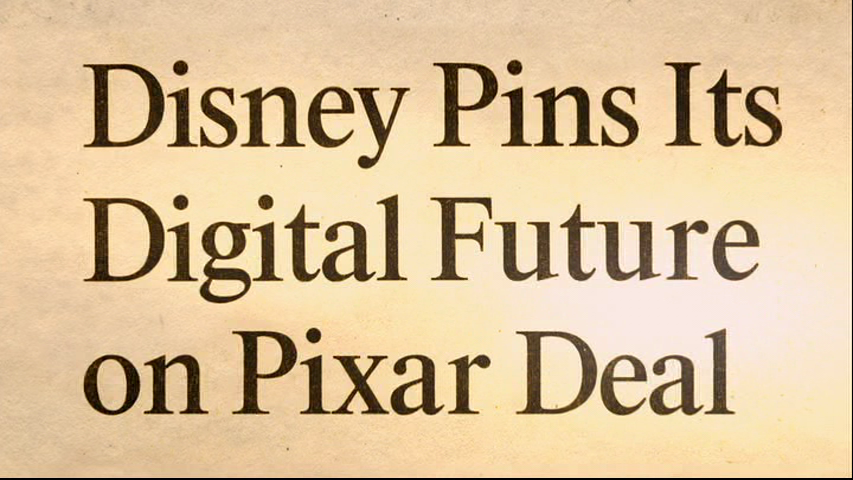
Another newspaper headline, this time with the good news that Pixar and Disney would continue their partnership

Expectations had been high that Iger could repair the fractured relationship, and with the announcement on January 24, Iger had proven that Disney was the best partner there could be for Pixar. The acquisition deal gave Steve Jobs a seat on the board as the largest shareholder, made John Lasseter Chief Creative Officer and principal creative advisor at Walt Disney Imagineering, and elevated Ed Catmull to President of Disney and Pixar Animation Studios. “It feels like this is the true culmination of the building of Pixar and this amazing company into something which will continue on and continue to make waves in the future,” Catmull said about the deal.

January 23

January 23, 1948 – Goofy Short Subject, They’re Off, Released to Theaters

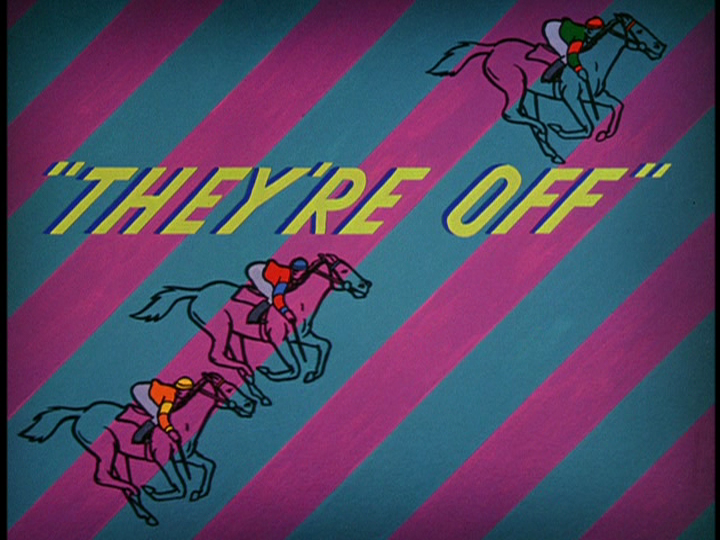
Title Card for the Short, They're Off

Since Tintype I, horses of this line have been noted for their burning speed. And they’re also noted as camera muggers, or lens louses.

On January 23, 1948, the Goofy short, They’re Off, was released to theaters. Following in the tradition of the “How To” films that began with The Art of Skiing in 1941, the short is a tongue-in-cheek how-to on horse racing and betting on the winning horse. The short was directed by Jack Hannah, with story by Reiley Thomson and Campbell Grant, and music by Oliver Wallace.

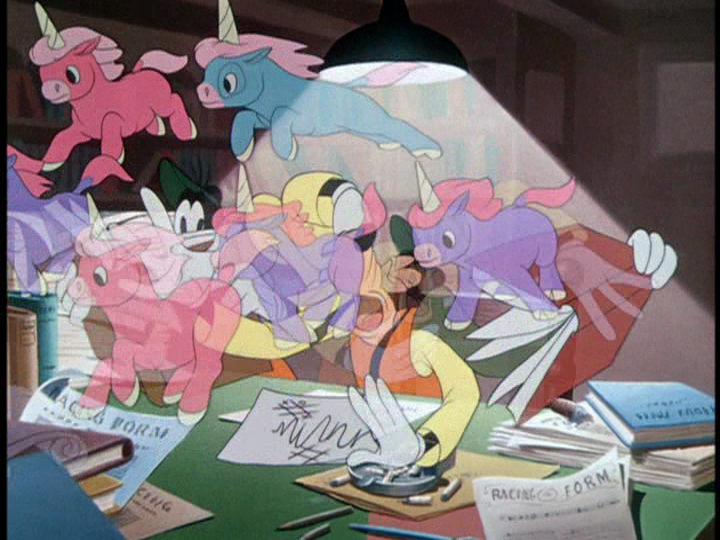
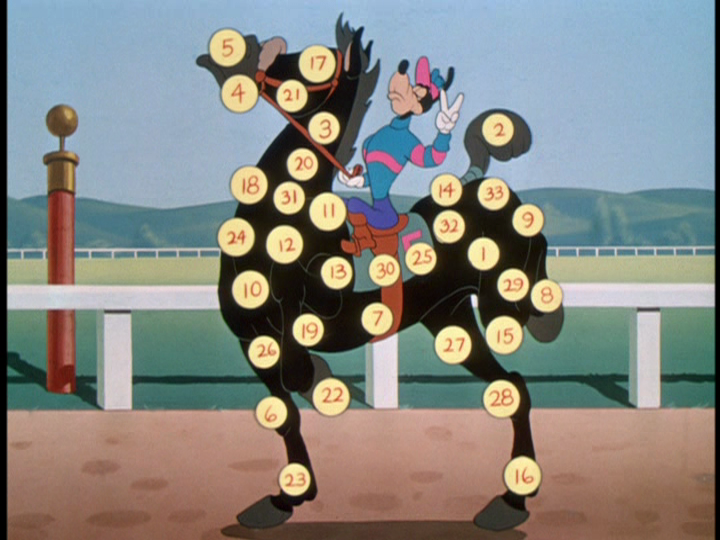
Our narrator begins the film by taking us through the research one must do to identify the winning horse. “Today horse racing has become a science,” he declares, “a science to test the skill of the professional and unprofessional handicapper.” We see Goofy surrounded by mountains of books, periodicals, and newspapers, trying to identify what makes a winning horse. He tries to consider all the elements, including wind velocity, humidity, and rotation of the earth, with comical effect. As the narrator gives a brief history of the thoroughbred, the animators seem to have taken the terms quite literally, such as the horses being referred to as “bang tails,” much to the delight of the audience. Finally Goofy picks his horse, Snapshot III, and now must determine whether this horse has the “fine points of a horse’s conformation,” as the narrator states. Throughout his explanation, the narrator’s voice gradually speeds up, and Goofy ends up overwhelmed and delusional, with animations from How To Ride a Horse and the baby unicorns from Fantasia making a cameo.

Goofy becoming delusional from all of the confusion.

We next see Snapshot III’s pedigree. This is another clever example of wordplay: Snapshot III out of Developer by Hypodeveloper, out of Bromide by Flashbulb and Hypo, out of Tintype by Negative. This wordplay reflects Snapshot’s well-known trait of being a camera mugger or a “lens louse,” a term that causes the horse to glare at the audience.

The day of the big race arrives, and our confident Goofy enters the racetrack, trying desperately not to be swayed by the whisperings of the other bettors and the touts who convince him which horse will win. The narrator explains the many systems people use to pick a winner – again, with the animators taking it quite literally for comic effect. We then see the horses coming out to line up, with Snapshot III taking a jaunty trot down the track.

A confident Snapshot III, shown portraying the perfect conditioning

At this point, we see another Goofy, who has decided to go by luck to pick his horse. With “Eeny, Meeny, Miney, Moe,” he decides that Moe means something, and picks his horse: Old Moe, the 100-1 shot. The score at this point is a comically dour version of The Old Gray Mare, blaring from a brass instrument. Both Goofys place their bets, with the confident researcher stuffing in all of his money, and the play-by-luck Goofy betting only $2.

“The atmosphere is electric,” the narrator observes, although the members of the press, the cameramen, and the jockeys contradict the atmosphere he describes. The race starts, with Snapshot still standing at the gate, calmly eating oats. With a yawn, Snapshot’s jockey tells him to go ahead and start, and he takes off at a fiery speed. The scene grows more tense and chaotic as reporters are typing like crazy, flashbulbs are constantly flashing, and the audience is fighting among themselves. Old Moe and Snapshot are “grappling it out neck and neck,” and the race becomes a photo finish between the two.

The writers and animators must have had a fun time doing this short, with little gags here and there: Jack Hannah, for instance, is seen as the owner of Snapshot III and Insomnia, and writers Reiley Thomson and Campbell Grant are the trainer and owner, respectively, of Crankcase. Even the names of the books are wonderfully tongue-in-cheek, like Know Your Nag and Mother Hubbard’s Selections. Overall, this short is a clever one; while it may not stand out as one of the best, it is definitely one to watch for the subtle gags.

January 22

January 22, 1930 – Carl Stalling Leaves Walt Disney Studios to Join Ub Iwerks

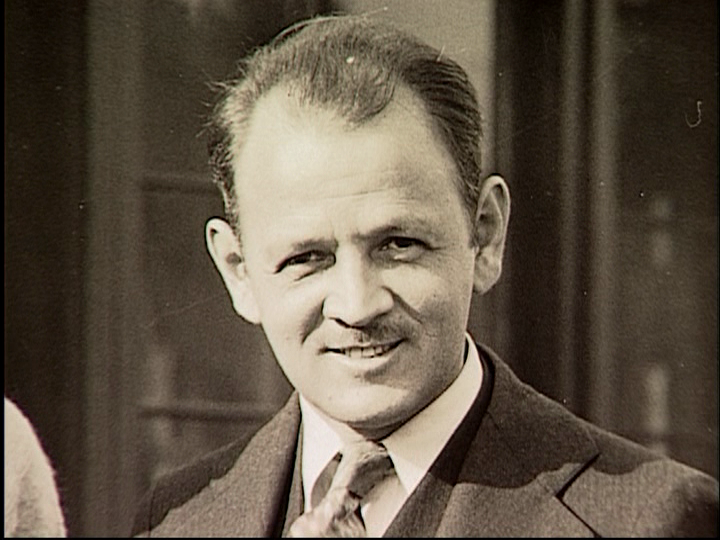
Musical Director, Carl Stalling

The January 21 entry credited Ub Iwerks as the man who invented the Xerox Process, eliminating the need for the Ink and Paint department, and saving the Disney’s animation department from financial ruin. However, 30 years before, Iwerks had decided that it would be best for him to leave the Disney Studio. He was privately approached by a representative of Pat Powers, the studio’s sound distributor, who offered Iwerks a chance to form his own studio. The morning of the 21st of January,1930, Iwerks approached Roy Disney, letting him know that he was leaving as soon as possible, citing personal problems with Walt as his reason. Iwerks’ departure was a sign of things to come, with the first consequence being the departure of the studio’s musical director, Carl Stalling.

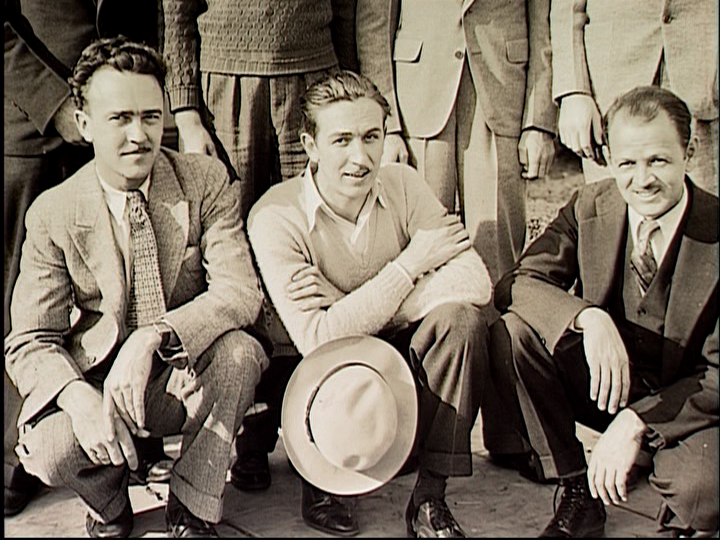
Happier times at the Disney Studios: Ub Iwerks (L), Walt Disney (C), and Carl Stalling (R)

Carl Stalling had been a good friend of Walt Disney’s when living in Kansas City, and had composed several scores for Disney’s cartoons, including Plane Crazy and the Gallopin’ Gaucho. Stalling’s biggest contribution to the studio, however, was the idea of the Silly Symphony. Stalling had approached Disney after the success of Steamboat Willie, proposing a cartoon short built on a music foundation. These shorts wouldn’t have a recurring character from short to short, but would tell a different story each time. Stalling also helped write the song “Minnie’s Yoo Hoo” with Walt (see January 11th entry), which ended up causing another problem for the studio once Iwerks decided to leave.

When Stalling heard that Iwerks had left, he assumed, as Pat Powers had, that the studio wouldn’t be able to survive. Stalling was uncomfortable with Iwerks’ leaving, and was upset with the way he perceived Walt was running the studio. Stalling, unfortunately, had underestimated Walt’s contribution to the popularity of Mickey Mouse and the success of the studio. The morning Iwerks left, Stalling approached Roy Disney (Walt was away in New York) and gave his grievances, which included royalties from “Minnie’s Yoo Hoo” and the liability in the recording studio. Roy gave Stalling an offer: Disney would buy Stalling’s share in the recording studio. Stalling agreed, but early the next morning he returned, saying he was very unhappy and had personal problems with Walt, and like Iwerks, needed to leave immediately. He demanded his back pay, brandishing legal notices he had written himself. Roy had no choice but to have the accounting office give Stalling a check and send him on his way.

Walt had been deeply stung by Iwerks’ and Stallings’ departures, as these men had been with him since the beginning. Powers had believed that Iwerks was the true talent behind the success of Mickey; indeed, Iwerks was responsible for the drawings and the design, but it was Walt who created the stories and helped with the character’s personality. For Powers, and Stalling, not realizing the importance of Walt’s contribution to the character was a grave mistake.

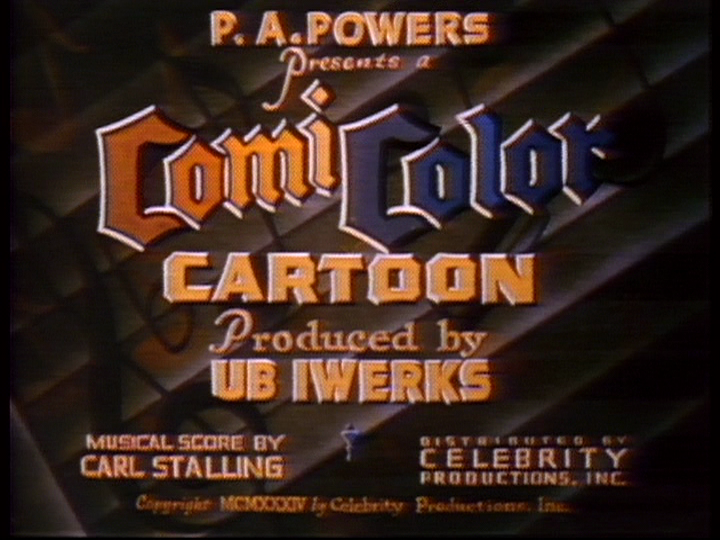
One of Iwerks' ComiColor shorts, with musical score by Carl Stalling

In retrospect, the dissolution of the Iwerks-Disney partnership was a good thing for Iwerks and for Stalling. Iwerks was able to express himself creatively with his studio and work on many new technical innovations to help create more believable animation; when his studio closed in 1938, Iwerks was able to go back to the Disney Studio and develop special effects, including the multiplane camera and the Xerox Process. Stalling joined the Warner Brothers Studio in 1936, becoming a full-time composer for the Looney Tunes. His most famous works for the studio were The Rabbit of Seville and A Corny Concerto. This bleak moment in the Disney Studio history led to the brilliant creative output of all three: Disney, Iwerks, and Stalling.

January 21

January 21, 1960 – Goliath II is Released to Theaters; First Disney Film Fully Animated with the Xerox Process.

“His name was Goliath the Second, and he was hardly any bigger than one of his father’s toenails.”

Directed by Wolfgang Reitherman, with story by Bill Peet, this 1960 short film is not only an amusing lesson that size isn’t everything, but was a grand experiment by the Disney animators using the new Xerox process, effectively ending an era of old-style romantic animation. The short is narrated by Sterling Holloway, and stars Kevin “Moochie” Corcoran as Goliath II.

Goliath I is the leader of all the elephants, by virtue of being the biggest and the strongest of them all. His only source of disappointment is his son, Goliath II, who is only five inches tall. Try as Goliath II might to make his father proud, he ends up only squeaking when he tries to trumpet, and getting knocked over by the flower he tries to push over. Goliath’s size is also a problem for his mother, who has a hard time keeping an eye on him, especially when the tiger Raja wishes to try the “bite-sized” elephant. Not wanting to be treated like a baby anymore, Goliath runs away from the herd. Although he is saved by his mother when Raja almost eats him, his troubles get worse, as he is marked as a rogue elephant and branded a traitor, disgracing his great father.

Goliath meets a butterfly. This gives the audience a way to see how small he really is.

Goliath gets his chance to prove his worth when he is “left alone to face the terror of all terrors” for elephants – a mouse. Through an epic battle with the pugnacious mouse, with a crocodile hungrily licking its chops to devour the loser, Goliath wins, spares the mouse and wins the respect of the rest of the elephants. He is awarded the highest position in the herd, and a place of honor on his father’s head as the elephants lumber through the jungle.

Goliath and the foe of all foes - a mouse.

Although the Xerox process was used in the dragon scene in Sleeping Beauty, the animators used Goliath II as an experiment to see if it would work on screen. Quite simply, the Xerox process is a way of transferring the animators’ pencil drawings directly to cels, bypassing the inking and painting process. The process, after it had been successfully used in the feature film One Hundred and One Dalmatians, was used in practically every Disney film through The Little Mermaid, when the use of the computer to create the ink lines replicated the old style of inking and painting at a lower cost. The newer process also left more of the feeling that the animator tried to convey before the cleanup began by the inkers and painters.

Sleeping Beauty became the end of a style era, particularly because it had been a very expensive film to create and had not made enough money back, leaving the studio in a dire situation. Ub Iwerks, who had come back to the studio in 1940, had been thinking of ways to lessen the cost of animation. He had been fascinated with the idea of Xerox copying, wondering if he could transfer the animator’s sketch straight to the cel, instead of just a piece of paper. He did a few experiments, and concluded that it was a valid solution for the financially strapped studio.

Ub Iwerks (L) while working on the Xerox Process.

In the early days of the Xerox process, one machine took up three rooms. With a lens and an electrostatically charged plate, the lens took a picture of the drawing, and transferred it to the plate, which would then be dipped in toner. The toner would then be transferred to a clear cel. It dramatically cut costs when it came to animation, but at a price: the beautiful artwork created by the inking and painting department was no more, and the department itself was closed. The style not only replaced the more fairy-tale look of the Disney animated films, but brought in a new modern American art look to the studio.

The Xerox process had mixed reactions from those within the studio. Animator Floyd Norman remarked, “I think we did lose something because the Xerox line lacked the subtlety of the ink line which was incredible…so I guess one could debate those points back and forth. Was Xerox a step forward, or a step backwards?” But animator Andreas Deja argued that “Xerox didn’t cut the quality of the animation. They didn’t do limited animation. It’s still a fully animated film. The acting is still there, it’s still subtle.”

Although there are many opinions of the process, there is no denying the impact it had on the look of Disney films from the 1960s to the 1990s, and it was a good way to save the legacy of animated films. Without Iwerks’ invention, there may not have been The Lion King, Beauty and the Beast, or even The Little Mermaid. Goliath II, although most people may not realize it, helped bring about a turning point in animation history, and did it in a delightful way.

January 20

January 20, 2006 – High School Musical Premieres on Disney Channel

“This could be the start of something new.”

At 8 p.m., January 20, 2006, the television movie, High School Musical, premiered on the Disney Channel. It became the most successful Disney Channel Original Movie ever produced, and was followed with a television sequel (High School Musical 2) and a feature film, (High School Musical 3: Senior Year), as well as best-selling albums and various international spinoffs. The movie was directed by Kenny Ortega, with screenplay by Peter Barsocchini. The cast includes Zac Efron as Troy Bolton, Vanessa Hudgens as Gabriella Montez, Ashley Tisdale as Sharpay Evans, Lucas Grabeel as Ryan Evans, Corbin Bleu as Chad Danforth, and Monique Coleman as Taylor McKessie.

With a plot reminiscent of Shakespeare’s Romeo & Juliet, the story centers on basketball star and team captain Troy Bolton and shy genius Gabriella Montez, who meet at a New Year’s Party after being pushed to sing karaoke together. Through the song they sing, they begin to develop an attraction to each other, finally exchanging phone numbers before going their separate ways.

Troy (Zac Efron) and Gabriella (Vanessa Hudgens) reluctantly singing together at the party.

Fortuitously, Gabriella’s mother is transferred to Albuquerque, New Mexico, where Troy lives and attends East High School. The two are excited to see each other again, and Troy beings to show Gabriella around the school, while explaining that his singing at the party was not something he did often, nor do his friends know about his musical abilities. The two pause in front of the sign-up sheet for the winter musical, where they run into Sharpay Evans, the Drama Club president. Sharpay has an obvious crush on Troy, and is immediately suspicious of Gabriella, thinking the girl could be a threat to her winning the lead in the musical. With her brother Ryan, they do an Internet search on Gabriella, discovering her past academic achievements, and revealing them to Taylor McKessie, captain of the Scholastic Decathlon Team, who immediately tries to recruit a reluctant Gabriella.

After seeing Gabriella again, and remembering the fun he had singing with her at the party, Troy has trouble concentrating at basketball practice, and decides to check out the auditions. He runs into Gabriella there, but both are two shy to step forward to audition, and by the time they get the courage to do so, the drama teacher Mrs. Darbus immediately turns them down, telling them they are too late, auditions are over. But soon after, she overhears them singing with the composer of the winter musical, and reconsiders, giving them a call-back audition.

Troy and Gabriella singing together once again.

Troy’s call-back for the musical starts a chain of events at the school, with students revealing their secret hobbies, from a basketball player’s love of baking, to a scholastic high-achiever’s hobby of “poppin’ and lockin’.” Troy’s best friend, Chad Danforth, becomes alarmed as people, including Troy, disrupt the status quo, and Chad worries that Troy’s lack of focus will cost them the upcoming championship game. Chad teams up with Taylor, who has been unsuccessful in getting Gabriella to join the Scholastic Decathlon Team, to get Troy and Gabriella to focus on upcoming competitions and forget about the call-back auditions. They scheme to trick Troy into saying that Gabriella isn’t important to him, while Gabriella watches on a wi-fi link Taylor has set up. Crushed, Gabriella decides to join the Scholastic Decathlon Team after all, refusing to audition with or even talk to Troy.

The Scholastic Decathlon Team tricking Gabriella with the live feed from the basketball team.

Chad and Taylor, overwhelmed with guilt for ruining their relationship, finally confess their scheme; Troy goes to Gabriella’s house and they make up, and the pair once again continues to rehearse for call-backs, this time with support from their friends. Sharpay, infuriated at this outcome, convinces Ms. Darbus to reschedule the call-backs to coincide with the basketball game and the Scholastic Decathlon, leaving Troy and Gabriella unable to audition. But the basketball team and the Decathlon team decide to work together on a plan that would allow the pair to audition without missing their competitions.

The premiere broadcast had 7.7 million viewers, and has been seen by more than 225 million viewers globally. It launched the careers of Efron and Hudgens, and several of the cast members released solo albums. The movie also spawned a successful touring concert, from November 29, 2006, to January 28, 2007, with most of the cast reprising their roles, except for Efron, who was replaced by Drew Seeley (whose tenor voice had been used to blend with Efron’s baritone in the film’s soundtrack). The film’s popularity has no doubt ushered in a new age of Disney Channel programming, and defined a new generation of Disney fans.

January 19

January 19, 1949 – So Dear to My Heart is Released to Theaters.

“The greatest wealth a man may acquire is the wisdom he gains from living.”

A film brimming with nostalgia and turn-of-the-century charm, So Dear to My Heart was released to theaters on January 19, 1949, by RKO Radio Pictures. Based on the book Midnight and Jeremiah, by Sterling North, the film is about a boy named Jeremiah Kincaid, who trades his dreams of raising a prize-winning horse for the goal of raising a black lamb named Danny to be a champion at the county fair. The film was directed by Harold Schuster, with screenplay by John Tucker Battle. The cast includes Bobby Driscoll as Jeremiah Kincaid, Beulah Bondi as Granny Kincaid, Burl Ives as Uncle Hiram, and Luana Patton as Tildy, with John Beal providing the narration as the older Jeremiah.

The story opens in an attic, where the audience is taken inside an old scrapbook, observing the seasons and essentially going back in time to an old farm in 1903. The community, especially Jeremiah, is excited that the train stopping in their town contains the famous racehorse, Dan Patch. Jeremiah dreams of raising a horse just like Dan Patch, and he tries to convince Granny to trade their old mule for a mare, for “If we had a mare, we could get a colt,” Jeremiah argues. However, he changes his mind when he helps Granny take care of the new lambs in the barn. Twin lambs had been born: one black, and one white. When the mother shuns the black lamb, Jeremiah wants to adopt it, to which Granny tries to convince him otherwise but she finally agrees to let him keep it when she sees the affection Jeremiah has for the creature.

One of the examples of how much Jeremiah cares for Danny.

The lamb, now called Danny (after Dan Patch), causes nothing but headaches for Granny, breaking screen doors and rocking chairs, and Jeremiah is so consumed with taking care of Danny that he neglects his chores. Fortunately, Jeremiah has a strong ally in his Uncle Hiram, who tries to convince Granny to let Danny compete for the blue ribbon at the county fair. Uncle Hiram’s isn’t able to convince her, however, so Jeremiah plans to raise the money to pay for travel to the fair on his own by finding a bee’s hive and selling wild honey. Jeremiah and his friend, Tildy, find the hive and with Uncle Hiram’s help, bring back two tubs full of wild honey.

Burl Ives (L) as Uncle Hiram, Bobby Driscoll (C) as Jeremiah Kincaid, and Luana Patten (R) as Tildy.

Just as things are looking up for Jeremiah, he arrives home to find that Tildy accidentally let Danny escape into the woods and is unable to find him. Jeremiah runs out looking for him during a dangerous thunderstorm, but is dragged home by Granny. As Jeremiah sulks in bed, Granny begins to lecture Jeremiah on how he no longer loves the lamb, but the material things the lamb could provide: money and blue ribbons. Granny adds that God may not provide Danny mercy throughout the night, telling him that “the Lord giveth, and the Lord taketh away.” The next morning, Jeremiah leaves at daybreak, and finds Danny, who had curled up in a log to survive the night. After he returns to the farm with Danny, he tells Tildy that they aren’t going to the fair, causing her to cry. When Granny questions him, he sheepishly tells her that he made a promise to God that if He would keep Danny safe through the storm, he wouldn’t go to the fair. Granny, touched by this turnaround in Jeremiah’s attitude, declares that she prayed that if God kept Danny safe, they would go to the fair, and since she’s known God longer, He wouldn’t mind if they go. And so the family heads off to the fair, with Danny groomed and looking impeccable, with Jeremiah certain that Danny will win the prize. The ending of the film is one of the most charming endings in Disney’s live-action film history.

The film itself is a mixture of live-action and animation, with the animation providing bookends to live-action segments rather than being interwoven in the film. The animation sections are interesting segments in themselves; a character named the Wise Old Owl, who provides some spirited advice, gives lessons of perseverance through the biblical stories of David and Goliath, and the walls of Jericho, as well as the historical stories of Christopher Columbus and Robert the Bruce. Although the animated sequences may seem a bit intrusive to the overall film, Walt Disney once explained that he “saw the cartoon characters as figments of a small boy’s imagination, and I think they were justified.”

One of the animated scrapbook segments from the film, acting more as Jeremiah's imagination than reality.

The music for the film doesn’t stand out as it would in a true movie musical, but it establishes the time period in which the film is set. Uncle Hiram, played by Burl Ives, provides many amusing ad-libbed songs. The opening song, “So Dear to My Heart,” was written by Ticker Freeman and Irving Taylor; “County Fair” was written by Robert Wells and Mel Torme; “It’s Watcha Do with Whatcha Got” was written by Don Raye and Gene DePaul. “Ol’ Dan Patch,” “Lavender Blue (Dilly Dilly),” and “Stick-to-it-ivity” were written by Eliot Daniel and Larry Morey. The song “Lavender Blue (Dilly Dilly),” based on an old English folk song, was nominated for the Academy Award for song in 1949, but lost out to “Baby, It’s Cold Outside” from Neptune’s Daughter.

Bobby Driscoll and Luana Patten were under contract with Disney, having already done the film Song of the South for the company. Driscoll himself received many positive reviews for his performance, and was awarded a special Academy Award as the “Outstanding Juvenile Actor of 1949” for his work in this film, and the non-Disney film The Window.

Luana Patten (L) and Bobby Driscoll. They were the first two contract players for the Walt Disney Studios; this was their second film together.

An interesting fact about this film concerns animator Ward Kimball: an avid railroad enthusiast, he was given the train station used on set and installed it at his Southern California home, where he would surprise the neighbors by driving around in his full-size train.

Overall, the film is a gem in the Disney library, and one that should not be missed. Because of uncertain marketing in 1948, the film didn’t make a huge profit, but it received highly positive reviews, and still shines with the well-known Disney charm.

January 18

January 18, 1941 – Birth of Disney Legend David Stollery.

David Stollery's title card from the serial Annette.

“I wonder how many Celica-driving ‘Mickey Mouse Club’ fans ever knew that ‘Marty’ designed their car?” – Tim Considine, Disney Legend and actor.

David John Stollery III was born January 18, 1941, in Los Angeles, into a show-business family, his father having been a radio announcer, and his mother a radio star while living in Portland, Oregon. At age seven, Stollery began his acting career by landing a role in a touring production of Medea, and was later voted Child Actor of the Year for his role in the production On Borrowed Time, starring actor Victor Moore. He appeared in several films, beginning with an uncredited role in the 1949 film A Connecticut Yankee in King Arthur’s Court, and getting his big boost as a feature actor in the 1951 film, Darling, How Could You! His Disney roles, however, gave him the most prominence as an actor.

Walt Disney saw Stollery perform on an episode of The Ray Milland Show, playing a young genius, and was convinced that the boy would be perfect for the role of Marty Markham in the upcoming Mickey Mouse Club serial, “The Adventures of Spin and Marty,” co-starring Tim Considine as Spin. The serial was very popular, and Stollery was quickly signed for two more “Spin and Marty” serials: “The Further Adventures of Spin and Marty” in 1956, and “The New Adventures of Spin and Marty” in 1957. Stollery also appeared in a serial starring Annette Funicello, simply titled “Annette,” in which he played the character Mike Martin. He also acted in two feature films for Disney: Westward Ho the Wagons! in 1956, and Ten Who Dared in 1960.

Stollery as Marty Markham in The Adventures of Spin and Marty.

Unlike most child actors, Stollery did not pursue acting as a fulltime career, instead opting to study design at the Art Center College of Design, and becoming an auto designer for General Motors. In 1973, he was hired by Toyota to manage the automotive design group, Calty Design Research, designing the second generation of the A40 Series Toyota Celica in 1978.

Stollery has mostly stayed out of the spotlight since his Disney days. His most recent on-screen appearance was a documentary in 2005 on the Walt Disney Treasures set, The Adventures of Spin and Marty, in which Stollery and co-star Tim Considine explore the property that was used as the set for the Triple R Ranch and share their memories of performing on the show. He was inducted into the Disney Legends at the October 9, 2006 ceremony.

January 17

January 17, 1913 – Birth of Disney Legend Claude Coats.

Claude Coats (L) showing the Pirates attraction to Julie Reihm and Walt Disney.

“His energy, curiosity and drive to create new experiences for our Disney park guests made him a leader and a teacher for all of us. He was a genuine one-of-a-kind.” – Marty Sklar, Walt Disney Imagineering President.

Claude Coats had a prolific career at the Walt Disney Studios: He began with creating the fantastical watercolor backgrounds in Pinocchio, and eventually became one of the lead developers of Walt Disney World attractions, including several World Showcase Pavilions at EPCOT Center. One of the few employees to receive a 50-year service award, Coats retired in 1984 after 54 years with Disney.

Born January 17, 1913, in San Francisco, Coats was raised in Los Angeles, and attended the University of Southern California, graduating with a Bachelor Degree in Fine Arts in 1934. He attended the Chouinard Art Institute, studying watercolor painting and becoming an active member of the California Water Color Society. Through the society, he was hired by Disney as an apprentice background painter in June 1935. Coats worked on backgrounds and color stylings of such films as Snow White and the Seven Dwarfs, Fantasia, Dumbo, Saludos Amigos, Make Mine Music, Lady and the Tramp, Cinderella, and Peter Pan. His watercolor background work on Pinocchio, however, continues to be lauded by animation critics and art collectors alike. Coats took the paintings of the village and Geppetto’s workshop by artist Gustaf Tenggren, and turned them into backgrounds “with the most appetizing appeal,” said animation historian, John Culhane. Coats’ eye for color was also used on several acclaimed short films, including The Old Mill and Ferdinand the Bull, both Academy Award winners.

Coats took on a new role in1955, when he became one of the elite artists brought in to work with WED Enterprises (now known as Walt Disney Imagineering). As part of the development team for several attractions, beginning with Mr. Toad’s Wild Ride, Coats helped bring Disney’s vision for Disneyland into being. He worked on several popular attractions, including The Haunted Mansion, Pirates of the Caribbean, Snow White’s Scary Adventures, and Submarine Voyage. Coats and Imagineer Herb Ryman were tasked with the darker rides in Fantasyland, including Peter Pan’s Flight. Coats also used his skills while working on the The 1964 New York World’s Fair attractions, including The Carousel of Progress and It’s a Small World.

Coats appeared in the Disneyland 10th Anniversary Episode on Walt Disney’s Wonderful World of Color (see the January 3rd entry), introduced by Walt as “the Imagineer in charge of the pirate project.” He explains staging a scene in the Pirates of the Caribbean attraction, where one character is being forced to walk the plank, to Walt and Julie Reihm during the episode.

Coats went on to design attractions for Walt Disney World, including The Mickey Mouse Review, Universe of Energy, and several World Showcase pavilions. He also worked on the international parks, including the Cinderella Castle Mystery Tour for Tokyo Disneyland. After 54 years of work for the Disney Company, Coats retired in November 1984, and was inducted as a Disney Legend at the October 22, 1991 ceremony. He passed away in Burbank, California, on January 9, 1992.