RSS Feed

May 5

Posted on

May 5, 1905 – Disney Legend and Cartoonist Floyd Gottfredson is Born
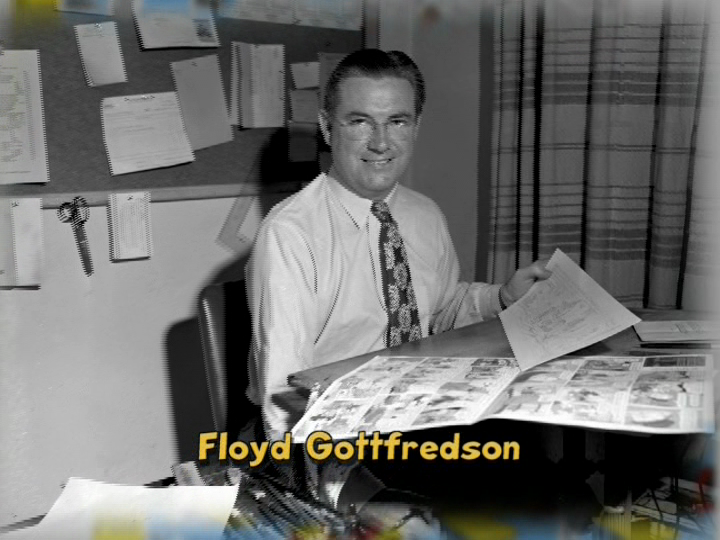
“…since Walt hired me as backup man on the strip, he asked me to take it over. By now I had become very interested in animation and told Walt I’d rather stay in it. So Walt asked me to take over the strip for two weeks until he found another artist to do it. Nothing further was ever said about it, and I continued to draw the Mickey daily for 45 years – until my retirement in October 1975.” – Floyd Gottfredson

Floyd Gottfredson, the man behind the Mickey Mouse comic strip and Mickey’s “second father,” was born on May 5, 1905, in Kaysville, Utah. His interest in drawing came about due to an accident when he was eleven: he went hunting with his cousin one Sunday instead of going to church, and was accidentally shot in the arm. Unable to play with the other children, Gottfredson turned to art, and his talent blossomed under the care of his mother. Although his father disapproved of his son’s artistic ambitions, Gottfredson continued to pursue drawing, not letting his injury slow him down. In 1928, after winning second place in a national cartoon contest, he developed enough confidence to quit his job in Utah and move to Los Angeles to become a newspaper cartoonist. Although unsuccessful in that venture, fate led him to apply to the Disney Studios, where he was hired as an inbetweener.

When Gottfredson began at the Disney Studios, the Mickey Mouse comic was already being worked on by several artists. Although he had expressed interest in working on the strip, Disney talked him out of it, but did give him the job as a back-up man for those animators. By the time Gottfredson was asked to draw the comic, he had become fond of the animation medium and wanted to stay there. Disney asked him to draw the comic for at least two weeks until they found a replacement, which led to Gottfredson drawing the comic until his retirement 45 years later.
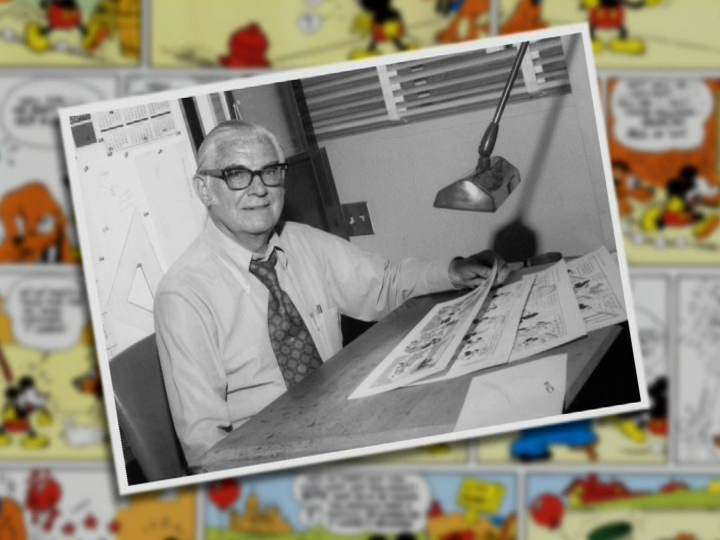
A publicity shot for Gottfredson and the comic

Through the Mickey Mouse comic strip, Gottfredson ended up pioneering a new kind of comic: the funny animal adventure story. Although the early strips were basic retellings of the shorts in theaters, Gottfredson soon added his own spin to the stories, telling grand adventures that reflected the issues of the time. Gottfredson also had Mickey, the plucky underdog, pitted against corrupt politicians, mad scientists, and other assorted villains, with Mickey’s goal to protect his friends and his country. He retired from the comic on October 1, 1975, and on July 22, 1986, he died at the age of 81. He was inducted as a Disney Legend in 2003, and was inducted into the Will Eisner Comic Industry Awards Hall of Fame in 2006.
May 4

Posted on

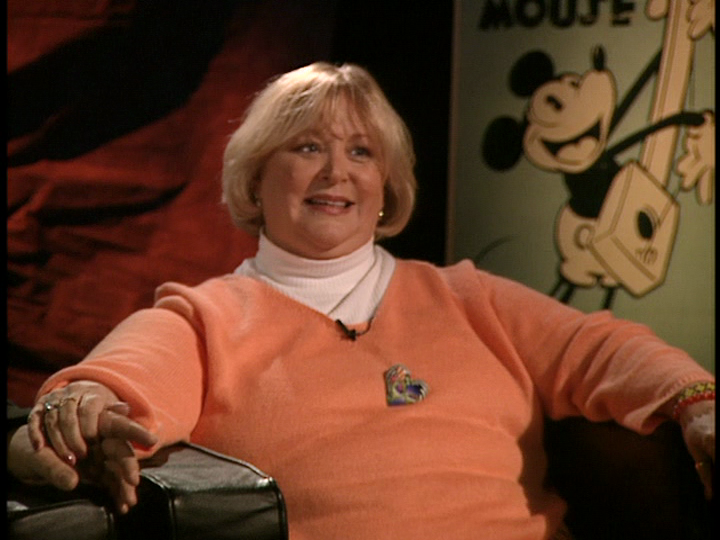
May 4, 1944 – Disney Legend and Current Voice of Minnie Mouse, Russi Taylor, is Born.

“When I was a little girl, I was with my mom and my brother and it was late at night at Disneyland. We had just come off the Mark Twain Riverboat and were getting some popcorn. I looked over and saw Walt sitting on a bench, so we introduced ourselves and shared our popcorn with him. At one point during our chat, he asked me what I wanted to do when I grew up, and I said, ‘I want to work for you!’ So he said, ‘Okay!’ – and now I do!” – Russi Taylor

Russi Taylor was born on May 4, 1944, in Cambridge, Massachusetts, and grew up wanting to work as a movie actress. However, she found the work tedious, and decided to try voice acting, as she had had a good ear for languages and accents ever since she was a child. She auditioned for the role of Minnie Mouse in 1986, and has held the role ever since – longer than any voice actress in the role.

When Taylor was asked in an interview by Leonard Maltin how she got the role of Minnie, Taylor explained that Minnie hadn’t spoken in a long time, and when she was in Mickey’s Christmas Carol, the writers didn’t know that Minnie could speak, which was why she didn’t say anything. In 1986, they decided to give Minnie a comeback, and Taylor auditioned against almost 160 others for the role. She had prepared for the role by listening to Minnie from the cartoons in the ’30s and ’40s, and when asked to improvise as Minnie, Taylor performed the balcony scene from Shakespeare’s Romeo and Juliet.

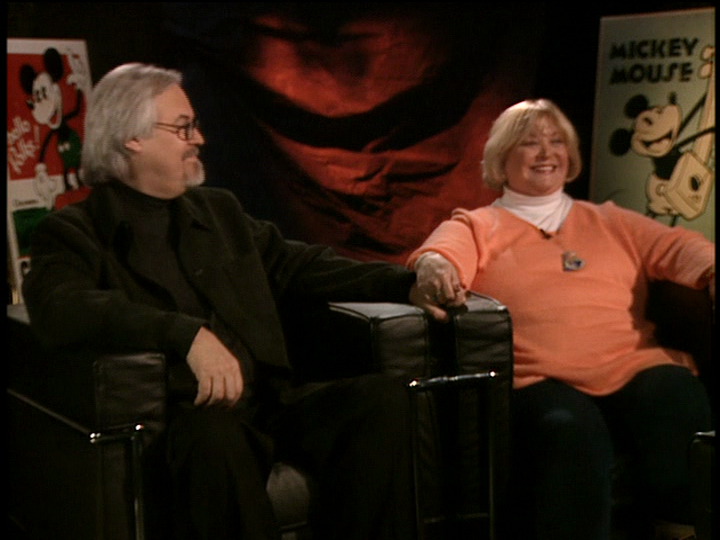
Taylor (L) with husband, Wayne Allwine, the voice of Mickey Mouse

A prime example of life imitating art, Taylor married Wayne Allwine, the voice for Mickey Mouse, in 1991. They were working on a project for Radio Disney, and one night had dinner together, and soon became inseparable. “It was just a total friendship,” Taylor explained. “The next thing you knew, we were just sort of always together.” She remained married to Allwine until his death in 2009.

Taylor has a broad resume as a voice actress; for Disney, she voiced Huey, Dewey, Louie, and Webby in Ducktales, as well as Drizella and the Fairy Godmother in the Cinderella sequels. Taylor is also the voice of Martin Prince, twins Sherri and Terri, and Üter in The Simpsons, and was the voice of Baby Gonzo in the Muppet Babies series. Taylor was named as a Disney Legend, along with Allwine, in 2008, and continues to voice Minnie in many Disney projects.


May 3

Posted on

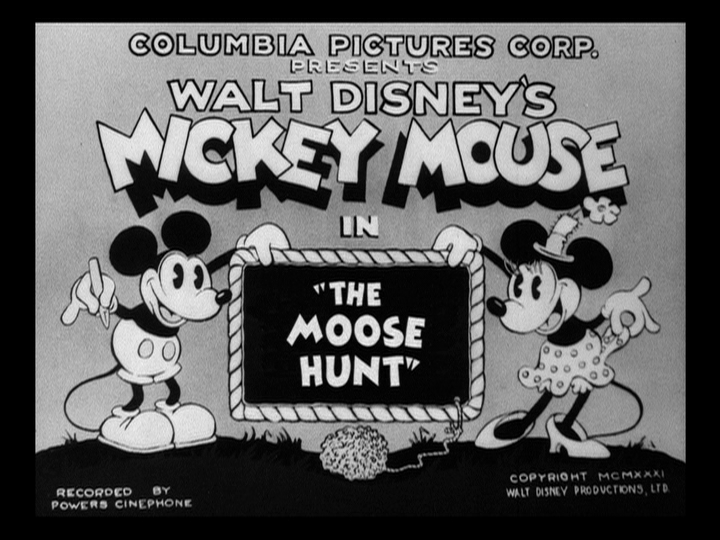
May 3, 1931 – The Mickey Mouse Short The Moose Hunt is Released to Theaters

“Old pal, old pal! What have I done? Oh, what have I done?”

On May 3, 1931, the Mickey Mouse short film The Moose Hunt was released to theaters. It was directed by Burt Gillett, and starred Walt Disney as the voice of Mickey, and Pinto Colvig as the voice of Pluto. This is the first film where Pluto is known by his name.

The short opens with Mickey and Pluto walking in the woods, with Mickey toting a shotgun and whistling “She’ll Be Comin’ ’Round the Mountain.” He trips over a rock, making the shotgun go off, but it doesn’t stop him from dancing down the path. He ends up falling into some tall grass, startling some birds that fly to safety in a tree. When he shoots at the tree, the only thing he’s able to hit are all the leaves. The birds sit safely, singing his song back to him.

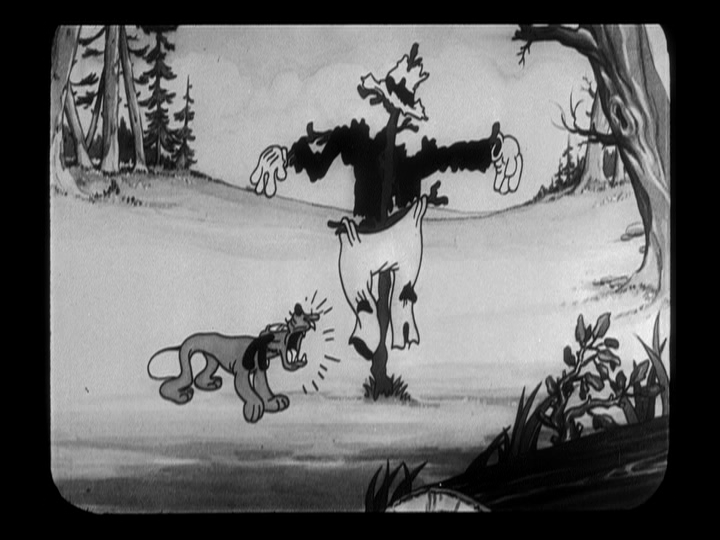
Pluto versus the scarecrow

Pluto, meanwhile, wanders away from Mickey, following a flea that he scratched off. When he comes across a scarecrow, the dog is frightened, and begins to bark at it. When he’s hit by one of the pant legs, Pluto takes off in fear, but ends up sneaking back to sniff and study the scarecrow again. One of the scarecrow’s gloves falls off and lands on Pluto’s tail, startling him and sending him scurrying off in a frenzy.

As Mickey is walking along, Pluto runs up behind him and pushes past, causing the shotgun to go off again as Mickey flies into the air. Pluto ends up flying into a river, with all the fleas he had abandoning ship, only to return once Pluto climbed up onto dry land. He ends up groveling back to an angry Mickey, who glares at him, tapping his foot. The mood quickly changes when Mickey asks Pluto to perform tricks. Mickey grabs a stick and begins to play fetch with Pluto, but unfortunately throws the stick into a pile of branches, and Pluto has to guess which one is the right one. The one he picks, however, makes him look like he has antlers.

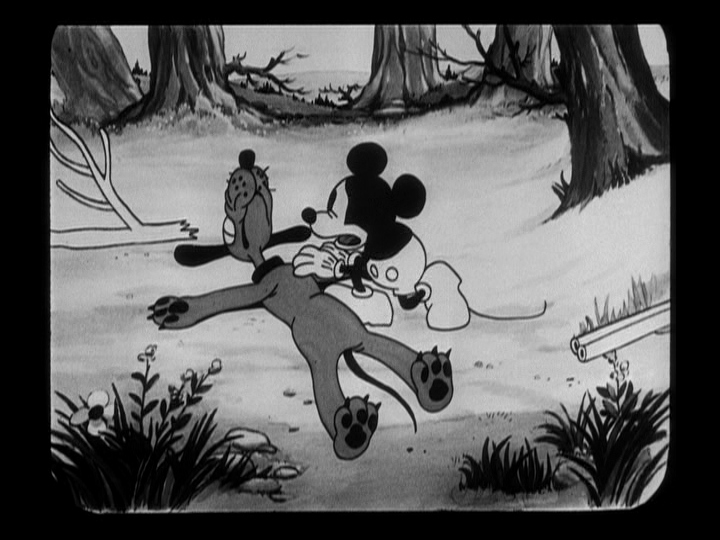
Mickey mourns over the body of his pal, thinking he’s killed him

As Pluto races back to his master, Mickey sees his shadow through the trees, and gets excited. He aims and fires twice, and a loud whimper is heard. As Mickey runs to see his kill, he stops, shocked, observing that the “moose” he shot was in fact his dog. Mickey cries over the body, but the audience sees that Pluto is just pretending to be dead, and he winks at the audience. As Mickey pleads for his dog to be alive and say something, Pluto “revives” and says, “Kiss me.” He then barks, and Mickey happily hugs his friend.

The mood is broken, however, when Mickey hears the call of a moose, and tells Pluto to be quiet. The two carefully sneak along, and Pluto tries to sniff the moose out. Circling around what he thinks are trees, the camera zooms out to show the audience that Pluto has, indeed, found the moose. Continuing to find the scent, Pluto keeps walking, unaware that the moose is copying him and following closely behind. The strange trio is then seen together, with Pluto following Mickey, and the moose following Pluto.

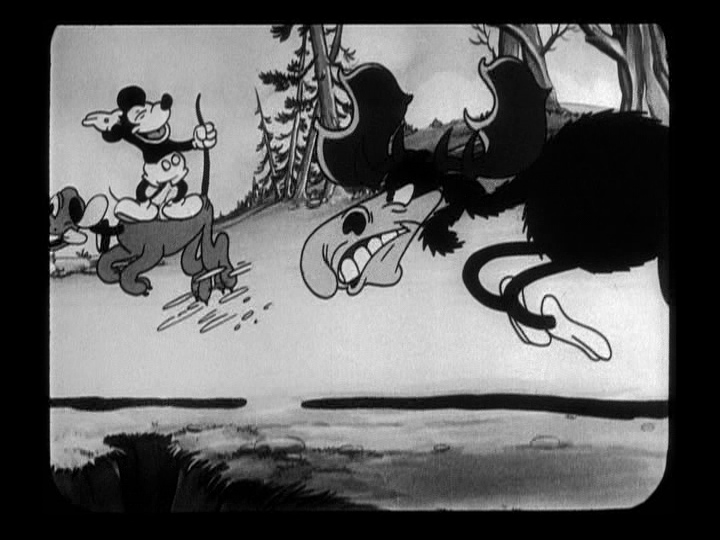
Mickey and Pluto fly away to safety from the clutches of the angry moose

Pluto finally gets the feeling that something strange is going on, and turns to see the moose, causing him to jump in fear. He taps Mickey to get his attention, but Mickey just rebuffs him. Finally, he turns and tries to shoot, only to have his shotgun break into pieces. Mickey and Pluto begin to run for their lives as the moose pursues them, and the day is saved when Pluto uses his ears to help the duo fly away to safety.

May 2

Posted on

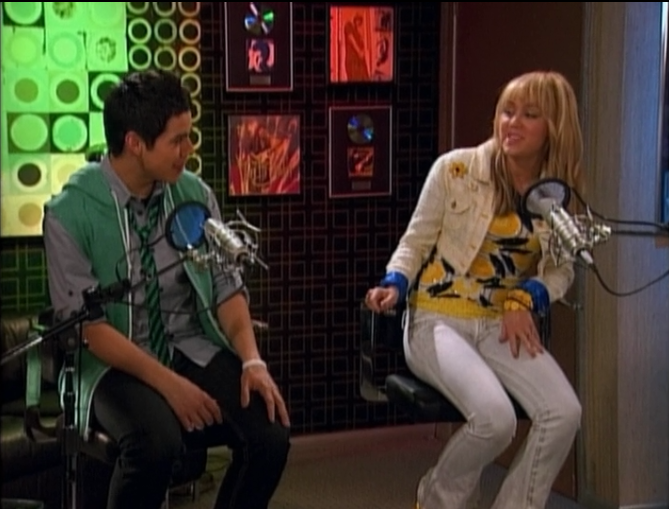
May 2, 2009 – The Miley Cyrus and David Archuleta Duet “I Wanna Know You” Premieres on Radio Disney

“I wanna find out what you know, and maybe someday down the road, I’ll sit back and say to myself, yeah, I thought so.”

On May 2, 2009, a 6:00 P.M. Eastern Standard Time, Radio Disney had the world premiere of “I Wanna Know You,” sung by Miley Cyrus as Hannah Montana and American Idol contestant David Archuleta. The song was featured in a new episode of Hannah Montana the following day. The song entered the U.S. Singles Top 100 Chart at number 74, and charted for only a week.

David Archuleta guest starred on the episode “Promma Mia” as himself; Hannah agreed to go to the prom with an awkward student named Aaron, but decided to ditch him to sing the duet with Archuleta. In the end, Hannah decides to go back to the prom and fulfill her commitment with Aaron instead. The song was then released on the Hannah Montana 3 soundtrack on July 3, 2009.

May 1

Posted on

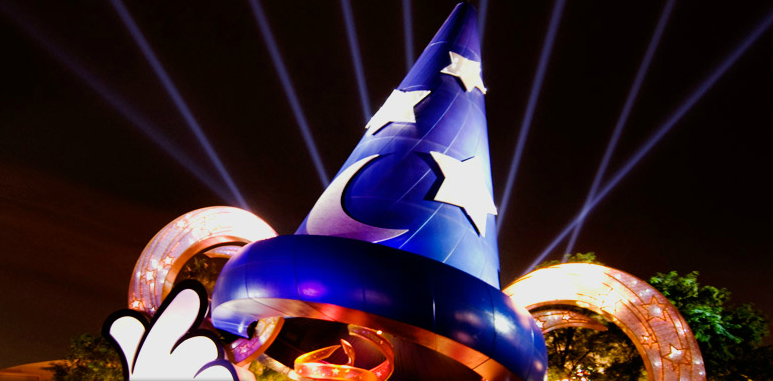
May 1, 1989 – Disney-MGM Studios Opens at Walt Disney World

Image Credit: Official Walt Disney World Site

 “The world you have entered was created by The Walt Disney Company and is dedicated to Hollywood—not a place on a map, but a state of mind that exists wherever people dream and wonder and imagine, a place where illusion and reality are fused by technological magic. We welcome you to a Hollywood that never was—and always will be.” – Michael Eisner

Originally called Disney-MGM Studios Theme Park, the Disney-MGM Studios opened on May 1, 1989. It is one of the four theme parks at the Walt Disney World Resort, and combines the glamour of the ’30s and ’40s with the modern day glitz of American Idol. The attractions are just as varied, from the Rock ‘n’ Roller Coaster Starring Aerosmith, to Star Tours and The Twilight Zone Tower of Terror. The park consists of six different areas: Hollywood Boulevard, Echo Lake, Streets of America, Animation Courtyard, Sunset Boulevard, and the newest addition, Pixar Place. The area was renamed Disney’s Hollywood Studios in 2008.

The idea was originally conceived by Walt Disney. He thought a studio tour would be entertaining at the California studio, but the land was not available, and the tours would disrupt the work at the studio. The idea was revived in the 1980s, with the idea that it would begin as a full fledged studio, where Splash Too was filmed.


April 30

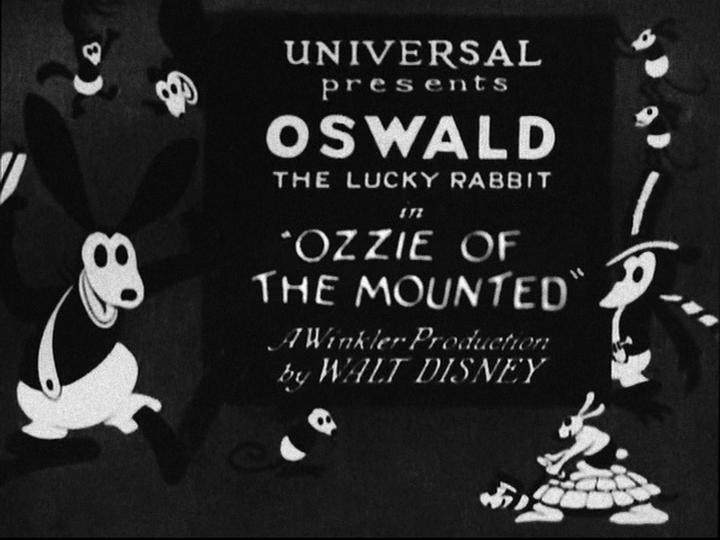
April 30, 1928 – The Oswald Short Film, Ozzie of the Mounted, is Released to Theaters

“This cartoon, as usual, is loaded with a lot of great gags. I love Oswald during this period – he looks great. He’s got lots of personality, and he was a very appealing character.” – Animation Expert Jerry Beck

On April 30, 1928, the Oswald the Lucky Rabbit short, Ozzie of the Mounted, was released to theaters. This short would actually be remade later by Hugh Harman and Rudy Ising over at Warner Brothers, which was then titled Big Man from the North. Most scenes were redone shot by shot. This short also contains the element of a mechanical animal, which Iwerks and Disney used fairly often in the Oswald cartoons.

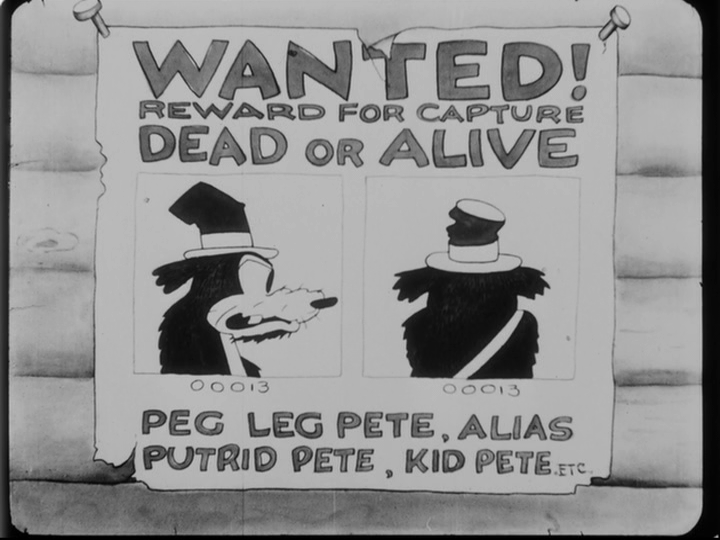
The wanted poster of Peg Leg Pete

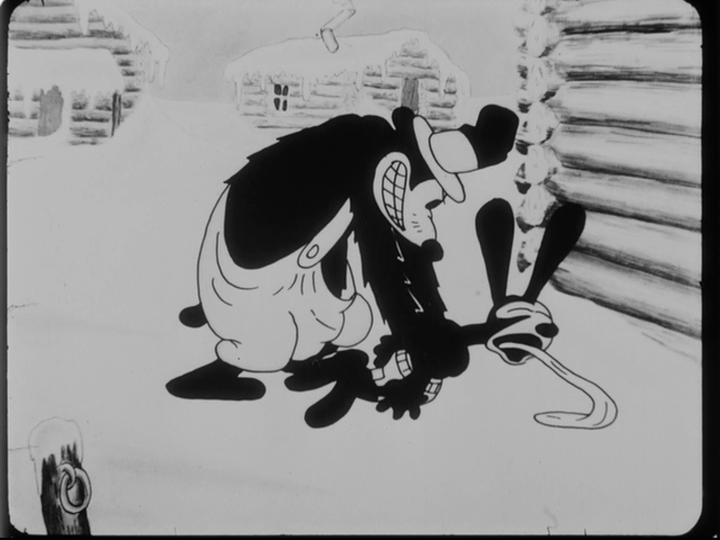
The short opens on a blustery winter day in front of the headquarters of the Mounted Police. Inside, the police chief is pacing the floor, puffing on his corncob pipe. The door opens, and in slides Oswald, giving the chief a salute. The chief points out a wanted poster for Peg Leg Pete, which causes Oswald to shake from fear. The chief demands that Oswald go capture Pete, so Oswald screws up his courage and sets out into the blizzard.

Outside, Oswald winds up his mechanical horse and sets out to find Pete, who is then seen out in the snow with snowshoes, skulking around. Oswald, traveling the other direction, crashes into Pete around the corner of a bar, and is flung from his horse. He looks to see who he crashed into, and is surprised to see that it’s the villain he’s been looking for. He pulls out a gun and points it at Pete, who, by standing alone, is able to intimidate the rabbit. Oswald shoots the gun, only to have the bullet bounce off Pete’s stomach and knock Oswald over.

Peg Leg Pete strangling Oswald

Pete, seeing an opportunity, begins to strangle Oswald, squeezing the rabbit’s tongue out of his mouth. As Oswald appears to be dead, Pete looks up at the audience in horror and quickly slips away, hitching a ride on a nearby dogsled. Oswald finally gets up, pulls his tongue back in, and begins to fix his mechanical horse so he can give chase. After some disastrous results, Oswald finally fixes the horse, and begins to follow Pete.

Many gags ensue on this chase, including Oswald getting stuck in a loose spring from the body of his horse, and ending up flattened when the horse pulls him into a branch. Pete ends up losing his sled team and begins to slide down a hill, out of control, until he hits a rock. Unfortunately for Pete, the rock is actually a bear, who growls and runs after Pete. Oswald, seeing the bear, also tries to flee, but is caught by the pants by the bear, who sends Oswald flying to the nearby jail. Seeing his chance, Oswald flings open the door to the jail, telling Pete to run in for safety. Oswald traps Pete and the bear in the jail, and the short ends with Oswald laughing at his villain’s misfortune.

April 29

April 29, 1957 – The Sleeping Beauty Walk-Through Attraction Opens

Image credit: Official Disneyland Site

 “Relive one of the most beloved Disney legends as you stroll through the iconic Sleeping Beauty Castle.”

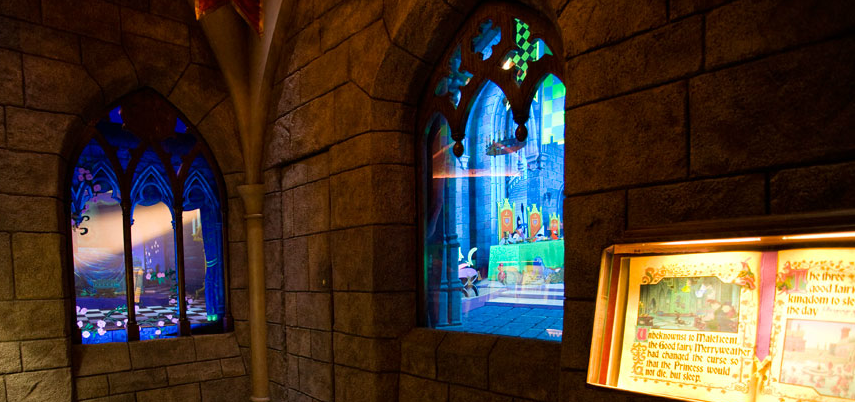
 On April 29, 1957, the Sleeping Beauty Walk-Through opened in Disneyland, with Shirley Temple on hand to make the dedication. The attraction was created to use the empty space in the castle, and featured dioramas to tell the story of Sleeping Beauty in the style of Eyvind Earle, the production designer for the 1959 film. The dioramas were redesigned in 1977. The attraction was closed in 2001, but on November 27, 2008, the attraction opened again, reverting back to the original Eyvind Earle-inspired artwork, but with new technology that wasn’t available in 1957.

April 28

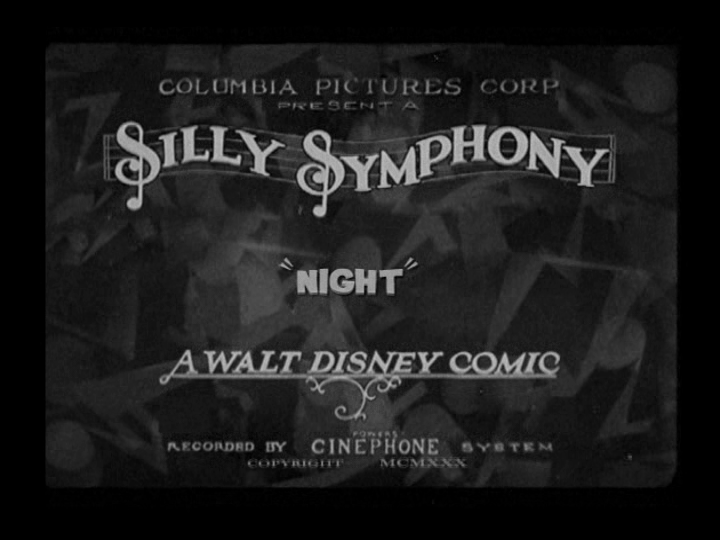
April 28, 1930 – The Silly Symphony Night is Released to Theaters.

On April 28, 1930, the Silly Symphony Night was released to theaters. Known as the early version of the award-winning short The Old Mill, the story set to music is of assorted animals in the evening near a river. It was directed by Walt Disney, and includes “Moonlight Sonata” by Beethoven among its collection of classical music used throughout the short.

The short opens on a moonlit night at a mill near a river, with the grass swaying in time to the background music. The moon gives the world a big smile, and begins singing along with the music playing. An owl flies past, flapping its wings in time with the tune, and calls out to his mate, who flies down to meet him on a branch. The two begin to dance; unfortunately, the male begins to kiss the female, who does not respond positively to his advances.

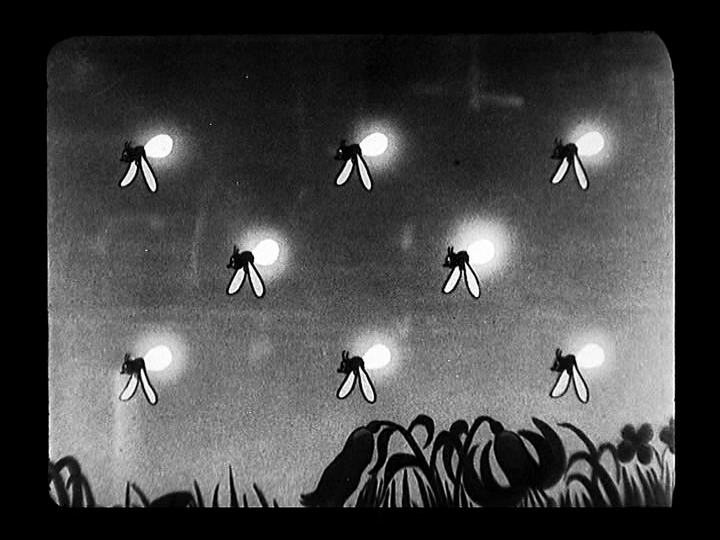
The fireflies lighting up the night in time with the music

The “bug ballet” begins with some bugs are flying around a lamp, with one teasing the candle’s flame, only to find itself burned. Fireflies begin to light up in rhythm to the new song playing, with two silly fireflies performing for the audience. Afterward, three mosquitoes begin some sort of skulking dance, which ends with them crossing over a stream and landing on a frog’s head, biting the poor frog before they fly away. The frog gets his revenge, however, by eating all mosquitoes in rhythm before dancing across the pond himself to meet his lady friend.

Around the mill’s wheel, the frog romantically rocks his lady frog while a group of other frogs croak a lullaby for the couple. The main male frog professes his love in song, while the female frog smiles and hides her face in cute embarrassment. The two begin to dance across the lily pads together, only to fall over the edge of a waterfall, ending the short with a loud, dramatic splash.

April 27

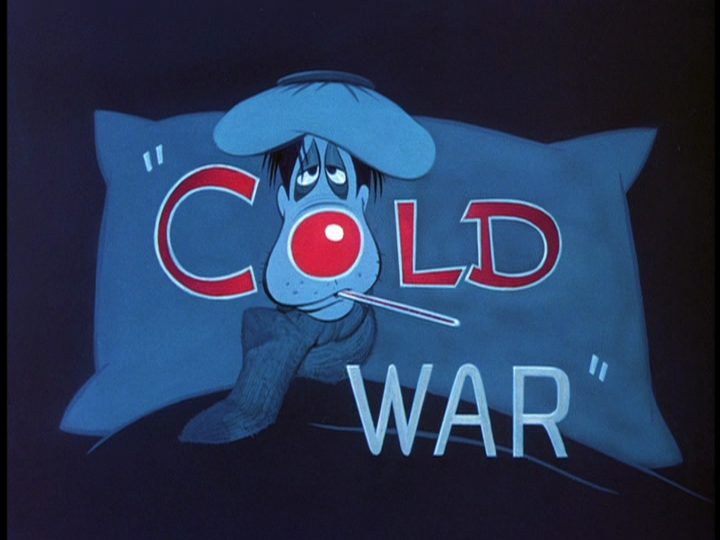
April 27, 1951 – The Goofy Short Film, Cold War, is Released to Theaters

“Now, look, Geef, a cold is nothing to be sneezed at. Beat it!”

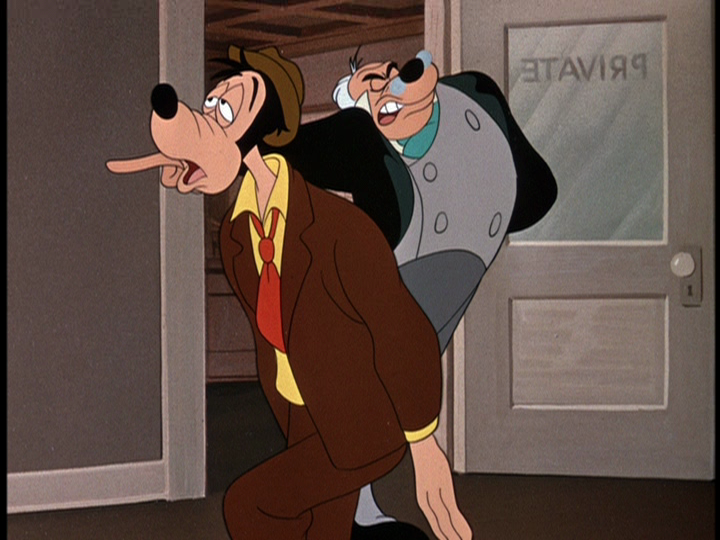
On April 27, 1951, the Goofy short film, Cold War, was released to theaters. As Goofy is seen as an “everyman” sort in many of these shorts, he was given an “everyman” name: George Geef, which is used throughout by the other characters. The short was directed by Jack Kinney, with the story by Dick Kinney and Milt Schaffer, and Goofy being voiced by Pinto Colvig.

Dejected, Goofy is sent home from the office, thanks to his cold

The short opens with a narration on how to spot the carrier of the common cold: a virus easily identified by his red nose. We then see Goofy at his desk on a cold winter’s day, and he opens the window to get some air, inadvertently inviting in the cold carrier. Goofy then lets out a loud sneeze, which is heard by his boss. His boss demands that he take his cold out of there Goofy protests that he doesn’t have a cold, but he loses the argument by letting out another powerful sneeze. Defeated, Goofy leaves the office, while the boss sprays the room with sanitizer to kill the germs.

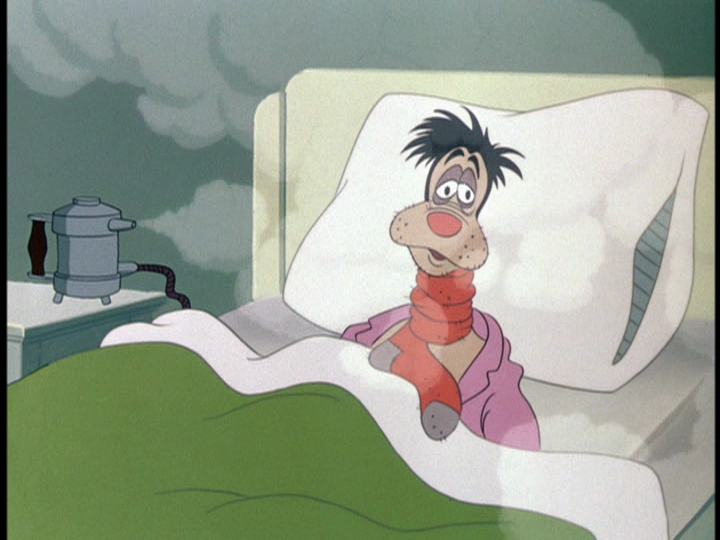
Goofy comes home, looking for a little sympathy, when he spies on a nearby table a note from his wife, informing him that she’s playing bridge at her friend Mabel’s, and dinner is in the ice box. He cries out, to no one in particular, that he has been deserted, and makes his way to the bed to lie down. The cold carrier is seen tormenting poor sick Goofy, using his nose for a punching bag, among other indignities. Goofy resolves to stay strong, but is reluctant when he has to take cold pills, and finds he is unable to swallow the pill. After fighting with it, it falls down the drain, and poor Goofy is without relief.

Goofy relaxing in bed as his wife continues her care of him

Goofy is in the kitchen, soaking his feet in a hot tub, when his wife returns, asking what he’s doing home. He tries to explain that he has a cold, but she isn’t listening, and continues to tell him about her day. She then accuses him of not listening – he’s tried, and his ears have gotten clogged from the cold – and realizes that he’s come down with a cold. She pushes him into bed and begins to take care of him with every remedy known to man, with comedic results. The cold is sent packing as Goofy sleeps peacefully, and the announcer lets us know that two weeks later, Goofy is well once more. Unfortunately, when he opens the window at work again to let in some cold air, the cold carrier comes racing back, causing him to sneeze loudly once again.

April 26

April 26, 1991 – Dinosaurs Premieres on ABC

Image credit: wikipedia

“We’d be on a plane, and [Jim Henson] would start to talk about this family of dinosaurs, with a father who wore plaid shirts and had a Brooklyn accent. It always made him laugh.” – Alex Rockwell

On April 26, 1991, the show Dinosaurs premiered on ABC. Created by Jim Henson Associates, Dinosaurs was the idea of Jim Henson and Alex Rockwell, who pitched it to Disney’s television division. The show follows the Sinclairs, a prehistoric blue-collar family. It starred Stuart Panking as the voice of Earl Sinclair, Jessica Walter as the voice of Fran Sinclair, and John Kennedy as the voice of Baby. The show won an Emmy in 1991 for Art Direction, and lasted for four seasons

Although the show was Henson’s idea, he passed away before it could come to fruition. His son Brian then worked with producer Michael Jacobs to bring it to the small screen. Production began in 1991, with filming on the same lot that The Muppet Movie had been filmed thirteen years prior. The dinosaurs were costumed actors with animatronic heads; the performers controlled the faces by remote control rigs from a distance. The show received good reviews and high ratings, proving that Jim Henson Productions could continue after Jim Henson’s death.