RSS Feed

October 2

October 2, 1992 – The Live Action Film The Mighty Ducks is Released to Theaters
“Here’s the long and short of it: I hate hockey and I don’t like kids.”

On October 2, 1992, the live action film The Mighty Ducks was released to theaters. It is the first film in The Mighty Ducks trilogy, and was followed by D2: The Mighty Ducks and D3: The Mighty Ducks. It was written by Steven Brill, and directed by Stephen Herek. The film stars Emilio Estevez as Gordon Bombay, Joss Ackland as Hans, Lane Smith as Coach Riley, and Joshua Jackson as Charlie.

The film begins with a flashback of the main character, Gordon Bombay, when he was the star player of his pee-wee hockey team in 1979. He misses the goal that costs his team the game; as his coach looks at him with obvious disappointment, Gordon falls sadly to his knees on the ice. We then switch back to present day Minneapolis, where Gordon is a hotshot lawyer, always out for the win regardless of any ethics. One night, he is pulled over by an officer for driving drunk, and is later sentenced to community service coaching pee-wee hockey, much to his annoyance, as well as a forced leave of absence by his boss, Mr. Ducksworth.
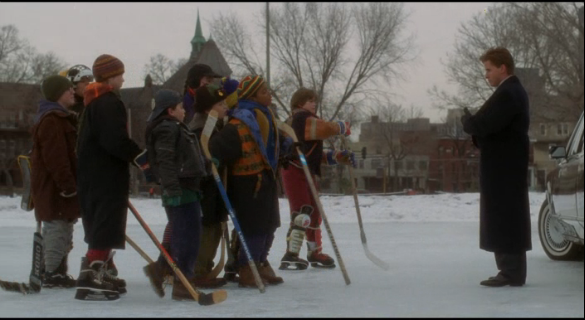
At the first meeting between Bombay and the kids, they believe him to be dangerous, and he has little patience for their antics

The first meeting of the District 5 team and Bombay does not go well, as the kids admit that they “really suck,” and Bombay has little patience for kids and clashes with the parents. He attends their first game, which is unfortunately against his old pee-wee team, the Hawks. He runs into his old coach, Coach Riley, who still instills in the kids that winning is everything, and still is disappointed about the team’s loss in 1979. The first game is an embarrassment, with District 5 losing 17 to 0. As Bombay walks out on the team, he sees a familiar face at the doors, and is shocked to see that it is his old friend and mentor Hans. He runs after him, but is unable to find Hans in the parking lot. Bombay then switches his training to having the kids take falls and pretend they’ve been injured by the other team. Charlie, one of the players, refuses to play dirty hockey.

Not knowing what to do anymore, Bombay finds Hans at his sports shop, and asks for advice. Bombay is reminded that he gave up hockey after that disastrous game, with his father having died four months prior, and his passion for the game having disappeared. Hans helps him rekindle his love for hockey, and asks him to teach the kids how to fly. After being inspired by Hans, Bombay goes to Charlie’s house to apologize to Charlie and his mother for his behavior before, and then goes to his boss and asks for the firm to sponsor the team. The team then is named the Ducks, after the boss. Charlie soon begins to bond with Bombay, and the team continues to add new members and improve their skills.
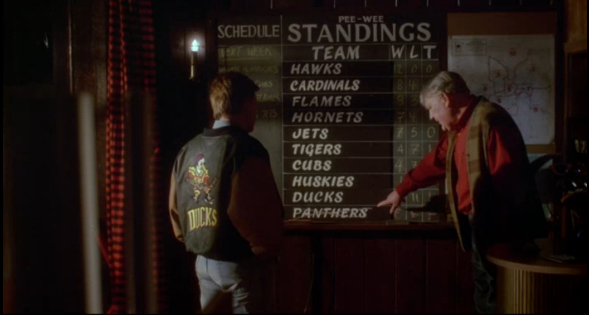
After their tie game, Hans explains to Bombay that the Ducks still have a chance of getting into the playoffs and facing the Hawks

The team manages to tie their next game, and Hans lets Bombay know that the Ducks may be able to make the playoffs. When Bombay voices his concern about the possibility of facing the Hawks, Hans tells him that the district lines were redrawn the previous year, and that the Hawks’ star player, Adam Banks, is supposed to play with the Ducks. Coach Riley is furious with Bombay, accusing him of backstabbing. Bombay, however, feels that he’s playing by the rules. The Ducks hear Bombay call them losers (although he was being sarcastic), and with the discovery that he was once a Hawk, most of them decide they don’t want to play for him anymore. Bombay doubts he can stay the coach if the team doesn’t trust him and Adam Banks, which upsets Charlie greatly.

Bombay encounters more problems when he finds that his boss is an old friend of Adam Banks’ father and, with Coach Riley, the three demand that Bombay drop his protest. He refuses, and loses his job. At school, the kids have a fight over the fate of the team, which subsequently reunites them, and Bombay, when he comes by to talk to them. Adam decides to join the team, but the team still doesn’t trust him, as they still consider him a Hawk. However, with his help, they win the game and make it to the playoffs. They eventually make it to the final match versus the Hawks. Bombay, however, is still haunted by the 1979 game and Coach Riley’s disappointment in him.
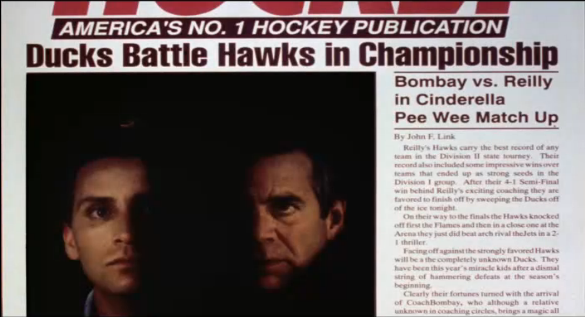
The match is considered an intense one, with Bombay against Riley, Adam Banks against his former team, and the Hawks defending their title against the Ducks

The game is intense from the get-go, with Banks’ former teammates trying to keep him down on the ice. The Hawks score first, and continue to score on the Ducks, leading the first period 3 to 0. At one point, Coach Riley stops Banks’ former friends, telling them to “drop him like a bad habit.” One friend looks alarmed, but the other agrees to do so. As Banks rushes with the puck, the one friend pushes Banks down, sending him flying headfirst into the goal. While Banks is able to score, he has hit his head so hard he is knocked unconscious. He is sent to the hospital, and the Ducks are more determined than ever to win. At the end of the third period, the Ducks are able to tie it up, and are given a penalty shot, sending the game into overtime. Charlie is picked to take the shot, with Bombay reassuring him that even if he misses, everything will be all right. Charlie makes the goal, and the Ducks win the state championship.

In the end, Bombay goes off to try out for the minor leagues, saying goodbye to the team as they cheer him at the bus station. He promises he’ll be back before the next season, as they have a title to defend.
October 1

October 1, 1935 – Actress, Singer, and Disney Legend Julie Andrews is Born

“I know that I am blessed and unbelievably lucky to be asked to do [Mary Poppins], at a time in my life when the next break was just a big question mark and suddenly, there was Mary Poppins and Walt.”

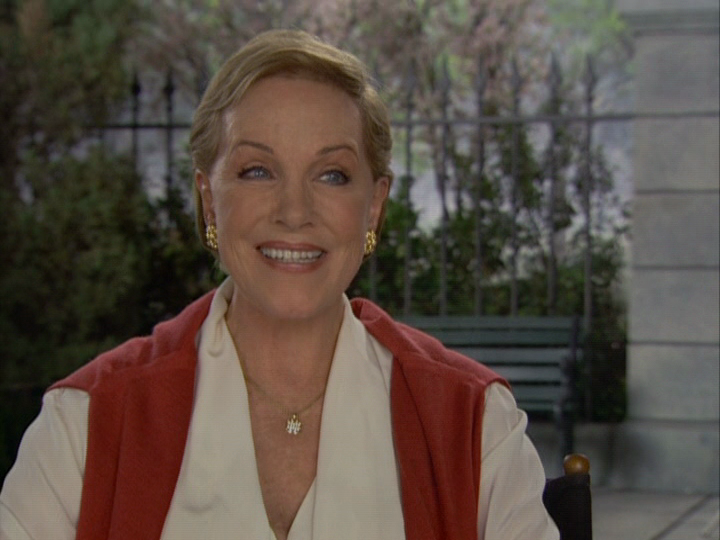
On October 1, 1935, actress and singer Julie Andrews (born Julia Elizabeth Wells) was born in Walton-on-Thames, England. During World War II, Andrews’ mother and father separated, with Andrews’ mother joining Ted Andrews in entertaining the troops through the Entertainments National Service Association; they soon married, and Julie was sent to live with her mother and step-father. Julie took private voice lessons with Madame Lilian Stiles-Allen, working on her amazing vocals, which ranged five octaves. At age 12, Andrews sang at the London Hippodrome, which soon led to many other opportunities on the sate, including Cinderella and The Boy Friend, as well as one of her most well-known roles as Eliza Doolittle in My Fair Lady.

Walt Disney was in the audience one night while Andrews performed as Queen Guinevere in the Broadway production of Camelot. After the performance, he went backstage and offered her the lead role in his new feature film, Mary Poppins. She agreed tentatively, as there was a chance that she would be in the film version of My Fair Lady; when the role of Eliza went to Audrey Hepburn, Andrews began the work on Mary Poppins. The film was a success, and made Andrews a star, with her winning an Academy Award and a Golden Globe for her performance. She starred in several high-profile films after this, including The Sound Of Music, which garnered her another Golden Globe, and a nomination for another Academy Award.

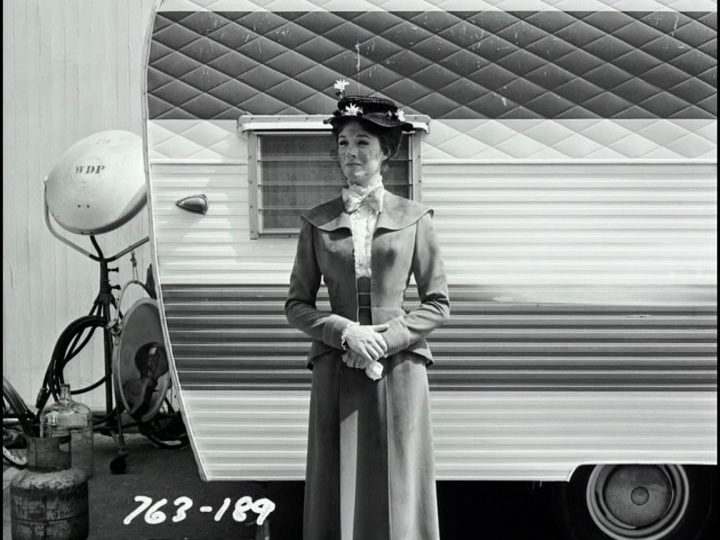
Andrews is best known for playing the title character in Disney’s Mary Poppins, a role that won her the Academy Award for Best Leading Actress

In 1991, Andrews was named a Disney Legend. In 2001, Andrews returned to Disney films by playing the role of Queen Clarisse Marie Renaldi in their adaptation of the Meg Cabot series The Princess Diaries, as well as the sequel The Princess Diaries II. In 2005, Andrews was named the Official Ambassador of Disneyland’s 50th Anniversary, promoting the celebration and the park with several events.

September 30

September 30, 2006 – Dream-Along With Mickey Debuts at Walt Disney World

Image Credit: Walt Disney World official site

“Mickey invites you to join him and celebrate the magic of dreams at this fun-filled, dream-inspired musical show where adventure and ‘happily ever after’ come alive right in front of your eyes.”

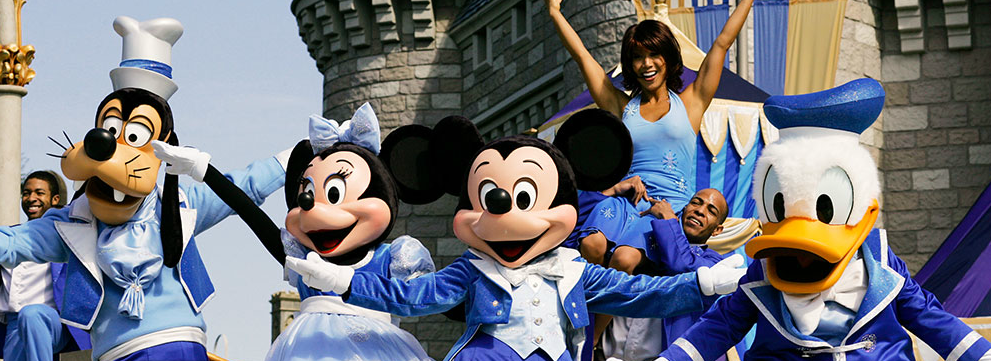
On September 30, 2006, the musical stage show Dream-Along With Mickey debuted at Walt Disney World’s Magic Kingdom. The show stars not only Mickey and the gang, but includes appearances by Cinderella, Aurora, Snow White, Captain Hook, and Peter Pan, among others. As the celebration part of the show begins, Maleficent from Sleeping Beauty appears, and Mickey has to stop her from turning dreams into nightmares, with the help of the audience. The show is 20 minutes long, and takes place at Main Street within the Magic Kingdom.

September 29

September 29, 2000 – The Theatrical Feature Remember the Titans is Released to Theaters

“I don’t scratch my head unless it itches, and I don’t dance unless I hear some music; I will not be intimidated.”

On September 29, 2000, the theatrical feature film Remember the Titans was released to theaters. Based on the true story of the 1971 T.C. William Titans football team, the film tells the story of Coach Herman Boone and the struggles he faces as head coach, as well his dealings with Coach Bill Yoast, as they both try to direct the team during the time of racial turmoil in Alexandria, Virginia. The film was a joint production between Walt Disney Pictures and Jerry Bruckheimer Films. The screenplay was written by Gregory Allen Howard, with the film being directed by Boaz Yakin, and starring Denzel Washington as Coach Boone, Will Patton as Coach Yoast, Wood Harris as Julius Campbell, Ryan Hurst as Gerry Bertier, and Hayden Panettiere as Sheryl Yoast.

The movie opens at a funeral in Alexandria, Virginia, 1981. The narrator talks about her father coaching in Virginia, where football is considered bigger than Christmas. The film then goes back to July, 1971, just after schools in Virginia were integrated, with crowds of angry people in front of a store where a white store owner killed a black teenager. Some teenagers are seen playing football, when another student arrives and alerts them about the shooting. Their coach, Bill Yoast, luckily is able to stop them before they get caught up in the fighting. As they arrive back at the school, they are surprised to see Herman Boone, the new assistant coach, in Yoast’s office. After some tense words, Boone reassures Yoast that he comes with one purpose: to win.

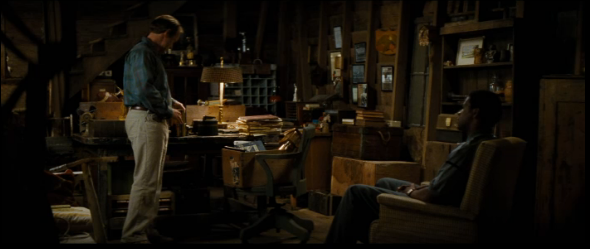
Boone (R) tries to convince Yoast (L) to join his team as the assistant coach, after apologizing for the circumstances but still maintaining that he has the skills to be head coach

The announcement comes soon after: Boone has been placed into the head coaching position by the school board. Boone is against the decision, as he left his position in North Carolina for being passed over due to race, and is against doing the same thing to someone else. Boone goes to Yoast’s house to offer him an assistant coaching position, but Yoast turns it down. He changes his mind when he realizes that the kids he coaches are putting their scholarships on the line.

The students go to football camp at Gettysburg College, with former team captain Gerry Bertier clashing not only with Coach Boone, but particularly with other player Julius Campbell. Boone is constantly making the two teams work together, forcing them to work together as one team. After a run to Gettysburg Battlefield, the two teams slowly begin to work together, with Julius and Gerry beginning to become friends. Unfortunately, when they get back home to Alexandria, the racial tensions they left behind are there to meet them, threatening to tear apart their newly formed team friendships. There’s more news for Boone as well: the moment he loses a game, he will be fired.

The community slowly begins to rally around the Titans as they go on to win every game they play

After a nearly disastrous first game, the Titans go on to a great winning streak, with the town slowly coming around to support the team. Although Gerry becomes good friends with Julius, his friends and family don’t share his viewpoint. Yoast is also having problems with the people in his life; his friend Coach Tyrell deserts him when Yoast continues to work with Boone, and when his daughter spends time at the Boone’s house, a brick is thrown through the window, which causes Yoast much concern and highlights the tensions between the two coaches. Yoast is put to the test when his nomination to the Hall of Fame is on the line: he will only stay a nominee if he helps throw the next game. In the end, he tells the referees that he knows they’re helping to throw the game, and refuses to contribute any more to the scheme. This loses him the Hall of Fame, but Yoast believes he’s gained something more.

After this game, Gerry is in a terrible car accident during the celebrations, and everyone rushes to the hospital. He becomes paralyzed from the waist down from his injuries, and will only speak to Julius. Julius promises that Gerry will pull through this, and they’ll grow old and fat in the same neighborhood, where race will no longer be an issue. Although Yoast believes that the team should take a break, Gerry refuses to let that happen, saying, “I’m hurt. I ain’t dead.” He then suggests to Yoast about entering the Wheelchair Games.

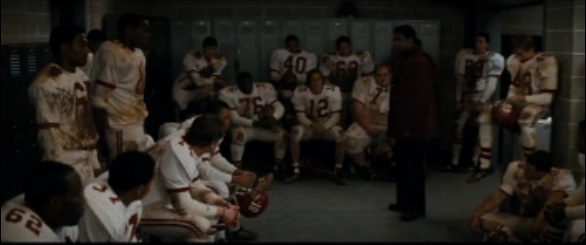
The team sits in the locker room during half-time of the state championship, telling Coach Boone that they came on to the field perfect, and that’s how they want to leave it

The final showdown is between the Titans and Coach Ed Henry for the state title. Not only is the team finally working together, but Yoast comes to the realization that he and Boone can work together, as does Boone. With one final play between the two, the Titans win the game and the state championship. Yoast’s daughter Sheryl continues her narration from the beginning of the film, saying that the Titans had a perfect season, going on to become the 2nd best high school team in the country. Gerry also won a gold medal in shotput in the Wheelchair Games, with coaching from Yoast. 10 years later, he passed away, which brings the audience back to the funeral from the beginning of the film. The film concludes with updates on many of the players, and includes Boone and Yoast, who “became good friends, and they continue that friendship today.”


September 28

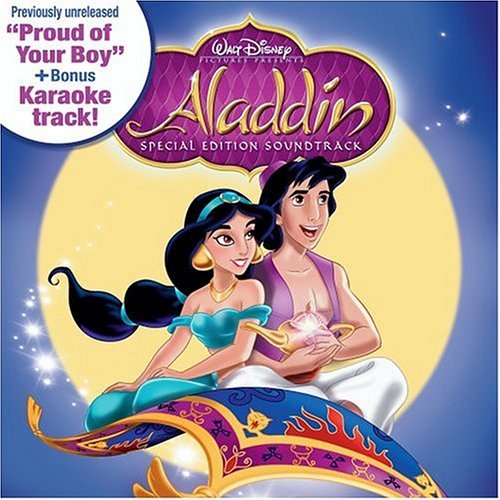
September 28, 2004 – The Special Edition Soundtrack of Aladdin is Released Through Walt Disney Records

Image credit: Amazon

“Proud of your boy, I’ll make you proud of your boy.”

On September 28, 2004, the special edition soundtrack of Disney’s 31st animated feature, Aladdin, was released through Walt Disney Records. The original soundtrack was released on November 25, 1992, with this special edition coinciding with the Platinum Edition of the film released on October 5, 2004.

The album contains 23 tracks, with 21 from the original release and the remastered version from 2001. This edition contains two demo songs – “Proud of Your Boy” and “High Adventure” – which were cut from the film when the plot was changed. “Proud of Your Boy” was written by Howard Ashman; in the original treatment of the film, Aladdin sang this song to his mother to prove that one day, he would make her proud. When the character of Aladdin’s mother was cut from the film, the song was cut as well. “High Adventure” was another song written by Ashman that didn’t make the final cut. Both songs were also included on the box set “The Music Behind the Magic.”

September 27

September 27, 1947 – The Ninth Animated Feature Film, Fun and Fancy Free, is Released to Theaters

“So if you’d really like to be happy-go-lucky just like me, drown your frowns my friend and you will see, you’ll see, that you’ll be full of fun and fancy-free.”

On September 27, 1947, the ninth animated feature film, Fun and Fancy Free, was released to theaters. It was the second package film released by Disney, comprised of two stories: Bongo (written originally by Sinclair Lewis), and Mickey and the Beanstalk, a retelling of the classic tale Jack and the Beanstalk. The two were originally meant to be full-length features of their own. Although Mickey was in the feature film Fantasia, this was the first time Goofy and Donald were also used to carry a feature film. As the story was tightened, many scenes were dropped, including the scene where Mickey receives the magic beans for his cow from none other than Minnie Mouse, playing the queen. The two stories were stopped in development when the country entered World War II. The live action segments were directed by William Morgan, with the animation sequences directed by Jack Kinney, Bill Roberts, and Hamilton Luske. The film included the talents of Anita Gordon, Cliff Edwards, Billy Gilbert, The Kings Men, the Dinning Sisters, and the Starlighters, as well as Edgar Bergen (ventriloquist for Charlie McCarthy and Mortimer Snerd) and Luana Patten. This film also marks the last time Walt Disney voiced the character of Mickey Mouse, as he would have sound effects man Jimmy MacDonald take over the role.

The movie begins with the voice of Jiminy Cricket ringing out, singing about being happy-go-lucky, and begins to sing and dance around a library, expressing his sadness about the whole world worrying about so many things. “But why get so excited,” he asks. “What’s going to be is going to be.” Unfortunately, he runs into a cat that chases him out of the library. He finds himself in a girl’s room, coming across what he calls a “deadpan doll and a droopy bear.” To cheer them up, he puts on a record about the story of Bongo, a musical story sung by Dinah Shore.

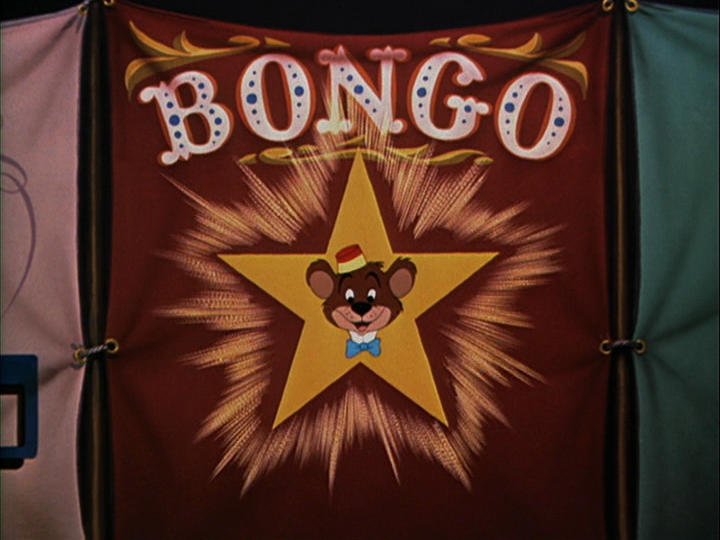
The story of Bongo begins with his days in the circus, where he was the star

Bongo is a circus bear: “he was born in the circus, grew up in the circus; in fact, Bongo was the star of the circus.” Bongo was seen as being able to do it all, with the circus tent packed with fans that wanted to see him perform the greatest of stunts. But although Bongo appeared thrilled with what he was doing, he was a prisoner of the circus, kept in a cage. He spent his nights dreaming of a place where he was free from the circus life. One fateful day, he decides to answer the call of the wild, and escapes from the circus train. Finally free, he explores the woods where he landed, smelling the flowers and leaping over tree roots. Unfortunately, Bongo doesn’t know how to survive in the woods, but he’s still elated to be out in nature. He soon makes friends with the animals of the forest, and they walk around, exploring their surroundings.

Unfortunately, life in the woods is not as pleasant as Bongo thought, as at first he is unable to get to sleep, then finds himself caught in a storm. He becomes discouraged that his dream life wasn’t the way he thought it would be, and even more discouraged that he can’t even catch food like a real bear would. As he tries to catch a fish, he hears the giggle of a young female bear named Lulubelle, and begins to follow her as she flirts with him. The two quickly fall in love, but there is one problem: Lumpjaw, the roughest, toughest, meanest bear in the woods, who wants Lulubelle all to himself. After some mixup, Lulubelle ends up in Lumpjaw’s arms, with Bongo being left heartbroken, as he didn’t understand the way of bears (bears express their love by slapping). Lulubelle sneaks away from the bears to find Bongo, and a fight ensues between Bongo and Lumpjaw, with Bongo using his circus skills to win. Lulubelle and Bongo live happily ever after in love.

Jiminy decides to attend a party hosted by Edgar Bergen (C), with his puppets Charlie McCarthy and Mortimer Snerd, with Luana Patten as the guest

After the story ends, Jiminy comes across a party invitation for Luana Patten at Edgar Bergen’s house across the way, and decides to attend himself. Bergen is entertaining Luana, Mortimer Snerd, and Charlie McCarthy, and decides to tell the group a story: Mickey and the Beanstalk. He has Luana create a picture in his mind of Happy Valley, where Mickey, Goofy, and Donald live. Happy Valley was a prosperous place, with a magic singing harp residing in its castle, casting a spell of joy over the entire valley. One day, a mysterious shadow appears in Happy Valley, and steals the harp from the castle. Once the harp is stolen, the valley loses its joy and prosperity. The audience is taken inside the cottage of Mickey, Goofy, and Donald, sharing a pitiful meal. Unable to take it anymore, Donald loses his cool, going mad with hunger and desperation. He takes the axe from the wall and decides to kill their beloved cow.

The next day, Mickey decides to take their cow to market, with Goofy and Donald hopeful that they will be able to afford food. When Mickey comes home, however, he informs them that he sold the cow for magic beans. Donald loses his cool again, throwing the beans away. Once the moon hits the spot where the beans fell, however, a giant beanstalk begins to grow, destroying their house in the process and sending the trio sky high. When morning comes, the three are amazed to see a castle in the sky, and decide to explore. After surviving an attack a giant dragonfly, the three reach the castle steps and climb inside. They discover that the banquet table is covered in food, and don’t hesitate to eat the best meal they’ve had in ages. They also discover the harp being held hostage in a treasure box nearby, and she warns them about the giant, as he has the ability to turn himself into anything he wishes.

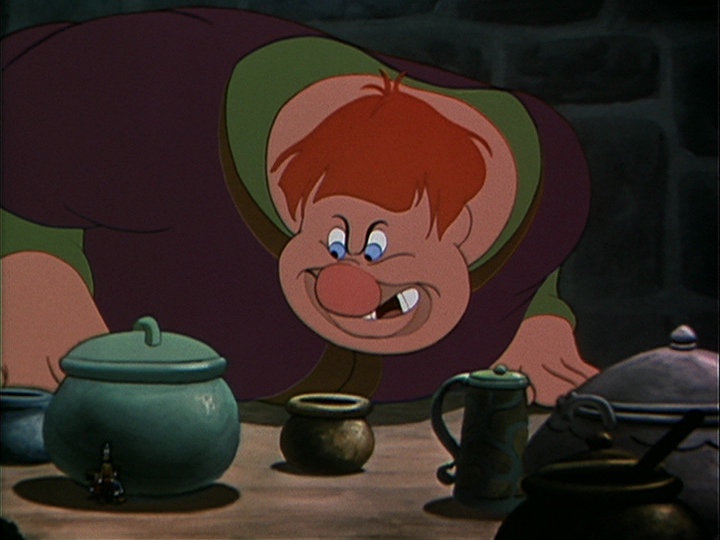
The giant suddenly appears, and looks around the table for the trio

Suddenly, the giant appears, singing a simple song about himself and adding the words, “Fe Fi Fo Fum.” He smells the scent of the trio and searches for them, but gets distracted by the food on the table and begins to eat. He catches Mickey, but with Mickey’s quick thinking, he’s able to escape, tricking the giant into changing into a fly. However, the giant would rather change into a pink bunny rabbit, and when he spies the trio with a flyswatter, he catches them and throws them into the treasure box, keeping the harp out for her to sing him to sleep. With the harp’s help, Mickey is able to free his friends and escape with the harp. The giant wakes up as they begin their escape and chases after the three. When the trio makes it to the bottom of the beanstalk, they grab a saw and begin to chop the beanstalk down, sending the giant tumbling down to earth. Happy Valley is returned to its peaceful and prosperous state.

As Bergen finishes telling the story, he notices that Mortimer begins to cry over the death of the giant. Bergen tries to explain that the giant never existed, and is succeeding until the roof of his house lifts, and the giant appears, asking the group if they’ve seen a mouse. Bergen faints, and the giant leaves, exploring Hollywood for signs of Mickey (and taking the Brown Derby restaurant with him as a new hat).

September 26

September 26, 2006 – Vanessa Hudgens’ Debut Album, V, is Released Through Hollywood Records

“When it’s not alright, when it’s not ok, will you try to make me feel better?”

On September 26, 2006, the debut album of High School Musical star Vanessa Hudgens, titled V, was released through Disney’s Hollywood Records. With two promotional singles – “Come Back to Me” and “Say OK” – the album debuted and peaked at twenty-four on the Billboard Charts. It was certified Gold on February 2, 2007. The first single, “Come Back to Me,” was released on August 25, 2006, peaking at 55 on the Billboard Hot 100 Charts and 18 on the Billboard Pop Song chart. “Say OK,” the second single, was released much later, on March 27, 2007, faring much better on the charts, as it hit number 1 on the Billboard Hot 100, and peaked at number 7 on the Billboard Pop Song chart. Overall, the album received positive feedback.

September 25

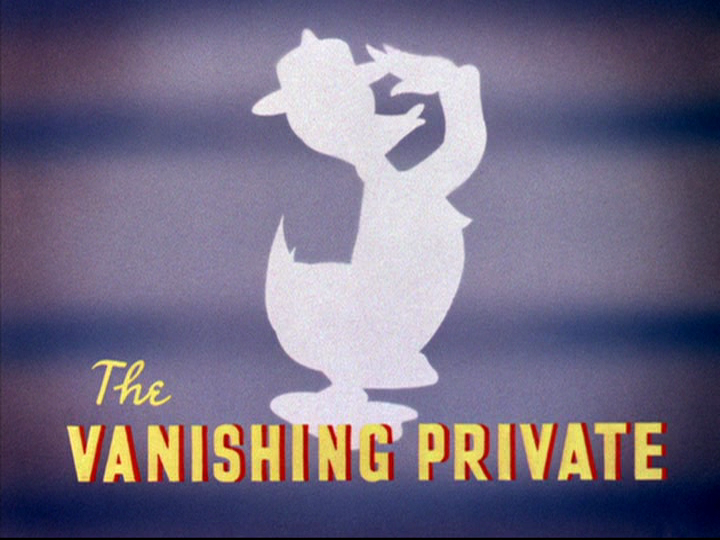
September 25, 1942 – The Donald Duck Short Film The Vanishing Private is Released to Theaters

“Did you see a little guy that you can’t see?”

On September 25, 1942, the Donald Duck wartime short film The Vanishing Private was released to theaters. The short was directed by Jack King, written by Carl Barks, and stars Clarence Nash as Donald Duck, and Billy Bletcher as Pete.

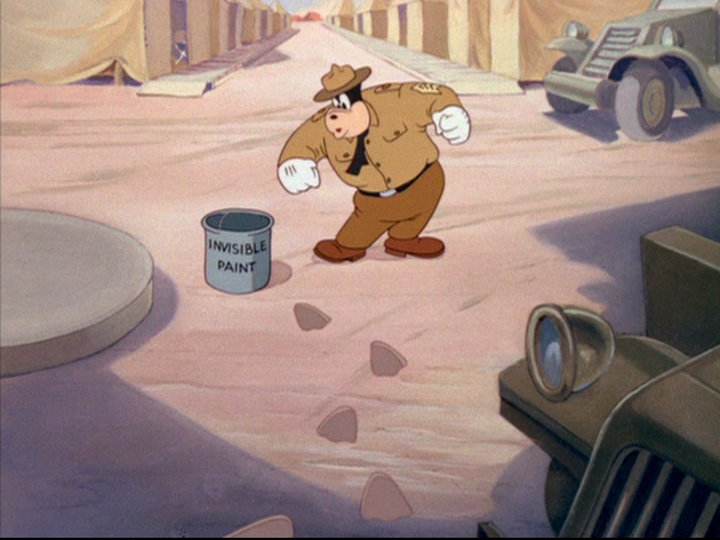
The short opens with Donald painting a cannon with yellow, green, and red stripes with black dots. Sergeant Pete finds him and grabs him, asking what he’s doing there, with Donald responding that he’s a camouflage painter. Pete chastises him, telling him that Donald needs to paint the cannon so that people don’t see it, with Donald responding that he didn’t know. Donald runs off to find some new paint, and wanders into the Experimental Laboratory – Camouflage Corps building. He looks at a particular bucket of paint, which happens to be invisible paint. Amazed at his find, he decides this is the perfect paint to use for his cannon.

Pete gets Donald out of the cannon, not realizing that the bucket of invisible paint is on the other side as Donald falls into it

Pete stops by later after Donald has finished painting the cannon invisible, thinking that Donald has stolen the cannon. He runs into the end of the cannon, alerting Donald, who informs the sergeant that he’ll be right down. Pete cautiously feels around for the end of the cannon, then sends Donald flying out of the other end, straight into the bucket of invisible paint. Donald then runs away, diving into a creek and running into a field of tall flowers, with Pete in hot pursuit. Pete throws some flowers aside, which reveal Donald’s location. Donald quickly brushes the flowers away and runs off.

Having gotten an idea of how to make the duck visible again, Pete grabs more flowers and begins throwing them everywhere, as Donald skips around a tree singing “Here We Go ’Round the Mulberry Bush.” Just as Pete imitates him, throwing flowers around, the General pulls up in his car and clears his throat to get Pete’s attention. Pete asks if he’s seen someone he can’t see, and the General, alarmed, shakes his head.

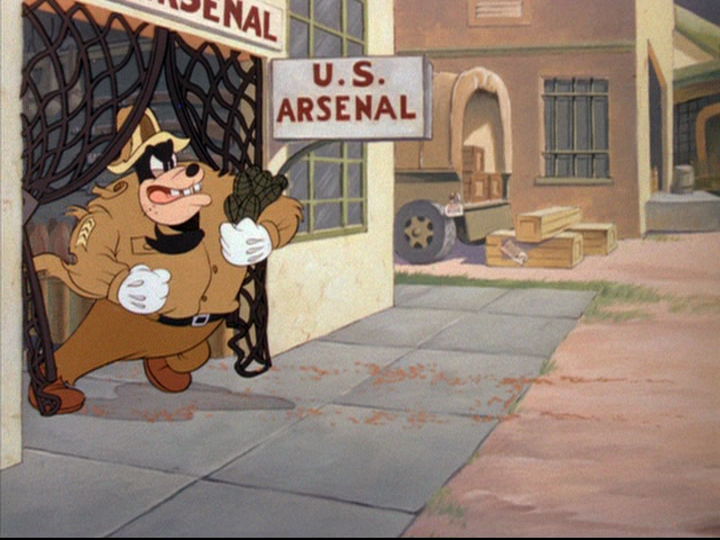
After flying into the arsenal, Pete decides that violence is the only way to catch the invisible duck

Meanwhile, Donald continues to cause mischief, grabbing a batch of pies from an open window and shoving one in Pete’s face. He leads the sergeant in a chase all around the camp, sending Pete flying into the arsenal, grabbing as many grenades as he can carry and throwing them around madly. The General tries to stop him, but Pete ends up blowing the both of them up when he drops all the grenades. Pete is then seen in solitary confinement, sitting in a padded cell with a straight jacket on. He implores Donald, his now-visible guard, to tell the General that he’s not crazy, to which Donald answers, “Do you think I’m crazy?”

September 24

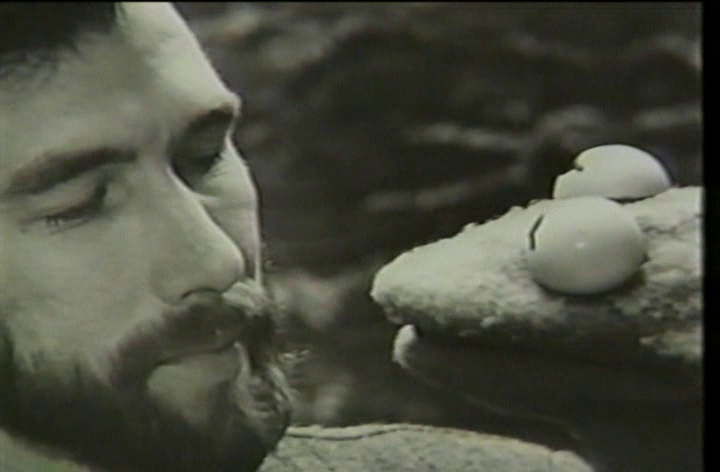
September 24, 1936 – Creator of the Muppets and Disney Legend Jim Henson is Born

“One of the things Jim did, in that amazing career, was to really remake puppetry…and nobody had ever made that same transition with puppet theater.”- Jerry Juhl, Muppet head writer

On September 24, 1936, James Maury Henson was born in Greenville, Mississippi. In the late ’40s, the Henson family moved to Hyattsville, Maryland, and Henson later attended school at the University of Maryland. While attending college, he began working on a five-minute puppet show called Sam and Friends. “The magic of what television was is what first made me want to work in television, and puppetry was just a way of getting a job on a television station…television was in its early days,” Henson said about working in television at the time, “so I made a couple of puppets and auditioned, and got a job, and that’s kind of how it all started.” One of the characters on Sam and Friends would be the prototype for Henson’s most famous character, Kermit the Frog. The show had a huge following in the D.C. Metro area, and around this time, Henson began working with Jane Nebel, the woman who would eventually become his wife.

The success of Sam and Friends led to appearances of Henson’s Muppets on talk and variety shows, including The Jack Parr Show and The Ed Sullivan Show. The Muppets were also used for a variety of commercials, including a popular set of commercials for Wilkins Coffee in Washington D.C. In 1963, the Hensons moved to New York and set up Muppets, Inc., and Henson hired Jerry Juhl as a writer, and Frank Oz as a puppeteer. Oz would go on to create a close friendship and partnership with Henson, as seen in the pairings of Bert and Ernie, and Kermit and Fozzie. At this time, Henson created the character of Rowlf, an anthropomorphic dog that played the piano and appeared on The Jimmy Dean Show. “The exposure of Rowlf was pretty significant, I think,” Oz said. “It was the first real country-wide acceptance of one of Jim’s characters.”

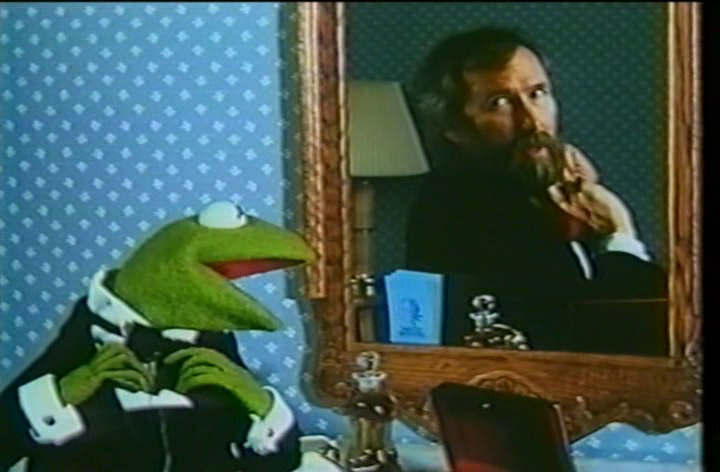
Henson and his alter-ego, Kermit

In 1969, Henson was asked by the team at the Children’s Television Workshop to work on a children’s program for public television. This would turn into the wildly successful show Sesame Street. Its success allowed Henson to get out of creating commercials. While working on Sesame Street, Henson and his team continued to develop sketches for adults, as the company did not want to be typecast as a creator of only children’s entertainment. One of the projects developed was a weekly show that was rejected by American networks, who only saw it as more children’s television. Henson convinced British media impresario Lew Grade to finance the venture, and The Muppet Show aired its first episode on September 13, 1976. The show introduced the characters of Miss Piggy, Gonzo, and Fozzie Bear, and gave Kermit the role of the host. Kermit has been seen as Henson’s alter-ego, much as Mickey Mouse has been seen as the alter-ego of Walt Disney.

In 1979, Henson made his foray into feature films with The Muppet Movie, which was a success both critically and financially. The film was followed with The Great Muppet Caper. After the success of the latter film, The Muppet Show was brought to an end so Henson could focus on more feature films, which included The Dark Crystal, The Muppets Take Manhattan, and Labyrinth. In 1989, Henson entered into negotiations with the Walt Disney Company to handle the business side of the Muppets while he spent more time on the creative side. Several projects were completed at this time, including a television special, The Muppets at Walt Disney World, and a Walt Disney World attraction called Jim Henson’s Muppet*Vision 3D (a still present and popular attraction) [See August 28th entry for more information]. Unfortunately, Henson died before the deal was completed (a new deal would be reached in 2004).

On May 16, 1990, Henson passed away at the age of 53. He was awarded as a Disney Legend in 2011.

September 23

September 23, 1938 – The Mickey Mouse Short The Brave Little Tailor is Released to Theaters

“I’ll be seeing you…I hope.”

On September 23, 1938, the Mickey Mouse short film The Brave Little Tailor was released to theaters. It was based on the fairy tale The Valiant Little Tailor told by the Brothers Grimm, with Mickey taking on the role of the tailor. It was nominated for an Academy Award at the 11th Academy Awards in 1939, but lost to another Disney short, Ferdinand the Bull. It was directed by Bill Roberts, and stars Walt Disney as Mickey Mouse and Eddie Holden as the king.

The short begins with the sound of nervous chatter between the villagers, scared that the giant that has been tormenting them is on the loose. The camera then pans over to the tailor shop, where Mickey is patching up a piece of clothing while being bothered by a swarm of flies. He finally takes two flyswatters and manages to swat all seven flies with one hit. Outside his window, one villager asks two others if they’ve ever killed a giant. Mickey then bursts open his window and proclaims he’s killed “seven with one blow” leaving the villagers to assume that he’s killed seven giants. The rumor spreads like wildfire, making its way up to the king.

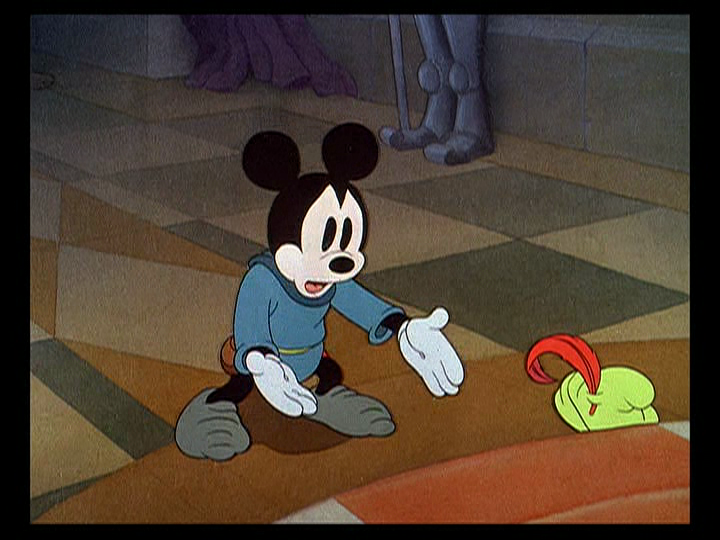
Mickey pleads with the king after being asked to be the Royal High Killer of the Giant

Mickey is soon presented to the king, who asks to hear his story. Mickey acts out the story of killing the flies in a dramatic fashion – still not explicitly stating that they were flies, not giants – amazing the entire court. The king then appoints Mickey as the Royal High Killer of the Giant, greatly surprising Mickey. The king promises to present Mickey with a great sum of money, but Mickey stutters that he can’t kill the giant; he only accepts when offered the hand of Princess Minnie.

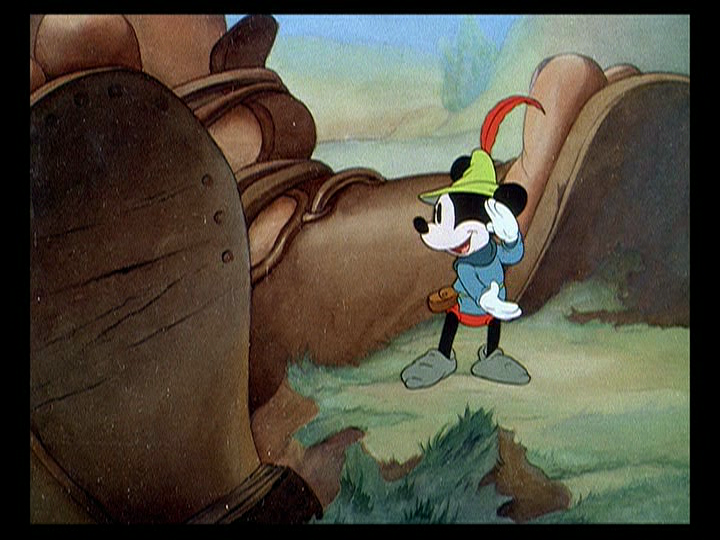
Mickey is soon off to face the giant, with the entire kingdom cheering him on. Although he puts on a brave front, he admits quietly that he doesn’t know how to catch a giant. As he sits and mopes, the giant soon approaches, stealing a farmer’s crops, destroying a farmer’s well to drink the water, and stealing a farmer’s stove to light a cigarette made from the farmer’s hay. Mickey, who had been hiding in the hay, is found by the giant, and soon springs into action, using his skills as a tailor to tie up the giant and cause him to trip.

Mickey vanquishes the giant, and looks on proudly at his work

In the end, Mickey has vanquished the giant, and the kingdom holds a festival, with the sleeping giant powering the amusements with his snoring as he is kept under heavy chains. Mickey and Minnie kiss while riding the merry-go-round, and the king lets out an excited whoop as his kingdom is once again safe.