RSS Feed

Monthly Archives: March 2013

March 11

March 11, 2001 – The Television Movie Princess of Thieves Premieres on The Wonderful World of Disney
vlcsnap-2013-03-10-17h35m13s199

“I’ll steal a horse fairly, but I won’t take it by the poor reason of my gender.”

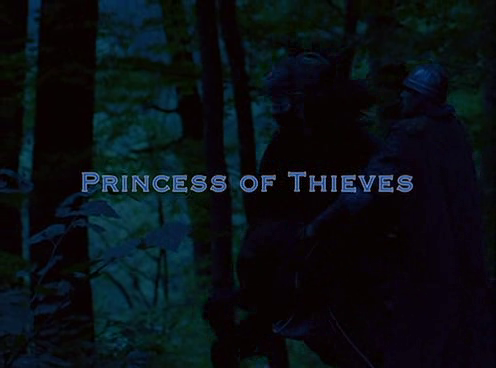
On March 11, 2001, the made-for-television movie Princess of Thieves premiered on The Wonderful World of Disney. Although the film is based on the legend of Robin Hood, it takes several liberties with historical fact, including that of the character of Philip: although a real person, he actually was not able to claim the throne; Richard had decreed that John was to inherit the throne after his death. The film was shot in Romania. The script was written by Robin Lerner, and was directed by Peter Hewitt. It stars Keira Knightly as Gwyn, Malcolm McDowell as the Sheriff of Nottingham, Stuart Wilson as Robin Hood, Jonathan Hyde as Prince John, Stephen Moyer as Prince Philip, and Del Synnott as Froderick.

The film begins in Nottingham, England, in the year 1184, during the reign of Richard the Lionheart. News of the birth of the child of Robin Hood and Maid Marian has reached the Sheriff of Nottingham, who puts a price on the child’s head equal to that of its father’s. Finding that the child is a girl, Nottingham thinks little of the child, as he believes only a son would cause him any trouble in the future. The girl is named Gwyn, and spends most of her life alone, as her mother dies when Gwyn is quite young and her father is off fighting the Crusades with King Richard. Her only friend is Froderick, who has trouble hiding his feelings for her, but she confides in Friar Tuck, whom she calls “Uncle.” When he questions her feelings for Froderick, she admits that she loves him like a brother, and she could never be what Froderick needs. As they talk, a messenger dove arrives, alerting the household of the return of Robin. Gwyn waits impatiently for her father’s return, but is rather let down by the reunion, as he doesn’t seem to care that he’s left her alone for five years.
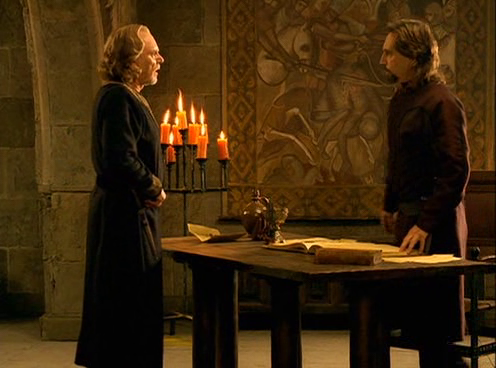
Prince John and the Sheriff of Nottingham plot how to kill Philip and secure the crown for John

Prince John and the Sheriff of Nottingham plot how to kill Philip and secure the crown for John

Nottingham is alerted by a surprise visit by Prince John that Lionheart is dying, and the two plan to prevent Prince Philip, the king’s illegitimate son, to ascend the throne. Meanwhile, Will Scarlett is trying to convince Robin to spend at least a little time with his daughter, which Robin rebuffs, claiming his duty to protect Philip comes first. Gwyn overhears him, and volunteers to go on the journey with him, but Robin refuses. Gwyn argues that if she were a son, Robin would gladly take her, but as she is a girl, she is reduced to mending socks and plucking chickens, and storms off. As Philip is on his way to England, he vents to his valet, Conrad, that he has no desire to be king. His valet convinces him to go back inside the carriage, and they continue to England. Philip is unaware that the Countess Tourtelot, with whom Philip has been traveling, is working with Prince John to have Philip killed so John can assume the throne. Conrad alerts Philip quickly and helps get him away from Tourtelot.

That night, as Robin and Will prepare to collect Philip, Gwyn comes up with a plan to pass as a boy and protect Philip. She takes off in the morning to follow her father, and is enthralled by town when she arrives. She protects a young boy from being punished as a thief, and steals a nobleman’s bag. Realizing that Froderick has followed her, she takes his horse and has him meet her away from the town, and drops the bag at the feet of hungry children, at which they call her “Robin Hood.” Will, who is disguised in town, hears this and smiles, but doesn’t realize that it is Gwyn. Gwyn and Froderick are hiding in the woods until the Sheriff’s men arrive, and they chase after her, thinking she is Philip. Robin and Will soon arrive and dispatch the men, saving her, although Robin is less than pleased. Unfortunately, Froderick is captured and chained up, with the Sheriff deciding to follow Froderick, as he may know where Robin is.
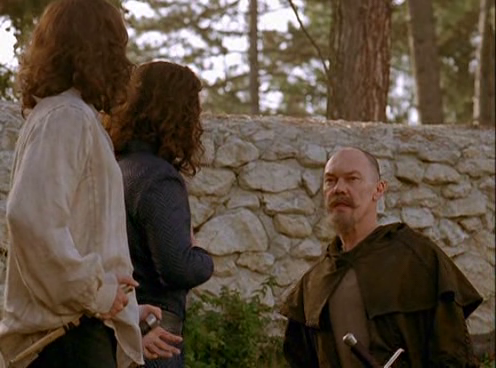
Philip and Conrad meet with Cardaggian, believing him to be Robin Hood, as he knows the secret code words

Philip and Conrad meet with Cardaggian, believing him to be Robin Hood, as he knows the secret code words

That night, Robin, Will, and Gwyn head to the chapel where Froderick is supposed to meet Gwyn, and walk into the Sheriff’s trap. Gwyn and Froderick narrowly escape. Philip and Conrad arrive in town the next day, and are tricked by Cardaggian, the Sheriff’s right-hand man, who believes Conrad to be Philip, and the two believe Cardaggian to be Robin. Conrad is killed by Cardaggian’s men and Philip flees. Froderick is sent by Gwyn to go back to the castle and inform her uncles that Robin and Will were captured and sent to the Tower of London, and she heads off to continue the mission and save her father. She runs across Philip in the woods and, not knowing who he is, attempts to steal his horse. He tackles her, but quickly apologizes, realizing that she is a woman. The two argue over the horse, with him insisting she take it because she is a woman, and Gwyn refusing because he treats her as inferior. They finally agree to share the horse, and head off to Nottingham.

The Sheriff arrives back at Nottingham to judge the tournaments at the harvest festival, and announces that Philip has died. The news, and the body, is also brought to John, but Countess Tourtelot, having seen the victim alive, tells John that it is only the body of the valet, and Philip must still be alive. John runs to where Robin and Will are sitting in the dungeon, and demands to know where Philip is, which, of course, they won’t tell him, as they are amazed themselves that he is still alive. On their ride, Gwyn announces that she’s on a mission for the king, to save Philip, her father, and Will from their imprisonment. Philip brands Robin a traitor to the crown, thinking that he and Conrad were led into a trap by Robin Hood, and tells Gwyn that Philip is dead as he pretends to be Conrad, the valet. Gwyn is saddened by this news, and urgently asks Philip for his help, for John’s first act as king will be to hang Robin and Will. Philip, afraid, refuses, but relents when Gwyn tells him that Robin is her father.
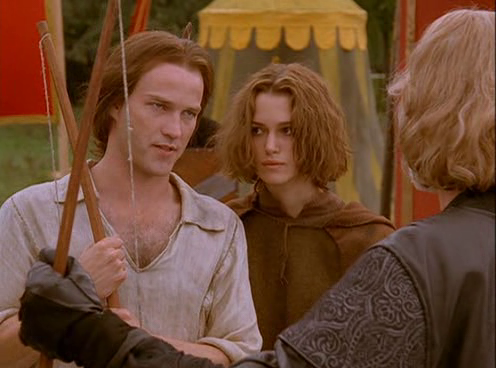
In the last round, Philip lets Gwyn, who is pretending to be his brother, be his proxy and take the final shot

In the last round, Philip lets Gwyn, who is pretending to be his brother, be his proxy and take the final shot

As Gwyn and Philip wander through town, Philip tells Gwyn that the death of “Philip” is no great loss for England, as he preferred wine and women over affairs of state. Gwyn informs him that a prince has an obligation to his people, but before he can respond, she is given a notice from a nearby stand for an archery tournament, with the winner granted a seat at the Sheriff’s banquet. The two run off to enter, with Gwyn determined to win. Both Philip and Gwyn perform well, although Philip is the one to advance to the finals. Philip lets Gwyn perform as his proxy, and Gwyn shoots the shot that breaks the Sheriff’s arrow, with a style reminiscent of Robin Hood, which arouses the Sheriff’s suspicions. Nevertheless, she is declared the winner and they sit at the banquet. When Philip sees Cardaggian at the banquet, he tells her they have to flee or they will both be killed, but promises on his honor that he will help Gwyn rescue her father. As the two leave, the Sheriff’s men are sent out into the woods to search for Philip. Gwyn and Philip then meet with Friar Tuck and Froderick, and they soon come up with a plan to rescue the two men from prison.

In Sherwood Forest, Robin’s band of men has gathered and captured the Sheriff. Gwyn asks if Robin and Will are still alive, and the Sheriff tells her not for much longer, as men don’t survive very long in the dungeon of the Tower of London. Gwyn sends a message of an exchange of the Sheriff for Robin and Will. In the forest, Philip finally comes to understand the “rule” of Prince John, and how needy the people really are. Philip goes to Gwyn and offers her food, and the two realize their growing attraction to each other (which is marred by Froderick’s earlier lie to Philip, saying that he and Gwyn are betrothed). During the night, the Sheriff is able to escape his bonds, knocking Froderick out in the process. Gwyn is furious, and snaps to Froderick that if Robin dies, she will never speak to him again. Philip declares that he is riding to London to save Gwyn’s father, and the men agree to go with him. While Robin is being tortured in the tower, John tells Robin that Richard has passed away, and demands to know where Philip is, but Robin refuses to tell. The news that Philip is alive spreads through the town like wildfire.
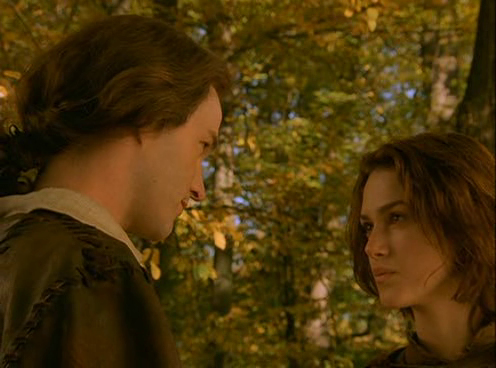
After Gwyn confesses Froederick's lie to Philip, the two share their first, and only, kiss of the film

After Gwyn confesses Froderick’s lie to Philip, the two share their first, and only, kiss of the film

Gwyn apologizes to Froderick, and he in turn apologizes for telling Philip that he and Gwyn are betrothed. The two repair their friendship, and Gwyn goes off to find Philip. He admits to Gwyn that he is afraid, but will fight, and the two share a kiss. After they do, Philip tries to tell her of his true identity, but they are interrupted by the news that Philip is indeed still alive, and John’s men are searching for him. Philip then admits his true identity, much to Gwyn’s surprise. A spy amongst Robin’s men lets the Sheriff know of Philip’s arrival, and the Sheriff is at the ready to attack. During the fight, Froderick steps in front of an arrow meant for Philip, telling Gwyn he had to because she knows how much she likes Philip. Meanwhile, John is having his coronation ceremony in Westminster Abbey, and Philip and Gwyn, with their friends, break into the Tower of London to rescue Robin and Will. Gwyn and her friends win the battle, and John’s coronation is disrupted by Philip’s arrival and his claim to the throne. As John commands his soldiers to arrest Philip, everyone in the room is stunned silent, and John realizes he has no more control over them.

Philip is crowned king, and Froderick is made a member of Philip’s council. Gwyn realizes that there is no future between her and Philip, although Philip protests. Gwyn tells Philip that she will continue to serve him the way her father served Richard, but the two are left heartbroken that their love will never be. Robin tells his daughter that her mother fell in love with a thief, and her falling in love with a prince is no different, and then asks her to be his partner, a father-daughter team of outlaws that serve the king. All is happy in London once again, and it is stated at the end that Philip never married, as he pledged his heart to a woman of no birthright, named Gwyn.

March 10

March 10, 1944 – The Goofy Short Film How To Play Golf is Released to Theaters

vlcsnap-2013-03-09-20h28m18s69

“Contrary to popular belief, golf is not a waste of time.”

On March 10, 1944, the Goofy short film How to Play Golf was released to theaters. It was directed by Jack Kinney, with Fred Shields as the voice of the narrator.

The narrator begins by trying to explain why golf is not a “waste of time.” Goofy steps on the course and tries to pull out his club, and ends up pulling out all of them at the same time, sending them flying over the green. Undeterred, he grabs his tee and his ball and sets up his shot. While the narrator tries to explain the grip, Goofy ends up knotting his fingers together. As he swings, he ends up hitting himself in the jaw, and tangles himself up even more trying to free his fingers. As he bounces all over the green, the ball ends up on his nose, and he creates what the narrator calls a divot, “caused by an indirect swing.” The ball slides down the divot, and into Goofy’s mouth, where he accidentally swallows it.

The figure and Goofy square off on the ball, not realizing they are about to hit each other

The figure and Goofy square off on the ball, not realizing they are about to hit each other

The narrator then begins to explain a proper swing, separating Goofy from a diagrammatical figure that Goofy tries to emulate. The figure is alarmed that Goofy’s swing has swung the poor guy around and around. The figure then takes on the task of untangling Goofy, sending him flying through the blueprint paper behind him. He finally fixes Goofy, but the two end up smacking each other with their clubs by accident, sending the ball straight into Goofy’s eye.  Back on the green, Goofy sends the ball flying near the hole, where he needs to putt. He checks all the variables before his shot, including wind velocity, humidity, rotation of the earth, time of day, temperature, drift indication, lay of the land, trajectory angle, longitude, and latitude. However, Goofy misses the putt, with rather dramatic results.

The next shot is an incorrect shot known as a hook, which has Goofy’s ball sailing around the hole and into the woods, burying itself in the dirt near some tree roots. When Goofy tries to move his ball to a better position, the figure slaps him on the hand, as moving the ball is strictly forbidden. Another example of playing the ball where it lies is when Goofy is stuck in a sand trap, and has dug himself a hole deep into the earth, with the ball just dancing around his feet. He finally sends it flying up the side, but it just slides back down into the pit, sending Goofy into a rage. The figure helps him get the ball out of the pit, but Goofy runs into another problem when the sprinkler system turns on. However he overcomes the problem and continues the play the ball where it lies – including on a bull’s nose. Goofy and the figure sprint across the green as the bull gives chase, with Goofy still playing the ball. Finally, Goofy makes it back to the bar in the lodge, where he, the bull, and the figure sit together for a drink, singing “Auld Lang Sine.”

March 9

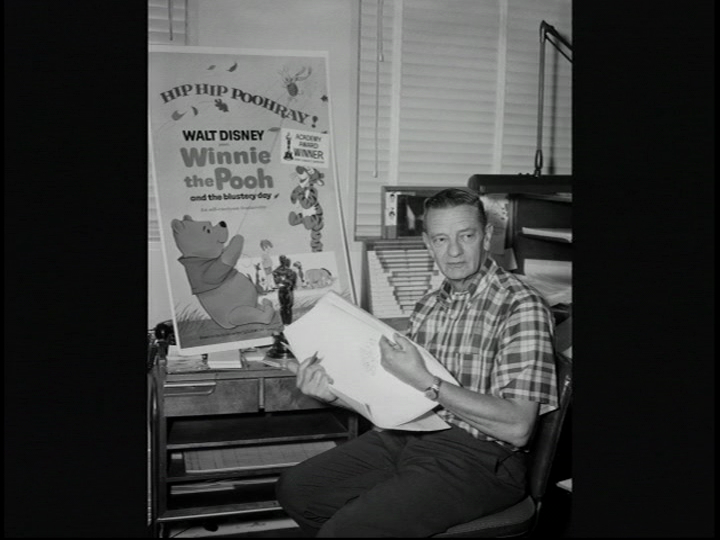
March 9, 1911 – Animator, Member of Disney’s Nine Old Men, and Disney Legend John Lounsbery is Born

vlcsnap-2013-03-09-09h00m38s147

“…very quiet, gentle guy, and what was surprising is the person seemed so reserved and very encouraging in his comments about my drawings, and then I’d look at his drawings, and they were bold! Powerful! I mean, this guy drew with such conviction…” – Animator Glen Keane

On March 9, 1911, John Lounsbery was born in Cincinnati, Ohio. When he was five, his family moved to Colorado. Lounsbery’s talent for animation was evident at an early age, and he was well known in high school for his caricatures and cartoons.  After attending the Art Institute of Denver, Lounsbery attended the Art Center School of Design in Los Angeles. An instructor there sent him to interview with Walt Disney. Lounsbery was hired on July 2, 1935, to serve as an assistant animator on Snow White and the Seven Dwarfs, and was paired as an assistant to animator Norm Ferguson, who became his mentor and great inspiration. The team would be assigned to the plum role of the Witch in Snow White. After this, Lounsbery animated Honest John and Gideon as part of Ferguson’s team. Lounsbery’s skills flourished under the next animated feature, Fantasia, where he animated the “Dance of the Hours” sequence; his work is particularly noticeable on the animation of Ben Ali, the main alligator. Lounsbery was then named as one of six animation directors on Dumbo, where his focus was on the interaction scenes between Dumbo and Timothy Mouse. During World War II, Lounsbery stayed at the studio and animated feature films including Victory Through Air Power and The Three Caballeros, and once again served as an animating director on the animated sequences of Song of the South.

In the 1950s, Lounsbery continued to serve as an animation director on animated feature films, including Alice in Wonderland and Peter Pan. He also animated several memorable characters in these films, including the Mad Hatter in Alice in Wonderland, and George Darling in Peter Pan. His work on the partnership of Honest John and Gideon in Pinocchio would be seen again in Lady and the Tramp with his work on the characters Tony and Joe. “John Lounsbery was a brilliant draftsman. In Lady and the Tramp he did Tony and Joe and brought these guys completely to life,” animation director John Musker said in an interview. Truly, Lounsbery was considered a wonderful draftsman who could do justice to any scene that was considered “slapstick,” such as the “Scrumps” scene in Sleeping Beauty, where the minstrel gets drunk on the celebratory wine. “[He] simply had a way of drawing that was as sophisticated as a New Yorker cartoon, and yet he loved slapstick,” said animator Will Finn. “He’s an unsung animator in some ways because people don’t hear his name mentioned as often, but his work on the jester [in Sleeping Beauty] is really one of the highlights of the film for me.” In 1970, Lounsbery was promoted to director for Winnie the Pooh and Tigger Too!, and then co-directed The Rescuers with Wolfgang Reitherman and Art Stevens. Unfortunately, Lounsbery died before the films’ release of heart failure during heart surgery. He was named a Disney Legend in 1989.

March 8

March 8, 1983 – President Ronald Reagan Visits Walt Disney World’s EPCOT Center

ronald-reagan-at-epcot

“We can see the benefits of this revolution already. Many of the advantages you can view right here at EPCOT Center, which itself is a celebration of tomorrow.”

On March 8, 1983, President Ronald Reagan visited Walt Disney World’s EPCOT Center with his wife, First Lady Nancy Reagan. The Reagans began with a visit to the American Adventure attraction, and afterward they met with students that participated in the World Showcase Fellowship Program. This program, which unfortunately no longer exists at Disney, was a one-year exchange program for outstanding students all over the world to represent their countries in the World Showcase. After greeting these students, President Reagan gave a speech in the amphitheater outside of the American Adventure to the program’s students, select outstanding students in math and science from the Central Florida area, and other guests. His speech detailed how happy he was to see so many young people at EPCOT, and how the students will be able to bring change to not only the nation, but also to the world.

If you haven’t read the speech, I would highly recommend it. EPCOT is one of those places that thrive on cultural understanding, and reading Reagan’s words just hits that point home.

March 7

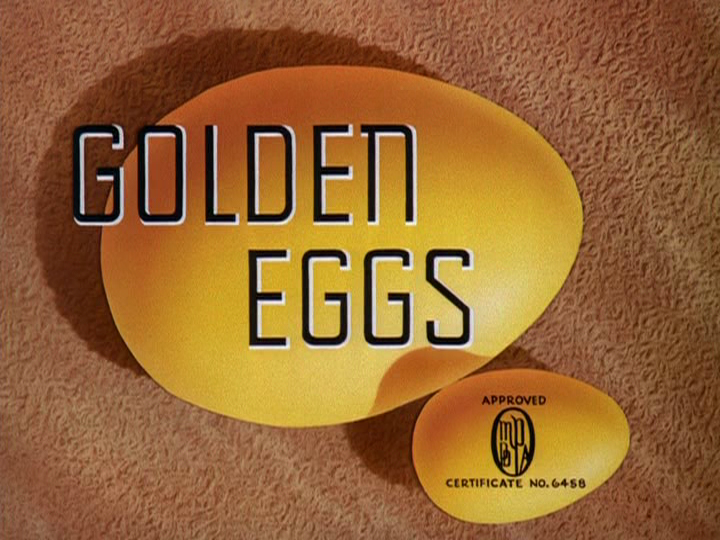
March 7, 1941 – The Donald Duck Short Film Golden Eggs is Released to Theaters

vlcsnap-2013-03-07-07h18m53s118

“This will never do with eggs 85 cents! Have to work faster than this!”

On March 7, 1941, the Donald Duck short film Golden Eggs was released to theaters. The film was directed by Wilfred Jackson, and stars Clarence Nash as Donald.

Donald is reading the Farmer’s Gazette, which declares that the price of eggs has skyrocketed, and labels them “liquid gold.” He leaps out of his chair and races to his chickens in the backyard, where they are lazily swaying around and laying eggs. Thinking that he needs to speed up production, he changes the record playing in the barn from “Lazy Daze” to “Hot Stuff.” With the music speeding up, the chickens lay eggs faster than before. Unfortunately, the rooster comes along and sees Donald collecting the eggs, and throws Donald out of the hen house.

Using a red rubber glove, a feather duster, and a burlap sack, Donald disguises himself as a chicken

Using a red rubber glove, a feather duster, and a burlap sack, Donald disguises himself as a chicken

Hiding in the shed, Donald watches as the rooster protects the eggs. Donald comes up with a plan to disguise himself as a chicken to retrieve the egg basket, although the glove he uses on his head keeps snapping off. The rooster is immediately smitten with Donald’s chicken, and Donald uses this to try to get close to the basket. Unfortunately, the glove snaps off his head again, and lands on top of a caterpillar. When Donald puts the glove back on, the caterpillar begins to wiggle about, which only causes the rooster’s love for Donald to grow. He is able to avoid the rooster’s advances for a moment, but when he tries to find the cause for the moving glove, the caterpillar moves away from Donald’s head and down his neck. The rooster returns and thinks Donald is dancing, and the two begin to samba together.

The rooster’s dancing begins to turn into spinning Donald about as fast as he can. Finally, all of the dancing tears off Donald’s disguise, leaving a very dizzy Donald crowing like a chicken. Having been found out, the rooster chases Donald across the farm, but Donald escapes and leaves him trapped in the pen. As Donald laughs, an egg drops out of the basket and breaks, and Donald slips on the yolk and falls into the basket, breaking every egg inside. The rooster crows with laughter at Donald’s misfortune.

March 6

March 6, 1981 – The Live-Action Feature Film The Devil and Max Devlin is Released to Theaters

DaMD_1

“Fair? Are you forgetting where you are?”

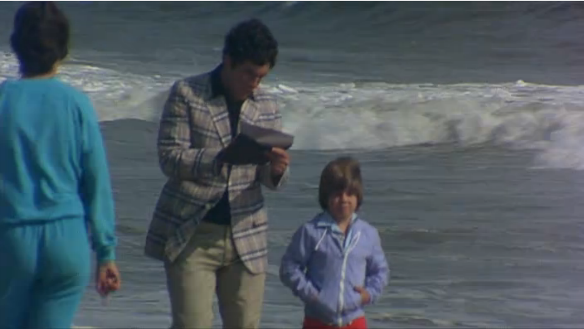
On March 6, 1981, the live-action feature film The Devil and Max Devlin was released to theaters by Buena Vista Distribution. The movie was filmed at Universal Studios and around Los Angeles. It was written by Mary Rogers and Jimmy Sangster, and directed by Steven Hillard Stern; the film stars Elliot Gould as Max Devlin, Bill Cosby as Barney Satin, Susan Anspach as Penny Hart, Adam Rich as Toby Hart, Julie Budd as Stella, and David Knell as Nerve. The film was considered rather controversial on its release, due to its subject matter and Bill Cosby playing an evil character. Cosby’s makeup for his final scene was done by Bob Schiffer, and comprised a wig with ears and horns sewn inside, a thick mauve color base, and red water-soluble make-up specially ordered from Germany. The set for Hell included 150 gallons of butane fuel and 36,000 pounds of dry ice.

Max Devlin, the landlord of a tenement in Los Angeles called The Whitsett Riviera, arrives at work to hear his tenants loudly complaining. He listens to their demands, but has a quick answer for each of them (including that cockroaches only live in New York, and that all decisions are up to the owner). Their anger explodes when they find out that he is the owner, and as he evades the mob, he begins to chase after a tenant who hasn’t paid his rent in two months. He trips over a blind lady’s cane and falls into the street, where he is promptly hit by a bus of Hare Krishnas. Devlin finds himself falling into Hell, which he believes is only a bad dream, and meets the Devil’s chief henchman, Barney Satin. When Devlin proclaims that he hasn’t done anything wrong, his sins are called out. He is then condemned to Level 4, but Satin tells him that there is another way: he will be sent back to Earth for two months, but he must find three innocent souls to take his place. Devlin has a few reservations about having to corrupt children, but quickly decides to take the deal.

Devlin returns to Earth and stops by a café, where he is greeted by Satin, whom only Devlin can see. Things become more strange for Devlin when he realizes that he has no reflection; Satin says that Devlin is now an inhabitant of Hell, and therefore unable to cast a reflection. Satin then takes Devlin to a phone booth to concentrate on his task of collecting the three souls, and when Devlin finds the location of the first soul, he is transported there, finding her in the women’s bathroom. Satin retrieves him, and they head back to the Whitsett Riviera. Satin explains that Devlin now has special powers known as “magic property” that he can use to collect the souls, but they last only when Devlin and the subjects are within sight of each other.

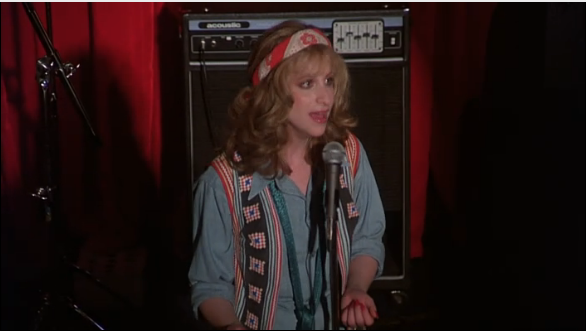
Stella Summers, one of Devlin's targets, is an aspiring singer who wins a contract thanks to Devlin's magical property

Stella Summers, one of Devlin’s targets, is an aspiring singer who wins a contract thanks to Devlin’s magical property

Devlin’s first target is Stella Summers, a high-school dropout who has dreams of stardom. He shows up at her first gig and guarantees that she will not fail, calling himself her good luck. Stella’s gig falls flat, but she suddenly sounds wonderful, thanks to Devlin’s help, and the audience applauds wildly. Stella is then offered a recording contract, and believes that Devlin really is good luck. After this success, Devlin moves to bait his next target, Nelson “Nerve” Nordlinger, who wants to find popularity through becoming a motocross racer. Devlin pretends to be an instructor, and takes Nerve to an empty field to practice. Just as Nerve rides away, Satin rides up and reminds Devlin that the “magic property” works only if the innocent is within Devlin’s sight, and quickly yells at Nerve to come back, but the poor kid falls from his bike as he races another guy. Luckily, the other guy offers to help Nerve out with training, and Nerve agrees. Devlin then moves on to his third victim, an eleven-year-old named Toby, and pretends to be the kid’s uncle to help him get on rides at a carnival. Devlin hangs out with Toby all day, trying to figure out what Toby wants more than anything in the world. Toby then admits he wants Devlin to be his father, since his own father had recently passed away. Toby’s mother, Penny, is wary of her son hanging around with an older man, and tells Toby sharply that she will not be getting married again for a long time, but Toby tries to tell her that Devlin is a wonderful man, and even shows her how well he gets along with the children in the day care center she runs.

Stella heads to the recording studio, but without Devlin there, she can’t perform well. He quickly leaves Toby and heads to the studio, where Stella is finally able to perform on take 43. Her record sells out quickly, hitting number 48 on the Billboard charts. Devlin then calls Toby’s household, trying to get Penny’s attention, but she’s not falling for it. He then attends a party for Stella’s album, and tries to get her to sign away her soul, but finds it nearly impossible to hold her attention. Meanwhile, Nerve is preparing for his first motocross race, with Devlin signing him up as an expert. Nerve is rather nervous, but with Devlin using his “magic property,” Nerve ends up winning. Immediately after, he heads to where Toby is, but Toby is worried that Penny will marry her tennis instructor. When Toby and his mother get home, they find that Devlin has paid for all new playground equipment and grass for the daycare, and wins a date with Penny. They begin to get closer, and when Devlin realizes that he really is falling for her, the two share a kiss.

Devlin scrambles to get the contracts signed, but each soul has their own reason to avoid signing, with Toby refusing until Devlin has married his mother

Devlin scrambles to get the contracts signed, but each soul has their own reason to avoid signing, with Toby refusing until Devlin has married his mother

Time is running out for Devlin, and he has to keep quickly moving from one soul to another. Satin appears again, asking for the contracts, but Devlin assures him that he needs a little more time to get them hooked. He tries to get the three to sign, but it proves to be more difficult than he thought, as the three are all caught up in getting what they want, with Stella focusing on her career, Nerve preparing for a race, and Toby only signing once Devlin gets married to Penny. One night, Devlin finds the truth about Stella: her real name is Stephanie Pepper, and she’s a runaway from Brooklyn, New York. After finding the truth, he realizes that he can’t get them to sign the contracts because he’s starting to care for them, which is especially evident when he asks Penny to marry him. When he meets with Satin again, it’s revealed that his wedding, Nerve’s race, and Stella’s concert are all on the same day: Devlin’s final day on Earth. Using a few tricks, Devlin finally gets the three to sign their contracts, but their personalities drastically change from their usual pleasant, innocent selves into angry, spiteful versions. Soon after, Satin informs Devlin that the three are to die at midnight rather than the natural ends of their lives as promised. Devlin rushes in to burn the contracts, and Satin appears in full devil form, cursing Devlin with eternal damnation should he destroy the contracts. However, Devlin is willing to risk his life to save the three of them, and burns the contracts.

Realizing that he has only a few hours left, Devlin rushes to help Nerve and Stella, and finds that Nerve tripped over a little blind lady, but as she is from Heaven, she has actually saved him from dying. Devlin is reassured that the three are saved, but is worried that they won’t be able to do the things they wanted to do without his help anymore. When Penny tells him that he has no self-image, he thinks she’s finally noticed his lack of reflection. He then looks into the mirror and sees his reflection, and realizes that his good deed has allowed him to escape the clutches of Hell once and for all. As a farewell, Devlin, Toby, and Penny go to Stella’s farewell concert, and she is able to sing beautifully without any help from Devlin. Devlin looks up at the sky and mouths his thanks to Heaven.

March 5

March 5, 1983 – The “Journey into Imagination Attraction” Opens in Walt Disney World’s Epcot Theme Park

Journey into Imagination

“Figment the playful, purple dragon is your guide on this whimsical tour of the Imagination Institute.”

On March 5, 1983, the “Journey into Imagination” attraction opened in the Future World pavilion in Walt Disney World’s Epcot theme park. The attraction’s host was a top hat-wearing red-bearded man called the Dreamfinder (played by Chuck McCann) who collects dreams with his Dream Catcher, and creates a new character, Figment, the dragon (voiced by Billy Barty), from a figment of his imagination. Visitors were taken to several different rooms filled with imaginative ideas, and at the end of the attraction, their pictures are taken as they travel on the omnimover. The attraction was closed on October 10, 1998, to be completely renovated into the Journey into YOUR Imagination 3-D movie, hosted by Dr. Nigel Channing (played by Eric Idle). This version was then closed on October 8, 2001, and reopened again on June 2, 2002, as “Journey into Imagination with Figment.” The song performed in the attraction, “One Little Spark,” was written by the Sherman Brothers, and has been used in all three incarnations; the most recent incarnation has Figment voiced by Dave Goelz.

March 4

March 4, 1932 – Former Walt Disney Company President and Disney Legend Frank Wells is Born

vlcsnap-2013-03-03-20h54m46s228

“Talk about genius, a genius of an executive…a person who was willing to sublimate his ego and keep it behind the scenes because he knew there was a greater good. There was a greater good not only to the corporation and the stockholders, but to the creative enterprise that Disney was in.” – Don Hahn

On March 4, 1932, Frank G. Wells was born in Coronado, California. Wells and Roy E. Disney were classmates at Pomona College in the early 1950s, and in 1953, Wells became a Rhodes Scholar, earning his BA at Oxford University. In 1969, Wells became Vice President of Warner Brothers, and became its president in 1973 before being named chairman in 1977. In 1982, he left Warner Brothers, and was asked by Disney to join the Walt Disney Company as President and Chief Operating Officer in partnership with Michael Eisner’s offices of Chairman and CEO. As Disney put it, “I thought, you know, Frank’s more of a businessman, and Michael is a little nuts, and the two together kind of in some way made me think of Walt and my dad. So we began saying, ‘How would you two like to take this job?’” Wells was considered the peacemaker between the three strong personalities of Roy E. Disney, Michael Eisner, and Jeffrey Katzenberg. Eisner said of Wells, “Interesting thing about Frank: he carried in his wallet a piece of paper that said, ‘Humility is the ultimate virtue.’” Wells is noted as being instrumental in bringing a new golden age of Disney animation.

Wells was also known as an adventurer, and a goal of climbing the Seven Summits, although he was unable to climb Mt. Everest due to bad weather. Wells’ love of climbing is honored in Disneyland’s Matterhorn Bobsleds, with equipment labeled as part of the “Wells Expedition.” On Easter Sunday, 1994, tragedy struck the studio when it was announced that Wells had perished in a helicopter crash in Nevada’s Ruby Mountains after returning from a ski trip. The building that houses the Disney Archives was renamed in Wells’ memory, and The Lion King was dedicated to him. Wells was named a Disney Legend in 1994.

March 3

March 3, 1937 – Child Actor Bobby Driscoll is Born

vlcsnap-2013-03-02-19h55m44s251

“He’s got a great talent. I’ve worked with a lot of child players in my time, but none of them bore the promise that seems inherent in young Driscoll.” – Don Ameche

On March 3, 1937, Robert Cletus “Bobby” Driscoll was born in Cedar Rapids, Iowa. Soon after he was born, his family moved to Des Moines, and then moved to California in 1943. After their arrival, Driscoll auditioned with MGM for a small role in the 1943 film Lost Angel. This film role led to better ones; his natural acting talent and ability to memorize his lines quickly led to Driscoll’s being known as the “Wonder Child.” He soon caught the attention of Walt Disney, who was looking to cast the lead in his upcoming film Song of the South. Driscoll was not only hired, but became the first actor Disney put under contract. He and co-star Luana Patten became child stars with the success of the film, and were nicknamed the “Sweetheart Team.” They would later star together in the 1948 film So Dear to My Heart, and in the “Pecos Bill” segment of the animated feature film Melody Time, released in the same year. In 1949, Driscoll found acclaim in the RKO film The Window; this, coupled with his role in So Dear to My Heart, earned Driscoll a Juvenile Academy Award.

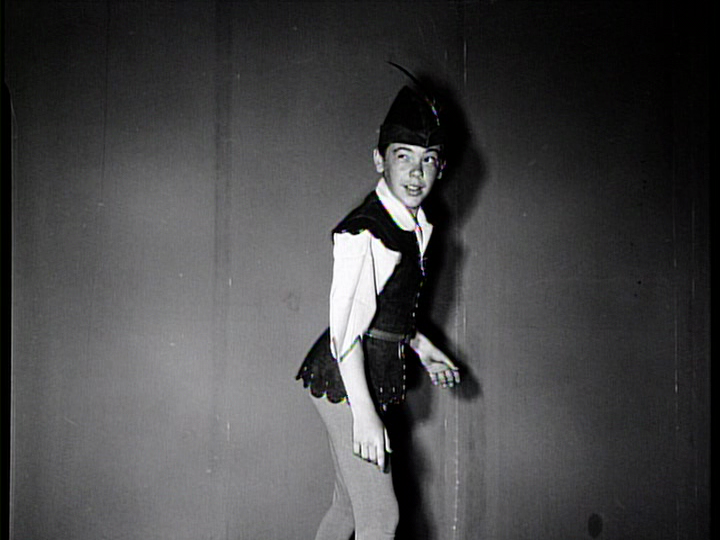
In 1950, Driscoll starred in the first full-length live-action film for the studio, Treasure Island, as Jim Hawkins. During filming, the British film industry claimed that due to child labor laws, and the fact that Driscoll did not have a work permit, he would have to leave the country. The judge presiding over the case gave Driscoll and his family six weeks for appeal, but instead the company used the six weeks to film his close-ups and any other important shots before he was deported. The film was another success, and Driscoll was awarded a star on the Hollywood Walk of Fame. Driscoll also appeared in smaller Disney projects on television and in short films through the early ’50s. His last major project for the studio was the voice and live-action reference model for the title character in the animated feature film Peter Pan. After the film’s release, he was terminated from his contract with the studio.

Driscoll as the live-action model for Peter Pan, his final film at the studio

Driscoll as the live-action model for Peter Pan, his final film at the studio

After leaving Disney, Driscoll found it increasingly difficult to get work as a serious character actor, as he was seen as “Disney’s kid actor.” He moved to television roles and was taken out of Hollywood Professional School by his parents, who moved him to public school. Ridiculed by the other students there for his early film career, Driscoll began to dabble with drugs. Although his parents let him return to Hollywood Professional School, where he graduated, his drug use increased. In 1965, he moved to New York City and became part Andy Warhol’s art community, known as The Factory. His last film performance was in the underground film Dirt. After leaving The Factory, Driscoll was penniless and was living in Manhattan’s underground. In 1968, two boys discovered his body, and without any identifiers, he was buried in an unmarked pauper’s grave. It was in 1969, some nineteen months later, when his mother, who was hoping to reunite with her son before his father’s death, discovered where his body was buried.

Driscoll was a rare talent and an important part of the live-action film aspect of the Disney Studios. It is important that he be remembered for his wonderful craft shown in the Disney films of the ’40s and ’50s. Although his life was sadly cut short due to some bad decisions, Driscoll should be lauded as one of the finest child actors in film history.

March 2

March 2, 2010 – Alice in Wonderland: An Original Walt Disney Records Soundtrack and Almost Alice are Released Through Walt Disney Records

Alice In Wonderland

“Did someone pull you by the hand? How many miles to Wonderland? Please tell us so we’ll understand, Alice! Alice! Oh, Alice!”

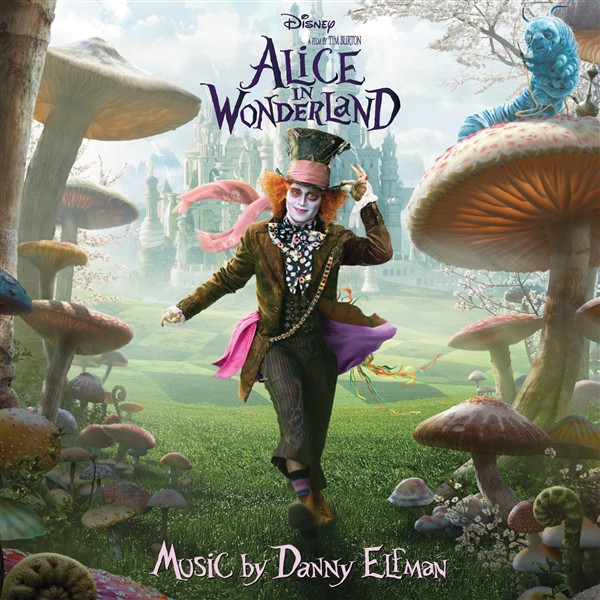
On March 2, 2010, two soundtracks for the live-action feature film Alice in Wonderland were released through Walt Disney Records: the film score compilation Alice in Wonderland: An Original Walt Disney Records Soundtrack and a compilation companion album entitled Almost Alice. The score, written by Danny Elfman, debuted at number 89 on the Billboard Top 200 Albums chart, and was nominated for a British Academy Film Award, a Golden Globe, and a Grammy Award.

Almost Alice is a compilation of songs inspired by the film and performed by various artists, including Owl City and Grace Potter and the Nocturnals. It debuted at number 5 on the Billboard chart. The album’s lead single was an original song by singer Avril Lavigne, and is the only song featured in the film, playing during the credits. This song peaked at number 71 on the Billboard Hot 100 chart. Two songs, “The Lobster Quadrille” by Franz Ferdinand, and “You Are Old, Father William” by They Might Be Giants, have lyrics taken straight from the poetry of Lewis Caroll’s original Alice stories. Although this album was released through Walt Disney Records, the company released it under the pseudonym of Buena Vista Records, as they have done with other albums they have deemed more adult-oriented.