RSS Feed

Monthly Archives: September 2012

September 10

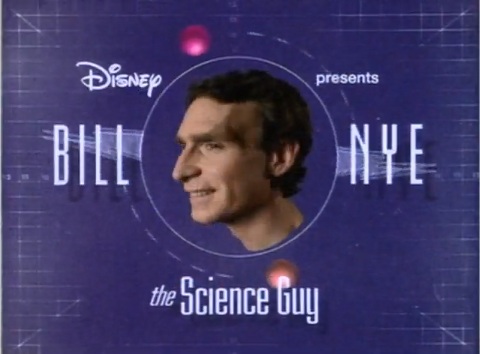
September 10, 1993 – The Television Series Bill Nye the Science Guy Premieres

Image credit: wikipedia

“Bill Nye the Science Guy: brought to you by air. Without air, you ain’t flying.”

On September 10, 1993, the educational show Bill Nye the Science Guy premiered on PBS. The show was hosted by noted scientist Bill Nye, and was produced by Disney Educational Productions, with distribution by Disney-ABC Domestic Television. The show would present a topic, which Nye would explain with visuals in his lab. For instance, the first episode, Flight, explained to the audience how air pressure makes things fly. Most episodes would feature a parody of a pop song, with the song’s lyrics summarizing the lesson learned in the episode. The show was very popular among children, and ran until June 1998, winning several Emmy Awards, including one for Outstanding Children’s Series in 1999 and 2000.

September 9

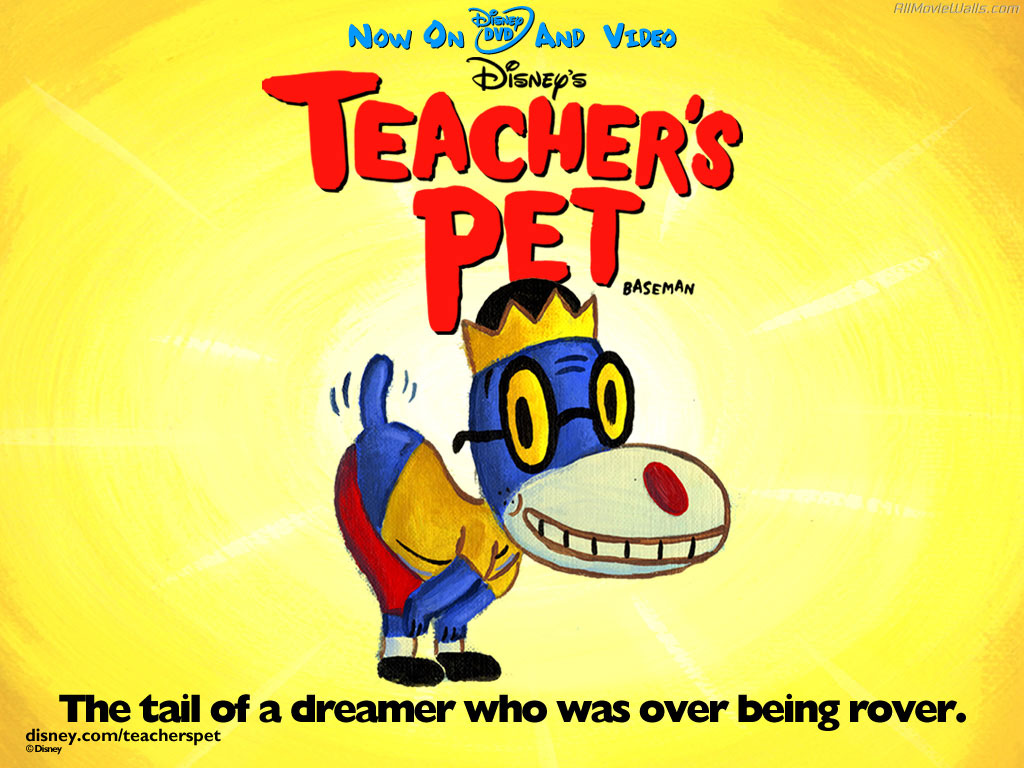
September 9, 2000 – The Disney Animated Series Teacher’s Pet Premieres

Image credit: Disney Wiki

“I gotta be a boy! He’s so over just being Rover.”

On September 9, 2000, the first episode of the animated series Teacher’s Pet (also known as Disney’s Teacher’s Pet) premiered as a part of Disney’s “One Saturday Morning.” The series told the story of a talking dog, named Spot, who longs to attend school with his boy, Leonard Helperman, and disguises himself as a boy named Scott Leadready II. It stars Nathan Lane as Spot, Shaun Fleming as Leonard Helperman, Debra Jo Rupp as Mary Lou Helperman (Leonard’s mother and the teacher of Leonard and Scott’s fourth grade class), David Ogden Stiers as Jolly the Cat, and Jerry Stiller as Pretty Boy the Parrot. The series lasted for two seasons, with a total of 39 episodes. In 2004, a feature film version was released, with most of the cast reprising their roles.

The first episode, Muttamorphosis, tells the story of how Spot decides that he can’t take staying at home anymore, and decides to dress up in some of Leonard’s clothes and attend school. Spot, calling himself Scott Leadready II, shows himself to be extremely intelligent and apt at sports, which makes Leonard suspicious. Upon finding his dog’s secret, Leonard tells Spot to go home, but Spot/Scott proclaims that it is his destiny to attend school. Leonard keeps Spot’s secret, but secretly wishes that Spot would return home.

September 8

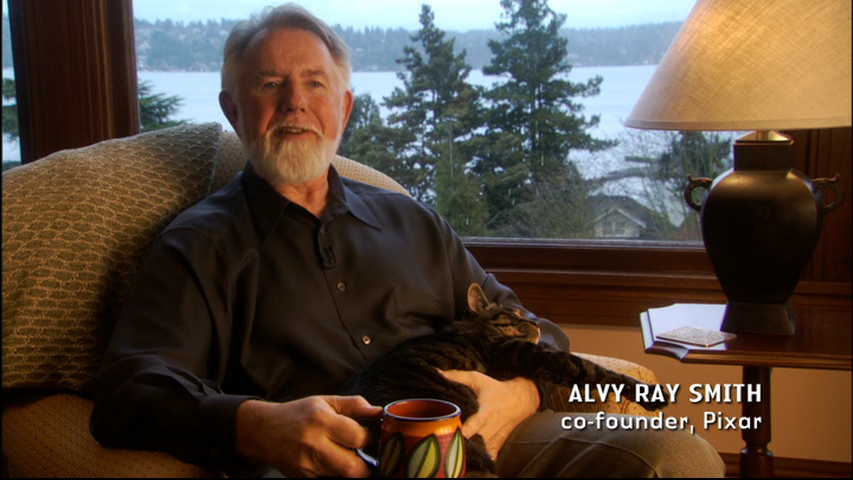
September 8, 1943 – Pixar Co-Founder Alvy Ray Smith is Born

“Our group was in love with animation, and we knew a lot about animation. We couldn’t animate very well, but we understood it.”

On September 8, 1943, engineer and Pixar co-founder Alvy Ray Smith was born in Texas. While attending New Mexico State University, Smith took a course in computer programming, and went on to get his Ph.D. in electrical engineering at Stanford University. Smith’s life-long love of painting continued while at Stanford, and his paintings were shown at the Stanford Coffee House. After graduating, Smith went on to New York University to teach classes in cellular automata, a branch of computer science on which he had written his thesis. After a skiing accident in 1973, which left him in the hospital in a full-body cast for three months, Smith decided to change the direction his life was going, and moved back to California with no real plan.

Smith soon got a job at Xerox’s Palo Alto Research Center (PARC) in a roundabout way (being brought on via purchase order) by his friend Dick Shoup, who was playing with a new painting-software project known as SuperPaint, to which Smith provided the HSV (hue, saturation, and value) color space. Unfortunately, Xerox took away the machine, leaving Smith and his new coworker David DiFrancesco without their important frame buffer. In 1975, Smith went to work at the New York Institute of Technology, the only place in the country willing to put millions of dollars into this new technology. There he met Ed Catmull, who gave Alvy a new direction: make an animated film using the computer.

After being hired by George Lucas, Catmull and Smith founded a new computer division at Lucasfilm, which developed a new digital editing system, a digital sound system, a laser scanner, and a new graphics computer. Smith was instrumental in helping create a realistic shot in the film Star Trek II: The Wrath of Khan, when Lucas’s Industrial Light and Magic division was unable to get the shot conventionally. In 1986, Smith helped co-found Pixar with Catmull, and the two worked hard to hire the best animators to help build their dream of a completely computer-animated film. In 1991, Smith left Pixar and founded the Altamira Software Corporation, which was acquired by Microsoft in 1994. Smith resigned in 1999, and is currently the founder and president of Ars Longa, a digital photography company.

September 7

September 7, 1945 – The Donald Duck and Goofy Short Film No Sail is Released
“Oh, give me the flashing brine, the spray, and the tempest’s roar, a life on the ocean wave, a home on the rolling deep…”

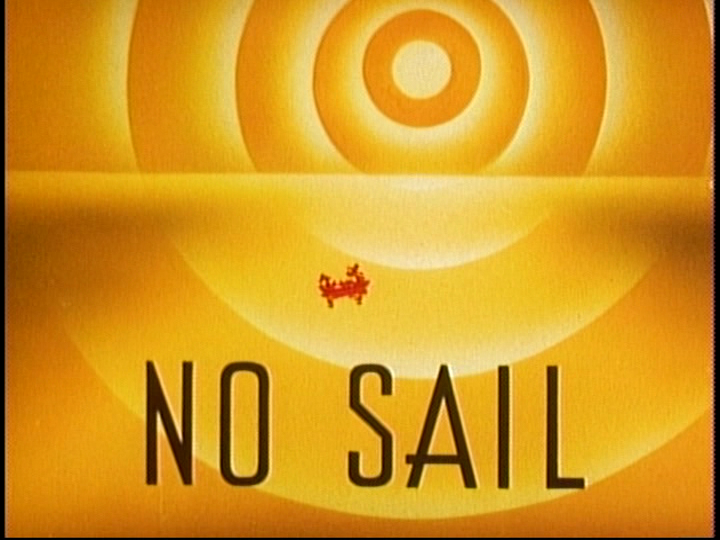
On September 7, 1945, the Donald Duck and Goofy short film No Sail was released to theaters. The film is one of the few listed under only Donald Duck’s filmography, even though it’s a double-billed short film. It was directed by Jack Hannah, with story by Dick Kinney and Ralph Wright. Clarence Nash stars as Donald Duck, and Pinto Colvig stars as Goofy.

Donald and Goofy arrive at a dock with several sailboats, and Donald deposits five cents in their chosen boat. Once the money has been inserted, the mast shoots out from the deposit box, and the boat zips away into the ocean. Goofy and Donald continue to sing their sea chantey as they sail quickly; unfortunately, the five cents only covers a short amount of time, and the mast returns to the deposit box. Donald pays again, and they soon go off and running, until the time runs out again. The mast lands on his head after he pays, so he kicks it, sending it flying back into the box. As Donald searches for another nickel, he soon realizes that he is out of change, and he and Goofy are stranded.
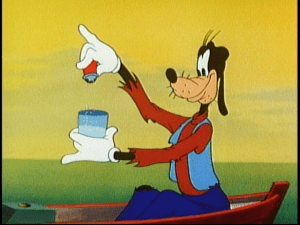
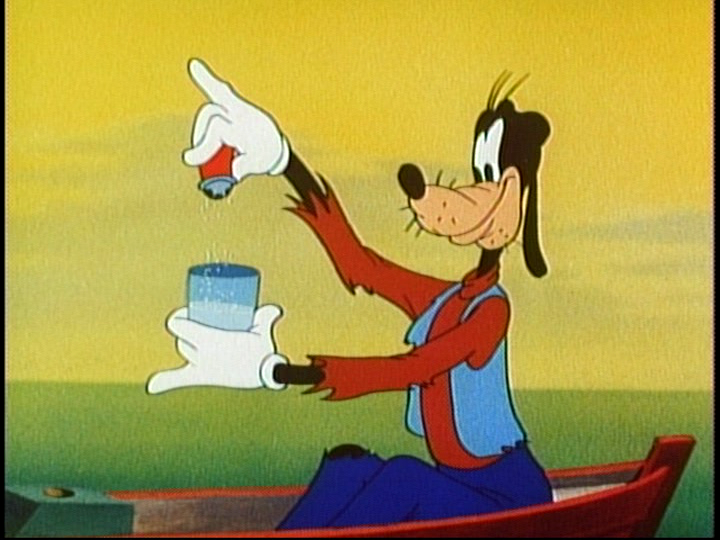
Goofy startles Donald when he declares that the ocean water he’s drinking needs more salt, then pulls a salt shaker from his pocket

Nighttime comes, and the two are still out in the open ocean. When the sun rises the next morning, Donald is nearly delirious with thirst. Goofy grabs a cup and attempts to drink the salt water, although Donald tells him not to. Goofy takes a sip and, to Donald’s surprise, proclaims it needs more salt. In the distance, Donald hears the sound of a boat approaching them, and they call out it. As Goofy waves his shirt, a nickel falls out of his shirt pocket. Donald chases after it, but it falls into the ocean, leaving them again stranded. Donald then looks up to see Goofy waving at the passengers as the ship sails by.

As the sun bears down on them, Donald is going mad. A fish lands on their boat, and the two argue over it, until a passing seagull eats it from their hands. Goofy attempts to kill the seagull for food, but the gull flies away unscathed. Out of nowhere, a shark appears, circling their boat. As Donald looks, several sharks have decided to circle their boat, until Goofy grabs one of their fins, realizing that the sharks aren’t real. Donald attempts to pick up a fin, and ends up staring a shark straight in the teeth. Goofy then decides that they can go fishing, and accidentally hooks Donald by the shirt and sends him flying into the water among the sharks. Donald tries to avoid getting eaten while Goofy attempts to untangle his line. At this point, Donald has had enough. He demands that Goofy let him down, so he does – beak first into the coin slot. This lets loose the mast, and the two sail home, although Donald isn’t too happy with how they accomplished such a feat.
September 6

September 6, 2005 – The Toy Story 10th Anniversary DVD is Released

Image credit: amazon.com

“Welcome to this 10th anniversary edition of Toy Story! Wait a minute, has it really been ten years since Toy Story came out in theaters?” – John Lasseter.

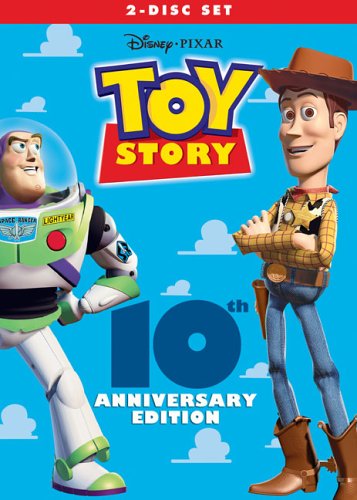
On September 6, 2005, the 10th Anniversary Edition DVD of Toy Story was released. The new edition of the film was remastered, with a new Dolby 5.1 surround sound track and the highest digital “bit rate” used at that point. The two-disc DVD set includes many special features, with many “making of” featurettes, deleted scenes, and a look at how 10 years before, Toy Story changed the face of animation. The DVD was sent back to the vault on January 31, 2009.

September 5

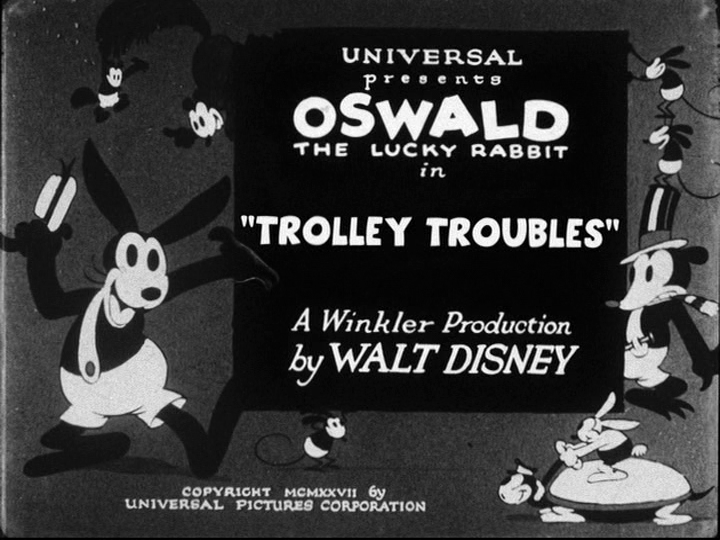
September 5, 1927 – The Oswald Short Film Trolley Troubles is Released

On September 5, 1927, the Oswald short film Trolley Troubles was released to theaters. It is known for being the first appearance of Oswald; an earlier Oswald short, Poor Papa, was rejected for release, as the distributers had expected a different kind of character rather than the older, more heavyset version Disney had produced. Trolley Troubles, however, was a success for Universal, and for Walt Disney and Ub Iwerks.

At the station, Oswald is cleaning up his trolley while children are causing mischief around him. Finally, when the trolley is wound up and ready to go, Oswald chases the kids away, but one kid sneaks aboard as Oswald drives away. Loading up the trolley at the first station he passes, Oswald and his passengers head merrily into town with many track gags along the way.

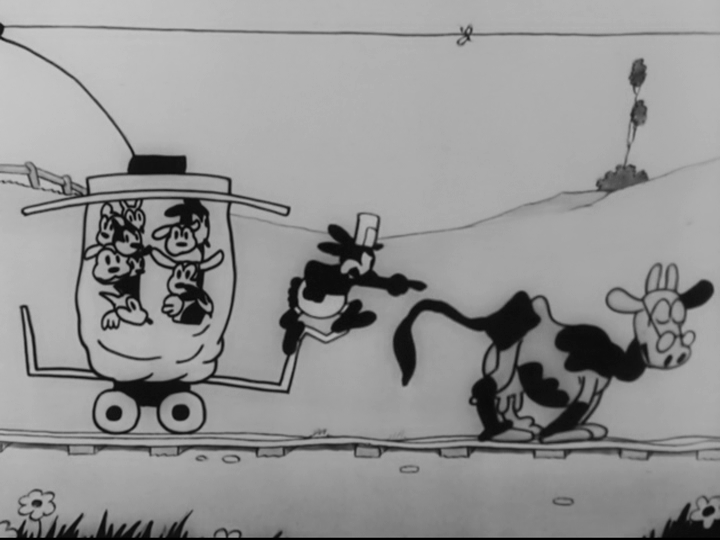
Oswald loses his temper at the stubborn cow standing in the middle of the tracks

At one point, a cow stands in the middle of the tracks, and although Oswald clanks his bell, the cow is undeterred. Oswald shouts at the cow, but the cow ignores him. Oswald then tries to calmly reason with the cow, but the cow still won’t budge. Oswald then backs up the trolley and goes full speed ahead, but fails to knock the cow from the tracks. The cow then steps sideways across the tracks, purposefully blocking the way, but Oswald gets an idea, and has the trolley go under the cow. The trolley passengers laugh at how Oswald has outsmarted the animal.

Oswald finds himself going up a very steep hill, but the trolley is unable to keep going, no matter how much Oswald pulls or pushes it. A nearby goat sees Oswald studying the trolley and decides to head-butt him, which causes the trolley to move. Although initially angry, Oswald gets the idea of using the goat to push the trolley up the hill. The plan is a success, until they realize that the hill is just as steep going down on the other side, and there seems to be no way to slow the trolley. Oswald rushes to pull the brake, but it rips off in his hands.  Passengers fall out at every curve of the track as the trolley goes over and around several hills. Oswald prays for the trolley to stop, and it finally does when it falls off the broken track and lands in the river. Oswald then paddles himself to safety on top of the trolley.

September 4

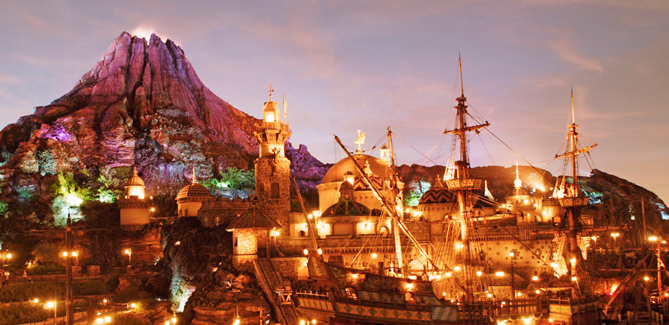
September 4, 2001 – The Tokyo DisneySea Theme Park Opens

“Welcome one and all to a world where Imagination and Adventure set sail. Tokyo DisneySea is dedicated to the spirit of exploration that lives in each of us.”- Michael Eisner

On September 4, 2001, the Tokyo DisneySea theme park opened at the Tokyo Disney Resort, located just outside of Tokyo in Urayasu, Chiba, Japan. Similar to Tokyo Disney, the resort is not operated by the Walt Disney Company; the theme is licensed from Disney and operated by the Oriental Land Company. Guests can enter seven themed areas, also known as “ports of call”: Mediterranean Harbor, American Waterfront, Port Discovery, Lost River Delta, Arabian Coast, Mermaid Lagoon, and Mysterious Island. The resort has become very popular, becoming the fourth most visited theme park in the world, with more than 11 million annual visitors.

The resort has had many special events, including a live performance by popular boyband Arashi, which performed a medley of Christmas songs and their own songs, becoming the first musical group to perform their own songs in the park. Popular artist Misia was also asked to compose and perform an anniversary song for the park’s fifth anniversary; the song was titled “Sea of Dreams: Tokyo DisneySea 5th Anniversary Theme Song.” Many attractions and nighttime shows from the other parks have also been brought to Tokyo DisneySea, including Fantasmic! and Turtle Talk with Crush.

September 3

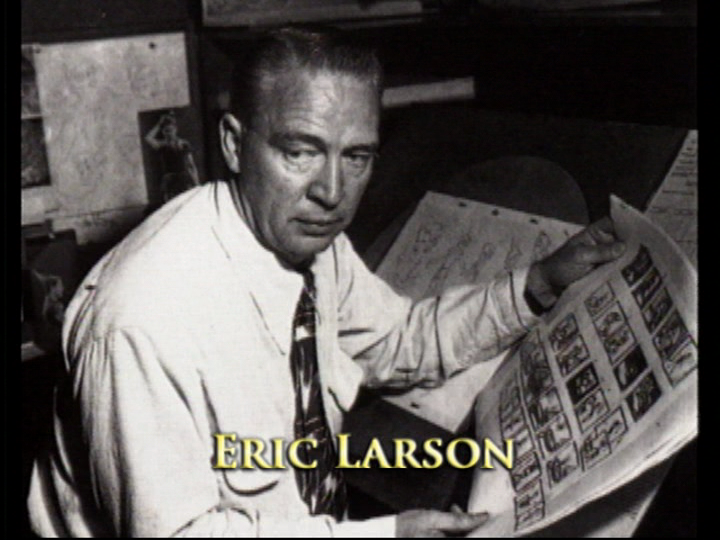
September 3, 1905 – Eric Larson, Disney Legend and Member of Disney’s Nine Old Men, is Born

“No one was more concerned with passing on the Disney legacy than Eric.” – Animator Andreas Deja

On September 3, 1905, animator Eric Larson was born in Cleveland, Utah. After graduating with a journalism major from the University of Utah, he traveled to Los Angeles in 1933, and worked on a radio program called “The Trail of the Viking.” At the same time, he sent some sketches to the Walt Disney Studios, and was soon hired as an assistant animator. He worked on Snow White and the Seven Dwarfs (the “Whistle While You Work” segment), Pinocchio (Figaro), Fantasia (“The Pastoral Symphony”), Dumbo, Bambi (the title character), Cinderella (Cinderella and Prince Charming), Alice in Wonderland (Alice, Dinah, The Cheshire Cat, The Caterpillar, The Queen of Hearts, and the Flamingo), Peter Pan, Lady and the Tramp (Peg and the pound puppies), Sleeping Beauty, 101 Dalmatians (Pongo, Perdita, Colonel, and Tibbs), and The Jungle Book (the Vultures), as well as several shorts, including The Three Little Pigs.

In the 1970s, Larson helped start a recruitment training program to teach a new generation of animators the Disney style of animation. Many famous names went through this program, including Brad Bird, Don Bluth, Tim Burton, Andreas Deja, Mark Henn, Glen Keane, John Lasseter, Burny Mattinson, and Joe Ranft. This program came at a crucial time when the older animators were retiring, and new blood was needed to help revive the studios. Larson continued to contribute to projects at the studio during the 1980s, and retired in 1986, after working for Disney for 52 years. Larson passed away on October 25, 1988, and was inducted as a Disney Legend in 1989.

September 2

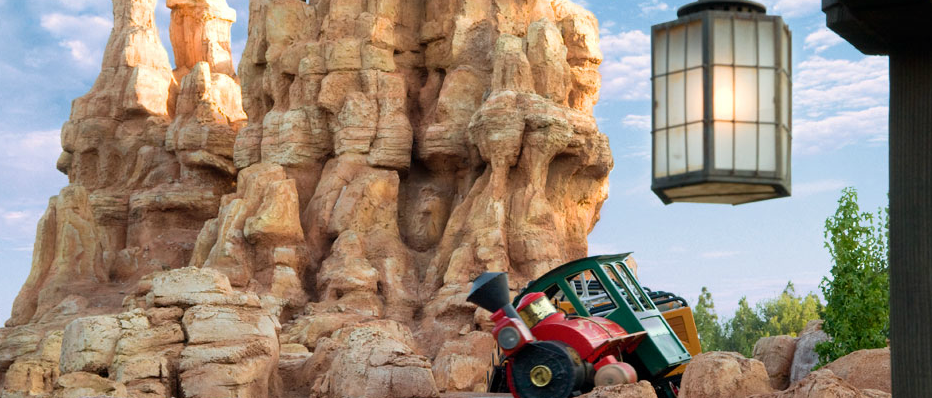
September 2, 1979 – The Big Thunder Mountain Railroad Attraction Opens in Disneyland’s Frontierland

Image credit: Official Disneyland website

“Folklore tells of mysterious rumblings and strange noises emanating from the depths of the 104-foot-tall Big Thunder Mountain.”

On September 2, 1979, the Frontierland attraction Big Thunder Mountain Railroad opened. The attraction was designed by Disney designer Tony Baxter, who was interested in the scenery at Utah’s Bryce Canyon National Park. The mountain of the attraction is completely man-made by Disney Imagineers, built with cement and paint. To create the authenticity of the attraction, Imagineers studied ghost towns in the West, and built carts, buckets, and mining equipment. The attraction replaced the Mine Train Through Nature’s Wonderland attraction, which had replaced the Rainbow Caverns Mine Train attraction that closed in 1959. Many of the set pieces from both attractions are still in use.

The legend of the ride goes back many years, with Native American tales claiming that supernatural forces will be unleashed upon those who try to take gold from the mountain. The Big Thunder Mining Company was not swayed by these claims, and continued to build a mine shaft within the mountain; however, reports claim that many carts begin to move into the mountain without their engineers, driven by these supernatural forces.

September 1

September 1, 1939 – The Donald Duck Short Film The Autograph Hound is Released to Theaters

“Get out! And stay out, you web-footed autograph hound!”

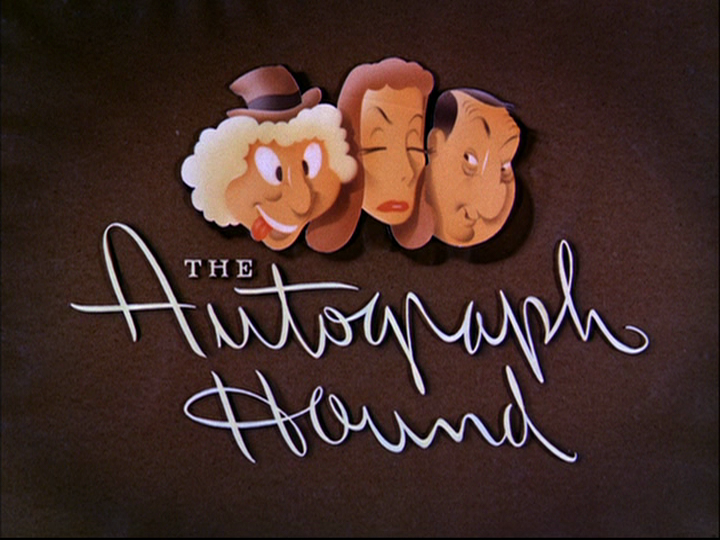
On September 1, 1939, the Donald Duck short film The Autograph Hound was released to theaters. The short contains many caricatures of famous stars of the time, including Mickey Rooney, Shirley Temple, Clark Gable, and Greta Garbo. The short was directed by Jack King, and stars Clarence Nash as Donald Duck.

In front of Hollywood Studios, a large sign is set up, proclaiming “No autograph hounds allowed.” Shortly after the audience sees the sign, the gates open up, and the security guard throws Donald out onto the street. As Donald yells at the officer, he is almost hit by a car belonging to famous actress Greta Garbo. Donald tricks the guard into thinking he’s riding in with Ms. Garbo, but when the guard finds out he’s been duped, he pursues Donald across the studio. Donald first hides in Mickey Rooney’s dressing room. He asks Rooney for an autograph, but Rooney plays practical jokes on Donald, angering the duck. Seeing the security guard again, Donald flees.

Donald runs into the Ritz Brothers, and doesn’t hesitate to ask them for an autograph

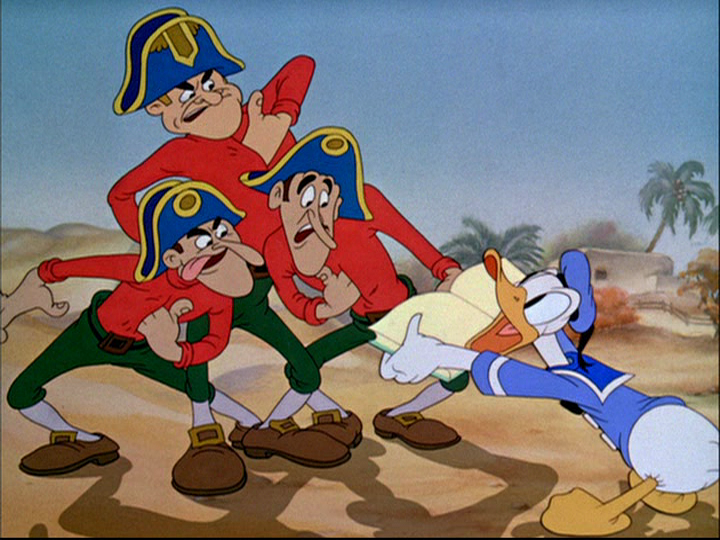
The next stop Donald makes is on the set of a film, which has an ice skating rink set up. He runs across Sonja Henie, and asks for her autograph, which she carves into the ice. Donald attempts to take it with him while crossing another set set up like the Sahara Desert, only to find the autograph melting fast in his hands. He comes across a tent with what appear to be the shadows of three belly dancers on the wall. When the “belly dancers” pass by the door of the tent, it’s revealed that it’s actually the Ritz Brothers. Donald asks for their autograph, and they provide it, but not in the manner Donald wanted. Spotting the officer again, Donald makes a run for it.

After running up the stairs of a set, Donald trips over Shirley Temple, and the two tumble down the stairs. Shirley recognizes Donald, and the two ask for each other’s autograph. As he jumps for joy over his good fortune, the officer grabs him by the neck and proclaims that he’s got him. Temple, however, chastises the officer for grabbing Donald Duck. The news that Donald Duck is in the studio passes around like wildfire, with celebrities leaving their sets to meet him, including Greta Garbo, Clark Gable, and the Marx Brothers. Donald is soon surrounded by autograph books, with the officer himself handing Donald a pen and asking for his autograph. Donald grabs the pen and gives it to him, spraying the officer’s face with ink.