RSS Feed

Tag Archives: World War II

August 4

August 4, 1941 – A Letter of Agreement is Signed Between Disney and the National Film Board of Canada

Disney+WWII

“I am convinced that certainly, in the technical film, the animated way is the best from the teacher’s point of view.” – John Grierson, Head of the National Film Board of Canada

On August 4, 1941, a Letter of Agreement between Walt Disney Studios and the National Film Board of Canada was signed. Walt had met with John Grierson, the head of the board, who had realized that there were several limitations in creating technical training films with live-action. Grierson was impressed with the work that the studio had done for Lockheed Martin, which was the short training film Four Methods of Flush Riveting. The studio was hired to make four animated short films to sell war bonds, with the studio reusing animation to meet tight deadlines. The four shorts included The Thrifty Pig, 7 Wise Dwarfs, Donald’s Decision, and All Together. Also included in the agreement was a training film called Stop That Tank!, which taught Canadian soldiers how to use an antitank rifle. Disney Animators were also called on for promotional material, including the design of the cover of a war savings stamp folder.

January 23

January 23, 1942 – The Donald Duck Wartime Propaganda Short Film The New Spirit is Delivered

vlcsnap-2015-01-23-18h14m36s227

“Oh boy! Taxes to beat the Axis!”

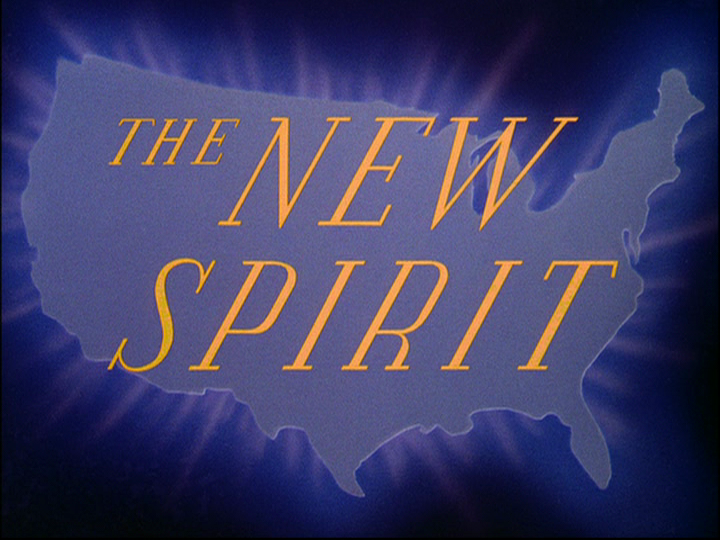
On January 23, 1942, the Donald Duck wartime propaganda film The New Spirit was delivered to the Treasury Department under the support of the War Activities Committee. It was directed by Wilfred Jackson and Ben Sharpsteen. This was the first propaganda film for the US Government by the studio since the country’s entry into World War II, and the Treasury Department hoped that Disney could provide a start of the new Revenue Act of 1942 and apply the funds directly to the war effort. The Department paid $40000 for the film, asking for a very short time frame to have the film ready no later than February 15. Although there was concern about using Donald Duck for the short film, Walt had argued that using Donald was similar to MGM using Clark Gable, and Department Secretary Morgenthau agreed. Donald was seen as a cathartic character for most Americans, and his anger and patriotism resonated with a public still reeling from Pearl Harbor.

While Morgenthau was excited about the film, Congress voted to eliminate the $80,000 appropriation the Treasury had submitted to pay for the film and its marketing, as many anti-Roosevelt members thought it was a waste of money and nearly marked Walt as a war profiteer. Fortunately for the studio, The New Spirit resonated with audiences, and was hailed by the media as “an excellent bit of persuasion,” as written by the Chicago Herald-American. A survey was conducted, and 37% of those that had seen the short said it had an effect on how willing they were to pay their taxes, with further members of the audience praising the film and criticizing Congress for its failure to pay the Studio. The New Spirit was also nominated for an Academy Award for Best Documentary at the 15th Academy Awards.

Donald is ready and willing to do whatever it takes to win the war

Donald is ready and willing to do whatever it takes to win the war

The song “Yankee Doodle Spirit” is playing on the radio, with Donald dancing to its patriotic rhythm. As he listens to the radio program, Donald quickly readies himself for the threat of war. The radio announcer declares that there is something Donald can do for the war effort, and Donald states he will do anything. When Donald hears that the best thing he can do is pay his income tax, at first he is dismayed. The announcer goes on to say that his income tax is vital to the war effort, as the taxes pay for supplies for the troops to beat the Axis Powers. A new simplified form is presented, which is really all that Donald will need, along with a pen, ink, and a blotter. Donald fills out the form, and finds that he owes $13 for his taxes. He is so excited to pay his taxes that he races across the country to Washington DC to pay them in person. The announcer continues with what the taxes will be used for: factories that will make the ammunition and weapons for the soldiers, planes, and battleships.

January 11

January 11, 1942 – The Wartime Donald Duck Short Film Donald’s Decision is Delivered

vlcsnap-2015-01-06-08h14m30s19

“Enlist in our army of regular war savers today!”

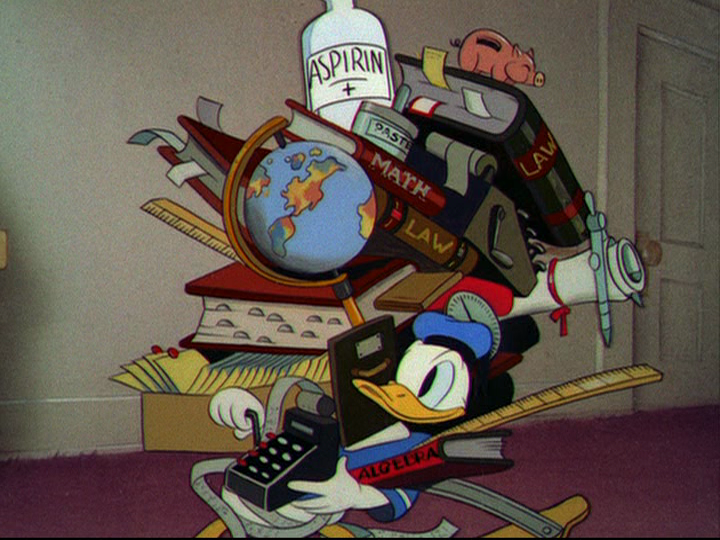
On January 11, 1942, the Donald Duck and educational wartime short film Donald’s Decision was delivered to the National Film Board of Canada. The short reuses animation from two previous Donald shorts: 1938’s Donald’s Better Self, and 1938’s Self Control.

Donald is listening to a radio program urging him to buy war savings certificates, and Donald readily agrees – to do it tomorrow. Donald’s angelic side appears and demands that Donald do it now, as there is no time to waste, and Donald reluctantly follows him. The flag on his mailbox swings around to symbolize the Nazi swastika, announcing the arrival of his devilish side, who tries to convince Donald that the money would be better spent on himself, which would help the Axis powers. Donald is soon caught in a tug of war between the angelic and devilish side. The devilish side traps the angelic side and throws him in the nearby lake, but the angelic side fires back, defeating the devilish side. Donald finally agrees to take his money to the post office to buy war bonds. This is then followed by an animated plea to the citizens of Canada to buy war savings certificates.

December 7

December 7, 1945 – The Pluto Short Film Canine Patrol is Released to Theaters

vlcsnap-2014-12-07-19h34m21s205

On December 7, 1945, the Pluto short film Canine Patrol was released to theaters. The wartime short was dedicated to the dogs of the United States Coast Guard. It was directed by Charles Nichols, with story by Harry Reeves and Tom Oreb.

At a U.S. Coast Guard Patrol Station, Pluto starts his patrol of the beach, when he trips over a spot in the sand. The spot turns out to be an egg buried under the sand, and the egg hatches to reveal a baby turtle. The turtle trips over himself and lands on Pluto’s nose and, thinking Pluto is his mother, nestles up to the dog. Pluto is flattered at this, but is soon alarmed when the turtle heads into the water, not heeding the “no swimming” sign. Pluto then takes the turtle outside of the post, near the “no trespassing” sign, warning him to stay away. The turtle continues to try and walk in, but Pluto comes up with a plan to get the turtle to leave on his own. It works, until the turtle realizes he’s walking towards a farm, and decides to head back to Pluto, who has gone back on patrol. Pluto hears the turtle try to sneak back into the station, and watches the turtle struggle as it sits on his shell, unable to move. The turtle, however, is rather resourceful, and finds a way to move to the shore. Pluto tracks after him and finds a large area of rocks. He searches under each one and, unable to find him, finally sees him swimming joyously. Pluto once again tries to push the turtle out, and doesn’t notice the sign for quicksand. He soon finds himself stuck while the turtle swims around without a care. Seeing Pluto sink into the quicksand, the turtle is alarmed, and grabs Pluto by his collar to pull him out. When that fails, he bites Pluto’s tail, causing the dog to jump out of the quicksand thanks to the pain. The short ends with the turtle pulling Pluto in an inner tube along the shore while swimming away happily.

November 26

November 26, 1943 – The Donald Duck Short Film Home Defense is Released to Theaters

vlcsnap-2014-11-26-15h12m55s193

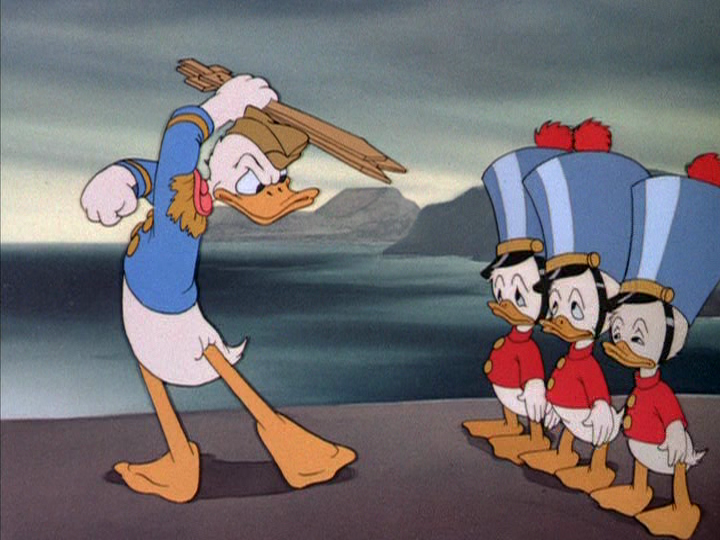
“Hey, you! Attention! Display your chevrons! Surrender your weapons, gentlemen! You’re a disgrace to the service!”

On November 26, 1943, the Donald Duck short film Home Defense was released to theaters. It was directed by Jack King.

From his listening post, Donald is falling asleep while his nephews sleep soundly in their tent. Donald tries desperately to stay awake, but fails, dropping his trumpet while he falls to the ground. He ends up snoring into the trumpet, making it sound and waking his nephews, who are shocked to see Donald shirking his duties. They decide to play a prank on their uncle, and send a model airplane flying around the listening post. The sound wakes Donald up, and he believes that there’s a bomber right above them. The nephews then set up their guns, although Donald takes over and shoots the model plane down while the nephews laugh. Donald then sees some parachuters from the plane (another part of the nephews’ prank), and hides in a flowerbed while the nephews make sounds or battle.

Finding that his nephews tricked him, Donald takes away their chevrons and weapons, dismissing them from his service

Finding that his nephews tricked him, Donald takes away their chevrons and weapons, dismissing them from his service

After one of the dummies lands on Donald’s nose, he realizes the ruse and decides to get back at his nephews by dismissing them from his gun crew. He ignores the tears of his nephews as they march away sadly, and is left alone at his post. Later, he hears a bug buzzing around the post and believes that it’s his nephews playing another prank. When he realizes this isn’t the case, he believes that they are under attack, and quickly calls the boys to help. He restores them to the service, and they set up the cannon to be pointed at the listening post’s speaker, much to the surprise of the bug, who barely manages to escape. The nephews try to warn Donald before setting off the cannon, but Donald refuses to listen, and his ears are blown out from the cannon fire into the speaker. The nephews laugh as Donald throws a tantrum at his misfortune.

July 30

July 30, 1942 – The World War II Educational Short Out of the Frying Pan into the Firing Line is Delivered

vlcsnap-2014-07-30-18h30m41s40

“Your pound of waste fat will give some boy at the front an extra clip of cartridges.”

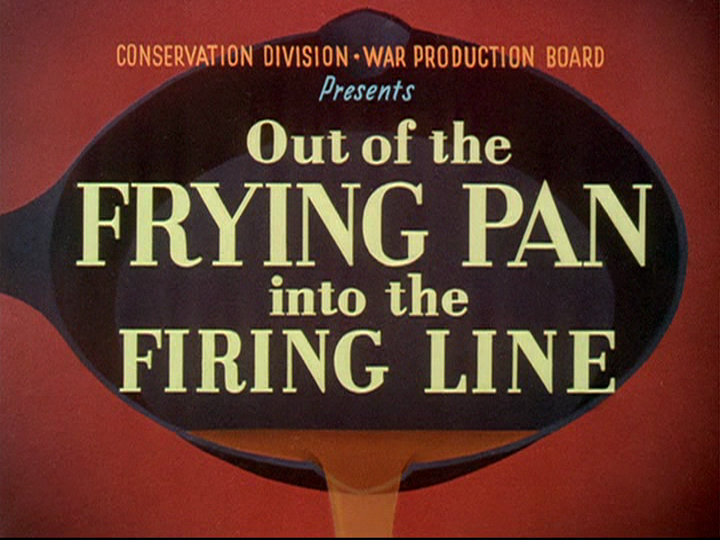
On July 30, 1942, the World War II educational short film Out of the Frying Pan into the Firing Line was delivered to the U.S. government. The short was sponsored by the Conversation Division and the War Production Board, and distributed by the War Activities Committee of the Motion Pictures Industry. It was directed by Ben Sharpsteen.

Minnie is cooking bacon and eggs in a pan on the stove, and the smell attracts Pluto, who is eating his dinner nearby. He scoffs at his dinner, but Minnie offers to give him some leftover bacon grease. As she gets ready to pour it in his bowl, they hear a voice telling them not to throw away the grease. They both turn to the radio, where an announcer informs them that the fats are needed to help win the war, much to Pluto’s annoyance. The fats are used to make glycerin, which is then used to make explosives. Every year, the announcer continues, two billion pounds of waste animal fats are thrown away, which is equivalent to enough glycerin to make 10 billion rapid-fire cannon shells. He continues to give examples about how a little grease goes a long way to helping the war effort. Hearing this, Pluto looks to a picture of solider Mickey on the wall and gives him a salute. Minnie asks Pluto again if he still wants the bacon grease, and Pluto declines. The announcer then instructs Minnie how to store her fats before donating them to the war effort. Pluto donates the fats at the butcher shop, and is rewarded with a string of sausages.

June 30

June 30, 1945 – The Educational Short Film Cleanliness Brings Health is Delivered

vlcsnap-2014-06-30-18h28m35s40

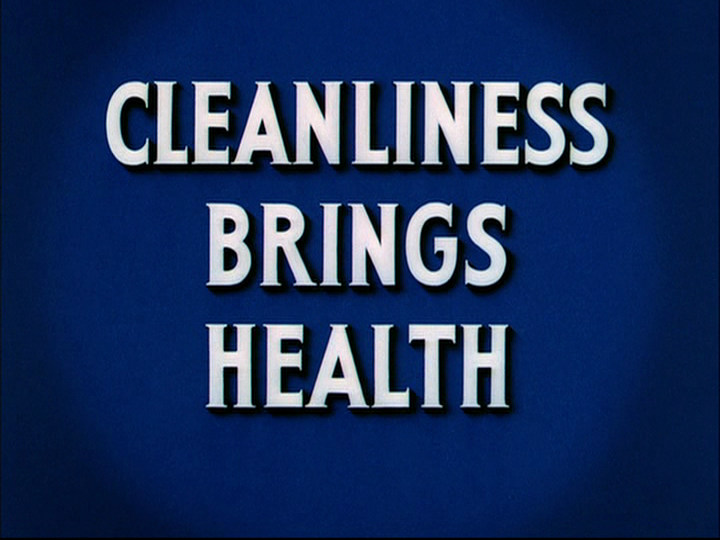
“This is the story of two families: one of them happy, one of them sad; one of them clean, the other, careless.”

On June 30, 1945, the educational short film Cleanliness Brings Health was delivered to the Coordinator of Inter-American Affairs.

The short introduces two families: one clean, happy, and healthy, the other careless, sick, and unhappy. The audience sees how the Clean family lives, and how they make sure everything is kept clean, including their dishes, food, and livestock. The father works in the corn field with his son, and all three members of the family are happy. The Careless family is seen doing several things that cause them to be constantly ill, including cooking on the floor and letting their livestock roam free. The son is seen on the ground with stomach cramps, and he goes into the corn field to relieve himself, although this causes his illness to spread through the crops and the dirt. The Clean family also has a problem with stomach cramps, but they create a simple latrine rather than use the old custom of going into the corn fields. The Clean family also washes themselves and their clothes to continue their health. Finally, the narrator reminds the audience that “cleanliness brings health and happiness.”

January 4

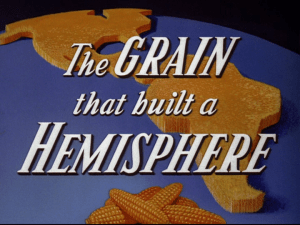
January 4, 1943 – The Educational Propaganda Short Film The Grain That Built a Hemisphere is Delivered
vlcsnap-2014-01-04-16h01m49s225

“Corn is the symbol of a spirit that links the Americas in a common bond of union and solidarity.”

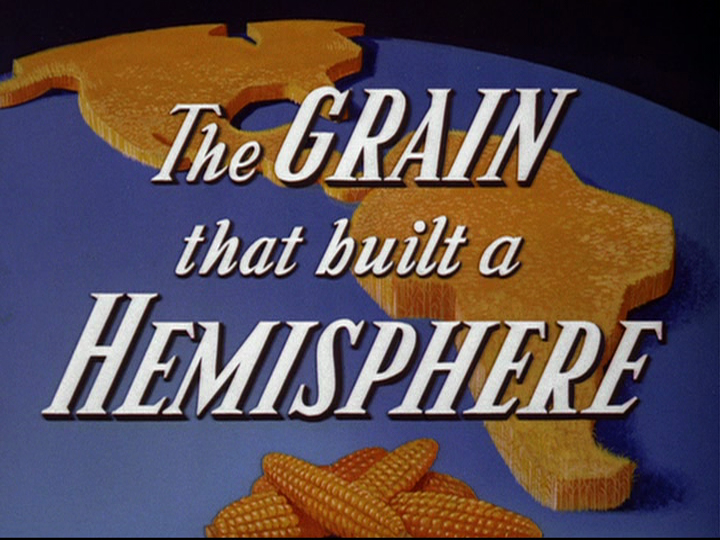
On January 4, 1943, the educational short film The Grain That Built a Hemisphere was delivered to the Coordinator of Inter-American Affairs. It was nominated for an Academy Award for Best Documentary in 1943, but lost to The Battle of Midway, Kokoda Front Line!, Moscow Strikes Back, and Prelude to War. This short also includes a short segment from the 1938 Silly Symphony Farmyard Symphony. The short was directed by Bill Roberts.

The short begins with an explanation of corn, and how it possibly came to be. The earliest version of corn grew on the mountains centuries ago, but was not noticed by hunters as they searched for food. When hunters were unable to find game, they were able to find corn and use it for food; this discovery is then credited as helping begin the civilization of the Americas. The narrator then directs the attention to the Mayan civilization, which was built around the growth and worship of corn, with great temples built in dedication to the corn gods, including Yum Kaax. The Aztecs also built a civilization based on corn, with their corn goddess named Centeotl. The Incas, located in the Andes, worshipped a sun god, who provided them with all they needed to grow their corn. The crop of corn spread around South America and all the way to Canada; it was also sent over the world through the conquistadors and spread from there.
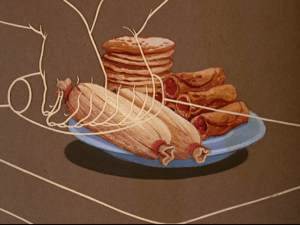
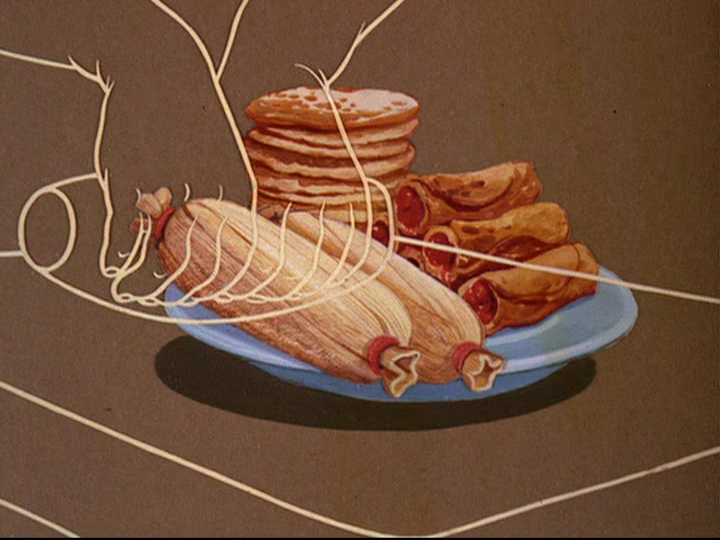
A list of foods made from corn is shown through animation

A list of foods made from corn is shown through animation

The narrator lists the various foods made from corn, including tortillas, succotash, and bourbon. Brought to present day, where it is explained that, thanks to advances in machinery, we can harvest enough corn in fifteen hours, compared to the 500 the Mayans needed. The next topic is how to inbreed corn, and the entire process is explained step by step. It produces small versions of the corn plant, but once two small unrelated inbred plants are cross-bred, that produces a stronger, larger stalk with more ears. Seventy-five percent of all corn produced in the United States goes to feed for livestock, with hogs eating the most of that percentage. After this, a scientific study of corn is presented, with an explanation of how the two parts of the corn kernel (the endosperm and the germ) are used to create oils and starches, which have a variety of uses. A hypothesis of how corn can be used to help the war effort is also presented, with the idea that corn can be used to create tough plastics, powerful fuels and explosives, tires, parachute fabrics, and more.
August 27

August 27, 1943 – The Wartime Short Film Reason and Emotion is Released to Theaters

vlcsnap-2013-08-26-20h59m19s50

“Each one of us is equipped with the ability to think, known as Reason, and the ability to feel, known as Emotion. Within the mind of each of us, these two wage a ceaseless battle for mastery.”

On August 27, 1943, the wartime short film Reason and Emotion was released to theaters. It was nominated for an Academy Award, but lost to The Yankee Doodle Mouse from Metro-Goldwyn-Mayer. The short was directed by Bill Roberts.

The short begins with an explanation of how each person has two abilities: Reason and Emotion. From birth, Emotion is the more powerful of the two, as Reason isn’t born yet. A baby is seen acting on pure Emotion, until Reason arrives to stop Emotion. The baby grows up, and Reason is in the driver’s seat of the man’s mind. When the man passes by and attractive woman, Emotion knocks out Reason and acts crudely toward the woman, earning a slap in the face. The attention then turns to the woman who, when Emotion takes over her mind, decides to eat as much as she can at the nearby café, with her figure ballooning quickly.

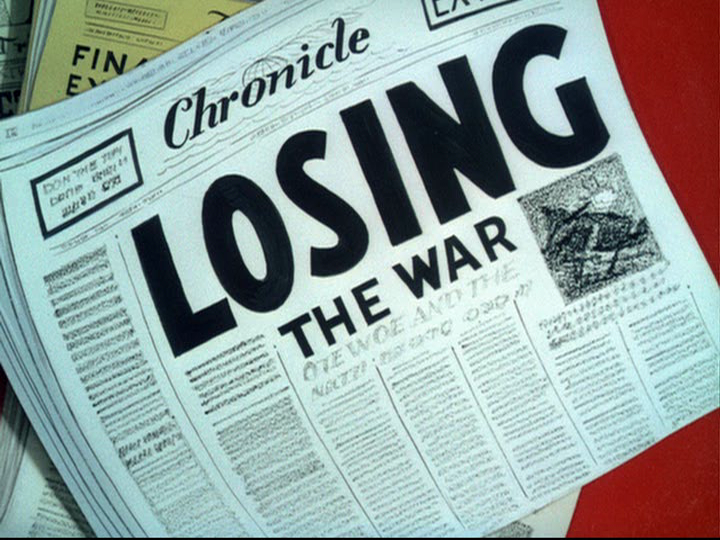
The narrator explains that, during this time of war, it is easy to let Emotion take control over Reason, thanks to headlines like this

The narrator explains that, during this time of war, it is easy to let Emotion take control over Reason, thanks to headlines like this

The attention then turns to the War, and how easily people can let their emotions get the best of them in such a stressful time. In the case of Mr. John Doakes, although he tries to keep himself informed of the current events, he is easily ruled by Emotion with all the rumors running around. The narrator then points out to Emotion that this is exactly what Hitler plays upon, using tactics of fear, sympathy, pride, and hate. The audience is then taken inside the mind of a Nazi, with Emotion completely manipulated by Hitler’s speeches. Although Reason knows better, Emotion enslaves Reason and leaves nothing but ruin in his wake. The narrator tells Reason and Emotion that they must work together to fight against all odds to defeat Hitler.

June 2

Posted on

June 2, 1944 – The Donald Duck Short Commando Duck is Released to Theaters

vlcsnap-2013-05-29-23h12m14s177

“Contacted enemy, washed out same. Donald Duck.”

On June 2, 1944, the Donald Duck short film Commando Duck was released to theaters. The short contains several stereotypes of Japanese soldiers, as was common in this time period while the United States was embroiled in war. The short was directed by Jack King.

The short begins with Donald receiving his orders to parachute out of a plane into a forest, where he has to watch out for snipers and alligators to reach his objective and wipe out the enemy. He is then warned that he must complete this mission at all costs, and with trembling knees, parachutes out of plane. His chute gets caught on two tree branches and, thinking he’s safe, unhooks his belt only to find that he is falling several hundred feet into an alligator infested river. Luckily, he is able to save himself and end up on dry land, but with an emergency raft as his only supply.

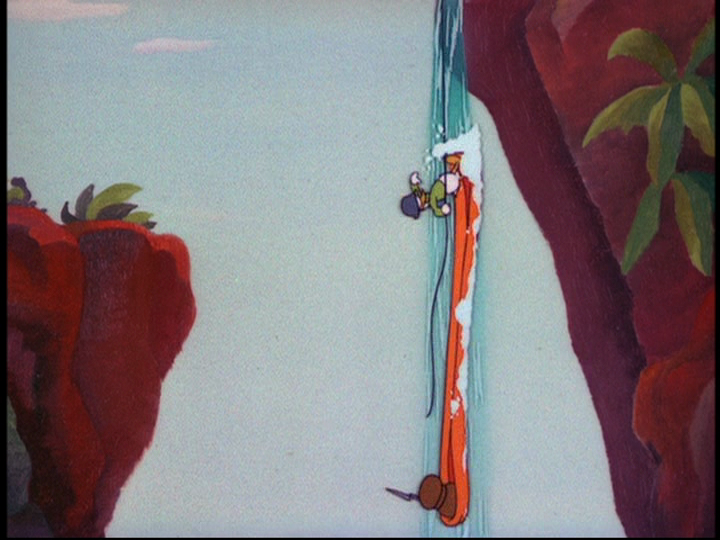
Donald falls down a waterfall after being shot at by Japanese snipers

Donald falls down a waterfall after being shot at by Japanese snipers

Several Japanese snipers are lying in wait on the side of the river, and point their guns at Donald as he passes by in the raft. They fire, but Donald mistakenly believes them to be mosquitoes, until he catches bullets in his helmet. He quickly flees, only to find that a waterfall is nearby, and nearly falls down the falls before roping a rock; the rope is shot by a sniper, and Donald is sent sailing down the falls. Fortunately, the raft saves his life, but fills with so much water that it nearly crushes him. The raft continues to expand with the water, and Donald continues to try and outrun it, as well as remove anything sharp from its path. It gets punctured by a log, and Donald had to outrun water and massive boulders. The boulders, however, send Donald flying into the air and, along with the water, crash into the enemy base, destroying it.