RSS Feed

Tag Archives: Technique

May 19

Posted on

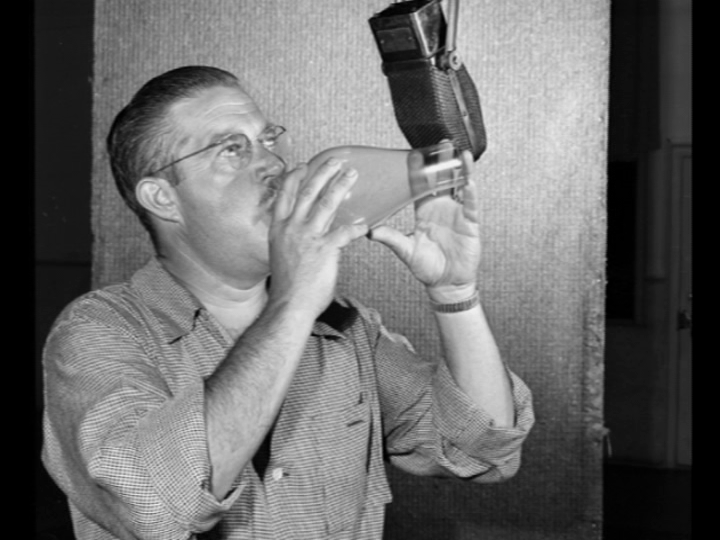
May 19, 1906 – Birth of Disney Legend, Sound Effects Wizard, and Voice of Mickey Mouse, Jimmy MacDonald

“Jimmy was Walt’s major sound effects man. You name it. All the gags that you hear in the old cartoons, that’s Jimmy. The train in Dumbo, Jimmy. He built these things…he was a genius at it. And [there was] nobody better.” – Wayne Allwine

On May 19, 1908, John James MacDonald was born in Monks Coppenhall, Cheshire, in the United Kingdom. When he was six months old, his family immigrated to the United States. MacDonald loved music, and as an adult, he was a musician on the Dollar Steam Ship Lines, which led to a job at the Disney Studios in 1934 recording music for a Disney film. MacDonald soon became the head of the sound effects department. Wayne Allwine, who worked with MacDonald in the sound effects department, remarked that “…it was as a musician on the recording sessions for the early cartoons that Walt heard Jimmy, saw that he had more gadgets, as he called them, than anybody else in town, and hired him to come in and do his sounds, as he called them, for the cartoons.”

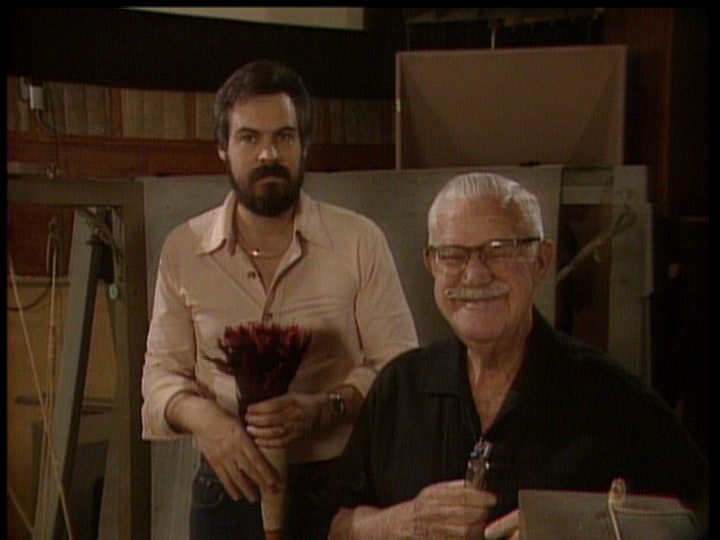
MacDonald (R) with apprentice and replacement for the voice of Mickey Mouse, Wayne Allwine (L)

In 1947, Walt Disney was becoming busier, and his voice was getting hoarse from his smoking, so he asked MacDonald to begin voicing Mickey, which began with the film Fun and Fancy Free. “And Jimmy said, ‘I was down here working one day, and Walt called me into his office and said, ‘Can you do Mickey?’” Allwine explained in an interview with Leonard Maltin. “And Jim said, ‘I don’t know, Walt. I never tried.’ He said, ‘Let’s hear ya.’ And Jimmy did a few lines, and Walt said, ‘That’s fine. From now on, call Jimmy. I’m too busy.’” Allwine described MacDonald’s Mickey: “Jimmy’s Mickey was interesting. Jimmy was a bass. Nice deep voice. And for him to do Mickey, he had to really work at it, and you can hear a texture in Jimmy’s Mickey that you don’t hear in Walt’s.” The only time in MacDonald’s career as Mickey that Walt once again resumed the role was when voicing the intros to the Mickey Mouse Club. MacDonald voiced the character on a regular basis until 1953, which turned into a recurring role until 1977, as he was having a rough job keeping the falsetto as he got older.  His sound effects assistant, Wayne Allwine, was picked as his replacement, and in 1977, MacDonald retired from the Walt Disney studios.

MacDonald passed away in his home at the age of 84 in 1991, and was named as a Disney Legend in 1993. In a rare treat, the Disney Studios had recorded all of the sound effects MacDonald had created, and used them for the television show, House of Mouse; MacDonald’s sound effects legacy continues to last thanks to the preservation efforts of the Foley sessions.

March 30

March 30, 1992 – The Walt Disney Feature Animation Department Wins the Academy Award for the Development of CAPS

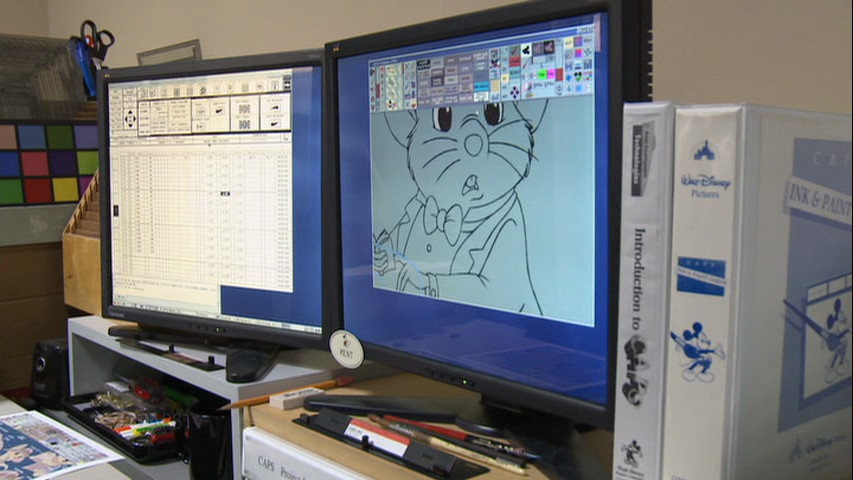
The CAPS System at work

“[CAPS] gives us not only the opportunity to do some really good art, but it also gives us the opportunity to really begin to explore what these computers and graphics things can do for us in kind of shorter pieces where we can get really a little crazy. And I’m looking forward to all of us getting a little crazy.”- Roy Disney

During the 64th Academy Awards ceremony in Los Angeles on March 30, 1992, nine men—Randy Cartwright, David B. Coons, Lem Davis, Thomas Hahn, James Houston, Mark Kimball, Peter Nye, Michael Shantzis, and David F. Wolf—shared an Oscar for a technical innovation developed jointly by the Walt Disney Feature Animation Department and Pixar Studios. Known as CAPS, or Computer Animation Production System, this innovation computerized the ink and paint process of animated films. CAPS allowed the artists to assemble the separate pieces of animation, from the background to the special effects, onto the final film directly. CAPS was first used in an animated feature in the final scene of The Little Mermaid, and was fully used in The Rescuers Down Under.

“One of the technology guys, Lem Davis, thought we could use computers to paint the characters in our films and digitally assemble all the artwork,” Don Hahn said about the CAPS project.

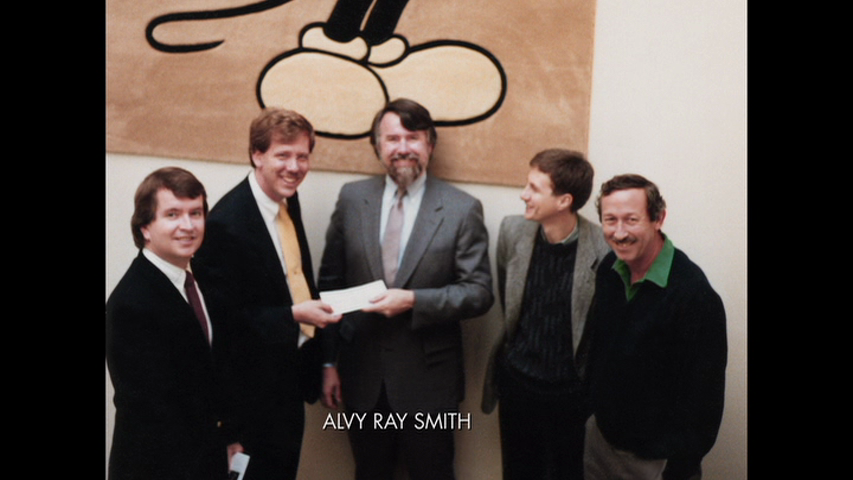
The main negotiators in the CAPS Project

Roy Disney, excited about the opportunity CAPS could give the company, asked Frank Wells, President of the Walt Disney Company, for $10 million to spend on the CAPS program, even though the risk was great, and there was no guarantee of return on the investment. The Disney check went to Alvy Ray Smith, the co-founder of Pixar, the best company to work with when bridging the gap between hand-drawn animation and computer technology. Pixar and Disney employees on the project worked around the clock on the program, with mounting deadlines and quotas. Although The Rescuers Down Under was not a huge success, CAPS received widespread critical acclaim on Beauty and the Beast.

“It was just the basis of what was to come in terms of the 3-D animation process. It was the engine that drove everything else forward,” former chairman Peter Schneider has said about the use of CAPS.

February 26

February 26, 1942 – Walt Disney is Awarded the Irving G. Thalberg Memorial Award, and Fantasia Gets Two Special Oscars

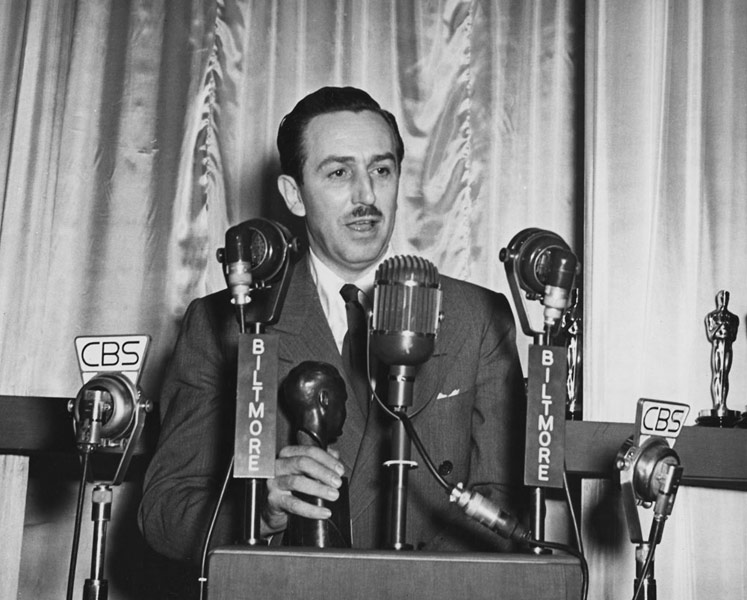
Walt Disney receiving the Irving G. Thalberg Memorial Award

At the 14th Annual Academy Awards, held on February 26, 1942, at the Biltmore Hotel in Los Angeles, it appeared to be a banner year for the Walt Disney Studios. Although Fantasia had not been the commercial success Walt had hoped it would be, it had still been a major innovation when it came to the process of sound in motion pictures. At his awards ceremony, Leopold Stokowski, the conductor of the film, was awarded a special Academy Award; a special Academy Award was presented to Walt Disney, William Garity, John N. A. Hawkins, and the RCA Manufacturing Company for the film, as well. On top of this, Walt Disney was fourth recipient of the Irving G. Thalberg Memorial Award.

The Irving G. Thalberg Award honors those “creative producers whose bodies of work reflect a consistently high quality of motion picture production.” It honors Irving Thalberg, who, at the age of twenty-three, became the vice president and head of production for Louis B. Mayer. Before he died of pneumonia at the age of 37, his work had made MGM one of Hollywood’s most prestigious studios. Disney became the fourth recipient of the award, and although he only had about three feature films and several shorts under his belt, it showed that Disney had made many strides in the fields of animation and motion pictures.

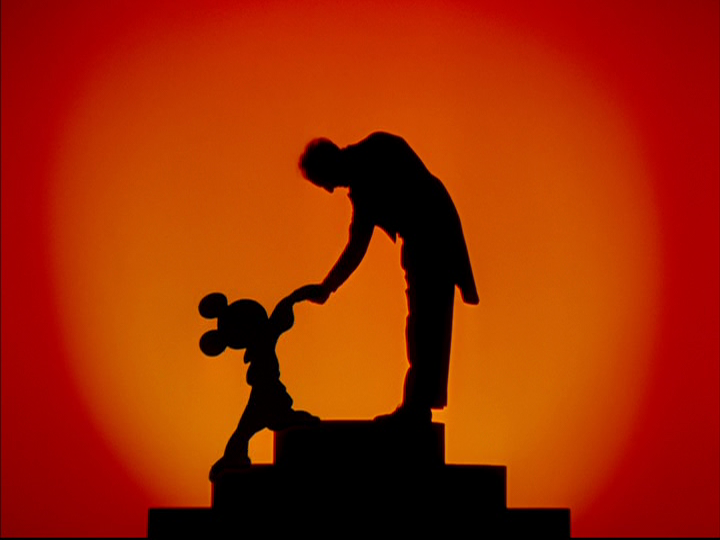
Leopold Stokowski in the iconic image from Fantasia

Leopold Stokowski and his associates were given a special award by the Academy “for their unique achievement in the creation of a new form of visualized music in Walt Disney’s production, Fantasia, thereby widening the scope of the motion picture as entertainment and as an art form.” The other special award—given to Disney, technicians William Garity and John N. A. Hawkins, and RCA—was for “their outstanding contribution to the advancement of the use of sound in motion pictures through the production of Fantasia.” The RCA stereo system that had been honored was truly remarkable for its day, and helped create a concert-like atmosphere for the audience. It was a very expensive system, requiring special equipment to be installed in theaters, which meant that the film originally opened in only 14 theaters.

February 13

February 13, 1957 – The Disneyland Episode Tricks of Our Trade Premieres on ABC

“Before our eyes, we have seen an entire industry grow literally from the ground up. And this growth was no accident. It was painstakingly built, step by step, by men with pioneering spirit, who loved this puzzling new art form, and believed in its future.”- Walt Disney.

On February 13, 1957, audiences were treated to a different kind of episode of Disneyland: one that focused on how animated films were able to capture things as realistically as they did. With our host, Walt Disney, we are taken through the “tricks of the trade,” where he explains some of the then-commonplace animation principles, as well as some of technical advances made in the studio, and why they needed to be created. The examples given are obviously staged, but they give the audience a great example of the process used to come to a solution. Animation examples are from Snow White and the Seven Dwarfs, Bambi, and Fantasia. The episode was written by animation veteran Dick Huemer and directed by Wilfred Jackson. It also includes cameos of four of the famed Nine Old Men: Frank Thomas, Ollie Johnston, Marc Davis, and Milt Kahl. The episode refers to the book, The Art of Animation, which was the book that inspired John Lasseter to want to be an animator (please see the January 12th entry for more information).

“Because the animated cartoon comes to life on the screen, it belongs in the field of the motion picture,” Walt explains, as he opens up the episode. “But because it is drawn and painted, it is also one of the graphic arts, like painting. As a matter of fact, it is often referred to as the last of the graphic arts.” Disney then goes to his desk and shows the audience the book The Art of Animation, which was written by Bob Thomas about the Disney Studios. Disney turns to chapter eight, entitled Tricks of Our Trade, and explains that the pupils were their own teachers when it came to the principles of animation. “They had to be, because no one in the world could give them the answer to what they wanted to know,” Disney says, adding that their overall question was: How could animation be improved?

The animators in a classroom after hours, learning more about their own medium by one of their own

The first segment shown is of a group of animators watching a film of overweight comedian Billy House performing a two-step. The animators note that an overweight man moves differently, and that the human body does not move all in one piece. When the film is slowed down, there are many details they recognize that cannot be seen at normal speed. We then see the animators use what they saw to create an animation of the dwarf Happy doing the two-step dance, with the animation principles of weight, contact, follow-through, squash and stretch, and overlapping actions being used effectively. Disney points out while it’s true that thoughts and emotions can be expressed through pantomime, who a character is and what they think can best be revealed by dialogue. The trick of using dialogue is shown through a clip from Show White and the Seven Dwarfs, where Snow White identifies which dwarf is which.

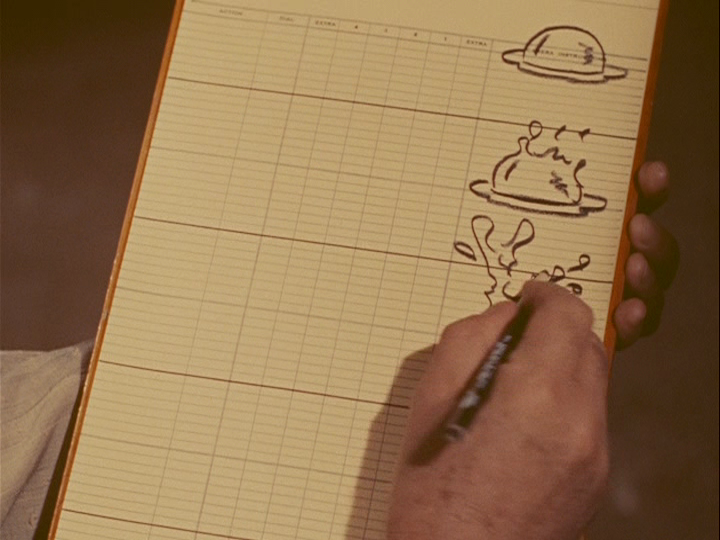
Dan MacManus sketching on an exposure sheet, trying to see how many frames it wll take to draw before the animator can draw the bubble bursting

The next animation technique we look at is effects animation: the trick of making the cartoon characters more believable by using extremely realistic animation of incidental action. There are many clips of animators watching various actions—including a baseball thrown through a window, or a bubble being blown from a pipe—and Disney explains that animating breakage required tremendous attention to detail. This leads into a clip of the earthquake from The Rite of Spring sequence in Fantasia. Continuing with that sequence, we see three effects animators looking at a tub of orange-colored mud, trying to solve three different problems for the creation of earth sequence in The Rite of Spring. Joshua Meador, head of the experiment, uses color chalks and pastels to render the sketch that would give an overall impression of the sequence. Jack Boyd’s assignment is to establish the individual action of a pair of bubbles, verifying his findings with the 2-drawing flipping action. Dan MacManus’s job is to see exactly how many drawings it would take to animate the bursting of a bubble, using an exposure sheet and a stopwatch. The audience then sees the clip from The Rite of Spring in its entirety.

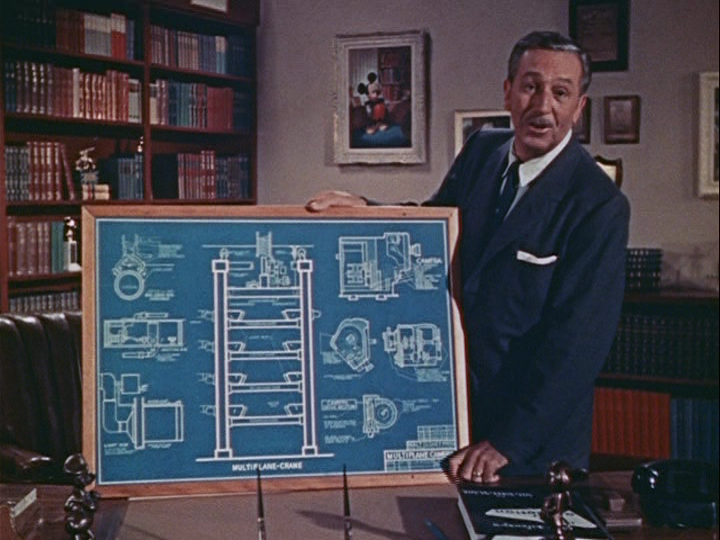
Walt with a blueprint of the Multi-Plane Camera, a Walt Disney Studios invention. Coincidentally, Ub Iwerks had created his own version at his own studio, only it was a horizontal camera

Walt pulls out a picture, calling it a different kind of drawing, which “also came out of our school of self-improvement here at the studio.” The blueprint is of the multi-plane camera, which was first used to great success in the Silly Symphony The Old Mill. Disney explains that the old process for animated films was fairly simple in construction and operation, but the biggest problem was that any dimension the character brought with him or her into the scene disappeared when the character left the frame. Another example used was a painting of a house on a moonlit night, and when the camera zoomed in on the scene, everything got larger, including the moon, which does not happen in reality. The use of the multi-plane camera shows the audience the big difference it makes in that scene. The audience next sees the opening scene of Bambi, and how the multi-plane camera works to give realism to the forest.

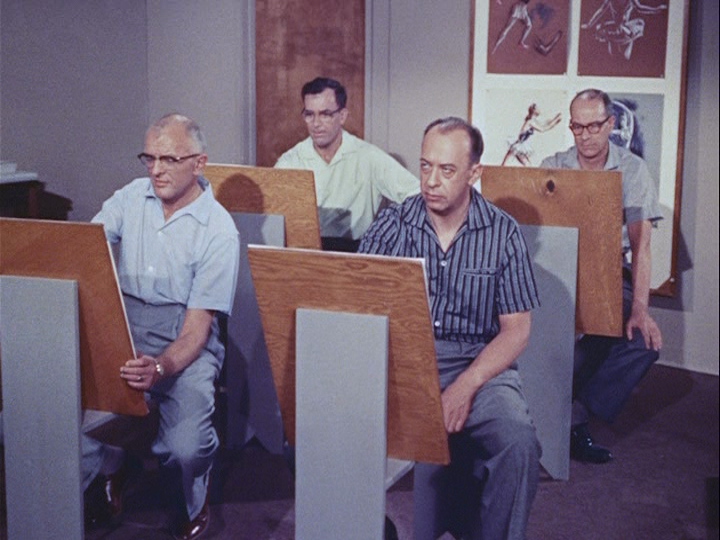
Four of the famous Nine Old Men, studying ballet moves. From Far Left: Milt Kahl, Frank Thomas, Marc Davis, and Ollie Johnston

“Perhaps the thing that distinguishes animated cartoons more than anything else is the trick of caricature,” Disney says. He tells the audience the story of the animation of Dance of the Hours from Fantasia, which involved the use of a live-action model to help the animators see the ballet movement of the dance. The ballet dancer they used was Helene Stanley, who was also the live-action model for Cinderella and Aurora in Sleeping Beauty. In this segment, we see the four of the famous Nine Old Men as they study Stanley’s movements. Kahl discovers that he may not be getting the kick right. Davis asks Stanley to perform it again, and as she does, Kahl makes a comment that the kick should be higher “in order to get all that weight off the ground. She’s no cream puff, you know.” Davis agrees, adding, “Yeah, that is a lot of beef.” These comments grab Stanley’s attention, but she keeps dancing. Thomas steps forward with his drawing and asks if he’s made the trunk too long: at this point, the audience sees that the drawings are those of the animals in the Fantasia sequence, although Stanley still thinks they are talking about her. Kahl responds to Thomas, “Oh, no, that’s what gives it that goofy look. Trunk’s way out of proportion to the rest of her body…it wouldn’t hurt to make [her legs] good and hairy.” These comments finally get the best of Stanley, who grabs her hat and cape and runs to the door, before turning around and seeing the animals they’ve been animating, and laughs before returning to the stage. The episode ends with the ballet segment from Fantasia, with all elephants, ostriches, and hippos.

The episode is wonderful for those who are fans of animation, and wish to see a dramatic look at how the animators were able to teach themselves and develop the new techniques to create better animation. Similar to “lessons learned” when creating computer animation in this generation, this highly recommended episode shows how the animators really had to, and did, step up to blaze a new trail.

February 1

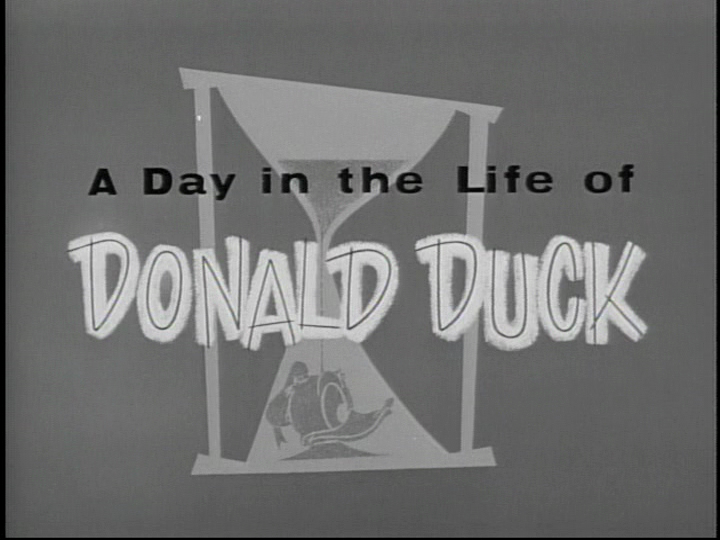
February 1, 1956 – A Day in the Life of Donald Duck Premieres on Disneyland.

“You know something Donald? You’re a big international favorite.”

On February 1, 1956, Disneyland audiences spent A Day in the Life of Donald Duck. As Walt Disney explains in the introduction, there have been so many fan letters to Donald, that he thought the audience might want to spend a day with Donald at the studio. Directed by Jack Hannah, with story by Albert Bertino and Dave Detiege, we see how Donald begins his day, as well as his interactions with Jimmie Dodd, Roy Williams, the Mouseketeers, and the most important person in Donald’s life: his voice, Clarence Nash.

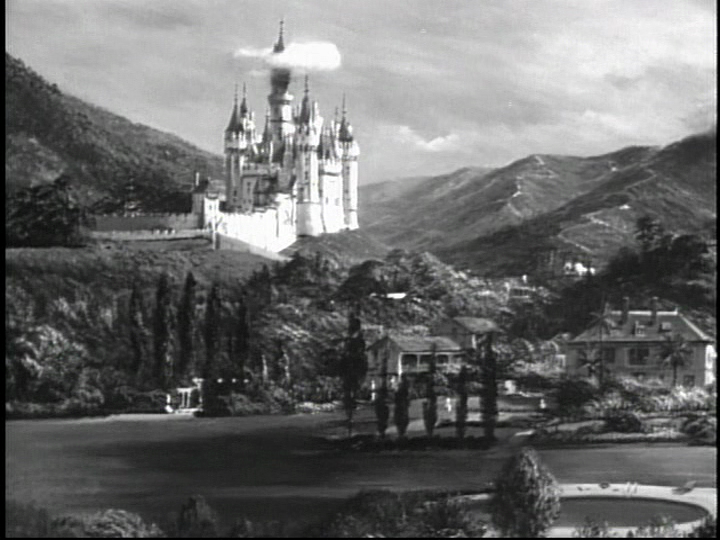
“Donald, like any other average cartoon character, lives a simple, unassuming life in a quiet residential section of Beverly Hills,” Disney tells the audience, showing pictures of the neighborhood. “He resides in a modest little cartoon house. He drives to work in a modest little cartoon car. And if he seems a bit reckless, you must remember that Mr. Duck drives with a cartoon license.” As we see Donald pull into a spot marked “No Parking,” he is immediately confronted by a police officer. Donald, however, folds the car into a tiny packet, tucks it under his hat, and walks to his office.

Donald's "modest" house in Beverly Hills

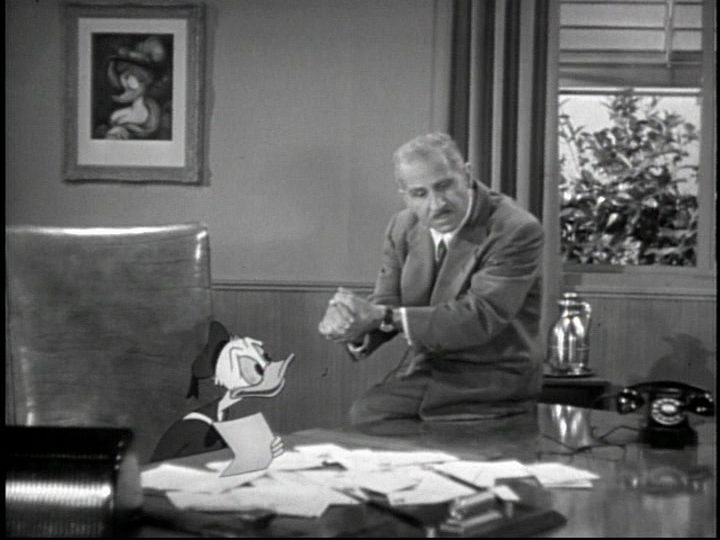
When he arrives at his office, the intercom sounds, and his secretary greets him respectfully as Mr. Duck. Donald responds with, “Just call me Donald, toots. What’s first on my schedule, tootsie?” in keeping with Donald’s personality as a bit of a wolf. She responds that he has fan mail, which he opens eagerly. The letters, however, are not pleasing in Donald’s opinion. One letter openly says, “Dear Donald, I can’t understand a word you say.” This is the last straw in Donald’s opinion, and he demands to speak with his voice, Clarence Nash. Nash comes in with a cheery attitude, which doesn’t change Donald’s mood in the slightest, no matter what Nash does to cheer him up. They end up arguing, with Nash reverting to his Donald Duck voice, even as he pulls out a coonskin cap and starts signing the Davy Crockett theme song. Donald tells him he’s a horrible singer. Nash leaves, with the two still taunting each other, and Donald vows that he’s got to get himself a new voice.

Donald and his voice, Clarence Nash, as Nash shows him a new trick

The next guest to enter is Jimmie Dodd (host of the Mickey Mouse Club), who has written a new song about Donald, inspired by fan art from children all over the world. “They’re so great, they had to have a song written about them,” Jimmie explains, and begins the song, which Donald immediately loves. There are versions of the song sung in different languages with accompanying pictures, including Spanish, French, Italian, and German. The images and tunes are stereotypical for the fifties, but somewhat sweet and fun all the same.

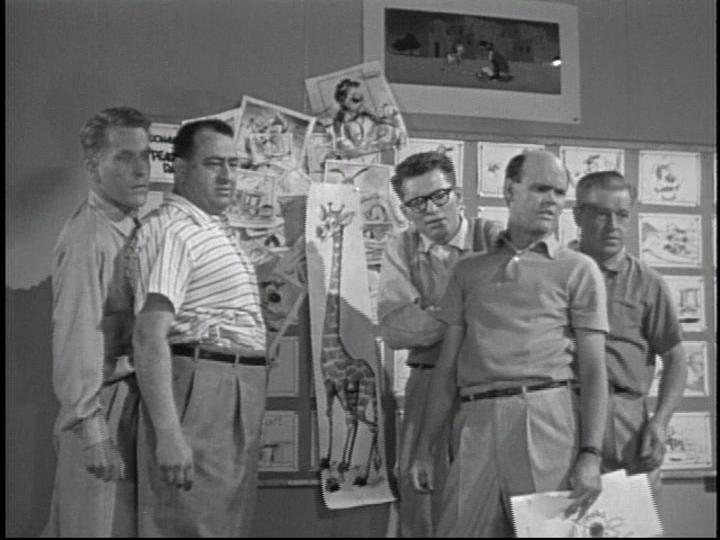
Donald then leaves for an 11 o’clock appointment at the Story Room, and when the storymen hear Donald coming down the hall, they begin to panic, as they fear his temper more than anything. They try to make Donald comfortable, and when they try to show him storyboards for a short entitled Peaceful Day, Donald asks for more birds and butterflies. The storymen overeagerly agree to his requests, to the point that Donald gets annoyed, and demands that there be a short with just him in it. This gets them to thinking, and the audience is then shown the brainstorm: the short, Drip Dippy Donald (originally released March 5, 1948).

The bewildered story team, trying to acquiesce to Donald's requests

Back in his office, Donald receives a call from Walt, who asks him to show the Mousketeers around the studio, as Mickey has remembered that they had never seen it before. Donald eagerly agrees, and runs to meet the Mouseketeers, who surprise Donald by making him an honorary Mouseketeer and giving him his own set of Mickey Mouse ears. As they run around the studio, the kids slip into the Sound Effects Department, closing the door just as Donald is about to get inside, leaving him on the outside as the kids see how sound effects were added to the Donald Duck short, Fire Chief (originally released December 13, 1940). One example they show is when a building is set on fire, the special effects team uses sparklers and crumpled plastic to create the sound of the burning ceiling.

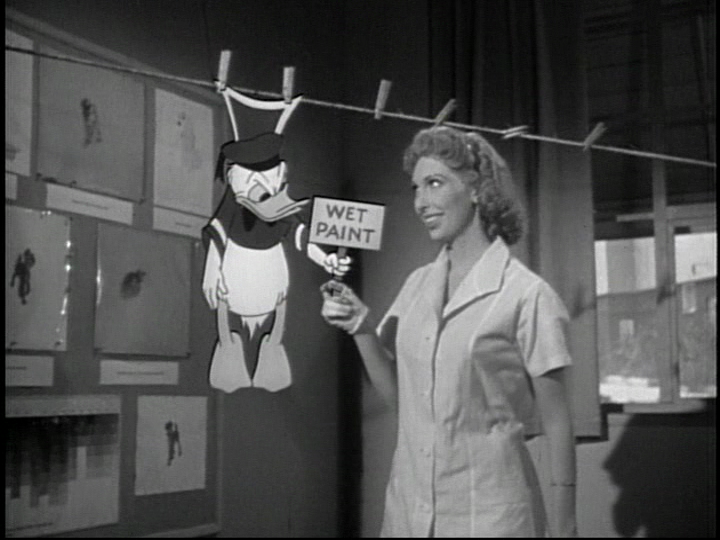
When the short ends, the door opens, and Donald is ready to step inside, until an effects man empties a bucket of water over him, which causes half of Donald’s paint to run. This necessitates a trip to the Ink & Paint Studio, where the painter quickly re-paints Donald and hangs him up to dry, an experience Donald finds quite humiliating. The painter explains that twenty gallons of paint are usually used for a Donald Duck picture, which surprises the kids and causes Donald to remark that he is “very expensive.” She also explains that in one picture, they used just one pint of paint for Donald; the audience is then shown the short The Vanishing Private (originally released September 25, 1942).

Donald and the Painter, with Donald pointing out how humiliating this is for him

After the short, we see the kids with Jimmie Dodd again, singing the new Donald Duck song he wrote. As Donald tries to sing the last line of quacks, he is cut off by Roy Williams, the other host of the Mickey Mouse Club. The kids are excited to see him, and he tells them that he’s practicing drawing the characters. To prove that anyone can draw, Roy asks one of the Mouseketeers to make a scribble on the easel. From her scribble, Roy is able to draw an ostrich. Donald, jealous of the stolen attention, challenges Roy and scribbles on the easel. Roy accepts, and ends up turning Donald’s scribble into a humorous image of Donald Duck. As Donald throws a tantrum and jumps up and down on the teasing picture, the kids flee the room and head into the projection room. “And now, in Donald’s honor – he really is a good scout,” Roy welcomes the kids, “I’d like to dedicate this picture to all you Mouseketeers.” Donald is touched by the tribute, and the audience is then shown the short, Good Scouts (originally released July 8, 1938).

This episode is a must-see for fans of Donald Duck. There are many wonderful gags, and the interaction of Donald with Clarence Nash is enough of a reason to watch. It’s a perfect example of all the temperaments of Donald, with the added bonus of it being set in the real, rather than the cartoon, world.

January 25

January 25, 1961 – One Hundred and One Dalmatians Released to Theaters
“One Hundred and One Dalmatians is the most modern Disney animated movie ever made. [It’s]the one that has the most guts, that says, ‘This is art,’ but it’s entertainment at the same time…it’s Picasso coming in to Disney.” – Andreas Deja, Supervising Animator, Walt Disney Studios.

On January 25, 1961, the Disney animated feature One Hundred and One Dalmatians was released to theaters. Based on the 1956 bestselling children’s book by Dodie Smith, the story caught Walt Disney’s attention in 1957, and he soon bought the rights to the story of two Dalmatians who travel great lengths to save their stolen puppies from being turned into fur coats by the evil Cruella De Vil. Costing $4 million to make, the film was an enormous success upon release, and is known as a technical and stylistic innovation for the studio. The feature was directed by Wolfgang Reitherman, Hamilton S. Luke, and Clyde Geronimi, with story by Bill Peet, musical score by George Bruns, and songs by Mel Leven. Voice actors include Rod Taylor as Pongo, Cate Bauer as Perdita, Ben Wright as Roger, Lisa David as Anita, and Betty Lou Gerson as Cruella.

The story opens with narration by Pongo, who introduces his “pet,” Roger, a songwriter, and laments that a bachelor’s life is not as glamorous as one would think. Pongo comes up with an idea to set Roger up with a mate, and after spying many not-so-ideal candidates, he spots a female Dalmatian with her owner, Anita, and tricks Roger into following them into the park. After tying Roger and Anita together quite literally, the two happy couples move into a quiet flat in London, and Perdita lets Pongo know she is pregnant. Everyone in the household is excited about the prospect of puppies, including Anita’s old school mate, Cruella De Vil, whose curiosity about the puppies makes Pongo suspicious. Roger, who has been working on a new melody at this point, teases Anita with lyrics about Cruella, calling her a “vampire bat” and an “inhuman beast,” among other things.
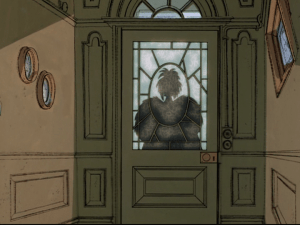
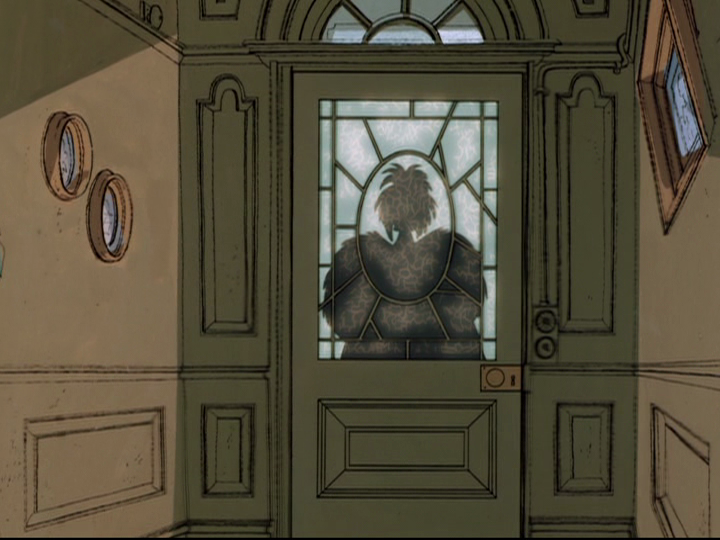
Our first viewing of Cruella De Vil, whose shadow even produces fear

Three weeks later, the puppies are born, and Cruella appears in the doorway, wishing to purchase the puppies. When Roger stands up to her and says she will not be getting a single puppy, Cruella flies into a rage and departs. Unbeknown to the two couples, Cruella hires two thugs, Horace and Jasper, who go into the house when Anita and Roger are taking Perdita and Pongo for a walk, and steal the puppies. Although Anita and Roger call Scotland Yard, Pongo concludes that the humans have failed, and the only solution left is the Twilight Bark.  While Perdita dismisses it as a gossip chain, Pongo convinces her that they have to try, and begins the barking chain while in Regents Park. The chain travels fast, causing all of the dogs in London to bark madly, much to the annoyance of all the humans.

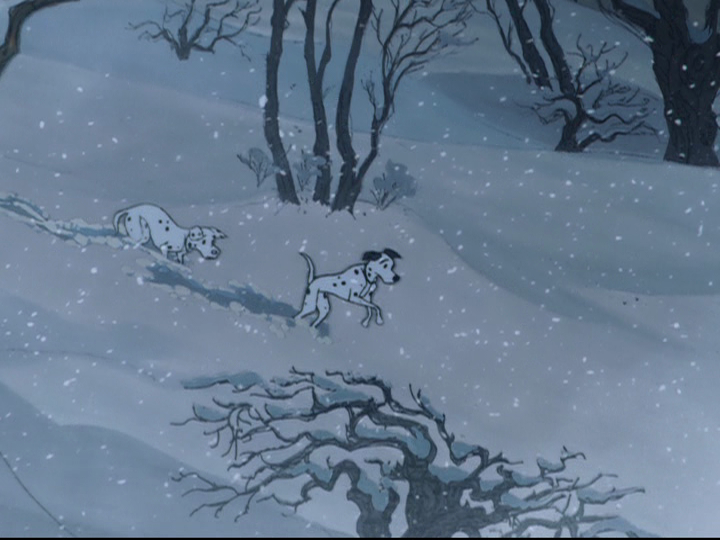
The chain makes its way to the countryside, to an old sheepdog named the Colonel, a horse known as the Captain, and a cat called Sergeant Tibs. The Colonel interprets the message, with Tibs letting the two know that he heard barking two nights before at the abandoned Hell Hall. As he makes his way into the dilapidated mansion, Tibs makes the startling discovery that there are ninety-nine Dalmatian puppies occupying Hell Hall. Although Tibs is chased out of the mansion, he reports his findings to the Colonel, who passes the message back to Pongo. Pongo and Perdita decide that the only option is to go retrieve the puppies themselves, with help along the way by dogs in the chain. “If you lose your way,” the Great Dane reminds them, “contact the barking chain. They’ll be standing by!” The two Dalmatians brave treacherous weather, Cruella’s two bungling henchmen, and Cruella herself to bring all of the puppies back to their home in London.
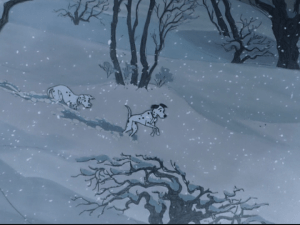
Pongo and Perdita traveling through the snow in order to save their puppies

When Walt Disney contacted Dodie Smith about turning her book into a film, she responded enthusiastically, “To be quite honest, I always hoped you might – so much so that, when I was writing it, I often found myself visualizing the scenes as they would be in cartoon.” Dodie’s story was a contemporary tale, and the Disney animators took a big leap from the stylizing of the old classics like Cinderella and even Sleeping Beauty that they’d only finished two years earlier. Indeed, the movie still has a contemporary feel, with 20th century style rather than the classic romantic look favored by Disney. Even the characters were different; for example, Cruella De Vil was seen smoking cigarettes, and the puppies were seen watching television. “At this point, we feel it is going to be one of the most interesting things we have done in the cartoon feature field,” Disney wrote in one of his correspondences with Smith. “Dalmatians…has met enthusiastic audience approval. I feel we have a very successful picture.”

The biggest change in the film was the implementation of the Xerox process when it came to cel animation (see January 21st entry for more information). Created by Ub Iwerks, the process had been tested on the short film Goliath II, and created excitement among the animators, as they were seeing their own drawings up on the screen, as they had originally envisioned them. One problem, however, was the presence of what is known as construction lines – the original sketch lines when beginning to draw a character. In many instances in the film, one can tell when Milt Kahl animated a scene, as the construction lines would still be present, as he was very militant about having people come in and clean up his sketches, as sometimes they would disturb the final drawing. However, one main reason that the Xerox process worked so well for this picture is because the Dalmatians were basically black and white, and all that was needed was just a clear outline of the dogs. This also helped when it came to creating the spots of all 101 Dalmatians.
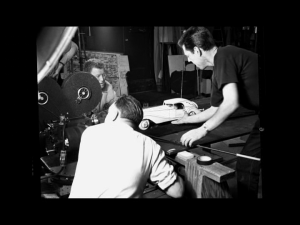
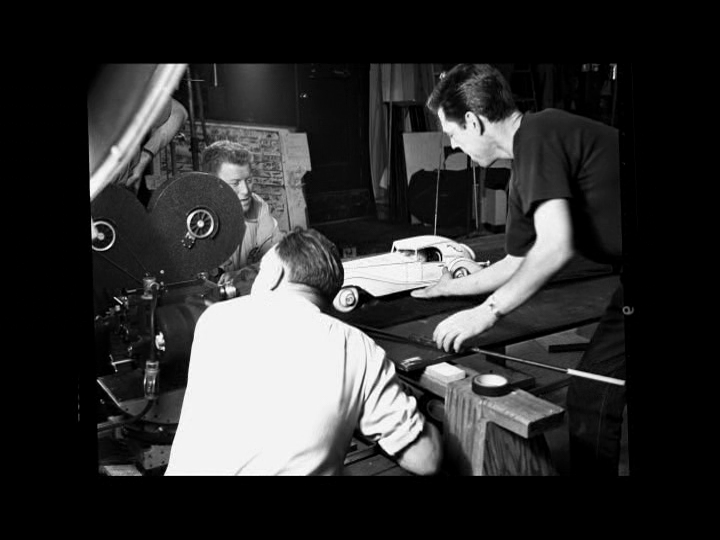
The Xerox prccess was also tested on models of the vehicles, including Cruella's car, Horace and Jasper's car, and the truck back to London

Another interesting aspect of the Xerox process were the vehicles. Iwerks had the idea that if a drawing could be copied straight to a cel, he would be able to use the same process to take a picture of a line that was drawn on the edge of a model. The animators built the cars as models out of cardboard, tracing the edges with a black line. To make the wheels move believably, they suspended the model from a kite string, and pulled it across a piece of fabric placed over wooden dowling rods. The clips of the models were then transferred directly to a Xerox plate, and were painted. In the final print, what you are seeing is the model on the screen, rather than a straight animation of a car. It was one of the many fascinating technological advances of the film.

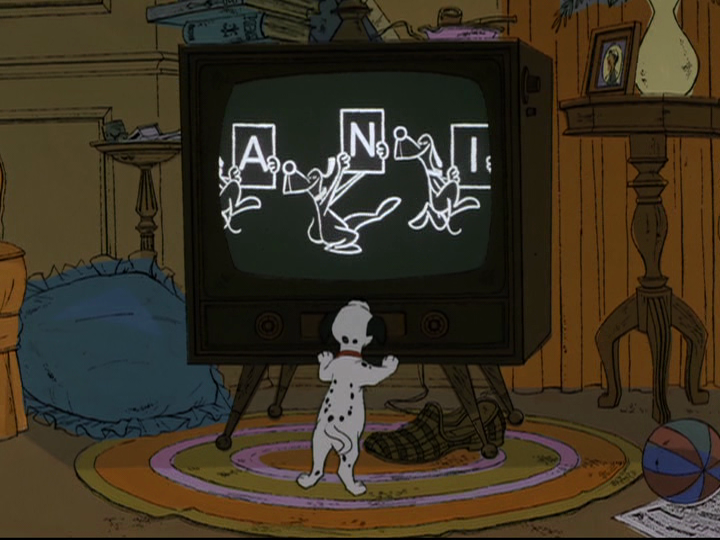
One Hundred and One Dalmatians also has the distinction of being one of the first Disney animated features that wasn’t really a musical. This is surprising, as Roger is a songwriter by trade, which could have easily led to many musical numbers. There are only three songs in the film: Cruella De Vil, Dalmatian Plantation, and Kanine Krunchies. Mel Leven had written a different piece before before the final version of Cruella De Vil. As told by Disney Historian Russell Schroeder, “Driving to work one day, Mel thought, ‘You know, a blues tempo would really fit that character.’ So he came up with the melody line…he replaced his prior song himself.” Dalmatian Plantation had also been replaced, as story man Bill Peet came to Leven and asked him to have the song have more emphasis on rhyming. Kanine Krunchies is a delight, as it is an exaggerated spoof of the commercials played on television in those days.
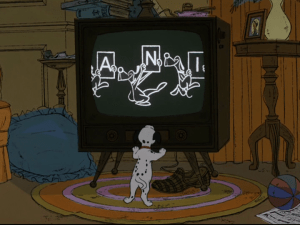
Kanine Krunchies was a spoof of commercials in the early '60s, taken to its absolute silliest

Overall, the film is a delightful piece of pop culture, and while considered a contemporary piece in the early ’60s, the film hasn’t grown stale or shown its age. It was a wonderful turning point in the studio stylistically and technically, and would continue to be a success in each of its reissues into theaters.
January 21

January 21, 1960 – Goliath II is Released to Theaters; First Disney Film Fully Animated with the Xerox Process.

“His name was Goliath the Second, and he was hardly any bigger than one of his father’s toenails.”

Directed by Wolfgang Reitherman, with story by Bill Peet, this 1960 short film is not only an amusing lesson that size isn’t everything, but was a grand experiment by the Disney animators using the new Xerox process, effectively ending an era of old-style romantic animation. The short is narrated by Sterling Holloway, and stars Kevin “Moochie” Corcoran as Goliath II.

Goliath I is the leader of all the elephants, by virtue of being the biggest and the strongest of them all. His only source of disappointment is his son, Goliath II, who is only five inches tall. Try as Goliath II might to make his father proud, he ends up only squeaking when he tries to trumpet, and getting knocked over by the flower he tries to push over. Goliath’s size is also a problem for his mother, who has a hard time keeping an eye on him, especially when the tiger Raja wishes to try the “bite-sized” elephant. Not wanting to be treated like a baby anymore, Goliath runs away from the herd. Although he is saved by his mother when Raja almost eats him, his troubles get worse, as he is marked as a rogue elephant and branded a traitor, disgracing his great father.

Goliath meets a butterfly. This gives the audience a way to see how small he really is.

Goliath gets his chance to prove his worth when he is “left alone to face the terror of all terrors” for elephants – a mouse. Through an epic battle with the pugnacious mouse, with a crocodile hungrily licking its chops to devour the loser, Goliath wins, spares the mouse and wins the respect of the rest of the elephants. He is awarded the highest position in the herd, and a place of honor on his father’s head as the elephants lumber through the jungle.

Goliath and the foe of all foes - a mouse.

Although the Xerox process was used in the dragon scene in Sleeping Beauty, the animators used Goliath II as an experiment to see if it would work on screen. Quite simply, the Xerox process is a way of transferring the animators’ pencil drawings directly to cels, bypassing the inking and painting process. The process, after it had been successfully used in the feature film One Hundred and One Dalmatians, was used in practically every Disney film through The Little Mermaid, when the use of the computer to create the ink lines replicated the old style of inking and painting at a lower cost. The newer process also left more of the feeling that the animator tried to convey before the cleanup began by the inkers and painters.

Sleeping Beauty became the end of a style era, particularly because it had been a very expensive film to create and had not made enough money back, leaving the studio in a dire situation. Ub Iwerks, who had come back to the studio in 1940, had been thinking of ways to lessen the cost of animation. He had been fascinated with the idea of Xerox copying, wondering if he could transfer the animator’s sketch straight to the cel, instead of just a piece of paper. He did a few experiments, and concluded that it was a valid solution for the financially strapped studio.

Ub Iwerks (L) while working on the Xerox Process.

In the early days of the Xerox process, one machine took up three rooms. With a lens and an electrostatically charged plate, the lens took a picture of the drawing, and transferred it to the plate, which would then be dipped in toner. The toner would then be transferred to a clear cel. It dramatically cut costs when it came to animation, but at a price: the beautiful artwork created by the inking and painting department was no more, and the department itself was closed. The style not only replaced the more fairy-tale look of the Disney animated films, but brought in a new modern American art look to the studio.

The Xerox process had mixed reactions from those within the studio. Animator Floyd Norman remarked, “I think we did lose something because the Xerox line lacked the subtlety of the ink line which was incredible…so I guess one could debate those points back and forth. Was Xerox a step forward, or a step backwards?” But animator Andreas Deja argued that “Xerox didn’t cut the quality of the animation. They didn’t do limited animation. It’s still a fully animated film. The acting is still there, it’s still subtle.”

Although there are many opinions of the process, there is no denying the impact it had on the look of Disney films from the 1960s to the 1990s, and it was a good way to save the legacy of animated films. Without Iwerks’ invention, there may not have been The Lion King, Beauty and the Beast, or even The Little Mermaid. Goliath II, although most people may not realize it, helped bring about a turning point in animation history, and did it in a delightful way.