RSS Feed

Tag Archives: Special

August 1

August 1, 1958 – The Special Short Film Paul Bunyan is Released to Theaters
“A job that needed a great big man, Paul Bunyan was the one.”

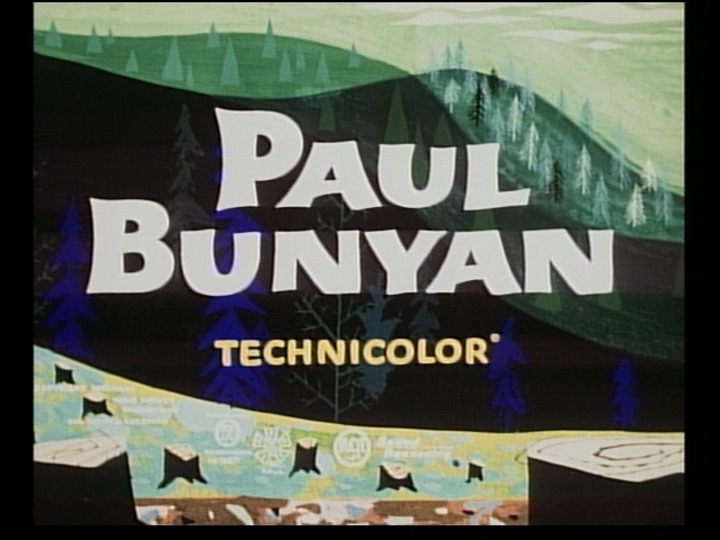
On August 1, 1958, the special short film Paul Bunyan was released to theaters. The short was directed by Les Clark, with the story adapted by Lance Nolley and Ted Berman, and voices provided by the Mellomen. The short was also nominated for an Academy Award for Best Short Subject (Cartoon) at the 31st Academy Awards.

The story of Paul Bunyan begins with his arrival in a small town on the coast of Maine, when lumberjack Cal McNab looks inside a cradle that has been left in right on the edge of town and sees a giant baby inside. The whole town adopts the baby and names him Paul Bunyan, and everyone pitches in to make his clothes and feed him. Paul quickly grows up in the town, attending school and playing with the boys of the town at the swimming hole. One Christmas, the town gave Paul a giant axe, and he took to cutting timber “like a duck takes to water.” Paul provides his town with enough timber to last a lifetime, and the town grows quickly, becoming too crowded for Paul. One morning, he leaves a note for the town, thanking them for everything, and letting them know he was looking for more room. Cal ends his part of the tale stating that the whole town was going to miss Paul.

Paul saves Babe, who is so grateful, he remains as Paul’s pet and best friend

The next part of the story is told by straw boss Chris Crosshaul, who meets Paul in the Midwest. Paul is seen cutting timber as fast as he can, and stomps the stumps back into the ground before leaving for more room and more trees to cut. As Paul leaves, he runs into the worst blizzard the country had ever seen, with the flames freezing when he tries to light a fire. In the middle of his task, he hears a sound in the distance, and sees a large ox frozen in the snow. The ox has turned blue from the cold. He thaws the ox out, and the ox, grateful for Paul’s help, becomes Paul’s pet, “Babe.” The two continue their travels in the storm, leaving behind them many tracks that filled with water and became the land of 10,000 lakes. They continue to chop down trees, dig the Missouri River to send the logs down to the sawmill, and build Pike’s Peak to view other parts of the country left to chop down. According to Crosshaul, Paul and Babe also created the Grand Tetons and Yellowstone Falls through their roughhousing.

The last chapter of the story is told by river foreman Shot Gunderson. The day Paul arrived at his camp, the camp was in trouble: they could get timber in the river, but the river was too windy and the logs couldn’t get to the mill. With Paul and Babe’s help, the river is pulled straight, and the logs go directly to the sawmill. One day, a traveling salesman comes to town, demonstrating a steam-powered chainsaw, which promises to chop down trees faster than regular chopping. A competition is set between the man versus machine, and the two set to work on the day. Unfortunately for Paul, the machine beats Paul by 1/4th inch, and discouraged, walks away from town. Gunderson tells the audience, however, not to feel sorry for Paul and Babe, as they’re in Alaska, creating the Northern Lights thanks to their roughhousing.
July 27

July 27, 1956 – The Special Short Film In the Bag Premieres in Theaters

“First you stick a rag, put it in the bag, bump bump, then you bend your back, put it in the sack, bump bump.”

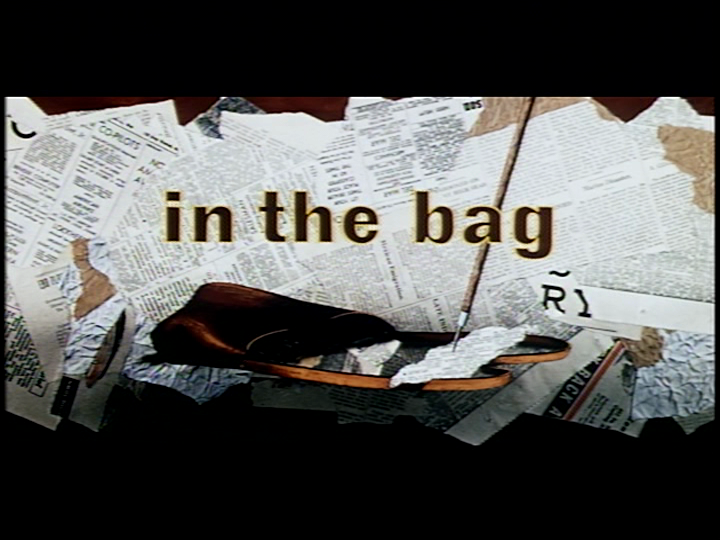
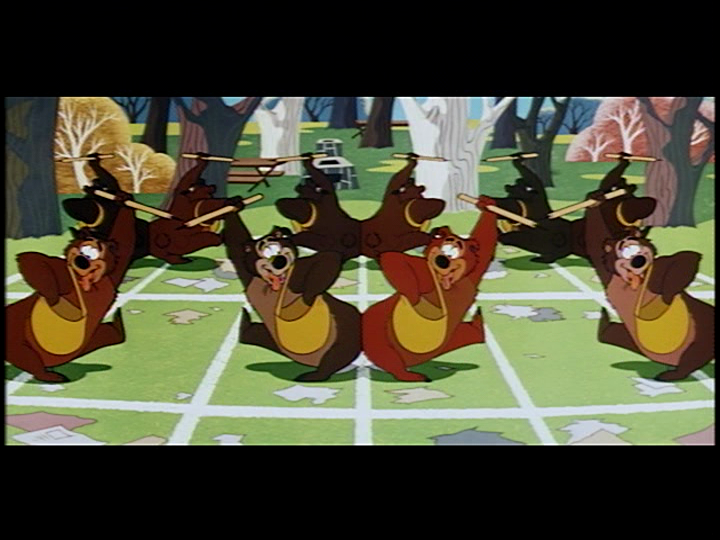
On July 27, 1956, the special short film In the Bag was released to theaters. This short was the second of what was to be a potential series for the character Humphrey the Bear, but the series was canceled when the Disney Studios stopped making short films. Humphrey was introduced in the 1950 Goofy short Hold That Pose; he then was an antagonist for Donald Duck in several shorts. In the two shorts released, Humphrey’s foil was a good-natured park ranger named J. Audubon Woodlore. The short, filmed in Cinemascope, was directed by Jack Hannah, with the story by Dave Detiege and Al Bertino. Humphrey was voiced by James MacDonald and Ranger Woodlore by Bill Thompson. Smokey the Bear also makes a cameo in this short.

The guests are leaving the campgrounds, and Ranger Woodlore steps out of the ranger station, perturbed at the mess the guests have left behind. He begins to clean, when he realizes he has all the help he needs. He calls over Humphrey, who gathers all the other bears when Woodlore offers a surprise. He tells them that they’re going to play a game, and the bears are all excited. Woodlore sets up the playing field, and has Humphrey hand out the equipment to pick up the trash.

The bears seem to enjoy their “game,” dancing to the little ditty that Ranger Woodlore invented

Ranger Woodlore begins to sing a song to inspire the bears, and they pick up trash with vigor, until they notice they’ve just been doing the ranger’s chores. They angrily dump out the trash and storm away. Woodlore has an idea to get them back – he makes his special batch of chicken cacciatore, but tells them “He who does not clean up his section of the park does not get any supper.” The bears race to put all the pieces of trash in Humphrey’s section, leaving him as the dupe. He races to clean, but his bag snags on a branch and rips open, sending trash flying everywhere.

Humphrey is sent once again to clean, but is struck by misfortune at every turn. He finds an unused match in the trash, and sets to light the pile of trash on fire, when Smokey the Bear steps on it and warns the audience that only they can prevent forest fires. Desperate, Humphrey sees a hole in the ground, shoves the trash in there, then triumphantly skips to get his supper. Just as he’s about to reach for the plate, the “hole” starts to shake, and a sign reveals that it’s actually the geyser Old Fateful. It erupts, sending trash flying all over the park. Ranger Woodlore apologizes, but reminds him that rules are rules, and Humphrey once again dances as he picks up trash around the park.

July 21

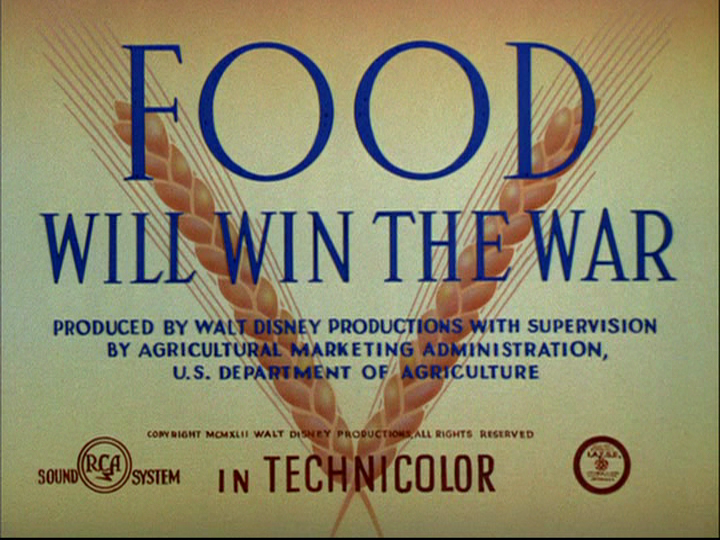
July 21, 1942 – The Animated Educational Film Food Will Win the War is Delivered to the Department of Agriculture

“In many lands, towns are ravaged – countrysides laid waste by ruthless Axis hordes. Farms, cattle, and crops have been destroyed. Ruin, destitution, hunger stalk the helpless victims of the cruel aggressor.”

On July 21, 1942, the Disney Studios delivered the animated educational film Food Will Win the War to the U.S. Department of Agriculture. At the time, the studios were producing many animated educational shorts, which still had the Disney touch in their animation and gags. These shorts, like this one, were also used to help build morale. The film was directed by Hamilton Luske, and is narrated by Fred Shields.

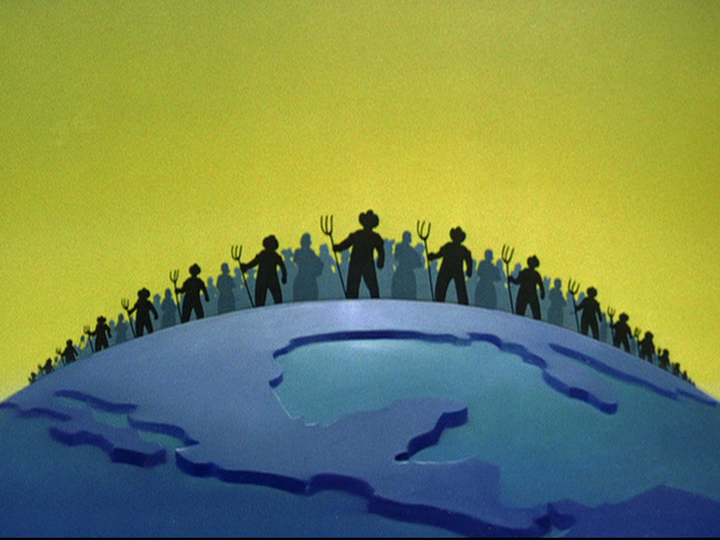
The film begins with the declaration that the world is aflame, as the members of the united nations are at war. Images cross the screen of war-torn towns, with a couple sitting, staring at what was once their home. However, a light of hope appears in the sky, called the Hope of American Agriculture. America is filled with abundant farmlands, and the animation shows that every single affected country can fit within the U.S., proving that there is enough abundant farmland and crops to help these crippled countries. There are 30 million farmers, with their wives and children, ready to help these countries in need, “twice as many as the Axis has soldiers,” the narrator states.

The farmers, their wives, and their children stand on the surface of the globe, ready to use their crops as weapons to help win the war

The farmers receive their own patriotic segment that portrays them as important soldiers in the battle, with tools (farm machinery), regiments of trucks, and divisions of corn pickers, all while working under the stress of war. One crop example is wheat; the narrator explains that the crop for the year is 52,800,000,000 pounds of wheat. “If all this wheat were made into flour,” he says, “there’d be enough to snow under the entire German Panzer Army.” The narrator moves on to the importance of corn, soybeans, potatoes, tomatoes, various vegetables and fruits, dairy, meat, and eggs, using humor for their examples. The farmers are then lauded for their important job, as a part of the war effort as much as any solider: Their food will help win the war.

July 17

July 17, 1943 – The Film Victory Through Air Power is Released to Theaters

“Our country in the past has struggled through many storms of anguish, difficulty, and doubt. But we have always been saved by men of vision and courage, who opened our minds and showed us the way out of confusion.”

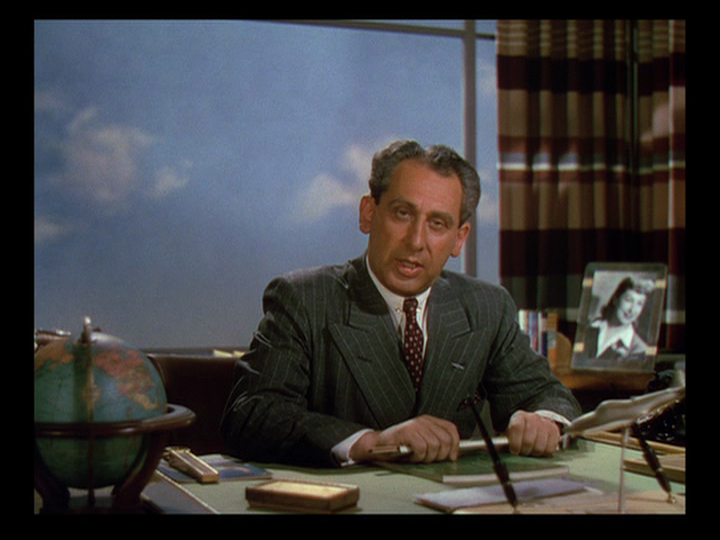
On July 17, 1943, the feature film Victory Through Air Power was released to theaters. The film was based on the book of the same name by Maj. Alexander P. de Seversky, who also served as the on-screen narrator of the film. De Seversky’s book explains how long-range air power could defeat the enemy during World War II. Walt Disney, like many who read the book, was impressed with the material, and it became one of his most ambitious projects. He used the film to educate and send a message to the public rather than to entertain, as at the time the film was released, an Allied victory was anything but certain. H.C. Potter was hired as the live-action director, and David Hand was the Animation Supervisor, with Art Baker as the animation sequence narrator. Critics did not like the film, and RKO, Disney’s film distributor, did not want to release it, so Disney released it through United Artists. The film was nominated for an Academy Award for Best Scoring of a Dramatic or Comedy Picture.

Although the film was not popular with critics, it did the job of presenting the idea of air power to win the war. “[T]he most important response to the movie came from Winston Churchill,” film critic Leonard Maltin explained. “When [Churchill] flew to Quebec for an Allied conference, and learned that President Roosevelt hadn’t seen the movie, he and Air Marshal Tedder prodded him until he ordered that a print be sent to him. H.C. Potter was told by Walt that it was only after Roosevelt saw Victory Through Air Power, that our country made the commitment to long-range bombing. And that, after all, was the reason that Walt committed to making this movie in the first place.”

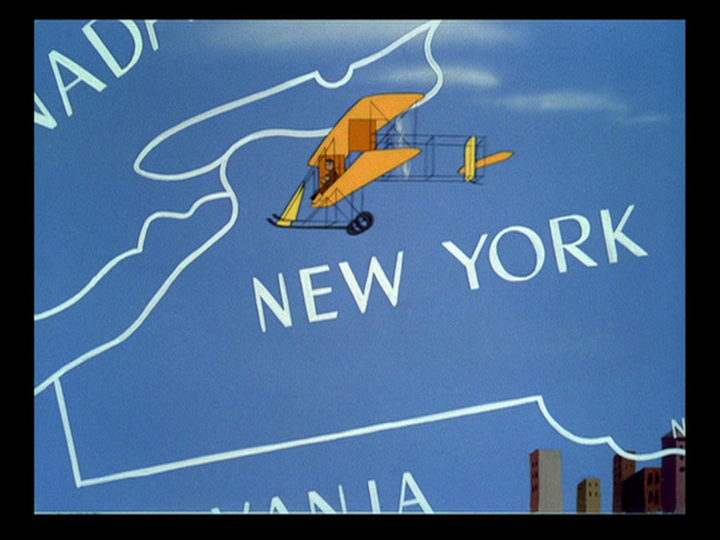
The animated sequence shows the progression of air power, including the first trans-continental flight

The film begins with newspaper clips from past years, beginning with 1919, where men have tried to convince the public about air warfare, and how defense depends on an air army. The film is then dedicated to Billy Mitchell, who was a pioneer in the fight for air power, and the brave airmen of the United States military. The audience then sees the history of flight in an animated sequence, beginning with Orville and Wilbur Wright, and leading into the first air corps, the first aircraft carrier, and the first trans-continental flight. When World War I began, aircraft was used only for observation service, until the installation of the machine gun turned the plane into a weapon. The bomber would soon develop from this idea.

1939 brings about a new war, and American aviation is ready to meet the challenge of the Axis powers. This then leads to the introduction of Maj. de Seversky and his book, Victory Through Air Power. De Seversky began his military education in Russia at age 10, graduating as a lieutenant, and seeking service in 1914. He became a pilot and was assigned flying duties, but was shot down on a night flying mission, resulting in the loss of his right leg at the tender age of 22. Nevertheless, de Seversky became a strong proponent of air power, and the leading ace of air warriors. In 1918, he came to the US and worked for the United States Army, becoming a major in the U.S. Army when he became a citizen in 1928.

Maj. Alexander de Seversky, who explains to the audience why air power is an absolute necessity to win the war

De Seversky begins his speech to the audience, warning that it’s only a matter of time until the U.S. has its share of civilian casualties, thanks to the advances of air power by other countries. He also declares that everyone must understand the strategy of war. There were formerly two ways to destroy the enemy: one was to destroy the enemy’s entire army to grab their source of power, the other was to sink their navy and enforce a blockade. With the airplane, there is no safe place: the plane can attack quickly over the heads of the enemy forces. Those that could foresee the usefulness of air power were considered crazy and ignored. An example is then shown of how England was supposed to attack the Nazis via sea forces, and the French were to attack via the land. Hitler, however, came in with air power, which allowed him and the Nazi forces to take over France. “Only when it was too late,” de Seversky warns the public, “did the French realize that their whole plan of defense was futile.” The British thought they could stop the Nazis through a blockade, only to find their battleships destroyed by bombers. The Royal Air Force grew out of this tragedy, ready to attack Hitler’s air troops. “As long as a nation controls its own skies, it cannot be invaded,” de Seversky tells us as the moral of the British story.

The audience is then shown the first real battle between air power (Nazis) and sea power (British Navy) over the island of Crete. Crete became the first territory to be conquered completely through air power. This then leads to Pearl Harbor, and how American troops left themselves unprotected against the air power of the Japanese troops, because the American troops were instead prepared for traditional naval warfare. De Seversky explains that the Japanese were imitating the German blitzkrieg, and were able to capture most of the Pacific. American armed forces finally realized that no place on Earth was safe without gaining control of the skies above. The success of American victory through air power demanded two things: to produce a vast amount of weapons of endless variety, and to deliver this equipment to battlefronts all over the face of the Earth.

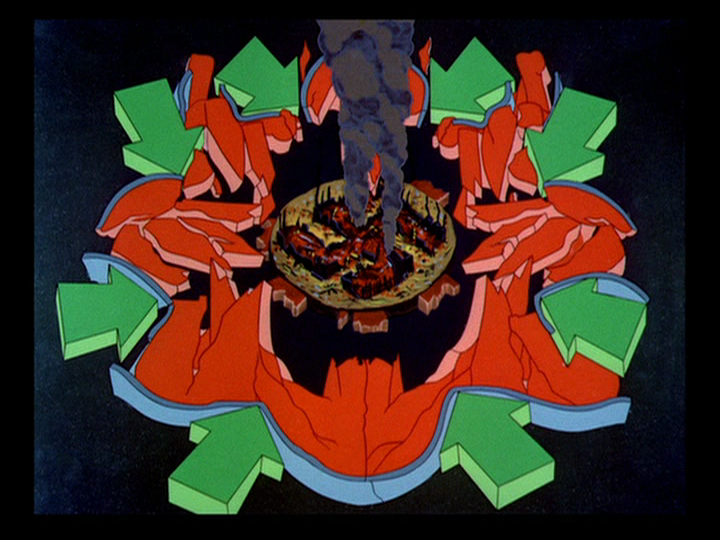
Animated sequences are used through the film to illustrate de Seversky’s points; this image shows how American air power can cut Hitler off at the source, allowing troops to invade

The audience is then introduced to another problem to consider: the transportation of these weapons. America is able to transport across the country with no problem, but gets caught in the slow speeds of shipping to overseas locations. Americans also have to contend with the German submarines. The audience is warned that if Americans fight only on the surface of the Earth, Hitler has all the advantage. Air power would give American forces an advantage and the ability to cut off Hitler’s power at the source. Success will also depend on supply lines, and where American air bases are located. The film ends with a patriotic look at how American forces can use air power and airmen’s skills to win the war. “America should not hesitate to place its destiny in the hands of [the airmen],” de Seversky explains, “for with the strategy of air power, they will make the enemy fight on our terms, against the weapons of our choosing, at our time, but on his soil.”

June 26

June 26, 1959 – The Donald Duck Featurette Donald in Mathmagic Land is Released to Theaters.

“By golly! You do find mathematics in the darndest places!”

On June 26, 1959, the featurette Donald in Mathmagic Land was released to theaters. This Academy Award-nominated short would go on to become one of the most popular educational films ever released by Disney. It was also shown on the first program of Walt Disney’s Wonderful World of Color, introduced by Professor Ludwig von Drake, who played the True Spirit of Adventure in the featurette. The story was written by Milt Banta, Bill Berg, and Dr. Heinz Haber, and starred Clarence Nash as the voice of Donald.

Donald, dressed in a hunter’s outfit, enters a dark room with his gun and looks around, remarking on how strange this all seems to be. He follows a trail of numbers, and finds the creature making the markings is a walking pencil, who challenges Donald to a game of tic-tac-toe, which Donald loses. He continues to walk, surprised by the square roots he runs into. He calls out hello to anyone who will hear him, and the voice of the narrator greets him. The narrator informs Donald that he is in Mathmagic Land, the land of great adventure, and that he, the narrator, is the True Spirit of Adventure. The spirit tells Donald he will take him on a journey through the wonderland of mathematics.

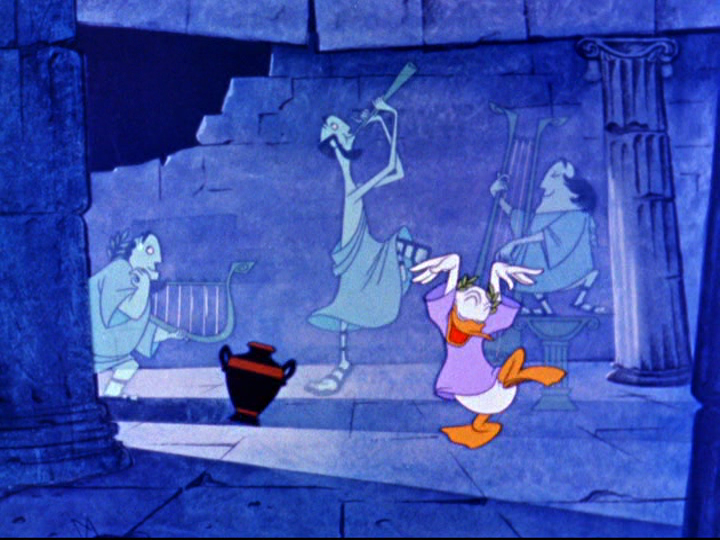
Donald having a jam session with the Pythagoreans, while learning that without math, there would be no music

As Donald storms away, saying math is for eggheads, the spirit informs Donald that without “eggheads,” there would be no music. He takes Donald back in time to Ancient Greece to meet Pythagoras, the father of mathematics and music. Donald is still confused, so the spirit shows Donald how music is full of mathematics. The first example shown is a harp, demonstrating how an octave is created. Donald and the spirit then sneak in on a meeting of the Pythagoreans, who are playing music in their meeting. Donald interrupts them, saying they need to play something with a beat. The Pythagoreans, the spirit explains, helped create the music we know and love today. As the spirits of the Pythagoreans disappear, Donald is left with a surprise – he is made a member of the Pythagoreans.

The segment then moves to another Pythagorean discovery: the pentagram, filled with mathemagic. The first concept explained is the golden section, then we move to the golden rectangle, which the pentagram creates many times over. The Greeks believed the golden rectangle to be a natural law of beauty. The spirit then shows how the pentagon, another Pythagorean shape, is found in nature, before moving on to other shapes found in nature.

Donald plays the part of Alice when being taught the mathematical principles of the game of chess

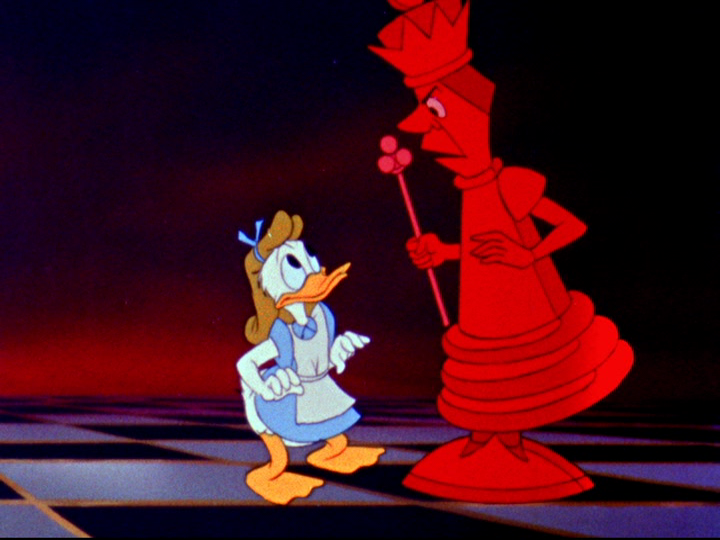
Donald, who is enjoying his adventure so far, is delighted to hear that one can find mathematics in games, as well. The spirit begins with the game of chess, explaining it with the concept of Alice in Wonderland, with Donald playing the part of Alice. After a slight adventure with the chess pieces, Donald is able to watch a game in safety, but is bored by it. The spirit then begins to list sports with a geometric field, like baseball and football. The game that gets Donald really excited, however, is billiards. The spirit then shows an expert playing three-cushion billiards, and the mathematics used to get the perfect shot.

The spirit then tries to get Donald to play a game with his mind, only to find that Donald’s mind was completely cluttered with antiquated ideas, bungling, false concepts, and superstitions. He cleans out Donald’s mind, then has Donald think of a perfect circle, and puts a triangle in it. When asked what he sees, Donald sees a sphere. The spirit then has Donald take one thing and see how many items he can come up with using those shapes. Donald is then taken to a hall filled with doors, with most of them open. Some of the doors Donald discovers are locked, to which the spirit replies that they are the doors of the future, with the key being mathematics. The short then ends with the Galileo quote: “Mathematics is the alphabet with which God has written the universe.”

June 14

June 14, 1959 –Vice-President Richard M. Nixon and Family Dedicate the Monorail at Disneyland

“On the gala celebration of the completion of the project, the Richard Nixon family were on hand to snip the ribbon. Here we were with our monorail, the forerunner of rapid transit of the future, all checked out and ready to go, but somebody forgot to check out the scissors.” – Walt Disney, Disneyland 10th Anniversary Special.

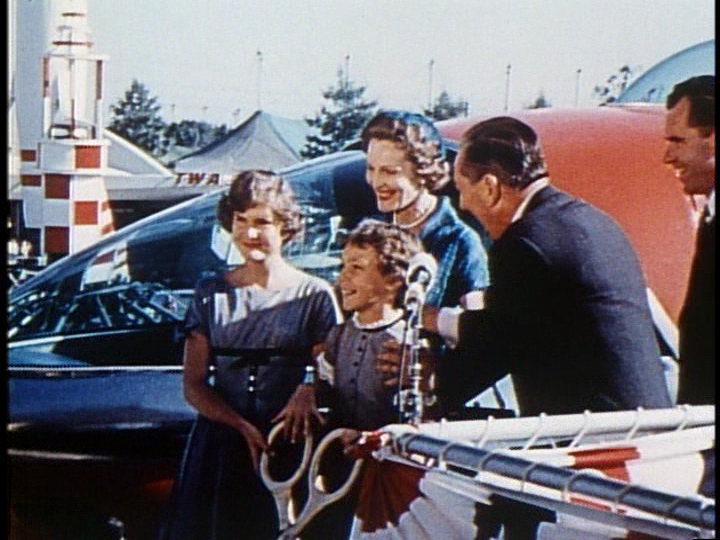
On June 14, 1959, the Monorail was dedicated at Disneyland by Vice-President Richard M. Nixon and his family, with his daughters Tricia and Julie using oversized scissors to cut the ribbon. The scissors, unfortunately, would not cut the ribbon, but with a quick tear, the ride was dedicated and ready to set off. This was Nixon’s second visit to Disneyland; his first visit was shortly after the park was first opened.

The Monorail had been part of an expansion project for the park, which included such attractions as the Matterhorn. Originally known as the Disneyland-Alweg Monorail system (Alweg was the name of the German transportation company that aided in its creation), the Monorail has the distinction of being the first daily operating monorail in the United States. At first, it only traveled around Tomorrowland, but the track was expanded to the Disneyland Hotel in 1961. The ride has been expanded many times over the years, with the Mark III trains added to the ride in 1968, and Mark V trains added between the years 1986 to 1988 (the Mark IV trains were added to the Walt Disney World Resort). The most recent updates to the ride were the refurbishments of the trains beginning in 2007 and ending in 2009. Disney had envisioned the Monorail as a form of public transport in the future, but as his idea came around the time America was becoming more enamored with the automobile, the ride remained in Disney Parks.

June 6

Posted on

June 6, 1952 – The Special Short Susie, the Little Blue Coupe, is Released to Theaters

“Susie was a happy little car, as she glided down the avenue.”

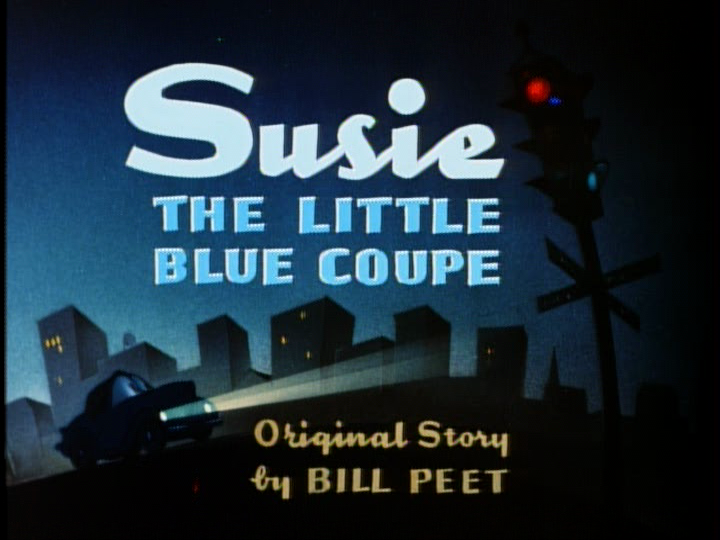
On June 6, 1952, the special short film Susie, the Little Blue Coupe, was released to theaters. It was based on an original story by Bill Peet, with the adaptation to film done by Peet and Don da Gradi. The short was directed by Clyde Geronimi, with music by Paul Smith, and narration provided by Sterling Holloway. The anthropomorphized look of the cars is said to have been an inspiration for the look of the characters in the Pixar films Cars and Cars 2.

“This is the story of Susie,” the narrator begins, with Susie seen in the front showroom of Miller Motors. She had many admirers stop and stare, for she was a beautiful blue coupe. Susie is seen flirting through the window, even giving one of her admirers a wink. One day, a man in a brown suit spotted Susie, and fell in love with her immediately. Susie was thrilled to be sold to the man, and has a cheerful strut as she drives down the road.

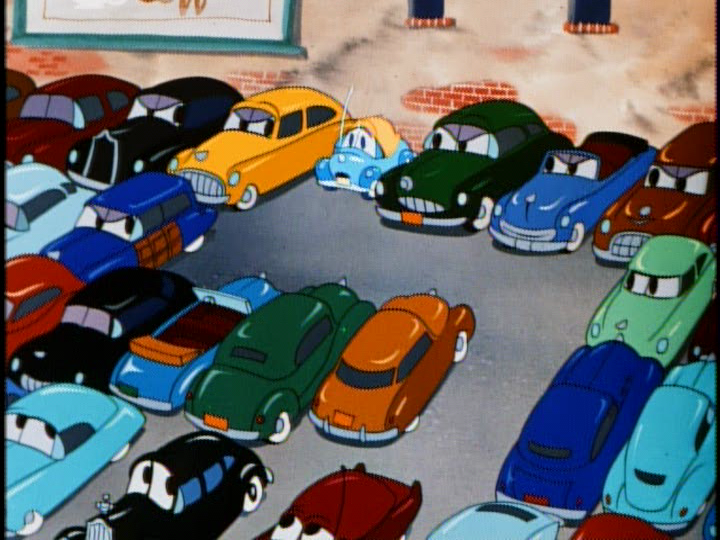
Much smaller than the other cars, Susie huddles in an empty space, intimidated by the others’ mean stares

As Susie entered the main roads, however, she was too slow for the other cars, nearly getting run off the road several times, but she was finally able to maneuver her way around with ease. She also ended up at the Parking Lot, trying to make friends with the big limousines and the big, fancy cars, although they did not take a liking to her. At the end of the day, she was just happy being back in her own garage, with the owner’s cat asleep on her roof.

Years go by, and Susie has not aged gracefully. Her carburetor is having trouble, and her slow speed causes traffic to back up for miles. She goes into Joe’s Garage for a checkup, and when the mechanic lets the owner know that she needs a new overhaul, the owner just says sadly that all he needs is a new car, leaving Susie to be abandoned in a used car lot, on sale for $95.

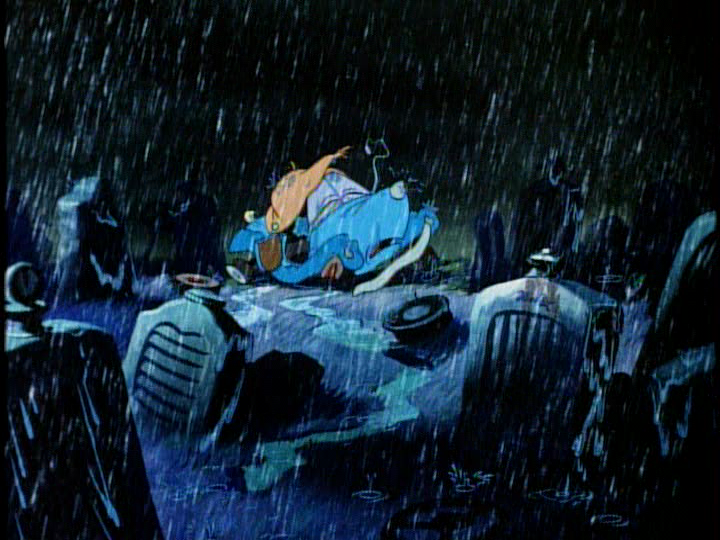
After the accident, Susie is carted off to where all cars go to die – the junkyard

A rather unsavory looking fellow walks around the car lot, checking out the cars available, when he spots Susie with a smile. He goes to check her out, and decides to buy her. Now, she was driving “back streets and dark alleys,” left out in the cold at night, feeling abused and depressed. One fateful night, as she was left alone on the street as usual, Susie is stolen, and is then pursued by the police. Susie’s captor runs a red light, sending her crashing into a trolley. Susie is then carted away to the junkyard.

Susie sits through the seasons in the junkyard, until one day she is spotted by a young boy, who buys her for $12.50. With the help of his friends, they take her apart and put her back together again, so she’s better than new. Susie speeds down the road, happy to be loved by an owner.

May 8

Posted on

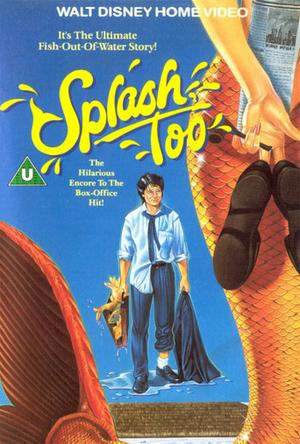
May 8, 1988 – The Television Show Splash, Too, Part Two, Premieres on Television

Image Credit: Screened.com

On May 8, 1988, the second half of Splash, Too, premiered on ABC television. The sequel to the successful 1984 film Splash, the special had only one returning cast member: Dody Goodman as Mrs. Stimler. The special starred Todd Warring as Allen Bauer, Amy Yasbeck as Madison, Donovan Scott as Freddie Bauer, and Rita Taggert as Fern Hooten. Splash, Too was also the first motion picture filmed at the new Disney-MGM Studios, and had a production budget of $3.3 million.

Set four years after the original film, Allen and his now-wife, Madison, return to New York City, where Allen’s brother Freddie is dangerously close to losing the family business. While Allen helps his brother, Madison has her own mission: to rescue her friend Salty the dolphin, who is being held captive for scientific experiments. The married couple grows closer as they strive to reach their respective goals.

March 9

March 9, 1955 – Man in Space Premieres on the Disneyland Television Show

“One of man’s oldest dreams has been the desire for space travel, to travel to other worlds.” – Walt Disney

On March 9, 1955, audiences watching the Disneyland Television Show saw a different kind of episode, called Man in Space. The first installment of the Tomorrowland segments of the show, Man in Space was directed and produced by Ward Kimball (see March 4th entry), who had written the episode with William Bosche, and features guests Werner von Braun, Willy Ley, and Heinz Haber, who were major scientists associated with space exploration. It was so well received that President Dwight D. Eisenhower asked for a copy to present to the Pentagon, and this helped push the space program into the forefront of the public imagination. In 1956, an edited version of Man in Space was nominated for an Academy Award for Best Short Subject (Documentary), after it was released to theaters on a double bill with Davy Crockett and the River Pirates.

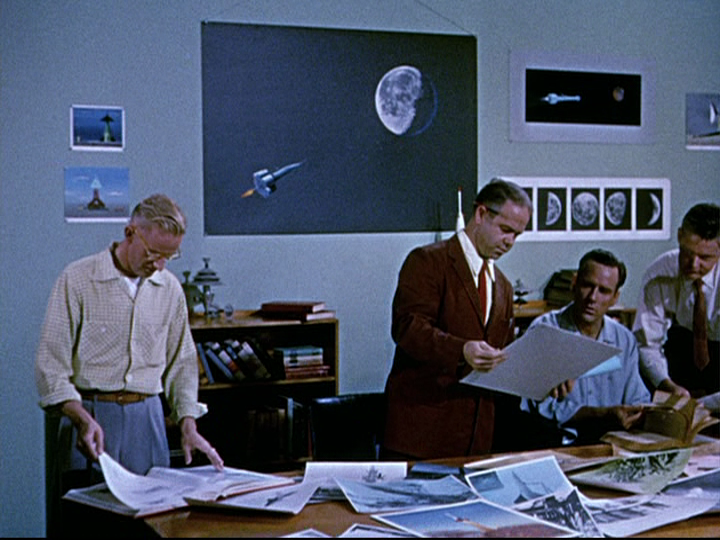
Ward Kimball (C) looking at mock-ups and prototypes in the design room

As the Man in Space episode opens, the audience is taken to a design room, where men are hard at work designing prototypes of rockets and developing methods of space travel. Walt explains that the creative talents of the Disney Studios are working with engineers and scientists to make the dream of interplanetary travel a reality. “In working with engineers and scientists,” director and producer Ward Kimball explains, “we have found that there are many different opinions as to how we will eventually cross the space frontier.” The one common point between these opinions, though, is that it will be a rocket-powered ship heading into space. Kimball then leads the viewers into a history of rocketry, beginning with China in the 13th century.

The rocket was not a modern invention, Kimball points out; the Chinese invented it at the battle of Kai-fung-fu in 1232. A brief animation segment shows two Chinese men shooting rockets at each other from far distances, with each rocket increasing in size. Kimball then jumps forward 500 years to Sir Isaac Newton and his often paraphrased “for every action force, there is always an equal but opposite reaction force.” Kimball makes this clearer by using the example of the family dog when it sneezes. The segment also shows a few examples of rocket propulsion experiments, including a steam-powered rocket, and notes that designers ultimately stuck with gunpowder-powered designs.

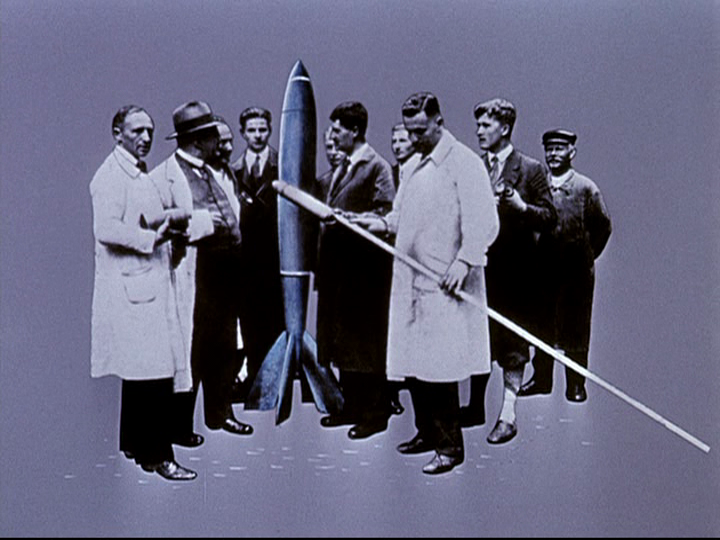
A stylized photograph of one of the early German societies dedicated to the study of rocket science

In 1865, Jules Verne published From the Earth to the Moon, which again piqued people’s interest in flying into space. Verne’s story inspired the French filmmaker Georges Melies to create the first space-travel film in 1902. Kimball shows the audience this silent film, and continues with a history of the different kinds of fuels used to power small rockets that could one day be used to send men to space. Rocket frenzy was highly evident in the 1920s and ’30s, with rockets attached to any possible vehicle. Around this time, a new society in Germany was founded, with the mission of scientifically exploring the possibility of space travel. The German army took a keen interest, and used the society’s findings to create rocket missiles and one of the forerunners of a spaceship, known as the V-2. After WWII, 75 of these V-2 rockets were taken to the U.S. for study in its newly developed rocket program.

Kimball then introduces rocket historian Willy Ley to explain how rocket firing works. Ley begins by showing a model of a rocket motor and explaining to Disney artists how it works. An animated sequence explains how the motor continues to work in space where there is no oxygen. Ley asks the animators to create a sketch of a three-stage rocket to help him explain how it would work. The animators ask some very interesting questions as Ley uses the chalkboard to help his explanations, but the section is not overly technical, so the audience is still be able to understand well.

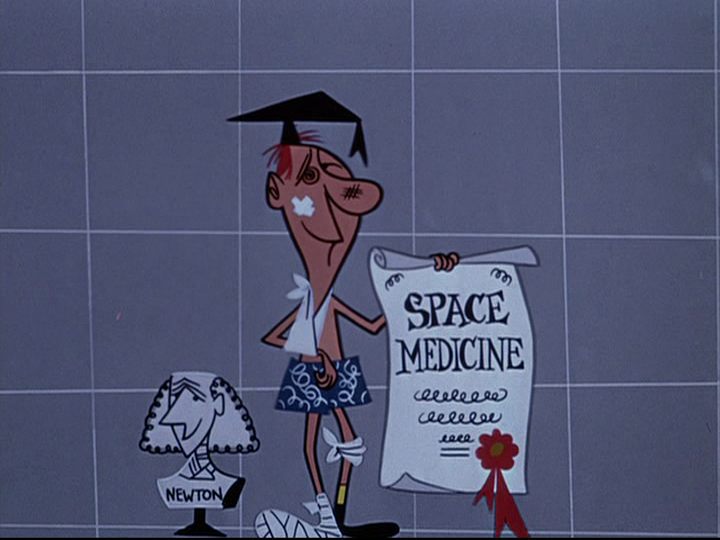
The "ordinary man" example, after going through rigorous (and humorous to the audience's perspective) training, passes the space medicine course

In the next segment of Man in Space, Kimball describes a new field of science known as space medicine, or how man will react physically and mentally in space, and introduces the expert in this field, Dr. Heinz Haber. Haber pulls down a screen to set the stage for another animated segment, this time of the “common man” who will be sent into space. As we follow this common man through his daily routine in space, Kimball’s special brand of humor keeps things light.

In the third segment of the episode, Kimball explains the two problems of space flight: building a rocket ship, and preparing and training the men to travel into outer space. Kimball then introduces Dr. Wernher von Braun, the chief of the Army’s guided missile division, who was the overall director of development for the original V-2 rocket. Von Braun is seen explaining to two other men the problems of space travel. Looking at some similar present-day situations can help come up with solutions, von Braun says. He gives a few examples of the current research, with testing performed on the ground in simulated atmospheres. The tests that von Braun describes are then presented in an animated sequence narrated by Dick Tufeld, best known as the voice of the robot in the television show, Lost in Space. The animated short ends with an accomplished mission into space, with the next goal of getting man to the moon, then the planets, and then to what lies beyond.


March 6

March 6, 1992 – Tim Burton’s Short Film, Frankenweenie, is Released With the Live-Action Film, Blame it on the Bellboy.

“I guess we can’t punish Victor for bringing Sparky back from the dead.”

Tim Burton’s Frankenweenie, although completed in 1984, was released on a double bill with the live-action film, Blame it on the Bellboy, on March 6, 1992. Filmed in black and white, the short is an homage to horror films of the 1930s, with Mary Shelley’s Frankenstein as its base inspiration. The short is the story of a young boy named Victor Frankenstein, who brings his dog back to life after a tragic accident. The short was directed by Tim Burton, with the screenplay by Lenny Ripps, and stars Barret Oliver as Victor Frankenstein, Shelley Duvall as Susan Frankenstein, Daniel Stern as Ben Frankenstein, and Sparky as himself. Tim Burton was fired from Disney after the film was finished; studio heads felt the film was too scary for young audiences and that resources had been wasted making the short. A new full-length version of this short, which will be closer to Tim Burton’s original story idea, is set for release in October 2012.

The short opens with a film entitled “MONSTERS from Long Ago” by Victor Frankenstein, starring Sparky as the titular monster. The camera pans out to see the Frankenstein family and some friends watching a home movie. Meanwhile the son, Victor, goes outside to play with his dog, Sparky. Victor throws a baseball and Sparky, running to retrieve it, is struck by a car.

Victor is inspired by his teacher's science experiment

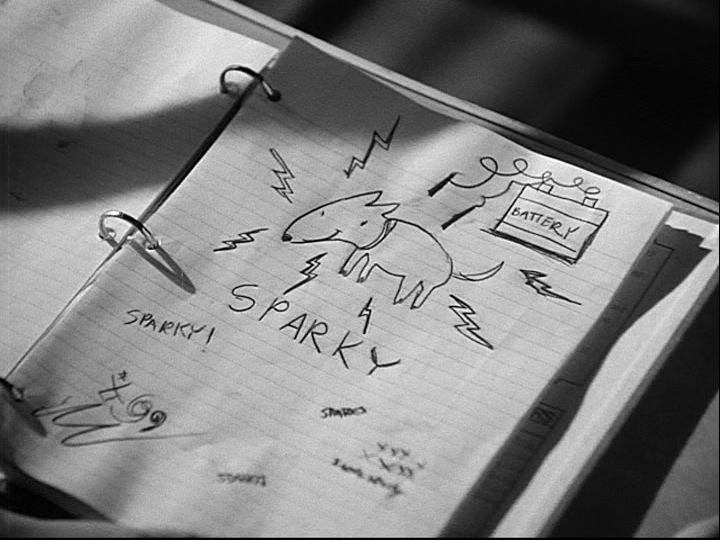
The next scene shows Victor and his parents in a pet cemetery, paying their last respects to Sparky. Victor falls into a deep depression. When his friends ask if he’ll get another dog, Victor says that he doubts that he could ever find another one like Sparky. In science class, Victor is unable to pay attention, as he draws pictures of Sparky in his notebook. The science teacher, however, is about to give a lesson on electricity and the central nervous system, pulling out a frog corpse. When the teacher proposes introducing electricity into the frog’s system, Victor suddenly pays attention. Seeing the frog’s legs move, Victor is inspired, thinking that this is the way to bring Sparky back.

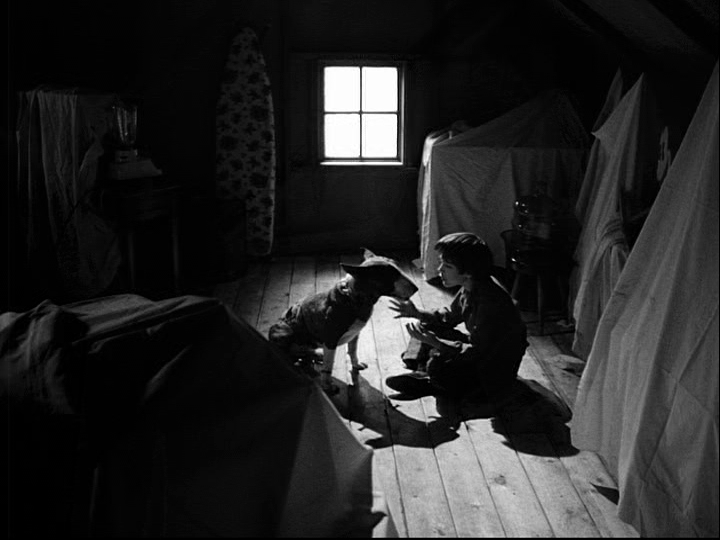
Victor reads several books for research, including Life After Death, On Death and Dying, Modern Chemistry, and Electricity and the Creation of Life. He then begins gathering appliances in the house, beginning with the toaster, until he has constructed a lab in his attic. One night, after pretending to be ready for bed, Victor pulls a shovel out from under his bed and sneaks out to the pet cemetery to dig up Sparky. He hurries home through the rain with Sparky’s corpse and sets about trying to bring the dog back to life, in the same manner as his namesake, Dr. Frankenstein. But nothing seems to happen. Victor brings the corpse back downstairs, believing that he has failed, until he feels the dog licking his hand.

Ben Frankenstein discovers Sparky and Victor hiding out in the attic, unbeknownst to the pair

The next morning, Victor claims he doesn’t feel very well and asks to stay home from school. His parents see right through his charade, and send him off, but Victor waits until they both leave for work, then stays home to play with Sparky, who stays hidden away in the attic. While Victor naps, however, Sparky leaves the attic and goes outside to explore. He climbs into the open window of the next-door neighbor’s shed, only to scare the poor man inside, who sets Sparky into accidentally terrorizing the neighborhood before running back inside the house. Victor’s parents are questioned about their dog when they come home from work, and the father offers to check their house for any dogs. He discovers that Sparky is, in fact, alive. He drags the mother inside to see for herself that Sparky has been brought back to life.

The family sits around the kitchen table, wondering how to deal with this situation, and the implications of it. They are unable to sleep that night, wondering how exactly does a parent deal with their son playing God. They decide to keep Sparky in the house and walk him at night, so people don’t see him and become alarmed. The neighbors, however, start to ignore the Frankensteins, as they know something strange is going on. The father decides that they might as well just introduce the neighbors to Sparky that night, for “the longer they wait, the worse it will be.”

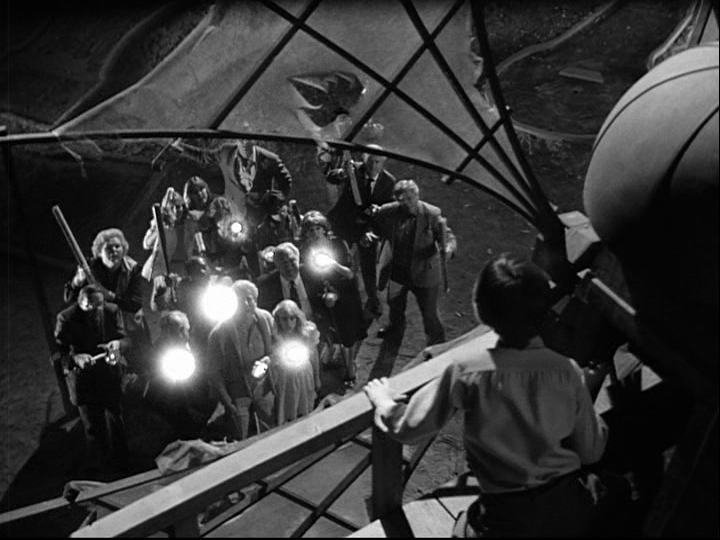
The angry mob of neighbors stands outside the old miniature golf course windmill, demanding "the monster"

The neighbors are seen gathered in the Frankenstein’s living room, with Mr. Frankenstein trying to reassure them that they’ve been seeing the same plain old Sparky. Upon seeing Sparky, however, the neighbors immediately lose their heads in fright, and Sparky runs out the dog door. Victor follows the dog, and the neighbors decide that their best course of action is to kill Sparky. Sparky escapes into the ruins of an old miniature golf course, and runs up to the windmill, with Victor calling his name from the gate. Victor slips through the gate and tries to retrieve Sparky. The neighbors stand as an angry mob outside the windmill, demanding to have their vengeance, while one neighbor pulls out a lighter and sets the old windmill ablaze. Victor and Sparky are trapped inside the burning building, and while everyone stands and watches with horror, they are suddenly amazed to see Sparky pull Victor out of the windmill. As his parents pull Victor away, the windmill suddenly begins to fall apart, trapping Sparky in the wreckage. Victor can only watch as Sparky dies once more.

Lights flash, and Victor is surrounded by car headlights, with one neighbor proclaiming that if Victor brought Sparky back to life before, he can do it again. Inspired by Sparky’s bravery at saving Victor, everyone is ready to start their engines and use their car batteries to give Sparky a jumpstart. Their plan is a success, and Sparky once again is brought back to life.