RSS Feed

Tag Archives: Short film

December 26

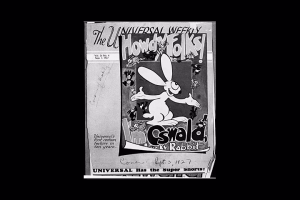
December 26, 1927 – The Oswald the Lucky Rabbit Short Film Rickety Gin is Released to Theaters

vlcsnap-2016-12-26-20h55m30s439

On December 26, 1927, the Oswald the Lucky Rabbit short film Rickety Gin premiered in theaters. It was the tenth Oswald short film to be released, and was animated by Ub Iwerks and Friz Freleng. The short has since been classified as a lost film.

December 23

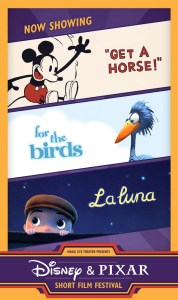
December 23, 2015 – The Disney & Pixar Short Film Festival Premieres in Epcot

dpsff

“Join us in celebrating the rich imagination and innovation behind animated storytelling.”

On December 23, 2015, the Disney & Pixar Short Film Festival premiered in Epcot’s Magic Eye Theater. The short film festival gives a new 4D experience to three short films: Get a Horse, For the Birds, and La Luna. The theater used to host the likes of Captain EO and Magic Journeys.

December 17

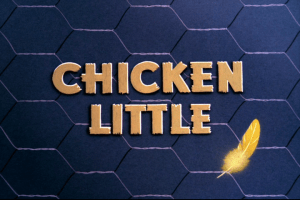
December 17, 1943 – The Wartime Propaganda Short Film Chicken Little is Released to Theaters

vlcsnap-2016-12-18-16h39m17s317

“As our story continues, we find all our fine feathered friends happy and contented. And why not? Didn’t they have a big strong fence protecting them?

On December 17, 1943, the wartime propaganda special short film Chicken Little premiered in theaters. The short was a piece about persuasion and falling under the sway of leaders with sinister agendas. Originally it was supposed to have explicit connotations of World War II, with Foxy Logy reading Mein Kampf, but was left generic to be used in potential future cases. The short was directed by Clyde Geronimi.

The story begins in a small peaceful farmyard, and introduces the characters: the mayor rooster Cocky Locky, local gossip Henny Penny, intellectual Turkey Lurkey, the carefree Jitterbirds, bar regulars Goosey Poosey and Ducky Lucky, and the main character Chicken Little. The entire community feels safe with a large fence protecting them, and don’t seem to notice Foxy Loxy taking an interest in the chickens. He decides to use psychology to get all of the chickens, and begins with Chicken Little, pegging him to be the least intelligent of the lot. He tricks Chicken Little into thinking the sky is falling with a bit of show and a piece of a sign. Chicken Little believes the lie Foxy Loxy told him, and it spreads like wildfire. Cocky Locky doesn’t believe it, and reassures the group that it was just a piece of wood that hit Chicken Little on the head. Undeterred, Foxy Loxy changes strategy to make the chickens lose faith in Cocky Locky. Through holes in the fence, Foxy Loxy manages to spread rumors and false information to each different group within the community, and again it spreads through the community. He then eggs on Chicken Little to assume the leadership, and through his whispers, he convinces Chicken Little to take the entire community to the cave – right where Foxy Loxy is lying in wait. Cocky Locky is left as the lone chicken in the yar, with Foxy Loxy devouring every last chicken.


December 16

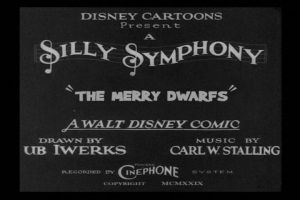
December 16, 1929 – The Silly Symphony The Merry Dwarfs Premieres in Theaters

vlcsnap-2016-12-14-19h23m04s093

On December 16, 1929, the Silly Symphony The Merry Dwarfs was released to theaters. It was directed by Walt Disney.

The short begins with the dwarfs dancing in their village to the opening of the “Anvil Chorus” from Il Trovatore. The dwarfs are then seen hard at work at their chores, including working at a shoemaker shop and a blacksmiths. Afterwards, they prepare for a party, where plenty of beer is served and consumed before they continue to dance and be merry. Two of the dwarves fall into a barrel of beer while dancing and end up dancing while heavily intoxicated.

December 15

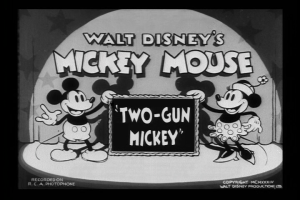
December 15, 1934 – The Mickey Mouse Short Film Two-Gun Mickey Premieres in Theaters

vlcsnap-2016-12-14-18h43m07s467

“On your way, cowboy. I can take care of myself.”

On December 15, 1934, the Mickey Mouse short film Two-Gun Mickey was released to theaters. It was the first short film to be directed by Ben Sharpsteen.

The short begins with Minnie riding a trail, with her horses stopping at a puddle and refusing to cross through it. As she tries to pull them forward, she lands in the puddle, much to the laughter of Mickey, who has been watching nearby. Minnie refuses his help, though he assists her anyway without so much as a thank you. Minnie continues into town, and rebuffs the advances of Pete, who is a wanted bank robber. He and his gang chase after her, and Minnie races through the desert to get away. Meanwhile, Mickey is dreaming of Minnie at his campfire, when he hears her scream nearby. Seeing that she is being chased by bandits, he and his horse race down the canyon to rescue her. Pete manages to trap Minnie up a pole, and catches her in his arms, teasing her about her thinking she can take care of herself. As the gang fires on Mickey, he is able to shoot back with gusto, defeating all of the bandits with a series of well-placed shots. He then finally finds Minnie, and fights with Pete, eventually ending up falling off the side of a cliff. Mickey and Minnie share a kiss as they ride off into the sunset, pulling an unconscious Pete behind them.

December 12

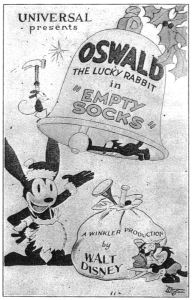
December 12, 1927 – The Oswald the Lucky Rabbit Short Film Empty Socks Premieres in Theaters

empty-socks

On December 12, 1927, the Oswald the Lucky Rabbit short film Empty Socks was released to theaters. It was the ninth Oswald film to be created, and was, until 2014, considered to be a lost film, with only a small fragment of the film in existence in the Museum of Modern Art in New York City. The film was donated by a private collector to the Norwegian Film Institute, with the archive of the Institute subsequently handed over to the National Library of Norway. The film, discovered with a copy of the other previously-lost film Tall Timber, was screened at the National Library on December 17, 2014.

December 1

December 1, 1924 – The Alice Comedy Alice and the Three Bears Premieres in Theaters

aattb

“Ah! Hops at last!”

On December 1, 1924, the Alice Comedy Alice and the Three Bears was released to theaters. It was the 10th Alice Comedy released, and starred Virginia Davis as Alice. Although not considered a lost film, the short has not been released on home video.

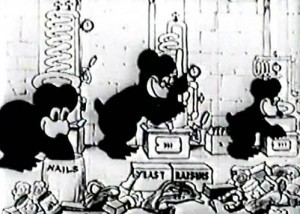
The short begins with the three bears working in a kitchen, brewing what appears to be some form of liquor. Needing hops, the smallest bear runs out of the kitchen and spies some frogs “hopping” into a pond. He tries to capture the frog, but ends up landing in the pond. There is an underwater chase before the bear chases the frog onto land and captures the frog’s “hops” in the form of word bubbles. Meanwhile, Julius and Alice ride their cart into nearby house, where they find the liquor – and the bears. They run outside and try to make a break for it, though the bear catches up with them and seems to find Alice attractive. Julius and the bear fight, with the other bears joining in. They flatten Julius and capture Alice, placing her on a sawbelt to be cut in half. Julius gets up and manages to save Alice from the bears by using his nine lives as soldiers. Julius and Alice then share a kiss after she proclaims him her hero.

November 19

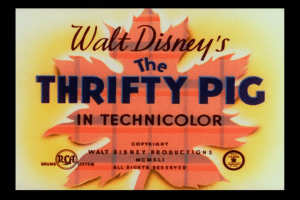
November 19, 1941 – The Wartime Educational Film The Thrifty Pig is Delivered

vlcsnap-2016-11-19-18h47m40s227

“You ought not to sing and dance while there’s danger all about. You should get your houses wolf-proof: bricks like these will keep him out.”

On November 19, 1941, the wartime educational film The Thrifty Pig was delivered to the National Film Board of Canada. It was the first of a series of films created by Disney for this particular project, with the goal of persuading Canadians to invest in war bonds. The short is similar to the Silly Symphony The Three Little Pigs, which was a huge success for the studio upon its release and deemed the perfect story to make the war bond case; this was also the first case of “cartoon recycling” for the studio in order to keep costs down.

Practical Pig is working on his house while his brothers tease him. He warns them that they should make their houses “wolf-proof”, which he is doing with war bonds. His brothers sing that they aren’t afraid of the wolf, and while they do, the wolf – now in Nazi regalia – shows up to try and capture them. He blows down Fifer Pig’s house first, then goes after Fiddler Pig’s house. Fifer and Fiddler Pig escape to Practical Pig’s house, with the wolf hot on their trail. When he tries to blow down Practical Pig’s house, all he does is blow away the top layer to reveal multiple Canadian savings bonds; Practical Pig then uses some extra bond bricks to chase the wolf away. In the end, the pigs all sing about protecting themselves from the wolf by lending their savings. An animated plea for Canadians to do their part to stop the Axis is then presented at the end of the short.

November 15

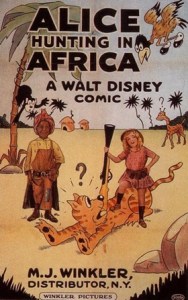
November 15, 1924 – The Alice Comedy Alice Hunting in Africa is Released to Theaters

ahia

“I sincerely believe I have made a great deal of improvement on this subject in the line of humorous situations and I assure you that I will make it a point to inject as many funny gags and comical situations into future productions…”

On November 15, 1924, the Alice Comedy Alice Hunting in Africa premiered in theaters. The short, starring Virginia Davis as Alice, was actually the third Alice Comedy produced, but it was not released due to concerns from the distributor that it wasn’t funny enough. The short would then be released months later as the ninth Alice Comedy. While not a lost film, the film has not been released on home video.

November 10

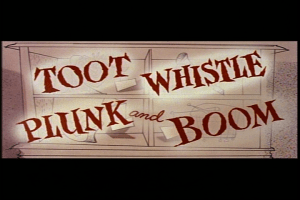
November 10, 1953 – The Special Short Film Toot, Whistle, Plunk and Boom is Released to Theaters
vlcsnap-2016-11-10-18h30m10s327

“The study of musical instruments is the subject for today.”

On November 10, 1953, the special short film Toot, Whistle, Plunk and Boom premiered in theaters. The short would go on to win the Academy Award for Best Short Film. The art is also notable for being the work of Eyvind Earle, who would go on to create the stylized look for Sleeping Beauty. Toot, Whistle, Plunk and Boom was directed by Charles Nichols and Ward Kimball, with story by Dick Huemer.

The short begins with Professor Owl running to his class to teach them about musical instruments. He explains that the music comes from a “toot, and a whistle, and a plunk, and a boom,” no matter from where the music comes. He then goes back to the dawn of history to where the music started. Starting with the “toot,” he moves from the caveman to Ancient Egypt, to the Romans, where they created a curved horn. The next aspect is the “whistle,” which began with a tube of grass, which then led to the creation of the clarinet and the saxophone. This is then followed with a look at the “plunk” of a bow, and the creation of what would eventually become a harp, and the violin. There are several variations of string instruments shown, unfortunately with all of them snapping a string. The last caveman shows the “boom” of how percussion instruments were born. The short ends at the symphony, where the cavemen have joined the orchestra.