RSS Feed

Tag Archives: Short film

November 5

November 5, 1937 – The Silly Symphony The Old Mill is Released to Theaters
On November 5, 1937, the Silly Symphony The Old Mill was released to theaters. The short film is notable for being the first film to use the multi-plane camera, which helped create a new three-dimensional look to the Disney films. The film won an Academy Award for Best Cartoon; Disney also took home a special Scientific and Technical Class II plaque for the design and application of the camera.

An old mill stands abandoned at the side of a pond at sunset, while all the animals around head to their nests for the day. A pair of bluebirds have made a nest in the old cogs, waiting for their eggs to hatch. Many animals have made the mill their home, from mice, to owls and bats. Out in the pond, frogs peek out from their lily pads and begin to croak, until they are interrupted by the sound of crickets. Fireflies also appear in the night, with one of the frogs anxious to eat one. As he does, his stomach glows from the firefly.
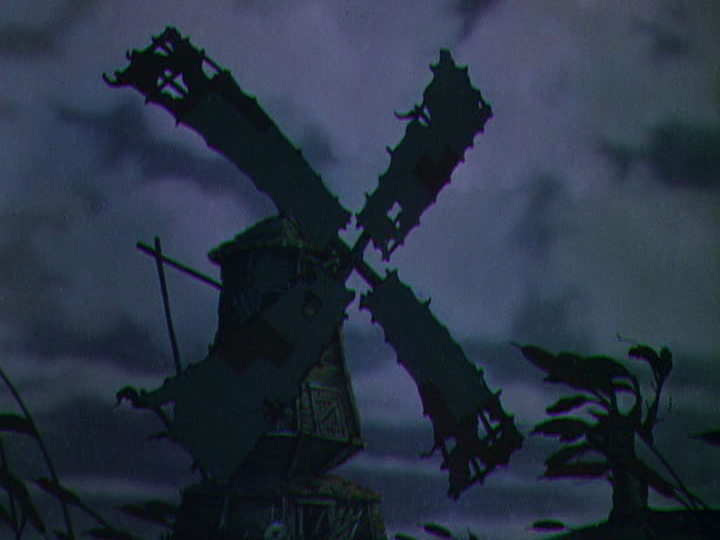
The windmill begins to spin again as storm clouds gather and the wind picks up ferociously

Suddenly, the wind begins to howl, and the windmill starts to turn. The bluebird who made her home in the cogs can’t bear to leave her eggs – luckily, the cog she is sitting under is missing, and she and the eggs ride through unharmed. The storm grows stronger, with the rain dripping through the leaky roof and open windows. A pair of doves sit together, weathering the storm on an open ledge. A group of mice shiver after the lightning strikes. Parts of the mill begin to fall apart. Without warning, the mill is struck by lightning, shifting it from its base.

The storm settles, and the bats return to the mill as dawn approaches. The bluebirds’ eggs have hatched, and mother and father return with food. As life returns to normal, the animals begin their day once again in the abandoned mill on the side of the peaceful pond.
November 3

November 3, 1934 – The Silly Symphony The Goddess of Spring is Released to Theaters

“There once was a time in the long, long ago, when there was joy and laughter everywhere.”

On November 3, 1934, the Silly Symphony The Goddess of Spring was released to theaters. It is known as one of the earliest attempts of human animation for the Disney animators, as they were preparing for the feature film Snow White and the Seven Dwarfs. The short was directed by Wilfred Jackson.

The short opens in a forest on a beautiful spring day, with all the animals frolicking in the sunshine along with several woodland elves. The Goddess of Spring herself, Persephone, also dances by before sitting on her throne of cornucopias. The flowers dance a ballet at her feet before turning themselves into a wreath and resting on her head.

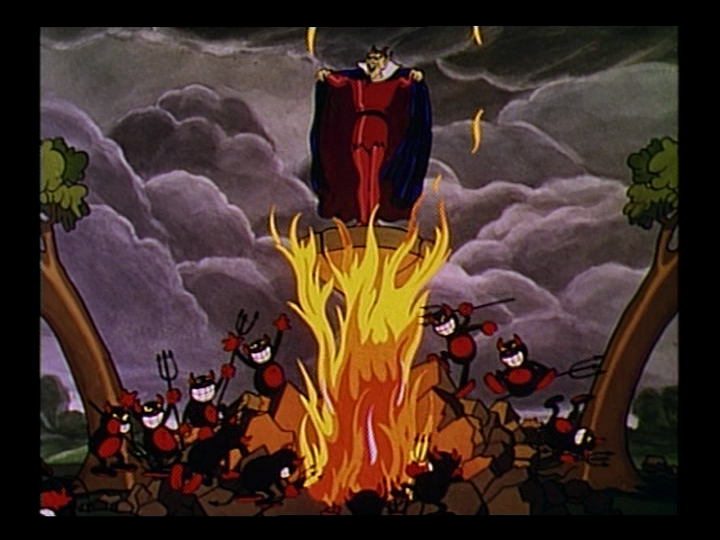
Out of the blue, the Devil bursts out of the ground, coming to claim the goddess as his bride

Suddenly, the skies grow dark, and the Devil bursts out of the ground on top of a column of flame, coming to claim Persephone as his queen. She refuses, but he grabs her and takes her to the underworld. All of Hell is celebrating the Devil’s “marriage,” but Persephone appears visibly miserable. On the surface, it is perpetually winter, with all of the woodland creatures mourning the loss of the goddess.

The Devil tries to tempt Persephone to stop crying with all the treasures of the world, and is angered that she will not stop being sad. He tells her that he will do anything she says, so long as she smiles. She asks to return to her world above, as everything above will die if she doesn’t. He acquiesces on one condition: she must spend half of every year with him below. She agrees to his terms, and is released. Everyone of the surface is overjoyed to see her, especially when she melts the snow and makes the world spring again.

October 30

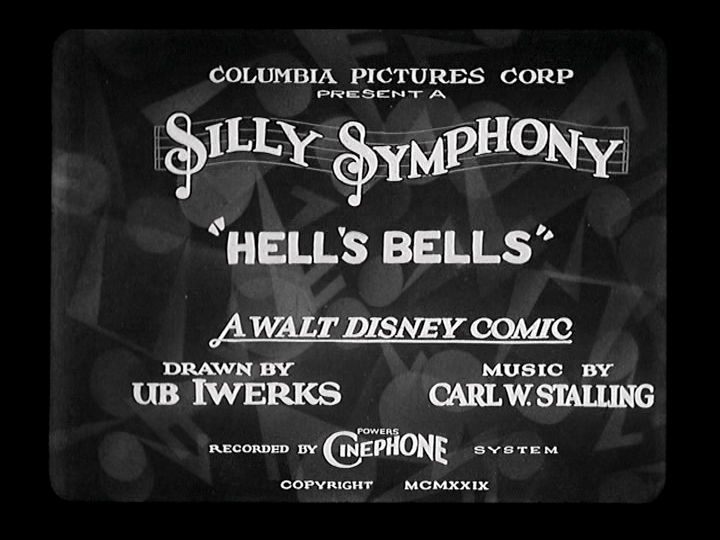
October 30, 1929 – The Silly Symphony Short Film Hell’s Bells is Released to Theaters

On October 30, 1929, the Silly Symphony short film Hell’s Bells was released to theaters. The short was drawn by Ub Iwerks, and is also notable for being Iwerks’ first foray into directing. The music for the short was done by Carl Stalling; the piece heavily featured in the short is “Funeral March of a Marionette” by Charles-Francois Gounod.

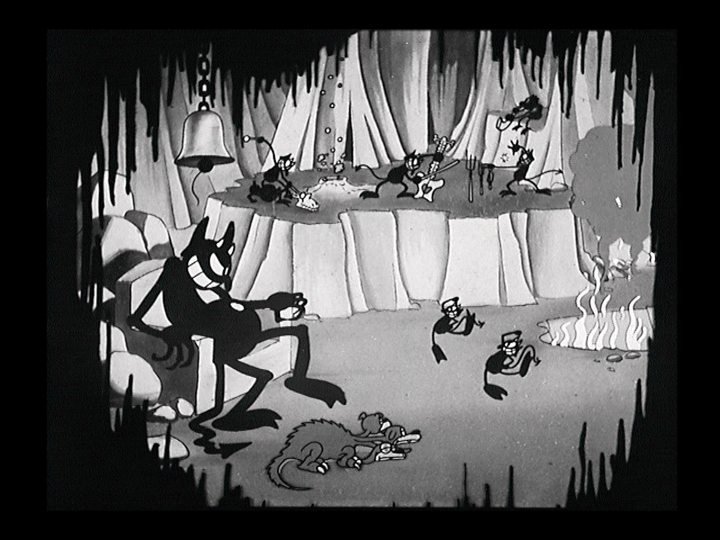
The short first erupts into a blaze of fire, which reveals an underground cavern populated by bats, spiders, and other strange creatures that introduce themselves to the camera one by one. Satan is then seen sitting in his chair, being entertained by dancing musical demons, who use skulls, volcanoes, and even each other to create the music. A troupe of demons also dance around merrily, with comical results. Satan claps with delight before ringing a bell, alerting the other demons to bring their master dinner.

Satan sits on his throne, listening to the entertaining music performed by his minions

After enjoying his dish, Satan grabs a demon and feeds him to his three-headed dog, laughing at the result. He tries to grab the other demon to feed his pet, but the demon manages to escape Satan’s grasp, sending him flying into the fiery pits below.

October 26

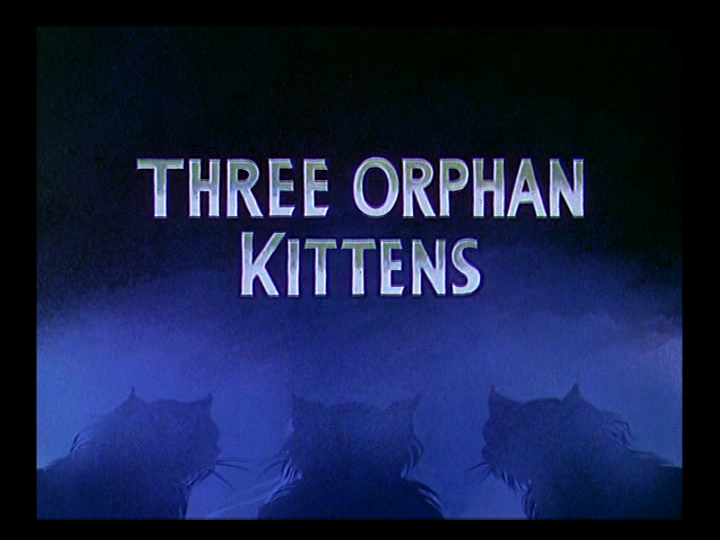
October 26, 1935 – The Silly Symphony Three Orphan Kittens is Released to Theaters

“Kittens! Aren’t they cute?”

On October 26, 1935, the Silly Symphony Three Orphan Kittens was released to theaters. The short is known for its remarkable animation design and perspective by animator Ken Anderson. It was directed by Dave Hand.

It’s a blustery, snowy night, and a car stops in front of a fence. A burlap bag is dumped into the yard on the other side of the fence before the car speeds away. When the bag comes to rest, three kittens tumble out of it and cuddle together in the snow. They notice an open window of the house nearby and decided to venture in to get warm. The three climb up the basement stairs and explore the house, watching as the housekeeper sings a song and brings a pie to the table.

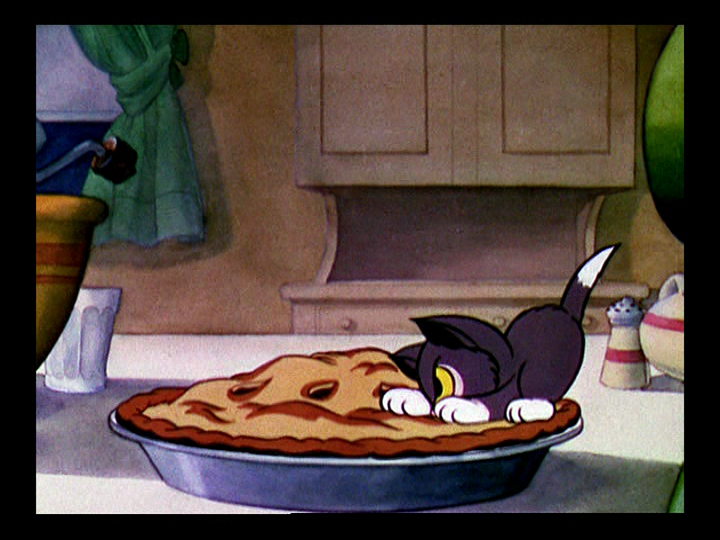
The grey kitten gets distracted by a fly, which leads to the kitten having a battle more with the pie after the fly buzzes away

Hungry, the kittens climb onto the table, where the gray kitten is distracted by a fly. When the fly lands on the pie, the gray kitten follows it, but is startled to see some of the filling fly out of the pie. The kitten begins to fight the pie, and ends up covered in the filling. The red kitten has been licking the remaining drops of milk from a bottle, and accidentally gets his head stuck inside. The black kitten plays with the pepper shaker, sneezing after he spills too much. One sneeze sends him flying backward into the red kitten, pushing him fully inside the milk bottle. The black kitten attacks the pepper once more, and sneezes powerfully enough to send him flying into the bottle just as the red kitten has escaped.

The kittens finally leave the kitchen to explore further, and end up in a nursery, delighted by the toys they find. The black kitten, however, has a bad run-in with a jack-in-the-box, and hides inside a pillow. A feather pops out, and the kitten follows it, chasing it all through the house. He chases it over the keys of a player piano, and accidentally sets off the mechanism, which plays a song called “Kitten on the Keys.” When the other kittens join him on the instrument, they are overwhelmed by the actions of the player piano. Their antics finally alert the housekeeper, who catches them and attempts to throw them out in the snow, when the little girl of the house asks to keep them, saving them from being thrown out into the snow.

October 24

October 24, 1941 – The Donald Duck Short Film Donald’s Camera is Released to Theaters


“Shoot nature with a camera instead of a gun!”

On October 24, 1941, the Donald Duck short film Donald’s Camera, was released to theaters. It was directed by Dick Lundy, and stars Clarence Nash as Donald Duck.

The short begins with Donald deciding to take pictures of nature after reading a sign in a store window proclaiming he should “shoot nature with a camera instead of a gun.” He passes by a gun store with several taxidermal animals on display. Angered by this, he resolves to take pictures of wildlife rather than shoot it.

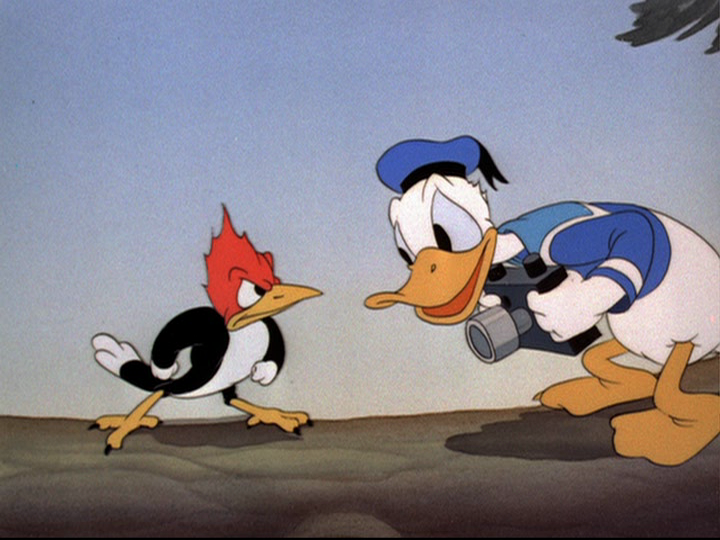
Although Donald is insistent on taking pictures of the forest creatures, the animals aren’t keen on having their likeness captured on film

The wildlife Donald encounters are amused by his camera equipment, and although he tries to get a good picture, he ends up getting nothing but caught in a cave of skunks. Soon after, Donald spies a woodpecker in a nearby tree, and is determined to get a picture. The woodpecker refuses to have his picture taken, and tricks Donald into falling out of the tree. As the woodpecker tries to catch his dinner, Donald hides in a tree stump, and uses toothpaste as a worm decoy. The woodpecker falls for it, swallows the toothpaste, and suddenly starts spouting bubbles.

Donald finally subdues the woodpecker enough to get him to pose, but the bird soon breaks free, steals the camera, and places it in the path of a falling tree. Unable to save his camera, an angry Donald runs back to the gun store, buys all the guns and ammunition he can, and goes on a mission to hunt down the bird for revenge.

October 23

October 23, 1931 – The Silly Symphony The Spider and the Fly Premieres in Theaters

On October 23, 1931, the Silly Symphony The Spider and the Fly was released to theaters. The short was directed by Wilfred Jackson.

The short opens with a group of flies buzzing around an empty kitchen, snacking on an open jar of jam and playing with a bar of soap and a flyswatter. Two flies fly out an open window and explore a tap near the house. Watching hungrily nearby is a vicious spider, who spies the two flies near the tap and sets out to trap them by using his web as a harp, enticing the two to dance to the music.

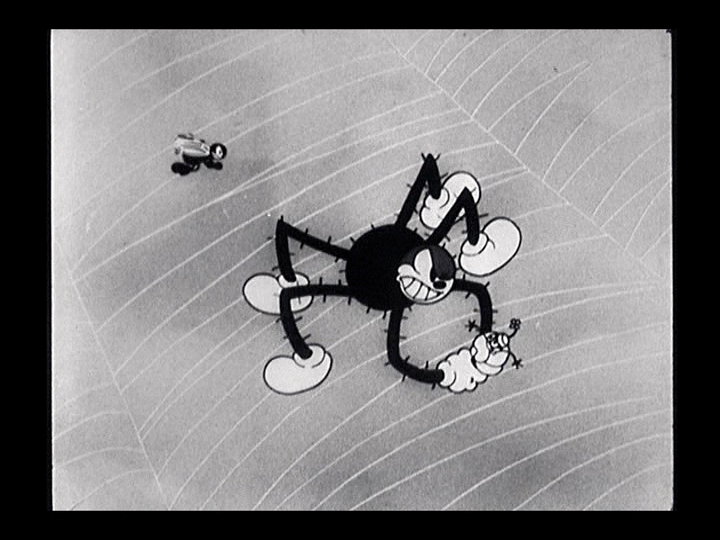
The spider holds the female fly captive in his web while the male fly tries to distract him enough to let her escape

As the two dance closer and closer to the spider, the female fly is caught in his web. The male tries to rescue his mate, but the spider manages to catch him briefly before he escapes. Making his way back to the group, the fly sounds an alarm, and every fly nearby, including the horseflies in the nearby stable, gets ready for battle. The flies seize whatever they can from the house to throw on the spider, from pepper to pins. Finally, they use a match to set his web on fire, and place a piece of flypaper beneath him as he jumps, trapping him. They free the female fly, and everyone cheers.

October 17

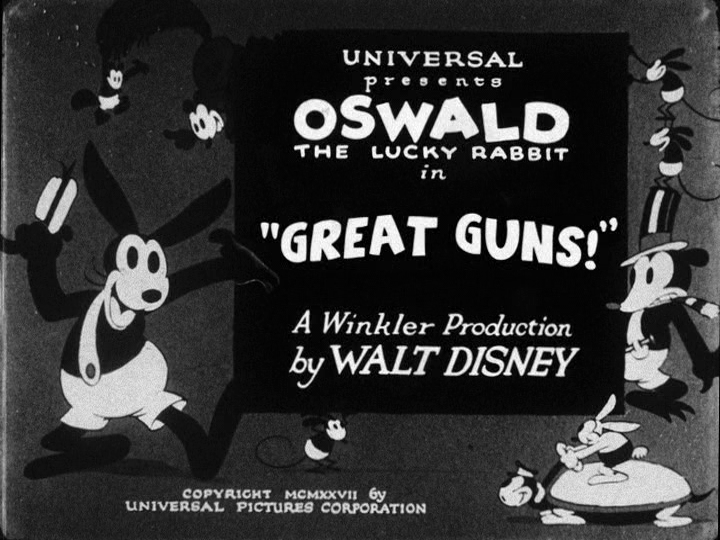
October 17, 1927 – The Oswald the Lucky Rabbit Short Film Great Guns! is Released to Theaters

On October 17, 1927, the Oswald the Lucky Rabbit short film was released to theaters. It was the fourth Oswald cartoon released by Disney.

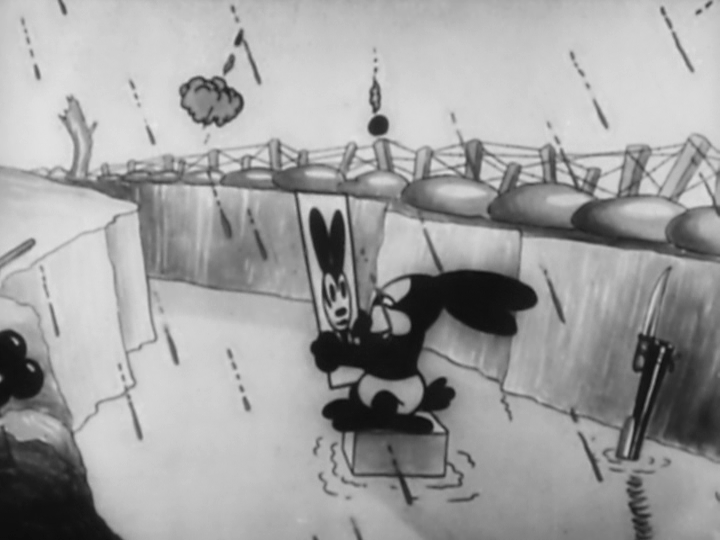
A newsboy runs down the street, holding up a newspaper with the headline of war. The factories’ whistles and bells sound, and everyone rushes to the recruiting office, including Oswald. He stops in front of his girlfriend’s house, calling to her, and as she comes out, she marvels at how impressive he looks as a soldier. As the trumpets sound, the two share one last kiss before he leaves. The scene soon changes to Oswald kissing a photo of his girl while stuck in a trench, bombs flying everywhere.

Oswald distracts himself from war by kissing the picture of his girlfriend while stuck in a trench

Cannons are shooting from all around, and neither side can get over the walls of the trench. Oswald seems oblivious to all the warfare as he continues to kiss his girlfriend’s picture, which annoys a pilot flying overhead. To get Oswald’s attention, he drops a bomb so that it tears a hole right through the picture. Maddened, Oswald gets in his own plane and chases after the pilot. The two fight in the air before crashing to the ground and continuing their fight with their fists. As Oswald gives the other pilot a good thrashing, he is stopped by a high-ranking officer for the other side, and sheepishly tries to walk away.

The officer chases Oswald, and tries to blow the rabbit up with a cannon – only to find that it is too short range. Thinking quickly, Oswald uses an elephant nearby as a cannon to fire back at the officer. Unfortunately, the elephant is blown to bits, leaving Oswald vulnerable again, but not for long, as he bats back the cannonballs with his ears.  Oswald himself is soon blown to smithereens, but his girlfriend shows up as an army nurse and uses a martini shaker to bring him back to his whole self. Oswald revived, the two share a kiss.

October 15

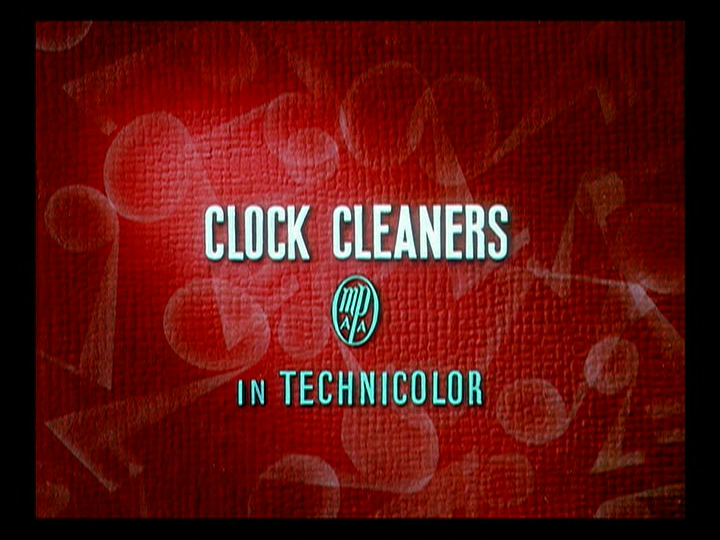
October 15, 1937 – The Mickey Mouse Short Film Clock Cleaners is Released to Theaters

“Hickory dickory dock, the mouse ran up the clock…”

On October 15, 1937, the Mickey Mouse short film Clock Cleaners was released to theaters. The short was directed by Ben Sharpsteen, and stars Walt Disney as Mickey Mouse, Clarence Nash as Donald Duck, and Pinto Colvig as Goofy. The short is also notable for being edited; at one point, Donald yells “Says who?” to the spring mocking him, which was misconstrued in the 90s as Donald cursing. However, the Hays Code, adopted in 1930, would not have allowed such language in the first place.

At the top of a high clock tower, the bell rings three o’clock. Mickey is seen on the clock face, standing on the second hand and cleaning the numbers. Inside, Goofy is seen brushing the gears, and Donald grabs a mop to clean the main spring, even though there are several signs telling him to keep off the mainspring. As he cleans the spring, his mop gets caught, and as he pulls it loose, the spring uncoils, trapping Donald inside.

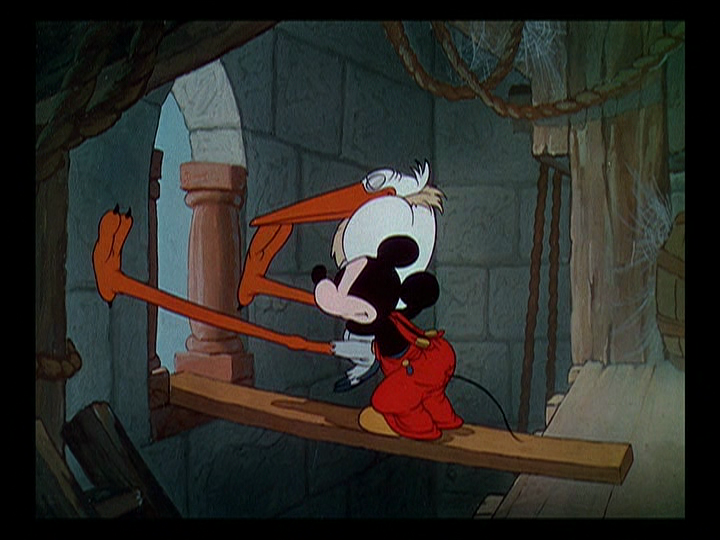
Even while sleeping, the stork is able to outwit Mickey as the mouse tries to throw the stork out of the clock tower

Mickey begins sweeping inside, and hears snoring from nearby gears. He spies a stork asleep in a nest above some gears, and tries to wake it. The stork ignores Mickey, continuing to sleep, and eluding the mouse with every move. The stork then throws Mickey out the window. As this happens, Donald attempts to put the spring back together, only to have it taunt him and knock him into the cogs nearby. Donald is knocked back and forth, and is unable to stop moving his body back and forth after being thrown from the cogs.

Goofy is seen cleaning the bell of the tower, when it strikes four o’clock. He is hit in the head by the mechanical statues that ring the bell, and begins to walk around in a daze. Mickey notices just in time that Goofy is about to fall off the building, and begins to run around after him, preventing him from falling to his doom. Unfortunately, Goofy falls through a missing ring in a ladder, only to be shot back up by a flag pole, sending him and Mickey flying into the clock tower. They land on the main spring, just after Donald finally got it back together, and all three are sent flying into the cogs the Donald was knocked into before, unable to stop their bodies from dancing back and forth from the cog’s motion.

October 11

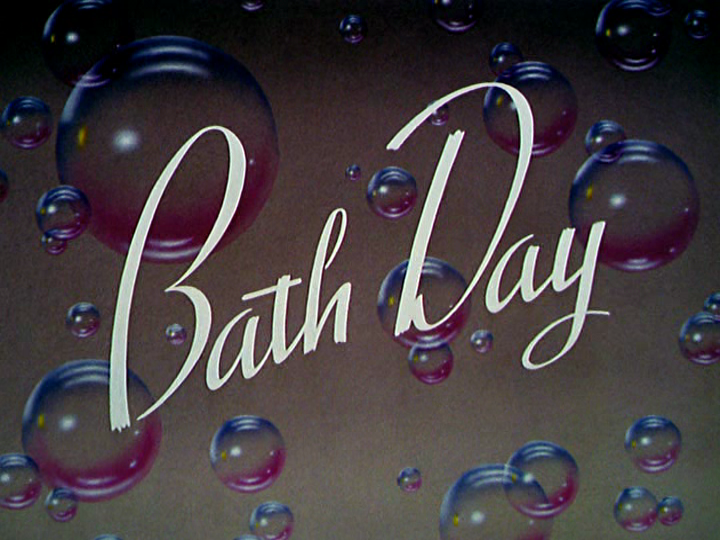
October 11, 1946 – The Figaro Short Film Bath Day is Released to Theaters

“Figaro…time for your nice warm bath.”

On October 11, 1946, the Figaro short film Bath Day was released to theaters. A handful of shorts for the kitten from Pinocchio were released, this time being seen as Minnie’s pet. The short was directed by Charles Nichols, with the story by Eric Gurney.

Figaro is taking a nap, when someone off-screen calls for him. He looks up to see Minnie Mouse waiting to give him a bath. Hearing this, Figaro hides and fights with Minnie, refusing to get into the tub. Minnie grabs some bubble bath, and begins to wash the cat, who is less than thrilled. She finishes the wash with a bow around his neck and some perfume. Minnie calls him beautiful, which Figaro interprets as looking like a sissy. Angered, he throws a tantrum, and falls out the window.

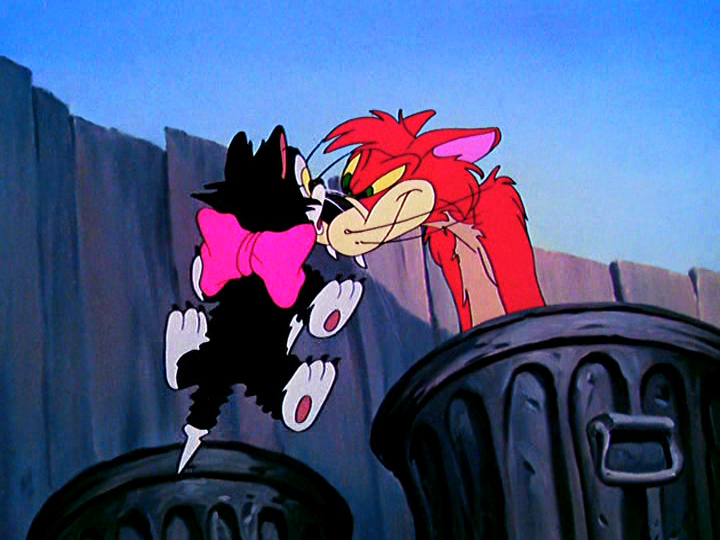
As Figaro tries to trace the fish he smelled, he runs into a mean alley cat instead

Outside, he gets caught by the aroma of fish, and follows it into the trashcan, where he runs into a mean alley cat. The cat looks at Figaro, and calls over his gang of cats, who all proceed to laugh at Figaro and his bow. Figaro tries to attack the alley cat, but is unable to lay a punch on him. The cat then pretends to be scared by Figaro, then gets the upper hand of the fight. When the alley cat places the shaking kitten against a mountain of trashcans, the shaking causes the entire mountain to fall, knocking the alley cat out cold. The gang is surprised to see Figaro walk unscathed, and run away from the kitten. Minnie finds him after this fight, and is given another bath, against his will.

October 10

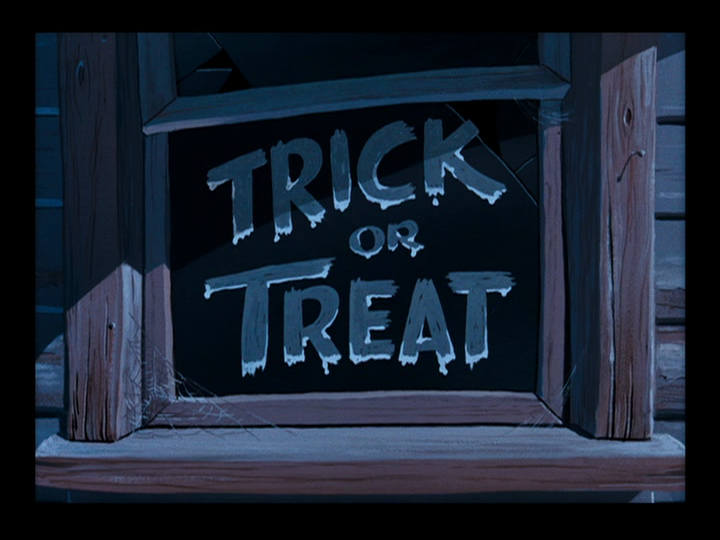
October 10, 1952 – The Donald Duck Short Film Trick or Treat is Released

“Trick or treat, trick or treat, trick or treat, the whole night through, little scalawags with fiendish gags can make it tough on you.”

On October 10, 1952, the Donald Duck short film Trick or Treat was released to theaters. The short was directed by Jack Hannah, with story by Ralph Wright, and music by Paul Smith. It stars Clarence Nash as Donald and the nephews, and June Foray as Witch Hazel.

It’s Halloween night, and a witch is seen flying around in the night sky. She stops to observe Huey, Dewey, and Louie trick or treating, and sees when they ring Donald’s door. Instead of Donald giving them candy, he gives them firecrackers, blowing up their trick or treat bags. He then dumps a bucket of water on them. The witch, named Hazel, feels sorry for the three, and stops in front of them, offering to help get revenge on their uncle. She stops at Donald’s door and receives the same treatment, and decides to resort to some more drastic measures.

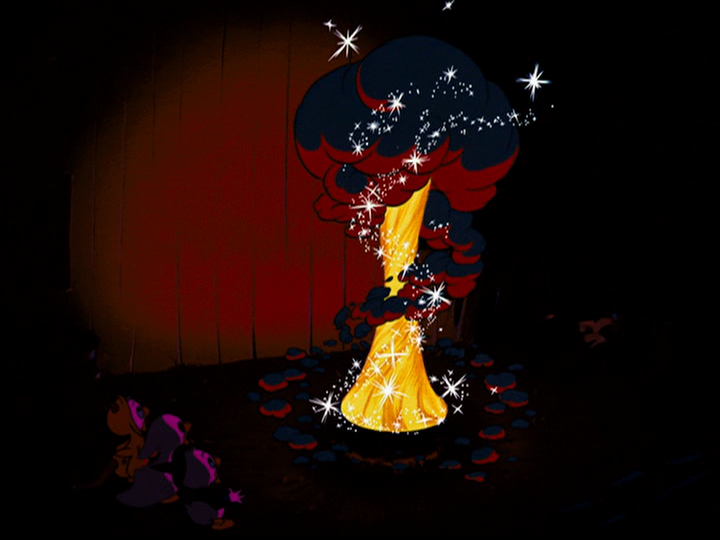
The ingredients of the potion combine, causing a massive explosion

Hazel stands in front of her cauldron, with the nephews putting in all the ingredients she needs. The nephews watch in awe as the potion explodes. Hazel takes some potion with her, and the four of them fly off to Donald’s, with Hazel spraying the potion first on a pumpkin, which comes to life and startles Donald. She then sprays a paintbrush, which begins to paint Donald’s house green. Ghosts then appear at Donald’s door, scaring him before Hazel and the boys dive into the house, using her broom to pin him against the wall and give the boys the treats.

Unfortunately, when Hazel calls Donald a pushover, Donald changes his mind, locks the treats up, and swallows the key. Hazel doesn’t give up so easily, and she casts a spell on Donald’s feet, first causing the feet to kick out the key from Donald. Donald desperately tries to hold on to the key, but Hazel is able to have it released. Although Donald grabs the key at the last second and throws it under the cupboard door, Hazel decides to have Donald’s feet kick the door down – using Donald. The last attempt is successful, and kids have all the treats they want. The nephews wave goodbye to Hazel as she flies away.