RSS Feed

Tag Archives: Short film

April 10

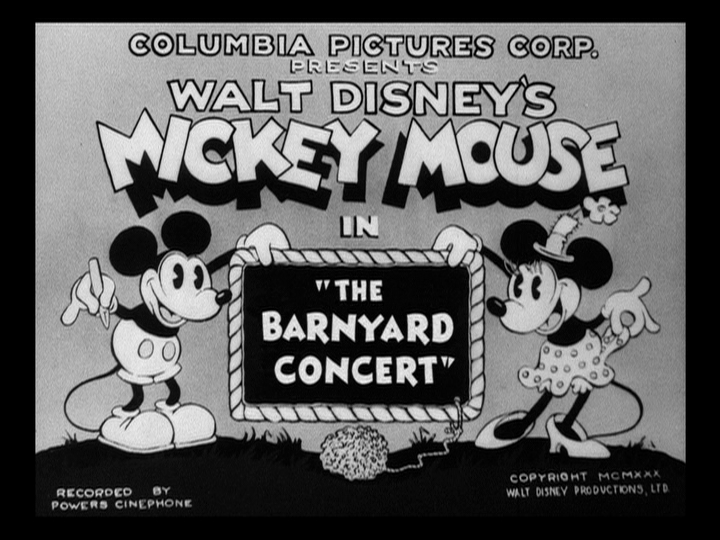
April 10, 1930 – The Mickey Mouse Short Film The Barnyard Concert Premieres in Theaters

vlcsnap-2014-04-10-03h08m34s169

On April 10, 1930, the Mickey Mouse short film The Barnyard Concert premiered in theaters. This is one of several short where Mickey conducts an orchestra comprised of his friends, including 1935’s The Band Concert and 1942’s Symphony Hour. It was directed by Walt Disney

The barnyard animals start to play a piece while Mickey makes his way to the makeshift podium. The band starts to play with gusto, following Mickey’s directions carefully. Mickey and the others start using other animals to help them with the music, and when Mickey starts pulling on suckling piglets, one piglet takes off with Mickey attached, and dragging him around the barn until lets go and rolls back to the podium. The mood of the music soon changes from classical to something more modern. One pig starts playing at the wrong spot, annoying Mickey to no end, until they realize that the “musical note” on the pig’s page is nothing more than a fly and a speck of dirt. Things are ending well until a nearby cow accidentally wraps her tail around Mickey’s neck and nearly chokes him as she dances to the music. He solves this problem by tying her tail to a full basket of water, and she is unable to move. She is able to move the basket with a great deal of effort, and ends the musical piece by crashing it all over his head. The short ends with Mickey whimpering.

April 8

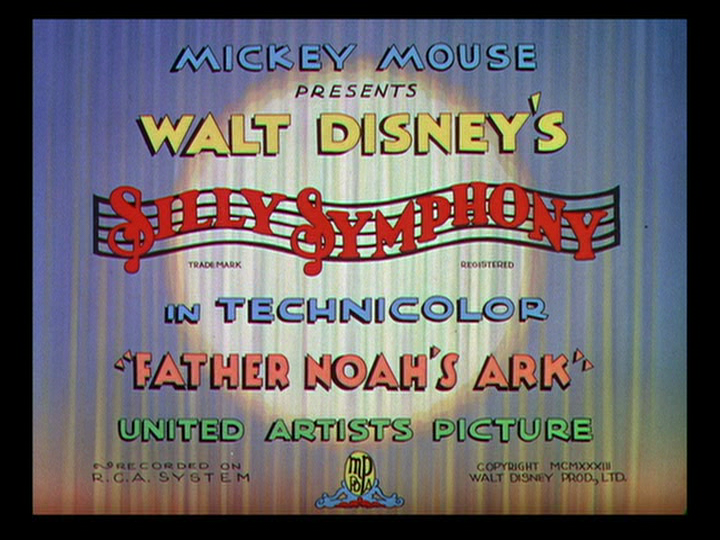
April 8, 1933 – The Silly Symphony Father Noah’s Ark is Released to Theaters

vlcsnap-2014-04-08-03h12m25s174

“Oh, I’m Father Noah, captain of this bark, I make the plans and give commands to build the ark.”

On April 8, 1933, the Silly Symphony Father Noah’s Ark was released to theaters. This is the first of two shorts featuring the biblical story; the other was a stop-motion special short released in 1959. This Silly Symphony was directed by Wilfred Jackson.

The short begins with all the animals helping Noah build the ark, while he holds up his plans. His three sons assist with the creation of the ark, while their wives start loading food into the ship. Noah’s wife is doing laundry while singing to the audience that she is the one in control of this ship, “you bet your life.” Noah and his family have come up with ingenious ways to use the animals to help with the building, including a charging rhino to help slice the planks, and woodpeckers to hammer in nails. Suddenly, the sun is covered by angry clouds, and Noah and his sons call all the animals to the boat, as the rain has begun. The animals race over and board while Noah checks his list. Two skunks are late arriving, and when Noah and his sons see the skunks, they quickly pull up the gangplank and sail away. The skunks, however, swim out after them. The storm grows violent, and the skunks have made it on to the boat, but have to hold to the roof for dear life. Inside, the animals are shoved back and forth due to the rocking of the ship. The forty days of rain passes by slowly, but soon, the clouds abate and the sun is shining once again. The animals look out the windows and enjoy the sun. A dove flies back with an olive branch, and everyone disembarks, ready to be on land again.

April 3

April 3, 1946 – The Education Short Film Planning for Good Eating is Delivered to the Coordinator of Inter-American Affairs

vlcsnap-2014-04-03-07h26m03s217

“Yes, it’s this same plan, a plan of eating the three necessary types of food that keeps our friends in fine health.”

On April 3, 1946, the educational short film Planning for Good Eating was delivered to the Coordinator of Inter-American Affairs. During wartime, the Disney Studios kept itself afloat by producing several educational and training shorts for various government offices; Disney kept up the practice after the war was over, which included several shorts featuring the likes of Donald Duck and Goofy.

The short begins with the narrator explaining the diet of several different animals, stating that their one source of food works well for them. He then introduces Careless Charlie and his family, who try to survive on one source of food. He notes their rundown condition, as they don’t seem to realize that man needs more than just beans and cornbread. Corn and beans are the same type of food, and the family is missing out on animal products, as well as fruits and vegetables. Each builds one of the three main needs of a human’s body: muscles, bones, and energy; a combination of the three builds resistance against disease. The narrator tells Charlie that he needs to eat the correct foods, and he is able to grow these foods in his own yard. His family helps him to provide the foods he needs. The family then sits down to a wonderful stew with all three types of foods, with the family looking much healthier and happier. Careless Charlie is then renamed Careful Charlie. Mrs. Charlie is then given a special shout-out, as she works to include all three types of foods into every meal she cooks. The narrator then provides a list of foods that are part of the individual food groups. He stresses the importance of eating fruits and vegetables, especially for growing children. Charlie is rewarded for his hard work, and a combination of all three protects his family from disease and granting them good health.

April 2

April 2, 1943 – The Pluto Short Film Private Pluto is Released to Theaters

vlcsnap-2014-04-02-03h17m44s211

“Private Pluto, there are saboteurs in the vicinity! Guard that pillbox with your life!”

On April 2, 1943, the Pluto short film Private Pluto was released to theaters. This short marks the first appearance of chipmunk duo Chip and Dale, although they are not yet named (their official names were announced with the release of the 1947 short film Chip an’ Dale). The short was directed by Clyde Geronimi.

It’s morning at the Army camp, and Pluto marches with the other soldiers. He is then given orders to guard a pillbox from sabotage. Pluto takes his job seriously, and turns around to see a cannon being used to smash apart a nut, with a chipmunk stepping from the cannon and picking up the pieces. As Pluto goes to investigate, another acorn is sent flying from the cannon to the ground, and as he goes to sniff it, the cannon whacks him on the head. The chipmunk looks at him, unafraid, and takes the acorn from a dazed Pluto’s mouth. They then tease the dog, using his helmet to place several acorns, and once again smashes his head (and acorns) with the cannon. Pluto is finally able to see who his nemeses are, and manages to take their acorns before they can use the cannon again. He continues to steal their acorns, but they quickly catch on to his plan and seek revenge. They trap Pluto by his backside in the mouth of the cannon, and fire him high into the air. The chipmunk pair watch Pluto fall, and put one more plan into action: they place acorns in the area occupied by Pluto’s shadow. When Pluto lands on the ground, he smashes all the acorns the chipmunks placed. They remove Pluto by biting his tail, and collect all the acorns, escaping before Pluto can catch them. The short ends with Pluto whining and banging on the pillbox door.

March 24

March 24, 1934 – The Silly Symphony Funny Little Bunnies is Released to Theaters

vlcsnap-2014-03-22-09h58m31s35

“The storybooks say that far, far away, there’s a green, enchanted dell where the rainbow ends, and everything is gay, and the Easter bunnies dwell.”

On March 24, 1934, the Silly Symphony short film Funny Little Bunnies was released to theaters. This was the only Disney short film that celebrated Easter, and the first film Nine Old Men animator Wolfgang Reitherman animated. It was directed by Wilfred Jackson.

The short begins in a dell, where the rainbow ends. Two rabbits pull aside a curtain of leaves to bring the audience to the world of the “funny little bunnies,” who are gearing up for the Easter season. A first group is seen with sugar, spices, and chocolate, bringing the supplies to a giant pot where the chocolate is melted down and mixed. The chocolate is then placed in egg molds, and once hardened, are taken to be decorated by a “firing squad” holding icing tubes. Several bunnies are also seen carving chocolate bunnies from giant blocks of chocolate. A group blue ribbon of hens are in a choir, laying eggs as they sing. The eggs are placed in a pot to be hardboiled, and are checked by another rabbit with a hammer to see if they are done. Four bunnies whistle a happy tune while painting the inspected eggs, while one bunny is content to create whimsical designs. The rainbow provides the bunnies with their paint, and they are seen happily collecting the colors. Two blind rabbits are seen weaving Easter baskets (although it is soon revealed that they aren’t really blind), and the baskets are then sent to be filled with Easter treats and decorated with ribbons. The bunnies end with skipping off with their creations to deliver them to the children.

March 22

March 22, 2009 – The Short Film Super Rhino is Released

vlcsnap-2014-03-15-12h23m15s169

“My ancestry isn’t all hamster, I’m one-sixteenth wolf with a little wolverine…”

On March 22, 2009, the special short film Super Rhino was released on the DVD release of the Disney animated feature film Bolt. It was written and directed by Nathan Greno, and stars Mark Walton as Rhino, Malcolm McDowell as Dr. Calico, Miley Cyrus as Penny, and Susie Essman as Mittens.

The short begins with Calico already touting his success as an evil villain, as he has caught Penny and Bolt and has them suspended over a large pit of lava. Through a camera in Bolt’s collar, Penny’s father is able to see their capture, and although he can’t save her, he knows who can: Rhino the hamster. Penny’s father uses his scientific contraptions to create a super hamster, and Rhino is soon sent to save the pair. He attacks all the guards outside, and makes his way into Calico’s fortress, exclaiming that he created a door with lasers from his eyes. Calico looks dumbfounded as he sees a hamster standing before him. Every guard shoots everything they can at Rhino, but the newly super Rhino is able to avoid the shot and rides a missile, using it to cut down Penny and Bolt, and safely catches them as they fall. Calico starts proclaiming that he will win next time, but Rhino interrupts him and, using his own version of the “super bark,” sends a wave of lava flying over Calico, burning him and his cat. Penny and Bolt thank Rhino, who calls the two “cute,” before proclaiming he has an urgent matter to attend to. He is then seen at a concert, where he starts singing Hannah Montana’s song “Best of Both Worlds” to an adoring crowd. It is then revealed that he has been dreaming, and has woken up Mittens, who is not a fan of his singing. He rolls over and goes back to sleep, dreaming once again that he’s going to save the world after answering a call from the President of the United States.

March 20

March 20, 1942 – The Mickey Mouse Short Film Symphony Hour is Released to Theaters

vlcsnap-2014-03-15-11h10m40s139

“Macaroni has got a new find! And tonight, we make history!”

On March 20, 1942, the Mickey Mouse short film Symphony Hour was released to theaters. This short contains the last appearance of Horace Horsecollar, Clarabelle Cow, and Clara Cluck in the golden age of Disney shorts; they would not appear again in film until 1983’s Mickey’s Christmas Carol. The short was directed by Riley Thompson, and features the piece Light Cavalry Overture by Franz von Suppé.

Rehearsals for Mickey’s orchestra are going very well, and Mr. Macaroni listens happily from the sponsor’s booth. At the end of the rehearsal, Macaroni heaps praise upon praise on Mickey, and declares that they will make history tonight. That night, the Macaroni Symphony Hour is highly advertised in front of the Wiz Theater, and everyone prepares for the show. As the audience takes their seats, Mickey, Donald, and Goofy run for the elevator as they hear the stage manager announce the last call. Mickey and Donald make the elevator; Goofy crashes through the elevator doors and falls to the bottom of the shaft. He drops all the instruments he was holding, and while he makes it out unscathed, the instruments are completely flattened by the elevator.

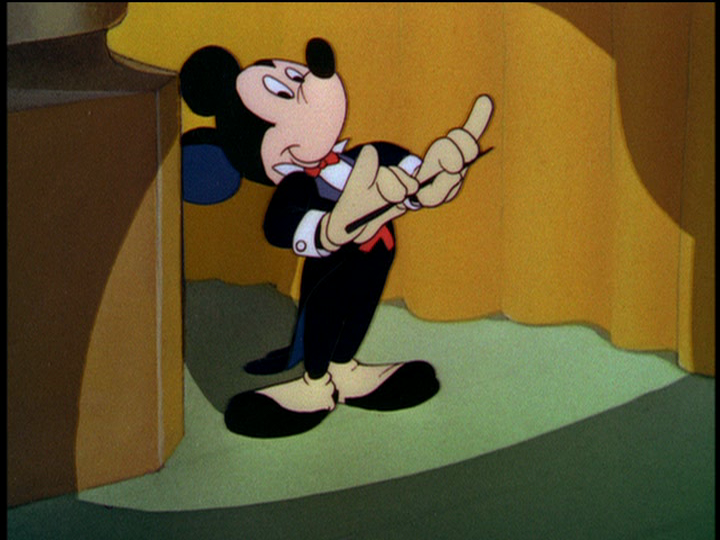
Mickey takes the stage as the announcer begins the broadcast of the "Symphony Hour"

Mickey takes the stage as the announcer begins the broadcast of the “Symphony Hour”

It’s close to air time, and Goofy, along with the instruments, are missing. Mickey panics, but when he hears Goofy call out that he’s on his way, Mickey relaxes slightly, and takes his place when it is time for the show to begin. Mickey heads out on stage while Macaroni, listening from his own private booth, smokes a cigar and thinks of all the money he will make that evening. As Mickey begins the piece, he is shocked to hear the sound coming from Horace’s flattened horn. Horace’s horn breaks, and is sent flying across the room, landing around Donald’s neck. Macaroni shakes his radio, wondering what the heck is going on with the sound. Mickey nearly faints from the disaster, but tries to keep his composure, although he continues to see Macaroni throwing a fit in the booth. Goofy’s instrument breaks apart as he plays it, and he just shrugs at Mickey. Donald, frustrated with how the piece is going, is seen looking at the “Help Wanted” ads, and mocks Mickey. Mickey steps down from the podium, rolls up his sleeves, and throws Donald back into the percussion instruments. After seeing another tantrum from Macaroni, Mickey looks back to the orchestra to find Donald packed up and walking out. After literally throwing the book at him, Mickey motions for him to get back to the percussion section. When Donald ignores him, Mickey rushes over and threatens Donald with a gun. Donald then runs back and finishes the percussion with a tantrum of his own. Macaroni starts crying that he’s a ruined man, but stops when he hears the wild applause from the audience. He then embraces Mickey, while Mickey keeps conducting in a daze.

March 16

March 16, 1961 – The Special Short Film The Saga of Windwagon Smith is Released to Theaters

vlcsnap-2014-03-15-09h04m17s84

“The prairie is just like the ocean, only greener and drier, you see, and the billowing waves of buffalo grass make sailing quite easy to be.”

On March 16, 1961, the special short film The Saga of Windwagon Smith was released to theaters. The short was released near the end of the golden age of Disney short films, and at a time where the art was becoming more experimental. Jasper and Horace from One Hundred and One Dalmatians make a cameo appearance in this short. The short itself was directed by Charles Nichols, with story by Nichols and Lance Nolley. It features the voices of Rex Allen and the Sons of the Pioneers.

The story takes place in Westport, located at the start of both the Oregon and Santa Fe Trails. Most of the town is seen sleeping in the Kansas sun, but they are startled awake by a strange cloud running down Main Street. They hear a strange voice bellowing from the cloud, and as an anchor is tied to a hitching post, the town sees a covered wagon with a deck and a mast with a tiller attached to it. The man inside steps down and greets the town, and when asked by Mayor Crum where he is from, the man explains his name is Captain Smith. He had sailed the seven seas, he continues, and wishes to sail the prairies.  The town assumes that, as he has no oxen to pull his wagon, the wind must make it move, and Smith tells them that this is the case before hurrying into the nearest saloon for a bite to eat. When he takes a look at the waitress in the bar, the mayor’s daughter Molly, it’s love at first sight for Smith. Molly has also fallen for Smith, but her father soon sends her away so he and Smith can talk business.

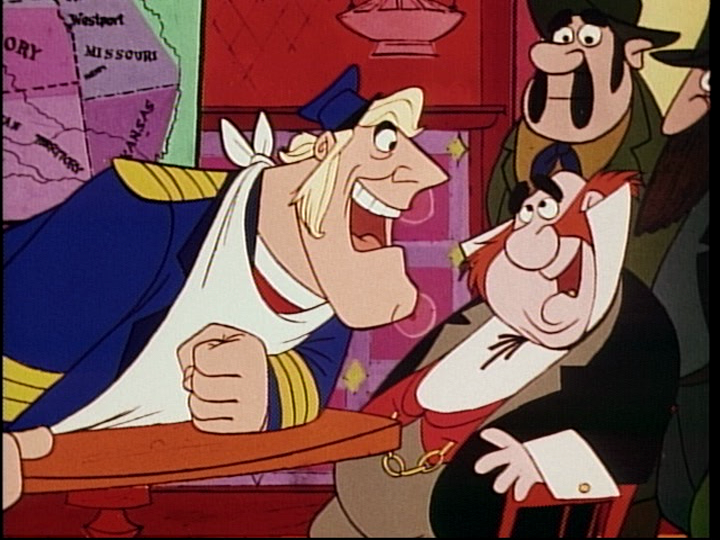
Smith and the mayor talk business about the windwagon, with the mayor wondering if it can hold cargo

Smith and the mayor talk business about the windwagon, with the mayor wondering if it can hold cargo

The mayor asks if Smith’s windwagon will haul freight, and Smith confirms this, as the hull can hold a full cargo. He then makes the grand claim that he can sail from Kansas to Santa Fe in only two weeks, as opposed to the two months it would take a regular covered wagon with oxen. The accountant of the town figures this would be a quarter of the time, with four times the profit. The town gets excited about the financial prospects of windwagon use, and decide to build a super windwagon with Smith’s help, creating a new company called The Prairie Clipper Company. Building soon begins, and every night after work, Smith and Molly meet on the unfinished deck to continue their romance. The mayor is furious at Molly’s romance with Smith, and warns her to stay away.

The day the windwagon is finished, everyone comes out to admire it before the roll it to the edge of town. Molly christens the ship, and everyone gets on inside, except for Molly, who is told by her father that this cruise was for men only. Smith climbs on board and gets ready to set sail. The windwagon heads off on the Santa Fe Trail, and the men inside start getting seasick. The men demand to be let out, and Smith begins to take them back to town, when the wheel gets stuck. As the windwagon passes town, the men jump out as fast as they can, leaving Smith all alone. As he vows to go down with the ship, he is surprised to find Molly on the deck. She had stowed herself away on the ship, and as a hurricane fast approaches the ship, Smith tries to convince her to leave, but she wishes to stay with him. The windwagon is swallowed by the hurricane, and after Smith fixes the tiller, the two sail on top of the hurricane, heading west, and the two are never heard from again. Legend has it when the sunset turns gold, you can see the wagon in the sky, with Smith steering the wagon with Molly by his side.

March 15

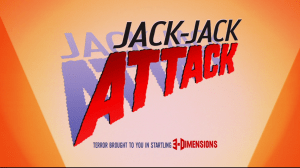
March 15, 2005 – The Pixar Short Film Jack-Jack Attack is Released
vlcsnap-2014-03-15-08h26m42s52

“Well, it started out like any normal sitting gig, you know, with the reassuring of the parent and all.”

On March 15, 2005, the Pixar short film Jack-Jack Attack was released on the DVD release of the animated feature film The Incredibles. It was based on the film, exploring the powers of the youngest Parr, Jack-Jack. It was written and directed by Brad Bird, with story by Teddy Newton, Mark Andrews, Rob Gibbs, and Bosco Ng, and starred Bret Parker as Kari, Bud Luckey as Rick Dicker, Eli Fucile as Jack-Jack, and Jason Lee as Syndrome.

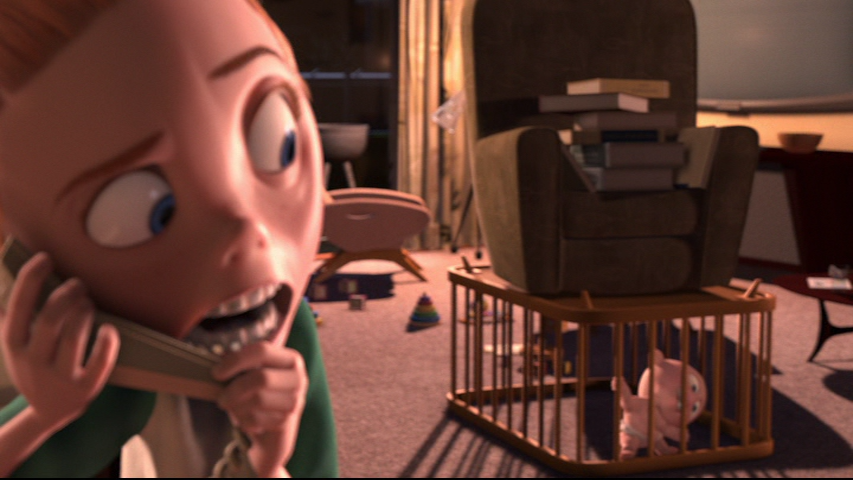
The short begins with Violet’s friend Kari being interrogated by government agent Rick Dicker. He asks her about the “incident,” and she starts relaying the story of her babysitting gig for the youngest Parr, Jack-Jack. She is seen on the phone reassuring Helen that everything’s just fine, for surely a baby like Jack-Jack couldn’t get into any trouble. She then starts playing Mozart and having him play with educational toys, but when Kari turns around after placing the CD in the player, she finds Jack-Jack missing, only to find him on the kitchen table. As she chases after him, he disappears from there and is found at the fridge, drinking a bottle of milk. She remarks on how weird this is, and calls Helen again, leaving her a message about a question she has about Jack-Jack. As she is leaving the message, Jack-Jack starts floating, and sits on the ceiling. Kari looks for him, and when Jack-Jack opens his bottle of milk, the milk falls out and lands all over Kari.
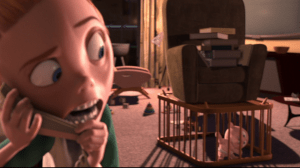
Kari has taken desperate measures to keep Jack-Jack in one place

Kari has taken desperate measures to keep Jack-Jack in one place

Kari calls Helen again, this time having kept Jack-Jack trapped in his playpen, with a recliner and several large books on top of the playpen to keep him caged. As her message starts to get more panicked, Kari turns around to find that Jack-Jack has bitten his way out of his cage, and is on the bookshelf. She notices him start to fall, but when she goes to catch him, he seemingly disappears, leaving only his diaper behind. She runs down the stairs, and finds him floating and transporting himself through the walls. Kari finally catches him, and ties him to a weighted barbell so he won’t disappear again. As she attempts to do a calming activity of flashcards, when she shows him a flashcard of a campfire, Jack-Jack is suddenly set ablaze. He runs around the house as a giant flame, and she finally is able to pick him up with tongs and extinguish him in the bathtub.

In the morning, the house is a shambles, as Kari is on the verge of collapsing, holding a fire extinguisher and extinguishing Jack-Jack every so often. He shoots lasers out of his eyes, but Kari holds up a mirror to deflect the rays, leaving a mark on the ceiling. Suddenly, the doorbell rings, and Kari answers it to find Syndrome. Nearing the edge of insanity, Kari nearly frightens Syndrome, and she assumes he is her replacement, handing him the baby. She asks him what the “S” on his outfit stands for, and he quickly tells her that it stands for “sitter.” He goes on to say that he was originally going to have the initials for “babysitter,” but that would have been “BS,” and that wouldn’t have been a great idea. Agent Dicker then interjects with the statement that Kari believed him, and she erupts, and asks if he’d ever seen an exploding baby before. He stands up, grabbing a box with a red laser on the front, and asks her if she told anybody else about the incident. She says she told her parents, but they thought she was being funny. She asks if Agent Dicker believes her, and he says he does. She then wishes aloud that she could forget the whole thing, and he tells her that he will before using the box to wipe her memory.
March 11

March 11, 1938 – The Donald Duck Short Film Donald’s Better Self is Released to Theaters

vlcsnap-2014-03-11-19h27m48s238

“Why did I do it? Oh, why did I do it?”

On March 11, 1938, the Donald Duck short film Donald’s Better Self was released to theaters. The short was directed by Jack King.

Donald is snoozing in bed, when his alarm goes off. He rolls over, but his Angel self happily gets out of bed to enjoy the day. He then goes over to wake up the sleeping Donald, letting him know that it’s time to get up. As Donald slowly makes his way out of bed, his Devil side pulls him back in. Donald wastes no time in falling back to sleep, much to the annoyance of the Angel; seeing his work is done, the Devil sneaks out the window. Angel finally gets Donald awake and ready for school, and Donald follows behind him on the road. On the way to school, however, Donald gets distracted by Devil, who hands him a fishing rod; Donald, of course follows along eagerly.

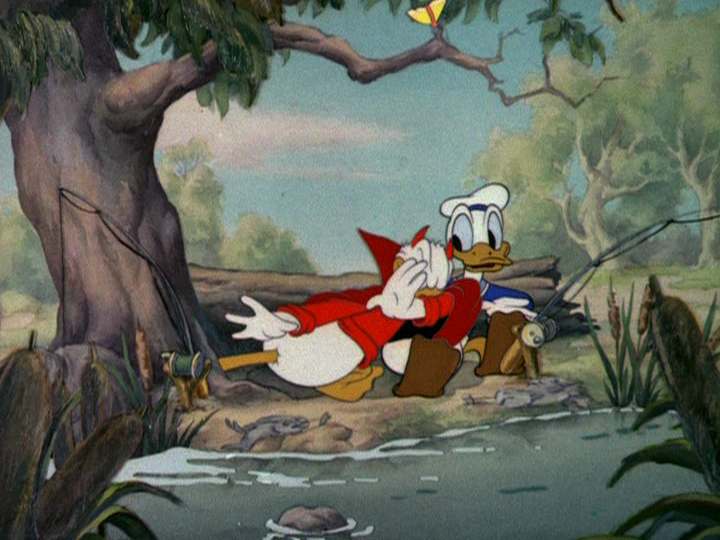
Devil convinces Donald to skip school and go fish, where they share jokes and waste the day

Devil convinces Donald to skip school and go fish, where they share jokes and waste the day

Down at the fishing hole, Donald and Devil are having a great time, with Devil offering Donald a pipe of tobacco. Donald doesn’t want to smoke, but after being asked if he’s afraid, he takes the pipe and smokes it. Devil teaches Donald how to “smoke like a man,” but Donald is unable to do it correctly, and starts feeling ill. Meanwhile, Angel has been looking for Donald, and finds him on the ground while Devil laughs hysterically. Devil cowers in fear, but Angel reassures him that he won’t fight. Thinking this is weakness, Devil wastes no time in beating up Angel. Angel then takes matters into his own hands and attacks Devil, leaving him as a battered pulp in the ground. Donald cheers for Angel, but Angel is angry at him too. Donald grabs his schoolbooks and immediately goes with Angel to school.