RSS Feed

Tag Archives: Short film

November 29

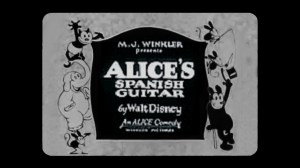
November 29, 1926 – The Alice Comedy Alice’s Spanish Guitar is Released to Theaters

ASG_AC

On November 29, 1926, the Alice Comedy Alice’s Spanish Guitar was released to theaters. It starred Margie Gay as Alice, and was the 38th Alice Comedy produced. Originally considered a lost Alice short, a rare nitrate stock copy of it was found in 1998, and was subsequently restored. It was then shown at the Pordenone Silent Film Festival in Italy. In the short, Alice is a guitar-playing senorita, who is captured by villain Pete and rescued by her faithful sidekick, Julius.

November 28

November 28, 2011 – The Lost Oswald Short Film Hungry Hobos is Found in the UK

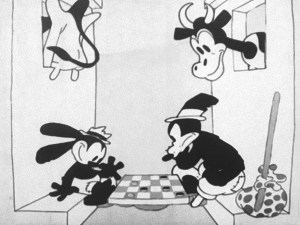
An image from a lost 1928 Walt Disney short, HUNGRY HOBOS. Photo Credit: Walt Disney Animation Studios.

“When we checked this film we couldn’t quite believe our eyes. For an archive, finding a lost masterpiece is incredible – you just don’t think it will happen to you.” – Amanda Huntley, HuntleyFilm Archives

On November 28, 2011, it was announced that a copy of the lost Oswald the Lucky Rabbit short film Hungry Hobos was found in the Huntley Film Archives, an independent film archive. The film, originally released in 1928, is the last remaining copy of the short in existence. It was also announced that the film would be auctioned in Los Angeles in December, with the proceeds to further the restoration of films in the archive. The Walt Disney Company, aware of the discovery, won the short at the auction for a sum of $31,250. After a year-long restoration, the film was debuted at the 39th Annual Telluride Film Festival in Telluride, Colorado.

November 25

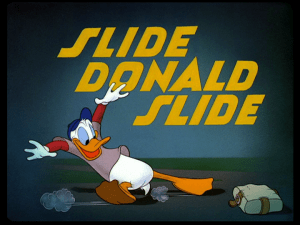
November 25, 1949 – The Donald Duck Short Film Slide, Donald, Slide is Released to Theaters
vlcsnap-2015-11-25-15h07m55s122

“Oh boy, oh boy, oh boy! World Series today!”

On November 25, 1949, the Donald Duck short film Slide, Donald, Slide was released to theaters. It was directed by Jack Hannah, with story by Nick George and Bill Berg.

It’s a beautiful day, with Spike the bee being serenaded by classical music on the radio. He pretends to conduct a full orchestra as the music plays, only to be interrupted by Donald switching to the World Series. Spike angrily switches back, and Donald spots the bee. He places Spike near the radio and blares the ball game in his ears, scaring him. Donald then acts out the game excitedly, but gets a rude interruption from Spike again. Spike doesn’t give up easily, and enters the radio itself to change the channel. Donald manages to capture the bee and uses him as the ball in his baseball game. Spike tries to sting Donald, but Donald safely stays inside. As Spike threatens him with his stinger and taunts him with snippets of the game. Donald in retaliation creates a fake radio that will blow up in Spike’s face, and Donald, in his excitement, doesn’t see Spike’s stinger waiting, and gets stung in the backside. As Donald heads inside, Spike locks him in the shower and changes the station to his classical music, with Donald unknowingly contributing to the piece.
November 23

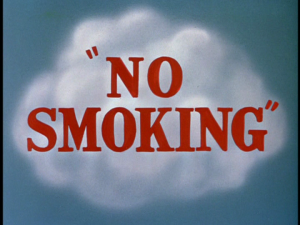
November 23, 1951 – The Goofy Short Film No Smoking is Released to Theaters

vlcsnap-2015-11-23-17h27m40s229

“Smoking became a new habit in the old world.”

On November 23, 1951, the Goofy short film No Smoking was released to theaters. It was directed by Jack Kinney, with story by Milt Schaffer and Dick Kinney.

The story begins with the history of smoking, beginning with the time of Columbus, and going through the ages. However, modern smoker George Geef has made it a rather filthy habit, with cigarette butts strewn everywhere and a cloud of smoke constantly around him. His schedule revolves around when to have his next cigarette, but Geef is also plagued by irritated eyes, coughing, and wheezing. He finally resolves to quit, only he finds it a bit tougher than he thought. He battles himself with his habit, finding temptation everywhere. He starts to go mad with the need for a smoke, but can find no relief. He finally gets a cigar, but it explodes in his face.

November 15

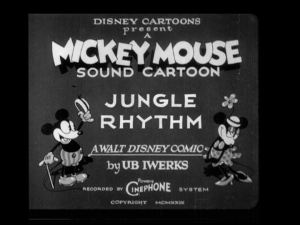
November 15, 1929 – The Mickey Mouse Short Film Jungle Rhythm is Released to Theaters

vlcsnap-2015-11-15-08h22m49s193

On November 15, 1929, the Mickey Mouse short film Jungle Rhythm was released to theaters. It was directed by Walt Disney.

Mickey is playing an accordion on the back of an elephant, and the elephant skips about to the tune. A vulture also starts dancing to the song. Mickey soon slides off the elephant to hunt the vulture, but ends up caught between an angry bear and lion. A monkey starts playing a tune with the accordion, with help from a parrot, which causes Mickey, the lion, and the bear to dance. More animals join in with the song, to much applause from the rest of the jungle, and Mickey manages to use whatever he can find to turn into an instrument, including a tree branch, a jaguar cub, and some ostriches.

November 14

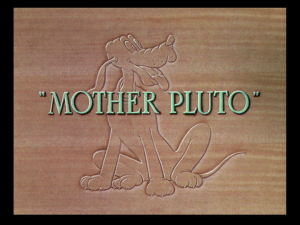
November 14, 1936 – The Silly Symphony Mother Pluto is Released to Theaters

vlcsnap-2015-11-14-17h11m30s240

On November 14, 1936, the Silly Symphony Mother Pluto was released to theaters. It is the only short film in Pluto’s filmography that is listed under the Silly Symphonies banner. The short was directed by Wilfred Jackson.

A butterfly is flying around the farm, and one chicken abandons her eggs to chase after it. Pluto returns to his doghouse through a hole in the fence, not realizing that the chicken had been roosting in his doghouse, and is shocked when the chicks start to hatch. Thinking Pluto is their mother, they follow him, even when he jumps over the fence. They manage to leave him to chase after a cricket, though they end up following him again after a cricket mishap. One of the chicks starts to cry after being beaten about by the cricket, and Pluto suddenly feels the urge to comfort it. Seeing him be motherly, Pluto gives in to his instinct and adopts the entire group of chicks. Pluto digs out a caterpillar for their food, but when it tries to torment the chicks, Pluto scares it away. The chicken returns to her nest to find broken shells, and is shocked to find her chicks have disappeared. She spots them with Pluto, and demands them back from the dog, but Pluto refuses to let them go. She calls for the rooster to get her chicks back, and Pluto and the rooster start fighting. The chicks flee back into the doghouse during the fight, and when Pluto makes it back to the doghouse, he starts mourning the chicks, thinking he’s lost them. He is then happy to discover the chicks waiting for him and leaping into his open paws.

November 12

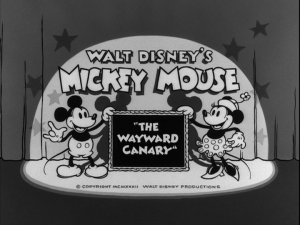
November 12, 1932 – The Mickey Mouse Short Film The Wayward Canary is Released

vlcsnap-2015-11-11-15h36m47s76

“Oh, Mickey! Isn’t he cute?”

On November 12, 1932, the Mickey Mouse short film The Wayward Canary was released to theaters. The short features cameo caricatures of Douglas Fairbanks and Mary Pickford. It was directed by Burt Gillett.

Mickey is heading to Minnie’s with a package and Pluto in tow, and he surprises her with a canary. Mickey entices the bird to sing by playing the flute, and Minnie follows along on the piano to their merry tune. As she sings, several other baby canaries fly out of the cage and start dancing and chirping to the music. They then start to wreak havoc across the house, including getting into a bottle of ink and ruining a tablecloth. As Mickey chases after the birds, he ends up destroying most things in Minnie’s house. She manages to capture most of the birds in a tea kettle, though one manages to escape and accidentally set a hot coal on Pluto’s backside. The bird continues to elude Mickey, until it lands on hungry cat that chases after it. Pluto joins the fray by chasing after the cat and saving the poor bird before it gets eaten.

November 6

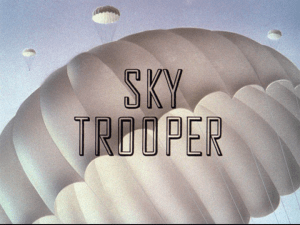
November 6, 1942 – The Donald Duck Short Film Sky Trooper is Released to Theaters

vlcsnap-2015-11-06-17h00m18s206

“Oh, I wanna fly! I wanna fly!”

On November 6, 1942, the Donald Duck short film Sky Trooper was released to theaters. This is the third of seven short films where Donald has been drafted into the Army during World War II. This short also co-stars Pete as a flight sergeant, and Donald’s nemesis. It was directed by Jack King.

Donald is stationed at Mallard Field, though he is relegated to kitchen patrol (KP) duty peeling potatoes. He cries as he peels, as his dream is to fly. Pete notices Donald’s melancholic longing, but only has him peel more potatoes. He promises that he can fly after he peels the tidal wave of potatoes, which Donald completes with enthusiasm. Pete then tests Donald’s eligibility with some simple silly tests, though Donald is unable to pass. Pete torments Donald further by tricking him into going up with the paratroopers. Donald watches all the men stand in line and, thinking they’ve landed, follows suit, only to leap back into the plane once he sees the plane still in the air. Pete tries to throw Donald out, but he refuses to go. As they struggle, they accidentally knock a bomb off the plane, and the two play hot potato with it on the way down. The bomb explodes in the general’s headquarters, and the two are relegated to KP duty.

November 5

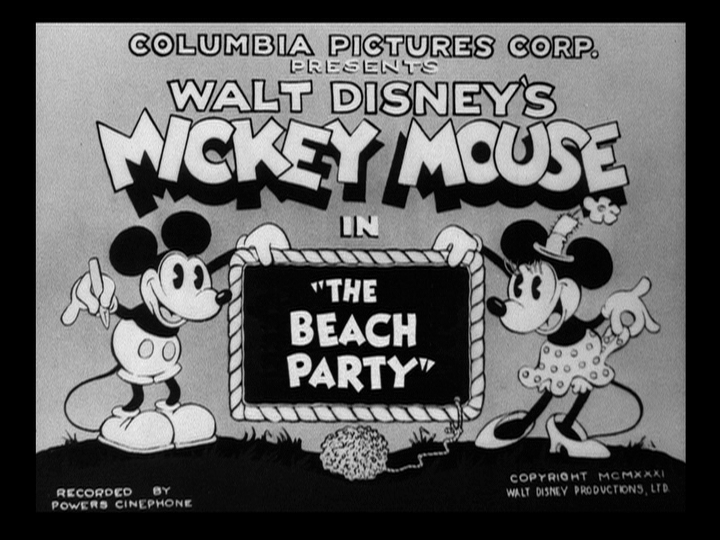
November 5, 1931 – The Mickey Mouse Short Film The Beach Party is Released to Theaters

vlcsnap-2015-11-05-17h15m43s229

On November 5, 1931, the Mickey Mouse short film The Beach Party was released to theaters. It was directed by Burt Gillett.

Horace Horsecollar and Clarabelle Cow are frolicking across the beach, followed by Pluto carrying a picnic basket and Minnie and Mickey with the beach umbrella. Pluto is used to blow up an inner tube, but lets the air deflate when he bites at a flea. When Mickey heads into the water, Pluto is not too far behind, but stops before he hits the water. The rest of the gang starts to enjoy their time in the surf, though Clarabelle manages to lose her part of her bathing suit. Pluto follows a crab on the beach, which pinches him on the tail. Minnie serves lunch, with Mickey, Horace, and Pluto running for the food. Mickey throws some sausage links for Pluto to catch and when Pluto pulls them out of the ocean, he manages to pull out an angry octopus instead, which chases Pluto across the beach and ruins the picnic. The gang fights back with the remaining food, but they manage to use an anchor to send him back into the ocean.

November 3

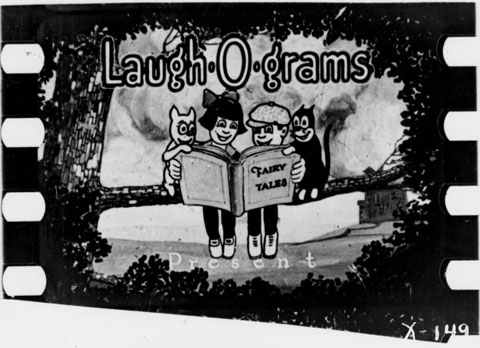
November 3, 1922 – The Laugh-o-Gram Puss in Boots is Released

LoG_PiB

“Don’t let me catch you around here again.”

On November 3, 1922, the Laugh-o-Gram Puss in Boots was released. It was based on the classic fairy-tale of the same name, but updated for a then-modern audience. It was directed by Walt Disney.

Once upon a time, a boy and his cat Puss were walking down the street, with the boy bringing his sweetheart, the princess, a bouquet of flowers. Puss, in turn, flirts with her cat. While both pairs are occupied, the king comes out and boots the boy away from his daughter. He chases the boy around the garden and warns him never to return before throwing him and Puss out. The boy walks away dejected, moaning to the Puss that the king doesn’t like him. Puss, wanting to impress her mate, asks the boy to buy her a pair of boots, but the boy refuses and heads to the cinema instead. They watch a “Rodolph Vaselino” film about a matador, which gives Puss an idea on how to win the king’s favor – but he has to buy her the flapper boots first. The king is excited about the upcoming bull fight, where the boy will be fighting to win the princess’ hand. The boy enters the arena, but runs around terrified of the bull. After catching the princess’ eye, he summons his courage and manages to fight the bull, but has to call Puss for assistance. With Puss’ help, they knock the bull out, and the king allows the boy to marry his daughter.