RSS Feed

Tag Archives: Popularity

April 24

April 24, 1989 – The New Mickey Mouse Club Premieres on the Disney Channel

Image Credit: UltimateDisney.com

On April 24, 1989, the third incarnation of the Mickey Mouse Club, later known as MMC, aired on the Disney Channel. The main difference between the original show and this updated reincarnation was that the Mickey Mouse element was highly de-emphasized in favor of the popular show trends of the day, which made the show lean more toward a Saturday Night Live format. The show premiered with twelve teenagers and two adults in the cast. Three members stayed with the show through its run: Josh Ackerman, Lindsey Alley, and Jennifer McGill; Tiffini Hale from the first season would return for the final season in 1995.

The show ended up as a launching point for many of today’s stars, including Justin Timberlake, Britney Spears, and Ryan Gosling. The Mouseketeers would still continue to have theme days, including Music Day (Monday), Guest Day (Tuesday), Anything Can Happen Day (Wednesday), Party Day (Thursday), and Hall of Fame Day (Friday). Many new serials were released through the show, including Teen Angel, Teen Angel Returns, Just Perfect, Match Point, My Life as a Babysitter, Emerald Cove, and Treasure of Lost Creek.

April 18

April 18, 1994 – Beauty and the Beast: The Broadway Musical Opens on Broadway

“When we’re human again, only human again, when we’re knickknacks and whatnots no more…”

On April 18, 1994, the Beauty and the Beast Broadway musical, Disney’s first musical on Broadway, opened at the Palace Theater on Broadway. Based on the hit 1991 animated film, the musical took most of the songs and plot from the film version, but added some new songs, including a new Howard Ashman and Alan Menken song written for, but never used in, the film (the song, “Human Again,” would be added to the animated film when it was rereleased in 2002). Other new songs added to the film were written by Alan Menken and Sir Tim Rice.

The original cast starred Susan Egan as Belle, Terrence Mann as the Beast, Tom Bosley as Maurice, Burke Moses as Gaston, Gary Beach as Lumiere, and Heath Lamberts as Cogsworth. The show would go on to receive nine Tony Award nominations in 1994, but won only one, for costume. The original cast recording was released on April 26, 1994. The musical ran until 2007, becoming Broadway’s eighth-longest running production. The success of the musical led to worldwide productions, including an Australian production featuring Hugh Jackman as Gaston.

April 12

April 12, 1992 – Euro Disneyland Opens

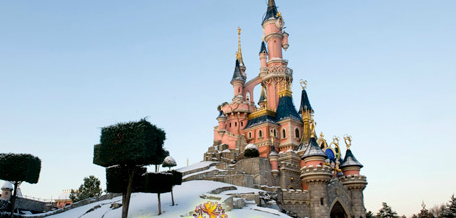
Image credit: Disneyland Paris Official Website

“In a Magical Kingdom not so far away – somewhere between a place where you wish upon a star and dreams come true – Disney heroes and heroines live in fairytales that are, happily, never ending.”

On April 12, 1992, Euro Disneyland opened in Marne-la-Vallée, France, approximately 20 miles from the center of Paris. Renamed “Disneyland Paris” in 1994, the park is the second Disney park created outside of the United States, the first being Tokyo Disneyland, but is the first to be owned and operated by Disney.

Inspired by success of Tokyo Disneyland, plans for a European Disney park started in the 1980s, and were narrowed down to two areas: one near Barcelona, Spain, and one near Paris, France. Michael Eisner and Frank Wells finally made the decision to go with the area near France, due to its easily accessible location and its fairytale-like landscape. After years of construction, the park was completed, and has been deemed as the most beautiful of all Disney parks by many who cite the latest technology and architecture at the time used in creating the park. Disneyland Paris has the same layout as Disneyland, except the change of name from Tomorrowland to Discoveryland. The park itself consists of two parks—Disneyland Park and Walt Disney Studios Park—as well as an entertainment area called Disney Village. The complex also contains seven Disney-themed hotels.

The park does not come without controversy. Although almost 11 million visitors visited the park its inaugural year, the park lost money, due to both the economic conditions at the time and the interest payments on construction debts. Prominent French figures opposed the park’s construction, and French labor unions held protests. In 1994, the park went through a financial reorganization (including a new name), and in 1995, the park saw its first profit. It is now France’s and Europe’s most visited themed attraction.

April 11

April 11, 1993 – Pooh Corner opens in Disneyland’s Critter Country

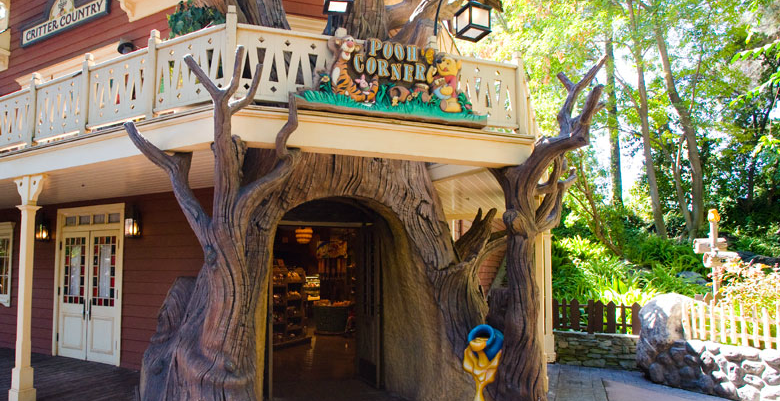
Image credit: Disneyland official website

On April 11, 1993, the souvenir store Pooh Corner opened in Critter Country, thanks to the popularity of the Winnie the Pooh series. Pooh Corner allows guests to purchase all sorts of Winnie the Pooh merchandise. The store also includes a bakery called Pooh’s Hunny Spot, where guests can buy sweets and baked goods.

Pooh’s Corner is divided into three sections, the bakery being the most famous of the three, and the biggest draw. It’s located next to the Many Adventures of Winnie the Pooh attraction, past Splash Mountain, tucked away in a far corner of Disneyland.

March 18

March 18, 1967 – The Disneyland Attraction, The Pirates of the Caribbean, Opens

“We’re devils and black sheep, we’re really bad eggs, drink up me hearties, yo ho.”

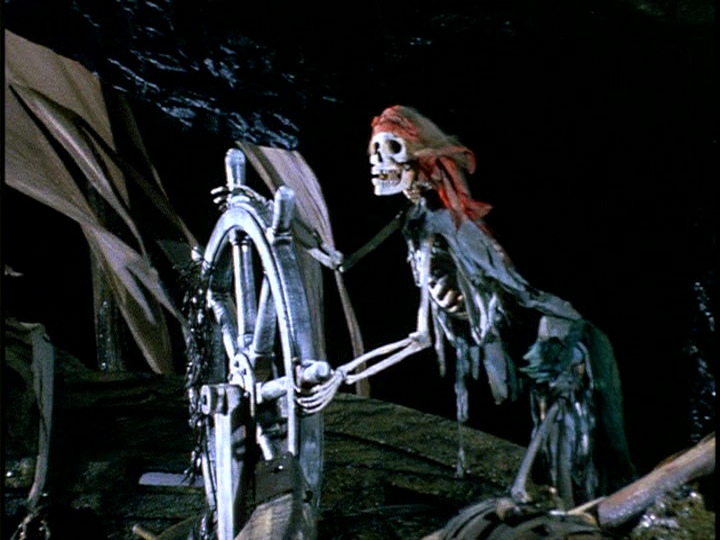
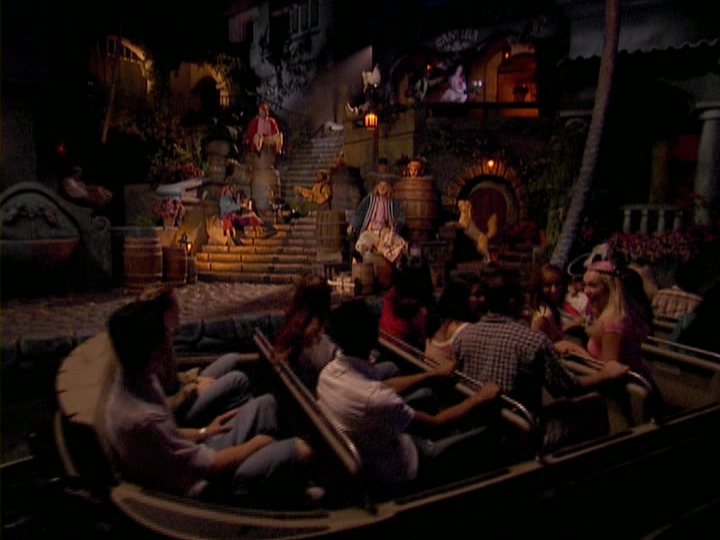
On March 18, 1967, Disneyland opened its newest attraction in New Orleans Square, The Pirates of the Caribbean. It contains the use of many Audio Animatronic figures, with scenes ranging from jailed pirates trying to get the keys from the guard dog, to a Caribbean town being looted by a pirate gang, all while passengers travel past these scenes by boats. The attractions beginnings were seen in the Disneyland 10th Anniversary episode of the Disneyland show. Although Walt worked at length on this attraction, he sadly passed away before its opening. The song for the attraction is “Yo Ho, Yo Ho; a Pirate’s Life for Me,” and was written by George Bruns and Xavier Atencio.

The updated attraction, with Jack Sparrow from the films hiding in the barrel

In 2003, a film based on the attraction was released, starring Johnny Depp as Captain Jack Sparrow and Geoffrey Rush as Captain Hector Barbossa. After the success of the film series, changes were made to the original attraction to include the characters of Jack Sparrow and Captain Barbossa. Other revisions have been made to the ride, including a huge refurbishment of the ride, which reopened in November 2011. The attraction has been considered one of the most popular of all of Disney’s parks, with versions opening in Walt Disney World on December 15, 1973, Tokyo Disneyland on April 15, 1983, and Disneyland Paris on April 12, 1992.

March 10

March 10, 2009 – The Official Disney Fan Club, D23, is Announced at the Disney Annual Meeting

Image Credit: D23 Website

“Are You 23?” – The teaser released to fans before the D23 announcement

At Disney’s annual meeting on March 10, 2009, CEO Robert Iger announced the formation of a new official club for devoted fans. The D, naturally, stands for Disney, with the 23 representing 1923, the year Walt Disney arrived in Hollywood and founded the earliest version of the Disney Studios. The goal of the club is to provide fans an inside look at the past, present, and future of Disney Studio projects.

The image used on the cover of the first issue of Disney Twenty-Three

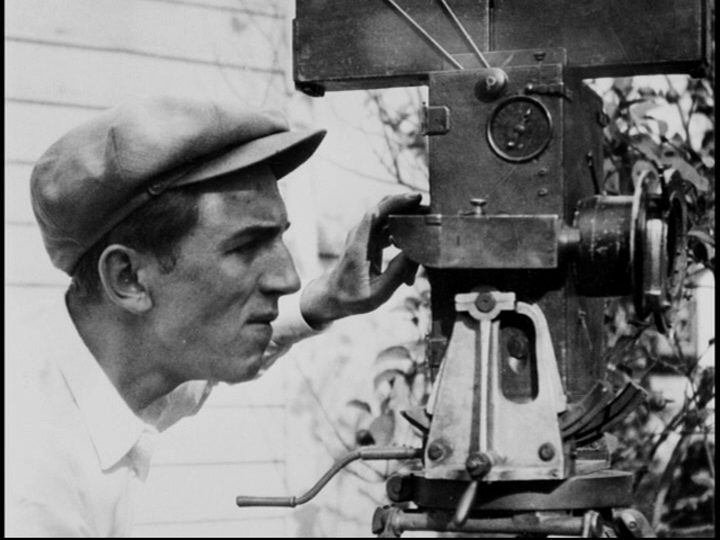
The first issue of the quarterly magazine, Disney Twenty-Three, featured a famous black-and-white image of Walt behind a camera, and included articles about the beginning of Disney archives by Dave Smith, a behind-the-scenes look at Tim Burton’s Alice in Wonderland, Pixar’s UP, the Broadway version of The Little Mermaid, and the design of the most exclusive accommodations at Disneyland and Walt Disney World. The charter membership also included a special gift from the archives—a limited-edition print of the new Mickey Mouse portrait, and a certificate of membership, as well as special offers and a special store on the online Disney Store. D23 also has a website with information, special videos, and other tidbits of history.

As a member of D23, I can tell you that the information the magazine provides is mind-blowing for any Disney fan. The scope of information each issue is broad; members can read about something from the parks in one article, to a special Disney project in another (an example being the Annie Leibovitz portraits of famous Disney scenes), to a behind-the-scenes look at a new movie. For anyone who loves Disney history and wishes to learn more, D23 is highly recommended.

January 26

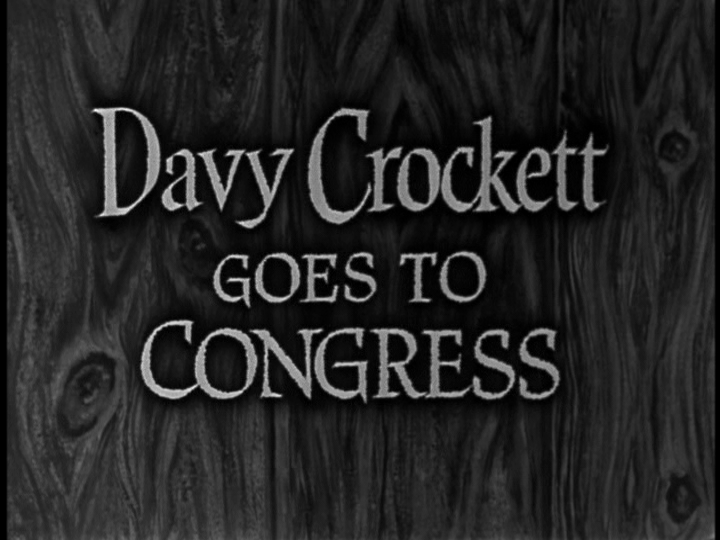
January 26, 1955 – Davy Crockett Goes to Congress Premieres on ABC.

“Now, again from Davy’s own journal, we’d like to present another story of Davy’s fabulous life. This one is called, ‘Davy Crockett Goes to Congress.’” – Walt Disney.

On the evening of January 26, 1955, the second installment of The Adventures of Davy Crockett premiered on the Disneyland television show on ABC. Shown a little over a month after the first installment, the series continued the Davy Crockett craze that had taken over the youth of America. This episode, entitled Davy Crockett Goes to Congress, was directed by Norman Foster, and written by Tom Blackburn. It stars Fess Parker as Davy Crockett, Buddy Ebsen as Georgie Russel, Basil Ruysdael as Andrew Jackson, William Bakewell as Tobias Norton, and former professional wrestler Mike Mazurki as Bigfoot Mason.

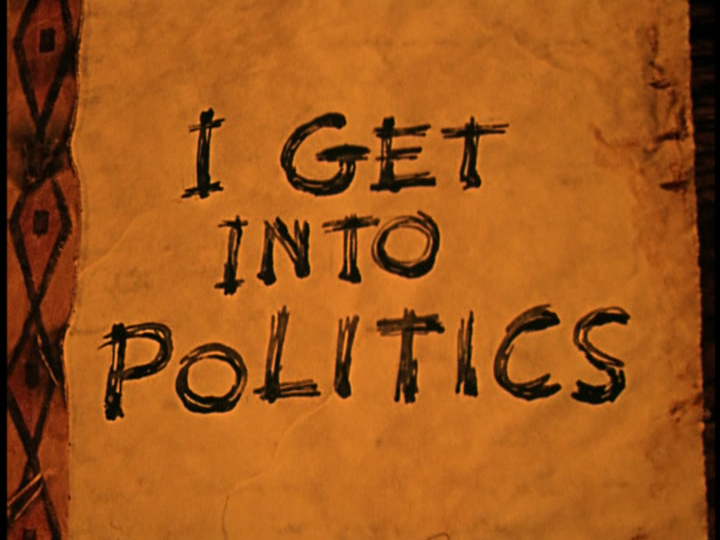
A page from Davy's own journal, as seen in the show, which introduces the story of Davy's political career

The show opens with Davy and his pal Georgie setting out to find a new piece of land to settle. Although they find the perfect spot, Georgie reminds Davy that they need to file a claim for the land. As they approach the settlement, looking for the judge to file their claim, they stumble upon a shooting match. Ever competitive, Davy challenges a man named Bigfoot Mason, wagering $15, the estimated price of the prize cow. They tie with the first round, but with their second shots, Bigfoot believes he won, as it appears that Davy completely missed the target. When it’s discovered that Davy hit the exact spot twice, he makes an unintentional enemy out of Bigfoot. The judge, discovering who Davy is, is thrilled that Davy is in town, as he may be the man that can stop Bigfoot’s schemes. The judge informs Davy and Georgie that Bigfoot and his gang have been running the Indians off of their land and selling it to newcomers who have no idea that the land has been stolen. Davy reminds the judge that there’s a treaty that guarantees the Indians their land, but the judge says that Bigfoot disregards any treaty of that nature. The few people who have tried to stop Bigfoot have disappeared, presumed dead. The judge, knowing Davy’s reputation, asks Davy to be the magistrate and serve a warrant on Bigfoot and his gang. Davy says he’d have to think about it. It doesn’t take long for Davy to decide, as he finds that the Cherokee Charlie Two Shirts has been beaten and run off his land. Davy confronts Bigfoot, and it turns into a no-holds-barred fistfight. Davy emerges victorious, and peace comes over the settlement again as the gang is brought to justice.

During one of the celebrations in town, the judge tells Davy that since the settlement is experiencing a lot of growth, they’ll be getting someone to represent them in Nashville, and the town has picked Davy as the man they want to run for the state legislature. Davy responds, “I’m plumb flutterated by the honor, but, well, I ain’t no politician.” When the judge informs him that his competition is Amos Thorpe – the lawyer who tried to get Bigfoot off, and made a lot of money from the illegal Indian land grabs – Davy considers running. The thing that sets him on his political path, however, is the sad news that his wife, Polly, came down with a fever and died. Consumed by grief and needing a distraction, he decides to run for the spot in the state legislature, proclaiming that he’ll represent the town as honestly as he can. Davy wins by a landslide.

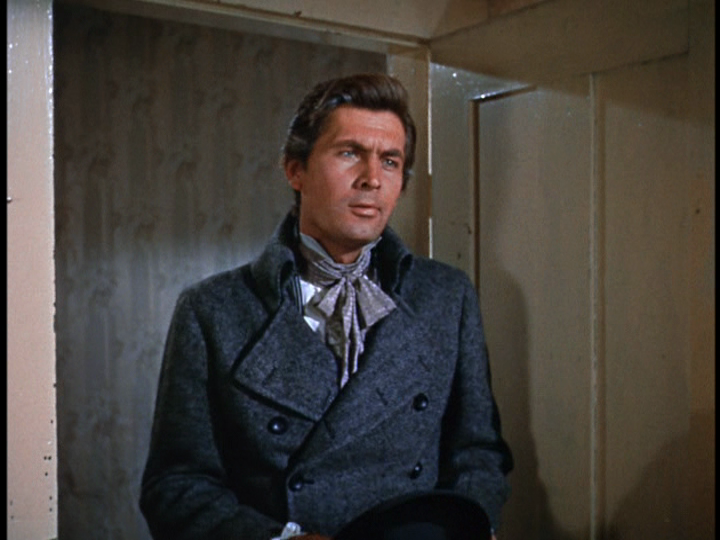
Davy in formal clothes after he's been elected to the state legislature

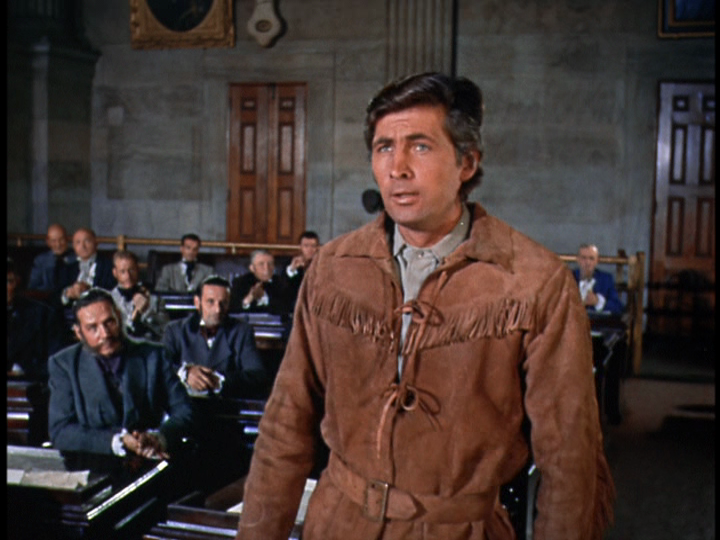
Davy’s political career has been watched closely by his old Major, Tobias Norton, and General Andrew Jackson. Jackson is preparing to run for the presidency, and both he and Norton want Davy to have a seat in Congress. As Jackson puts it to Davy, “I want men I can trust, men I know are with me, men that can get the rest of the country behind me.” Davy responds, “Well, if I was to do what you asked, and I did get in, I wouldn’t be taking orders from you, General. I’d be taking them from them that elected me.” Thanks to a set of books Georgie has been publishing about their adventures together, Davy is able to win the seat in Congress, and surprises the members by showing up in buckskins. Georgie is there to greet him, and Davy tells him off about having to show up as the “king of the wild frontier, thanks to you.” He introduces himself with a strange speech, but promises that he won’t be one of those politicians who doesn’t do anything more than listen, and the next time he stands before them, he’ll “have something to say worth saying.”

Davy’s career hits a snag when Norton tells Davy he’s to go on a speaking tour, calling it a “great service for the country.” Norton adds that people want to make Davy the next president of the United States. Georgie, ever suspicious of Norton, finds out the truth: Norton sent Davy out of the way so he wouldn’t be able to vote against a bill meant to take away all lands from the Indians. Georgie and Davy race back to Washington, where Davy punches Norton out as the former major tries to stall him, and storms in to Congress, giving the last great speech of his political career.

Davy giving a speech in Congress, dressed in his buckskins

Compared to most of the shows on television at the time that featured cowboys and Indians, the Davy Crockett serial was very well made, especially when it came to the matte paintings of Nashville and Washington, D.C., painted by Peter Ellenshaw. Walt Disney sent crews to picturesque areas in North Carolina to do research of the landscape, and it made the serial stand out against all the other shows. There’s also no denying the charm of Fess Parker as Davy Crockett. The last impassioned speech he gives as Congressman Davy Crockett is one that will be remembered.

.

January 20

January 20, 2006 – High School Musical Premieres on Disney Channel

“This could be the start of something new.”

At 8 p.m., January 20, 2006, the television movie, High School Musical, premiered on the Disney Channel. It became the most successful Disney Channel Original Movie ever produced, and was followed with a television sequel (High School Musical 2) and a feature film, (High School Musical 3: Senior Year), as well as best-selling albums and various international spinoffs. The movie was directed by Kenny Ortega, with screenplay by Peter Barsocchini. The cast includes Zac Efron as Troy Bolton, Vanessa Hudgens as Gabriella Montez, Ashley Tisdale as Sharpay Evans, Lucas Grabeel as Ryan Evans, Corbin Bleu as Chad Danforth, and Monique Coleman as Taylor McKessie.

With a plot reminiscent of Shakespeare’s Romeo & Juliet, the story centers on basketball star and team captain Troy Bolton and shy genius Gabriella Montez, who meet at a New Year’s Party after being pushed to sing karaoke together. Through the song they sing, they begin to develop an attraction to each other, finally exchanging phone numbers before going their separate ways.

Troy (Zac Efron) and Gabriella (Vanessa Hudgens) reluctantly singing together at the party.

Fortuitously, Gabriella’s mother is transferred to Albuquerque, New Mexico, where Troy lives and attends East High School. The two are excited to see each other again, and Troy beings to show Gabriella around the school, while explaining that his singing at the party was not something he did often, nor do his friends know about his musical abilities. The two pause in front of the sign-up sheet for the winter musical, where they run into Sharpay Evans, the Drama Club president. Sharpay has an obvious crush on Troy, and is immediately suspicious of Gabriella, thinking the girl could be a threat to her winning the lead in the musical. With her brother Ryan, they do an Internet search on Gabriella, discovering her past academic achievements, and revealing them to Taylor McKessie, captain of the Scholastic Decathlon Team, who immediately tries to recruit a reluctant Gabriella.

After seeing Gabriella again, and remembering the fun he had singing with her at the party, Troy has trouble concentrating at basketball practice, and decides to check out the auditions. He runs into Gabriella there, but both are two shy to step forward to audition, and by the time they get the courage to do so, the drama teacher Mrs. Darbus immediately turns them down, telling them they are too late, auditions are over. But soon after, she overhears them singing with the composer of the winter musical, and reconsiders, giving them a call-back audition.

Troy and Gabriella singing together once again.

Troy’s call-back for the musical starts a chain of events at the school, with students revealing their secret hobbies, from a basketball player’s love of baking, to a scholastic high-achiever’s hobby of “poppin’ and lockin’.” Troy’s best friend, Chad Danforth, becomes alarmed as people, including Troy, disrupt the status quo, and Chad worries that Troy’s lack of focus will cost them the upcoming championship game. Chad teams up with Taylor, who has been unsuccessful in getting Gabriella to join the Scholastic Decathlon Team, to get Troy and Gabriella to focus on upcoming competitions and forget about the call-back auditions. They scheme to trick Troy into saying that Gabriella isn’t important to him, while Gabriella watches on a wi-fi link Taylor has set up. Crushed, Gabriella decides to join the Scholastic Decathlon Team after all, refusing to audition with or even talk to Troy.

The Scholastic Decathlon Team tricking Gabriella with the live feed from the basketball team.

Chad and Taylor, overwhelmed with guilt for ruining their relationship, finally confess their scheme; Troy goes to Gabriella’s house and they make up, and the pair once again continues to rehearse for call-backs, this time with support from their friends. Sharpay, infuriated at this outcome, convinces Ms. Darbus to reschedule the call-backs to coincide with the basketball game and the Scholastic Decathlon, leaving Troy and Gabriella unable to audition. But the basketball team and the Decathlon team decide to work together on a plan that would allow the pair to audition without missing their competitions.

The premiere broadcast had 7.7 million viewers, and has been seen by more than 225 million viewers globally. It launched the careers of Efron and Hudgens, and several of the cast members released solo albums. The movie also spawned a successful touring concert, from November 29, 2006, to January 28, 2007, with most of the cast reprising their roles, except for Efron, who was replaced by Drew Seeley (whose tenor voice had been used to blend with Efron’s baritone in the film’s soundtrack). The film’s popularity has no doubt ushered in a new age of Disney Channel programming, and defined a new generation of Disney fans.
January 13

January 13, 1930 – The Mickey Mouse Comic Strip is Distributed by King Features Syndicate.

A preview of the Mickey Mouse comic strip.

On January 13, 1930, two newspapers in the United States, the New York Mirror and the Oakland Post-Enquirer, debuted a new comic strip featuring the popular movie character, Mickey Mouse. It was slow to gain popularity, as the strip was an ongoing story, rather than the usual practice of a gag per strip, but it became an enduring classic lasting for decades.

The first eighteen strips were drawn by famed Disney animator Ub Iwerks. Iwerks recalled that Disney’s original ambition was to become a cartoonist, which is likely the reason the early Mickey Mouse cartoons included the byline, A Walt Disney Comic. Disney decided to write the first four months of comics, although Iwerks had been contacted first about creating a comic strip about Mickey. As Joseph Connelly, the President of King Features Syndicate, wrote in a letter that reads almost like fanmail:

“I think your mouse animation is one of the funniest features I have

ever seen in the movies. Please consider producing one in comic strip

form for newspapers. If you can find time to do one, I shall be very

interested in seeing some specimens.”

Iwerks was already spread thin with other projects for the studio, and handed the letter to Walt, claiming it “wasn’t [his] business. Walt made the deal, and I did the drawings for a few strips.” Walt, on the other hand, had this to say when asked about the comic:

“[In 1929 we were looking for] ways to exploit characters like the

Mouse. The most obvious was a comic strip. So I started work on a

comic strip hoping I could sell it to one of the syndicates. As I was

producing the first one, a letter came to me from King Features

wanting to know if I would be interested in doing a comic strip

featuring Mickey Mouse. Naturally, I accepted their offer.”

As with the story of how Mickey Mouse came to be, there were discrepancies between the recollections of Disney and Iwerks. Although it may not be clear through their statements of who was accurate, it seems that Walt was always interested in doing a comic strip, but work had not started before Iwerks received the letter from Connelly.

But Iwerks did animate the strips, and then the project was given to Win Smith for three months. Smith butted heads with Walt over seniority and age; when Walt asked Smith to write the comic as well as animate it, Smith refused, telling Walt that “No goddamn young whipper-snapper’s going to tell me what to do.” Smith quit that day, and the strip was taken over by Floyd Gottfredson.

Floyd Gottfredson

Gottfredson was asked to take over the strip for a few weeks until a replacement was found, but ended up working on the comic for forty-five years, until he retired in 1975. While the early comics were based on the cartoons in theaters, Gottfredson put his own personal spin on the strip, using contemporary events like the Great Depression and World War II as backdrops for heroic adventures in which Mickey battled corrupt politicians and assorted villains to save his friends and country.

The first comic strip, entitled “Lost on a Desert Island,” is very reflective of the attitudes of the period, with exaggerated interpretations of anyone who wasn’t Anglo-Saxon. These clichés were commonplace, used when one didn’t have the time or patience to create a fully-formed character.

The comic itself is a dry run of the adventure comics that lay ahead in the strip’s future, but it is charming for what it is. It begins with Mickey in the barnyard, trying to fly a homemade plane, which is similar to the plot of the 1928 short film, Plane Crazy. Mickey gets the plane to fly (losing Minnie Mouse in the process, who lands to safety using her bloomers as a parachute), but ends up in the middle of a typhoon and crashes on a desert island. Although this is a continuous story, there are gags to end each strip, and it has a real charm about it. If one is able to look past the attitudes of the past that are heavily featured in the strip, it’s a good read overall.

January 11

January 11, 1929 – The First Mickey Mouse Club is Formed

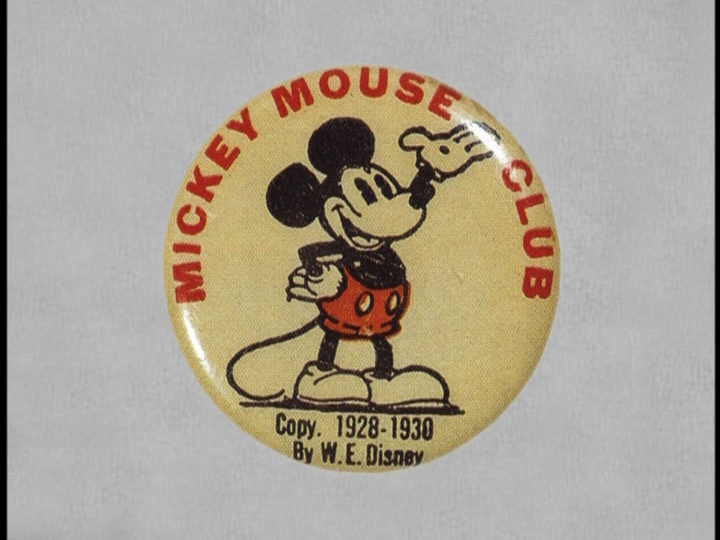
A promotional button from the original club

“Mickey Mice do not swear, smoke, cheat, or lie!”

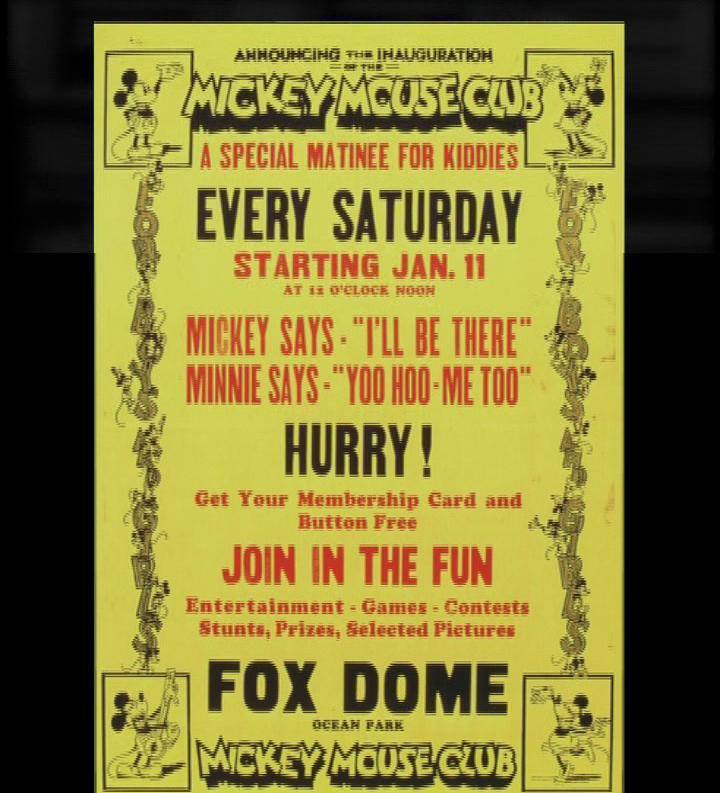
At noon on January 11, 1929, the first Mickey Mouse Club was called to order in the Fox Dome Theater in Ocean Park, California. The club was the idea of the theater’s manager, Harry W. Woodin, which he began during the children’s matinee shows on Saturdays. Soon, these clubs spread like wildfire, and by the height of their popularity in 1932, it was estimated that there were one million members worldwide, with many clubs meeting every week. During club meetings, children would watch Mickey Mouse cartoons, recite the Mickey Mouse credo, and elect a Chief Mickey and Chief Minnie Mouse.

A copy of the original flier for the Fox Dome Theater's first meeting of the Mickey Mouse Club

Intrigued with Woodin’s concept, Walt Disney saw that there were many opportunities for merchandising through the clubs, as well as convincing more children to attend the theater to see new Mickey Mouse shorts. Disney hired Woodin to be the general manager of these club gatherings. Woodin’s job included printing and sending fliers to theaters across the country, instructing them on how to develop the clubs and help local businesses through advertisements in the club bulletins. Business began to boom through the name of Mickey Mouse: Bakeries would offer free Mickey birthday cakes, banks gave away Mickey savings banks, and department stores would give away free Mickey toys to entice customers to look at their more expensive toys. Clubs were formed not only across the United States, but also in England and Canada, among other countries, by 1930. The Odeon Theatre chain in England had 160 clubs with 110,000 members by the peak of the club’s popularity.

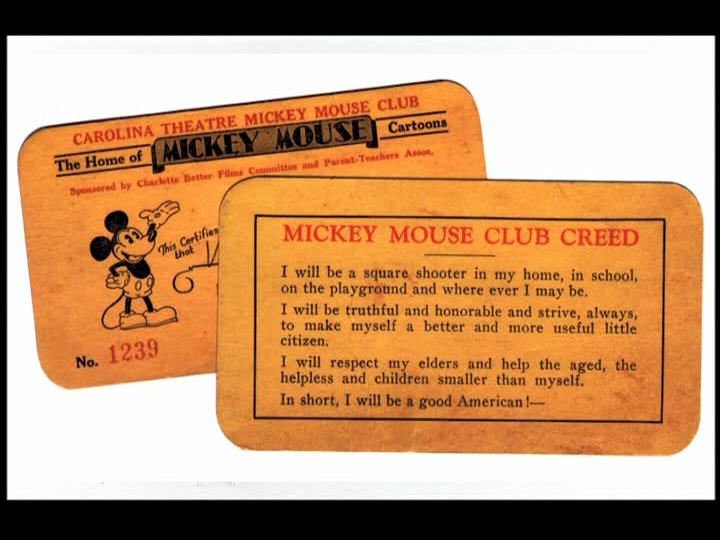
A card with the Mickey Mouse Club Creed

The club itself taught children how to be model citizens. Children would recite, “Mickey Mice do not swear, smoke, cheat, or lie!” Mickey himself would instruct the kids on topics such as how to brush their teeth and wash behind their ears, respect their parents, attend Sunday school, and on the virtues of honesty and honor. The creed of Mickey Mouse Club members was as follows:

I will be a square shooter in my home, in school, on the playground and where ever I may be.

I will be truthful and honorable and strive, always, to make myself a better and more useful little citizen.

I will respect my elders and help the aged, the helpless and children smaller than myself.

In short, I will be a good American!

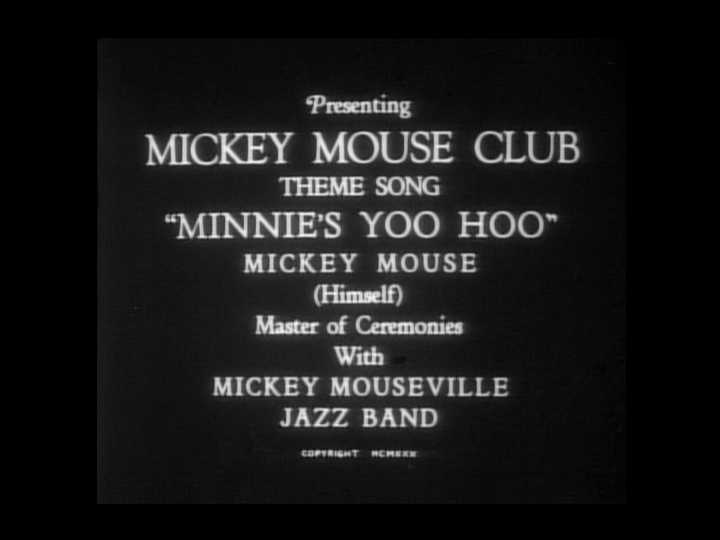
The highlight of these clubs, naturally, was the Mickey Mouse cartoons. To that end, Walt Disney had a special animated short for the club meetings of the club’s theme song, “Minnie’s Yoo-Hoo.” Written by Walt Disney and Carl Stalling, the song was the first Disney song released on sheet music. The animated short that accompanied the song had Mickey singing the first verse, before encouraging the children to sing as the lyrics would show up on the screen.

Title card for the Minnie's Yoo-Hoo short.

Mickey Mouse’s explosive popularity was a big part of American culture in the late ’20s and early ’30s. With the credo recited at these meetings, as well as the lessons Mickey would teach the children, it’s no wonder that Mickey was seen as a positive role model, and parents would object if Mickey was seen doing something reckless, as he did in many of his early shorts. The clubs held steady in their popularity with the Disney stamp of approval until 1935, when the popularity of these clubs began to wane. The clubs did continue unofficially through World War II, with Mickey and friends extolling the importance of planting Victory Gardens and donating old toys for scrap. It would be 23 years until the television version of the Mickey Mouse Club would appear in people’s homes.