RSS Feed

Tag Archives: Music

January 31

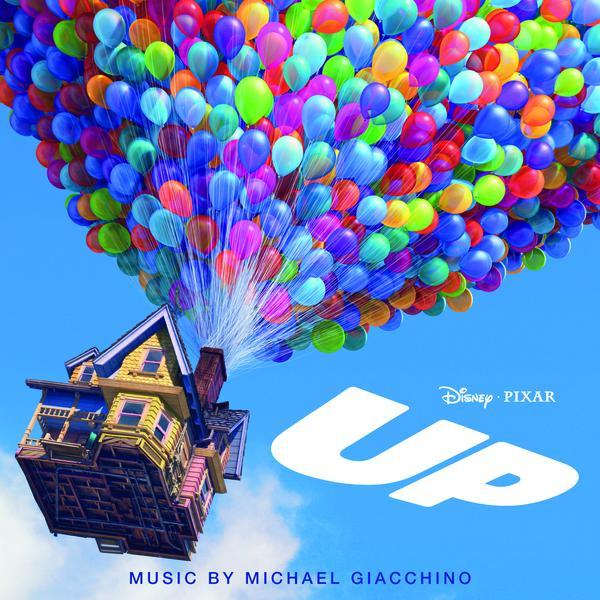
January 31, 2010 – The Score for Pixar’s UP Wins Two Grammy Awards

Up 1

“[Regarding “Married Life” as Ellie’s theme]…when you watch the film, it’s fun to see how that score changes with them as well.” – Michael Giacchino

On January 31, 2010, the 52nd Grammy Awards was held in Los Angeles, California. Michael Giacchino’s score for the Pixar film UP was awarded two Grammys: one for Best Score Soundtrack Album, beating out Alexandre Desplat’s The Curious Case of Benjamin Button, Nicholas Hooper’s Harry Potter and the Half-Blood Prince, Danny Elfman’s Milk, and Giacchino’s collaboration with Varese Sarabande for Star Trek; the other award was for Best Instrumental Composition for the piece “Married Life,” which was up against Paquito D’Rivera’s “Borat in Syracuse,” Tim Davies’ “Counting to Infinity,” Bob Florence’s “Fluffy,” and Steve Wiest’s “Ice-Nine.” It is one of the few scores in history to win an Academy Award, a Golden Globe, a BAFTA, and a Grammy.

January 30

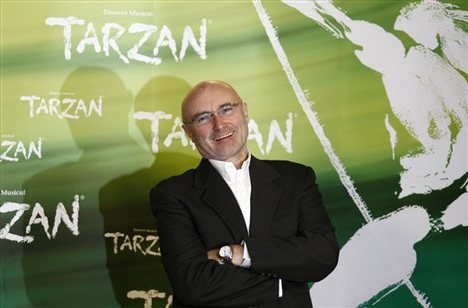
January 30, 1951 – Singer-Songwriter, Multi-Instrumentalist, Actor, and Disney Legend Phil Collins is Born

PC

“[Collins’] voice has a tendency to wrap itself around you and bring you into his world. As soon as he starts singing, it’s just magic and provides a very welcoming feeling.” – Composer Mark Mancina

On January 30, 1951, Philip David Charles Collins was born in Hounslow, London, England. At age five, he was given a toy drum set, and was presented with complete sets by his parents and makeshift ones by his uncle as he got older. Collins was also a child actor, winning the role of the Artful Dodger in the West End production of Oliver! All the while, Collins continued to focus on his music, forming a band while in school and drumming for Flaming Youth and George Harrison. Collins found his big break in 1970, when he auditioned for and won the spot as the drummer for the band Genesis. After lead singer Peter Gabriel left the band in 1975, Collins became the lead vocalist of the group. The band had great success with Collins at the helm, including reaching Top 40 Chart in America. In 1981, Collins began a solo career, scoring a hit with his first single, “In the Air Tonight.” In 1985, he was nominated for his first Academy Award for the song “Against All Odds” from the film of the same name.

Collins’ first work for Disney came with the 1999 film Tarzan, where he wrote and performed the songs for the film. The song “You’ll Be in My Heart” reached number 1 on the Adult Contemporary charts and stayed at the top for 19 weeks; it was also awarded the Golden Globe for Best Original Song and the Academy Award for Best Original Song. Collins also performed the songs for the film in German, French, Spanish, Bulgarian, and Italian. “Strangers Like Me” from the soundtrack peaked at number 10 on the Adult Contemporary Charts. In 2002, he was awarded as a Disney Legend. Collins would go on to write and perform the songs for another Disney film, 2003’s Brother Bear. In 2006, when Tarzan was adapted for the Broadway stage, Collins contributed greatly to the production, writing 11 new songs and pieces of the score.

January 27

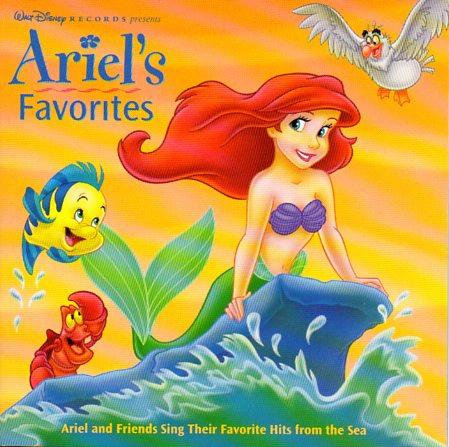
January 27, 1998 – The Album Ariel’s Favorites is Released Through Walt Disney Records

 51eNfwn+uVL

“What’s it like to be a mermaid? Tell me a little of your life in the blue.”

On January 27, 1998, the compact disc album Ariel’s Favorites was released through Walt Disney Records. This album is one of several compilations of songs for The Little Mermaid franchise, with one track exclusive to this album: “Dance the Day Away.” Original voice actors from the 1989 film are featured on this disc, including Jodi Benson as Ariel, Samuel E. Wright as Sebastian, and Buddy Hackett as Scuttle. A few of the other songs are taken from the 1992 animated series, including “Beddie-Bye Blues” with Jo Alaskey and David Lander as their characters Mobster Lobster and Da Shrimp.

January 4

January 4, 1918 – Composer and Disney Legend Norman “Buddy” Baker is Born

BuddyPodium-sm

“During the 28 years I worked at the Studio, Walt never came to a recording. He had confidence in me and everyone else. He trusted his people. He also knew what kind of music worked – not the notes, the kind.”

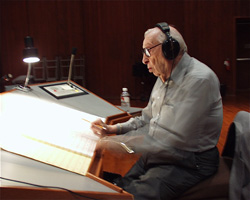
On January 4, 1918, Norman Baker was born in Springfield, Missouri. He earned his Doctorate in music at Southwest Baptist University, and was brought to the Disney Studios in 1954 by staff composer George Bruns. Bruns asked Baker to help compose for the new Disney anthology serial Davy Crockett. Baker would stay at the studio, composing for nearly 50 films, including The Fox and The Hound and Donald in Mathmagic Land. Baker kept contributing to Disney’s television ventures, but was eventually tapped to help with the musical scores of the attractions at the 1964 World’s Fair, particularly Great Moments with Mr. Lincoln and the Carousel of Progress. With X Atencio, Baker would write the popular tune “Grim Grinning Ghosts,” heard at the Haunted Mansion. He then became the musical director for EPCOT, composing for the Future World pavilions and the World Showcase, including Innoventions, Impressions de France, and Adventure Thru Inner Space. In 1983, Baker retired from the studio, as one of the last staff composers on contract for a major Hollywood studio. He continued to score for Disney attractions, and was named a Disney Legend in 1998. Baker passed away on July 26, 2002.

December 30

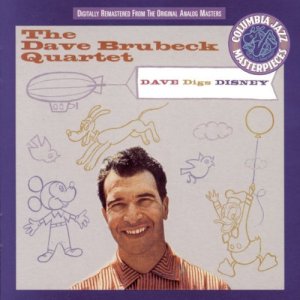
December 30, 1957 – The Dave Brubeck Quartet Album Dave Digs Disney is Released on LP

Image credit: amazon

Image credit: amazon

“Dave [Brubeck] was ahead of his time tapping into the Disney songbook. Look at how many artists have done the same since.” – Album Producer George Avakian

On December 30, 1957, the jazz album Dave Digs Disney by the Dave Brubeck Quartet was released on LP. Inspired by a family trip to Disneyland, pianist Dave Brubeck and alto saxophonist Paul Desmond began composing jazz variations of classic Disney tunes. The album is notable for being the first time a modern jazz group took Disney songs seriously, and one of the first times a musician devoted an entire album to interpretations of Disney classics. The album has been reissued over the years, to cassette tape, CD, and digital format.

December 19

December 19, 1925 – Songwriter and Disney Legend Robert B. Sherman is Born

vlcsnap-2012-12-18-19h51m12s0

“When I grew up, I wanted to be a writer. Novels and plays. I used to write poetry.”

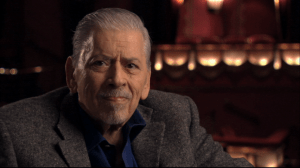
On December 19, 1925, songwriter and Disney Legend Robert Bernard Sherman was born in New York City, New York. After traveling cross-country for several years, the Sherman family settled down in Beverly Hills, California, where Sherman excelled in school, on the piano and violin, and in painting and creative writing. As a child, he and his brother Richard put on shows for the neighborhood, which Robert wrote and Richard performed. In 1943, Robert got permission from his parents to join the Army at age 17. He was shot in the knee in 1945, and walked with a cane for the rest of his life. He was awarded several awards during his military service, including the Purple Heart.

After his service, Sherman attended Bard College in New York, majoring in English Literature and painting. His father, Tin Pan Alley songwriter Al Sherman, challenged Sherman and his brother to write a song “that some kid would give up his lunch money to buy.” The two took up the challenge, and a partnership was born. Their song, “Gold Can Buy Anything (But Love),” was recorded by Gene Autry, but didn’t make a huge impact. However, they continued to write. In 1958, the two founded Music World Corporation, a music publishing company, and the two had their first Top Ten hit writing a song for Annette Funicello, “Tall Paul.” This song, among the others they wrote for Funicello, caught the attention of Walt Disney, who hired the Sherman Brothers to work at the Walt Disney Studios. Their first assignment was a song for the new Annette Funicello movie, The Horsemasters, entitled “Strummin’ Song.” The two also wrote for the film The Parent Trap, starring Hayley Mills, and in 1964, they wrote their most well known song: “It’s a Small World (After All).”

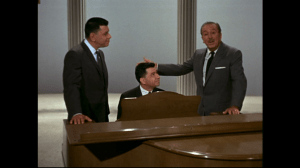
The Sherman Brothers singing a few songs on an episode of the Walt Disney anthology

The Sherman Brothers singing a few songs on an episode of the Walt Disney anthology

In 1965 they became the first songwriters on contract at the Disney Studios. They had their greatest success with the Mary Poppins’ songs “Supercalifragilisticexpialidocious;” Walt’s favorite, “Feed the Birds;” and the Academy Award winner, “Chim Chim Cher-ee.” The two continued to work under Disney until his death in 1966. After this, they worked freelance, still contributing to Disney films, but also on some non-Disney assignments, including Chitty Chitty Bang Bang, The Slipper and the Rose, and Charlotte’s Web. In 2002, Sherman moved from Beverly Hills to London, England, where he continued to write and paint; that year he also had an exhibition of his paintings at the Thompsons’ Gallery on Marylebone High Street, London. He published his autobiographical novel, Moose, in 2008. On November 17, 2008, the Sherman Brothers were awarded the National Medal of Arts, and were inducted as a Disney Legend in 1990. On March 5, 2012, Robert Sherman passed away at the age of 86.

November 28

November 28, 1943 – Composer and Disney Legend Randy Newman is Born

Image credit: randynewman.com

“I’ve always admired Carl Stalling and the other composers who specialized in music for cartoons, and I wanted to do one myself.”

On November 28, 1943, composer Randall Stuart Newman was born in Los Angeles, California. As a child, he and his family lived in New Orleans until they moved back to Los Angeles when he was 11. Newman came from a noted musical family; three uncles were Hollywood film-score composers: Alfred Newman, Lionel Newman, and Emil Newman. Randy became a professional songwriter at the age of 17, and in 1962, he released his first single, “Golden Gridiron Boy.” The single did poorly, and Newman decided to concentrate on songwriting and arranging instead of performing. His big break came as the B-side to The Fleetwoods’ hit single “Lovers By Night, Strangers By Day,” with a song titled “They Tell Me It’s Summer.” In 1970, Newman had a critical success with his sophomore album 12 Songs; in 1977, he scored a hit with the unlikely song, “Short People.”

Newman began his work with Disney and Pixar when Disney tapped him to compose the film Toy Story. He wrote the hit song, “You’ve Got A Friend In Me,” for the film. His success with the film led to other animation composing jobs for Disney/Pixar, including James and the Giant Peach, A Bug’s Life, Toy Story 2, Monsters, Inc., Cars, and The Princess and the Frog. He was nominated for, and won, an Academy Award for the song “If I Didn’t Have You” for the film Monsters, Inc.; and won the Academy Award for the song “We Belong Together” from Toy Story 3.He has earned at least one Oscar nomination for each animated film he has worked on. Newman was inducted as a Disney Legend in 2007.

November 22

November 22, 1991 – The 30th Animated Feature Film, Beauty and the Beast is Generally Released to Theaters
“Tale as old as time, song as old as rhyme, Beauty and the Beast.”

On November 22, 1991, the 30th animated feature film, Beauty and the Beast, was generally released to theaters, after a New York premiere on November 13. The film was based on the French fairy tale La Belle et la Bête, written by Jeanne-Marie le Prince de Beaumont. The idea to use the fairy tale as an animated feature goes all the way back to the 1930s, with Walt Disney originally showing interest after the success of Snow White and the Seven Dwarfs.The project was resurrected during the beginning of the period known as the Disney Renaissance and was the first Disney animated feature to use a screenwriter for the script; the first treatment had the film set in Victorian France, with no musical numbers. However, in 1989, this treatment was scrapped, forcing everyone to start from scratch. Gary Trousdale and Kirk Wise were asked to direct, and the team of Alan Menken and Howard Ashman were asked to write the music for the film. The film stars Paige O’Hara as Belle, Robby Benson as the Beast, Richard White as Gaston, Jerry Orbach as Lumiere, David Ogden Stiers as Cogsworth, Angela Lansbury as Mrs. Potts, Rex Everheart as Maurice, and Bradley Michael Pierce as Chip.

The film would go on to win enormous accolades from the critics, and until 2009, was the only animated feature to be nominated for the Academy Award for Best Picture.The music from the film was the last project that the team of Ashman and Menken, as Ashman passed away from AIDS-related complications before the film was finished. The film was dedicated in his honor. The team won two Oscars : one for Best Original Score, and one for Best Original Song for the title song, sung by Angela Lansbury (Mrs. Potts). The film was so successful that it was made into a Broadway musical in 1994; a song originally cut from the film, “Human Again,” was reinstated in the musical, and was placed back in the film when the film was rereleased on DVD in 2002.
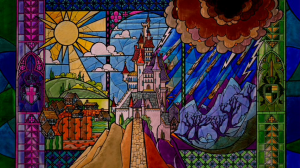
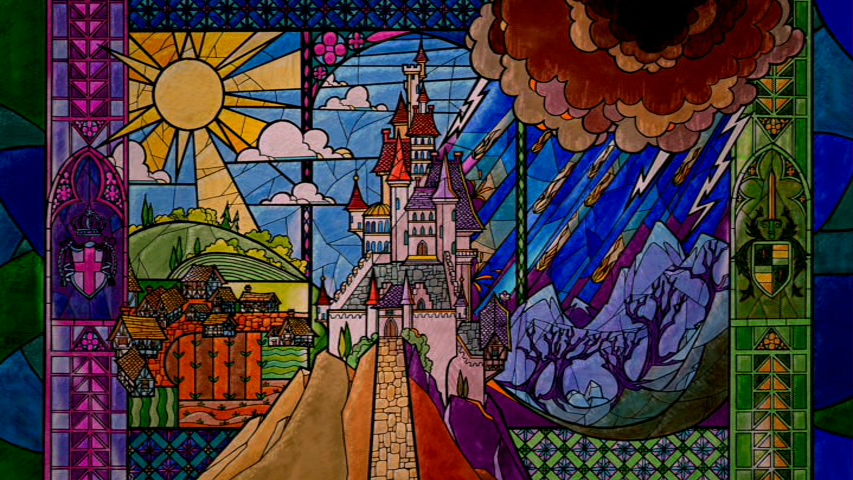
A powerful curse was placed over the castle, after an enchantress realized that the prince who lived there did not know how to love

The film begins with the story of the Prince, who turned an old beggar woman away from his door when she offered him a rose in exchange for shelter. The beggar woman was actually an enchantress who, after seeing there was “no love in his heart,” punished him for his cruelty by turning him into a beast. The Beast hid himself away from the world, with only a magic mirror to let him observe the outside. The rose the enchantress had offered was a magic rose, which would bloom until his 21st birthday. If he could learn to love, and earn love in return by then, the spell over the castle and the Prince would break; if not, he was doomed to remain a beast. The Prince grew weary over the years, as he wondered “who could ever learn to love a beast?”

Dawn breaks over a nearby provincial village, and Belle is seen walking to town, wishing to find something more than the “provincial life.” The townspeople remark how odd she is, as she has her head up in the clouds, and loves to read and imagine. Belle is pursued by Gaston, the hero of the village, and incredibly vain to boot. The only reason Gaston pursues Belle is because she is considered “the most beautiful girl in town,” although all the townspeople think she and her father, the inventor Maurice, are rather peculiar. Belle constantly turns down Gaston’s advances. She arrives home after another ambush by Gaston, and the two cheer each other up, with Maurice finally getting his invention to work. He heads off to the fair with his invention, but ends up lost in the woods, stumbling across the beast’s castle, and being sent to the dungeon by the Beast himself.
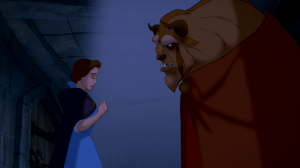
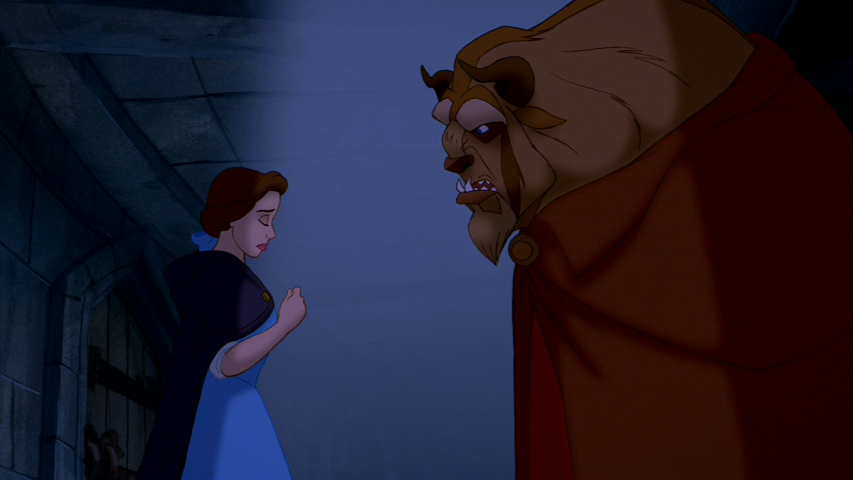
Belle offers her life to the Beast in exchange for her father’s

Belle is ambushed by Gaston once again, who sets up a wedding for the two without her knowledge. After she rebuffs him again, her father’s horse, Philippe, arrives home; seeing her father has gone missing, she has Philippe take her to the castle. She tries to find her father, with the servants secretly leading the way, and finds him sick and locked in a cell. She comes across the Beast, and offers her life in exchange for her father’s. Although her father objects, she remains firm in her offer. The Beast tries to make Belle comfortable, with everyone in the castle hoping she will be the one to break the spell. Maurice, having been taken back to town, tries to get the townsfolk to help him retrieve Belle, but they all consider his pleas as the ramblings of a madman. This gives Gaston an idea to finally get Belle to marry him, which he and his henchman, Lefou, prepare to implement.

The Beast and Belle have a difficult time adjusting, as the beast has a problem with his temper. He warns Belle never to enter the West Wing, but when she does, he loses his temper, and she flees from the castle. She is attacked by wolves in the woods, but is soon saved by the Beast. As he lays injured from the fight, Belle is tempted to continue to run, but helps him back to the castle, as thanks for saving her life. She tends to his injuries, and the two come to a new understanding. Back in town, Gaston is beginning to set his plan in motion: have Maurice committed to the insane asylum, with Belle’s agreement to marry him the only way to prevent Maurice’s incarceration.
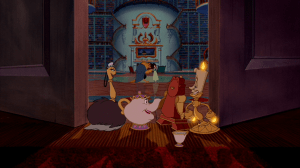
The servants are excited about the growing feelings between the Beast and Belle, hoping that Belle will help them break the spell

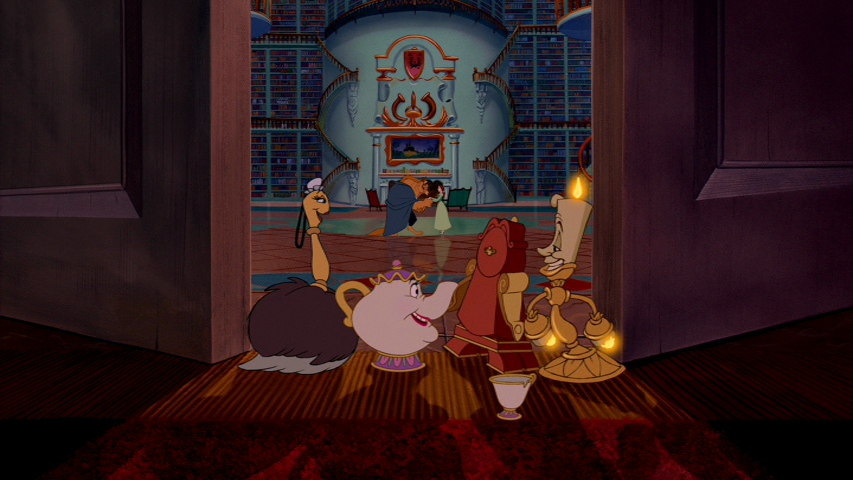
The Beast is starting to feel something for Belle, and wishes to do something nice for her. He surprises her with his grand library, which he says is all for her. She is truly touched by his gesture, and the two begin to grow closer. The servants plan an elaborate dinner and dance for the two, which they hope will culminate in the beast confessing his feelings to Belle. Although the evening is a success, and Belle is happy at the castle, she still misses her father. The Beast gives her his magic mirror to see him, and when she sees that her father is sick and traveling alone in the woods to find her, she asks to go help him. The Beast, having fallen in love with Belle, lets her go, also giving her the magic mirror to be able to see him at any time. Belle reaches her father in time and brings him home, only to have the town gather around their house to watch Maurice be carted away to the asylum. When Belle proves the existence of the beast with the magic mirror, Gaston realizes that the Beast is a romantic rival for Belle, and vows to rid the village of the Beast.

The town locks Maurice and Belle in their root cellar and set off the kill the Beast. Luckily Chip, the child of one of the servants, has stowed away in Belle’s bag and frees the two, and the two quickly make their way to the castle. Inside the castle, the servants gear up for a fight with the villagers. When they warn the Beast, he says to let them come, as he is still heartbroken that he let Belle go. Gaston searches for the Beast, and is angered when the Beast refuses to put up a fight. When the Beast hears Belle’s cry, his strength is renewed, and he dangles Gaston from the roof. Having a change of heart, he orders Gaston to leave, then climbs to the balcony where Belle is waiting. Without warning, Gaston stabs the Beast in the side, but loses his grip and plummets to his death.
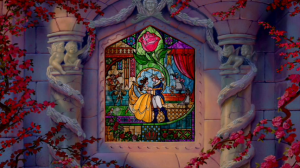
The spell breaks when Belle confesses her love, and everyone lives happily ever after

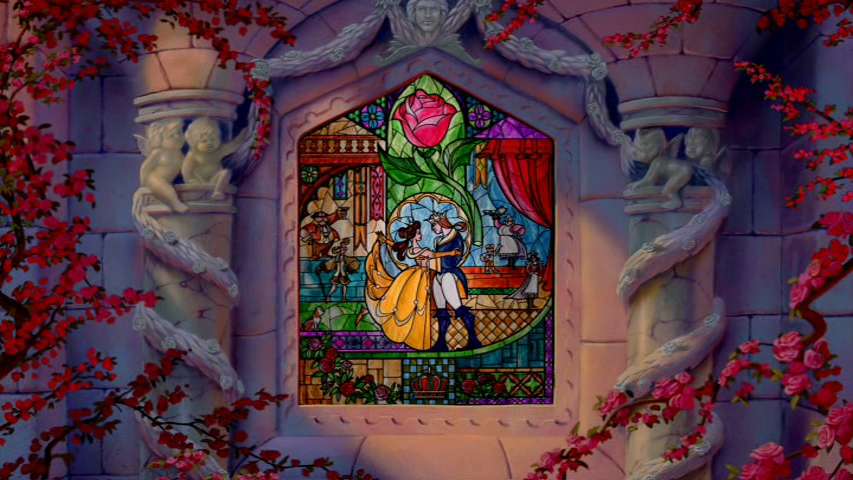
The Beast lies dying on the balcony, telling Belle that he was happy to see her one last time. As he drifts away, Belle confesses her love right as the last petal on the enchanted rose falls. As everything thinks all is lost, suddenly, the Beast transforms back into the Prince. Belle, confused, doesn’t believe it when he says it’s still him, until she looks into his eyes. The spell is broken all over the castle, and everyone lives happily ever after.
November 20

November 20, 2007 – The Soundtrack to the Feature Film Enchanted is Released Through Walt Disney Records

“How does she know you love her? How does she know she’s yours?”

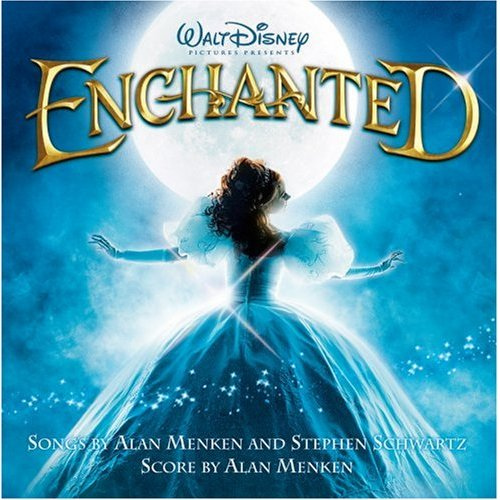
On November 20, 2007, the soundtrack for the feature film Enchanted was released through Walt Disney Records. The soundtrack contains 15 tracks, with the score composed by Disney Legend Alan Menken, and lyrics written by Stephen Schwartz. Menken said of being asked to compose the film: “They were looking for someone to hire who could parody Alan Menken music. But they couldn’t find anyone, so thank God they hired Alan Menken. So I did a parody of Alan Menken.” There were five original songs on the soundtrack, performed by Amy Adams, James Marsden, Jon McLauglin, and Carrie Underwood. Many of these songs were considered pastiches of classic Disney songs, ranging from “I’m Wishing” from Snow White and the Seven Dwarfs, and “Under the Sea” from The Little Mermaid. Three songs were nominated for Academy Awards: “Happy Working Song,” “So Close,” and “That’s How You Know.”

November 14

November 14, 2000 – The Soundtrack to the 40th Animated Feature, The Emperor’s New Groove, is Released by Walt Disney Records

Image credit: amazon.com

“He’s the sovereign lord of the nation, he’s the hippest dude in creation, he’s a hep cat in the emperor’s new clothes.”

On November 14, 2000, the soundtrack to the 40th animated feature, The Emperor’s New Groove, was released through Walt Disney Records. The album features songs by Sting, Eartha Kitt, Rascal Flatts, and Tom Jones, with a score by John Debney. Many of the songs on the album were written for the first treatment of the film, known as The Kingdom of the Sun. When the film went under rewrites, many of the songs were dropped, but were still included on the soundtrack. The song “My Funny Friend and Me” by Sting was nominated for an Academy Award, but lost to Bob Dylan’s “Things Have Changed” from the film Wonder Boys.