RSS Feed

Tag Archives: Mickey Mouse

June 18

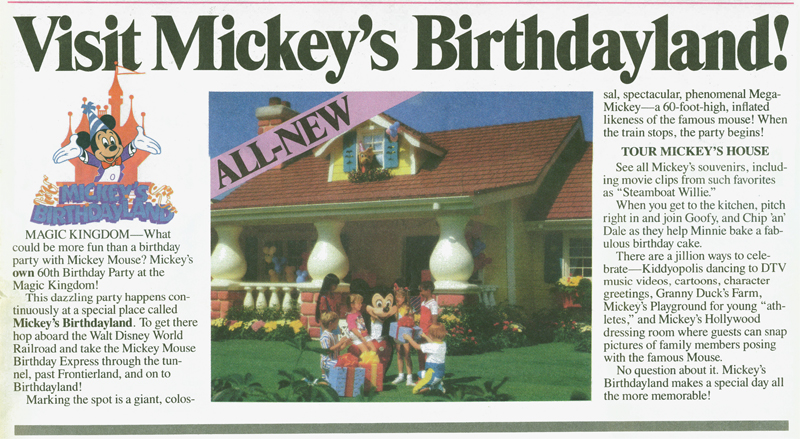
June 18, 1988 – Mickey’s Birthdayland Opens in Walt Disney World

Image Credit: lostepcot.com

“All aboard for Birthdayland!”

On June 18, 1988, the Mickey’s Birthdayland area opened in the Magic Kingdom area of Walt Disney World. The area was created to celebrate the 60th birthday of Mickey Mouse, and closed on April 22, 1990. Thinking that there should be something to celebrate the birthday of everyone’s favorite mouse, Disney executives decided on short notice to create the town. After Birthdayland closed, the area was redesigned as Mickey’s Starland (opening on May 26, 1990), and then evolved into Mickey’s Toontown Fair in 1996, which eventually closed on February 11, 2011, as expansions to Fantasyland were taking place.

Mickey’s Birthdayland Area had many interesting facets, one being the inclusion of the town of Duckburg, and a statue of Duckburg’s founder, Cornelius Coot. There was a train station along the route of the area to help bring in guests from Main Street Station, a petting farm called Grandma Duck’s Farm, a live show with Disney characters, and even Mickey Mouse’s house. One of the major attractions was in Grandma Duck’s farm: a cow named Minnie Moo, who had a Mickey Mouse head mark on one side of her body.

June 16

June 16, 1934 – The Mickey Mouse Short Film Mickey’s Steam Roller is Released to Theaters

“Oh, lookee! There’s Uncle Mickey! Yoo-hoo!”

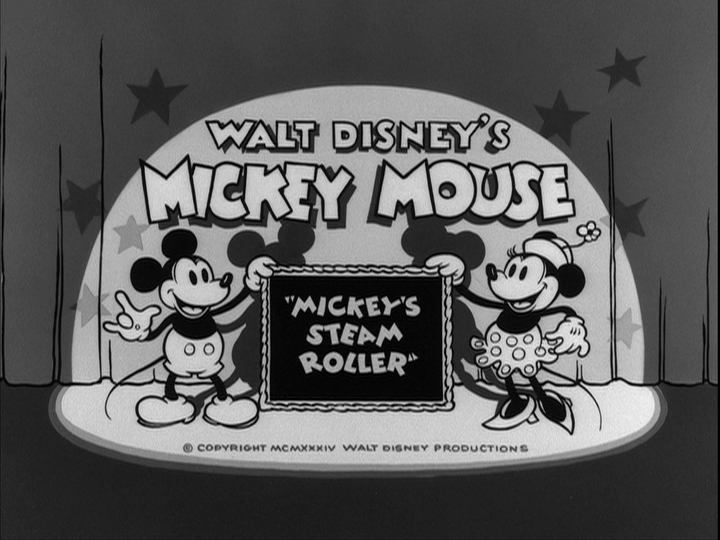
On June 16, 1934, the Mickey Mouse short film Mickey’s Steam Roller was released to theaters. The short was directed by David Hand, and stars Walt Disney as the voice of Mickey Mouse and Marcellite Garner as the voice of Minnie Mouse.

A construction crew is working on a main street, and all the workers wave at the steam roller as it passes by. As it turns a corner, Mickey is seen driving the steam roller, waving back at the crew as he chugs along. Coming the other direction is Minnie Mouse, pushing a stroller that contains Mickey’s two nephews playing patty cake. The two begin punching each other, but when Minnie chastises them, they kiss each other on the cheek and make up, but attempt to fight again when Minnie’s back is turned. She then spots their Uncle Mickey, and all three give a little wave.

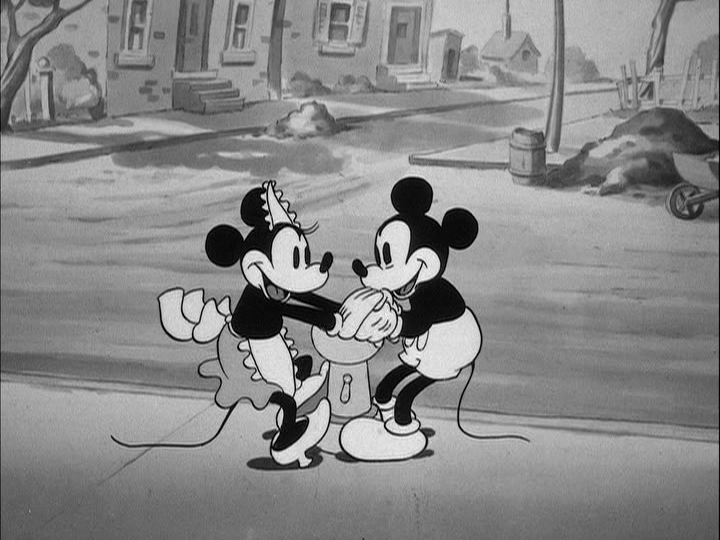
Mickey and Minnie flirt with a game involving the phrases written on candy hearts

Mickey pulls up beside them, and the kids cry out that they want “to ride choo-choo,” so Mickey attaches a hook to their stroller, pulls Minnie into the steam roller cab, and takes the kids for a ride, pretending they’ve become part of a train. After a short ride, he pulls the train to a stop and asks Minnie if she would like some candy. When she says yes, he pulls out a candy heart that has “I love you” written on it. He then pulls out another one that says “Kiss me” and asks her to read it out loud. When she does, he moves in on her, but she escapes his clutches, and their flirting continues, with Mickey chasing her down the street.

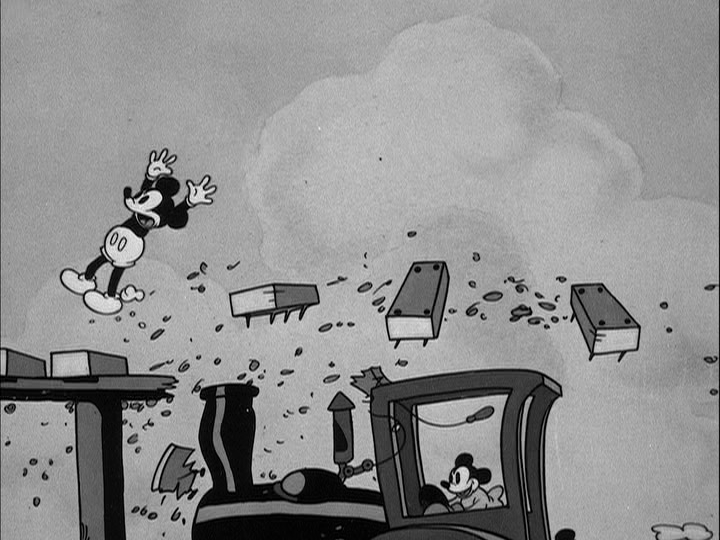
The nephews, seeing an opportunity, decide to climb into the steam roller and take it for a joyride. The steam roller runs faster than they thought, however, and they cling to the inside, while Mickey and Minnie run after them. The two nephews begin to have fun with it, with one bouncing on clouds from the stovepipe. Mickey attempts to rescue them by tying a rope to the steam roller, with the other end attached to a lamppost. Unfortunately, the lamppost isn’t strong enough, and Mickey is taken with it while it starts to drag the string of lamps down the street.

Mickey runs for his life as he is suddenly pursued by the steamroller

One of the nephews cuts the rope with a heated rod, and Mickey scrambles to stop them, ending up being chased by the steam roller down a steep hill. He finally takes refuge in a hotel, and the steam roller ends up crashing into it, knocking the building into oblivion. In the end, Mickey is just relieved to see that his nephews are all right, as they begin to see-saw on a plank of wood that landed on Mickey’s head.

June 13

June 13, 1931 – The Mickey Mouse Short The Delivery Boy is Released to Theaters
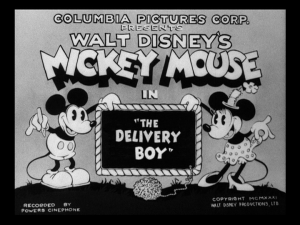
“In the shade of the old apple tree…”

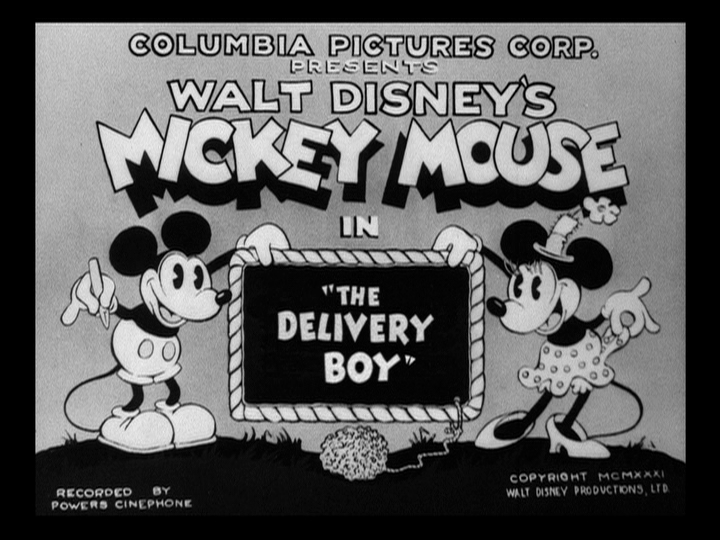
On June 13, 1931, the Mickey Mouse short film The Delivery Boy was released to theaters. The short was directed by Burt Gillett, and starred the vocals of Walt Disney as Mickey Mouse and Marcellite Garner as Minnie Mouse.

Mickey is seen sitting uncomfortably on an express wagon filled with various musical instruments, with Pluto running alongside excitedly. Mickey is sitting on the keys of a piano, playing a song as he bounces down the path. He stops the wagon as he spies Minnie Mouse, who is doing a load of laundry and singing to herself. Mickey jumps into her yard, with Minnie unaware that he’s been watching her. Unfortunately for her, a goat has been eating her clothes as she wrings them out, and she ends up fighting the goat for her girdle.
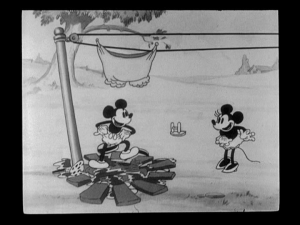
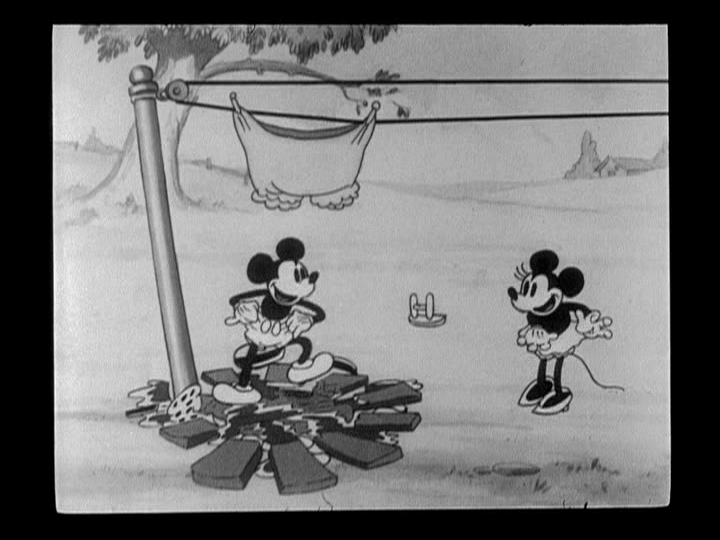
Mickey breaks the washtub after Minnie catches on to his jape, and the two begin to dance

Mickey comes up with a plan to greet Minnie: he ties one end of her bloomers on the laundry line closed, then leaps in and pushes himself as if he were in a boat. He begins to sing behind her, and hides in the bloomers when she turns around. He then pulls on her tail and plays it like a guitar string, but she catches on this time that he’s in the bloomers. She pulls him over on top of the tub and opens the closed end, making Mickey fall and break the washtub. The two then begin to dance to an upbeat song, and although Mickey ends up crashing into a tree, they continue to dance happily.

Pluto, meanwhile, has wandered into a puddle of tar, immediately getting stuck. He tries to pull himself out, but only seems to make his situation worse. While they dance, Minnie gives Mickey a kiss, and he leaps around giddily, ending up punching a beehive as if it were a punching bag before returning her kiss, then leaping away giddily again. He kicks the beehive in the end, which lands on his donkey’s tail, and the bees sting the beast, making it kick the wagon fill of instruments.
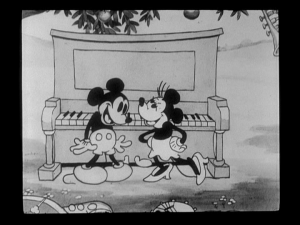
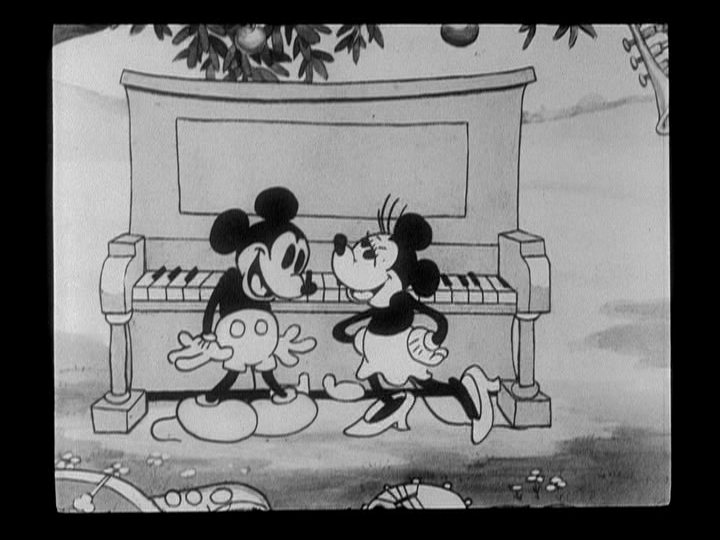
The pair has a very flirtatious conversation as Minnie coaxes him to play the piano

Most of the instruments land in a nearby farm, on the animals’ heads, and the piano lands near Mickey and Minnie. Minnie responds with glee, and asks Mickey if he can play. He responds modestly, and she eggs him on to play something. The two continue flirting, with Mickey saying he has to be coaxed to play the piano. Minnie responds with a smile that she’s coaxing him. He begins to play “Stars and Stripes Forever,” with Minnie joining him, and the two make it a jazzy duet where there share a kiss at the end.

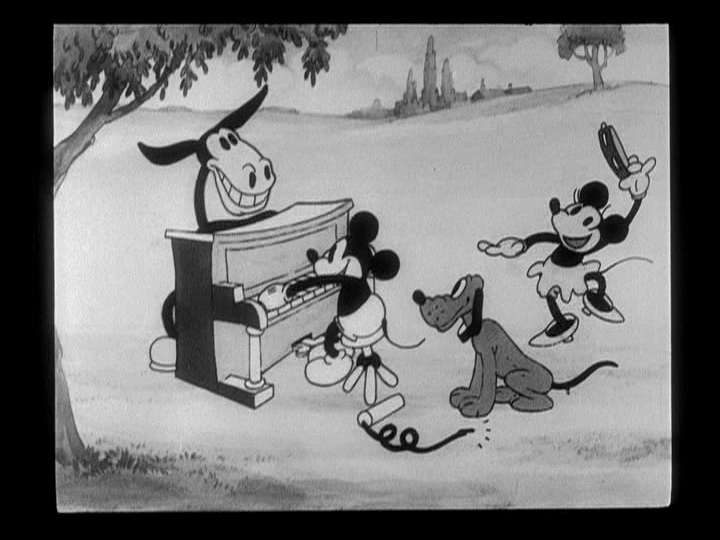
All the farm animals join in on their rendition with the instruments that landed in their barnyard, and Mickey begins to join the barnyard animals in their playing while Minnie carries on with the piano. Pluto, on the other hand, has gotten himself out of the tar, and passes signs that say “Danger! Blasting!” “Achtung! Dynamite!” “Peligro! T.N.T!” and various other languages. But Pluto pays them no mind, and stumbles upon two men lighting a stick of dynamite and throwing it away. Thinking they want to play fetch, Pluto runs after the stick and brings it back. The men dive into a barrel of tar as they try to avoid the blast.
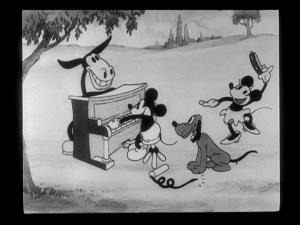
Mickey is oblivious to the surprise his dog has brought him as he continues to play and sing with Minnie and his donkey

As everyone continues dancing merrily, Pluto brings the stick of dynamite to Mickey, who doesn’t notice what Pluto’s brought him. Pluto begins to chew on the stick, but gets distracted by a pack of fleas that have fled from the scene. Suddenly, the dynamite goes off, sending Mickey, Minnie, and the donkey flying sky high. Fortunately, they all land safely and continue dancing.
June 5

Posted on

June 5, 1934 – Mickey Mouse Trademark Granted for Newspaper Cartoon Strips

Image from the original patent file. Image credit: US Patent Office Website

“[After the loss of Oswald], that’s when [Walt] decided that he would never not own his own work again. That was a crucial moment in his life and career. He knew then that he had to own whatever he did. And he held fast to that the rest of his life.” – Leonard Maltin.

On June 5, 1934, the United States Patent Office granted the Walt Disney studios a trademark of Mickey Mouse for use in books and newspaper comics. The registrant is listed as the Walt Disney Productions, Ltd. at the Hyperion Studios. The original trademark has since lapsed, but has been renewed three times, the last time on July 14, 1994.

When Walt lost the Oswald the Lucky Rabbit character to Charles Mintz in 1928, he was careful to make sure he owned all of his work and vowed “Never again will I work for somebody else.” The company is very careful to protect its trademarks, no doubt due to Disney’s fierce protection of his work after Mickey Mouse’s creation.

May 30

Posted on

May 30, 1936 – The Mickey Mouse Short Thru the Mirror is Released to Theaters

“Aw, skip it.” “Skip it? Okay.”

On May 30, 1936, the Mickey Mouse short film Thru the Mirror was released to theaters. Although written as Thru the Mirror on its title card, the official poster for the short has the title spelled Through the Mirror. The short was based on the story Alice Through the Looking Glass by Lewis Carroll. It was directed by Dave Hand and stars Walt Disney as the voice of Mickey.

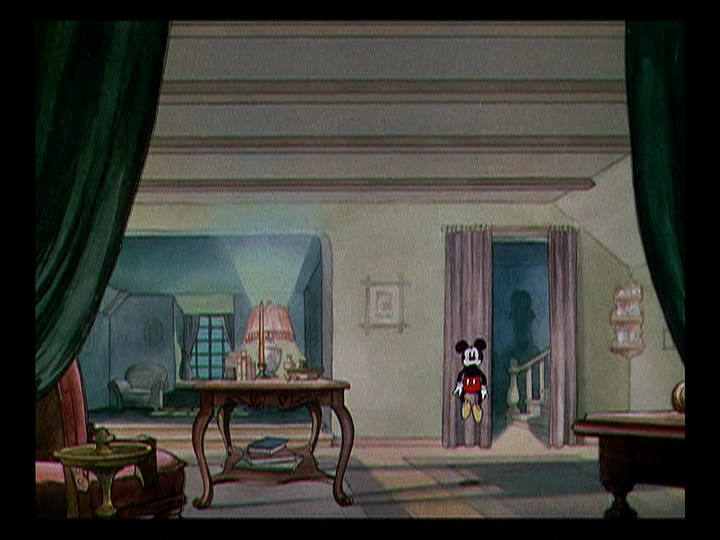
Mickey has fallen asleep reading Alice Through the Looking Glass, and his dream self gets out of bed to try to see if it’s possible for him to go through his own looking glass above his mantle. Finding that it is indeed possible, Mickey walks through the mirror, and looks in amazement at the mirror version of his own home. He jumps into his chair, startled that it is alive, and ends up stepping on the footstool, which has turned into a dog-like creature that bucks Mickey all around the room.

Just as Alice does in the story, Mickey shrinks after eating a piece of strange food

Mickey gets an even bigger shock when it seems that everything he bumps into has come to life. He spies a nutcracker cracking some walnuts, but is surprised to see that it disregards the nut and eats the shell. Mickey takes the walnut and eats it, which first causes him to grow to an alarming size before quickly shrinking to the size of a playing card.

A nearby phone begins to ring, and the phone tells Mickey it’s for him while helping him up to the desk. Their strange conversation ends with Mickey playing jump rope with the telephone cord. The radio, wishing to get involved, begins playing some upbeat music as Mickey begins to perform some tricks, before landing in an ashtray and procuring a top hat and matchstick “cane.”

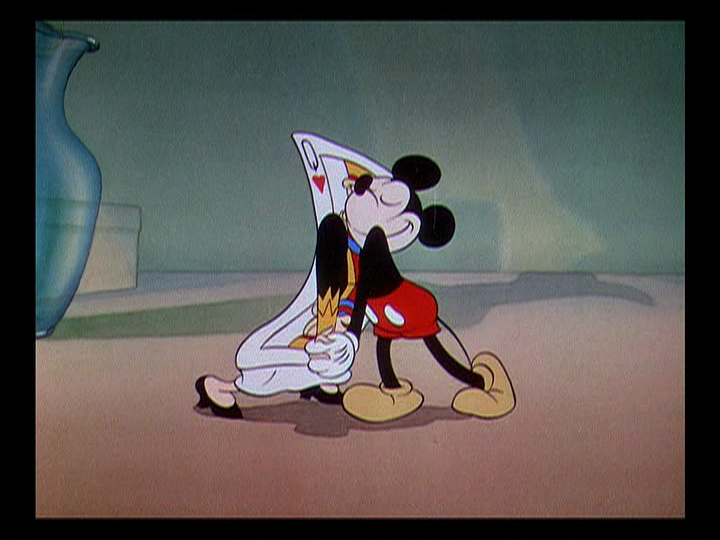
Mickey dances closely with the Queen of Hearts, which infuriates the King of Hearts

After Mickey tap dances on the top of a top hat, he is soon joined by a pair of gloves, and they begin a dance that sends Mickey flying into a deck of cards. He leads the cards into a march, which leads to them all dancing, Mickey with the Queen of Hearts. The Joker alerts the King of Hearts about Mickey’s close dancing with the Queen, and declares a duel with Mickey. Mickey grabs a nearby needle as his weapon, and begins to fight both halves of the King, sending him flying into an inkwell.

Angered by his defeat, the King calls out the cards to chase Mickey, and every single playing card in the place begins to chase the mouse. Mickey holds them off for a bit with an ink pen, but he runs out of ink and escapes through a sock. The cards take off their markings to throw at Mickey, and he gets the idea to blow them away with a nearby fan. Mickey ends up running on the top of a globe, before falling into one of the oceans, and getting thrown out by King Neptune.

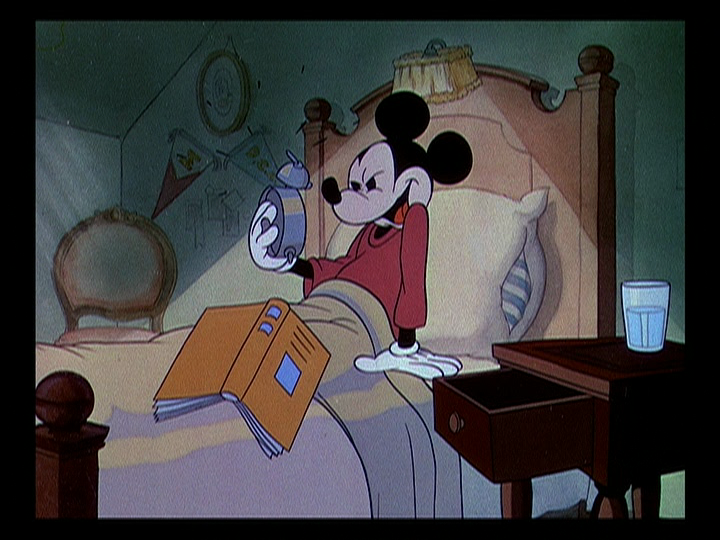
Mickey laughs when he finds he’s been thinking his alarm is his telephone in his sleepy state

Regaining his size quickly, Mickey runs back through the mirror and back into himself, who wakes up and thinks his alarm clock is his phone. He laughs and throws the clock into a drawer before rolling over and going back to sleep.

May 19

Posted on

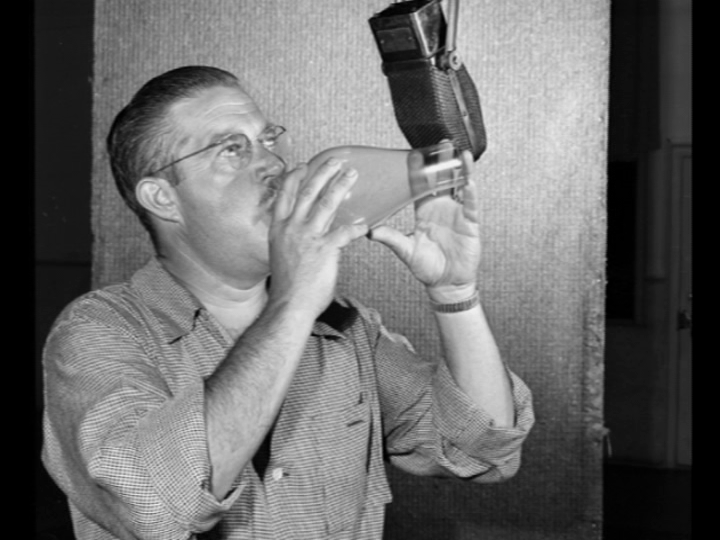
May 19, 1906 – Birth of Disney Legend, Sound Effects Wizard, and Voice of Mickey Mouse, Jimmy MacDonald

“Jimmy was Walt’s major sound effects man. You name it. All the gags that you hear in the old cartoons, that’s Jimmy. The train in Dumbo, Jimmy. He built these things…he was a genius at it. And [there was] nobody better.” – Wayne Allwine

On May 19, 1908, John James MacDonald was born in Monks Coppenhall, Cheshire, in the United Kingdom. When he was six months old, his family immigrated to the United States. MacDonald loved music, and as an adult, he was a musician on the Dollar Steam Ship Lines, which led to a job at the Disney Studios in 1934 recording music for a Disney film. MacDonald soon became the head of the sound effects department. Wayne Allwine, who worked with MacDonald in the sound effects department, remarked that “…it was as a musician on the recording sessions for the early cartoons that Walt heard Jimmy, saw that he had more gadgets, as he called them, than anybody else in town, and hired him to come in and do his sounds, as he called them, for the cartoons.”

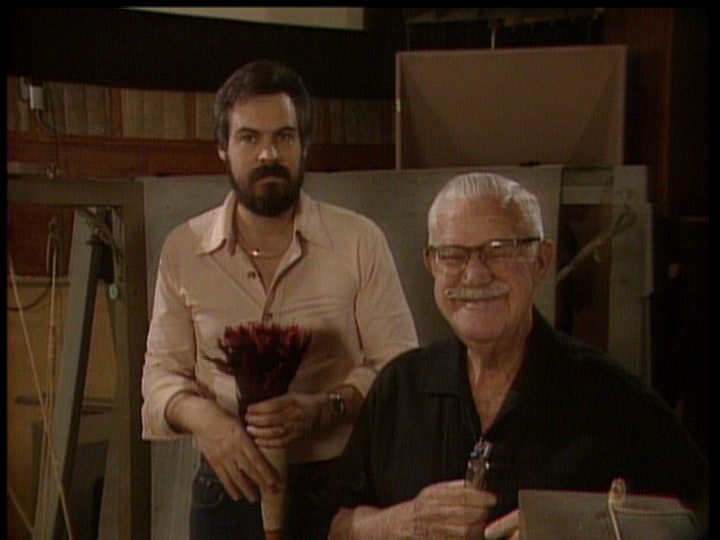
MacDonald (R) with apprentice and replacement for the voice of Mickey Mouse, Wayne Allwine (L)

In 1947, Walt Disney was becoming busier, and his voice was getting hoarse from his smoking, so he asked MacDonald to begin voicing Mickey, which began with the film Fun and Fancy Free. “And Jimmy said, ‘I was down here working one day, and Walt called me into his office and said, ‘Can you do Mickey?’” Allwine explained in an interview with Leonard Maltin. “And Jim said, ‘I don’t know, Walt. I never tried.’ He said, ‘Let’s hear ya.’ And Jimmy did a few lines, and Walt said, ‘That’s fine. From now on, call Jimmy. I’m too busy.’” Allwine described MacDonald’s Mickey: “Jimmy’s Mickey was interesting. Jimmy was a bass. Nice deep voice. And for him to do Mickey, he had to really work at it, and you can hear a texture in Jimmy’s Mickey that you don’t hear in Walt’s.” The only time in MacDonald’s career as Mickey that Walt once again resumed the role was when voicing the intros to the Mickey Mouse Club. MacDonald voiced the character on a regular basis until 1953, which turned into a recurring role until 1977, as he was having a rough job keeping the falsetto as he got older.  His sound effects assistant, Wayne Allwine, was picked as his replacement, and in 1977, MacDonald retired from the Walt Disney studios.

MacDonald passed away in his home at the age of 84 in 1991, and was named as a Disney Legend in 1993. In a rare treat, the Disney Studios had recorded all of the sound effects MacDonald had created, and used them for the television show, House of Mouse; MacDonald’s sound effects legacy continues to last thanks to the preservation efforts of the Foley sessions.

May 18

Posted on

May 18, 2004 – The Third Wave of the Walt Disney Treasures is Released

Image Credit: Wikipedia

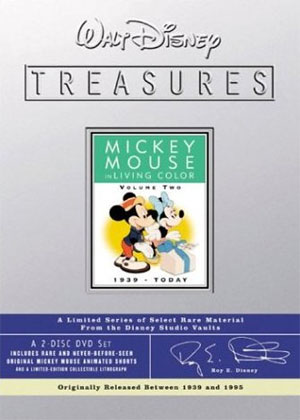
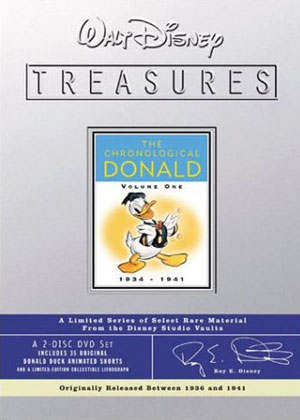
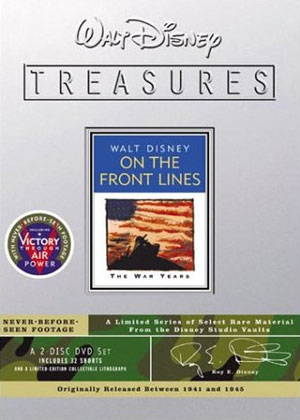
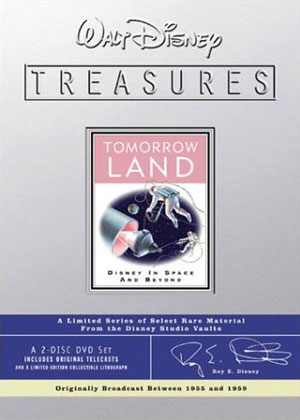
On May 18, 2004, Disney’s video distribution company, Buena Vista Home Entertainment, released the third wave of the popular Walt Disney Treasures. This set included Mickey Mouse in Living Color, Volume Two; The Chronological Donald; On The Front Lines; and Tomorrow Land. Although this wave was supposed to be released in December, as the other two were, the release had to be delayed to meet the demand of the popularity of the sets. As with the other two waves, the third set was introduced by film critic Leonard Maltin, who also provides commentary for the more politically incorrect works, known as the works “In the Vault.”

Mickey Mouse in Living Color. Image Credit: wikipedia

Mickey Mouse in Living Color, Volume Two is the second of the Mickey Mouse color short collections, and the fourth Mickey Mouse collection in all. The first disc gives the shorts from 1939 to the last Mickey Mouse short film in 1953, with bonus features including The Sorcerer’s Apprentice from Fantasia, Mickey and the Beanstalk from Fun and Fancy Free, as well as an Easter egg of Walt Disney performing the voice of Mickey for the short Mr. Mouse Takes a Trip. Disc two shows the modern revival of Mickey Mouse, which includes Mickey’s Christmas Carol, The Prince and the Pauper, and Runaway Brain. The bonus features are numerous on this disc, and include an interview with the voices of Mickey and Minnie (Wayne Allwine and Russi Taylor), an interview with Disney animators Mark Henn and Andreas Deja, and clips from the Walt Disney anthology series that use Mickey as an example of animation techniques.

The Chronological Donald. Image credit: wikipedia

The Chronological Donald is the first set of Donald Duck short films, which begins with the Silly Symphony The Wise Little Hen in 1934 on disc one, and ends with the 1941 short Chef Donald on disc two. The disc one bonus features include a clip from the film The Reluctant Dragon, where the voice of Donald, Clarence Nash, is heard performing with Florence Gill, the voice of Clara Cluck. Disc two includes a mini-biography about Clarence Nash, and how his unusual voice inspired the creation of Donald Duck, as well as another clip from The Reluctant Dragon, where Donald is explaining to Robert Benchley how animation comes to life.

On the Front Lines. Image credit: wikipedia

On the Front Lines is a collection of all the propaganda, educational shorts, and films released when the Disney Studios were taken over during World War II. Disc one includes mostly the short films, including the shorts where Donald is drafted into the army. In the vault, there are four films: Der Fuehrer’s Face (a propaganda film where Donald believes he lives in a land occupied by Nazis), Education for Death (a chilling film based on the book by Gregor Ziemer), Reason and Emotion (a humorous look about how people needed to keep their emotions in check during wartime), and Chicken Little (a horrifying update to the children’s story). Disc two is of the film Victory Through Air Power, which Walt Disney created to send a message to the American people that the war could be won through the use of aviation and long-range bombing. This DVD set is the first release of the film since its rerelease in 1944. This disc also includes some training shorts, behind the scenes documentaries of the film Victory Through Air Power, galleries of insignias and posters created during wartime, and an interesting interview with long-time Disney employee John Hench, who recounts his time at the studio after the attack at Pearl Harbor.

Tomorrow Land. Image credit: wikipedia

The last set in this wave is Tomorrow Land, which pulls together episodes from the anthology series about space and the future, with many of these episodes directed by Nine Old Men member Ward Kimball. The first disc has three episodes: Man in Space, Man and the Moon, and Mars and Beyond. The second disc includes Eyes in Outer Space, Our Friend the Atom, and EPCOT, a look at the Florida Project Walt Disney planned, which was to be a Tomorrowland type theme park. Bonus features include interviews with author Ray Bradbury and long-time employee Marty Sklar, as well as an Easter egg of the Sherman Brothers singing “There’s a Great Big Beautiful Tomorrow” with Walt, as the song was featured at the General Electric Pavilion at the 1964 World’s Fair.

May 12

Posted on

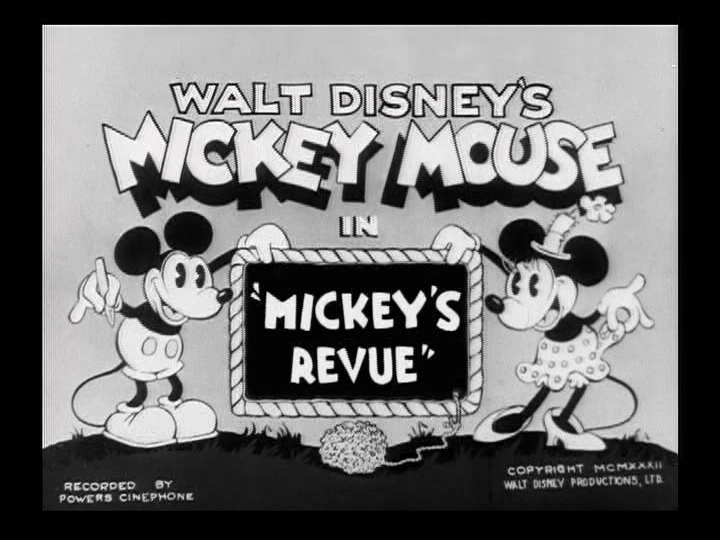
May 12, 1932 – The Mickey Mouse Short Film Mickey’s Revue is Released to Theaters

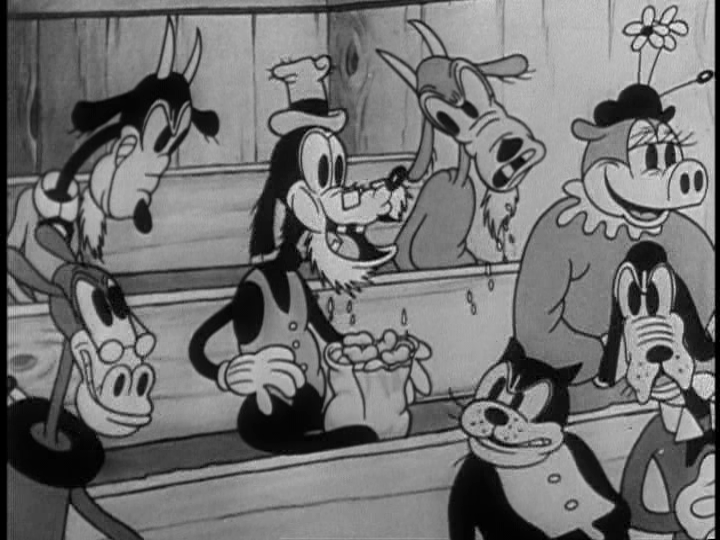
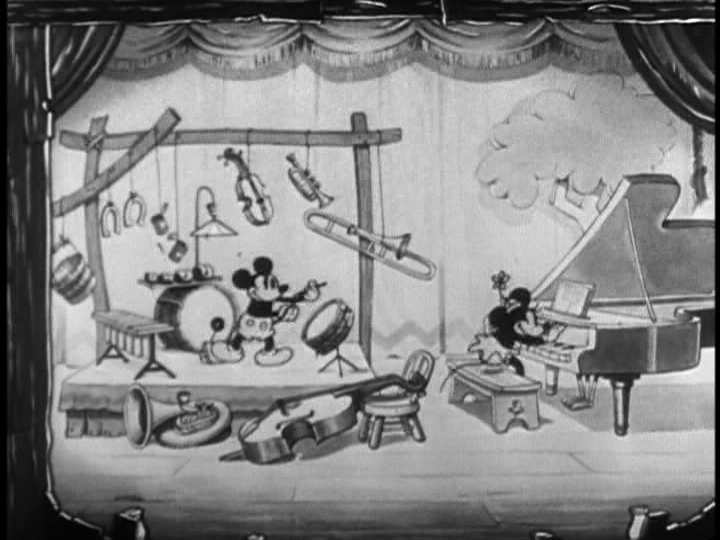
On May 12, 1932, the Mickey Mouse short Mickey’s Revue was released to theaters. It was directed by Wilfred Jackson. This short is best known as the first appearance of the character of Dippy Dawg, who would evolve into Goofy; he is recognizable in this short by his peculiar laugh, which was provided by Pinto Colvig.

The first appearance of Dippy Dawg, later known as Goofy, annoying the audience members around him

The short opens in a theater, where the orchestra is in the middle of a song, with Mickey at the helm as the conductor. As the piece reaches a dramatic part, an audience member (Dippy Dawg) loudly cracks open peanuts and eats with his mouth open, to the annoyance of the other members of the audience surrounding him.

The curtain opens, revealing three actors dressed as flowers, and Minnie tied to a rope, floating as she plays the part of a fairy, while Horace Horsecollar holds her from a fishing rod in the rafters. Minnie taps an actor, who stands up, revealing herself to be Clarabelle Cow. On the other side of the stage, Pluto sneaks on, sniffing the dancer. When the dancer pushes him away, he begins to bark until a hook yanks him off the stage. Dippy Dawg begins to laugh loudly from the audience, again annoying all those around him.

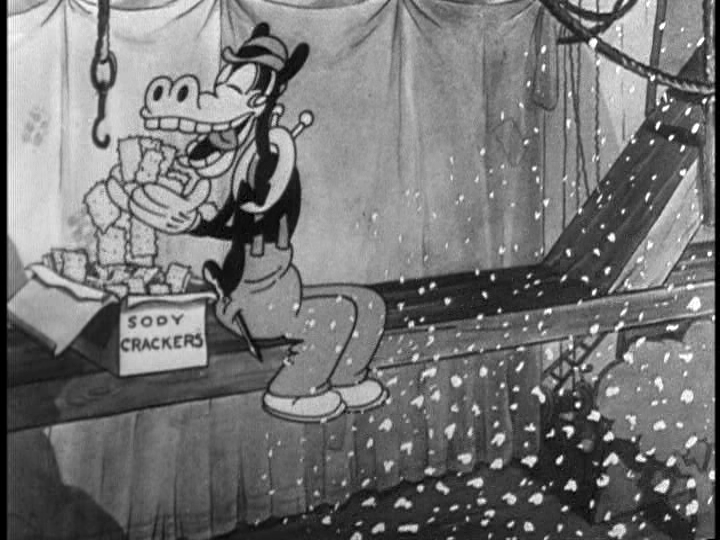
Horace demonstrating how he makes his stage snow

Mickey continues to conduct as the cow dancers begin their ballet. A loud crashing noise sounds, as the band members and stage hand Horace create a storm for the piece. The cow ballerinas look around at the “snow,” then begin to ice skate around the stage (although it is revealed to the audience that the “snow” is just soda crackers Horace chews up and spits out across the stage). As the dancers skate offstage, Pluto is seen crawling on stage, hot on their trail, but is quickly retrieved and pulled off stage.

The curtain falls and the audience applauds wildly before the next act begins. Two dogs begin a rather comical tap dance. As it ends, Pluto is once again seen trailing something, only this time he’s on the trail of a bug, until a lasso appears and pulls him away. Dippy Dawg begins to laugh his peculiar laugh again, but this time, the fed-up audience members hit him over the head with a hammer, knocking him out cold. The two main conspirators begin to laugh in the same manner that Dippy Dawg did, much to the surprise of the rest of the peanut gallery.

Mickey and Minnie in their grand performance

The curtain opens again to reveal Mickey in a “one-man-band” kind of show, with Minnie accompanying him on the piano. As they play, a family of kittens that has been living under the stage pops out through holes in the floor and begins to play with the instruments, making it livelier than before. Horace has Pluto tied up in the back while he reads a magazine, and Pluto begins to whine, wishing to explore the stage. Seeing the kittens, he leaps forward, throwing Horace from his chair, and dives onto the stage. Pluto’s chase destroys the set and instruments, but the audience still applauds loudly thinking it was a great show.

May 6

Posted on

May 6, 1938 – The Mickey Mouse Short Film Mickey’s Trailer Premieres in Theaters

“The worst is over – it’s all downhill from here!”

On May 6, 1938, the Mickey Mouse short Mickey’s Trailer was released to theaters. The short was directed by Ben Sharpsteen, and stars Walt Disney as the voice of Mickey Mouse, Clarence Nash as the voice of Donald Duck, and Pinto Colvig as the voice of Goofy. The short features many mechanical gags that are reminiscent of the early Mickey Mouse shorts.

The audience first sees Mickey’s trailer, in front of a picturesque background of the mountains. The door opens, and Mickey steps out in his nightgown, excited at the prospect of a beautiful day. He pulls a lever next to him, and the whole trailer begins to rattle as he goes back inside. Suddenly every bit of the trailer, from the white picket fence to the “lush green lawn”, folds back into the trailer. A car rolls out of the side, with Goofy sleeping in it; He awakens and slips into the front seat and gets ready to drive. The “picturesque” scenery folds up behind them and slips into the trailer, leaving behind a view of the city dump, with some refineries for good measure in the distance.

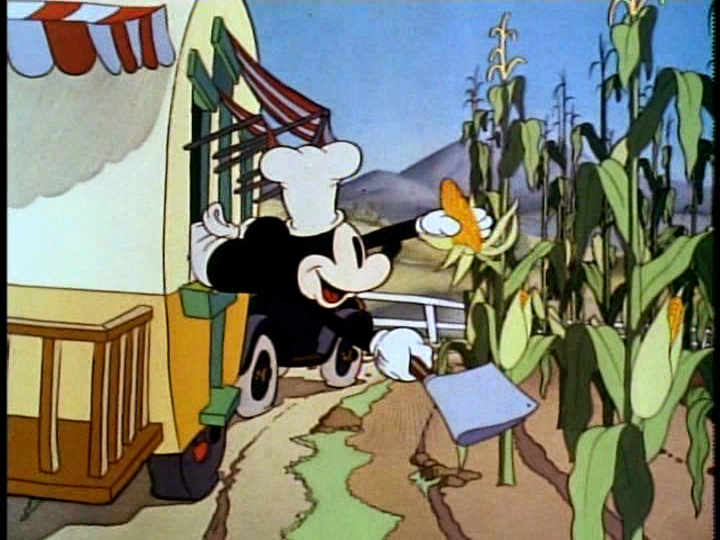
Mickey snatching some corn from a nearby field

As Goofy drives the trailer on a dirt road, he begins to sing “She’ll Be Comin’ Round the Mountain.” Inside the trailer, Mickey begins to fix breakfast, grabbing water from a nearby waterfall for the coffee, cutting some corn from nearby stalks, and, with Goofy tempting it with some hay, getting some milk from a wandering cow. Also inside the trailer is Donald, fast asleep on the top bunk. The alarm clock goes off, which is rigged to pull away his covers and force him to get up. Slowly he tries, but ends up falling back asleep. Mickey, from the kitchen, pushes a button, which turns the bedroom into a bathroom, and Donald excitedly enters the bathtub and begins to sing a nonsensical song as some robins watch at the window.

Mickey pushes another button, and the bathroom becomes a dining room, and Mickey sounds the alarm for breakfast. Goofy leaves his post as driver to get his food – with the car driving into an area marked with a “road closed” sign. As the car stumbles over several bumps in the road, each bump makes part of Goofy’s breakfast disappear. He watches Mickey and Donald enjoy their corn on the cob, and as he reaches for a cob, he accidentally sticks his fork in a light socket, which pops all the kernels from the cob. So he has popcorn for breakfast.

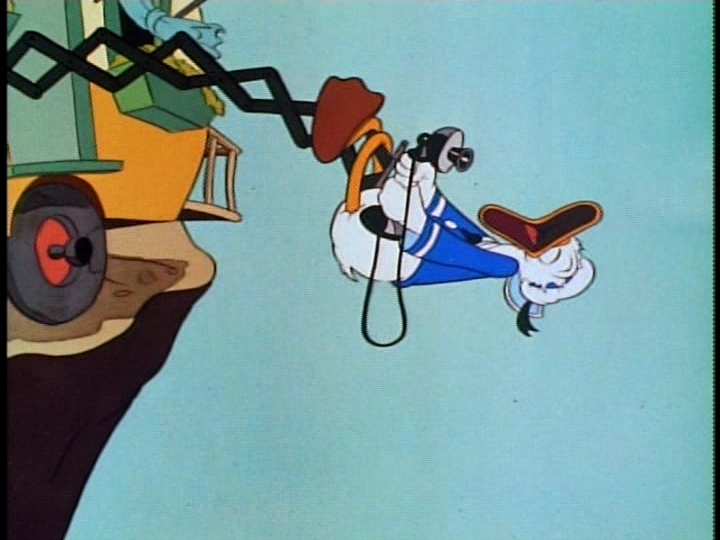
Donald clings to the phone for dear life as he is projected through the window

Mickey finally notices that there is nobody in the car, and turns to Donald, asking who is driving. Goofy responds that he is, and it suddenly dawns on him that he should be in the car driving. When he dives out the window to get back in the driver’s seat, he unwittingly knocks the connector loose from the trailer, sending Donald and Mickey flying the other way on the perilous path. Inside, the pair are knocked about as they continue sliding backwards on the one-way path. A truck slowly climbs its way up the mountain pass, but they fortunately miss it as the trailer uses the fence as a track. Donald tries to use the phone to call for help, only to have to cling to it for dear life as he is outside the window.

Just as the two think they’ve avoided trouble after a curve, they hear the sound of a train, and look out to see it fast approaching the bridge. Donald’s kneels to pray. They narrowly miss the train as they cross the bridge; both breathe a sigh of relief, only to see that they’ll be coming across it again, and again they narrowly miss it. As they fall off a curve and fly down the side of a mountain, they luckily get connected to the car again. Goofy informs them that he got them down safe and sound, unaware of the adventure they had without him.

May 5

Posted on

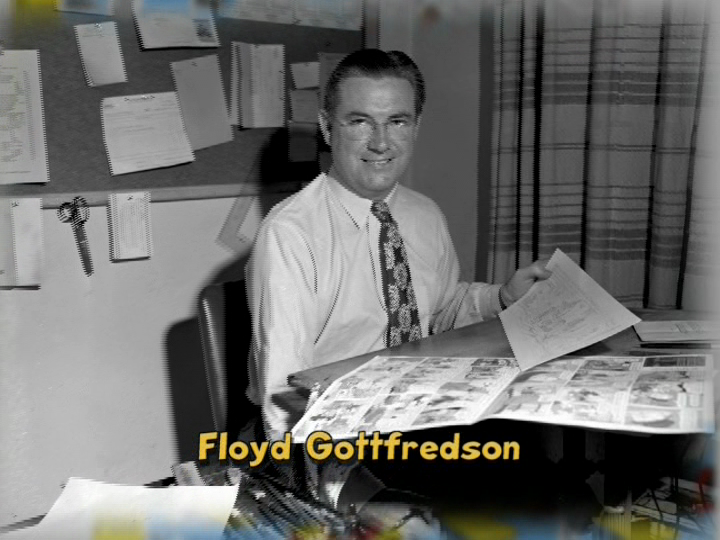
May 5, 1905 – Disney Legend and Cartoonist Floyd Gottfredson is Born

“…since Walt hired me as backup man on the strip, he asked me to take it over. By now I had become very interested in animation and told Walt I’d rather stay in it. So Walt asked me to take over the strip for two weeks until he found another artist to do it. Nothing further was ever said about it, and I continued to draw the Mickey daily for 45 years – until my retirement in October 1975.” – Floyd Gottfredson

Floyd Gottfredson, the man behind the Mickey Mouse comic strip and Mickey’s “second father,” was born on May 5, 1905, in Kaysville, Utah. His interest in drawing came about due to an accident when he was eleven: he went hunting with his cousin one Sunday instead of going to church, and was accidentally shot in the arm. Unable to play with the other children, Gottfredson turned to art, and his talent blossomed under the care of his mother. Although his father disapproved of his son’s artistic ambitions, Gottfredson continued to pursue drawing, not letting his injury slow him down. In 1928, after winning second place in a national cartoon contest, he developed enough confidence to quit his job in Utah and move to Los Angeles to become a newspaper cartoonist. Although unsuccessful in that venture, fate led him to apply to the Disney Studios, where he was hired as an inbetweener.

When Gottfredson began at the Disney Studios, the Mickey Mouse comic was already being worked on by several artists. Although he had expressed interest in working on the strip, Disney talked him out of it, but did give him the job as a back-up man for those animators. By the time Gottfredson was asked to draw the comic, he had become fond of the animation medium and wanted to stay there. Disney asked him to draw the comic for at least two weeks until they found a replacement, which led to Gottfredson drawing the comic until his retirement 45 years later.

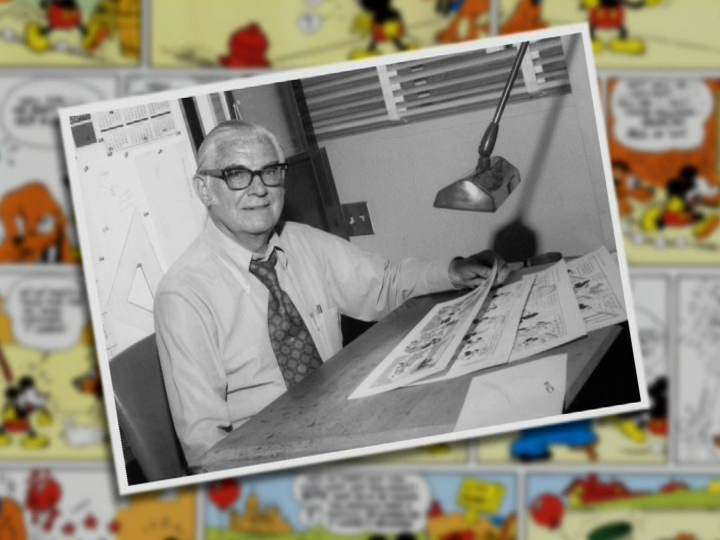
A publicity shot for Gottfredson and the comic

Through the Mickey Mouse comic strip, Gottfredson ended up pioneering a new kind of comic: the funny animal adventure story. Although the early strips were basic retellings of the shorts in theaters, Gottfredson soon added his own spin to the stories, telling grand adventures that reflected the issues of the time. Gottfredson also had Mickey, the plucky underdog, pitted against corrupt politicians, mad scientists, and other assorted villains, with Mickey’s goal to protect his friends and his country. He retired from the comic on October 1, 1975, and on July 22, 1986, he died at the age of 81. He was inducted as a Disney Legend in 2003, and was inducted into the Will Eisner Comic Industry Awards Hall of Fame in 2006.