RSS Feed

Tag Archives: Live Action

October 3

October 3, 1955 – The First Episode of The Mickey Mouse Club Premieres on ABC
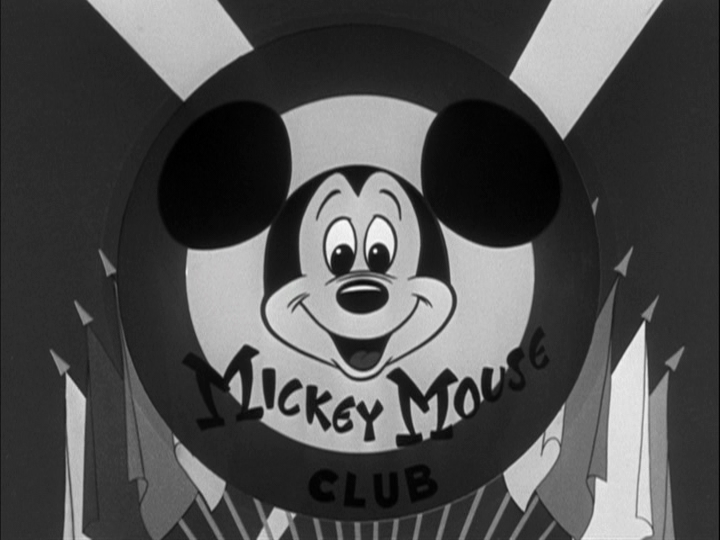
“We are the Merry Mousketeers, Mouseketeers! We’ve got a lot above our ears, above our ears!”

On October 3, 1955, the first episode of The Mickey Mouse Club premiered on ABC. The series was a part of Walt Disney’s contract with ABC, which gave him the money needed to finance the building of Disneyland. The series was the second television series for Disney, and has become one of the most beloved television series ever released. The show was known for its animated opening and theme song, with Donald Duck having varying misfortunes as he struck a gong at the end. The show usually featured about 24 different Mouseketeers, with as many as 39 at one point. This series ran from 1955 to 1959.

The first episode, “Fun With Music Day,” begins with the Mickey Mouse Club Newsreel, which gives kids an idea of kids’ lives across the world. It starts in the Florida Everglades, where kids are on an airboat ride exploring the Everglades, the home of the Seminole Indians. The news then travels to Rome, where the Italians are celebrating Carnival. As they ride a merry-go-round, the kids play the song “Bibbidi-Bobbidi-Boo” from Cinderella on instruments. A world report follows, starting in London, where television star Sooty joins the Mickey Mouse Club. In Tokyo, veteran cameraman Henry Kotani brings the news of the Tokyo swim meet. Golden Oak Ranch is then shown, on location during the filming of The Adventures of Spin and Marty, then it’s going back to Burbank, where the camera shows the filming of Davy Crockett, following the cast on location to Kentucky. The camera then goes back to the Disney Studios, introducing the Mouseketeers.
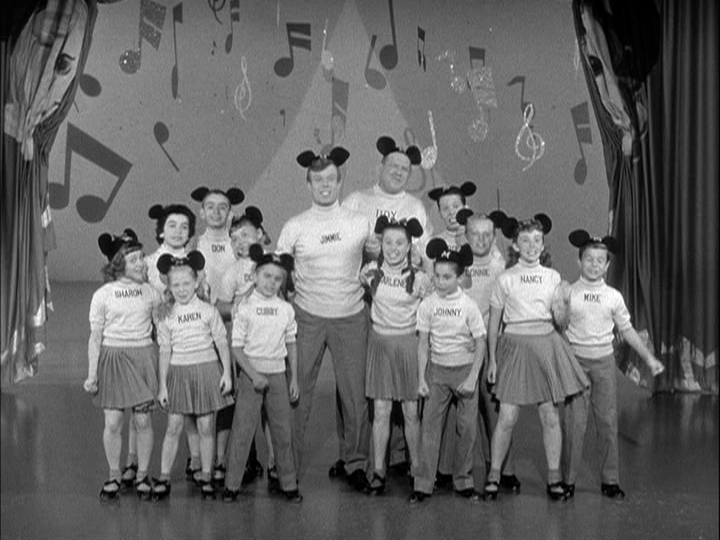
The first showing of the Mousketeers, with hosts Jimmie and Roy

After a quick commercial break, the show returns, with host Jimmie Dodd introducing a tap dance routine by Mousketeers Don, Doreen, Darlene, Bobby, Annette, Lonnie, and Nancy. They are soon joined by Sharon, Mike, Karen, Cubby, Johnny, and Jimmie. Roy jumps in at the end before they sing an introduction song and the roll call. After this, the Mouseketeers present “A Mousekartoon Special” called The Friendly Farmers. They perform a song about farmers owning some animals, while a special guest acts out the animals.

The Mouseketeers then perform “The Shoe Song” with Roy drawing as they sing. Jimmie announces the Musketeers as they come in, performing in costumes ranging from clowns, to cowboys, to ballerinas. It ends with a “wedding” between Cubby and Karen, with several shoes tied to the back of their kart. This is then followed with a serial known as “What I Want To Be,” which explores the careers of a pilot and an airline hostess, as hosted by Alvy Moore. A young girl named Pat and a young boy named Duncan are taken to see what being a hostess and a pilot is really like, with the promise that the segment will continue the next day.
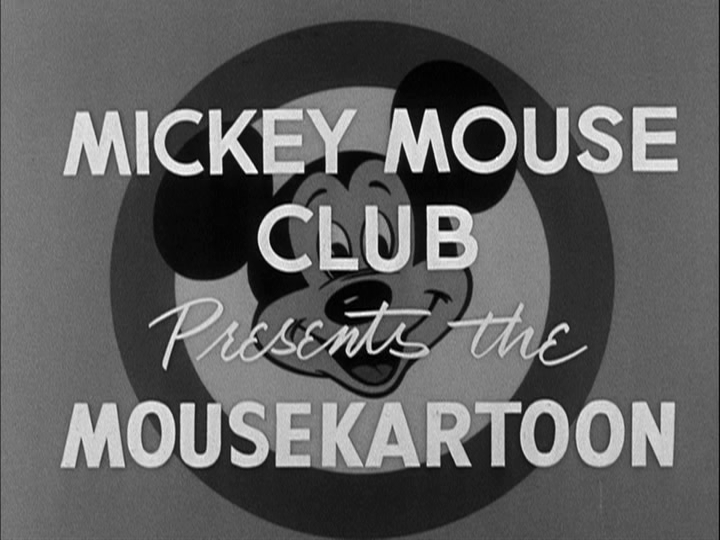
The title for the Mousekartoon, with one being shown every day

Following that is the Mousekartoon, presented by Karen. She lets the audience know that the cartoon that day is Pueblo Pluto, a short film originally released on January 14, 1949, with Jimmy MacDonald voicing Mickey. After the Mousekartoon, Jimmie steps on camera, introducing how the show will be set up from that episode forward, including the themes of the days of the week. After this, the Mouseketeers and Jimmie sing goodbye, and Mickey gives a goodbye as well.

October 2

October 2, 1992 – The Live Action Film The Mighty Ducks is Released to Theaters

“Here’s the long and short of it: I hate hockey and I don’t like kids.”

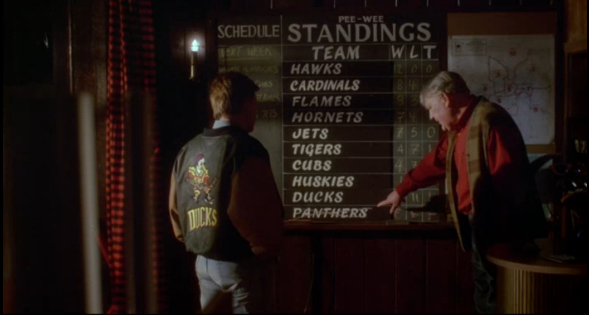
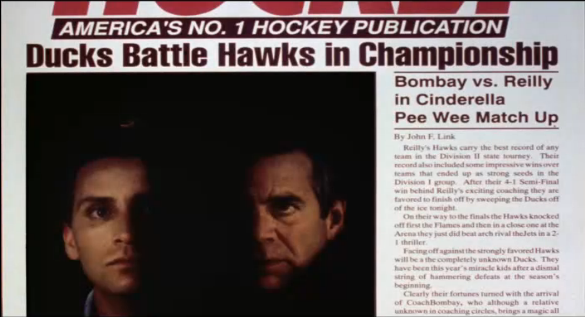
On October 2, 1992, the live action film The Mighty Ducks was released to theaters. It is the first film in The Mighty Ducks trilogy, and was followed by D2: The Mighty Ducks and D3: The Mighty Ducks. It was written by Steven Brill, and directed by Stephen Herek. The film stars Emilio Estevez as Gordon Bombay, Joss Ackland as Hans, Lane Smith as Coach Riley, and Joshua Jackson as Charlie.

The film begins with a flashback of the main character, Gordon Bombay, when he was the star player of his pee-wee hockey team in 1979. He misses the goal that costs his team the game; as his coach looks at him with obvious disappointment, Gordon falls sadly to his knees on the ice. We then switch back to present day Minneapolis, where Gordon is a hotshot lawyer, always out for the win regardless of any ethics. One night, he is pulled over by an officer for driving drunk, and is later sentenced to community service coaching pee-wee hockey, much to his annoyance, as well as a forced leave of absence by his boss, Mr. Ducksworth.

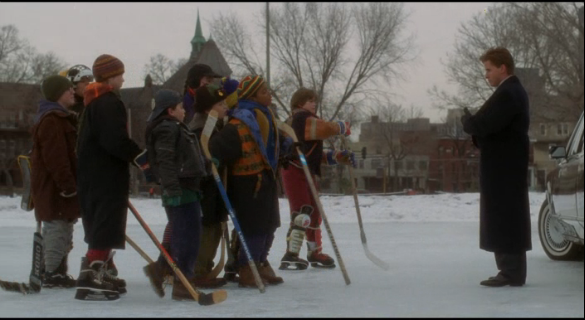
At the first meeting between Bombay and the kids, they believe him to be dangerous, and he has little patience for their antics

The first meeting of the District 5 team and Bombay does not go well, as the kids admit that they “really suck,” and Bombay has little patience for kids and clashes with the parents. He attends their first game, which is unfortunately against his old pee-wee team, the Hawks. He runs into his old coach, Coach Riley, who still instills in the kids that winning is everything, and still is disappointed about the team’s loss in 1979. The first game is an embarrassment, with District 5 losing 17 to 0. As Bombay walks out on the team, he sees a familiar face at the doors, and is shocked to see that it is his old friend and mentor Hans. He runs after him, but is unable to find Hans in the parking lot. Bombay then switches his training to having the kids take falls and pretend they’ve been injured by the other team. Charlie, one of the players, refuses to play dirty hockey.

Not knowing what to do anymore, Bombay finds Hans at his sports shop, and asks for advice. Bombay is reminded that he gave up hockey after that disastrous game, with his father having died four months prior, and his passion for the game having disappeared. Hans helps him rekindle his love for hockey, and asks him to teach the kids how to fly. After being inspired by Hans, Bombay goes to Charlie’s house to apologize to Charlie and his mother for his behavior before, and then goes to his boss and asks for the firm to sponsor the team. The team then is named the Ducks, after the boss. Charlie soon begins to bond with Bombay, and the team continues to add new members and improve their skills.

After their tie game, Hans explains to Bombay that the Ducks still have a chance of getting into the playoffs and facing the Hawks

The team manages to tie their next game, and Hans lets Bombay know that the Ducks may be able to make the playoffs. When Bombay voices his concern about the possibility of facing the Hawks, Hans tells him that the district lines were redrawn the previous year, and that the Hawks’ star player, Adam Banks, is supposed to play with the Ducks. Coach Riley is furious with Bombay, accusing him of backstabbing. Bombay, however, feels that he’s playing by the rules. The Ducks hear Bombay call them losers (although he was being sarcastic), and with the discovery that he was once a Hawk, most of them decide they don’t want to play for him anymore. Bombay doubts he can stay the coach if the team doesn’t trust him and Adam Banks, which upsets Charlie greatly.

Bombay encounters more problems when he finds that his boss is an old friend of Adam Banks’ father and, with Coach Riley, the three demand that Bombay drop his protest. He refuses, and loses his job. At school, the kids have a fight over the fate of the team, which subsequently reunites them, and Bombay, when he comes by to talk to them. Adam decides to join the team, but the team still doesn’t trust him, as they still consider him a Hawk. However, with his help, they win the game and make it to the playoffs. They eventually make it to the final match versus the Hawks. Bombay, however, is still haunted by the 1979 game and Coach Riley’s disappointment in him.

The match is considered an intense one, with Bombay against Riley, Adam Banks against his former team, and the Hawks defending their title against the Ducks

The game is intense from the get-go, with Banks’ former teammates trying to keep him down on the ice. The Hawks score first, and continue to score on the Ducks, leading the first period 3 to 0. At one point, Coach Riley stops Banks’ former friends, telling them to “drop him like a bad habit.” One friend looks alarmed, but the other agrees to do so. As Banks rushes with the puck, the one friend pushes Banks down, sending him flying headfirst into the goal. While Banks is able to score, he has hit his head so hard he is knocked unconscious. He is sent to the hospital, and the Ducks are more determined than ever to win. At the end of the third period, the Ducks are able to tie it up, and are given a penalty shot, sending the game into overtime. Charlie is picked to take the shot, with Bombay reassuring him that even if he misses, everything will be all right. Charlie makes the goal, and the Ducks win the state championship.

In the end, Bombay goes off to try out for the minor leagues, saying goodbye to the team as they cheer him at the bus station. He promises he’ll be back before the next season, as they have a title to defend.

October 1

October 1, 1935 – Actress, Singer, and Disney Legend Julie Andrews is Born

“I know that I am blessed and unbelievably lucky to be asked to do [Mary Poppins], at a time in my life when the next break was just a big question mark and suddenly, there was Mary Poppins and Walt.”

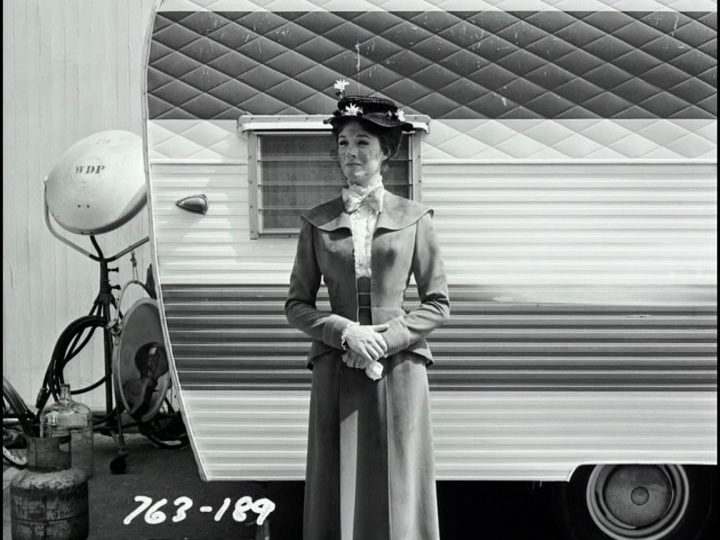
On October 1, 1935, actress and singer Julie Andrews (born Julia Elizabeth Wells) was born in Walton-on-Thames, England. During World War II, Andrews’ mother and father separated, with Andrews’ mother joining Ted Andrews in entertaining the troops through the Entertainments National Service Association; they soon married, and Julie was sent to live with her mother and step-father. Julie took private voice lessons with Madame Lilian Stiles-Allen, working on her amazing vocals, which ranged five octaves. At age 12, Andrews sang at the London Hippodrome, which soon led to many other opportunities on the sate, including Cinderella and The Boy Friend, as well as one of her most well-known roles as Eliza Doolittle in My Fair Lady.

Walt Disney was in the audience one night while Andrews performed as Queen Guinevere in the Broadway production of Camelot. After the performance, he went backstage and offered her the lead role in his new feature film, Mary Poppins. She agreed tentatively, as there was a chance that she would be in the film version of My Fair Lady; when the role of Eliza went to Audrey Hepburn, Andrews began the work on Mary Poppins. The film was a success, and made Andrews a star, with her winning an Academy Award and a Golden Globe for her performance. She starred in several high-profile films after this, including The Sound Of Music, which garnered her another Golden Globe, and a nomination for another Academy Award.

Andrews is best known for playing the title character in Disney’s Mary Poppins, a role that won her the Academy Award for Best Leading Actress

In 1991, Andrews was named a Disney Legend. In 2001, Andrews returned to Disney films by playing the role of Queen Clarisse Marie Renaldi in their adaptation of the Meg Cabot series The Princess Diaries, as well as the sequel The Princess Diaries II. In 2005, Andrews was named the Official Ambassador of Disneyland’s 50th Anniversary, promoting the celebration and the park with several events.

September 29

September 29, 2000 – The Theatrical Feature Remember the Titans is Released to Theaters

“I don’t scratch my head unless it itches, and I don’t dance unless I hear some music; I will not be intimidated.”

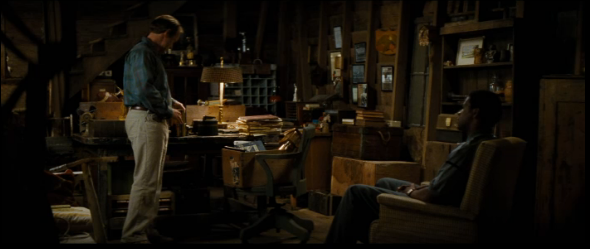
On September 29, 2000, the theatrical feature film Remember the Titans was released to theaters. Based on the true story of the 1971 T.C. William Titans football team, the film tells the story of Coach Herman Boone and the struggles he faces as head coach, as well his dealings with Coach Bill Yoast, as they both try to direct the team during the time of racial turmoil in Alexandria, Virginia. The film was a joint production between Walt Disney Pictures and Jerry Bruckheimer Films. The screenplay was written by Gregory Allen Howard, with the film being directed by Boaz Yakin, and starring Denzel Washington as Coach Boone, Will Patton as Coach Yoast, Wood Harris as Julius Campbell, Ryan Hurst as Gerry Bertier, and Hayden Panettiere as Sheryl Yoast.

The movie opens at a funeral in Alexandria, Virginia, 1981. The narrator talks about her father coaching in Virginia, where football is considered bigger than Christmas. The film then goes back to July, 1971, just after schools in Virginia were integrated, with crowds of angry people in front of a store where a white store owner killed a black teenager. Some teenagers are seen playing football, when another student arrives and alerts them about the shooting. Their coach, Bill Yoast, luckily is able to stop them before they get caught up in the fighting. As they arrive back at the school, they are surprised to see Herman Boone, the new assistant coach, in Yoast’s office. After some tense words, Boone reassures Yoast that he comes with one purpose: to win.

Boone (R) tries to convince Yoast (L) to join his team as the assistant coach, after apologizing for the circumstances but still maintaining that he has the skills to be head coach

The announcement comes soon after: Boone has been placed into the head coaching position by the school board. Boone is against the decision, as he left his position in North Carolina for being passed over due to race, and is against doing the same thing to someone else. Boone goes to Yoast’s house to offer him an assistant coaching position, but Yoast turns it down. He changes his mind when he realizes that the kids he coaches are putting their scholarships on the line.

The students go to football camp at Gettysburg College, with former team captain Gerry Bertier clashing not only with Coach Boone, but particularly with other player Julius Campbell. Boone is constantly making the two teams work together, forcing them to work together as one team. After a run to Gettysburg Battlefield, the two teams slowly begin to work together, with Julius and Gerry beginning to become friends. Unfortunately, when they get back home to Alexandria, the racial tensions they left behind are there to meet them, threatening to tear apart their newly formed team friendships. There’s more news for Boone as well: the moment he loses a game, he will be fired.

The community slowly begins to rally around the Titans as they go on to win every game they play

After a nearly disastrous first game, the Titans go on to a great winning streak, with the town slowly coming around to support the team. Although Gerry becomes good friends with Julius, his friends and family don’t share his viewpoint. Yoast is also having problems with the people in his life; his friend Coach Tyrell deserts him when Yoast continues to work with Boone, and when his daughter spends time at the Boone’s house, a brick is thrown through the window, which causes Yoast much concern and highlights the tensions between the two coaches. Yoast is put to the test when his nomination to the Hall of Fame is on the line: he will only stay a nominee if he helps throw the next game. In the end, he tells the referees that he knows they’re helping to throw the game, and refuses to contribute any more to the scheme. This loses him the Hall of Fame, but Yoast believes he’s gained something more.

After this game, Gerry is in a terrible car accident during the celebrations, and everyone rushes to the hospital. He becomes paralyzed from the waist down from his injuries, and will only speak to Julius. Julius promises that Gerry will pull through this, and they’ll grow old and fat in the same neighborhood, where race will no longer be an issue. Although Yoast believes that the team should take a break, Gerry refuses to let that happen, saying, “I’m hurt. I ain’t dead.” He then suggests to Yoast about entering the Wheelchair Games.

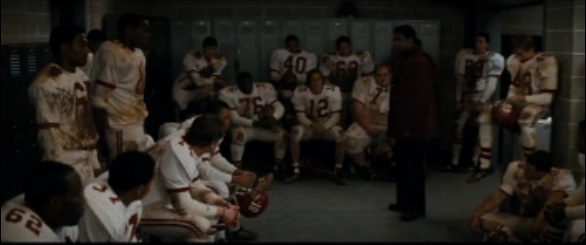
The team sits in the locker room during half-time of the state championship, telling Coach Boone that they came on to the field perfect, and that’s how they want to leave it

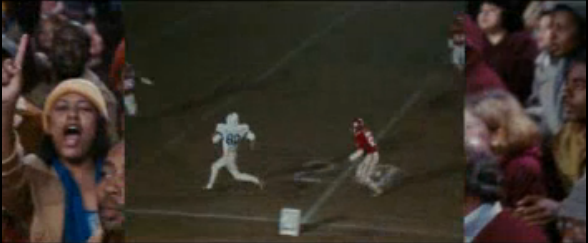
The final showdown is between the Titans and Coach Ed Henry for the state title. Not only is the team finally working together, but Yoast comes to the realization that he and Boone can work together, as does Boone. With one final play between the two, the Titans win the game and the state championship. Yoast’s daughter Sheryl continues her narration from the beginning of the film, saying that the Titans had a perfect season, going on to become the 2nd best high school team in the country. Gerry also won a gold medal in shotput in the Wheelchair Games, with coaching from Yoast. 10 years later, he passed away, which brings the audience back to the funeral from the beginning of the film. The film concludes with updates on many of the players, and includes Boone and Yoast, who “became good friends, and they continue that friendship today.”


August 29

August 29, 1998 – The Disney Channel Original Movie Brink! Premieres

Image credit: wikipedia

“We skate for fun. We’re soul skaters.”

On August 29, 1998, the Disney Channel Original Movie Brink! premiered. The film is considered a loose, modern adaptation of the 1962 made-for-television Disney film Hans Brinker or The Silver Skates, although the backdrop is inline skating in California rather than ice skating in Holland. The film was directed by Greg Beeman, produced by Bernadette Caulfield, and written by Jeff Schechter. It starred Erik von Detten as Brink, Sam Horrigan as Val, and Christina Vidal as Gabriella.

Andy Brinker, known by others as “Brink,” and his friends Peter, Jordy, and Gabriella, call themselves “Soul Skaters” – those who skate for fun rather than make a profit. Their free-skating attitude clashes with a sponsored team known as the X-Bladz, led by their classmate Val. Although it goes against what Brink believes, he decides to join the X-Bladz once he finds his family is in financial difficulty, hoping to earn enough money to help. His friends don’t realize what Brink has done, but when they do, they feel betrayed, and challenge the X-Bladz to a downhill race.

The X-Bladz win, thanks to Val cheating and causing Gabriella to fall and wind up seriously hurt. The Soul Skaters disown Brink, calling him a sell-out. After seeing his son work so hard to help his family, including working at a dog-grooming store called “Pup’N Suds,” Brink’s father decides to help his son and the Soul Skaters prepare for a local competition and revenge against the X-Bladz. The Soul Skaters accept Brink back in, and end up sponsored by the dog-grooming store. At the competition, it comes down to Brink and Val, with Val again trying to cheat. Brink wins, and Val is kicked out of the X-Bladz for cheating. Although Brink is offered the chance to become the captain of the X-Bladz, he turns it down to go back to his friends and their attitude of skating for fun, not profit.

August 15

August 15, 1946 – The 8th Animated Feature, Make Mine Music, is Released to Theaters

“Make mine music and my heart will sing.”

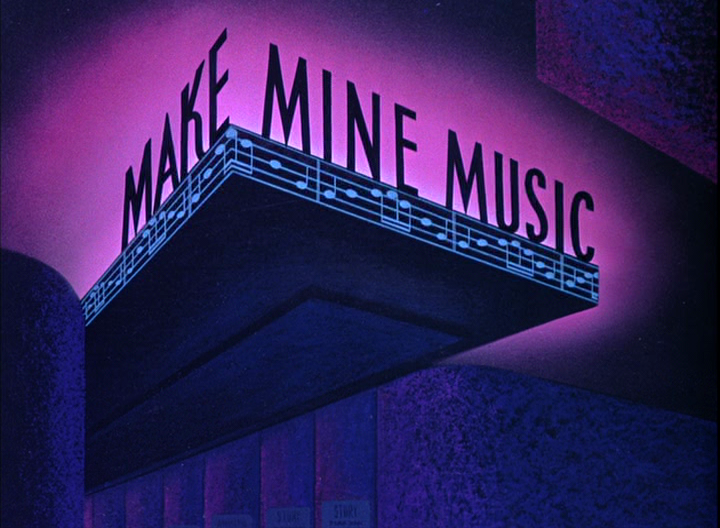
 On August 15, 1946, Disney’s eighth animated feature, Make Mine Music, was released to theaters. This was the first postwar package film released by Disney, as financial problems prevented the studio from creating a full animated feature. The talents in the film include Nelson Eddy, Dinah Shore, Benny Goodman, the Andrews Sisters, Jerry Colonna, Andy Russell, Sterling Holloway, Riabouchinska and Lichine, Pied Pipers, the King’s Men, and the Ken Darby Chorus. The music director was Charles Wolcott, with songs written by Ray Gilbert, Eliot Daniel, Allie Wrubel, and Bobby Worth. The production supervisor was Joe Grant, with sequence directors Jack Kinney, Clyde Geronimi, Hamilton Luske, Robert Cormack, and Joshua Meador. Many segments have been shown as separate entities on television and as short films before theatrical releases; the film has never been released on home video in its entirety.

The first segment is The Martins and the Coys, featuring the popular radio vocal group The King’s Men. The segment, a play on the story of the Hatfields and the McCoys where two members of the rival families meet and fall in love, was cut from the video release due to the gunplay aspect of the segment. It has yet to be released on home video.

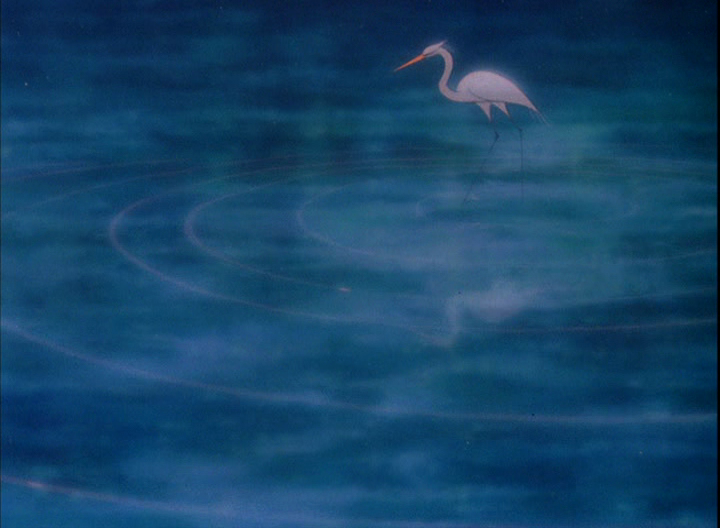
The crane in the bayou from the segment Blue Bayou

The next segment is entitled Blue Bayou, sung by the Ken Darby Chorus. It is a slow, artistic piece about a moonlit night in the bayou, and a majestic crane that explores before it flies off into the night with another crane. The artwork was originally meant for Fantasia, to be used with Claude Debussy’s “Clair de Lune.”

Blue Bayou is followed by a jazz interlude called All the Cats Join In, performed by Benny Goodman and his orchestra. A sketchbook opens on a drafting table, and a pencil springs to life and draws a jukebox and a cat, then erases the cat, and draws a teenaged boy. The boy calls his friends to meet him down at the jukebox at the malt shop. Everyone races down to dance at the malt shop, while the pencil continues to draw the story out for the audience.

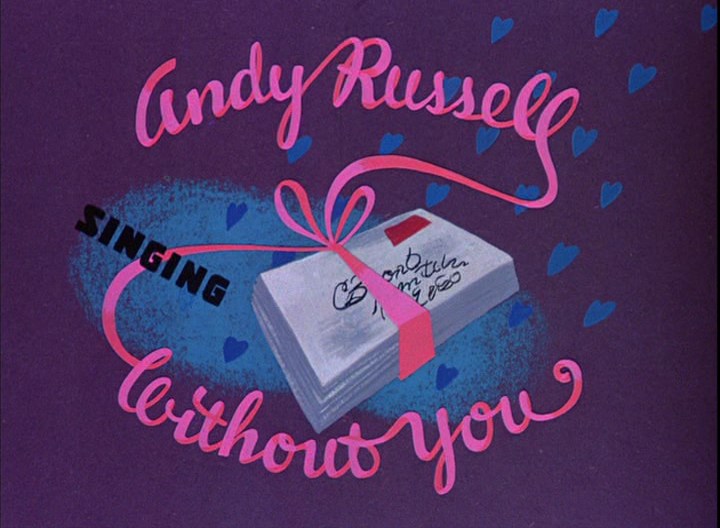
A ballad in blue follows, with Andy Russell singing Without You. The rain falls outside a window in a dark room, which lightens enough for the audience to see a love letter on a nearby desk. The focus then goes back to the window to show a rather gloomy willow tree at the side of a river. Different scenes appear on the screen to match the lyrics of the scene, including church windows and a starry night. The segment ends back at the window, showing the room once again in darkness, reflecting a lone star in the sky.

Jerry Colonna entertains the audience with the next segment, a reading of the poem Casey at the Bat. Every member of the town of Mudville is heading to the ballpark to see Casey, “the pride of them all.” The game doesn’t look so good for Mudville, as they’re losing 4 to 2. Two players manage to hit the ball when Casey comes up to bat. Casey’s a show-off, always flirting with the ladies, and cockily steps up to the plate. The tension is high in the stadium as Casey ignores two pitches and gets two strikes. Everyone watches carefully as Casey gets ready to hit the ball, but the short ends with the famous line, “…but there is no joy in Mudville – Mighty Casey has struck out,” and Casey comically crying in the rainy baseball stadium.

Dinah Shore sings for a “Ballade Ballet” entitled Two Silhouettes, performed by dancers Tania Riabouchinska and David Lichine. The dancers are seen only in silhouette in an animated world. The theme of the ballet is of a boy meeting and losing his love, only to find her again before the end.

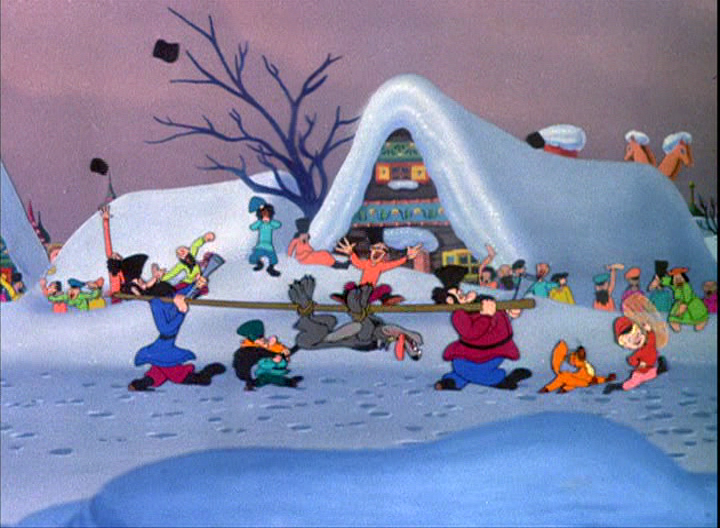
A majority of the cast of Peter and the Wolf, with the town in Russia celebrating the triumphant end

One of the more well-known segments in this film is the Sterling Holloway-narrated version of Sergei Prokofiev’s Peter and the Wolf. The story, with the characters “speaking” through corresponding musical instruments and themes, is about a young boy named Peter (string quartet), who meets with his friends Sascha the bird (flute), Sonia the duck (oboe), and Ivan the cat (clarinet) to hunt the wolf (French horns) that has been haunting the woods, against the wishes of Peter’s grandfather (bassoon). In this animated retelling of the 1936 composition, the ending has been changed to make it more child-friendly, although Peter and his friends still capture the wolf.

The next segment is entitled After You’re Gone, performed by the Benny Goodman Quartet. Animated musical instruments are seen goofing around in true animation style. This is more of an artistic musical fantasy, rather than an animated tale, as seen with the other segments. It serves as a musical interlude between one story segment and the next.

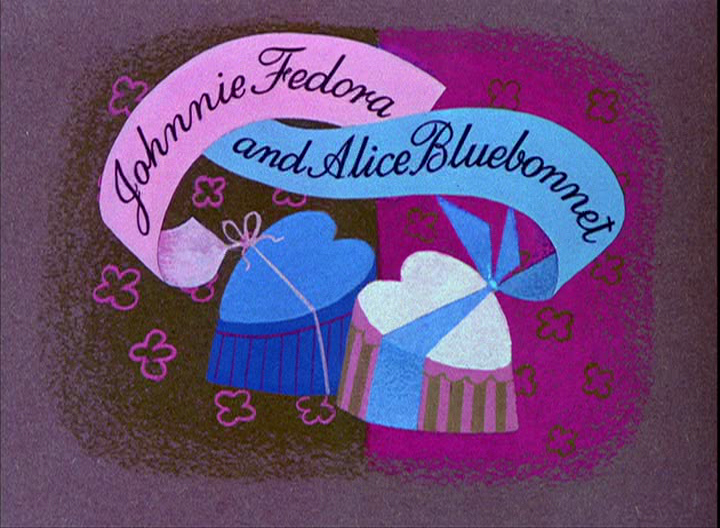
The Andrews Sisters perform the next segment, the love story of Johnny Fedora and Alice Bluebonnet. The two are hats that sit in the window of a department store, with it being love at first sight. One day, Alice is bought for $23.94, and the lovers are separated. Johnny is soon bought by another patron, and his mood improves, as he is able to look for Alice as he travels around the city of New York. The short ends with Johnny and Alice reuniting as hats for the ice-man’s horses.

The last segment of the film, known as “Opera Pathetique,” is The Whale Who Wanted to Sing At The Met, feaures Nelson Eddy, who performs as all the characters. The segment tells the tragic story of Willie the Whale, who dreams of signing at the Metropolitan Opera. The story of his singing makes front-page news. Impresario Tetti-Tatti declares that Willie must have swallowed an opera singer, and announces that he will go and save the singer. In the end, after an elaborate dream segment of Tetti-Tatti discovering Willie and making him a star, Tetti-Tatti harpoons Willie, killing him. However, Eddy reassures the audience that Willie is now performing in Heaven to a sold-out crowd.

August 3

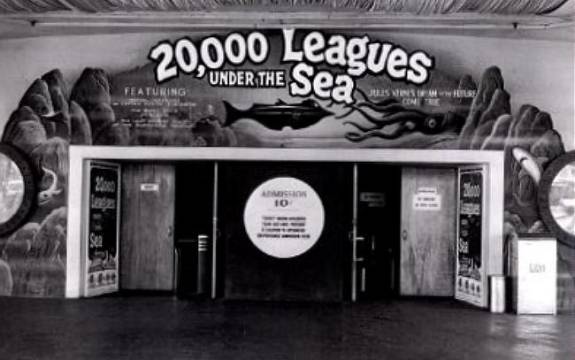
August 3, 1955 – The 20,000 Leagues Under the Sea Exhibit Opens in Disneyland

Image Credit: Vulcaniasubmarine.com

On August 3, 1955, the 20,000 Leagues Under the Sea Exhibit opened in Disneyland’s Tomorrowland, and lasted until August 28, 1966. The exhibit came about purely by accident; as the date for Disneyland drew near, Disney realized that he’d fallen behind on Tomorrowland. The film, released December 23, 1954, was immensely popular, so it was decided that the sets from the film would be used for a walkthrough attraction. This stopgap attraction proved to be more popular than expected, and lasted 11 years.

The sets were brought out of storage again in 1989 at the Disney-MGM Studios in Florida, and continued to be a popular attraction. Based on the resurgence in popularity, a similar attraction was built for Disneyland Paris in 1994, known as Les Mystères du Nautilus.

July 26

July 26, 1986 – The Disney Channel Premiere Film The Parent Trap II Airs

“No! Absolutely not!  I don’t care whose father he is – I’m not about to be fixed up by my eleven-year-old daughter!”

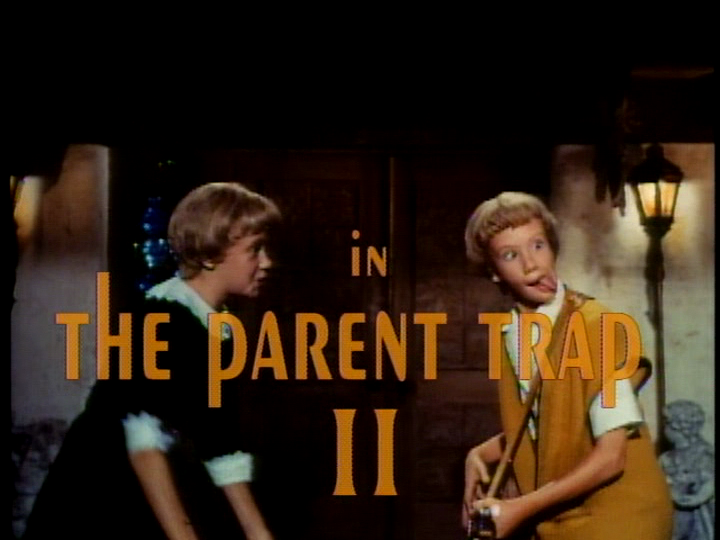
On July 26, 1986, the Disney Channel premiered The Parent Trap II, the sequel to the 1961 hit film starring Hayley Mills. Mills reprised her roles of the twins Sharon and Susan; the film also starred Carrie Kei Heim as Nikki, Bridgette Andersen as Mary, and Tom Skerritt as Bill, and was directed by Ronald F. Maxwell. There’s a piece of Disney trivia hidden in the film: the name of Sharon’s boss is Mr. Walter Elias, which is Walt Disney’s first and middle name; Mr. Elias’ wife is named Lillian, which was the name of Disney’s wife.

Sharon Ferris has been offered a job in New York City, only her daughter Nikki doesn’t want to go. Sharon tells her daughter that the move will be fine, and sends her off to summer school. At school, Nikki meets a girl named Mary Grand, and the two become fast friends. The two find that they have one thing in common: they’re the children of single parents. Mary’s mother died when she was a young girl, and Nikki’s parents have gone through a divorce. As the two become best friends, they try to come up with a plan to get Nikki to stay. Mary gets the bright idea that the two should set their parents up, and Nikki readily agrees.

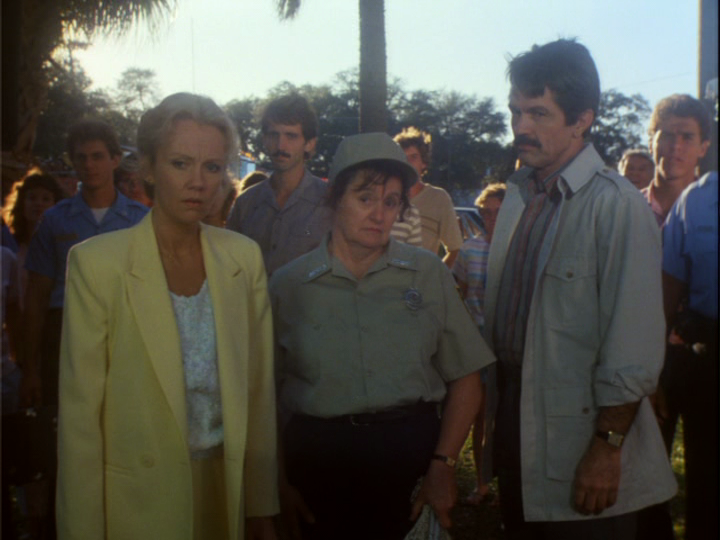
Sharon and Bill meet for the first time, although not under the best circumstances

Nikki hits a snag when she first tells her mother about Mary’s father, Bill; Sharon is not ready to try dating since her divorce two years before. The girls then set up a plan, telling the other’s parent that their child is stuck in a tree, hoping that their parents will meet. The plan is a disaster, to say the least, but the girls are determined to try again, this time sending a bouquet to Sharon’s mother, pretending they’re from Bill with a card inviting her to dinner. They hit another snag, when Bill is heading out to a date, but the two share a friendly, if awkward, moment.

The two girls are ready to throw in the towel, when Nikki wonders aloud how her mother and aunt were able to get their parents back together when they were young. Nikki then gets the bright idea to bring her Aunt Susan to Tampa to help the two with their plan. Susan agrees to help, and the three set their plan in motion for Susan to pretend to be Sharon. Susan shows up at Bill’s regular haunt, and the two hit it off. The plan seems to work, until Sharon gets suspicious, and Susan gets second thoughts. Finally, Susan gives in for one more date, and Sharon figures out that Susan is in town.

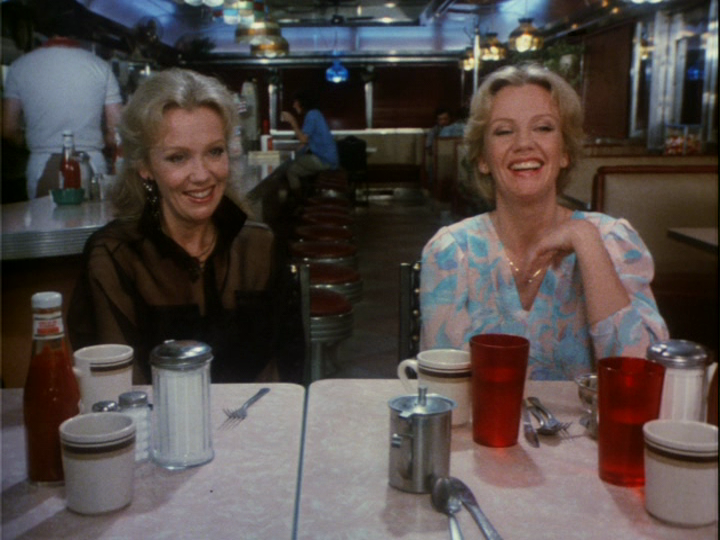
Sharon (L) and Susan, laughing and explaining to the two men the entire plan that the kids concocted

The following night at the dinner the kids and Susan plan, Sharon intends to play a little prank on the scheming trio, calling up Susan’s husband and pretending he’s on a date with another woman, which is just Sharon dressed up in a disguise. The ruse being up, Susan, Sharon, and the two men go out to another restaurant and explain the entire thing. Sharon and Bill are left alone, and Sharon tries to let Bill down easy. He insists that they start fresh, but she is firm that they just stay friends.

The girls have one last idea that takes place at the farewell party for Sharon and Nikki on Sharon’s boss’s yacht. After changing the invitations to read an hour earlier than the party’s actual start time, Nikki and Mary trick their parents into being alone on the yacht before letting it loose and sending it out to sea. When Sharon steps out for air and the two realize what has happened, they finally succumb to the feelings they have and kiss. Soon after, the two are married, and Nikki and Mary rejoice in the fact that their plan worked, and Nikki won’t be going to New York after all.

July 23

July 23, 1953 – The Live Action Film The Sword and the Rose is Released to Theaters

“Because I like him. And if I liked him not, you’d fall in love with him.”

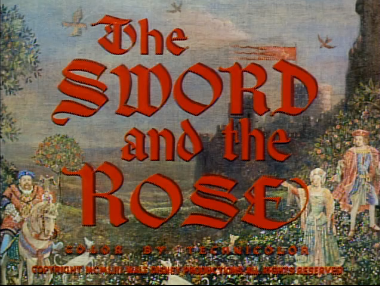
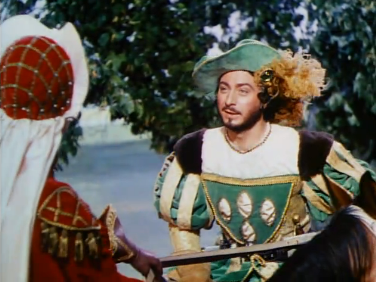
On July 23, 1953, the live-action adventure film The Sword and the Rose was released to theaters. Based on the 1898 novel When Knighthood Was in Flower by Charles Major, it was the third and most elaborate live-action film to be created with the blocked-up funds that Disney had amassed in England during World War II. A policy had been passed that money made in England during the war could not be brought back to the United States, and the Disney Studios used those funds to create Treasure Island, Robin Hood and His Merrie Men, and The Sword and the Rose. The film was directed by Ken Annakin, and starred Richard Todd as Charles Brandon, Glynis Johns as Mary Tudor, James Robertson Justice as Henry VIII, Michael Gough as the Duke of Buckingham, and Jean Mercure as King Louis.

The film is set at Windsor Castle in the early years of the reign of King Henry VIII, and begins with a wrestling match between the English and the French. Henry’s sister, Princess Mary Tudor, appears as he is watching the match, and goes to greet her brother. Henry is not happy that the English are losing to the French, and when he asks if anyone can beat the French, a newcomer to the court named Charles Brandon offers his services. The Duke of Buckingham, vying for the affections of the fair Mary, first tries to wrestle the French, and is successful. Mary, eyeing Brandon, asks her brother how he thinks the newcomer would fare against Buckingham. The two set up their scuffle, and Brandon emerges as the victor, much to the delight of Mary.

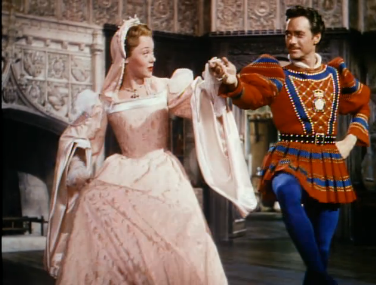
Mary invites Brandon for a private dance in her chambers, highlighting a growing attraction between the two

Brandon is made the Captain of the Guard, thanks to his efforts and the persuasion of Mary. Brandon, however, did not want to stay in England; rather, he wished to seek his fortune in the New World. One of Brandon’s friends warns him not to fall in love with Mary, but Brandon assures his friend that he will do no such thing. Mary is set up to marry King Louis of France, but clearly does not wish to be; she is also pursued by the Duke of Buckingham, who commands the Tower of London. However, Mary is rather intrigued by Brandon, and arranges to have a private dance with him in her chambers. Brandon is invited to the princess’s party, which angers Buckingham, who dislikes Brandon simply for being a commoner. When Mary picks Brandon for her dancing partner in the opening dance, this seals Brandon’s fate, as far as Buckingham is concerned.

The flirting between Brandon and Mary continues, nearly resulting in a kiss between the two during a hunting expedition. While this is going on behind King Henry’s back, he is continuing to arrange the marriage of his sister to the aging King Louis, hoping that this arrangement will provide peace between the two nations. Lady Margaret, Mary’s lady in waiting, worries about Mary’s pursuit of a commoner, but Mary angrily warns her that “Mary Tudor will marry a beggar if she chooses.” When she rushes to find Brandon, she finds that he has resigned from his post and set of for Bristol to board a ship for the New World. Heartbroken, yet determined, Mary dresses as a boy and follows him, telling him that she intends to sail away with him. The pair finally share their first kiss, and attempt to set sail, but her identity is soon exposed and the two are sent back ashore.

The heir to the French throne, who has not made his attempt to woo Mary subtle in the least, threatens her that she will remain to be his after King Louis dies

When King Henry gets wind of what happened, Brandon is arrested and sent to the Tower of London. Mary pleads with her brother to save Brandon, and promises to even marry King Louis. Buckingham also comes up with the promise that Mary can marry anyone she chooses after Louis dies. Brandon is to be freed after she marries Louis, and she asks Buckingham, whom she believes to be her truest friend, to inform Brandon of the deal, since she is not permitted to see him. Buckingham, however, plans to help Brandon arrange an “escape,” but then have him murdered as he does so. Mary continues to cause mischief, having King Louis drink lots of wine and be active, deteriorating his already frail health. His heir declares to Mary that she is never to leave, as he claims her for his own after the king dies. She sends Lady Margaret to England to find Buckingham and rescue Brandon, but is greeted with grim news, as Buckingham declares that Brandon’s body lies at the bottom of the Thames. Buckingham declares that he will go to France to rescue her himself. Brandon’s friends, however, find Brandon is alive and well, and retrieve him from his hiding spot.

Mary leaves with Buckingham, and he informs her that Brandon is dead. Still consumed with his love for her, Buckingham takes her to rest at a church and tries to force Mary to marry him. She tries to struggle, but he threatens to take her back to the French if she does not agree. Brandon arrives just in time to rescue Mary and the two escape. Brandon notices that they are being pursued by Buckingham’s men, and in ends with a climactic swordfight between Buckingham and Brandon, with Brandon emerging victorious. True to his word, although rather reluctant, King Henry allows Mary to marry whomever she wants, and the king makes Brandon the Duke of Suffolk.

July 17

July 17, 1943 – The Film Victory Through Air Power is Released to Theaters

“Our country in the past has struggled through many storms of anguish, difficulty, and doubt. But we have always been saved by men of vision and courage, who opened our minds and showed us the way out of confusion.”

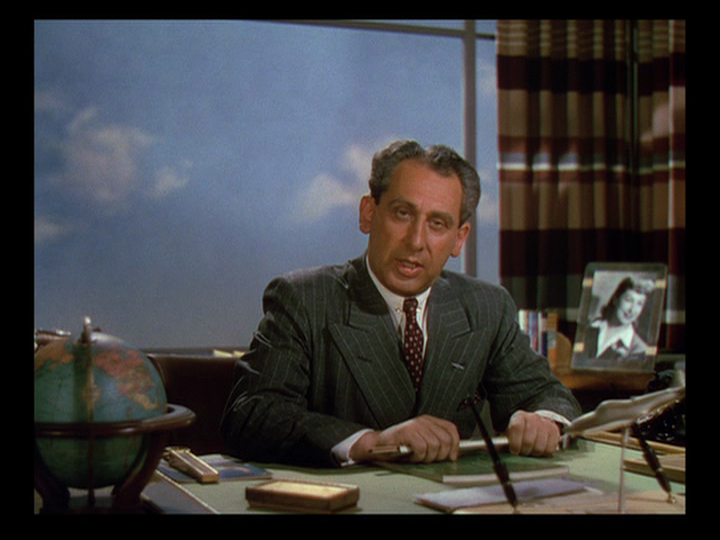
On July 17, 1943, the feature film Victory Through Air Power was released to theaters. The film was based on the book of the same name by Maj. Alexander P. de Seversky, who also served as the on-screen narrator of the film. De Seversky’s book explains how long-range air power could defeat the enemy during World War II. Walt Disney, like many who read the book, was impressed with the material, and it became one of his most ambitious projects. He used the film to educate and send a message to the public rather than to entertain, as at the time the film was released, an Allied victory was anything but certain. H.C. Potter was hired as the live-action director, and David Hand was the Animation Supervisor, with Art Baker as the animation sequence narrator. Critics did not like the film, and RKO, Disney’s film distributor, did not want to release it, so Disney released it through United Artists. The film was nominated for an Academy Award for Best Scoring of a Dramatic or Comedy Picture.

Although the film was not popular with critics, it did the job of presenting the idea of air power to win the war. “[T]he most important response to the movie came from Winston Churchill,” film critic Leonard Maltin explained. “When [Churchill] flew to Quebec for an Allied conference, and learned that President Roosevelt hadn’t seen the movie, he and Air Marshal Tedder prodded him until he ordered that a print be sent to him. H.C. Potter was told by Walt that it was only after Roosevelt saw Victory Through Air Power, that our country made the commitment to long-range bombing. And that, after all, was the reason that Walt committed to making this movie in the first place.”

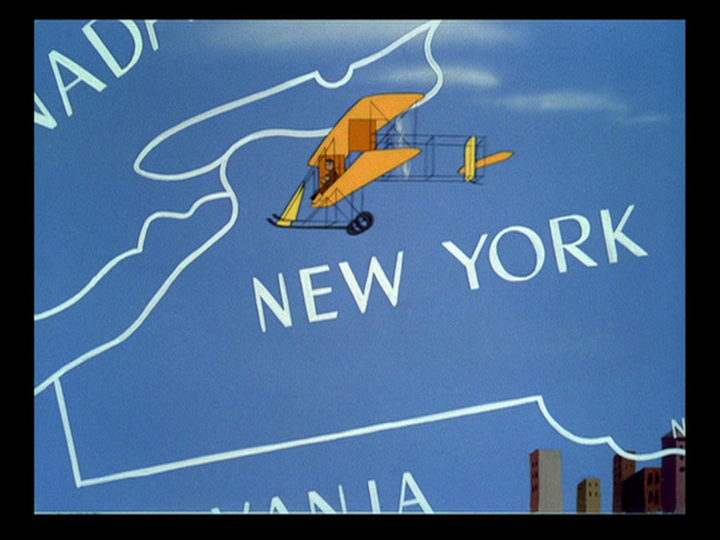
The animated sequence shows the progression of air power, including the first trans-continental flight

The film begins with newspaper clips from past years, beginning with 1919, where men have tried to convince the public about air warfare, and how defense depends on an air army. The film is then dedicated to Billy Mitchell, who was a pioneer in the fight for air power, and the brave airmen of the United States military. The audience then sees the history of flight in an animated sequence, beginning with Orville and Wilbur Wright, and leading into the first air corps, the first aircraft carrier, and the first trans-continental flight. When World War I began, aircraft was used only for observation service, until the installation of the machine gun turned the plane into a weapon. The bomber would soon develop from this idea.

1939 brings about a new war, and American aviation is ready to meet the challenge of the Axis powers. This then leads to the introduction of Maj. de Seversky and his book, Victory Through Air Power. De Seversky began his military education in Russia at age 10, graduating as a lieutenant, and seeking service in 1914. He became a pilot and was assigned flying duties, but was shot down on a night flying mission, resulting in the loss of his right leg at the tender age of 22. Nevertheless, de Seversky became a strong proponent of air power, and the leading ace of air warriors. In 1918, he came to the US and worked for the United States Army, becoming a major in the U.S. Army when he became a citizen in 1928.

Maj. Alexander de Seversky, who explains to the audience why air power is an absolute necessity to win the war

De Seversky begins his speech to the audience, warning that it’s only a matter of time until the U.S. has its share of civilian casualties, thanks to the advances of air power by other countries. He also declares that everyone must understand the strategy of war. There were formerly two ways to destroy the enemy: one was to destroy the enemy’s entire army to grab their source of power, the other was to sink their navy and enforce a blockade. With the airplane, there is no safe place: the plane can attack quickly over the heads of the enemy forces. Those that could foresee the usefulness of air power were considered crazy and ignored. An example is then shown of how England was supposed to attack the Nazis via sea forces, and the French were to attack via the land. Hitler, however, came in with air power, which allowed him and the Nazi forces to take over France. “Only when it was too late,” de Seversky warns the public, “did the French realize that their whole plan of defense was futile.” The British thought they could stop the Nazis through a blockade, only to find their battleships destroyed by bombers. The Royal Air Force grew out of this tragedy, ready to attack Hitler’s air troops. “As long as a nation controls its own skies, it cannot be invaded,” de Seversky tells us as the moral of the British story.

The audience is then shown the first real battle between air power (Nazis) and sea power (British Navy) over the island of Crete. Crete became the first territory to be conquered completely through air power. This then leads to Pearl Harbor, and how American troops left themselves unprotected against the air power of the Japanese troops, because the American troops were instead prepared for traditional naval warfare. De Seversky explains that the Japanese were imitating the German blitzkrieg, and were able to capture most of the Pacific. American armed forces finally realized that no place on Earth was safe without gaining control of the skies above. The success of American victory through air power demanded two things: to produce a vast amount of weapons of endless variety, and to deliver this equipment to battlefronts all over the face of the Earth.

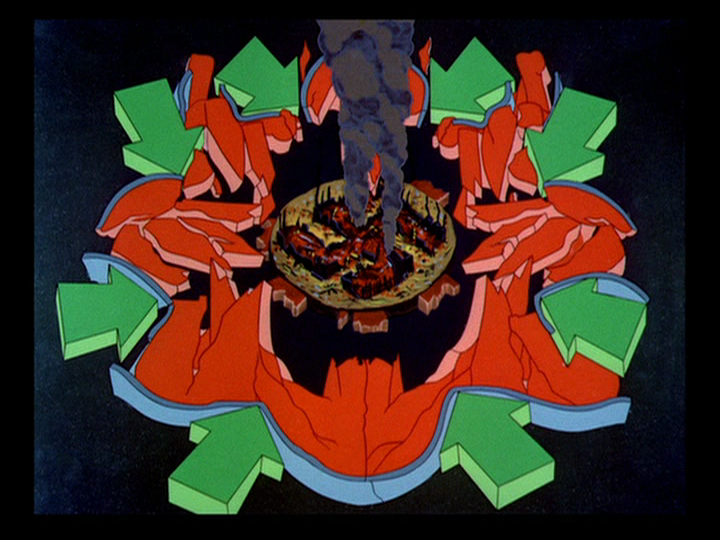
Animated sequences are used through the film to illustrate de Seversky’s points; this image shows how American air power can cut Hitler off at the source, allowing troops to invade

The audience is then introduced to another problem to consider: the transportation of these weapons. America is able to transport across the country with no problem, but gets caught in the slow speeds of shipping to overseas locations. Americans also have to contend with the German submarines. The audience is warned that if Americans fight only on the surface of the Earth, Hitler has all the advantage. Air power would give American forces an advantage and the ability to cut off Hitler’s power at the source. Success will also depend on supply lines, and where American air bases are located. The film ends with a patriotic look at how American forces can use air power and airmen’s skills to win the war. “America should not hesitate to place its destiny in the hands of [the airmen],” de Seversky explains, “for with the strategy of air power, they will make the enemy fight on our terms, against the weapons of our choosing, at our time, but on his soil.”