RSS Feed

Tag Archives: Goofy

January 4

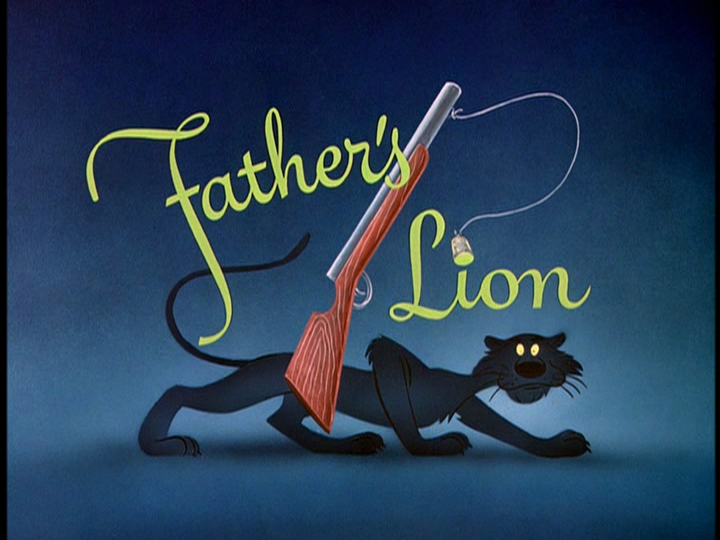
January 4, 1952 – The Goofy Short Film Father’s Lion is Released to Theaters

vlcsnap-2015-01-04-15h18m07s218

“Here is the home of Mr. G. G. Geef, daring adventurer, famous explorer, great athlete, pioneer woodsman, Indian fighter, trapper, and soldier of fortune!…in the eyes of his son, that is.”

On January 4, 1952, the Goofy short film Father’s Lion was released to theaters. This is one of Goofy’s “everyday man” shorts, where he is playing character George Geef. It was directed by Jack Kinney, with story by Dick Kinney and Milt Schaffer.

The sun rises over the quiet suburban house of George Geef and his family, with George taking his kid on a camping trip. Junior is really excited to hear the tall tales George tells, believing them to be reality. When their back tire goes flat, George decides to park the car and climb the trail to the campsite. A mountain lion is trying to rest in the woods, but is disturbed by the gunshots from George’s shotgun as George is shooting at some empty cans. Junior notices a mountain lion in the nearby tree, and George grabs the lion by the tail and beats him up, unaware that he has actually attacked a real mountain lion. The lion is angered by George’s attack and tries to bite George, although Junior saves his father with his pop gun. The lion continues to try and attack George, but is unwittingly beaten by smoke and flapjacks. As they go to sleep, the lion sees this as his chance, but is interrupted by Junior’s requests. Having had enough, the lion attacks the group, and narrowly misses getting shot by George’s shotgun. The lion chases George around the campsite, but once again is thwarted by Junior’s popgun. George decides to get out of dodge, although he starts telling another tall tale as they head back to suburbia.

December 25

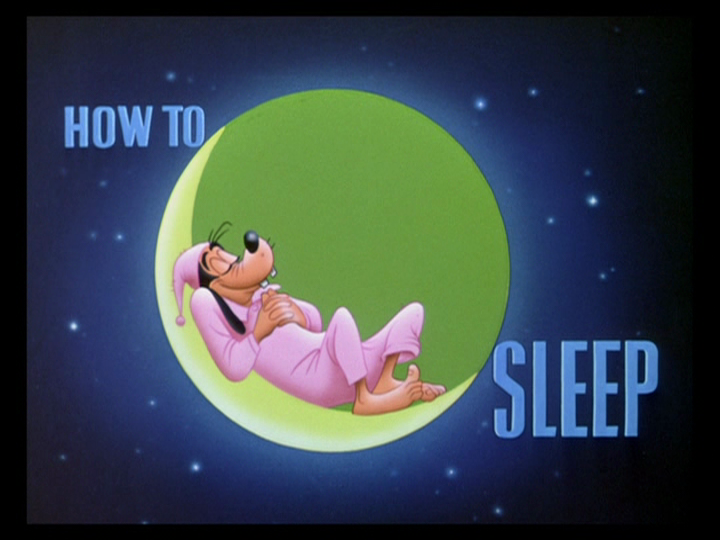
December 25, 1953 – The Goofy Short Film How to Sleep is Released to Theaters

vlcsnap-2014-12-25-21h36m29s21

“Since the beginning of time, man has always had the problem of sleeping.”

On December 25, 1953, the Goofy short film How to Sleep was released to theaters. It was directed by Jack Kinney, with story by Milt Schaffer and Nick George.

The short begins with the history of sleep – or, rather, the lack of it. For present day, they observe various ways people try to go to sleep, from being walked to being rocked. More and more people seem to have difficulty trying to sleep due to the demands of their day. The short then goes into various methods to help people sleep, including hot milk and opening a window. As Goofy tries to count sheep, this only makes his situation much worse. He then has to go see a scientist to help him find the best way to sleep using a variety of electronic devices all at the same time. Unfortunately, his dreams continue to keep him awake. In conclusion, the only way science has determined to put Goofy to sleep is to use a giant mallet over the head, effectively knocking him out.

December 21

December 21, 2007 – The Goofy Short Film How to Hook Up Your Home Theater is Released to Theaters

HtHUYHT_1

“Modern sports fans, however, can fully immerse themselves in game day with a new home theater system. The advanced technology practically puts the viewer on the field.”

On December 21, 2007, the Goofy short film How to Hook Up Your Home Theater was released to theaters; this was the first Goofy theatrical short film since 1961’s Aquamania. It was directed by Kevin Deters and Stevie Wermers-Skelton, with story by Deters, Wermers-Skelton, Wilbert Plijnaar, and Dan Abraham. It stars Corey Burton as the narrator, and Bill Farmer as Goofy.

The short begins with a look at the big game, on Goofy’s tiny black and white television, when Goofy sees his neighbor getting a new big screen television and home theater system, and decides to get his own the next day at his nearest electronics store. He is laden down with several “important” elements of his system, and goes to pick his screen, which is the biggest in the store. Finally, it is delivery day, and Goofy waits anxiously, although the system arrives early the next day. The system is so massive that they have to lift Goofy’s house to fit the boxes inside. After unpacking it, and removing about a million packing peanuts, Goofy finds the instructions, although they are incredibly complex. He then has trouble plugging in the cables, and has to use a chainsaw to cut a wall of his house in order to reach the back of the screen. He then sets up all the speakers, surrounding him all around and ensuring eventual deafness. He mounts the speakers in crazy places, leaving wires and overloaded sockets in his wake. After setting it all up, he almost forgets about the big game, when he finds the universal remote and turns the television on. The television explodes, sending Goofy, chair, and screen to the actual playing field, where, after getting pummeled by the players, he remarks that “it’s almost like being there!”

December 20

December 20, 1961 – The Goofy Short Film Aquamania Premieres in Theaters

vlcsnap-2014-12-20-18h32m00s125

“This could be any town, anywhere, anytime, because here, just as everywhere else, one-third of the population are…aquamaniacs.

On December 20, 1961, the Goofy short film Aquamania premiered in theaters. It was nominated for an Academy Award at the 34th Academy Awards, but lost the Yugoslavian short film Surrogat. It was directed by Wolfgang Reitherman with story by Vance Gerry and Ralph Wright.

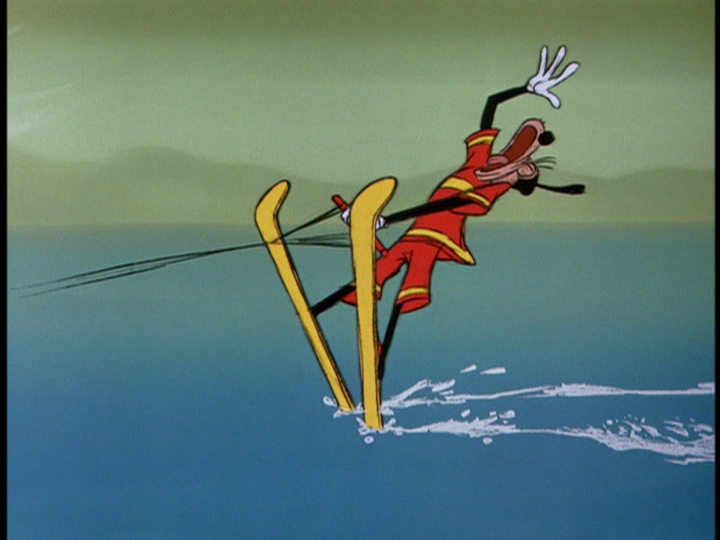
The story begins with the explanation of the term Aquamaniac, complete with diagrams and case-study file. The study is of Goofy, although called by the narrator “Mr. X.” They show his dilapidated home and pristine motor boat. Before he became an aquamaniac, his home was well-kept, and he would walk to work; however, the earliest warning signs showed during his walk, as he loved to walk past a store that sold boats. Although he tries to convince himself that he doesn’t need a boat, he finally gives in and buys one. After purchasing his boat, he takes his son Junior out to the ocean, not noticing that there is a long line of boats and cars waiting to get in for the jet-skiing race. He struggles with getting the boat in the water, and ends up with his car at the bottom of the ocean, completely destroying it thanks to the salt water.

Mr X. desperately tells Junior to stop, but Junior thinks he wants to go faster and win the contest

Mr X. desperately tells Junior to stop, but Junior thinks he wants to go faster and win the contest

Mr. X then puts on his water skis, and Junior excitedly enters his dad in the water skiing race. Mr. X tries to tell his son to stop, but Junior takes this as a sign to go faster. Mr. X ends up flying over the competitors after going over the first jump, but when he lands in the water, he picks up an octopus on his head, who helps him water ski through the slalom. Heading around a turn, Mr. X heads out too far and ends up landing on a cart on a ramp, and flies through the beach. The octopus grabs on to some beach umbrellas, sending the pair high in the sky like a kite, where a bolt of lightning strikes them. They land on the tracks of a roller coaster and, after colliding with the roller coaster carts, end up flying back through the finish line, winning the race.

November 16

November 16, 1990 – The Animated Featurette The Prince and the Pauper is Released to Theaters
vlcsnap-2014-11-16-18h24m50s40

“You needn’t worry about that. To govern, you need to say only one of two things: ‘That’s a splendid idea, I’m glad I thought of it,’ and ‘Guards, seize him!’”

On November 16, 1990, the animated featurette The Prince and the Pauper was released to theaters alongside The Rescuers Down Under. It was based on the classic novel of the same name by Mark Twain. It was directed by George Scribner, with screenplay by Gerrit Graham, Samuel Graham, and Chris Hubbell. It features the voices of Wayne Allwine as Mickey and the Prince, Bill Farmer as Goofy, Arthur Burghardt as Captain Pete, and Tony Anselmo as Donald.

The story begins in England, where times are hard after the good King fell ill and his Captain of the Guard terrorized the people in the King’s name. Mickey Mouse is seen selling kindling in the snow, while Goofy tries to sell snow cones. Mickey cheers Goofy and Pluto up with a song about the life they’ll live one day, just like a king. The Captain passes by with his carriage of drunk soldiers, and Pluto follow after them, spying some food. The door to the castle closes before Mickey can retrieve Pluto, and when he tries to get Pluto back, the guard mistakes Mickey for the Prince and quickly ushers him inside. Inside the castle, the Prince is having his lessons, but yearns to play outside in the snow, and plays pranks on his assistant Donald. The Prince spies the Captain hurting Mickey and Pluto, and orders that Mickey be brought to him at once; the Captain then throws Pluto outside.
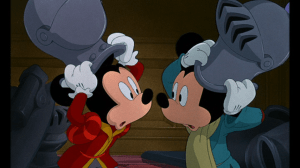
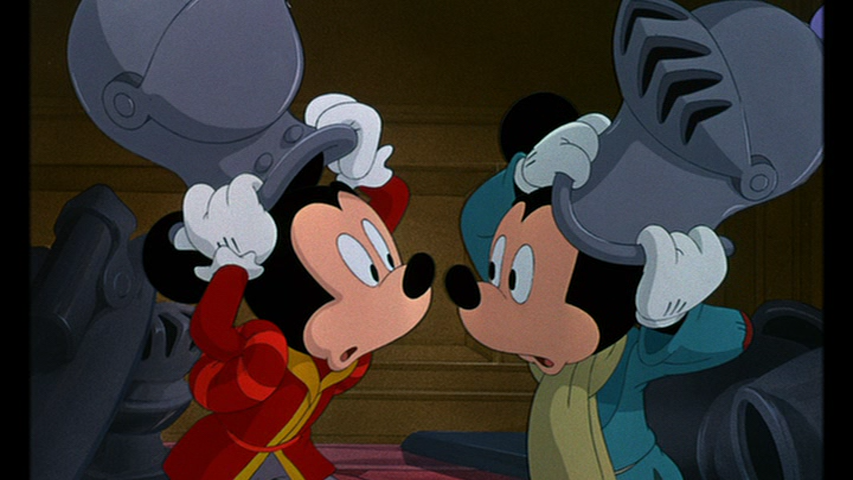
Mickey and the Prince have their first meeting, and are surprised at their similarities

Mickey and the Prince have their first meeting, and are surprised at their similarities

After Mickey accidentally knocks down some suits of armor, he and the Prince come face-to-face, and are shocked at how they look so much alike. The Prince thanks Mickey for “saving his life” of boredom, and asks Mickey to switch lives with him. Mickey is reluctant, but the Prince promises to be back as quickly as possible, and takes a special ring with him to prove he is the Prince, in case he should get into any trouble. As the Prince passes by the Captain, the Captain treats him horribly, giving the Prince the first taste of the cruelty his people have endured. He runs into Pluto outside, but Pluto soon realizes that it isn’t Mickey. Mickey soon meets Goofy, but Goofy doesn’t seem to be fazed by ‘Mickey’s’ strange behavior. The two begin the charade with mixed results.

The Prince sees the guards acting cruelly in the King’s name, and demands that they leave the people alone, but all they do is mock him. The Prince decides to reveal his identity to give the food back to the people, but when the guards find him, they decide to arrest him instead. The Prince is able to give them the slip, thanks to the “help” of Goofy, and the Captain is less than pleased when he hears what happens. Unfortunately for Mickey, the King is close to death, and wishes to see his son. Mickey goes in to see the King, and hears the man’s dying wish: rule the land from his heart, justly and wisely. Not knowing what else to do, Mickey promises to do so as the King dies. After he leaves the room, the Captain captures Mickey, and threatens to hurt Pluto if Mickey doesn’t follow his commands. The Prince hears the news as he stays with Goofy, and is heartbroken. He decides to head back to the castle to right the wrongs he’s seen. However, he is captured by the Captain and the guards before he can head back to the palace.
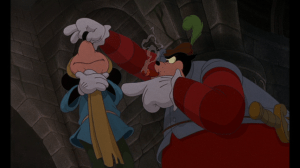
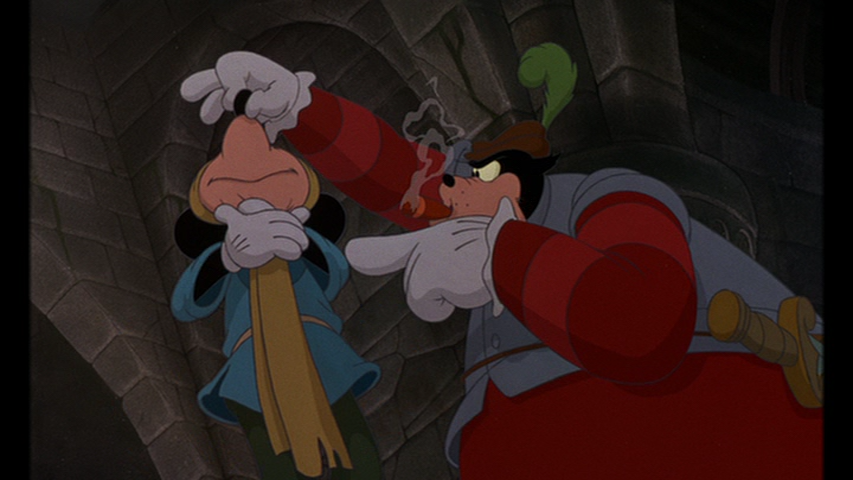
The Captain plans to keep the Prince locked in the dungeon while Mickey takes the crown

The Captain plans to keep the Prince locked in the dungeon while Mickey takes the crown

The Captain throws the Prince into the dungeon with Donald right before the coronation, and the plan that he will take over once Mickey is crowned. Mickey, however, does not want to enter the ceretmony, but is “convinced” by Pete holding up Pluto. While the Prince waits, the executioner appears, although it’s Goofy in disguise, and he helps break them out. They manage to outrun the guards, and make it to the coronation just in the nick of time. The Prince does battle with the Captain, with Pluto, Goofy, and Donald helping to fight the guards off. The Captain and his guards end up thrown out a window, and the Prince is crowned the King of England, much to the joy of the subjects. Mickey, Goofy, and Pluto are made the companions of the Prince, and rules with justice and compassion for all.
November 14

November 14, 1941 – The Goofy Short Film The Art of Skiing Premieres in Theaters

vlcsnap-2014-11-14-18h44m16s60

“Skiing is fast becoming the most popular of all winter sports. And small wonder, for there is no finer conquest than that of a mountain clad in its glorious winter mantle of glittering white.”

On November 14, 1941, the Goofy short film The Art of Skiing premiered in theaters. It was directed by Jack Kinney.

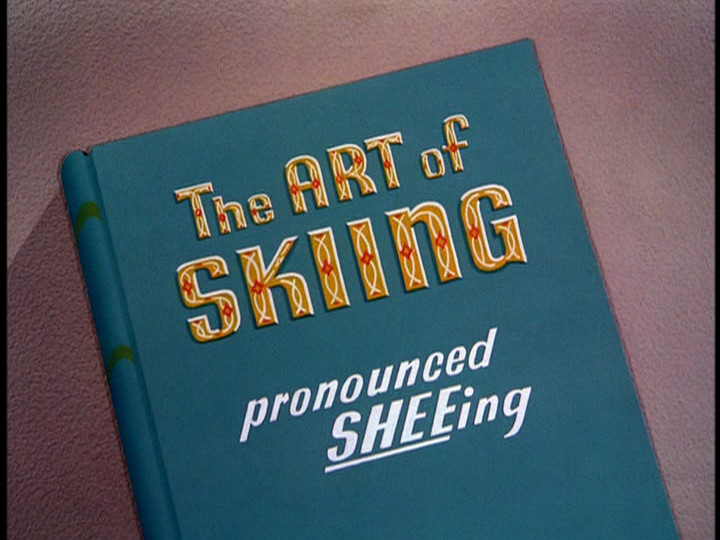
The short begins at the Sugar Bowl Lodge, with Goofy fast asleep inside, clad in several blankets and jackets to keep him warm, as his breath turns to ice. His alarm goes off and he slowly wakes up, removing several hot water bottles. As the narrator explains the skier’s proper attire, Goofy slowly gets dressed, and goes straight back to sleep. The narrator wakes him up again, and he dons a sweater and hat before setting off on his skiing adventure, forgetting his trousers. He tries to pull them on over his skis, but of course he has some difficulty. Finally, he is ready to ski, and he ungracefully gets off the lift. He tries to follow the narrator’s instructions, but ends up in a tangled mess. He heads on his first ski, only to go backwards down the hill and finds himself dangling from a cliff, his head caught inside one of his skis. Goofy then tries to climb up a hill and ends up climbing up too far before falling and creating patterns in the snow. When Goofy attempts to do a jump turn, he is separated from his skis and ends up crossing paths with them several times before they bury him in the snow. He attempts to slalom down a hill and crashes into a tree, then slams into the side of a cliff. He finally tries the ski jump, although his skis end up flying faster than he does, and he tries to reclaim them midair, using them like wings. Eventually he crashes into his room in the ski lodge, falling right back to sleep.

October 21

October 21, 1951 – The Goofy Short Film Fathers Are People is Released to Theaters

vlcsnap-2014-10-21-18h56m24s67

“The new father should start immediately sharing the responsibility for the child’s upbringing.”

On October 21, 1951, the Goofy short film Fathers Are People was released to theaters. This was one of several shorts where Goofy is portrayed as everyman George Geef. There is also a Hidden Mickey in this short, found on Junior’s bed. The short was directed by Jack Kinney, with story by Dick Kinney and Milt Schaffer.

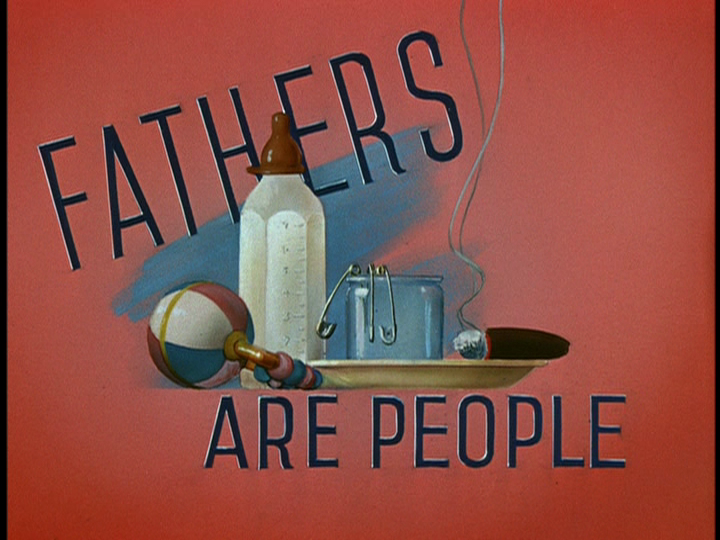
The short begins with George entering the waiting room in the hospital with a box of cigars, proudly announcing that he is a father. Soon after, he is seen performing chores around his house, hanging up diapers, collecting milk bottles, preparing bottles for his son, and trying his best to help his wife. In the middle of the night, George goes to feed Junior, and ends up making himself a cocktail before turning off the light. The next morning, it’s time to take the family to Grandmother’s, forgetting one important thing: the baby. A picture diary shows the milestones in Junior’s life, including his first tooth, first step, and first word. One Sunday morning, Junior is seen getting in a fight with a neighborhood kid, with George and the other father fighting over which kid is in the wrong, although the kids just begin to play again. George tries to play with his father, but this “play” wears George out, as Junior is rather rough. George tries to sit and read the paper, although Junior pesters his father, wanting him to play. Junior also disobeys his father, and George tries to use reverse psychology, but to no avail. In the end, George falls on a roller skate, and decides that he’s had enough, and is going to give Junior a paddling. However, Junior is able to weasel out of it by acting cute. George decides that kids aren’t that bad, and wishes he had a million of them. When his wife asks how a tiny sweater she knitted looks, George panics, but relaxes when he realizes that he and his wife may only have the one child after all.

September 24

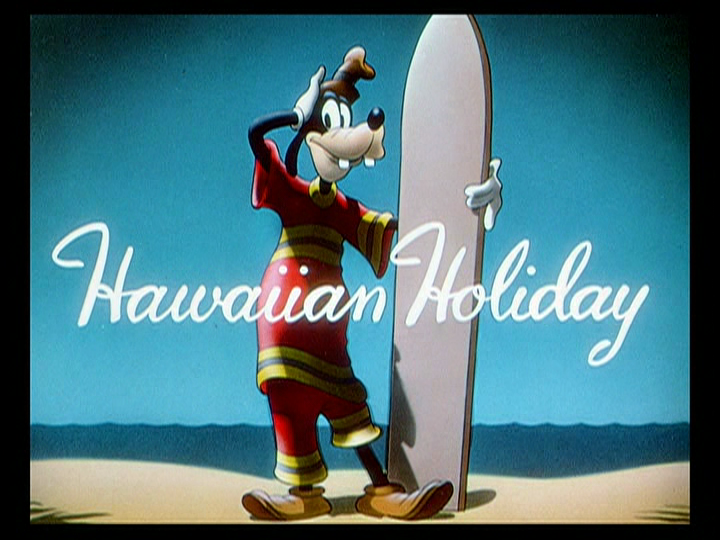
September 24, 1937 – The Mickey Mouse Short Film Hawaiian Holiday is Released to Theaters

vlcsnap-2014-09-24-17h14m53s1

“On the beach at Waikiki~!”

On September 24, 1937, the Mickey Mouse short film Hawaiian Holiday was released to theaters. Although labeled as a Mickey Mouse short, it features Goofy, Donald, Pluto, and Minnie. The short was directed by Ben Sharpsteen.

It’s a sunny day on the beaches of Hawaii, and Mickey and Donald play music to accompany Minnie’s hulu dancing. Goofy in the meantime is preparing to go surfing, although the waves run away from him, before picking him up and bounce him around like a doll. Minnie takes over Donald’s ukulele while Donald dons the hulu skirt and begins to dance. Unfortunately, his tail catches on fire from the nearby campfire, but he continues to dance, unaware. When he finally realizes he’s on fire, he runs as fast as he can to extinguish himself in a nearby pond area, only to get a starfish stuck to his rear. Donald throws the starfish away to where Pluto is, and Pluto chases the starfish back into the ocean. When a wave comes in, it buries Pluto in the sand; the starfish flicks the dog on the nose before jumping back into the ocean.

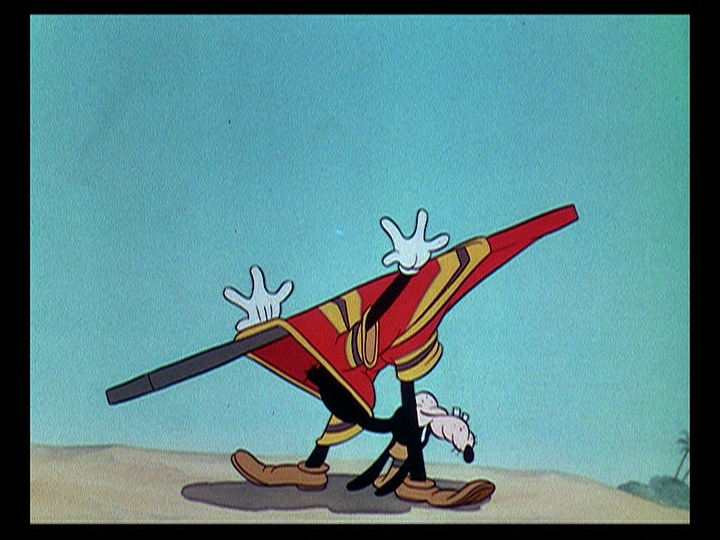
At one point, Goofy gets his surfboard stuck in his swimming outfit, and can't figure out how to get it out

At one point, Goofy gets his surfboard stuck in his swimming outfit, and can’t figure out how to get it out

Goofy continues to try and surf, with minor success, until he loses his surfboard. As he looks for it, it ends up in his bathing suit, and he ends up hitting his head. He tries to push it out, but the results are even more disastrous. Meanwhile, Pluto is free from the sand and exploring the beach, when another wave comes in and causes his head to get stuck in a shell. While he manages to get it off his head, it gets stuck on his rear. After finally ridding himself of the shell, he is unaware that a crab that was inside the shell has attached itself to his tail. The crab tries to pinch Pluto, but is unable to as Pluto looks around for the strange sound behind him. When he finds the crab, it pinches him on the nose, and the dog lets out a yelp of pain and surprise. The two study each other, and end up shuffling sideways across the beach, not losing eye contact until Pluto is buried in the sand again due to a wave. Goofy tries his third attempt at surfing, and announces to his friends that he’s made it, until the wave grabs his board and slaps him with it, sending him flying into the sand, with his surfboard sticking out of the sand. Mickey, Minnie, and Donald laugh, and Minnie throws him a lei. Goofy shoots out of the sand and gives everyone a sheepish smile.


September 15

September 15, 1944 – The Goofy Short Film How to Play Football is Released to Theaters

vlcsnap-2014-09-15-19h59m32s196

“To the spectator, football may appear rather rough at times, but in reality, it’s a character-building game.”

On September 15, 1944, the Goofy short film How to Play Football was released to theaters. It was seventh of the popular “How To” series that Goofy became known for. The short was directed by Jack Kinney.

The short opens with the narrator listing everything one needs for football: “a college covered with ivy; a coliseum or stadium filled to overflowing with a 100,000 rabid, wildly cheering fans; great armies of vendors; managers; mascots; photographers; sportswriters; doctors; elaborate brass bands; assorted coaches; old grads; scores of Annie Oakleys; and two teams resplendent in brilliant uniforms.” After these elements are put together, the narrator tries to explain the object of the game, but is drowned out by the crowd. The game starts, and the camera tries to follow the players, but can only show the backs of the spectators. The first touchdown is scored by Taxidermy Tech against Anthropology A&M, and the star quarterback is taken out to be saved, as he is Taxidermy’s star player. The next play begins, with many well-placed puns and wordplay. The injured players are soon carted off the field, though their injuries are chalked up to “character-building.” For the next play, a foul is called for unnecessary roughness, but after Taxidermy kicks the ball, everyone seems to fumble about before Anthropology A&M is able to accidentally score a touchdown.

The game gets rather rough after Taxidermy Tech scores the first touchdown

The game gets rather rough after Taxidermy Tech scores the first touchdown

The score is 7 to 6, but A&M is able to score another touchdown, although their final kick doesn’t exactly go over the goalpost, giving A&M a score of 12.5 at the half. In the locker room, the coach for Tech surveys his weary and wounded players, and changes his moods every split second to supposedly rally their spirits. He sends in his star quarterback, who is able to make a touchdown before he is viciously sacked. The coach tries to revive his star, and they send him back in for one final play, although he makes his way around the field in a dazed stupor. By sheer luck, he manages to make the final touchdown, giving Tech the win with 13 to 12.5. The coach is seen driven mad by the game, and is tied in a straight jacket after the game is over.

August 31

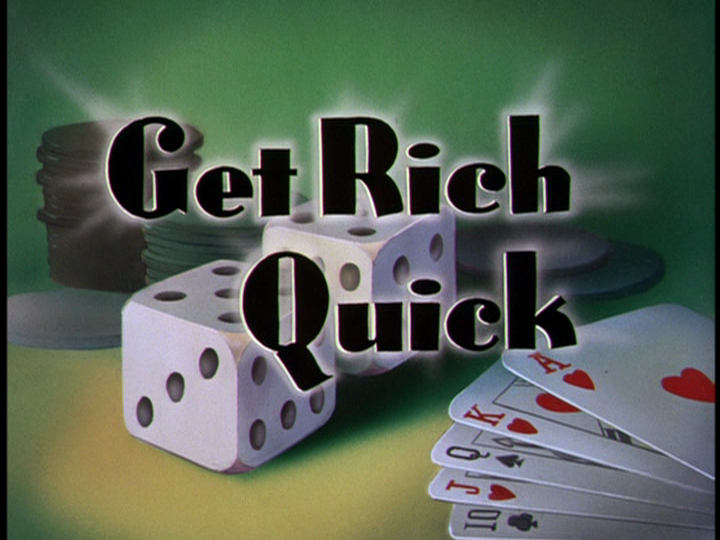
August 31, 1951 – The Goofy Short Film Get Rich Quick is Released to Theaters

vlcsnap-2014-08-31-19h26m42s123

“Eh, put up or shut up!”

On August 31, 1951, the Goofy short film Get Rich Quick was released to theaters. This short was released as part of Goofy’s “everyman” series. It was directed by Jack Kinney, with story by Milt Schaffer and Dick Kinney.

The short begins with the introduction of George Geef, who never passes up a chance to gamble away his money, whether on a football pool, chain letter, pyramid club, and more. He was considered a soft touch and a pushover when it came to betting, but never seemed to win. He never gets too discouraged, as he feels his victory is just around the corner. He plays a dice game in a back alley, and wins a barrel full of cash, which he soon invests at the race track, losing everything. He then heads to a poker game in a smoky room, where all players are wearing their poker faces. The game gets too tense for Geef, but he ends up winning a huge jackpot. He cashes out and soon heads home, where he has another gamble: waking his wife after arriving home in the early hours of the morning. His wife starts lecturing him for coming home so late, but when she sees the pile of money he’s won, she quickly forgives him before taking every penny away from him. He ends with a simple saying: “Easy come, easy go.”