RSS Feed

Tag Archives: Educational

February 21

February 21, 1997 – Club Disney Opens

Clubdisney_logo

“Imagination-powered play site”

On February 21, 1997, the first of five children’s play centers known as Club Disney opened in Thousand Oaks, California. It was billed as an exploratory entertainment area for children aged between four and ten, along with their parents. There were four themed areas within Club Disney: Pal Around Playground, Curiosity Castle, Starring You Studio, and the Chat Hat. Activities for the kids ranged from dressing up in Disney costumes, to playing in an enormous jungle gym, to exploring the latest CD-ROM activities. One other club opened in California, as well as one in Colorado, and two in Arizona. After the five clubs were established, Disney Corporate determined that there was not enough return on investment, and closed all five clubs in November of 1999. The name now belongs to play areas established within Disney park resorts.

February 19

February 19, 2009 – Disney Announces the Acquisition of Kerpoof Studios

Kerpoof

“A standard-based, Web-based creative multimedia suite for students.”

On February 19, 2009, Disney announced that it had acquired Kerpoof Studios, an educational and entertainment media group that specialized in exploring creativity through image creation. The company was lauded for its emphasis on child safety and the educational aspects that made it a favorite in many classrooms. After Disney’s acquisition in 2009, four activities were released in the new combined URL: URock2 Digital Painter, DoubleDuck Comic Creator, Animoids, and JONAS and High School Musical Photo Mashup. However, as Disney’s focus shifted to mobile application development, the decision was made to close Kerpoof in April of 2014.

February 5

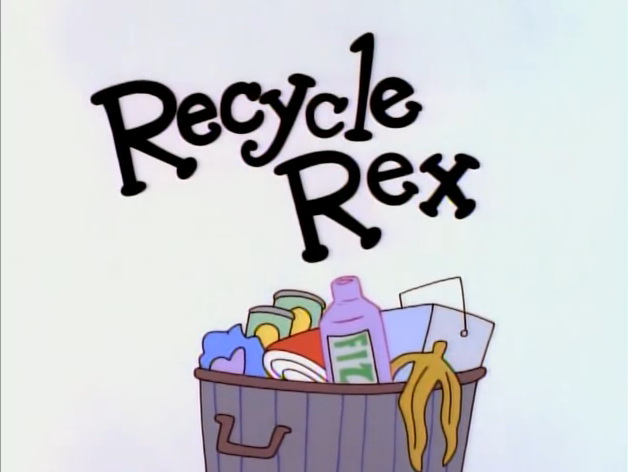
February 5, 1993 – The Educational Short Film Recycle Rex is Released in California

RR_1

“Everybody throws out too much stuff! We’re running out of places to put it.”

On February 5, 1993, the educational short film Recycle Rex was released in California, with a general release on February 26. It was a joint production between the California Department of Conservation and the Keep California Beautiful Youth Recycling Education Campaign, along with Walt Disney Educational Productions as the producer. The film won several awards, including a Certificate of Creative Excellence at the U.S. International Film & Video Festival. It was created and designed by David Cutler, written by Irene Mecchi, and directed by Howard E. Baker.

The short begins with some examples of dinosaurs not recycling before showing the newspaper headline: “Field of Dreams to Become Landfill.” At the Field of Dreams, Rex is excited about how the kids can use the field, unaware of its future plans. His friends are also excited, until someone driving the Trash-o-Matic arrives to dump trash all over the field. Rex asks the driver to stop dumping the trash, and although the driver wants to, he can’t, as there’s nowhere else to put the garbage. When the kids volunteer to take the trash back to the “awful wasteful creatures who threw it away,” they are soon ashamed to find that they are those horrible creatures. The trash guy offers them a solution: get rid of their garbage without throwing it away, and the field will remain theirs. Rex asks Tucker to look up the solution in his Book of Everything, and the book tells them to “Close the Loop,” which confuses the kids more. Their friend Bunsen finds a solution to reuse their broken and discarded items to create something new, and the kids take it to town to recycle. While in town, Rex’s friends become hungry and decide to enter a department store, but Rex tries to keep them on track with getting rid of their garbage, not adding to it. Unfortunately, hunger wins out, and the kids run inside. The kids inside realize they have more garbage than ever, and are unsure what to do. Meanwhile, the Stomper Twins try to dump their cans off the End of the World Cliff, but are guided away but a daisy named Rose, as there isn’t much left in the world and they need to recycle. Finally, Rex finds the Recycling Center, and brings his friends with him with a song. The short ends with the kids finally getting their field.


January 11

January 11, 1942 – The Wartime Donald Duck Short Film Donald’s Decision is Delivered

vlcsnap-2015-01-06-08h14m30s19

“Enlist in our army of regular war savers today!”

On January 11, 1942, the Donald Duck and educational wartime short film Donald’s Decision was delivered to the National Film Board of Canada. The short reuses animation from two previous Donald shorts: 1938’s Donald’s Better Self, and 1938’s Self Control.

Donald is listening to a radio program urging him to buy war savings certificates, and Donald readily agrees – to do it tomorrow. Donald’s angelic side appears and demands that Donald do it now, as there is no time to waste, and Donald reluctantly follows him. The flag on his mailbox swings around to symbolize the Nazi swastika, announcing the arrival of his devilish side, who tries to convince Donald that the money would be better spent on himself, which would help the Axis powers. Donald is soon caught in a tug of war between the angelic and devilish side. The devilish side traps the angelic side and throws him in the nearby lake, but the angelic side fires back, defeating the devilish side. Donald finally agrees to take his money to the post office to buy war bonds. This is then followed by an animated plea to the citizens of Canada to buy war savings certificates.

October 18

October 18, 1946 – The Educational Film The Story of Menstruation is Delivered

SoM_1

“So, as we see now, menstruation is just one routine step in a normal and natural cycle that is going on continuously within the body.”

On October 18, 1946, the educational film The Story of Menstruation was delivered to International Cellucotton Co. (now known as Kimberly-Clark). It was produced through a partnership with Kotex Products. It became a staple of health education classrooms for decades, using animation to depict the changes in a woman’s body through puberty. The film runs about ten minutes.

The film begins with a conversation about glands, namely the pituitary gland, which produces growth hormones. Between the ages of 11 to 17, the pituitary gland sends a new maturing hormone through a woman’s body, particularly to the ovaries. An explanation is given of a woman’s sexual reproduction hormones, and the cycle of an egg. It then goes to describe regularities when it comes to a period, and how timing can go off due to fatigue, catching a cold, or becoming emotionally upset. It reminds girls to keep a calendar for their cycle, and introduces a booklet called “Very Personally Yours,” which was handed out upon viewings of this film. It also dispels any theories that women should not shower or exercise during their period. The booklet also provides exercises to help with cramping, and advises healthy living every day to help keep the body running smoothly.

July 30

July 30, 1942 – The World War II Educational Short Out of the Frying Pan into the Firing Line is Delivered

vlcsnap-2014-07-30-18h30m41s40

“Your pound of waste fat will give some boy at the front an extra clip of cartridges.”

On July 30, 1942, the World War II educational short film Out of the Frying Pan into the Firing Line was delivered to the U.S. government. The short was sponsored by the Conversation Division and the War Production Board, and distributed by the War Activities Committee of the Motion Pictures Industry. It was directed by Ben Sharpsteen.

Minnie is cooking bacon and eggs in a pan on the stove, and the smell attracts Pluto, who is eating his dinner nearby. He scoffs at his dinner, but Minnie offers to give him some leftover bacon grease. As she gets ready to pour it in his bowl, they hear a voice telling them not to throw away the grease. They both turn to the radio, where an announcer informs them that the fats are needed to help win the war, much to Pluto’s annoyance. The fats are used to make glycerin, which is then used to make explosives. Every year, the announcer continues, two billion pounds of waste animal fats are thrown away, which is equivalent to enough glycerin to make 10 billion rapid-fire cannon shells. He continues to give examples about how a little grease goes a long way to helping the war effort. Hearing this, Pluto looks to a picture of solider Mickey on the wall and gives him a salute. Minnie asks Pluto again if he still wants the bacon grease, and Pluto declines. The announcer then instructs Minnie how to store her fats before donating them to the war effort. Pluto donates the fats at the butcher shop, and is rewarded with a string of sausages.

June 30

June 30, 1945 – The Educational Short Film Cleanliness Brings Health is Delivered

vlcsnap-2014-06-30-18h28m35s40

“This is the story of two families: one of them happy, one of them sad; one of them clean, the other, careless.”

On June 30, 1945, the educational short film Cleanliness Brings Health was delivered to the Coordinator of Inter-American Affairs.

The short introduces two families: one clean, happy, and healthy, the other careless, sick, and unhappy. The audience sees how the Clean family lives, and how they make sure everything is kept clean, including their dishes, food, and livestock. The father works in the corn field with his son, and all three members of the family are happy. The Careless family is seen doing several things that cause them to be constantly ill, including cooking on the floor and letting their livestock roam free. The son is seen on the ground with stomach cramps, and he goes into the corn field to relieve himself, although this causes his illness to spread through the crops and the dirt. The Clean family also has a problem with stomach cramps, but they create a simple latrine rather than use the old custom of going into the corn fields. The Clean family also washes themselves and their clothes to continue their health. Finally, the narrator reminds the audience that “cleanliness brings health and happiness.”

June 8

Posted on

June 8, 1956 – The Donald Duck Short Film How to Have an Accident in the Home Premieres
vlcsnap-2014-06-08-18h29m00s12

“My middle name is Jonah, and Jinx is in there, too. Hoodoo fits me like a glove, but Fate’s my name to you.”

On June 8, 1956, the Donald Duck short film How to Have an Accident in the Home was released. This is the first in a string of education films starring Donald that ran through the late ’50s and early ’60s, and was filmed in Cinemascope. It was directed by C. August Nichols, with story by Jack Kinney and Bill Berg.

The short opens with an introduction by J.J. Fate, who shows off an average neighborhood, and an average citizen who lives there (Donald). Donald, however, encounters several troubles on his way home, including being chased by a streetcar and nearly getting hit with a falling piano. Donald thinks he is safe at home, but Fate reminds the audience that nearly 5 million people suffered injury due to accidents in the home in the past year, and is angry that they all blame him. He shows Donald recklessly using a rocking chair to stand on while hanging a picture, with Donald leaving holes in the wall and falling off the chair. Fate then takes a tour of Donald’s accident-filled house, with cluttered stairs, tangles of wires, several lit cigarettes and pipes, and an iron left on and burning a hole through the ironing board. Due to a leaky pipe letting out gas, when Donald attempts to light his pipe, the house explodes.
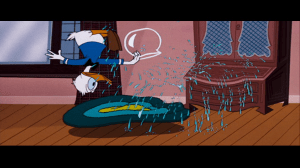
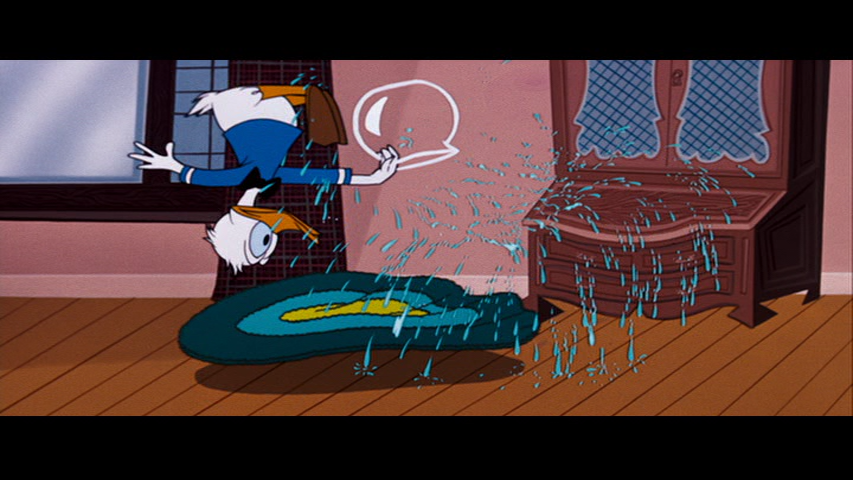
Donald trips on a misplaced throw rug, spilling water from a full fishbowl and literally landing in trouble

Donald trips on a misplaced throw rug, spilling water from a full fishbowl and literally landing in trouble

The next example Fate shows is Donald carrying a full fishbowl and slipping on a throw rug. Fate slows the fall down on the instant replay, and shows each misstep Donald takes to land on the ground with the fishbowl on his head. The next example is Donald in the bathroom, where he slips on soap, gets burned on a vent, and electrocutes himself using his electric razor in the bathtub. Fate explains that, while Donald is an upstanding, average citizen, he takes several chances in his home that should be avoided for safety’s sake. One example is an overloaded circuit with frayed wires, and another is sticking his head in the oven when cooking with gas. Donald continues to have accident after accident, including falling down the stairs in several different ways. Finally, after one nasty fall, Donald decides to clean up his act – literally. He then goes to work, “where it’s safe,” he proclaims, only to have the audience find that he works at the Surefire Dynamite Company. In the end, Fate warns the audience not to blame him for their carelessness.

April 3

April 3, 1946 – The Education Short Film Planning for Good Eating is Delivered to the Coordinator of Inter-American Affairs

vlcsnap-2014-04-03-07h26m03s217

“Yes, it’s this same plan, a plan of eating the three necessary types of food that keeps our friends in fine health.”

On April 3, 1946, the educational short film Planning for Good Eating was delivered to the Coordinator of Inter-American Affairs. During wartime, the Disney Studios kept itself afloat by producing several educational and training shorts for various government offices; Disney kept up the practice after the war was over, which included several shorts featuring the likes of Donald Duck and Goofy.

The short begins with the narrator explaining the diet of several different animals, stating that their one source of food works well for them. He then introduces Careless Charlie and his family, who try to survive on one source of food. He notes their rundown condition, as they don’t seem to realize that man needs more than just beans and cornbread. Corn and beans are the same type of food, and the family is missing out on animal products, as well as fruits and vegetables. Each builds one of the three main needs of a human’s body: muscles, bones, and energy; a combination of the three builds resistance against disease. The narrator tells Charlie that he needs to eat the correct foods, and he is able to grow these foods in his own yard. His family helps him to provide the foods he needs. The family then sits down to a wonderful stew with all three types of foods, with the family looking much healthier and happier. Careless Charlie is then renamed Careful Charlie. Mrs. Charlie is then given a special shout-out, as she works to include all three types of foods into every meal she cooks. The narrator then provides a list of foods that are part of the individual food groups. He stresses the importance of eating fruits and vegetables, especially for growing children. Charlie is rewarded for his hard work, and a combination of all three protects his family from disease and granting them good health.

December 12

December 12, 1941 – The Educational Short Film 7 Wise Dwarfs is Released

vlcsnap-2012-12-11-19h54m08s91

“Heigh ho, heigh ho, we’re the wisest dwarfs we know!”

On December 12, 1941, the educational short film 7 Wise Dwarfs was released theatrically. The short is a wartime piece commissioned by the Film Board of Canada, in conjunction with the Local War Savings Committee, to educate Canadian audiences about the importance of War Bonds during World War II. It features the dwarfs from Snow White and the Seven Dwarfs, years after their first appearance. In the short, the dwarfs sing about “five-for-four” – the phrase meant that by buying war bonds, there was a long-term return of five dollars for every four invested. The short was directed by Dick Lyford and Ford Beebe.

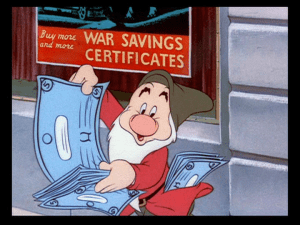
The short begins with the dwarfs mining for gems, singing “Heigh Ho.” Doc throws gems into bags labeled with the dwarfs’ names, and Dopey places the gems Doc rejects into his own bag. The dwarfs then march from the mine past Ottowa’s Parliament Hall, and suddenly stop at the post office. Doc spots a sign in the window, asking citizens to by more and more war savings certificates. The dwarfs run inside the post office, accidentally closing the door on Dopey. Undeterred, he spies the bank nearby, and decides to cash his gems there in exchange for war bonds.

Even Grumpy comes out of the post office happy as he carries his war bonds

Even Grumpy comes out of the post office happy as he carries his war bonds

The dwarfs are then seen leaving the post office, each one’s arms filled with war bonds. They march home, singing that they’ve done their part to “win the war with five-for-four.” The short then turns into a plea to the audience to lend their savings to help pay for weapons and supplies for the war effort, and asking them to “invest in victory.”