RSS Feed

Tag Archives: Births

September 24

September 24, 1936 – Creator of the Muppets and Disney Legend Jim Henson is Born
“One of the things Jim did, in that amazing career, was to really remake puppetry…and nobody had ever made that same transition with puppet theater.”- Jerry Juhl, Muppet head writer

On September 24, 1936, James Maury Henson was born in Greenville, Mississippi. In the late ’40s, the Henson family moved to Hyattsville, Maryland, and Henson later attended school at the University of Maryland. While attending college, he began working on a five-minute puppet show called Sam and Friends. “The magic of what television was is what first made me want to work in television, and puppetry was just a way of getting a job on a television station…television was in its early days,” Henson said about working in television at the time, “so I made a couple of puppets and auditioned, and got a job, and that’s kind of how it all started.” One of the characters on Sam and Friends would be the prototype for Henson’s most famous character, Kermit the Frog. The show had a huge following in the D.C. Metro area, and around this time, Henson began working with Jane Nebel, the woman who would eventually become his wife.

The success of Sam and Friends led to appearances of Henson’s Muppets on talk and variety shows, including The Jack Parr Show and The Ed Sullivan Show. The Muppets were also used for a variety of commercials, including a popular set of commercials for Wilkins Coffee in Washington D.C. In 1963, the Hensons moved to New York and set up Muppets, Inc., and Henson hired Jerry Juhl as a writer, and Frank Oz as a puppeteer. Oz would go on to create a close friendship and partnership with Henson, as seen in the pairings of Bert and Ernie, and Kermit and Fozzie. At this time, Henson created the character of Rowlf, an anthropomorphic dog that played the piano and appeared on The Jimmy Dean Show. “The exposure of Rowlf was pretty significant, I think,” Oz said. “It was the first real country-wide acceptance of one of Jim’s characters.”
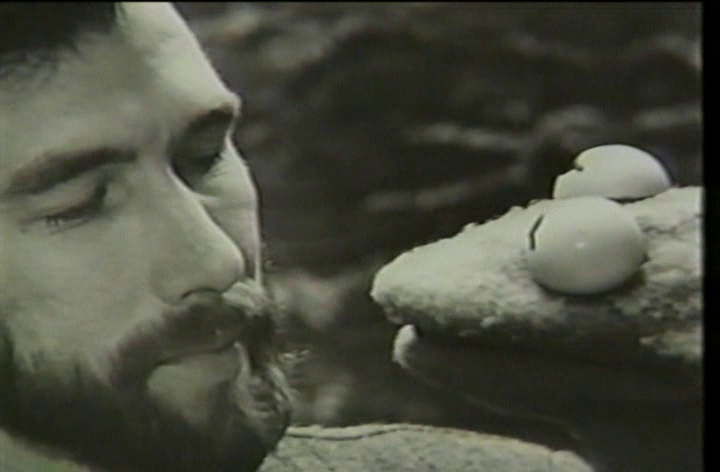
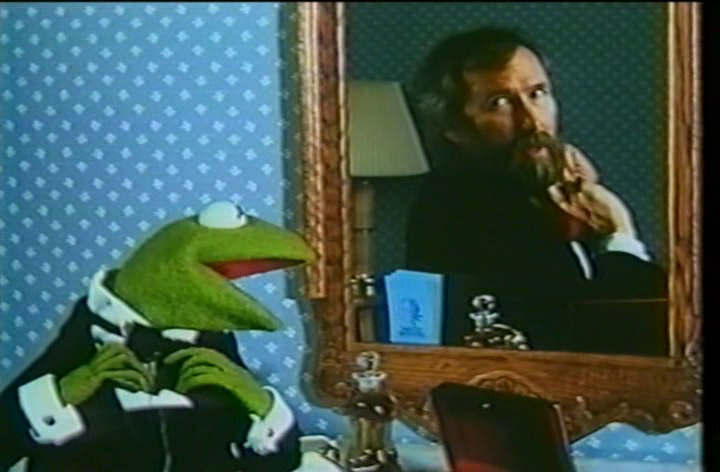
Henson and his alter-ego, Kermit

In 1969, Henson was asked by the team at the Children’s Television Workshop to work on a children’s program for public television. This would turn into the wildly successful show Sesame Street. Its success allowed Henson to get out of creating commercials. While working on Sesame Street, Henson and his team continued to develop sketches for adults, as the company did not want to be typecast as a creator of only children’s entertainment. One of the projects developed was a weekly show that was rejected by American networks, who only saw it as more children’s television. Henson convinced British media impresario Lew Grade to finance the venture, and The Muppet Show aired its first episode on September 13, 1976. The show introduced the characters of Miss Piggy, Gonzo, and Fozzie Bear, and gave Kermit the role of the host. Kermit has been seen as Henson’s alter-ego, much as Mickey Mouse has been seen as the alter-ego of Walt Disney.

In 1979, Henson made his foray into feature films with The Muppet Movie, which was a success both critically and financially. The film was followed with The Great Muppet Caper. After the success of the latter film, The Muppet Show was brought to an end so Henson could focus on more feature films, which included The Dark Crystal, The Muppets Take Manhattan, and Labyrinth. In 1989, Henson entered into negotiations with the Walt Disney Company to handle the business side of the Muppets while he spent more time on the creative side. Several projects were completed at this time, including a television special, The Muppets at Walt Disney World, and a Walt Disney World attraction called Jim Henson’s Muppet*Vision 3D (a still present and popular attraction) [See August 28th entry for more information]. Unfortunately, Henson died before the deal was completed (a new deal would be reached in 2004).

On May 16, 1990, Henson passed away at the age of 53. He was awarded as a Disney Legend in 2011.
September 13

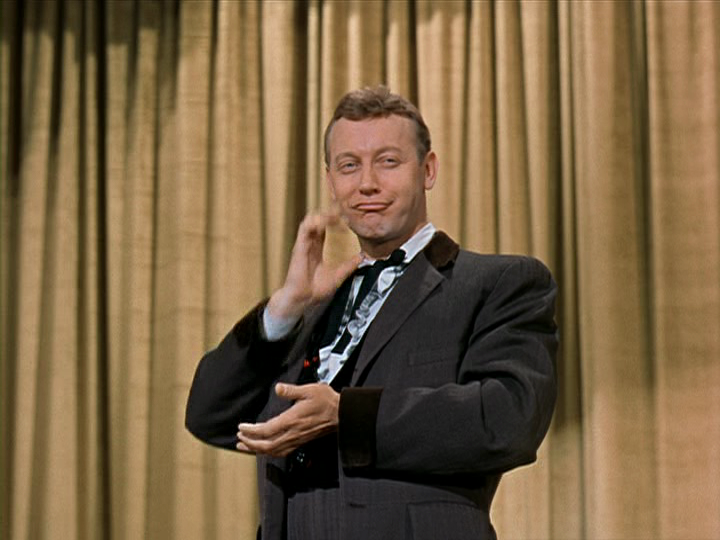
September 13, 1920 – Performer and Disney Legend Wally Boag is Born

“My longest job before the Golden Horseshoe Revue was 54 weeks. And to think it all began with a two-week contract I signed with Walt Disney when the park opened.”

On September 13, 1920, longtime Disneyland performer Wallace Vincent Boag was born in Portland, Oregon. A trained dancer, Boag was teaching his own dance classes at 16, but had turned his attention to honing his comedic skills at age 19. Boag performed at prestigious venues at a young age, including Radio City Music Hall, the Palladium in London, and the Tivoli Theater in Australia. In 1945, Boag was signed with MGM Studios, appearing in such films as Without Love and The Thrill of Romance.

His chance to work with the Disney Studios began in 1955, when a friend told him about auditions for a routine in the new Disneyland Park known as the “Golden Horseshoe Revue.” Boag won a role in the show, and soon became a favorite of Walt’s. While performing the Revue, Boag would also make appearances on “The Mickey Mouse Club,” “Disneyland,” and “Walt Disney’s Wonderful World of Color,” particularly in an episode of the latter program celebrating the Revue’s 10,000th performance in 1962. Boag also appeared in Disney films, including The Absent-Minded Professor and The Love Bug; in addition to these, Boag provided the voice of Jose the parrot in the Enchanted Tiki Room. In 1971, Boag left California to open the Diamond Horseshoe Revue at Walt Disney World, but returned to Disneyland where he remained until his retirement on January 28, 1982. He was inducted as a Disney Legend in 1995, and passed away on June 3, 2011.

September 11

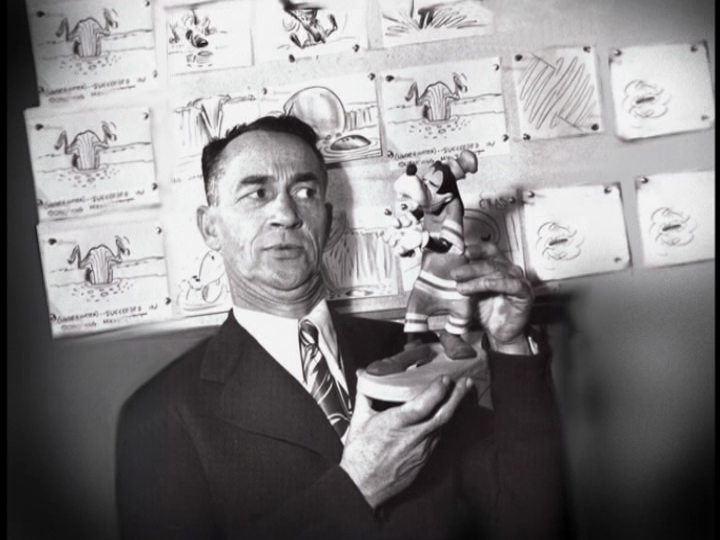
September 11, 1892 – Voice Actor, Story Man, and Disney Legend Pinto Colvig is Born

“[Goofy is] the epitome of all the hicks in the world and the easiest to portray. I guess that’s because I’m a corn-fed hick myself.”

On September 11, 1892, Vance DeBar “Pinto” Colvig was born in Jacksonville, Oregon. The youngest of seven children and a self-professed class clown, Colvig spent his youth performing with carnivals and vaudeville acts. He enrolled in Oregon State College in 1911, taking every spring off to perform with the circus. He quit school in 1913 to join the circus full-time. In 1921, he headed to Hollywood, scoring a job with Mack Sennett, Hollywood’s king of comedy at the time.

In 1930, he came to work at the Walt Disney Studios as a story man, but is well-known and regarded for his vocal range, which was used for several characters, including the Practical Pig in The Three Little Pigs, the grasshopper in The Grasshopper and the Ants (he also wrote the song “The World Owes Me a Living,” with the song now closely tied to Goofy), and his most well-known role, Goofy. Colvig also had two roles in the feature film Snow White and the Seven Dwarfs: Grumpy and Sleepy. After the release of Snow White, Colvig and Disney had a falling out, which led to Colvig heading to work at Max Fleischer’s studio in Miami. In 1941, he came back to Disney, voicing Goofy for the rest of his time there. Colvig died in 1967, and was honored as a Disney Legend in 1993.

September 8

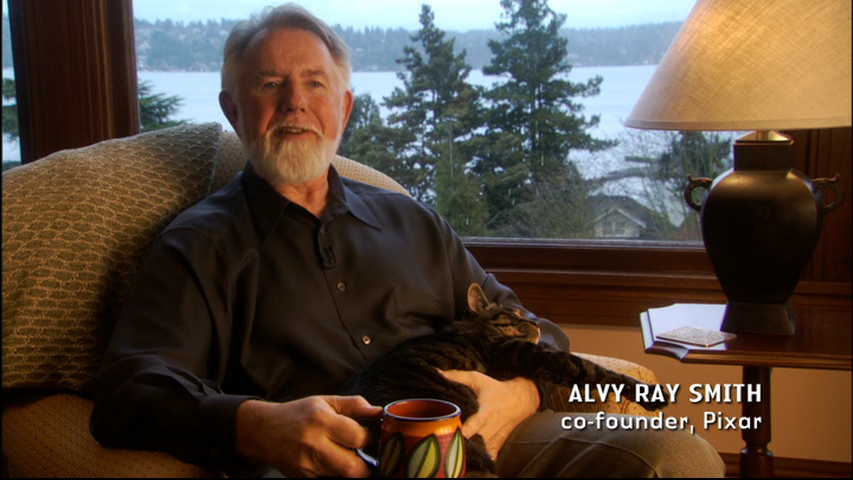
September 8, 1943 – Pixar Co-Founder Alvy Ray Smith is Born

“Our group was in love with animation, and we knew a lot about animation. We couldn’t animate very well, but we understood it.”

On September 8, 1943, engineer and Pixar co-founder Alvy Ray Smith was born in Texas. While attending New Mexico State University, Smith took a course in computer programming, and went on to get his Ph.D. in electrical engineering at Stanford University. Smith’s life-long love of painting continued while at Stanford, and his paintings were shown at the Stanford Coffee House. After graduating, Smith went on to New York University to teach classes in cellular automata, a branch of computer science on which he had written his thesis. After a skiing accident in 1973, which left him in the hospital in a full-body cast for three months, Smith decided to change the direction his life was going, and moved back to California with no real plan.

Smith soon got a job at Xerox’s Palo Alto Research Center (PARC) in a roundabout way (being brought on via purchase order) by his friend Dick Shoup, who was playing with a new painting-software project known as SuperPaint, to which Smith provided the HSV (hue, saturation, and value) color space. Unfortunately, Xerox took away the machine, leaving Smith and his new coworker David DiFrancesco without their important frame buffer. In 1975, Smith went to work at the New York Institute of Technology, the only place in the country willing to put millions of dollars into this new technology. There he met Ed Catmull, who gave Alvy a new direction: make an animated film using the computer.

After being hired by George Lucas, Catmull and Smith founded a new computer division at Lucasfilm, which developed a new digital editing system, a digital sound system, a laser scanner, and a new graphics computer. Smith was instrumental in helping create a realistic shot in the film Star Trek II: The Wrath of Khan, when Lucas’s Industrial Light and Magic division was unable to get the shot conventionally. In 1986, Smith helped co-found Pixar with Catmull, and the two worked hard to hire the best animators to help build their dream of a completely computer-animated film. In 1991, Smith left Pixar and founded the Altamira Software Corporation, which was acquired by Microsoft in 1994. Smith resigned in 1999, and is currently the founder and president of Ars Longa, a digital photography company.

September 3

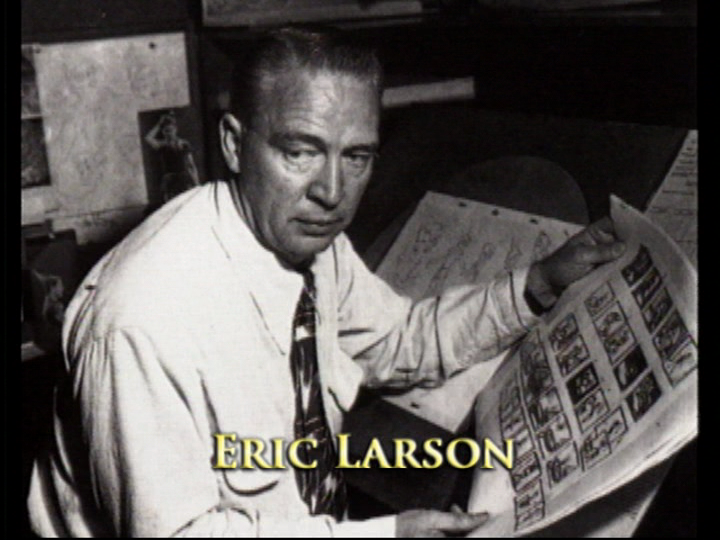
September 3, 1905 – Eric Larson, Disney Legend and Member of Disney’s Nine Old Men, is Born

“No one was more concerned with passing on the Disney legacy than Eric.” – Animator Andreas Deja

On September 3, 1905, animator Eric Larson was born in Cleveland, Utah. After graduating with a journalism major from the University of Utah, he traveled to Los Angeles in 1933, and worked on a radio program called “The Trail of the Viking.” At the same time, he sent some sketches to the Walt Disney Studios, and was soon hired as an assistant animator. He worked on Snow White and the Seven Dwarfs (the “Whistle While You Work” segment), Pinocchio (Figaro), Fantasia (“The Pastoral Symphony”), Dumbo, Bambi (the title character), Cinderella (Cinderella and Prince Charming), Alice in Wonderland (Alice, Dinah, The Cheshire Cat, The Caterpillar, The Queen of Hearts, and the Flamingo), Peter Pan, Lady and the Tramp (Peg and the pound puppies), Sleeping Beauty, 101 Dalmatians (Pongo, Perdita, Colonel, and Tibbs), and The Jungle Book (the Vultures), as well as several shorts, including The Three Little Pigs.

In the 1970s, Larson helped start a recruitment training program to teach a new generation of animators the Disney style of animation. Many famous names went through this program, including Brad Bird, Don Bluth, Tim Burton, Andreas Deja, Mark Henn, Glen Keane, John Lasseter, Burny Mattinson, and Joe Ranft. This program came at a crucial time when the older animators were retiring, and new blood was needed to help revive the studios. Larson continued to contribute to projects at the studio during the 1980s, and retired in 1986, after working for Disney for 52 years. Larson passed away on October 25, 1988, and was inducted as a Disney Legend in 1989.

August 25

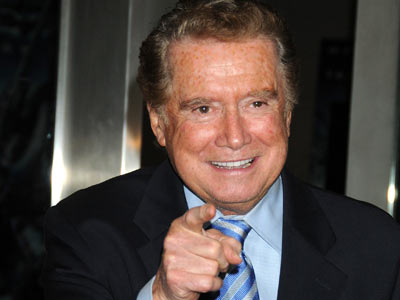
August 25, 1931 – Disney Legend Regis Philbin is Born

Image Credit: businessinsider.com

“I got to say, it really is quite an honor. I don’t even know I deserve this.” – Philbin on being named a Disney Legend

On August 25, 1931, media personality Regis Philbin was born in New York City. After high school, he graduated from the University of Notre Dame in 1953 with a degree in sociology. After serving in the United States Navy, Philbin began his career in television, working as a page, stagehand, sports newswriter, and a substitute anchor. Philbin got his big break on ABC’s The Joey Bishop Show in 1967, and stayed on until 1969. He began to work with Kathie Lee Gifford on WABC-TV’s The Morning Show, which was picked up for national syndication by Buena Vista Television and renamed Live with Regis and Kathie Lee.

Philbin is best known for being the host of the 1999 breakout hit Who Wants to Be a Millionaire, with his popular catchphrase “Is that your final answer?” He was awarded an Emmy for Outstanding Game Show Host in 2001 for his work on the show. Along with his work with the Disney-owned ABC network, Philbin has also hosted the Disney Christmas Parade. In 2011, Philbin was honored as a Disney Legend.

July 6

Posted on

July 6, 1938 –Actress Luana Patten is Born

On July 6, 1938, Luana Patten was born in Long Beach, California. A model since the age of 3, Patten was picked from hundreds of girls to star in the film Song of the South as Ginny, alongside Bobby Driscoll as Johnny. She would go on to become the first actress to sign a long-term contract with Disney, starring in several films with Driscoll, including Melody Time and So Dear to my Heart. In fact, she and Driscoll were the first long-term contract players at the studio. She also starred in the film Fun and Fancy Free with Edgar Bergen, Charlie McCarthy, and Mortimer Snerd. After taking a brief break to finish high school, Patten returned to the studio for a couple of films, her last role being Nora White in the 1966 film Follow Me, Boys. After leaving the studio, Patten continued to act until 1970, when she retired from the industry. She passed away at the age of 57 in 1996 from respiratory failure.

July 3

Posted on

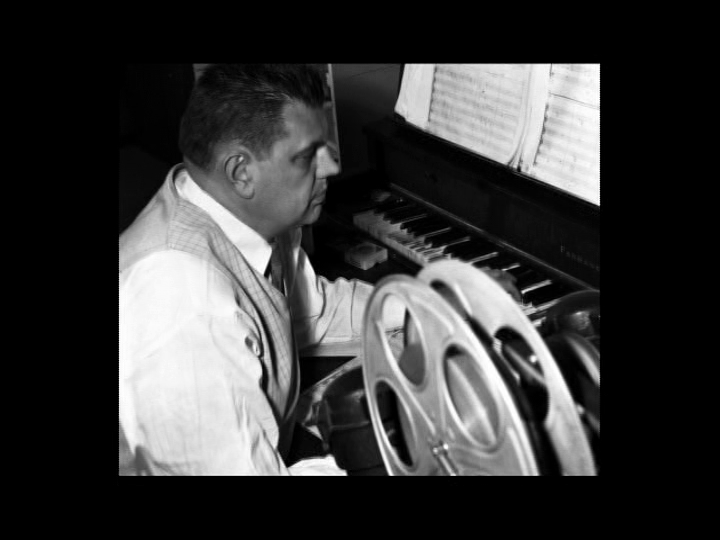
July 3, 1914 – Disney Legend and Composer George Bruns is Born

“George was big and easy-going, but he worked very hard and produced a seemingly endless string of fresh melodies and haunting scores.” – Animators Frank Thomas and Ollie Johnson.

On July 3, 1914, George Bruns was born in Sandy, Oregon. He was taking piano lessons by age six; by high school he could play the tuba and trombone proficiently, and he later was able to play 12 more instruments well. Bruns attended Oregon State University, and moved to Los Angeles, California, in 1950. There, he began his conducting career for Capitol Records and UPA Studios. Bruns got his big break in 1953, when Walt Disney hired him personally to score the feature Sleeping Beauty, which would earn him his first of four Academy Award nominations while at the Disney Studios. Bruns was then asked to compose a piece for the upcoming television series about Davy Crockett. This piece would become Bruns’ most well known composition, skyrocketing to the top of the Hit Parade for six months and selling more than eight million records.

Bruns continued to score Disney films for 22 years, with films including The Absent-Minded Professor, 101 Dalmatians, The Jungle Book, Robin Hood, and The Love Bug. He would earn three other Academy Award nominations for the first live-action musical for the studio, Babes in Toyland; for the 1963 animated film The Sword in the Stone; and for the song “Love” from Robin Hood. Bruns continued to score pieces for the Disney television serials; the theme for Zorro gave him another hit, selling a million records. After contributing to more than 200 projects, Bruns retired from Disney in 1975 and returned to Oregon to continue to compose and to teach at Lewis and Clark College. Bruns passed away on May 23, 1983, in Portland, Oregon. In 2001, he was honored as a Disney Legend.

June 10

June 10, 1949 – Birth of Disney Legend Kevin “Moochie” Corcoran

“…kids in the audience related more to Corcoran, who created a character who was part All-American boy and part hellion.” – Film Writer Donald Liebenson.

Born on June 10, 1949, in Santa Monica, California, Kevin Anthony Corcoran began his acting career at the tender age of two. In 1956, Corcoran auditioned for a serial on the Mickey Mouse Club called “Adventures in Dairyland,” and won the role of a character named Moochie, a nickname that would stick with him throughout his career at Disney. He was then cast specially by Walt in the sequel serial, “The Further Adventures of Spin and Marty,” as well as “The New Adventures of Spin and Marty.”

Corcoran also appeared in several popular Disney films, with his only starring role as Toby in Toby Tyler, a film about an orphan who runs away to join the circus. He played supporting roles in Old Yeller, The Shaggy Dog, Pollyanna, Swiss Family Robinson, Babes in Toyland, Bon Voyage!, Savage Sam, and A Tiger Walks. Corcoran played the younger brother to actor Tommy Kirk in five Disney films, including Swiss Family Robinson and The Shaggy Dog. Corcoran also voiced Goliath II in the short film of the same name, and was featured in several Disney mini-series and serials, such as Daniel Boone, The Mooncussers, and Johnny Shiloh. After the 1964 film A Tiger Walks, Corcoran mostly retired from acting and attended California State University, getting a degree in theater arts.

Corcoran returned to Disney after college, using his skills behind the camera instead of as an actor, and working as an assistant director and producer on several projects, including Pete’s Dragon. He has also worked as a first assistant director for many television series outside of Disney, including Quantum Leap and Murder She Wrote, also acting as an assistant producer and director on the latter series. Corcoran was inducted as a Disney Legend on October 9, 2006, alongside Tim Considine, David Stollery, and Tommy Kirk.

May 24

Posted on

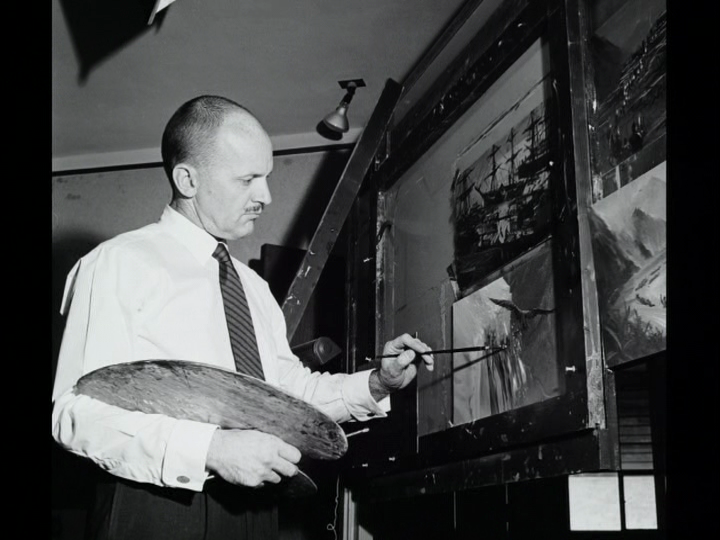
May 24, 1913 – Birth of Disney Legend and Matte Painter Peter Ellenshaw

“[Ellenshaw’s] a pretty unique man. He had a sense of style and fantasy to his paintings that was extraordinary. If you were to look at a Peter Ellenshaw painting from Mary Poppins, it has an impressionistic quality to it.”

Peter Ellenshaw, best known as the matte painter on Mary Poppins, was born in London in 1913 and raised in Essex. His father died in World War I, and Ellenshaw left school at the age of 14 to support his family, but he kept up his passion for drawing. After meeting and being offered a job by matte painter Walter Percy Day, Ellenshaw worked as a painter on such films as The Thief of Baghdad, The Red Shoes, and Spartacus.

When Walt Disney set to work on making live-action films in England, he personally chose Ellenshaw to create the scenes of England during the days of Treasure Island. Disney then brought Ellenshaw to work on the production of 20,000 Leagues Under the Sea, which led to his best-known work of the background paintings in Mary Poppins, for which he won an Academy Award for Best Visual Effects.

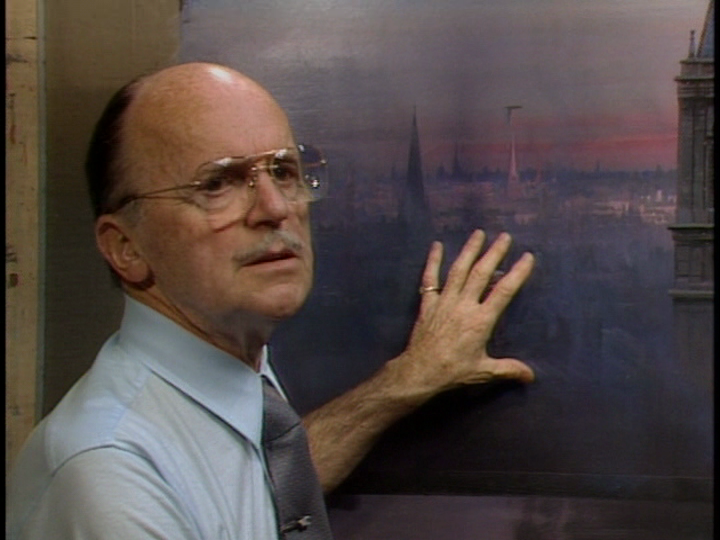
Ellenshaw explaining the special effects behind one of his matte paintings for Mary Poppins

Ellenshaw continued to contribute to Disney films as a matte artist, including Pollyanna and Swiss Family Robinson; in addition to his matte art, Ellenshaw contributed to the photographic effects on Darby O’Gill and the Little People, worked as a production designer on Island at the Top of the World and The Black Hole, and was the art director of Bedknobs and Broomsticks. Ellenshaw retired after his work on The Black Hole in 1979; however, he contributed to the matte paintings in the 1990 film Dick Tracy. He was named a Disney Legend in 2003, and passed away in 2007.