RSS Feed

Tag Archives: Births

March 12

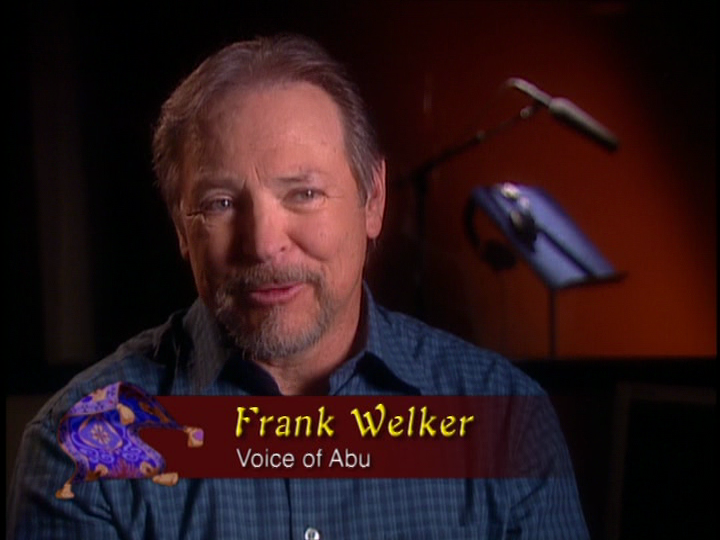
March 12, 1946 – Voice Actor Frank Welker is Born

vlcsnap-2013-03-11-20h12m23s237

“I started doing voices and imitations from about as early as I can remember. I was making noises and I could pick up sounds I could hear pretty easily. And then I found out that you could make people laugh by distorting what you hear.”

On March 12, 1946, Franklin Wendell Welker was born in Denver, Colorado. He attended Santa Monica City College in Santa Monica, California, majoring in theater. After college, his first voice acting job was for a commercial for Friskies dog food. Afterward, he auditioned for the title character in Scooby Doo, but won the role of Fred, which he still voices to this day. He has done many voices for Hanna Barbera cartoons, including Dynomutt, The New Fred and Barney Show, and The Flintstones Comedy Show. Welker’s has had a prolific career at Disney, providing several voices in the films Oliver and Company, The Rescuers Down Under, Aladdin (Abu and the Cave of Wonders), A Goofy Movie (Bigfoot), and The Hunchback of Notre Dame, among others. Welker has also provided voices in other Disney projects, including Disney’s Adventures of the Gummi Bears, Bonkers (Fall-Apart Rabbit), Chip ‘n’ Dale: Rescue Rangers, and Ducktales; he has also appeared onscreen in The Computer Wore Tennis Shoes as Henry and in Now You See Him and Now You Don’t as Myles. Thanks to his large body of voice work, he was considered the highest grossing actor in Hollywood, until he was surpassed by Samuel L. Jackson in 2011.

March 9

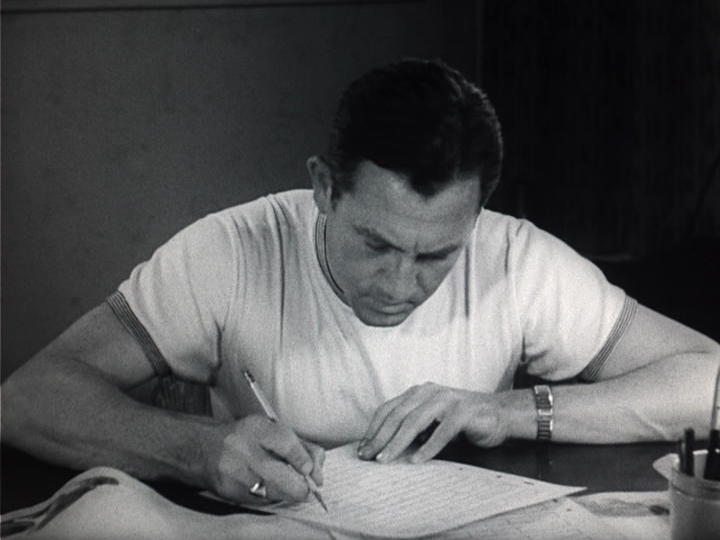
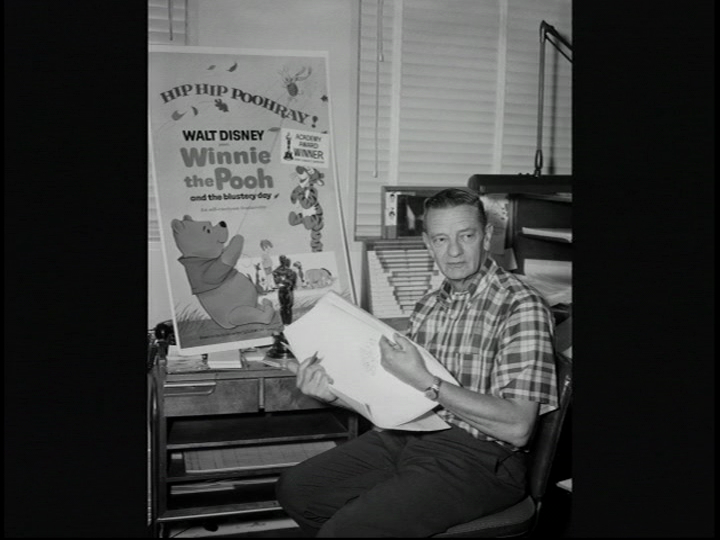
March 9, 1911 – Animator, Member of Disney’s Nine Old Men, and Disney Legend John Lounsbery is Born

vlcsnap-2013-03-09-09h00m38s147

“…very quiet, gentle guy, and what was surprising is the person seemed so reserved and very encouraging in his comments about my drawings, and then I’d look at his drawings, and they were bold! Powerful! I mean, this guy drew with such conviction…” – Animator Glen Keane

On March 9, 1911, John Lounsbery was born in Cincinnati, Ohio. When he was five, his family moved to Colorado. Lounsbery’s talent for animation was evident at an early age, and he was well known in high school for his caricatures and cartoons.  After attending the Art Institute of Denver, Lounsbery attended the Art Center School of Design in Los Angeles. An instructor there sent him to interview with Walt Disney. Lounsbery was hired on July 2, 1935, to serve as an assistant animator on Snow White and the Seven Dwarfs, and was paired as an assistant to animator Norm Ferguson, who became his mentor and great inspiration. The team would be assigned to the plum role of the Witch in Snow White. After this, Lounsbery animated Honest John and Gideon as part of Ferguson’s team. Lounsbery’s skills flourished under the next animated feature, Fantasia, where he animated the “Dance of the Hours” sequence; his work is particularly noticeable on the animation of Ben Ali, the main alligator. Lounsbery was then named as one of six animation directors on Dumbo, where his focus was on the interaction scenes between Dumbo and Timothy Mouse. During World War II, Lounsbery stayed at the studio and animated feature films including Victory Through Air Power and The Three Caballeros, and once again served as an animating director on the animated sequences of Song of the South.

In the 1950s, Lounsbery continued to serve as an animation director on animated feature films, including Alice in Wonderland and Peter Pan. He also animated several memorable characters in these films, including the Mad Hatter in Alice in Wonderland, and George Darling in Peter Pan. His work on the partnership of Honest John and Gideon in Pinocchio would be seen again in Lady and the Tramp with his work on the characters Tony and Joe. “John Lounsbery was a brilliant draftsman. In Lady and the Tramp he did Tony and Joe and brought these guys completely to life,” animation director John Musker said in an interview. Truly, Lounsbery was considered a wonderful draftsman who could do justice to any scene that was considered “slapstick,” such as the “Scrumps” scene in Sleeping Beauty, where the minstrel gets drunk on the celebratory wine. “[He] simply had a way of drawing that was as sophisticated as a New Yorker cartoon, and yet he loved slapstick,” said animator Will Finn. “He’s an unsung animator in some ways because people don’t hear his name mentioned as often, but his work on the jester [in Sleeping Beauty] is really one of the highlights of the film for me.” In 1970, Lounsbery was promoted to director for Winnie the Pooh and Tigger Too!, and then co-directed The Rescuers with Wolfgang Reitherman and Art Stevens. Unfortunately, Lounsbery died before the films’ release of heart failure during heart surgery. He was named a Disney Legend in 1989.

March 4

March 4, 1932 – Former Walt Disney Company President and Disney Legend Frank Wells is Born

vlcsnap-2013-03-03-20h54m46s228

“Talk about genius, a genius of an executive…a person who was willing to sublimate his ego and keep it behind the scenes because he knew there was a greater good. There was a greater good not only to the corporation and the stockholders, but to the creative enterprise that Disney was in.” – Don Hahn

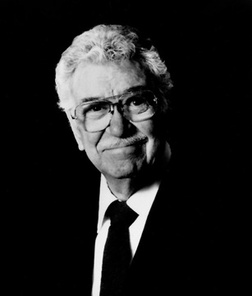
On March 4, 1932, Frank G. Wells was born in Coronado, California. Wells and Roy E. Disney were classmates at Pomona College in the early 1950s, and in 1953, Wells became a Rhodes Scholar, earning his BA at Oxford University. In 1969, Wells became Vice President of Warner Brothers, and became its president in 1973 before being named chairman in 1977. In 1982, he left Warner Brothers, and was asked by Disney to join the Walt Disney Company as President and Chief Operating Officer in partnership with Michael Eisner’s offices of Chairman and CEO. As Disney put it, “I thought, you know, Frank’s more of a businessman, and Michael is a little nuts, and the two together kind of in some way made me think of Walt and my dad. So we began saying, ‘How would you two like to take this job?’” Wells was considered the peacemaker between the three strong personalities of Roy E. Disney, Michael Eisner, and Jeffrey Katzenberg. Eisner said of Wells, “Interesting thing about Frank: he carried in his wallet a piece of paper that said, ‘Humility is the ultimate virtue.’” Wells is noted as being instrumental in bringing a new golden age of Disney animation.

Wells was also known as an adventurer, and a goal of climbing the Seven Summits, although he was unable to climb Mt. Everest due to bad weather. Wells’ love of climbing is honored in Disneyland’s Matterhorn Bobsleds, with equipment labeled as part of the “Wells Expedition.” On Easter Sunday, 1994, tragedy struck the studio when it was announced that Wells had perished in a helicopter crash in Nevada’s Ruby Mountains after returning from a ski trip. The building that houses the Disney Archives was renamed in Wells’ memory, and The Lion King was dedicated to him. Wells was named a Disney Legend in 1994.

March 3

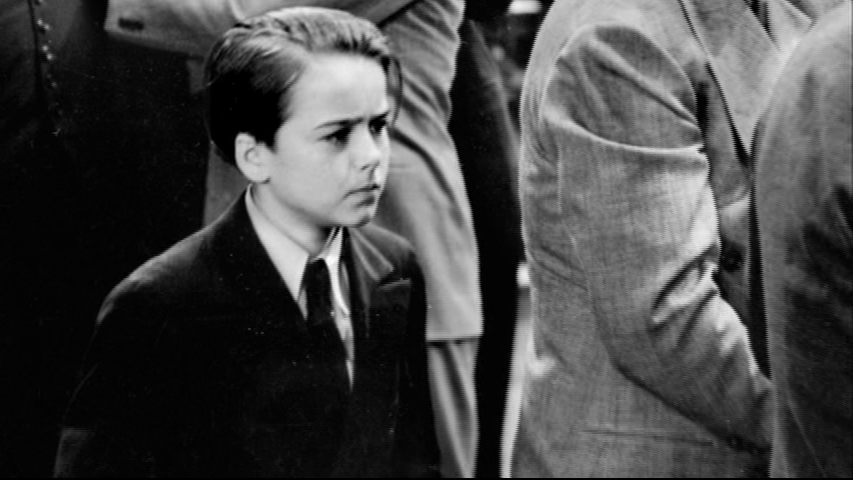
March 3, 1937 – Child Actor Bobby Driscoll is Born
vlcsnap-2013-03-02-19h55m44s251

“He’s got a great talent. I’ve worked with a lot of child players in my time, but none of them bore the promise that seems inherent in young Driscoll.” – Don Ameche

On March 3, 1937, Robert Cletus “Bobby” Driscoll was born in Cedar Rapids, Iowa. Soon after he was born, his family moved to Des Moines, and then moved to California in 1943. After their arrival, Driscoll auditioned with MGM for a small role in the 1943 film Lost Angel. This film role led to better ones; his natural acting talent and ability to memorize his lines quickly led to Driscoll’s being known as the “Wonder Child.” He soon caught the attention of Walt Disney, who was looking to cast the lead in his upcoming film Song of the South. Driscoll was not only hired, but became the first actor Disney put under contract. He and co-star Luana Patten became child stars with the success of the film, and were nicknamed the “Sweetheart Team.” They would later star together in the 1948 film So Dear to My Heart, and in the “Pecos Bill” segment of the animated feature film Melody Time, released in the same year. In 1949, Driscoll found acclaim in the RKO film The Window; this, coupled with his role in So Dear to My Heart, earned Driscoll a Juvenile Academy Award.

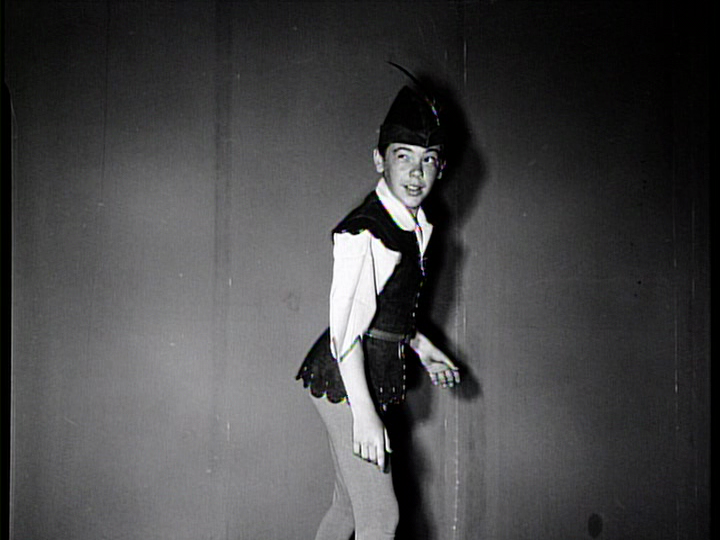
In 1950, Driscoll starred in the first full-length live-action film for the studio, Treasure Island, as Jim Hawkins. During filming, the British film industry claimed that due to child labor laws, and the fact that Driscoll did not have a work permit, he would have to leave the country. The judge presiding over the case gave Driscoll and his family six weeks for appeal, but instead the company used the six weeks to film his close-ups and any other important shots before he was deported. The film was another success, and Driscoll was awarded a star on the Hollywood Walk of Fame. Driscoll also appeared in smaller Disney projects on television and in short films through the early ’50s. His last major project for the studio was the voice and live-action reference model for the title character in the animated feature film Peter Pan. After the film’s release, he was terminated from his contract with the studio.
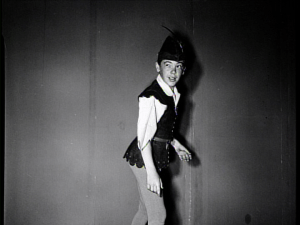
Driscoll as the live-action model for Peter Pan, his final film at the studio

Driscoll as the live-action model for Peter Pan, his final film at the studio

After leaving Disney, Driscoll found it increasingly difficult to get work as a serious character actor, as he was seen as “Disney’s kid actor.” He moved to television roles and was taken out of Hollywood Professional School by his parents, who moved him to public school. Ridiculed by the other students there for his early film career, Driscoll began to dabble with drugs. Although his parents let him return to Hollywood Professional School, where he graduated, his drug use increased. In 1965, he moved to New York City and became part Andy Warhol’s art community, known as The Factory. His last film performance was in the underground film Dirt. After leaving The Factory, Driscoll was penniless and was living in Manhattan’s underground. In 1968, two boys discovered his body, and without any identifiers, he was buried in an unmarked pauper’s grave. It was in 1969, some nineteen months later, when his mother, who was hoping to reunite with her son before his father’s death, discovered where his body was buried.

Driscoll was a rare talent and an important part of the live-action film aspect of the Disney Studios. It is important that he be remembered for his wonderful craft shown in the Disney films of the ’40s and ’50s. Although his life was sadly cut short due to some bad decisions, Driscoll should be lauded as one of the finest child actors in film history.
February 25

February 25, 1927 – Actor and Disney Legend Dickie Jones is Born

vlcsnap-2013-02-24-20h26m38s4

Pinocchio. Every time I think about it, I think about how blessed I was that I was there at the right time, the right moment, and I was the one Walt Disney decided to use. And the people I got to work with, it’s unbelievable. I worked with some of the best character actors in the business at that time. I’m so proud I was able to work with one of the greatest groups that was ever assembled for an animated feature.” – Dickie Jones.

On February 25, 1927, Richard “Dickie” Percy Jones was born in Snyder, Scurry County, Texas. At the age of four, Jones was billed as “World’s Youngest Trick Rider and Trick Roper,” and at age six, he was hired by actor Hoot Gibson to perform tricks in his rodeo. Gibson convinced Jones’ mother to take young Jones to Hollywood, where he landed small parts in B-Westerns. In 1939, Jones had his breakthrough with Mr. Smith Goes to Washington, playing Senate page Richard Jones. Soon after, Jones would have his most well-known role as the voice of the title character in Walt Disney’s second full-length animated feature film, Pinocchio. At the age of fifteen, Jones then joined the popular radio show The Aldrich Family as Henry Aldrich. During World War II, Jones served in the Army in Alaska, and was hired by Gene Autry after the war. Jones would then work in several western-themed television series, including The Range Rider, Annie Oakley, and Buffalo Bill, Jr. In 1959, Jones retired from acting and began a career in real estate. He was named a Disney Legend in 2000.

February 10

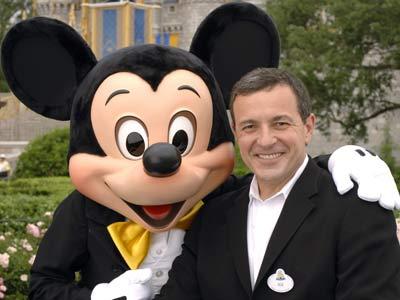
February 10, 1951 – Current Walt Disney Company Chairman and Chief Executive Officer Bob Iger is Born

bob-iger-1

“Animation has always been the heart and soul of the Walt Disney Company and it is wonderful to see Bob Iger and the company embrace that heritage by bringing the outstanding animation talent of the Pixar team back into the fold…we applaud and support Bob Iger’s vision.” – Roy E. Disney

On February 10, 1951, Robert A. Iger was born in Long Island, New York. He graduated from Ithaca College with a Bachelor of Science degree, and soon after became a weatherman for a local station. In 1974, Iger began working for the American Broadcasting Company and rose through the ranks to become President of the ABC Network Television group in 1993. In 1996, he was named Chairman of the ABC Group, officially joining the Disney senior management team; in 1999, he was also named the President of Walt Disney International. As President, Iger was instrumental in the expansion of Disney’s presence in the rest of the world. This complimented his work as the Chairman of the ABC Group, which had him overseeing all broadcast projects, including a merger between Capital Cities/ABC and the Walt Disney Company.

In 2000, Iger was named Disney’s President and Chief Operating Officer under Michael Eisner, filling a role that had been vacant since the departure of Michael Ovitz in 1997. On March 13, 2005, Disney announced that Iger would be assuming the role of Chief Executive Officer, which came into effect on October 1, 2005. Since then, Iger has been instrumental in several key acquisitions for the Walt Disney Company, beginning with the 2006 Pixar acquisition for $7.4 billion. Iger has also been lauded for the reacquisition of Disney’s first major star, Oswald the Lucky Rabbit, from NBC Universal by releasing Al Michaels from his ABC contract to join NBC Sports. Iger has also helped Disney acquire Marvel Comics in 2009, and more recently Lucasfilm in 2012. In 2011, it was announced that Iger would be named the Chairman of Disney following the March 2012 retirement of Chairman John Pepper.

February 6

February 6, 1914 – Voice Actor and Disney Legend Thurl Ravenscroft is Born

Thurl

“Little did I know back then that the basso voice singing about gold doubloons and pieces of eight belonged to the same man who provided the voice for Tony the Tiger, and so many characters in Disney films, and the Disneyland park.” – Leonard Maltin

On February 6, 1914, Thurl Arthur Ravenscroft was born in Norfolk, Nebraska. In 1933, he headed for California to attend the Otis Art Institute, and joined a barbershop quartet known as The Sportsmen Quartet, who went on to perform on the Jack Benny radio program. Ravenscroft would soon find success with a new quartet known as the Mellomen, who performed in The Glenn Miller Story  and later a film with Elvis Presley.  The Disney Studios hired the Mellomen often; they sang in animated films Alice in Wonderland and Lady and the Tramp, and television serials Cavalcade of Songs and The Legend of Elfego Baca. Ravenscroft leant his voice to the theme songs of two Disney serials: “Boys of the Western Sea” and “The Hardy Boys: Mystery of the Applegate Treasure.”

Ravenscroft’s voice is used extensively in Disneyland, most famously in the Haunted Mansion attraction as one of the singing busts in the end of the ride (surprisingly, Ravenscroft’s bust is often mistaken as that of Walt Disney). His voice can also be heard in Pirates of the Caribbean, Splash Mountain, and in the Enchanted Tiki Room as Fritz, the German parrot. Ravenscroft also had many famous non-Disney roles, including the song “You’re a Mean One, Mr. Grinch” in the famous television Christmas special, The Grinch Who Stole Christmas, and his most famous role, Tony the Tiger of Kellogg’s Frosted Flakes. He was inducted as a Disney Legend in 1995, and passed away in 2005.

January 30

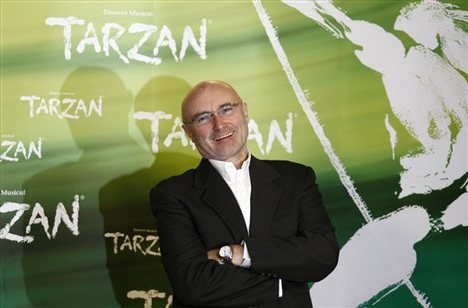
January 30, 1951 – Singer-Songwriter, Multi-Instrumentalist, Actor, and Disney Legend Phil Collins is Born

PC

“[Collins’] voice has a tendency to wrap itself around you and bring you into his world. As soon as he starts singing, it’s just magic and provides a very welcoming feeling.” – Composer Mark Mancina

On January 30, 1951, Philip David Charles Collins was born in Hounslow, London, England. At age five, he was given a toy drum set, and was presented with complete sets by his parents and makeshift ones by his uncle as he got older. Collins was also a child actor, winning the role of the Artful Dodger in the West End production of Oliver! All the while, Collins continued to focus on his music, forming a band while in school and drumming for Flaming Youth and George Harrison. Collins found his big break in 1970, when he auditioned for and won the spot as the drummer for the band Genesis. After lead singer Peter Gabriel left the band in 1975, Collins became the lead vocalist of the group. The band had great success with Collins at the helm, including reaching Top 40 Chart in America. In 1981, Collins began a solo career, scoring a hit with his first single, “In the Air Tonight.” In 1985, he was nominated for his first Academy Award for the song “Against All Odds” from the film of the same name.

Collins’ first work for Disney came with the 1999 film Tarzan, where he wrote and performed the songs for the film. The song “You’ll Be in My Heart” reached number 1 on the Adult Contemporary charts and stayed at the top for 19 weeks; it was also awarded the Golden Globe for Best Original Song and the Academy Award for Best Original Song. Collins also performed the songs for the film in German, French, Spanish, Bulgarian, and Italian. “Strangers Like Me” from the soundtrack peaked at number 10 on the Adult Contemporary Charts. In 2002, he was awarded as a Disney Legend. Collins would go on to write and perform the songs for another Disney film, 2003’s Brother Bear. In 2006, when Tarzan was adapted for the Broadway stage, Collins contributed greatly to the production, writing 11 new songs and pieces of the score.

January 23

January 23, 1900 – Animator and Disney Legend David Hand is Born

vlcsnap-2013-01-22-20h00m30s88

“[Hand] was cavalier in transforming Walt’s dreams into animation.” – Frank Thomas and Ollie Johnston, from the book Disney Animation: The Illusion of Life

On January 23, 1900, David Dodd Hand was born in Plainfield, New Jersey. He attended the Chicago Art Institute, and joined the J.R. Bray Studio after graduation, later working for Max Fleischer in the “Out of the Inkwell” cartoons. After the release of Steamboat Willie in 1928, Hand applied for work at the Disney Studios, and was hired in 1930. Hand worked on several short films for his first three years with the studio before becoming an animation director, the third in the studio’s history after Burt Gillett and Wilfred Jackson. He was noticed by Disney himself quite early for his ability to recognize quality, and never sacrificed quality for the cost of the film. Hand is noted for working on 70 short film and three animated features. Hand’s last work at the Disney Studio was serving as the animation supervisor for Victory Through Air Power.

In 1944, Hand was invited to set up a new animation studio in England, winning a five-year contract with J. Arthur Rank. Hand became a well-known influence on British animation, and in 1951, he moved back to the United States to pursue a career in industrial filmmaking. In 1986, Hand passed away at the age of 86; in 1994, he was inducted as a Disney Legend.

January 5

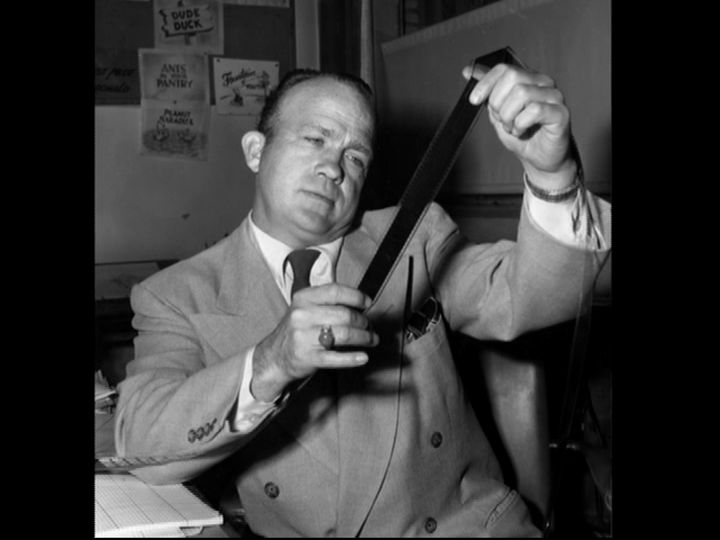
January 5, 1913 – Animator, Writer, Director, and Disney Legend Jack Hannah is Born

vlcsnap-2013-01-04-20h02m46s143

“He was a character, but he was like a father figure to me, because he really took care of me, not only in just showing me the tricks of the trade, and about Donald, and…Disney animation…he was a kind of rough and tumble kind of guy.” Tony Anselmo, current voice of Donald Duck

On January 5, 1913, Jack Hannah was born in Nogales, Arizona. In 1931, Hannah moved to Los Angeles, California, studying art at the Art Guild Academy; in 1933, he submitted his portfolio to the Walt Disney Studios, and was hired as an in-betweener and a clean-up artist. His first short film with an animator credit was Gulliver Mickey, and he was also a key animator for the Academy Award-winning short film The Old Mill. His introduction to Donald Duck was the short film Modern Inventions; Hannah would soon be associated with the “Gable of the [Disney] stable.” Hannah moved to the story department in 1939, writing many of the Donald Duck stories. For 27 short films, Hannah worked with Carl Barks, the Donald Duck comic book artist, to help shape the character of Donald in films, including Donald Gets Drafted and Donald’s Vacation. In 1943, he became a director of the short films, introducing new antagonists for Donald, including Chip and Dale. Hannah also introduced Donald to the new medium of television, which includes A Day in the Life of Donald Duck and At Home with Donald Duck.

Although Hannah retired in1959, he was asked in 1975 to help develop a new class at the Disney-founded California Institute of the Arts, the Character Animation programs. In 1992, Hannah was honored as a Disney Legend, credited with developing the personality of Donald Duck in the animated short subjects. He and Carl Barks are considered the “fathers” of Donald Duck. Hannah passed away at age 81 in Burbank, California in 1994.