RSS Feed

Tag Archives: Academy Award Nominated

December 29

December 29, 1995 – The Hollywood Pictures Film Mr. Holland’s Opus Has A Limited Release
vlcsnap-2012-12-29-11h21m37s57

“Mrs. Jacobs, you tell them that I am teaching music, and that I will use anything from Beethoven to Billie Holiday to rock and roll if I think it’ll help me teach a student to love music.”

On December 29, 1995, the Hollywood Pictures film Mr. Holland’s Opus was released in Los Angeles, to be considered for Academy Award consideration. The film tells the story of Glen Holland over his thirty years of teaching music. The film was shot on location in Portland, Oregon, specifically at Grant High School; the drama teacher at the school brought in many current and former students to be extras in the film. Richard Dreyfuss, playing the lead role of Glen Holland, was nominated for a Best Actor Academy Award. The film was written by Patrick Sheane Duncan and directed by Stephen Herek, with music by Michael Kamen. The film stars Richard Dreyfuss as Glen Holland, Glenne Headly as Iris, Jay Thomas as Bill Meister, Olympia Dukakis as Principal Helen Jacobs, and William H. Macy as Gene Wolters.

In 1965, young Glen Holland is seen at the piano composing, hearing the grand sounds of an orchestra in his head and filling the room; he then pretends he is conducing the piece. The next morning, his wife Iris wakes him up for his new job as the music teacher at the newly named John F. Kennedy High School. He has a rather tense meeting with the assistant principle Gene Wolters, then runs into the principal Helen Jacobs as he wanders around the school, lost. After hearing her instructions, he feels a bit overwhelmed, even more so when his first class doesn’t go well, and the orchestra members don’t know how to play. Fortunately, he makes friends with Bill Meister, the P.E. teacher. Holland admits to Meister that he took the teaching job so he could have free time to compose, with Meister telling him that “he can’t remember the last time that was free.”
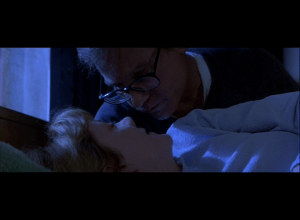
Although stunned when Iris announces her pregnancy, Holland is able to reassure her that he is excited to become a father

Although stunned when Iris announces her pregnancy, Holland is able to reassure her that he is excited to become a father

Holland continues teaching the orchestra, noticing one clarinet player, Gertrude Lang, having problems playing correctly. He asks her to stay behind, and tells her that they’ll find some extra time to help her improve. Holland still spends his nights composing, but his teaching still puts his kids to sleep. After one particularly disastrous test and a run-in with the principal, he realizes he needs a new approach ­to teaching. After a private session with Gertrude, he hears her crying, and she admits to him that she’s terrible, and just wants to be good at something. She leaves her clarinet behind and flees the room. As he starts venting his frustrations to Iris, she admits to him that she’s pregnant, and is upset that all he can say is, “Wow.” He assures her that he is excited to have a baby, and is inspired to reach to the students through rock ‘n’ roll music. As things begin to look up for Holland, Gertrude returns, telling him that she’s giving up the clarinet. He convinces her to try again, only to have fun with it this time. He finally reaches her, and she plays the clarinet solo at graduation.

To help supplement his income, Holland teaches driver’s education during the summer. One day, Holland speeds to the hospital with his students in the car, getting there just in time to meet his newborn son, whom he and Iris name Coltrain, or Cole for short. Unfortunately, Holland is soon in trouble for teaching rock ‘n’ roll in his class. Vice Principal Wolters is angry that Holland isn’t forced to stop the rock ‘n’ roll curriculum but is pleased that Holland has then been assigned to teach the marching band. Holland’s friend Meister helps Holland with running the marching band, if Holland helps student athlete Louis Russ get a passing grade in orchestra. Russ is assigned to the drums, but needs some extra help in learning how to keep a beat. The marching band marches in a local parade, playing “Louie Louie.” This parade also brings some bad news to Holland: as he doesn’t react to a fire truck siren, they learn that their son Cole is deaf.
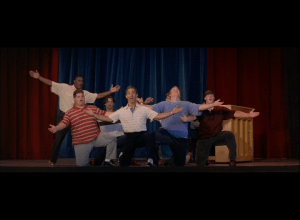
Meister helps save the show by using the football team as background dancers, with comical results

Meister helps save the show by using the football team as background dancers, with comical results

The decades roll by, with Holland keeping a distance between himself and his family, deeply hurt that he is unable to teach the joy of music to his own son. Iris is frustrated and angry that she can’t communicate with her own son, and even more upset that Holland doesn’t seem to want to be close with Cole. Graduation arrives at the high school, with Principal Jacobs letting Holland know that she’s retiring, and confides that she’s always considered him her favorite teacher at the school. The decades continue to roll by, until it’s 1980. Wolters, now the principal of the school, is on a mission to cut anything that is artistically inclined. It’s only thanks to Meister that the school musical is saved, with the football team being brought in to dance in the show. He drifts even further away from his family, being tempted to run away to New York City with student Rowena Morgan, not necessarily because he is attracted to her, but more to the idea of writing great music in New York. Ultimately, he decides not to go, but helps Rowena find a place to stay in the city.

Holland is affected by John Lennon’s death, and has another fight with Cole, as he believes Cole wouldn’t know who Lennon is, and Cole believes his father thinks he’s stupid. Realizing that his son is capable of understanding music, Holland tries to find new ways for the deaf students at Cole’s school to “hear” the music, particularly music without words. At a concert for the deaf students, Holland performs a song by John Lennon, dedicating it to his son. In 1995, Holland is still teaching at the high school, and is asked to Wolter’s office. Wolter has finally gotten his way of cutting the arts programs, with Holland being let go. Although he fights this, Holland still loses. He realizes that, at the age of 60, he doesn’t have any other options, and it is too late for him to finish his composition and get it published. As he sits in the empty music room, believing that no one will miss him once he is gone, he hears a car horn outside his window. Holland looks to see Iris and Cole, who help him pack up. They surprise him, however, by taking him to the auditorium, where many of Holland’s former students have gathered to say goodbye to their beloved teacher. The students then perform, with Holland conducting, the symphony he has spent the past 30 years writing.
December 23

December 23, 1938 – The Silly Symphony Mother Goose Goes Hollywood is Released to Theaters

vlcsnap-2012-12-23-08h44m57s97

“Any resemblance of characters herein portrayed to persons living or dead, is purely coincidental.”

On December 23, 1938, the Silly Symphony Mother Goose Goes Hollywood was released to theaters. The film takes many of the popular actors of the time and caricatures them as characters in Mother Goose stories. The film was nominated for an Academy Award, but lost to Disney’s Ferdinand the Bull. The short was directed by Wilfred Jackson.

The short is presented in book form, going through the pages of a collection of Mother Goose’s stories. The first page opens the short with a parody of the MGM logo, using a goose rather than a lion. The page then flips to the first tale of Little Bo Peep, with Bo Peep being portrayed by Katherine Hepburn. She bemoans the loss of her sheep, then turns the page to reveal Old King Cole (Hugh Herbert) and his court jester, Ned Sparks. His fiddlers are called in, with the fiddlers being none other than the Marx Brothers. Herbert enjoys the show, but Sparks is obviously less than thrilled. Joe Penner, playing a servant, brings in a big bowl, asking if the king wants to buy a duck, with Donald Duck popping out of the bowl and repeating the question. When Herbert quickly closes the bowl, Donald throws a fit.

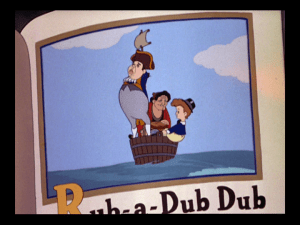
Charles Laughton, Spencer Tracy, and Freddie Bartholomew sit in a tub as they perform the nursery rhyme

Charles Laughton, Spencer Tracy, and Freddie Bartholomew sit in a tub as they perform the nursery rhyme

The page turns to the nursery rhyme, “Rub-a-Dub Dub,” with the three men played by Charles Laughton, Spencer Tracy, and Freddie Bartholomew. Bartholomew falls overboard, and Laughton remarks on this drolly. Tracy quickly retrieves Bartholomew, and Bartholomew gives his thanks before they are all alerted to Katherine Hepburn in a motorized contraption, still searching for her sheep. The three men try to hitch a ride, but are swept overboard as the page turns to Humpty Dumpty, played by W.C. Fields. He pulls down a nearby birds nest, thinking a tiny chickadee is inside, only to find that the nest is occupied by Charlie McCarthy. Charlie continues to taunt Fields, with Fields falling off the wall and into a mushroom, made to resemble an egg cup. The next story is Simple Simon, played by Stan Laurel, who is fishing in an old tin can, using a fish as bait to catch worms. The pieman, played by Oliver Hardy, is whistling nearby, and presents a a pie to Laurel, who refuses it to grab a different one. As Hardy tries the same trick Laurel performed, he ends up destroying all but one pie. When Laurel points this out, Hardy throws the pie at him, missing Laurel, but hitting Hepburn, still searching for her sheep.

See-Saw Margery Daw is the next tale, portrayed by Edward G. Robinson and Greta Garbo. Garbo asks to be alone, with Robinson replying that she asked for it. He steps away from the see-saw, letting Garbo crash to the ground as the page turns to Little Jack Horner. Eddie Cantor, playing Jack, beings singing “Sing a Song of Sixpence.” Several African-American stars begin to poke their heads out of the pie, including Cab Calloway, who leads the others in song as he asks Little Boy Blue (Wallace Beery) to blow his horn. Fats Waller and Stepin Fetchit remark about the boy, until Beery blows it until his face turns purple. The page then turns to reveal a pop-up of the old woman’s shoe, with every Hollwood star in attendance for a big old bash. A few more people show up, including Clark Gable, Edna May Oliver, ZaSu Pitts, Joan Blondell, and George Arliss. Fats Waller plays the piano, with some unnecessary help from the Marx Brothers. Fred Astaire begins to tap dance, inviting Stepin Fetchit to dance. The short ends with Katherine Hepburn still on the search.

December 9

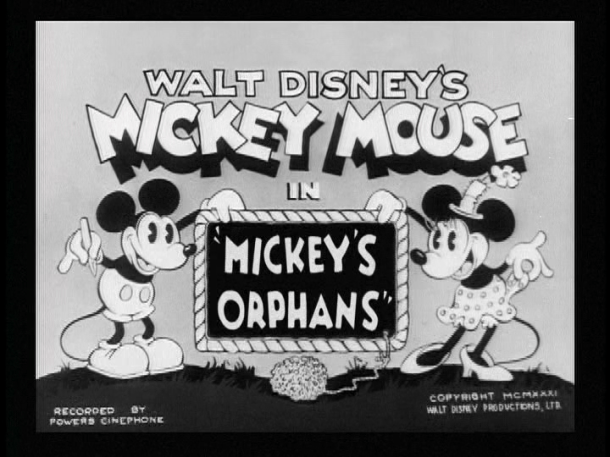
December 9, 1931 – The Mickey Mouse Short Film Mickey’s Orphans Premieres in Theaters

vlcsnap-2012-12-08-19h09m26s218

“Aw, isn’t it adorable?”

On December 9, 1931, the Mickey Mouse short film Mickey’s Orphans premiered in theaters. It was the first Disney cartoon with a Christmas theme, and was nominated for an Academy Award for Best Animated Short Film, but lost out to Disney’s Flowers and Trees. The short was directed by Burt Gillett, and stars Walt Disney as Mickey and Marcellite Garner as Minnie.

A mysterious figure trudges through the snow carrying a large covered basket as the carol “Silent Night” is heard in the background. The figure stops at a window of a nearby house and sees Minnie and Mickey preparing for Christmas. The figure leaves the basket on the doorstep and departs. Pluto brings the basket inside and pulls the blanket off to reveal a multitude of orphan kittens, who proceed to explore their new surroundings. Mickey and Minnie take to the kittens, but Pluto is rather suspicious of these invaders.

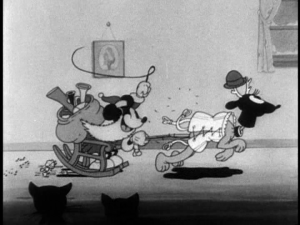
To entertain the kittens, Mickey and Pluto dress like Santa and a reindeer

To entertain the kittens, Mickey and Pluto dress like Santa and a reindeer

The kittens begin to wreak havoc on the house, pulling on Pluto’s ears and tail, and playing with the hanging light fixtures. Dismayed, Minnie suddenly comes up with an idea that Mickey and Pluto set in motion: Mickey plays Santa Clause to the kittens and Pluto plays the reindeer. The kittens are thrilled with their gifts, and parade around the house like a marching band playing a tune. Some kittens, who received saws and other tools, begin tearing the house apart. They continue to play pranks on Mickey and Pluto, until Minnie reveals the large decorated Christmas tree – which the mischievous kittens proceed to take apart.

November 28

November 28, 1943 – Composer and Disney Legend Randy Newman is Born

Image credit: randynewman.com

“I’ve always admired Carl Stalling and the other composers who specialized in music for cartoons, and I wanted to do one myself.”

On November 28, 1943, composer Randall Stuart Newman was born in Los Angeles, California. As a child, he and his family lived in New Orleans until they moved back to Los Angeles when he was 11. Newman came from a noted musical family; three uncles were Hollywood film-score composers: Alfred Newman, Lionel Newman, and Emil Newman. Randy became a professional songwriter at the age of 17, and in 1962, he released his first single, “Golden Gridiron Boy.” The single did poorly, and Newman decided to concentrate on songwriting and arranging instead of performing. His big break came as the B-side to The Fleetwoods’ hit single “Lovers By Night, Strangers By Day,” with a song titled “They Tell Me It’s Summer.” In 1970, Newman had a critical success with his sophomore album 12 Songs; in 1977, he scored a hit with the unlikely song, “Short People.”

Newman began his work with Disney and Pixar when Disney tapped him to compose the film Toy Story. He wrote the hit song, “You’ve Got A Friend In Me,” for the film. His success with the film led to other animation composing jobs for Disney/Pixar, including James and the Giant Peach, A Bug’s Life, Toy Story 2, Monsters, Inc., Cars, and The Princess and the Frog. He was nominated for, and won, an Academy Award for the song “If I Didn’t Have You” for the film Monsters, Inc.; and won the Academy Award for the song “We Belong Together” from Toy Story 3.He has earned at least one Oscar nomination for each animated film he has worked on. Newman was inducted as a Disney Legend in 2007.

November 22

November 22, 1991 – The 30th Animated Feature Film, Beauty and the Beast is Generally Released to Theaters

“Tale as old as time, song as old as rhyme, Beauty and the Beast.”

On November 22, 1991, the 30th animated feature film, Beauty and the Beast, was generally released to theaters, after a New York premiere on November 13. The film was based on the French fairy tale La Belle et la Bête, written by Jeanne-Marie le Prince de Beaumont. The idea to use the fairy tale as an animated feature goes all the way back to the 1930s, with Walt Disney originally showing interest after the success of Snow White and the Seven Dwarfs.The project was resurrected during the beginning of the period known as the Disney Renaissance and was the first Disney animated feature to use a screenwriter for the script; the first treatment had the film set in Victorian France, with no musical numbers. However, in 1989, this treatment was scrapped, forcing everyone to start from scratch. Gary Trousdale and Kirk Wise were asked to direct, and the team of Alan Menken and Howard Ashman were asked to write the music for the film. The film stars Paige O’Hara as Belle, Robby Benson as the Beast, Richard White as Gaston, Jerry Orbach as Lumiere, David Ogden Stiers as Cogsworth, Angela Lansbury as Mrs. Potts, Rex Everheart as Maurice, and Bradley Michael Pierce as Chip.

The film would go on to win enormous accolades from the critics, and until 2009, was the only animated feature to be nominated for the Academy Award for Best Picture.The music from the film was the last project that the team of Ashman and Menken, as Ashman passed away from AIDS-related complications before the film was finished. The film was dedicated in his honor. The team won two Oscars : one for Best Original Score, and one for Best Original Song for the title song, sung by Angela Lansbury (Mrs. Potts). The film was so successful that it was made into a Broadway musical in 1994; a song originally cut from the film, “Human Again,” was reinstated in the musical, and was placed back in the film when the film was rereleased on DVD in 2002.

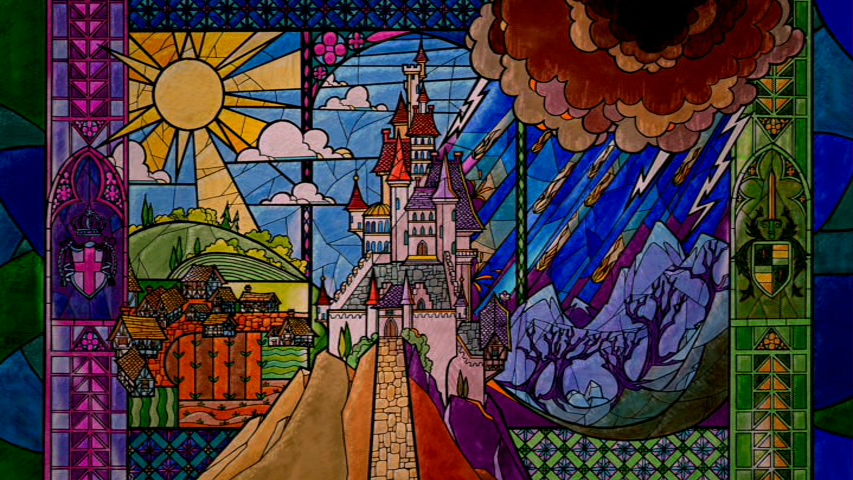
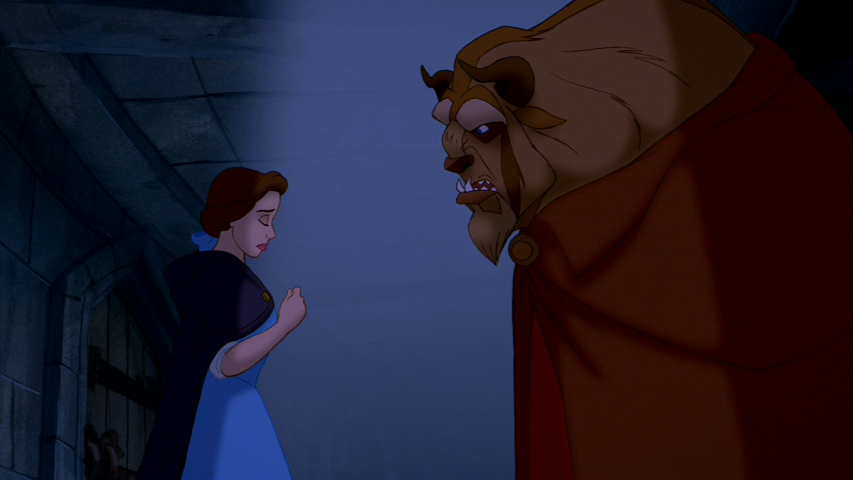
A powerful curse was placed over the castle, after an enchantress realized that the prince who lived there did not know how to love

The film begins with the story of the Prince, who turned an old beggar woman away from his door when she offered him a rose in exchange for shelter. The beggar woman was actually an enchantress who, after seeing there was “no love in his heart,” punished him for his cruelty by turning him into a beast. The Beast hid himself away from the world, with only a magic mirror to let him observe the outside. The rose the enchantress had offered was a magic rose, which would bloom until his 21st birthday. If he could learn to love, and earn love in return by then, the spell over the castle and the Prince would break; if not, he was doomed to remain a beast. The Prince grew weary over the years, as he wondered “who could ever learn to love a beast?”

Dawn breaks over a nearby provincial village, and Belle is seen walking to town, wishing to find something more than the “provincial life.” The townspeople remark how odd she is, as she has her head up in the clouds, and loves to read and imagine. Belle is pursued by Gaston, the hero of the village, and incredibly vain to boot. The only reason Gaston pursues Belle is because she is considered “the most beautiful girl in town,” although all the townspeople think she and her father, the inventor Maurice, are rather peculiar. Belle constantly turns down Gaston’s advances. She arrives home after another ambush by Gaston, and the two cheer each other up, with Maurice finally getting his invention to work. He heads off to the fair with his invention, but ends up lost in the woods, stumbling across the beast’s castle, and being sent to the dungeon by the Beast himself.

Belle offers her life to the Beast in exchange for her father’s

Belle is ambushed by Gaston once again, who sets up a wedding for the two without her knowledge. After she rebuffs him again, her father’s horse, Philippe, arrives home; seeing her father has gone missing, she has Philippe take her to the castle. She tries to find her father, with the servants secretly leading the way, and finds him sick and locked in a cell. She comes across the Beast, and offers her life in exchange for her father’s. Although her father objects, she remains firm in her offer. The Beast tries to make Belle comfortable, with everyone in the castle hoping she will be the one to break the spell. Maurice, having been taken back to town, tries to get the townsfolk to help him retrieve Belle, but they all consider his pleas as the ramblings of a madman. This gives Gaston an idea to finally get Belle to marry him, which he and his henchman, Lefou, prepare to implement.

The Beast and Belle have a difficult time adjusting, as the beast has a problem with his temper. He warns Belle never to enter the West Wing, but when she does, he loses his temper, and she flees from the castle. She is attacked by wolves in the woods, but is soon saved by the Beast. As he lays injured from the fight, Belle is tempted to continue to run, but helps him back to the castle, as thanks for saving her life. She tends to his injuries, and the two come to a new understanding. Back in town, Gaston is beginning to set his plan in motion: have Maurice committed to the insane asylum, with Belle’s agreement to marry him the only way to prevent Maurice’s incarceration.

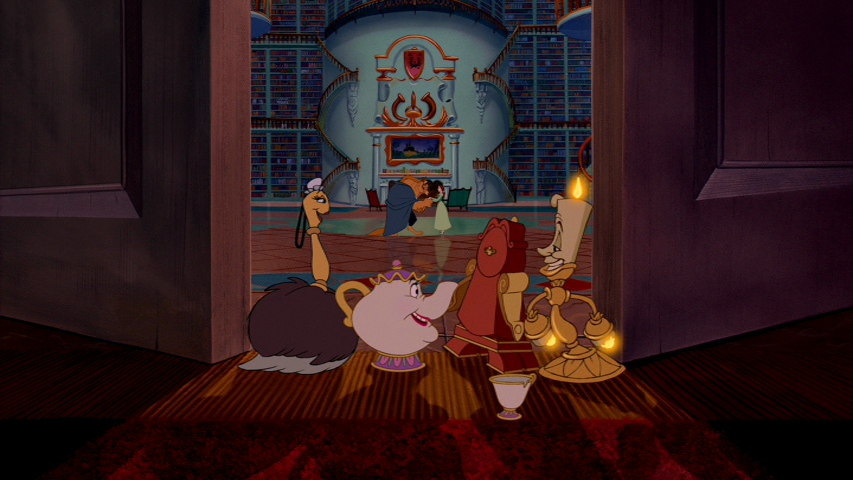
The servants are excited about the growing feelings between the Beast and Belle, hoping that Belle will help them break the spell

The Beast is starting to feel something for Belle, and wishes to do something nice for her. He surprises her with his grand library, which he says is all for her. She is truly touched by his gesture, and the two begin to grow closer. The servants plan an elaborate dinner and dance for the two, which they hope will culminate in the beast confessing his feelings to Belle. Although the evening is a success, and Belle is happy at the castle, she still misses her father. The Beast gives her his magic mirror to see him, and when she sees that her father is sick and traveling alone in the woods to find her, she asks to go help him. The Beast, having fallen in love with Belle, lets her go, also giving her the magic mirror to be able to see him at any time. Belle reaches her father in time and brings him home, only to have the town gather around their house to watch Maurice be carted away to the asylum. When Belle proves the existence of the beast with the magic mirror, Gaston realizes that the Beast is a romantic rival for Belle, and vows to rid the village of the Beast.

The town locks Maurice and Belle in their root cellar and set off the kill the Beast. Luckily Chip, the child of one of the servants, has stowed away in Belle’s bag and frees the two, and the two quickly make their way to the castle. Inside the castle, the servants gear up for a fight with the villagers. When they warn the Beast, he says to let them come, as he is still heartbroken that he let Belle go. Gaston searches for the Beast, and is angered when the Beast refuses to put up a fight. When the Beast hears Belle’s cry, his strength is renewed, and he dangles Gaston from the roof. Having a change of heart, he orders Gaston to leave, then climbs to the balcony where Belle is waiting. Without warning, Gaston stabs the Beast in the side, but loses his grip and plummets to his death.

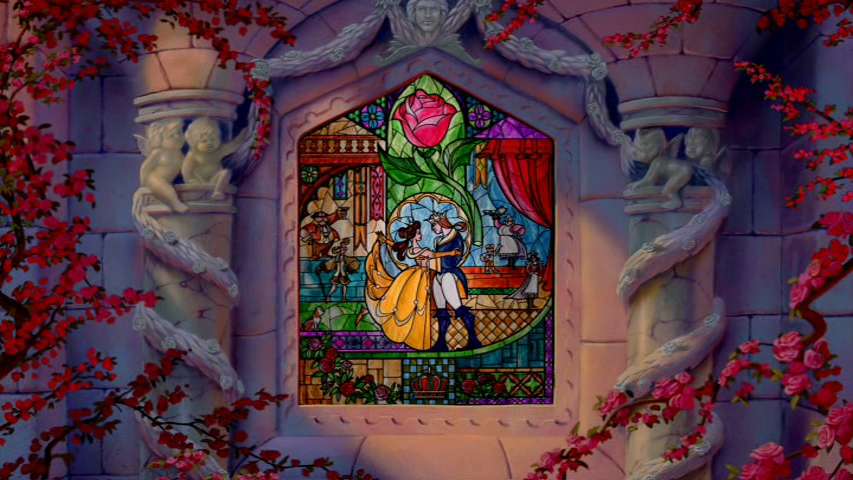
The spell breaks when Belle confesses her love, and everyone lives happily ever after

The Beast lies dying on the balcony, telling Belle that he was happy to see her one last time. As he drifts away, Belle confesses her love right as the last petal on the enchanted rose falls. As everything thinks all is lost, suddenly, the Beast transforms back into the Prince. Belle, confused, doesn’t believe it when he says it’s still him, until she looks into his eyes. The spell is broken all over the castle, and everyone lives happily ever after.

November 20

November 20, 2007 – The Soundtrack to the Feature Film Enchanted is Released Through Walt Disney Records

“How does she know you love her? How does she know she’s yours?”

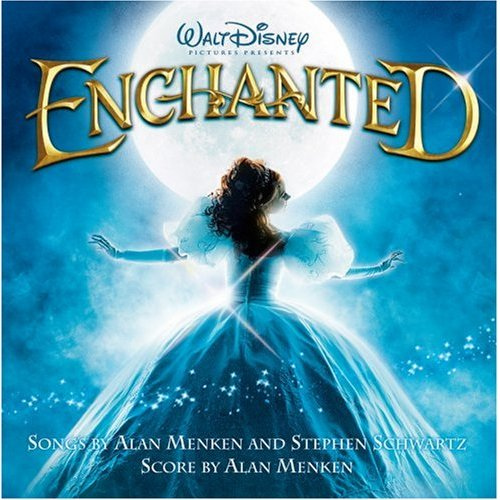
On November 20, 2007, the soundtrack for the feature film Enchanted was released through Walt Disney Records. The soundtrack contains 15 tracks, with the score composed by Disney Legend Alan Menken, and lyrics written by Stephen Schwartz. Menken said of being asked to compose the film: “They were looking for someone to hire who could parody Alan Menken music. But they couldn’t find anyone, so thank God they hired Alan Menken. So I did a parody of Alan Menken.” There were five original songs on the soundtrack, performed by Amy Adams, James Marsden, Jon McLauglin, and Carrie Underwood. Many of these songs were considered pastiches of classic Disney songs, ranging from “I’m Wishing” from Snow White and the Seven Dwarfs, and “Under the Sea” from The Little Mermaid. Three songs were nominated for Academy Awards: “Happy Working Song,” “So Close,” and “That’s How You Know.”

November 14

November 14, 2000 – The Soundtrack to the 40th Animated Feature, The Emperor’s New Groove, is Released by Walt Disney Records

Image credit: amazon.com

“He’s the sovereign lord of the nation, he’s the hippest dude in creation, he’s a hep cat in the emperor’s new clothes.”

On November 14, 2000, the soundtrack to the 40th animated feature, The Emperor’s New Groove, was released through Walt Disney Records. The album features songs by Sting, Eartha Kitt, Rascal Flatts, and Tom Jones, with a score by John Debney. Many of the songs on the album were written for the first treatment of the film, known as The Kingdom of the Sun. When the film went under rewrites, many of the songs were dropped, but were still included on the soundtrack. The song “My Funny Friend and Me” by Sting was nominated for an Academy Award, but lost to Bob Dylan’s “Things Have Changed” from the film Wonder Boys.

November 9

November 9, 1999 – The Soundtrack for the Pixar Film Toy Story 2 is Released on Walt Disney Records

“And when she was sad, I was there to dry her tears, and when she was happy, so was I, when she loved me.”

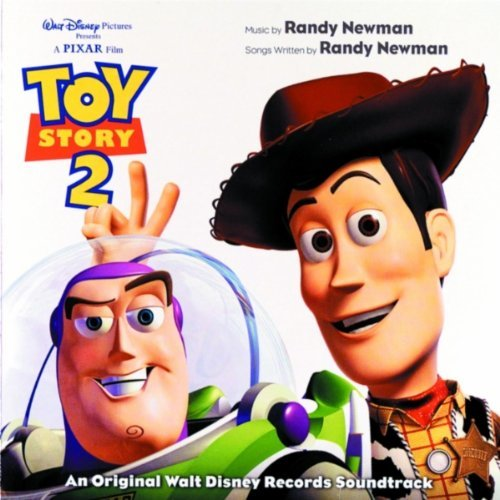
On November 9, 1999, the soundtrack for the third Pixar film Toy Story 2 was released on Walt Disney Records. The score and songs used in the film were written and composed by Randy Newman; he wrote two new songs for the film: “When She Loved Me” (performed by Sarah McLachlan), and “Woody’s Roundup” (performed by Riders In the Sky). “When She Loved Me” was nominated for an Academy Award for Best Song, but lost out to Phil Collins’ “You’ll Be in My Heart” from Disney’s animated film Tarzan. The soundtrack was also nominated for a Grammy Award, and won an Annie Award. The soundtrack is currently out of print in the United States.

November 8

November 8, 1973 – The 21st Disney Animated Feature, Robin Hood, is Released to Theaters

“Rob? That’s a naughty word, we never rob. We just, sort of borrow a bit from those who can afford it.”

On November 8, 1973, the 21st Disney animated feature film, Robin Hood, premiered in theaters. The film began as an adaptation of the medieval European Reynard the Fox stories; however, Walt wasn’t convinced that Reynard would make a suitable hero. The film also proved to the public that the studio would be able to survive after Walt Disney’s passing. The romantic song in the film, “Love,” written by Floyd Huddleston and George Bruns and performed by Nancy Adams, was nominated for an Academy Award. The story was written by Ken Anderson, and was directed by Wolfgang Reitherman. The film stars Brian Bedford as Robin Hood, Phil Harris as Little John, Roger Miller as Allan-a-Dale, Peter Ustinov as Price John, Terry-Thomas as Sir Hiss, Andy Devine as Friar Tuck, Monica Evans as Maid Marian, Pat Buttram as the Sheriff of Nottingham, and Carole Shelley as Lady Cluck.

The film begins with Robin Hood and Little John “walking through the forest,” dodging the Sheriff of Nottingham and his men. As they escape into the trees, they hear trumpets and see Prince John’s carriage passing through the forest. Inside his carriage, Prince John laughs about being able to collect taxes from the people of England. His right hand, Sir Hiss, compliments the Prince’s plan to have Sir Hiss hypnotize King Richard into fighting the Crusades. As the caravan continues to Nottingham, Robin and John disguise themselves as fortunetellers and con the Prince out of his jewels, his clothes, and his sack of gold coins.

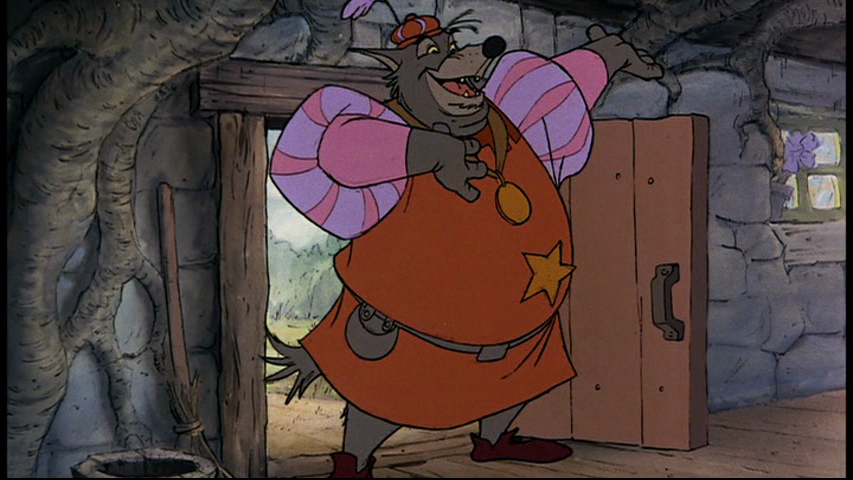
The “Honorable” Sheriff of Nottingham shows up at people’s doors and takes all their money as taxes for Prince John

In Nottingham, the Sheriff travels the town to collect the taxes, taking from Friar Tuck’s donations to the poor, as well as from a widow rabbit and her family. A blind man, who turns out to be none other than Robin Hood, appears at the widow’s door, surprising her with some money, and her son, Skippy, with a hat and archery kit for his seventh birthday. Skippy and his friends go out to test the bow and arrow, which he accidentally sends flying into the yard of Maid Marian. The kids sneak inside to retrieve the arrow, and end up playing a game of make-believe with Marian and her handmaiden, Lady Cluck, pretending that Skippy is Marian’s childhood sweetheart, Robin Hood. After the children leave, Marian daydreams about Robin, wondering if he’s forgotten all about her.

In Sherwood Forest, Robin is daydreaming of Maid Marian, telling Little John that he’s in love with her, but is worried that it wouldn’t work out between them because she’s a lady, and he’s an outlaw. Friar Tuck surprises him tells him that Prince John is having an archery tournament the next day, with Marian to give a kiss to the winner. Although Robin is anxious to run off to the contest, as he is sure he will not lose, he and Little John plan to show up in disguises, since the tournament could very well be a trap. At the tournament, Little John disguises himself as the Duke of Chutney to get close to Prince John, while Sir Hiss goes off to find out where Robin Hood is. Robin has disguised himself as a stork, and ends up winning the tournament; however, Prince John sees through his disguise and has Robin arrested. Marian pleas for his release, but Prince John refuses. A fight breaks out between Robin Hood and his friends against the Prince’s soldiers, and Robin and Marian escape into Sherwood Forest. The two reaffirm their love, and are surprised by the townsfolk with a party and a public mocking of Prince John, calling him the “Phony King of England.”

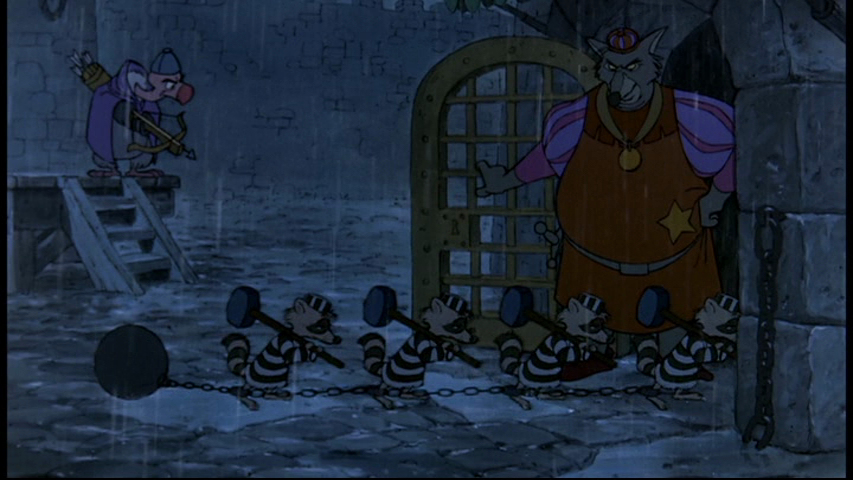
Almost everyone is Nottingham is jailed for being unable to pay the taxes increased by the Prince

Angered that the town is mocking him, Prince John decides to triple the taxes, sending most of the townsfolk into prison. Friar Tuck rings the church bell in the steeple to give people hope, but is upset that he can do only so little for his congregation. Angered when the Sheriff comes to collect all the money in the poor box, the Friar begins to fight back, only to be arrested. Prince John decides to use Friar Tuck as bait to trap Robin, with the Friar set to be hanged. Hearing this, Robin decides that he and Little John need to stage a jailbreak. While they manage to break everyone out, the guards are quick to attack on orders of Prince John. When Robin goes back to save one of the widow’s children, he is captured inside the castle. During the battle that follows, the castle is set on fire, and Robin dives into the moat surrounding the castle. Prince John thinks they have finally killed Robin, but Robin escapes once again.

In the end, King Richard arrives back from the crusades and pardons Robin and Little John. Prince John and his cohorts are sent to jail, working at the Royal Rock Pile. Robin and Marian are finally wed, riding away in a carriage marked “Just Married.”

October 29

October 29, 1993 – The Stop-Motion Animated Feature The Nightmare Before Christmas is Released to Theaters

“When I was working at Disney, I designed something that’s sort of the reverse of that. It’s like the Grinch in reverse, so to speak, about this character who finds Christmas and loves it and decides to try to do it himself.” – Tim Burton.

On October 29, 1993, the Tim Burton film The Nightmare Before Christmas was released to theaters, distributed under the Touchstone label. The idea for the film first began with a poem Burton created while working as an animator at the Walt Disney Studios in the early 80s. When Burton was re-hired, he asked for his treatment back, and it was returned along with his original concept sketches, which helped shape the look and tone of the overall film. The look of the film was also meant to be reminiscent of the illustrations of Ronald Searle and Edward Gorey. The film took three years to create, with the stop-motion done at 24 frames a second, and using 13 animators and more than 100 camera operators, puppet makers, set builders, and prop makers on 19 soundstages with 230 sets. The film was directed by Henry Selick, with screenplay by Caroline Thompson and Michael McDowell, music by Danny Elfman, and story by Tim Burton. It stars Chris Sarandon as Jack Skellington (with Danny Elfman providing his singing voice), Catherine O’Hara as Sally, William Hickey as Doctor Finklestein, and Ken Page as Oogie Boogie. The film was originally released under the Touchstone Banner, due to Disney’s fear that the film was too scary for children. After the film became a critical and financial success, the film was distributed by Walt Disney Pictures.

The narrator introduces the place where holidays begin before the door opens to take the audience to Halloween Town

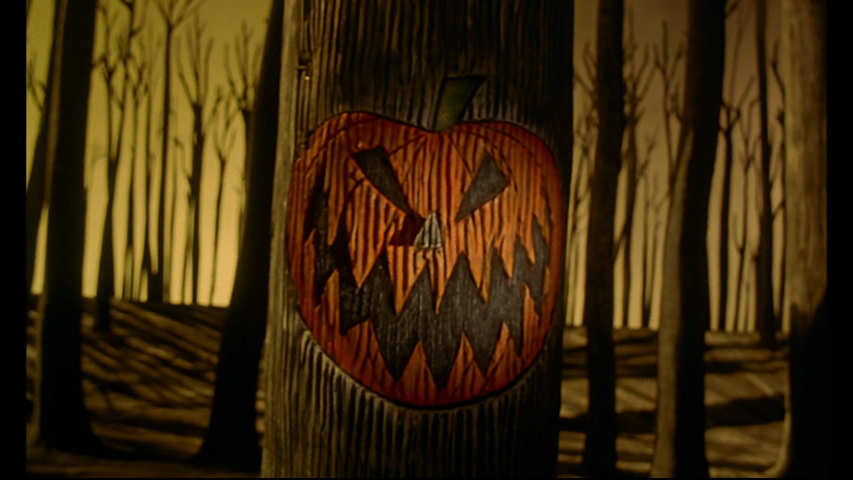
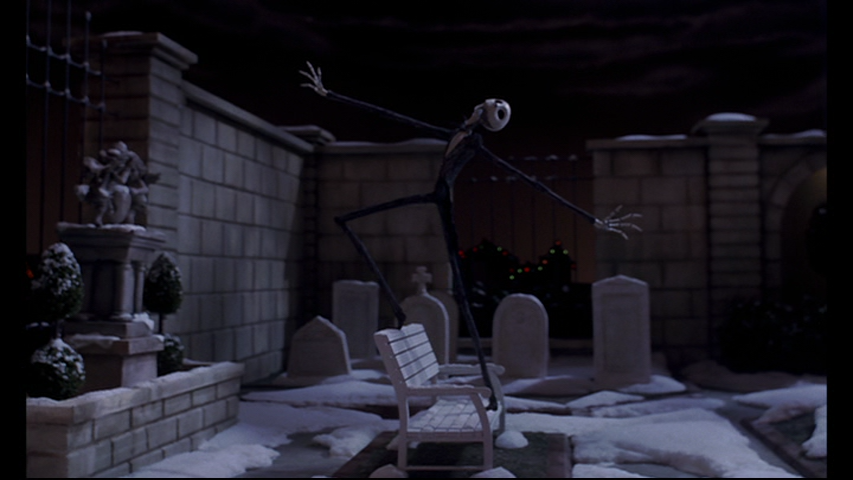
The film begins with a look at a forest with a circle of trees, with each tree decorated with a door representing a different holiday. The door for Halloween opens, with the residents of Halloween Town celebrating after another successful Halloween night. A rag-doll named Sally is among the residents watching the celebrations, but is quickly retrieved by her creator, Dr. Finklestein, although she is able to escape by unstitching her arm. Meanwhile, Jack Skellington, known as the Pumpkin King, leaves the celebration early, feeling melancholy and bored with Halloween. Sally, harboring a secret crush on Jack, watches him as he wanders through the graveyard, before she returns home to retrieve her arm.

Jack wanders away from Halloween Town through the night, and finds himself in a part of the forest he hasn’t seen before, in front of a tree with a Christmas tree design. Enchanted by this strange design, he opens the door and is sucked inside, falling into Christmas Town. Meanwhile, the Halloween Town residents are frantically looking for Jack. But just as Sally, hearing the alarms, finds a way to escape the doctor’s house, Jack returns with all of the items he’s taken from Christmas Town, and calls an emergency town meeting to discuss everything he’s seen. Although he tries to explain, the town doesn’t understand the “special kind of feeling in Christmas Land.”

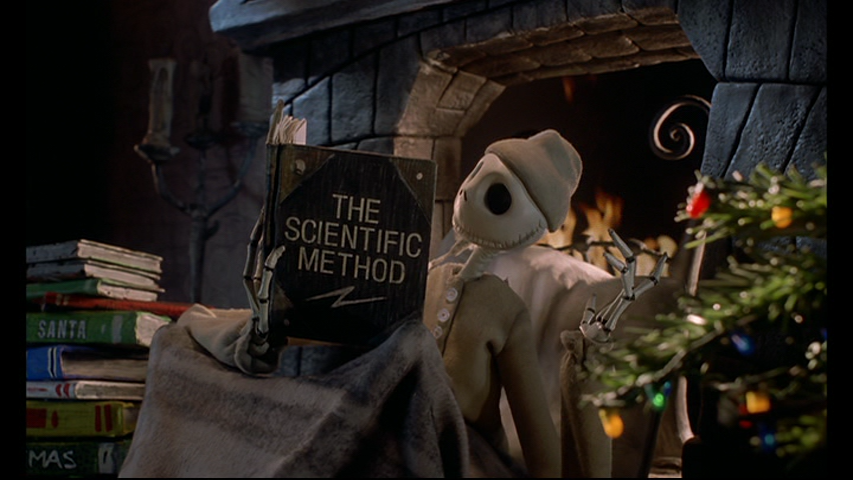
After reading several books on Christmas, Jack decides to take a more scientific approach to understand the meaning of Christmas

That night, Jack is reading up on all the stories of Christmas he can find, and decides to use science to come up with a better explanation. He borrows equipment from Doctor Finklestein, and sequesters himself in his home, much to the worry of the town. Jack comes to the conclusion that he and the members of the town will take over Christmas. Sally has a terrifying vision of Jack’s Christmas, which she believes will only end in danger for him. She tries to warn him, but he reassures her that his Christmas will be just fine. Jack also runs into problems with Lock, Shock, and Barrel, Halloween Town’s finest trick-or-treaters, who also work for Oogie Boogie. They are tasked with kidnapping Santa Clause, and although they promise to leave Oogie Boogie out of it, they plan to give Santa to him instead of Jack.

The night before Christmas arrives, and Jack is ready to go out as Santa Clause. Sally tries to prevent him from heading out by covering Halloween Town with a thick fog, but Jack’s dog, Zero, has a glowing red nose to light the way, so Jack lifts off into the sky to claim Christmas as his own. Lock, Shock, and Barrel, capture Santa, are told to make him “comfortable,” which to them means taking him to Oogie Boogie. As Jack travels all around the world, his Christmas is considered an unmitigated disaster, with the military being mobilized to take the “imposter” down.

Jack finally embraces being the Pumpkin King, filled with a new vigor for the holiday of Halloween

When Sally tries to rescue Santa from Oogie Boogie, she is captured. The town, which has been watching Jack’s journey, sees Jack being shot down by cannon fire and announce that Jack has been blown to smithereens. Jack, still alive, begins to rethink what he’s done. Ashamed at the turmoil he’s caused, he realizes that he has a new zest for being the Pumpkin King, and heads back to Halloween Town, determined to set everything right. First he rescues Sally and Santa from Oogie Boogie, reducing the villain to nothing but a single bug, which Santa squishes. Santa quickly makes everything right, and gives Halloween Town a present of their first snowfall. Jack returns Sally’s affections, and the two hug in the snow-filled moonlight.