RSS Feed

Tag Archives: Academy Award Nominated

November 23

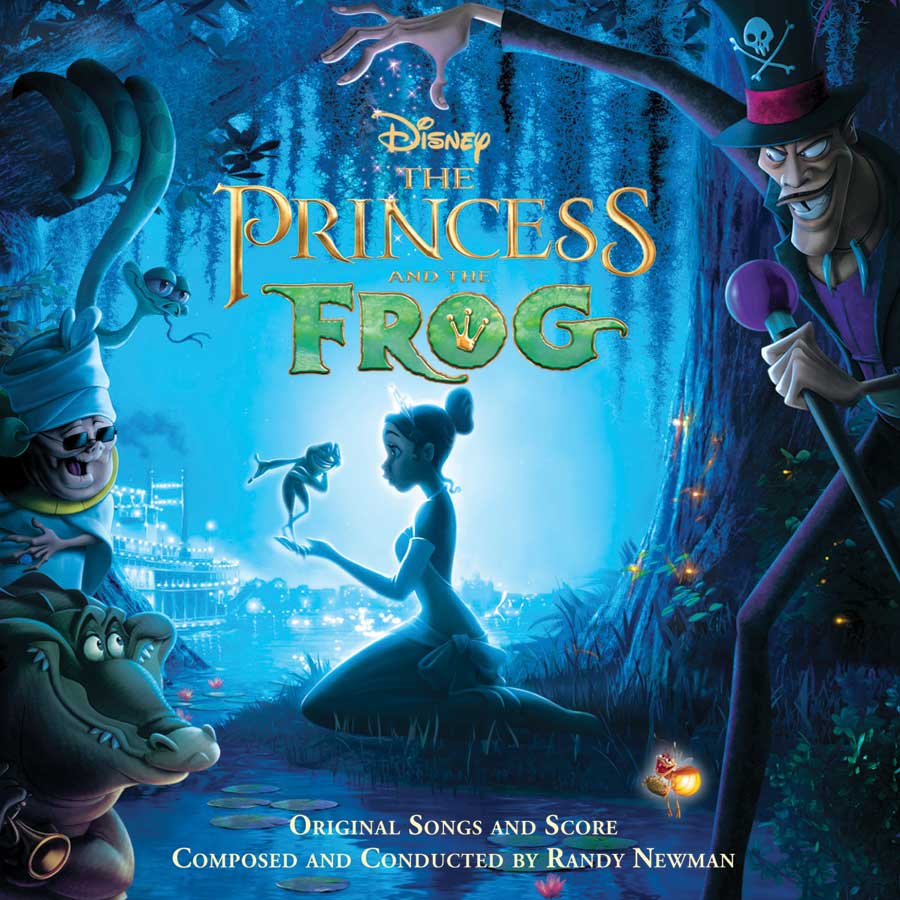
November 23, 2009 – The Soundtrack to The Princess and the Frog is Released Through Walt Disney Records

The Princess and the Frog (Original Songs and Score)

“But I’ve climbed the mountain, I’ve crossed the river, and I’m almost there.”

On November 23, 2009, the soundtrack to the forty-ninth Disney animated feature film The Princess and the Frog was released through Walt Disney records. It was released two days before the limited release of the film, and almost three weeks before the general release of the film. The soundtrack contains the nine songs used in the film, seven pieces of the original score composed by Randy Newman, and the song “Never Knew I Needed” by recording artist Ne-Yo, which was played over the closing credits. Two of the songs used in the film, “Almost There” and “Down in New Orleans” were nominated for the Academy Award for Best Original Song; “Down in New Orleans” was also nominated for a Grammy Award. The album peaked at number 80 on the Billboard 200 charts.

November 16

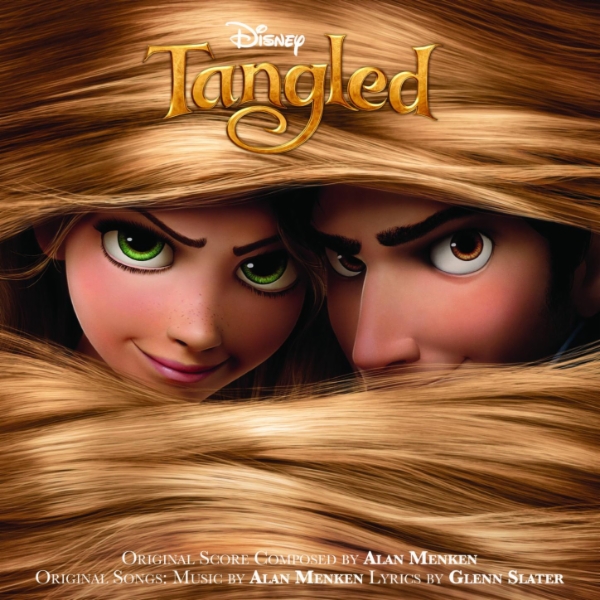
November 16, 2010 – The Soundtrack for the Film Tangled is Released Through Walt Disney Records

Tangled

“All at once, everything looks different, now that I see you.”

On November 16, 2010, the soundtrack for the 50th Disney animated feature film Tangled was released through Walt Disney Records. The soundtrack was released two days after the premiere at the El Capitan Theatre, and a week before the film’s general release nationwide. The soundtrack includes the original score by Alan Menken, songs from the film written by Alan Menken and Glenn Slater, and an original song by recording artist Grace Potter. One song included in the soundtrack was eventually cut from the film, which was the first reprise of “When Will My Life Begin?” sung by Mandy Moore, the voice of Rapunzel. The album peaked at number 44 on the Billboard 200, as well as number 7 on the Soundtrack chart, and number 3 on the Kid Albums chart.  The song “I See the Light” was nominated for an Academy Award, a Golden Globe, and a Broadcast Film Critics Association Award, and won a Grammy.

November 10

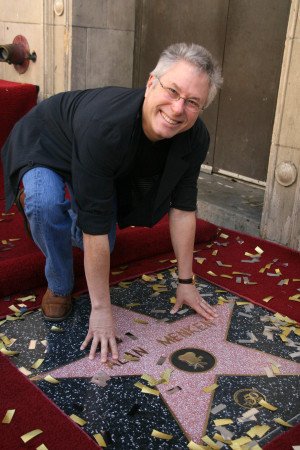
November 10, 2010 – Alan Menken is Awarded a Star of the Hollywood Walk of Fame

at the Alan Menken Hollywood Walk of Fame Star Ceremony, El Capitan Theater, Hollywood, CA. 11-10-10

“Back then there was a genuine outreach on the part of Disney…to work with theater people. I didn’t know it at the time, but Michael Eisner was a theater major in college.”

On November 10, 2010, composer and pianist Alan Menken was awarded a star on the Hollywood Walk of Fame. Through his work with Disney starting in the late 1980s, Menken has been awarded eight Academy Awards, with 18 overall nominations, as well as 10 Grammy awards. His star is placed near the Disney owned El Capitan Theater on Hollywood Boulevard. As his award was well-timed with the release of the Disney film Tangled, voice of Rapunzel Mandy Moore was on hand at the ceremony, as was Richard Sherman, well-known Disney composer and songwriter.

September 20

September 20, 2002 – The Studio Ghibli Film Spirited Away is Given a Limited Release in the United States
vlcsnap-2013-09-19-17h04m50s65

“Why should I hire you? Anyone can see you’re a lazy, spoiled crybaby, stupid to boot! I’ve nothing for you – forget it!”

On September 20, 2002, the Studio Ghibli film Spirited Away (known in the original Japanese as 千と千尋の神隠し) was released in the United States in a limited amount of theaters, with a general release on September 27, 2002. The film was written by director Hayao Miyazaki, who was inspired by a friend’s ten-year-old daughter, wishing to write for her a character she could look up to. Disney asked Pixar’s John Lasseter, a fan of Miyazaki’s work, to oversee the English-language version of the film. The film became the most successful film in Japanese history, grossing over $229,000,000 in the Japanese box office. It would go on to win the Academy Award for Best Animated Feature at the 75th Academy Awards; its success helped solidify the popularity of Studio Ghibli films within the United States, with Disney internationally distributing most of the studio’s library.

The film begins with ten-year-old Chihiro sulking in the backseat as she and her parents drive to their new home. Chihiro hates the move, and doesn’t hesitate to let her parents know. They end up lost on a back road, and Chihiro notices a rather strange stone outside. They come across a dilapidated old building, and although Chihiro doesn’t want to explore, her parents let their curiosity get the best of them. Not wanting to be left alone, she follows them. Her father thinks it’s only an abandoned theme park, but Chihiro still has a bad feeling about the place. Her parents then smell something delicious, and discover a delectable feast. Chihiro refuses to eat, but her parents dig right in. Feeling something isn’t right, Chihiro looks around the buildings, and notices black smoke from the chimney of what appears to be a bath house. She comes across a boy on the bridge, who warns her to escape before it gets dark. As she runs back to her parents, she is shocked to find that they have turned into pigs.
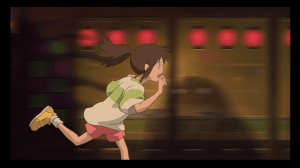
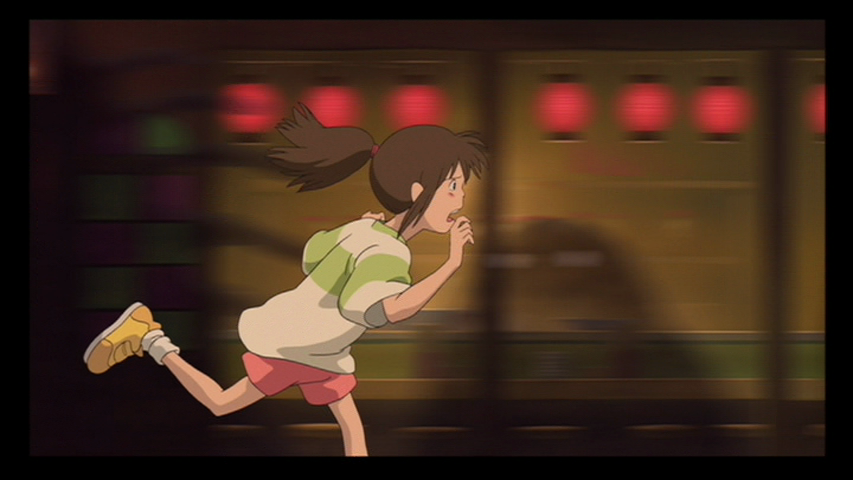
Chihiro runs through the bathhouse, looking for her parents, unable to believe they have been turned into pigs

Chihiro runs through the bathhouse, looking for her parents, unable to believe they have been turned into pigs

Chihiro runs around the bathhouse, and finds she is trapped at the bathhouse, as the nearest town is now far away across a river. As she moans to herself that she must be dreaming, she finds herself disappearing. She then sees several spirits making their way to the bathhouse from a ferry-boat and, frightened, she runs away. She is soon found by the boy from the bridge, who has her eat something so she won’t disappear, assuring her that she will not turn into a pig. He then protects her from a strange bird flying overhead, and takes her through several back passageways until they reach the bridge. He warns her not to breath as they cross the bridge, otherwise the spell keeping her invisible will wear off. A frog leaps into the boy’s face, and Chihiro lets out a breath of surprise, revealing herself. The boy, named Haku, continues to protect her, but gives her directions to go to the boiler room to find Kamaji and ask him for work, so she can stay and save her parents. Once she has work, the witch that runs his world will not be able to harm her.

Although frightened, Chihiro follows Haku’s instructions, ending up at Kamaji’s boiler room. When she asks him for a job, he first ignores her, then tells her that he doesn’t need any more help than the susuwatari that work for him. She assists one of the susuwatari by taking his piece of coal to the furnace, causing the rest of the susuwatari to pretend that they can’t carry their coal, wanting Chihiro to do their jobs. Kamaji then tells her that there is no work for her, just as a girl named Lin enters. As she panics upon seeing Chihiro, Kamaji tells her that Chihiro is his granddaughter. He convinces Lin to take Chihiro to Yubaba for a job, which Lin does begrudgingly. Lin then protects her from a suspicious attendant, leaving Chihiro to travel to Yubaba alone with a strange spirit. At first, Yubaba refuses to let Chihiro work at the bathhouse. She tries to find out who helped her, but Chihiro keeps demanding that she should be given a job. Yubaba then taunts her, but Chihiro tries to remain calm, even thought they are interrupted by a rather large baby.
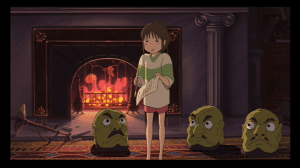
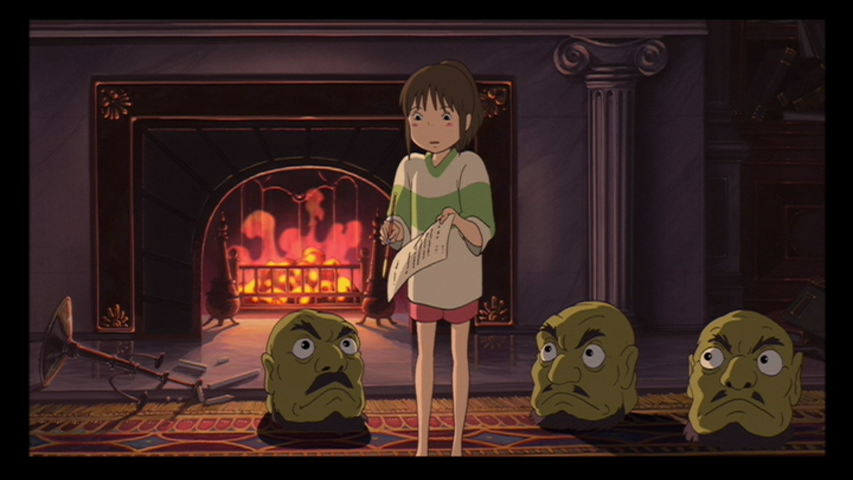
Chihiro, after her persistent asking, is given a contract by Yubaba

Chihiro, after her persistent asking, is given a contract by Yubaba

Yubaba then agrees to give Chihiro a job as she tried to calm the baby down, and gives Chihiro a contract to sign. Yubaba then takes Chihiro’s name, leaving her as just “Sen.” She calls for Haku, who is tasked to take care of her. As she tries to talk to him, he answers her coldly, telling her to call him “Master Haku.” Haku then calls out to Lin to take care of her, as no one wants to work with a human. In private, Lin reveals that she’s actually a kind person who is happy that Chihiro was able to make it past Yubaba. Lin warns Chihiro to stay away from Haku, as he is Yubaba’s henchman. The next morning, Haku sneaks into the room where Chihiro stays with the other women and tells her to meet him at the bridge, as he will show her where her mom and dad are. As she runs to the bridge, she comes across a strange spirit that seems to be watching her. Haku then meets her and takes her to the pig pen, and she starts to cry after seeing them. As she sits outside, he gives her her old clothes, with the farewell card her friend gave her. Haku tells her that Yubaba controls others by stealing their names, and she needs to remember her real name if she wishes to leave, but must keep it a secret. Haku no longer remembers his real name, but he strangely remembers hers. He kindly offers her food that will help her regain her strength, but she still starts to cry as she realizes what kind of situation she has found herself in. She heads back to her residence and hides her clothes, unaware that the strange spirit from before has followed her.

Work begins for the night, and Chihiro works as hard as she can, although she is given rather challenging tasks. She meets the spirit that’s been following her and leaves the door open for it. Chihiro and Lin are sent to scrub the big tub, which hasn’t been cleaned in ages. Meanwhile, Yubaba senses a spirit coming that she can only call “scum.” As she tries to get a tab for her bath, the foreman refuses her, but the spirit she let in kindly gives it to her. He appears a few minutes later with more tabs, although she refuses them, making him sad. Yubaba is then alerted that a Stink God is at the gate and, while she can’t refuse the customer, she wants to rush it out as soon as possible. Chihiro is then given the job to attend to it, although she struggles due to its stench. The god enters the bath, but needs another tab to clean itself. As Yubaba watches, Chihiro successfully cleans the god, revealing it to be not a Stink God, but a River God. Chihiro then earns the respect of Yubaba and the staff, thanks to her actions.
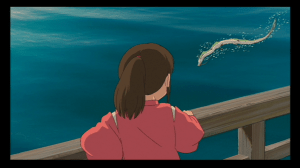
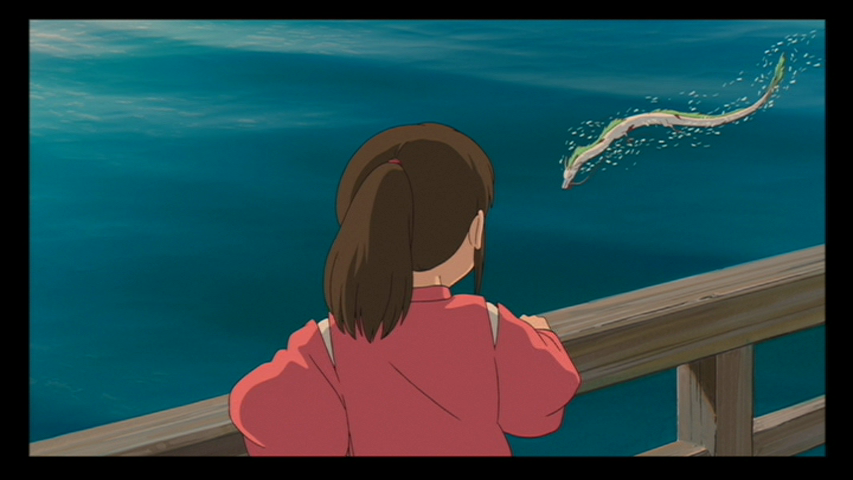
Chihiro sees Haku getting attacked by the paper birds

Chihiro sees Haku getting attacked by the paper birds

Late that night, the spirit, called No-Face, tempts a frog worker with gold before swallowing him. He then demands to be treated like a customer, using the frog’s voice to speak. He pays everyone with gold he created, and everyone rushes to keep him happy, so long as he gives them gold. Chihiro, however, is the only one not tempted by the gold, and stays in her room. She spies a dragon being attacked by several paper birds, and calls out to him, realizing that the dragon is Haku. The paper birds fly away when Haku crashes into her room, and while she wants to care for his injuries, he flies out to find Yubaba. Chihiro then rushes off to stop him, but is interrupted by No-Face, who offers her a large amount of gold. She refuses him, and No-Face is saddened by this. Angered, he starts eating employees. Meanwhile, Chihiro continues her search for Haku, and breaks into Yubaba’s residence. She then comes across Yubaba’s rather large baby, who threatens to scream and break her arm if she doesn’t play with him. One of the paper birds, which had attached itself to Chihiro, starts talking, mocking the baby. It is then revealed to be Yubaba’s twin sister, Zeniba, who turns the baby into a mouse, and Yubaba’s bird into an insect. She then demands to take Haku to kill him for stealing a magic seal from her, but Chihiro refuses to move.

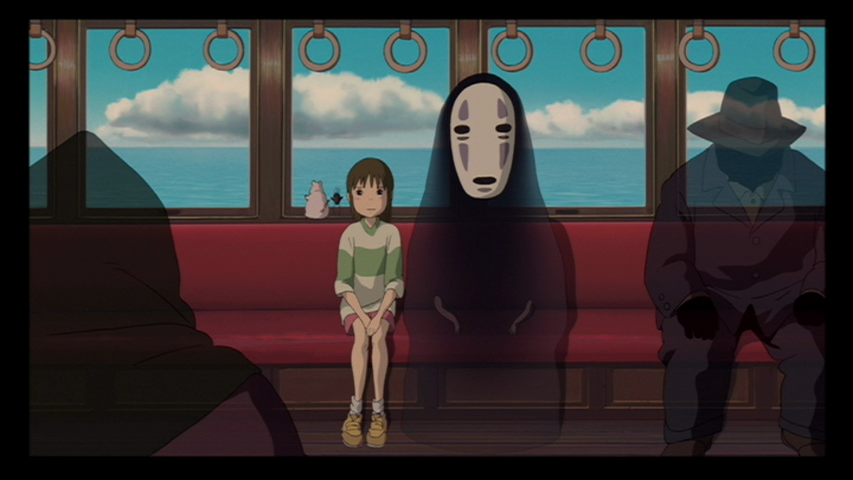
Haku wakes, breaks the spell that Zeniba cast to appear, and falls down a trap door, taking Chihiro with him. He regains consciousness enough to escape, flying into the boiler room. Chihiro then uses an emetic dumpling she received from the River God to free the seal from inside Haku, which is slowly killing him. The seal is spat out, and Haku is returned to human form, although he is once again unconscious. Kamaji then looks after Haku as Chihiro goes to return the seal to Zeniba. He gives Chihiro a train ticket to help her get to Zeniba’s, although she will have to walk back. As Chihiro looks for Yubaba, No-Face is tearing the place apart, wanting to see Chihiro. He tries to offer Chihiro anything she wants, but she refuses, telling him he should go back to where he came. He tells her that he is really lonely, and demands that she take the old. She gives him the other half of the emetic dumpling, and he releases everyone he ever swallowed. He follows her to the train, once again his silent, semi-transparent self. They all board the train and head to Zeniba’s.
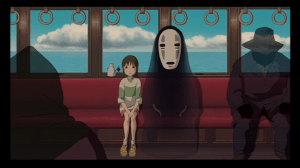
Chihiro and her friends sit on the long journey to Zeniba's

Chihiro and her friends sit on the long journey to Zeniba’s

Haku wakes up later that evening, and asks Kamaji where Chihiro is, and what happened, as he doesn’t remember anything, other than Chihiro calling out for him in the darkness. He then goes to Yubaba, asking if she still hasn’t noticed that she’s lost something precious. She finally realizes that her baby is longer with her, and the gold is just sand. She panics, looking for her baby, and angrily demands that Haku tell her where he is. When she finds that he’s with Zeniba, she sits down in dismay. Haku agrees to get the baby back, but only if she allows Chihiro and her parents to be sent back to their world. Meanwhile, Chihiro and her friends arrive at Zeniba’s, and are greeted by a lamppost that will show them the way. Inside, Zeniba proves to be a kindly witch, but sadly tells Chihiro that she can’t help her, and she will have to do it on her own. When Chihiro tells Zeniba she must go back, she provides Chihiro with a magic hairtie that will protect her. Haku then appears at Zeniba’s, and Zeniba forgives Haku, making him promise to protect her. She then keeps No-Face as her helper as she flies away on Haku’s back. Suddenly, Chihiro has a flashback to when she was little and nearly drowned in a river. She was rescued by Haku, the spirit of the river, and reveals his true name to be Kohaku. He turns back into human form, and thanks her for saving him by giving him back his real name.

They arrive back at the bathhouse, and Yubaba tricks Chihiro again, as Chihiro must guess which pigs are her parents in order to break the spell. Chihiro correctly answers that her parents aren’t there, and the contract is broken, freeing Chihiro and her family. Haku takes her back to her parents, but he can’t take her further than the gate, but he promises they will meet again, although she must not look back when she goes through the tunnel back to her world. Her parents act like nothing has happened, and Chihiro quickly makes her way back, resisting the urge to look back. Chihiro joins her parents as they set off for the new house.
August 28

August 28, 1957 – The Special Short Film The Truth About Mother Goose is Released to Theaters

vlcsnap-2013-08-28-10h26m10s24

“What’s the truth about Mother Goose? Let’s clear up all the mystery. Her nursery rhymes from olden times are really part of history.”

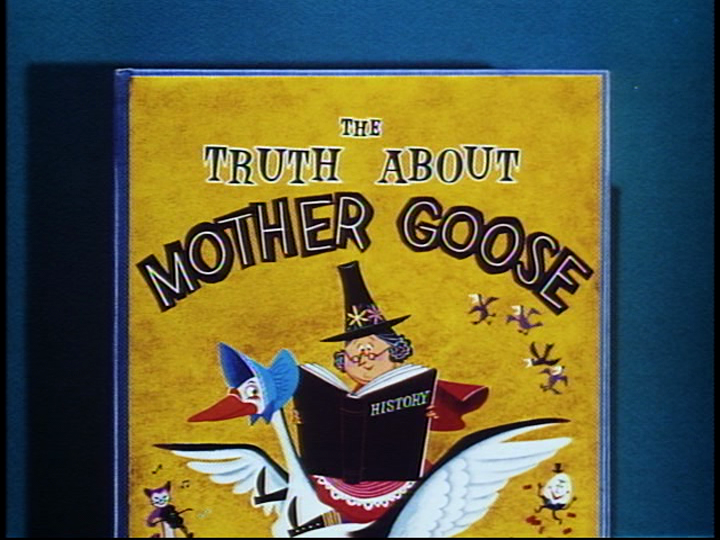
On August 28, 1957, the special short film The Truth About Mother Goose was released to theaters. It was nominated for an Academy Award, but lost to Warner Brothers’ Birds Anonymous. It was directed by Woolie Reitherman and Bill Justice, with story by Bill Peet.

The short is narrated by three jesters and a voice-over narrator, with the jester singing their intention to give the history behind three popular nursery rhymes. They first begin with Little Jack Horner, which actually goes back to 16th century London. The real Jack Horner was the assistant to a city official, who was to deliver a Christmas present to Henry VIII. In this time period, in was a common practice to bake presents of great value into a pie. Knowing this, Jack pulled out from the pie a “plum,” which was a deed to a valuable estate. When Henry VIII found there was no gift, the city official was punished, and Jack ended up living in his stolen estate, although he may have been haunted by a popular rhyme that was gaining ground in London.

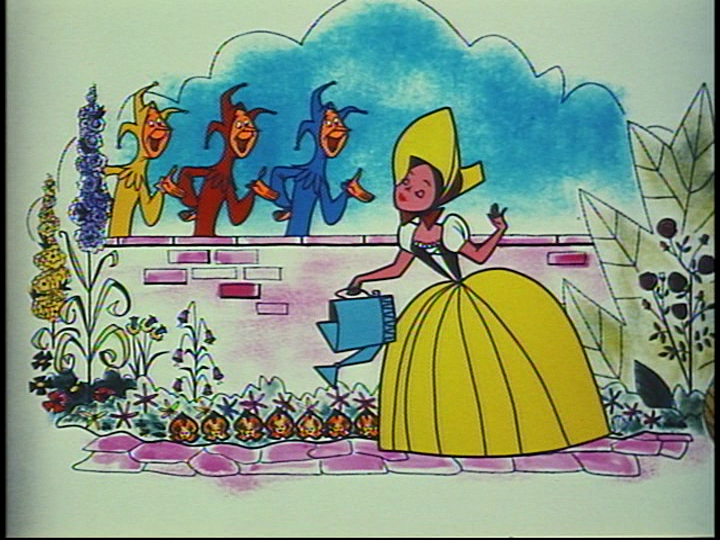
The jesters recite "Mary Mary Quite Contrary" before getting into the history of the rhyme

The jesters recite “Mary Mary Quite Contrary” before getting into the history of the rhyme

The next rhyme, Mary Mary Quite Contrary, is actually about the life of Mary Stuart, also known as Mary, Queen of Scots. She came from France to take over the Scottish throne, which was frowned upon by the Scottish court. The “silver bells” refer to Mary’s elaborately decorated attire, the “cockle shells” were a reference to her love of exotic foods, and the “pretty maids all in a row” were Mary’s ladies in waiting. The narrator then tells the tragic tale of Mary, who married Lord Darnley four years after her arrival in Scotland. Her marriage was unhappy, and when Mary found other lovers in a French poet and a court musician, these men were dispatched. She fell in love with the Earl of Bothwell, and after Darnley’s murder, she and the Earl were married. The Scottish people, outraged at Mary’s behavior, forced her to abdicate the throne, and imprisoned her in Lochleven. After a few months, the jailer’s son helped Mary to escape, and she organized an army to gain back the throne in Scotland, but was defeated. She then fled to England to seek refuge with her cousin, Queen Elizabeth I. Elizabeth soon became jealous of Mary, and was accused of being a traitor to the government. She was then executed, “quite contrary” until the end.

The last nursery rhyme discussed is London Bridge is Falling Down. Old London Bridge was built in 1176 to unite the two parts of London. It was finished in 1209, and a chapel was built over the central pier to sanctify it. Several beautiful buildings were also built on the bridge, and it was named a wonder of the world. Merchants would sell their wares on the lower floors of buildings on the bridge, with the upper stories of the buildings being sold as apartments. Celebrations of great moments in British history were also done on the bridge. Living on the bridge could also be hazardous, with the greatest hazard being fire; the worst fire was the Great Fire of London in 1666, when it broke out from the King’s bakery in Pudding Lane. The bridge would soon be rebuilt, but it never would return to its former glory. Its foundations were breaking from water and fire damage, and it was soon declared a public nuisance, ridiculed in rhyme. The bridge was given the declaration to be demolished on July 4, 1823. A new London Bridge would be built, which still stands today.

August 27

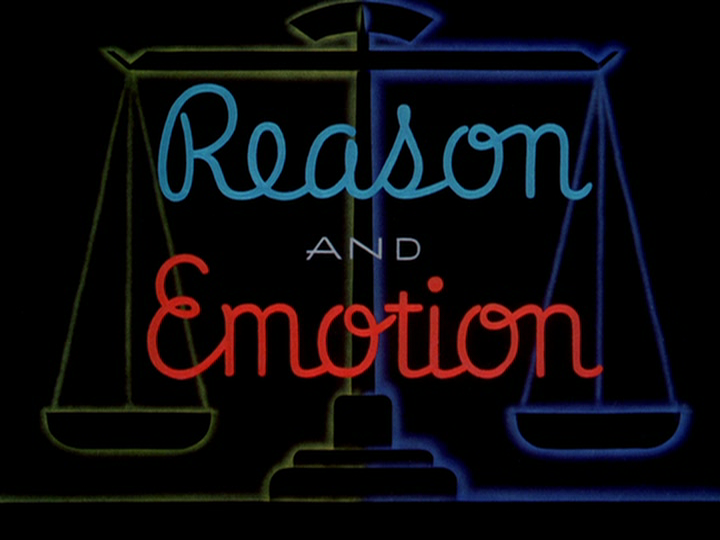
August 27, 1943 – The Wartime Short Film Reason and Emotion is Released to Theaters

vlcsnap-2013-08-26-20h59m19s50

“Each one of us is equipped with the ability to think, known as Reason, and the ability to feel, known as Emotion. Within the mind of each of us, these two wage a ceaseless battle for mastery.”

On August 27, 1943, the wartime short film Reason and Emotion was released to theaters. It was nominated for an Academy Award, but lost to The Yankee Doodle Mouse from Metro-Goldwyn-Mayer. The short was directed by Bill Roberts.

The short begins with an explanation of how each person has two abilities: Reason and Emotion. From birth, Emotion is the more powerful of the two, as Reason isn’t born yet. A baby is seen acting on pure Emotion, until Reason arrives to stop Emotion. The baby grows up, and Reason is in the driver’s seat of the man’s mind. When the man passes by and attractive woman, Emotion knocks out Reason and acts crudely toward the woman, earning a slap in the face. The attention then turns to the woman who, when Emotion takes over her mind, decides to eat as much as she can at the nearby café, with her figure ballooning quickly.

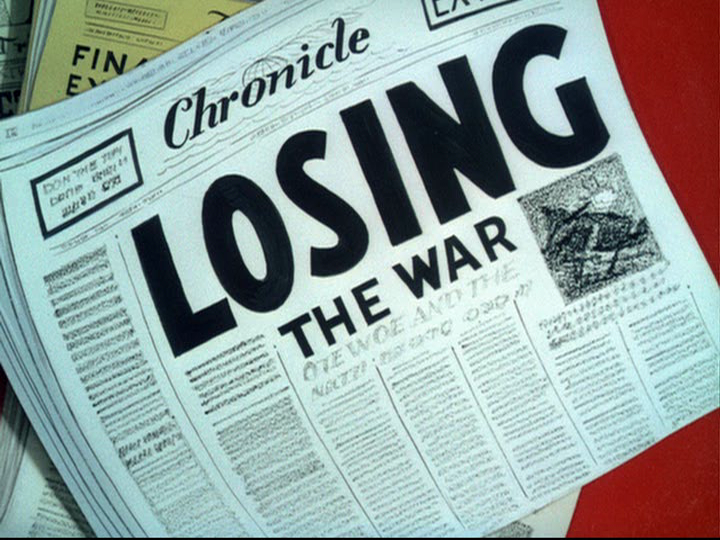
The narrator explains that, during this time of war, it is easy to let Emotion take control over Reason, thanks to headlines like this

The narrator explains that, during this time of war, it is easy to let Emotion take control over Reason, thanks to headlines like this

The attention then turns to the War, and how easily people can let their emotions get the best of them in such a stressful time. In the case of Mr. John Doakes, although he tries to keep himself informed of the current events, he is easily ruled by Emotion with all the rumors running around. The narrator then points out to Emotion that this is exactly what Hitler plays upon, using tactics of fear, sympathy, pride, and hate. The audience is then taken inside the mind of a Nazi, with Emotion completely manipulated by Hitler’s speeches. Although Reason knows better, Emotion enslaves Reason and leaves nothing but ruin in his wake. The narrator tells Reason and Emotion that they must work together to fight against all odds to defeat Hitler.

August 2

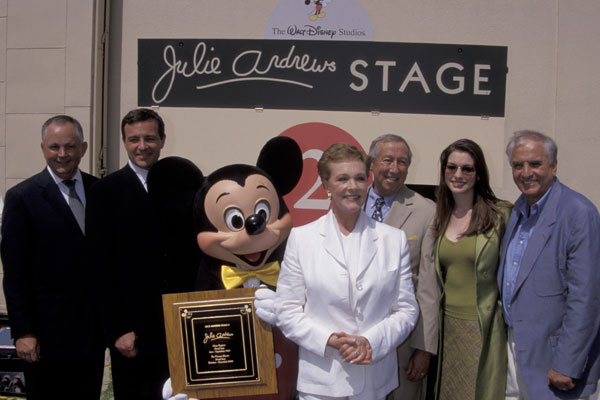
August 2, 2001 – Stage 2 of the Walt Disney Studios is Dedicated as the Julie Andrews Stage

mq_003

“I’m so pleased to be here today as we honor Julie, our great friend and family member, in a very special way.” – Roy E. Disney

On August 2, 2001, Stage 2 of the Walt Disney Studios was dedicated as the Julie Andrews Stage in a special ceremony. The stage itself, opening in April of 1949, is the second oldest stage on the studio lot, and one of the largest in the Los Angeles area. It has served many purposes, from filming of The Mickey Mouse Club, to hosting the building of Disneyland attractions. Two of Andrews’ films were filmed on this stage: Mary Poppins and The Princess Diaries. Attending the ceremony to honor Andrews were Roy Disney, Chairman of the Walt Disney Motion Pictures Group Richard Cook, director of The Princess Diaries Gary Marshall and its star Anne Hathaway, Dick Van Dyke, and Richard Sherman of the Sherman Brothers songwriting team.

July 22

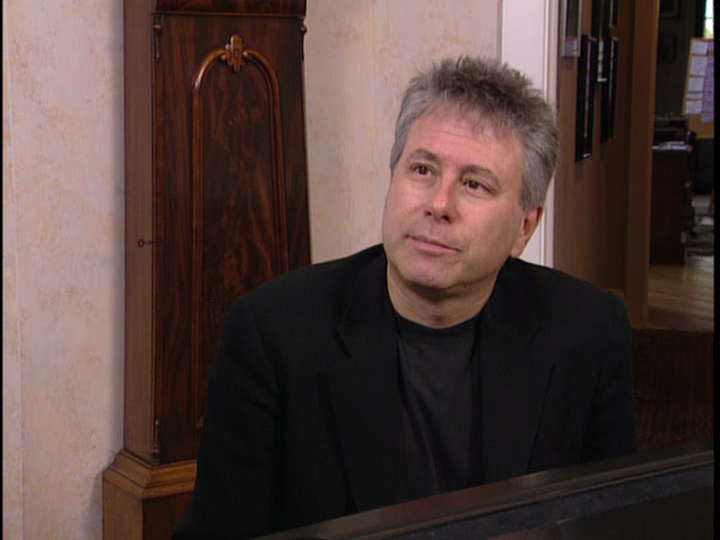
July 22, 1949 – Film Composer, Songwriter, and Disney Legend Alan Menken is Born

vlcsnap-2013-07-22-05h20m18s225

“He’s a very clever man, that Alan Menken. He’s like Mr. Melody. Whenever he would send in a song on Beauty and the Beast or Hunchback [of Notre Dame] or some of the Aladdin songs, you can’t get them out of your mind. There’s no antidote for them except another Alan Menken song, cause they’re so getable and singable.” – Don Hahn, Producer

On July 22, 1949, composer and songwriter Alan Irwin Menken was born in New Rochelle, New York. His parents would play records of Broadway musicals and musical theater standards in his youth, and Menken displayed musical talents at an early age, studying the piano and violin. Coming from a family of dentists, Menken went to NYU as a pre-med student. He then changed his focus to music, and began to work in clubs and write jingles, and wrote a rock ballet right after college for the Downtown Ballet Company, where he met his wife Janis. His first musical success was an adaptation of Kurt Vonnegut’s God Bless You, Mr. Rosewater with Howard Ashman, who would become his close songwriting partner. The two would hit it big with the 1982 Off-Broadway hit Little Shop of Horrors.

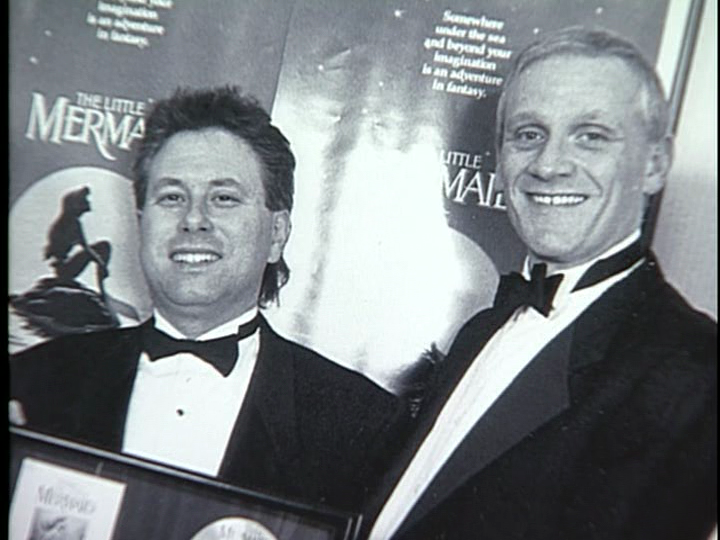
Menken (L) and songwriting partner Howard Ashman

Menken (L) and songwriting partner Howard Ashman during the accolade season for The Little Mermaid

Ashman was approached by Disney to help create the music for a new animated feature, The Little Mermaid. As Menken has said in interviews, it was his and Ashman’s job to reinvent the Disney animated feature, bringing a real sense of current musical theater trends to these Disney musical films. The Little Mermaid became the biggest hit for the studio in decades, and ushered in a whole new era for Disney, known as the Disney Renaissance. The duo was honored with two Academy Awards between them for The Little Mermaid: Best Song (“Under the Sea”) and Best Original Score. Menken and Ashman were then asked to compose for Beauty and the Beast and Aladdin. Unfortunately, around this time, Ashman was diagnosed with HIV, and passed away before Beauty and the Beast was released in theaters. Menken continued to be hired by the studios, working with songwriter Tim Rice to complete work for Aladdin, which also won two Academy Awards for Best Song (“A Whole New World”) and Best Original Score.

For the film Pocahontas, Menken teamed up with lyricist Stephen Schwartz, once again winning two Academy Awards for its music. Menken continued to work with Disney on films Hercules, Home on the Range, Newsies, Enchanted, The Shaggy Dog, and Tangled. He has also moved back to Broadway, helping bring to the stage some of these Disney hits, including Beauty and the Beast and The Little Mermaid; he has also contributed to the stage shows featured at the Disney parks. Over the course of his career, Menken has won eight Academy Awards, holding the record for most wins for any living person. In 2001, Menken was named a Disney Legend.

July 21

July 21, 1939 – The Mickey Mouse Short Film The Pointer is Released to Theaters

vlcsnap-2013-07-21-16h54m39s246

“Well, I’m, uh, Mickey Mouse. You know, Mickey Mouse? I hope you’ve heard of me. I hope.”

On July 21, 1939, the Mickey Mouse short film The Pointer was released to theaters. This short was the first display of Mickey’s redesign by artist Fred Moore, with his eyes changing from the previous “pie-shape” to a white eye with a black pupil. The short was also nominated for an Academy Award, but lost out to Disney’s final Silly Symphony, The Ugly Duckling. The short was directed by Clyde Geronimi.

Mickey is reading out loud from a book called “How to Train a Pointer,” in an attempt to teach Pluto to become a better hunting dog. Pluto salivates at the thought of better things to eat than beans, and the two set off to hunt. The two hear a cry in the woods, and look to see a family of quail. Pluto runs to chase them, tripping up Mickey and making him drop his shotgun. Mickey chastises Pluto, making Pluto cringe and paw at the dirt in shame. After attempting to slink away into the woods, Pluto crawls back and lays on his back, and Mickey realizes he can’t stay mad at his dog. Mickey then teaches Pluto how to act like a pointer, and Pluto copies him exactly, earning Mickey’s praise.

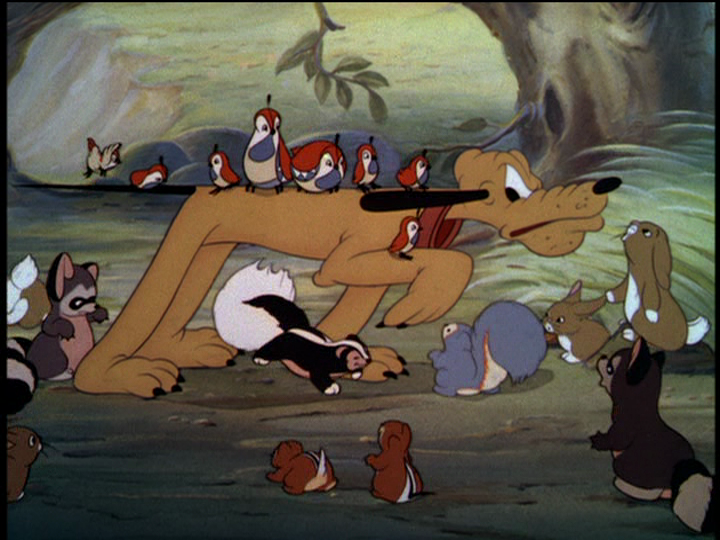
Pluto, keeping still to make Mickey happy, is surrounded by curious animals

Pluto, keeping still to make Mickey happy, is surrounded by curious animals

The two hear the quail cry again, and as Mickey tries to track it, Pluto gets distracted by a caterpillar and heads the opposite direction. Mickey accidentally wakes up a bear on his way to catch the quail, and, thinking it’s Pluto, slaps the bear to keep it quiet and continues to talk to it. Pluto, following the caterpillar, has gotten himself lost, but finds the family of quail. The quail chicks spot Pluto and start to play with him, but Pluto, remembering what Mickey told him, refuses to move, no matter what they do. Mickey continues to search through the woods with the bear tracking him, and he finally spies the quail – along with a host of other animals – standing around Pluto. Mickey turns to see that a bear has been following him, and nervously tries to weasel out of the situation. After crashing into Pluto, the two hightail it back to their campsite. Later that night, Pluto puts his pointing skills to good use by tracking down their last can of beans.

June 29

June 29, 1945 – The Donald Duck Short Film Donald’s Crime is Released to Theaters

vlcsnap-2013-06-29-18h13m08s255

“Gotta date with Daisy, Daisy, Daisy…she’s my sweetie gal!”

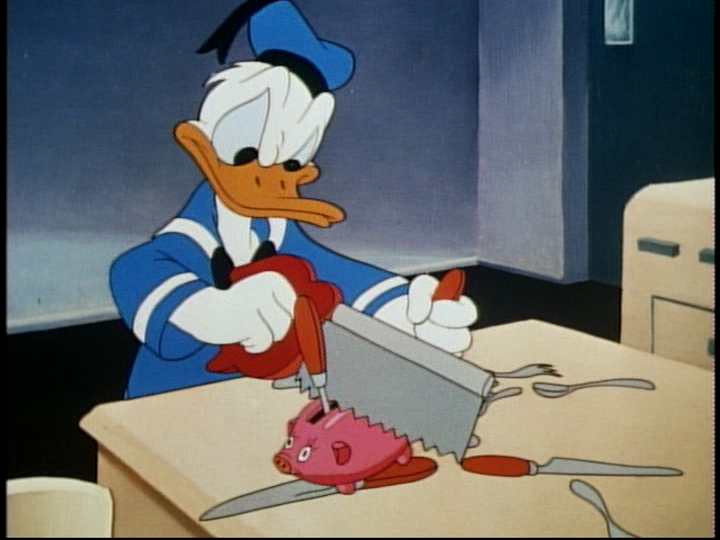
On June 29, 1945, the Donald Duck short film Donald’s Crime was released to theaters. The film was nominated for an Academy Award, but lost to the Tom and Jerry short film Quiet Please! It was directed by Jack King, with story by Ralph Wright.

Donald is excitedly preparing for his date with Daisy, when he realizes at the last minute that he’s broke. He spies his nephews’ piggy bank sitting on the table, and hears a voice telling him that it’s the answer to his problem. He tries to resist, knowing it would be wrong, but the voice keeps telling him that no one will know, and he should take it. He gives in to temptation, just as his nephews start playing around his feet. They ask him what he’s doing, and he demands that they go to bed as he tries to hide the piggy bank. They quickly run upstairs, saying their prayers for Daisy and Uncle Donald before they fall asleep.

Donald breaks out his tools to try and get the money while leaving the bank in one piece

Donald breaks out his tools to try and get the money while leaving the bank in one piece

Donald uses every tool he can to get the money out of the bank, but the bank breaks, leaving him with all of the money. He suddenly hears the nephews calling for him, and he runs upstairs, sweating with guilt. He thinks they are on to him, until he hears them ask for a kiss goodnight. He feels like a skunk for stealing their money, but soon forgets it as he takes Daisy out for a night on the town. After he brings Daisy home, he floats away on a cloud after she give him a kiss goodnight and calls him a big shot. The voice he heard before boosts his ego, before bringing back all of the guilt from before. The guilt gets the best of him as he starts to act like he’s a gangster, with the police after him wherever he goes.

He runs around town before spotting his own face on a wanted poster, with a reward of $100, dead or alive. As he pulls the poster from the post, another one is posted behind it, with the reward increasing to $500. The more he pulls the posters, the higher the reward, until the zeros start to circle around. He flees again and ends up in a blind alley, and thinks he’s in jail, pulling on the bars of the door in front of him, when a sign falls on his head. He looks up to see that he’s at the service entrance of a café, and there is help wanted inside. He decides to take up the job and pay back the money for the nephews. However, when he finds he’s paid them one nickel too many, the nephews spot him trying to get the money out, and they throw a tantrum while he fidgets nervously.