RSS Feed

Tag Archives: ABC

April 19

April 19, 1997 – The Animated Series Nightmare Ned Premieres on ABC

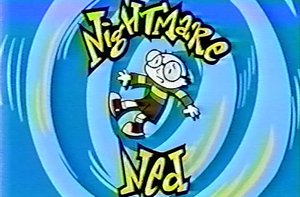
Nightmare Ned

“Thank goodness I’m awake.”

On April 19, 1997, the animated series Nightmare Ned premiered on ABC. Based on a video game, the show is about 10-year-old Ned Needlemeyer, who handles his problems in his everyday life through his nightmares every night, including school, bullies, and his family. The show ran for only 12 episodes before getting cancelled, with the last episode airing August 9.

March 13

March 13, 2005 – Robert A. Iger Named CEO of the Walt Disney Company

Bob Iger

“On behalf of the entire Board, I want to express how excited we are at the prospect of Bob [Iger] leading this extraordinary company and talented management team to new levels of financial and creative success in the years ahead.” – Sen. George J. Mitchell, Chairman of the Walt Disney Company Board of Directors

On March 13, 2005, the Walt Disney Company Board of Executives unanimously voted to elect Robert A. Iger as the new Chief Executive Office of the company. His tenure would become effective on September 30 of that year, after previous CEO Michael D. Eisner stepped down. The lengthy and highly detailed selection process began in late 2004; Iger previously served as the chairman of ABC Group, where he helped facilitate the merger between ABC and the Disney Company. Iger also served as the president of Walt Disney International, focusing on the Disney name in Europe, Asia-Pacific Region, and Latin America. He originally joined the company in 1996, when Disney acquired Capital Cities/ABC, where Iger was serving as President and COO.

November 7

November 7, 1999 – The Television Movie Annie Premieres on The Wonderful World of Disney

Annie

“Tomorrow, tomorrow, I’ll love ya, tomorrow, you’re only a day away.”

On November 7, 1999, the television movie Annie premiered on ABC’s The Wonderful World of Disney programming block. The film was based on the popular Broadway musical of the same name, written by Thomas Meehan with music and lyrics by Charles Strouse and Martin Charnin. The movie was nominated for and won two Emmy awards for choreography and music direction. The movie also featured a cameo by the original Broadway Annie, Andrea McArdle. The film was directed by Rob Marshall, and starred Kathy Bates as Miss Hannigan, Alicia Morton as Annie, Victor Garber as Daddy Warbucks, Audra McDonald as Grace Farrell, Alan Cumming as Rooster, and Kristin Chenoweth as Lily St. Regis.

October 31

October 31, 1956 – The Disneyland Anthology Episode “The Plausible Impossible” Premieres

vlcsnap-2015-10-29-10h07m17s59

“The will illustrate the principle in animation which we call the ‘plausible impossible.’ [It] means taking something that is against the laws of nature – something impossible – and making it appear rational, and acceptable.”

On October 31, 1956, the episode of the Disneyland anthology series “The Plausible Impossible” premiered on ABC. The episode was written by Dick Huemer, with animation sequences directed by Wilfred Jackson, and live action sequences directed by William Beaudine.

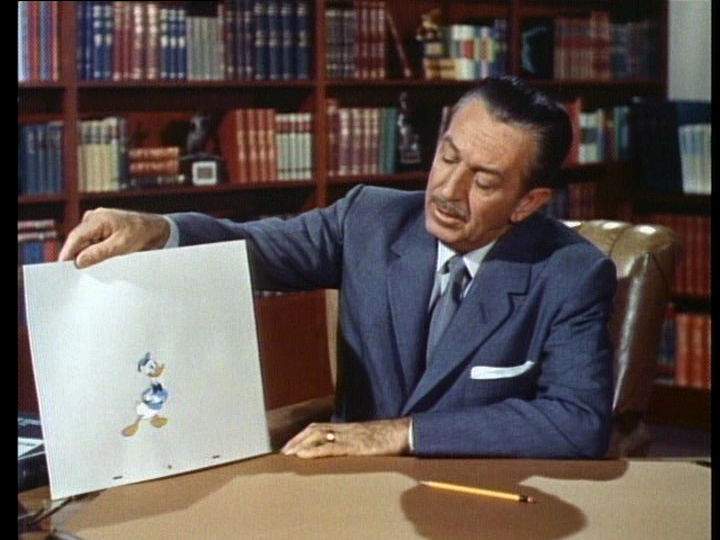
The episode begins with Walt showing some drawings that were made for a scene in Snow White and the Seven Dwarfs that was never used. He then introduces the term ‘plausible impossible’ from the Disney book The Art of Animation, and explains that this was not a term the animators invented, but an animation principle that goes back centuries. The history begins with the Egyptians, with the animations of the gods, and the Chinese animating dragons. The segment from Fantasia – “The Rite of Spring” – then is shown, along with the theory that the Chinese conception of dragons may go back to the stories of the dinosaurs. The explanation then moves on to Greek mythology, before applying plausible impossible techniques to the animated cartoon. Disney then relates how impossible cartoon scenarios have some sort of basis in fact. He also introduces the concept of “correctness in sensation,” using the feeling of riding an elevator to demonstrate the squash and stretch techniques. Each “plausible impossible” concept has its roots in the physical and psychological. This then moves into giving life to inanimate objects, and introduces the Mickey Mouse short film Thru the Mirror.

Walt introduces a recently drawn Donald, asking him to be his volunteer

Walt introduces a recently drawn Donald, asking him to be his volunteer

After the short, Walt then shows how an animated character is created, with a magic pencil drawing Donald Duck. When Walt mentions the importance of sound, Donald starts to talk, and agrees to help Walt with a demonstration. As Walt explains different sound effects, poor Donald bears the brunt of the demonstration. Donald flees the demonstration and hides on Walt’s desk, with Walt continuing the demonstration without him, though Walt manages to tempt him back with food. This then leads to the Donald Duck short film Donald’s Cousin Gus. Walt then surprises the audience with the complete showing of the unseen test animated sequence drawn for Snow White and the Seven Dwarfs after some accompanying scenes from the finished film. The final segment of this episode is about program music, which is a story put to music. Using the classic piece “Night on Bald Mountain,” Walt places it in several animated features, including “The Sorcerer’s Apprentice” from Fantasia, and a scene from Bambi. The true scene from Fantasia with the music is shown, with the music driving the story.

October 19

October 19, 1955 – The Disney Anthology Episode “The Story of the Silly Symphony” Airs

TSOTSS

“Next week, Walt Disney brings you ‘The Story of the Silly Symphony.’”

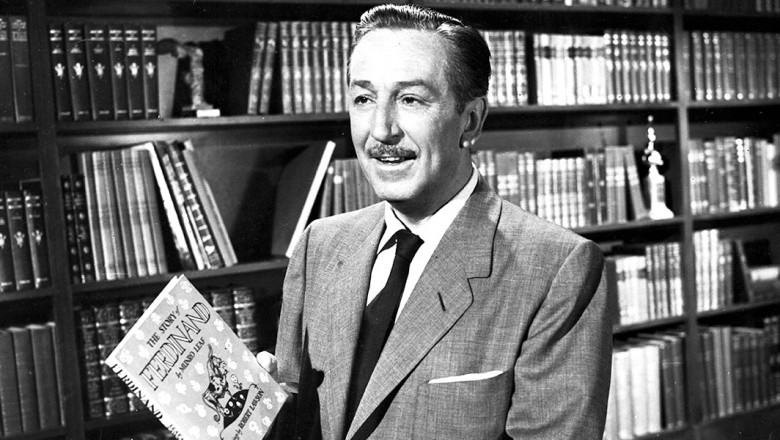
On October 19, 1955, the episode of Disneyland entitled “The Story of the Silly Symphony” aired on ABC. The episode covered some of the more popular entries in the Silly Symphony line, including The Practical Pig, Three Orphan Kittens, Little Hiawatha, and The Old Mill, as well as the special short film Ferdinand the Bull. The episode was directed by Clyde Geronimi and written by Bill Peet. It is one of a select few episodes to cover the Silly Symphony line.

September 24

September 24, 1993 – The Sitcom Boy Meets World Premieres on ABC
Boy Meets World_1

“There’s no gravity in space, Mr. Matthews, therefore astronauts ‘suck up.’ Learn from them.”

On September 24, 1993, the live-action sitcom series Boy Meets World premiered on ABC. The series centered around the life of teenager Corey Matthews, from his early days in sixth grade to his marriage to childhood sweetheart Topanga Lawrence. The series became a staple of ABC’s TGIF programming block lineup, and was nominated for several awards during its run. In 2014, a sequel series that featured several of the original characters premiered on the Disney Channel, known as Girl Meets World. The series eventually ran for 158 episodes in seven seasons. It was created by Michael Jacobs and April Kelly, and starred Ben Savage as Corey Matthews, William Daniels as Mr. Feeny, Rider Strong as Shawn Hunter, Danielle Fishel as Topanga Lawrence, Will Friedle as Eric Matthews, William Russ as Alan Matthews, Betsy Randle as Amy Matthews, and Tony Quinn as Jonathan Turner. Trina McGee-Davis would join in season five as Angela Moore, as would Matthew Lawrence as Jack Hunter. Maitland Ward would join the cast in season six as Rachel McGuire.

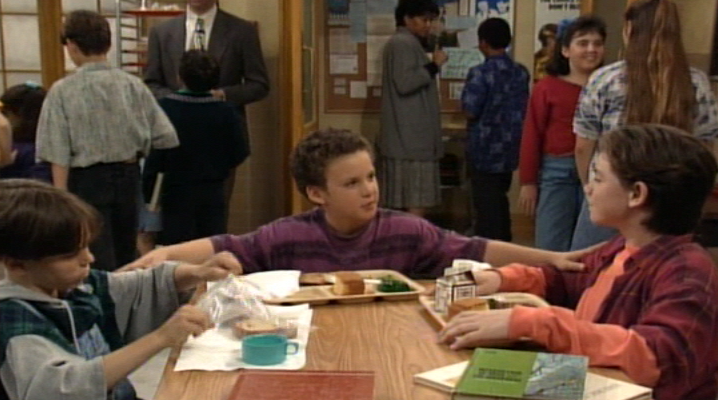
The pilot episode begins in the cafeteria, where teacher Mr. Feeny finds Corey Matthews getting a candy bar from the vending machine so early in the morning. After exchanging some barbs, Corey sits with his friend Shawn, who warns him that Mr. Feeny will make his whole sixth grade miserable. In class, they act out Romeo and Juliet, but Corey is listening to a baseball game secretly instead of paying attention. Mr. Feeny finds out and confiscates it, and tries to explain the true tragedy of the play. Corey, however, doesn’t understand, and is awarded detention for his insolence. After school, Corey’s brother Eric announces that he’s going on a date on Friday, which means that he won’t go to the baseball game with Corey. Corey is disappointed, and when he goes to tell his dad, he finds that Mr. Feeny, who happens to be his next door neighbor, has already informed his parents about Corey’s detention on Friday. When Corey complains about the game, his parents are happy that Eric is going on a date, which depresses Corey further.
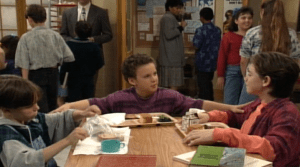
Corey confides in his friends his troubles at home, and how he finds himself now an "orphan."

Corey confides in his friends his troubles at home, and how he finds himself now an “orphan.”

At school the next day, Corey tries to come up with a plan to skip detention to score tickets to the game, and announces that he is now an orphan. That night, he decides to sleep in his treehouse, which gives him a good view of Mr. Feeny’s dining room. He notices that the table is set nicely, but after a phone call, he puts away the other place setting and eats by himself. The next morning, Corey sneaks back in the house to get some clothes, and his mother asks if he still feels abandoned. She explains that “people grow up and priorities change,” and no one is the bad guy in any situation. In detention, Corey tries to talk to Mr. Feeny, but Mr. Feeny ignores him. Corey points out that love leads to nowhere, as love has turned his family against him, and love left Mr. Feeny lonely. Mr. Feeny is frustrated, thinking that Corey hasn’t learned anything from him this entire year, and tries to teach him something that afternoon. He explains that the Matthews family derives its strength from being a family, and that there is nothing higher than achieving love. He then lets a stunned Corey go. Corey heads home and runs into his dad, who is glad his son is back. That evening, Eric comes home, and relates that his date when horribly, as he didn’t know what to do. Corey says that his brother is too cool for a girl, and convinces Eric to ask the girl out again, as “love is worth it.”

September 13

September 13, 1999 – Times Square Studios Opens in New York City

Times Square Studios

“Times Square Studios is completely outfitted with everything a professional working studio requires, with Sound Stages and High Definition Control Rooms that have broadcast shows worldwide.”

On September 13, 1999, the multi-use production facility Times Square Studios opened in New York City. The studio is mostly known as the home for the ABC morning program Good Morning America, but also is used for various ABC News and ESPN programs, including the annual New Year’s broadcast. The studio is fully equipped with two studios, a green room, dressing rooms, a radio broadcast studio, and a production control room with support facilities. The studio is also known for its glass walls to use Times Square as a live backdrop for the Good Morning America broadcast.

July 20

July 20, 1994 – The Final Episode of Dinosaurs Premieres

D_CN_!

“Oh, sure, some sacrifices had to be made along the way: a forest here, a few species there, but in the end, wouldn’t you trade all that for great advancements like, uh…microwave toast?”

On July 20, 1994, the series finale of the comedy series Dinosaurs premiered on ABC. A joint production between Jim Henson Productions, and Walt Disney Productions, Dinosaurs was the idea of Jim Henson and Alex Rockwell, and ran for four seasons before being cancelled in 1994. The show follows the Sinclairs, a prehistoric blue-collar family. It starred Stuart Panking as the voice of Earl Sinclair, Jessica Walter as the voice of Fran Sinclair, and John Kennedy as the voice of Baby. The show won an Emmy in 1991 for Art Direction.

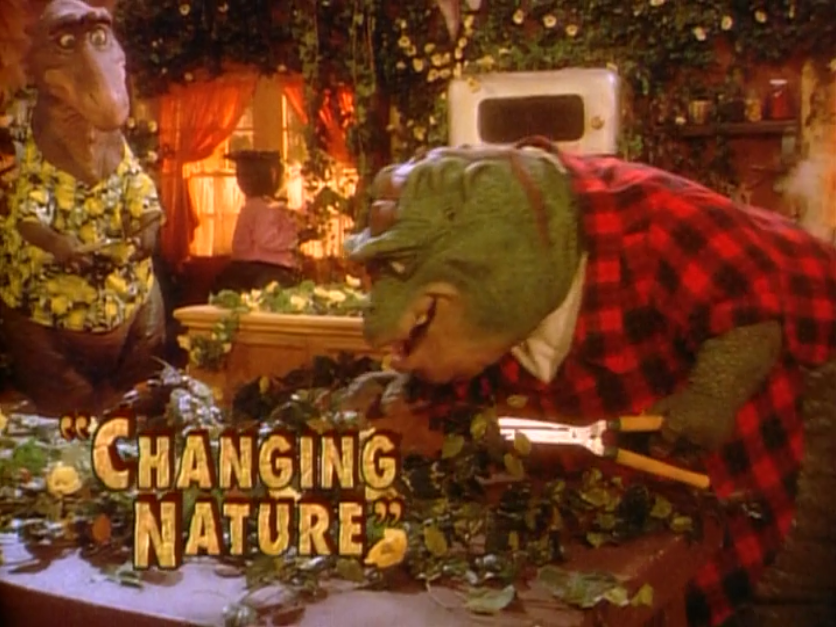
The final episode, “Changing Nature,” begins with a news anchor announcing the migration of the Bunch Beetles back to Pangea. Earl and family are out in the park to see the migration, but Earl is having trouble working the grill. Everyone waits anxiously for the beetles to return, but the beetles don’t appear. While the rest of the family is concerned, Earl thinks that it doesn’t make any difference one way or the other. Four days later, the beetles have disappeared, and the cider poppies have become overgrown. Finally, one of the beetles arrives at Earl’s house, but he doesn’t know where the other beetles are. The beetle explains that he only has two weeks to live, and has to head to the swamp to mate, but he’s lost. Unfortunately, when Charlene takes him to the swamp, she finds that it has been replaced by a wax fruit factory. She then finds that the workers there have killed all the Bunch Beetles.

Earl and Fran work hard to clear the poppies within the house, and when they turn on the news, they find Charlene announcing that she knows why the beetles have disappeared. Earl’s boss B.P. Richfield is watching the news and gets an idea to use Earl as part of a task force to get rid of the cider poppies. Unfortunately, the task force’s idea to solve the problem is to cover the entire planet with a dangerous pesticide. The pesticide is sprayed, killing all the poppies – but killing all plant life of the planet as well, leaving nothing but a desolate wasteland. This has the devastating effect of killing the global food chain. When Earl and friend Roy go to Richfield, he gives them their idea to create clouds from volcanoes to make it rain by dropping bombs in the volcanoes. This then causes global temperatures to drop significantly, causing another major problem. Richfield isn’t worried about the world possibly coming to an end, and Earl decides to spend his last moments with his family, apologizing for what he had done. The family huddles together as the snow continues to build outside, freezing them inside their home.

July 6

Posted on

July 6, 2009 – ABC Programming Appears on Hulu

HuluDisney

“Today marks the official start of a new relationship: the launch of ABC content on Hulu.”

On July 6, 2009, the deal between Disney and Hulu was completed with the appearance of ABC programming on the streaming service. The first episodes to appear were five episodes of the hit drama Grey’s Anatomy. Other ABC titles were introduced through a promo called Hulu Days of Summer, where viewers could guess clues to the next content to be posted. With this arrangement, ABC was one of the last major networks to use Hulu as a platform for streaming their programming to a new crop of viewers.

May 11

Posted on

May 11, 2010 – The Gipsy Kings Perform “You’ve Got a Friend in Me” on Dancing With the Stars

DWTS_GK

“Hay un amigo en mi!”

On May 11, 2010, as part of the promotions for the new Pixar film Toy Story 3, the band Gipsy Kings sang the “Spanish Buzz” version of the song “You’ve Got a Friend in Me” on the hit ABC reality competition Dancing with the Stars. Choreographers Cheryl Burke and Tony Dovolani traveled to Pixar Studios to dance for the animators, which was eventually used in the film for Jessie and Buzz’s paso doble. They, along with Kym Johnson and Dmitry Chaplin, performed the dance alongside the Gipsy King performance.