RSS Feed

Tag Archives: 1960s

January 22

January 22, 1964 – The Live-Action Feature Film The Misadventures of Merlin Jones is Released to Theaters
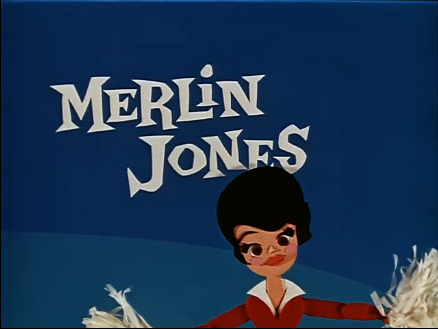
TMoMJ_1

“Merlin Jones? What’s he got that I haven’t got?” “I’m afraid I don’t have enough time to answer that.”

On January 22, 1964, the live-action feature film The Misadventures of Merlin Jones was released to theaters. The film was originally to be a two-part television special, but NBC executives liked it so much that Disney decided to turn it into a theatrical release instead, a fact that did not go unnoticed by film critics. The film became an audience hit, leading to a sequel in 1965. The screenplay was written by Tom and Helen August, which were pseudonyms for two blacklisted writers, Alfred Lewis and Helen Levitt. The lead song was written by Robert and Richard Sherman, with the opening sequence done by Bill Justice and Xavier Atencio. The film was based on a story by Bill Walsh, directed by Robert Stevenson, and stars Tommy Kirk as Merlin Jones, Annette Funicello as Jennifer, Leon Ames as Judge Holmsby, and Norm Grabowski as Norman.

The film begins at Midvale College’s science department, with Jennifer walking the hallway before she is accosted by fellow student Norman, who asks her to the Letterman’s Ball. Jennifer informs Norman that she already has a date, and he angrily asks what Merlin Jones, the campus genius, has that he hasn’t got, but she brushes him off as gracefully as she can. Merlin appears and walks Jennifer away, promising to take her into town after class. However, he gets caught up in his experiments and forgets, only remembering when Jennifer storms angrily into his lab, informing him that he’s an hour late. He’s rather excited about his newest project, which should track brainwave patterns using a rather elaborate helmet. When he asks Jennifer to kiss him, the brainwave pattern goes crazy. When he puts the helmet on her and kisses her, there’s no brainwave activity. Merlin is initially upset, thinking he doesn’t mean that much to Jennifer, but she points out to him that the helmet is unplugged. They finally go into town, but he wants to take the helmet with him to figure out the cause of so many traffic violations around town lately.
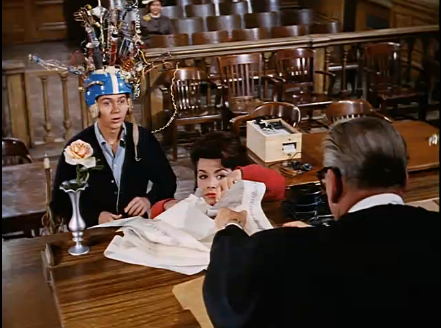
Merlin and Jennifer are presented in front of the judge, where they try to explain the experiment they were conducting

Merlin and Jennifer are presented in front of the judge, where they try to explain the experiment they were conducting

As Merlin and Jennifer begin their experiment, they are pulled over by a police officer, who won’t even let Merlin explain what he’s doing. The cop just tells them they can explain the ticket in front of Judge Holmsby, who doesn’t seem to like Merlin or his experiments. The judge rules that Merlin is no longer allowed to perform any experiments while driving, and suspends Merlin’s license for ten days. Back at the lab, Merlin is hard at work on his experiments, when one of the antennas from his helmet explodes, causing a chain reaction. Merlin can’t turn the switch off, but his professor does. When the professor has a thought about how screwy Merlin is, Merlin realizes that thanks to the explosion, he now has the ability to read minds. Although he is pleased to hear what people think of him, he starts getting distracted by all the thoughts he hears while studying in the library.

Jennifer enters the library, and as she passes by Norman, Merlin hears his thoughts about how he wonders how “a dish like Jennifer” is with the “campus creep” Merlin. Merlin confronts Norman, throwing him against the bookshelves and causing a domino collision of all the bookshelves in the library. Merlin and Jennifer escape to make their way to Merlin’s job at the café. Judge Holmsby is at the café, and Merlin hears Jennifer’s thoughts about how worried she is about him. As he waits on the judge’s table, he hears the thoughts of the judge, finding out that he’s really a criminal, responsible for a large payroll theft recently that is still unsolved. Merlin tries to tell the police about what he knows, but they don’t believe his accusation of the judge.
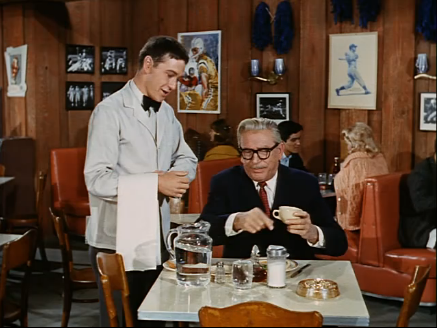
With his ability to hear thoughts, Merlin keeps close to the judge hoping to hear more evidence

With his ability to hear thoughts, Merlin keeps close to the judge hoping to hear more evidence

Back at the café, he tries to convince Jennifer of what he knows, and finally tells her that he can hear people’s thoughts. Convinced of his newfound ability, Jennifer asks him what he plans to do, and the two make their way to the judge’s house to find some evidence. Merlin stays near the judge to hear his thoughts, and finds out how the judge plans to hide the diamonds he plans to steal. Without the help of the police, Merlin and Jennifer decide to find the diamonds themselves to prove the judge is a fraud. However, what Merlin doesn’t know is that the judge writes mystery novels; his thoughts concern his books rather than an actual crime. When they finally confront the judge, he admits to his double life as a writer of mystery novels.

When Merlin goes to court about his license after the judge debacle, the judge gives Merlin the benefit of the doubt and lets him keep his license, but Merlin finds that he can no longer read minds. Returning to class, Jennifer and Merlin learn about hypnosis and Merlin asks to be the test subject. The professor successfully hypnotizes Merlin to eat a raw potato, with Merlin thinking it’s an apple. While everyone laughs at Merlin’s state, Jennifer is not at all amused. After being sent back to his desk, Merlin is commanded to kiss the first pretty girl he sees. Unfortunately for Jennifer, he kisses the girl sitting in front of her. Jennifer is steamed, although Merlin finds the idea of hypnotism fascinating.
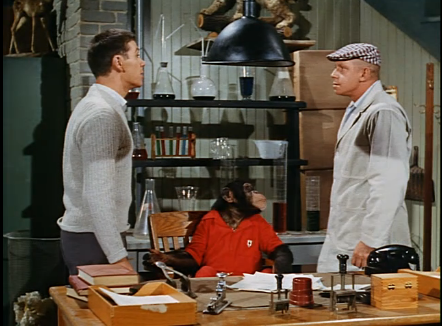
Merlin and Norman are at odds over Norman's treatment of Stanley

Merlin and Norman are at odds over Norman’s treatment of Stanley

Late that night, Merlin thinks about hypnotism, and decides to hypnotize his cat in his theory of “helpful hypnosis.” After helping his cat chase after the dog that’s been bullying him, Merlin is ready to test his theory on people. Jennifer volunteers for Merlin’s experiment, but Merlin wants to use Stanley, the chimp in the science department. Norman, Merlin’s nemesis, refuses to let Merlin experiment with Stanley, but after Norman leaves, Merlin tries hypnosis on the chimpanzee anyway.

As Norman attempts to beat Stanley for sitting in his chair, Stanley finally fights back and begins to destroy everything in the lab. When people open the door to the lab to see the ruckus, they find an unconscious Norman, with Merlin standing over him, holding a broken bottle. Merlin is taken in front of Judge Holmsby again in an informal hearing, and when asked who attacked Norman, Merlin refuses to answer. Finally, he admits that he hypnotized Stanley, which intrigues the judge. The judge dismisses the charges, but tells Merlin that he must stay away from Stanley. He then privately asks Merlin to stop by his home to help him with a little problem. The judge, in his mystery-writing mode, asks Merlin for advice on hypnotism for his new book. He asks Merlin to help him test out the theory for his book, and while Merlin is at first averse to the idea, he finally agrees to help. The plan is to hypnotize the judge into committing a crime, bypassing the judge’s own moral code. Merlin commands the judge to steal Stanley from the psychology department. Although Merlin thinks that one cannot be hypnotized to go against his own moral code, he is surprised to see the judge leave his house to commit the crime. Jennifer and Merlin follow the judge, and retrieve Stanley after the judge has completed his orders. However, when Merlin returns Stanley, he is quickly arrested.
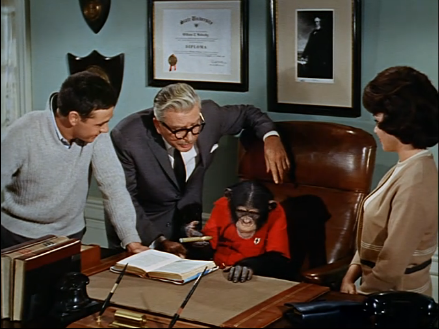
After figuring out the truth about Stanley's "kidnap," the three come to terms

After figuring out the truth about Stanley’s “kidnap,” the three come to terms

Jennifer visits Merlin the next morning as he is in jail, although she acts as if she will never see him again while he is “the clutches of the law.” Merlin realizes that the only way to get to the truth is to hypnotize the judge again, hoping he will remember what he did. Merlin tries to hypnotize the judge in open court using hand motions, but to no avail. He then gets Stanley called to the stand to testify. While the judge is flabbergasted, Merlin explains that he called Stanley to help demonstrate the true relationship between Stanley and Norman. Merlin asks Norman to pick Stanley up, and Stanley flees in fear. The judge rules that Norman will no longer be allowed to work with Stanley or with any other animal, but also rules that Merlin has a suspended 60-day sentence, in which he will visit the judge once a week. An angry Jennifer cries out that the judge is really the one who stole Stanley. The judge quickly summons Merlin and Jennifer into his chambers, and asks if he really stole Stanley. Merlin admits that he did, and the judge realizes that the lesson is that every man has evil in his heart, and it’s not for us to judge another person without looking inside first. The film ends with Merlin and Jennifer driving off together.
January 1

Happy one year anniversary, DisneyDetail! Here’s to another year of celebrating and exploring Disney history!

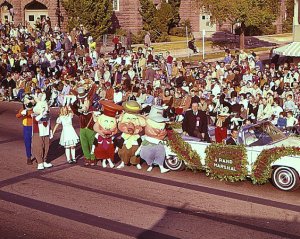
January 1, 1966 – Walt Disney is the Grand Marshal of the Tournament of Roses Parade

walt_disney_grand_marshall_tournament_of_roses_rose_parade_1966

“This master showman [Disney] has brought joy and laughter to millions in every part of the world.” – J. Randolph Richards, on choosing Walt as Grand Marshal

On January 1, 1966, the 77th Tournament of Roses Parade took place in Pasadena, California. Presiding as the Grand Marshal that year was Walt Disney, who was accompanied by Mickey Mouse as he was driven down the parade route in a white Chrysler Impala. Several costumed characters walked alongside Disney, including Alice and the White Rabbit, the Three Little Pigs, and Goofy. The theme of the parade was “It’s A Small World,” and with Disney leading the parade, it reminded everyone of how universal Disney films and characters had become(and also gave Disney publicity for the new attractions from the New York World’s Fair opening in Disneyland that year).

December 17

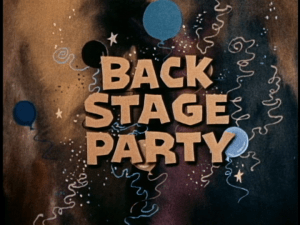
December 17, 1961 – The Walt Disney’s Wonderful World of Color Episode “Backstage Party” Premieres

vlcsnap-2012-12-16-17h29m40s219

“Oh, the party hasn’t started yet. By the way, folks, these are some of the babes from Babes in Toyland.

On December 17, 1961, the episode “Backstage Party” from the Disney anthology series Walt Disney’s Wonderful World of Color premiered on television. The episode takes viewers backstage at the Disney Studios, to the celebration of the completion of the upcoming feature film Babes in Toyland, starring Annette Funicello and Tommy Sands. The episode was directed by Jack Donohue and Hamilton S. Luske, with teleplay by Larry Clemmons.

The episode begins with the audience at the front gate, receiving directions to Stage Four, where the party is held. Unfortunately, there are many twists and turns on the way there; the audience progresses through a set with lavish homes, an Old West setting, then the set for the Zorro series, and finally finds Stage Four. Walt greets the audience warmly, and brings them inside to see some of the Babes in Toyland sets. He shows a set with an accompanying film scene, and explains how the set was invented to destroy itself. Moving to another set, Walt explains the music of Babes in Toyland, which was based on Victor Herbert’s original operetta from 1903. After a scene with music, a toy soldier directs the audience to where Walt has gone: to the Forest of No Return. Walt then explains how every piece in the forest was made for the film, including all the rocks and trees. A tree lets Walt know it’s time to head to Stage Two for the shooting of the final scene, and Walt brings us along.

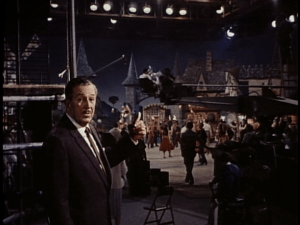
On Stage Two, Walt begins to point out all the important people behind the scenes of filming

On Stage Two, Walt begins to point out all the important people behind the scenes of filming

On Stage Two, Walt points out the important people, from the director, to a stagehand in the rafters who is about to retire, to the actors waiting to shoot the scene. They then shoot the gypsy scene from the film, with Walt and the child actors watching. When the scene is shot, the party begins. A giant cake is brought to the set, along with other tables of food. Walt explains that the backstage party is very democratic – everyone celebrates the wrap of the film together. Annette Funicello comes over to Walt and offers him a glass of lemonade. Walt introduces Annette as Mary Quite Contrary, and Tommy Sands, who plays her romantic interest, Tom the Piper’s Son. Walt then asks Annette to play the hostess while he goes to do some chores. Annette introduces us to Ray Bolger (best known as the Scarecrow in MGM’s The Wizard of Oz), and asks him to perform the old soft-shoe dance he’s well known for: Ida. Many members of the cast and crew begin to dance in the background, although Bolger claims that he’s the “only one in the world who can perform the dance.” He introduces his character in the film as the villain, Barnaby, and Annette introduces Henry Calvin and Gene Sheldon, who play Barnaby’s henchmen, Gonzorgo and Roderigo.

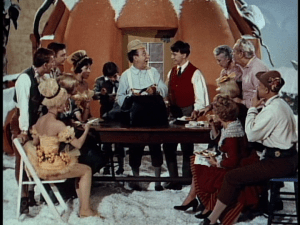
Ed Wynn (C) begins to entertain the various cast and crew members with props

Ed Wynn (C) begins to entertain the various cast and crew members with props

Annette also introduces Ed Wynn, whom she calls “one of the all-time greats of show business.” Wynn entertains the crowd, pulling props from his bag and presenting accompanying jokes. Tommy Kirk (Grumio in the film) presents Wynn with a statue called a “Mousecar,” the Disney version of an Oscar. Annette then introduces Tommy Sands, and many members of the band that are having a jam session on the set. Sands begins to play the bongo drums, much to the amusement of the cast and crew, and sings “Jeepers Creepers.” He introduces Ann Jillian, who serenades the crowd with Henry Calvin. After their song, Annette points out the choreographer, Tommy Mahoney. After a small dance routine, the director Jack Donohue is brought to the middle of the set for a surprise. The whole cast and crew serenade him about the filming experience, then present him with a “jack-in-the-box,” with the model of his own head popping out from the box. The episode ends with one more song about the end of filming.

October 18

October 18, 1967 – The 19th Animated Feature Film, The Jungle Book, is Released to Theaters

“As an animator, [The Jungle Book is] probably the greatest film in terms of character development and how characters play against one another. The animators poured their whole heart and soul into every scene in that movie.” – Animator Glen Keane

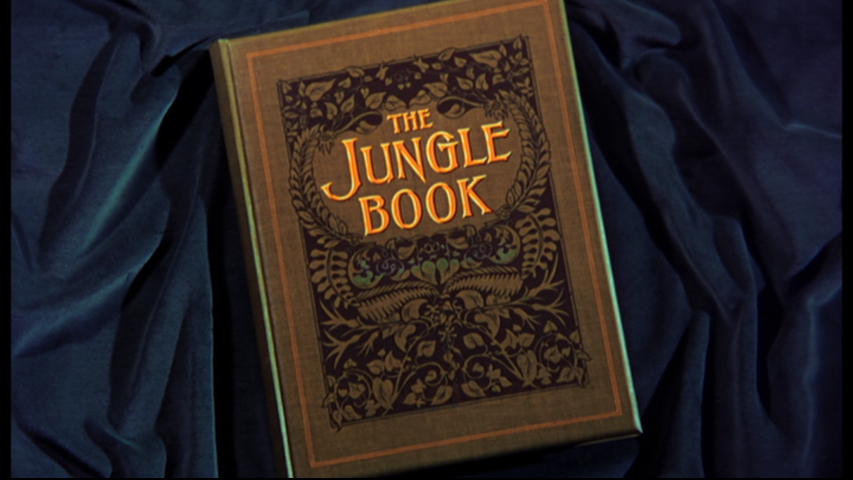
On October 18, 1967, the 19th animated feature, The Jungle Book, was released to theaters. The film was based on the book of the same name by Rudyard Kipling, and was the last film which Walt Disney supervised; Disney passed away during its production. The movie was also known for the vultures being a caricature of the famous band The Beatles, as Disney wanted them to be in the film, but they turned him down due to scheduling conflicts and John Lennon’s disgust with the idea; the vultures did remain in the film without The Beatles’ involvement. The film was directed by Wolfgang Reitherman, and stars Phil Harris as Baloo, Sebastian Cabot as Bagheera, Bruce Reitherman as Mowgli, Louis Prima as King Louie, George Sanders as Shere Khan, and Sterling Holloway as Kaa.

Storyman Bill Peet was the one that suggested Kipling’s book to Disney as an animated feature, making the point that the company could do more stories with more interesting characters. Although Peet usually ran a one-man show when it came to story, and Disney liked the story sketches he was seeing for Jungle Book, Disney wanted to have more hands-on involvement in the story process after the let-down of Peet’s last project, The Sword in the Stone. The two could not reach an agreement on the film, and Peet left the studio. The story was then given to Larry Clemmons for his first writing on an animated feature film. “…[H]e launched into how he wanted to tell the story,” Richard Sherman recalled. “And he said, ‘But I want it to be fun. I want this to be a fun story; an adventure with fun. No mysterious…none of this heavy stuff…and I want to have a little heart in it, too.’”

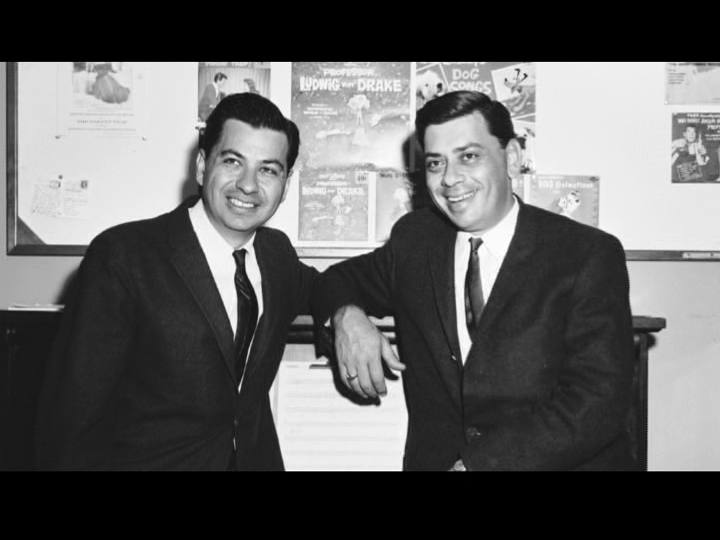
The songwriting team of the Sherman Brothers, who were brought in to write the songs for “The Jungle Book” when Walt Disney came in to rewrite the story

The music for the film is considered one of the greatest soundtracks of Disney animation. The first songs written for the film followed Peet’s darker version of the story, and was done by Terry Gilkyson. When the story went through its rewrite, the Sherman Brothers were brought in to write new songs that were more upbeat and help to progress the story. The only song to survive from Terry Gilkyson was the one that would go on to be nominated for an Academy Award: “The Bare Necessities.” One of the songs that the Sherman Brothers had written for Mary Poppins was retooled to be used for the character of Kaa, called “Trust in Me.” The film was scored by George Bruns, who was well known for writing for Davy Crockett.

The story opens with narration from Bagheera, a black panther, who stumbles upon a basket upon a riverbank in India. Inside, he finds a baby; taking pity on the poor orphan child, he places him with a wolf that had recently had cubs. The mother adopts the child, who is named Mowgli, and raises him alongside her litter. Ten years later, the wolves find out that Shere Khan, a Bengal tiger, will be returning to the jungle and killing anyone who dares protect Mowgli. Bagheera offers to take Mowgli to the man village for his own safety, although the boy is determined to stay in the jungle. While the pair rest in a tree for the night, a python named Kaa appears, who attempts to hypnotize the boy and devour him. Luckily, Bagheera wakes up and interrupts Kaa, with Mowgli sending the python flying out of the tree.

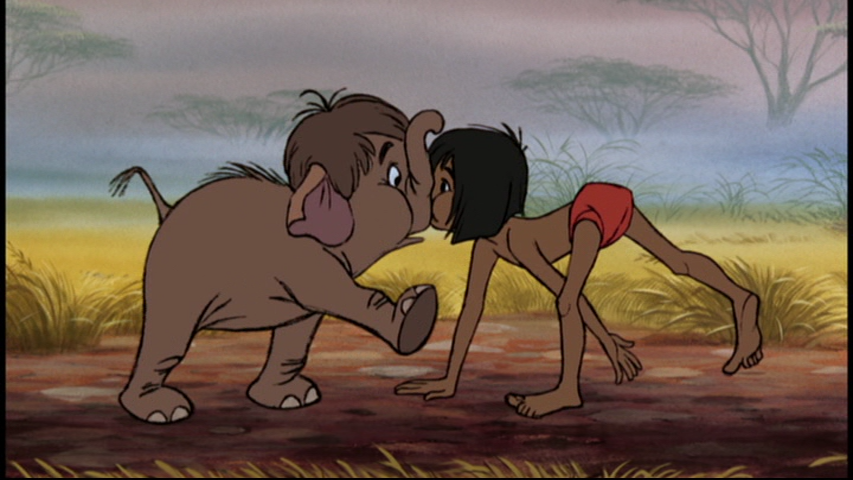
Mowgli meets up with the members of Colonel Hathi’s elephant pack, and hopes that by becoming a member, he can remain in the jungle

The next morning, Mowgli attempts to join Colonel Hathi’s elephant pack, but is quickly intercepted by Bagheera. The two get into an argument about Mowgli’s wish to remain in the jungle, which ends with Bagheera leaving Mowgli to fend for himself. As Mowgli wanders the forest, he comes across Baloo, who aims to teach Mowgli how to fight. When he tries to teach the boy how to roar, Bagheera believes the boy to be in trouble and rushes back to help. Baloo shows Mowgli the carefree life of the jungle, which only makes Mowgli more certain that he will never go back to the village. Unfortunately, just as Baloo and Mowgli begin to bond, a gang of monkeys capture Mowgli to take him back to their leader, King Louie, an orangutan.

Mowgli is brought to the ancient ruins where King Louie lives, and King Louie promises to help the boy remain in the jungle if Mowgli tells him the secret of how to make fire. Baloo, entranced by the music the monkeys are playing, disguises himself so he can sneak in and take Mowgli away. In the ensuing fight over Mowgli, the ruins fall apart, leaving King Louie without a kingdom. That night, Bagheera convinces Baloo that the best thing for Mowgli is to be taken back to the man village, so he doesn’t get killed by Shere Khan. Baloo is torn with what to do, as he loves Mowgli like he was his own cub. When Baloo tries to explain the situation, Mowgli accuses Baloo of breaking his promise and runs away. Bagheera enlists the help of Colonel Hathi to help find Mowgli before Shere Khan shows up, but Shere Khan is seen eavesdropping and is even more determined to kill the boy.


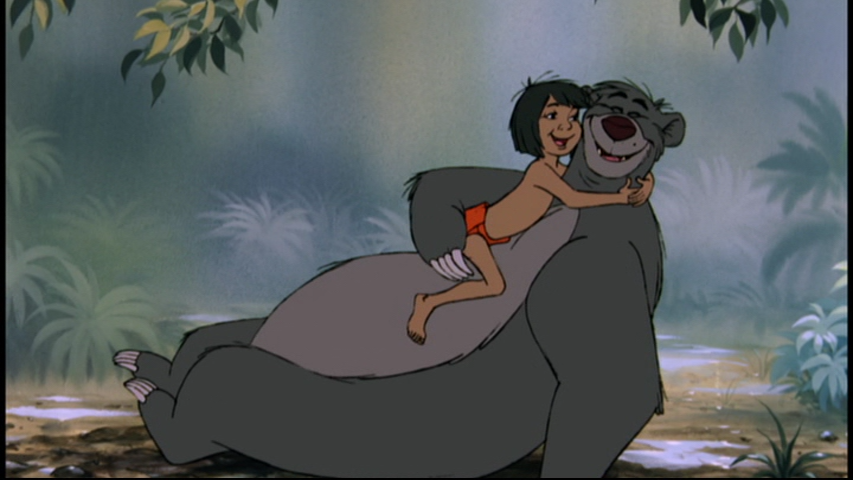
After the fight with Shere Khan, Mowgli gives Baloo a hug, with all being forgiven

As Mowgli wanders the jungle, he runs across Kaa again, who is still hungry. He hypnotizes the boy, but his plans are again interrupted, this time by Shere Khan, and Mowgli escapes. Depressed, he finds a place to sit as a storm fast approaches, and meets a group of vultures who agree to be his friends. Shere Khan finally catches up with Mowgli, scaring the vultures away. Baloo, having finally found the boy, rushes in to save him during the storm, with the vultures returning to create a diversion. When a nearby tree is struck by lightning, Mowgli grabs a flaming branch and ties to it Shere Khan’s tail. The tiger’s only fear is fire, and he flees when he is unable to remove the flaming branch. Baloo and Bagheera still maintain that Mowgli should be taken to the village, but Mowgli remains adamant that he should stay in the jungle. His mind changes, however, when he spies a beautiful girl near the river’s edge. He follows her, helping her carry her water pot. Although Baloo is saddened to lose the boy, Bagheera reminds him that Mowgli will be safe with his own kind, and the two dance off into the sunset together.

September 14

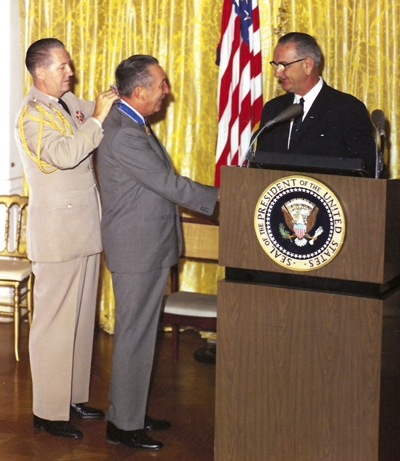
September 14, 1964 – Walt Disney is Awarded the Presidential Medal of Freedom

Image Credit: michaelbarrier.com

“The Medal may be awarded…to any person who has made an especially meritorious contribution to (1), the security or national interests of the United States, or (2) world peace, or (3) cultural or other significant public or private endeavors.”

On September 14, 1964, Walt Disney was presented the Presidential Medal of Freedom by President Lyndon B. Johnson. The award is the highest civilian award in the United States, although not limited to American citizens, and is bestowed by the President himself. Disney was recognized as a pioneer in the animated movie cartoon field. He received the award alongside Dean Acheson (former Secretary of State), Detlev W. Bronk (neurophysiologist), Aaron Copland (composer), Willem de Kooning (painter), J. Frank Dobie (writer), Lena F. Edwards (physician and humanitarian), Thomas Stearns Eliot (Nobel prize winning author), John W. Gardner (president of the Carnegie Foundation for Advancement of Teaching), Reverend Theodore M. Hesburgh, Clarence L. Johnson (aircraft engineer), Frederick R. Kappel (AT&T Chairman), Helen Keller, John L. Lewis (former president of the United Mine Workers), Walter Lippmann (journalist), Alfred Lunt and Lynn Fontanne (actors), Ralph Emerson McGill (publisher), Samuel Eliot Morison (sailor and historian), Lewis Mumford (author), Edward R. Murrow (radio and television reporter), Reinhold Niebuhr (theologian), Leontyne Price (opera singer), A. Philip Randolph (leader in the Civil Rights movement), Carl Sandburg (Pulitzer Prize-winning poet), John Steinbeck (Nobel Prize-winning author), Helen B. Taussig (professor of pediatrics), Carl Vinson (former chairman of the House and Armed Services Committee), Thomas J. Watson, Jr. (Chairman of the Board of IBM), and Paul Dudley White (physician).

August 27

August 27, 1964 – The Live-Action and Animated Film Mary Poppins Premieres at Grauman’s Chinese Theater

“We’re looking forward to this [film], because it’s a fine combination when you can get Walt Disney and Julie Andrews and Dick Van Dyke together. I think it should be a lot of fun.” – Actor James Franciscus.

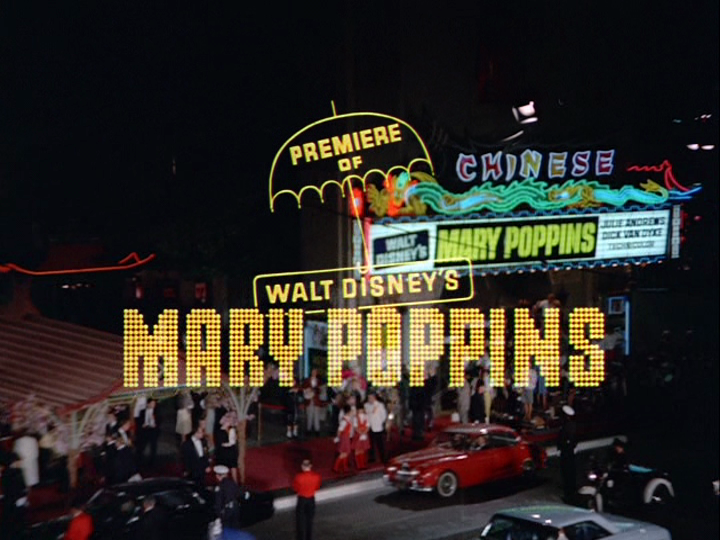
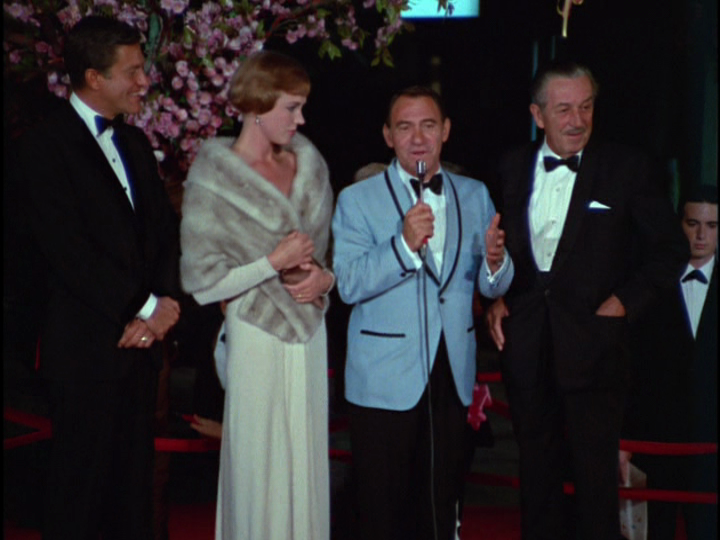
On August 27, 1964, the film Mary Poppins had its Hollywood premiere at Grauman’s Chinese Theater in Los Angeles, California. The premiere was broadcast live on Los Angeles television, with a separate radio broadcast of the festivities. The premiere guests were interviewed at the two separate stations. Guests included Maureen O’Hara, James Franciscus, Celeste Holm, Walter Slezack, the cast of the Dick Van Dyke Show, Agnes Moorehead, Annette Funicello and her fiancé Jack Gilardi, Roddy McDowall, Suzanne Pleshette, Carol Lynley, Buddy Ebsen, Kathryn Grayson, Ann Miller, and Brian Keith, among others. Members of the cast and crew of the film also attended, including director Robert Stevenson, who gave a tribute to CalArts (which had opened a mere three years prior), Reta Shaw (the cook, Mrs. Brill), and co-writer and co-producer Bill Walsh.

The festivities included characters dressed as familiar Disney characters, such as Goofy, the Big Bad Wolf, and the Seven Dwarves. Costumed characters of the penguins, as well as a band of pearlies, were also part of the entertainment, with the penguins dancing with Dick Van Dyke on his arrival. When asked about the film, Van Dyke said, “It’s my third motion picture, but the best one I’ve ever been in, the best one I ever will be in, if I live to be 150 years old. To me, this is the greatest family classic of all time…I’m so proud to be in this picture, I can’t stand it.” Van Dyke, along with Julie Andrews and Walt Disney, were interviewed together near the end of the broadcast, with all three proud of the film and looking forward to premiere.

Dick Van Dyke (L), Julie Andrews, and Walt Disney being interviewed right before the premiere of the film

After the premiere, Technicolor hosted a party for the guests at the parking lot next door to the theater. A radio broadcast was also provided, with every guest interviewed raving about the film, calling it a classic, and stating that the premiere was very reminiscent of the Hollywood premieres of old. Andrews and Van Dyke were proclaimed to be the greatest two new stars of the time.

August 9

August 9, 1969 – The Haunted Mansion Attraction Opens at New Orleans Square in Disneyland

“You Ghost Host is happy to show you their humble abode. Enter…if you dare!”

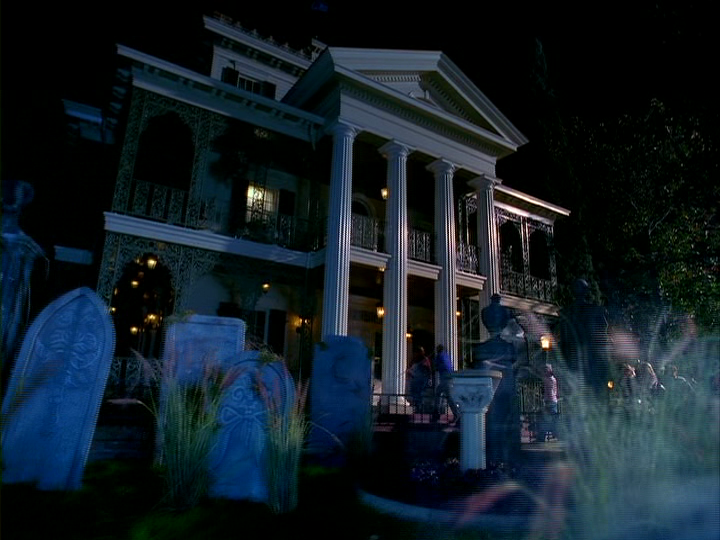
On August 9, 1969, the Haunted Mansion attraction officially opened at New Orleans Square in Disneyland. A highly popular attraction, it uses the Omnimover system with guests riding in “doom buggies” through the house of a 19th-century sea captain who met an untimely end, and now has his mansion inhabited by 999 ghosts, with “always room for one more.” The attraction was first described to guests in the Disneyland episode Disneyland 10th Anniversary (see January 3rd entry for more details).

The mansion was first built in 1962 – 1963, but Imagineers were unsure of what to do with the attraction. One idea was to make it a walk-through attraction, but there were traffic flow problems to deal with in that case. Another idea was to keep the outside of the mansion as decrepit as the inside, but Walt had told the Imagineers that they would keep up the outside of the mansion, and let the ghosts take care of the inside. Narration for the ride is provided by Paul Frees. In recent years, the attraction has been decorated for the holidays with the cast of The Nightmare Before Christmas.

August 6

August 6, 1961 – The Flying Saucers Attraction Opens in Disneyland’s Tomorrowland

“Even to this day, you hear people talking about, ‘When are you guys going to bring back the Flying Saucers?’” – Tony Baxter, Senior Vice President, Creative Development, Walt Disney Imagineering

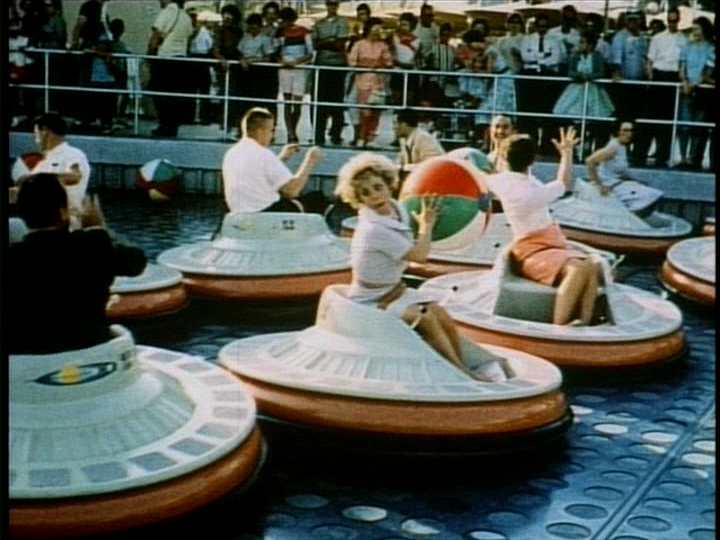
On August 6, 1961, the Flying Saucers attraction opened at Disneyland’s Tomorrowland. The attraction consisted of individually controlled “flying saucers” (giant inner tubes) that floated on air, similar to an air hockey table. While the attraction was highly popular, the technology was, unfortunately, not perfected at the time, and was constantly breaking down. Some of the problems included smaller children not being heavy enough to move the ride, and the number of people it took to maintain the ride, about 13 to 17 individuals at one time. The attraction closed on September 6, 1966, and has not been replaced.

August 5

August 5, 1967 – The Adventure Thru Inner Space Attraction Opens at Disneyland’s Tomorrowland

Image Credit: Wikipedia

“Making modern miracles from molecules for man!”

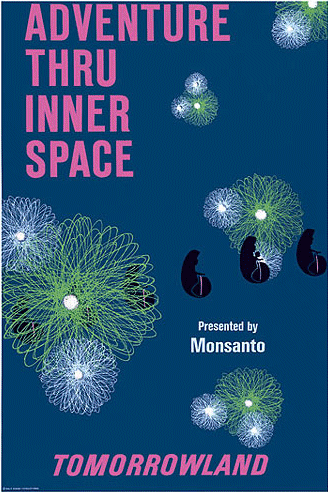
 On August 5, 1967, the Adventure Thru Inner Space attraction opened at Disneyland’s Tomorrowland. The attraction was sponsored by Monsanto, an American multinational agricultural biotechnology corporation, and was the first attraction to use the Omnimover system. The Omnimover system is a chain of vehicles maintaining a constant motion, with the ability to have the vehicles rotated to a fixed direction. The ride itself provides riders a journey where they shrink down to the size of an atom and explore “inner space,” our own unseen world. The ride is narrated by Paul Frees, as a scientist exploring molecules within snowflakes. The Sherman brothers wrote a song for the attraction, titled “Miracles from Molecules.” The ride closed on September 2, 1985, to make way for the new Star Tours attraction.

The ride’s history traces back to the 1957 Disneyland episode Our Friend the Atom, in which Walt Disney introduced the idea of an atom-themed attraction, although these plans were put on hold during the 1964 World’s Fair. The attraction stood where the 20,000 Leagues Under the Sea Exhibit once stood.

July 7

Posted on

July 7, 1963 – The Live Action Film Summer Magic is Released to Theaters

“Land of promise, bounteous, this is beautiful, this is beautiful Beulah, in the rocky state of Maine.”

On July 7, 1963, the live action film Summer Magic was released to theaters. The film, based on the book Mother Carey’s Chickens by Kate Douglas Wiggins, is one of the earliest Disney musicals, with music written by Buddy Baker, and songs by the songwriting team the Sherman Brothers, with their song “Ugly Bug Ball” becoming a hit of the year. It was directed by James Neilson, and stars Hayley Mills as Nancy Carey, Burl Ives as Ossian Popham, Dorothy McGuire as Margaret Carey, Deborah Walley as Julia, Eddie Hodges as Gilly, Jimmy Mathers as Peter, Una Merkel as Mariah Popham, and Peter Brown as Tom Hamilton.

The film opens in Boston during the time of Ragtime music. Nancy Carey finds a letter in her front hall, and opens it excitedly, but then gets back to the sad task of packing her house with her brothers, Gilly and Peter. Their father had recently passed away, and the Careys are moving to a smaller house, as they can no longer afford their current residence. Their mother, Margaret, returns from their attorney’s office, with the unfortunate news that the mining stocks they’d counted on to help them are worthless, but she reassures them that they’ll get along fine, although they can’t afford to live in Boston. Nancy excitedly reveals to the family that she wrote the caretaker of a house they’d seen on vacation in Beulah, Maine. The caretaker will allow them to live in the house for $60 a year, and their mother agrees that they should go.

The Careys arriving at the Yellow House in Beulah

The Careys arrive at the “Yellow House,” as they affectionately call it, and meet the caretaker, Ossian Popham. After sorting out some of the “little white lies” in Nancy’s letter (calling her younger brother a “rickety baby,” for one), Mr. Popham allows them to stay and volunteers to help them fix up the house. The Careys soon become acclimated to the small town, with Gilly taking a job as Ossian’s assistant. Peter tries to fit in with the other boys, but is ridiculed and bullied for his Boston-style hair and clothes. Ossian helps Peter out by giving him some “country clothes,” and helps Nancy with all of the supplies she needs. Ossian’s wife, Mariah, is soon suspicious of Ossian’s behavior, and continues to ask if he has actually written the owner of the house, Mr. Hamilton, for permission to allow the Careys to stay there. Ossian continues to avoid her accusations.

The situation gets crazier for the Careys when Peter gets a job taking care of a sheepdog named Sam, who tears through the house and ruins all of Nancy’s wallpaper. Just as they decide that Sam can stay, they learn that another guest will be staying with the Careys: Cousin Julia. This revelation causes great distress for Nancy and Gilly especially, who dislike their cousin immensely for her spoiled attitude. After Julia’s father died, she was adopted by the Fergusons, who felt guilty for selling Julia’s father worthless stocks, the same stocks Nancy’s father invested in. The Fergusons can no longer afford to keep her (“Another unfortunate investment,” Margaret explains), and Margaret asks that Nancy and Gilly keep this a secret from Julia, as the news would devastate her.

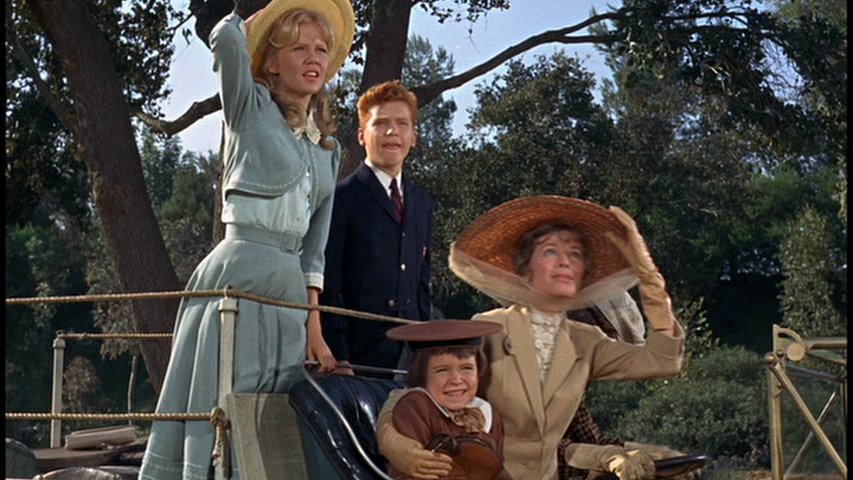
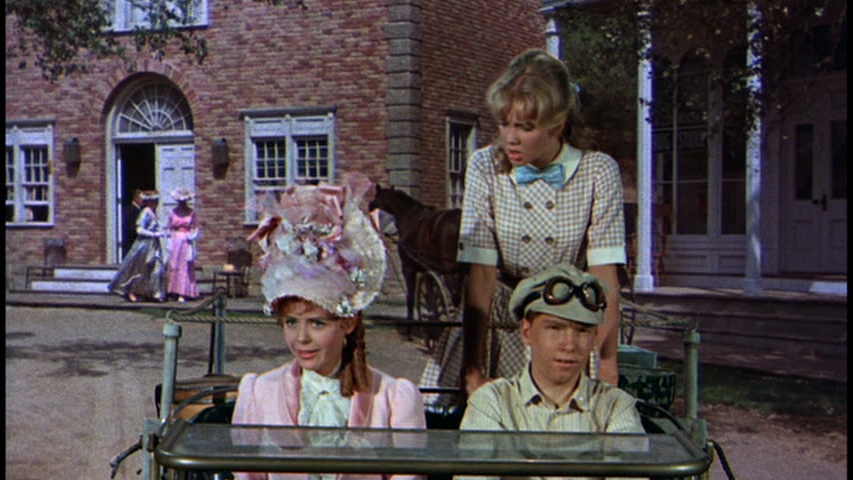
Gilly (Lower Right) and Nancy (Upper Right) drive their cousin Julia to their house; Julia is rather unimpressed with the small town

When Julia arrives, Nancy and Gilly exaggerate every little detail and purposefully try to scare their cousin, pretending that bears will attack their house. After Julia has a good scare when Sam climbs through her bedroom window, Nancy and Gilly try to make peace with her, realizing their pranks may have gone a little too far. Meanwhile, as Margaret tries to face facts with the financials of their situation, Ossian tells them that a letter has arrived from Mr. Hamilton, saying that due to their renovations, he will let them live rent-free, providing they find a suitable place for his mother’s picture. They agree happily, and continue to work on the house. Julia, however, keeps her stuck-up airs and bests Nancy for the attention of the new schoolteacher, Mr. Bryant. Nancy is pushed to her breaking point, and finally tells Julia why she was sent to stay with them. Julia, heartbroken at first, realizes that she wishes to stay with Careys in Beulah, rather than return to the Fergusons, even though they are able to afford to keep her again. Nancy and Julia call a truce and become friends.

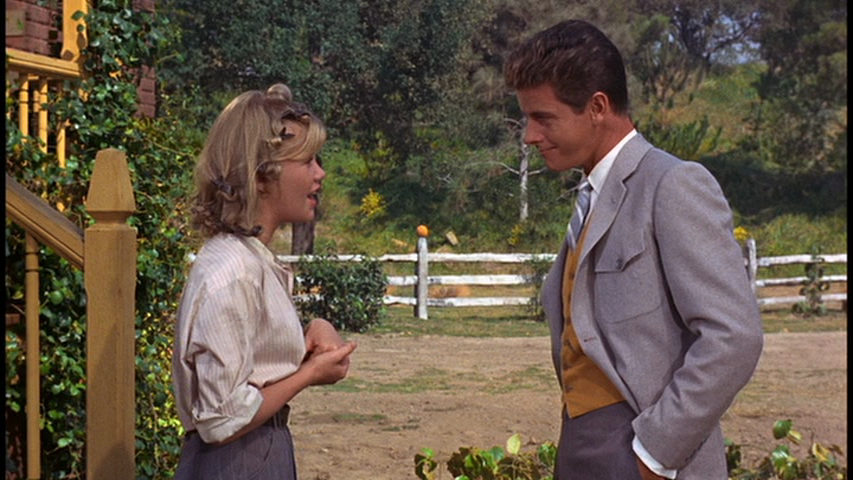
Nancy meets a handsome stranger at the house, unaware that she has just met Mr. Hamilton, the owner

The Careys are preparing for their housewarming party on Halloween when a strange man pulls up to the house. Nancy bumps into him and starts telling him the reason for the celebration and the mess the house was in before the Careys took over, unaware that the man she’s talking to is Mr. Hamilton. He soon leaves for town to see Ossian, demanding to know why the Careys are living there, and why Ossian never informed him of anything. Ossian gives Mr. Hamilton all the letters Nancy wrote him, hoping that he will be persuaded by them to let the Careys stay. That evening, as everyone attends the party with their dates, a lonely Nancy shuts herself in her room, refusing to attend alone. Her mother tries to convince her to meet her guests, with Nancy agreeing and putting on a brave face. As she makes her way down the stairs of the house, her shoe falls off and lands right in front of Mr. Hamilton, who has decided to show up with Ossian, and he escorts Nancy to the party. At the party, they unveil what they’ve been told is a picture of Mr. Hamilton’s mother, actually a grim-faced relative of Mariah Popham’s, leaving Mr. Hamilton rather angry. He makes his way over to Nancy, though, and won over by Nancy and her actions, continues to dance with her, an obvious romance blossoming between the two. The film ends with Ossian remarking that “the black cloud has a silver lining.