RSS Feed

Tag Archives: 1950s

June 26

June 26, 1959 – The Donald Duck Featurette Donald in Mathmagic Land is Released to Theaters.
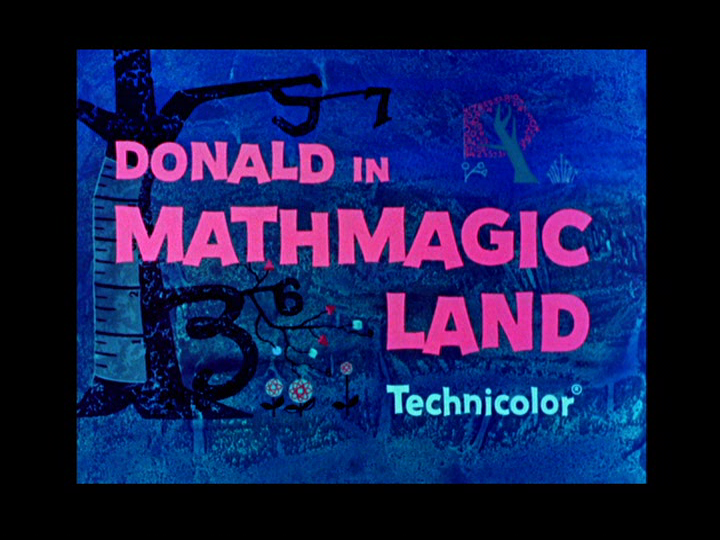
“By golly! You do find mathematics in the darndest places!”

On June 26, 1959, the featurette Donald in Mathmagic Land was released to theaters. This Academy Award-nominated short would go on to become one of the most popular educational films ever released by Disney. It was also shown on the first program of Walt Disney’s Wonderful World of Color, introduced by Professor Ludwig von Drake, who played the True Spirit of Adventure in the featurette. The story was written by Milt Banta, Bill Berg, and Dr. Heinz Haber, and starred Clarence Nash as the voice of Donald.

Donald, dressed in a hunter’s outfit, enters a dark room with his gun and looks around, remarking on how strange this all seems to be. He follows a trail of numbers, and finds the creature making the markings is a walking pencil, who challenges Donald to a game of tic-tac-toe, which Donald loses. He continues to walk, surprised by the square roots he runs into. He calls out hello to anyone who will hear him, and the voice of the narrator greets him. The narrator informs Donald that he is in Mathmagic Land, the land of great adventure, and that he, the narrator, is the True Spirit of Adventure. The spirit tells Donald he will take him on a journey through the wonderland of mathematics.
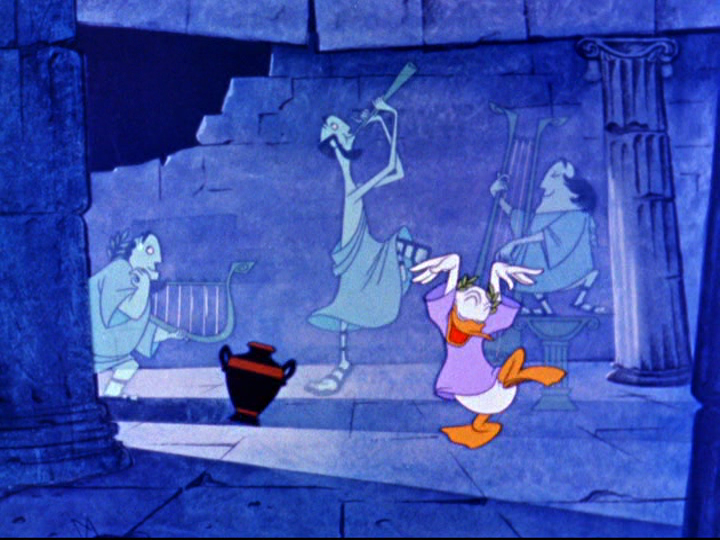
Donald having a jam session with the Pythagoreans, while learning that without math, there would be no music

As Donald storms away, saying math is for eggheads, the spirit informs Donald that without “eggheads,” there would be no music. He takes Donald back in time to Ancient Greece to meet Pythagoras, the father of mathematics and music. Donald is still confused, so the spirit shows Donald how music is full of mathematics. The first example shown is a harp, demonstrating how an octave is created. Donald and the spirit then sneak in on a meeting of the Pythagoreans, who are playing music in their meeting. Donald interrupts them, saying they need to play something with a beat. The Pythagoreans, the spirit explains, helped create the music we know and love today. As the spirits of the Pythagoreans disappear, Donald is left with a surprise – he is made a member of the Pythagoreans.

The segment then moves to another Pythagorean discovery: the pentagram, filled with mathemagic. The first concept explained is the golden section, then we move to the golden rectangle, which the pentagram creates many times over. The Greeks believed the golden rectangle to be a natural law of beauty. The spirit then shows how the pentagon, another Pythagorean shape, is found in nature, before moving on to other shapes found in nature.
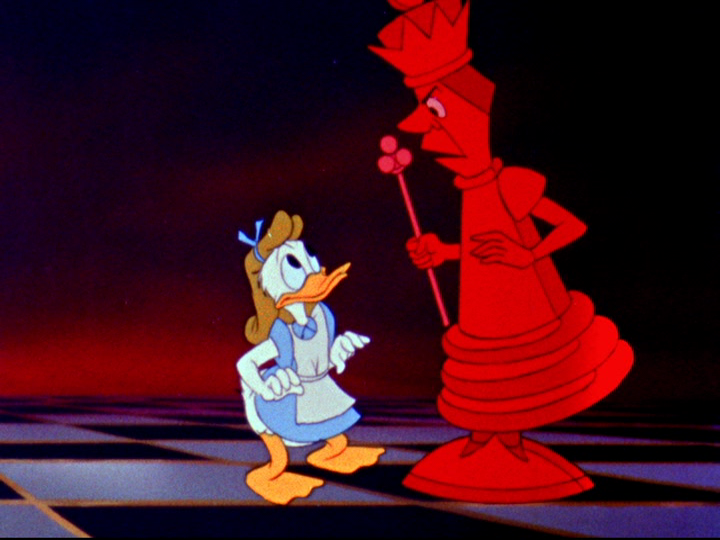
Donald plays the part of Alice when being taught the mathematical principles of the game of chess

Donald, who is enjoying his adventure so far, is delighted to hear that one can find mathematics in games, as well. The spirit begins with the game of chess, explaining it with the concept of Alice in Wonderland, with Donald playing the part of Alice. After a slight adventure with the chess pieces, Donald is able to watch a game in safety, but is bored by it. The spirit then begins to list sports with a geometric field, like baseball and football. The game that gets Donald really excited, however, is billiards. The spirit then shows an expert playing three-cushion billiards, and the mathematics used to get the perfect shot.

The spirit then tries to get Donald to play a game with his mind, only to find that Donald’s mind was completely cluttered with antiquated ideas, bungling, false concepts, and superstitions. He cleans out Donald’s mind, then has Donald think of a perfect circle, and puts a triangle in it. When asked what he sees, Donald sees a sphere. The spirit then has Donald take one thing and see how many items he can come up with using those shapes. Donald is then taken to a hall filled with doors, with most of them open. Some of the doors Donald discovers are locked, to which the spirit replies that they are the doors of the future, with the key being mathematics. The short then ends with the Galileo quote: “Mathematics is the alphabet with which God has written the universe.”
June 14

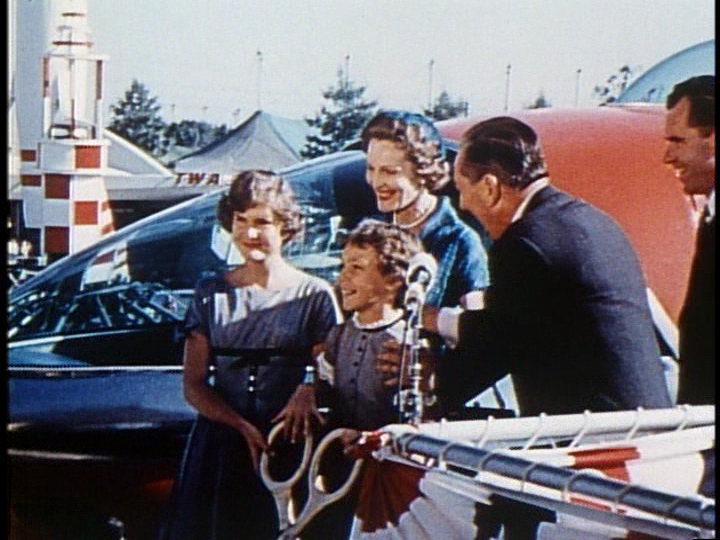
June 14, 1959 –Vice-President Richard M. Nixon and Family Dedicate the Monorail at Disneyland

“On the gala celebration of the completion of the project, the Richard Nixon family were on hand to snip the ribbon. Here we were with our monorail, the forerunner of rapid transit of the future, all checked out and ready to go, but somebody forgot to check out the scissors.” – Walt Disney, Disneyland 10th Anniversary Special.

On June 14, 1959, the Monorail was dedicated at Disneyland by Vice-President Richard M. Nixon and his family, with his daughters Tricia and Julie using oversized scissors to cut the ribbon. The scissors, unfortunately, would not cut the ribbon, but with a quick tear, the ride was dedicated and ready to set off. This was Nixon’s second visit to Disneyland; his first visit was shortly after the park was first opened.

The Monorail had been part of an expansion project for the park, which included such attractions as the Matterhorn. Originally known as the Disneyland-Alweg Monorail system (Alweg was the name of the German transportation company that aided in its creation), the Monorail has the distinction of being the first daily operating monorail in the United States. At first, it only traveled around Tomorrowland, but the track was expanded to the Disneyland Hotel in 1961. The ride has been expanded many times over the years, with the Mark III trains added to the ride in 1968, and Mark V trains added between the years 1986 to 1988 (the Mark IV trains were added to the Walt Disney World Resort). The most recent updates to the ride were the refurbishments of the trains beginning in 2007 and ending in 2009. Disney had envisioned the Monorail as a form of public transport in the future, but as his idea came around the time America was becoming more enamored with the automobile, the ride remained in Disney Parks.

June 8

Posted on

June 8, 1951 – The Donald Duck Short Test Pilot Donald Premieres in Theaters

“Get out of there, stupid. It belongs to him!”

On June 8, 1951, the Donald Duck short film Test Pilot Donald premiered in theaters. This was the 10th short in which Donald had to deal with the antics of Chip and Dale. The short was directed by Jack Hannah, with story by Bill Berg and Nick George, and music by Paul Smith.

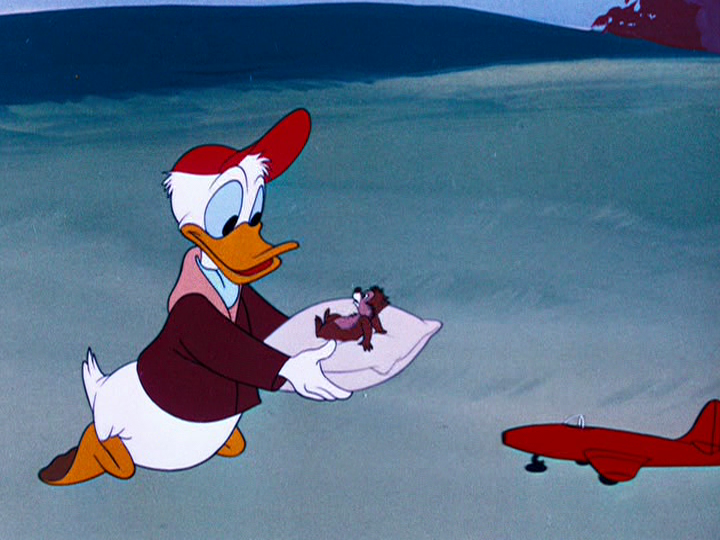
A red airplane is zooming through the clouds, and Donald is seen manning the controls, getting ready for a dive. He successfully completes the dive, then checks off his list that the plane is able to maneuver well. As the camera pans back, the audience sees that Donald is only manning a model airplane while camping out in the middle of a park. He sets the plane in for a landing on a pillow, and showers the model with affection.

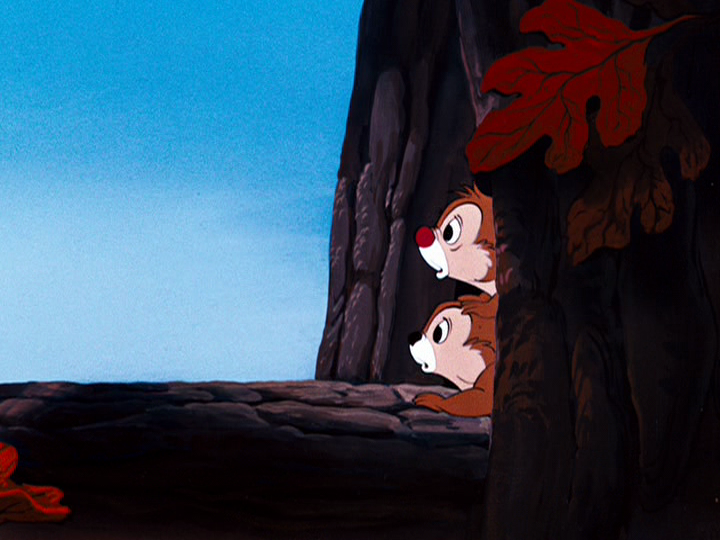
The pair scurries for cover when the model starts to fly a little too close to their tree

From a nearby tree, Chip and Dale are seen admiring the airplane, too, although they scurry for cover when it seems that the plane gets too close to their branch. The plane does eventually get stuck in the tree, with Donald angrily trying to get it free from the branches. As Donald tugs on the string, smoke shoots out of the tail, flying directly into the chipmunks’ hiding place. Dale comes out and, seeing the plane sitting there, decides that this is his chance to fly the plane.

Dale scrambles to the cockpit, only to have Chip pull on his tail. He points out that the plane belongs to Donald, who is still vigorously pulling on the string. Dale doesn’t care, and when Chip isn’t looking, Dale climbs in and starts playing around in the cockpit, when one button causes the plane to shoot off, leaving Chip stunned. Donald just thinks he got it loose, unaware that Dale is flying around happily, pretending he is a real pilot. He steps out of the cockpit and sits out on the wing, with Chip covering his eyes, thinking that Dale could fall at any second.

Donald is rather surprised that his plane doesn’t come in for the safe landing, but Dale does instead

Dale finally looks down to see the danger he’s in, scrambles back into the cockpit, and tries to stop the plane. Donald is confused as to why his plane is running around strangely, and when he holds the pillow out for the plane, Dale ends up tumbling out onto the pillow, much to the surprise of Donald. Donald is immediately infuriated, but soon becomes saddened to see his plane is damaged.

As he fixes the wheel, Dale takes a look inside the engine, and begins to fix the model from the inside. Donald is surprised by this, and shuts Dale inside the plane, annoyed that the critter had the nerve to mess with his model. He then plays a prank on Dale, sending the chipmunk shooting out the tailpipe into a pitcher, where Donald keeps him trapped. Chip runs down from his perch to free his best friend, but is still mad that Dale did something so foolish.

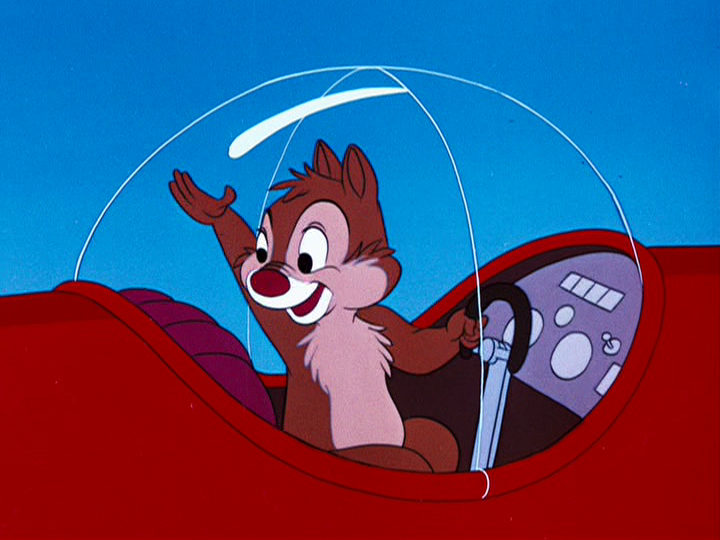
Dale gives his pal a wave as he flies past, unintentionally causing Chip more misery than joy at the situation

As Chip tries to free Dale, Dale digs his way out and gets back in the plane, taking off as Donald tries to fix it. He begins to fly around wildly, waving at Chip as he passes by and sends him flying over the grass. Donald can only watch as his plane has been taken hostage, and flees as he realizes that Dale is going to use him for target practice. Chip just gives up and goes back to his tree while Donald decides to seek revenge.

As Chip continues to taunt the duck, Donald uses a fishing rod to catch the plane and pull it to a stop. Dale, caught, continues to fight, and ends up taking Donald “water skiing” across the pond, while Chip just looks on, frustrated at his friend’s antics. Donald finally catches up with the plane in the air, but Dale parachutes out, leaving the plane without a pilot. The fishing rod gets caught around the top of a building, leaving Donald to fly around in circles for hours, all through the night. Dale points this out as the chipmunks try to sleep, but Chip is still aggravated at his friend’s stupidity.

June 6

Posted on

June 6, 1952 – The Special Short Susie, the Little Blue Coupe, is Released to Theaters

“Susie was a happy little car, as she glided down the avenue.”

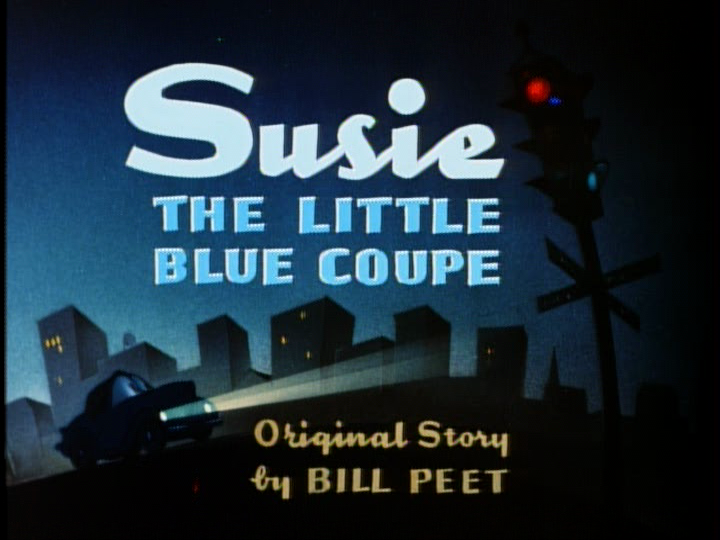
On June 6, 1952, the special short film Susie, the Little Blue Coupe, was released to theaters. It was based on an original story by Bill Peet, with the adaptation to film done by Peet and Don da Gradi. The short was directed by Clyde Geronimi, with music by Paul Smith, and narration provided by Sterling Holloway. The anthropomorphized look of the cars is said to have been an inspiration for the look of the characters in the Pixar films Cars and Cars 2.

“This is the story of Susie,” the narrator begins, with Susie seen in the front showroom of Miller Motors. She had many admirers stop and stare, for she was a beautiful blue coupe. Susie is seen flirting through the window, even giving one of her admirers a wink. One day, a man in a brown suit spotted Susie, and fell in love with her immediately. Susie was thrilled to be sold to the man, and has a cheerful strut as she drives down the road.

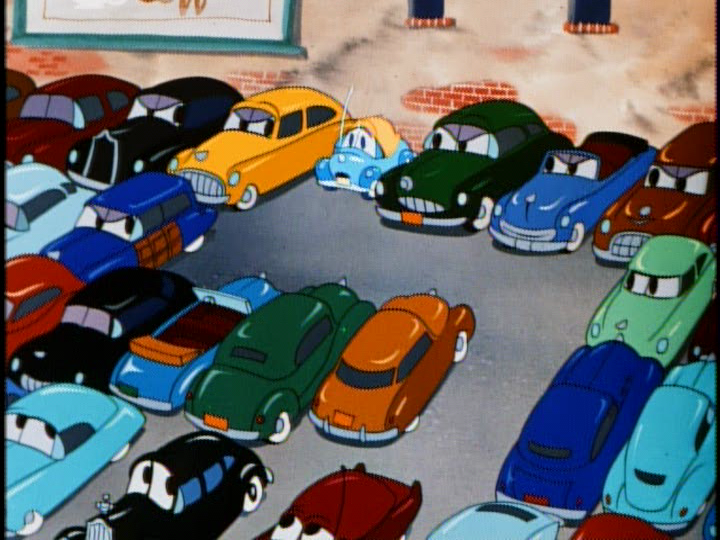
Much smaller than the other cars, Susie huddles in an empty space, intimidated by the others’ mean stares

As Susie entered the main roads, however, she was too slow for the other cars, nearly getting run off the road several times, but she was finally able to maneuver her way around with ease. She also ended up at the Parking Lot, trying to make friends with the big limousines and the big, fancy cars, although they did not take a liking to her. At the end of the day, she was just happy being back in her own garage, with the owner’s cat asleep on her roof.

Years go by, and Susie has not aged gracefully. Her carburetor is having trouble, and her slow speed causes traffic to back up for miles. She goes into Joe’s Garage for a checkup, and when the mechanic lets the owner know that she needs a new overhaul, the owner just says sadly that all he needs is a new car, leaving Susie to be abandoned in a used car lot, on sale for $95.

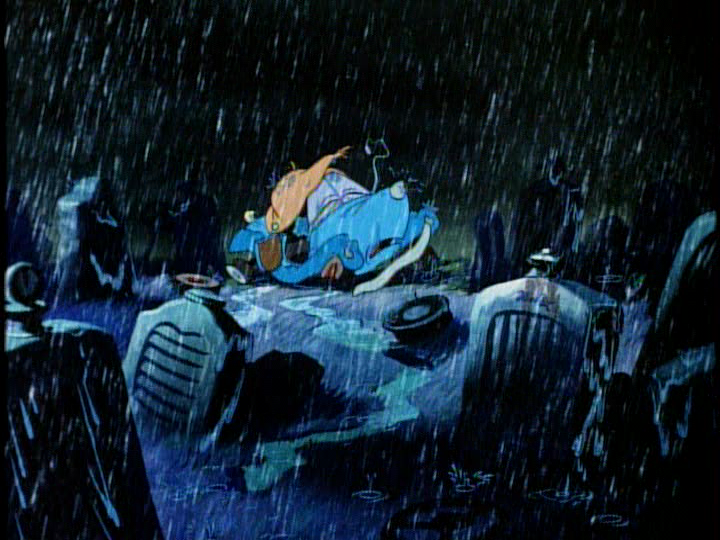
After the accident, Susie is carted off to where all cars go to die – the junkyard

A rather unsavory looking fellow walks around the car lot, checking out the cars available, when he spots Susie with a smile. He goes to check her out, and decides to buy her. Now, she was driving “back streets and dark alleys,” left out in the cold at night, feeling abused and depressed. One fateful night, as she was left alone on the street as usual, Susie is stolen, and is then pursued by the police. Susie’s captor runs a red light, sending her crashing into a trolley. Susie is then carted away to the junkyard.

Susie sits through the seasons in the junkyard, until one day she is spotted by a young boy, who buys her for $12.50. With the help of his friends, they take her apart and put her back together again, so she’s better than new. Susie speeds down the road, happy to be loved by an owner.

May 10

Posted on

May 10, 1956 – Disney Legend Paige O’Hara is Born

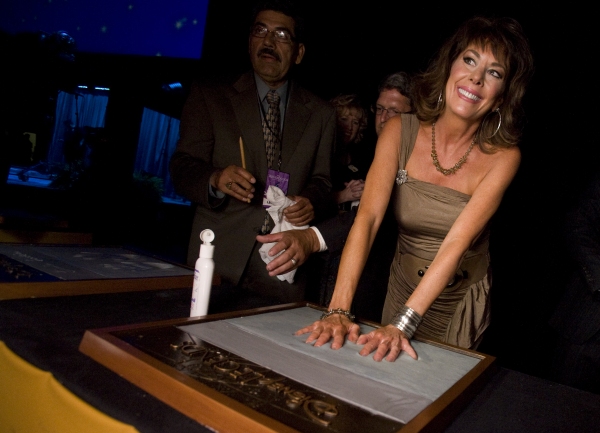
Paige O’Hara at the Disney Legends Awards. Photo credit: broadwayworld.com

“I had been a Disney fanatic from the time I was little. As soon as I heard about [Beauty and the Beast], I called my agent and said, ‘I have to be seen for this…I knew [Belle] was my part. It was just one of those things you know.” – Paige O’Hara

Paige O’Hara, best known as the voice of Belle in the 1991 classic animated film Beauty and the Beast, was born on May 10, 1956, in Ft. Lauderdale, Florida. She made her first professional appearance in the Broadway revival of Showboat as the character Ellie May Chipley. Since then, O’Hara has gone on to star in the title role in The Mystery of Edwin Drood, and Ado Annie in the national tour of Oklahoma.

O’Hara auditioned five times for the part of Belle, and as the film became wildly successful, it thrust O’Hara into the spotlight. She continued to voice the character in two sequels: Beauty and the Beast: The Enchanted Christmas and Belle’s Magical World, as well as voicing the character in the Kingdom Hearts video games. O’Hara was also given a cameo in the 2007 film Enchanted as a character in a soap opera. O’Hara was awarded as a Disney Legend on August 19, 2011. “She was a first, in a lot of ways, for a Disney Princess,” O’Hara has remarked on her character, “and was ahead of her time in the film and for Disney. I think that’s why, almost 20 years later, people still love her.”

April 29

April 29, 1957 – The Sleeping Beauty Walk-Through Attraction Opens

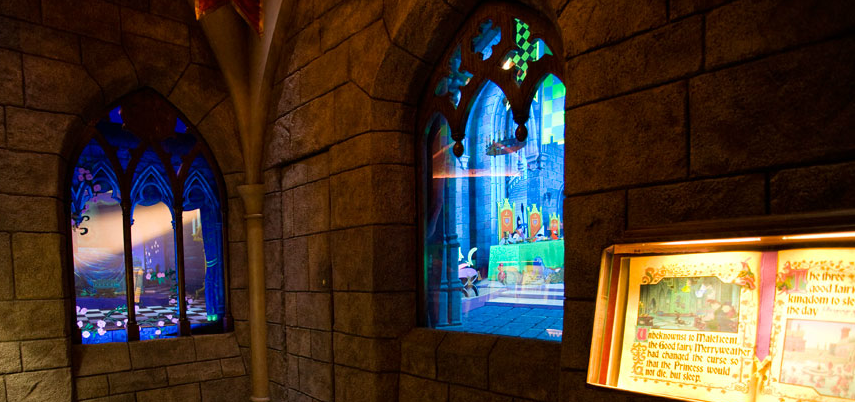
Image credit: Official Disneyland Site

 “Relive one of the most beloved Disney legends as you stroll through the iconic Sleeping Beauty Castle.”

 On April 29, 1957, the Sleeping Beauty Walk-Through opened in Disneyland, with Shirley Temple on hand to make the dedication. The attraction was created to use the empty space in the castle, and featured dioramas to tell the story of Sleeping Beauty in the style of Eyvind Earle, the production designer for the 1959 film. The dioramas were redesigned in 1977. The attraction was closed in 2001, but on November 27, 2008, the attraction opened again, reverting back to the original Eyvind Earle-inspired artwork, but with new technology that wasn’t available in 1957.

April 27

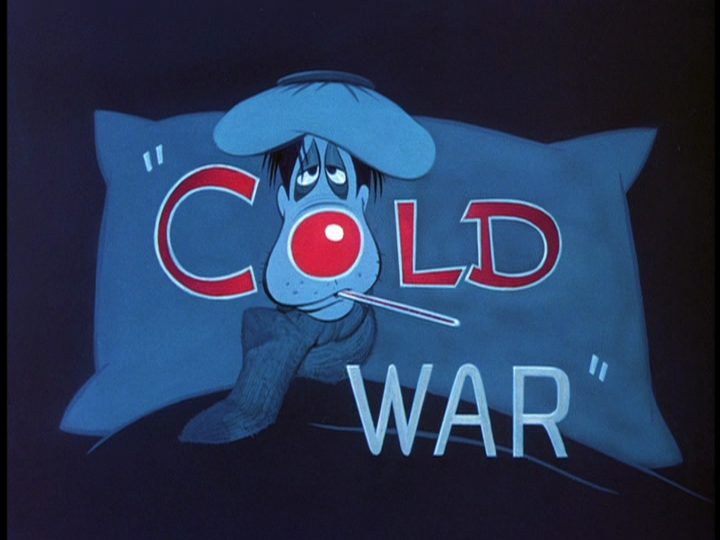
April 27, 1951 – The Goofy Short Film, Cold War, is Released to Theaters

“Now, look, Geef, a cold is nothing to be sneezed at. Beat it!”

On April 27, 1951, the Goofy short film, Cold War, was released to theaters. As Goofy is seen as an “everyman” sort in many of these shorts, he was given an “everyman” name: George Geef, which is used throughout by the other characters. The short was directed by Jack Kinney, with the story by Dick Kinney and Milt Schaffer, and Goofy being voiced by Pinto Colvig.

Dejected, Goofy is sent home from the office, thanks to his cold

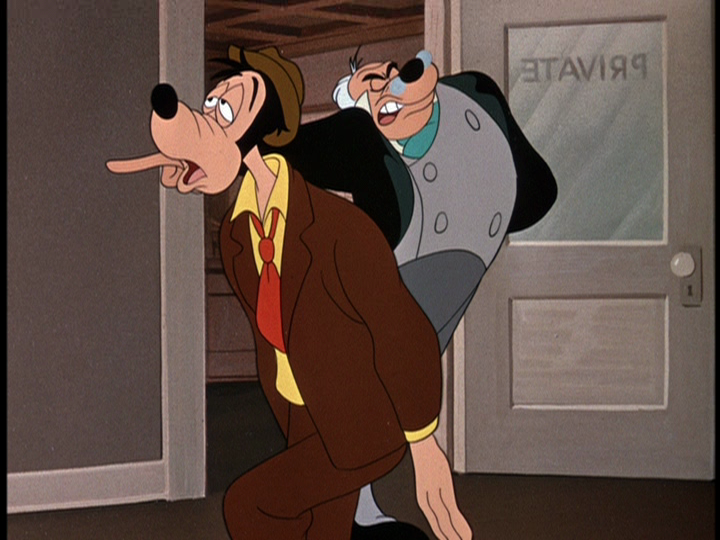
The short opens with a narration on how to spot the carrier of the common cold: a virus easily identified by his red nose. We then see Goofy at his desk on a cold winter’s day, and he opens the window to get some air, inadvertently inviting in the cold carrier. Goofy then lets out a loud sneeze, which is heard by his boss. His boss demands that he take his cold out of there Goofy protests that he doesn’t have a cold, but he loses the argument by letting out another powerful sneeze. Defeated, Goofy leaves the office, while the boss sprays the room with sanitizer to kill the germs.

Goofy comes home, looking for a little sympathy, when he spies on a nearby table a note from his wife, informing him that she’s playing bridge at her friend Mabel’s, and dinner is in the ice box. He cries out, to no one in particular, that he has been deserted, and makes his way to the bed to lie down. The cold carrier is seen tormenting poor sick Goofy, using his nose for a punching bag, among other indignities. Goofy resolves to stay strong, but is reluctant when he has to take cold pills, and finds he is unable to swallow the pill. After fighting with it, it falls down the drain, and poor Goofy is without relief.

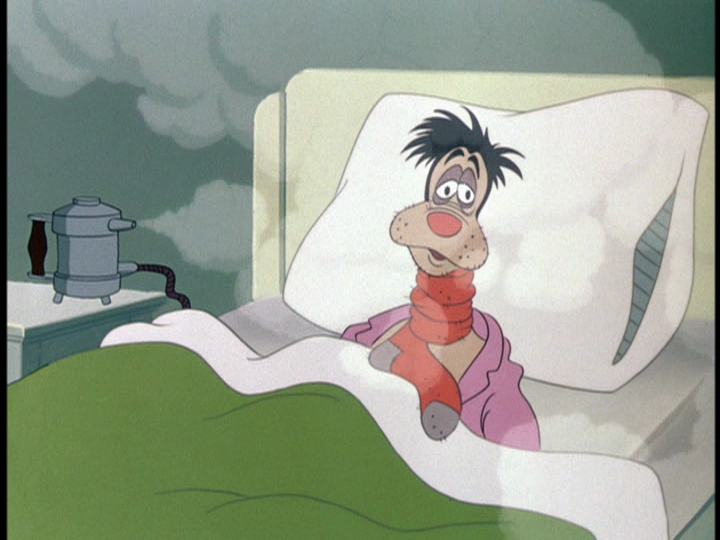
Goofy relaxing in bed as his wife continues her care of him

Goofy is in the kitchen, soaking his feet in a hot tub, when his wife returns, asking what he’s doing home. He tries to explain that he has a cold, but she isn’t listening, and continues to tell him about her day. She then accuses him of not listening – he’s tried, and his ears have gotten clogged from the cold – and realizes that he’s come down with a cold. She pushes him into bed and begins to take care of him with every remedy known to man, with comedic results. The cold is sent packing as Goofy sleeps peacefully, and the announcer lets us know that two weeks later, Goofy is well once more. Unfortunately, when he opens the window at work again to let in some cold air, the cold carrier comes racing back, causing him to sneeze loudly once again.

April 25

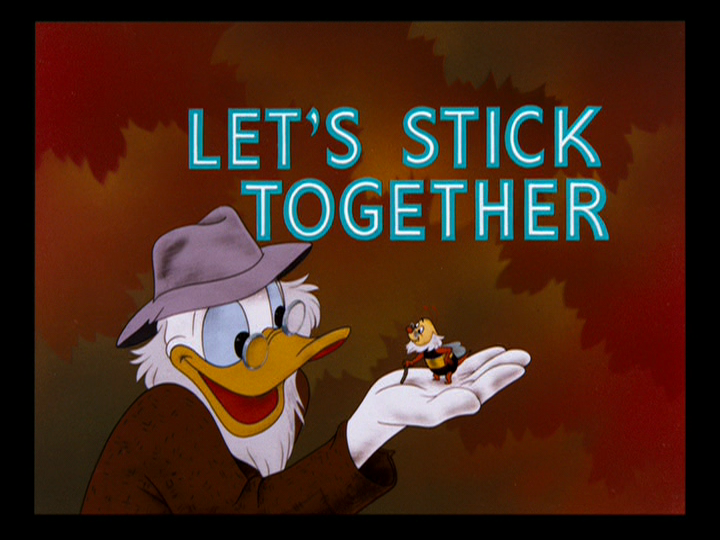
April 25, 1952 – The Donald Duck Short, Let’s Stick Together, is Released to Theaters

“You know, strange as it may seem, I used to be in business with that old duffer.”

On April 25, 1952, the Donald Duck short, Let’s Stick Together, was released to theaters. It features one of Donald’s many adversaries, Spike the Bee, who made his premiere in the 1948 Donald Duck short, Inferior Decorator. The short was directed by Jack Hannah, with the story by Nick George and Al Bertino. It also stars Clarence Nash as Donald, Bill Thompson as Spike, and voice actress legend June Foray in a cameo as Spike’s wife.

The short opens on a crisp fall day in the park, where an old bee is seen sitting on a ledge of a tree in his rocking chair, smoking a corncob pipe. He is suddenly startled as something lands into the ground in front of him. As the camera pans out, we see that the item belongs to an elderly Donald Duck, who is picking up trash in the park. He sits down on a bench to rest, and the bee laughs, narrating to the audience how he knows Donald, and taking the audience with him as he reminisces.

Spike discovers that his stinger is part of his secret talent

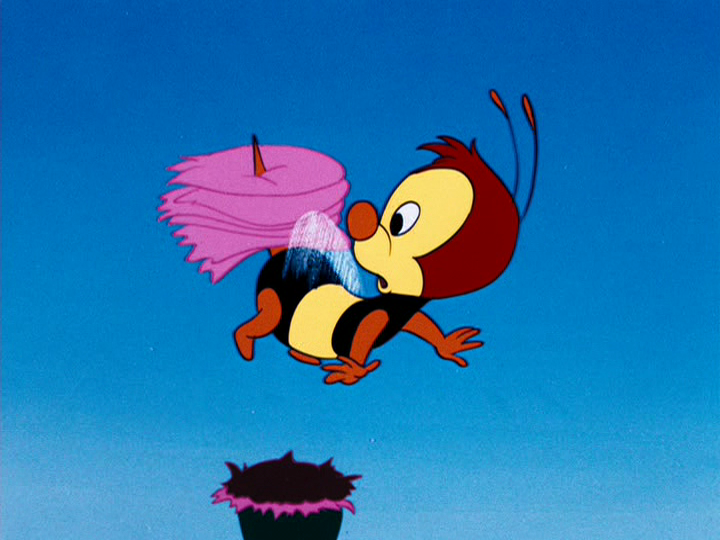
The flashback begins with Spike looking at the want ads in an abandoned newspaper. Just as he picks out what he thinks is the perfect job, the paper is snatched out from under him, flipping him into the air and dropping him harshly on the ground. Annoyed, Spike flies up to perch on a flower to look at his “attacker.” He then spies Donald, who is picking up the trash in the park, and gets an idea: he can use his stinger to pick up trash, and calls it his “hidden talent.” Excited by this discovery, he flies around Donald and shows the duck that he can help pick up trash. Donald is impressed, but is confused when Spike pushes Donald to the bench, letting him know he won’t be needed.

Spike makes quick work of the trash, and brings Donald part of a cigar he’s found. Donald pats Spike on the head and begins to relax while Elderly Spike relays to the audience that this was the beginning of a beautiful friendship. The next day, the two went into business together, beginning at a local carnival. Donald is seen selling balloons for 10 cents a balloon, and after he sells them, he sends Spike out to pop them, forcing the children to buy from Donald again. Spike is distracted, however, by an ad for a balloon dancer, and slips inside, popping the balloons that cover the girl. She lets out a shriek, and Spike flies out again, shrugging.

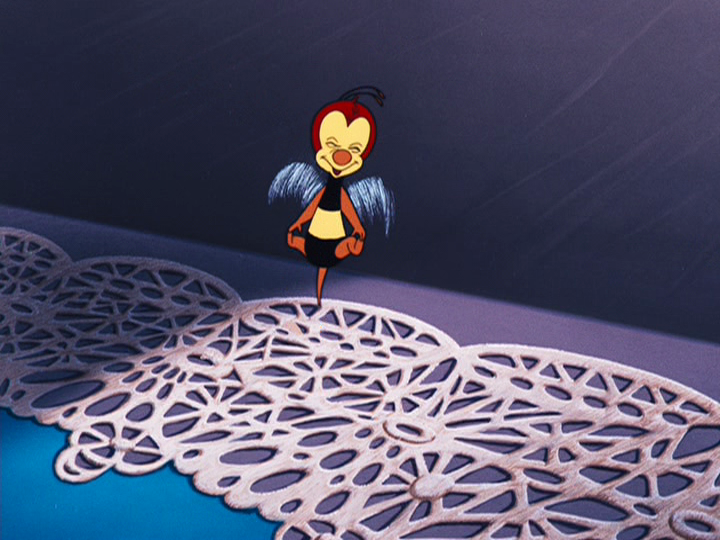
Spike working on creating a lace pattern

The next job the two held was a tattoo parlor, with Donald using Spike’s stinger for a needle. Donald is impressed with Spike’s work, and they move on to other projects, including making socks, lace, monogrammed handkerchiefs, and even fancy curtains. Soon, as Spike tells us, they were in full production mode. As the orders kept coming in, Spike became more and more fatigued. He pleads with Donald to let him have a vacation, and Donald surprises him with a greenhouse full of flowers, complete with a lady bee as well. Falling in love makes Spike work harder than ever, only he destroys everything by stitching hearts everywhere.

Donald, seeing as how everything has been vandalized, cries out that he’s ruined, and glares at the lovesick bee before trying to swat the lady bee. Spike runs to protect his lady, and decides to sting the duck in the tail. It was the end of their partnership, and Spike and his lady “have been happy all these years,” Spike tells the audience. The audience hears the truth, however, as Spike’s lady begins to scream at him for lounging around. Spike decides to join Donald once again in their partnership, and the two hobble down the road together.

April 4

April 4, 1956 – Where Do the Stories Come From? Premieres on Television

“Potential story ideas exist all around us.” – Walt Disney

On April 4, 1956, the Disneyland episode Where Do the Stories Come From? premiered on ABC. Directed by Jack Hannah, the episode attempts to explain the most often-asked question of the members of the Disney studios: where do they get their story ideas?

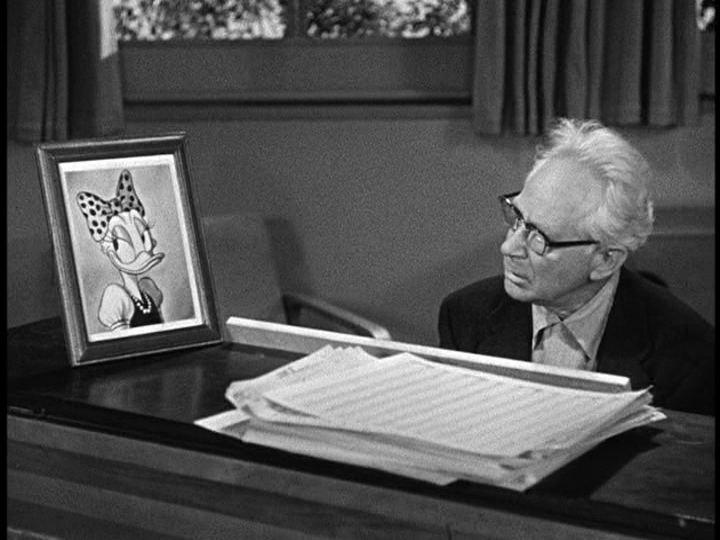
Composer Oliver Wallace studies a picture of Daisy, trying to find inspiration for a song about her

The episode opens with Walt Disney saying that the question of “Where do the stories come from?” is one that is asked a lot, and this episode will try to explain it the best he can. He tells the audience that story ideas can come from books, or are inspired by a song. The first example he gives of the latter is the song that had to be written for Daisy Duck; “she had to have a song,” since everyone else had one. The assignment for Daisy’s song was given to studio composer, Oliver Wallace. He thinks of words that rhyme with Daisy, and comes up with “crazy,” which gives him the title, “Crazy Over Daisy.” Soon, Wallace is composing an entire melody, and not long after, two men are seen listening to a record of the completed song. It then became the inspiration for a short film called Crazy Over Daisy, set in the early 1900s, which is shown next.

For the next example Disney brings up a short that was based on the True-Life Adventure series, where any interesting footage of animals could inspire the story artists to come up with a short film. “In viewing the thousands of feet of true-life adventure film that comes into the studio, we sometimes come across an animal that is a natural foil for one of our cartoon characters,” Disney explains, as he introduces the short R’Coon Dog.  Thinking a raccoon would be a match for Mickey Mouse and Pluto, the animators consult Pluto about his part in the film. Pluto is seen in the projection room, watching the footage of raccoons, and then is seen in the story room, where the animators are seen drawing the raccoon character.  Pluto takes the drawing a bit too seriously and tears it up with his teeth. The audience then sees R’Coon Dog.

The next example Disney presents draws on the experiences of the artists during World War II, when they had to get their physicals. The animators thought “it would be fun to put Donald Duck in the same ordeal,” and they show a compilation of some of the Donald Duck wartime shorts, including Donald Gets Drafted, and Fall Out Fall In.

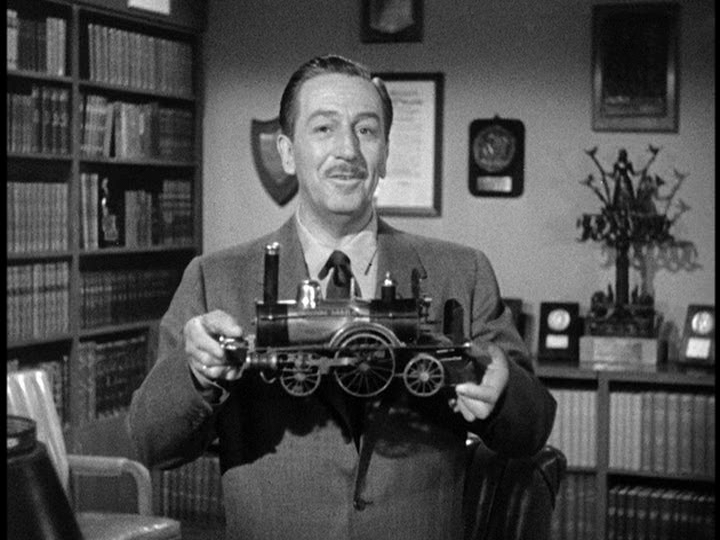
Walt Disney presents the hobby of many at the Disney Studio: model railroads

Disney then presents his own hobby of model railroads, as well as two animators who “haven’t escaped the bug” of the hobby, as Disney puts it: Ollie Johnston and Ward Kimball of the Nine Old Men. The audience sees home movies of Ollie and Ward with their model railroads.  Every detail is built to scale on Ollie’s model, and Ward has a full-size model in his own backyard. Not to be outdone by his two animators, Disney shows off his own model railroad, named the Lilly Belle, and some of the home movies of creating the track in Disney’s backyard. “The hardest part of the job was convincing my wife that the flower beds had to go,” Disney jokes. The hobby shared by these three men led to the creation of a Donald Duck short, Out of Scale.

March 9

March 9, 1955 – Man in Space Premieres on the Disneyland Television Show

“One of man’s oldest dreams has been the desire for space travel, to travel to other worlds.” – Walt Disney

On March 9, 1955, audiences watching the Disneyland Television Show saw a different kind of episode, called Man in Space. The first installment of the Tomorrowland segments of the show, Man in Space was directed and produced by Ward Kimball (see March 4th entry), who had written the episode with William Bosche, and features guests Werner von Braun, Willy Ley, and Heinz Haber, who were major scientists associated with space exploration. It was so well received that President Dwight D. Eisenhower asked for a copy to present to the Pentagon, and this helped push the space program into the forefront of the public imagination. In 1956, an edited version of Man in Space was nominated for an Academy Award for Best Short Subject (Documentary), after it was released to theaters on a double bill with Davy Crockett and the River Pirates.

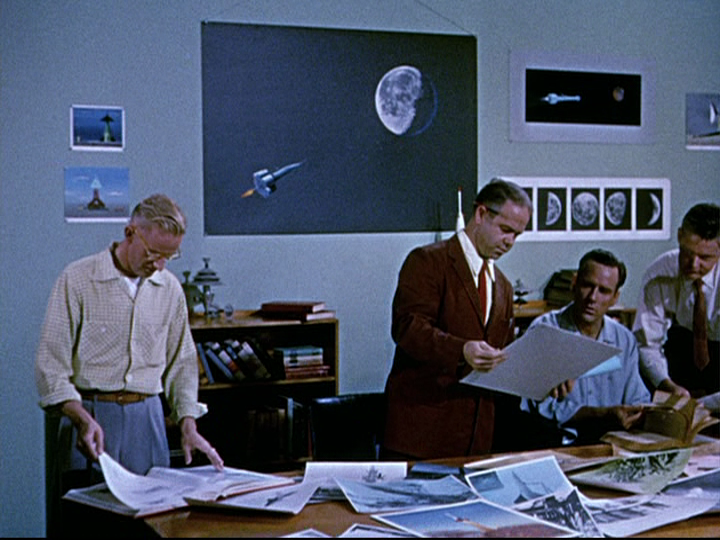
Ward Kimball (C) looking at mock-ups and prototypes in the design room

As the Man in Space episode opens, the audience is taken to a design room, where men are hard at work designing prototypes of rockets and developing methods of space travel. Walt explains that the creative talents of the Disney Studios are working with engineers and scientists to make the dream of interplanetary travel a reality. “In working with engineers and scientists,” director and producer Ward Kimball explains, “we have found that there are many different opinions as to how we will eventually cross the space frontier.” The one common point between these opinions, though, is that it will be a rocket-powered ship heading into space. Kimball then leads the viewers into a history of rocketry, beginning with China in the 13th century.

The rocket was not a modern invention, Kimball points out; the Chinese invented it at the battle of Kai-fung-fu in 1232. A brief animation segment shows two Chinese men shooting rockets at each other from far distances, with each rocket increasing in size. Kimball then jumps forward 500 years to Sir Isaac Newton and his often paraphrased “for every action force, there is always an equal but opposite reaction force.” Kimball makes this clearer by using the example of the family dog when it sneezes. The segment also shows a few examples of rocket propulsion experiments, including a steam-powered rocket, and notes that designers ultimately stuck with gunpowder-powered designs.

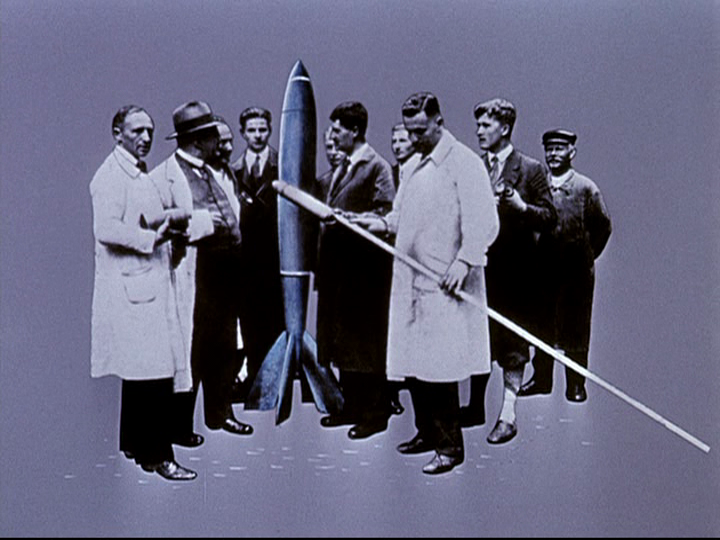
A stylized photograph of one of the early German societies dedicated to the study of rocket science

In 1865, Jules Verne published From the Earth to the Moon, which again piqued people’s interest in flying into space. Verne’s story inspired the French filmmaker Georges Melies to create the first space-travel film in 1902. Kimball shows the audience this silent film, and continues with a history of the different kinds of fuels used to power small rockets that could one day be used to send men to space. Rocket frenzy was highly evident in the 1920s and ’30s, with rockets attached to any possible vehicle. Around this time, a new society in Germany was founded, with the mission of scientifically exploring the possibility of space travel. The German army took a keen interest, and used the society’s findings to create rocket missiles and one of the forerunners of a spaceship, known as the V-2. After WWII, 75 of these V-2 rockets were taken to the U.S. for study in its newly developed rocket program.

Kimball then introduces rocket historian Willy Ley to explain how rocket firing works. Ley begins by showing a model of a rocket motor and explaining to Disney artists how it works. An animated sequence explains how the motor continues to work in space where there is no oxygen. Ley asks the animators to create a sketch of a three-stage rocket to help him explain how it would work. The animators ask some very interesting questions as Ley uses the chalkboard to help his explanations, but the section is not overly technical, so the audience is still be able to understand well.

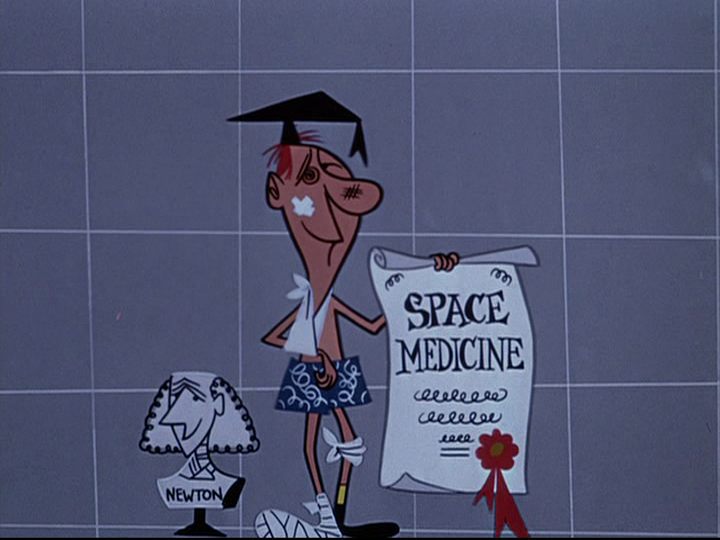
The "ordinary man" example, after going through rigorous (and humorous to the audience's perspective) training, passes the space medicine course

In the next segment of Man in Space, Kimball describes a new field of science known as space medicine, or how man will react physically and mentally in space, and introduces the expert in this field, Dr. Heinz Haber. Haber pulls down a screen to set the stage for another animated segment, this time of the “common man” who will be sent into space. As we follow this common man through his daily routine in space, Kimball’s special brand of humor keeps things light.

In the third segment of the episode, Kimball explains the two problems of space flight: building a rocket ship, and preparing and training the men to travel into outer space. Kimball then introduces Dr. Wernher von Braun, the chief of the Army’s guided missile division, who was the overall director of development for the original V-2 rocket. Von Braun is seen explaining to two other men the problems of space travel. Looking at some similar present-day situations can help come up with solutions, von Braun says. He gives a few examples of the current research, with testing performed on the ground in simulated atmospheres. The tests that von Braun describes are then presented in an animated sequence narrated by Dick Tufeld, best known as the voice of the robot in the television show, Lost in Space. The animated short ends with an accomplished mission into space, with the next goal of getting man to the moon, then the planets, and then to what lies beyond.