RSS Feed

Tag Archives: 1950s

March 26

March 26, 1955 – “The Ballad of Davy Crockett” Hits Number 1 on the Billboard Hit Parade Ballad

“Born on a mountaintop in Tennessee, greenest state in the land of the free, raised in the woods so’s he knew every tree, killed him a bear when he was only three. Davy, Davy Crockett, King of the Wild Frontier.”

On March 26, 1955, the theme song of the “Davy Crockett” serial “The Ballad of Davy Crockett” hit number one on the Billboard Hit Parade, and remained on the chart at the top position for sixteen weeks. The single was written by George Bruns and Tom Blackburn, and was recorded by Bill Hayes. Although it was soon recorded two other times, once by Davy Crockett actor Fess Parker and the other time by Tennessee Ernie Ford, Hayes’ version of the song was the most popular. The song, one of the most popular songs every from a Disney production, has been covered many times since then, although not with nearly as much success as the first recording.

March 23

March 23, 1951 – The Goofy Short Film Home Made Home is Released to Theaters

vlcsnap-2013-03-22-22h49m06s73

“Since the beginning of time, man has been possessed with the desire to have a roof over his head.”

On March 23, 1951, the Goofy short film Home Made Home was released to theaters. It was directed by Jack Kinney, with story by Milt Schaffer and Dick Kinney.

On the top of a hill, Goofy is seen building the frame of a house, sawing one side of a board. He realizes that if he keeps sitting on the side he’s cutting off, he’ll fall, so he quickly changes, only to fall anyway. He then pulls out his blueprints, only to be completely rolled up inside and tangled in them. He tries to nail the blueprints down, but the sheets just tear up the boards and trap him again. He then uses a level on a board, and has a hard time keeping it straight, although he does find a trio of goldfish residing inside.

Goofy carefully carries a sheet of plate glass, with humorous results

Goofy carefully carries a sheet of plate glass, with humorous results

Goofy pulls out a sheet of plate glass, and slips on a banana, on a pipe, and on a board, but the glass miraculously stays intact and places itself in the window frame. It moves around when he accidentally touches it, and it finally breaks when he walks right through it after he thinks he’s cleaned it. Goofy then tries to paint the house, with paint buckets open everywhere. He gets in a battle with the spray painter, which attacks him like a snake, spraying him with as much paint as possible, sending Goofy running all over the house. Once the house is completely covered in yellow paint, Goofy looks up to see that his house is complete, but as he lays down the welcome mat, with his neighbors arriving to welcome him, the house completely falls apart.

March 21

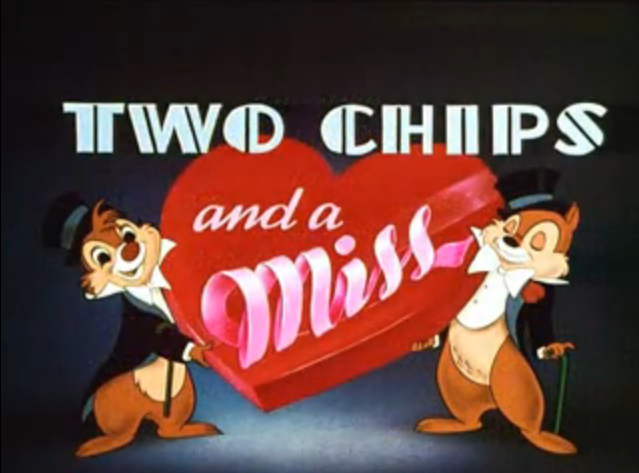
March 21, 1952 – The Chip ‘n’ Dale Short Film Two Chips and a Miss is Released to Theaters

TCaaM_1

“Little boy, with your cute little ways I am yours, for the rest of my days.”

On March 21, 1952, the Chip ‘n’ Dale short film Two Chips and a Miss was released to theaters. It was the second of three shorts made for the Chip ‘n’ Dale series. The song that Clarice sings is “My Destiny” by Bill Eckstine, a famous balladeer in the era of swing music. The short was directed by Jack Hannah, with story by Nick George and Bill Berg

In the middle of Central Park, Chip and Dale are preparing for bed, scoffing at the noisy nightlife of the city, claiming it’s not for them. As the two settle down for the night, Chip secretly pulls out a note from under his pillow from a girl named Clarice. Chip waits for Dale to fall asleep and gets ready for his date once Dale sleepwalks out of their home. Unbeknownst to Chip, Dale is also preparing for a date with Clarice. The two make their way to the Acorn Club, and head straight to Clarice’s dressing room to give her a bouquet of flowers. There, the two discover that they are chasing the same girl, and begin to fight over her.

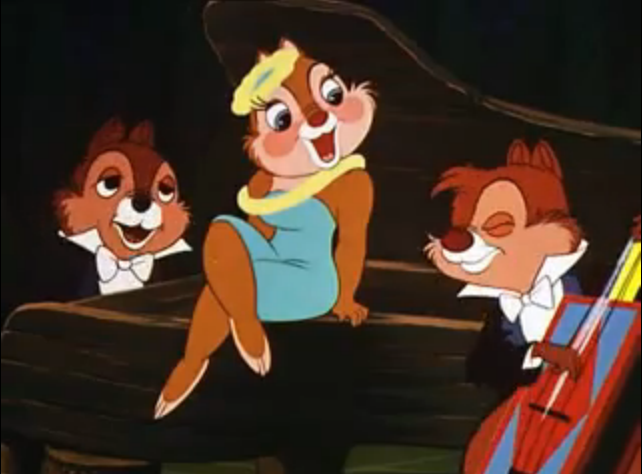
Chip and Dale compete musically for Clarice's attention before settling on serenading her with a duet

Chip and Dale compete musically for Clarice’s attention before settling on serenading her with a duet

Clarice seems to find the fighting over her amusing more than anything, and is soon called to the stage to perform her song. The pair go crazy over her performance, and continue to try and outdo the other for her attention. At one point, Chip falls over the piano while trying to catch a flower Clarice threw to the duo, but brightens when he realizes he can help her performance. She is delighted by his playing, and Dale is jealous until he plays a nearby cello. The two begin to duel musically, much to Clarice’s delight, and she gives them both a kiss. Smitten, the two begin to serenade her with a duet. The short ends with Clarice tricking the two into kissing each other when they try to reach for her.

February 23

February 23, 1955 – “Davy Crockett at the Alamo” Premieres on ABC

vlcsnap-2013-02-23-09h52m19s150

“During the past season, we’ve presented two stories based on the life of Davy Crockett of Tennessee, a man whose courage, whose humor, and exploits lifted him into the legend class.”

On February 23, 1955, the final episode in the Davy Crockett trilogy, “Davy Crocket at the Alamo,” premiered on ABC in the Disney Anthology series Disneyland. Although this was written as Davy Crockett’s last adventure, two additional episodes were created thanks to the show’s enormous popularity; these final episodes were turned into a full-length feature film. The “Alamo” episode was directed by Norman Foster, and was written by Tom Blackburn. It stars Fess Parker as Davy Crockett, Buddy Ebsen as George Russel, Hans Conreid as Thimblerig, Nick Cravat as Bustedluck, Kenneth Tobey as James Bowie, and Don Megowan as William Travis.

The story begins with Davy and his friend George Russel heading out West “to follow the sun.” On a riverboat, a sly fellow named Mr. Thimblerig is playing pinochle with the travelers. He asks Davy and George to participate in the game. Davy says he doesn’t hold much for gambling, considering it foolish, but he finally consents to play and in the course of the game, he reveals to everyone how Thimblerig has been swindling them all. Thimblerig then realizes he’s been playing Davy Crockett, and ends the game, having been “hoisted on his own petard.” Later that evening, Davy stands on the railing of the boat, telling George of his intentions to head to Texas to help all the settlers in trouble. George is not thrilled with this plan, but he decides to go along with it. As they head downstairs for a drink, Thimblerig drunkenly offers his companionship, and ends up accompanying Davy and George to Texas.

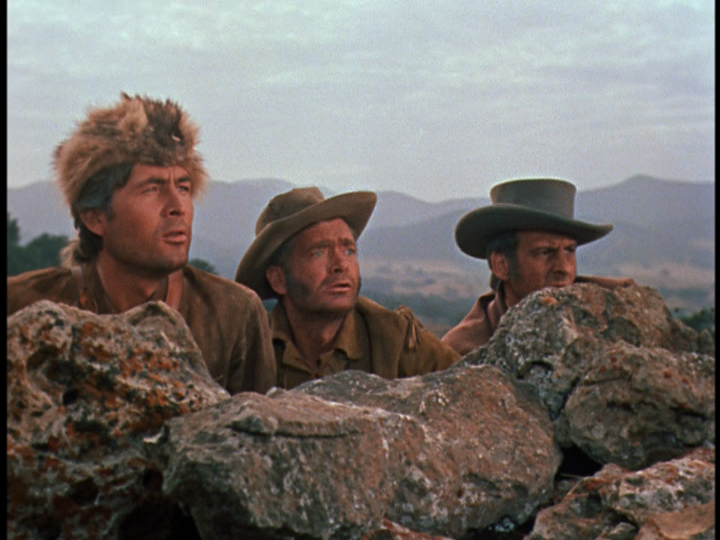
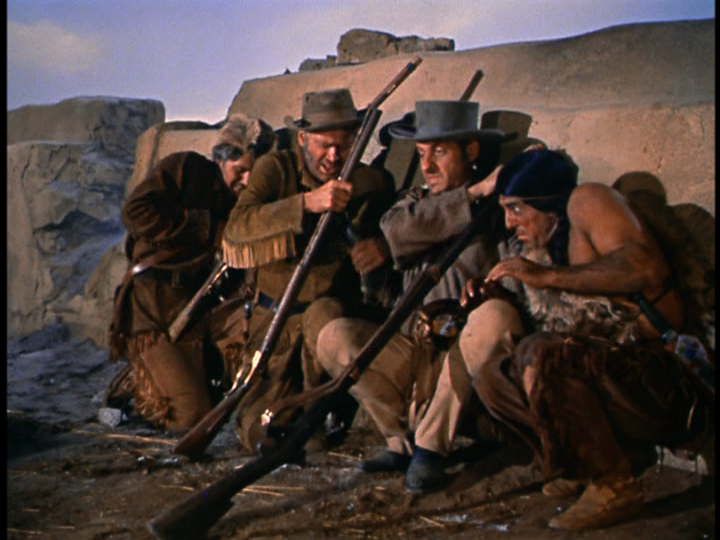
Davy, Georgie, and Thimblerig peer over the rocks carefully to observe their surroundings

Davy, Georgie, and Thimblerig peer over the rocks carefully to observe their surroundings

As the three arrive in Texas, Davy spots smokesignals in the distance and follows them, although he knows that it could be the dangerous Comanche tribe. The trio peeks over a rock formation to see a Comanche warrior help the buffalo stampede, when the warrior falls off his horse. Crockett tries to help the injured Indian when the warrior pulls a knife on him. Davy and the warrior scuffle, but Davy wins and helps nurse the warrior back to health, nicknaming him “Bustedluck.” Davy then converses with Bustedluck, who offers to lead them to a white settlement as thanks for their help. They pass a small group of Mexicans, who warn Davy and the others that San Antonio has been taken over by Santa Ana, and the Texans have moved to the Alamo, which is surrounded by soldiers. Davy and his men continue to the Alamo anyway, and are soon pursued by Mexican soldiers. The Texans inside the Alamo help protect Davy and his crew until they can get safely inside the fort.

Davy is then sent to meet Jim Bowie, the commander, who is thrilled that Crockett is here, until he realizes that Crockett brought only four men. Davy volunteers to be a courier for more troops, but Bowie tells him that he’s needed there to help at least hold the fort. Colonel Bowie had been injured and with his condition worsening, he relinquishes his command. While Crockett is offered the position, he refuses and gives it up to William Travis, who is second in command to Bowie. Travis gives Crockett and a group of men the south wall to protect, and they watch as a messenger is sent from Santa Ana’s camp. The message says that the men in the Alamo are allowed to surrender on Santa Ana’s terms, or they will be slaughtered. Travis and Davy refuse to surrender, and the battle starts.

Davy and his crew band together as the Alamo is shelled day and night

Davy and his crew band together as the Alamo is shelled day and night

The Alamo is shelled all day and night, but after four days there are still no casualties. Late one night, George lets Davy know that they’re almost out of ammunition, and Davy reveals that he’s known that since they got there, only Bowie made him promise not to say anything. George is furious, thinking that Davy couldn’t trust him, and storms away, declaring that it’s now “every man for hisself.” George then goes to Travis, asking to be let out to get more troops from Goliad. George then makes it out, while Davy watches, worrying. A few days later, George makes it back, but arrives with the bad news that Goliad won’t be able to spare any men. Davy has to break the news to the ailing Bowie, who requests to be taken outside to be with his men. Travis breaks the news to the men that they are on their own to protect the Alamo. He then gives the men the option to either stay or leave, and not a single man will leave the Alamo.

One of the lookouts spies Santa Ana’s men sneaking up to the fort, and the final battle begins as those men storm the Alamo. The men in the Alamo are able to hold off the men in the first wave, but it becomes increasingly difficult with each storm of the small building. Bustedluck is the first of Crockett’s men to die, stabbed with a bayonet while protecting Thimblerig. Thimblerig is then shot by the invading troops, as is Travis. George is shot several times, but refuses to go down until he fires the cannon, and Bowie, hidden away in a room, prepares himself with two pistols as the soldiers break in. Davy turns to the dying George, whose last words are “Give ’em what fer, Davy.” Davy fights bravely as the last survivor as the men advance on him, although he is eventually killed in the process. The story ends with the flag waving above the Alamo turning into the flag of the State of Texas.

February 11

February 11, 1958 – The First Episode of the “Annette” Serial Premieres on the Mickey Mouse Club

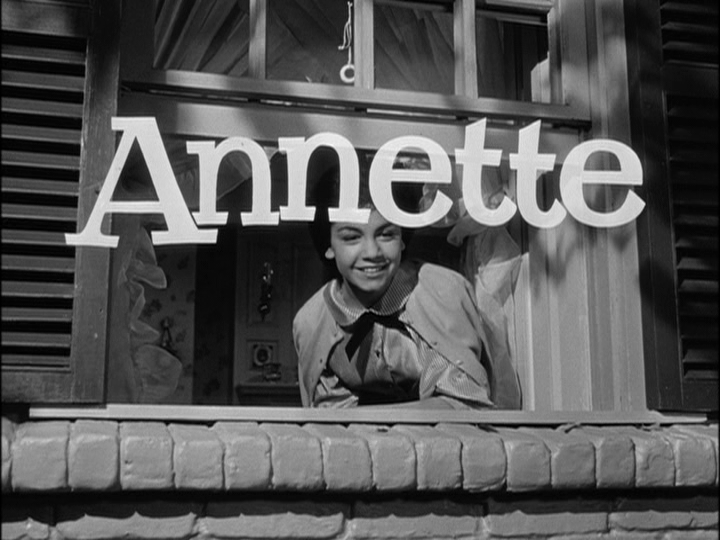
vlcsnap-2013-02-10-19h08m52s53

“All I know is the necklace is gone and that McCleod girl was the only one left in this room when we went out to supper!”

On February 11, 1958, the first episode of the “Annette” serial premiered on the Mickey Mouse Club. The serial was based on the novel Margaret by Janette Sebring Lowrey (known for Pokey Little Puppy), and was adapted by Lillie Hayward. It was renamed “Annette” to capitalize on the popularity of Annette Funicello, who played the lead role. The serial was filmed on the Walt Disney Studio lot; the animation studio served as the front of the high school. The serial was directed by Charles Lamont, and stars Tim Considine as Steve, David Stollery as Mike, Roberta Shore as Laura, Richard Deacon as Dr. McCleod, Sylvia Field as Lila McCleod, Mary Wickes as Katie, and Judy Nugent as Jet.

The first episode, entitled “An Introduction,” has the McCleod housekeeper, Katie, introducing the story of Annette and how she came to stay with the McCleods. Dr. McCleod lives with his sister, Lila, and they both are surprised one morning when their niece, Annette, arrives from Ashford, Nebraska. Katie explains that the McCleods had no idea that they even had a niece, as they had lost touch with their brother years ago. Although Dr. McCleod wasn’t too sure about having Annette stay with them, as neither he nor Lila knew anything about raising children, he changed his mind and allowed her to stay instead of shipping her off to boarding school.

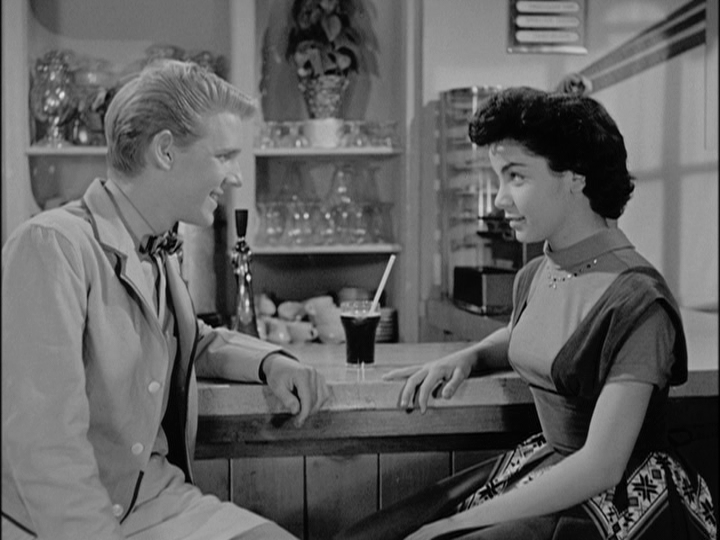
Annette makes a friend in Mike, who works at the malt shop

Annette makes a friend in Mike, who works at the malt shop

As she settles in, Annette begins to meet people and make friends in the town. She had met Stephen Abernathy, the most popular boy in town, as she was on her way to the McCleods and asked him for directions to the house. Annette makes a friend in neighbor girl Jet, who provides the McCleods’ food from her family’s farm. When Lila takes Annette shopping, they meet Mrs. Abernathy, Lila’s best friend, and Mrs. Abernathy’s daughter, Val. Mrs. Abernathy invites Annette to Val’s party so she can meet other kids her age. Although Mrs. Abernathy decides to send Stephen to pick Annette up for the party, Stephen already has a date with his girlfriend, Laura, so she sends another boy named Olmstead Ware, who is nowhere near as polite as Stephen, and cares more about food than anything else in life. He asks Annette to swing by the malt shop, where they meet Mike, who becomes one of her closest friends.

The party is a success, until Laura’s necklace goes missing, and she immediately blames Annette for its disappearance, but Annette had left the party before the necklace had disappeared. Even at school, Laura continued to spread the rumor that Annette stole the necklace, partly because she was jealous of Annette being the new girl in town. Annette, hurt by the continuing attacks, decides to run away back to Nebraska. Katie then stops the story there, saying that she can’t reveal any more, but hopes that everyone will tune in again to find out what happens.

February 8

February 8, 1952 – The Special Short Film Lambert, the Sheepish Lion Premieres in Theaters

vlcsnap-2013-02-07-21h11m42s207

“Lambert, the sheepish lion, Lambert, is always trying to be a wild and wooly sheep, Lambert, the sheepish lion.”

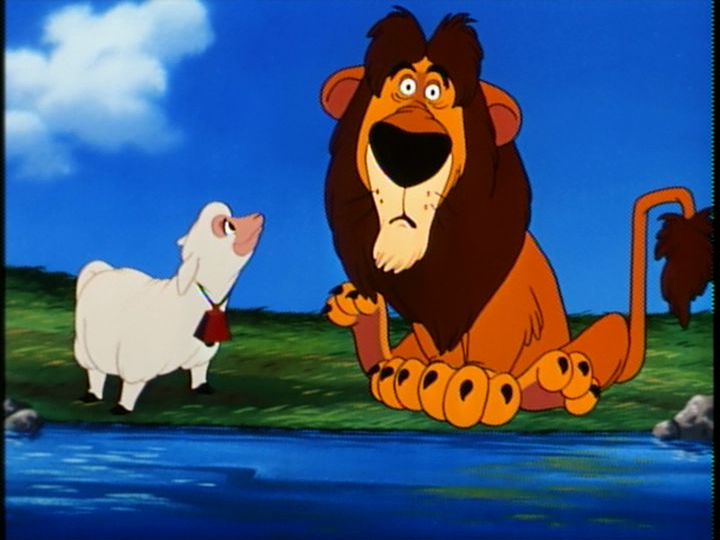
On February 8, 1952, the special short film Lambert, the Sheepish Lion premiered in theaters. The stork in this short should look familiar, as he is the same stork that was featured in Dumbo, which was also voiced by actor Sterling Holloway, who also narrated the short. An original print of the film was given to Emperor Hirohito as a gift, as it was his favorite Disney short film. The short was also nominated for an Academy Award, but lost to the Tom and Jerry short The Two Mouseketeers. The story was written by Bill Peet, Ralph Wright, and Milt Banta, and was directed by Jack Hannah.

One spring evening, a stork delivers a bundle to a sleeping flock of sheep. He opens the bundle to reveal several newborn lambs, which scurry about to claim their mothers. One ewe, however, is skipped by all the lambs, and she goes off to cry. Meanwhile, the stork has one little “lamb” that won’t wake up. When he finally does get it to open its eyes, he realizes that it’s a lion cub named Lambert, and it has already bonded with the lonely ewe. The stork tries to take Lambert to his home in South Africa, but the ewe attacks the stork and keeps Lambert with her. The next morning, the lambs begin to play, and Lambert wishes to join in, but realizes right away that he’s different. The lambs make fun of poor Lambert, who goes back to his mother. He continues to watch the lambs play, and when he tries to join in, he is continually bullied.

Lambert has grown from a cub to a full lion, with his mother still being so proud of him

Lambert has grown from a cub to a full lion, with his mother still being so proud of him

The seasons change, and soon the lambs are all grown up, and so is Lambert. However, although he is a full-grown lion, he still acts like a sheep, and is still the butt of the jokes of the rams. One night, as everyone is sleeping, the sound of a wolf wakes Lambert up, and he spies a hungry wolf surveying the flock. The wolf decides that Lambert’s mother is to be his meal, and the rams all hide behind trees. Although Lambert is terrified, he decides to screw up his courage and act like a raging lion, scaring the wolf silly. After saving his mother, the flock now considers Lambert one of them, and he lets out a triumphant “baa.”

February 4

February 4, 1954 – The Live-Action Feature Film Rob Roy: The Highland Rogue is Released in Theaters
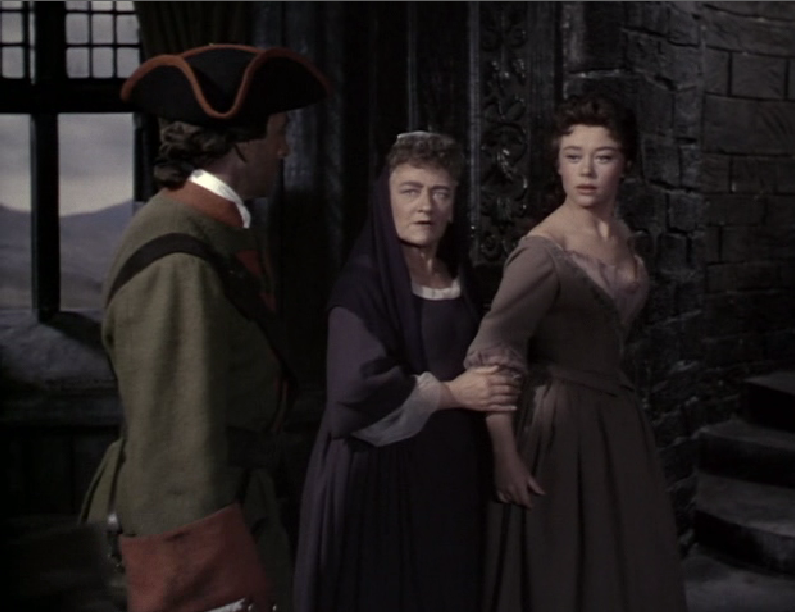
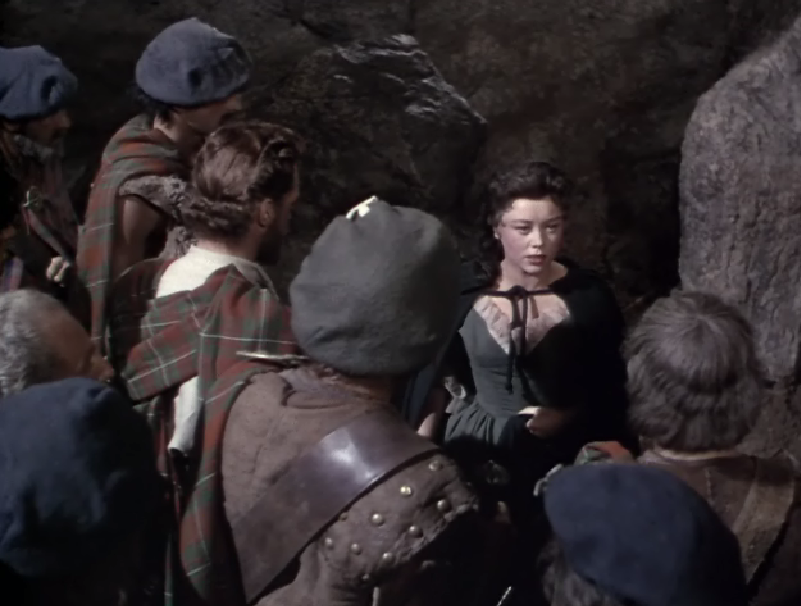
RR_1

“It takes more than foot soldiers to stop highland men.”

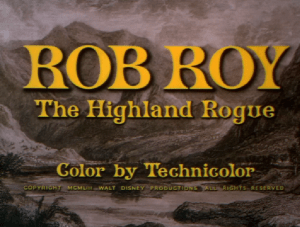
On February 4, 1954, the live-action adventure film Rob Roy: The Highland Rogue was released to theaters. The film is a romantic adaptation of the legend of Rob Roy MacGregor, and was the last Disney production in England until 1960’s Kidnapped. The extras in the film were Argyll and Sutherland Highlanders who had just returned from the Korean War and were on loan from the Scottish Command of the British War Office. This film was also the final Disney film released through RKO Radio Pictures; all later films were released under Disney’s own distribution label, Buena Vista Distribution. The film stars Richard Todd as Rob Roy, Glynis Johns as Helen Mary MacGregor, James Robertson Justice as the Duke of Argyll, Michael Gough as the Duke of Montrose, And Jean Taylor Smith as Lady Margaret Campbell MacGregor. The music was composed by Cedric Thorpe Davie, with screenplay by Lawrence Edward Watkin, and was directed by Harold French.

The film begins with a synopsis of the state of Scotland in the early 18th century: the German George I was chosen as the King of England, leading to a revolt of the Scottish clans to place James Stuart on the throne. However, this revolt was almost completely crushed by the English armies, save for a small group of clansmen. Troops are then seen marching over the highlands, while the Scottish troops climb up quietly on the side of a hill. The leader of the highland troops sounds the charge, and a battle ensues. Unfortunately, the battle does not end well for the clansmen, and the leader, Rob Roy MacGregor, is among those captured as prisoners. General Argyll commands the troops to hold their fire, although another general wants to see much more bloodshed, hoping to wipe out every last clansman. Argyll, a highlander himself, holds firm to his orders.
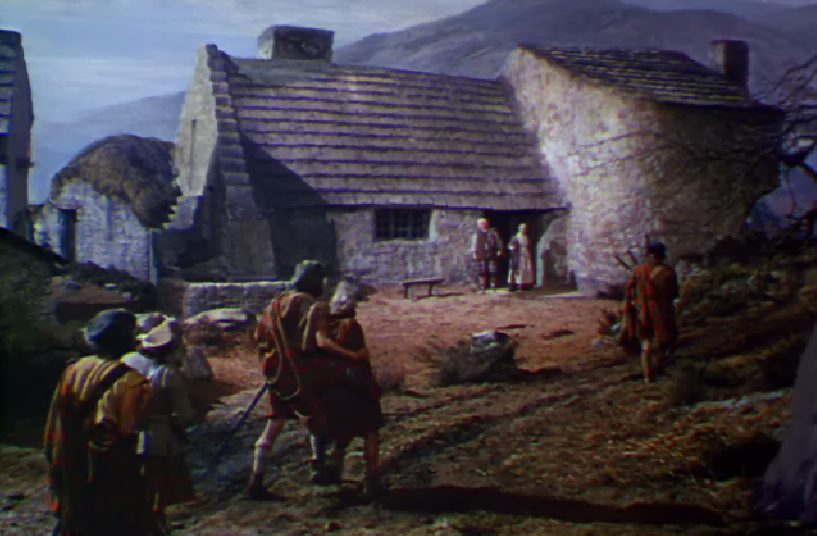
The men return, weary from their loss, ready to meet their families and regroup

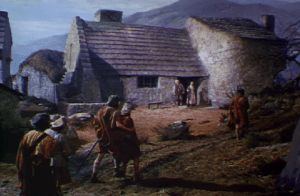
The men return, weary from their loss, ready to meet their families and regroup

The highland troops return home, defeated and weary. Two of the men head to Rob Roy’s home, where his mother, Lady Margaret, sadly asks what’s happened to him. They tell her that he’s been taken to Sterling Castle, and she angrily asks why, as his closest kinsmen, they would dare to return without him. Lady Margaret then decides to head to Sterling to free her son, joined by the kinsmen. She greets Argyll, and although he tries to brush her away, she sits and refuses to leave. The Duke of Montrose, who has been going through the figures from the battle, states that at least they have the chief of the clan MacGregor to hang in England, while Argyll declares that Scots will be tried in Scotland. Montrose informs Argyll that his position as Secretary of State for Scotland is in peril, and if Argyll doesn’t deliver MacGregor to England, he will no long have his position. Argyll then explains to Margaret that while he believes in the fight to get James on the throne, he is working on getting amnesty for all of the clans of Scotland, and Rob Roy must not act so impetuously. Margaret then asks what would happen if Rob Roy were sent to England, and comes up with a plan to save him if he is transported; Argyll, who is Margaret’s cousin from the clan Campbell, goes along with her plan with a smile.

As Rob Roy is sent to England in Montrose’s carriage, MacGregor clansmen come to his rescue. Safely back home, he greets his mother, but warns her that the troubles are not quite over yet. He is shocked when she tells him that Argyll was the one that helped save him and that Argyll is not the enemy Rob Roy considers him to be. She asks him to try the ways of peace and settle down, and he hints at his affection for local girl Helen, although he has no intention of finding out her feelings for him. At the local tavern, where Helen is, the men are telling their stories from battle, when Helen animatedly picks up the story her father was telling. She’s hoping that Rob Roy will be by, and when he does appear, she acts rather indifferent at his arrival. He distracts her father to have a chance to talk with Helen alone (although he can only talk to her “alone” with her parents in the room). Finally, he proposes, and she happily accepts.
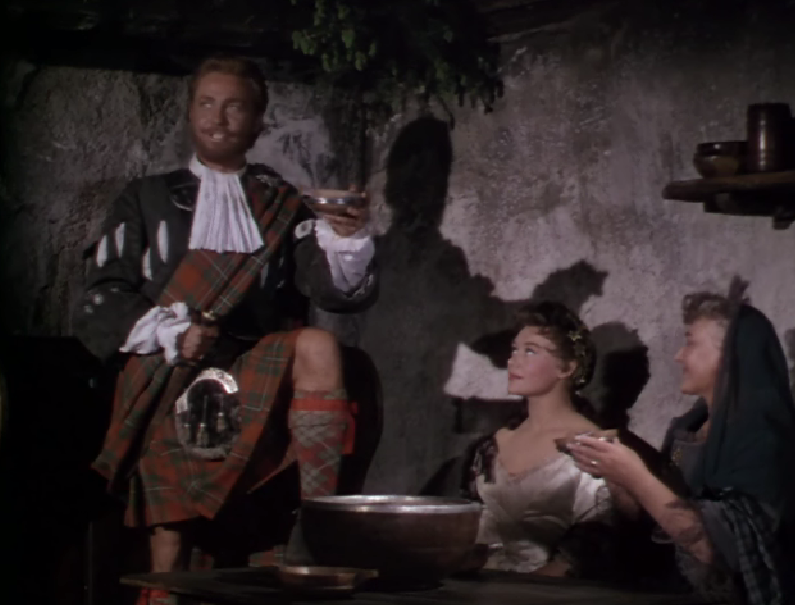
Rob gives a toast at his wedding to his beautiful bride, Helen

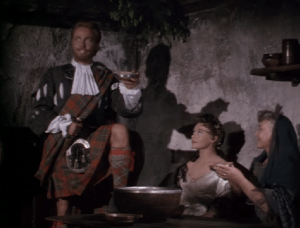
Rob gives a toast at his wedding to his beautiful bride, Helen

The wedding is a grand affair, with many kinsmen and friends in attendance. Unfortunately, the party quickly ends when British troops arrive with a proclamation from King George, which grants amnesty to all the clans of Scotland – except the clan MacGregor. The members of the clan are ordered to change their name to any surname of their choosing, no minister can lawfully baptize any male child with the name of MacGregor, and no member of the MacGregor clan can ever bear arms, whether offensively or defensively. When Rob Roy orders them to leave, the troops then bring forward a warrant for his arrest from the new Secretary of State of Scotland, Montrose. Argyll has been stripped of his offices and sent home to his castle. As Rob Roy is arrested, he orders his men to go “back to the punchbowl,” and Helen is sent to Lady Margaret’s home for her protection. As he is taken away, Rob Roy breaks free from his bonds and escapes over a waterfall, with the British troops in quick pursuit. Rob Roy makes it back to his clansmen at an area known as the punchbowl (which he alluded to earlier), and orders his men to hide away their weapons, as he has no doubt that the British will kill them all should they attempt to fight back. Begrudgingly, they follow his orders.

Rob Roy sneaks back into his mother’s castle and greets his wife, but reveals that he can’t stay long, and asks her to come with him. The British troops have surrounded the castle all night, waiting to find if he has returned home. The troops fire as they spot Rob fleeing the castle, but he escapes. Back in the village, the men are paying their rents and extra taxes Montrose has placed on them, but when they ask for receipts, the British soldiers refuse to call the clansmen by their names of MacGregor, changing it to MacAllister. Tensions are high between the British men and the MacGregor men, especially when the British men offer a reward for the capture of Rob Roy. Rob Roy then appears, claiming the reward money and giving it back to his men. Montrose is angered at Rob Roy’s escape – again – and demands that Lady Margaret be brought in for harboring a fugitive, followed by an order to bring more men to surround her castle, if Rob Roy returns.
Margaret and Helen watch as all of Margaret's belongings are confiscated

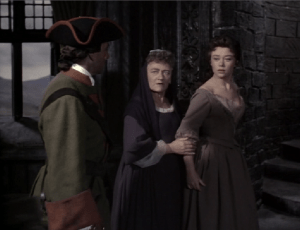
Margaret and Helen watch as all of Margaret’s belongings are confiscated

Rob Roy watches as the British invade the castle, taking all of Lady Margaret’s belongings as punishment for harboring a fugitive, then taking her to Sterling Castle as a prisoner. Helen is dragged away, but is saved just in time as Rob Roy appears. A fight ensues, with Lady Margaret using her late husband’s pistols to save her son, but is shot herself, although she brushes it off so as not to worry him. The British men then set her house on fire, alerting all the MacGregor men in the village. Rob Roy, Helen, and Lady Margaret are captured inside the burning building, but Rob Roy, to save his wife and mother, decides to sacrifice himself. Suddenly, he hears the cries of his clansmen, and Helen takes Lady Margaret away from the smoke, only to find that she’s been fatally wounded. Her last wish is to ask Rob Roy to stop the fighting, and Helen agrees to ask.

Lady Margaret is given a proper highland burial, with Argyll in attendance. Montrose crashes the funeral, incurring the wrath of Argyll, who has shown up with several Campbell kinsmen to stand at the ready. Seeing the Campbell clan, Montrose leaves, letting the funeral continue. Rob Roy tells Argyll that although the MacGregor men have tried for peace and to follow the English law, they are still attacked no matter what they do. Argyll then states that as a Knight of the Garter, he still has the right to talk to the King, and will persuade him to give amnesty to the clan MacGregor, claiming that “the peace of the highlands concerns us all.” Argyll asks Helen to restrain Rob Roy, and allow the soldiers he captured from the fight at his mother’s castle go free. Convinced by his mother’s last words, he comes forward with an offering of peace, and is shot by one of the English men, which means in no uncertain terms that this has escalated into a war.
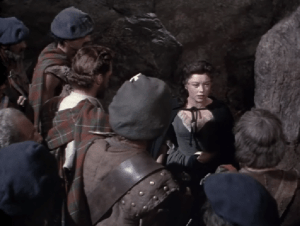
Helen, angered at the men's stubborn actions, informs them that she no longer honors them

Helen, angered at the men’s stubborn actions, informs them that she no longer honors them

Meanwhile, in London, Rob Roy is becoming a living legend, with ballads and stories being written about him. A cabinet meeting is called to talk about his actions, and fear that the other clans will join the MacGregor uprising. The King, however, is delighted by the stories of Rob Roy. Argyll arrives to explain the situation in Scotland, and the King calls out members of his cabinet to speak with him and Argyll. Montrose declares that 6,000 soldiers will be needed to kill the highland troops, but Argyll says that if he can go back alone, he can bring Rob Roy back alone; the King agrees to Argyll’s proposal. In Scotland, Rob Roy continues to fight, although Helen asks him once more to stop the fighting. The battle begins, and Rob Roy’s men are victorious at taking over the fort. Argyll arrives just as the battle ends, saddened that Rob Roy’s actions may have cost them all the peace they wished. As Rob Roy declares that they will always fight against the German king, Argyll says that if they do, he will be back with English troops to fight against them.

Just as Rob Roy’s men agree with his declaration, Helen appears, hoping to talk sense into the men. She doesn’t honor their impetuous actions, as they will only destroy themselves rather than get the peace that they need. Moved by Helen’s words, Rob Roy surprises Argyll by showing up in London with his men, wishing for amnesty. The whole of London follows the clan, wanting a chance to see the legendary Rob Roy for themselves. Rob Roy enters the throne room and asks for amnesty for his clan, and will take all the punishment the king wishes to bestow. The king then announces he doesn’t fear Rob Roy, but the self-seeking “friends” among him, shooting a pointed look at Montrose. He then gives Rob Roy back his sword and his name of MacGregor, calling him a great rogue, with Rob Roy responding that King George is a great king. The story of Rob Roy and the King is then told over and over in the inn, with the added fact that Argyll is now the Secretary of State once again. Rob Roy returns home during the storytelling into the waiting arms of Helen, and all is well in Clan MacGregor once more.

January 20

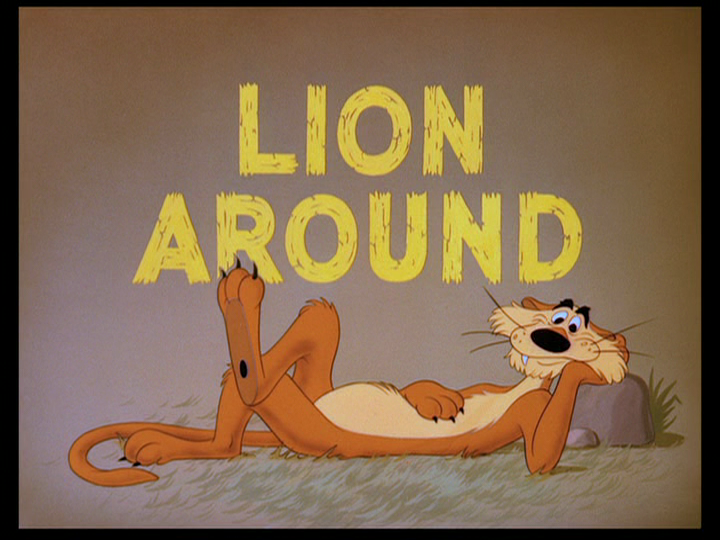
January 20, 1950 – The Donald Duck Short Film Lion Around Premieres in Theaters

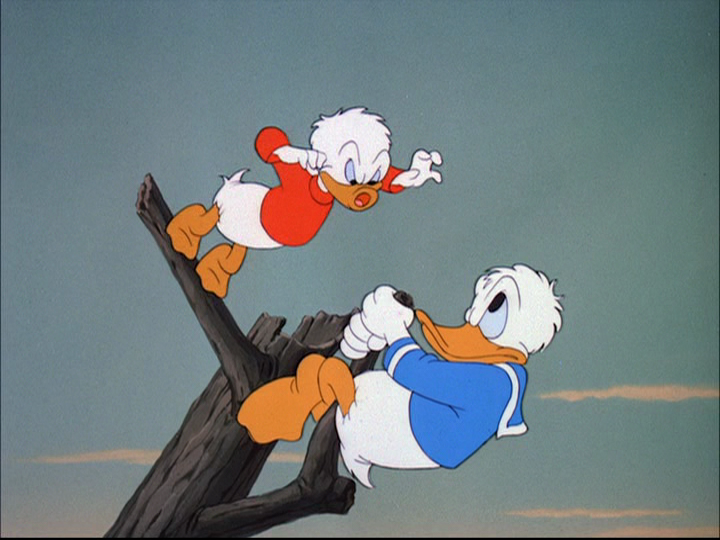
vlcsnap-2013-01-19-20h08m22s108

“Now, you brats get out of here. And stay out!”

On January 20, 1950, the Donald Duck short film Lion Around premiered in theaters. This film also stars Donald’s nephews, Huey, Dewey, and Louie. The short was directed by Jack Hannah, with story by Bill Berg and Nick George.

In the woods, one of Donald’s nephews is tracking a mountain lion. As the mountain lion gets ready to pounce, he falls to the ground, and out bursts the other nephews, who had dressed up as a mountain lion as part of a game. As they all laugh at their game, they hear Donald signing from the cabin, and watch as he places a freshly made pie on the windowsill. The nephews put their heads together to try to fool their uncle. One of them runs to the cottage, crying out for help, while the two in their mountain lion costume run after him. Donald quickly grabs his shotgun and makes his way after the mountain lion. Unfortunately, the “mountain lion” scares Donald badly enough to make him drop his gun and flee.

The nephews' costume rips away, revealing the trick they played on their Uncle Donald

The nephews’ costume rips away, revealing the trick they played on their Uncle Donald

After scaring Donald away, one of the nephews grabs the pie, ready to share with his brothers. Meanwhile, Donald’s costumed nephews chase him up a tree. Unfortunately, the top half of the costume gets caught on a tree branch, revealing the ruse to Donald, who is furious. He chases the nephews and retrieves his pie. As the nephews walk away, they come across a real mountain lion. As the nephews flee, the lion turns his attention to Donald, seeing him as a slab of meat. He pounces on Donald, but Donald, thinking this is another prank from his nephews, quickly gets the upper hand and begins to give the lion a spanking. Furious at this treatment, the lion tries to find a way to get back at Donald, when he spots the pie on the windowsill. He cuts himself a piece before Donald attacks.

The lion bursts into the house for the pie, and Donald tries to punish his nephews again, when they appear in the window, holding their costume. Finally understanding that a real mountain lion is in his house, he tries to hide, but the lion pursues him. Donald climbs up the chimney and into the tree, with the mountain lion catching up to him. As Donald begins to pray, a pie lands in his hands, which he quickly feeds to the mountain lion. Another pie appears, followed by another; the nephews send pies via catapult to Donald so that the duck can distract the lion from eating him.

January 18

January 18, 1952 – The Donald Duck Short Film Donald Applecore Premieres in Theaters

vlcsnap-2013-01-17-20h06m14s233

“Applecore! Baltimore! Who’s your friend? Me!”

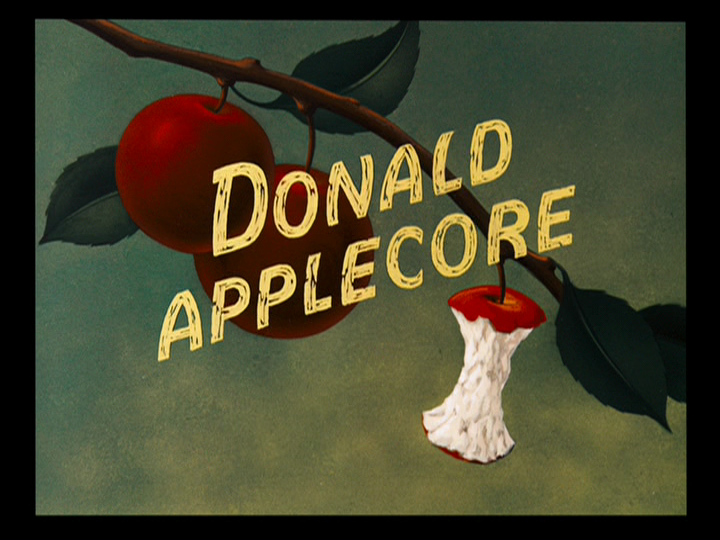
On January 18, 1952, the Donald Duck short film Donald Applecore premiered in theaters. This short is one of several in which Chip and Dale are his main antagonists. The short was directed by Jack Hannah, with the story by Bill Berg and Nick George.

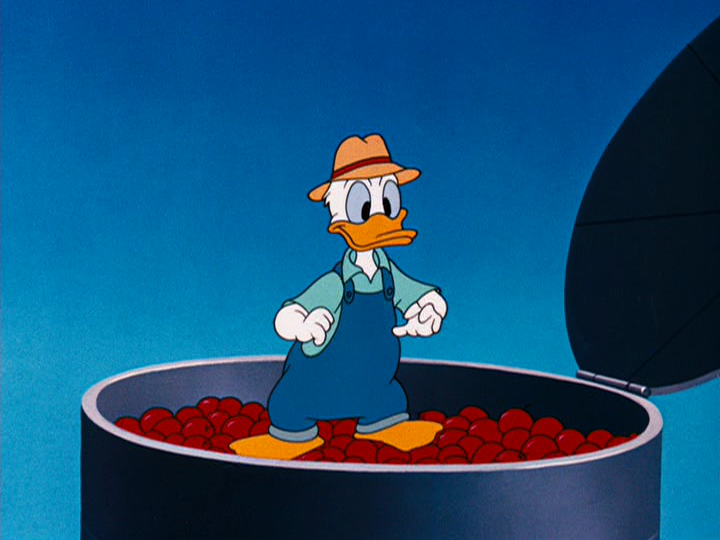
In this short, Donald is the owner of a prosperous apple farm called “Donald’s Delicious Apples.” As he is out one morning gathering apples, he notices that the side of one he’s pulled down is covered in bite marks. As he looks into his basket, he realizes that all of his apples are half eaten. As he cries in despair, he notices Chip walking down the side of the tree with an arm full of apple cores. Dale appears soon after, and they begin to use Donald’s gathering bucket for their discarded cores.

Donald stands on top of the apple silo after placing the apples Chip and Dale stole inside

Donald stands on top of the apple silo after placing the apples Chip and Dale stole inside

Donald grabs Dale and demands an explanation, and Dale tells Donald to take his basket and follow him up the tree. Donald agrees, and soon finds he’s been tricked into collecting all of their apple cores. Seeing that the two are stealing more apples, he tries to stop them. He grabs some insect powder in his crop duster, and dusts his trees, only to find that the two have gas masks to prevent the effects of the powder. Donald tries another approach by stealing their apples without their noticing. Successful, Donald takes the stolen apples to the silo. As the chipmunks try to retrieve their apples, they accidently let all the apples in the silo loose, with Donald unfortunately on top of the pile.

Apples fly all over the farm, and Donald is at his breaking point. He creates a potent mixture in his crop duster and tries to target the pair. No matter where they hide, Donald fires a shot in their direction. One shot ends up in his chicken house, where one hen swallows the atomic mixture. The egg the hen lays afterward ends up exploding, sending Donald into a deep crater into the ground, all the way to China. Chip and Dale laugh at Donald’s misfortune.

January 15

January 15, 1954 – The Donald Duck Short Film Spare the Rod Premieres in Theaters

vlcsnap-2013-01-14-20h06m47s246

“This is the home of Donald Duck, where everyone does their chores willingly.”

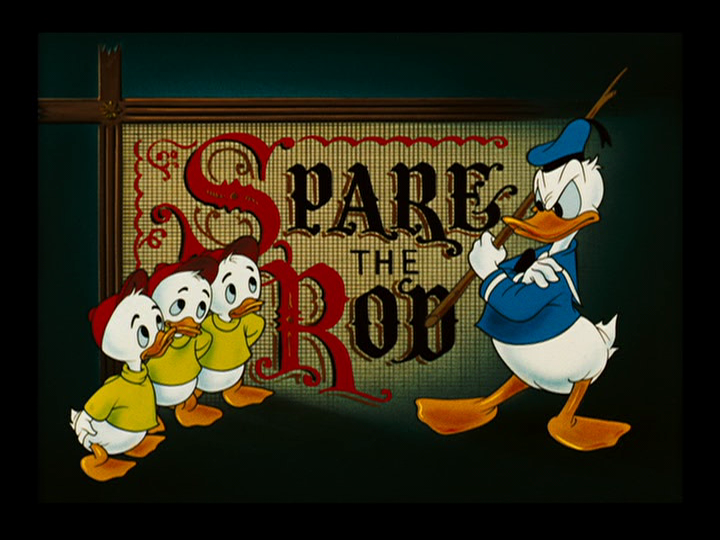
On January 15, 1954, the Donald Duck short film Spare the Rod premiered in theaters. It was directed by Jack Hannah, with story by Roy Williams and Nick George.

The short begins at the home of Donald Duck, where Donald is outside painting the side of his house a cheerful yellow. The nephews are supposed to be chopping wood, but have left their axes and snuck off into their treehouse, pretending to be a tribe. Their yelling starts to irritate Donald as he tries to carefully paint his window trim. Noticing that they have disappeared, he decides to play a prank on them, scaring them back to work. But a little later, the boys are at it again, pretending this time to be pirates. As Donald runs to stop them again, his conscience appears as the “voice of child psychology.” He tells Donald to be their pal, and Donald agrees.

Donald tries to play with the boys, but with his own usual style of having the upper hand

Donald tries to play with the boys, but with his own usual style of having the upper hand

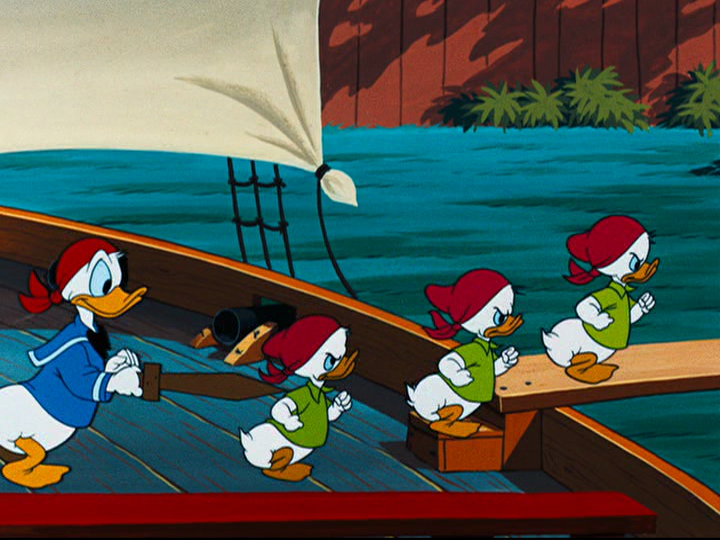
As the boys pretend to play, Donald appears as another pirate and makes them walk the plank. His conscience tells him that Donald should be walking the plank, not the boys. Donald agrees, and is thrown off into a bucket. Meanwhile, a circus is traveling into town, complete with pigmy cannibals, who detach their cart from the train and escape into town, stopping at Donald’s house (as they see Donald as a tasty meal). The boys begin another game, pretending to be cannibals, with Donald’s conscience telling him to once more become the boys’ friend. When the real cannibals capture Donald, he thinks they are only his nephews, and plays along, bringing out a pot and preparing himself to be cooked. Donald thinks he’s tricking the boys to cut firewood, but they’re on the other side of the yard.

The boys quickly capture Donald, and cut firewood to burn Donald at the stake, but the cannibals try to capture him again. At this point, the conscience figures out that the cannibals are real cannibals, who quickly capture Donald and prepare to cook him. Angered, Donald grabs the cannibals and begins to punish them. The boys watch as the cannibals flee from Donald’s wrath, and quickly resume their chores. The conscience tries to state that his psychology was effective, but Donald will have none of it, and takes his wrath out on the “voice of child psychology.”