RSS Feed

Tag Archives: 1930s

January 6

January 6, 1939 – The First Issue of the Disney Studio Newsletter The Bulletin is Published

Bulletin

“Scoop! Exclusive! Bulletin bows!”

On January 6, 1939, the first issue of the Disney Studios newsletter, The Bulletin, was published. The newsletter reported on happenings within the studio, ranging from sports groups, special interest pieces on Disney employees, as well as special announcements. The newsletter had its final printing on April 4, 1941.

December 31

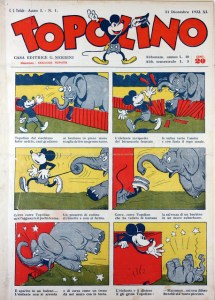
December 31, 1932 – The First Issue of Topolino is Published

Topolino

On December 31, 1932, the first issue of Topolino, a weekly newspaper for kids featuring stories about Mickey Mouse, was published in Italy. It was started by editor Mario Nerbini, who ran into trouble shortly after the first publication when Disney’s representative for Italy found that Nerbini didn’t correctly purchase the rights to Mickey Mouse. The title, which is the Italian name for Mickey Mouse, was changed to Topo Lino and featured stories about a mouse named Lino. Nerbini eventually bought the publication rights and changed the name back to Topolino. The magazine briefly stopped publication in 1942, when fascism refused publication of American stories; they resumed publication of translated Floyd Gottfredson stories in 1945, after World War II had ended.

December 27

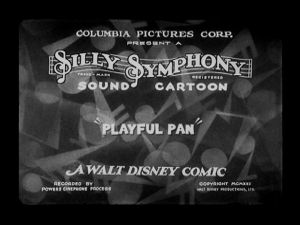
December 27, 1930 – The Silly Symphony Playful Pan is Released to Theaters

vlcsnap-2015-12-27-17h01m48s5

On December 27, 1930, the Silly Symphony Playful Pan was released to theaters. The short was inspired by the tale of the Greek god Pan, a god of nature. It was directed by Burt Gillett.

Pan appears on a rock and starts playing his flute, causing the fish to dance around him. As he continues to play his pan flute, the flowers also begin to dance around at his command. He begins to play around an apple tree, calling all the worms to attention. They begin to dance around as he changes his tune. The trees and clouds begin to join in as well, with one of the clouds creating lightning so bad that it cuts a tree in half and starts a fire in the forest. The animals flee as the forest quickly burns, though many try to douse the flames and save their families. One of the raccoons alerts Pan, who rushes to the scene and puts the fire under his musical spell. He leads them into the river like a pied piper and they put themselves out. Pan cheers and disappears after saving the forest.

December 17

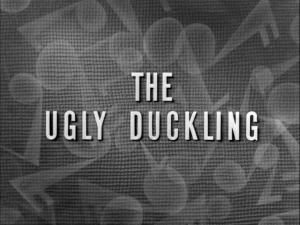
December 17, 1931 – The Silly Symphony The Ugly Duckling is Released to Theaters

vlcsnap-2015-12-17-17h30m55s117

On December 17, 1931, the Silly Symphony The Ugly Duckling was released to theaters. The short was based on the short story by Hans Christian Andersen, and was one of the only Silly Symphonies remade in color; the color version was also the last Silly Symphony, and won an Academy Award for Best Cartoon of 1939. The 1931 short was directed by Wilfred Jackson.

A hen is sound asleep in her nest, when her chicks start to hatch. The last egg, however, is of a duck, and the hen is alarmed to find a duckling in her nest. She escorts her chicks far away from the duckling, and the poor ducking is upset at being abandoned. When the chicks steal his food and dismiss him, he is upset. The constant abandonment causes him to cry, but he tries to find a new mother within the farm. He cries by the side of a pond, until he spies a tornado sweeping through the farm. He tries to warn the hen and her chicks, and does so just in time, though they kick him out of their hiding place. The chicks are swept up into the air and land into the rushing river, much to the hen’s dismay. The duckling, exhibiting an ability to swim, goes after the chicks and manages to save them just in the nick of time. The chicks and the hen embrace him as one of their own, and he quacks happily.

December 15

December 15, 1933 – Comedian and Disney Legend Tim Conway is Born

Tim Conway

“It’s interesting when you come to Disney, you get a script, go to wardrobe, and then you meet your animal.”

On December 15, 1933, Thomas Daniel Conway was born in Willoughby, Ohio, and grew up in the aptly named Chagrin Falls. He attended the Bowling Green State University to major in speech and radio; after graduating, he joined the Army, where he served for two years. After being discharged, he wound up back in Cleveland to work with radio personality Ernie Anderson. After working with Anderson on several projects, he was noticed by comedic actress Rose Marie, who decided to take him under her wing, which led him to a spot on The Steve Allen Show as a regular. It was his following project, as Ensign Charles Parker on McHale’s Navy, which gave Conway a national presence. After the show ended, he worked several other shows before landing at The Carol Burnett Show, where he was awarded with five Emmy Awards during his time. Conway first started working with Disney in 1973, when he starred in the live action feature The World’s Greatest Athlete, and followed that with the 1975 film The Apple Dumpling Gang, 1976’s Gus, and 1979’s The Apple Dumpling Gang Rides Again. Conway has also contributed to the Air Bud series, as well as several Disney television shows. For his work in the Disney medium, he was honored as a Disney Legend in 2004.

December 10

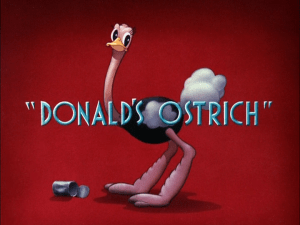
December 10, 1937 – The Donald Duck Short Film Donald’s Ostrich is Released to Theaters
vlcsnap-2015-12-10-17h25m51s182

“Hey, what’s the big idea?”

On December 10, 1937, the Donald Duck short film Donald’s Ostrich was released to theaters. It was directed by Jack King.

Donald is listening to a shrill radio opera while at work, and quickly changes the channel, finally finding something he can dance to. The train arrives, dumping its packages on the platform – and on Donald – and is surprised to find one containing an ostrich, which gives him a kiss. The ostrich comes with a label: her name is Hortense, and she must be fed and watered, with a post script warning that she eats anything. Hortense continues to flirt with Donald, though Donald will have nothing of it. When Donald crashes into a stack of milk jugs, Hortense is left to her own devices, and starts eating what she can find, including an accordion, an alarm clock, and some balloons. The mix of the contents gives her the hiccups, and she starts hiccuping into a hose, which gives Donald a cause for concern. He works on curing her hiccups by scaring her with a tuba, but it only causes her hiccups to worsen. Hortense then eats the radio, which is set to a murder mystery. Each hiccup she has causes the station to change, and she reacts with each broadcast. Donald attempts to extract the radio, but pulls out the accordion first. Hortense, reacting to a racing broadcast, crashes in the station, and Donald unfortunately comes down with a case of the hiccups after yelling at Hortense.
December 9

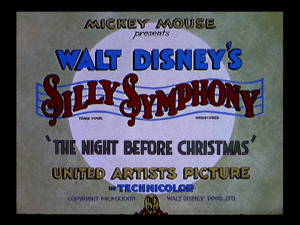
December 9, 1933 – The Silly Symphony The Night Before Christmas is Released to Theaters

vlcsnap-2015-12-09-17h38m48s12

“Twas the night before Christmas, and all through the house not a creature was stirring, not even a mouse.”

On December 9, 1933, the Silly Symphony The Night Before Christmas was released to theaters. It was a sequel to the 1932 Silly Symphony Santa’s Workshop, and was also known as Santa’s Toys. The short was directed by Wilfred Jackson.

In a small house, decorated for Christmas, several children are tucked into bed, waiting for Santa’s arrival. Santa soon arrives and makes his way effortlessly down the chimney, and sets up a tree for the toys. The toys then march out of his bag and make their way to their places under the tree. A group of toy soldiers uses cannons to decorate the tree with ornaments, while a toy plane wraps a garland of tinsel around the tree. Santa laughs merrily as he fills the stockings, and the toys celebrate the completion of a decorated tree. The children wake up and peek at Santa and the toys, and accidentally give themselves away when one boy sneezes. Santa quickly heads up the chimney, and the kids start playing with all their new toys. After hearing sleigh bells, the children look outside to see Santa flying off into the night.

November 14

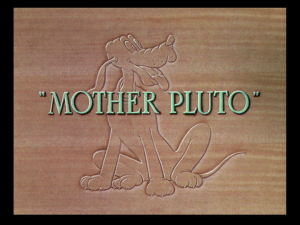
November 14, 1936 – The Silly Symphony Mother Pluto is Released to Theaters

vlcsnap-2015-11-14-17h11m30s240

On November 14, 1936, the Silly Symphony Mother Pluto was released to theaters. It is the only short film in Pluto’s filmography that is listed under the Silly Symphonies banner. The short was directed by Wilfred Jackson.

A butterfly is flying around the farm, and one chicken abandons her eggs to chase after it. Pluto returns to his doghouse through a hole in the fence, not realizing that the chicken had been roosting in his doghouse, and is shocked when the chicks start to hatch. Thinking Pluto is their mother, they follow him, even when he jumps over the fence. They manage to leave him to chase after a cricket, though they end up following him again after a cricket mishap. One of the chicks starts to cry after being beaten about by the cricket, and Pluto suddenly feels the urge to comfort it. Seeing him be motherly, Pluto gives in to his instinct and adopts the entire group of chicks. Pluto digs out a caterpillar for their food, but when it tries to torment the chicks, Pluto scares it away. The chicken returns to her nest to find broken shells, and is shocked to find her chicks have disappeared. She spots them with Pluto, and demands them back from the dog, but Pluto refuses to let them go. She calls for the rooster to get her chicks back, and Pluto and the rooster start fighting. The chicks flee back into the doghouse during the fight, and when Pluto makes it back to the doghouse, he starts mourning the chicks, thinking he’s lost them. He is then happy to discover the chicks waiting for him and leaping into his open paws.

November 12

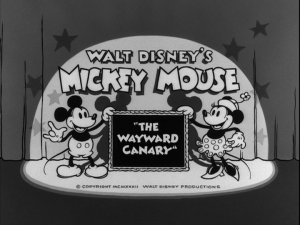
November 12, 1932 – The Mickey Mouse Short Film The Wayward Canary is Released

vlcsnap-2015-11-11-15h36m47s76

“Oh, Mickey! Isn’t he cute?”

On November 12, 1932, the Mickey Mouse short film The Wayward Canary was released to theaters. The short features cameo caricatures of Douglas Fairbanks and Mary Pickford. It was directed by Burt Gillett.

Mickey is heading to Minnie’s with a package and Pluto in tow, and he surprises her with a canary. Mickey entices the bird to sing by playing the flute, and Minnie follows along on the piano to their merry tune. As she sings, several other baby canaries fly out of the cage and start dancing and chirping to the music. They then start to wreak havoc across the house, including getting into a bottle of ink and ruining a tablecloth. As Mickey chases after the birds, he ends up destroying most things in Minnie’s house. She manages to capture most of the birds in a tea kettle, though one manages to escape and accidentally set a hot coal on Pluto’s backside. The bird continues to elude Mickey, until it lands on hungry cat that chases after it. Pluto joins the fray by chasing after the cat and saving the poor bird before it gets eaten.

November 5

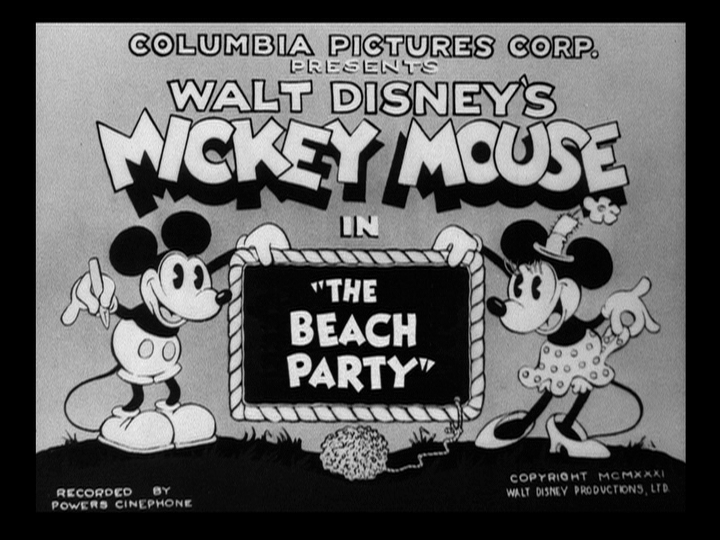
November 5, 1931 – The Mickey Mouse Short Film The Beach Party is Released to Theaters

vlcsnap-2015-11-05-17h15m43s229

On November 5, 1931, the Mickey Mouse short film The Beach Party was released to theaters. It was directed by Burt Gillett.

Horace Horsecollar and Clarabelle Cow are frolicking across the beach, followed by Pluto carrying a picnic basket and Minnie and Mickey with the beach umbrella. Pluto is used to blow up an inner tube, but lets the air deflate when he bites at a flea. When Mickey heads into the water, Pluto is not too far behind, but stops before he hits the water. The rest of the gang starts to enjoy their time in the surf, though Clarabelle manages to lose her part of her bathing suit. Pluto follows a crab on the beach, which pinches him on the tail. Minnie serves lunch, with Mickey, Horace, and Pluto running for the food. Mickey throws some sausage links for Pluto to catch and when Pluto pulls them out of the ocean, he manages to pull out an angry octopus instead, which chases Pluto across the beach and ruins the picnic. The gang fights back with the remaining food, but they manage to use an anchor to send him back into the ocean.