RSS Feed

Tag Archives: 1920s

August 28

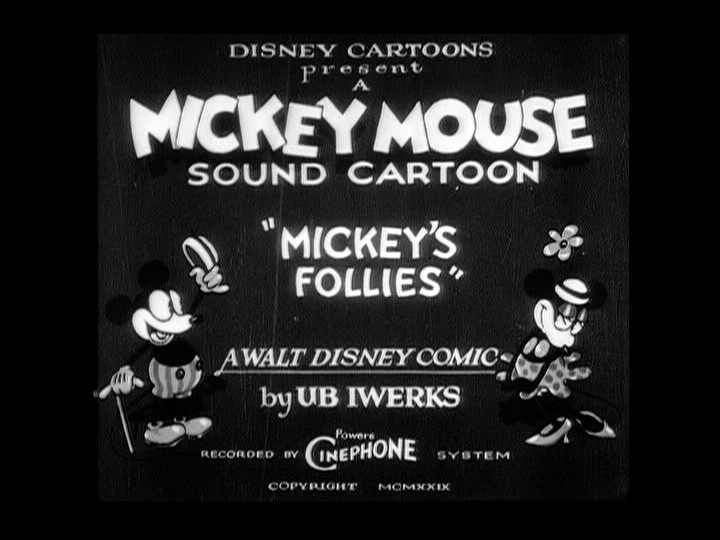
August 28, 1929 – The Mickey Mouse Short Film Mickey’s Follies is Released to Theaters
vlcsnap-2015-08-28-11h44m35s25

“With the cows and the chickens they all sound like the Dickens when I hear my little Minnie, ‘Yoo hoo!’”

On August 28, 1929, the Mickey Mouse short film Mickey’s Follies was released to theaters. It was the first short directed by Wilfred Jackson, and also features the Mickey Mouse theme song, “Minnie’s Yoo Hoo.”

The party starts with a lively rendition of “Minnie’s Yoo Hoo,” and then leads into a group of ducks dancing merrily to “Swanee River.” The barnyard cheers wildly before the next dance, which is a rooster and a hen performing an Apache dance, with the chicken rushing off to lay an egg mid-performance. The rooster crows with pride, and everyone once again cheers. The next performance is a pig performing opera, whose bloomers keep falling down as they sing, but this performance is met with booing from the crowd. The pig is then carried away with a hook, and it is announced that Mickey will perform his theme song. His singing and dancing is then met with much adulation.

July 1

Posted on

July 1, 1924 – The Alice Comedy Alice and the Dog Catcher is Released to Theaters

AatD

“So we must set those poor dogs free.”

On July 1, 1924, the Alice Comedy Alice and the Dog Catcher was released to theaters. It was directed by Walt Disney, and starred Virginia Davis as Alice.

The short begins with a meeting of a secret society, where Alice is the leader. The meeting is interrupted by a latecomer, who warns them of the city dogcatcher rounding up all the strays in the neighborhood. Alice then thinks about her own dog being turned into sausages and starts to cry. Resolved to protect the dogs, she orders the society to sit down as she tells them of her dream. The scene then moves to the cartoon land, where all the dogs are following the dogcatcher as he tricks them with music. The dogcatcher catches all but one, but the dogcatcher finally triumphs and heads off with the dogs. Alice is distraught as she tells her tale, and the boys in the society also cry at the news. She continues with her story, where she comes across parents of the pups, who are beside themselves with worry. Alice heads straight for the pound, where she is sent away immediately. Alice hears the dogs cry for help, and grabs a nearby bomb to blow up the pound, setting all the dogs free. The society then decides to go and rescue all the dogs, much to the annoyance of the dogcatchers. They then drive off with the dogcatcher’s wagon, nearly crashing several times. In the end, the dogcatchers chase after their own car after Alice and her friends jump out, and the society is proud of what they have done to save the dogs of the neighborhood.

June 12

June 12, 1922 – Performer and Disney Legend Fulton Burley is Born

fultonburley

“Whenever I mention Fulton to anybody who knew him, they immediately smile every time.” – D23 Writer Scott Wolf

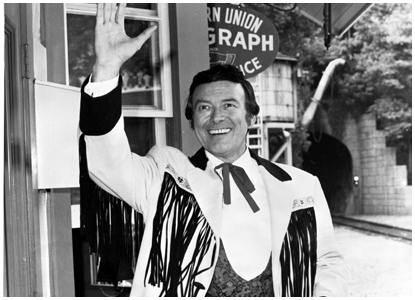
On June 12, 1922, Fulton Burley was born. Raised in Canada, Burley loved to sing at an early age, performing for weddings and on the radio. He studied law and music at the Wayne State University in Detroit, Michigan, but dropped his law studies to pursue a career in entertainment. Burley was able to secure a contract with Metro-Goldwyn-Mayer, and appeared in supporting roles in several films. In 1943 he landed a role in the Diamond Horseshoe Review after a telephone audition, and continued to tour with several musical productions, honing his skills in music and comedy. In 1962, after receiving a call from friend (and eventual fellow Disney Legend) Wally Boag, Burley came to work at the Golden Horseshoe Review at Disneyland. While there, he not only gained popularity with the show, but recorded the voice for Michael in the Enchanted Tiki Room attraction. In 1987, Burley retired from Disney, but came back in 1997 to help rerecord the lines for the updated version of the Enchanted Tiki Room alongside Boag and Thurl Ravenscroft. He was honored as a Disney Legend in 1995. In 2007, Burley passed away from heart failure at the age of 84.

May 14

Posted on

May 14, 1928 – The Oswald the Lucky Rabbit Short Film Hungry Hobos is Released to Theaters

HungryHobos_2

“This cartoon as far as we know hasn’t been seen in over half a century.” – Dave Bossert, producer, creative director and head of special projects at Walt Disney Animation Studios

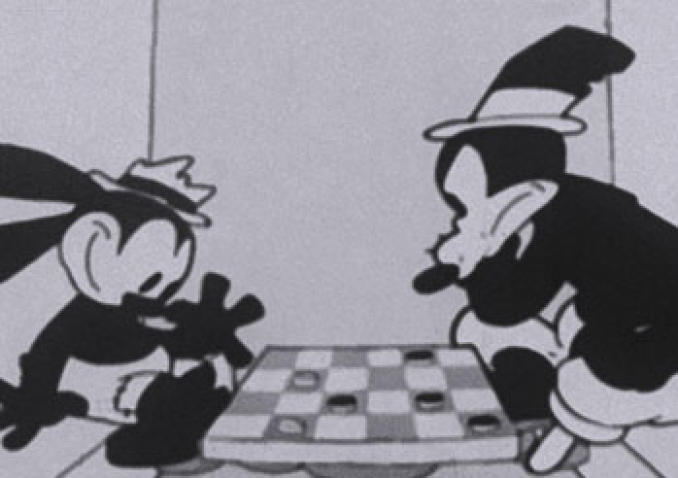
On May 14, 1928, the Oswald the Lucky Rabbit short film Hungry Hobos was released to theaters. The short was considered one of the “lost” Oswald shorts, but was discovered in the Huntley Film Archives in England. The company, a stock footage company, found the 16 mm film in a vault, surprising many who assumed that the short had been destroyed as many films of the time had been. The film was then bought back by Disney for $31,250, and digitally restored. It was then screened at UCLA’s Silent Film Event in 2013, with a new score for the film written by Emmy-award winning composer Mark Watters, best known for his work with the Have a Laugh series for the Disney Channel. The short itself has Oswald, along with the early version of Peg-Leg Pete riding the trains as hobos and playing checkers, with comical results.

April 21

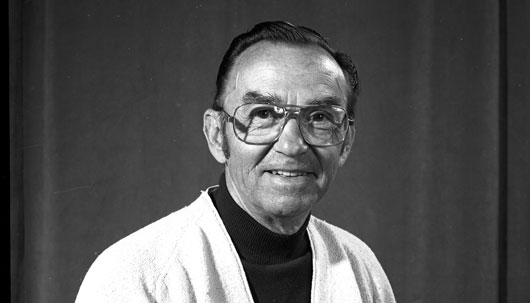
April 21, 1920 – Animator, Artist, and Disney Legend Bob Moore is Born

bob-moore-feat

On April 21, 1920, Bob Moore was born in Los Angeles, California. Moore had been exposed to Disney from an early age, when his father worked with the Los Angeles Philharmonic Orchestra as a violinist; the group was hired to play music for the earliest Mickey Mouse short films. In 1940, after attending the Chouinard Art Institute, Moore was hired at the Disney Studios as an apprentice animator, working on such films as Dumbo and The Three Caballeros. He continued to work on special projects as the country entered World War II, until he was drafted into the Navy, working on training films. After the war ended, he returned to the studio, working as a story man for animated shorts and package feature films. In 1951, Moore was asked to head up the art department for publicity, and ran it for three years as a one-man show. His success in the department led to a promotion to the creative director of marketing, designing movie posters, cards, and logos. In 1968, Moore designed the commemorative Walt Disney postage stamp. In 1983, Moore retired from the Disney Studios after working there for 43 years. Moore is also memorialized with his own color of Disney paint: Moore Red. He was inducted as a Disney Legend in 1996. In 2001, Moore passed away at the age of 81.

February 15

February 15, 1926 – The Alice Comedy Alice’s Mysterious Mystery is Released to Theaters

vlcsnap-2015-02-15-08h58m55s250

“A couple of Sherlocks on the trail of the missing link…”

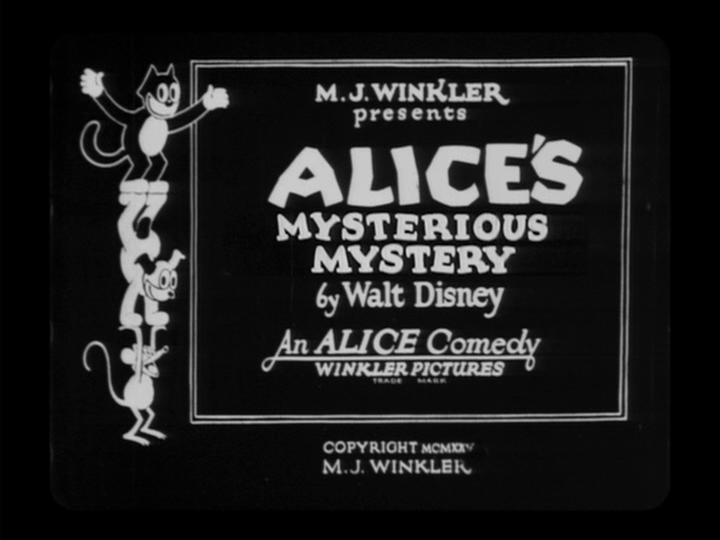
On February 15, 1926, the Alice Comedy Alice’s Mysterious Mystery was released to theaters. It was the 31st Alice Comedy released by Disney, and stars Margie Gay as Alice. The short can be seen as controversial, as the villains are dressed as Klansmen (fortunately, the villains are defeated in the end).

In the cartoon world, a bear smoking a cigar is making his way is his chauffeured car when he comes across the school for puppies. He plots with his chauffer to pretend to be a dog catcher and trucks them all inside before taking the school and placing them inside his dog catcher truck. No sooner has the event occurred that Alice and Julius are on the case, tracking the footprints, which only leads to a dead end of a duck wearing shoes. They hear a cry for help from a dog that is soon captured, and Alice and Julius begin the pursuit. The bear manages to carefully get across a tightrope to the other side of the cliff, but as Alice and Julius make their way across, the bear uses his cigar to burn up the tightrope, leaving the detectives stranded. Having made a clean getaway, the bear uses a new tactic to capture dogs: luring them to an inconspicuous trap door with a pretty female dog standing at her balcony as bait. It is soon revealed that the dogs are being placed in the sausage factory in separate crates, with workers turning the dogs into sausages. Alice and Julius finally make it to the factory, with Julius tricking the bear into falling through the trap door. Julius manages to let the dogs go free, and they all chase the bear and other workers out of town.

October 24

October 24, 1929 – The Silly Symphony Springtime is Released to Theaters

vlcsnap-2014-10-24-19h18m03s121

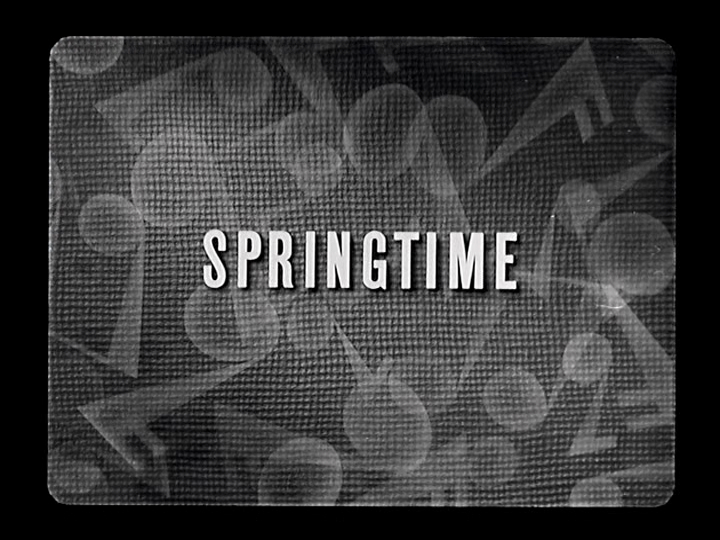
On October 24, 1929, the Silly Symphony Springtime was released to theaters. It was the first in a series of Silly Symphonies about the seasons, followed by Summer (January 16, 1930), Autumn (February 15, 1930), and Winter (October 30, 1930). Springtime was directed by Walt Disney.

The flowers, trees, and bugs are all dancing around, enjoying the fair spring weather. A crow comes along and eats a dancing caterpillar, dancing away itself back to its nest, where his sweetheart is waiting. Her babies hatch and start dancing around the nest. Suddenly, a large storm develops, and one tree is seen taking a bath in the rain when he is struck by lightning. The storm quickly passes, and two grasshoppers are seen playing leapfrog when they are eaten by a frog. The frog jumps from lily pad to lily pad, with another frog playing a tune on the backs of turtles. A spider jumps down from his web and dances on a nearby log before using his web as a harp. Three frogs begin dancing on a log, croaking with the music, when a nearby crane spies them and stalks its way over. It attempts to eat the frogs, when they jump inside each other like nesting dolls and flee, but the crane eats them all and jumps away happily, although he falls into a large puddle, splashing water onto the screen.

June 22

June 22, 1920 – Voice Actor and Disney Legend Paul Frees is Born

PaulFrees

“Color has its harmony and just like I have said: red, yellow, green, red, blue, blue, blue, red, purple, green, blue, purple, red, red!”

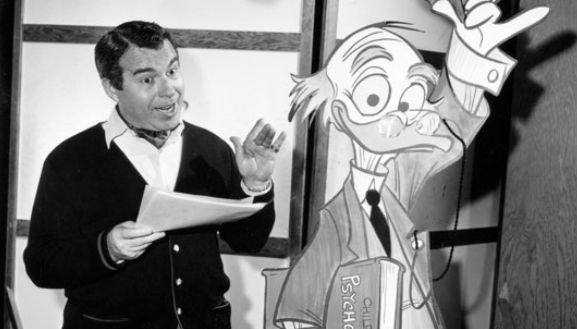
On June 22, 1920, Solomon Hersh Frees was born in Chicago, Illinois. He began his career as a radio actor, but his career was put on hold when he was drafted during World War II, and fought in the D-Day landings at Normandy, France. Injured in battle, he was sent back to the United States to recover; after the war, he attended the Chouinard Art Institute, but left to take care of his ailing first wife and returned to his radio career. He quickly became busy, working on such series as Escape and Gunsmoke. Frees was a major player during the Golden Age of Animation, asked to work for the major studios to include Disney, UPA, Jay Ward Productions, and Hanna-Barbera, just to name a few. For Disney, Frees’ unusual four-octave range allowed him to play parts ranging from the Ghost Host in the Haunted Mansion to his most well-known role of zany Professor Ludwig von Drake, who appeared in eighteen episodes of the Disney anthology series. Frees did a plethora of voices for Disneyland, including the narration for Adventure Thru Inner Space, as well as several of the pirates in Pirates of the Caribbean. As Ludwig von Drake, Frees recorded several songs on the Disneyland Records label, including “The Spectrum Song.” During the 1960s and 1970s, it was near impossible to not hear Frees’ voice on a program. Frees continued to be active as a voice actor until his unfortunate death of heart failure at the age of 66. In 2006, Frees was honored as a Disney Legend.

May 3

Posted on

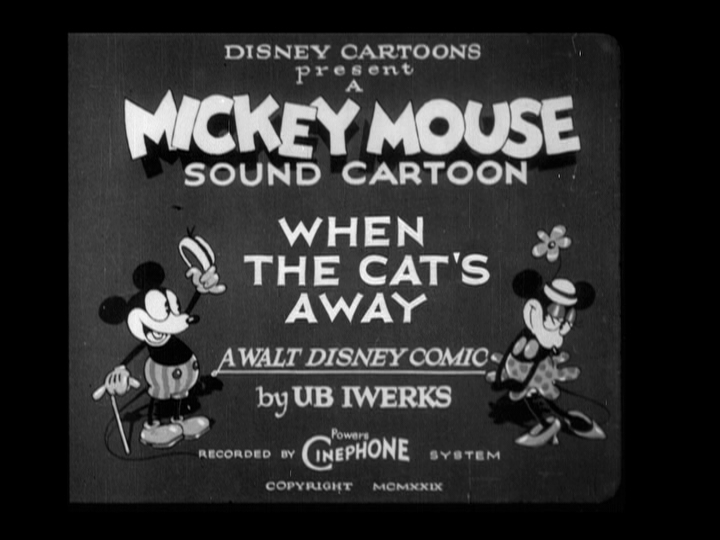
May 3, 1929 – The Mickey Mouse Short Film When the Cat’s Away is Released to Theaters

vlcsnap-2014-05-03-21h08m28s90

On May 3, 1929, the Mickey Mouse short film When the Cat’s Away was released to theaters. This is one of the few shorts where the main title music no longer survives, and one of the few shorts where Mickey is portrayed more as a mouse than his anthropomorphic self. The short was directed by Walt Disney.

Tom Cat posts a sign on his door that he is gone for the day, and locks up before he leaves with a bottle of moonshine and a shotgun. Mickey steps out of a hole in Tom’s porch and unlocks Tom’s door, entering with a whole brigade of mice. Mickey and Minnie start playing the piano together, whiel the rest of the mice start playing with various objects in Tom’s house. Mickey and Minnie discover that the piano is a player piano, and Mickey decides to use Swiss cheese as the player roll, which starts to play a mellow tune. Afterwards, the mice discover Tom’s record collection, and play the music via a makeshift record player. Mickey and Minnie entertain their friends with some slow dancing, ending with a kiss.

January 14

January 14, 1924 – Actor and Disney Legend Guy Williams is Born

Guy Williams

“‘Guy Williams’ was about as non-specific as I could imagine!”

On January 14, 1924, actor Guy Williams was born in New York City as Armand Joseph Catalano. Although he attended military school with the intention of entering West Point, he was discovered while walking down Fifth Avenue and took a screen test. The screen test eventually lead to a one-year contract with Universal Studios; he then adopted the name “Guy Williams” so he wouldn’t be typecast due to his Hispanic name. After struggling to find a footing in Hollywood for several years, he got his first break with the 1957 film I Was a Teenage Werewolf, playing the part of a policeman that shoots Michael Landon’s character. His big break occurred when Walt Disney was looking for an actor to play the character of Zorro, based on the pulp fiction stories first published in 1919 by Johnston McCulley. Williams was snatched up for the role, and the show was another major boon for the studio. Williams also made occasional appearances in Disneyland. After the series ended, Williams shot the film The Prince and the Pauper for the Disney Studio before his contract with Disney expired. Williams then found success in the CBS series Lost in Space, where he played the role of Professor John Robinson. He retired in 1973 to enjoy his wealth, splitting his time between residences in Argentina and California. He passed away on May 6, 1989, due to a brain aneurysm. He was inducted as a Disney Legend in 2011.