RSS Feed

January 6

January 6, 1950 – Pluto’s Heart Throb Released to Theaters


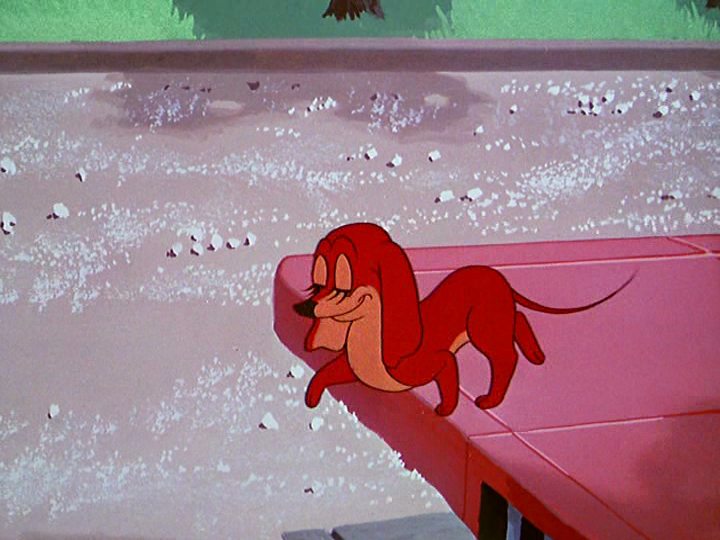
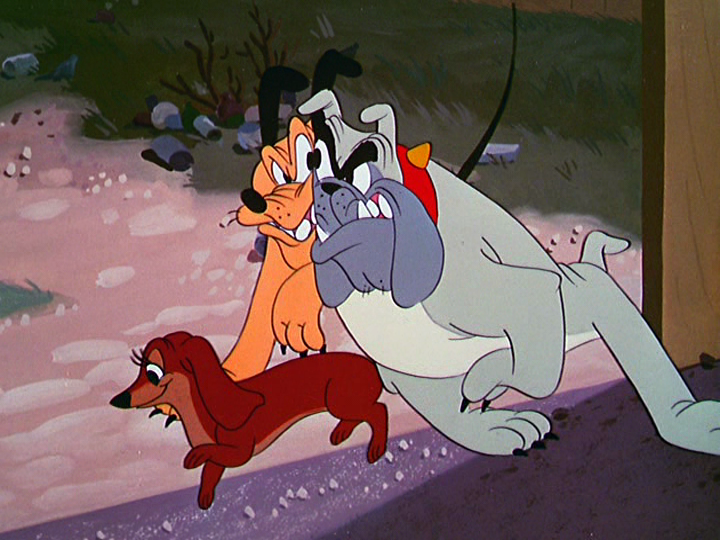
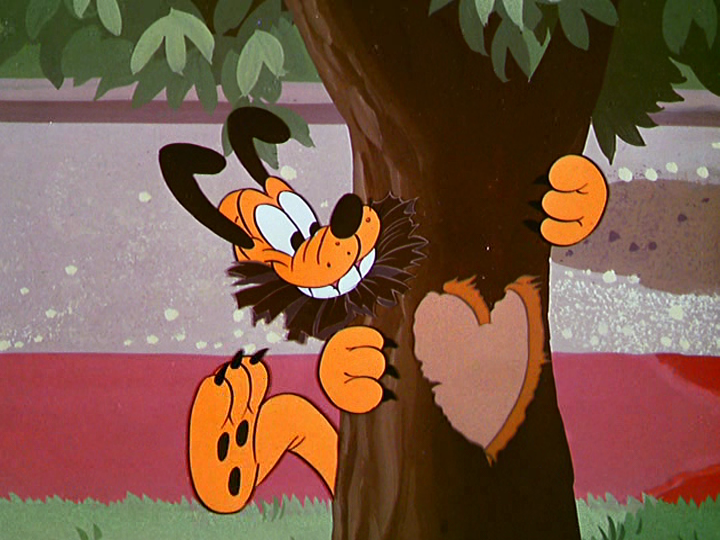
In this 1950 short film—directed by Charles Nichols, with story by Roy Williams and music by Oliver Wallace—Pluto tries to win the affections of Dinah, a dachshund, but has to compete against a bulldog named Butch. Although Butch tries to convince Dinah that he and Pluto are friends, he will stop at nothing to attack Pluto when Dinah isn’t looking.

Dinah the Dachshund

Dinah first appeared in the 1942 short The Sleep Walker, replacing Pluto’s former romantic interest Fifi the Peke. Butch had been Pluto’s antagonist since the 1940 short Bone Trouble, when Pluto tried to steal his bone. Dinah is often a source of contention between Pluto and Butch as they try to win her fickle affections.

Pluto’s Heart Throb is a prime example of the physical comedy that the Pluto shorts were known for.  In most films Pluto said very little, if anything at all. The physical comedy is exaggerated for comic effect, first seen when Pluto begins to fall for Dinah. The music is synchronized with the actions of the characters, from woodwinds playing in rhythm when Pluto is waving his paw at Dinah, to trumpets when Pluto and Butch are squaring off.

Pluto and Butch square off behind Dinah's back

In the end, the good-natured and steadfast Pluto wins the heart of Dinah (this time), after she sees how Butch has been bullying Pluto, plus Butch is too afraid to save her when she accidentally falls into a pool. This is not one of the standout shorts in Pluto’s library, but it is rather a humorous look at how the good guy can win the girl in the end.

Bonus Fact: Heart throb indeed – there were 183 hearts used in this short.

January 5

January 5, 1941 – Prominent Film Director and Animator Hayao Miyazaki is born.

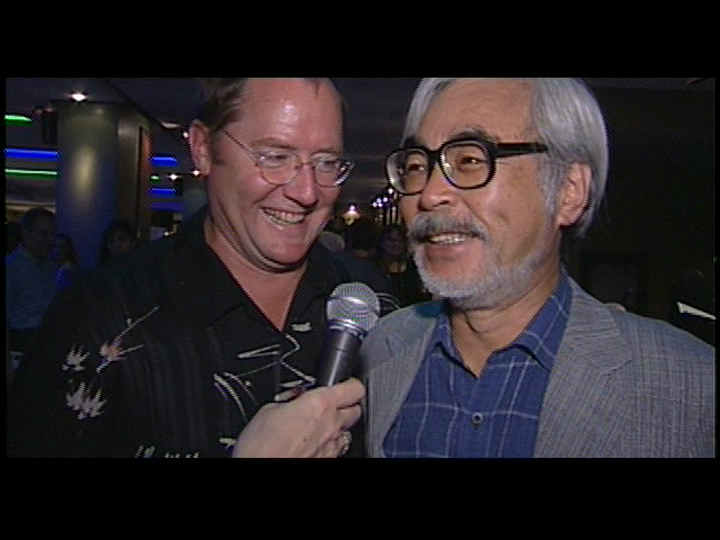
John Lasseter (L) and Hayao Miyazaki

“When you see a movie of his, you see something in film you’ve never seen before.” – John Lasseter, Chief Creative Officer of Walt Disney and Pixar Animation Studios.

If Japanese animation legend Tezuka Osamu is known as the Japanese Walt Disney, Hayao Miyazaki could be seen as the Japanese John Lasseter: both men’s works have changed the landscape of animation for future generations.

Miyazaki was born to a well-to-do family on the outskirts of Tokyo in 1941. He and his family were forced to evacuate their home during World War Two (although they were able to move back in 1950), and in 1947, Miyazaki began school as an evacuee. Wartime events would have an impact in his work, one example being his 2004 film Howl’s Moving Castle. Like many children in post-war Japan, Miyazaki was inspired by the works of Tezuka Osamu (best known for his work Astro Boy), who had just made a big impact with his comic New Treasure Island. In fact, most of Miyazaki’s early work was, as he acknowledged, heavily inspired by Osamu, even as Miyazaki struggled to develop his own artistic direction, and it was only when he became an animator at Toei Animation that he felt he had finally shaken off the influence.

Miyazaki had several other influences: He studied political science and economics at Gakushuin University, and was part of a children’s literature research society, where members read many stories, including European texts, exposing him to a wide range of fantasy and legends. After leaving university in 1963, he joined Toei Animation Studios, working as an inbetweener after three months’ training. He first gained recognition for his work on the film Gulliver’s Travels Beyond the Moon in 1965. He was able to pitch his own ending to the film when he found the original one unsatisfactory, and his ending was used in the final product. Miyazaki married fellow animator Akemi Ota in 1965.

Miyazaki continued to play important roles including animator, concept artist, and storywriter for various films, including Hols: Prince of the Sun (1968), Puss in Boots (1969), and Animal Treasure Island (1971). In 1971, Miyazaki left Toei and joined A Pro to work with Isao Takahata, and also worked for Nippon Animation, which he left in 1979 in order to direct his first feature animated film, The Castle of Cagliostro.

In 1984, Miyazaki had his big breakthrough in animated film with Nausicaä of the Valley of the Wind, based on the comic he had written (first published in 1982, and serialized until its completion in 1994). This film introduced many themes that occur frequently in his later films: environmental issues, feminism, pacifism, and an interest in flight and aircraft. The success of the film, and the need to establish a new production center, led Miyazaki and Isao Takahata, along with producer Toshio Suzuki, to form Studio Ghibli, a subsidiary of Tokuma Publishing.

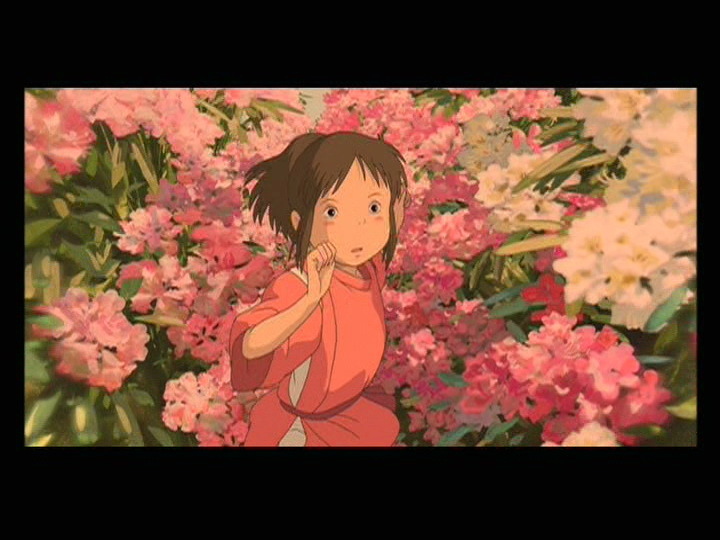
In 1996, Disney made a deal with Tokuma to distribute the Studio Ghibli works, excluding Grave of the Fireflies, and Ocean Waves. Since then, Disney has released the films on DVD, with the likes of John Lasseter and Pete Docter from Pixar helping to create the English-dubbed version. Spirited Away, the only traditionally animated and foreign animated film to win the Academy Award for Best Animated Feature, brought Miyazaki and Studio Ghibli to the world stage. John Lasseter noted that “since Spirited Away was released in the United States, it has created a large following for Miyazaki-san’s work. Since then they’ve released on DVD most of Miyazaki-san’s films, so there’s a lot of people – a lot more Miyazaki fans in the United States now than there was when Spirited Away was released.” Studio Ghibli and Walt Disney Studios have also seen success with release of Howl’s Moving Castle and Ponyo.

The main character of Spirited Away, Chihiro.

Miyazaki has been a great inspiration to many animators, from the staff at Pixar to the animators at Walt Disney Studios. John Lasseter is a close friend of Miyazaki’s, and has mentioned on numerous occasions how Miyazaki’s films inspire the animators at Pixar. “He is one of the great filmmakers living today,” says Lasseter. “When you see a movie of his, you see something in film you’ve never seen before. . . His films have always been inspirational for me and for everyone at Pixar…It’s interesting to talk to people and they have different interpretations of it. And that’s what’s so special about [Miyazaki’s] films…they make you think. Miyazaki’s films always make you think. And that’s what’s so special about them. And that’s why they get better. Just like a fine wine, they get better with age, because you keep watching them and you understand them more and more, and that’s what I just love about them. …[T]hey’ll live on forever.”

Animator Glen Keane (Beauty and the Beast, Aladdin, Tangled) has also been inspired by the animation style of Miyazaki and Studio Ghibli. “Well, it’s hard to ever separate the huge influence that Japanese animation has had on me,” he says. “I was just in awe of Miyazaki’s work, and have emulated his sensitivity, his approach to staging. That had a gigantic impact on our films, starting with Rescuers Down Under, where you saw the huge Japanese influence on our work. That’s part of our heritage now, which we don’t back away from.”

I included Miyazaki for several reasons: 1) Disney does have distribution rights to the Studio Ghibli films; 2) many animators in Pixar have worked on the English translation of the films; and 3) the influence the Studio Ghibli and Miyazaki has had on Disney and Pixar is unmistakable. Many people find the films inspirational both for the stories being told and the animation style. There is no denying the impact Miyazaki has had on the animation world.

January 4

January 4, 1936 – Mickey’s Polo Team is released to theaters.
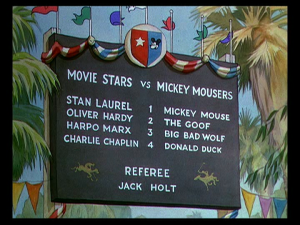
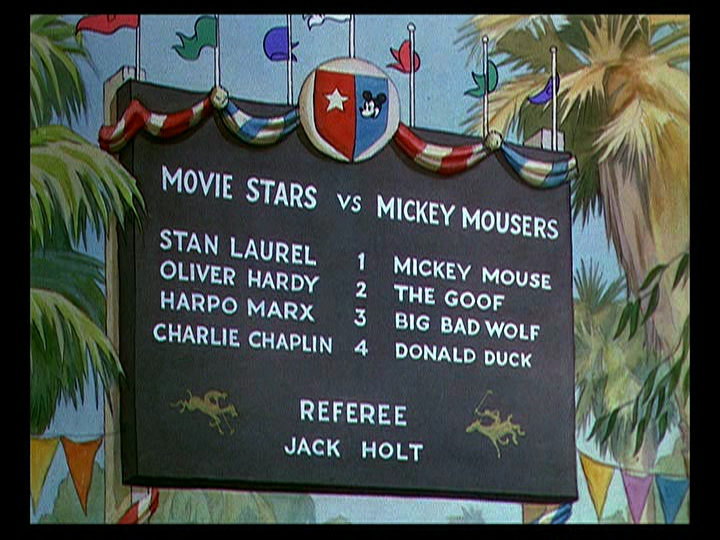
The Movie Stars versus The Mickey Mousers

A good example of the popular culture of the 1930s, Mickey’s Polo Team was released to theaters on January 4th. It was directed by David Hand, produced by Walt Disney Productions, and released by United Artists. The short features Mickey leading a team called “The Mickey Mousers,” against a team called “The Movie Stars”, featuring popular 1930s celebrities Stan Laurel, Oliver Hardy, Harpo Marx (riding an ostritch), and Charlie Chaplin. The referee is famous leading man Jack Holt, and the audience features prominent 1930s entertainment stars. One of the running gags of the short is Hardy trying to stay on and control his horse, which shows off an example of Laurel and Hardy’s slapstick comedy.
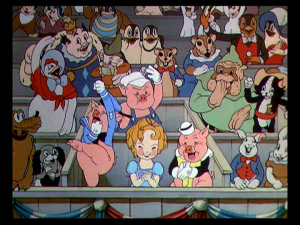
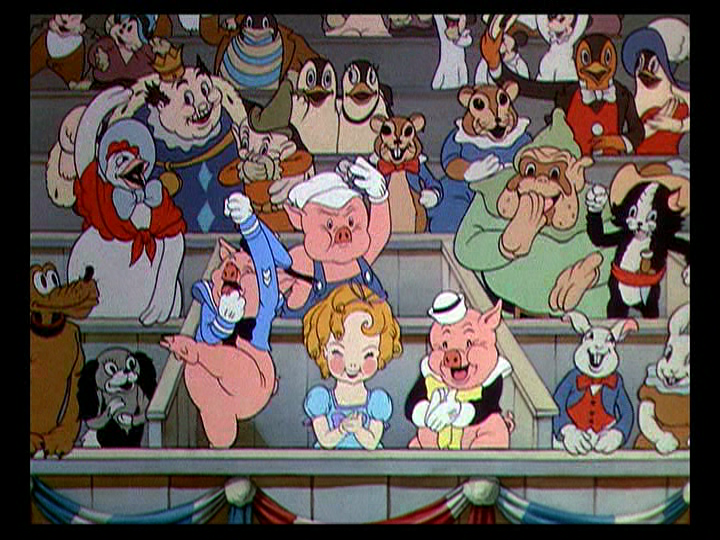
Characters from the Silly Symphonies and Shirley Temple

The short also has characters from the Silly Symphonies, including The Wise Little Hen (The Wise Little Hen), The Flying Mouse and his mother (The Flying Mouse), King Midas and Goldie (The Golden Touch), Peter and Polly (Peculiar Penguins), Ambrose and Dirty Bill (The Robber Kitten), two bunnies (Funny Little Bunnies), and Cock Robin with Jenny Wren (Who Killed Cock Robin?).
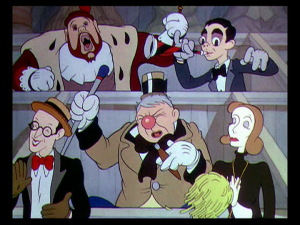
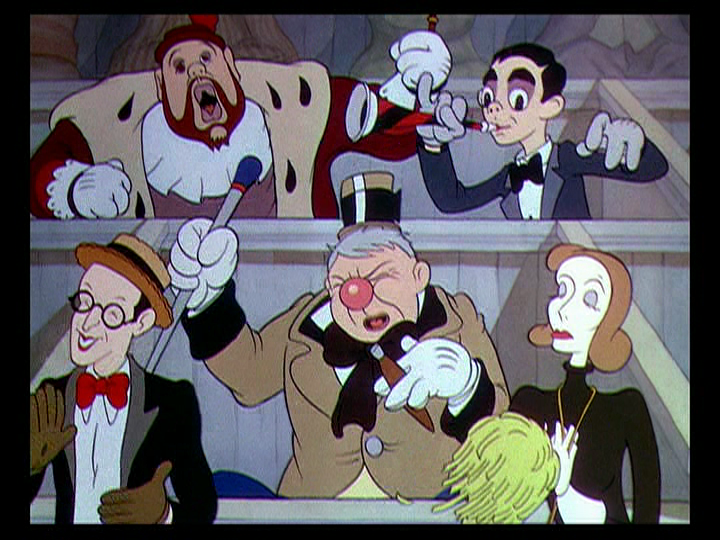
From top left going clockwise: Charles Laughton, Eddie Cantor, Greta Garbo, W.C. Fields, and Harold Lloyd.

Many famous personalities were caricatured in this short:

Stan Laurel and Oliver Hardy were an acclaimed double act in early Hollywood, mostly known for their slapstick comedy.

Harpo Marx was a member of the famous family comedy act, the Marx Brothers. Harpo never spoke, but communicated through whistling or blowing a horn – the ostrich Harpo rides in the polo match acts as his horn in this short.

Jack Holt, the referee, was Columbia Pictures’ most reliable leading man, because of his rugged personality. He was well known for staring in three Frank Capra action films: Submarine in 1928, Flight in 1929, and Dirigible in 1931.

Shirley Temple was a superstar in the 1930s, known for her work in the films Bright Eyes (featuring her signature song “On the Good Ship Lollipop”), Curly Top, and Dimples.

Charles Laughton was a British film actor, known at the time for his portrayal as the titular character in The Private Life of Henry VIII, which the animators capitalized on as they drew him.

Eddie Cantor was a Broadway star and singer turned Hollywood actor, known for his hit songs “Makin’ Whoopie” and “If You Knew Susie.” Cantor became a leading man after his work in the 1930 film Whoopee!

W.C. Fields was an American actor, known for his comic persona of a alcoholic egotist with contempt for dogs, women and children, yet was still seen as a sympathetic character to audiences. His films include David Copperfield, Alice in Wonderland, and The Fatal Glass of Beer, written by Fields himself.

Harold Lloyd was a popular silent film actor, ranked alongside Buster Keaton and Charlie Chaplin as the most popular and influential comedians in the silent era. The scene he’s most well known for is from Safety Last! in which he hangs from the hands of a clock above the city streets; this is a prime example of his daredevil physical feats.

Greta Garbo was a Swedish actress who was an international icon during the classic period of Hollywood. Her most well-known films were Anna Karenina and Camille.

Edna May Oliver was an American character actress, known for usually playing waspish spinsters. She is best known for her roles in Alice in Wonderland, A Tale of Two Cities, and David Copperfield.

Clark Gable was an American actor, known at that point for his role in the Academy Award winning film It Happened One Night, as well as his role is Mutiny on the Bounty. Nicknamed The King of Hollywood, Gable was also known for his ears, which were often caricatured by the likes of Disney and Warner Brothers.

This short is interesting for seeing what was popular in the 1930s. Polo was a popular sport with the Hollywood crowd, and Walt Disney was a fan, using the game to venture into Hollywood society. Although most of these actors would not be known by members of the general public these days, the people featured were huge stars. To be featured in a Disney short must have been seen as a form of flattery, or at least a sign that a star has “made it.” It’s a charming piece that gives the modern viewer insight to the cultural landscape of the 1930s in Hollywood.

If you are interested in seeing more Disney cartoons with caricatures of 1930s celebrities, please check out the following:

Mickey’s Gala Premiere

Mother Goose Goes Hollywood

The Autograph Hound
January 3

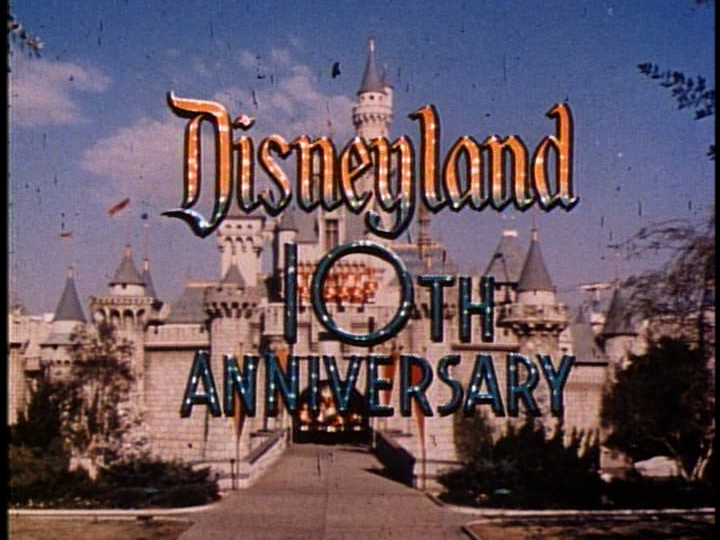
January 3, 1965 – Disneyland 10th Anniversary Episode Premieres on Walt Disney’s Wonderful World of Color.


“Ten years of happiness for fifty million friends.”

In 1965, six months shy of Disneyland’s actual 10th anniversary, Disney released this special, which gave viewers not only a look at new attractions coming to the park – including what had been submitted to the World’s Fair – but also a brief history of the park and a tour of some of the current attractions. The episode was directed by Hamilton S. Luske, with Special Material provided by Bill Berg. The Anniversary Song featured in the show was written by Richard and Robert Sherman. It has been released on DVD twice, first on the Walt Disney Treasures:  Disneyland, USA and later on Walt Disney Treasures: Your Host, Walt Disney.

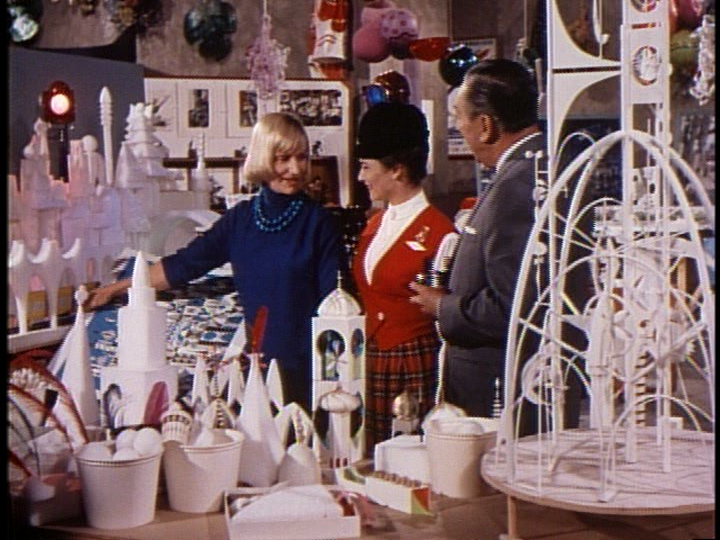
Walt and Julie discussing It's A Small World with Disney Legend Mary Blair.

The episode opens with Walt and Julie Reihm, who had been named Miss Disneyland Tencennial, in the Imagineering Department. As the two go around the room, they meet Disney Legends Mary Blair, John Hench, Marc Davis, Rolly Crump, Blaine Gibson, and Claude Coats, and learn about the upcoming attractions It’s A Small World, Plaza Inn, The Haunted Mansion and The Museum of the Weird, and Pirates of the Caribbean. The audience gets a glimpse into the processes that go into creating an attraction, beginning with preliminary sketches and moving on to scale models, with special variations for each attraction. For instance, for The Haunted Mansion, Walt explains to Julie, the Imagineers are collecting ghosts from all over the world, adding that “[they’re] making it very attractive to them, hoping they’ll want to come and stay at Disneyland, so [they’re] putting in wall-to-wall cobwebs, and we guarantee them creaky doors and creaky floors.” Suddenly Walt realizes that they have only ten seconds to get to Disneyland, and with the help of Tinkerbell, they arrive just in time for the parade in the Magic Kingdom.

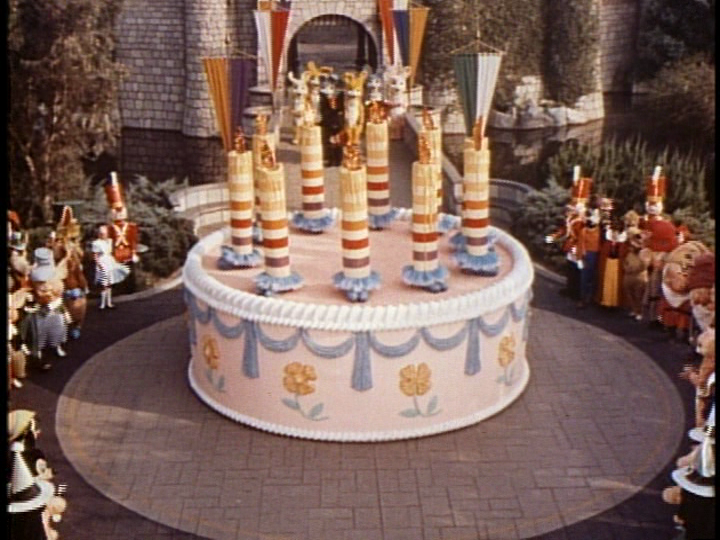
The beginning of The Anniversary Song

“All the characters of the Magic Kingdom are gathering for the tenth anniversary celebration,” Walt narrates, as toy soldiers begin marching down the castle walkway, followed by a host of Disney characters. Mary Poppins, the newest member of the Disney family, makes a surprise visit, and after a quick dance number, she flies away again. “From now on,” Walt declares, “no Disneyland celebration is going to be complete without Mary Poppins.” Singing a song celebrating the Tencennial, a magic dancing cake and candles open the parade down Main Street, which leads off with children from Anaheim schools in their marching bands and dance troupes.

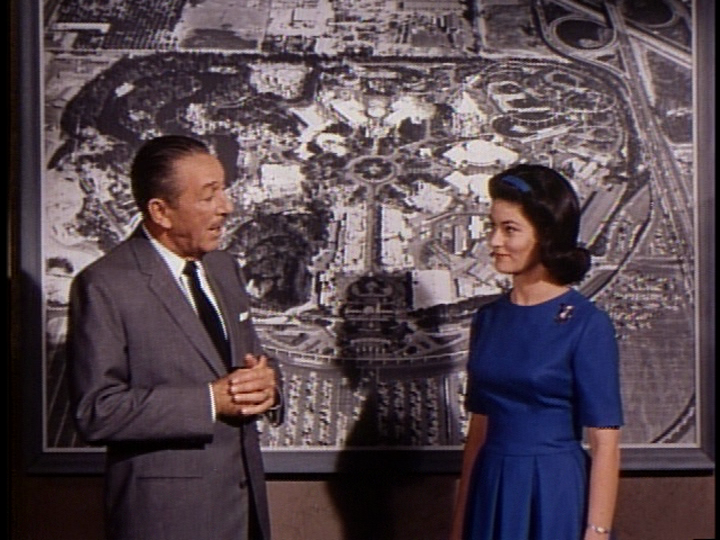
Walt and Julie in front of the aerial view of the park.

The second half of the program is an overview of the previous ten years of the park. “It seems like only yesterday that Disneyland was just an idea and some plans on paper,” Walt reminisces, as he shows the audience an aerial photograph of Disneyland, comparing it with the area when it was just an orange grove and some farm houses. The audience is then taken around Disneyland to the popular attractions that opened between 1955 and 1965, with some little-known facts thrown in to the commentary. Dignitaries and celebrities are seen enjoying attractions at the park, from Prince Bernhard of the Netherlands as a passenger on the Submarine Voyage, to Mary, John, and Hayley Mills exploring the Swiss Family Robinson tree house.

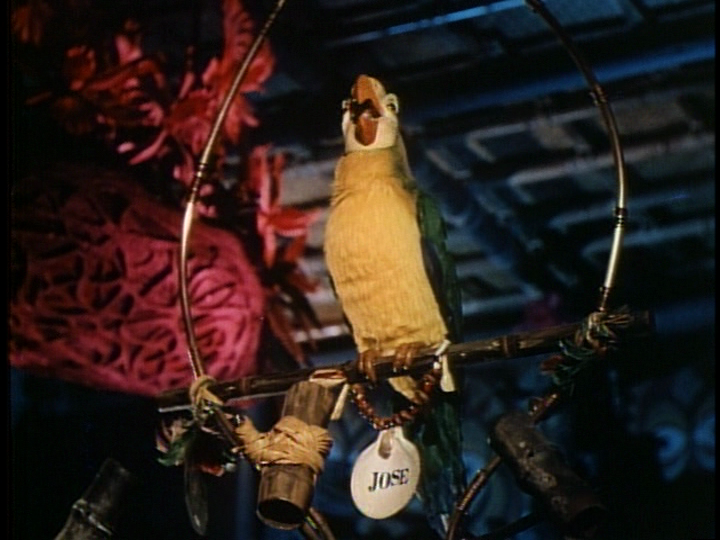
Jose, your host for the Enchanted Tiki Room.

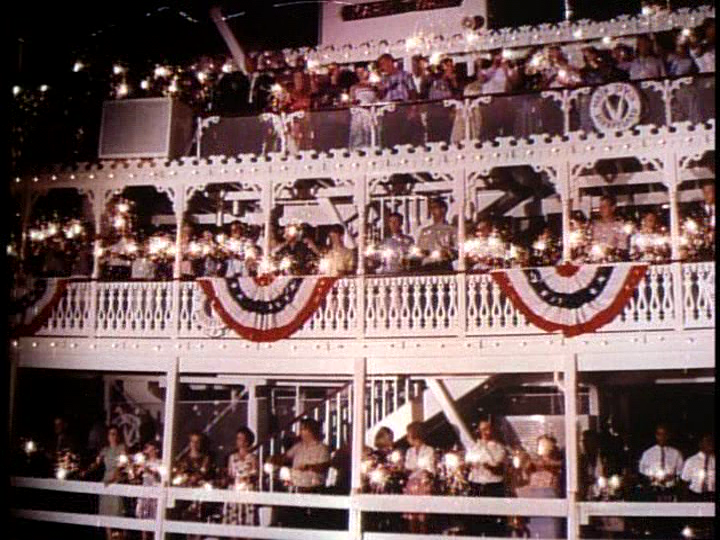
The last two segments offer an in-depth look at the Enchanted Tiki Room, and the traditional Dixieland and Disneyland Celebration on the Big River. The Enchanted Tiki Room segment begins with an explanation of audio-animatronics by the parrot Jose, who narrates as the audience is taken backstage to see all the complicated equipment that powers the entire show, from the electric engineer (or, as Jose puts it, the veterinarian for all the Tiki Room actors) to the relay panel. The audience is then treated to a performance of the birds in the Tiki Room. As we move to the Dixieland and Disneyland Celebration, we see great Dixieland musicians from all over the country perform on boats down the river, including a great performance by the legendary Firehouse Five Plus Two, and ending with a spectacular show on the Mark Twain Riverboat, with cast members and musicians holding sparklers, illuminating the night.

A grand finale for the Dixieland and Disneyland Celebration

This is a fantastic celebratory episode of the show. For those who did not live close to the park, it was a wonderful way to see the popular attractions, and learn secrets of how they were designed. The documentary also does a wonderful job of advertising the park for its 10th Anniversary. The show is, of course, a giant advertisement for the Disney projects, but it is done in a charming way that entices, entertains, and provides some insight into different aspects of the Walt Disney Company. The episode is well worth seeing.

January 2

January 2, 1898 – Birth of Disney Legend Dick Huemer

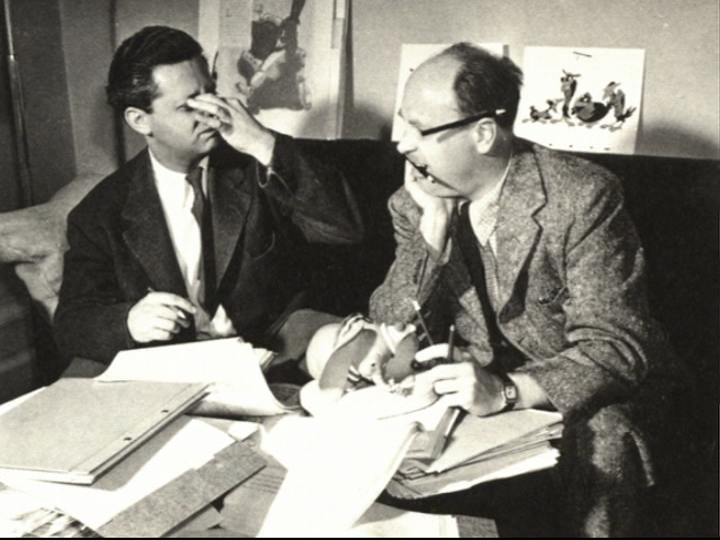
Disney Legends Joe Grant and Dick Huemer

“Meet Dick Huemer. He goes to operas.”

Dick Huemer, animator in the Golden Age of Animation, was a “jack-of-all-trades” within the Disney Company, but is best known for his work with Disney Legend Joe Grant on Fantasia and Dumbo. In 1916, as a student at the Art Students League and living in the Bronx, Huemer saw a help wanted sign on a door for the Barre Studio, one of the first film studios dedicated to animation. Huemer’s response:

“I had done a lot of illustrating, in yearbooks and things like that. One day, out of curiosity, I just walked upstairs and there was this plump little guy sitting there – a very genial character with a French accent. I told him I’d seen his sign and would like to be a cartoonist. He said, ‘All right – go into the next room, they’ll put you to work.’ And that’s how I got into the business. Because in those days, who knew about animated cartoons? I don’t believe the name had even been coined yet.”

Huemer then moved on to become the animation director at the Max Fleischer Studio and the Charles Mintz Studio, before joining the Walt Disney Studio in 1933 as an animator. He contributed to twenty-five cartoons as an animator before directing two classic shorts – The Whalers and Goofy and Wilbur – and then progressed to working on feature films.

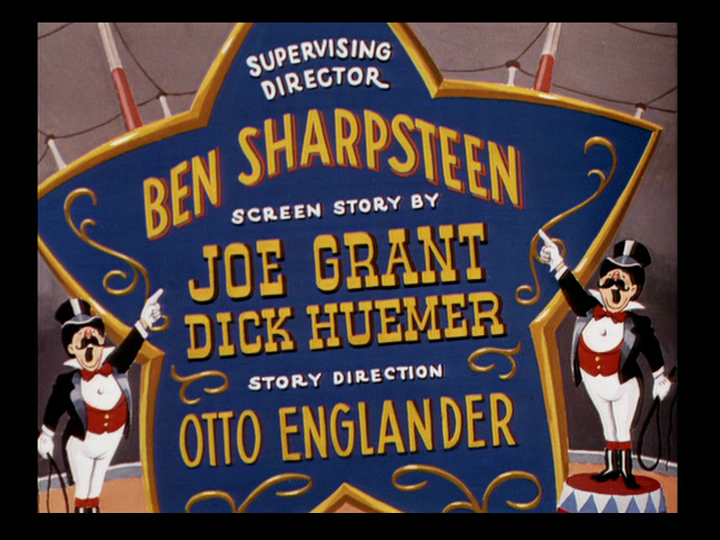
Disney assigned Huemer and Joe Grant to be the story directors on Fantasia because Huemer was an opera fan, and Grant had a lot of experience in character design. Ward Kimball recalled, “We owe it mostly to Dick Huemer for the fact that Walt Disney was weaned away from John Philip Sousa and introduced to the classics. Walt learned all about Beethoven, Tchaikovsky, and Stravinsky through Dick Huemer’s tutelage.” Huemer and Grant also adapted the screenplay for Dumbo, and Huemer continued his work on the story for the feature films Saludos Amigos, Make Mine Music, and Alice in Wonderland.

Huemer left the Disney Studios in 1948 to freelance on his own comic strip called Buck O’Rue, but returned to the studio in 1951 to work in early television shows and the story department until 1955. From 1955 to his retirement in 1973, Huemer wrote the True-Life Adventures comic strip. In 1978, in recognition of his contributions to the art of animation and his continued excellence, he received an Annie Award from the International Animated Film Society. Huemer passed away on November 30, 1979, and was inducted as a Disney Legend on October 10, 2007.

Writing about Dick Huemer is a pleasure, as he is one of the idols of the Golden Age of Animation. I grew up with and still enjoy watching Fantasia — it’s a treat to see how someone who appreciated opera and classical music used his love to create a wonderful film. It was interesting to read his thoughts on the film, especially when it wasn’t a huge hit with audiences upon its release. “Actually, we blamed the public,” Huemer said in an interview, explaining the shock the Studio felt when Fantasia didn’t do well. “What the hell’s the matter with them! This is a fine thing that will never be done again. It never was. It never will. It can’t be. You can’t afford to do that…I think somehow if we were to do it today that it would be an entirely different thing pictorially.” Through his words, you can tell that it was a labor of love for Huemer, and it’s a shame he isn’t around to see the following the film has today.

The most admirable trait I find in Huemer is how much he loved what he did, and how he transferred that love so smoothly into his work. He compared those involved in the Golden Age of Animation to the artist Rubens: “Rubens had a staff of about fifteen guys who were working on his paintings and they were dedicated people. They were artists, they loved doing it, and that’s why they were there. And they knew that they were doing the right thing.” Huemer, too, is a prime example of an artist who loved what he did and knew he was doing the right thing.

January 1

Welcome to 2012, the first post of the year as well as the first post of the blog! Of the many areas I could have spoken about today, I could not decide between these two. Read and enjoy!

January 1, 1904 – Birth of Disney Legend Grace Bailey

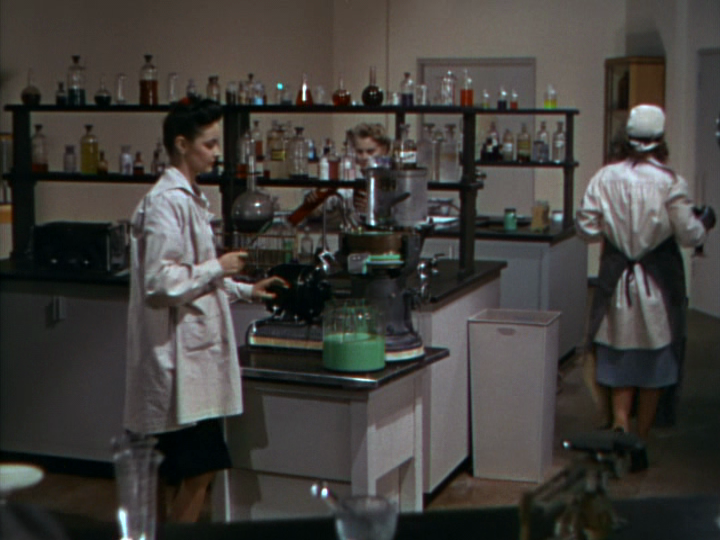
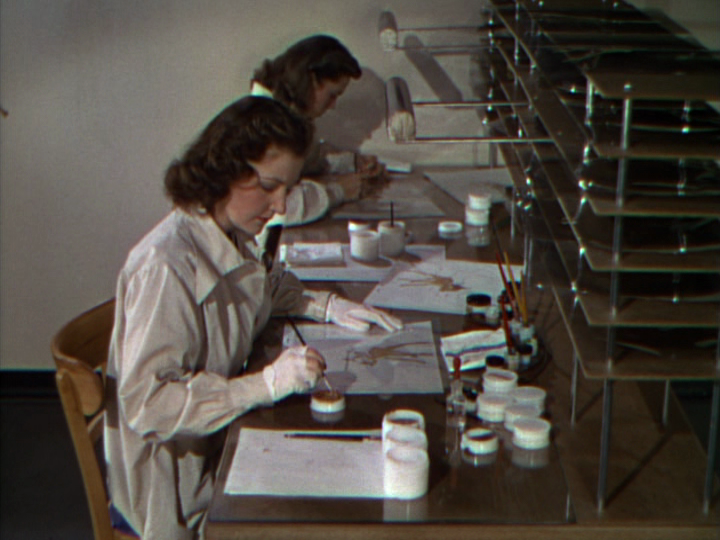
Disney Legend Grace Bailey Turner, born Elizabeth Grace Randall, is known for her work in the Ink and Paint department. She began working at Walt Disney Studios in 1932, rising through the ranks of the department to painting supervisor, then inking supervisor, and finally head of the department in 1954. She held this position until she retired in 1972, after 40 years of work with the company. She died on August 23, 1983, and was inducted posthumously into the Disney Legends on October 12, 2000.

After the success of Flowers and Trees, Disney’s first Technicolor animated short, Bailey was tasked with the important duty of expanding the studio’s catalog of colors. Walt had made a deal with Technicolor to have exclusivity of the three-color process in animation for two years, and one can only imagine the challenges Bailey faced when dreaming up new colors. Betty Kimball, former Studio painter, said in an interview that “[e]verything was so unscientific back then. We were just creating, and it was fun.”

I was rather excited that my first post could be on Grace Bailey, for several reasons. Firstly, many people voiced complain that there are no important women in Disney’s history – my answer is that they’re not looking hard enough. Although the Ink and Paint Department was mostly, if not all, women, this does not mean their work was thought of as any less important. After watching scenes from The Reluctant Dragon, it’s easy to see that there was a lot of work that went into mixing and creating the new hues to bring animation to a higher level. The Ink and Paint department was highly important when it came to an animated film: inking could take about 12 months to learn properly, and one had to be very precise to preserve not only the animator’s original drawing, but also the emotion the animator wished to invoke.  To say that women did not have an important role, or that there were hardly any important women, seems to ignore all of the work these women did. Bailey was an important part of Disney history, and I’m proud to put her in the spotlight today.

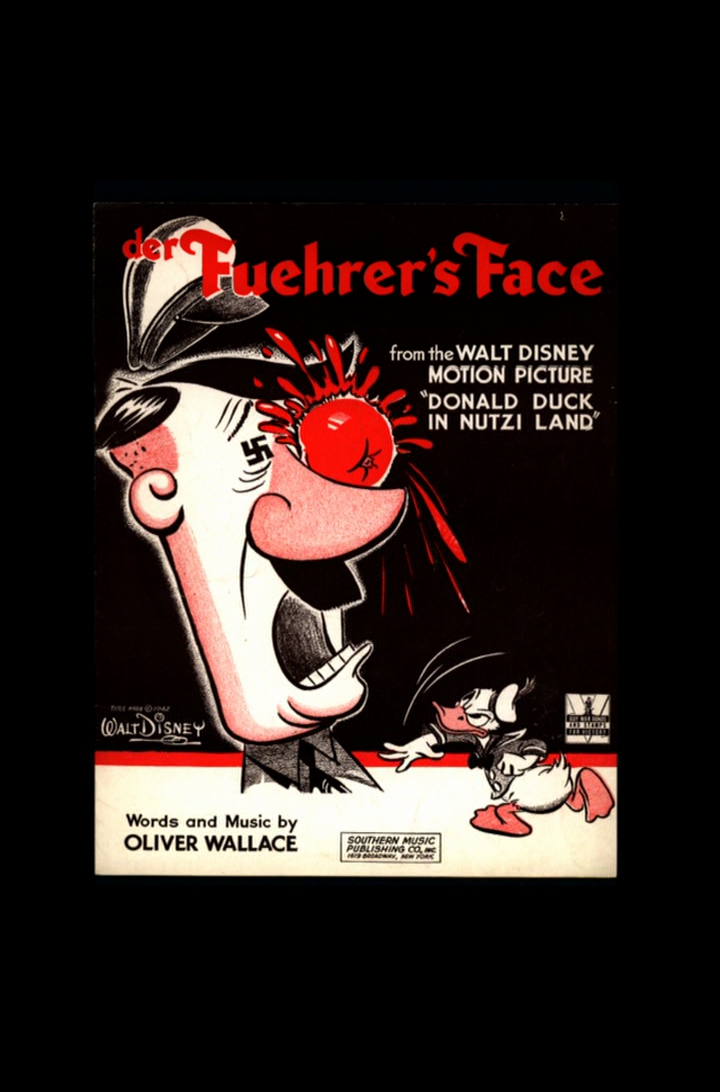
January 1, 1943 – Release of Der Fuhrer’s Face to Theaters

A prime example of homefront propaganda from World War II, Der Fueher’s Face was released to movie theaters on January 1st and was not only immensely popular, but it also won the Academy Award for Best Animated Short Film at the 15th Academy Awards. Directed by Jack Kinney, the short, in which Donald Duck has a nightmare that he resides in a country controlled by the Nazis, was originally called Donald Duck in Nutzi Land. The name was changed, however, when the title song for the short, written by Oliver Wallace, became a runaway hit after a record by Spike Jones was released (although the film preceded the record). According to Disney Legend Joe Grant, the short was inspired by the Charlie Chaplin film, Modern Times, especially the scene with Donald working on the belt line.

In this excerpt from the introduction to the short, film critic Leonard Maltin explains:

“It’s easy to see why the film was so popular. It’s very, very funny, reducing the serious tenets of Hitler’s Nazism to slapstick absurdities. And it gave audiences a chance to think, as Donald does, about the freedoms they might have taken for granted.”

As was common of propaganda films of the time, there are caricatures of Hirohito, Mussolini, and Nazi soldiers. This was a common tactic that is still seen today: the enemy is mocked to reduce the public fear and make the enemy less fear-inspiring. It was a good way to allow panicked Americans at that point a chance to laugh in the face of their fears.

One rumor that persisted about the film is that it was banned from being released to the public after the war. While the short was kept out of general circulation for many years because of its propagandistic content, it was released on the DVD set On the Front Lines in the third wave of Walt Disney Treasures, and was released again on the DVD set The Chronological Donald, Volume Two.

I find the work of the Disney Studios during WWII fascinating, from the propaganda shorts to the training films. All of these films helped Americans through their fear with laughter, and encouraged them to buy war bonds and support the troops through other methods. This short in particular conveys the message that Americans needed to be thankful for the freedoms they had and understand why they were fighting. America had been trying to stay out of the war until Pearl Harbor; these films helped rally the American Spirit.

One thing that also interests me about this short is the use of Donald Duck. Donald was an international star at this point, received well all over the world. Donald’s character works well for this kind of satire. His inability to keep from muttering under his breath as he deals with the insanity of Nutzi Land suits the story and creates a more humorous impact than if the usually cheerful, uncomplaining Mickey Mouse had been the main character. Audiences would have been sad to see our favorite mouse in Hitler’s clutches.

With grumpy, grousing Donald as the main character, Der Fueher’s Face allowed audiences to find humor in the face of fear.