RSS Feed

May 25

Posted on

May 25, 1935 – The Silly Symphony The Cookie Carnival is Released to Theaters
“Here they come, freshly baked, covered with spice and candy flake, marching along in this parade at the Cookie Carnival.”

On May 25, 1935, the Silly Symphony The Cookie Carnival was released to theaters. The idea for the short came from the parades and bathing beauty contests held in Atlantic City during this time. The short was directed by Ben Sharpsteen, and starred the vocal talents of Pinto Colvig (best known as the voice of Goofy) as the wandering gingerbread man.

The short opens on the grand day of the Cookie Carnival, with a gingerbread marching band playing down the street, and one member holding a sign: “Beauties on Parade.” The procession of potential Cookie Queens begins with Miss Peppermint, who is followed by others the likes of Miss Cocoanut and Miss Banana Cake. All sorts of sweet treats have shown up for the festivities.
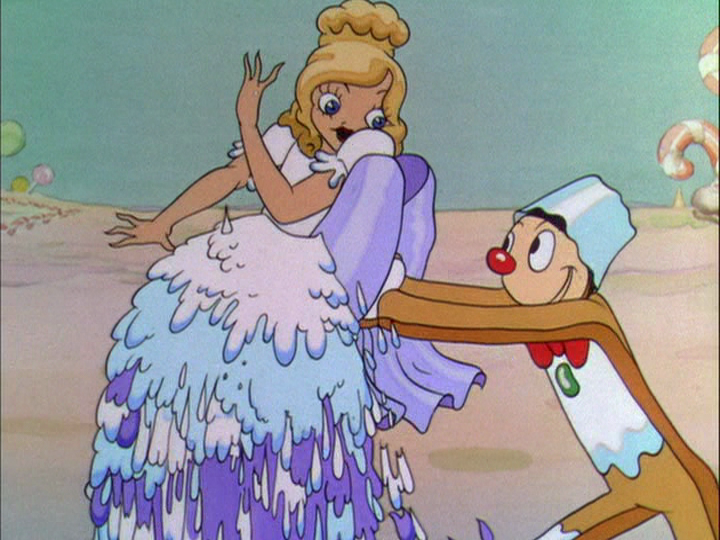
The gingerbread man decorating the girl, helping her to be the next Cookie Queen

On the peppermint railroad tracks, a wandering gingerbread man carrying a hobo sack enters the town, whistling the carnival tune. He hears crying and turns to see a young girl in rags sitting on a stump. He asks her what’s wrong, and she tells him that she’d love to be in the parade, but she doesn’t have anything pretty to wear. He tells her not to be so down, and begins to fix her up in true Cinderella fashion, telling her that she’s going to be the Cookie Queen.

Back at the parade, the judges look at each contestant, but still haven’t selected a queen. As the carnival comes to a close, the gingerbread man places the girl at the end, and upon seeing her, the judges declare her the queen. They knock the gingerbread man down to get to their queen, and the crowd carries her through the street to her throne. The judges then declare that the queen must have a king, and they pull out a collection of potential bachelors, known as the Candy Dates.

The gingerbread man is spotted by the soldiers and has to make a break for it while the Candy Dates are performing

The dates include from the Dandy Candy Kids, the Old-Fashioned Cookies, the Angel Food Cakes, the Devil’s Food Cakes, the Upside-Down Cakes, and the Jolly Rum Cookies. While the Queen is presented with the dates, the gingerbread man, who has been trying to watch the show and see the Queen, has been caught by the soldiers and is chased around the pavilion. Meanwhile the Queen rejects all the dates, and the judges conclude that she should marry one of them, or all three.

The gingerbread man steps out of his hiding place, thinking he’s safe, only to find himself pursued once more. He slips under the red carpet leading to the Queen’s throne, and has his hat broken into pieces as he steps onto the stage, bringing some of the red carpet with him. The Queen tells them to stop, that they shouldn’t crown the King that way, and everyone begins to celebrate the arrival of the new King. The Queen and King are spotted kissing, and they shyly hide behind a lollipop, which melts when they kiss again.
May 24

Posted on

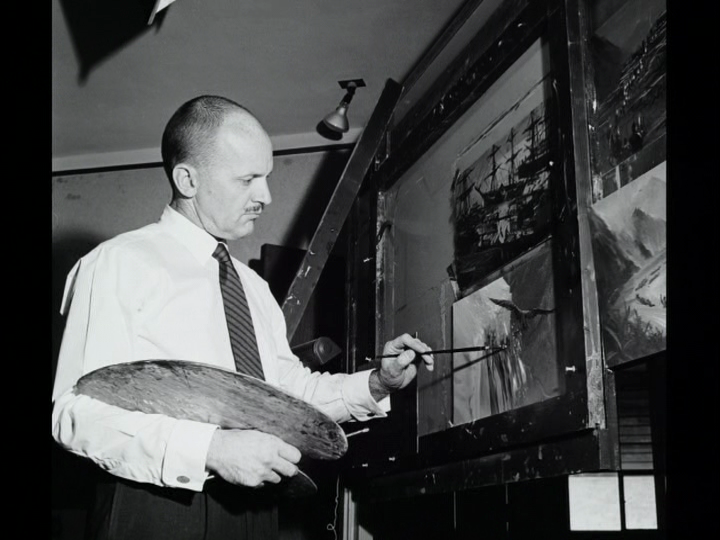
May 24, 1913 – Birth of Disney Legend and Matte Painter Peter Ellenshaw

“[Ellenshaw’s] a pretty unique man. He had a sense of style and fantasy to his paintings that was extraordinary. If you were to look at a Peter Ellenshaw painting from Mary Poppins, it has an impressionistic quality to it.”

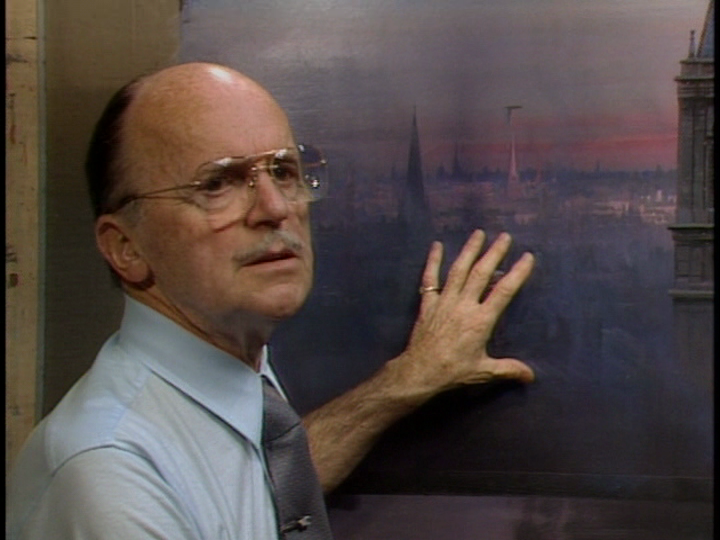
Peter Ellenshaw, best known as the matte painter on Mary Poppins, was born in London in 1913 and raised in Essex. His father died in World War I, and Ellenshaw left school at the age of 14 to support his family, but he kept up his passion for drawing. After meeting and being offered a job by matte painter Walter Percy Day, Ellenshaw worked as a painter on such films as The Thief of Baghdad, The Red Shoes, and Spartacus.

When Walt Disney set to work on making live-action films in England, he personally chose Ellenshaw to create the scenes of England during the days of Treasure Island. Disney then brought Ellenshaw to work on the production of 20,000 Leagues Under the Sea, which led to his best-known work of the background paintings in Mary Poppins, for which he won an Academy Award for Best Visual Effects.

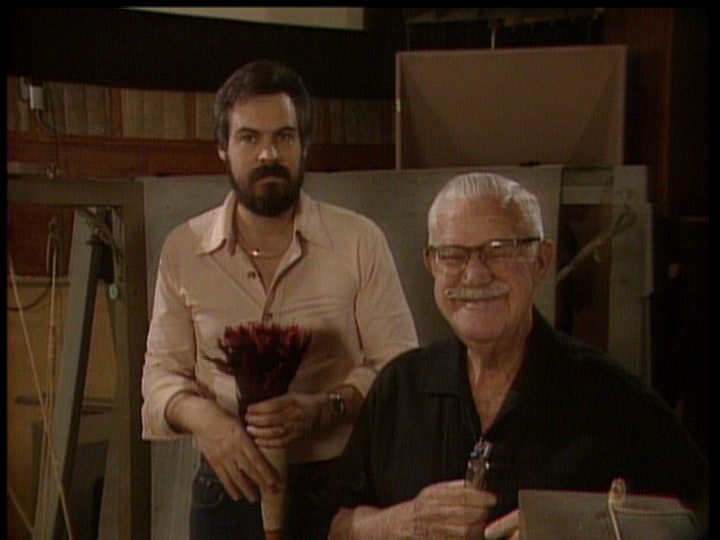
Ellenshaw explaining the special effects behind one of his matte paintings for Mary Poppins

Ellenshaw continued to contribute to Disney films as a matte artist, including Pollyanna and Swiss Family Robinson; in addition to his matte art, Ellenshaw contributed to the photographic effects on Darby O’Gill and the Little People, worked as a production designer on Island at the Top of the World and The Black Hole, and was the art director of Bedknobs and Broomsticks. Ellenshaw retired after his work on The Black Hole in 1979; however, he contributed to the matte paintings in the 1990 film Dick Tracy. He was named a Disney Legend in 2003, and passed away in 2007.

May 23

Posted on

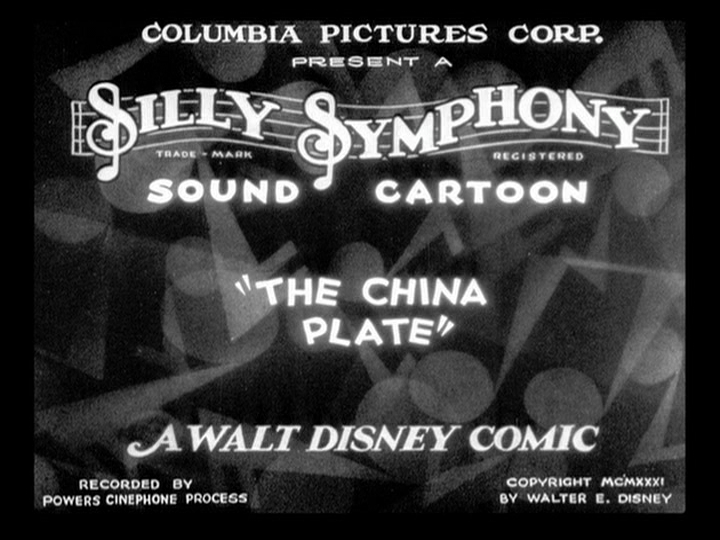
May 23, 1931 – The Silly Symphony The China Plate is Released to Theaters

On May 23, 1931, the Silly Symphony The China Plate was released to theaters. The short was directed by Wilfred Jackson, and while entertaining, this is another example of the stereotypical view Hollywood had of other cultures during this time period.

The short opens on a collection of exquisitely decorated pieces of china: two cups with saucers, a teapot, and a plate. The audience zooms in on the plate, and the figures begin to move. Three Chinese servants prepare to serve food for the Emperor, and as he eats, the bowl slips away from him and knocks into the instruments of the sleeping band, who wake and begin to play. Three maidens appear and begin to dance to the music, and a poor cat that is walking along ends up getting stepped on and accidentally used as an instrument by the band.

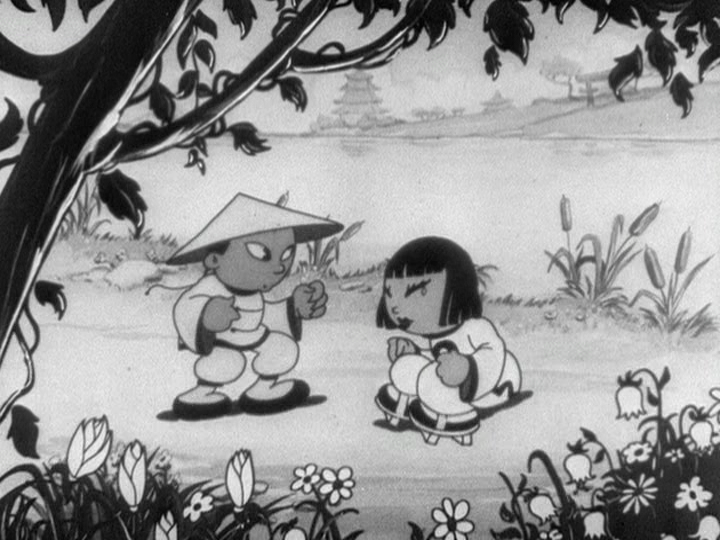
The boy tries to cheer up the crying girl after her fall in the river

As the cat runs away in fright, he knocks into a screen, revealing a frightening face on an umbrella, which is held by another maiden. She gets distracted by the view of a butterfly and seeing the Emperor asleep, chases after it into the garden. As she chases it, the view moves to a young fisherman nearby, who uses a bird to help him catch the fish in the river. The girl accidentally falls into the river as she chases the butterfly, and the boy quickly rescues her and puts her on dry land. He tries to comfort her as she cries, and makes her laugh as he wipes away her tears. She points to the butterfly she was chasing, who is now perched happily on a sundial, and the boy lets her know that she can count on him to catch the elusive insect.

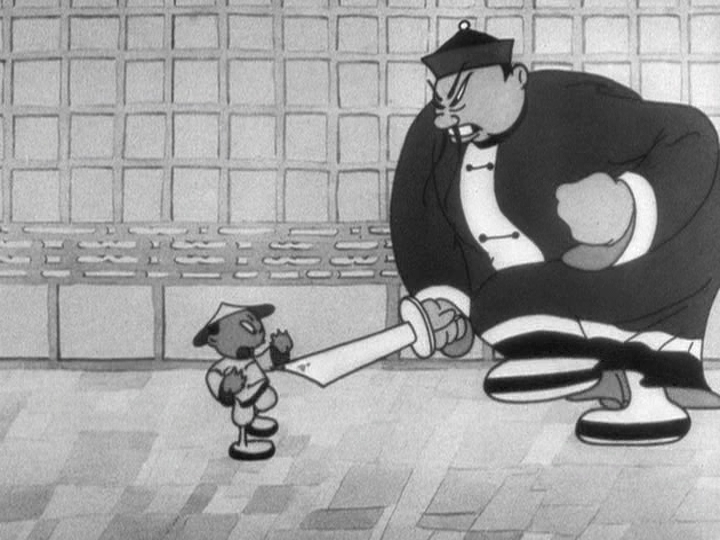
The two begin to chase the butterfly, and it flies into the Emperor’s palace where it tries to perch on the sleeping Emperor’s nose. The boy sees it flying by the chair and leaps up to catch it, inadvertently waking the Emperor. The Emperor, furious at the boy’s actions, grabs a sword, ready to execute him. The boy backs up against a wall where another sword falls down, and the two begin to battle, with the Emperor easily breaking the boy’s sword. The girl tries to plead for mercy, but the Emperor swats her away.

The boy bravely soldiers on, although the Emperor has a huge advantage

The boy continues bravely to fight, even though he has no advantage whatsoever. When it looks like the end with the boy cornered against a pillar, the boy accidentally knocks the vase at the top of the pillar down onto the Emperor’s head, knocking him out cold. The boy grabs the girl’s hand and they flee from the palace, stealing a cart as the Emperor follows close behind in a wheelbarrow. The cart breaks on a rock, but the two continue to run hiding behind a rock. The Emperor doesn’t see them, but thinks they have run into a cave nearby.

The cave, however, turns out to be a dragon, who gobbles up the Emperor and catches the girl in his claw. The boy tries to fight to protect her, but the dragon is too powerful. At one moment, the girl is able to escape, and the two race away once again, with the dragon following close behind. The pair manages to make their way up a hill where a boulder stands precariously on the edge. They push it off, where the dragon accidentally swallows it and is stuck at the bottom. The pair makes it back to the boat, where they embrace.

May 22

Posted on

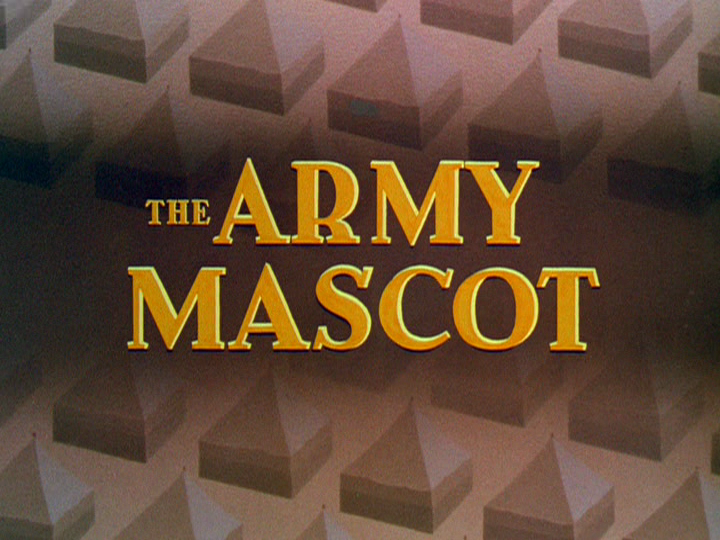
May 22, 1942 – The Pluto Short Film The Army Mascot Premieres in Theaters

“He’s better than Gunther!”

On May 22, 1942, the Pluto short The Army Mascot was released to theaters. This was released as one of the wartime shorts meant to boost morale and make audiences laugh. The short was directed by Clyde Geronimi, and written by Carl Barks and Jack Hannah.

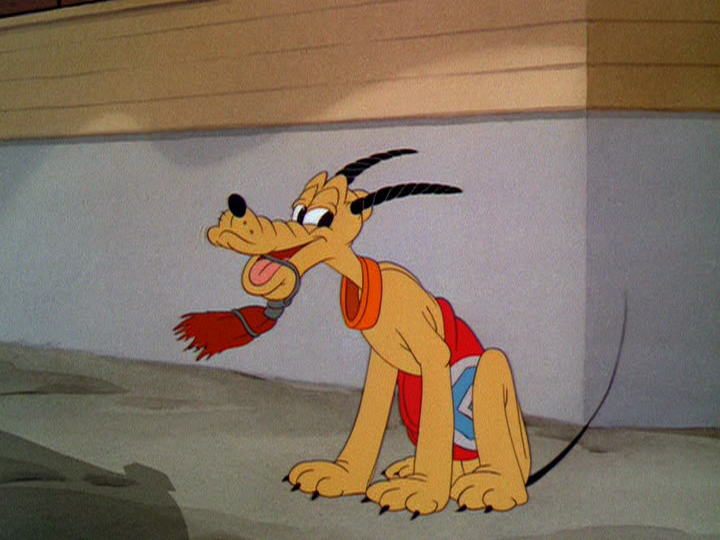
The short opens at the U.S. Army base Camp Drafty, where Pluto is seen sniffing around the gate. He looks up when he hears trumpets sound, and sees the mascots of all the divisions stepping out of their doghouses. A truck from the Army field kitchen stops by, dropping off plates of roast beef and steak. A very hungry Pluto’s mouth waters; he then spies another mascot – a goat named Gunther – sound asleep in his pen.

Pluto disguises himself as Gunther the Goat

Thinking this is his chance to grab a juicy steak, Pluto sneaks into the base and peers around Gunther’s pen. Ever so quietly, Pluto closes Gunther’s door, and disguises himself as the mascot right before the truck stops by. Pluto opens his mouth in anticipation of a morsel of meat, only to be thrown an avalanche of tin cans.

Hearing the noise, Gunther pokes two holes in his door with his horns and peeks out at his surroundings. He sees Pluto angrily kicking the cans, and steps out to confront the dog. As he bears down on Pluto, the dog flees, trying desperately to keep away from the goat’s horns. The goat marks his target and gives Pluto a mighty headbutt into the fence; after knocking him there like a paddleball, he then sends Pluto flying out of the camp.

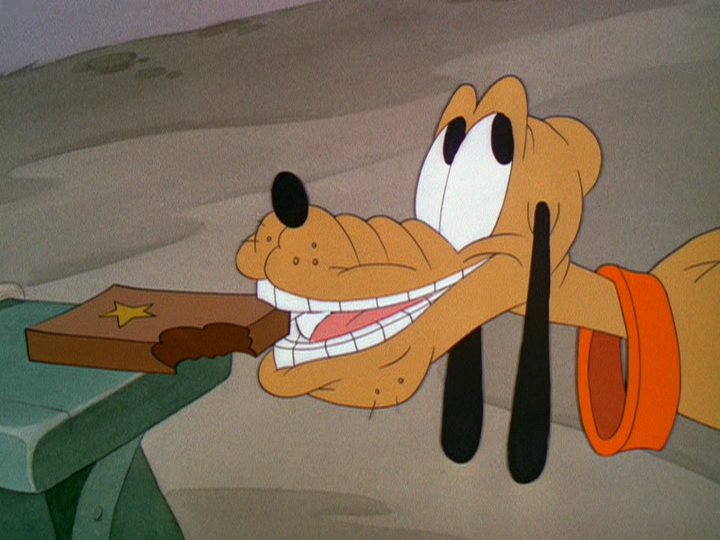
Pluto, to impress the soldiers, grabs the plug of tobacco left on the bench

Pluto is then seen limping around the camp, when a soldier calls out for Gunther to have some chewing tobacco. Pluto’s eyes literally turn green from jealousy, but he’s soon excited when he sees the leftover tobacco sitting on a bench after Gunther has walked away. He prances out in front of the soldiers, grabs the entire plug of tobacco, and chews, much to the amazement of the troops. When one cries out that Pluto is better than Gunther, the goat is startled awake and looks out angrily to see Pluto chewing calmly. Furious, the goat headbutts Pluto, who swallows the plug.

Poor Pluto begins to feel ill and stumbles around the camp, turning colors and patterns as he hiccups. The goat, not satisfied yet, props up Pluto, and gets ready to propel the pup into a tent full of explosives. Pluto drops at the last possible second with Gunther flying full speed ahead into the explosives tent. The blast sends Gunther sky high, where he holds tight to the front of a plane as it flies off into the distance. With Gunther heading overseas, this leaves an opening for a mascot, one that Pluto is happy to fill. Pluto steps out of his doghouse, saluting the officers, before receiving what he’d been craving: a nice, juicy ham. He tears into it eagerly, giving the audience a smile.

May 21

Posted on

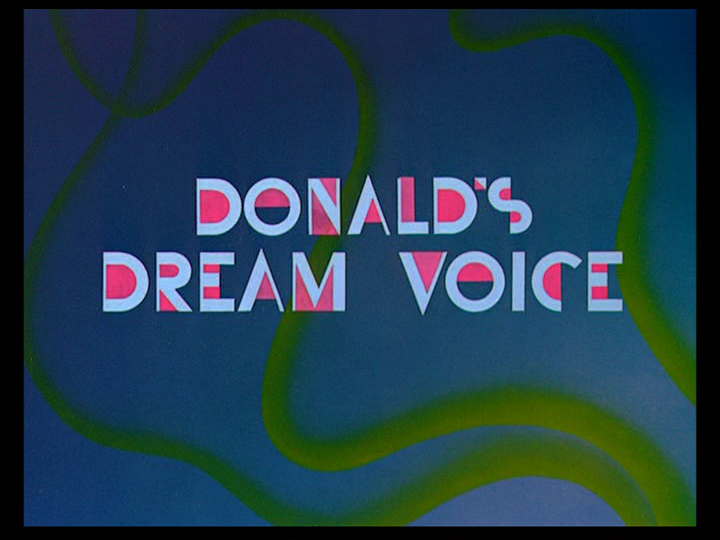
May 21, 1948 – The Donald Duck Short Film Donald’s Dream Voice Premieres in Theaters

“I can talk…I can talk! I can talk! Oh, boy! I can talk!”

On May 21, 1948, the Donald Duck short Donald’s Dream Voice was released to theaters. It was directed by Jack King, with a story by Roy Williams, and features Clarence Nash as the voice of Donald Duck, Leslie Denison as the suave voice of Donald Duck, and Ruth Clifford as Daisy Duck. The suave voice of Donald is a case of topical humor; he sounds like screen actor Ronald Coleman, who was very popular with audiences of the ’40s.

The short begins with Donald going door to door, peddling brushes. At the first door, the owner of the house tells Donald that he can’t understand him, and demands that he leave, which makes Donald angry, but he lets it dissipate before he knocks on the door of the next house. Unfortunately, the lady of the house hears Donald and slaps him for “using such language in [her] presence.”

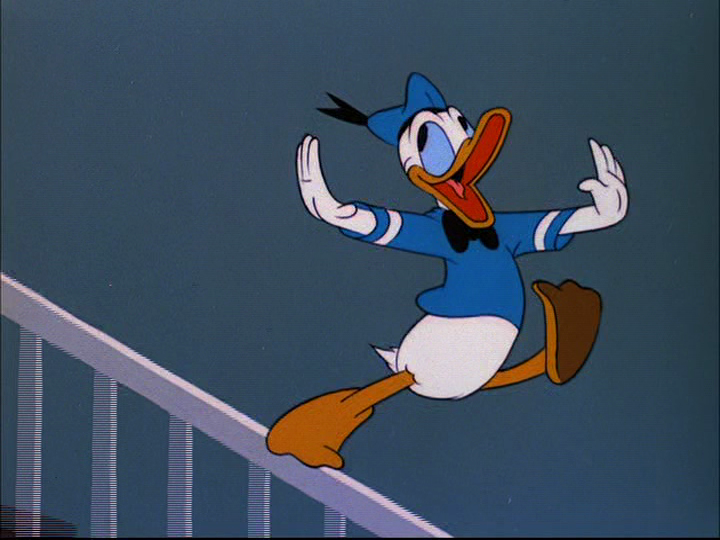
Donald is elated at the support that he receives from Daisy

Donald is next seen looking rather defeated at Daisy’s house, but she insists that he not give up, as she has faith in him. She kisses him and encourages him to try again, and Donald excitedly cartwheels out of the house, determined once more to try. Again, much to Donald’s dismay, he is misunderstood and sent packing by the owner of the house. Humiliated and angry, Donald continues to walk the city streets, until he passes a peddler selling “voice pills” for only 10 cents. Donald doesn’t believe it, but is willing to try anything once, so he buys a box.

Donald tries a pill, and instantly, his voice changes to sound like Ronald Coleman. Shocked, he tests it out a bit before bursting into rapturous praise. He begins to rush home to tell Daisy, when he decides to instead go sell his brushes, come home to her as a success, and ask her to marry him – although the pill wears off before he can actually state the last part of his plan. Popping in another pill, he completes the statement.

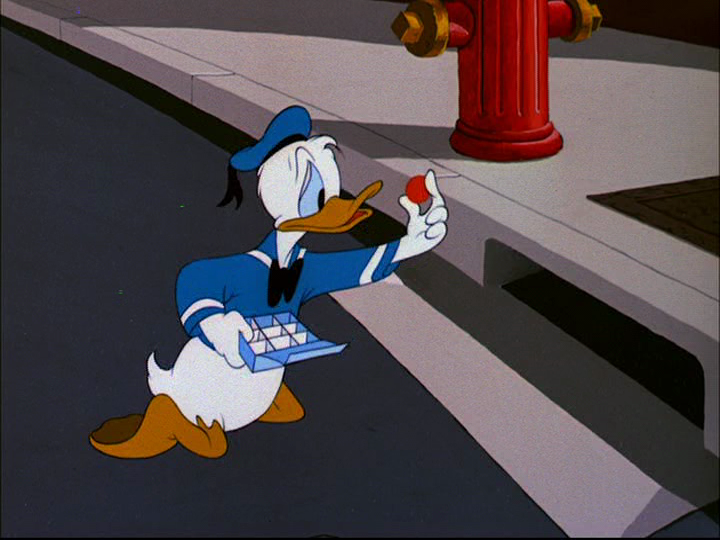
Donald holding the only pill he managed to save

With his new voice, Donald approaches a house, where the woman who lives there remarks on his fine, forceful voice and she can’t help but buy several brushes. Suddenly, several hands appear waving money, wishing to buy brushes from the duck with the amazing voice. Donald then runs home, popping in another pill as the other one wore off. As he runs, he trips on the sidewalk, and the pills pop out of his pocket and fly into the sewer, save for one that Donald manages to retrieve. With only one left, he decides he has to save it for the moment he proposes to Daisy.

Arriving at Daisy’s house, Donald is ready to ask the question when the pill wears off. Grabbing the last remaining pill, it slips from his hand and bounces down the sidewalk, falling into a sewer hole. A large, thug-like man emerges from the hole, with the pill safely in the top of his hat. Donald follows the man, trying to get the pill, but the man yells at Donald, informing him that he hates people. Donald then tries the approach of grabbing the pill from the man’s hat through a nearby window, but accidentally grabs the man’s nose.

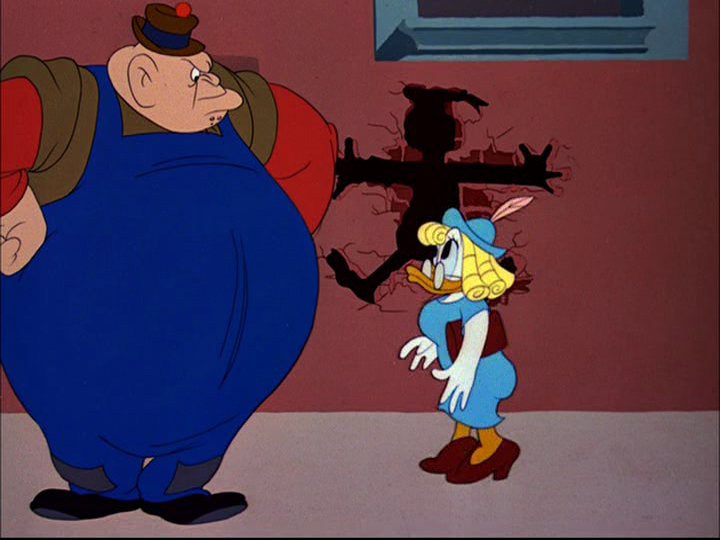
Donald’s last resort when it comes to retrieving his pill

As a last ditch effort, Donald walks by, dressed as a woman, hoping the man will lift his hat in a polite greeting. He does so, and as the pill bounces away, Donald quickly slips down the street and races after the pill as he turns the corner. The pill bounces into a farmyard labeled “no trespassing,” and Donald watches in horror as it slips into a cow’s open mouth. The duck bursts into the fenced in yard and starts screaming at the cow, when the cow, now with the voice of Ronald Coleman, tells him to shut up and that the sign says “no trespassing.” As Donald tries to get the pill back, the cow informs him that he can’t understand a word the duck says, causing Donald to fly into a rage.

May 20

Posted on

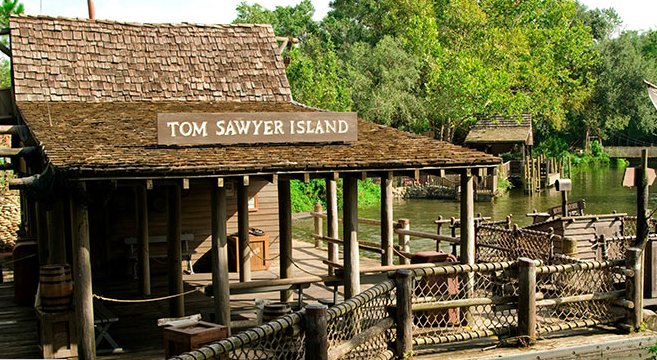
May 20, 1973 – The Tom Sawyer Island Attraction Opens in Walt Disney World

Image Credit: Official WDW Site

 “Sitting alongside the Rivers of America on the porch of Aunt Polly’s Dockside Inn, sipping on a glass of lemonade, you can soak up a real glimpse of the idyllic world of yesteryear that Mark Twain and Walt Disney loved.”

On May 20, 1973, Tom Sawyer Island opened in Walt Disney World’s Frontierland. The original attraction in Disneyland opened on June 16, 1956; there were a few changes made when the attraction moved to Florida, including the fort being renamed to Fort Sam Clemens. Both islands were located the middle of the Rivers of America on opening day of their respective parks, but the attraction didn’t open until months later.

The Tom Sawyer Island is a leisurely walk-around area designed to resemble America in the 19th century from the novels of Mark Twain. Guests can travel to the island using a raft at Tom’s Landing, near Big Thunder Mountain Railroad. There are many areas worth exploring on the island, as guests can pretend they are living out the adventures of Tom Sawyer and Huckleberry Finn.

May 19

Posted on

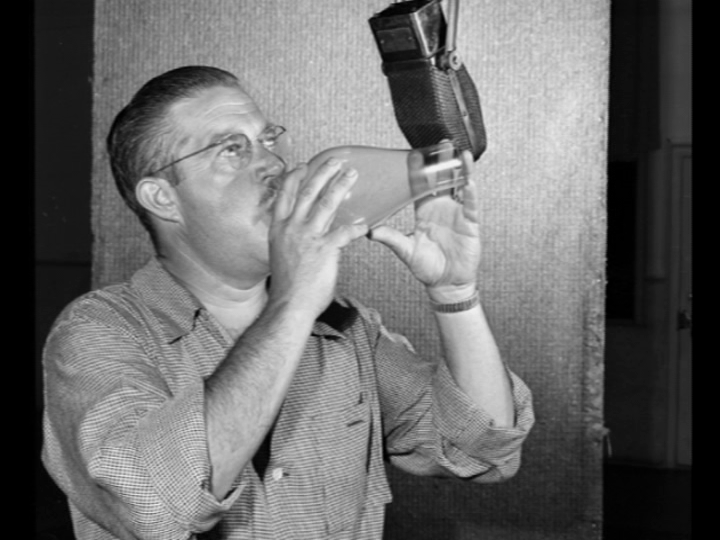
May 19, 1906 – Birth of Disney Legend, Sound Effects Wizard, and Voice of Mickey Mouse, Jimmy MacDonald

“Jimmy was Walt’s major sound effects man. You name it. All the gags that you hear in the old cartoons, that’s Jimmy. The train in Dumbo, Jimmy. He built these things…he was a genius at it. And [there was] nobody better.” – Wayne Allwine

On May 19, 1908, John James MacDonald was born in Monks Coppenhall, Cheshire, in the United Kingdom. When he was six months old, his family immigrated to the United States. MacDonald loved music, and as an adult, he was a musician on the Dollar Steam Ship Lines, which led to a job at the Disney Studios in 1934 recording music for a Disney film. MacDonald soon became the head of the sound effects department. Wayne Allwine, who worked with MacDonald in the sound effects department, remarked that “…it was as a musician on the recording sessions for the early cartoons that Walt heard Jimmy, saw that he had more gadgets, as he called them, than anybody else in town, and hired him to come in and do his sounds, as he called them, for the cartoons.”

MacDonald (R) with apprentice and replacement for the voice of Mickey Mouse, Wayne Allwine (L)

In 1947, Walt Disney was becoming busier, and his voice was getting hoarse from his smoking, so he asked MacDonald to begin voicing Mickey, which began with the film Fun and Fancy Free. “And Jimmy said, ‘I was down here working one day, and Walt called me into his office and said, ‘Can you do Mickey?’” Allwine explained in an interview with Leonard Maltin. “And Jim said, ‘I don’t know, Walt. I never tried.’ He said, ‘Let’s hear ya.’ And Jimmy did a few lines, and Walt said, ‘That’s fine. From now on, call Jimmy. I’m too busy.’” Allwine described MacDonald’s Mickey: “Jimmy’s Mickey was interesting. Jimmy was a bass. Nice deep voice. And for him to do Mickey, he had to really work at it, and you can hear a texture in Jimmy’s Mickey that you don’t hear in Walt’s.” The only time in MacDonald’s career as Mickey that Walt once again resumed the role was when voicing the intros to the Mickey Mouse Club. MacDonald voiced the character on a regular basis until 1953, which turned into a recurring role until 1977, as he was having a rough job keeping the falsetto as he got older.  His sound effects assistant, Wayne Allwine, was picked as his replacement, and in 1977, MacDonald retired from the Walt Disney studios.

MacDonald passed away in his home at the age of 84 in 1991, and was named as a Disney Legend in 1993. In a rare treat, the Disney Studios had recorded all of the sound effects MacDonald had created, and used them for the television show, House of Mouse; MacDonald’s sound effects legacy continues to last thanks to the preservation efforts of the Foley sessions.

May 18

Posted on

May 18, 2004 – The Third Wave of the Walt Disney Treasures is Released

Image Credit: Wikipedia

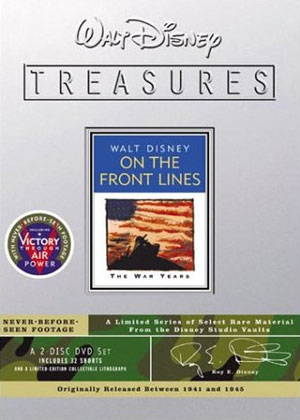
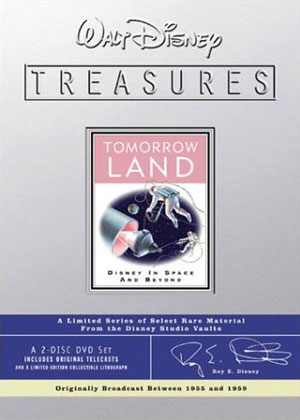
On May 18, 2004, Disney’s video distribution company, Buena Vista Home Entertainment, released the third wave of the popular Walt Disney Treasures. This set included Mickey Mouse in Living Color, Volume Two; The Chronological Donald; On The Front Lines; and Tomorrow Land. Although this wave was supposed to be released in December, as the other two were, the release had to be delayed to meet the demand of the popularity of the sets. As with the other two waves, the third set was introduced by film critic Leonard Maltin, who also provides commentary for the more politically incorrect works, known as the works “In the Vault.”

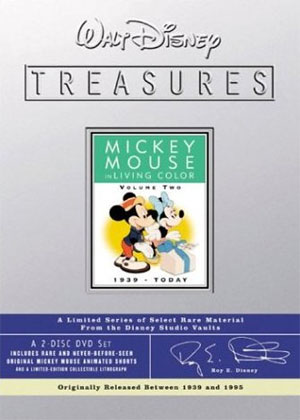
Mickey Mouse in Living Color. Image Credit: wikipedia

Mickey Mouse in Living Color, Volume Two is the second of the Mickey Mouse color short collections, and the fourth Mickey Mouse collection in all. The first disc gives the shorts from 1939 to the last Mickey Mouse short film in 1953, with bonus features including The Sorcerer’s Apprentice from Fantasia, Mickey and the Beanstalk from Fun and Fancy Free, as well as an Easter egg of Walt Disney performing the voice of Mickey for the short Mr. Mouse Takes a Trip. Disc two shows the modern revival of Mickey Mouse, which includes Mickey’s Christmas Carol, The Prince and the Pauper, and Runaway Brain. The bonus features are numerous on this disc, and include an interview with the voices of Mickey and Minnie (Wayne Allwine and Russi Taylor), an interview with Disney animators Mark Henn and Andreas Deja, and clips from the Walt Disney anthology series that use Mickey as an example of animation techniques.

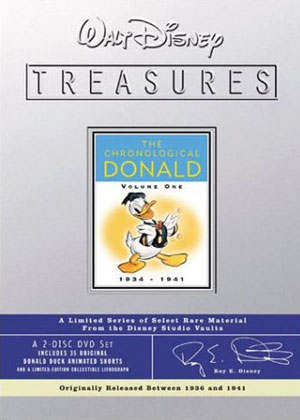
The Chronological Donald. Image credit: wikipedia

The Chronological Donald is the first set of Donald Duck short films, which begins with the Silly Symphony The Wise Little Hen in 1934 on disc one, and ends with the 1941 short Chef Donald on disc two. The disc one bonus features include a clip from the film The Reluctant Dragon, where the voice of Donald, Clarence Nash, is heard performing with Florence Gill, the voice of Clara Cluck. Disc two includes a mini-biography about Clarence Nash, and how his unusual voice inspired the creation of Donald Duck, as well as another clip from The Reluctant Dragon, where Donald is explaining to Robert Benchley how animation comes to life.

On the Front Lines. Image credit: wikipedia

On the Front Lines is a collection of all the propaganda, educational shorts, and films released when the Disney Studios were taken over during World War II. Disc one includes mostly the short films, including the shorts where Donald is drafted into the army. In the vault, there are four films: Der Fuehrer’s Face (a propaganda film where Donald believes he lives in a land occupied by Nazis), Education for Death (a chilling film based on the book by Gregor Ziemer), Reason and Emotion (a humorous look about how people needed to keep their emotions in check during wartime), and Chicken Little (a horrifying update to the children’s story). Disc two is of the film Victory Through Air Power, which Walt Disney created to send a message to the American people that the war could be won through the use of aviation and long-range bombing. This DVD set is the first release of the film since its rerelease in 1944. This disc also includes some training shorts, behind the scenes documentaries of the film Victory Through Air Power, galleries of insignias and posters created during wartime, and an interesting interview with long-time Disney employee John Hench, who recounts his time at the studio after the attack at Pearl Harbor.

Tomorrow Land. Image credit: wikipedia

The last set in this wave is Tomorrow Land, which pulls together episodes from the anthology series about space and the future, with many of these episodes directed by Nine Old Men member Ward Kimball. The first disc has three episodes: Man in Space, Man and the Moon, and Mars and Beyond. The second disc includes Eyes in Outer Space, Our Friend the Atom, and EPCOT, a look at the Florida Project Walt Disney planned, which was to be a Tomorrowland type theme park. Bonus features include interviews with author Ray Bradbury and long-time employee Marty Sklar, as well as an Easter egg of the Sherman Brothers singing “There’s a Great Big Beautiful Tomorrow” with Walt, as the song was featured at the General Electric Pavilion at the 1964 World’s Fair.

May 17

Posted on

May 17, 1950 – Disney Legend and Lyricist Howard Ashman is Born

“Howard is referred to by Roy Disney as another Walt, which shocked me when I was interviewing him, because of all people, why would Roy say this about Howard Ashman? But he was, to us and our generation, he was a Walt Disney type.” – Don Hahn

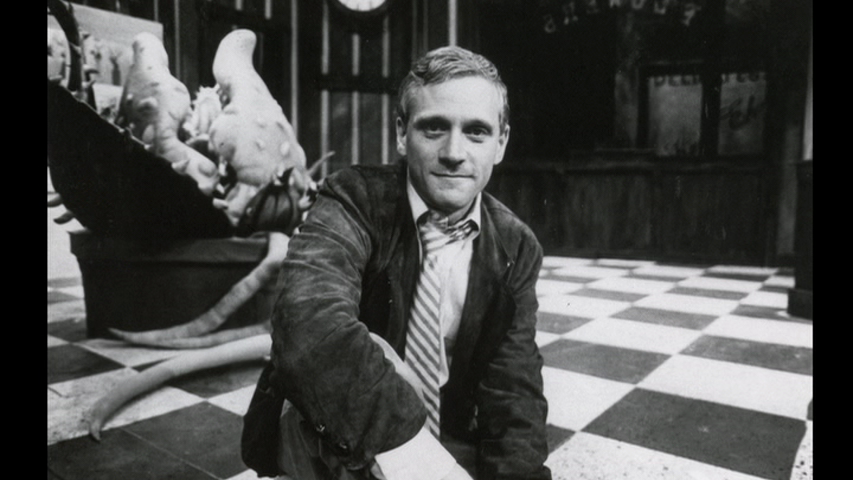
Howard Elliott Ashman was born on May 17, 1950, in Baltimore, Maryland. An early lover of theater, Ashman joined the Children’s Theater Association at age nine and remained there until he left for college in 1967. Although Ashman loved acting, in college he discovered his love of writing and directing. After school, he became the artistic director of the WPA Theater in New York, and met writing partner Alan Menken while working on a musical adaptation of Kurt Vonnegut’s God Bless You, Mr. Rosewater. The two had a major success with the show Little Shop of Horrors, and Ashman won a Drama Desk Award for Outstanding Lyrics.

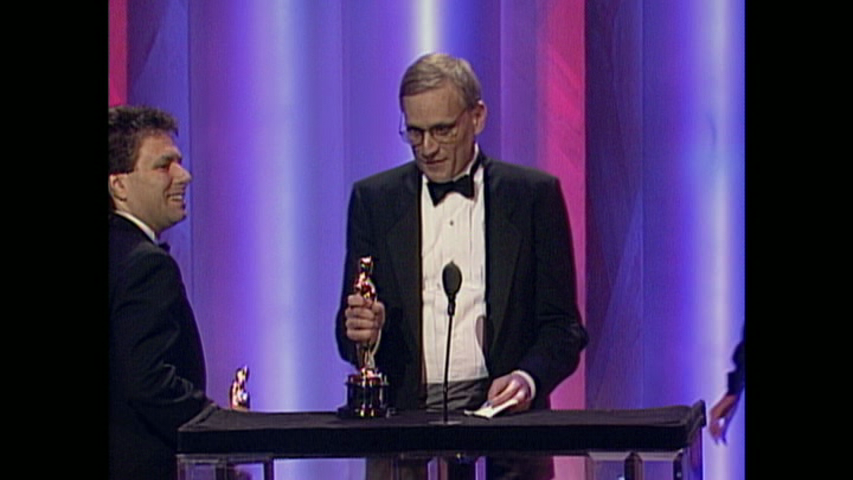
David Geffen was key in bringing Ashman and Menken to the Disney Studios. When Ashman came to Disney, he was offered three projects: an adaptation of Tina Turner’s autobiography, a live action version of The Thief of Baghdad (which would later become Aladdin), and The Little Mermaid, which he chose to work on. At the film’s crew meeting, Ashman said, “When I was approached with the opportunity to work for Disney, period, I leapt at the – I said, ‘What about animation? What about working in that department?’ That’s what I really wanted to do.” It was Ashman’s idea to make Sebastian the crab a Jamaican crab, which brought a whole different musical style to Disney animation. Ashman also brought in Jodi Benson as the voice of Ariel. He and Alan Menken won the Academy Award for Best Song for “Under the Sea.”

Ashman and Menken (L) winning the Academy Award for “Under the Sea”

In 1988, Ashman found that he was HIV positive, but continued to work for Disney on Beauty and the Beast. Disney allowed Ashman to work in New York, and he was instrumental in many aspects of the film, from the casting to some of the characterizations. The staff showed the film to the New York press, which responded with great reviews. After the showing, the staff rushed down to St. Vincent’s Hospital in Manhattan, where they saw Ashman wearing a Beauty and the Beast sweatshirt. Don Hahn recalled, “Before we left I bent over and whispered, ‘Beauty and the Beast is going to be a great success. Who’d have thought it?’ I said. And Howard lit up and whispered, ‘I would have.’”

Howard Ashman died on March 14, 1991, at the age of 40, from complications with AIDS. He never saw the completed film. The Disney animators honored Ashman at the end with a tribute at the end credits: To our friend, Howard, who gave a mermaid her voice, and a beast his soul. We will be forever grateful. Howard Ashman: 1950 – 1991. Ashman was awarded an Academy Award posthumously for the song “Beauty and the Beast.” He was also named as a Disney Legend in 2001.“Howard Ashman was the key to much of our success,” said Peter Schneider. “He was a great storyteller, he knew how to lyrically be funny…[Howard and Alan] really shaped what these movies were to become.”

May 16

Posted on

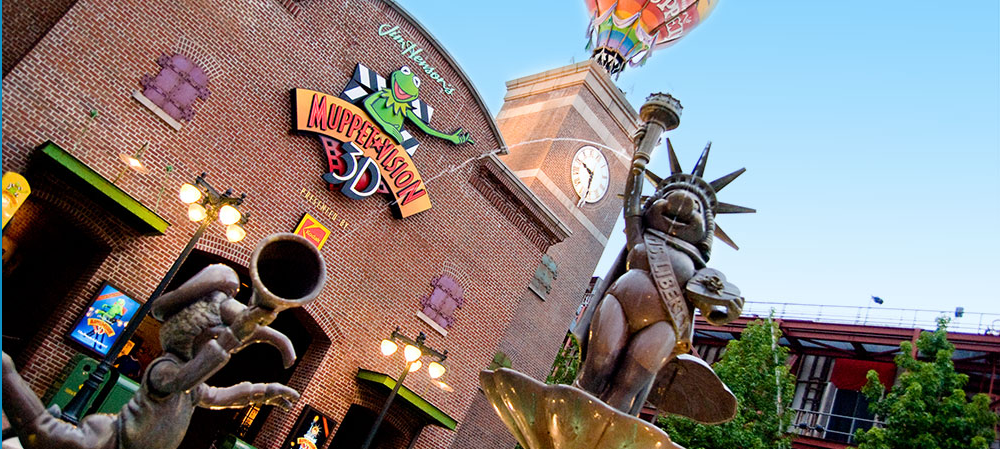
May 16, 1991 – Jim Henson’s Muppet*Vision 3D Opens in Walt Disney World

Image Credit: Official WDW Webpage

“It’s time to play the music! It’s time to light the lights! It’s time to meet the Muppets—in 3D tonight!”

On May 16, 1991, Jim Henson’s Muppet*Vision 3D attraction opened at Disney MGM Studios at the Walt Disney World Resort. Sponsored by Kodak, the attraction takes the characters of the Muppets and takes their hijinks to a new level with 3D. The audience begins with passing through show props and wooden crates, and is entertained with a 12 minute pre-show film hosted by Rizzo, Gonzo, and Fozzie Bear. The show itself is only 17 minutes long, and the theater looks as it did during the heyday of the Muppet Show.

One Muppet of note is Waldo C. Graphic, a computer-generated Muppet that premiered on The Jim Henson Hour in 1989. He was reintroduced in the 3D attraction, having been “created” by Dr. Honeydew and Beaker, and causes the majority of problems for the rest of the Muppet cast throughout the show.