RSS Feed

Monthly Archives: October 2012

October 11

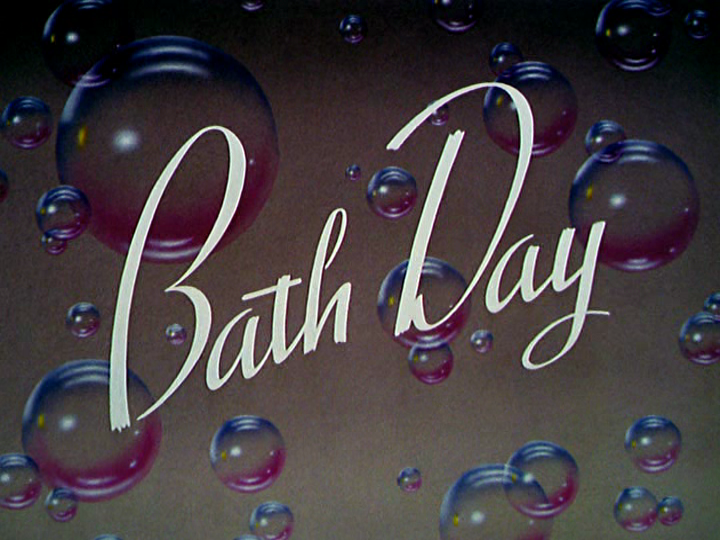
October 11, 1946 – The Figaro Short Film Bath Day is Released to Theaters

“Figaro…time for your nice warm bath.”

On October 11, 1946, the Figaro short film Bath Day was released to theaters. A handful of shorts for the kitten from Pinocchio were released, this time being seen as Minnie’s pet. The short was directed by Charles Nichols, with the story by Eric Gurney.

Figaro is taking a nap, when someone off-screen calls for him. He looks up to see Minnie Mouse waiting to give him a bath. Hearing this, Figaro hides and fights with Minnie, refusing to get into the tub. Minnie grabs some bubble bath, and begins to wash the cat, who is less than thrilled. She finishes the wash with a bow around his neck and some perfume. Minnie calls him beautiful, which Figaro interprets as looking like a sissy. Angered, he throws a tantrum, and falls out the window.

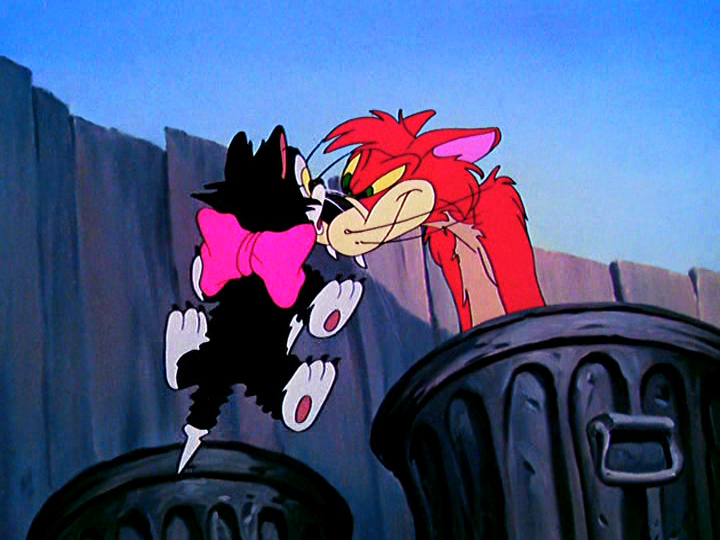
As Figaro tries to trace the fish he smelled, he runs into a mean alley cat instead

Outside, he gets caught by the aroma of fish, and follows it into the trashcan, where he runs into a mean alley cat. The cat looks at Figaro, and calls over his gang of cats, who all proceed to laugh at Figaro and his bow. Figaro tries to attack the alley cat, but is unable to lay a punch on him. The cat then pretends to be scared by Figaro, then gets the upper hand of the fight. When the alley cat places the shaking kitten against a mountain of trashcans, the shaking causes the entire mountain to fall, knocking the alley cat out cold. The gang is surprised to see Figaro walk unscathed, and run away from the kitten. Minnie finds him after this fight, and is given another bath, against his will.

October 10

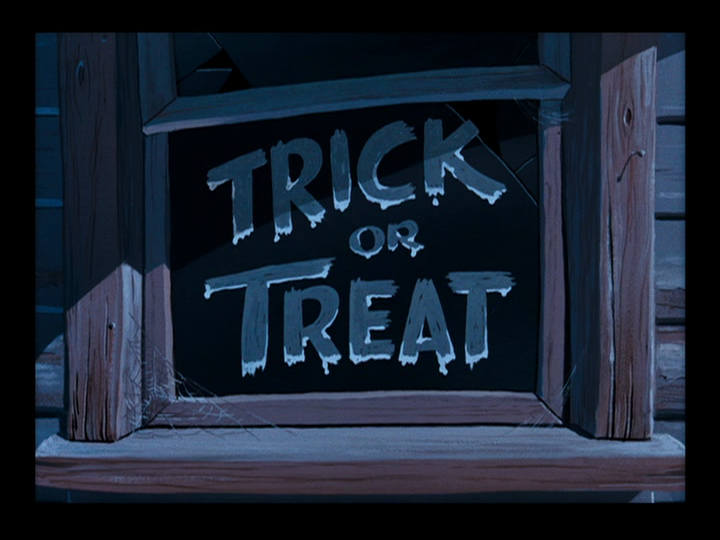
October 10, 1952 – The Donald Duck Short Film Trick or Treat is Released

“Trick or treat, trick or treat, trick or treat, the whole night through, little scalawags with fiendish gags can make it tough on you.”

On October 10, 1952, the Donald Duck short film Trick or Treat was released to theaters. The short was directed by Jack Hannah, with story by Ralph Wright, and music by Paul Smith. It stars Clarence Nash as Donald and the nephews, and June Foray as Witch Hazel.

It’s Halloween night, and a witch is seen flying around in the night sky. She stops to observe Huey, Dewey, and Louie trick or treating, and sees when they ring Donald’s door. Instead of Donald giving them candy, he gives them firecrackers, blowing up their trick or treat bags. He then dumps a bucket of water on them. The witch, named Hazel, feels sorry for the three, and stops in front of them, offering to help get revenge on their uncle. She stops at Donald’s door and receives the same treatment, and decides to resort to some more drastic measures.

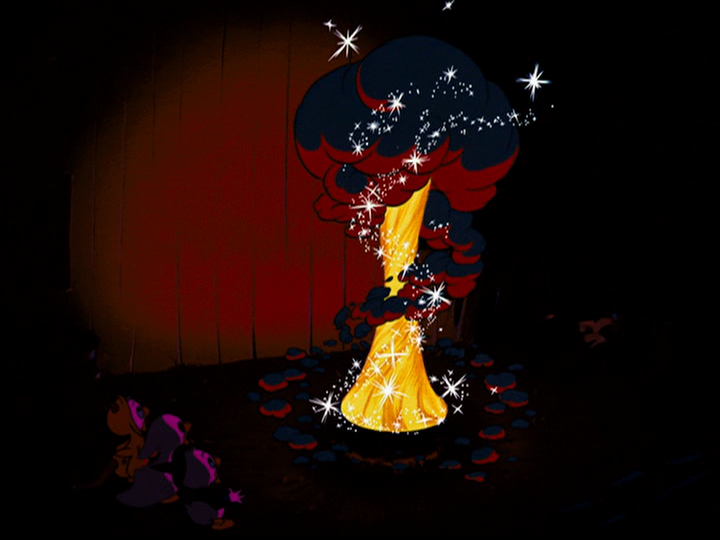
The ingredients of the potion combine, causing a massive explosion

Hazel stands in front of her cauldron, with the nephews putting in all the ingredients she needs. The nephews watch in awe as the potion explodes. Hazel takes some potion with her, and the four of them fly off to Donald’s, with Hazel spraying the potion first on a pumpkin, which comes to life and startles Donald. She then sprays a paintbrush, which begins to paint Donald’s house green. Ghosts then appear at Donald’s door, scaring him before Hazel and the boys dive into the house, using her broom to pin him against the wall and give the boys the treats.

Unfortunately, when Hazel calls Donald a pushover, Donald changes his mind, locks the treats up, and swallows the key. Hazel doesn’t give up so easily, and she casts a spell on Donald’s feet, first causing the feet to kick out the key from Donald. Donald desperately tries to hold on to the key, but Hazel is able to have it released. Although Donald grabs the key at the last second and throws it under the cupboard door, Hazel decides to have Donald’s feet kick the door down – using Donald. The last attempt is successful, and kids have all the treats they want. The nephews wave goodbye to Hazel as she flies away.

October 9

October 9, 1942 – The Goofy Short Film The Olympic Champ is Released to Theaters

“The ritual of the Olympiads demands that this heroic flame shall not become extinguished, but shall be kept burning at all costs, serving as a beacon whose unfailing light shall guide all athletes in fair play and clean sportsmanship…”

On October 9, 1942, the Goofy short film The Olympic Champ was released to theaters. It was directed by Jack Kinney, and stars John McLeish as the narrator.

Our narrator takes us back in time to Mt. Olympus, the birthplace of the Olympic Games. The first person we see is the torchbearer, who takes it all across the world, from Rome to China. The torch is then brought to a present day Olympic coliseum, where the narrator goes into a speech about how the Olympic flame must never be extinguished. During this, the flame burns down to Goofy’s hand, and extinguishes.

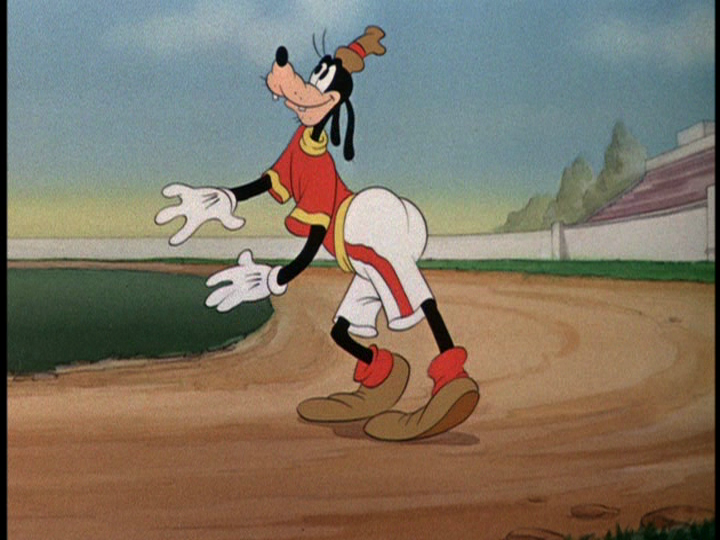
Goofy, in an attempt to show running form, ends up dancing all over the track

The first Olympic event we see is the racer, with Goofy first acting as a sprinter, then a long distance runner, a marathon runner, then a walker. Goofy then ends up dancing all over the field. After the runner is the hurdler. Goofy begins to jump the hurdles, but after catching one on his foot, he ends up carrying all the hurdles with him to the finish line. Pole vaulting follows this, with Goofy holding to the top, trying to cross the bar as he sits at the top of the pole. He is accidentally catapulted into the sky, but is able to land safely. Goofy then attempts the hammer-throw, but ends up destroying everything in the field and drilling himself into the ground, striking oil as he does so.

The last event is the decathlon, culminates in Goofy not only destroying more Olympic equipment, but landing headfirst into the scoreboard, knocking down all of the trophies. Goofy is unharmed, however, standing up with a smile and revealing a shiny trophy under his hat.

October 8

October 8, 1999 – The Documentary The Hand Behind the Mouse: The Ub Iwerks Story Premieres in Los Angeles, California

“When you talk to people about the history of animation, you say, ‘Oh, and then Ub Iwerks…’ they go ‘Uh, Oob?…What kind of a name is that?’…it’s the name if the guy who first drew Mickey Mouse.” – John Lasseter

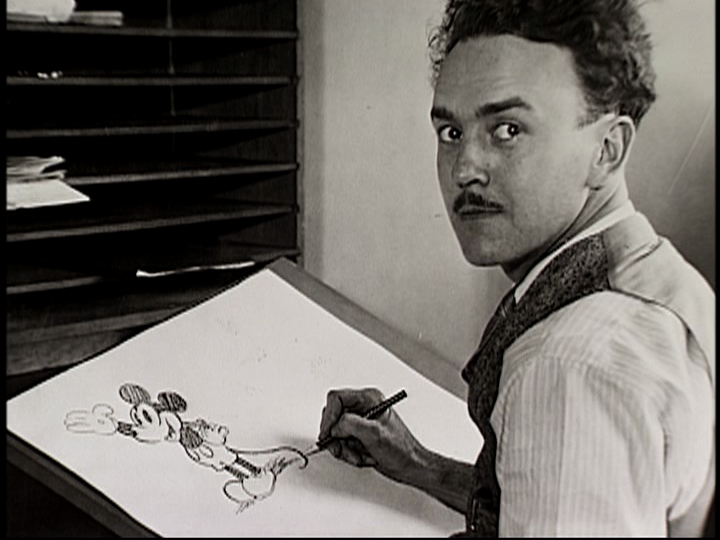
On October 8, 1999, The Hand Behind the Mouse: The Ub Iwerks Story premiered in Los Angeles, California. Narrated by Kelsey Grammar, the documentary tells the oft untold story of one of the creators of Mickey Mouse: Ub Iwerks. It was directed and written by his granddaughter Leslie Iwerks, The documentary begins with how to the two worked to make Mickey Mouse, with Iwerks working overnight to create the character’s design.

The documentary takes us through Ub’s life story, beginning in Kansas City, Missouri, and his meeting with a young man named Walter Disney. The two became fast friends, and attempted to start their own business, but it wouldn’t last. Over the years, the two would work together many times, until they finally hit success with the Alice Comedies and Oswald, the Lucky Rabbit, with Ub animating most of the cartoons. After losing their character and co-workers to Charles Mintz, the two created their new character in secret: Mickey Mouse. The success of Mickey Mouse surprised them, as did the success of the Silly Symphonies. The film also explores the breaking of the Disney Iwerks partnership, when Ub left to strike out on his own creatively, with his successes and failures, as well as the new inventions he created to add more life to his animations. Iwerks would return to Disney in 1940, this time in a technical capacity, and would be well known for his achievements in special effects.


October 7

October 7, 1919 – Actress and Disney Legend Betty Taylor is Born

“Betty’s role as leading lady in Disneyland’s Golden Horseshoe Revue helped turn it into the longest-running stage show in entertainment history.” – George Kalogridis, Disneyland Resort President

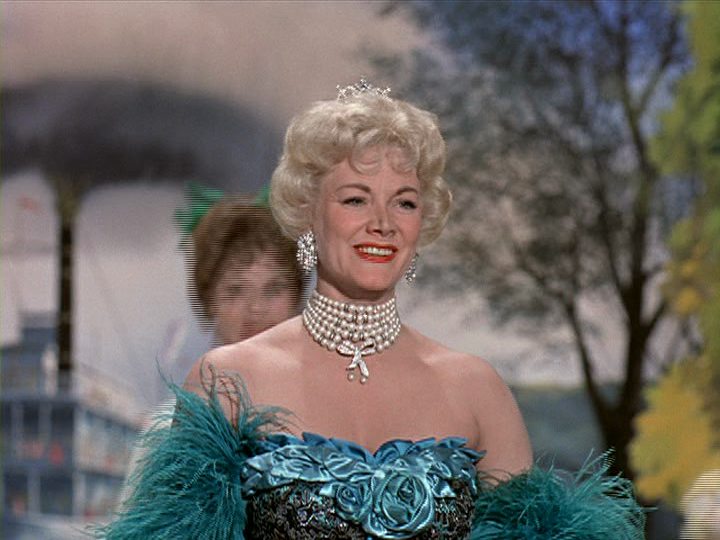
On October 7, 1919, actress Betty Taylor was born in Seattle, Washington, and begin taking dance lessons at an early age. At age 18, she led her own band known as Betty and Her Beaus. She then performed on a western radio show called “Sons of the Pioneers,” and went on to perform in Las Vegas with Frank Sinatra. In 1956, before hitting the road again, Taylor heard of auditions being held in the new Disneyland theme park, and won the role of Slue Foot Sue in the Golden Horseshoe Revue. The show became immensely popular, with the troupe appearing in an episode of “Walt Disney’s Wonderful World of Color.” Taylor retired from the show in 1987, but continued to appear in special events. She passed away on June 4, 2011, one day after her Golden Horseshoe Revue partner Wally Boag died. She was inducted into the Disney Legends in 1995.

October 6

October 6, 2009 – Snow White and the Seven Dwarfs Debuts on Blu-Ray

Image credit: amazon.com

“The one that started it all, more beautiful, more enchanting, more entertaining, now for the first time ever in high definition on Disney Blu-Ray.”

On October 6, 2009, Snow White and the Seven Dwarfs was released for the first time on Blu-Ray, kicking off the Diamond Edition releases from the Disney Vault. The film was released with a new restoration by Lowry Digital. It includes all the special features from the 2001 DVD release, as well as a new interactive documentary of Walt’s first studio, Hyperion Studios. On April 30, 2011, the film was returned to the Vault.

October 5

October 5, 1935 – The Silly Symphony Music Land is Released to Theaters

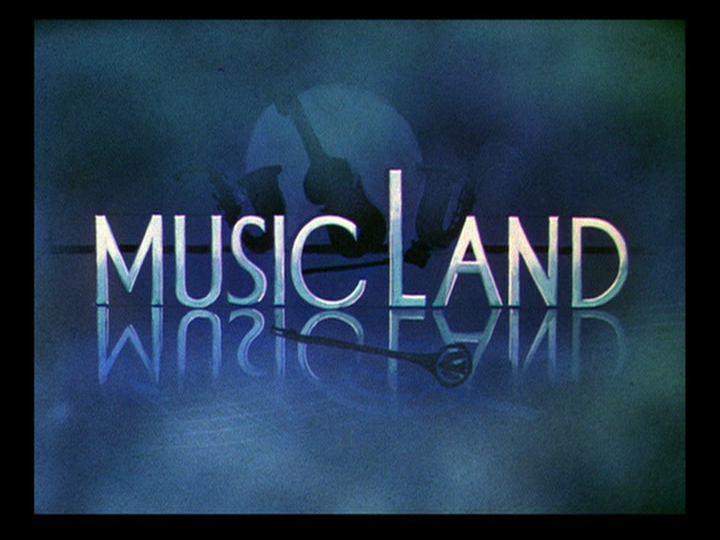
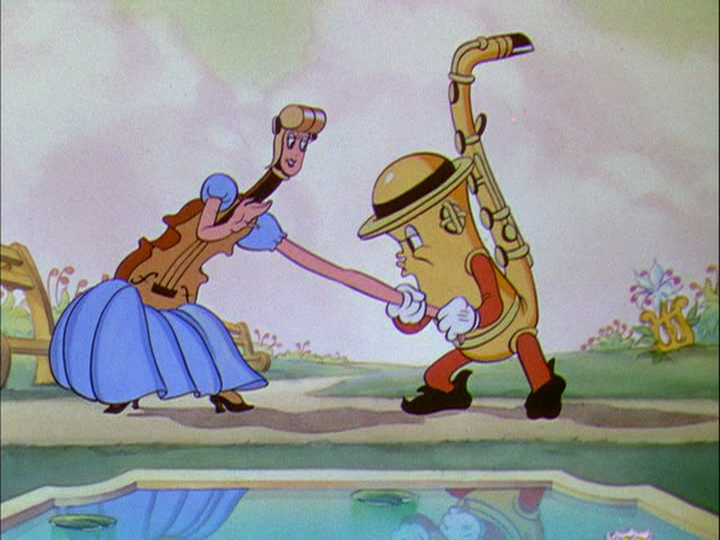
On October 5, 1935, the Silly Symphony Music Land was released to theaters. Directed by Wilfred Jackson, the short consists of dialogue done entirely by musical instruments.

The short begins with a map showing the Land of Symphony separated from the Isle of Jazz by the Sea of Discord. The audience is first taken to the Land of Symphony, where harps and violins are dancing in a beautiful palace to classical music. The princess, seeing that her mother has fallen asleep, sneaks out of the palace to gaze at the lively Isle of Jazz. Inside the castle there, everyone is dancing merrily, except for the prince, who spies the princess through his castle window. The prince sails over to meet the princess, who greets him excitedly.

The prince and the princess meet and begin a forbidden romance while their parents are otherwise occupied

As the two begin their Romeo and Juliet-esque romance, they are soon spotted by the queen of the Land of Symphony, who demands that they stop their nonsense. The prince accidentally kisses the queen, and is taken to jail (a giant metronome). Upon finding that his son is being held prisoner, the king of the Isle of Jazz wages war. The princess climbs into a boat and races out to sea, trying to wave the flag of surrender. Seeing her in danger, the prince escapes from the prison and goes to her rescue. Seeing their children in danger, the king and the queen stop their fighting. As soon as the two rulers meet, they fall in love.

In the end, there is a double wedding between the king and the queen, and the prince and the princess. The lands are then united by the Bridge of Harmony, and both kingdoms celebrate.

October 4

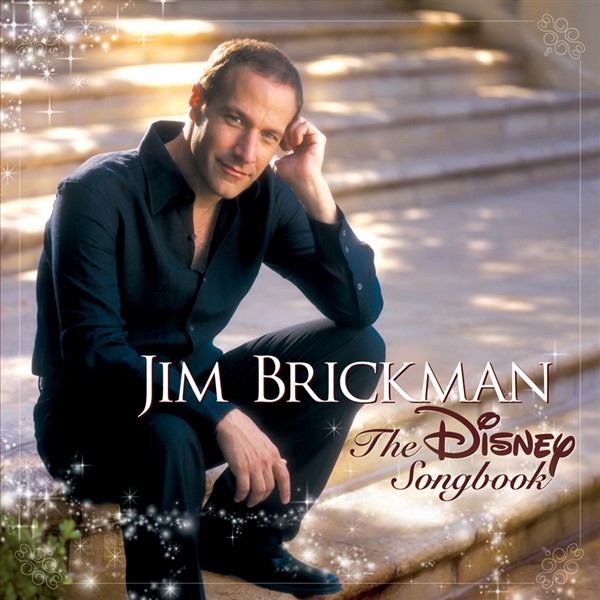
October 4, 2005 – Songwriter and Pianist Jim Brickman Releases The Disney Songbook Through Walt Disney Records

“And when it comes to shooting stars, I’ve seen a few, but I’ve never seen anything as beautiful as you.”

On October 4, 2005, songwriter and pianist Jim Brickman released the album The Disney Songbook through Walt Disney Records. The album contains 13 tracks, 11 of which are redone pieces of classic Disney songs ranging from “Beauty and the Beast” to “Someday My Prince Will Come,” with only two songs using vocals:“When I See an Elephant Fly” featuring the vocals of Josh Gracin, and “Baby Mine” featuring the vocals of Kassie de Paiva. Also included are two original songs inspired by the film Cinderella: “Beautiful” featuring the vocals of Wayne Brady, and “I’m Amazed” featuring the vocals of Lila McCann.

October 3

October 3, 1955 – The First Episode of The Mickey Mouse Club Premieres on ABC

“We are the Merry Mousketeers, Mouseketeers! We’ve got a lot above our ears, above our ears!”

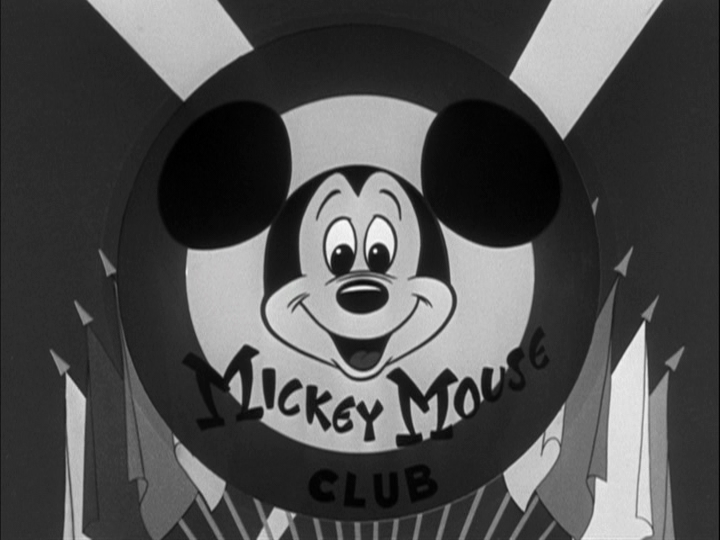
On October 3, 1955, the first episode of The Mickey Mouse Club premiered on ABC. The series was a part of Walt Disney’s contract with ABC, which gave him the money needed to finance the building of Disneyland. The series was the second television series for Disney, and has become one of the most beloved television series ever released. The show was known for its animated opening and theme song, with Donald Duck having varying misfortunes as he struck a gong at the end. The show usually featured about 24 different Mouseketeers, with as many as 39 at one point. This series ran from 1955 to 1959.

The first episode, “Fun With Music Day,” begins with the Mickey Mouse Club Newsreel, which gives kids an idea of kids’ lives across the world. It starts in the Florida Everglades, where kids are on an airboat ride exploring the Everglades, the home of the Seminole Indians. The news then travels to Rome, where the Italians are celebrating Carnival. As they ride a merry-go-round, the kids play the song “Bibbidi-Bobbidi-Boo” from Cinderella on instruments. A world report follows, starting in London, where television star Sooty joins the Mickey Mouse Club. In Tokyo, veteran cameraman Henry Kotani brings the news of the Tokyo swim meet. Golden Oak Ranch is then shown, on location during the filming of The Adventures of Spin and Marty, then it’s going back to Burbank, where the camera shows the filming of Davy Crockett, following the cast on location to Kentucky. The camera then goes back to the Disney Studios, introducing the Mouseketeers.

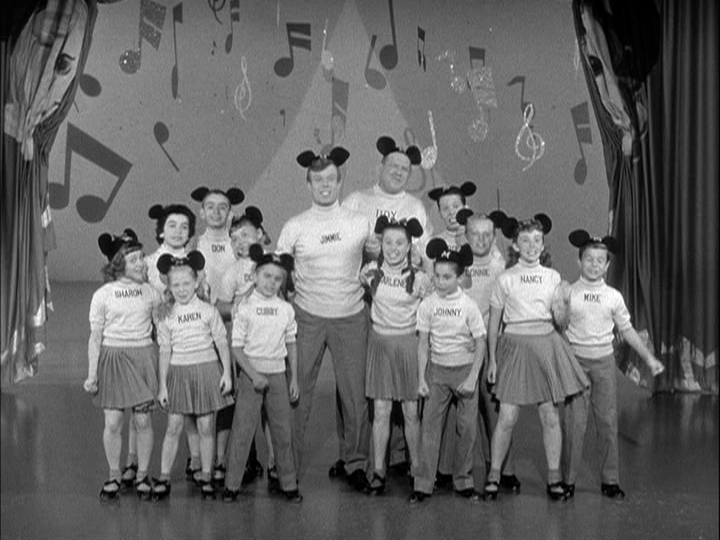
The first showing of the Mousketeers, with hosts Jimmie and Roy

After a quick commercial break, the show returns, with host Jimmie Dodd introducing a tap dance routine by Mousketeers Don, Doreen, Darlene, Bobby, Annette, Lonnie, and Nancy. They are soon joined by Sharon, Mike, Karen, Cubby, Johnny, and Jimmie. Roy jumps in at the end before they sing an introduction song and the roll call. After this, the Mouseketeers present “A Mousekartoon Special” called The Friendly Farmers. They perform a song about farmers owning some animals, while a special guest acts out the animals.

The Mouseketeers then perform “The Shoe Song” with Roy drawing as they sing. Jimmie announces the Musketeers as they come in, performing in costumes ranging from clowns, to cowboys, to ballerinas. It ends with a “wedding” between Cubby and Karen, with several shoes tied to the back of their kart. This is then followed with a serial known as “What I Want To Be,” which explores the careers of a pilot and an airline hostess, as hosted by Alvy Moore. A young girl named Pat and a young boy named Duncan are taken to see what being a hostess and a pilot is really like, with the promise that the segment will continue the next day.

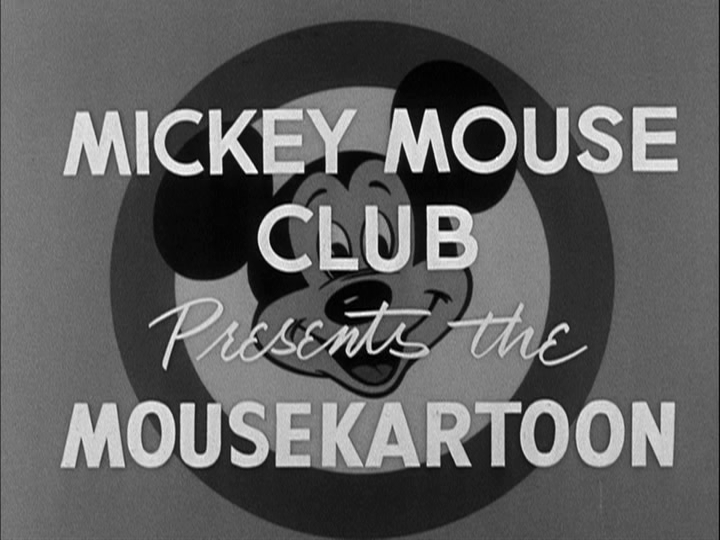
The title for the Mousekartoon, with one being shown every day

Following that is the Mousekartoon, presented by Karen. She lets the audience know that the cartoon that day is Pueblo Pluto, a short film originally released on January 14, 1949, with Jimmy MacDonald voicing Mickey. After the Mousekartoon, Jimmie steps on camera, introducing how the show will be set up from that episode forward, including the themes of the days of the week. After this, the Mouseketeers and Jimmie sing goodbye, and Mickey gives a goodbye as well.

October 2

October 2, 1992 – The Live Action Film The Mighty Ducks is Released to Theaters

“Here’s the long and short of it: I hate hockey and I don’t like kids.”

On October 2, 1992, the live action film The Mighty Ducks was released to theaters. It is the first film in The Mighty Ducks trilogy, and was followed by D2: The Mighty Ducks and D3: The Mighty Ducks. It was written by Steven Brill, and directed by Stephen Herek. The film stars Emilio Estevez as Gordon Bombay, Joss Ackland as Hans, Lane Smith as Coach Riley, and Joshua Jackson as Charlie.

The film begins with a flashback of the main character, Gordon Bombay, when he was the star player of his pee-wee hockey team in 1979. He misses the goal that costs his team the game; as his coach looks at him with obvious disappointment, Gordon falls sadly to his knees on the ice. We then switch back to present day Minneapolis, where Gordon is a hotshot lawyer, always out for the win regardless of any ethics. One night, he is pulled over by an officer for driving drunk, and is later sentenced to community service coaching pee-wee hockey, much to his annoyance, as well as a forced leave of absence by his boss, Mr. Ducksworth.
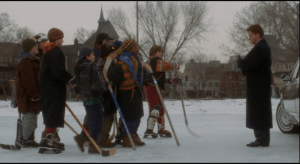
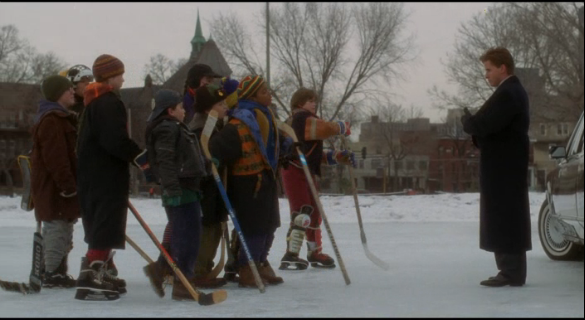
At the first meeting between Bombay and the kids, they believe him to be dangerous, and he has little patience for their antics

The first meeting of the District 5 team and Bombay does not go well, as the kids admit that they “really suck,” and Bombay has little patience for kids and clashes with the parents. He attends their first game, which is unfortunately against his old pee-wee team, the Hawks. He runs into his old coach, Coach Riley, who still instills in the kids that winning is everything, and still is disappointed about the team’s loss in 1979. The first game is an embarrassment, with District 5 losing 17 to 0. As Bombay walks out on the team, he sees a familiar face at the doors, and is shocked to see that it is his old friend and mentor Hans. He runs after him, but is unable to find Hans in the parking lot. Bombay then switches his training to having the kids take falls and pretend they’ve been injured by the other team. Charlie, one of the players, refuses to play dirty hockey.

Not knowing what to do anymore, Bombay finds Hans at his sports shop, and asks for advice. Bombay is reminded that he gave up hockey after that disastrous game, with his father having died four months prior, and his passion for the game having disappeared. Hans helps him rekindle his love for hockey, and asks him to teach the kids how to fly. After being inspired by Hans, Bombay goes to Charlie’s house to apologize to Charlie and his mother for his behavior before, and then goes to his boss and asks for the firm to sponsor the team. The team then is named the Ducks, after the boss. Charlie soon begins to bond with Bombay, and the team continues to add new members and improve their skills.
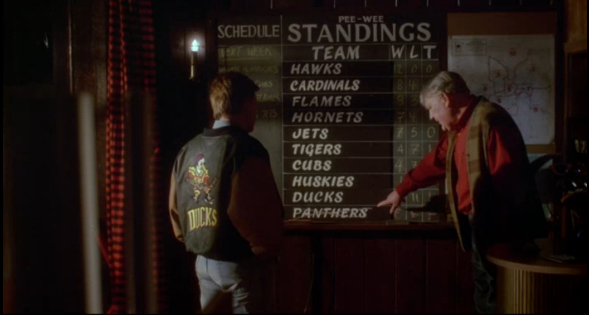
After their tie game, Hans explains to Bombay that the Ducks still have a chance of getting into the playoffs and facing the Hawks

The team manages to tie their next game, and Hans lets Bombay know that the Ducks may be able to make the playoffs. When Bombay voices his concern about the possibility of facing the Hawks, Hans tells him that the district lines were redrawn the previous year, and that the Hawks’ star player, Adam Banks, is supposed to play with the Ducks. Coach Riley is furious with Bombay, accusing him of backstabbing. Bombay, however, feels that he’s playing by the rules. The Ducks hear Bombay call them losers (although he was being sarcastic), and with the discovery that he was once a Hawk, most of them decide they don’t want to play for him anymore. Bombay doubts he can stay the coach if the team doesn’t trust him and Adam Banks, which upsets Charlie greatly.

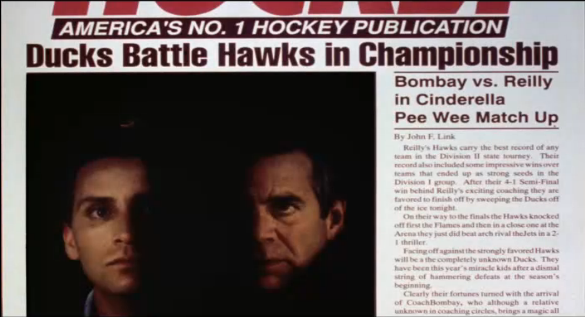
Bombay encounters more problems when he finds that his boss is an old friend of Adam Banks’ father and, with Coach Riley, the three demand that Bombay drop his protest. He refuses, and loses his job. At school, the kids have a fight over the fate of the team, which subsequently reunites them, and Bombay, when he comes by to talk to them. Adam decides to join the team, but the team still doesn’t trust him, as they still consider him a Hawk. However, with his help, they win the game and make it to the playoffs. They eventually make it to the final match versus the Hawks. Bombay, however, is still haunted by the 1979 game and Coach Riley’s disappointment in him.
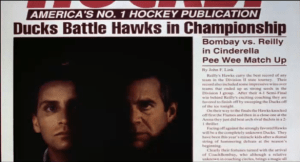
The match is considered an intense one, with Bombay against Riley, Adam Banks against his former team, and the Hawks defending their title against the Ducks

The game is intense from the get-go, with Banks’ former teammates trying to keep him down on the ice. The Hawks score first, and continue to score on the Ducks, leading the first period 3 to 0. At one point, Coach Riley stops Banks’ former friends, telling them to “drop him like a bad habit.” One friend looks alarmed, but the other agrees to do so. As Banks rushes with the puck, the one friend pushes Banks down, sending him flying headfirst into the goal. While Banks is able to score, he has hit his head so hard he is knocked unconscious. He is sent to the hospital, and the Ducks are more determined than ever to win. At the end of the third period, the Ducks are able to tie it up, and are given a penalty shot, sending the game into overtime. Charlie is picked to take the shot, with Bombay reassuring him that even if he misses, everything will be all right. Charlie makes the goal, and the Ducks win the state championship.

In the end, Bombay goes off to try out for the minor leagues, saying goodbye to the team as they cheer him at the bus station. He promises he’ll be back before the next season, as they have a title to defend.