RSS Feed

Tag Archives: Short film

January 29

January 29, 1943 – The Donald Duck Short Film Donald’s Tire Trouble Premieres in Theaters
vlcsnap-2013-01-28-19h38m55s74

“Doggone rubber shortage!”

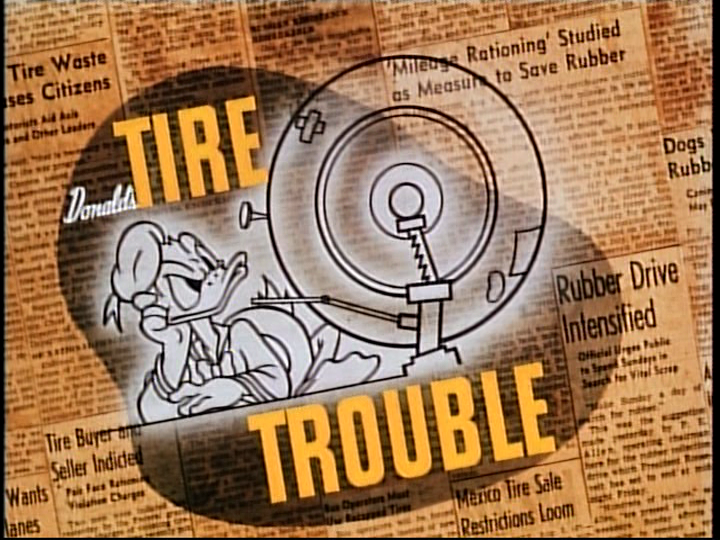
On January 29, 1943, the Donald Duck short film Donald’s Tire Trouble premiered in theaters. Although not considered a WWII propaganda short, the film does reference the rubber shortage that went on during the time. The short was directed by Dick Lundy.

Donald is zooming down a mountain path in his little sports car, when one of the tires deflates, having been punctured by a nail. Irritated, Donald starts throwing supplies to fix it out of his car, and almost immediately has trouble with the jack, as it seems to disobey him as most objects tend to when around the duck. Finally, Donald is able to prop up his car, only to have it land on him before he can change the tire. He struggles to get the tire removed from the car, and when he does, he notices all the patches he’s used before on the tire, from rubber gloves to hot water bottles.
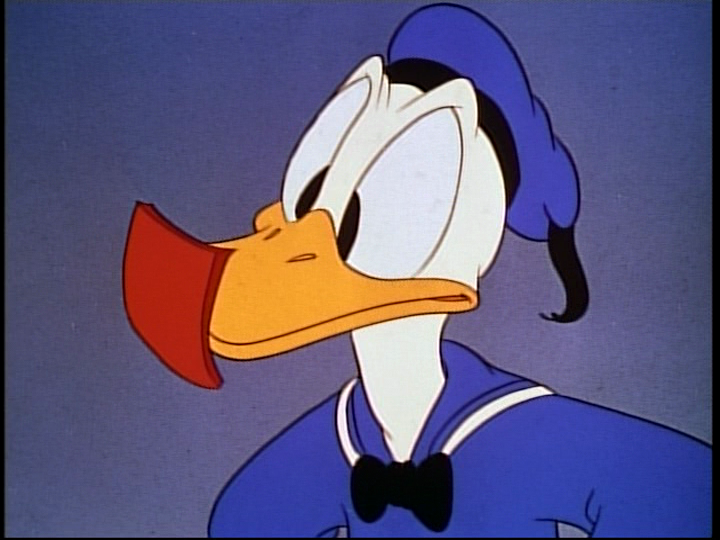
The one last rubber patch Donald has decides to stick all over the place other than the tire

The one last rubber patch Donald has decides to stick all over the place other than the tire

Donald has one last rubber patch, and attempts to use it, only to have it stuck on his fingers, his beak, and his tail. It finally attaches to the tire, but to his foot as well. Once be removes the patch from his foot, he finds that it attached itself to exactly the right spot. He then attempts to use an air pump to inflate the tire, only to have the air go right back into the pump, which makes it explode. He then tries to manually inflate it, but it deflates once more. Finally, he begins to reassemble his tire, only to get his feet, followed by his fingers, then his beak, stuck in the rim. He then attempts another method to get the rim on the tire, only to get the rim caught around his waist. After freeing himself, he once again tries to get the rim on the tire, only to be completely encased in the rubber. Trying once again to get things to work his way, he accidentally catapults himself into a tree, which sends all the parts of the tire flying into their proper places on the car. Donald shrugs, and is about to head off, when he finds that all of his tires have been punctured. Unable to handle this, he loses his temper in his fashion, but attempts to drive off anyway, bursted tires and all.
January 26

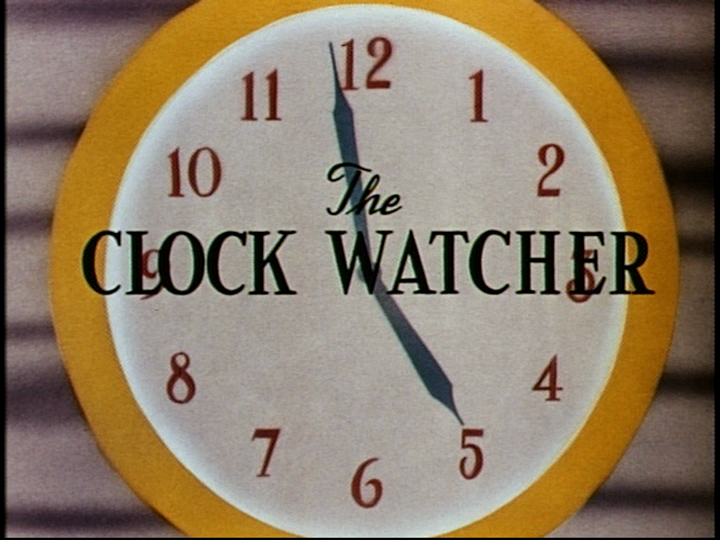
January 26, 1945 – The Donald Duck Short Film The Clock Watcher Premieres in Theaters

vlcsnap-2013-01-25-19h22m11s219

“Dear Royal, we’re loyal, we’ll always be joyful, we’ll work hard and long for to you we do belong.”

On January 26, 1945, the Donald Duck short film The Clock Watcher is released to theaters. The short was directed by Jack King, with the story written by Harry Reeves and Rex Cox.

The clock tower tolls 8 o’clock, and a figure is speeding through traffic. The figure stops to reveal that it’s Donald, who has to punch his time card, although he is a bit late. He fools the clock by turning the hand back with a magnet, and punches in to appear that he’s there early. He then goes to his job at the gift wrapping department at Royal Brothers Department Store, but is less than thrilled to hear the boss sing a song about “loyal workers.”  Just as the song ends, a barrage of merchandise slides down the shoot to meet Donald, and he quickly begins his work. But he doesn’t do a great job, as he breaks a fragile bowl, squashes a trombone into a tuba to make it fit in a box, and pops a football to fit in another box.

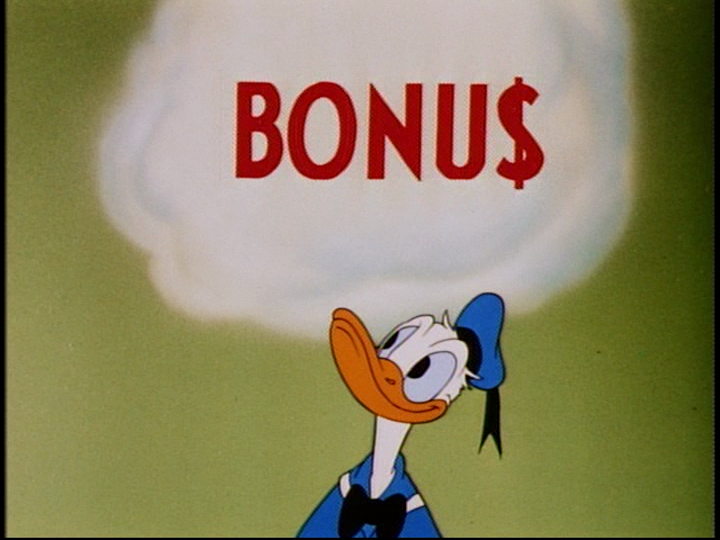
When the boss has an important announcement, Donald thinks that he'll be getting a nice bonus

When the boss has an important announcement, Donald thinks that he’ll be getting a nice bonus

Donald is distracted by a magazine and pretends to be working, then gives himself a rather long lunch hour. The loudspeaker announces big news, which has Donald excited, thinking he’s earned a raise. The boss announces that production has increased in every single department – except Donald’s. Donald continues his less than stellar work, wrapping himself in a rocking chair and getting flustered when trying to wrap a jack in the box. Donald imposes every method to keep the jack-in-the-box wrapped, but it gets loose every time. Finally, it’s five o’clock, and Donald is almost at the door, when the boss informs him that he has to stay and wrap a few more packages. Donald, having had enough, runs to the boss’s office, and the sounds of a fight between the two are heard over the loudspeaker.

January 20

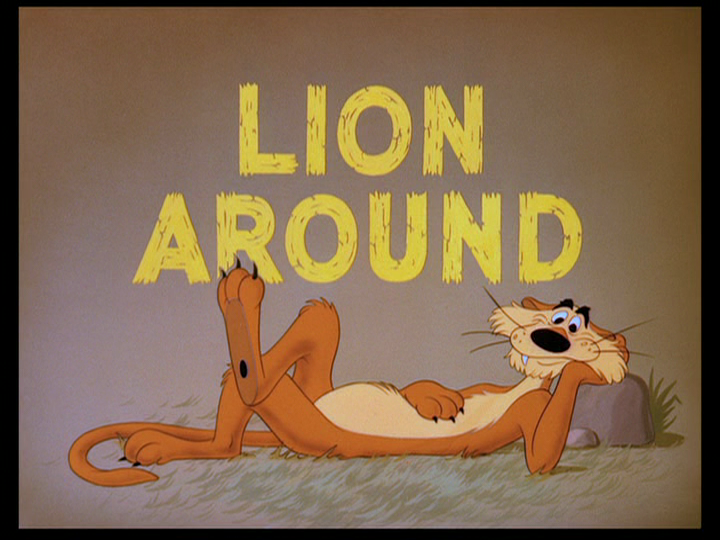
January 20, 1950 – The Donald Duck Short Film Lion Around Premieres in Theaters

vlcsnap-2013-01-19-20h08m22s108

“Now, you brats get out of here. And stay out!”

On January 20, 1950, the Donald Duck short film Lion Around premiered in theaters. This film also stars Donald’s nephews, Huey, Dewey, and Louie. The short was directed by Jack Hannah, with story by Bill Berg and Nick George.

In the woods, one of Donald’s nephews is tracking a mountain lion. As the mountain lion gets ready to pounce, he falls to the ground, and out bursts the other nephews, who had dressed up as a mountain lion as part of a game. As they all laugh at their game, they hear Donald signing from the cabin, and watch as he places a freshly made pie on the windowsill. The nephews put their heads together to try to fool their uncle. One of them runs to the cottage, crying out for help, while the two in their mountain lion costume run after him. Donald quickly grabs his shotgun and makes his way after the mountain lion. Unfortunately, the “mountain lion” scares Donald badly enough to make him drop his gun and flee.

The nephews' costume rips away, revealing the trick they played on their Uncle Donald

The nephews’ costume rips away, revealing the trick they played on their Uncle Donald

After scaring Donald away, one of the nephews grabs the pie, ready to share with his brothers. Meanwhile, Donald’s costumed nephews chase him up a tree. Unfortunately, the top half of the costume gets caught on a tree branch, revealing the ruse to Donald, who is furious. He chases the nephews and retrieves his pie. As the nephews walk away, they come across a real mountain lion. As the nephews flee, the lion turns his attention to Donald, seeing him as a slab of meat. He pounces on Donald, but Donald, thinking this is another prank from his nephews, quickly gets the upper hand and begins to give the lion a spanking. Furious at this treatment, the lion tries to find a way to get back at Donald, when he spots the pie on the windowsill. He cuts himself a piece before Donald attacks.

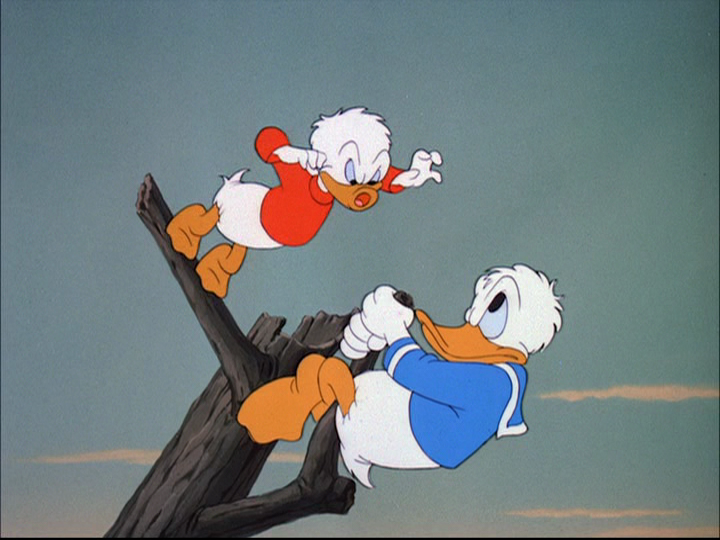
The lion bursts into the house for the pie, and Donald tries to punish his nephews again, when they appear in the window, holding their costume. Finally understanding that a real mountain lion is in his house, he tries to hide, but the lion pursues him. Donald climbs up the chimney and into the tree, with the mountain lion catching up to him. As Donald begins to pray, a pie lands in his hands, which he quickly feeds to the mountain lion. Another pie appears, followed by another; the nephews send pies via catapult to Donald so that the duck can distract the lion from eating him.

January 18

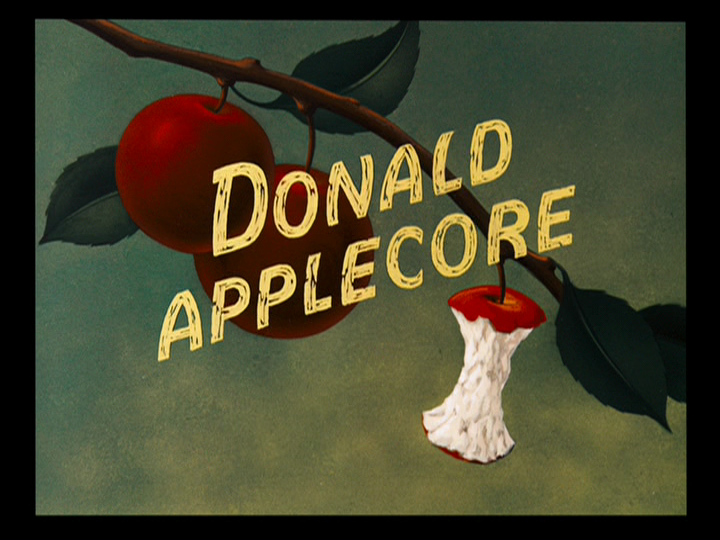
January 18, 1952 – The Donald Duck Short Film Donald Applecore Premieres in Theaters

vlcsnap-2013-01-17-20h06m14s233

“Applecore! Baltimore! Who’s your friend? Me!”

On January 18, 1952, the Donald Duck short film Donald Applecore premiered in theaters. This short is one of several in which Chip and Dale are his main antagonists. The short was directed by Jack Hannah, with the story by Bill Berg and Nick George.

In this short, Donald is the owner of a prosperous apple farm called “Donald’s Delicious Apples.” As he is out one morning gathering apples, he notices that the side of one he’s pulled down is covered in bite marks. As he looks into his basket, he realizes that all of his apples are half eaten. As he cries in despair, he notices Chip walking down the side of the tree with an arm full of apple cores. Dale appears soon after, and they begin to use Donald’s gathering bucket for their discarded cores.

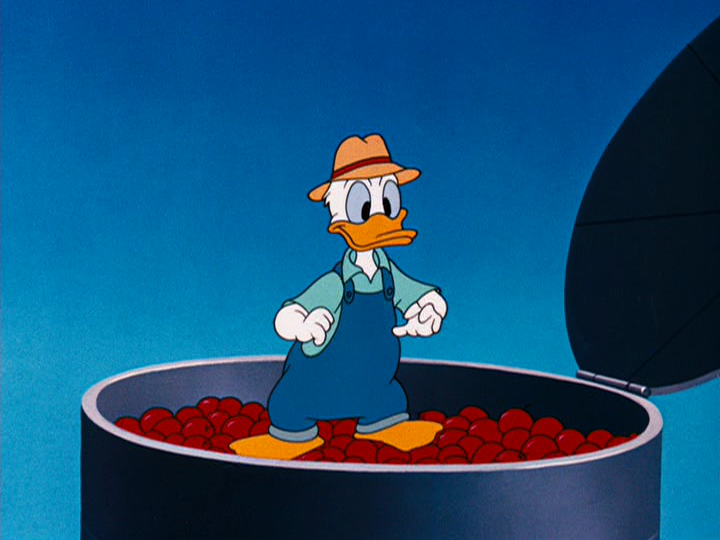
Donald stands on top of the apple silo after placing the apples Chip and Dale stole inside

Donald stands on top of the apple silo after placing the apples Chip and Dale stole inside

Donald grabs Dale and demands an explanation, and Dale tells Donald to take his basket and follow him up the tree. Donald agrees, and soon finds he’s been tricked into collecting all of their apple cores. Seeing that the two are stealing more apples, he tries to stop them. He grabs some insect powder in his crop duster, and dusts his trees, only to find that the two have gas masks to prevent the effects of the powder. Donald tries another approach by stealing their apples without their noticing. Successful, Donald takes the stolen apples to the silo. As the chipmunks try to retrieve their apples, they accidently let all the apples in the silo loose, with Donald unfortunately on top of the pile.

Apples fly all over the farm, and Donald is at his breaking point. He creates a potent mixture in his crop duster and tries to target the pair. No matter where they hide, Donald fires a shot in their direction. One shot ends up in his chicken house, where one hen swallows the atomic mixture. The egg the hen lays afterward ends up exploding, sending Donald into a deep crater into the ground, all the way to China. Chip and Dale laugh at Donald’s misfortune.

January 15

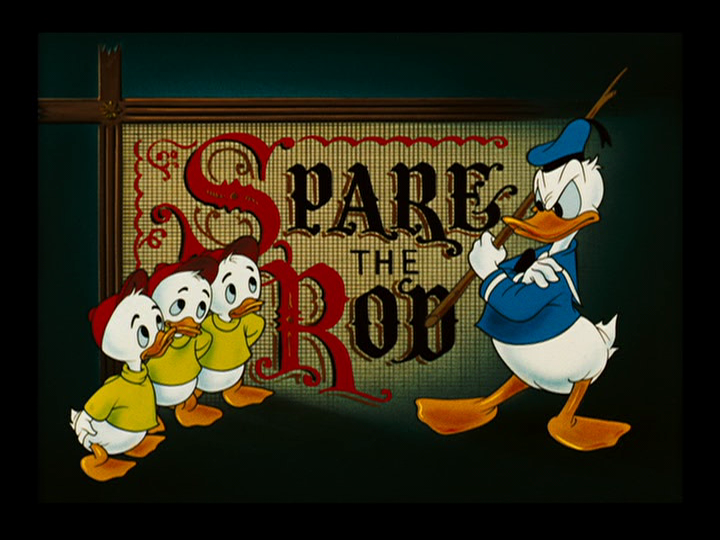
January 15, 1954 – The Donald Duck Short Film Spare the Rod Premieres in Theaters

vlcsnap-2013-01-14-20h06m47s246

“This is the home of Donald Duck, where everyone does their chores willingly.”

On January 15, 1954, the Donald Duck short film Spare the Rod premiered in theaters. It was directed by Jack Hannah, with story by Roy Williams and Nick George.

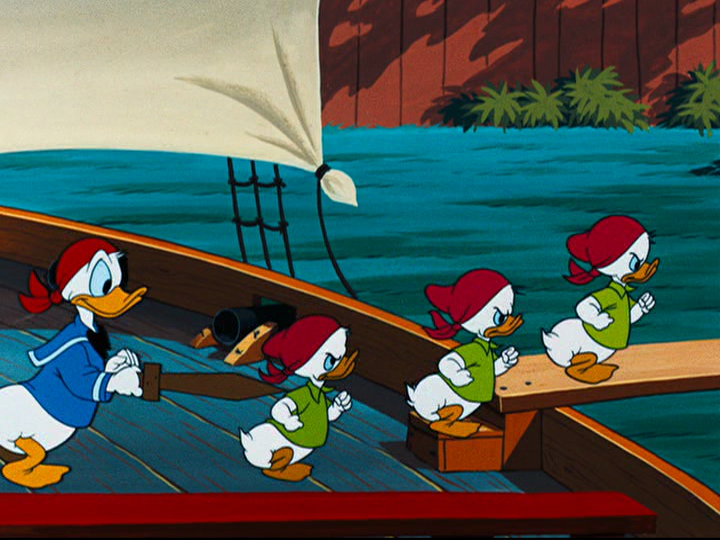
The short begins at the home of Donald Duck, where Donald is outside painting the side of his house a cheerful yellow. The nephews are supposed to be chopping wood, but have left their axes and snuck off into their treehouse, pretending to be a tribe. Their yelling starts to irritate Donald as he tries to carefully paint his window trim. Noticing that they have disappeared, he decides to play a prank on them, scaring them back to work. But a little later, the boys are at it again, pretending this time to be pirates. As Donald runs to stop them again, his conscience appears as the “voice of child psychology.” He tells Donald to be their pal, and Donald agrees.

Donald tries to play with the boys, but with his own usual style of having the upper hand

Donald tries to play with the boys, but with his own usual style of having the upper hand

As the boys pretend to play, Donald appears as another pirate and makes them walk the plank. His conscience tells him that Donald should be walking the plank, not the boys. Donald agrees, and is thrown off into a bucket. Meanwhile, a circus is traveling into town, complete with pigmy cannibals, who detach their cart from the train and escape into town, stopping at Donald’s house (as they see Donald as a tasty meal). The boys begin another game, pretending to be cannibals, with Donald’s conscience telling him to once more become the boys’ friend. When the real cannibals capture Donald, he thinks they are only his nephews, and plays along, bringing out a pot and preparing himself to be cooked. Donald thinks he’s tricking the boys to cut firewood, but they’re on the other side of the yard.

The boys quickly capture Donald, and cut firewood to burn Donald at the stake, but the cannibals try to capture him again. At this point, the conscience figures out that the cannibals are real cannibals, who quickly capture Donald and prepare to cook him. Angered, Donald grabs the cannibals and begins to punish them. The boys watch as the cannibals flee from Donald’s wrath, and quickly resume their chores. The conscience tries to state that his psychology was effective, but Donald will have none of it, and takes his wrath out on the “voice of child psychology.”

January 14

January 14, 1955 – The Donald Duck Short Film No Hunting Premieres in Theaters

vlcsnap-2013-01-13-19h07m23s232

“But your old grandpappy up there on the wall didn’t have it so soft. No, that old boy really had to work for his vittles.”

On January 14, 1955, the Donald Duck short film No Hunting premiered in theaters. This is one of the few shorts filmed in Cinemascope, and Donald is noted for being the only classic Disney character to appear in this process. No Hunting was nominated also for an Academy Award, but lost to Speedy Gonzales from Warner Brothers’ Merrie Melodies series. It was the ninth nomination for Donald Duck’s series. The short also features a cameo of Bambi and his mother, with her remarking, “Man is in the forest. Let’s dig out.” The short was directed by Jack Hannah, with story by Dick Shaw and Bill Berg, and stars Clarence Nash as Donald and Bill Thompson as Donald’s grandfather.

Donald sits at his dining room table, staring up at a picture of his grandfather, who was a hunter. The narrator explains that while Donald has a nice spread of food in front of him, his grandfather didn’t have it so easy, having to hunt buffalo for his supper. As the narrator notes in Donald’s newspaper that hunting season begins soon, the image of Donald’s grandfather is suddenly excited and tears himself away from the portrait. He declares that he and Donald are going hunting, and his spirit takes over Donald, forcing him to go hunting.

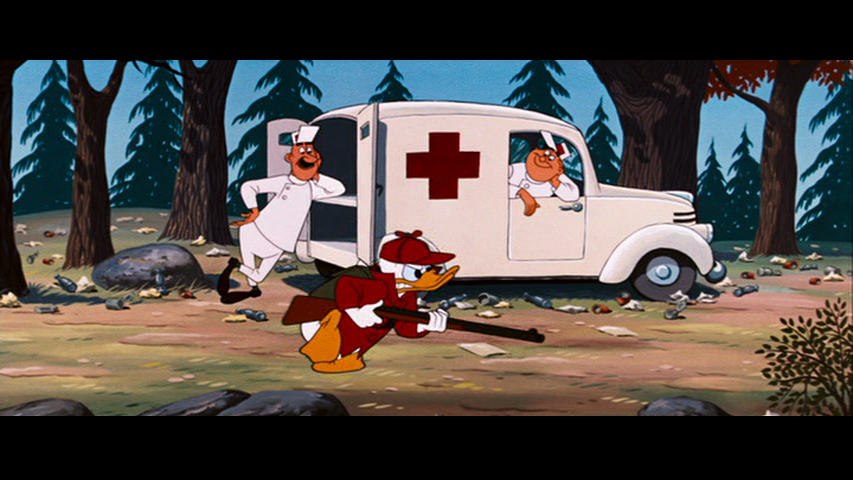
Donald stalks the hunting grounds, with medics waiting patiently, along with food vendors and other interested parties

Donald stalks the hunting grounds, with medics waiting patiently, along with food vendors and other interested parties

As Donald travels to the hunting grounds, the local residents begin preparing for the worst, including all farm animals leaving the barn and taking shelter in the root cellar. Hunters appear with expensive gear, and all wait with anticipation for hunting season to begin. At the stroke of midnight, Donald sounds his horn, and the hunters begin to shoot, turning the forest into trench warfare. Donald’s grandfather appears every so often to give him advice, including the difference between a cow (not fair game) and a deer (fair game). He tries to hide among all the chaos, and when he finally asks his grandfather what to do, the grandfather tells him to “dig out fast” before fleeing the scene. The men begin to march home, covered in bandages, and Donald’s grandfather appears once more with a cow, calling it “meat on the table.”

January 10

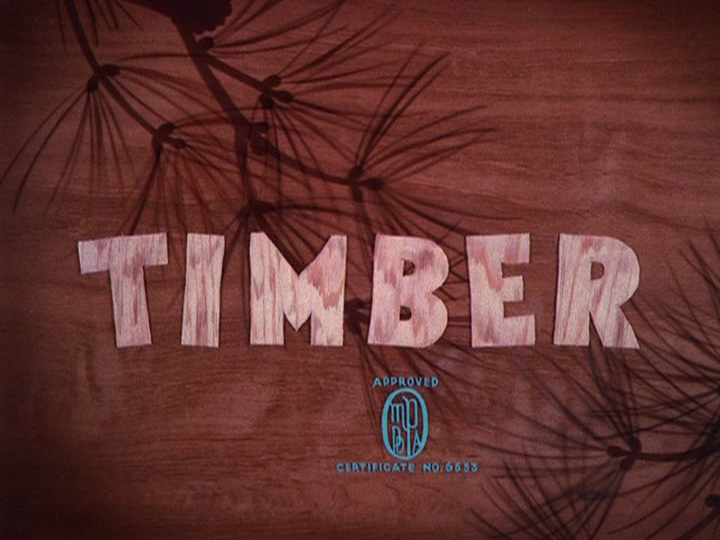
January 10, 1941 – The Donald Duck Short Film Timber is Released in Theaters

vlcsnap-2013-01-09-19h02m53s212

“Doggone it…I might just as well be in a concentration camp.”

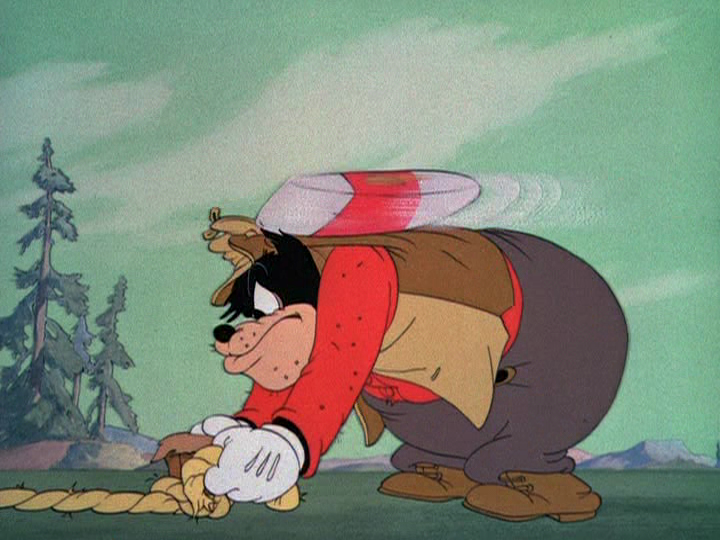
On January 10, 1941, the Donald Duck short film Timber premiered in theaters. The antagonist, Pete, is named Pierre in this short, playing the part of a French-Canadian lumberjack. The short was directed by Jack King, and stars Clarence Nash as Donald Duck, and Billy Bletcher as Pete/Pierre.

Donald is seen walking the train tracks with a hobo sack, when he smells something delicious. Spying food in a nearby window, he decides to steal some. Inside, Pete is beginning to enjoy his meal when he spots Donald’s wandering hand. Donald begins to load up his sack, with Pierre, the owner of the shack, just watching. Finally, Pierre decides to trick Donald by baiting him with a lighted stick of dynamite in place of a hot dog. Donald’s clothes are blown clean off, and he emerges from a deep hole in the ground where the blast blew him.

The head of the axe flies off the handle, sailing close enough to Pete to sear through a layer of his clothes

The head of the axe flies off the handle, sailing close enough to Pete to sear through a layer of his clothes

Pierre then tells Donald that he will work for food as a lumberjack; Donald, however, has other plans. He breaks his axe when Pierre isn’t looking, hoping that Pierre will just let him go since he has no tool. But Pierre won’t let him off so easily, and fixes the axe for him. When Donald begins his attempt at chopping down a tree, the axe head breaks off and flies into another tree, cutting off part of Pierre’s clothing in the process. Donald, hoping to avoid trouble, attempts to use a saw instead, only to find himself in more trouble. As he flees with the saw in hand, it begins to vibrate, sending Donald bouncing around the forest. When he finally is able to chop something down, he saws off a branch, which knocks Pierre deep into the ground

After Pierre sends Donald flying and bouncing with the saw, Donald is knocked into a tree and chops it down accidentally with his beak. The tree falls on Pierre, who has had it with the duck. Donald flees the camp, with Pierre close behind. As the chase continues on train tracks, Pierre tries anything he can to stop Donald, including breaking his cart piece by piece. Luckily, Donald is able to evade him, and uses quick thinking to send Pierre flying through a line of empty boxcars. Donald walks off into the sunset, traveling once again.

January 7

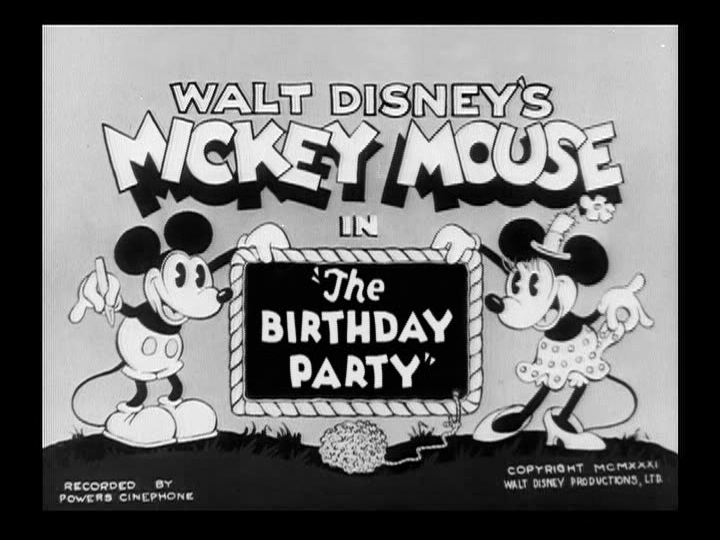
January 7, 1931 – The Mickey Mouse Short Film The Birthday Party is Released to Theaters

vlcsnap-2013-01-06-19h52m25s167

“Oh I’m fine. Heh, we’re both fine!”

On January 7, 1931, the Mickey Mouse short film The Birthday Party was released to theaters. This short is a good example of the characters that were considered an early version of the Disney gang, including Horace Horsecollar and Clarabelle Cow. The short was directed by Burt Gillett, and stars Walt Disney as Mickey Mouse and Marcellite Garner as Minnie Mouse.

Mickey strolls down the street with a straw hat and cane, whistling a merry tune. He arrives at the front porch of Minnie’s house and rings the doorbell; inside, Minnie and several of their friends are inside waiting to surprise him. They run and hide in the house, and Minnie answers the door, engaging in some flirtatious banter with Mickey. Once he steps inside, all of their friends emerge to shout out “surprise!” A cake is brought out and Mickey is asked to blow out the candles, only to blow the cake all over the chef.

After receiving a piano as his birthday gift, Mickey and Minnie play a duet for their party guests

After receiving a piano as his birthday gift, Mickey and Minnie play a duet for their party guests

Minnie calls Mickey over to a big package marked “Happy Birthday Mickey.” He opens it to reveal his own piano and stool. As it is set up right next to Minnie’s, the two begin to play a piano duet and sing along. A dance party begins, with everyone being merry, including the fish in the fishbowl. Mickey and Minnie take a break from piano to dance, much to the enjoyment of the other guests. Horace Horsecollar and Clarabelle Cow also dance for the crowd before Mickey begins to play a tune on a nearby xylophone. Minnie resumes the piano as Mickey plays another xylophone tune, with the xylophone acting of its own accord at one point, taking Mickey for a ride around the room. It bucks him, and as he hits the floor, a floorboard knocks a fishbowl down from its pedestal, landing on Mickey’s head.

January 5

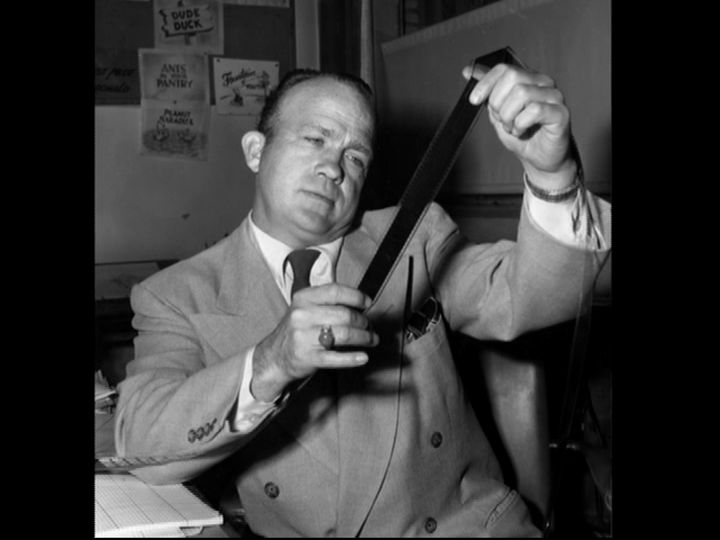
January 5, 1913 – Animator, Writer, Director, and Disney Legend Jack Hannah is Born

vlcsnap-2013-01-04-20h02m46s143

“He was a character, but he was like a father figure to me, because he really took care of me, not only in just showing me the tricks of the trade, and about Donald, and…Disney animation…he was a kind of rough and tumble kind of guy.” Tony Anselmo, current voice of Donald Duck

On January 5, 1913, Jack Hannah was born in Nogales, Arizona. In 1931, Hannah moved to Los Angeles, California, studying art at the Art Guild Academy; in 1933, he submitted his portfolio to the Walt Disney Studios, and was hired as an in-betweener and a clean-up artist. His first short film with an animator credit was Gulliver Mickey, and he was also a key animator for the Academy Award-winning short film The Old Mill. His introduction to Donald Duck was the short film Modern Inventions; Hannah would soon be associated with the “Gable of the [Disney] stable.” Hannah moved to the story department in 1939, writing many of the Donald Duck stories. For 27 short films, Hannah worked with Carl Barks, the Donald Duck comic book artist, to help shape the character of Donald in films, including Donald Gets Drafted and Donald’s Vacation. In 1943, he became a director of the short films, introducing new antagonists for Donald, including Chip and Dale. Hannah also introduced Donald to the new medium of television, which includes A Day in the Life of Donald Duck and At Home with Donald Duck.

Although Hannah retired in1959, he was asked in 1975 to help develop a new class at the Disney-founded California Institute of the Arts, the Character Animation programs. In 1992, Hannah was honored as a Disney Legend, credited with developing the personality of Donald Duck in the animated short subjects. He and Carl Barks are considered the “fathers” of Donald Duck. Hannah passed away at age 81 in Burbank, California in 1994.

January 2

January 2, 1937 – The Mickey Mouse Short Film The Worm Turns is Released to Theaters

vlcsnap-2012-12-31-14h41m00s30

“Hot dog! It works! It works!”

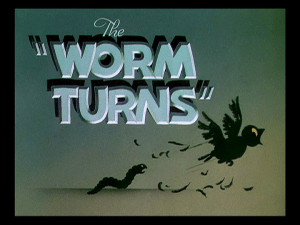
On January 2, 1937, the Mickey Mouse short film The Worm Turns was released to theaters. Although the short’s title card features a worm and a bird – creatures not featured in this short – the title itself is an old expression from Shakespeare’s Henry VI, Part 3, meaning that even the weakest of creatures will fight back if pushed too far. The short was directed by Ben Sharpsteen, and stars Walt Disney as Mickey, and Billy Bletcher as Pete.

Mickey, dressed like a mad scientist, is hard at work in his lab, creating a special concoction of “courage builder” from a book of ancient formulas. The potion sputters and spins around on the table, making various noises. Once the potion is mixed, Mickey pulls some away for a test. He spies a fly caught in a spider’s web, and applies the formula to the fly. Immediately, the fly is pure courage, beating up the spider and trapping the villain in his own web. Mickey is overjoyed at the results.

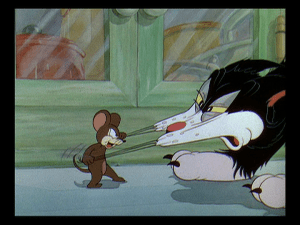
Dosed with Mickey's courage-builder potion, the mouse takes revenge on the cat

Dosed with Mickey’s courage-builder potion, the mouse takes revenge on the cat

In another room, Mickey hears the frightened squeaks of a mouse being chased by a cat, and decides that the mouse will be the next test subject. Once the mouse is sprayed with the formula, he roars like a lion and charges at the cat, sending the feline flying out the window and into Pluto’s milk bowl. Pluto charges the cat, with the cat hiding in fear in the tool shed, his nine lives deserting him. When Mickey sees the cat in trouble, he decides to give some of the courage-builder to the cat. As with the fly and the mouse, the cat is instantly more powerful, and torments his tormentor, sending Pluto flying through a brick wall.

Once away from the cat, Pluto sighs with relief, only to be immediately captured in Pete the Dogcatcher’s net. Pete attempts to throw Pluto in the back of the cart, but Pluto is able to evade him and accidentally free all the other dogs in the dogcatcher’s wagon. Pete then grabs his shotgun and chases after Pluto, screaming that he’ll murder the pup. Mickey spies this scene from his window and scrambles to his lab, grabbing the rest of the potion and spraying it on Pluto. Immediately, Pluto is filled with courage and gives Pete the scare of his life. Then Pluto sends Pete flying into the back of the dogcatcher’s wagon, and the wagon flies off the edge of a cliff. Satisfied, Pluto walks away triumphantly, stopping to smell a fire hydrant. Not quite done experimenting, Mickey sprays some formula on the hydrant, which then sprays water all over Pluto.