RSS Feed

Tag Archives: Short film

August 6

August 6, 1887 – Composer and Disney Legend Oliver Wallace is Born

vlcsnap-2013-08-06-19h53m54s164

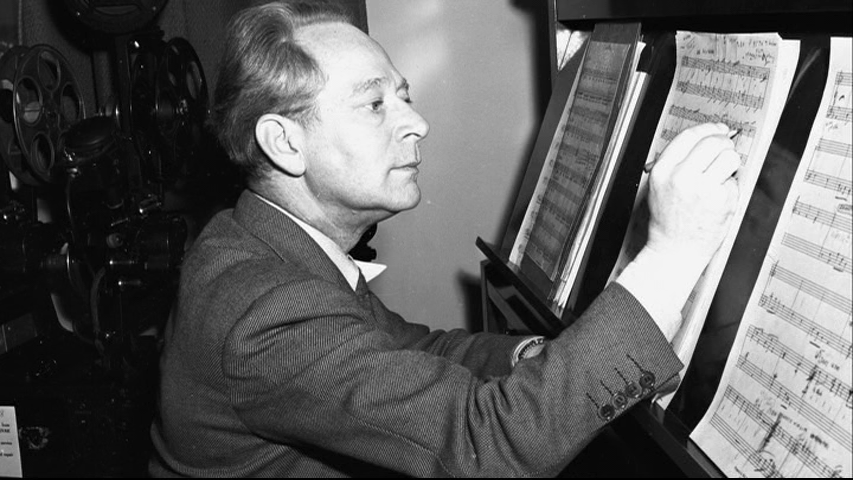
On August 6, 1887, Oliver George Wallace was born in London, England. In 1904, he moved to the United States and started work as a conductor in theaters and as an organist for silent films. In 1936, Wallace was hired by the Disney Studios and composed more than 100 short films, which included the 1942 Donald Duck short Der Fuehrer’s Face. Wallace would also work on several of Disney’s animated films, winning an Academy Award for Dumbo, along with Frank Churchill. Wallace would also compose for Fun and Fancy Free, The Adventures of Ichabod and Mr. Toad, Cinderella, Alice in Wonderland, and Peter Pan. After the studio moved into live-action feature films, Wallace would work on scoring several of these, including Darby O’Gill and the Little People; Wallace would also move into scoring several of the True Life Adventures documentaries. He continued to work until his death in 1963. Wallace was named a Disney Legend in 2008.

August 5

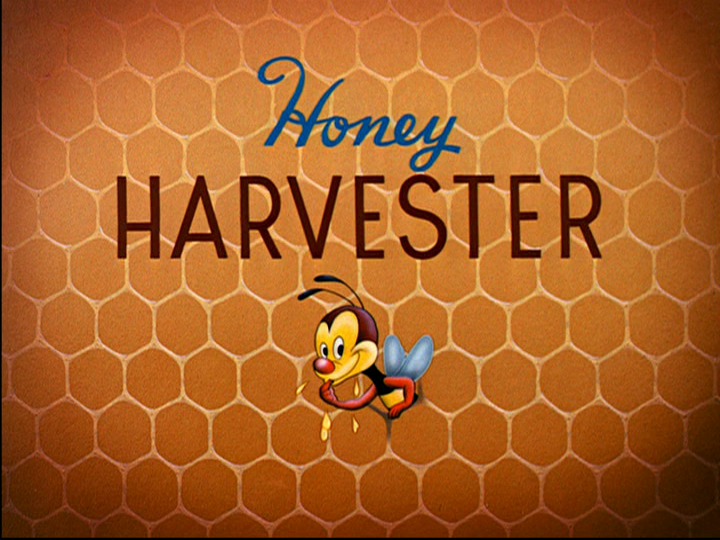
August 5, 1959 – The Donald Duck Short Film Honey Harvester is Released to Theaters

vlcsnap-2013-08-05-05h02m28s146

“Oh boy – honey!”

On August 5, 1949, the Donald Duck short film Honey Harvester was released to theaters. This short features the Goofy holler; commonly attributed to Goofy, this is one of the rare examples it has been used by Donald. It was directed by Jack Hannah, with story by Nick George and Bill Berg.

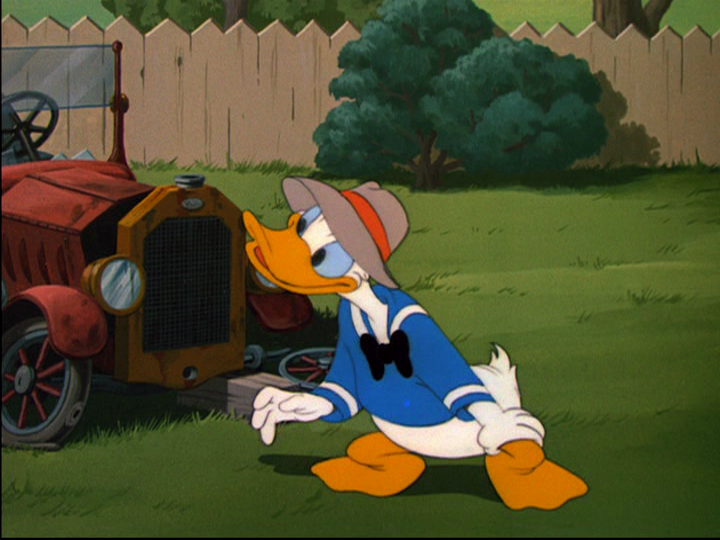
Spike the Bee is hard a work in Donald’s greenhouse, gathering honey from flowers and taking it back to his hive in a broken down old car’s radiator. As he works, Donald enters the greenhouse and sees Spike, but thinks nothing of it until he realizes that Spike will lead him to a large amount of honey. He starts looking for Spike, although the bee is reluctant to let Donald follow him to his hive. Donald sets up an ink pad for Spike to step in, and follows the footsteps, although Spike is able to outwit him. Donald tries again, attaching some string to some flypaper and following it to the old car. However, the string leads past the car and up a tree, where Spike cuts down a branch, sending Donald plummeting to the ground.

After several failed attempts to follow Spike, Donald accidentally finds the honey's location

After several failed attempts to follow Spike, Donald accidentally finds the honey’s location

After this mishap, Donald leans on the radiator of the old car, irritated, when he realizes that he has honey all over his hand. Donald then starts filling jars with honey just when Spike returns with more honey. He sees Donald getting away with his stash and attempts to sting him, but Donald protects himself with a pot and a cork. Spike manages to free himself from the cork, but grabs a cactus spike and attempts to attack Donald again with much more force. Donald finally surrenders after being chased around his yard and returns the honey – save for one jar he has hidden in his shirt. Spike sees this and stings Donald again, and Donald flees in panic.

August 1

August 1, 1953 – The Donald Duck Short Film The New Neighbor is Released to Theaters

vlcsnap-2013-08-01-17h06m22s235

“It has been man’s constant labor to live in peace with his next-door neighbor, and on the newcomer falls the chore of getting along with the man next door.”

On August 1, 1953, the Donald Duck short film The New Neighbor premiered in theaters. It was directed by Jack Hannah, with story by Nick George and Milt Schaffer.

Donald is moving into his new house, and decides to meet his next door neighbor, Pete. The first meeting, however, is not a smooth one, as Pete is seen dumping all of his trash into Donald’s carefully tended yard. Pete’s dog then destroys Donald’s fence and digs up his tulips. Pete then wanders over to Donald’s house and asks for some ice cubes, but then starts grocery shopping from Donald’s fridge, taking all of Donald’s food. His dog then brings over a note, which asks Donald for a favor. As Donald is distracted, the dog steals Donald’s tea set. Donald angrily goes to confront Pete, when Pete shows up at his door with a bowl of soup. Donald finds in delicious, only to find that it’s what Pete feeds his dog.

Donald rakes up all of the leaves that Pete sent flying into his yard

Donald rakes up all of the leaves that Pete sent flying into his yard

In the spring, Donald is out in his garden, when Pete asks to “borrow” all of Donald’s yard tools. As it begins to rain, Donald runs to find some shelter, when he sees that Pete has left all of Donald’s tools in the rain. The next day, when Pete is trimming his trees, the leaves have spread all over Donald’s yard. Donald quickly gathers the leaves, trying hard not to have a tantrum, and places them in his incinerator, hoping to use the smoke to ruin the clothes on Pete’s laundry line. Pete uses his hose to put out the leaves and spray Donald, but Donald sticks the hose in Pete’s pants and pokes holes in his pants with a rake, with water spraying everywhere. The fight gets ugly enough to make the neighborhood gather and watch, and then it makes front page of the papers. The fight turns into a neighborhood event, much like a sporting event. The two end up building a tall fence between them, which unfortunately falls apart once Pete’s dog starts burrowing in and breaking the foundation. The fight ends with the two moving away from the neighborhood, calling it a draw.

July 29

July 29, 1930 – The Mickey Mouse Short Film The Shindig is Released to Theaters

vlcsnap-2013-07-29-04h31m52s119

“To the party we will go, to the party we will go…”

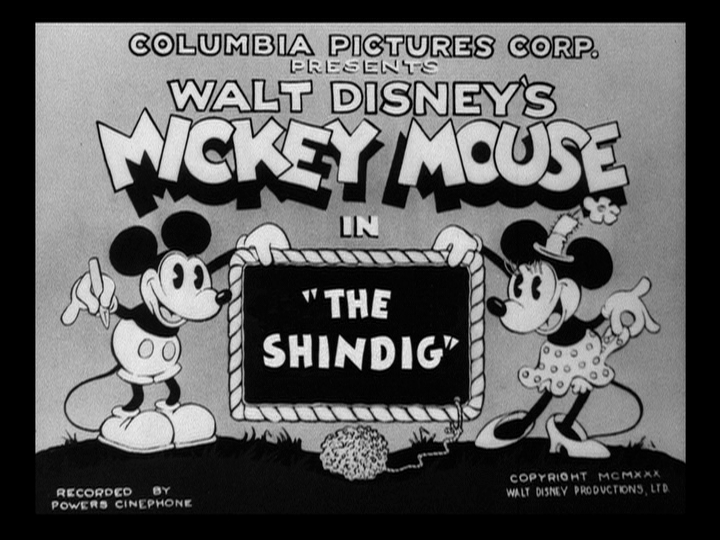
On July 29, 1930, the Mickey Mouse short film The Shindig was released to theaters. A clip from this short was used in the documentary The Hand Behind The Mouse: The Ub Iwerks Story as an example of the decency codes the films soon had to follow, known as the Hays Code. The songs featured in this short were popular standards of the time, including “Swanee River” and “Pop Goes the Weasel.” The short was directed by Burt Gillett.

A large group of animals are heading over to the barn dance, singing and playing with noisemakers. Horace Horsecollar makes his way to Clarabelle Cow’s house on a dilapidated motorcycle, and she quickly gets dressed to meet him. The two head for an uncomfortable ride to the barn dance. At the dance, everyone is lively while Mickey and Minnie entertain the crowd with music. Mickey uses whatever he can to play music, including a paper bag and, much to her annoyance, Minnie’s tail and bloomers. The crowd forms a dance circle, with Horace and Clarabelle dancing in the middle. Minnie then continues playing the piano while Mickey first dances with Clarabelle, then a dachshund, then a hippo.

July 27

July 27, 1945 – The Pluto Short Film Canine Casanova is Released to Theaters

vlcsnap-2013-07-27-10h59m17s198

“Hey you…!”

On July 27, 1945, the Pluto short film Canine Casanova was released to theaters. It was directed by Charles Nichols, with story by Harry Reeves, Jesse Marsh, and Rex Cox.

Pluto is skipping through the park, when he passes by a beautiful dachshund. Immediately smitten, he turns around and follows her, making a fool of himself as he does so. She rebuffs his attention every time, leaving him more determined than ever. He finds a large bone buried in the ground, and uses it to steal a kiss from her, which only makes her angry. She stops to admire her reflection in a window, and finds Pluto has followed her once again, nearly getting the two in trouble when he breaks the window. Pluto slinks away sadly as she tells him off, and as she walks away, she is snatched up by the dog catcher. She calls out for Pluto’s help as she is driven away.

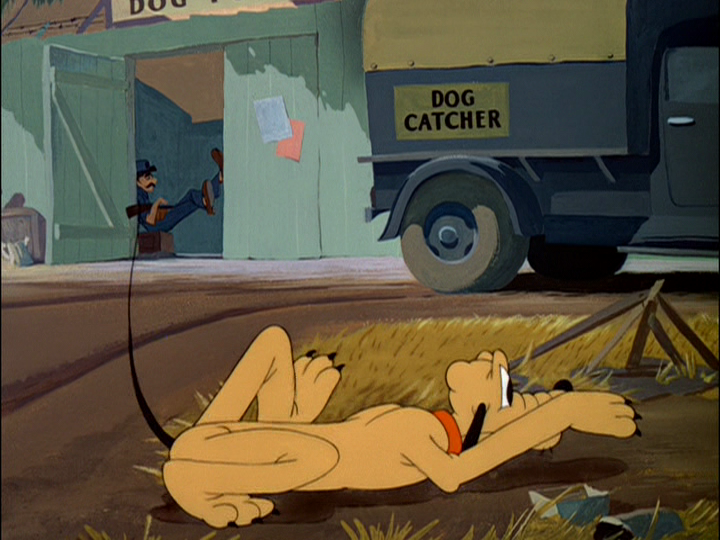
Pluto sneaks into the dog pound to rescue the cute dachshund

Pluto sneaks into the dog pound to rescue the cute dachshund

Pluto tracks her scent to the dog pound, and quietly peers in, seeing the poor dachshund being courted by scoundrels. He rushes to her rescue, narrowly missing the sleeping guard and his shotgun. He crawls around the back to open her pen, and she is surprised to see Pluto as her rescuer. As the two look for a way out, they realize the only opening is past the sleeping guard and his shotgun. Pluto quickly formulates a plan, and the two almost make it out, except that the guard’s foot drops right as the dachshund is about to crawl underneath his legs. Pluto manages to keep his leg propped up long enough for her to escape, but accidentally hits the butt of the shotgun, slamming it to the ground and setting it off. The two race away as the guard quickly pursues them in his truck. Pluto accidentally sends three barrels of nails flying down the path, which stops the truck in its tracks. The dachshund returns home, giving Pluto a kiss before she does. Pluto follows her, only to find that she has a litter of puppies waiting for her return.

July 25

July 25, 1936 – The Mickey Mouse Short Film Alpine Climbers is Released to Theaters
vlcsnap-2013-07-25-05h12m31s106

“Edelweiss! Oh boy, oh boy, oh boy, edelweiss!”

On July 25, 1936, the Mickey Mouse short film Alpine Climbers was released to theaters. Although a Mickey Mouse short, the short also features Donald Duck and Pluto. It was directed by Dave Hand.

Mickey and Donald are yodeling as they climb up a steep mountain, dragging Pluto behind them on a rope. After they reach the top, Mickey ties Pluto to a rock as he and Donald go exploring. Donald finds patches of edelweiss, and begins to pick a full bouquet. When he reaches the top of the cliff, a baby goat takes one look at Donald and eats the edelweiss bloom the duck is holding. Donald grabs an icicle and starts to chase after the kid around a rock, not realizing that the kid is sitting on the top of the rock, watching Donald run around in circles.
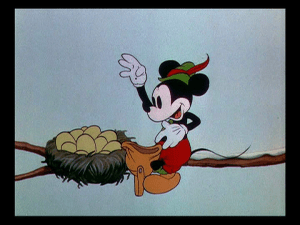
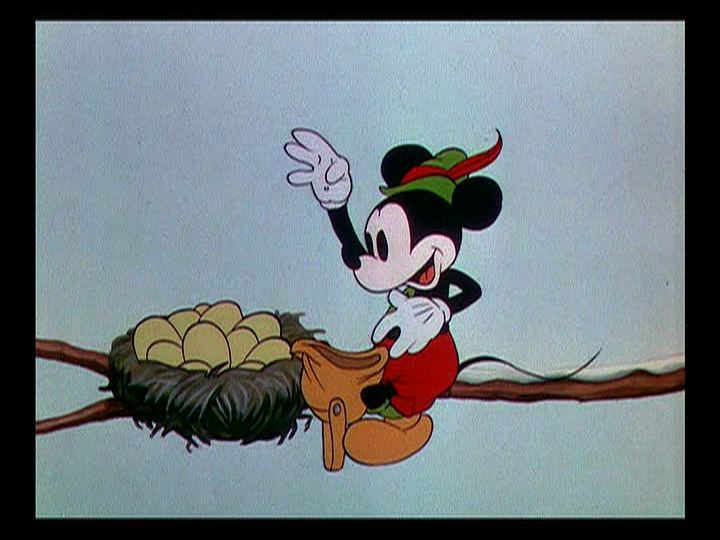
While exploring, Mickey excitedly finds a nest of eagle eggs

While exploring, Mickey excitedly finds a nest of eagle eggs

Mickey, in his own exploration, finds a nest full of eagle eggs, and starts stuffing them into his backpack, unaware that the mother eagle is standing behind him, ready to protect her eggs. Mickey sees her, and quickly puts the eggs back, although the mother still attacks him. He throws her eggs at her, and they hatch upon impact. The flock of hatchlings then assist their mother in attacking the mouse. Mickey drops an egg in the confusion, which lands on Pluto’s head and hatches. The hatchling attacks Pluto, and Pluto chases after it, dragging the heavy rock behind him. As the hatchling flies away, Pluto hangs onto the cliff for dear life, only to have the rock send him hurtling to the snowy ground below.

As Pluto lies in the snow, a St. Bernard comes out of his doghouse and drags the dog to safety, reviving him with some brandy. Unfortunately, Pluto becomes drunk from the amount of brandy he drank, and attempts to hit on the St. Bernard, hiccuping loudly. Meanwhile, after carving out a deep ditch around the rock, Donald realizes that the kid has just been watching him the entire time. The chase resumes, leading into a cave, with Donald accidentally pulling out an older goat instead. Donald tries to walk away nonchalantly, but is soon chased by the older goat, who continuously headbutts the duck, although Donald headbutts the older goat in retaliation, sending it flying into a nearby tree, knocked out. Mickey, having problems of his own, cries out for help. He tries to use his rope to latch on to a nearby rock, but ends up roping the eagle mother’s feet, and she flies away, trying to pull Mickey away from the nest. Donald, hyped up with adrenaline from fighting the goat, goes to save Mickey by attempting to beat up the mother. The mother bests Donald, and the two have no choice but to hold on for dear life as she soars up into the sky. The hatchlings then tear up the rope, and the pair are sent hurtling to the ground. As they hit the snow below, they hear a strange drunken yodeling, and see Pluto and the St. Bernard, having consumed all the brandy, hiccuping and carousing.
July 21

July 21, 1939 – The Mickey Mouse Short Film The Pointer is Released to Theaters

vlcsnap-2013-07-21-16h54m39s246

“Well, I’m, uh, Mickey Mouse. You know, Mickey Mouse? I hope you’ve heard of me. I hope.”

On July 21, 1939, the Mickey Mouse short film The Pointer was released to theaters. This short was the first display of Mickey’s redesign by artist Fred Moore, with his eyes changing from the previous “pie-shape” to a white eye with a black pupil. The short was also nominated for an Academy Award, but lost out to Disney’s final Silly Symphony, The Ugly Duckling. The short was directed by Clyde Geronimi.

Mickey is reading out loud from a book called “How to Train a Pointer,” in an attempt to teach Pluto to become a better hunting dog. Pluto salivates at the thought of better things to eat than beans, and the two set off to hunt. The two hear a cry in the woods, and look to see a family of quail. Pluto runs to chase them, tripping up Mickey and making him drop his shotgun. Mickey chastises Pluto, making Pluto cringe and paw at the dirt in shame. After attempting to slink away into the woods, Pluto crawls back and lays on his back, and Mickey realizes he can’t stay mad at his dog. Mickey then teaches Pluto how to act like a pointer, and Pluto copies him exactly, earning Mickey’s praise.

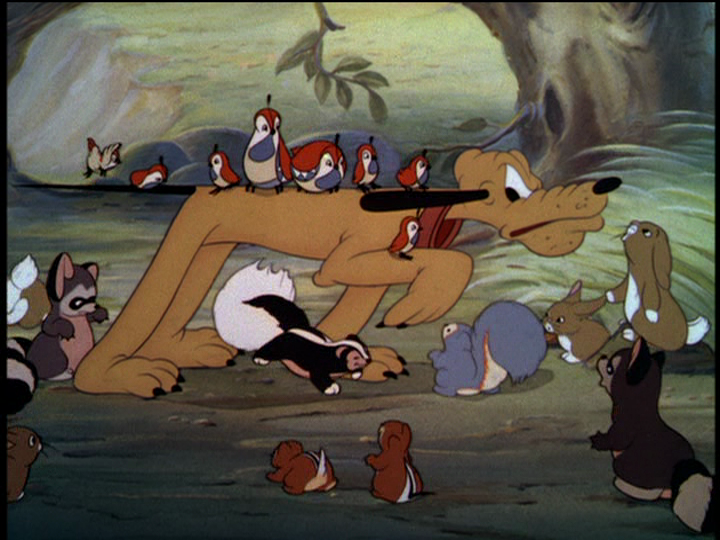
Pluto, keeping still to make Mickey happy, is surrounded by curious animals

Pluto, keeping still to make Mickey happy, is surrounded by curious animals

The two hear the quail cry again, and as Mickey tries to track it, Pluto gets distracted by a caterpillar and heads the opposite direction. Mickey accidentally wakes up a bear on his way to catch the quail, and, thinking it’s Pluto, slaps the bear to keep it quiet and continues to talk to it. Pluto, following the caterpillar, has gotten himself lost, but finds the family of quail. The quail chicks spot Pluto and start to play with him, but Pluto, remembering what Mickey told him, refuses to move, no matter what they do. Mickey continues to search through the woods with the bear tracking him, and he finally spies the quail – along with a host of other animals – standing around Pluto. Mickey turns to see that a bear has been following him, and nervously tries to weasel out of the situation. After crashing into Pluto, the two hightail it back to their campsite. Later that night, Pluto puts his pointing skills to good use by tracking down their last can of beans.

July 19

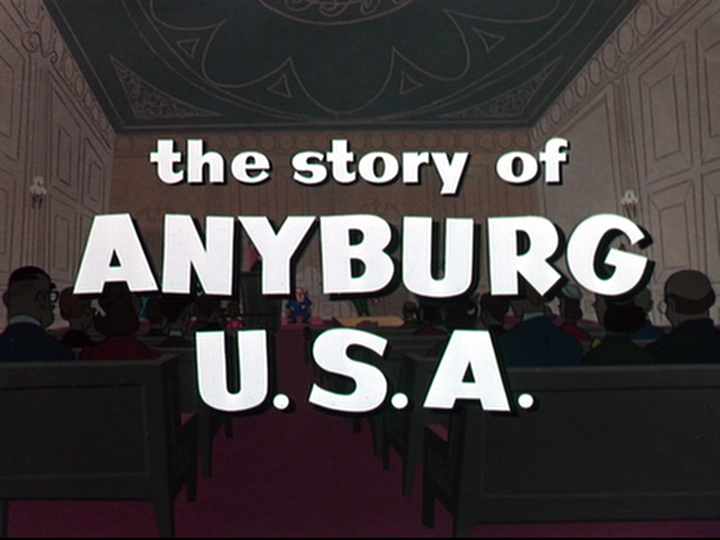
July 19, 1957 – The Special Short Film The Story of Anyburg, U.S.A is Released to Theaters

vlcsnap-2013-07-19-16h23m49s248

“This is the story of a certain city, and what it did about this common curse that plagued the land.”

On July 19, 1957, the special short film The Story of Anyburg U.S.A. was released to theaters. It was directed by Clyde Geronimi, with story by Dick Huemer. The short stars the voices of Hans Conried, Thurl Ravenscroft, and Bill Thompson.

The narrator takes the audience to Anyburg, U.S.A, where the traffic situation, he explains, is normal enough. However, a feeling of dissatisfaction was growing among residents when it came to their traffic troubles. The residents decide to take their blame to court, and charge the automobile for the traffic crimes. An automobile witness starts to shake when the prosecution starts grilling it, and the judge tries to hurry things along, as his golf clubs are seen hiding under his chair. The first car is blamed for speeding into a restaurant and destroying the place, and surprisingly, the defense has no questions. The next witness is a sports car, blamed for guzzling gas and burning rubber on the road. Once again, the defense has no questions.

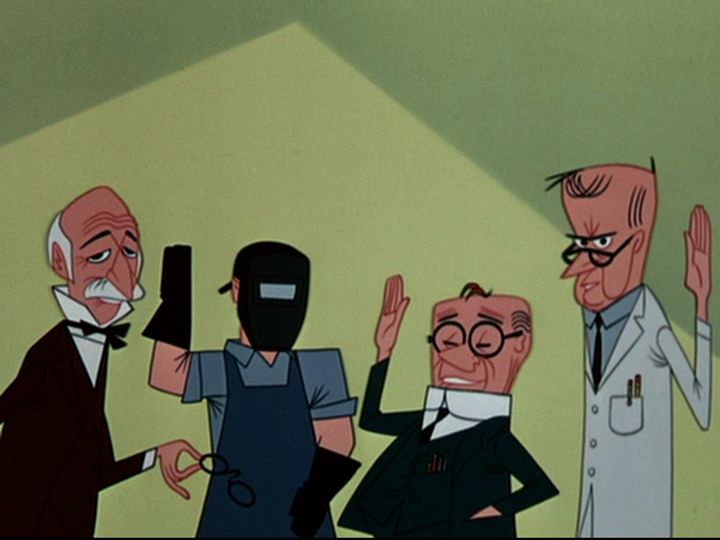
The safety experts vow that  they have made several safety modifications to the automobile, but to no avail

The safety experts vow that they have made several safety modifications to the automobile, but to no avail

A dilapidated old car is called next, and brought to tears by the prosecution, although the defense again has no questions. The men who build safe car parts (safety glass, safety tires, etc.) then testify, stating that although they have built such devices, accidents continue to occur at an alarming rate. The jury is then convinced that the automobile has to go. Next on the stand is Mr. Sirus P. Sliderule from the Bureau of Highways, who starts to cry once he talks about how, although he leveled hills, put up signs, and painted lines, the automobile made his beautiful highway a complete mess. The prosecution rests his case, and the defense finally speaks. He shows the audience footage of a speeding car, but proves that the man is the real culprit behind the accidents and problems on the road. He gets the judge to dismiss the case, and the people finally admit their guilt, vowing to drive with decency and courtesy – although this only lasts about two seconds.

July 18

July 18, 1952 – The Donald Duck Short Film Uncle Donald’s Ants is Released to Theaters

vlcsnap-2013-07-18-08h28m08s59

“Cute little fellow.”

On July 18, 1952, the Donald Duck short film Uncle Donald’s Ants was released to theaters. It was directed by Jack Hannah, with story by Al Bertino and Nick George.

An ant colony starts taking food out of their ant hill, marching across the pathway in Donald’s front yard. Donald has just made a trip back from the grocery store, and hasn’t realized that his sack of sugar has been leaking and leaving a trail behind him. The last ant of the colony looks up just in time to see giant sugar crystal hurtling toward him. Donald turns and notices the ant, and gives a crystal to the ant before sidestepping him to reach his front door. The ant quickly takes the crystal back and and explains what happened, and the ants call all the other ant colonies in the nearby area to get more of this sugar.

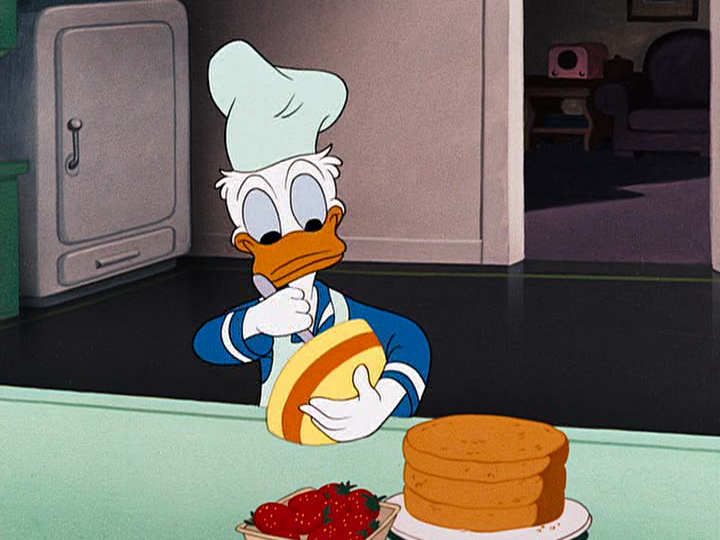
Donald finishes making a cake, unaware of the chaos he has created by his act of charity

Donald finishes making a cake, unaware of the chaos he has created by his act of charity

Inside his house, Donald is putting the finishing touches on the cake he’s been making, and thinks back to the little ant. Suddenly, he has a nightmarish vision of hundreds of ant storming his house for the sugar, and runs to the front door to see that his vision has come true. He runs back inside to hide his maple syrup, barricade the door and windows with masking tape, and wall up the chimney. He hears the whistle of the postman and rushes to the door, but remembers the ants and sneaks to the window to spy on his stoop. Seeing no ants, he takes the tape off the door and grabs the letter from his mailbox, but is angered that the letter only reads the words “BIG SALE.” He puts the letter down on a nearby table, unaware that the words have been comprised of the ants. The ants spy Donald’s cake, and distract him long enough to carry it away.

One ant finds himself in the cupboard where the maple syrup and the sugar cubes are stashed away, and calls some more ants to help him carry the sweet things out. Meanwhile, Donald is setting up traps to catch the ants, while the ants use macaroni to build an intricate plumbing system to send the maple syrup. Donald then stops the maple syrup flow by sending the flow into a nearby flower pot, but doesn’t count on the ants taking the entire jar of maple syrup. Donald chases after them, and when they hide in the garage, Donald gets a plan to pour gasoline down the other side of their macaroni pipe, then light it with a match. The ants, who have been counting on this, have already made a switch, and Donald opens the garage door to find that they’ve hooked the other end of Donald’s trap to the gas tank in his car. Donald’s car explodes, sending him sky high. All of the ants celebrate with maple syrup, safe in their colony once again.

July 13

July 13, 1945 – The Goofy Short Film Californy ’er Bust is Released to Theaters

vlcsnap-2013-07-13-10h55m30s72

“Howdy, strangers. Now, I ain’t aimin’ pick no argument or nothin’, understand? Cause anybody knows them old ‘civered’ wagons look powerful slow creakin’ and a-groanin’ cross them plains.”

On July 13, 1945, the Goofy short film Californy ’er Bust was released the theaters. This short is a parody of the popular Western films of the 1940s, as the Native Americans in this short are caricatures of the caricatures in the films. A clip from this film was also reused in the 1953 short How to Dance; another clip was reused in the 1956 short A Cowboy Needs a Horse. This short was directed by Jack Kinney, with story by Bill Peed.

The short begins with the narrator setting off with a wagon train with a rather beat up wagon. The wagon train he is a part of sought a speed record when it came to traveling to California, which the narrator says hasn’t been busted yet. The narrator is then revealed to be Goofy, who leads the wagon train on a slow, beaten-down horse named Hamlet. As they pass through Buffalo, New York, a herd of Indians spots them and sends out their troops for an attack. The wagon train, asleep when the Indians arrive, wake up quickly and attempt to attack back, and a comical fight ensues. Unfortunately, the wagon train runs out of ammunition, and the Indians attack with gusto, until a tornado arrives, sucking up the wagon train and taking them out West, right where they wanted to be.