RSS Feed

Tag Archives: Music

September 15

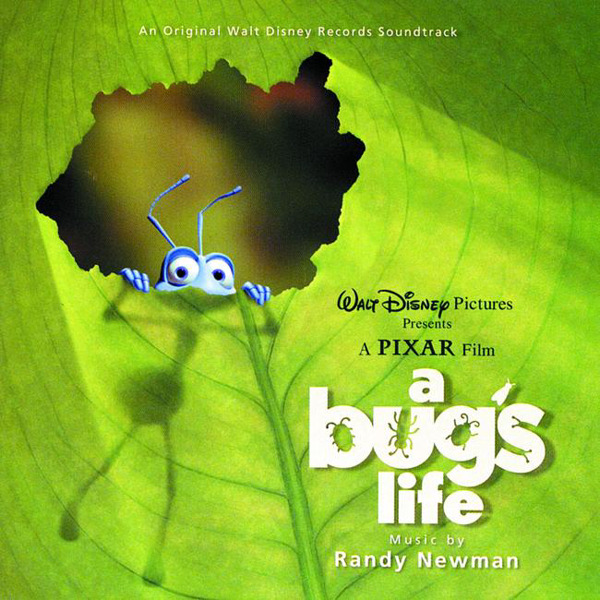
September 15, 1998 – A Bug’s Life Soundtrack is Released Through Walt Disney Records

“He just knew that he’d come through, it’s the time of your life, so live it well.”

On September 15, 1998, the soundtrack for the Pixar film A Bug’s Life was released on Walt Disney Records. The soundtrack was composed by Randy Newman, who has done several soundtracks for Pixar, including Toy Story. The first track of the album is the song “The Time of Your Life,” written and performed by Newman, and meant as the theme song for the film. The soundtrack won a Grammy Award in 2000 for Best Score Soundtrack for Visual Media, beating out the scores for Shakespeare in Love (Stephen Warbeck), Star Wars Episode I: The Phantom Menace (John Williams), Le Violon Rouge (John Corigliano), and La Vita è Bella (Nicola Piovani).

August 18

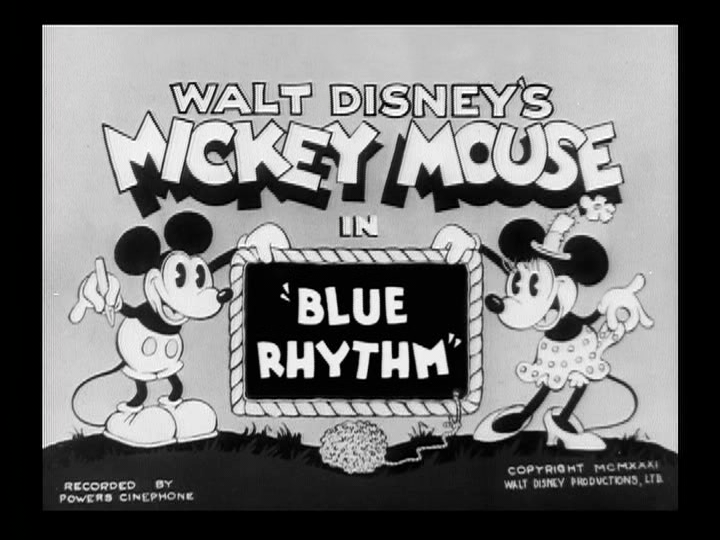
August 18, 1931 – The Mickey Mouse Short Film Blue Rhythm is Released to Theaters

“I hate to see the evenin’ sun come down.”

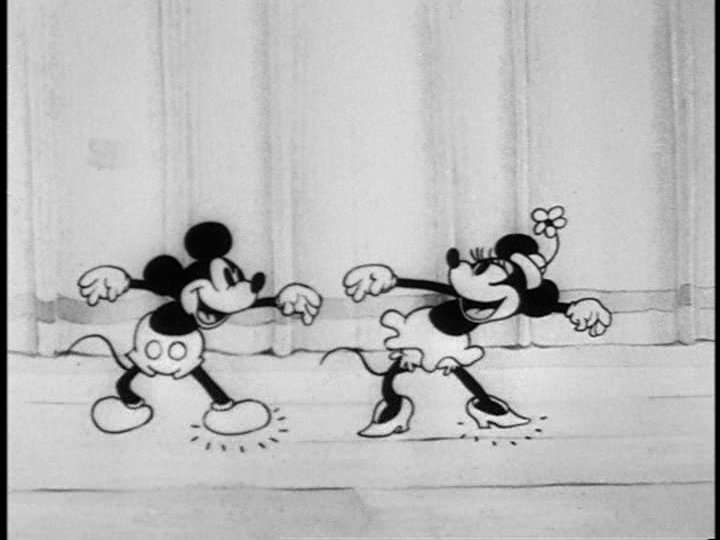
 On August 18, 1931, the Mickey Mouse short film Blue Rhythm was released to theaters. The song used in the short is “Saint Louis Blues,” a jazz standard from 1914, written by W.C. Handy, and famously sung by Bessie Smith and Louis Armstrong. The short was directed by Burt Gillett, and stars Walt Disney as the voice of Mickey Mouse, and Marcellite Garner as the voice of Minnie Mouse.

The curtain opens on a grand stage to reveal Mickey playing a piece on the piano. He soon switches genres of music from classical to jazz, and begins playing around with the piano keys. Minnie enters stage left and begins to walk in time to the music before singing “Saint Louis Blues” rather dramatically. Mickey finds gum under the piano and gets his fingers stuck to it, which causes him some difficulty playing Minnie’s song.

Mickey leaves the piano to join Minnie in scatting and dancing across the stage

Minnie moves on to perform some jazz scatting with Mickey leaving the piano to join her. The two then begin to tap dance across the stage, and leave as the background curtain rises to reveal Horace Horsecollar and other members of the orchestra continuing to play the piece. Mickey appears from a trapdoor and conducts the orchestra. Pluto, playing the trombone, keeps hitting Mickey in the back with the slide, which causes Mickey to break it in half in frustration.

The lights go out, and the orchestra stops in confusion before seeing the spotlight on Mickey, who puts on a crushed top hat and begins to play the clarinet. The orchestra once again continues to play, and the concert ends with the stage falling apart thanks to their spirited playing.

August 12

August 12, 2003 – The Cheetah Girls Soundtrack is Released on Walt Disney Records

“Our spots are different, different colors, we make each other stronger, that ain’t ever gonna change. We’re Cheetah Girls, Cheetah Sisters.”

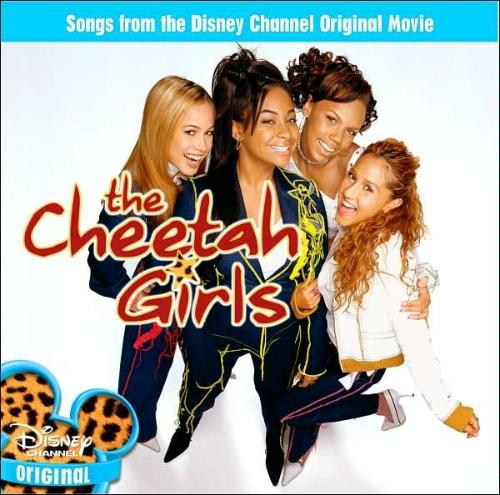
On August 12, 2003, the soundtrack to the hit Disney Channel Original Movie The Cheetah Girls was released on Walt Disney Records. The songs are sung by the original actors, Raven-Symone, Adrienne Bailon, Sabrina Bryan, and Kiely Williams. Bailon and Williams were former members of the girl group 3LW. The album was certified Double Platinum, selling more than 2 million copies; the album peaked at #33 on the Billboard 200 chart. A repackaged version was released with several bonus tracks, including remixes and karaoke songs.

Three singles were released from the album: “Cinderella” (originally performed by i5), “Girl Power,” and “Cheetah Sisters.” The original track listing includes eight tracks, with four performed by The Cheetah Girls: “C’mon” by Sonic Chaos, “Girlfriend” by Char, “Breakthrough” by Hope7, and “End of the Line” by Christi Mac. The album has become one of the most successful soundtracks for Disney Channel Original Movies, surpassed only by High School Musical in 2006.

August 7

August 7, 2007 – The Jonas Brothers’ Second Album is Released on Hollywood Records

“Cause an empty room can be so loud, there’s too many tears to drown them out, so hold on.”

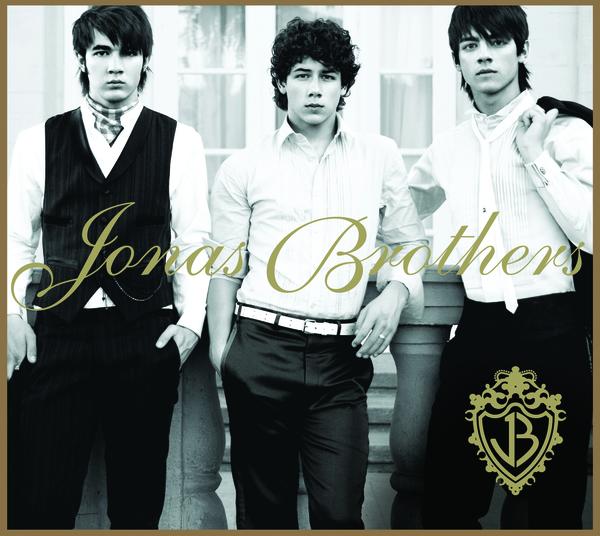
On August 7, 2007, the Jonas Brothers released their second album, Jonas Brothers, their first release on Disney’s Hollywood Records label. The album reached the number 5 spot on the Billboard 200 chart on its first week of release, and has been certified 2x Platinum since its release. Four singles were released from the album: “Year 3000” (a cover song originally by Busted), “Hold On,” “SOS,” and “When You Look Me in the Eyes.” A repackaged version of the album was released on October 30, 2007, as the Bonus Jonas Edition.

The group, consisting of brothers Nick, Joe, and Kevin Jonas, had signed with the Disney label in February of 2007, and participated in a few Disney projects leading up to their album release: a reimagining of the song “Kids in America” for the soundtrack for Meet the Robinsons, and a cover version of “I Wanna Be Like You” for the compilation album DisneyMania 5. A tour for the album, titled the Look Me In The Eyes Tour began on January 31, 2008, in Tucson, Arizona.

July 3

Posted on

July 3, 1914 – Disney Legend and Composer George Bruns is Born

“George was big and easy-going, but he worked very hard and produced a seemingly endless string of fresh melodies and haunting scores.” – Animators Frank Thomas and Ollie Johnson.

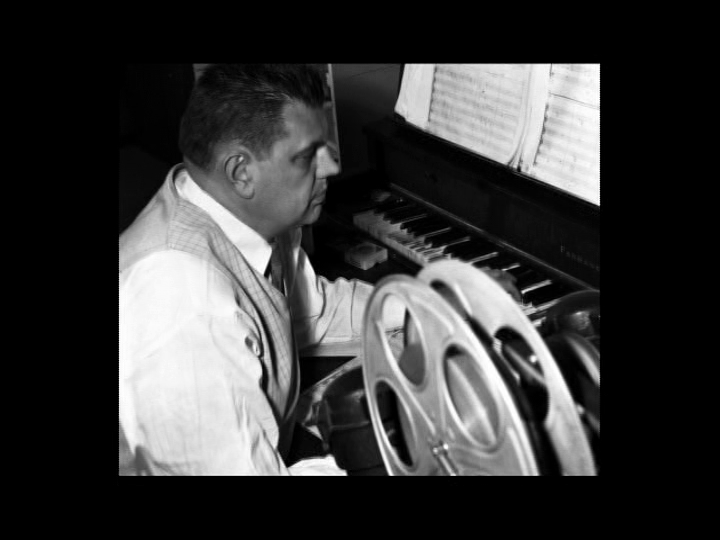
On July 3, 1914, George Bruns was born in Sandy, Oregon. He was taking piano lessons by age six; by high school he could play the tuba and trombone proficiently, and he later was able to play 12 more instruments well. Bruns attended Oregon State University, and moved to Los Angeles, California, in 1950. There, he began his conducting career for Capitol Records and UPA Studios. Bruns got his big break in 1953, when Walt Disney hired him personally to score the feature Sleeping Beauty, which would earn him his first of four Academy Award nominations while at the Disney Studios. Bruns was then asked to compose a piece for the upcoming television series about Davy Crockett. This piece would become Bruns’ most well known composition, skyrocketing to the top of the Hit Parade for six months and selling more than eight million records.

Bruns continued to score Disney films for 22 years, with films including The Absent-Minded Professor, 101 Dalmatians, The Jungle Book, Robin Hood, and The Love Bug. He would earn three other Academy Award nominations for the first live-action musical for the studio, Babes in Toyland; for the 1963 animated film The Sword in the Stone; and for the song “Love” from Robin Hood. Bruns continued to score pieces for the Disney television serials; the theme for Zorro gave him another hit, selling a million records. After contributing to more than 200 projects, Bruns retired from Disney in 1975 and returned to Oregon to continue to compose and to teach at Lewis and Clark College. Bruns passed away on May 23, 1983, in Portland, Oregon. In 2001, he was honored as a Disney Legend.

June 12

June 12, 1928 – Disney Legend and Songwriter Richard M. Sherman is Born

“I was all of seventeen in a terrible, terrible depression, and I decided to take a walk. And as I walked, I was hearing music, and I was wondering, ‘Where is this music coming from?’ And I realized it was coming from my own head. So I darted back to the apartment where we had a little piano, and started picking it out on the piano. There was this feeling I had. I’d never done that before…and my father said, ‘What are you doing here? What is this?’ and I said, ‘This is something I felt, I had to say it. This is what I feel.’” – Richard M. Sherman

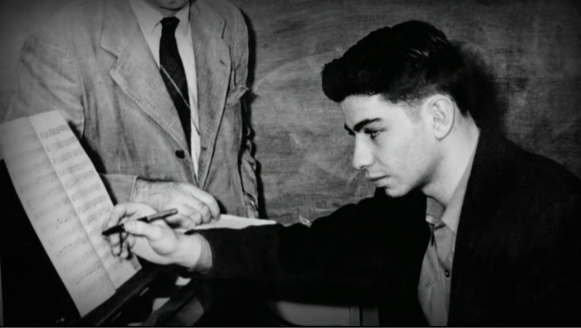
Born on June 12, 1928, Richard M. Sherman was the youngest son of Rosa and Al Sherman, the latter a songwriter in what was known as “Tin Pan Alley,” an area in New York City that published popular music that dominated the market from the late 19th century to the early 20th century. The Shermans moved to Beverly Hills, California, in 1937. Richard’s interest in music developed in school, where he studied several instruments, including the flute, the clarinet, the piccolo, and the piano.

In 1958, Richard teamed up with his brother Robert, writing the song “Tall Paul” for Disney star Annette Funicello. It was a top-ten hit, eventually peaking at #7 on the Billboard Hot 100 chart, which caught the attention of Walt Disney. He contacted the Sherman Brothers and hired them to write for the Disney Studios as staff songwriters. The brothers wrote several songs for Disneyland, including their most well-known song “it’s a small world (after all).” They reached their greatest success with the film Mary Poppins, writing the hits “Feed the Birds,” “Supercalifragilisticexpialidocious,” and the Oscar winning “Chim Chim Cher-ee.” The brothers worked for Walt Disney until his death in 1966, and left the company in 1982 after writing songs for Epcot.

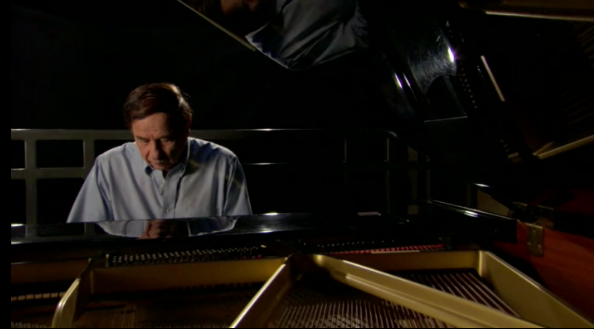
Richard playing one of his compositions in the documentary The Boys: The Sherman Brothers Story

The brothers worked on many projects outside of Disney, including the songs for the film Chitty Chitty Bang Bang and Charlotte’s Web, as well as the hit song “You’re Sixteen,” notable for being a Top Ten hit twice, first by Johnny Burnette in 1960 and Ringo Starr in 1973. Although the brothers had their greatest successes as a team, individually they have contributed greatly to the fields of music and literature. Richard released a CD in 2010 called “Forgotten Dreams,” a compilation of his piano compositions. One of his compositions, titled, “Make Way for Tomorrow Today,” was used in the movie Iron Man 2. The brothers were honored in 1990 as Disney Legends, and were awarded the National Medal of Arts in 2008. As Richard once put it, “We both really didn’t necessarily want to be songwriters. What I wanted to be was a great symphonic composer.” The brothers’ life story was chronicled in the 2009 documentary The Boys: The Sherman Brothers’ Story, which told the tale of how they ended up bound together and delighted the children of the world with their fantastical songs.

June 7

Posted on

June 7, 1998 – The Lion King Wins Six Tony Awards

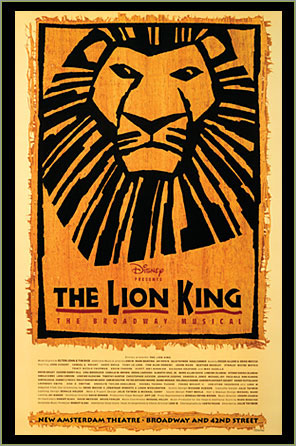
Image Credit: The Official Website for the Tony Awards

 “Tom [Schumacher] and I want to thank the Tony committee and the theater community for embracing this show and honoring us this way.” – Peter Schneider

On June 7, 1998, the 52nd Annual Tony Awards were held at Radio City Music Hall in New York. The Lion King musical walked away with six awards, including Best Musical, beating out Ragtime, Side Show, and The Scarlet Pimpernel. The Lion King also won Best Direction of a Musical for director Julie Taymor, Best Choreographer for Garth Fagan, Best Scenic Design for a Musical for Richard Hudson, Best Costume Design for a Musical for Julie Taymor and Michael Curry, and Best Lighting Design of a Musical for Donald Holder.

The musical, based on the animated film released in 1994, was a phenomenon when released on Broadway, smashing records and earning rave reviews. Julie Taymor, the director, was the first female to receive a Tony for Best Direction of a Musical. “Julie Taymor is a goddess; we’re eternally grateful for your courage, your passion, and the genius that is your gift,” Tom Schumacher announced upon receiving the Tony Award for Best Musical. Using her studies in pre-Bunraku puppetry in Japan, Taymor also helped to create the costumes for the musical, with a variety of masks and puppets used to portray the animals in the show; this unique design helped set the musical apart from the movie.

May 27

Posted on

May 27, 1948 – The 10th Animated Feature, Melody Time, is Released to Theaters
“Yes, it’s Melody Time, time to hitch your wagon to a song. Cause a song’s the one and only thing that will take you over the rainbow to the land where music is king.”

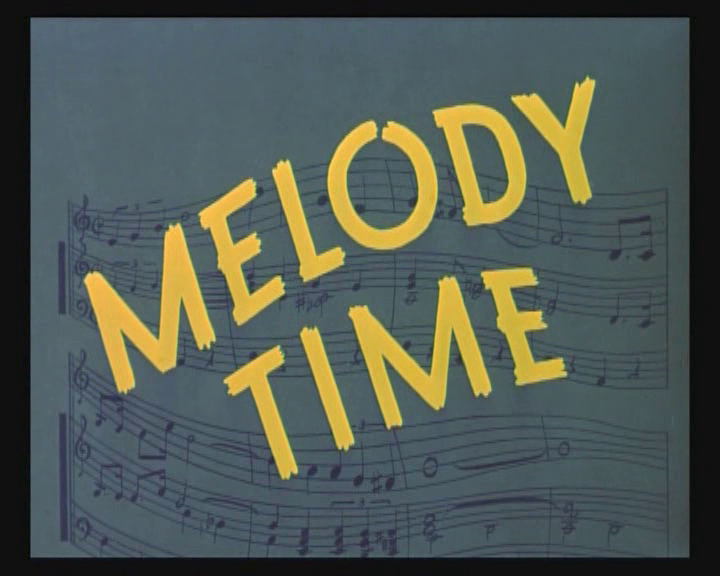
On May 27, 1948, the tenth animated feature and sixth package film, Melody Time, was released to theaters. It was directed by Clyde Geronimi, Hamilton Luske, Jack Kinney, and Wilfred Jackson. The stories were written by Winston Hibler, Erdman Penner, Harry Reeves, Homer Brightman, Ken Anderson, Ted Sears, Joe Rinaldi, Bill Cottrell, Art Scott, Jesse Marsh, Bob Moore, and John Walbridge, with “Little Toot” by Hardie Gramatky, and Carl Carmer as the Folklore Consultant. Many famous performers contributed to the film, including Roy Rogers and Trigger, Dennis Day, the Andrews Sisters, Fred Waring and his Pennsylvanians, Freddy Martin, Ethel Smith, Frances Langford, and Buddy Clark as the Master of Ceremonies.
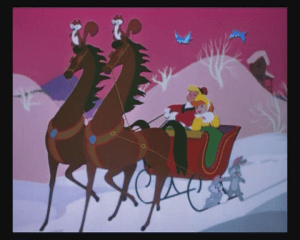
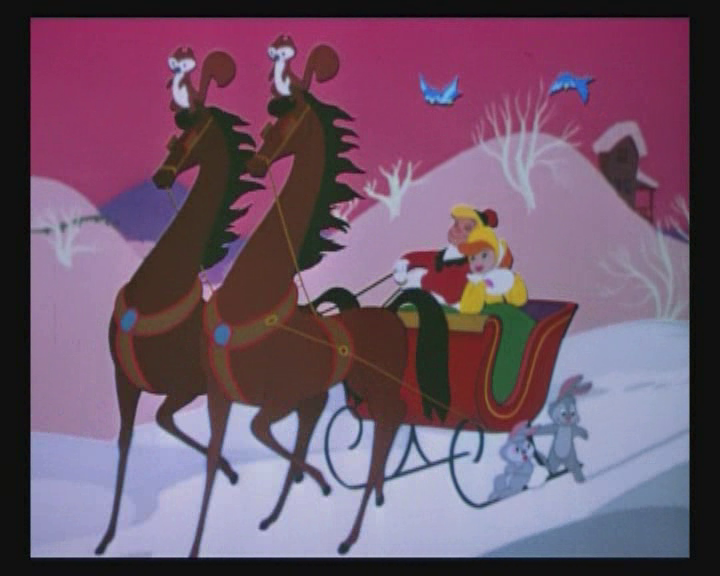
The two couples happily riding in a horse-drawn sleigh

The first segment is Once Upon a Wintertime, sung by Frances Langford. Two couples – one human, one rabbits – share an adventure on a beautiful winter day. The human couple takes a sleigh ride, and the rabbits hitch on to the cart for a ride. The couples stop near the pond to go ice skating, and both males end up upsetting their mates more than once throughout their trip. When both females end up on a dangerous patch of thin ice near a waterfall, they are saved with the help of the horses from the sleigh and a pair of squirrels, and all is well once again for the couples.

The next segment is a new take on the piece “The Flight of the Bumblebee,” known as Bumble Boogie, by Freddie Martin and his Orchestra. A frightened bumblebee is in a nightmare that involves all sorts of musical instruments, and he tries to escape as best he can while being pursued by harmonies and all sorts of strange musical creations.
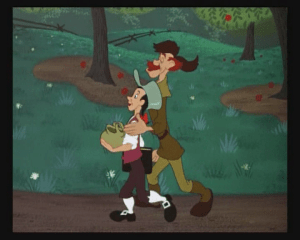
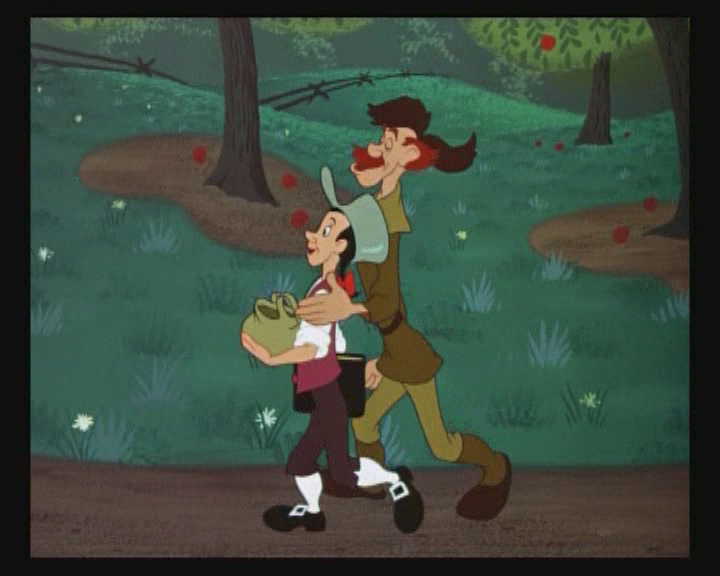
Johnny Appleseed (L) and his Angel walk down the path, with the Angel finally convincing him to go west and plant his apples.

This is followed by Dennis Day performing the tale of Johnny Appleseed, a story from “the pages of American Folklore.” Day was the narrator, Johnny, and Johnny’s Angel. This segment opens with Johnny picking apples from his apple trees, when he suddenly sees a wagon trail. Johnny feels the urge to head west, but believes himself to not be enough of a pioneer. His Angel appears, and convinces him to head west if that’s what he wants to do. Johnny decides to go west and plant his apple trees. No matter what dangers he faced, he was able to persevere, and was able to begin planting his trees wherever he found fertile soil. The settlers would honor him well for his gift of apple trees, which provided them with much needed food. Johnny continued planting for forty years, until one day, his Angel appeared to take him to Heaven, needing him to plant apple trees there.

Following that segment is Little Toot, as performed by The Andrews Sisters. Little Toot is a small tugboat who is very enthusiastic about joining the family business – unfortunately, Little Toot always finds himself in trouble, unable to behave, though he tries to be good. After nearly getting caught by a police officer, Little Toot decides to be helpful, but ends up accidentally causing trouble by turning the rudder on the boat his father is tugging and the boat crashes into the city. The police take Little Toot way out to sea as punishment, and his father is now only allowed to tow garbage. Fortunately, Little Toot is able to redeem himself by saving a ship that is in distress in a storm. Proclaimed a hero, Little Toot is able to return home.
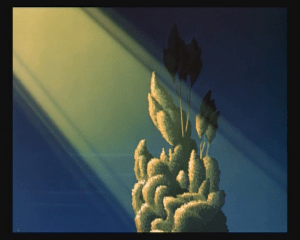
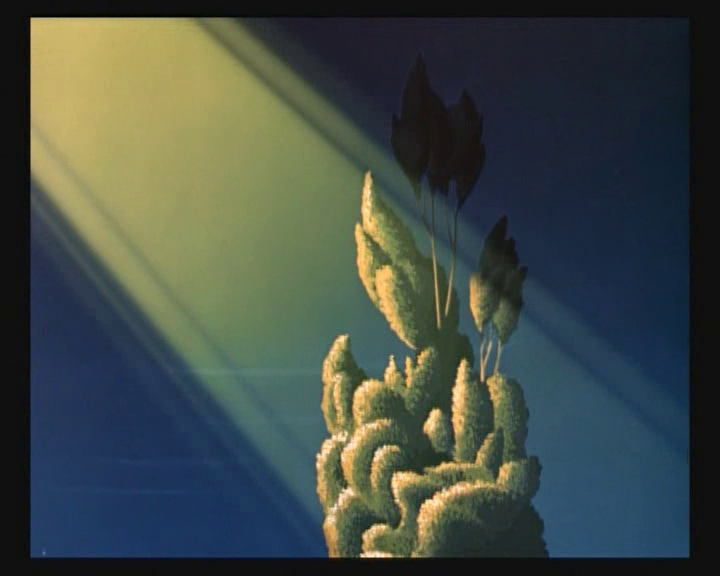
One of the beautiful illustrations used for the segment Trees.

Next is Trees, performed by Fred Waring and his Pennsylvanians, and based on the poem by Joyce Kilmer. The short is a simple homage to a tree, with a different style of animation than the rest of the film, looking like a more realistic Bambi than a regular-style Disney cartoon.

Trees is followed by the more upbeat Blame it on the Samba, performed by Ethel Smith and the Dinning Sisters, and stars Donald Duck, Jose Carioca, and the Arucuan Bird. Donald and Jose are walking in a depressing blue scene, when they stop by the Arucan Bird’s restaurant “Café de Samba.” Once the samba begins to play, the two are able to snap out of their funk and begin to dance. The short also combines live action again, where Donald and Jose dance while Ethel Smith plays the organ, and then plays the congas before breaking into her own dance to the samba. She returns to the organ by the end of the short, with everyone dancing happily.
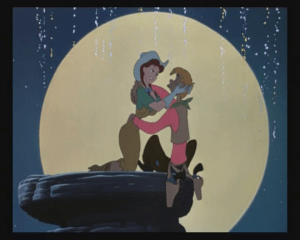
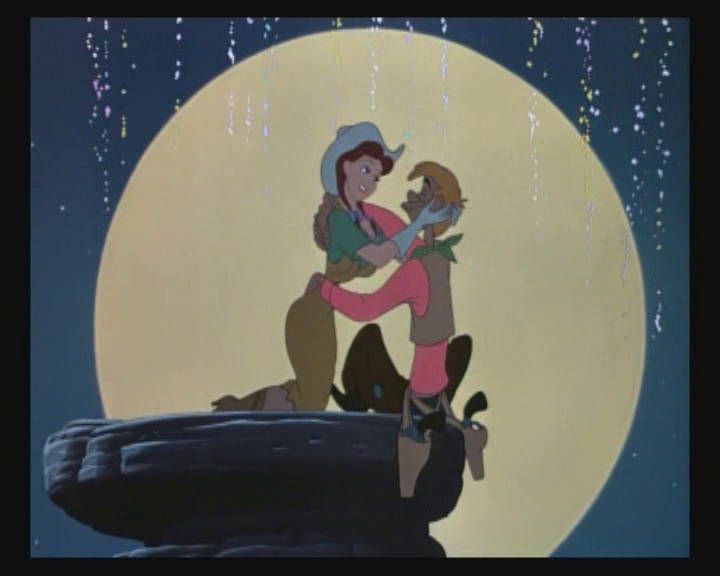
Pecos Bill and Slue-Foot Sue, proclaiming their love under a full moon

The last segment is hosted by Roy Rogers and Trigger, and also features child stars Bobby Driscoll and Luana Patten, telling one of the stories of Pecos Bill. After Bobby asks who Pecos Bill is, Roy begins to tell the story about how the bravest man of the west came to be and why the coyotes howl the way they do. Once, a wagon containing sixteen children and their parents was coming across a mean river in Texas, when a toddler popped out of the back and landed in the river. A coyote was traveling at night, and discovered the child in her den, and took to him, so Pecos Bill grew up with coyotes. One day, a pony was wandering through the desert and was saved by Bill, and this would become Bill’s best friend – Widow-Maker. Bill became the roughest, toughest cowboy in the west, with Widow-Maker by his side. Their partnership is threatened by a woman named Slue-Foot Sue, and the rest of the short tells how Widow-Maker ends their relationship, and why coyotes howl.
May 17

Posted on

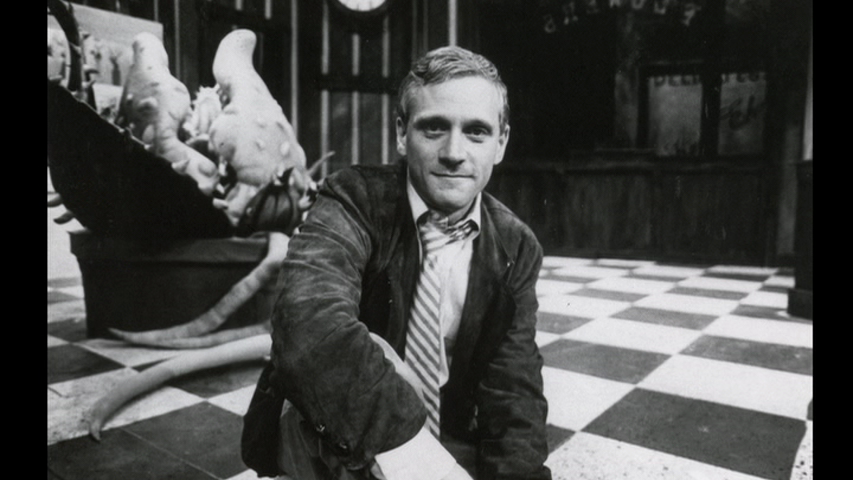
May 17, 1950 – Disney Legend and Lyricist Howard Ashman is Born

“Howard is referred to by Roy Disney as another Walt, which shocked me when I was interviewing him, because of all people, why would Roy say this about Howard Ashman? But he was, to us and our generation, he was a Walt Disney type.” – Don Hahn

Howard Elliott Ashman was born on May 17, 1950, in Baltimore, Maryland. An early lover of theater, Ashman joined the Children’s Theater Association at age nine and remained there until he left for college in 1967. Although Ashman loved acting, in college he discovered his love of writing and directing. After school, he became the artistic director of the WPA Theater in New York, and met writing partner Alan Menken while working on a musical adaptation of Kurt Vonnegut’s God Bless You, Mr. Rosewater. The two had a major success with the show Little Shop of Horrors, and Ashman won a Drama Desk Award for Outstanding Lyrics.

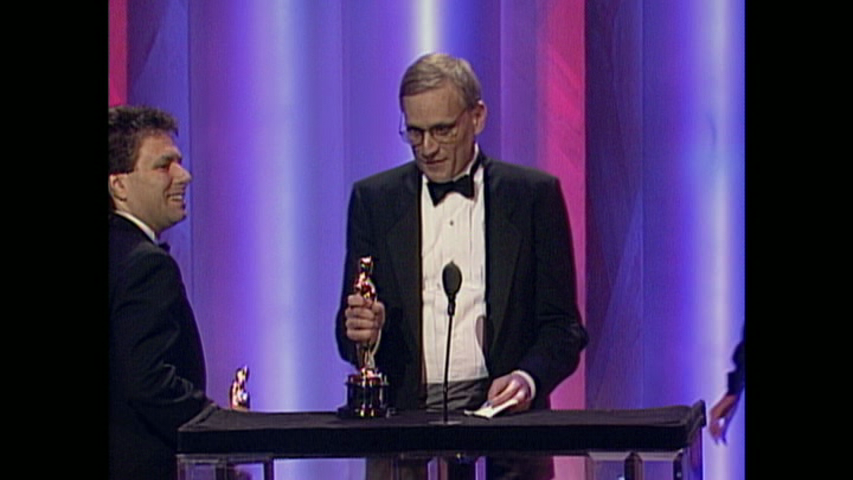
David Geffen was key in bringing Ashman and Menken to the Disney Studios. When Ashman came to Disney, he was offered three projects: an adaptation of Tina Turner’s autobiography, a live action version of The Thief of Baghdad (which would later become Aladdin), and The Little Mermaid, which he chose to work on. At the film’s crew meeting, Ashman said, “When I was approached with the opportunity to work for Disney, period, I leapt at the – I said, ‘What about animation? What about working in that department?’ That’s what I really wanted to do.” It was Ashman’s idea to make Sebastian the crab a Jamaican crab, which brought a whole different musical style to Disney animation. Ashman also brought in Jodi Benson as the voice of Ariel. He and Alan Menken won the Academy Award for Best Song for “Under the Sea.”

Ashman and Menken (L) winning the Academy Award for “Under the Sea”

In 1988, Ashman found that he was HIV positive, but continued to work for Disney on Beauty and the Beast. Disney allowed Ashman to work in New York, and he was instrumental in many aspects of the film, from the casting to some of the characterizations. The staff showed the film to the New York press, which responded with great reviews. After the showing, the staff rushed down to St. Vincent’s Hospital in Manhattan, where they saw Ashman wearing a Beauty and the Beast sweatshirt. Don Hahn recalled, “Before we left I bent over and whispered, ‘Beauty and the Beast is going to be a great success. Who’d have thought it?’ I said. And Howard lit up and whispered, ‘I would have.’”

Howard Ashman died on March 14, 1991, at the age of 40, from complications with AIDS. He never saw the completed film. The Disney animators honored Ashman at the end with a tribute at the end credits: To our friend, Howard, who gave a mermaid her voice, and a beast his soul. We will be forever grateful. Howard Ashman: 1950 – 1991. Ashman was awarded an Academy Award posthumously for the song “Beauty and the Beast.” He was also named as a Disney Legend in 2001.“Howard Ashman was the key to much of our success,” said Peter Schneider. “He was a great storyteller, he knew how to lyrically be funny…[Howard and Alan] really shaped what these movies were to become.”

May 10

Posted on

May 10, 1956 – Disney Legend Paige O’Hara is Born

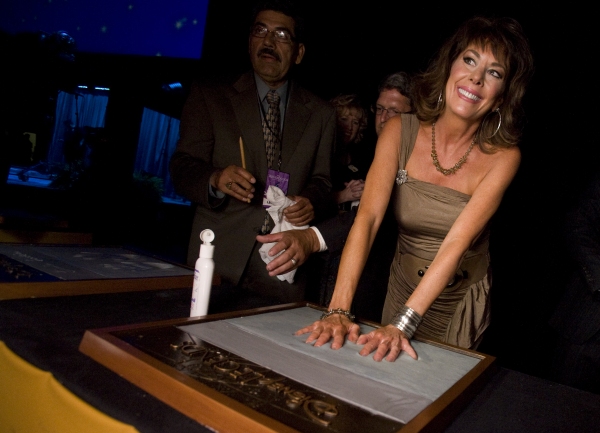
Paige O’Hara at the Disney Legends Awards. Photo credit: broadwayworld.com

“I had been a Disney fanatic from the time I was little. As soon as I heard about [Beauty and the Beast], I called my agent and said, ‘I have to be seen for this…I knew [Belle] was my part. It was just one of those things you know.” – Paige O’Hara

Paige O’Hara, best known as the voice of Belle in the 1991 classic animated film Beauty and the Beast, was born on May 10, 1956, in Ft. Lauderdale, Florida. She made her first professional appearance in the Broadway revival of Showboat as the character Ellie May Chipley. Since then, O’Hara has gone on to star in the title role in The Mystery of Edwin Drood, and Ado Annie in the national tour of Oklahoma.

O’Hara auditioned five times for the part of Belle, and as the film became wildly successful, it thrust O’Hara into the spotlight. She continued to voice the character in two sequels: Beauty and the Beast: The Enchanted Christmas and Belle’s Magical World, as well as voicing the character in the Kingdom Hearts video games. O’Hara was also given a cameo in the 2007 film Enchanted as a character in a soap opera. O’Hara was awarded as a Disney Legend on August 19, 2011. “She was a first, in a lot of ways, for a Disney Princess,” O’Hara has remarked on her character, “and was ahead of her time in the film and for Disney. I think that’s why, almost 20 years later, people still love her.”