RSS Feed

Tag Archives: Feature Film

November 14

November 14, 2000 – The Soundtrack to the 40th Animated Feature, The Emperor’s New Groove, is Released by Walt Disney Records

Image credit: amazon.com

“He’s the sovereign lord of the nation, he’s the hippest dude in creation, he’s a hep cat in the emperor’s new clothes.”

On November 14, 2000, the soundtrack to the 40th animated feature, The Emperor’s New Groove, was released through Walt Disney Records. The album features songs by Sting, Eartha Kitt, Rascal Flatts, and Tom Jones, with a score by John Debney. Many of the songs on the album were written for the first treatment of the film, known as The Kingdom of the Sun. When the film went under rewrites, many of the songs were dropped, but were still included on the soundtrack. The song “My Funny Friend and Me” by Sting was nominated for an Academy Award, but lost to Bob Dylan’s “Things Have Changed” from the film Wonder Boys.

November 13

November 13, 1997 – The Lion King Officially Opens on Broadway

Image Credit: wikipedia

“Till we find our place on the path unwinding in the circle, the Circle of Life.”

On November 13, 1997, the musical The Lion King officially opened on Broadway in the New Amsterdam Theater after the previews that began on October 15. The musical is based on the 1994 animated film, with music by Elton John and lyrics by Tim Rice. The book was written by Roger Allers and Irene Mecchi, and was directed by Julie Taymor. The show has been a financial and critical success, winning Tony Awards for Best Musical, Best Direction of a Musical, Best Choreography, Best Scenic Design for a Musical, Best Costume Design for a Musical, and Best Lighting Design of a Musical.

As with its predecessor, Beauty and the Beast, several changes were made in adaptating  the film to the Broadway stage; most notably Rafiki was changed to a female character. Songs and scenes were added, including the song “Morning Report,” which was later added into the Platinum Edition release of the animated film. The show has had several international productions. In April 2012, it became the highest-grossing Broadway show of all time with $853.8 million in profit, and is the fifth-longest running show in Broadway history.

November 8

November 8, 1973 – The 21st Disney Animated Feature, Robin Hood, is Released to Theaters

“Rob? That’s a naughty word, we never rob. We just, sort of borrow a bit from those who can afford it.”

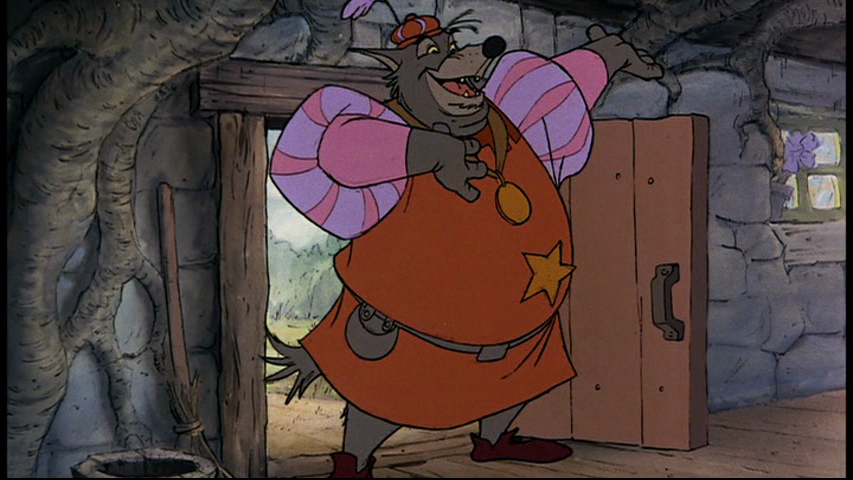
On November 8, 1973, the 21st Disney animated feature film, Robin Hood, premiered in theaters. The film began as an adaptation of the medieval European Reynard the Fox stories; however, Walt wasn’t convinced that Reynard would make a suitable hero. The film also proved to the public that the studio would be able to survive after Walt Disney’s passing. The romantic song in the film, “Love,” written by Floyd Huddleston and George Bruns and performed by Nancy Adams, was nominated for an Academy Award. The story was written by Ken Anderson, and was directed by Wolfgang Reitherman. The film stars Brian Bedford as Robin Hood, Phil Harris as Little John, Roger Miller as Allan-a-Dale, Peter Ustinov as Price John, Terry-Thomas as Sir Hiss, Andy Devine as Friar Tuck, Monica Evans as Maid Marian, Pat Buttram as the Sheriff of Nottingham, and Carole Shelley as Lady Cluck.

The film begins with Robin Hood and Little John “walking through the forest,” dodging the Sheriff of Nottingham and his men. As they escape into the trees, they hear trumpets and see Prince John’s carriage passing through the forest. Inside his carriage, Prince John laughs about being able to collect taxes from the people of England. His right hand, Sir Hiss, compliments the Prince’s plan to have Sir Hiss hypnotize King Richard into fighting the Crusades. As the caravan continues to Nottingham, Robin and John disguise themselves as fortunetellers and con the Prince out of his jewels, his clothes, and his sack of gold coins.

The “Honorable” Sheriff of Nottingham shows up at people’s doors and takes all their money as taxes for Prince John

In Nottingham, the Sheriff travels the town to collect the taxes, taking from Friar Tuck’s donations to the poor, as well as from a widow rabbit and her family. A blind man, who turns out to be none other than Robin Hood, appears at the widow’s door, surprising her with some money, and her son, Skippy, with a hat and archery kit for his seventh birthday. Skippy and his friends go out to test the bow and arrow, which he accidentally sends flying into the yard of Maid Marian. The kids sneak inside to retrieve the arrow, and end up playing a game of make-believe with Marian and her handmaiden, Lady Cluck, pretending that Skippy is Marian’s childhood sweetheart, Robin Hood. After the children leave, Marian daydreams about Robin, wondering if he’s forgotten all about her.

In Sherwood Forest, Robin is daydreaming of Maid Marian, telling Little John that he’s in love with her, but is worried that it wouldn’t work out between them because she’s a lady, and he’s an outlaw. Friar Tuck surprises him tells him that Prince John is having an archery tournament the next day, with Marian to give a kiss to the winner. Although Robin is anxious to run off to the contest, as he is sure he will not lose, he and Little John plan to show up in disguises, since the tournament could very well be a trap. At the tournament, Little John disguises himself as the Duke of Chutney to get close to Prince John, while Sir Hiss goes off to find out where Robin Hood is. Robin has disguised himself as a stork, and ends up winning the tournament; however, Prince John sees through his disguise and has Robin arrested. Marian pleas for his release, but Prince John refuses. A fight breaks out between Robin Hood and his friends against the Prince’s soldiers, and Robin and Marian escape into Sherwood Forest. The two reaffirm their love, and are surprised by the townsfolk with a party and a public mocking of Prince John, calling him the “Phony King of England.”

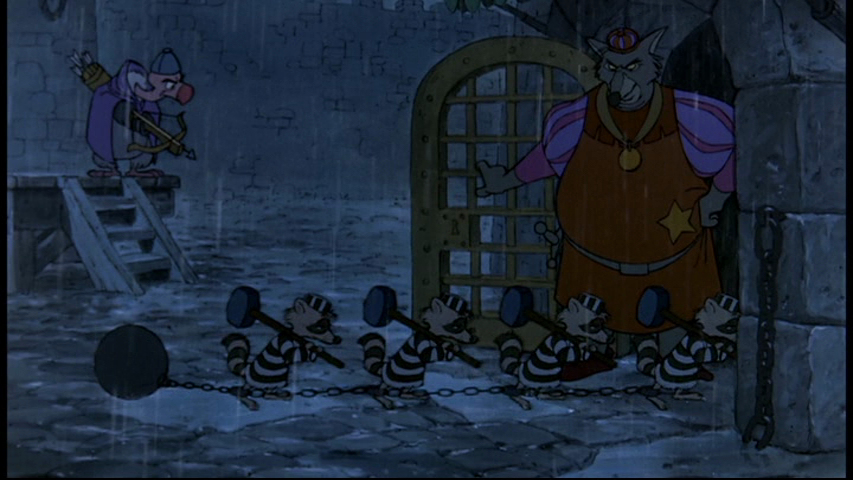
Almost everyone is Nottingham is jailed for being unable to pay the taxes increased by the Prince

Angered that the town is mocking him, Prince John decides to triple the taxes, sending most of the townsfolk into prison. Friar Tuck rings the church bell in the steeple to give people hope, but is upset that he can do only so little for his congregation. Angered when the Sheriff comes to collect all the money in the poor box, the Friar begins to fight back, only to be arrested. Prince John decides to use Friar Tuck as bait to trap Robin, with the Friar set to be hanged. Hearing this, Robin decides that he and Little John need to stage a jailbreak. While they manage to break everyone out, the guards are quick to attack on orders of Prince John. When Robin goes back to save one of the widow’s children, he is captured inside the castle. During the battle that follows, the castle is set on fire, and Robin dives into the moat surrounding the castle. Prince John thinks they have finally killed Robin, but Robin escapes once again.

In the end, King Richard arrives back from the crusades and pardons Robin and Little John. Prince John and his cohorts are sent to jail, working at the Royal Rock Pile. Robin and Marian are finally wed, riding away in a carriage marked “Just Married.”

October 29

October 29, 1993 – The Stop-Motion Animated Feature The Nightmare Before Christmas is Released to Theaters

“When I was working at Disney, I designed something that’s sort of the reverse of that. It’s like the Grinch in reverse, so to speak, about this character who finds Christmas and loves it and decides to try to do it himself.” – Tim Burton.

On October 29, 1993, the Tim Burton film The Nightmare Before Christmas was released to theaters, distributed under the Touchstone label. The idea for the film first began with a poem Burton created while working as an animator at the Walt Disney Studios in the early 80s. When Burton was re-hired, he asked for his treatment back, and it was returned along with his original concept sketches, which helped shape the look and tone of the overall film. The look of the film was also meant to be reminiscent of the illustrations of Ronald Searle and Edward Gorey. The film took three years to create, with the stop-motion done at 24 frames a second, and using 13 animators and more than 100 camera operators, puppet makers, set builders, and prop makers on 19 soundstages with 230 sets. The film was directed by Henry Selick, with screenplay by Caroline Thompson and Michael McDowell, music by Danny Elfman, and story by Tim Burton. It stars Chris Sarandon as Jack Skellington (with Danny Elfman providing his singing voice), Catherine O’Hara as Sally, William Hickey as Doctor Finklestein, and Ken Page as Oogie Boogie. The film was originally released under the Touchstone Banner, due to Disney’s fear that the film was too scary for children. After the film became a critical and financial success, the film was distributed by Walt Disney Pictures.

The narrator introduces the place where holidays begin before the door opens to take the audience to Halloween Town

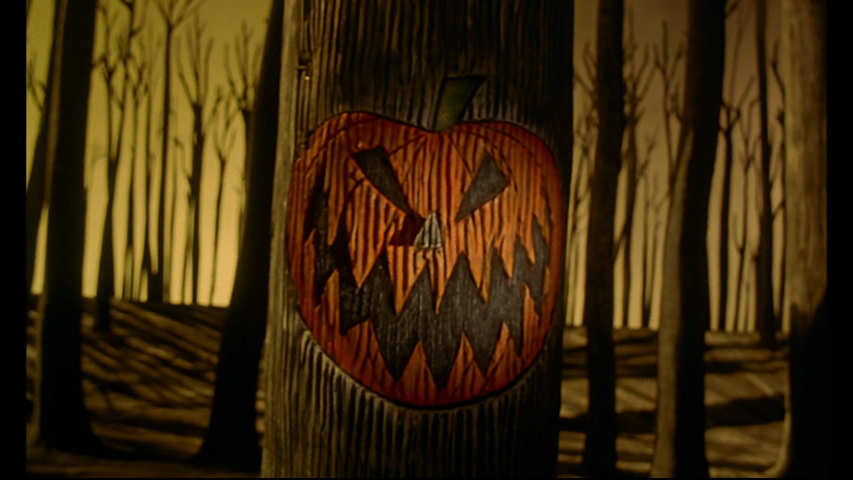
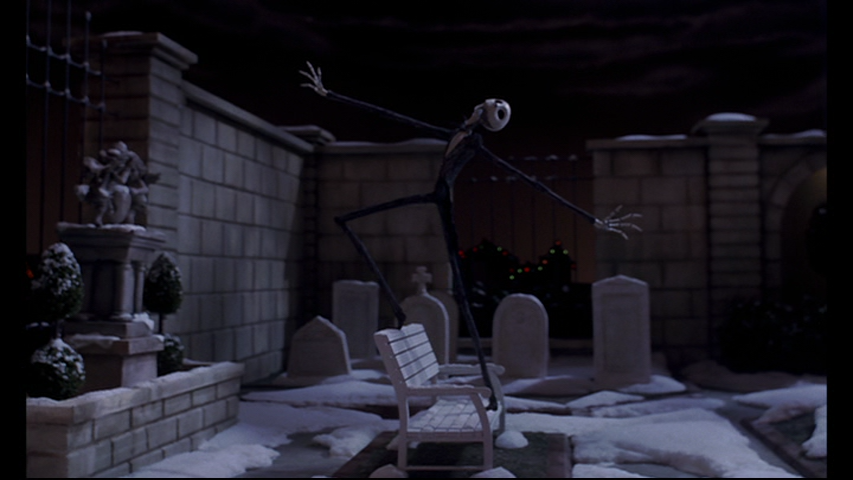
The film begins with a look at a forest with a circle of trees, with each tree decorated with a door representing a different holiday. The door for Halloween opens, with the residents of Halloween Town celebrating after another successful Halloween night. A rag-doll named Sally is among the residents watching the celebrations, but is quickly retrieved by her creator, Dr. Finklestein, although she is able to escape by unstitching her arm. Meanwhile, Jack Skellington, known as the Pumpkin King, leaves the celebration early, feeling melancholy and bored with Halloween. Sally, harboring a secret crush on Jack, watches him as he wanders through the graveyard, before she returns home to retrieve her arm.

Jack wanders away from Halloween Town through the night, and finds himself in a part of the forest he hasn’t seen before, in front of a tree with a Christmas tree design. Enchanted by this strange design, he opens the door and is sucked inside, falling into Christmas Town. Meanwhile, the Halloween Town residents are frantically looking for Jack. But just as Sally, hearing the alarms, finds a way to escape the doctor’s house, Jack returns with all of the items he’s taken from Christmas Town, and calls an emergency town meeting to discuss everything he’s seen. Although he tries to explain, the town doesn’t understand the “special kind of feeling in Christmas Land.”

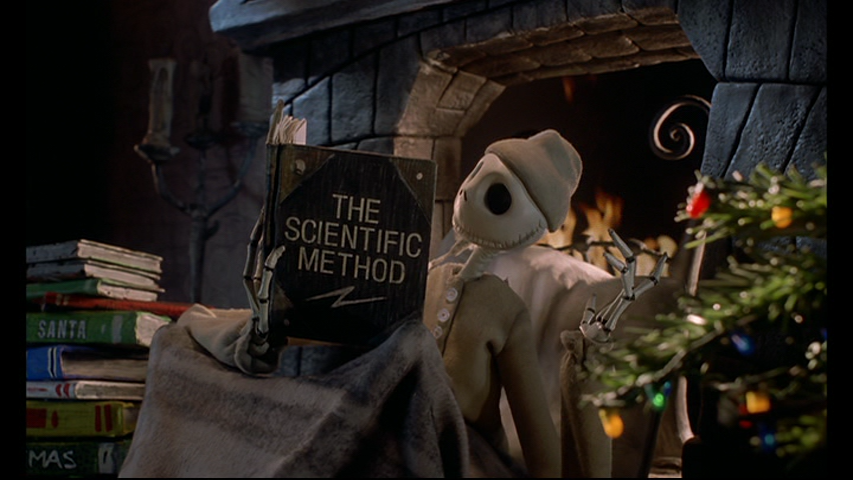
After reading several books on Christmas, Jack decides to take a more scientific approach to understand the meaning of Christmas

That night, Jack is reading up on all the stories of Christmas he can find, and decides to use science to come up with a better explanation. He borrows equipment from Doctor Finklestein, and sequesters himself in his home, much to the worry of the town. Jack comes to the conclusion that he and the members of the town will take over Christmas. Sally has a terrifying vision of Jack’s Christmas, which she believes will only end in danger for him. She tries to warn him, but he reassures her that his Christmas will be just fine. Jack also runs into problems with Lock, Shock, and Barrel, Halloween Town’s finest trick-or-treaters, who also work for Oogie Boogie. They are tasked with kidnapping Santa Clause, and although they promise to leave Oogie Boogie out of it, they plan to give Santa to him instead of Jack.

The night before Christmas arrives, and Jack is ready to go out as Santa Clause. Sally tries to prevent him from heading out by covering Halloween Town with a thick fog, but Jack’s dog, Zero, has a glowing red nose to light the way, so Jack lifts off into the sky to claim Christmas as his own. Lock, Shock, and Barrel, capture Santa, are told to make him “comfortable,” which to them means taking him to Oogie Boogie. As Jack travels all around the world, his Christmas is considered an unmitigated disaster, with the military being mobilized to take the “imposter” down.

Jack finally embraces being the Pumpkin King, filled with a new vigor for the holiday of Halloween

When Sally tries to rescue Santa from Oogie Boogie, she is captured. The town, which has been watching Jack’s journey, sees Jack being shot down by cannon fire and announce that Jack has been blown to smithereens. Jack, still alive, begins to rethink what he’s done. Ashamed at the turmoil he’s caused, he realizes that he has a new zest for being the Pumpkin King, and heads back to Halloween Town, determined to set everything right. First he rescues Sally and Santa from Oogie Boogie, reducing the villain to nothing but a single bug, which Santa squishes. Santa quickly makes everything right, and gives Halloween Town a present of their first snowfall. Jack returns Sally’s affections, and the two hug in the snow-filled moonlight.

October 28

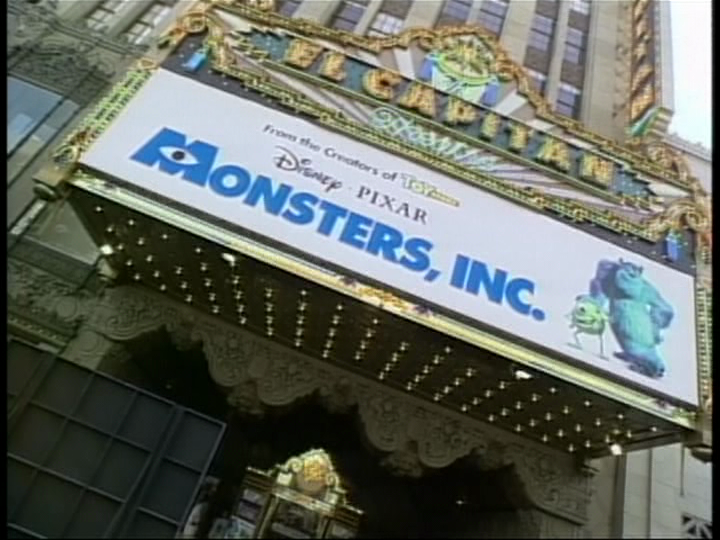
October 28, 2001 – The Pixar Film Monsters, Inc. Premieres at the El Capitan Theater

“I’m Monsters, Inc.!”

On October 28, 2001, the Pixar film Monsters, Inc. had its world premiere at the El Capitan Theater in Los Angeles, California. This was Pixar’s fourth film, and the first directed by animator Pete Docter. The screenplay was written by Andrew Stanton and Daniel Gerson. Upon its release, the film received positive reviews from critics, with most commenting on the energy and the dialogue. The film, after this initial premiere, would be released nationwide on November 2, 2001.

October 25

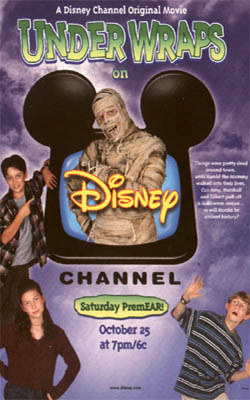
October 25, 1997 – The Disney Channel Original Movie Under Wraps Premieres

Image credit: wikipedia

“Gilbert, it’s a horror movie, what do you think happens? Horrible things!”

On October 25, 1997, the Disney Channel Original Movie (DCOM) Under Wraps debuted on the Disney Channel. It was the second DCOM to be labeled as such. The film was written by Don Rhymer, and directed by Greg Beeman. It starred Mario Yedidia as Marshall, Adam Wylie as Gilbert, Clara Bryant as Amy, and Bill Fagerbakke as Harold.

12-year-old horror film fan Marshall, along with classmates Amy and Gilbert, discover a mummy in the basement of a house, who comes to life thanks to the moonlight. The three become friends with the mummy, naming him Harold, after Marshall’s uncle, and decide that Harold will live with one of them. They discover that Harold needs to be put back in his coffin before midnight on Halloween, or he will turn into dust. The trio discovers that Harold’s sarcophagus is on display at the museum at the Egyptian exhibit, and attempt to come up with a plan to get him back before the deadline.

October 18

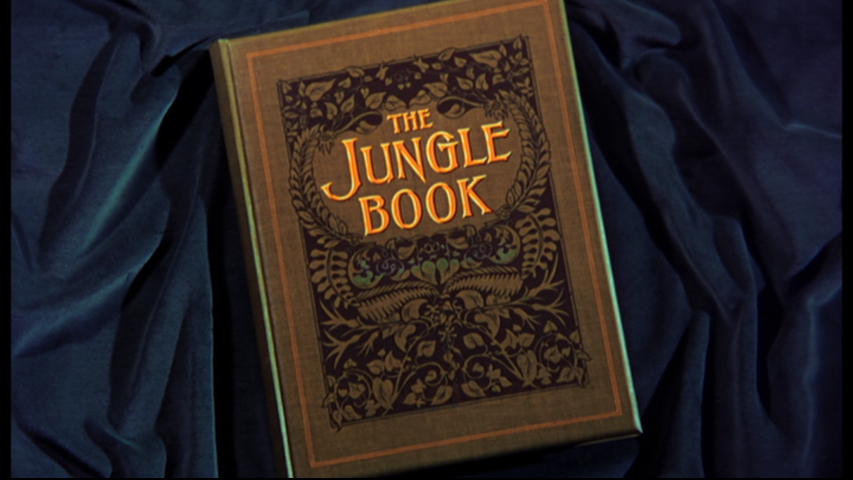
October 18, 1967 – The 19th Animated Feature Film, The Jungle Book, is Released to Theaters

“As an animator, [The Jungle Book is] probably the greatest film in terms of character development and how characters play against one another. The animators poured their whole heart and soul into every scene in that movie.” – Animator Glen Keane

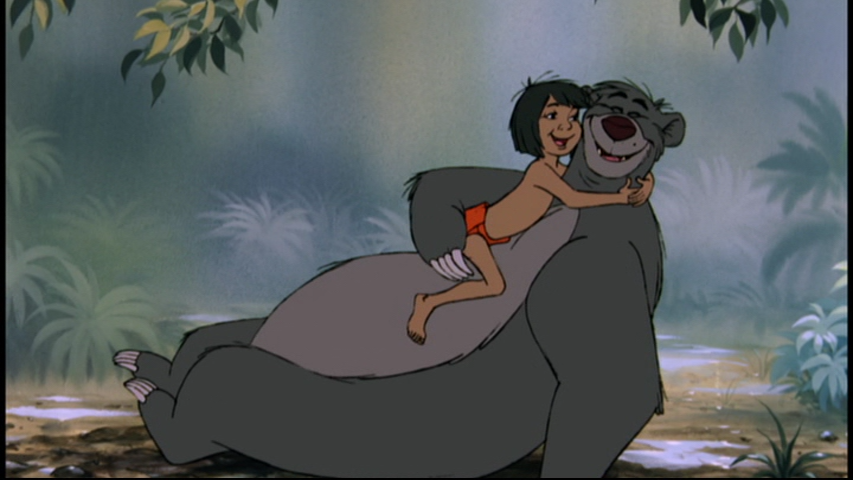
On October 18, 1967, the 19th animated feature, The Jungle Book, was released to theaters. The film was based on the book of the same name by Rudyard Kipling, and was the last film which Walt Disney supervised; Disney passed away during its production. The movie was also known for the vultures being a caricature of the famous band The Beatles, as Disney wanted them to be in the film, but they turned him down due to scheduling conflicts and John Lennon’s disgust with the idea; the vultures did remain in the film without The Beatles’ involvement. The film was directed by Wolfgang Reitherman, and stars Phil Harris as Baloo, Sebastian Cabot as Bagheera, Bruce Reitherman as Mowgli, Louis Prima as King Louie, George Sanders as Shere Khan, and Sterling Holloway as Kaa.

Storyman Bill Peet was the one that suggested Kipling’s book to Disney as an animated feature, making the point that the company could do more stories with more interesting characters. Although Peet usually ran a one-man show when it came to story, and Disney liked the story sketches he was seeing for Jungle Book, Disney wanted to have more hands-on involvement in the story process after the let-down of Peet’s last project, The Sword in the Stone. The two could not reach an agreement on the film, and Peet left the studio. The story was then given to Larry Clemmons for his first writing on an animated feature film. “…[H]e launched into how he wanted to tell the story,” Richard Sherman recalled. “And he said, ‘But I want it to be fun. I want this to be a fun story; an adventure with fun. No mysterious…none of this heavy stuff…and I want to have a little heart in it, too.’”

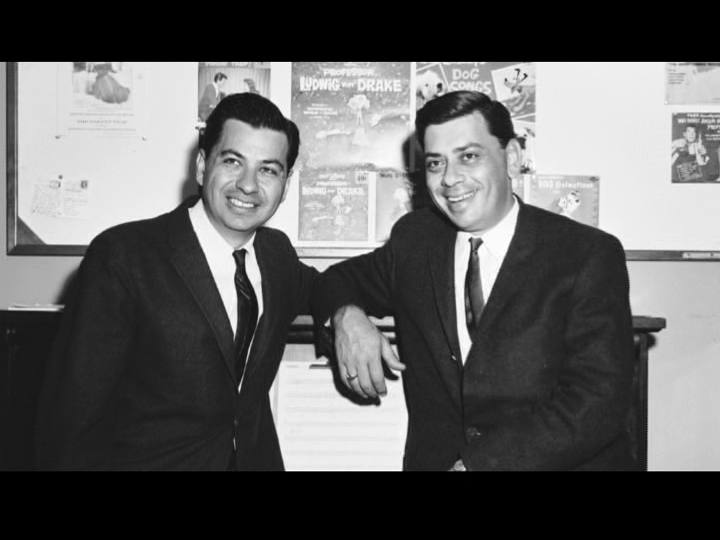
The songwriting team of the Sherman Brothers, who were brought in to write the songs for “The Jungle Book” when Walt Disney came in to rewrite the story

The music for the film is considered one of the greatest soundtracks of Disney animation. The first songs written for the film followed Peet’s darker version of the story, and was done by Terry Gilkyson. When the story went through its rewrite, the Sherman Brothers were brought in to write new songs that were more upbeat and help to progress the story. The only song to survive from Terry Gilkyson was the one that would go on to be nominated for an Academy Award: “The Bare Necessities.” One of the songs that the Sherman Brothers had written for Mary Poppins was retooled to be used for the character of Kaa, called “Trust in Me.” The film was scored by George Bruns, who was well known for writing for Davy Crockett.

The story opens with narration from Bagheera, a black panther, who stumbles upon a basket upon a riverbank in India. Inside, he finds a baby; taking pity on the poor orphan child, he places him with a wolf that had recently had cubs. The mother adopts the child, who is named Mowgli, and raises him alongside her litter. Ten years later, the wolves find out that Shere Khan, a Bengal tiger, will be returning to the jungle and killing anyone who dares protect Mowgli. Bagheera offers to take Mowgli to the man village for his own safety, although the boy is determined to stay in the jungle. While the pair rest in a tree for the night, a python named Kaa appears, who attempts to hypnotize the boy and devour him. Luckily, Bagheera wakes up and interrupts Kaa, with Mowgli sending the python flying out of the tree.

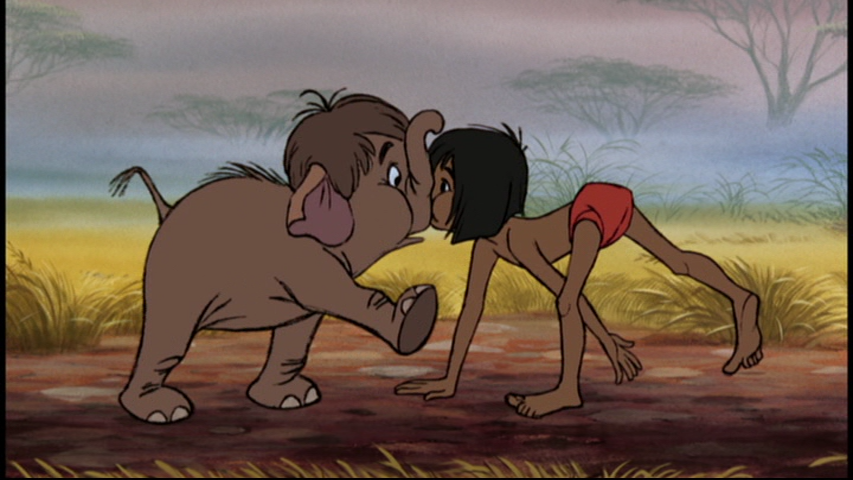
Mowgli meets up with the members of Colonel Hathi’s elephant pack, and hopes that by becoming a member, he can remain in the jungle

The next morning, Mowgli attempts to join Colonel Hathi’s elephant pack, but is quickly intercepted by Bagheera. The two get into an argument about Mowgli’s wish to remain in the jungle, which ends with Bagheera leaving Mowgli to fend for himself. As Mowgli wanders the forest, he comes across Baloo, who aims to teach Mowgli how to fight. When he tries to teach the boy how to roar, Bagheera believes the boy to be in trouble and rushes back to help. Baloo shows Mowgli the carefree life of the jungle, which only makes Mowgli more certain that he will never go back to the village. Unfortunately, just as Baloo and Mowgli begin to bond, a gang of monkeys capture Mowgli to take him back to their leader, King Louie, an orangutan.

Mowgli is brought to the ancient ruins where King Louie lives, and King Louie promises to help the boy remain in the jungle if Mowgli tells him the secret of how to make fire. Baloo, entranced by the music the monkeys are playing, disguises himself so he can sneak in and take Mowgli away. In the ensuing fight over Mowgli, the ruins fall apart, leaving King Louie without a kingdom. That night, Bagheera convinces Baloo that the best thing for Mowgli is to be taken back to the man village, so he doesn’t get killed by Shere Khan. Baloo is torn with what to do, as he loves Mowgli like he was his own cub. When Baloo tries to explain the situation, Mowgli accuses Baloo of breaking his promise and runs away. Bagheera enlists the help of Colonel Hathi to help find Mowgli before Shere Khan shows up, but Shere Khan is seen eavesdropping and is even more determined to kill the boy.


After the fight with Shere Khan, Mowgli gives Baloo a hug, with all being forgiven

As Mowgli wanders the jungle, he runs across Kaa again, who is still hungry. He hypnotizes the boy, but his plans are again interrupted, this time by Shere Khan, and Mowgli escapes. Depressed, he finds a place to sit as a storm fast approaches, and meets a group of vultures who agree to be his friends. Shere Khan finally catches up with Mowgli, scaring the vultures away. Baloo, having finally found the boy, rushes in to save him during the storm, with the vultures returning to create a diversion. When a nearby tree is struck by lightning, Mowgli grabs a flaming branch and ties to it Shere Khan’s tail. The tiger’s only fear is fire, and he flees when he is unable to remove the flaming branch. Baloo and Bagheera still maintain that Mowgli should be taken to the village, but Mowgli remains adamant that he should stay in the jungle. His mind changes, however, when he spies a beautiful girl near the river’s edge. He follows her, helping her carry her water pot. Although Baloo is saddened to lose the boy, Bagheera reminds him that Mowgli will be safe with his own kind, and the two dance off into the sunset together.

October 6

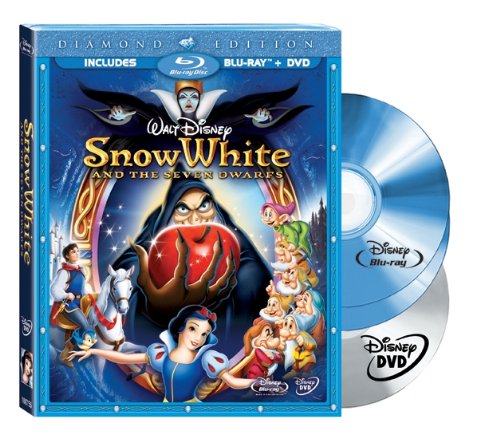
October 6, 2009 – Snow White and the Seven Dwarfs Debuts on Blu-Ray

Image credit: amazon.com

“The one that started it all, more beautiful, more enchanting, more entertaining, now for the first time ever in high definition on Disney Blu-Ray.”

On October 6, 2009, Snow White and the Seven Dwarfs was released for the first time on Blu-Ray, kicking off the Diamond Edition releases from the Disney Vault. The film was released with a new restoration by Lowry Digital. It includes all the special features from the 2001 DVD release, as well as a new interactive documentary of Walt’s first studio, Hyperion Studios. On April 30, 2011, the film was returned to the Vault.

October 2

October 2, 1992 – The Live Action Film The Mighty Ducks is Released to Theaters

“Here’s the long and short of it: I hate hockey and I don’t like kids.”

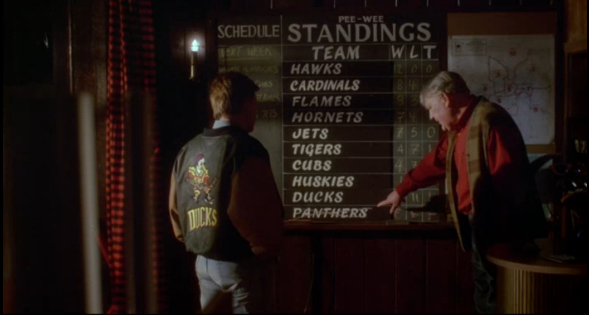
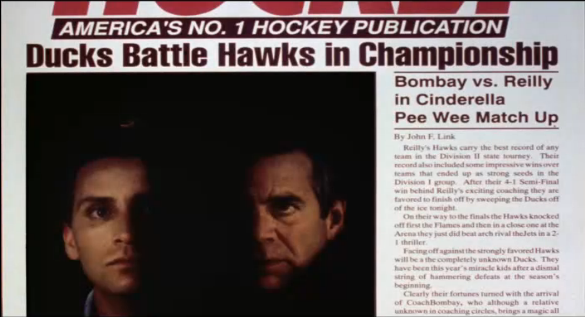
On October 2, 1992, the live action film The Mighty Ducks was released to theaters. It is the first film in The Mighty Ducks trilogy, and was followed by D2: The Mighty Ducks and D3: The Mighty Ducks. It was written by Steven Brill, and directed by Stephen Herek. The film stars Emilio Estevez as Gordon Bombay, Joss Ackland as Hans, Lane Smith as Coach Riley, and Joshua Jackson as Charlie.

The film begins with a flashback of the main character, Gordon Bombay, when he was the star player of his pee-wee hockey team in 1979. He misses the goal that costs his team the game; as his coach looks at him with obvious disappointment, Gordon falls sadly to his knees on the ice. We then switch back to present day Minneapolis, where Gordon is a hotshot lawyer, always out for the win regardless of any ethics. One night, he is pulled over by an officer for driving drunk, and is later sentenced to community service coaching pee-wee hockey, much to his annoyance, as well as a forced leave of absence by his boss, Mr. Ducksworth.
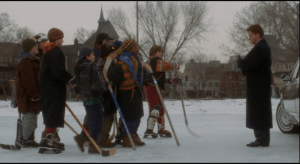
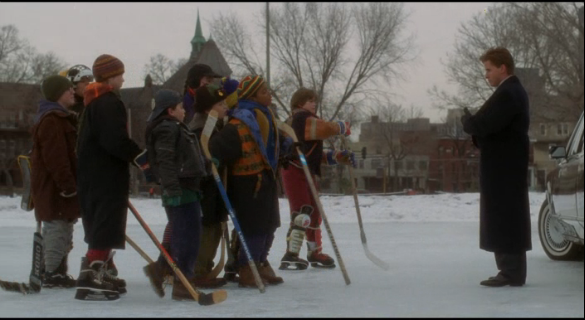
At the first meeting between Bombay and the kids, they believe him to be dangerous, and he has little patience for their antics

The first meeting of the District 5 team and Bombay does not go well, as the kids admit that they “really suck,” and Bombay has little patience for kids and clashes with the parents. He attends their first game, which is unfortunately against his old pee-wee team, the Hawks. He runs into his old coach, Coach Riley, who still instills in the kids that winning is everything, and still is disappointed about the team’s loss in 1979. The first game is an embarrassment, with District 5 losing 17 to 0. As Bombay walks out on the team, he sees a familiar face at the doors, and is shocked to see that it is his old friend and mentor Hans. He runs after him, but is unable to find Hans in the parking lot. Bombay then switches his training to having the kids take falls and pretend they’ve been injured by the other team. Charlie, one of the players, refuses to play dirty hockey.

Not knowing what to do anymore, Bombay finds Hans at his sports shop, and asks for advice. Bombay is reminded that he gave up hockey after that disastrous game, with his father having died four months prior, and his passion for the game having disappeared. Hans helps him rekindle his love for hockey, and asks him to teach the kids how to fly. After being inspired by Hans, Bombay goes to Charlie’s house to apologize to Charlie and his mother for his behavior before, and then goes to his boss and asks for the firm to sponsor the team. The team then is named the Ducks, after the boss. Charlie soon begins to bond with Bombay, and the team continues to add new members and improve their skills.
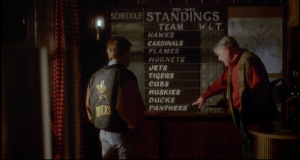
After their tie game, Hans explains to Bombay that the Ducks still have a chance of getting into the playoffs and facing the Hawks

The team manages to tie their next game, and Hans lets Bombay know that the Ducks may be able to make the playoffs. When Bombay voices his concern about the possibility of facing the Hawks, Hans tells him that the district lines were redrawn the previous year, and that the Hawks’ star player, Adam Banks, is supposed to play with the Ducks. Coach Riley is furious with Bombay, accusing him of backstabbing. Bombay, however, feels that he’s playing by the rules. The Ducks hear Bombay call them losers (although he was being sarcastic), and with the discovery that he was once a Hawk, most of them decide they don’t want to play for him anymore. Bombay doubts he can stay the coach if the team doesn’t trust him and Adam Banks, which upsets Charlie greatly.

Bombay encounters more problems when he finds that his boss is an old friend of Adam Banks’ father and, with Coach Riley, the three demand that Bombay drop his protest. He refuses, and loses his job. At school, the kids have a fight over the fate of the team, which subsequently reunites them, and Bombay, when he comes by to talk to them. Adam decides to join the team, but the team still doesn’t trust him, as they still consider him a Hawk. However, with his help, they win the game and make it to the playoffs. They eventually make it to the final match versus the Hawks. Bombay, however, is still haunted by the 1979 game and Coach Riley’s disappointment in him.
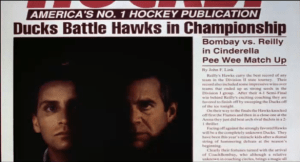
The match is considered an intense one, with Bombay against Riley, Adam Banks against his former team, and the Hawks defending their title against the Ducks

The game is intense from the get-go, with Banks’ former teammates trying to keep him down on the ice. The Hawks score first, and continue to score on the Ducks, leading the first period 3 to 0. At one point, Coach Riley stops Banks’ former friends, telling them to “drop him like a bad habit.” One friend looks alarmed, but the other agrees to do so. As Banks rushes with the puck, the one friend pushes Banks down, sending him flying headfirst into the goal. While Banks is able to score, he has hit his head so hard he is knocked unconscious. He is sent to the hospital, and the Ducks are more determined than ever to win. At the end of the third period, the Ducks are able to tie it up, and are given a penalty shot, sending the game into overtime. Charlie is picked to take the shot, with Bombay reassuring him that even if he misses, everything will be all right. Charlie makes the goal, and the Ducks win the state championship.

In the end, Bombay goes off to try out for the minor leagues, saying goodbye to the team as they cheer him at the bus station. He promises he’ll be back before the next season, as they have a title to defend.

October 1

October 1, 1935 – Actress, Singer, and Disney Legend Julie Andrews is Born

“I know that I am blessed and unbelievably lucky to be asked to do [Mary Poppins], at a time in my life when the next break was just a big question mark and suddenly, there was Mary Poppins and Walt.”

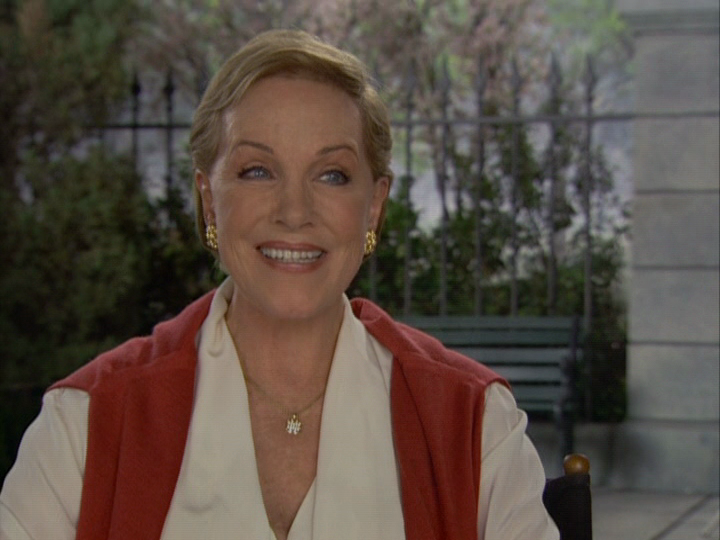
On October 1, 1935, actress and singer Julie Andrews (born Julia Elizabeth Wells) was born in Walton-on-Thames, England. During World War II, Andrews’ mother and father separated, with Andrews’ mother joining Ted Andrews in entertaining the troops through the Entertainments National Service Association; they soon married, and Julie was sent to live with her mother and step-father. Julie took private voice lessons with Madame Lilian Stiles-Allen, working on her amazing vocals, which ranged five octaves. At age 12, Andrews sang at the London Hippodrome, which soon led to many other opportunities on the sate, including Cinderella and The Boy Friend, as well as one of her most well-known roles as Eliza Doolittle in My Fair Lady.

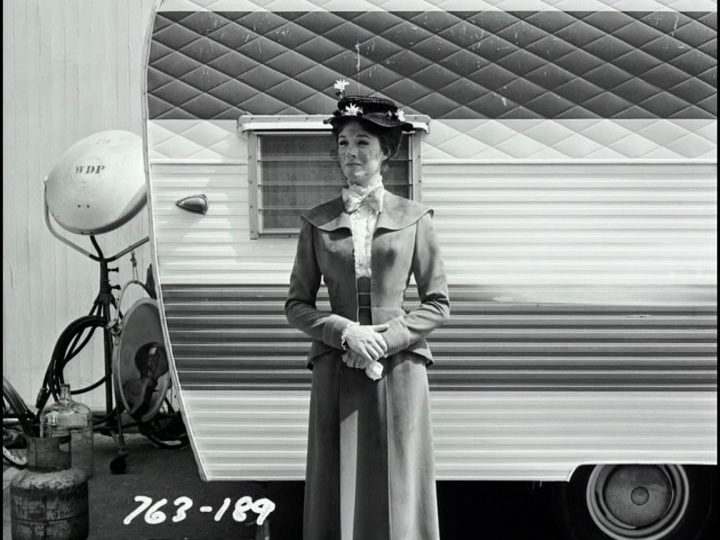
Walt Disney was in the audience one night while Andrews performed as Queen Guinevere in the Broadway production of Camelot. After the performance, he went backstage and offered her the lead role in his new feature film, Mary Poppins. She agreed tentatively, as there was a chance that she would be in the film version of My Fair Lady; when the role of Eliza went to Audrey Hepburn, Andrews began the work on Mary Poppins. The film was a success, and made Andrews a star, with her winning an Academy Award and a Golden Globe for her performance. She starred in several high-profile films after this, including The Sound Of Music, which garnered her another Golden Globe, and a nomination for another Academy Award.

Andrews is best known for playing the title character in Disney’s Mary Poppins, a role that won her the Academy Award for Best Leading Actress

In 1991, Andrews was named a Disney Legend. In 2001, Andrews returned to Disney films by playing the role of Queen Clarisse Marie Renaldi in their adaptation of the Meg Cabot series The Princess Diaries, as well as the sequel The Princess Diaries II. In 2005, Andrews was named the Official Ambassador of Disneyland’s 50th Anniversary, promoting the celebration and the park with several events.