RSS Feed

Tag Archives: Feature Film

April 13

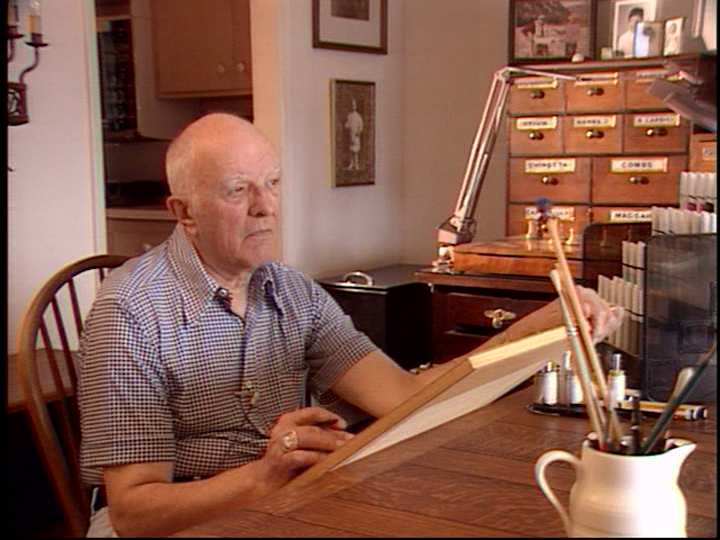
April 13, 1954 – Animator Glen Keane is Born

vlcsnap-2013-04-13-09h37m27s2

“I am convinced that animation really is the ultimate form of our time with endless new territories to explore. I can’t resist its siren call to step out and discover them.”

On April 13, 1954, Glen Keane was born in Philadelphia, Pennsylvania to cartoonist Bil Keane (known for Family Circus) and Thelma Carne Keane. The family would soon move to Paradise Valley, Arizona. Inspired by his father’s work, Keane developed an interest in drawing from an early age. Keane applied, and was accepted, to the Califormia Institute of the Arts, where he worked under animation teacher Jules Engel in the Program in Experimental Animation. Keane joined Disney in 1974; his first assignment, alongside Ollie Johnson, was animating the characters Bernard and Penny for the 1977 animated feature The Rescuers. After this film, Keane animated Elliot in Pete’s Dragon, and the climactic showdown in The Fox and the Hound. In 1982, Keane and friend John Lasseter were inspired by the new film Tron, and the two collaborated on a 30-second test sequence based on Maurice Sendak’s Where the Wild Things Are. Although the sequence was not well received at the time, it has since been considered revolutionary for the time, thanks to its experimentation of digital and hand-drawn animated characters.

In 1983, Keane left Disney to become a freelance artist, working on the character of Ratigan in The Great Mouse Detective, and on sections of the animated film The Chipmunk Adventure. He rejoined Disney to work on the characters of Fagin, Sykes, and Georgette in Oliver & Company, and was soon named Lead Character Animator. For the 1989 film The Little Mermaid, Keane designed and animated the lead character Ariel. From the moment he heard Jodi Benson (voice of Ariel) sing “Part of Your World,” Keane knew he had to animate Ariel. “I got the video of the recording and watched Jodi sing, and it was…just seeing it in her eyes, she believed it just like I believed it in listening to it,” he said. “There was this connection, it was just, ‘I’ve got to make that character as real as it is in my head.’” Keane would work as a supervising animator for Aladdin, Beauty and the Beast, and Pocahontas, and returned to his role as lead animator for Long John Silver in Treasure Planet. In 2003, Keane was named as the director of the 50th animated feature film Tangled. However, due to personal health issues, he stepped down from the role of director, but remained on the film as executive producer and animating director. After 37 years at Disney, Keane retired from the Disney Animation Studios.

April 10

April 10, 1992 – The Live-Action Musical Film Newsies is Released to Theaters
News1

“Pulitzer and Hearst, they think we’re nothing! Are we nothing? No!”

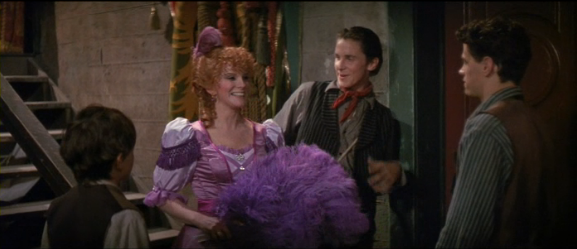
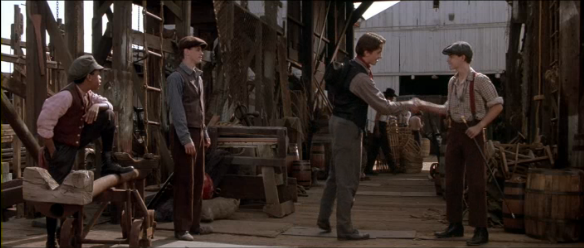
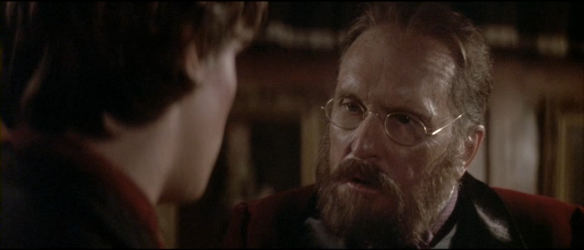
On April 10, 1992, the live-action musical film Newsies was released to theaters. Based on a true story of the Newsboys’ Strike of 1899, the film tells the story of Jack Kelly and his band of newsboys (“newsies”) who take on Joseph Pulitzer (owner of the newspaper The World) when Pulitzer decides to up the price that the newsies pay to buy their papers to sell on the street. The film was a box office flop, but has since gained a strong cult following, and has been turned into a successful Broadway musical. Newsies was the directorial debut of Kenny Ortega, with screenplay by Bob Tzudiker and Noni White, and music written by Alan Menken and Jack Feldman, with underscore by J.A.C. Redford. It stars Christian Bale as Jack Kelly, David Moscow as David Jacobs, Bill Pullman as Bryan Denton, Robert Duvall as Joseph Pulitzer, and Ann-Margaret as Medda.

Set in New York City in 1899, the story begins with the newsies waking up to begin their day at the Newsboy’s Lodging House. They sing about “carrying the banner,” discussing the best ways of selling papers and lamenting the bad headlines they have to pedal, as they suffer if they can’t sell every paper. Leader Jack “Cowboy” Kelly rallies the boys’ spirits, especially after outsmarting the notorious Delancey Brothers, who torment the newsies and hide behind their uncle, who provides the newsies their papers. Observing this are new newsboys David and his little brother, Les. Les immediately admires Jack, but David is much more reserved. Jack and David strike up a reluctant partnership, with Jack wanting to capitalize on Les’s cuteness, and David needing to learn the ropes. As David, Les, and Jack head out to hawk the headline, Jack gives David the first important lesson: “Headlines don’t sell papes, newsies sell papes.”
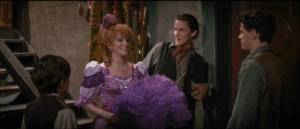
Jack introduces David and Les to Medda, a friend of his, who protects them from Warden Snyder

Jack introduces David and Les to Medda, a friend of his, who protects them from Warden Snyder

As the newsies head out to their task, Joseph Pulitzer sits in his office, angered over the horrible headline in his publication. He and his team are trying to come up with a way to put more money in his pocket. Meanwhile Jack, David, and Les are sidetracked at a boxing match, where they soon have to flee when Jack’s appearance catches the attention of Warden Snyder, who calls Jack “Sullivan” and threatens to take him back to “the Refuge.” The three take shelter in Irving Hall, where Jack tells the two why Synder was chasing him – Jack escaped from the refuge, which is a jail for kids. They are soon discovered in Irving Hall by the owner, singer Medda Larkson, a friend of Jack’s who lets them stay until Snyder is done looking for them. Jack then reveals why he’s called “cowboy” – he longs to move to Santa Fe, where his parents are supposedly looking for a ranch. That evening, David and Les head home, with Jack accompanying them. He meets David’s family and joins them for dinner, and immediately falls for David’s sister, Sarah. David reveals to Jack that he had to start working to support his family, as his father was injured and lost his job as a result, as he had no union to protect him. David and Jack soon become best friends, finally understanding each other.

The next morning, the newsies are dismayed to find that Pulitzer’s grand solution to get more money is to charge the newsies more for their papers. Inspired by his talk with David about his father, Jack believes that the best course of action for the newsies is to go on strike, beginning the formation of a newsboys union. David tries to talk him out of this, but is soon roped in as the advisor to Jack’s plans, with Jack attempting to gather all the newsboys in New York. With Jack as the voice of the people, and David as the brains of it all, the strike is effectively on. Jack’s first action is to bring the demands of the newsboys to Pulitzer himself – unfortunately, this does not go well. They soon catch the attention of reporter Bryan Denton, who takes Jack, Les, and David to lunch to discuss their plans, advising them that they need to make their story worth being in the papers.
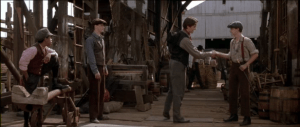
Jack, David, and Boots head to Brooklyn to meet with famous newsie Spot Conlon, who has reservations about the strike

Jack, David, and Boots head to Brooklyn to meet with famous newsie Spot Conlon, who has reservations about the strike

The other newsies are sent out as ambassadors to gather the other newsies in the city, and Jack, Boots, and David head to Brooklyn to convince influential newsie Spot Conlon to join. Spot is not convinced that Jack’s newsies are going to follow through on their threat of strike, even though David claims that Spot is the key to creating a real newsboy union. When they prove that they won’t run at the first sign of danger, Spot may be convinced to join. The boys prove that they are in it for the long haul when they trash the distribution center, but at a price, as their friend, the crippled Crutchy, is taken by the Delancey Brothers and beaten, then taken to the Refuge. Jack and David head to the Refuge late at night to break Crutchy out, but Crutchy refuses to go, as his already injured leg is worse from the beating. When the newsies attempt to trash the distribution center again, members of the Irish Mob are there to greet them. Fortunately, Spot Conlon stays true to his word, with Spot and the Brooklyn newsies assisting Jack and his boys. The newsies have another victory in their strike, and Denton takes a picture after their triumph. Jack then decides that to get the attention of the other papers, the newsboys will have a rally with every newsboy across the city.

With his picture in the paper, Snyder identifies Jack, and heads to the Newsboys’ Lodging House to find the runaway, but the newsboys cover for Jack and keep him safe. Snyder then heads to Pulitzer directly, using his information on Jack to get the police to charge in at the raid and grab Jack. After Snyder’s appearance at the Lodging House, Jack runs to David’s apartment and sleeps in the stairway outside Sarah’s room. The two share breakfast on the roof, with Sarah visibly upset when Jack talks about how he’s ready for the strike to end and he can leave for Santa Fe. The rally is held at Irving Hall, which is soon crashed by Snyder and the police, who arrest several newsies, including Jack. At the trial, the truth about Jack comes out: his real name is Francis Sullivan, with his father a convicted criminal currently in prison, and his mother passed away. Jack is sent back to the Refuge until the age of 21, and the newsies gather to hear from Denton that none of the newspapers reported on the rally, nor will they cover any strike news. Denton then says he’s been reassigned, and is leaving New York. With so many blows, the newsies fall into depression, and David takes over leadership, trusting no one but the newsies from now on.
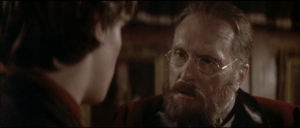
Pulitzer threatens Jack that, should he not work for him, David and his family will suffer

Pulitzer threatens Jack that, should he not work for him, David and his family will suffer

David plans a rescue of Jack from the Refuge, but sees that he is taken to Pulitzer’s, who offers Jack a chance for a new life, so long as he starts selling papers again. When Jack refuses, Pulitzer threatens David and his family, which has Jack agreeing in order to save his friend. The newsies are dismayed and angered when they see that Jack has crossed over the picket line, with David especially hurt by the betrayal. Jack redeems himself when he protects Sarah, Les, and David from the Delancey Brothers. Having broken his agreement with Pulitzer, Jack now firmly rejoins the newsies union. The group then heads to Denton’s, where he reveals that all of the children working in New York are listening to the newsies, and they plan to print their own paper, revealing the truth to all of New York, secretly using one of Pulitzer’s old presses to print their paper.

The newsies wait nervously for the child workers of the city to arrive to strike, and when they do, they arrive by the hundreds, shouting for the world (and the World) to hear. Jack is then called in to see Pulitzer, who demands that Jack give the name of the person who printed the Newsies Banner. When Jack reveals that Pulitzer owns the press on which it was printed, Pulitzer is speechless. He is powerless against all of the children of New York, and Jack heads back to the crowd, announcing their victory. The kids from the Refuge are free, and Snyder is imprisoned for fraud, as he would steal the funding meant for the children and put it in his own pocket. Crutchy reveals that Governor Theodore Roosevelt stormed in and demanded that things at the Refuge be set right. Denton then tells Jack that Roosevelt has offered Jack a ride to the train station to head to Santa Fe. Jack heads to the train station, leaving a heartbroken David, Les, and Sarah. Things quickly return to normal, with the kids resuming their duties as newsies, when Jack suddenly returns, admitting that he now knows where he belongs.

April 9

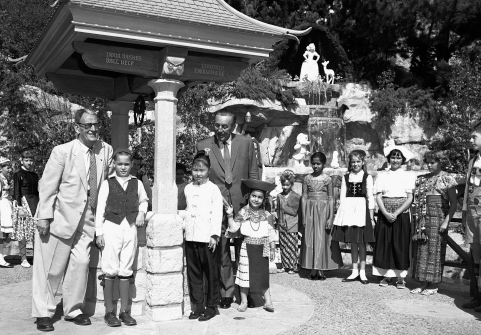
April 9, 1961 – Walt Disney Dedicates Snow White Grotto

SnowWhiteGrotto_D23

Stars from stage, screen, television and show business in general, as they visit the Park, are planning to make their contributions along with the public as they pass the Wishing Well and admire the beauty of the latest addition to the Disneyland scene.”

On April 9, 1961, Walt Disney dedicated the Snow White Grotto in Disneyland. The idea for the grotto came from a slight dilemma: Disney had received marble figures of the characters from Snow White and the Seven Dwarfs, but the statues were all of the same size. Designer John Hench came up with a smart solution of proportions, using the illusion of height and distance by placing Snow White at the top of the scene, having her stand over the other characters. When the scene is viewed from the footbridge, Snow White appears to be perfectly in proportion with the dwarfs. Also featured is the Wishing Well, seen in the opening scenes of the film, inscribed with “Your wishes will help children everywhere.” In 1983, the original voice of Snow White, Adriana Castelotti, was asked to come in and rerecord “I’m Wishing” for the New Fantasyland opening. The song is heard over the waterfall, and echoing back from the well.

April 6

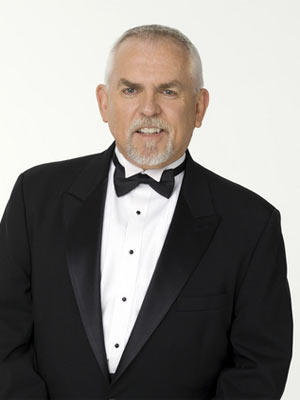
April 6, 1947 – Actor John Ratzenberger is Born

john-1

“[Ratzenberger’s] the ultimate Pixar character actor. He’s someone so clear, I know that guy after only two lines of dialogue. Having him in every film is like our Hitchcock cameo.” – Animator and Director Pete Doctor

On April 6, 1947, John Deszo Ratzenberger was born in Bridgeport, Connecticut. In 1971, he moved to London, where he worked as a house framer and began his acting career. His first role was in the 1976 film The Ritz. Throughout the ’70s and ’80s , Ratzenberger continued to score minor and major film roles in such films as Superman, Superman II, Star Wars Episode V: The Empire Strikes Back, and Ghandi. In 1982, he auditioned for a new sitcom series: Cheers. Although he originally auditioned for the role of Norm Peterson, he came up with the role of Cliff Clavin, the bar’s “know-it-all.” The series ran for eleven seasons, and reached critical acclaim. In 1995, Ratzenberger was cast in Pixar’s first full-length computer animated feature Toy Story as the piggy bank Hamm, and soon after became a recurring “lucky charm” for the studio, having a part in every Pixar film to date. Animator and director Andrew Stanton said in an interview, “We were at a press junket for Toy Story at Marino del Rey, and all the talent were invited to join us for a celebratory cigar and toast. John hung out with us all night. He was so much fun, I remember saying, ‘Let’s have him be in a film again.’” Ratzenberger has stated that “every time I get Pixar on the line, I just drop whatever I’m doing and get over to the studio.” He will soon be heard in Pixar’s Monster’s University, reprising his role of the Abominable Snowman.

April 5

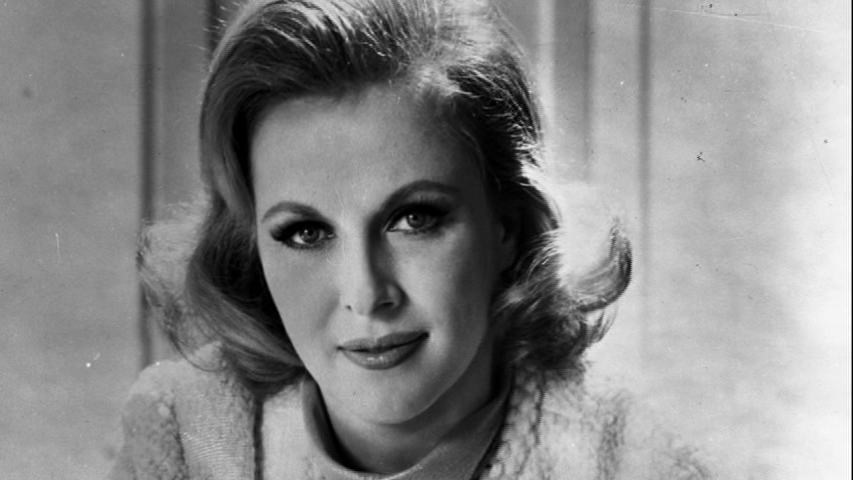
April 5, 1930 – Opera Singer, Actress, and Disney Legend Mary Costa is Born

vlcsnap-2013-04-04-21h50m11s123

“Walt Disney called me, and he said, ‘You have a warm, warm voice, and it expresses love from your heart. Also, your voice is so naturally placed that you can use your signing voice as an extension of speech…I want you to drop all of the colors and the things that you feel about Briar Rose to your vocal palette, and I want you to paint with your voice.’”

On April 5, 1930, Mary Costa was born in Knoxville, Tennessee. Her family moved to Los Angeles, California, where, after high school, she entered the Los Angeles Conservatory of Music, studying with Gaston Usigli. She was featured on Edgar Bergen’s radio show with his character Charlie McCarthy. In 1952, she auditioned for the role of Princess Aurora in Sleeping Beauty. Walt Disney called her personally to let her know that she won the role. In 1958, Costa met acclaim when she filled in for Elisabeth Schwarzkopf at a concert in the Hollywood Bowl, and was then given the lead of her first operatic production, The Bartered Bride. Costa then made her debut at the Glyndebourne Festival. She would go on to perform at the Metropolitan Opera, the royal Opera House, and the Bolshoi in Moscow, as well as in several television appearances. In 1989, she received the Lifetime Achievement Award from the Licia Albanese Puccini Foundation, and in 1999, she was named a Disney Legend. In 2003, Costa was appointed to the National Council on the Arts by President George W. Bush, where she served until 2007.

April 2

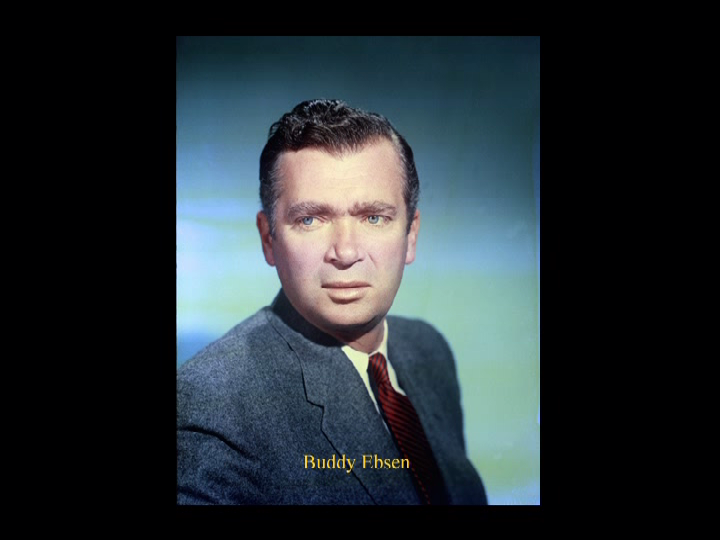
April 2, 1908 – Actor, Dancer, and Disney Legend Buddy Ebsen is Born

vlcsnap-2013-04-01-21h16m17s201

“Buddy [Ebsen] said that it was really difficult for him [to lose the role], but once he saw Fess [Parker] on screen, he knew that Walt had made the right decision.” – Paul F. Anderson, author of The Davy Crockett Craze.

On April 2, 1908, Christian Rudolph “Buddy” Ebsen, Jr., was born in Belleville, Illinois. At the age of ten, his family moved to Florida, where he and his siblings learned how to dance at their father’s dance studio in Orlando. Although he had aspirations to be a doctor, the collapse of the Florida land boom in the 1920s forced him to leave the University of Florida and head to New York City to become a dancer. He and his sister, Vilma Ebsen, became a dual act in vaudeville as “The Baby Astaires.” This led to a screen test by MGM, and they each signed a two-year contract with MGM, making their screen debut in Broadway Melody of 1936. While this would be Vilma’s only film, Ebsen’s career took off as a dancer in several films.

In 1939, Ebsen was cast in The Wizard of Oz as the Scarecrow, but swapped roles with Ray Bolger, who was originally cast as the Tin Man. However, Ebsen’s involvement in the film was short-lived, as he experienced an allergic reaction to the aluminum dust in the make-up, and was forced to leave the film. During World War II, Ebsen became a Lieutenant, Junior Grade in the Coast Guard, and after the war, he resumed his acting career in the new medium of television. In 1954, Ebsen starred in one of his more well-known roles: George Russel in Walt Disney’s Davy Crockett. Originally, Ebsen was tapped to play Davy Crockett, but Walt Disney, after seeing Fess Parker in a bit part in the sci-fi film Them was convinced that Parker was the man to play Crockett. Ebsen was then cast in the role of Russel. For Disney, Ebsen also stared in The One and Only, Genuine, Original Family Band as Calvin Bower, and the serial “Corky and White Shadow” on the Mickey Mouse Club. Ebsen would also dance on film for the staff to study and create Audio-Animatronics. In 1962, Ebsen scored his most famous role of Jed Clampett on the long-running sitcom, The Beverly Hillbillies. In 1973, he starred in another series, Barnaby Jones. In 1993, Ebsen was named a Disney Legend. He passed away in 2003 at the age of 95.

March 25

March 25, 1956 – Child Actor and Disney Legend Matthew Garber is Born

vlcsnap-2013-03-25-04h54m22s34

“…he’s indelibly printed in all of our minds; he’s eternal from those pictures, Mary Poppins especially, and…what a cute little boy. An amazing little soul.” – Karen Dotrice

On March 25, 1956, Matthew Adam Garber was born in Stepney, London, England. Roy Dotrice, father of Karen Dotrice, was a family friend and he recommended Garber to Disney Casting. Garber was hired at the age of seven to play the role of Geordie in The Three Lives of Thomasina alongside Karen Dotrice. The film was a moderate success. In 1964, Garber was cast in the role of Michael in the smash hit Mary Poppins, making him and other members of the cast famous. In 1967, Garber was teamed up with Dotrice for a third time in the film The Gnome-Mobile. After traveling in India in 1976, Garber contracted hepatits, which quickly spread to his pancreas. He passed away at the young age of 21. In 2004, Garber was awarded as a Disney Legend, along with Dotrice.

March 22

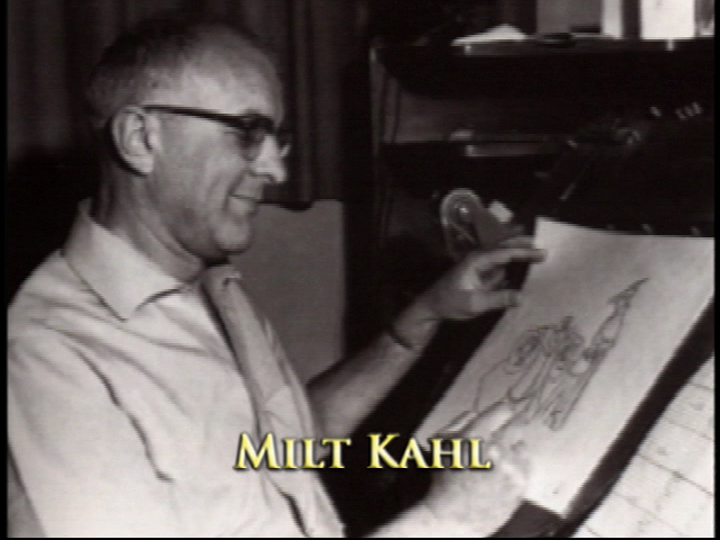
March 22, 1909 – Animator, Member of Disney’s Nine Old Men, and Disney Legend Milt Kahl is Born

vlcsnap-2013-03-22-09h07m37s234

“I don’t think it’s possible to be a top notch animator without being a very excellent draftsman. You have to be able to draw these characters in order to move them around and articulate them. There’s no way of doing it unless you draw very well.”

On March 22, 1909, animator Milton Erwin Kahl was born in San Francisco, California. At the age of 16, Kahl dropped out of high school to help provide for his family, and was hired by the Oakland Post Enquirer in the art department. After three years there, Kahl then got a job at the San Francisco bulletin, but was laid off when the Great Depression hit. He was able to find some work as a commercial artist and began to take art classes to improve his work. In late 1933, as he was struggling once again to find work in commercial art, a friend from the Oakland Post Enquirer, future Disney Legend Ham Luske, recommended that he apply to work at the Disney studios. Kahl was hired on June 25, 1934. with his first important animation assignment being the 1936 Mickey Mouse short film Mickey’s Circus. He was then assigned to animate the animals in the full-length animated feature Snow White and the Seven Dwarfs, along with Eric Larson among others.

Kahl’s talents shone in the next film, Pinocchio, when the staff of the studio were having problems trying to create the title character in terms of personality and overall design. “They were thinking in terms of a puppet all the time, naturally, because he was a puppet,” Kahl said. “And I was very critical of what they had. So I did a test scene where Pinocchio had donkey ears and a tail and was down on the sea bottom…and I handled it not thinking of so much as a puppet, as just a little boy. Walt liked it, so that became the model.” This way of thinking helped reshape the character and restart production, and Kahl was given the plumb role of directing animator on Pinocchio once he comes to life. This role also established Kahl as one of the top animators at the studio.

vlcsnap-2013-03-22-09h10m11s254

Kahl’s role grew, as he was considered one of the best draftsmen in the studio. Although his skills were being recognized before the outbreak of World War II, some of his best work was during the wartime period, including the film Saludos Amigos and the short films Education for Death and Tiger Trouble. After the war, Kahl was responsible for the final design of characters, and was given the task of animating non-comic characters, including Alice from Alice in Wonderland, Peter Pan and Wendy from Peter Pan, and the princes in Cinderella and Sleeping Beauty, with John Canemaker, author and film historian, noting that Kahl was “always stuck with the princes.” Although Kahl would complain of being “saddled” with these characters, he was secretly proud of his ability to bring these characters to life. Other highlights of Kahl’s career were the animation of character interactions in The Sword in the Stone (which Kahl considered “one hell of a picture”) and the character of Sher Kahn in The Jungle Book. His last work for the studio was animating Medusa and Snoops for the film The Rescuers, and left on April 30, 1970, although he did do a few character designs for The Black Cauldron. On April 19, 1987, Kahl passed away of pancreatic cancer. He was inducted into the Disney Legends in 1989. In 2009, the Academy of Motion Pictures held a panel to celebrate the centennial of Kahl’s life where animators Brad Bird, Andreas Deja, Ron Clements, John Musker, and Floyd Norman, as well as voice actress Kathryn Beaumont, celebrated his style and influence in the shaping of many Disney classics.

March 20

March 20, 2012 – The Muppets Receive a Star on the Hollywood Walk of Fame

Muppet Star

“They call this the street of dreams, and that’s so appropriate for the Muppets. You see, from the very beginning, the Muppets have always been about having big dreams and making them come true, usually in the most unexpected and inspiring manner.” – Lisa Henson

On March 20, 2012, the Muppets were awarded a star on the Hollywood Walk of Fame in front of the El Capitan Theater in Los Angeles, California. On hand for the ceremony was Rich Ross, then-President of the Walt Disney Studios; Lisa and Brian Henson, the daughter and son of late Muppets creator Jim Henson; several Muppeteers; and Muppets Kermit, Miss Piggy, Fozzie Bear, Gonzo, Pepe, and Walter from the 2011 film The Muppets. The award coincided with the release of The Muppets on DVD and Blu-Ray. This is the fourth star overall awarded to the Muppets and Jim Henson: Henson was awarded posthumously on September 24, 1991; Big Bird from Sesame Street was inducted on April 21, 1994; and Kermit the Frog was inducted on November 14, 2002.

March 17

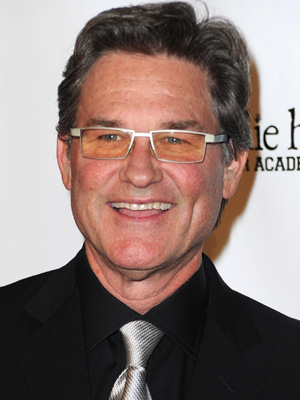
March 17, 1951 – Actor and Disney Legend Kurt Russell is Born

kurt-russell

“The script lady pulled me aside one day and said, ‘I think they’re going to offer you a contract. Do you know why Walt likes you? Because you’re not intimidated by him.’ I never could figure out why anybody would be intimidated by him.”

On March 17, 1951, Kurt Vogel Russell was born in Springfield, Massachusetts. His career as a child actor began in the late 1950s, with an appearance in the ABC western Sugarfoot. At age 11, he appeared in the Elvis Presley film It Happened at the World’s Fair in an uncredited part where Elvis’ character paid him a quarter to kick him. In 1963, he won the lead role of Jaimie in the ABC western series The Travels of Jaimie McPheeters. He appeared in other television roles around this time, and in 1966, Russell began his work with Disney, appearing in a starring role in the film Follow Me, Boys! alongside Fred MacMurray. This was the beginning of a long string of films for Disney through the ’60s and ’70s, which included The One and Only, Genuine, Original Family Band, The Horse in the Gray Flannel Suit, The Barefoot Executive, and The Computer Wore Tennis Shoes, including its sequels Now You See Him, Now You Don’t and The Strongest Man in the World. Russell also provided the voice of adult Copper in the animated feature film The Fox and the Hound, and narrated the educational film Dad, Can I Borrow the Car? Russell is one of the few child actors that has been able to transition to a successful, film career as an adult, and has still performed in several Disney films, including Miracle and Sky High. He was awarded as a Disney Legend in 1998.